

The DOI matches its Crossref record; 40 of the 41 references it cites were found in a registry or an index.
Selenoproteins Are Essential for Proper Keratinocyte Function and Skin Development
Open accessAbstract
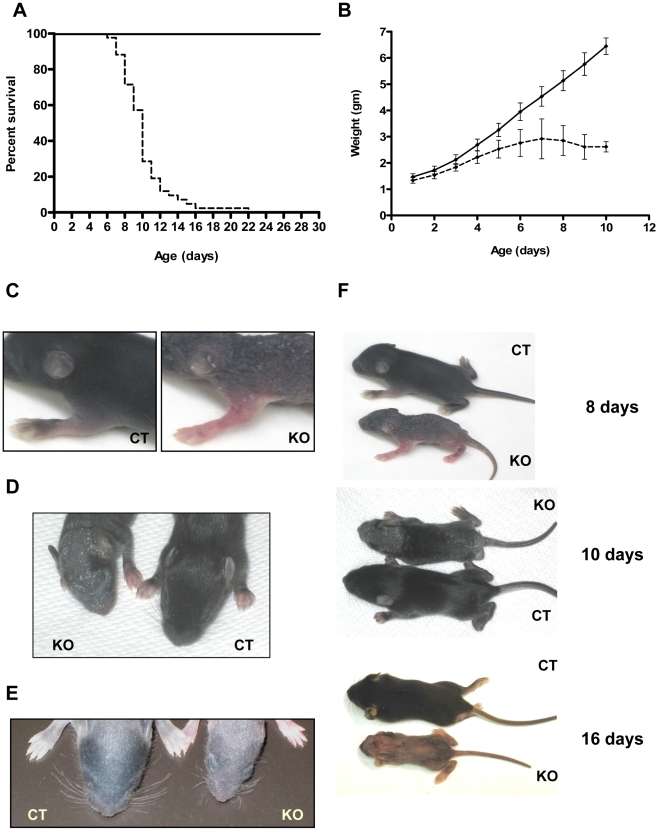
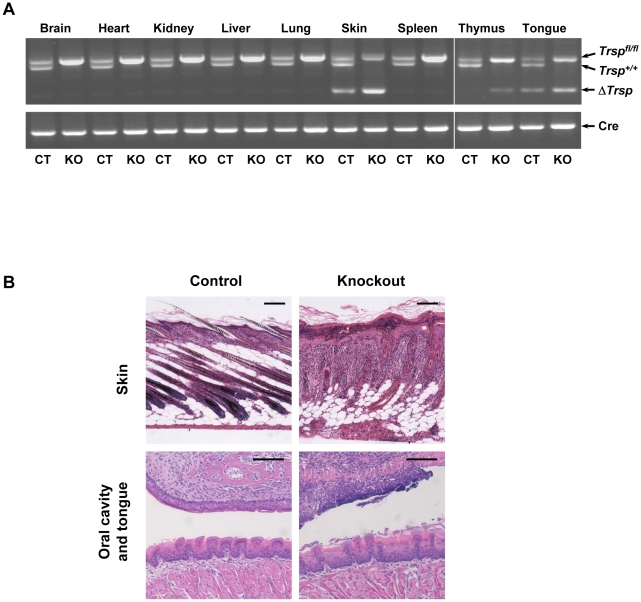
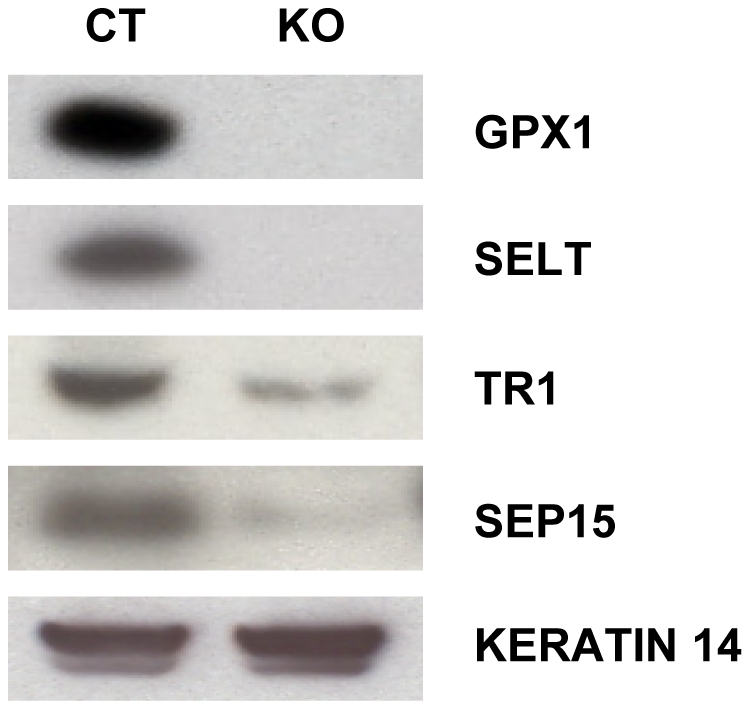
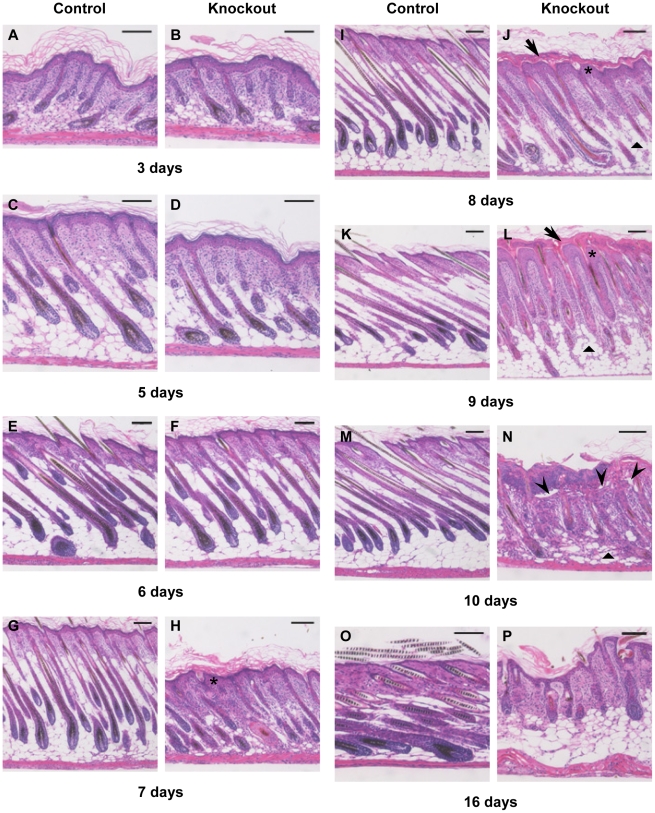
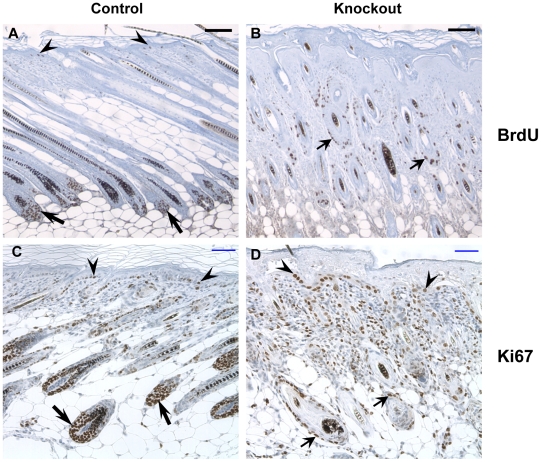
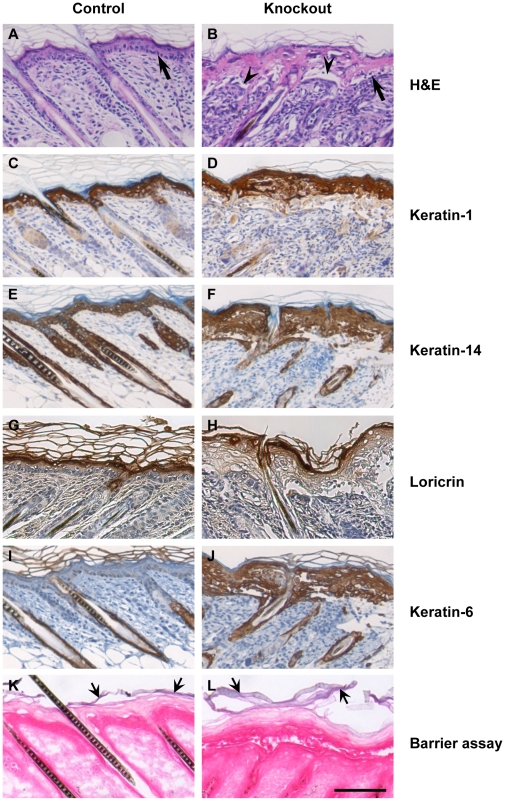
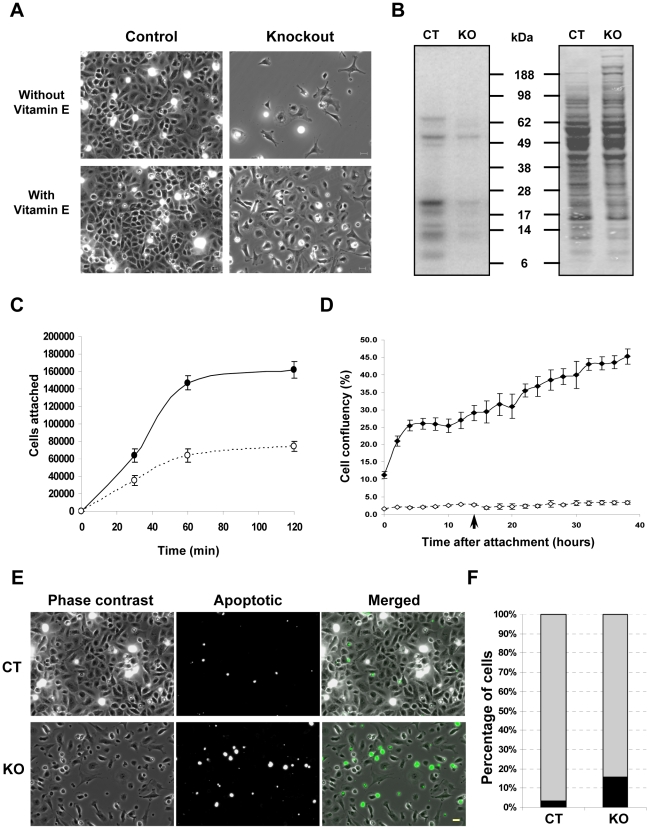
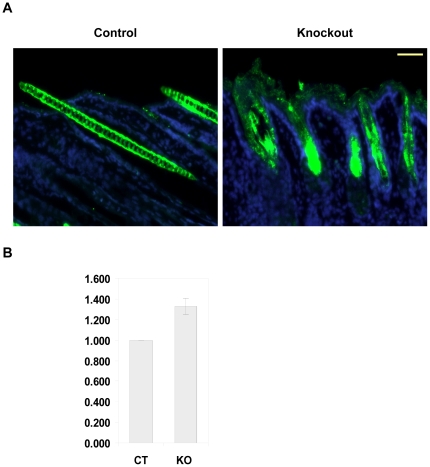
Dietary selenium is known to protect skin against UV-induced damage and cancer and its topical application improves skin surface parameters in humans, while selenium deficiency compromises protective antioxidant enzymes in skin. Furthermore, skin and hair abnormalities in humans and rodents may be caused by selenium deficiency, which are overcome by dietary selenium supplementation. Most important biological functions of selenium are attributed to selenoproteins, proteins containing selenium in the form of the amino acid, selenocysteine (Sec). Sec insertion into proteins depends on Sec tRNA; thus, knocking out the Sec tRNA gene (Trsp) ablates selenoprotein expression. We generated mice with targeted removal of selenoproteins in keratin 14 (K14) expressing cells and their differentiated descendents. The knockout progeny had a runt phenotype, developed skin abnormalities and experienced premature death. Lack of selenoproteins in epidermal cells led to the development of hyperplastic epidermis and aberrant hair follicle morphogenesis, accompanied by progressive alopecia after birth. Further analyses revealed that selenoproteins are essential antioxidants in skin and unveiled their role in keratinocyte growth and viability. This study links severe selenoprotein deficiency to abnormalities in skin and hair and provides genetic evidence for the role of these proteins in keratinocyte function and cutaneous development.
Overview
The claims and statistics of this paper haven’t been checked yet.
Run the check — free, no account needed. It reads the open-access text and checks the sources it cites.
Integrity signals
Registry
Cites
Statistics
Figures
Verification
Claims the paper makes
The claims and statistics of this paper haven’t been checked yet.
Run the check — free, no account needed. It reads the open-access text and checks the sources it cites.
Claims other papers make about this one
Each is checked against this paper’s own text: does it say what the citing paper says it does?
In the citing paper
“Se-enriched proteins are also essential in keratinocyte development and function [67].”
From Diet and Skin Aging—From the Perspective of Food Nutrition (2020) · cites this paper as [67]
Self-check
Percentages, sums and reported differences re-computed from the paper’s own numbers.
The self-check needs the paper’s full text.
Citations
Cites
Characterization of Mammalian Selenoproteomes
Kryukov, G. V., Castellano, S., Novoselov, S. V., Lobanov, A. V., Zehtab, O., Guigó, R., & Gladyshev, V. N. (2003) · Science · doi:10.1126/science.1083516 · Cited by 2,385
Self-citationThe human keratins: biology and pathology
Moll, R., Divo, M., & Langbein, L. (2008) · Histochemistry and Cell Biology · doi:10.1007/s00418-008-0435-6 · Cited by 1,465
Jonkers, J., Meuwissen, R. L. J., van der Gulden, H. M. L., Peterse, H. L., van der Valk, M., & Berns, A. J. M. (2001) · Nature Genetics · doi:10.1038/ng747 · Cited by 1,044
Getting under the skin of epidermal morphogenesis
Fuchs, E., & Raghavan, S. (2002) · Nature Reviews Genetics · doi:10.1038/nrg758 · Cited by 753
How Selenium Has Altered Our Understanding of the Genetic Code
Hatfield, D. L., & Gladyshev, V. N. (2002) · Molecular and Cellular Biology · doi:10.1128/mcb.22.11.3565-3576.2002 · Cited by 681
Self-citationRole of integrins in regulating epidermal adhesion, growth and differentiation
Watt, F. M. (2002) · The EMBO Journal · doi:10.1093/emboj/cdf399 · Cited by 647
Enzymic and non-enzymic antioxidants in epidermis and dermis of human skin
Shindo, Y., Witt, E., Han, D., Epstein, W., & Packer, L. (1994) · Journal of Investigative Dermatology · doi:10.1111/1523-1747.ep12371744 · Cited by 546
Oxidative mechanisms in carcinogenesis
Guyton, K. Z., & Kensler, T. W. (1993) · British Medical Bulletin · doi:10.1093/oxfordjournals.bmb.a072628 · Cited by 465
Lichti, U. F., Anders, J., & Yuspa, S. H. (2008) · Nature Protocols · doi:10.1038/nprot.2008.50 · Cited by 444
Self-citationPatterned acquisition of skin barrier function during development
Hardman, M. J., Sisi, P., Banbury, D. N., & Byrne, C. (1998) · Development · doi:10.1242/dev.125.8.1541 · Cited by 385
Vassar, R. J., Rosenberg, M. J., Ross, S. R., Tyner, A. L., & Fuchs, E. V. (1989) · Proceedings of the National Academy of Sciences · doi:10.1073/pnas.86.5.1563 · Cited by 368
Bösl, M. R., Takaku, K., Oshima, M., Nishimura, S., & Taketo, M. M. (1997) · Proceedings of the National Academy of Sciences · doi:10.1073/pnas.94.11.5531 · Cited by 337
Evidence supporting zinc as an important antioxidant for skin
Rostan, E. F., DeBuys, H. V., Madey, D. L., & Pinnell, S. R. (2002) · International Journal of Dermatology · doi:10.1046/j.1365-4362.2002.01567.x · Cited by 267
The use of endogenous antioxidants to improve photoprotection
Steenvoorden, D. P. T., & Beijersbergen van Henegouwen, G. M. J. (1997) · Journal of Photochemistry and Photobiology B Biology · doi:10.1016/s1011-1344(97)00081-x · Cited by 209
Loss of keratin 6 (K6) proteins reveals a function for intermediate filaments during wound repair
Wong, P., & Coulombe, P. A. (2003) · The Journal of Cell Biology · doi:10.1083/jcb.200305032 · Cited by 199
Ramı́rez, Á., Page, A., Gandarillas, A., Zanet, J., Pibre, S., Vidal, M., Tusell, L., Genescà, A., Whitaker, D. A., Melton, D. W., et al. (2004) · genesis · doi:10.1002/gene.20025 · Cited by 190
Thiele, J. J., Traber, M. G., & Packer, L. (1998) · Journal of Investigative Dermatology · doi:10.1046/j.1523-1747.1998.00169.x · Cited by 180
Fuchs, J. (1998) · Free Radical Biology and Medicine · doi:10.1016/s0891-5849(98)00161-0 · Cited by 176
Keratin 14 Cre transgenic mice authenticate keratin 14 as an oocyte‐expressed protein
Hafner, M., Wenk, J., Nenci, A., Pasparakis, M., Scharffetter‐Kochanek, K., Smyth, N. R., Peters, T., Keß, D., Holtkötter, O., Shephard, P., et al. (2004) · genesis · doi:10.1002/gene.20016 · Cited by 167
Cytokeratins as markers of differentiation in the diagnosis of epithelial tumors.
Moll, R. (1998) · PubMed · Cited by 162
Hendrix, S., Handjiski, B., Peters, E. M. J., & Paus, R. (2005) · Journal of Investigative Dermatology · doi:10.1111/j.0022-202x.2005.23787.x · Cited by 139
Bates, J. M., Spate, V. L., Morris, J. S., Germain, D. L. S., & Galton, V. A. (2000) · Endocrinology · doi:10.1210/endo.141.7.7571 · Cited by 129
Ozone-exposure depletes vitamin E and induces lipid peroxidation in murine stratum corneum
Thiele, J. J., Traber, M. G., Polefka, T. G., Cross, C. E., & Packer, L. (1997) · Journal of Investigative Dermatology · doi:10.1111/1523-1747.ep12292144 · Cited by 123
Skin bioavailability of dietary vitamin E, carotenoids, polyphenols, vitamin C, zinc and selenium
Myriam, M., Sabatier, M., Steiling, H., & Williamson, G. (2006) · British Journal Of Nutrition · doi:10.1079/bjn20061817 · Cited by 117
Molecular Mechanisms of Cancer Prevention by Selenium Compounds
Fleming, J., Ghose, A., & Harrison, P. R. (2001) · Nutrition and Cancer · doi:10.1207/s15327914nc401_9 · Cited by 114
Antioxidant Supplements Improve Parameters Related to Skin Structure in Humans
Heinrich, U., Tronnier, H., Stahl, W., Bejot, M., & Maurette, J.-M. (2006) · Skin Pharmacology and Physiology · doi:10.1159/000093118 · Cited by 110
Berger, M., Binnert, C., Chioléro, R., Taylor, W., Raffoul, W., Cayeux, M., Benathan, M., Shenkin, A., & Tappy, L. (2007) · American Journal of Clinical Nutrition · doi:10.1093/ajcn/85.5.1301 · Cited by 107
Selective Removal of the Selenocysteine tRNA[Ser]Sec Gene (Trsp) in Mouse Mammary Epithelium
Kumaraswamy, E., Carlson, B. A., Morgan, F., Miyoshi, K., Robinson, G. W., Su, D., Wang, S., Southon, E. A., Tessarollo, L., Lee, B. J., et al. (2003) · Molecular and Cellular Biology · doi:10.1128/mcb.23.5.1477-1488.2003 · Cited by 106
Self-citationOxidative stress and antioxidants at biosurfaces: plants, skin, and respiratory tract surfaces.
Cross, C. E., van der Vliet, A., Louie, S., Thiele, J. J., & Halliwell, B. B. (1998) · Environmental Health Perspectives · doi:10.1289/ehp.98106s51241 · Cited by 101
Effects of Dietary Selenium on UVB-Induced Skin Carcinogenesis and Epidermal Antioxidant Status
Pence, B. C., Delver, E., & Dunn, D. M. (1994) · Journal of Investigative Dermatology · doi:10.1111/1523-1747.ep12377571 · Cited by 90
Selenoproteins regulate macrophage invasiveness and extracellular matrix-related gene expression
Carlson, B. A., Yoo, M., Sano, Y., Sengupta, A., Kim, J. Y., Irons, R., Gladyshev, V. N., Hatfield, D. L., & Park, J. M. (2009) · BMC Immunology · doi:10.1186/1471-2172-10-57 · Cited by 89
Self-citationRafferty, T. S., McKenzie, R. C., Hunter, J. A. A., Howie, A. F., Arthur, J. R., Nicol, F., & BECKETT, G. J. (1998) · Biochemical Journal · doi:10.1042/bj3320231 · Cited by 85
Sengupta, A., Carlson, B. A., Labunskyy, V. M., Gladyshev, V. N., & Hatfield, D. L. (2009) · Biochemistry and Cell Biology · doi:10.1139/o09-064 · Cited by 67
Self-citationSelenium, ultraviolet radiation and the skin
McKenzie, R. C. (2000) · Clinical and Experimental Dermatology · doi:10.1046/j.1365-2230.2000.00725.x · Cited by 66
D’Alessio, S., Gerasi, L., & Blasi, F. (2008) · Journal of Cell Science · doi:10.1242/jcs.037549 · Cited by 53
A functional link between housekeeping selenoproteins and phase II enzymes
Sengupta, A., Carlson, B. A., Weaver, J. A., Novoselov, S. V., Fomenko, D. E., Gladyshev, V. N., & Hatfield, D. L. (2008) · Biochemical Journal · doi:10.1042/bj20080277 · Cited by 40
Self-citationSiemes, C., Quast, T., Kummer, C., Wehner, S., Kirfel, G., Müller, U., & Herzog, V. (2006) · Experimental Cell Research · doi:10.1016/j.yexcr.2006.02.025 · Cited by 38
Selenium deficiency: report of a case.
Kanekura, T., Yotsumoto, S., Maeno, N., Kamenosono, A., Saruwatari, H., Uchino, Y., Mera, Y., & Kanzaki, T. (2005) · Clinical and Experimental Dermatology · doi:10.1111/j.1365-2230.2005.01746.x · Cited by 37
Rapid, high‐quality and epidermal‐specific isolation of RNA from human skin
Trost, A., Bauer, J. W., Lanschuetzer, C. M., Laimer, M., Emberger, M., Hintner, H., & Önder, K. (2007) · Experimental Dermatology · doi:10.1111/j.1600-0625.2006.00534.x · Cited by 36
Keratin alterations could be an early event of wrinkle formation
Sano, T., Kume, T., Fujimura, T., Kawada, H., & Higuchi, K. (2008) · Journal of Dermatological Science · doi:10.1016/j.jdermsci.2008.08.001 · Cited by 8
Research works printed but not linked: 1
- HPM Gollnick, 1996, Systemic b carotene plus topical UV-sunscreen are an optimal protection against harmful effects of natural UV-sunlight: results of the Berlin-Eilath study., Eur J Dermatol, 6, 200
Cited by
Sorted by citations
Selenium Utilization by GPX4 Is Required to Prevent Hydroperoxide-Induced Ferroptosis
Ingold, I., Berndt, C., Schmitt, S., Doll, S. G., Poschmann, G., Buday, K., Roveri, A., Peng, X., Freitas, F. P., Seibt, T., et al. (2017) · Cell · doi:10.1016/j.cell.2017.11.048 · Cited by 1,712
Selenium and selenocysteine: roles in cancer, health, and development
Hatfield, D. L., Tsuji, P. A., Carlson, B. A., & Gladyshev, V. N. (2014) · Trends in Biochemical Sciences · doi:10.1016/j.tibs.2013.12.007 · Cited by 715
Self-citationParadoxical Roles of Antioxidant Enzymes: Basic Mechanisms and Health Implications
Lei, X. G., Zhu, J., Cheng, W.-H., Bao, Y., Ho, Y.-S., Reddi, A. R., Holmgren, A., & Arnér, E. S. J. (2015) · Physiological Reviews · doi:10.1152/physrev.00010.2014 · Cited by 455
Wang, G., Jin, W., Qasim, A. M., Gao, A., Peng, X. F., Li, W., Feng, H., & Chu, P. K.-H. (2017) · Biomaterials · doi:10.1016/j.biomaterials.2017.01.028 · Cited by 306
Diet and Skin Aging—From the Perspective of Food Nutrition
Cao, C., Xiao, Z., Wu, Y., & Ge, C. (2020) · Nutrients · doi:10.3390/nu12030870 · Cited by 231
Metadata
- Authors
- Sengupta, A., Lichti, U. F., Carlson, B. A., Ryscavage, A. O., Gladyshev, V. N., Yuspa, S. H., & Hatfield, D. L.
- Affiliations
- National Institutes of Health (US)
- Brigham and Women's Hospital (US)
- Corresponding author
- Yuspa, Stuart H.
- Hatfield, Dolph L.
- Venue
- PLoS ONE
- Publisher
- Public Library of Science (PLoS)
- Published
- 2010-08-18
- Volume
- 5
- Issue
- 8
- Pages
- e12249
- ISSN
- 1932-6203 (ISSN-L)
- PMC
- PMC2923614
- OpenAlex
- W2140893882
- Cited by
- 109
- References
- 41
- Citations by year
- 2026: 7 · 2025: 7 · 2024: 9 · 2023: 9 · 2022: 5 · 2021: 7 · 2020: 4 · 2019: 8 · 2018: 10 · 2017: 6 · 2016: 6 · 2015: 8 · 2014: 3 · 2013: 6 · 2012: 8
- FWCI
- 6.07
- Type
- journal article
- Language
- en
- Open access
- gold
- doi.org
- Licence
- Locations
- PLoS ONE (publishedVersion, public-domain)
- PubMed Central (publishedVersion, public-domain)
- PubMed (publishedVersion)
- Digital Access to Scholarship at Harvard (DASH) (Harvard University) (submittedVersion, cc-by)
- DOAJ (DOAJ: Directory of Open Access Journals) (submittedVersion, cc-by-sa)
- Figshare (submittedVersion, cc-by)
- Funders
- National Institutes of Health
- National Cancer Institute
- National Institute of General Medical Sciences (R01GM061603)
- Topics
- Health Sciences › Nursing › Nutrition and Dietetics › Selenium in Biological Systems
- Physical Sciences › Chemistry › Organic Chemistry › Organoselenium and organotellurium chemistry
- Health Sciences › Medicine › Dermatology › Hair Growth and Disorders
- Keywords
- selenoproteins, selenocysteine, keratinocytes, skin development, hair follicle morphogenesis, hair loss, selenium deficiency, keratin 14, epidermal hyperplasia, antioxidant enzymes, keratinocyte viability, knockout mice
- MeSH terms
- Epidermal Cells, Animals, Animals, Newborn, Antioxidants, Cell Adhesion, Cell Differentiation, Epidermis, Female, Gene Expression Regulation, Macrophages, Male, Organ Specificity, Recombination, Genetic, RNA, Messenger, RNA, Transfer, Amino Acid-Specific, Selenium, Skin, Lipid Peroxidation, Biomarkers, Keratinocytes, Gene Deletion, Reactive Oxygen Species, Hair Follicle, Cell Proliferation, Selenoproteins, Mice, Keratin-14, Gene Knockout Techniques
About these checks
Registry, retraction, Cites and statistics results are computed, not judged, with one exception: a printed reference that no index lists is read once by a model before it counts as a citation error. Claims are extracted by a model and kept only when their quote appears verbatim in the text; each cited source is then checked, with a model’s help, for whether it says what the claim relies on. Those verdicts can be wrong — read the claim’s quote and the cited source before relying on one.
Statistics and arithmetic are recomputed, not judged.
Confidence bands are shown only for fields calibrated on our annotated test set. None is calibrated yet, so no band is shown.
What counts as a claim ›How we measure confidence ›How we check this ›
Are you an author, or do you see a problem with this page? Request a review
