

Estimated HIV Incidence in the United States, 2006–2009
Open accessThe DOI matches its Crossref record; 23 of the 23 references it cites were found in a registry or an index.
Abstract
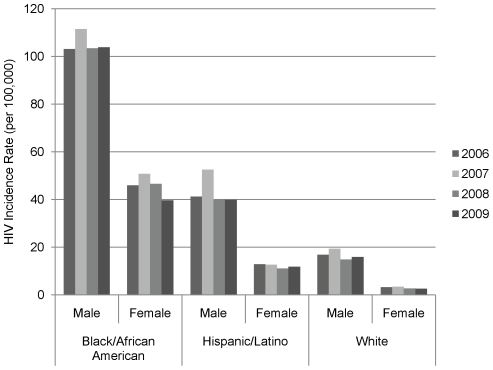
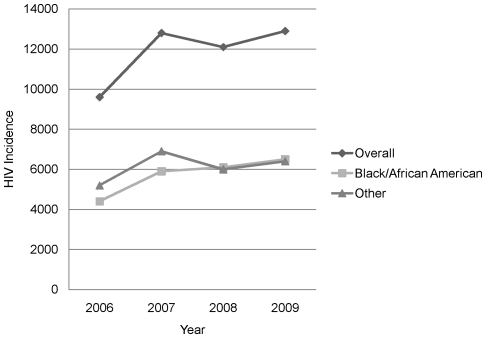
BACKGROUND: The estimated number of new HIV infections in the United States reflects the leading edge of the epidemic. Previously, CDC estimated HIV incidence in the United States in 2006 as 56,300 (95% CI: 48,200-64,500). We updated the 2006 estimate and calculated incidence for 2007-2009 using improved methodology. METHODOLOGY: We estimated incidence using incidence surveillance data from 16 states and 2 cities and a modification of our previously described stratified extrapolation method based on a sample survey approach with multiple imputation, stratification, and extrapolation to account for missing data and heterogeneity of HIV testing behavior among population groups. PRINCIPAL FINDINGS: Estimated HIV incidence among persons aged 13 years and older was 48,600 (95% CI: 42,400-54,700) in 2006, 56,000 (95% CI: 49,100-62,900) in 2007, 47,800 (95% CI: 41,800-53,800) in 2008 and 48,100 (95% CI: 42,200-54,000) in 2009. From 2006 to 2009 incidence did not change significantly overall or among specific race/ethnicity or risk groups. However, there was a 21% (95% CI:1.9%-39.8%; p = 0.017) increase in incidence for people aged 13-29 years, driven by a 34% (95% CI: 8.4%-60.4%) increase in young men who have sex with men (MSM). There was a 48% increase among young black/African American MSM (12.3%-83.0%; p<0.001). Among people aged 13-29, only MSM experienced significant increases in incidence, and among 13-29 year-old MSM, incidence increased significantly among young, black/African American MSM. In 2009, MSM accounted for 61% of new infections, heterosexual contact 27%, injection drug use (IDU) 9%, and MSM/IDU 3%. CONCLUSIONS/SIGNIFICANCE: Overall, HIV incidence in the United States was relatively stable 2006-2009; however, among young MSM, particularly black/African American MSM, incidence increased. HIV continues to be a major public health burden, disproportionately affecting several populations in the United States, especially MSM and racial and ethnic minorities. Expanded, improved, and targeted prevention is necessary to reduce HIV incidence.
Overview
The claims and statistics of this paper haven’t been checked yet.
Free: it reads the open-access text and checks the first 5 claims that cite a source we can check. Create a free account to check every claim.
Integrity signals
Registry
Cites
Statistics
Figures
Verification
Claims the paper makes
The claims and statistics of this paper haven’t been checked yet.
Free: it reads the open-access text and checks the first 5 claims that cite a source we can check. Create a free account to check every claim.
Claims other papers make about this one
Each is checked against this paper’s own text: does it say what the citing paper says it does?
In the citing paper
“HIV is a public health crisis among Black and Latino men in the USA, notably those living in New York City (NYC).”
From Using Syndemic Theory to Understand Vulnerability to HIV Infection among Black and Latino Men in New York City (2014) · cites this paper as [1]
In the citing paper
“That same year, HIV incidence among Black and Latino men was 6.5 and 2.5 times greater, respectively, than it was among White men.”
From Using Syndemic Theory to Understand Vulnerability to HIV Infection among Black and Latino Men in New York City (2014) · cites this paper as [1]
Self-check
Percentages, sums and reported differences re-computed from the paper’s own numbers.
The self-check needs the paper’s full text.
Citations
Cites
Applied Regression Analysis and Other Multivariable Methods
Walker, E. (1989) · Technometrics · doi:10.1080/00401706.1989.10488486 · Cited by 8,538
(2006) · PsycEXTRA Dataset · doi:10.1037/e545592006-001 · Cited by 2,958
Estimation of HIV Incidence in the United States
Hall, H. I. (2008) · JAMA · doi:10.1001/jama.300.5.520 · Cited by 1,317 · cited 6×
“but within the confidence interval of that estimate [4].”
InfluentialSelf-citationMarks, G., Crepaz, N., & Janssen, R. S. (2006) · AIDS · doi:10.1097/01.aids.0000233579.79714.8d · Cited by 1,096 · cited 1×
“, and the majority of new HIV infections transmitted by these individuals”
Parashar, U. (2006) · Medical Entomology and Zoology · Cited by 799
Janssen, R. S. (1998) · JAMA · doi:10.1001/jama.280.1.42 · Cited by 687 · cited 1×
“Since 2004, CDC has funded selected states and localities to conduct HIV incidence surveillance by (1) submitting remnant diagnostic HIV-positive blood specimens for testing using the serologic testing algorithm for recent HIV seroconversion (STARHS)”
BackgroundPurcell, D. W., Johnson, C. H., Lansky, A., Prejean, J., Stein, R., Denning, P., Gau1, Z., Weinstock, H., Su, J., & Crepaz, N. (2012) · The Open AIDS Journal · doi:10.2174/1874613601206010098 · Cited by 356
Self-citationParekh, B. S., Kennedy, M. S., Dobbs, T., Pau, C.-P., Byers, R., Green, T., Hu, D. J., Vanichseni, S., Young, N. L., Choopanya, K., et al. (2002) · AIDS Research and Human Retroviruses · doi:10.1089/088922202753472874 · Cited by 355 · cited 1×
“In addition, the continued refinement of the method for estimating the mean recency period for the BED HIV-1 Capture Enzyme Immunoassay (BED; the assay that currently serves as the serologic marker of recent infection) [6] and for modeling the recency period distribution [7] has allowed for improvement of the method o…”
Self-citationSullivan, P. S., Hamouda, O., Delpech, V., Geduld, J. E., Prejean, J., Semaille, C., Kaldor, J., Folch, C., Op de Coul, E., Marcus, U., et al. (2009) · Annals of Epidemiology · doi:10.1016/j.annepidem.2009.03.004 · Cited by 326
Self-citationUndiagnosed HIV Prevalence Among Adults and Adolescents in the United States at the End of 2006
Campsmith, M. L., Rhodes, P. H., Hall, H. I., & Green, T. A. (2010) · JAIDS Journal of Acquired Immune Deficiency Syndromes · doi:10.1097/qai.0b013e3181bf1c45 · Cited by 219 · cited 1×
“, public health programs are presented with new challenges. There is a need to address the prevention needs both of people at risk for HIV infection as well as of those living with HIV disease—those who are aware of their HIV status and those who are not. With an estimated 21% of people living with HIV unaware of thei…”
BackgroundSelf-citation
Cited by
Items 101–200 of 1,000
An Epidemiologic Update on Hepatitis C Infection in Persons Living With or at Risk of HIV Infection
Kim, A. Y., Onofrey, S., & Church, D. (2013) · The Journal of Infectious Diseases · doi:10.1093/infdis/jis927 · Cited by 104
“this population: approximately 9% of the 48 100 new US HIV infections in 2009 occurred in IDUs [16] and, in addition to sharing drug paraphernalia, risks such as unpro-”
BackgroundInfluentialContagion dynamics of extremist propaganda in social networks
Ferrara, E. (2017) · Information Sciences · doi:10.1016/j.ins.2017.07.030 · Cited by 119
“For comparison, health epidemics like Ebola, [7,41] SARS, [65] HIV/AIDS, [33, 48] and certain strains of influenza [46] all have similar values of 2 < R0 < 3.”
BackgroundSun, C. J., Stowers, J., Miller, C., Bachmann, L. H., & Rhodes, S. D. (2015) · AIDS and Behavior · doi:10.1007/s10461-014-0942-5 · Cited by 102
Frye, V. A., Wilton, L., Hirshfield, S., Chiasson, M. A., Usher, D., Lucy, D., McCrossin, J., Greene, E., Koblin, B. A., & for the All About Me Study Team (2015) · AIDS Patient Care and STDs · doi:10.1089/apc.2015.0100 · Cited by 105
“%) in new HIV infections between 2006 and 2009, with new infections among YBMSM representing 55% of all cases among MSM ages 13–24 in 2010 and 45% of all new HIV infections among black MSM. 2 Current NHBS epidemiologic data indicate that a high percentage (71%, ages 18–19; 69%, ages 20–24; 72%, ages 25– 29) of YBMSM w…”
InfluentialAntiviral agents and HIV prevention: controversies, conflicts, and consensus
Cohen, M. S., Muessig, K. E., Smith, M. K., Powers, K. A., & Kashuba, A. D. M. (2012) · AIDS · doi:10.1097/qad.0b013e3283543e83 · Cited by 108
“HIV incidence among other groups such as MSM in the USA, Australia, France and Amsterdam may be rising, in spite of the wide availability of antiretroviral drugs [62–66].”
BackgroundHIV Trends in the United States: Diagnoses and Estimated Incidence
Hall, H. I., Song, R., Tang, T., An, Q., Prejean, J., Dietz, P. M., Hernandez, A. L., Green, T., Harris, N., McCray, E., et al. (2017) · JMIR Public Health and Surveillance · doi:10.2196/publichealth.7051 · Cited by 104
Self-citationHull, M., Wu, Z., & Montaner, J. S. G. (2012) · Current Opinion in HIV and AIDS · doi:10.1097/coh.0b013e3283590617 · Cited by 101
HIV Incidence Determination in the United States: A Multiassay Approach
Laeyendecker, O. B., Brookmeyer, R., Cousins, M. M., Mullis, C. E., Konikoff, J., Donnell, D. J., Celum, C., Buchbinder, S., Seage, G. R., Kirk, G. D., et al. (2012) · The Journal of Infectious Diseases · doi:10.1093/infdis/jis659 · Cited by 101
“HIV surveillance by the BED-CEIA was the basis for recent estimates of HIV incidence in the United States that were prepared by the Centers for Disease Control and Prevention (CDC) [11, 12].”
MethodVolz, E., Koopman, J. S., Ward, M. J., Brown, A., & Frost, S. D. W. (2012) · PLoS Computational Biology · doi:10.1371/journal.pcbi.1002552 · Cited by 99
Rapid HIV self-testing: long in coming but opportunities beckon
Myers, J. E., El‐Sadr, W., Zerbe, A., & Branson, B. M. (2013) · AIDS · doi:10.1097/qad.0b013e32835fd7a0 · Cited by 109
Edelman, E. J., Moore, B. A., Calabrese, S. K., Berkenblit, G. V., Cunningham, C. O., Patel, V. V., Phillips, K. A., Tetrault, J. M., Shah, M. P., Fiellin, D. A., et al. (2016) · AIDS and Behavior · doi:10.1007/s10461-016-1612-6 · Cited by 101
Metsch, L. R., Feaster, D. J., Gooden, L. K., Matheson, T., Mandler, R. N., Haynes, L. F., Tross, S., Kyle, T. L., Gallup, D. S., Kosinski, A. S., et al. (2012) · American Journal of Public Health · doi:10.2105/ajph.2011.300460 · Cited by 98
Hightow‐Weidman, L., Muessig, K. E., Knudtson, K., Srivatsa, M., Lawrence, E., LeGrand, S., Hotten, A., & Hosek, S. (2018) · JMIR Public Health and Surveillance · doi:10.2196/publichealth.8923 · Cited by 102
Christensen, J. L., Miller, L. C., Appleby, P. R., Corsbie-Massay, C. L., Godoy, C. G., Marsella, S., & Read, S. J. (2013) · Journal of the International AIDS Society · doi:10.7448/ias.16.3.18716 · Cited by 103
the Adolescent Medicine Trials Network for HIV/AIDS Interventions, Gamarel, K. E., Nelson, K. M., Stephenson, R. B., Rivera, O. J. S., Chiaramonte, D. M., & Miller, R. L. (2017) · AIDS and Behavior · doi:10.1007/s10461-017-2005-1 · Cited by 102
“Although there has been a recent decrease in the overall incidence of HIV, Black young gay, bisexual and other men who have sex with men (YGBMSM) and transgender women continue to be disproportionately affected by HIV [2, 3].”
Disparities in Engagement in Care and Viral Suppression Among Persons With HIV
Muthulingam, D., Chin, J., Hsu, L. C., Scheer, S., & Schwarcz, S. K. (2013) · JAIDS Journal of Acquired Immune Deficiency Syndromes · doi:10.1097/qai.0b013e3182894555 · Cited by 101
Gilbert, P. B., Juraska, M., deCamp, A. C., Karuna, S., Edupuganti, S., Mgodi, N. M., Donnell, D. J., Bentley, C., Sista, N. D., Andrew, P., et al. (2017) · Statistical Communications in Infectious Diseases · doi:10.1515/scid-2016-0001 · Cited by 103
“…the past 25 years, MSM and TG have been the only risk groups in the US for which estimated HIV-1 incidence has increased, with more recent increases in incidence noted particularly among young MSM of color (Hall et al. 2008; Prejean et al. 2011), (Centers for Disease Control and Prevention 2015).”
Hughto, J. M. W., Mimiaga, M. J., Krakower, D., & Mayer, K. H. (2012) · AIDS Patient Care and STDs · doi:10.1089/apc.2012.0030 · Cited by 95
“Introduction Despite the increasing availability of safe and welltolerated antiretroviral formulations, almost a quarter million Americans are unaware of their HIV status, and almost 50,000 are newly infected each year.(1) In July 2010, the Center for the AIDS Programme of Research in South Africa (CAPRISA) 004 study…”
Sweeney, P. A., Gardner, L. I., Buchacz, K. A., Garland, P. M., Mugavero, M. J., Bosshart, J., Shouse, R. L., & Bertolli, J. (2013) · Milbank Quarterly · doi:10.1111/milq.12018 · Cited by 102
“…individuals diagnosed, linked to care, and retained in care are widely seen as critical steps toward reducing the current number of new infections occurring in the United States (Prejean et al. 2011) to a level presumably achievable through widespread antiretroviral treatment (Cohen et al. 2011).”
BackgroundMannheimer, S., Wang, L., Wilton, L., Tieu, H., del Río, C., Buchbinder, S., Fields, S. D., Glick, S. N., Connor, M. B., Cummings, V., et al. (2014) · JAIDS Journal of Acquired Immune Deficiency Syndromes · doi:10.1097/qai.0000000000000334 · Cited by 95
Hirshfield, S., Chiasson, M. A., Joseph, H. A., Scheinmann, R., Johnson, W. D., Remien, R. H., Shaw, F. S., Emmons, R., Yu, G., & Margolis, A. D. (2012) · PLoS ONE · doi:10.1371/journal.pone.0046252 · Cited by 94
HIV Acquisition Among Women From Selected Areas of the United States: A Cohort Study
Hodder, S., Justman, J. E., Hughes, J. P., Wang, J., Haley, D. F., Adimora, A. A., Rio, C. D., Golin, C. E., Kuo, I., Rompalo, A., et al. (2013) · Annals of Internal Medicine · doi:10.7326/0003-4819-158-1-201301010-00004 · Cited by 95
“05%) (21), suggesting that the recruitment methods successfully identified women at risk for HIV.”
BackgroundRendina, H. J., Whitfield, T. H. F., Grov, C., Starks, T. J., & Parsons, J. T. (2016) · Social Science & Medicine · doi:10.1016/j.socscimed.2016.10.030 · Cited by 97
Sexual Orientation- and Race-Based Discrimination and Sexual HIV Risk Behavior Among Urban MSM
Frye, V. A., Nandi, V., Egan, J. E., Cerdá, M., Greene, E., Tieu, H., Ompad, D. C., Hoover, D. R., Lucy, D., Baez, E., et al. (2014) · AIDS and Behavior · doi:10.1007/s10461-014-0937-2 · Cited by 97
“Young Black MSM were the only group in the US with a statistically significant increase (48 %) in new HIV infections between 2006 and 2009 [2].”
Bridging the Divide: HIV Prevention Research and Black Men Who Have Sex With Men
Andrasik, M. P., Chandler, C., Powell, B., Humes, D. L., Wakefield, S., Kripke, K. E., & Eckstein, D. (2014) · American Journal of Public Health · doi:10.2105/ajph.2013.301653 · Cited by 133
Krakower, D. S., & Mayer, K. H. (2015) · Drugs · doi:10.1007/s40265-015-0355-4 · Cited by 85
“As there are 50,000 new HIV infections in the US [1] and approximately 2 million new infections worldwide each year [2], effective strategies to prevent HIV transmission are needed.”
Hightow‐Weidman, L., Muessig, K. E., Pike, E. C., LeGrand, S., Baltierra, N., Rucker, A. J., & Wilson, P. A. (2015) · Health Education & Behavior · doi:10.1177/1090198114562043 · Cited by 93
“Young Black men who have sex with men (YBMSM) are the only risk group in the United States experiencing a significant increase in HIV incidence (Prejean et al., 2011), and Black men who have sex with men (MSM) are less likely than other MSM to know they are HIVinfected be linked and retained in care and experience opt…”
Antiretrovirals for Primary HIV Prevention: the Current Status of Pre- and Post-exposure Prophylaxis
Krakower, D., Jain, S., & Mayer, K. H. (2015) · Current HIV/AIDS Reports · doi:10.1007/s11904-014-0253-5 · Cited by 98
“This article is part of the Topical Collection on The Science of Prevention D. S. Krakower :K. H. Mayer Beth Israel Deaconess Medical Center, Harvard Medical School, Boston, MA, USA K. H. Mayer e-mail: kmayer@fenwayhealth.org D. S. Krakower :K. H. Mayer The Fenway Institute, Fenway Health, Boston, MA, USA S. Jain Mont…”
InfluentialHall, H. I., Holtgräve, D. R., Tang, T., & Rhodes, P. (2013) · AIDS and Behavior · doi:10.1007/s10461-013-0426-z · Cited by 91
Self-citationSexual agreements in the partnerships of Internet-using men who have sex with men
Gass, K., Hoff, C. C., Stephenson, R., & Sullivan, P. S. (2012) · AIDS Care · doi:10.1080/09540121.2012.656571 · Cited by 88
“In 2009, 61% of incident HIV infections were among MSM (Prejean et al, 2011 ).”
BackgroundPreferences for a Mobile HIV Prevention App for Men Who Have Sex With Men
Goldenberg, T., McDougal, S. J., Sullivan, P. S., Stekler, J. D., & Stephenson, R. (2014) · JMIR mHealth and uHealth · doi:10.2196/mhealth.3745 · Cited by 87
“The greater recruitment of African American MSM in Atlanta is reflective of Atlanta’s population [32], but more direct targeting for young African American MSM may have been useful to ensure the inclusion of the population most at risk for HIV [1,33].”
Hightow-Weidman, L. B., Pike, E., Fowler, B., Matthews, D. M., Kibe, J., McCoy, R., & Adimora, A. A. (2012) · AIDS Care · doi:10.1080/09540121.2011.647677 · Cited by 85
“Young Black men who have sex with men (BMSM) are disproportionately affected by HIV/AIDS in the United States and continue to experience a rapidly increasing HIV incidence (Hall et al, 2008 ; Prejean et al, 2011 ).”
BackgroundKhanna, A. S., Michaels, S., Skaathun, B., Morgan, E., Green, K., Young, L. E., Schneider, J. A., & for the uConnect Study Team (2015) · JAMA Internal Medicine · doi:10.1001/jamainternmed.2015.6536 · Cited by 87
Krivitsky, P. N., & Morris, M. (2017) · The Annals of Applied Statistics · doi:10.1214/16-aoas1010 · Cited by 101
HIV Diagnoses and Prevalence in the Southern Region of the United States, 2007–2010
Prejean, J., Tang, T., & Hall, H. I. (2012) · Journal of Community Health · doi:10.1007/s10900-012-9633-1 · Cited by 86
“Consistent with national trends [24, 25], however, the decreases were offset by increases in the diagnosis rates among young men and in the number of diagnosis among MSM.”
Self-citationSullivan, P. S., Stephenson, R. B., Grazter, B., Wingood, G. M., DiClemente, R. J., Allen, S. A., Hoff, C. C., Salazar, L. F., Scales, L., Montgomery, J., et al. (2014) · SpringerPlus · doi:10.1186/2193-1801-3-249 · Cited by 88
Pines, H. A., Gorbach, P. M., Weiss, R. E., SHOPTAW, S. J., Landovitz, R. J., Javanbakht, M., Ostrow, D. G., Stall, R. D., & Plankey, M. W. (2013) · JAIDS Journal of Acquired Immune Deficiency Syndromes · doi:10.1097/qai.0000000000000101 · Cited by 92
Halkitis, P. N., Kapadia, F., Bub, K. L., Barton, S. C., Moreira, A. D., & Stults, C. B. (2014) · AIDS and Behavior · doi:10.1007/s10461-014-0892-y · Cited by 88
Hubach, R. D., Dodge, B., Li, M. J., Schick, V., Herbenick, D., Ramos, W. D., Cola, T., & Reece, M. (2015) · AIDS Education and Prevention · doi:10.1521/aeap.2015.27.1.72 · Cited by 89
Wilson, P. A., Valera, P. A., Martos, A. J., Wittlin, N. M., Muñoz‐Laboy, M., & Parker, R. (2015) · The Journal of Sex Research · doi:10.1080/00224499.2015.1016139 · Cited by 95
“…with men (MSM) in the United States found not only that BMSM had the highest rates of HIV incidence as compared to other racial=ethnic groups but that rates of HIV incidence were rising significantly among young BMSM (Centers for Disease Control and Prevention [CDC], 2014; Prejean et al., 2011).”
BackgroundWillingness to Use HIV Pre-Exposure Prophylaxis Among Opiate Users
Stein, M. D., Thurmond, P., & Bailey, G. L. (2014) · AIDS and Behavior · doi:10.1007/s10461-014-0778-z · Cited by 86
Kahler, C. W., Wray, T. B., Pantalone, D. W., Kruis, R. D., Mastroleo, N. R., Monti, P. M., & Mayer, K. H. (2015) · AIDS and Behavior · doi:10.1007/s10461-014-0896-7 · Cited by 79
Sexually transmitted infections in older populations
Poynten, I. M., Grulich, A. E., & Templeton, D. J. (2012) · Current Opinion in Infectious Diseases · doi:10.1097/qco.0b013e32835c2173 · Cited by 90
Wall, K. M., Stephenson, R., & Sullivan, P. S. (2013) · Journal of Homosexuality · doi:10.1080/00918369.2013.819256 · Cited by 88
Messer, L. C., Quinlivan, E. B., Parnell, H. E., Roytburd, K., Adimora, A. A., Bowditch, N., & DeSousa, N. (2013) · AIDS Patient Care and STDs · doi:10.1089/apc.2012.0435 · Cited by 81
“Over a 4-year period (2006–2009), an analysis of HIV data showed that among females, African American women had the highest rates of new HIV infections each year, followed by Latina women.(8) Furthermore, among women of color (WOC), HIV infection was the leading cause of death for African American women aged 25–34 yea…”
Brooks, R. A., Landovitz, R. J., Regan, R., Lee, S., & Allen, V. C. (2015) · International Journal of STD & AIDS · doi:10.1177/0956462415570159 · Cited by 81
HIV/AIDS Risk Behaviors and Substance Use by Young Adults in the United States
Patrick, M. E., O’Malley, P. M., Johnston, L. D., Terry‐McElrath, Y. M., & Schulenberg, J. E. (2012) · Prevention Science · doi:10.1007/s11121-012-0279-0 · Cited by 85
“…by race/ethnicity indicated that African Americans had a greater number of sexual partners than White Americans, which is consistent with previous research indicating that African Americans are at greater risk for HIV infection (CDC 2006, 2011b; Hallfors et al. 2007; Prejean et al. 2011).”
BackgroundResultReducing Health-Information Avoidance Through Contemplation
Howell, J. L., & Shepperd, J. A. (2013) · Psychological Science · doi:10.1177/0956797613478616 · Cited by 86
“Between 2006 and 2009, an average of 50,000 people per year were diagnosed with HIV in the United States (Prejean et al., 2011).”
BackgroundMustanski, B. S., Johnson, A. K., Garofalo, R., Ryan, D. T., & Birkett, M. A. (2012) · AIDS and Behavior · doi:10.1007/s10461-012-0359-y · Cited by 79
“However, important questions remain regarding effectiveness and successful implementation of PrEP, especially among adolescents and young adults not widely included in the above-mentioned adult trials and particularly in racial and ethnic minority young MSM (YMSM) who are disproportionately impacted by HIV in the Unit…”
Nelson, L. E., Wilton, L., Zhang, N., Regan, R., Thach, C. T., Dyer, T. V., Kushwaha, S., Sanders, R. E. C., Ndoye, O., Mayer, K. H., et al. (2016) · American Journal of Men s Health · doi:10.1177/1557988315626264 · Cited by 82
“The estimates of MSM representation in new HIV infections among Black males range between 63% (CDC, 2012) and 66% (Prejean et al., 2011), with even higher estimates and greater disparities among MSM living in southeastern states (Lieb et al.”
Background“It's crazy being a Black, gay youth.” Getting information about HIV prevention: A pilot study
Voisin, D. R., Bird, J. D. P., Shiu, C. A., & Krieger, C. (2012) · Journal of Adolescence · doi:10.1016/j.adolescence.2012.09.009 · Cited by 87
Safety and Acceptability of Couples HIV Testing and Counseling for US Men Who Have Sex with Men
Sullivan, P. S., White, D., Rosenberg, E. S., Barnes, J., Jones, J. S., Dasgupta, S., O'Hara, B. M., Scales, L., Salazar, L. F., Wingood, G. M., et al. (2013) · Journal of the International Association of Providers of AIDS Care (JIAPAC) · doi:10.1177/2325957413500534 · Cited by 79
“4 Usefulness of the session 5 (4-5) 5 (4-5) .”
BackgroundInfluentialFamily Network Proportion and HIV Risk Among Black Men Who Have Sex With Men
Schneider, J. A., Michaels, S., & Bouris, A. M. (2012) · JAIDS Journal of Acquired Immune Deficiency Syndromes · doi:10.1097/qai.0b013e318270d3cb · Cited by 81
“As we enter the fourth decade of the HIV/AIDS epidemic, the lack of meaningful research on BMSM family networks represents a critical gap in the nation’s ability to prevent HIV among BMSM, especially young BMSM who are being infected with HIV during adolescence and the transition to young adulthood.(1) Although social…”
BackgroundInfluentialBernard, C. L., Owens, D. K., Goldhaber‐Fiebert, J. D., & Brandeau, M. L. (2017) · PLoS Medicine · doi:10.1371/journal.pmed.1002312 · Cited by 86
Prevalence of major risk factors and use of screening tests for cancer in the United States
Fedewa, S. A., Sauer, A. G., Siegel, R. L., & Jemal, A. (2015) · Cancer Epidemiology, Biomarkers & Prevention · doi:10.1158/1055-9965.epi-15-0134 · Cited by 77
“Since the mid-1990s, although incidence has remained stable, the prevalence of HIV infection has increased due to improvements in survival among those with HIV as highly active antiretroviral therapy became available (104, 105).”
BackgroundIrvin, R., Wilton, L., Scott, H. M., Beauchamp, G. G., Wang, L., Betancourt, J. R., Lubensky, M. E., Wallace, J., & Buchbinder, S. (2014) · AIDS and Behavior · doi:10.1007/s10461-014-0734-y · Cited by 83
“It is estimated that Black MSM accounted for 37 % of new HIV infections among all MSM in 2009 and that new HIV infections among young (aged 13–29 years) Black MSM increased 48 % from 2006 to 2009 [3, 4].”
Everett, B. G., Schnarrs, P. W., Rosario, M., Garofalo, R., & Mustanski, B. S. (2014) · American Journal of Public Health · doi:10.2105/ajph.2013.301759 · Cited by 78
Linley, L., Prejean, J., An, Q., Chen, M., & Hall, H. I. (2012) · American Journal of Public Health · doi:10.2105/ajph.2011.300431 · Cited by 77
Self-citationPeterman, T. A., Newman, D. R., Maddox, L. M., Schmitt, K., & Shiver, S. (2014) · International Journal of STD & AIDS · doi:10.1177/0956462414531243 · Cited by 77
“This decrease is greater than that reported by most other states with stable HIV reporting and warrants further investigation to identify possible causes.(23) The high level of risk seen in women with STI certainly merits counselling so that the women are aware of their risk and can take steps to reduce it.”
Multiple Dimensions of Stigma and Health Related Factors Among Young Black Men Who Have Sex with Men
Quinn, K. G., Voisin, D. R., Bouris, A. M., Jaffe, K., Kuhns, L. M., Eavou, R., & Schneider, J. A. (2016) · AIDS and Behavior · doi:10.1007/s10461-016-1439-1 · Cited by 81
“Between 2006 and 2009, there was a 48 % increase in HIV incidence among YBMSM ages 13–29 [3], made even more noteworthy given the unchanged incidence rates among Latino and White MSM in the same age cohort [3].”
Prevalence of Rectal Chlamydial and Gonococcal Infections: A Systematic Review
Dewart, C. M., Bernstein, K. T., DeGroote, N. P., Romaguera, R. A., & Turner, A. N. (2017) · Sexually Transmitted Diseases · doi:10.1097/olq.0000000000000754 · Cited by 82
“In the United States, MSM are also disproportionately affected by human immunodeficiency virus (HIV).(9,10) Several”
Veinot, T. C., Meadowbrooke, C. C., Loveluck, J., Hickok, A., & Bauermeister, J. A. (2013) · Journal of Medical Internet Research · doi:10.2196/jmir.2370 · Cited by 81
“To further our goal of informing HIV/AIDS prevention, the research focused on YMSM in this age group due to the alarming 22% increase in new HIV infections in MSM under age 24 between 2008 and 2010 [9].”
InfluentialCentral Nervous System Infections
Archibald, L. K., & Quisling, R. G. (2013) · Springer eBooks · doi:10.1007/978-1-4471-5226-2_22 · Cited by 88
Kahana, S. Y., Fernandez, M. I., Wilson, P. A., Bauermeister, J. A., Lee, S., Wilson, C. M., & Hightow‐Weidman, L. (2014) · JAIDS Journal of Acquired Immune Deficiency Syndromes · doi:10.1097/qai.0000000000000408 · Cited by 78
Arnold, E. A., Sterrett-Hong, E., Jonas, A. B., & Pollack, L. M. (2016) · Global Public Health · doi:10.1080/17441692.2016.1180702 · Cited by 78
“In the United States, African American men who have sex with men (MSM) and transgender (TG) women are two subpopulations with high rates of HIV incidence and prevalence as well as higher rates of morbidity and mortality due to HIV/AIDS (Centers for Disease Control and Prevention, 2012; Millett et al., 2012; Prejean et…”
BackgroundNunn, A. S., Yolken, A., Cutler, B. H., Trooskin, S. B., Wilson, P., Little, S. J., & Mayer, K. H. (2014) · American Journal of Public Health · doi:10.2105/ajph.2013.301864 · Cited by 75
“the United States has remained relatively stable since the mid1990s, rates among African Americans and Hispanics are 8 and 3 times those among Whites, respectively.(1) Approximately 65% of new HIV infections in the United States occur in non-White populations.”
Estimation of HIV Incidence Using Multiple Biomarkers
Brookmeyer, R., Konikoff, J., Laeyendecker, O. B., & Eshleman, S. H. (2013) · American Journal of Epidemiology · doi:10.1093/aje/kws436 · Cited by 74
Hogan, B., Melville, J., Phillips, G., Janulis, P. F., Contractor, N., Mustanski, B. S., & Birkett, M. A. (2016) · CHI Conference on Human Factors in Computing Systems · doi:10.1145/2858036.2858368 · Cited by 82
Figueroa, J. P., Cooper, C. J., Edwards, J. K., Byfield, L., Eastman, S., Hobbs, M. M., & Weir, S. S. (2015) · PLOS ONE · doi:10.1371/journal.pone.0117686 · Cited by 67
“In the USA the overall HIV incidence was estimated to have been stable between 2006 and 2009 but to have increased by 48% among young black MSM aged 13–29 years [14].”
BackgroundSpirituality/religiosity, substance use, and HIV testing among young black men who have sex with men
Carrico, A. W., Storholm, E. D., Flentje, A., Arnold, E. A., Pollack, L. M., Neilands, T. B., Rebchook, G., Peterson, J. L., Eke, A. N., Johnson, W. D., et al. (2017) · Drug and Alcohol Dependence · doi:10.1016/j.drugalcdep.2017.01.024 · Cited by 78
“In the United States, the majority of new HIV infections are among MSM and recent findings indicate that HIV incidence has increased 43% among YBMSM between 13 and 29 years of age (18).”
BackgroundConsiderations for National Public Health Leadership in Advancing Sexual Health
Ivankovich, M. B., Fenton, K. A., & Douglas, J. M. (2013) · Public Health Reports · doi:10.1177/00333549131282s112 · Cited by 78
Kelley, C. F., Rosenberg, E. S., O'Hara, B. M., Frew, P. M., Sanchez, T., Peterson, J. L., del Río, C., & Sullivan, P. S. (2012) · PLoS ONE · doi:10.1371/journal.pone.0053284 · Cited by 73
Andrew, B. J., Mullan, B. A., de Wit, J. B. F., Monds, L. A., Todd, J., & Kothe, E. J. (2016) · AIDS and Behavior · doi:10.1007/s10461-016-1314-0 · Cited by 87
the HIV Prevention Trials Network 064 (HTPN) Study Team, Frew, P. M., Parker, K., Võ, L. T., Haley, D. F., O’Leary, A., Diallo, D. D., Golin, C. E., Kuo, I. C., Soto-Torres, L. E., et al. (2016) · BMC Public Health · doi:10.1186/s12889-016-3364-7 · Cited by 83
Goedel, W. C., Halkitis, P. N., Greene, R. E., Hickson, D. A., & Duncan, D. T. (2015) · Journal of the Association of Nurses in AIDS Care · doi:10.1016/j.jana.2015.11.005 · Cited by 72
Wejnert, C., Hess, K. L., Rose, C. E., Balaji, A., Smith, J. C., & Paz-Bailey, G. (2016) · Journal of Infectious Diseases · doi:10.1093/infdis/jiv500 · Cited by 69
Marijuana Use as a Sex-Drug is Associated with HIV Risk Among Black MSM and Their Network
The UConnect Study Team, Morgan, E., Skaathun, B., Michaels, S., Young, L. E., Khanna, A. S., Friedman, S. R., Davis, B., PITRAK, D. L., & Schneider, J. A. (2015) · AIDS and Behavior · doi:10.1007/s10461-015-1195-7 · Cited by 76
“In addition, none of these studies have been conducted in a population of Black MSM.”
InfluentialHaukoos, J. S., Hopkins, E., Bender, B., Sasson, C., Al‐Tayyib, A., & Thrun, M. W. (2013) · Annals of Emergency Medicine · doi:10.1016/j.annemergmed.2012.10.031 · Cited by 71
“Patients were excluded if they were (1) unable to consent for care or HIV testing (eg, altered mentation, intoxication, critical illness); (2) a prisoner or detainee; (3) a victim of sexual assault; (4) sought care as a result of an occupational exposure to HIV; or (5) self-identified as being infected with HIV.”
Laboratory Diagnosis of HIV in Adults: A Review of Current Methods
Cornett, J., & Kirn, T. J. (2013) · Clinical Infectious Diseases · doi:10.1093/cid/cit281 · Cited by 71
Mahapatra, I., Sun, T. Y., Clark, J. R. A., Dobson, P. J., Hungerbühler, K., Owen, R., Nowack, B., & Lead, J. R. (2015) · Journal of Nanobiotechnology · doi:10.1186/s12951-015-0150-0 · Cited by 87
“were found to be relatively stable over the last few years [37–41], so the data estimated in this study (which uses incidence and prevalence data compiled in the recent national disease registries and are for the years between 2007 and 2014) can be assumed to remain constant for the next 5 years.”
Factors Related to Pre-exposure Prophylaxis Prescription by U.S. Primary Care Physicians
Walsh, J. L., & Petroll, A. E. (2017) · American Journal of Preventive Medicine · doi:10.1016/j.amepre.2017.01.025 · Cited by 72
Sexual Health Behaviors and Sexual Orientation in a U.S. National Sample of College Students
Oswalt, S. B., & Wyatt, T. J. (2013) · Archives of Sexual Behavior · doi:10.1007/s10508-012-0066-9 · Cited by 79
The New Invincibles: HIV Screening among Older Adults in the U.S
Adekeye, O. A., Heiman, H. J., Onyeabor, O. S., & Hyacinth, H. I. (2012) · PLoS ONE · doi:10.1371/journal.pone.0043618 · Cited by 69
ASHP Guidelines on Pharmacist Involvement in HIV Care
Schafer, J. J., Gill, T. K., Sherman, E. M., McNicholl, I. R., & Hawkins, B. (2016) · American Journal of Health-System Pharmacy · doi:10.2146/ajhp150623 · Cited by 74
Psychosocial interventions enhance HIV medication adherence: A systematic review and meta-analysis
Spaan, P., van Luenen, S., Garnefski, N., & Kraaij, V. (2020) · Journal of Health Psychology · doi:10.1177/1359105318755545 · Cited by 67
“%) correspond with the ratio of women with HIV in the United States (Prejean et al., 2011) but not Sub-Saharan Africa (UNAIDS, 2014), where HIV disproportionally impacts women.”
BackgroundInfluentialGrov, C., Starks, T. J., Rendina, H. J., & Parsons, J. T. (2013) · Journal of Sex & Marital Therapy · doi:10.1080/0092623x.2012.691948 · Cited by 71
“Gay, bisexual, and other men who have sex with men (MSM) remain disproportionately affected by HIV/AIDS—in 2009, MSM accounted for 61% of all new diagnoses of HIV infection, and 75% of all diagnosed HIV infections among males (CDC, 2010 ; Prejean et al, 2011 ).”
BackgroundStigma and racial/ethnic HIV disparities: Moving toward resilience.
Earnshaw, V. A., Bogart, L. M., Dovidio, J. F., & Williams, D. R. (2015) · Stigma and Health · doi:10.1037/2376-6972.1.s.60 · Cited by 76
Nelson, L. E., Wilton, L., Agyarko‐Poku, T., Zhang, N., Aluoch, M. A., Thach, C. T., Hanson, S. O., & Adu‐Sarkodie, Y. (2015) · Research in Nursing & Health · doi:10.1002/nur.21650 · Cited by 71
Sharma, A., Stephenson, R. B., White, D., & Sullivan, P. S. (2014) · SpringerPlus · doi:10.1186/2193-1801-3-109 · Cited by 68
Weiser, J. K., Beer, L., West, B. T., Duke, C. C., Gremel, G. W., & Skarbinski, J. (2016) · Clinical Infectious Diseases · doi:10.1093/cid/ciw442 · Cited by 68
Progression and Transmission of HIV/AIDS (PATH 2.0)
Gopalappa, C., Farnham, P. G., Chen, Y.-H., & Sansom, S. L. (2016) · Medical Decision Making · doi:10.1177/0272989x16668509 · Cited by 67
“mixing between risk groups by comparing the average proportion of all new sexual transmissions that occurred among MSM and heterosexual males and females for the years 2007 through 2009 against the average proportions over the same 3-year period, as reported by Prejean and colleagues.(3) Our outcomes focused on averag…”
MethodHuang, X., Hou, J., Song, A., Liu, X., Yang, X., Xu, J., Zhang, J., Hu, Q., Chen, H., Chen, Y., et al. (2018) · Frontiers in Pharmacology · doi:10.3389/fphar.2018.00799 · Cited by 70
“, gay and bisexual men) (Prejean et al., 2011; Phillips et al., 2013; Reback and Fletcher, 2014; Newsum et al., 2017), with the highest HIV incidence rates observed among MSM in countries such as China, Kenya, Thailand, and among young and minority MSM in the US (Beyrer et al.”
BackgroundLiver as a target of human immunodeficiency virus infection
Ganesan, M., Poluektova, L. Y., Kharbanda, K. K., & Osna, N. A. (2018) · World Journal of Gastroenterology · doi:10.3748/wjg.v24.i42.4728 · Cited by 79
Oral Lesions Associated with Human Immunodeficiency Virus Disease
Patton, L. L. (2013) · Dental Clinics of North America · doi:10.1016/j.cden.2013.07.005 · Cited by 66
Oldenburg, C. E., Perez‐Brumer, A., & Reisner, S. L. (2014) · AIDS · doi:10.1097/qad.0000000000000491 · Cited by 72
High Risk of Obesity and Weight Gain for HIV-Infected Uninsured Minorities
Taylor, B. S., Liang, Y., Garduño, L. S., Walter, E. A., Gerardi, M. B., Anstead, G. M., Bullock, D., & Turner, B. J. (2013) · JAIDS Journal of Acquired Immune Deficiency Syndromes · doi:10.1097/qai.0000000000000010 · Cited by 69
“Thus, communities most severely affected by the HIV epidemic are also more likely to have a high prevalence of obesity.(7,9) However, few studies have examined the health disparities in the prevalence of obesity and weight gain in HIV-infected (HIV+) populations.”
BackgroundAdolescent and Young Adult Male Health: A Review
Bell, D. L., Inwards-Breland, D. J., & Ott, M. A. (2013) · PEDIATRICS · doi:10.1542/peds.2012-3414 · Cited by 79
Quinn, K. G., Voisin, D. R., Bouris, A. M., & Schneider, J. A. (2016) · AIDS Care · doi:10.1080/09540121.2016.1153596 · Cited by 67
Fallon, S. A., Park, J. N., Ogbue, C. P., Flynn, C. P., & German, D. (2016) · AIDS and Behavior · doi:10.1007/s10461-016-1619-z · Cited by 66
Bouris, A. M., Jaffe, K., Eavou, R., Liao, C., Kuhns, L. M., Voisin, D. R., & Schneider, J. A. (2017) · AIDS and Behavior · doi:10.1007/s10461-017-1954-8 · Cited by 70
“Despite this, few retention in care interventions have been developed expressly for YBMSM aged 16–29 years old, the group most impacted by HIV [11].”
Background
Metadata
- Authors
- Prejean, J., Song, R., Hernandez, A., Ziebell, R., Green, T., Walker, F., Lin, L. S., An, Q., Mermin, J., Lansky, A., Hall, H. I., & for the HIV Incidence Surveillance Group
- Affiliations
- Centers for Disease Control and Prevention (US)
- Corresponding author
- Prejean, Joseph
- ORCID
- Venue
- PLoS ONE
- Publisher
- Public Library of Science (PLoS)
- Published
- 2011-08-03
- Volume
- 6
- Issue
- 8
- Pages
- e17502
- ISSN
- 1932-6203 (ISSN-L)
- PMC
- PMC3149556
- OpenAlex
- W2154463966
- Cited by
- 1,071
- References
- 23
- Citations by year
- 2025: 3 · 2024: 11 · 2023: 9 · 2022: 14 · 2021: 14 · 2020: 14 · 2019: 26 · 2018: 37 · 2017: 80 · 2016: 135 · 2015: 157 · 2014: 184 · 2013: 205 · 2012: 167
- FWCI
- 123.18
- Type
- journal article
- Language
- en
- Open access
- gold
- doi.org
- Licence
- Locations
- PLoS ONE (publishedVersion, public-domain)
- PubMed Central (publishedVersion, public-domain)
- PubMed (publishedVersion)
- DOAJ (DOAJ: Directory of Open Access Journals) (submittedVersion, cc-by-sa)
- University Libraries (University of Maryland) (submittedVersion)
- Figshare (submittedVersion, cc-by)
- Digital Repository at the University of Maryland (University of Maryland College Park)
- Funders
- U.S. Department of Health and Human Services
- U.S. Department of State
- New York State Department of Health
- State of Connecticut Department of Public Health
- New York State Department of Health - Wadsworth Center
- Virginia Department of Health
- Northrop Grumman
- State of New Jersey Department of Health
- Florida Department of Health
- Indiana State Department of Health
- Arizona Department of Health Services
- Washington State University
- Colorado Department of Public Health and Environment
- Louisiana Department of Health
- Missouri Department of Health and Senior Services
- Texas Department of State Health Services
- Mississippi State Department of Health
- Centers for Disease Control and Prevention
- University at Albany
- Topics
- Health Sciences › Medicine › Infectious Diseases › HIV/AIDS Research and Interventions
- Health Sciences › Medicine › Epidemiology › HIV, Drug Use, Sexual Risk
- Health Sciences › Medicine › Public Health, Environmental and Occupational Health › HIV, TB, and STIs Epidemiology
- Keywords
- HIV incidence, HIV epidemic trends, young men who have sex with men, heterosexual transmission, intravenous drug use, HIV testing behavior, HIV risk groups, HIV surveillance, multiple imputation, racial and ethnic disparities
- MeSH terms
- Adolescent, Adult, Female, Humans, Male, Middle Aged, United States, HIV Infections, Incidence, Young Adult
About these checks
Registry, retraction, Cites and statistics results are computed, not judged, with one exception: a printed reference that no index lists is read once by a model before it counts as a citation error. Claims are extracted by a model and kept only when their quote appears verbatim in the text; each cited source is then checked, with a model’s help, for whether it says what the claim relies on. Those verdicts can be wrong — read the claim’s quote and the cited source before relying on one.
Statistics and arithmetic are recomputed, not judged.
Confidence bands are shown only for fields calibrated on our annotated test set. None is calibrated yet, so no band is shown.
What counts as a claim ›How we measure confidence ›How we check this ›
Are you an author, or do you see a problem with this page? Request a review
Data sources
Bibliographic data: Semantic Scholar, OpenAlex, Crossref.
Contains information from the Semantic Scholar Academic Graph Datasets, made available under the ODC Attribution License (ODC-BY 1.0).
Semantic Scholar’s data is described in: Kinney, R., et al. (2023). The Semantic Scholar Open Data Platform. arXiv:2301.10140.
