

Estimated HIV Incidence in the United States, 2006–2009
Open accessThe DOI matches its Crossref record; 23 of the 23 references it cites were found in a registry or an index.
Abstract
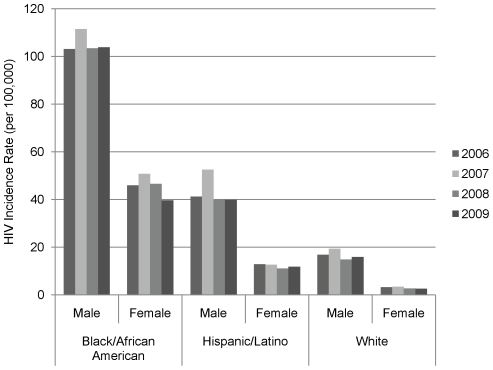
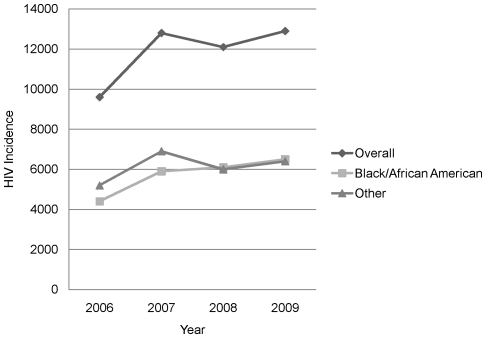
BACKGROUND: The estimated number of new HIV infections in the United States reflects the leading edge of the epidemic. Previously, CDC estimated HIV incidence in the United States in 2006 as 56,300 (95% CI: 48,200-64,500). We updated the 2006 estimate and calculated incidence for 2007-2009 using improved methodology. METHODOLOGY: We estimated incidence using incidence surveillance data from 16 states and 2 cities and a modification of our previously described stratified extrapolation method based on a sample survey approach with multiple imputation, stratification, and extrapolation to account for missing data and heterogeneity of HIV testing behavior among population groups. PRINCIPAL FINDINGS: Estimated HIV incidence among persons aged 13 years and older was 48,600 (95% CI: 42,400-54,700) in 2006, 56,000 (95% CI: 49,100-62,900) in 2007, 47,800 (95% CI: 41,800-53,800) in 2008 and 48,100 (95% CI: 42,200-54,000) in 2009. From 2006 to 2009 incidence did not change significantly overall or among specific race/ethnicity or risk groups. However, there was a 21% (95% CI:1.9%-39.8%; p = 0.017) increase in incidence for people aged 13-29 years, driven by a 34% (95% CI: 8.4%-60.4%) increase in young men who have sex with men (MSM). There was a 48% increase among young black/African American MSM (12.3%-83.0%; p<0.001). Among people aged 13-29, only MSM experienced significant increases in incidence, and among 13-29 year-old MSM, incidence increased significantly among young, black/African American MSM. In 2009, MSM accounted for 61% of new infections, heterosexual contact 27%, injection drug use (IDU) 9%, and MSM/IDU 3%. CONCLUSIONS/SIGNIFICANCE: Overall, HIV incidence in the United States was relatively stable 2006-2009; however, among young MSM, particularly black/African American MSM, incidence increased. HIV continues to be a major public health burden, disproportionately affecting several populations in the United States, especially MSM and racial and ethnic minorities. Expanded, improved, and targeted prevention is necessary to reduce HIV incidence.
Overview
The claims and statistics of this paper haven’t been checked yet.
Free: it reads the open-access text and checks the first 5 claims that cite a source we can check. Create a free account to check every claim.
Integrity signals
Registry
Cites
Statistics
Figures
Verification
Claims the paper makes
The claims and statistics of this paper haven’t been checked yet.
Free: it reads the open-access text and checks the first 5 claims that cite a source we can check. Create a free account to check every claim.
Claims other papers make about this one
Each is checked against this paper’s own text: does it say what the citing paper says it does?
In the citing paper
“HIV is a public health crisis among Black and Latino men in the USA, notably those living in New York City (NYC).”
From Using Syndemic Theory to Understand Vulnerability to HIV Infection among Black and Latino Men in New York City (2014) · cites this paper as [1]
In the citing paper
“That same year, HIV incidence among Black and Latino men was 6.5 and 2.5 times greater, respectively, than it was among White men.”
From Using Syndemic Theory to Understand Vulnerability to HIV Infection among Black and Latino Men in New York City (2014) · cites this paper as [1]
Self-check
Percentages, sums and reported differences re-computed from the paper’s own numbers.
The self-check needs the paper’s full text.
Citations
Cites
Applied Regression Analysis and Other Multivariable Methods
Walker, E. (1989) · Technometrics · doi:10.1080/00401706.1989.10488486 · Cited by 8,538
(2006) · PsycEXTRA Dataset · doi:10.1037/e545592006-001 · Cited by 2,958
Estimation of HIV Incidence in the United States
Hall, H. I. (2008) · JAMA · doi:10.1001/jama.300.5.520 · Cited by 1,317 · cited 6×
“but within the confidence interval of that estimate [4].”
InfluentialSelf-citationMarks, G., Crepaz, N., & Janssen, R. S. (2006) · AIDS · doi:10.1097/01.aids.0000233579.79714.8d · Cited by 1,096 · cited 1×
“, and the majority of new HIV infections transmitted by these individuals”
Parashar, U. (2006) · Medical Entomology and Zoology · Cited by 799
Janssen, R. S. (1998) · JAMA · doi:10.1001/jama.280.1.42 · Cited by 687 · cited 1×
“Since 2004, CDC has funded selected states and localities to conduct HIV incidence surveillance by (1) submitting remnant diagnostic HIV-positive blood specimens for testing using the serologic testing algorithm for recent HIV seroconversion (STARHS)”
BackgroundPurcell, D. W., Johnson, C. H., Lansky, A., Prejean, J., Stein, R., Denning, P., Gau1, Z., Weinstock, H., Su, J., & Crepaz, N. (2012) · The Open AIDS Journal · doi:10.2174/1874613601206010098 · Cited by 356
Self-citationParekh, B. S., Kennedy, M. S., Dobbs, T., Pau, C.-P., Byers, R., Green, T., Hu, D. J., Vanichseni, S., Young, N. L., Choopanya, K., et al. (2002) · AIDS Research and Human Retroviruses · doi:10.1089/088922202753472874 · Cited by 355 · cited 1×
“In addition, the continued refinement of the method for estimating the mean recency period for the BED HIV-1 Capture Enzyme Immunoassay (BED; the assay that currently serves as the serologic marker of recent infection) [6] and for modeling the recency period distribution [7] has allowed for improvement of the method o…”
Self-citationSullivan, P. S., Hamouda, O., Delpech, V., Geduld, J. E., Prejean, J., Semaille, C., Kaldor, J., Folch, C., Op de Coul, E., Marcus, U., et al. (2009) · Annals of Epidemiology · doi:10.1016/j.annepidem.2009.03.004 · Cited by 326
Self-citationUndiagnosed HIV Prevalence Among Adults and Adolescents in the United States at the End of 2006
Campsmith, M. L., Rhodes, P. H., Hall, H. I., & Green, T. A. (2010) · JAIDS Journal of Acquired Immune Deficiency Syndromes · doi:10.1097/qai.0b013e3181bf1c45 · Cited by 219 · cited 1×
“, public health programs are presented with new challenges. There is a need to address the prevention needs both of people at risk for HIV infection as well as of those living with HIV disease—those who are aware of their HIV status and those who are not. With an estimated 21% of people living with HIV unaware of thei…”
BackgroundSelf-citation
Cited by
Items 701–800 of 1,000
Kuo, I. C., Golin, C. E., Wang, J., Haley, D. F., Hughes, J. P., Mannheimer, S., Justman, J. E., Rompalo, A. M., Frew, P. M., Adimora, A. A., et al. (2014) · Drug and Alcohol Dependence · doi:10.1016/j.drugalcdep.2014.03.007 · Cited by 13
“, 2013), nearly six-fold higher than that estimated for the general population of African American women of similar age (Prejean et al., 2011).”
BackgroundAligning Resources to Fight HIV/AIDS in the United States
Mansergh, G., Valdiserri, R. O., Yakovchenko, V., & Koh, H. K. (2011) · JAIDS Journal of Acquired Immune Deficiency Syndromes · doi:10.1097/qai.0b013e318245cc05 · Cited by 13
“2 million people are living with HIV/AIDS in the United States today.(1,4) HIV and AIDS cases are largely concentrated in the South, the Northeast, and the West.”
BackgroundFinding those at risk: Acute HIV infection in Newark, NJ
Martin, E. G., Salaru, G., Mohammed, D. Y., Coombs, R. W., Paul, S. M., & Cadoff, E. M. (2013) · Journal of Clinical Virology · doi:10.1016/j.jcv.2013.07.016 · Cited by 13
Neaigus, A., Jenness, S. M., Hagan, H., Murrill, C. S., Torian, L. V., Wendel, T., & Gelpí-Acosta, C. (2011) · AIDS and Behavior · doi:10.1007/s10461-011-0050-8 · Cited by 14
“in 2009) [2].”
MethodCarrel, M., Eron, J. J., Emch, M., & Hurt, C. B. (2014) · PLoS ONE · doi:10.1371/journal.pone.0088512 · Cited by 13
Metch, B. J., Frank, I., Novak, R. M., Swann, E. M., Metzger, D. S., Morgan, C. A., Lucy, D., Dunbar, D., Graham, P. J., Madenwald, T., et al. (2012) · AIDS and Behavior · doi:10.1007/s10461-012-0351-6 · Cited by 13
“The HIV infection rate among Hispanic/Latina women is over 4 times higher than white women [8].”
BackgroundCragin, L. S., Pan, F., Peng, S., Zenilman, J. M., Green, J., Doucet, C., Chalfin, D. B., & de Lissovoy, G. (2012) · HIV Clinical Trials · doi:10.1310/hct1301-011 · Cited by 13
A Culture of Future Planning: Perceptions of Sexual Risk Among Educated Young Adults
Cheney, A. M., Ostrach, B. M. M., Marcus, R., Frank, C. A., Ball, C. J., & Erickson, P. I. (2014) · Qualitative Health Research · doi:10.1177/1049732314548595 · Cited by 16
“Many of the students in this study paid little attention to the risk of sexually transmitted disease transmission, despite growing up in an era in which HIV/AIDS is a familiar and a legitimate concern (Prejean et al., 2011).”
BackgroundEllen, J. M., McCree, D. H., Muvva, R., Chung, S. E., Miazad, R., Arrington‐Sanders, R., Jones, K. T., Burnett, P., & Fichtenberg, C. (2013) · International Journal of STD & AIDS · doi:10.1177/0956462412472459 · Cited by 13
Alshomrani, A. T. (2015) · Saudi Medical Journal · doi:10.15537/smj.2015.7.11475 · Cited by 13
Griffin, D. O., Metzger, M. J., Poeth, K., Deng, K., Dharsee, A., Rico, J. C., & McGowan, J. P. (2015) · Open Forum Infectious Diseases · doi:10.1093/ofid/ofv147 · Cited by 13
Frimpong, J. A., D’Aunno, T. A., Helleringer, S., & Metsch, L. R. (2015) · Journal of Substance Abuse Treatment · doi:10.1016/j.jsat.2015.12.001 · Cited by 13
Hughto, J. M. W., Hidalgo, A. P., Bazzi, A. R., Reisner, S. L., & Mimiaga, M. J. (2016) · Sexual Health · doi:10.1071/sh16023 · Cited by 14
Wright, B., & Nice, A. J. (2014) · Journal of Public Health Management and Practice · doi:10.1097/phh.0000000000000112 · Cited by 13
Hoover, K. W., Ham, D. C., Peters, P. J., Smith, D. K., & Bernstein, K. T. (2016) · Sexually Transmitted Diseases · doi:10.1097/olq.0000000000000441 · Cited by 13
“Despite these prevention efforts, incidence continues to increase among men who have sex with men (MSM), with the steepest increases among young blackMSM.(17) Although HIV diagnosis rates decreased among women from 2010 through 2014, 19% of new diagnoses in 2014 were in women, and black women accounted for 62% of thes…”
BackgroundO’Donnell, S., Bhate, T. D., Grafstein, E., Lau, W., Stenstrom, R. J., & Scheuermeyer, F. X. (2016) · Annals of Emergency Medicine · doi:10.1016/j.annemergmed.2016.03.027 · Cited by 13
Surkan, P. J., Li, Y., Jacobson, L. P., Cox, C., Silvestre, A. J., Gorbach, P. M., Teplin, L. A., & Plankey, M. W. (2016) · AIDS and Behavior · doi:10.1007/s10461-016-1614-4 · Cited by 13
“Although overall HIV incidence has been fairly stable in recent years, the incidence of male-to-male transmission of HIV infection and other sexually transmitted infections (STIs) [1, 2] and unprotected sex in the US continues to rise [3].”
Vincent, W., Peterson, J. L., Storholm, E. D., Huebner, D. M., Neilands, T. B., Calabrese, S. K., Rebchook, G., Tan, J. Y., Pollack, L. M., & Kegeles, S. M. (2019) · AIDS and Behavior · doi:10.1007/s10461-019-02630-5 · Cited by 13
Lee, T., Buchanan, A. L., Katenka, N., Forastiere, L., Halloran, M. E., Friedman, S. R., & Nikolopoulos, G. K. (2023) · The Annals of Applied Statistics · doi:10.1214/22-aoas1713 · Cited by 21
Maragh‐Bass, A. C., & Knowlton, A. R. (2015) · AIDS and Behavior · doi:10.1007/s10461-015-1131-x · Cited by 13
“Women are also less likely to achieve UVL than men, with larger disparities between African– American men and their women counterparts [1, 3, 11].”
Cusimano, M. D., Holmes, S. A., Sawicki, C. P., & Topolovec‐Vranic, J. (2013) · Journal of Head Trauma Rehabilitation · doi:10.1097/htr.0b013e31827c7d15 · Cited by 13
Xia, Q., Kobrak, P. H., Wiewel, E. W., & Torian, L. V. (2014) · AIDS Care · doi:10.1080/09540121.2014.958430 · Cited by 13
HIV testing practices among New England college health centers
Patel, N., Rana, A., Thomas, A., Barnhart, J. C., Flanigan, T., van den Berg, J. J., & Chan, P. A. (2013) · AIDS Research and Therapy · doi:10.1186/1742-6405-10-8 · Cited by 14
“The Centers for Disease Control and Prevention (CDC) estimates that 34% of new HIV infections occurred in individuals aged 15–29 in 2009 [2].”
BackgroundMartos, A. J. (2015) · Sex Education · doi:10.1080/14681811.2015.1088434 · Cited by 14
“…and Prevention (CDC) website and by independent researchers, of those disproportionately affected, the only group to continue experiencing an increase in incidence are men who have sex with men, with the greatest increases repeatedly observed among those aged 13–24 years (Prejean et al. 2011).”
BackgroundMethodInfluentialSexual and Gender Diversity Within the Black Men Who Have Sex with Men HIV Epidemiological Category
Wilson, B. D. M., & Ochoa, A. M. (2016) · Sexuality Research and Social Policy · doi:10.1007/s13178-016-0219-z · Cited by 15
Linkage From HIV Testing to Care
El‐Sadr, W., Gamble, T., & Cohen, M. S. (2012) · Sexually Transmitted Diseases · doi:10.1097/olq.0b013e31827e612b · Cited by 13
The effect of an electronic "hard-stop" alert on HIV testing rates in the emergency department.
Schnall, R., Sperling, J. D., Liu, N., Green, R. A., Clark, S., & Vawdrey, D. K. (2013) · PubMed · Cited by 15
Henao‐Martínez, A. F., & Castillo‐Mancilla, J. (2012) · Current Infectious Disease Reports · doi:10.1007/s11908-012-0306-0 · Cited by 12
“According to the CDC, Hispanics accounted for 16 % of the HIV-infected population and 20 % of new HIV infections in 2009 [8].”
BackgroundScott, P. T., Hakre, S., Myles, O., Sanders‐Buell, E., Kijak, G. H., McCutchan, F. E., O’Connell, R. J., Peel, S. A., Eggleston, J. C., Sateren, W. B., et al. (2012) · AIDS Research and Human Retroviruses · doi:10.1089/aid.2011.0363 · Cited by 12
The Promise of Antiretrovirals for HIV Prevention
Flash, C. A., Krakower, D., & Mayer, K. H. (2012) · Current Infectious Disease Reports · doi:10.1007/s11908-012-0242-z · Cited by 12
“been widely available since early in the epidemic, HIV incidence has remained stable at an estimated 48,000 new infections per year since 2006 [90].”
BackgroundCrooks, D., Tsui, J. I., Anderson, B. J., Dossabhoy, S. S., Herman, D. S., Liebschutz, J. M., & Stein, M. D. (2014) · AIDS and Behavior · doi:10.1007/s10461-014-0754-7 · Cited by 13
“Injection drug users (IDUs), particularly those not receiving substance abuse treatment, are at an increased risk for acquiring HIV [1, 2].”
BackgroundDisseminating HIV Pre-Exposure Prophylaxis Information in Underserved Communities
Dutta, M. J. (2012) · American Journal of Preventive Medicine · doi:10.1016/j.amepre.2012.09.030 · Cited by 12
HIV viral load levels and CD4+ cell counts of youth in 14 cities
Ellen, J. M., Kapogiannis, B. G., Fortenberry, J. D., Xu, J., Willard, N. J., DuVal, A. L., Pace, J., Loeb, J., Monte, D., & Bethel, J. (2014) · AIDS · doi:10.1097/qad.0000000000000183 · Cited by 12
Soeters, H. M., Napravnik, S., Zakharova, O. I., Eron, J. J., & Hurt, C. B. (2013) · AIDS · doi:10.1097/01.aids.0000433240.78739.30 · Cited by 14
Krueger, A. L., Dietz, P. M., Handel, M. M. V., Belcher, L., & Johnson, A. S. (2016) · AIDS and Behavior · doi:10.1007/s10461-016-1293-1 · Cited by 12
“The results of this study partially support our hypotheses; CDC-funded tests are diagnosing a greater percentage of persons in some populations disproportionately affected by HIV infection, specifically young adults and blacks/ African Americans [6, 10–12].”
ResultSustained Reduction in HIV Diagnoses in Massachusetts, 2000–2014
Cranston, K., John, B., Fukuda, H., Randall, L. M., Mermin, J., Mayer, K. H., & DeMaria, A. (2017) · American Journal of Public Health · doi:10.2105/ajph.2017.303697 · Cited by 12
Self-citationKist, N. C., Lambert, B. C., Campbell, S., Katzourakis, A., Lunn, D., Lemey, P., & Iversen, A. K. N. (2020) · Virus Evolution · doi:10.1093/ve/veaa085 · Cited by 14
“We estimated the ethnic demographics of the HIV-infected population in the USA from (Hall et al. 2008) and (Prejean et al. 2011) and used that demographic data to calculate the frequency of African Americans in the US HIV-infected population over time (Supplementary Fig.”
Wei, Z., Narin, A. B., & Mukherjee, S. (2022) · IEEE Access · doi:10.1109/access.2022.3153482 · Cited by 13
Lima, V. D., Graf, I., Beckwith, C. G., Springer, S. A., Altice, F. L., Coombs, D., Kim, B. W., Korhonen, L. C., Montaner, J. S. G., & Spaulding, A. C. (2015) · PLoS ONE · doi:10.1371/journal.pone.0123482 · Cited by 12
Lin, F., Lasry, A., Sansom, S. L., & Wolitski, R. J. (2013) · PLoS ONE · doi:10.1371/journal.pone.0055713 · Cited by 12
Carey, J. W., LaLota, M., Villamizar, K., McElroy, T., Wilson, M., Garcia, J., Sandrock, R. W., Taveras, J., Candio, D., & Flores, S. A. (2015) · Journal of Public Health Management and Practice · doi:10.1097/phh.0000000000000321 · Cited by 12
Condom and Substance Use at Last Sex: Differences between MSMO and MSWO High School Youth
Phillips, G., Kalmin, M. M., Turner, B., Felt, D., Marro, R. L., Salamanca, P., & Beach, L. B. (2018) · International Journal of Environmental Research and Public Health · doi:10.3390/ijerph15050995 · Cited by 12
“HIV disproportionately impacts youth, particularly young men who have sex with men (YMSM), a group that includes both young men who have sex with men only (YMSMO) and young men who have sex with men and women (YMSMW) [1,2].”
BackgroundWiniker, A. K., Tobin, K. E., Davey-Rothwell, M. A., & Latkin, C. A. (2019) · Journal of Community Psychology · doi:10.1002/jcop.22176 · Cited by 12
“…with men (MSM) in areas including substance use, victimization, incarceration, poor physical health, and reduced access to health and preventive care (Garofalo et al., 2010; Harawa et al., 2008; Hatfield et al., 2009; Mays et al., 2004; Prejean et al., 2011; Tobin et al., 2011; Eaton et al., 2018).”
BackgroundDendritic Cells in HIV-1 and HCV Infection: Can They Help Win the Battle?
Sehgal, M., Khan, Z. K., Talal, A. H., & Jain, P. (2013) · Virology Research and Treatment · doi:10.4137/vrt.s11046 · Cited by 16
Sexual risk behaviors and steroid use among sexual minority adolescent boys
Blashill, A. J., Safren, S. A., & Jampel, J. D. (2015) · Drug and Alcohol Dependence · doi:10.1016/j.drugalcdep.2015.06.025 · Cited by 11
Failed drug policies in the United States and the future of AIDS: A perfect storm
Drucker, E. (2012) · Journal of Public Health Policy · doi:10.1057/jphp.2012.16 · Cited by 11
Simmons, R., Malyuta, R., Chentsova, N., Karnets, I., Murphy, G., Medoeva, A., Kruglov, Y. V., Yurchenko, A., Copas, A. J., & Porter, K. (2016) · PLoS ONE · doi:10.1371/journal.pone.0157179 · Cited by 11
Shearer, K., Khosropour, C. M., Stephenson, R. B., & Sullivan, P. S. (2012) · International Journal of Sexual Health · doi:10.1080/19317611.2012.686965 · Cited by 11
Shahani, L., Hartman, C. M., Troisi, C., Kapadia, A. S., & Giordano, T. P. (2011) · AIDS Patient Care and STDs · doi:10.1089/apc.2011.0040 · Cited by 11
“The CDC has estimated that approximately 50,000 persons in the United States become infected with HIV each year.(2) With the advent of highly active antiretroviral therapy (HAART), HIV infection can be managed with great effectiveness.”
BackgroundPearson, C. R., Walters, K. L., Simoni, J. M., Beltrán, R., & Nelson, K. M. (2013) · AIDS Education and Prevention · doi:10.1521/aeap.2013.25.1.25 · Cited by 11
“100,000 and estimated HIV incidence rate of 14 per 100,000 (Prejean et al., 2011), with the overall HIV diagnoses rate among AIAN increasing from 2006–2009 (Roubideaux, 2011).”
BackgroundInfluentialRothman, R. E., Gauvey-Kern, M., Woodfield, A. S., Peterson, S., Tizenberg, B., Kennedy, J., Bush, D. M., Locke, W., Gaydos, C. A., Deruggiero, K., et al. (2013) · Telemedicine Journal and e-Health · doi:10.1089/tmj.2013.0045 · Cited by 11
Anabolic-Androgenic Steroids and Condom Use: Potential Mechanisms in Adolescent Males
Blashill, A. J., Gordon, J. R., & Safren, S. A. (2013) · The Journal of Sex Research · doi:10.1080/00224499.2013.766823 · Cited by 11
“In the United States, gay and bisexual men are, by far, the most at-risk group for acquiring and transmitting HIV (Prejean et al., 2011).”
BackgroundGoldenberg, T., Finneran, C. A., Sullivan, S. P., Andes, K. L., & Stephenson, R. B. (2016) · Sexuality Research and Social Policy · doi:10.1007/s13178-016-0235-z · Cited by 11
Dworkin, M. S., Panchal, P., Wiebel, W. W., Garofalo, R., Haberer, J. E., & Jimenez, A. D. (2019) · BMC Public Health · doi:10.1186/s12889-019-6689-1 · Cited by 12
Murray, A., Huang, M. J., Hardnett, F. P., & Sutton, M. Y. (2014) · Digital Scholarship - UNLV (University of Nevada Reno) · Cited by 11
Epidemiology of Psychopathology in HIV
Wainberg, M. L., McKinnon, K. M., & Cournos, F. (2014) · Wiley eBooks · doi:10.1002/9781118339503.ch1 · Cited by 11
Can the HIV Home Test Promote Access to Care? Lessons Learned from the In-home Pregnancy Test
Schnall, R., Carballo‐Diéguez, A., & Larson, E. (2014) · AIDS and Behavior · doi:10.1007/s10461-014-0798-8 · Cited by 11
“The overall incidence of HIV has been declining in the US, yet it continues to grow at alarming rates for adolescents and young adults [1].”
BackgroundHIV Testing: the Cornerstone of HIV Prevention Efforts in the USA
Heffelfinger, J. D., Owen, S. M., Hendry, R. M., & Lansky, A. L. (2011) · Future Virology · doi:10.2217/fvl.11.114 · Cited by 11
Self-citationViral Loads among Young HIV-Infected Men with Early Syphilis
Taylor, M. M., Li, W. Y., Skinner, J., & Mickey, T. (2014) · Journal of the International Association of Providers of AIDS Care (JIAPAC) · doi:10.1177/2325957414536229 · Cited by 11
“Young African-American and Hispanic/Latino MSM have been identified as emergent risk groups for HIV infection and syphilis.(21-23) Younger age is associated with several measures of clinical nonadherence, and persons aged 13 to 24 represent a substantial proportion of poor care outcomes by several measures, including…”
BackgroundButtram, M. E., & Kurtz, S. P. (2015) · American Journal of Men s Health · doi:10.1177/1557988315584157 · Cited by 12
“BMSM report nearly as many annual new HIV infections as White MSM, though White MSM comprise a much larger proportion of the population (Prejean et al., 2011).”
BackgroundLudwig-Barron, N., Wagner, K. D., Syvertsen, J. L., Ewald, I. J., Patterson, T. L., Semple, S. J., & Stockman, J. K. (2014) · Women s Health Issues · doi:10.1016/j.whi.2014.06.007 · Cited by 11
Akintobi, T. H., Trotter, J. C., Zellner, T., Lenoir, S., Evans, D., Rollins, L. S., & Miller, A. (2016) · Health Promotion Practice · doi:10.1177/1524839916649367 · Cited by 11
“…MSW1 Assia Miller, MD, MPH4 752 HEALTH PROMOTION PRACTICE / September 2016 Although African Americans comprise only 12% of the U.S. population, they account for 44% of 1.2 million Americans living with HIV infection (Centers for Disease Control and Prevention [CDC], 2014; Prejean et al., 2011).”
InfluentialMcCarthy, E. M., Myers, J. J., Reeves, K., & Zack, B. (2016) · Social disparities in health and health care · doi:10.1007/978-3-319-34004-3_9 · Cited by 12
Contraception for HIV-Infected Adolescents
Kourtis, A. P., & Mirza, A. (2016) · PEDIATRICS · doi:10.1542/peds.2016-1892 · Cited by 13
Opportunistic Infections in Women With HIV AIDS
Lazenby, G. B. (2012) · Clinical Obstetrics & Gynecology · doi:10.1097/grf.0b013e3182718e0d · Cited by 11
“New HIV infections occur inAfricanAmericanwomen at a rate 15 times higher than that in white women.(2) HIV/AIDS is a common cause of death in the US minority women aged between 10 and 54 years.”
BackgroundCounseling Parents Who Are Considering Newborn Male Circumcision
Mielke, R. T. (2013) · Journal of Midwifery & Women s Health · doi:10.1111/jmwh.12130 · Cited by 11
Chen, C., Cao, X., Xu, J., Jiang, Z., Liu, Z., McGoogan, J. M., & Wu, Z. (2023) · BMC Public Health · doi:10.1186/s12889-023-15538-6 · Cited by 10
“Some reasons may explain the age discrepancies: 1) Older adults could be more likely to be diagnosed with HIV later than youngers, where 49% of adults aged 60 years and older progressed to AIDS in 1 year since they were diagnosed with HIV infection during 2009 compared with 14% of adults younger than 25 years [41].”
BackgroundPravosud, V., Ballard, A. M., Holloway, I. W., & Young, A. M. (2023) · AIDS and Behavior · doi:10.1007/s10461-023-04210-0 · Cited by 11
Benefit of interpregnancy HIV viral load suppression on subsequent maternal and infant outcomes
Stewart, R. D., Wells, C. E., Roberts, S. W., Rogers, V. L., McElwee, B. S., McIntire, D. D., & Sheffield, J. S. (2014) · American Journal of Obstetrics and Gynecology · doi:10.1016/j.ajog.2014.04.020 · Cited by 10
Sabato, T. M., Burnett, A. J., Kerr, D. L., & Wagner, L. (2013) · American Journal of Sexuality Education · doi:10.1080/15546128.2012.740893 · Cited by 10
“Thirty-nine percent of HIV infections in 2009 occurred in persons between 13 and 29 years of age (Prejean et al., 2011).”
BackgroundDeclining HIV Incidence Among Women in the United States
Lansky, A. L., Hall, I., & Mermin, J. (2014) · Women s Health Issues · doi:10.1016/j.whi.2014.07.002 · Cited by 10
Self-citationCrosby, R. A., Graham, C. A., Mena, L. A., Yarber, W. L., Sanders, S. A., Milhausen, R. R., & Geter, A. (2015) · AIDS and Behavior · doi:10.1007/s10461-015-1212-x · Cited by 11
Borges, C. M., Pathela, P., Pirillo, R. E., & Blank, S. (2015) · Public Health Reports · doi:10.1177/003335491513000110 · Cited by 11
Weibel, N., Desai, P., Saul, L. K., Gupta, A., & Little, S. J. (2017) · Hawaii International Conference on System Sciences (HICSS) · doi:10.24251/hicss.2017.216 · Cited by 11
Said, M. A., German, D., Flynn, C. P., Linton, S. L., Blythe, D., Cooley, L. A., Balaji, A. B., & Oster, A. M. (2015) · AIDS and Behavior · doi:10.1007/s10461-015-1106-y · Cited by 10
Garrett, N., Lattimore, S., Gilbart, V. L., Aghaizu, A., Mensah, G., Tosswill, J. H. C., Murphy, G., & Delpech, V. (2012) · HIV Medicine · doi:10.1111/j.1468-1293.2012.00990.x · Cited by 10
Non-parental adults in the social and risk behavior networks of sexual minority male youth
Sterrett, E., Birkett, M. A., Kuhns, L. M., & Mustanski, B. S. (2015) · Children and Youth Services Review · doi:10.1016/j.childyouth.2015.05.007 · Cited by 11
Onyeabor, O. S., Martin, N., Orish, V. N., Sanyaolu, A. O., & Iriemenam, N. C. (2014) · Journal of Racial and Ethnic Health Disparities · doi:10.1007/s40615-014-0068-5 · Cited by 10
Dreisbach, S., Burnside, H., Hsu, K., Smock, L., Coury-Doniger, P. A., Hall, C. L., Marrazzo, J. M., Nagendra, G., RIETMEIJER, C. A. M., Rompalo, A. M., et al. (2014) · AIDS Patient Care and STDs · doi:10.1089/apc.2013.0094 · Cited by 10
“Know Your Status”: Results From a Novel, Student-Run HIV Testing Initiative on College Campuses
Milligan, C., Cuneo, C. N., Rutstein, S. E., & Hicks, C. B. (2014) · AIDS Education and Prevention · doi:10.1521/aeap.2014.26.4.317 · Cited by 10
“(CDC, 2011; Prejean et al., 2011).”
Kinsky, S. M., Maulsby, C. H., Jain, K. M., Charles, V. E., Riordan, M., & Holtgräve, D. R. (2015) · AIDS Education and Prevention · doi:10.1521/aeap.2015.27.5.391 · Cited by 10
Fasula, A. M., Oraka, E., Jeffries, W. L., Carry, M., Ocfemia, M. C. B., Balaji, A. B., Rose, C. E., Jayne, P. E., & Health, F. T. W. O. A. S. A. R. (2016) · Perspectives on Sexual and Reproductive Health · doi:10.1363/48e7016 · Cited by 10
Tea Polyphenols as Natural Products for Potential Future Management of HIV Infection - an overview
Sodagari, H. R., Bahramsoltani, R., Farzaei, M. H., Abdolghaffari, A. H., Rezaei, N., & Taylor-Robinson, A. W. (2016) · Journal of Natural Remedies · doi:10.18311/jnr/2016/4782 · Cited by 13
Constructive Communication Patterns and Associated Factors Among Male Couples
Mitchell, J. W., & Gamarel, K. E. (2017) · Journal of Couple & Relationship Therapy · doi:10.1080/15332691.2017.1302378 · Cited by 11
“, between primary partners), not confirming partners’ serostatus as seronegative before engagement in condomless anal sex, and/or achieving andmaintaining anundetectable viral load for the partner living with HIV infection, if applicable (Prejean et al., 2011).”
African-American and Hispanic Perceptions of HIV Vaccine Clinical Research: A Qualitative Study
Toledo, L., McLellan–Lemal, E., Arreola, S. G., Campbell, C. K., & Sutton, M. Y. (2014) · American Journal of Health Promotion · doi:10.4278/ajhp.130125-qual-48 · Cited by 10
“More than 60% of incident HIV infections in African-American and Hispanic communities are attributed to male-to-male sexual contact.(21) Enrollment of healthy African-American and Hispanic volunteers in HIV clinical trials may remain limited owing to the stigma carried by HIV and homosexuality in these communities.”
BackgroundEstimates of Sexually Transmitted Infection Prevalence and Incidence in the United States
Miller, W. C., & Siripong, N. (2013) · Sexually Transmitted Diseases · doi:10.1097/olq.0b013e318286dba6 · Cited by 10
“In at least 1 case, HIV infection, the estimate is provided from a previous publication that notably includes an assessment of uncertainty.(12) The estimates for the other STIs depend on several assumptions or input parameters that are uncertain at best and questionable at the worst.”
BackgroundOmame, A., Han, Q., Iyaniwura, S. A., Adeniyi, E., Bragazzi, N. L., Wang, X., Kong, J. D., & Woldegerima, W. A. (2024) · SSRN Electronic Journal · doi:10.2139/ssrn.4762707 · Cited by 10
HIV Testing Trends: Southeastern Pennsylvania, 2002–2010
Momplaisir, F. M., Yehia, B. R., Harhay, M. O., Fetzer, B. C., Brady, K. A., & Long, J. A. (2014) · AIDS Patient Care and STDs · doi:10.1089/apc.2014.0044 · Cited by 9
“We were unable to define some high risk groups such as MSM and IV drug abusers with our database; however, the HIV disease burden is known to be greater among racial/ethnic minorities and younger individuals.(25,26) There are advantages and disadvantages to this observed trend.”
Backgroundde Lima, Y. A. R., Cardoso, L. P. V., Reis, M. N. D. G., & Stefani, M. M. A. (2016) · Journal of Medical Virology · doi:10.1002/jmv.24540 · Cited by 9
White, D., Grey, J. A., Gorbach, P. M., ROTHENBERG, R. B., Sullivan, P. S., & Rosenberg, E. S. (2016) · Archives of Sexual Behavior · doi:10.1007/s10508-016-0743-1 · Cited by 10
Jones, J. S., & Sullivan, P. S. (2016) · SpringerPlus · doi:10.1186/s40064-016-2570-1 · Cited by 9
Aghaizu, A., Tosswill, J. H. C., Angelis, D. D., Ward, H., Hughes, G., Murphy, G., & Delpech, V. (2018) · PLoS ONE · doi:10.1371/journal.pone.0197939 · Cited by 9
Downing, M. J. (2013) · Journal of the Association of Nurses in AIDS Care · doi:10.1016/j.jana.2013.02.002 · Cited by 9
Siegler, A. J., Sanchez, T., Sineath, R. C., Grey, J. A., Kahle, E., & Sullivan, P. S. (2015) · Open Forum Infectious Diseases · doi:10.1093/ofid/ofv016 · Cited by 9
Mitchell, J. W., García, L. I., Champeau, D., Harvey, S. M., & Petroll, A. E. (2012) · International Journal of Sexual Health · doi:10.1080/19317611.2012.707168 · Cited by 11
“Approximately 60% of new infections each year represent individuals from this at-risk group (CDC, 2011; Prejean et al., 2011).”
BackgroundSemaan, S., Leinhos, M. R., & Neumann, M. S. (2013) · Drug and Alcohol Dependence · doi:10.1016/j.drugalcdep.2013.03.013 · Cited by 9
Social Network Composition and Sexual Risk-Taking Among Gay and Bisexual Men in Atlanta, GA
Finneran, C. A., & Stephenson, R. S. (2013) · AIDS and Behavior · doi:10.1007/s10461-013-0569-y · Cited by 10
Estimated HIV Incidence in California, 2006–2009
Scheer, S., Nakelsky, S., Bingham, T. A., Damesyn, M., Sun, D., Chin, C.-S. J., Buckman, A., & Mark, K. E. (2013) · PLoS ONE · doi:10.1371/journal.pone.0055002 · Cited by 10
Personalized Biobehavioral HIV Prevention for Women and Adolescent Girls
Brawner, B. M., Teitelman, A. M., Bevilacqua, A. W., & Jemmott, L. S. (2013) · Global Advances in Health and Medicine · doi:10.7453/gahmj.2013.059 · Cited by 9
Estimated Number of People Who Inject Drugs in San Francisco, 2005, 2009, and 2012
Chen, Y., McFarland, W., & Raymond, H. F. (2015) · AIDS and Behavior · doi:10.1007/s10461-015-1268-7 · Cited by 9
“Adverse health outcomes are common among people who inject drugs (PWID), including HCV infection, HIV infection, tuberculosis, depression, drug overdose and violent death [1–14].”
Background
Metadata
- Authors
- Prejean, J., Song, R., Hernandez, A., Ziebell, R., Green, T., Walker, F., Lin, L. S., An, Q., Mermin, J., Lansky, A., Hall, H. I., & for the HIV Incidence Surveillance Group
- Affiliations
- Centers for Disease Control and Prevention (US)
- Corresponding author
- Prejean, Joseph
- ORCID
- Venue
- PLoS ONE
- Publisher
- Public Library of Science (PLoS)
- Published
- 2011-08-03
- Volume
- 6
- Issue
- 8
- Pages
- e17502
- ISSN
- 1932-6203 (ISSN-L)
- PMC
- PMC3149556
- OpenAlex
- W2154463966
- Cited by
- 1,071
- References
- 23
- Citations by year
- 2025: 3 · 2024: 11 · 2023: 9 · 2022: 14 · 2021: 14 · 2020: 14 · 2019: 26 · 2018: 37 · 2017: 80 · 2016: 135 · 2015: 157 · 2014: 184 · 2013: 205 · 2012: 167
- FWCI
- 123.18
- Type
- journal article
- Language
- en
- Open access
- gold
- doi.org
- Licence
- Locations
- PLoS ONE (publishedVersion, public-domain)
- PubMed Central (publishedVersion, public-domain)
- PubMed (publishedVersion)
- DOAJ (DOAJ: Directory of Open Access Journals) (submittedVersion, cc-by-sa)
- University Libraries (University of Maryland) (submittedVersion)
- Figshare (submittedVersion, cc-by)
- Digital Repository at the University of Maryland (University of Maryland College Park)
- Funders
- U.S. Department of Health and Human Services
- U.S. Department of State
- New York State Department of Health
- State of Connecticut Department of Public Health
- New York State Department of Health - Wadsworth Center
- Virginia Department of Health
- Northrop Grumman
- State of New Jersey Department of Health
- Florida Department of Health
- Indiana State Department of Health
- Arizona Department of Health Services
- Washington State University
- Colorado Department of Public Health and Environment
- Louisiana Department of Health
- Missouri Department of Health and Senior Services
- Texas Department of State Health Services
- Mississippi State Department of Health
- Centers for Disease Control and Prevention
- University at Albany
- Topics
- Health Sciences › Medicine › Infectious Diseases › HIV/AIDS Research and Interventions
- Health Sciences › Medicine › Epidemiology › HIV, Drug Use, Sexual Risk
- Health Sciences › Medicine › Public Health, Environmental and Occupational Health › HIV, TB, and STIs Epidemiology
- Keywords
- HIV incidence, HIV epidemic trends, young men who have sex with men, heterosexual transmission, intravenous drug use, HIV testing behavior, HIV risk groups, HIV surveillance, multiple imputation, racial and ethnic disparities
- MeSH terms
- Adolescent, Adult, Female, Humans, Male, Middle Aged, United States, HIV Infections, Incidence, Young Adult
About these checks
Registry, retraction, Cites and statistics results are computed, not judged, with one exception: a printed reference that no index lists is read once by a model before it counts as a citation error. Claims are extracted by a model and kept only when their quote appears verbatim in the text; each cited source is then checked, with a model’s help, for whether it says what the claim relies on. Those verdicts can be wrong — read the claim’s quote and the cited source before relying on one.
Statistics and arithmetic are recomputed, not judged.
Confidence bands are shown only for fields calibrated on our annotated test set. None is calibrated yet, so no band is shown.
What counts as a claim ›How we measure confidence ›How we check this ›
Are you an author, or do you see a problem with this page? Request a review
Data sources
Bibliographic data: Semantic Scholar, OpenAlex, Crossref.
Contains information from the Semantic Scholar Academic Graph Datasets, made available under the ODC Attribution License (ODC-BY 1.0).
Semantic Scholar’s data is described in: Kinney, R., et al. (2023). The Semantic Scholar Open Data Platform. arXiv:2301.10140.
