

Estimated HIV Incidence in the United States, 2006–2009
Open accessThe DOI matches its Crossref record; 23 of the 23 references it cites were found in a registry or an index.
Abstract
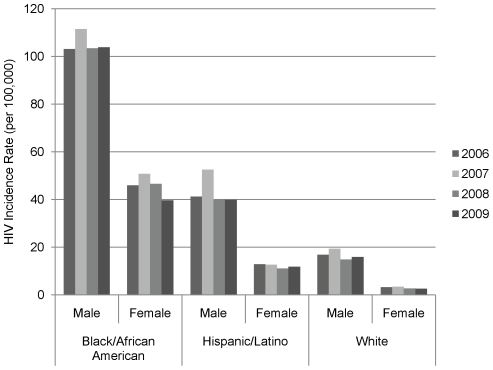
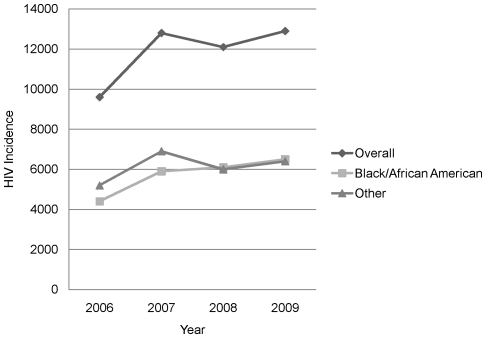
BACKGROUND: The estimated number of new HIV infections in the United States reflects the leading edge of the epidemic. Previously, CDC estimated HIV incidence in the United States in 2006 as 56,300 (95% CI: 48,200-64,500). We updated the 2006 estimate and calculated incidence for 2007-2009 using improved methodology. METHODOLOGY: We estimated incidence using incidence surveillance data from 16 states and 2 cities and a modification of our previously described stratified extrapolation method based on a sample survey approach with multiple imputation, stratification, and extrapolation to account for missing data and heterogeneity of HIV testing behavior among population groups. PRINCIPAL FINDINGS: Estimated HIV incidence among persons aged 13 years and older was 48,600 (95% CI: 42,400-54,700) in 2006, 56,000 (95% CI: 49,100-62,900) in 2007, 47,800 (95% CI: 41,800-53,800) in 2008 and 48,100 (95% CI: 42,200-54,000) in 2009. From 2006 to 2009 incidence did not change significantly overall or among specific race/ethnicity or risk groups. However, there was a 21% (95% CI:1.9%-39.8%; p = 0.017) increase in incidence for people aged 13-29 years, driven by a 34% (95% CI: 8.4%-60.4%) increase in young men who have sex with men (MSM). There was a 48% increase among young black/African American MSM (12.3%-83.0%; p<0.001). Among people aged 13-29, only MSM experienced significant increases in incidence, and among 13-29 year-old MSM, incidence increased significantly among young, black/African American MSM. In 2009, MSM accounted for 61% of new infections, heterosexual contact 27%, injection drug use (IDU) 9%, and MSM/IDU 3%. CONCLUSIONS/SIGNIFICANCE: Overall, HIV incidence in the United States was relatively stable 2006-2009; however, among young MSM, particularly black/African American MSM, incidence increased. HIV continues to be a major public health burden, disproportionately affecting several populations in the United States, especially MSM and racial and ethnic minorities. Expanded, improved, and targeted prevention is necessary to reduce HIV incidence.
Overview
The claims and statistics of this paper haven’t been checked yet.
Free: it reads the open-access text and checks the first 5 claims that cite a source we can check. Create a free account to check every claim.
Integrity signals
Registry
Cites
Statistics
Figures
Verification
Claims the paper makes
The claims and statistics of this paper haven’t been checked yet.
Free: it reads the open-access text and checks the first 5 claims that cite a source we can check. Create a free account to check every claim.
Claims other papers make about this one
Each is checked against this paper’s own text: does it say what the citing paper says it does?
In the citing paper
“HIV is a public health crisis among Black and Latino men in the USA, notably those living in New York City (NYC).”
From Using Syndemic Theory to Understand Vulnerability to HIV Infection among Black and Latino Men in New York City (2014) · cites this paper as [1]
In the citing paper
“That same year, HIV incidence among Black and Latino men was 6.5 and 2.5 times greater, respectively, than it was among White men.”
From Using Syndemic Theory to Understand Vulnerability to HIV Infection among Black and Latino Men in New York City (2014) · cites this paper as [1]
Self-check
Percentages, sums and reported differences re-computed from the paper’s own numbers.
The self-check needs the paper’s full text.
Citations
Cites
Applied Regression Analysis and Other Multivariable Methods
Walker, E. (1989) · Technometrics · doi:10.1080/00401706.1989.10488486 · Cited by 8,538
(2006) · PsycEXTRA Dataset · doi:10.1037/e545592006-001 · Cited by 2,958
Estimation of HIV Incidence in the United States
Hall, H. I. (2008) · JAMA · doi:10.1001/jama.300.5.520 · Cited by 1,317 · cited 6×
“but within the confidence interval of that estimate [4].”
InfluentialSelf-citationMarks, G., Crepaz, N., & Janssen, R. S. (2006) · AIDS · doi:10.1097/01.aids.0000233579.79714.8d · Cited by 1,096 · cited 1×
“, and the majority of new HIV infections transmitted by these individuals”
Parashar, U. (2006) · Medical Entomology and Zoology · Cited by 799
Janssen, R. S. (1998) · JAMA · doi:10.1001/jama.280.1.42 · Cited by 687 · cited 1×
“Since 2004, CDC has funded selected states and localities to conduct HIV incidence surveillance by (1) submitting remnant diagnostic HIV-positive blood specimens for testing using the serologic testing algorithm for recent HIV seroconversion (STARHS)”
BackgroundPurcell, D. W., Johnson, C. H., Lansky, A., Prejean, J., Stein, R., Denning, P., Gau1, Z., Weinstock, H., Su, J., & Crepaz, N. (2012) · The Open AIDS Journal · doi:10.2174/1874613601206010098 · Cited by 356
Self-citationParekh, B. S., Kennedy, M. S., Dobbs, T., Pau, C.-P., Byers, R., Green, T., Hu, D. J., Vanichseni, S., Young, N. L., Choopanya, K., et al. (2002) · AIDS Research and Human Retroviruses · doi:10.1089/088922202753472874 · Cited by 355 · cited 1×
“In addition, the continued refinement of the method for estimating the mean recency period for the BED HIV-1 Capture Enzyme Immunoassay (BED; the assay that currently serves as the serologic marker of recent infection) [6] and for modeling the recency period distribution [7] has allowed for improvement of the method o…”
Self-citationSullivan, P. S., Hamouda, O., Delpech, V., Geduld, J. E., Prejean, J., Semaille, C., Kaldor, J., Folch, C., Op de Coul, E., Marcus, U., et al. (2009) · Annals of Epidemiology · doi:10.1016/j.annepidem.2009.03.004 · Cited by 326
Self-citationUndiagnosed HIV Prevalence Among Adults and Adolescents in the United States at the End of 2006
Campsmith, M. L., Rhodes, P. H., Hall, H. I., & Green, T. A. (2010) · JAIDS Journal of Acquired Immune Deficiency Syndromes · doi:10.1097/qai.0b013e3181bf1c45 · Cited by 219 · cited 1×
“, public health programs are presented with new challenges. There is a need to address the prevention needs both of people at risk for HIV infection as well as of those living with HIV disease—those who are aware of their HIV status and those who are not. With an estimated 21% of people living with HIV unaware of thei…”
BackgroundSelf-citation
Cited by
Items 801–900 of 1,000
Gwadz, M. V., & Cleland, C. M. (2016) · Journal of AIDS & Clinical Research · doi:10.4172/2155-6113.1000544 · Cited by 9
Sexual Health Research With Young Black Men Who Have Sex With Men: Experiences of Benefits and Harms
Arrington‐Sanders, R., Morgan, A. R., Oidtman, J., Dao, A., Moon, M. R., Fortenberry, J. D., & Ott, M. A. (2016) · Archives of Sexual Behavior · doi:10.1007/s10508-016-0715-5 · Cited by 10
Oidtman, J., Sherman, S. G., Morgan, A. R., German, D., & Arrington‐Sanders, R. (2016) · Archives of Sexual Behavior · doi:10.1007/s10508-016-0831-2 · Cited by 10
“Given the disproportionate rates of HIV in young Black same-sex attractedmen (YBSSAM) (Centers forDiseaseControl, 2012; Prejean et al., 2011), which some have suggested may result from early first same-sex (Outlaw et al.”
BackgroundLorente, N., Champenois, K., Blanche, J., Préau, M., Suzan, M., Mora, M., Fugon, L., Carrieri, P., Sagaon‐Teyssier, L., Gall, J.-M. L., et al. (2013) · Journal of Sexually Transmitted Diseases · doi:10.1155/2013/648791 · Cited by 10
Bernstein, E., Ng, V., McCloskey, L., Vazquez, K., Ashong, D., Stapleton, S., Cromwell, J., & Bernstein, J. (2013) · Addiction Science & Clinical Practice · doi:10.1186/1940-0640-8-10 · Cited by 9
Stockman, J. K., Ludwig-Barron, N., Hoffman, Ulibarri, & Dyer, T. V. (2012) · Substance Abuse and Rehabilitation · doi:10.2147/sar.s21293 · Cited by 9
Epidemiology of Contemporary Seroincident HIV Infection in the Navy and Marine Corps
Brett‐Major, D. M., Hakre, S., Naito, N. A., Armstrong, A. W., Bower, E. A., Michael, N. L., & Scott, P. T. (2012) · Military Medicine · doi:10.7205/milmed-d-12-00299 · Cited by 9
Lin, X. M., Mattson, C. L., Freedman, M. S., & Skarbinski, J. (2016) · AIDS and Behavior · doi:10.1007/s10461-016-1552-1 · Cited by 9
Advancing HIV Biomedical Prevention Research for At-Risk Adolescents
Kapogiannis, B. G., Nelson, R. M., Siberry, G. K., Lee, S., & Hazra, R. (2018) · JAIDS Journal of Acquired Immune Deficiency Syndromes · doi:10.1097/qai.0000000000001853 · Cited by 9
Pre-Exposure Prophylaxis for HIV
Katz, M. H. (2012) · American Journal of Preventive Medicine · doi:10.1016/j.amepre.2012.10.004 · Cited by 9
Protocol: the American Women: Assessing Risk Epidemiologically (AWARE) cohort study
Schnall, R., Kempf, M.-C., Phillips, G., Dionne, J. A., Wingood, G. M., Long, D. M., Klitzman, R., Hughes, T. L., Liu, J., Nassel, A., et al. (2024) · BMC Public Health · doi:10.1186/s12889-024-20810-4 · Cited by 8
A Comparison by Sexual Orientation of Sexual Health and Sexual Behaviors Among Hispanic Men
Santis, J. P. D., Valdes, B., Provencio‐Vasquez, E., & Gattamorta, K. A. (2014) · Sexuality Research and Social Policy · doi:10.1007/s13178-014-0170-9 · Cited by 8
Loeb, T. B., Holloway, I. W., Galván, F. H., Wyatt, G. E., Myers, H. F., Glover, D. A., Zhang, M., & Liu, H. (2014) · Violence and Victims · doi:10.1891/0886-6708.vv-d-12-00166 · Cited by 9
“Estimates of the extent of childhood sexual abuse (CSA) among men in the United States vary widely, in part because of differing sampling methods, definitions of CSA, and willingness to disclose.”
BackgroundInfluentialMoving HIV Pre-Exposure Prophylaxis Into Clinical Settings
Edelman, E. J., & Fiellin, D. A. (2012) · American Journal of Preventive Medicine · doi:10.1016/j.amepre.2012.09.035 · Cited by 9
Friedman, M. R., Feliz, N. B., Netto, J., Adams, B., Matthews, D. D., Stall, R. D., Ho, K. S., Krier, S. E., & Silvestre, A. J. (2016) · Sexually Transmitted Infections · doi:10.1136/sextrans-2016-052722 · Cited by 8
Operario, D., Lee, J. H., Kuo, C., & Zaller, N. D. (2015) · AIDS Patient Care and STDs · doi:10.1089/apc.2015.0169 · Cited by 8
“Among these incident STIs, of particular concern are the approximately 50,000 new HIV infections annually.(2) Racial and ethnic disparities in HIV and STIs are national priorities.”
BackgroundStulberg, D. B. (2012) · Journal of Health Politics Policy and Law · doi:10.1215/03616878-1966369 · Cited by 8
Long Term Nationwide Analysis of HIV and AIDS in Iceland, 1983-2012
Indriðason, H. (2014) · Journal of AIDS & Clinical Research · doi:10.4172/2155-6113.1000387 · Cited by 8
Evaluating New Definitions of Acute and Early HIV Infection from HIV Surveillance Data
Buskin, S. E., Fida, N., Bennett, A., Golden, M. R., & Stekler, J. D. (2014) · The Open AIDS Journal · doi:10.2174/1874613601408010045 · Cited by 8
“The STARHS window period defining a recent infection (non-reactive) is approximately 153 to 162 days from infection [16, 19, 20].”
Gulov, K., Coulter, R. W. S., Matthews, D. D., Uzzi, M., & Stall, R. D. (2016) · AIDS and Behavior · doi:10.1007/s10461-016-1457-z · Cited by 8
Wright, E. R., Carnes, N., & Colón-Diaz, M. J. P. (2016) · Social disparities in health and health care · doi:10.1007/978-3-319-34004-3_1 · Cited by 8
Khosropour, C. M., Dombrowksi, J. C., Hughes, J. P., Manhart, L. E., & Golden, M. R. (2016) · American Journal of Epidemiology · doi:10.1093/aje/kww020 · Cited by 8
Pahangchopi, D., Singh, R. V., Singh, S. V., Das, P., Sharma, D., Sardana, T., Kumar, N., Chaubey, K. K., & Gupta, S. K. (2014) · PubMed · Cited by 9
Comparison of different strategies for controlling HIV/AIDS spreading in MSM
Lou, J., Cheng, J., Li, Y., Zhang, C., Xing, H. Q., Ruan, Y., & Shao, Y. (2018) · Infectious Disease Modelling · doi:10.1016/j.idm.2018.10.002 · Cited by 12
Assessing pharmacists' perspectives of HIV and the care of HIV-infected patients in Alabama
Pate, M. D., Shell, A. T., & King, S. R. (2012) · Pharmacy Practice · doi:10.4321/s1886-36552012000400002 · Cited by 8
“It is also estimated that approximately 50,000 people in the United States are newly infected with HIV each year.(2) Over the past 25 years, several aspects about this disease have changed, ranging from knowledge of its genetic makeup, transmission, forms of treatment, and therapies.”
BackgroundScott, H. M., Fuqua, V., & Raymond, H. F. (2013) · AIDS and Behavior · doi:10.1007/s10461-013-0526-9 · Cited by 10
Screening for Infectious Diseases in the Dental Setting
Reznik, D. A. (2012) · Dental Clinics of North America · doi:10.1016/j.cden.2012.07.007 · Cited by 11
Predictors of sexual behaviour among men and women in New York City area prisons
Rowell‐Cunsolo, T. L., Szeto, B., Sampong, S. A., & Larson, E. (2016) · Culture Health & Sexuality · doi:10.1080/13691058.2016.1188420 · Cited by 8
“Hence, prisoners who engage in sexual activities may be at risk of contracting HIV, which is largely driven by injection drug use and sexual behaviour (Prejean et al. 2011).”
BackgroundTrends in the incidence of AIDS and epidemiological features in Tianjin, China from 2005 to 2016
Ma, P., Gao, L., Zhang, D., Yu, A., Qiu, C., Li, L., Yu, F., Wu, Y., You, W., Guo, Y., et al. (2017) · Oncotarget · doi:10.18632/oncotarget.21016 · Cited by 8
Jenkins, R. A. (2013) · Prevention Science · doi:10.1007/s11121-013-0422-6 · Cited by 8
Knox, J., Dolotina, B., Moline, T., Matthews, I., Durrell, M., Hanson, H., Almirol, E. A., Hotton, A., Pagkas-Bather, J., Chen, Y., et al. (2023) · JMIR Research Protocols · doi:10.2196/48548 · Cited by 8
“Given the long-standing health inequities experienced by Black SMM and TW [4,9,18,19], such as those related to HIV prevention, care, and its determinants, research to further understand salient issues in the lives of these multiply marginalized populations is urgently needed.”
BackgroundChadwick, J. J., Andrade, L. F., Altice, F. L., & Petry, N. M. (2014) · Journal of Psychoactive Drugs · doi:10.1080/02791072.2014.915363 · Cited by 7
“African Americans account for nearly half of all new HIV infections (Hall et al. 2008; Prejean et al. 2011) and are a primary focus for HIV testing efforts; as a result, African Americans are more likely to undergo testing than Whites or Hispanics (Anderson et al. 2005; CDC 2008; Robinson et al.…”
Estimated Incidence and Genotypes of HIV-1 among Pregnant Women in Central Brazil
Costa, Z. B., Stefani, M. M. D. A., de Lima, Y. A. R., de Souza, W. V., Filha, N. T. D. S., Turchi, M. D., Borges, W. C., Filho, C. G., Filho, J. V. M., Minuzzi, A. L., et al. (2013) · PLoS ONE · doi:10.1371/journal.pone.0079189 · Cited by 10
“Estimates of HIV incidence among individuals older than 13 years using STARHS have been calculated from the USA surveillance system data since 2004 [15,26,27].”
Binge drinking, stimulant use and HIV risk in a sample of illicit drug using heterosexual Black men
Keen, L., Dyer, T. V., Whitehead, N. E., & Latimer, W. W. (2014) · Addictive Behaviors · doi:10.1016/j.addbeh.2014.04.006 · Cited by 7
“The current study potentially supports this notion, by identifying both stimulant use and binge drinking as independent predictors of HIV diagnosis in heterosexual Blackmen.”
Influentialvan Doorn, N. (2012) · Culture Health & Sexuality · doi:10.1080/13691058.2012.700325 · Cited by 7
Wang, Y., Huang, Y., Chen, H., Li, L., Xu, J., Li, Z., Zhang, G., Fan, J., Zhao, X., & Jia, S. (2015) · Sexual Health · doi:10.1071/sh14243 · Cited by 9
Taylor, M. M., Schillinger, J. A., Furness, B. W., Brewer, T. H., Newman, D. R., Pathela, P., Skinner, J., Braunstein, S., Shepard, C. W., Ahmed, T., et al. (2013) · JAIDS Journal of Acquired Immune Deficiency Syndromes · doi:10.1097/qai.0b013e318299cf00 · Cited by 7
“All 53 1 (2) 52 4 (8) 3288 47 (1) Male 29 1 (3) 32 4 (13) 1348 45 (3)”
BackgroundInfluentialGates, M. L., Staples-Horne, M., Cartier, J. M., Best, C., Stone, R. B., Walker, V., Hastings, B., Yoo, W., Webb, N. C., & Braithwaite, R. L. (2016) · Journal of Health Care for the Poor and Underserved · doi:10.1353/hpu.2016.0057 · Cited by 7
Crosby, R. A., & Mena, L. A. (2016) · AIDS and Behavior · doi:10.1007/s10461-016-1564-x · Cited by 7
Minority Men Who Have Sex with Men Demonstrate Increased Risk for HIV Transmission
Gordon, K. S., Edelman, E. J., Justice, A. C., Fiellin, D. A., Akgün, K. M., Crystal, S., Duggal, M., Goulet, J. L., Rimland, D., & BRYANT, K. J. (2016) · AIDS and Behavior · doi:10.1007/s10461-016-1590-8 · Cited by 7
Rizk, C. B., Monroe, H. R., Orengo, I. F., & Rosen, T. (2016) · Europe PMC (PubMed Central) · Cited by 7
Szaflarski, M., Vaughn, L. M., Chambers, C., Harris, M., Ruffner, A. H., Wess, Y., Mosley, L., & Smith, C. (2014) · International Journal of Research on Service-Learning and Community Engagement · doi:10.37333/001c.002001008 · Cited by 10
Alcohol Use Problems and Sexual Risk Among Young Adult African American Mothers
Swartzendruber, A. L., Sales, J. M., Rose, E., & DiClemente, R. J. (2015) · AIDS and Behavior · doi:10.1007/s10461-015-1228-2 · Cited by 8
Estimating the Number of Men Who Have Sex with Men by Race/Ethnicity at the County Level in Texas
Campagna, J., Poe, J., Robbins, A. S., & Rowlinson, E. (2014) · Journal of Urban Health · doi:10.1007/s11524-014-9910-7 · Cited by 7
“MSM are the only group in which the incidence of new HIV diagnoses has been steadily increasing since the epidemic plateaued in the 1990s.(1) Surveillance data suggests that MSM are becoming the highest-risk group for syphilis infection.”
BackgroundGoetz, M. B., Hoang, T., Kan, V. L., Rimland, D., Rodriguez‐Barradas, M. C., & Asch, S. M. (2015) · JAIDS Journal of Acquired Immune Deficiency Syndromes · doi:10.1097/qai.0000000000000653 · Cited by 7
HIV Among Women in the District of Columbia: An Evolving Epidemic?
Magnus, M., Phillips, G., Kuo, I. C., Peterson, J. A., Rawls, A., West-Ojo, T., Jia, Y., Opoku, J., & Greenberg, A. E. (2013) · AIDS and Behavior · doi:10.1007/s10461-013-0514-0 · Cited by 7
“As we enter the fourth decade of the HIV epidemic, heterosexual transmission is the leading mode of HIV acquisition for incident HIV cases among women [1].”
MethodJain, S., Oldenburg, C. E., Mimiaga, M. J., & Mayer, K. H. (2015) · AIDS and Behavior · doi:10.1007/s10461-015-1021-2 · Cited by 7
“United States each year [1], reflecting an urgent need to expand HIV prevention efforts.”
BackgroundSex, HIV, and the Internet: Exploring Variations in the Online Profiles of MSM in the United States
White, D., Finneran, C. A., Sato, K. N., & Stephenson, R. B. (2013) · American Journal of Men s Health · doi:10.1177/1557988313509834 · Cited by 7
“The observed racial/ethnic variations in disclosure and safer sex preferences are particularly important in light of the disproportionate rate of HIV among Black and Hispanic MSM in the United States (Centers for Disease Control and Prevention, 2012; Prejean et al., 2011).”
BackgroundInfluentialGrief and HIV Medication Adherence: The Work of Transcending Loss
Brion, J. M., Menke, E. M., & Kimball, C. (2012) · Journal of Loss and Trauma · doi:10.1080/15325024.2012.719341 · Cited by 11
“MSM also account for an over 60% of new HIV infections: 29,300/49,100 in 2009 (Prejean et al, 2011 ).”
BackgroundExploring sexual health among young Black men who have sex with men in New York City
Martos, A. J., Valera, P. A., Bockting, W. O., & Wilson, P. A. (2016) · Health Education Research · doi:10.1093/her/cyw013 · Cited by 8
Opioid Addiction in Adolescents: A Background and Policy Brief
Wenner, A., & Gigli, K. H. (2016) · Journal of Pediatric Health Care · doi:10.1016/j.pedhc.2016.08.001 · Cited by 7
Gao, T. Y., Howe, C. J., Zullo, A. R., & Marshall, B. D. L. (2016) · Vulnerable Children and Youth Studies · doi:10.1080/17450128.2016.1268741 · Cited by 9
Omame, A., Han, Q., Iyaniwura, S. A., Adeniyi, E., Bragazzi, N. L., Wang, X., Kong, J. D., & Woldegerima, W. A. (2024) · SSRN Electronic Journal · doi:10.2139/ssrn.4793888 · Cited by 7
Pinto, R. M., Rodríguez, S. G., Spector, A. Y., Choi, J., Martínez, O., & Wall, M. W. (2014) · Health Promotion International · doi:10.1093/heapro/dau015 · Cited by 6
“of the general population (Prejean et al., 2010).”
Risk Factors Associated With Repeated HIV Testing Among Internet-Using Men Who Have Sex With Men
Johnson, B. A., Mckenney, J. L., Ricca, A. V., Rosenberg, E. S., Liu, C., Sharma, A., & Sullivan, P. S. (2016) · AIDS Education and Prevention · doi:10.1521/aeap.2016.28.6.511 · Cited by 7
“CAI was coded as a categorical variable, with three categories: (1) no CAI; (2) 1–2 CAI partners; and (3) 3+ CAI partners.”
MethodHolz, L. E., & Goodman, M. G. (2014) · Current Problems in Cancer · doi:10.1016/j.currproblcancer.2014.11.003 · Cited by 7
Putting It All Together: Lessons From the Jackson HIV Outbreak Investigation
Hurt, C. B., & Dennis, A. M. (2013) · Sexually Transmitted Diseases · doi:10.1097/olq.0b013e318284e3d2 · Cited by 6
“In 2011, the Centers for Disease Control and Prevention (CDC) reported that young, black MSM aged 13 to 29 years experienced a 48% increase in HIV incidence from 2006 to 2009.(5) Unfortunately, such statistics are no longer surprising for those of us living in the South and providing care for the scores of young, blac…”
BackgroundEdwards, L. L., & Reis, J. (2014) · Journal of HIV/AIDS & Social Services · doi:10.1080/15381501.2013.775686 · Cited by 6
Chutuape, K. S., Willard, N. J., Walker, B. C., Boyer, C. B., & Ellen, J. M. (2015) · Journal of Public Health Management and Practice · doi:10.1097/phh.0000000000000182 · Cited by 6
A pilot intervention to promote safer sex in heterosexual Puerto Rican couples.
Pérez-Jiménez, D., Seal, D. W., & Ronis, D. L. (2014) · Couple and Family Psychology Research and Practice · doi:10.1037/cfp0000022 · Cited by 7
“In the USA in 2009, the rate of HIV diagnosis for Hispanic males was 2.5 times higher than for non-Hispanic males and 4.5 times higher among Hispanic than among nonHispanic women (Prejean et al., 2011).”
InfluentialChibi, B., Yende‐Zuma, N., & Mashamba-Thompson, T. P. (2020) · PLoS ONE · doi:10.1371/journal.pone.0243718 · Cited by 6
“In the United States, these factors were reported as being associated with new HIV infections [27].”
Prevention of Laboratory-Acquired Infections
Noble, M. (2015) · ASM Press eBooks · doi:10.1128/9781555817381.ch12 · Cited by 6
DiStefano, A. S., Gill, J. K., Hubach, R. D., Cayetano, R. T., & Hilbert, C. J. (2013) · Journal of Behavioral Medicine · doi:10.1007/s10865-013-9540-7 · Cited by 7
“When the age range was extended by 5 years, those aged 13–29 years comprised 39 % of new cases; and from 2006 to 2009, there was a 21 % increase in the rate of new infections among 13–29year-olds (CDC, 2013a; Prejean et al., 2011).”
BackgroundInfluentialSucharitakul, K., Boily, M., Dimitrov, D., & Mitchell, K. M. (2018) · PLoS ONE · doi:10.1371/journal.pone.0194220 · Cited by 7
Extremely Low Reciprocity and Strong Homophily in the World Largest MSM Social Network
Cai, M., Huang, G., Kretzschmar, M., Chen, X., & Lu, X. B. (2021) · IEEE Transactions on Network Science and Engineering · doi:10.1109/tnse.2021.3085984 · Cited by 6
Knox, J., Hwang, G., Carrico, A. W., Duncan, D. T., Watson, R. J., & Eaton, L. A. (2022) · AIDS and Behavior · doi:10.1007/s10461-022-03598-5 · Cited by 6
Gopalappa, C., Balasubramanian, H., & Haas, P. J. (2022) · Infectious Disease Modelling · doi:10.1016/j.idm.2022.12.003 · Cited by 8
The HIV Epidemic Among Women in the United States: A Persistent Puzzle
Haley, D. F., & Justman, J. E. (2013) · Journal of Women s Health · doi:10.1089/jwh.2013.4562 · Cited by 6
“population of similarly aged black women.(17) These approaches have also uncovered the unexpectedly high prevalence of newly diagnosed HIV among black women in New York City, as reported by Reilly et al.”
Characterisation and application of tests for recent infection for HIV incidence surveillance
Kassanjee, R. (2015) · University of the Witwatersrand, Johannesburg Institutional Repository on DSpace (University of the Witwatersrand, Johannesburg) · Cited by 7
de Wit, J. B. F., & Adam, P. C. G. (2013) · Springer eBooks · doi:10.1007/978-1-4614-8845-3_9 · Cited by 8
“at best [10–13].”
Are HIV-positive young black MSM having safer sex than those who are HIV-negative?
Crosby, R. A., Mena, L. A., & Geter, A. (2016) · International Journal of STD & AIDS · doi:10.1177/0956462416651386 · Cited by 5
Buchacz, K. A., Farrior, J., Beauchamp, G. G., McKinstry, L. A., Kurth, A., Zingman, B. S., Gordin, F. M., Donnell, D. J., Mayer, K. H., El‐Sadr, W., et al. (2016) · Journal of the International Association of Providers of AIDS Care (JIAPAC) · doi:10.1177/2325957416671410 · Cited by 5
Wagenaar, B. H., Grabbe, K. L., Stephenson, R. B., Khosropour, C. M., & Sullivan, P. S. (2013) · The Open AIDS Journal · doi:10.2174/1874613620130513001 · Cited by 5
“Men who have sex with men (MSM) continue to represent the majority of all new HIV diagnoses in the United States (US); developing and testing interventions to serve MSM is a high priority for HIV prevention [1,2].”
Effect of Persistency of First-Line HIV Antiretroviral Therapy on Clinical Outcomes
Willig, J. H., Westfall, A. O., Mugavero, M. J., Nevin, C. R., Correll, T. A., Duggal, A., Guyer, W., Saag, M. S., & Juday, T. (2012) · AIDS Research and Human Retroviruses · doi:10.1089/aid.2012.0241 · Cited by 5
“14 In this context, ART regimen persistency is increasingly important to HIV care providers now faced with the need to provide effective ART for decades with a finite number of antiretroviral drugs.”
Prevention Strategies Against HIV Transmission: A Proactive Approach
Carrion, A. J., Miles, J. D., Mosley, J., Smith, L., Prather, A. S., Gurley, M. M., Phan, L. D., & Everton, E. C. (2017) · Journal of Pharmacy Practice · doi:10.1177/0897190017696946 · Cited by 5
McCullagh, C. A., Quinn, K. G., Voisin, D. R., & Schneider, J. A. (2017) · AIDS Care · doi:10.1080/09540121.2017.1332333 · Cited by 5
“Young black men who have sex with men (YBMSM) in the United States (U.S.) are disproportionately affected by human immunodeficiency virus (HIV) (Chen et al., 2012; Matthews et al., 2016; Prejean et al., 2011).”
BackgroundCheruvu, V. K., Igo, R. P., Jurevic, R. J., Serre, D., Zimmerman, P. A., Rodriguez, B. A., & Mehlotra, R. K. (2014) · JAIDS Journal of Acquired Immune Deficiency Syndromes · doi:10.1097/qai.0000000000000129 · Cited by 6
Faghih, S., & Secord, E. A. (2012) · Journal of the International Association of Physicians in AIDS Care · doi:10.1177/1545109712446175 · Cited by 5
“The annual number of new HIV infections was stable overall from 2006 through 2009; with an estimated 21% increase in HIV incidence for people aged 13 to 29 years.(1) In 2009, there were an estimated 48 100 new HIV infections (95% confidence interval: 42 200-54 000).”
BackgroundResultBae, Y.-S., & Kim, D.-H. (2015) · Open Journal of Nursing · doi:10.4236/ojn.2015.511112 · Cited by 5
“Thirty-nine percent of new human immunodeficiency virus infections in 2009 occurred among adolescents and young adults aged less than 30 years old [12].”
BackgroundKulik, N. L., McNeill, C., Murphy, A. R., & Iovan, S. (2016) · Journal of Community Health Nursing · doi:10.1080/07370016.2016.1191866 · Cited by 5
“In 2009, African Americans made up approximately 44% of incident HIV cases (Prejean et al., 2011).”
BackgroundEvaluation of the Impact of Routine HIV Screening in Primary Care
Tillison, A. S., & Avery, A. (2016) · Journal of the International Association of Providers of AIDS Care (JIAPAC) · doi:10.1177/2325957416666677 · Cited by 5
Rashidian, M., Minichiello, V., Knutsen, S. F., & Ghamsary, M. G. (2017) · Sexual Health · doi:10.1071/sh17016 · Cited by 5
Mitchell, K. M., Maheu‐Giroux, M., Dimitrov, D., Moore, M., Hughes, J. P., Donnell, D. J., Beyrer, C., El‐Sadr, W., Cohen, M. S., & Boily, M. (2021) · Clinical Infectious Diseases · doi:10.1093/cid/ciab976 · Cited by 5
Vento, S., Lanzafame, M., Lattuada, E., Cainelli, F., Restelli, U., & Foglia, E. (2012) · Tropical Medicine & International Health · doi:10.1111/tmi.12008 · Cited by 5
“Within this complex scenario, the persistently high incidence of HIV (Prejean et al. 2011) will result not only in the need to cover the increasing necessity of ARTs for eligible patients, but also, despite the improvements in survival years, to ensure that infection rates remain constant.”
BackgroundNegoescu, D. M., Owens, D. K., Brandeau, M. L., & Bendavid, E. (2012) · Clinical Infectious Diseases · doi:10.1093/cid/cis731 · Cited by 5
“More than 41 000 new HIV infections are identified every year in the United States in patients <50 years of age [36].”
BackgroundStigma and Racial/Ethnic HIV Disparities
Earnshaw, V. A., Bogart, L. M., Dovidio, J. F., & Williams, D. R. (2013) · Cited by 5
NARTH Response to the WMA Statement on Natural Variations of Human Sexuality
Rosik, C. H. (2014) · The Linacre Quarterly · doi:10.1179/0024363914z.00000000066 · Cited by 5
“In the United States in 2009, men having sex with men accounted for 61 percent of new HIV/AIDS diagnoses despite the fact that gay men are estimated to represent only 2–4 percent of the general population (Prejean et al. 2011; Savin-Williams and Ream 2007).”
BackgroundAcquired Immunodeficiency Syndrome and Cancer
Noy, A., Dickson, M. A., Gulick, R. M., Palefsky, J. M., Rubinstein, P. G., & Stier, E. A. (2014) · Elsevier eBooks · doi:10.1016/b978-1-4557-2865-7.00065-5 · Cited by 5
Re-shaping HIV Interventions with Technology
Ragsdale, A. M., & Rotheram‐Borus, M. J. (2015) · AIDS and Behavior · doi:10.1007/s10461-015-1086-y · Cited by 6
“mately 50 % of the epidemic’s prevalence among this group [27].”
HIV Risk Behaviors Among Latina Women Tested for HIV in Florida by Country of Birth, 2012
Taveras, J., Trepka, M. J., Khan, H. M. R., Madhivanan, P., Gollub, E. L., & Dévieux, J. G. (2015) · Journal of Immigrant and Minority Health · doi:10.1007/s10903-015-0260-7 · Cited by 4
Khosropour, C. M., Dombrowski, J. C., Katz, D. A., & Golden, M. R. (2017) · Sexually Transmitted Diseases · doi:10.1097/olq.0000000000000677 · Cited by 4
Religiosity and Sexual Risk Behaviors Among African American Cocaine Users in the Rural South
Montgomery, B. E. E., Stewart, K. E., Yeary, K. H. K., Cornell, C. E., Pulley, L., CORWYN, R. F., & Ounpraseuth, S. (2014) · The Journal of Rural Health · doi:10.1111/jrh.12059 · Cited by 4
Hightow‐Weidman, L., & Muessig, K. E. (2014) · Sexually Transmitted Diseases · doi:10.1097/olq.0000000000000210 · Cited by 5
Koenig, L. J., & McCree, D. H. (2011) · Women s Health Issues · doi:10.1016/j.whi.2011.04.015 · Cited by 4
Is maternal disclosure of HIV serostatus associated with a reduced risk of postpartum depression?
Miller, E. S., Yee, L. M., Dorman, R. M., McGregor, D. V., Sutton, S. H., Garcia, P. M., & Wisner, K. L. (2016) · American Journal of Obstetrics and Gynecology · doi:10.1016/j.ajog.2016.05.027 · Cited by 5
Seetharaman, S., Samples, C. L., & Trent, M. (2017) · HIV/AIDS - Research and Palliative Care · doi:10.2147/hiv.s128558 · Cited by 4
The Sexual Health of Adolescents
Scott‐Sheldon, L. A. J., & Johnson, B. T. (2013) · Elsevier eBooks · doi:10.1016/b978-0-12-387759-8.00009-x · Cited by 5
The Interrelationship between HIV Infection and COVID-19: A Review of the Literature
Wang, Y., & Lai, Y. (2023) · Current HIV Research · doi:10.2174/011570162x282739231222062830 · Cited by 4
Fu, J., Gavaghan, A., Millett, G. A., & Walsh, T. (2012) · Health Affairs · doi:10.1377/hlthaff.2012.0255 · Cited by 4
Pre-exposure prophylaxis: Where HIV prevention and responsibility intersect
O'Hara, K. M. (2012) · JAAPA · doi:10.1097/01720610-201212000-00014 · Cited by 4
Metadata
- Authors
- Prejean, J., Song, R., Hernandez, A., Ziebell, R., Green, T., Walker, F., Lin, L. S., An, Q., Mermin, J., Lansky, A., Hall, H. I., & for the HIV Incidence Surveillance Group
- Affiliations
- Centers for Disease Control and Prevention (US)
- Corresponding author
- Prejean, Joseph
- ORCID
- Venue
- PLoS ONE
- Publisher
- Public Library of Science (PLoS)
- Published
- 2011-08-03
- Volume
- 6
- Issue
- 8
- Pages
- e17502
- ISSN
- 1932-6203 (ISSN-L)
- PMC
- PMC3149556
- OpenAlex
- W2154463966
- Cited by
- 1,071
- References
- 23
- Citations by year
- 2025: 3 · 2024: 11 · 2023: 9 · 2022: 14 · 2021: 14 · 2020: 14 · 2019: 26 · 2018: 37 · 2017: 80 · 2016: 135 · 2015: 157 · 2014: 184 · 2013: 205 · 2012: 167
- FWCI
- 123.18
- Type
- journal article
- Language
- en
- Open access
- gold
- doi.org
- Licence
- Locations
- PLoS ONE (publishedVersion, public-domain)
- PubMed Central (publishedVersion, public-domain)
- PubMed (publishedVersion)
- DOAJ (DOAJ: Directory of Open Access Journals) (submittedVersion, cc-by-sa)
- University Libraries (University of Maryland) (submittedVersion)
- Figshare (submittedVersion, cc-by)
- Digital Repository at the University of Maryland (University of Maryland College Park)
- Funders
- U.S. Department of Health and Human Services
- U.S. Department of State
- New York State Department of Health
- State of Connecticut Department of Public Health
- New York State Department of Health - Wadsworth Center
- Virginia Department of Health
- Northrop Grumman
- State of New Jersey Department of Health
- Florida Department of Health
- Indiana State Department of Health
- Arizona Department of Health Services
- Washington State University
- Colorado Department of Public Health and Environment
- Louisiana Department of Health
- Missouri Department of Health and Senior Services
- Texas Department of State Health Services
- Mississippi State Department of Health
- Centers for Disease Control and Prevention
- University at Albany
- Topics
- Health Sciences › Medicine › Infectious Diseases › HIV/AIDS Research and Interventions
- Health Sciences › Medicine › Epidemiology › HIV, Drug Use, Sexual Risk
- Health Sciences › Medicine › Public Health, Environmental and Occupational Health › HIV, TB, and STIs Epidemiology
- Keywords
- HIV incidence, HIV epidemic trends, young men who have sex with men, heterosexual transmission, intravenous drug use, HIV testing behavior, HIV risk groups, HIV surveillance, multiple imputation, racial and ethnic disparities
- MeSH terms
- Adolescent, Adult, Female, Humans, Male, Middle Aged, United States, HIV Infections, Incidence, Young Adult
About these checks
Registry, retraction, Cites and statistics results are computed, not judged, with one exception: a printed reference that no index lists is read once by a model before it counts as a citation error. Claims are extracted by a model and kept only when their quote appears verbatim in the text; each cited source is then checked, with a model’s help, for whether it says what the claim relies on. Those verdicts can be wrong — read the claim’s quote and the cited source before relying on one.
Statistics and arithmetic are recomputed, not judged.
Confidence bands are shown only for fields calibrated on our annotated test set. None is calibrated yet, so no band is shown.
What counts as a claim ›How we measure confidence ›How we check this ›
Are you an author, or do you see a problem with this page? Request a review
Data sources
Bibliographic data: Semantic Scholar, OpenAlex, Crossref.
Contains information from the Semantic Scholar Academic Graph Datasets, made available under the ODC Attribution License (ODC-BY 1.0).
Semantic Scholar’s data is described in: Kinney, R., et al. (2023). The Semantic Scholar Open Data Platform. arXiv:2301.10140.
