

Estimated HIV Incidence in the United States, 2006–2009
Open accessThe DOI matches its Crossref record; 23 of the 23 references it cites were found in a registry or an index.
Abstract
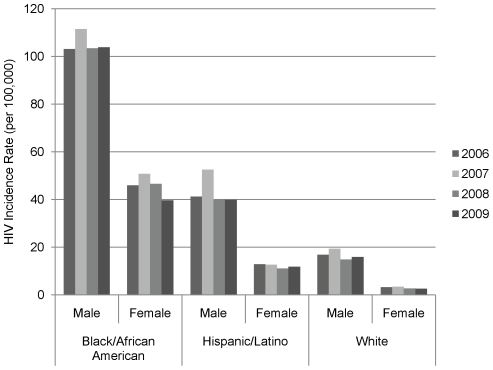
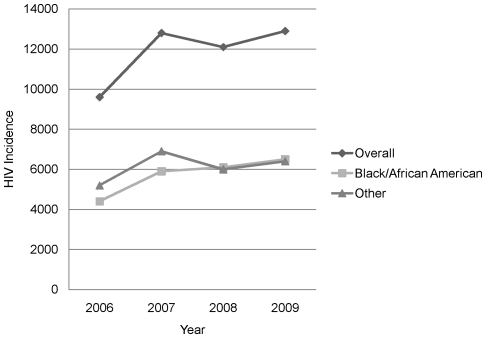
BACKGROUND: The estimated number of new HIV infections in the United States reflects the leading edge of the epidemic. Previously, CDC estimated HIV incidence in the United States in 2006 as 56,300 (95% CI: 48,200-64,500). We updated the 2006 estimate and calculated incidence for 2007-2009 using improved methodology. METHODOLOGY: We estimated incidence using incidence surveillance data from 16 states and 2 cities and a modification of our previously described stratified extrapolation method based on a sample survey approach with multiple imputation, stratification, and extrapolation to account for missing data and heterogeneity of HIV testing behavior among population groups. PRINCIPAL FINDINGS: Estimated HIV incidence among persons aged 13 years and older was 48,600 (95% CI: 42,400-54,700) in 2006, 56,000 (95% CI: 49,100-62,900) in 2007, 47,800 (95% CI: 41,800-53,800) in 2008 and 48,100 (95% CI: 42,200-54,000) in 2009. From 2006 to 2009 incidence did not change significantly overall or among specific race/ethnicity or risk groups. However, there was a 21% (95% CI:1.9%-39.8%; p = 0.017) increase in incidence for people aged 13-29 years, driven by a 34% (95% CI: 8.4%-60.4%) increase in young men who have sex with men (MSM). There was a 48% increase among young black/African American MSM (12.3%-83.0%; p<0.001). Among people aged 13-29, only MSM experienced significant increases in incidence, and among 13-29 year-old MSM, incidence increased significantly among young, black/African American MSM. In 2009, MSM accounted for 61% of new infections, heterosexual contact 27%, injection drug use (IDU) 9%, and MSM/IDU 3%. CONCLUSIONS/SIGNIFICANCE: Overall, HIV incidence in the United States was relatively stable 2006-2009; however, among young MSM, particularly black/African American MSM, incidence increased. HIV continues to be a major public health burden, disproportionately affecting several populations in the United States, especially MSM and racial and ethnic minorities. Expanded, improved, and targeted prevention is necessary to reduce HIV incidence.
Overview
The claims and statistics of this paper haven’t been checked yet.
Free: it reads the open-access text and checks the first 5 claims that cite a source we can check. Create a free account to check every claim.
Integrity signals
Registry
Cites
Statistics
Figures
Verification
Claims the paper makes
The claims and statistics of this paper haven’t been checked yet.
Free: it reads the open-access text and checks the first 5 claims that cite a source we can check. Create a free account to check every claim.
Claims other papers make about this one
Each is checked against this paper’s own text: does it say what the citing paper says it does?
In the citing paper
“HIV is a public health crisis among Black and Latino men in the USA, notably those living in New York City (NYC).”
From Using Syndemic Theory to Understand Vulnerability to HIV Infection among Black and Latino Men in New York City (2014) · cites this paper as [1]
In the citing paper
“That same year, HIV incidence among Black and Latino men was 6.5 and 2.5 times greater, respectively, than it was among White men.”
From Using Syndemic Theory to Understand Vulnerability to HIV Infection among Black and Latino Men in New York City (2014) · cites this paper as [1]
Self-check
Percentages, sums and reported differences re-computed from the paper’s own numbers.
The self-check needs the paper’s full text.
Citations
Cites
Applied Regression Analysis and Other Multivariable Methods
Walker, E. (1989) · Technometrics · doi:10.1080/00401706.1989.10488486 · Cited by 8,538
(2006) · PsycEXTRA Dataset · doi:10.1037/e545592006-001 · Cited by 2,958
Estimation of HIV Incidence in the United States
Hall, H. I. (2008) · JAMA · doi:10.1001/jama.300.5.520 · Cited by 1,317 · cited 6×
“but within the confidence interval of that estimate [4].”
InfluentialSelf-citationMarks, G., Crepaz, N., & Janssen, R. S. (2006) · AIDS · doi:10.1097/01.aids.0000233579.79714.8d · Cited by 1,096 · cited 1×
“, and the majority of new HIV infections transmitted by these individuals”
Parashar, U. (2006) · Medical Entomology and Zoology · Cited by 799
Janssen, R. S. (1998) · JAMA · doi:10.1001/jama.280.1.42 · Cited by 687 · cited 1×
“Since 2004, CDC has funded selected states and localities to conduct HIV incidence surveillance by (1) submitting remnant diagnostic HIV-positive blood specimens for testing using the serologic testing algorithm for recent HIV seroconversion (STARHS)”
BackgroundPurcell, D. W., Johnson, C. H., Lansky, A., Prejean, J., Stein, R., Denning, P., Gau1, Z., Weinstock, H., Su, J., & Crepaz, N. (2012) · The Open AIDS Journal · doi:10.2174/1874613601206010098 · Cited by 356
Self-citationParekh, B. S., Kennedy, M. S., Dobbs, T., Pau, C.-P., Byers, R., Green, T., Hu, D. J., Vanichseni, S., Young, N. L., Choopanya, K., et al. (2002) · AIDS Research and Human Retroviruses · doi:10.1089/088922202753472874 · Cited by 355 · cited 1×
“In addition, the continued refinement of the method for estimating the mean recency period for the BED HIV-1 Capture Enzyme Immunoassay (BED; the assay that currently serves as the serologic marker of recent infection) [6] and for modeling the recency period distribution [7] has allowed for improvement of the method o…”
Self-citationSullivan, P. S., Hamouda, O., Delpech, V., Geduld, J. E., Prejean, J., Semaille, C., Kaldor, J., Folch, C., Op de Coul, E., Marcus, U., et al. (2009) · Annals of Epidemiology · doi:10.1016/j.annepidem.2009.03.004 · Cited by 326
Self-citationUndiagnosed HIV Prevalence Among Adults and Adolescents in the United States at the End of 2006
Campsmith, M. L., Rhodes, P. H., Hall, H. I., & Green, T. A. (2010) · JAIDS Journal of Acquired Immune Deficiency Syndromes · doi:10.1097/qai.0b013e3181bf1c45 · Cited by 219 · cited 1×
“, public health programs are presented with new challenges. There is a need to address the prevention needs both of people at risk for HIV infection as well as of those living with HIV disease—those who are aware of their HIV status and those who are not. With an estimated 21% of people living with HIV unaware of thei…”
BackgroundSelf-citation
Cited by
Sexually Transmitted Infections Among US Women and Men: Prevalence and Incidence Estimates, 2008
Satterwhite, C. L., Torrone, E., Meites, E., Dunne, E. F., Mahajan, R., Ocfemia, M. C. B., Su, J., Xu, F., & Weinstock, H. (2013) · Sexually Transmitted Diseases · doi:10.1097/olq.0b013e318286bb53 · Cited by 1,260
Millett, G. A., Peterson, J. L., Flores, S. A., Hart, T. A., Jeffries, W. L., Wilson, P. A., Rourke, S. B., Heilig, C. M., Elford, J., Fenton, K. A., et al. (2012) · The Lancet · doi:10.1016/s0140-6736(12)60899-x · Cited by 724
Lyons, S. J., Johnson, A. S., Hu, X., Yu, C., Jin, C., Wu, B., Li, J., Chong, M., Hawkins, D., Wang, S., et al. (2017) · Cited by 636
Stigma and racial/ethnic HIV disparities: Moving toward resilience.
Earnshaw, V. A., Bogart, L. M., Dovidio, J. F., & Williams, D. R. (2013) · American Psychologist · doi:10.1037/a0032705 · Cited by 504
Owusu-Edusei, K., Chesson, H. W., Gift, T. L., Tao, G., Mahajan, R., Ocfemia, M. C. B., & Kent, C. K. (2013) · Sexually Transmitted Diseases · doi:10.1097/olq.0b013e318285c6d2 · Cited by 452
“For instance, in the past few years, the reported annual incidence of chlamydia, syphilis, and genital warts has increased,(6) although the annual incidence of gonorrhea and HIV infection has been relatively stable.(6,7) In addition, given the rapid changes in health care technology and service delivery, the lifetime…”
BackgroundZanoni, B. C., & Mayer, K. H. (2014) · AIDS Patient Care and STDs · doi:10.1089/apc.2013.0345 · Cited by 395
“Correlates of HIV Infection A national U.S. survey involving HIV-infected individuals older than 13 years old, found that 59% had a negative test prior to their HIV diagnosis.27 The highest incidence of recent seroconversion in this study was found in those aged 14–29 years and in MSM.27 HPTN 061, which enrolled 1556…”
BackgroundInfluentialPurcell, D. W., Johnson, C. H., Lansky, A., Prejean, J., Stein, R., Denning, P., Gau1, Z., Weinstock, H., Su, J., & Crepaz, N. (2012) · The Open AIDS Journal · doi:10.2174/1874613601206010098 · Cited by 356
Self-citationCurrent status and prospects of HIV treatment
Cihlar, T., & Fordyce, M. (2016) · Current Opinion in Virology · doi:10.1016/j.coviro.2016.03.004 · Cited by 337
Hall, H. I., Frazier, E. L., Rhodes, P., Holtgrave, D. R., Furlow-Parmley, C., Tang, T., Gray, K. M., Cohen, S. M., Mermin, J., & Skarbinski, J. (2013) · JAMA Internal Medicine · doi:10.1001/jamainternmed.2013.6841 · Cited by 339
Self-citationWhat Drives the US and Peruvian HIV Epidemics in Men Who Have Sex with Men (MSM)?
Goodreau, S. M., Carnegie, N. B., Vittinghoff, E., Lama, J. R., Sanchez, J., Grinsztejn, B., Koblin, B. A., Mayer, K. H., & Buchbinder, S. P. (2012) · PLoS ONE · doi:10.1371/journal.pone.0050522 · Cited by 326
“In the US, HIV incidence is rising among young MSM, especially Blacks [3].”
BackgroundGay and Bisexual Men's Use of the Internet: Research from the 1990s through 2013
Grov, C., Breslow, A. S., Newcomb, M. E., Rosenberger, J. G., & Bauermeister, J. A. (2014) · The Journal of Sex Research · doi:10.1080/00224499.2013.871626 · Cited by 293
Ruane, P. J., DeJesus, E., Berger, D., Markowitz, M., Bredeek, U. F., Callebaut, C., Zhong, L., Ramanathan, S., S. Rhee, M., Fordyce, M. W., et al. (2013) · JAIDS Journal of Acquired Immune Deficiency Syndromes · doi:10.1097/qai.0b013e3182965d45 · Cited by 302
“Likewise, patients are often diagnosed earlier, initiate therapy earlier, and look toward lifelong therapy, often greater than 50 years.(3) The contribution of specific antiretroviral agents to long-term morbidity and mortality is increasingly important in this context.”
BackgroundApplying a PrEP Continuum of Care for Men Who Have Sex With Men in Atlanta, Georgia
Kelley, C. F., Kahle, E., Siegler, A., Sanchez, T., del Rio, C., Sullivan, P. S., & Rosenberg, E. S. (2015) · Clinical Infectious Diseases · doi:10.1093/cid/civ664 · Cited by 298
Landovitz, R. J., Tseng, C.-H., Weissman, M., Haymer, M., Mendenhall, B., Rogers, K., Veniegas, R., Gorbach, P. M., Reback, C. J., & Shoptaw, S. (2013) · Journal of Urban Health · doi:10.1007/s11524-012-9766-7 · Cited by 298
Levy, M. E., Wilton, L., Phillips, G., Glick, S. N., Kuo, I., Brewer, R. A., Elliott, A., Watson, C., & Magnus, M. (2014) · AIDS and Behavior · doi:10.1007/s10461-014-0719-x · Cited by 294
“Although rates of new HIV infections remained stable from 2006 to 2009 among other racial and ethnic groups of MSM aged 13–29, there was a 48 % increase in new HIV infections among young BMSM during this time period [1, 6].”
HIV transmission rates from persons living with HIV who are aware and unaware of their infection
Hall, H. I., Holtgrave, D. R., & Maulsby, C. (2012) · AIDS · doi:10.1097/qad.0b013e328351f73f · Cited by 286
Self-citationSmith, D. K., Pals, S. L., Herbst, J. H., Shinde, S., & Carey, J. W. (2012) · JAIDS Journal of Acquired Immune Deficiency Syndromes · doi:10.1097/qai.0b013e318256b2f6 · Cited by 278
“Among adolescent and young adult African American MSM aged 13–29 years, the number of new HIV diagnoses increased 12% annually between 2006 and 2009.(2) Recent evidence demonstrates that daily oral preexposure prophylaxis (PrEP) with a pill containing tenofovir and emtricitabine substantially reduces the risk of HIV a…”
BackgroundInfluentialThe evolving epidemiology of HIV/AIDS
De Cock, K. M., Jaffe, H. W., & Curran, J. W. (2012) · AIDS · doi:10.1097/qad.0b013e328354622a · Cited by 230
Krakower, D. S., Mimiaga, M. J., Rosenberger, J. G., Novak, D. S., Mitty, J. A., White, J. M., & Mayer, K. H. (2012) · PLoS ONE · doi:10.1371/journal.pone.0033119 · Cited by 245
Juusola, J. L., Brandeau, M. L., Owens, D. K., & Bendavid, E. (2012) · Annals of Internal Medicine · doi:10.7326/0003-4819-156-8-201204170-00001 · Cited by 235
Sullivan, P. S., Peterson, J., Rosenberg, E. S., Kelley, C. F., Cooper, H., Vaughan, A., Salazar, L. F., Frew, P., Wingood, G., DiClemente, R., et al. (2014) · PLoS ONE · doi:10.1371/journal.pone.0090514 · Cited by 234
Arnold, T., Brinkley-Rubinstein, L., Chan, P. A., Perez-Brumer, A., Bologna, E. S., Beauchamps, L., Johnson, K., Mena, L., & Nunn, A. (2017) · PLOS ONE · doi:10.1371/journal.pone.0172354 · Cited by 226
Herrick, A. L., Stall, R., Goldhammer, H., Egan, J. E., & Mayer, K. H. (2014) · AIDS and Behavior · doi:10.1007/s10461-012-0384-x · Cited by 224
“Nonetheless, over the past decade, more than 50,000 US residents became newly infected each year with an increasing proportion of new infections occurring among men who have sex with men [21].”
BackgroundKeyes, K. M., Rutherford, C., Hamilton, A., Barocas, J. A., Gelberg, K. H., Mueller, P. P., Feaster, D. J., El-Bassel, N., & Cerdá, M. (2022) · Drug and Alcohol Dependence Reports · doi:10.1016/j.dadr.2022.100052 · Cited by 219
Growing Older With HIV/AIDS: New Public Health Challenges
Cahill, S., & Valadéz, R. (2013) · American Journal of Public Health · doi:10.2105/ajph.2012.301161 · Cited by 219
Acceptability of Smartphone Application-Based HIV Prevention Among Young Men Who Have Sex With Men
Holloway, I. W., Rice, E., Gibbs, J., Winetrobe, H., Dunlap, S., & Rhoades, H. (2014) · AIDS and Behavior · doi:10.1007/s10461-013-0671-1 · Cited by 218
“2009 [2].”
Age, Comorbidities, and AIDS Predict a Frailty Phenotype in Men Who Have Sex With Men
Althoff, K. N., Jacobson, L. P., Cranston, R. D., Detels, R., Phair, J. P., Li, X., Margolick, J. B., & (MACS), F. T. M. A. C. S. (2014) · The Journals of Gerontology: Series A · doi:10.1093/gerona/glt148 · Cited by 208
Sampey, G. C., Saifuddin, M., Schwab, A., Barclay, R., Punya, S., Chung, M.-C., Hakami, R. M., Asad Zadeh, M., Lepene, B., Klase, Z. A., et al. (2016) · Journal of Biological Chemistry · doi:10.1074/jbc.m115.662171 · Cited by 209
Fields, E. L., Bogart, L. M., Smith, K. C., Malebranche, D. J., Ellen, J., & Schuster, M. A. (2015) · American Journal of Public Health · doi:10.2105/ajph.2013.301866 · Cited by 188
Smith, D. K., Toledo, L., Smith, D. J., Adams, M. A., & Rothenberg, R. (2012) · AIDS Education and Prevention · doi:10.1521/aeap.2012.24.5.408 · Cited by 196
HIV Infection and Older Americans: The Public Health Perspective
Brooks, J. T., Buchacz, K., Gebo, K. A., & Mermin, J. (2012) · American Journal of Public Health · doi:10.2105/ajph.2012.300844 · Cited by 203
Self-citationHansen, H., Siegel, C., Wanderling, J., & DiRocco, D. (2016) · Drug and Alcohol Dependence · doi:10.1016/j.drugalcdep.2016.03.028 · Cited by 196
Sutton, M. Y., Lasswell, S. M., Lanier, Y., & Miller, K. S. (2014) · Journal of Adolescent Health · doi:10.1016/j.jadohealth.2013.11.004 · Cited by 183
Koblin, B. A., Mayer, K. H., Eshleman, S. H., Wang, L., Mannheimer, S., Rio, C. D., Shoptaw, S., Magnus, M., Buchbinder, S., Wilton, L., et al. (2013) · PLoS ONE · doi:10.1371/journal.pone.0070413 · Cited by 192
Smith, D. K., Thigpen, M. C., Nesheim, S. R., Lampe, M. A., Paxton, L. A., Samandari, T., Lansky, A., Mermin, J., & Fenton, K. A. (2012) · PubMed · Cited by 194
Hoots, B. E., Finlayson, T., Nerlander, L., & Paz-Bailey, G. (2016) · Clinical Infectious Diseases · doi:10.1093/cid/ciw367 · Cited by 189
Ayala, G., Bingham, T., Kim, J., Wheeler, D. P., & Millett, G. A. (2012) · American Journal of Public Health · doi:10.2105/ajph.2011.300641 · Cited by 185
Cohen, S. E., Vittinghoff, E., Bacon, O., Doblecki-Lewis, S., Postle, B. S., Feaster, D. J., Matheson, T., Trainor, N., Blue, R. W., Estrada, Y., et al. (2015) · JAIDS Journal of Acquired Immune Deficiency Syndromes · doi:10.1097/qai.0000000000000479 · Cited by 190
“Men who have sex with men (MSM) account for approximately two-thirds of new HIV infections and are the only group in whom HIV incidence has been rising.(2) Transgender women (TGW) also have elevated infection rates; over a quarter in the United States are HIV positive.”
BackgroundJeffries, W. L., Marks, G., Lauby, J., Murrill, C. S., & Millett, G. A. (2013) · AIDS and Behavior · doi:10.1007/s10461-012-0189-y · Cited by 174
“Additionally, on an annual basis, black MSM acquire almost as many HIV infections as white MSM, who comprise a much larger proportion of the MSM population [2].”
BackgroundLi, L., Krymskaya, L., Wang, J., Henley, J., Rao, A., Cao, L.-F., Tran, C.-A., Torres-Coronado, M., Gardner, A., Gonzalez, N., et al. (2013) · Molecular Therapy · doi:10.1038/mt.2013.65 · Cited by 181
Grohskopf, L. A., Chillag, K. L., Gvetadze, R., Liu, A. Y., Thompson, M., Mayer, K. H., Collins, B. M., Pathak, S. R., O'Hara, B., Ackers, M. L., et al. (2013) · JAIDS Journal of Acquired Immune Deficiency Syndromes · doi:10.1097/qai.0b013e31828ece33 · Cited by 172
“A troubling increase in incidence has been noted among MSM, particularly young MSM of color.(4) HIV antiretroviral preexposure prophylaxis (PrEP) may become an important prevention option for some at-risk MSM.”
BackgroundOldenburg, C. E., Perez-Brumer, A. G., Hatzenbuehler, M. L., Krakower, D., Novak, D. S., Mimiaga, M. J., & Mayer, K. H. (2015) · AIDS · doi:10.1097/qad.0000000000000622 · Cited by 164
Management of Human Immunodeficiency Virus Infection in Advanced Age
Greene, M., Justice, A. C., Lampiris, H. W., & Valcour, V. (2013) · JAMA · doi:10.1001/jama.2013.2963 · Cited by 163
Effects of syndemics on HIV viral load and medication adherence in the multicentre AIDS cohort study
Friedman, M. R., Stall, R., Silvestre, A. J., Wei, C., Shoptaw, S., Herrick, A., Surkan, P. J., Teplin, L., & Plankey, M. W. (2015) · AIDS · doi:10.1097/qad.0000000000000657 · Cited by 163
Mayer, K. H., Wang, L., Koblin, B., Mannheimer, S., Magnus, M., Rio, C. D., Buchbinder, S., Wilton, L., Cummings, V., Watson, C. C., et al. (2014) · PLoS ONE · doi:10.1371/journal.pone.0087298 · Cited by 163
Gamarel, K. E., & Golub, S. A. (2015) · Annals of Behavioral Medicine · doi:10.1007/s12160-014-9646-3 · Cited by 159
“This finding is likely attributable to an increased likelihood of condomless sex with primary partners [3, 5], as studies sug-”
BackgroundGarcía, J., Parker, C. M., Parker, R., Wilson, P. A., Philbin, M. M., & Hirsch, J. S. (2015) · Health Education & Behavior · doi:10.1177/1090198115599398 · Cited by 176
Smith, D. K., Mendoza, M. C. B., Stryker, J. E., & Rose, C. E. (2016) · PLOS ONE · doi:10.1371/journal.pone.0156592 · Cited by 163
Bhutani, M., Polizzotto, M. N., Uldrick, T. S., & Yarchoan, R. (2015) · Seminars in Oncology · doi:10.1053/j.seminoncol.2014.12.027 · Cited by 155
Summit on Medical School Education in Sexual Health: Report of an Expert Consultation
Coleman, E., Elders, J., Satcher, D. S., Shindel, A. W., Parish, S. J., Kenagy, G. P., Bayer, C. R., Knudson, G., Kingsberg, S. A., Clayton, A. H., et al. (2013) · The Journal of Sexual Medicine · doi:10.1111/jsm.12142 · Cited by 154
Buchbinder, S. P., Glidden, D. V., Liu, A. Y., McMahan, V., Guanira, J. V., Mayer, K. H., Goicochea, P., & Grant, R. M. (2014) · The Lancet Infectious Diseases · doi:10.1016/s1473-3099(14)70025-8 · Cited by 145
Halkitis, P. N., Wolitski, R. J., & Millett, G. A. (2013) · American Psychologist · doi:10.1037/a0032746 · Cited by 150
“It is particularly worrisome that this increase is largely driven by a growing number of new HIV infections among young MSM, especially young Black MSM, who account for more than half of this incidence (CDC, 2012a; Prejean et al., 2011).”
BackgroundRendina, H. J., Jimenez, R. H., Grov, C., Ventuneac, A., & Parsons, J. T. (2014) · AIDS and Behavior · doi:10.1007/s10461-013-0573-2 · Cited by 146
Rosenberg, E. S., Millett, G. A., Sullivan, P. S., del Río, C., & Curran, J. W. (2014) · The Lancet HIV · doi:10.1016/s2352-3018(14)00011-3 · Cited by 154
Mustanski, B., Garofalo, R., Monahan, C., Gratzer, B., & Andrews, R. (2013) · AIDS and Behavior · doi:10.1007/s10461-013-0507-z · Cited by 144
“to show a statistically significant increase (48 %) in new HIV infections from 2006 to 2009 [2].”
BackgroundWinetrobe, H., Rice, E. R. W., Bauermeister, J. A., Petering, R., & Holloway, I. W. (2014) · AIDS Care · doi:10.1080/09540121.2014.911811 · Cited by 147
“Young men who have sex with men (YMSM) comprise 27% of all new HIV infections in the USA (Centers for Disease Control and Prevention, 2011) and are the only subpopulation experiencing an increase in HIV incidence (Prejean et al., 2011).”
BackgroundPathela, P., Braunstein, S. L., Blank, S., & Schillinger, J. A. (2013) · Clinical Infectious Diseases · doi:10.1093/cid/cit437 · Cited by 146
Sullivan, P. S., Driggers, R. A., Stekler, J. D., Siegler, A. J., Goldenberg, T., McDougal, S. J., Caucutt, J., Jones, J. S., & Stephenson, R. B. (2017) · JMIR mhealth and uhealth · doi:10.2196/mhealth.7199 · Cited by 156
Arnold, E. A., Hazelton, P., Lane, T., Christopoulos, K., Galindo, G. R., Steward, W. T., & Morin, S. F. (2012) · PLoS ONE · doi:10.1371/journal.pone.0040603 · Cited by 145
“The providers included primary care physicians seeing high numbers of MSM and TG women, HIV specialists, community health clinic providers, and public health officials.”
BackgroundInfluentialHorvath, K. J., Michael Oakes, J., Simon Rosser, B. R., Danilenko, G., Vezina, H., Rivet Amico, K., Williams, M. L., & Simoni, J. (2013) · AIDS and Behavior · doi:10.1007/s10461-013-0469-1 · Cited by 141
“01); however, the complexity of dose regimen was not associated with baseline overall ART adherence score (F[3,121] = 0.”
BackgroundTrends in the Population Prevalence of People Who Inject Drugs in US Metropolitan Areas 1992–2007
Tempalski, B., Pouget, E. R., Cleland, C. M., Brady, J. E., Cooper, H. L. F., Hall, H. I., Lansky, A., West, B. S., & Friedman, S. R. (2013) · PLoS ONE · doi:10.1371/journal.pone.0064789 · Cited by 141
“Overall, people who inject drugs (PWID) represented 9% of new HIV infections in 2009 and 17% of those living with HIV in 2008 [2,3].”
BackgroundInfluentialSelf-citationLiu, A., Vittinghoff, E., Chillag, K. L., Mayer, K. H., Thompson, M., Grohskopf, L. A., Colfax, G. N., Pathak, S., Gvetadze, R. J., O'Hara, B. M., et al. (2013) · JAIDS Journal of Acquired Immune Deficiency Syndromes · doi:10.1097/qai.0b013e31828f097a · Cited by 153
“With an HIV-negative partner 50 (25) 36 (18) 0.”
Schneider, J. A., Cornwell, B. T., Ostrow, D. E., Michaels, S., Schumm, L. P., Laumann, E. O., & Friedman, S. R. (2012) · American Journal of Public Health · doi:10.2105/ajph.2012.301003 · Cited by 148
Marrazzo, J. M., del Río, C., Holtgräve, D. R., Cohen, M. S., Kalichman, S. C., Mayer, K. H., Montaner, J. S. G., Wheeler, D. P., Grant, R. M., Grinsztejn, B. G. J., et al. (2014) · JAMA · doi:10.1001/jama.2014.7999 · Cited by 143
Anton, P. A., Cranston, R. D., Kashuba, A., Hendrix, C. W., Bumpus, N. N., Richardson-Harman, N., Elliott, J., Janocko, L., Khanukhova, E., Dennis, R., et al. (2012) · AIDS Research and Human Retroviruses · doi:10.1089/aid.2012.0262 · Cited by 132
“Participants with one or more AEs (all) Grade 1: Mild 11 (30) 4 (11) 12 (41) 4 (9) 4 (8) Grade 2: Moderate 3 (5) 4 (6) 3 (6) 1 (4) 1 (1) Grade 3: Severe 2 (2) 0 2 (6) 0 0”
BackgroundInfluentialWilson, P. A., Nanin, J., Amesty, S., Wallace, S., Cherenack, E. M., & Fullilove, R. (2014) · Journal of Urban Health · doi:10.1007/s11524-014-9895-2 · Cited by 133
“5 times greater, respectively, than it was among White men.(1) In large cities across the USA, including NYC, HIV prevalence among men of color rivals prevalence in countries in sub-Saharan Africa with generalized HIV epidemics.”
BackgroundResultSatake, M., Iwanaga, M., Sagara, Y., Watanabe, T., Okuma, K., & Hamaguchi, I. (2016) · The Lancet Infectious Diseases · doi:10.1016/s1473-3099(16)30252-3 · Cited by 135
Walensky, R. P., Sax, P. E., Nakamura, Y. M., Weinstein, M. C., Pei, P. P., Freedberg, K. A., Paltiel, A. D., & Schackman, B. R. (2013) · Annals of Internal Medicine · doi:10.7326/0003-4819-158-2-201301150-00002 · Cited by 130
Metsch, L. R., Feaster, D. J., Gooden, L., Schackman, B. R., Matheson, T., Das, M., Golden, M. R., Huffaker, S., Haynes, L. F., Tross, S., et al. (2013) · JAMA · doi:10.1001/jama.2013.280034 · Cited by 130
Friedman, M. R., Coulter, R. W. S., Silvestre, A. J., Stall, R. D., Teplin, L. A., SHOPTAW, S. J., Surkan, P. J., & Plankey, M. W. (2016) · AIDS Care · doi:10.1080/09540121.2016.1211614 · Cited by 135
“Because MSM constituted 62% of new HIV diagnoses throughout the United States in 2011, researchers and practitioners alike should understand if functional social support is associated with viral load and suppression in this population (Centers for Disease Control & Prevention, 2013).”
BackgroundInfluentialVital Signs: HIV Infection, Testing, and Risk Behaviors Among Youths—United States
(2013) · American Journal of Transplantation · doi:10.1111/ajt.12172 · Cited by 131
Farnham, P. G., Gopalappa, C., Sansom, S. L., Hutchinson, A. B., Brooks, J. T., Weidle, P. J., Marconi, V. C., & Rimland, D. (2013) · JAIDS Journal of Acquired Immune Deficiency Syndromes · doi:10.1097/qai.0b013e3182973966 · Cited by 129
“The percent of transmissions through IDU has also decreased slightly in recent years.(21,38) However, the model can be used to project costs, other variables measuring length and quality of life of HIV-infected patients, and the number of transmissions from these patients over many years into the future, something tha…”
BackgroundThe POWER Study Team, Matthews, D. D., Herrick, A. L., Coulter, R. W. S., Friedman, M. R., Mills, T. C., Eaton, L. A., Wilson, P. A., & Stall, R. D. (2015) · AIDS and Behavior · doi:10.1007/s10461-015-1158-z · Cited by 136
“Because young (≤30 years of age) Black MSM have experienced a marked increase in new infections [6], we also calculated a separate summary incidence rate for this subgroup of Black MSM.”
BackgroundInfluentialHIV-1 Transmission during Early Infection in Men Who Have Sex with Men: A Phylodynamic Analysis
Volz, E., Ionides, E. L., Romero-Severson, E. O., Brandt, M.-G., Mokotoff, E. D., & Koopman, J. S. (2013) · PLoS Medicine · doi:10.1371/journal.pmed.1001568 · Cited by 139
“Estimates using the HIV model are very similar to those obtained from widely used back-calculation methods [10,31] (Figure 4B), despite the fact that the HIV model uses much more data and more realistically models diagnosis rates and the natural history of”
High HIV incidence and prevalence and associated factors among young MSM, 2008
Balaji, A. B., Bowles, K. E., Le, B. C., Paz‐Bailey, G., & Oster, A. M. (2012) · AIDS · doi:10.1097/qad.0b013e32835ad489 · Cited by 127
Newcomb, M. E., Ryan, D. T., Garofalo, R., & Mustanski, B. S. (2013) · Archives of Sexual Behavior · doi:10.1007/s10508-013-0207-9 · Cited by 130
“Men who have sex with men (MSM) are profoundly impacted by HIV/AIDS in the United States, and MSM accounted for 61 % of new HIV infections in 2009 (Prejean et al., 2011).”
Walsh, J. L. (2018) · AIDS and Behavior · doi:10.1007/s10461-018-2371-3 · Cited by 134
Glasgow, R. E., Eckstein, E. T., & ElZarrad, M. K. (2013) · JAIDS Journal of Acquired Immune Deficiency Syndromes · doi:10.1097/qai.0b013e3182920286 · Cited by 118
“Disparities linked to gender and geography,(1) as well as to race, ethnicity, and sexual orientation persist.(3) Controlling the epidemic will not only require bringing successful interventions to scale but also tailoring them to vulnerable and marginalized populations and understanding the social, cultural, and insti…”
BackgroundShangani, S., Escudero, D. J., Kirwa, K., Harrison, A. D., Marshall, B. D. L., & Operario, D. (2017) · AIDS Care · doi:10.1080/09540121.2017.1282105 · Cited by 134
“the general population (Beyrer, Sullivan et al., 2012; Prejean et al., 2011; UNAIDS, 2013b) and increasing benefits of antiretroviral therapy (ART) for the management of HIV (Anglemyer, Horvath, & Rutherford, 2013;”
BackgroundThe lifetime medical cost savings from preventing HIV in the United States
Schackman, B. R., Fleishman, J. A., Su, A. E., Berkowitz, B. K., Moore, R. D., Walensky, R. P., Becker, J. E., Voss, C., Paltiel, A. D., Weinstein, M. C., et al. (2015) · Medical Care · doi:10.1097/mlr.0000000000000308 · Cited by 123
“To calculate annual medical costs of HIV-uninfected individuals, we used data from the MEPS, a nationally representative survey of households in the United States.21 Using the online MEPS query tool,21 we calculated the mean annual medical care expenditures from the MEPS household survey in 2009 stratified by sex, rac…”
InfluentialScott, H. M., Pollack, L., Rebchook, G. M., Huebner, D. M., Peterson, J., & Kegeles, S. M. (2014) · AIDS and Behavior · doi:10.1007/s10461-013-0608-8 · Cited by 122
“Young Black men who have sex with men (MSM) (aged 13–29 years) have had the largest estimated increase in HIV incidence between 2006 and 2010 [1, 3].”
Balaji, A. B., Oster, A. M., Viall, A. H., Heffelfinger, J. D., Mena, L. A., & Toledo, C. (2012) · AIDS Patient Care and STDs · doi:10.1089/apc.2012.0177 · Cited by 122
“Moreover, it has been estimated that, between 2006 and 2009, young black MSM were the only subgroup with increasing HIV incidence in the United States.(1) While the disproportionate impact of HIV on young black MSM is well documented, the reasons for this disparity remain less clear.”
Lewnard, J. A., & Berrang-Ford, L. (2014) · Sexually Transmitted Infections · doi:10.1136/sextrans-2013-051332 · Cited by 118
Althoff, K. N., Buchacz, K. A., Hall, H. I., Zhang, J., Hanna, D. B., Rebeiro, P. F., Gange, S. J., Moore, R. D., Kitahata, M. M., Gebo, K. A., et al. (2012) · Annals of Internal Medicine · doi:10.7326/0003-4819-157-5-201209040-00005 · Cited by 136
“$w aterm ark-text $w aterm ark-text $w aterm ark-text infections per year), with most occurring among men who have sex with men (MSM) and African Americans (4).”
BackgroundSelf-citationElsesser, S. A., Oldenburg, C. E., Biello, K. B., Mimiaga, M. J., Safren, S. A., Egan, J. E., Novak, D. S., Krakower, D., Stall, R. D., & Mayer, K. H. (2015) · AIDS and Behavior · doi:10.1007/s10461-015-1238-0 · Cited by 131
“the largest number of new infections [1, 2].”
Chen, M., Rhodes, P., Hall, I., Kilmarx, P. H., Branson, B. M., & Valleroy, L. A. (2012) · PubMed · Cited by 120
Hart, T. L., Coon, D. W., Kowalkowski, M. A., Zhang, K., Hersom, J. I., Goltz, H. H., Wittmann, D. A., & Latini, D. M. (2014) · The Journal of Sexual Medicine · doi:10.1111/jsm.12598 · Cited by 118
“incidence rate of 11% for men aged over 50 years [29].”
BackgroundMillett, G. A., Jeffries, W. L., Peterson, J. L., Malebranche, D. J., Lane, T., Flores, S. A., Fenton, K. A., Wilson, P. A., Steiner, R. J., & Heilig, C. M. (2012) · The Lancet · doi:10.1016/s0140-6736(12)60722-3 · Cited by 117
Holloway, I. W., Tan, D., Gildner, J. L., Beougher, S. C., Pulsipher, C., Montoya, J. A., Plant, A., & Leibowitz, A. A. (2017) · AIDS Patient Care and STDs · doi:10.1089/apc.2017.0082 · Cited by 122
Challenges of infectious diseases in the USA
KHABBAZ, R. F., Moseley, R. R., Steiner, R. J., Levitt, A. M., & Bell, B. P. (2014) · The Lancet · doi:10.1016/s0140-6736(14)60890-4 · Cited by 117
HIV Testing Among US High School Students and Young Adults
Handel, M. M. V., Kann, L. K., Olsen, E. O., & Dietz, P. M. (2016) · PEDIATRICS · doi:10.1542/peds.2015-2700 · Cited by 115
Sexual Positioning Among Men Who Have Sex With Men: A Narrative Review
Dangerfield, D. T., Smith, L. R., Williams, J. E., Unger, J. B., & Bluthenthal, R. N. (2016) · Archives of Sexual Behavior · doi:10.1007/s10508-016-0738-y · Cited by 120
“, 2014), for whom rates of HIV and STIs continue to increase among domestic and international MSM populations (Beyrer et al., 2012; CDC, 2010; Prejean et al., 2011; van Griensven, de Lind van Wijngaarden, Baral, & Grulich, 2009).”
Weidle, P. J., Lecher, S. L., Botts, L. W., Jones, L., Spach, D. H., Alvarez, J., Jones, R. L., & Thomas, V. T. (2014) · Journal of the American Pharmacists Association · doi:10.1331/japha.2014.14045 · Cited by 112
Song, R., Hall, H. I., Green, T. A., Szwarcwald, C. L., & Pantazis, N. (2016) · JAIDS Journal of Acquired Immune Deficiency Syndromes · doi:10.1097/qai.0000000000001151 · Cited by 111
Self-citationRosenberg, E. S., Grey, J. A., Sanchez, T. H., & Sullivan, P. S. (2016) · JMIR Public Health and Surveillance · doi:10.2196/publichealth.5684 · Cited by 107
Silapaswan, A., Krakower, D., & Mayer, K. H. (2016) · Journal of General Internal Medicine · doi:10.1007/s11606-016-3899-4 · Cited by 114
“HIV incidence has remained stable in recent years, with approximately 50,000 new infections annually, specific populations remain disproportionately affected.(1) Men who have sex with men (MSM) bear a disproportionate burden of HIV, and in 2014 accounted for 67 % of new diagnoses.”
BackgroundKahana, S. Y., Jenkins, R. A., Bruce, D., Fernandez, M. I., Hightow‐Weidman, L., Bauermeister, J. A., & Adolescent Medicine Trials Network for HIV/AIDS Interventions (2016) · PLoS ONE · doi:10.1371/journal.pone.0151106 · Cited by 113
“Human immunodeficiency virus (HIV) incidence rates are high and continue to increase among adolescents and young adults in the United States (US), particularly for young men who have sex with men (MSM) and transgender populations [1, 2].”
BackgroundHuang, E., Marlin, R. W., Young, S. D., Medline, A., & Klausner, J. D. (2016) · AIDS Education and Prevention · doi:10.1521/aeap.2016.28.4.341 · Cited by 114
“experience higher incidence rates and have lower percentages of serostatus awareness and linkage to care than any other racial/ethnic group (Prejean et al., 2011; Sharma, Stephenson, White, & Sullivan, 2014).”
BackgroundEmerging Technologies for HIV Prevention for MSM: What We have Learned, and Ways Forward
Sullivan, P. S., Grey, J. A., & Rosser, B. R. S. (2013) · JAIDS Journal of Acquired Immune Deficiency Syndromes · doi:10.1097/qai.0b013e3182949e85 · Cited by 110
“2,6 Earlier concerns about HIV bridging from men who have sex with men (MSM) and IDU into the general population to produce a generalized epidemic have also, ultimately, not happened.”
BackgroundMicrofluidic sample preparation for diagnostic cytopathology
Mach, A. J., Adeyiga, O. B., & Di Carlo, D. (2013) · Lab on a Chip · doi:10.1039/c2lc41104k · Cited by 104
Metadata
- Authors
- Prejean, J., Song, R., Hernandez, A., Ziebell, R., Green, T., Walker, F., Lin, L. S., An, Q., Mermin, J., Lansky, A., Hall, H. I., & for the HIV Incidence Surveillance Group
- Affiliations
- Centers for Disease Control and Prevention (US)
- Corresponding author
- Prejean, Joseph
- ORCID
- Venue
- PLoS ONE
- Publisher
- Public Library of Science (PLoS)
- Published
- 2011-08-03
- Volume
- 6
- Issue
- 8
- Pages
- e17502
- ISSN
- 1932-6203 (ISSN-L)
- PMC
- PMC3149556
- OpenAlex
- W2154463966
- Cited by
- 1,071
- References
- 23
- Citations by year
- 2025: 3 · 2024: 11 · 2023: 9 · 2022: 14 · 2021: 14 · 2020: 14 · 2019: 26 · 2018: 37 · 2017: 80 · 2016: 135 · 2015: 157 · 2014: 184 · 2013: 205 · 2012: 167
- FWCI
- 123.18
- Type
- journal article
- Language
- en
- Open access
- gold
- doi.org
- Licence
- Locations
- PLoS ONE (publishedVersion, public-domain)
- PubMed Central (publishedVersion, public-domain)
- PubMed (publishedVersion)
- DOAJ (DOAJ: Directory of Open Access Journals) (submittedVersion, cc-by-sa)
- University Libraries (University of Maryland) (submittedVersion)
- Figshare (submittedVersion, cc-by)
- Digital Repository at the University of Maryland (University of Maryland College Park)
- Funders
- U.S. Department of Health and Human Services
- U.S. Department of State
- New York State Department of Health
- State of Connecticut Department of Public Health
- New York State Department of Health - Wadsworth Center
- Virginia Department of Health
- Northrop Grumman
- State of New Jersey Department of Health
- Florida Department of Health
- Indiana State Department of Health
- Arizona Department of Health Services
- Washington State University
- Colorado Department of Public Health and Environment
- Louisiana Department of Health
- Missouri Department of Health and Senior Services
- Texas Department of State Health Services
- Mississippi State Department of Health
- Centers for Disease Control and Prevention
- University at Albany
- Topics
- Health Sciences › Medicine › Infectious Diseases › HIV/AIDS Research and Interventions
- Health Sciences › Medicine › Epidemiology › HIV, Drug Use, Sexual Risk
- Health Sciences › Medicine › Public Health, Environmental and Occupational Health › HIV, TB, and STIs Epidemiology
- Keywords
- HIV incidence, HIV epidemic trends, young men who have sex with men, heterosexual transmission, intravenous drug use, HIV testing behavior, HIV risk groups, HIV surveillance, multiple imputation, racial and ethnic disparities
- MeSH terms
- Adolescent, Adult, Female, Humans, Male, Middle Aged, United States, HIV Infections, Incidence, Young Adult
About these checks
Registry, retraction, Cites and statistics results are computed, not judged, with one exception: a printed reference that no index lists is read once by a model before it counts as a citation error. Claims are extracted by a model and kept only when their quote appears verbatim in the text; each cited source is then checked, with a model’s help, for whether it says what the claim relies on. Those verdicts can be wrong — read the claim’s quote and the cited source before relying on one.
Statistics and arithmetic are recomputed, not judged.
Confidence bands are shown only for fields calibrated on our annotated test set. None is calibrated yet, so no band is shown.
What counts as a claim ›How we measure confidence ›How we check this ›
Are you an author, or do you see a problem with this page? Request a review
Data sources
Bibliographic data: Semantic Scholar, OpenAlex, Crossref.
Contains information from the Semantic Scholar Academic Graph Datasets, made available under the ODC Attribution License (ODC-BY 1.0).
Semantic Scholar’s data is described in: Kinney, R., et al. (2023). The Semantic Scholar Open Data Platform. arXiv:2301.10140.
