

Estimated HIV Incidence in the United States, 2006–2009
Open accessThe DOI matches its Crossref record; 23 of the 23 references it cites were found in a registry or an index.
Abstract
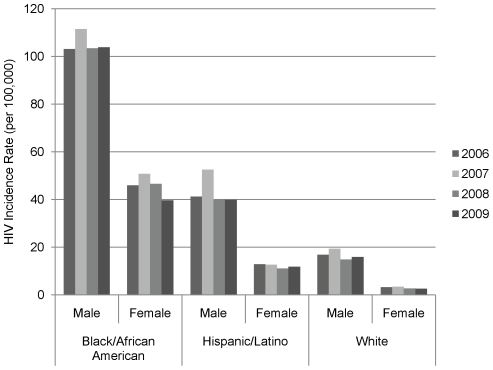
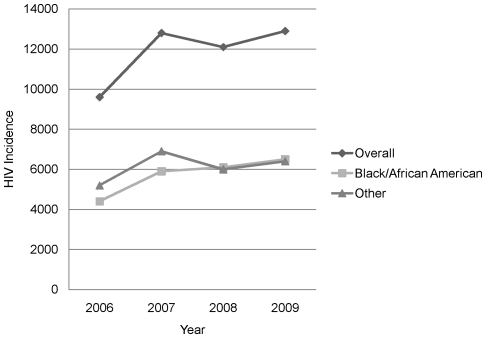
BACKGROUND: The estimated number of new HIV infections in the United States reflects the leading edge of the epidemic. Previously, CDC estimated HIV incidence in the United States in 2006 as 56,300 (95% CI: 48,200-64,500). We updated the 2006 estimate and calculated incidence for 2007-2009 using improved methodology. METHODOLOGY: We estimated incidence using incidence surveillance data from 16 states and 2 cities and a modification of our previously described stratified extrapolation method based on a sample survey approach with multiple imputation, stratification, and extrapolation to account for missing data and heterogeneity of HIV testing behavior among population groups. PRINCIPAL FINDINGS: Estimated HIV incidence among persons aged 13 years and older was 48,600 (95% CI: 42,400-54,700) in 2006, 56,000 (95% CI: 49,100-62,900) in 2007, 47,800 (95% CI: 41,800-53,800) in 2008 and 48,100 (95% CI: 42,200-54,000) in 2009. From 2006 to 2009 incidence did not change significantly overall or among specific race/ethnicity or risk groups. However, there was a 21% (95% CI:1.9%-39.8%; p = 0.017) increase in incidence for people aged 13-29 years, driven by a 34% (95% CI: 8.4%-60.4%) increase in young men who have sex with men (MSM). There was a 48% increase among young black/African American MSM (12.3%-83.0%; p<0.001). Among people aged 13-29, only MSM experienced significant increases in incidence, and among 13-29 year-old MSM, incidence increased significantly among young, black/African American MSM. In 2009, MSM accounted for 61% of new infections, heterosexual contact 27%, injection drug use (IDU) 9%, and MSM/IDU 3%. CONCLUSIONS/SIGNIFICANCE: Overall, HIV incidence in the United States was relatively stable 2006-2009; however, among young MSM, particularly black/African American MSM, incidence increased. HIV continues to be a major public health burden, disproportionately affecting several populations in the United States, especially MSM and racial and ethnic minorities. Expanded, improved, and targeted prevention is necessary to reduce HIV incidence.
Overview
The claims and statistics of this paper haven’t been checked yet.
Free: it reads the open-access text and checks the first 5 claims that cite a source we can check. Create a free account to check every claim.
Integrity signals
Registry
Cites
Statistics
Figures
Verification
Claims the paper makes
The claims and statistics of this paper haven’t been checked yet.
Free: it reads the open-access text and checks the first 5 claims that cite a source we can check. Create a free account to check every claim.
Claims other papers make about this one
Each is checked against this paper’s own text: does it say what the citing paper says it does?
In the citing paper
“HIV is a public health crisis among Black and Latino men in the USA, notably those living in New York City (NYC).”
From Using Syndemic Theory to Understand Vulnerability to HIV Infection among Black and Latino Men in New York City (2014) · cites this paper as [1]
In the citing paper
“That same year, HIV incidence among Black and Latino men was 6.5 and 2.5 times greater, respectively, than it was among White men.”
From Using Syndemic Theory to Understand Vulnerability to HIV Infection among Black and Latino Men in New York City (2014) · cites this paper as [1]
Self-check
Percentages, sums and reported differences re-computed from the paper’s own numbers.
The self-check needs the paper’s full text.
Citations
Cites
Applied Regression Analysis and Other Multivariable Methods
Walker, E. (1989) · Technometrics · doi:10.1080/00401706.1989.10488486 · Cited by 8,538
(2006) · PsycEXTRA Dataset · doi:10.1037/e545592006-001 · Cited by 2,958
Estimation of HIV Incidence in the United States
Hall, H. I. (2008) · JAMA · doi:10.1001/jama.300.5.520 · Cited by 1,317 · cited 6×
“but within the confidence interval of that estimate [4].”
InfluentialSelf-citationMarks, G., Crepaz, N., & Janssen, R. S. (2006) · AIDS · doi:10.1097/01.aids.0000233579.79714.8d · Cited by 1,096 · cited 1×
“, and the majority of new HIV infections transmitted by these individuals”
Parashar, U. (2006) · Medical Entomology and Zoology · Cited by 799
Janssen, R. S. (1998) · JAMA · doi:10.1001/jama.280.1.42 · Cited by 687 · cited 1×
“Since 2004, CDC has funded selected states and localities to conduct HIV incidence surveillance by (1) submitting remnant diagnostic HIV-positive blood specimens for testing using the serologic testing algorithm for recent HIV seroconversion (STARHS)”
BackgroundPurcell, D. W., Johnson, C. H., Lansky, A., Prejean, J., Stein, R., Denning, P., Gau1, Z., Weinstock, H., Su, J., & Crepaz, N. (2012) · The Open AIDS Journal · doi:10.2174/1874613601206010098 · Cited by 356
Self-citationParekh, B. S., Kennedy, M. S., Dobbs, T., Pau, C.-P., Byers, R., Green, T., Hu, D. J., Vanichseni, S., Young, N. L., Choopanya, K., et al. (2002) · AIDS Research and Human Retroviruses · doi:10.1089/088922202753472874 · Cited by 355 · cited 1×
“In addition, the continued refinement of the method for estimating the mean recency period for the BED HIV-1 Capture Enzyme Immunoassay (BED; the assay that currently serves as the serologic marker of recent infection) [6] and for modeling the recency period distribution [7] has allowed for improvement of the method o…”
Self-citationSullivan, P. S., Hamouda, O., Delpech, V., Geduld, J. E., Prejean, J., Semaille, C., Kaldor, J., Folch, C., Op de Coul, E., Marcus, U., et al. (2009) · Annals of Epidemiology · doi:10.1016/j.annepidem.2009.03.004 · Cited by 326
Self-citationUndiagnosed HIV Prevalence Among Adults and Adolescents in the United States at the End of 2006
Campsmith, M. L., Rhodes, P. H., Hall, H. I., & Green, T. A. (2010) · JAIDS Journal of Acquired Immune Deficiency Syndromes · doi:10.1097/qai.0b013e3181bf1c45 · Cited by 219 · cited 1×
“, public health programs are presented with new challenges. There is a need to address the prevention needs both of people at risk for HIV infection as well as of those living with HIV disease—those who are aware of their HIV status and those who are not. With an estimated 21% of people living with HIV unaware of thei…”
BackgroundSelf-citation
Cited by
Items 601–700 of 1,000
Operational Research to Improve HIV Prevention in the United States
Herbst, J. H., Glassman, M., Carey, J. W., Painter, T. M., Gelaude, D., Fasula, A. M., Raiford, J. L., Freeman, A. E., Harshbarger, C. L., Viall, A. H., et al. (2012) · JAIDS Journal of Acquired Immune Deficiency Syndromes · doi:10.1097/qai.0b013e3182479077 · Cited by 19
Rendina, H. J., Breslow, A. S., Grov, C., Ventuneac, A., Starks, T. J., & Parsons, J. T. (2013) · Archives of Sexual Behavior · doi:10.1007/s10508-013-0226-6 · Cited by 19
“Gay, bisexual, and other men who have sex with men (MSM) are one of the only populations for whom HIV prevention efforts have been unable to stabilize the growing trends in national HIV incidence over the last decade (Prejean et al., 2011).”
Wall, K. M., Sullivan, P. S., Kleinbaum, D., & Stephenson, R. B. (2014) · BMC Public Health · doi:10.1186/1471-2458-14-209 · Cited by 19
“Background Of the roughly 50,000 new HIV infections occurring annually in the United States (US), CDC estimates 61% occur among men who have sex with men (MSM), a group that accounts for 2% of the US population [1,2].”
BackgroundHIV Transmission Rates in the United States, 2006-2008
Holtgräve, D. R., Hall, H. I., & Prejean, J. (2012) · The Open AIDS Journal · doi:10.2174/1874613601206010026 · Cited by 19
“Keywords: HIV, transmission rate, epidemiology, mathematical modeling, United States, evaluation.”
Self-citationWashington, T. A., Robles, G., & Malotte, K. (2013) · Behavioral Medicine · doi:10.1080/08964289.2013.779565 · Cited by 21
“Individuals were eligible for the study if they (1) identified as Black or African American; (2) identified as male; (3) reported living in Los Angeles County; and (4) reported oral or anal sex with a man within the preceding six months.”
MethodPersistent Racial Disparities in HIV Infection in the USA: HIV Prevalence Matters
Xia, Q., Braunstein, S., Wiewel, E. W., Hadler, J. L., & Torian, L. V. (2016) · Journal of Racial and Ethnic Health Disparities · doi:10.1007/s40615-015-0205-9 · Cited by 19
Pathways to adolescent sexual risk behaviors: Effects of prenatal cocaine exposure
Min, M. O., Minnes, S., Lang, A., Albert, J. M., Kim, J., & Singer, L. T. (2016) · Drug and Alcohol Dependence · doi:10.1016/j.drugalcdep.2016.02.013 · Cited by 19
Adimora, A. A., Cole, S. R., & Eron, J. J. (2017) · Clinical Infectious Diseases · doi:10.1093/cid/cix313 · Cited by 20
Tay, M. Z., Kunz, E. L., Deal, A. W., Zhang, L., Seaton, K. E., Rountree, W., Eudailey, J., Heptinstall, J., McRaven, M. D., Matias, E., et al. (2019) · Journal of Virology · doi:10.1128/jvi.02084-18 · Cited by 21
Chandler, C. J., Bukowski, L. A., Matthews, D. D., Hawk, M. E., Marković, N., Egan, J. E., & Stall, R. D. (2019) · AIDS and Behavior · doi:10.1007/s10461-019-02458-z · Cited by 22
Young, L. B., Lalley-Chareczko, L., Clark, D., Ramos, M. T., Nahan, R. A., Troutman, G. S., Cantor, R., DiFlavis, L., & Koenig, H. C. (2020) · International Journal of STD & AIDS · doi:10.1177/0956462420911559 · Cited by 20
“week 48, drug levels indicated almost none of the Black participants were still taking PrEP,(2) which is particularly troubling because there are more new HIV infections among yMSMc aged 13–30 years than in any other age or racial group.(8,9) Data from Atlanta reveal that nearly one in ten Black MSM under age 25 is in…”
BackgroundPre-exposure Prophylaxis for Human Immunodeficiency Virus
Castel, A. D., Magnus, M., & Greenberg, A. E. (2014) · Infectious Disease Clinics of North America · doi:10.1016/j.idc.2014.08.001 · Cited by 21
HIV medication therapy management services in community pharmacies
Kauffman, Y. S., Nair, V., Herist, K., Thomas, V. T., & Weidle, P. J. (2012) · Journal of the American Pharmacists Association · doi:10.1331/japha.2012.12063 · Cited by 20
Bogart, L. M., Derose, K. P., Kanouse, D. E., Grifin, B. A., Haas, A. C., & Williams, M. V. (2014) · Journal of Urban Health · doi:10.1007/s11524-014-9927-y · Cited by 19
Sayles, J., Rurangirwa, J., Kim, M., Kinsler, J. J., Oruga, R., & Janson, M. (2012) · AIDS Patients Care and STDs · doi:10.1089/apc.2012.0097 · Cited by 21
Cost Analysis of Enhancing Linkages to HIV Care Following Jail: A Cost-Effective Intervention
Spaulding, A. C., Pinkerton, S. D., Superak, H. M., Cunningham, M. J., Resch, S., Jordan, A. O., & Yang, Z. (2012) · AIDS and Behavior · doi:10.1007/s10461-012-0353-4 · Cited by 19
“US [9] and an estimated 50,125 persons acquire HIV each year [10].”
BackgroundFarel, C. E., Parker, S., Muessig, K. E., Grodensky, C. A., Jones, C., Golin, C. E., Fogel, C. I., & Wohl, D. A. (2013) · Women s Health Issues · doi:10.1016/j.whi.2013.08.006 · Cited by 22
“(Prejean et al., 2011) AA women are also more likely to be incarcerated compared to white and Latina women, an epidemic closely linked to HIV, and associated scourges of substance abuse, poverty, mental illness, and personal and community violence.”
BackgroundInduction of Intestinal Immunity by Mucosal Vaccines As a Means of Controlling HIV Infection
Poles, J., Alvarez, Y., & Hioe, C. E. (2014) · AIDS Research and Human Retroviruses · doi:10.1089/aid.2014.0233 · Cited by 20
“Each year, an estimated 50,000 people are newly infected with the virus in the United States alone, adding to the 34 million currently living with the virus worldwide.(1,2) Even with the increasing numbers and classes of highly effective antiretroviral therapies (ART), the virus is still responsible for 1.”
Kwakwa, H. A., Wahome, R., Sanogo-Goines, D., Jabateh, V., Green, A., Bessias, S., & Flanigan, T. (2016) · Journal of Immigrant and Minority Health · doi:10.1007/s10903-016-0431-1 · Cited by 19
Sex and Racial/Ethnic Differences in Premature Mortality Due to HIV: Florida, 2000–2009
Trepka, M. J., Niyonsenga, T., Fennie, K., McKelvey, K., Lieb, S., & Maddox, L. M. (2015) · Public Health Reports · doi:10.1177/003335491513000513 · Cited by 20
“16 Causes were categorized based on work from the National Center for Health Statistics17 into the following groups: (1) deaths due to HIV/AIDS (B20-B24); (2) homicide (U01-U02, X85-Y09, and Y87.”
MethodHIV risk and multiple sources of heterosexism among young Black men who have sex with men.
Vincent, W., Pollack, L. M., Huebner, D. M., Peterson, J. L., Steward, W. T., Rebchook, G., Storholm, E. D., & Kegeles, S. M. (2017) · Journal of Consulting and Clinical Psychology · doi:10.1037/ccp0000235 · Cited by 22
“…Psychological Association 2017, Vol. 85, No. 12, 1122–1130 0022-006X/17/$12.00 http://dx.doi.org/10.1037/ccp0000235 1122 Although Black men who have sex with men (MSM) represent 14% of the MSM population, they comprise approximately 37% of new HIV infections among MSM (Prejean et al., 2011).”
InfluentialSharma, A., Kahle, E., Sullivan, S. P., & Stephenson, R. B. (2018) · American Journal of Men s Health · doi:10.1177/1557988318790875 · Cited by 19
Nash, D., & Robertson, M. M. (2019) · Current HIV/AIDS Reports · doi:10.1007/s11904-019-00452-7 · Cited by 19
DeLorenze, G. N., Tsai, A., Horberg, M. A., & Quesenberry, C. P. (2014) · AIDS Research and Treatment · doi:10.1155/2014/570546 · Cited by 40
Contagion Dynamics of Extremist Propaganda in Social NetworksPreprint
Ferrara, E. (2017) · SSRN Electronic Journal · doi:10.2139/ssrn.2982259 · Cited by 21
Washington, T. A., Patel, S. N., & Meyer-Adams, N. (2015) · American Journal of Men s Health · doi:10.1177/1557988315605894 · Cited by 18
Haukoos, J. S., Hopkins, E., & Bucossi, M. M. (2014) · Sexually Transmitted Diseases · doi:10.1097/olq.0000000000000139 · Cited by 18
Novak, R. M., Hart, R. L. D., Chmiel, J. S., Brooks, J. T., & Buchacz, K. A. (2015) · JAIDS Journal of Acquired Immune Deficiency Syndromes · doi:10.1097/qai.0000000000000652 · Cited by 20
Gibert, C. L. (2016) · Europe PMC (PubMed Central) · Cited by 18
Shankar, A., Switzer, W. M., Beagle, S., Peters, P. J., Hightow‐Weidman, L., & Gay, C. (2014) · PubMed Central · doi:10.17615/mef7-7619 · Cited by 21
Isolating the Effect of COVID-19-Related Disruptions on HIV Diagnoses in the United States in 2020
Viguerie, A., Song, R., Johnson, A. S., Lyles, C. M., Hernandez, A. L., & Farnham, P. G. (2022) · JAIDS Journal of Acquired Immune Deficiency Syndromes · doi:10.1097/qai.0000000000003140 · Cited by 18
Self-citationHIV Testing Behaviors of a Cohort of HIV-Positive Racial/Ethnic Minority YMSM
Phillips, G., Hightow‐Weidman, L., Arya, M., Fields, S. D., Halpern‐Felsher, B. L., Outlaw, A. Y., Wohl, A. R., & Hidalgo, J. (2012) · AIDS and Behavior · doi:10.1007/s10461-012-0193-2 · Cited by 20
“%) occurred among African-American YMSM [1].”
BackgroundInfluentialScaling up Routine HIV Testing at Specialty Clinics
Lubelchek, R., Hotton, A., Taussig, D., Amarathithada, D., & González, M. P. (2013) · JAIDS Journal of Acquired Immune Deficiency Syndromes · doi:10.1097/qai.0b013e3182a90167 · Cited by 18
“Despite the availability of both accurate HIV testing, along with highly effective antiretroviral therapy, rates of HIV incidence in the United States failed to decline between 2006 and 2009.(1) Of the estimated 1.”
BackgroundA Systematic Review on Cost Effectiveness of HIV Prevention Interventions in the United States
Huang, Y.-L. A., Lasry, A., Hutchinson, A. B., & Sansom, S. L. (2014) · Applied Health Economics and Health Policy · doi:10.1007/s40258-014-0142-5 · Cited by 18
HIV Pre-Exposure Prophylaxis Diffusion and Implementation Issues in Nonclinical Settings
Hosek, S. (2012) · American Journal of Preventive Medicine · doi:10.1016/j.amepre.2012.09.032 · Cited by 18
Stack, C., Oldenburg, C., Mimiaga, M. J., Elsesser, S. A., Krakower, D., Novak, D. S., Egan, J. E., Stall, R., Safren, S. A., & Mayer, K. H. (2015) · JAIDS Journal of Acquired Immune Deficiency Syndromes · doi:10.1097/qai.0000000000000816 · Cited by 18
“80% White with a median age of 40, these results may not apply to other high-risk MSM groups such as young minority populations, although almost 40% of new infections among US MSM occur among those who identify as white.(25) Furthermore, although the overall number of respondents who completed surveys was high, the ov…”
BackgroundPrEP Implementation Science: State-of-the-Art and Research Agenda
Cáceres, C. F., Mayer, K. H., Baggaley, R. C., & O’Reilly, K. (2015) · Journal of the International AIDS Society · doi:10.7448/ias.18.4.20527 · Cited by 20
Walsh, T., Schneider, J. A., Mahdavi, B., & Young, L. E. (2020) · AIDS and Behavior · doi:10.1007/s10461-020-02911-4 · Cited by 19
Beougher, S. C., Bircher, A. E., Chakravarty, D., Darbes, L. A., Mandic, C. G., Neilands, T. B., Garcia, C. C., & Hoff, C. C. (2014) · Archives of Sexual Behavior · doi:10.1007/s10508-014-0403-2 · Cited by 17
Voetsch, A. C., Lansky, A. L., Drake, A. J., MacKellar, D. A., Bingham, T. A., Oster, A. M., & Sullivan, P. S. (2011) · Sexually Transmitted Diseases · doi:10.1097/olq.0b013e31823d2b24 · Cited by 17
“4) 89 (1) Frequency of gay venue visits in past 12 mo Less than once a week 1450 (23) 165 (34) Referent 1242 (27) Referent 2857 (25) At least once a week but not daily 4477 (70) 273 (57) 0.”
BackgroundInfluentialSelf-citationVial, A. C., Starks, T. J., & Parsons, J. T. (2015) · AIDS Education and Prevention · doi:10.1521/aeap.2015.27.2.103 · Cited by 17
“Methamphetamine use and risk for HIV/AIDS.”
BackgroundInfluentialFamily Functioning, Psychosocial Stress, and Goal Attainment in Brain Injury Rehabilitation
Barclay, D. A. (2013) · Journal of Social Work in Disability & Rehabilitation · doi:10.1080/1536710x.2013.810093 · Cited by 17
Livak, B., Michaels, S., Green, K., Nelson, C., Westbrook, M., Simpson, Y., Prachand, N., Benbow, N., & Schneider, J. A. (2013) · Journal of Urban Health · doi:10.1007/s11524-013-9830-y · Cited by 17
Drabkin, A. S., Sikkema, K. J., Wilson, P. A., Meade, C. S., Hansen, N. B., DeLorenzo, A., Kochman, A., MacFarlane, J. C., Watt, M. H., Aunon, F. M., et al. (2013) · AIDS Patient Care and STDs · doi:10.1089/apc.2012.0313 · Cited by 18
“Data from the CDC indicate that between 2006 and 2009, new HIV diagnoses among MSM rose by 14%, and in 2009, MSM represented 79% of new HIV diagnoses among men.(1) The disparate impact of HIV and other STIs on MSM as compared to heterosexual men and women reflects both biological and behavioral(4,6,7) factors.”
BackgroundDraughon, J. E., Lucea, M. B., Campbell, J. C., Paterno, M. T., Bertrand, D. R., Sharps, P. W., Campbell, D. W., & Stockman, J. K. (2014) · Journal of Immigrant and Minority Health · doi:10.1007/s10903-014-0112-x · Cited by 19
Is Sex with Older Male Partners Associated with Higher Sexual Risk Behavior Among Young Black MSM?
Chamberlain, N., Mena, L. A., Geter, A., & Crosby, R. A. (2017) · AIDS and Behavior · doi:10.1007/s10461-017-1699-4 · Cited by 17
Mitchell, K. M., Hoots, B., Dimitrov, D., German, D., Flynn, C. P., Farley, J. E., Gelman, M., Hughes, J. P., Donnell, D. J., Adeyeye, A., et al. (2019) · Journal of the International AIDS Society · doi:10.1002/jia2.25246 · Cited by 17
Urine Assay to Measure Tenofovir Concentrations in Patients Taking Tenofovir Alafenamide
Lalley-Chareczko, L., Hiserodt, E., Moorthy, G. S., Zuppa, A. F., Mounzer, K., & Koenig, H. C. (2020) · Frontiers in Pharmacology · doi:10.3389/fphar.2020.00286 · Cited by 17
Diagnosing HIV in Men Who Have Sex with Men: An Emergency Department's Experience
Copeland, B., Shah, B. D., Wheatley, M., Heilpern, K. L., del Río, C., & Houry, D. (2012) · AIDS Patient Care and STDs · doi:10.1089/apc.2011.0303 · Cited by 17
Patients Can Accurately Perform Their Own Rapid HIV Point-of-Care Test in the Emergency Department
Nour, S., Hsieh, Y., Rothman, R. E., Jett‐Goheen, M., Langhorne, O. J., Wu, L., Peterson, S., & Gaydos, C. A. (2012) · Point of Care The Journal of Near-Patient Testing & Technology · doi:10.1097/poc.0b013e3182666eb7 · Cited by 17
Alam, S. J., Zhang, X., Romero-Severson, E. O., Henry, C. J., Zhong, L., Volz, E., BRENNER, B. G., & Koopman, J. S. (2012) · Epidemics · doi:10.1016/j.epidem.2012.11.003 · Cited by 19
“A phylodynamic analysis of a sample of HIVpositive MSM in the United Kingdom by Leigh Brown et al. (2011) showed a skewed distribution of cluster sizes, which could be approximated by a power law distribution or another fat-tail distribution.”
InfluentialHenriques-Forsythe, M. N., Annangi, S., & Farber, H. W. (2015) · Pulmonary Circulation · doi:10.1086/682222 · Cited by 17
Communication Between Middle SES Black Women and Healthcare Providers About HIV Testing
Fray, N., & Caldwell, K. L. (2017) · Journal of the National Medical Association · doi:10.1016/j.jnma.2016.11.005 · Cited by 19
for the VACS Project Team, Edelman, E. J., Gordon, K. S., Hogben, M., Crystal, S., BRYANT, K. J., Justice, A. C., & Fiellin, D. A. (2014) · AIDS and Behavior · doi:10.1007/s10461-014-0799-7 · Cited by 16
“This is concerning as men who have sex with men (MSM) are disproportionately impacted by the HIV epidemic and an estimated 44 % of MSM are unaware of their HIV status [12, 13].”
BackgroundPines, H. A., Gorbach, P. M., Reback, C. J., Landovitz, R. J., Mutchler, M. G., & Mitsuyasu, R. T. (2014) · AIDS Care · doi:10.1080/09540121.2014.936821 · Cited by 17
“Commercial lubricant use was associated with younger age and having more sexual partners, both of which are associated with HIV seroconversion among MSM (Hall et al., 2008; Koblin et al., 2006; Prejean et al., 2011).”
BackgroundHe, N., Cleland, C. M., Gwadz, M. V., Sherpa, D., Ritchie, A. S., Martinez, B. Y., & Collins, L. M. (2021) · SAGE Open · doi:10.1177/21582440211061314 · Cited by 16
Wilson, K., Durantini, M. R., Albarrac�n, J., Crause, C., & Albarrac�n, D. (2013) · AIDS Care · doi:10.1080/09540121.2012.729803 · Cited by 17
Irvin, R., Vallabhaneni, S., Scott, H. M., Williams, J. K. Y., Wilton, L., Li, X., Buchbinder, S., & 061, O. B. O. H. (2015) · PLoS ONE · doi:10.1371/journal.pone.0118281 · Cited by 16
Prescription medication misuse among HIV-infected individuals taking antiretroviral therapy
Newville, H., Roley, J., & Sorensen, J. L. (2014) · Journal of Substance Abuse Treatment · doi:10.1016/j.jsat.2014.07.013 · Cited by 18
“Contents lists available at ScienceDirect Journal of Substance Abuse Treatment Prescription medication misuse among HIV-infected individuals taking antiretroviral therapy☆ Howard Newville, Ph.D. a,⁎, Jason Roley, B.A. b, James L. Sorensen, Ph.D. b a Mount Sinai St. Luke's, New York, NY, United States b University of C…”
BackgroundInfluentialFacilitators and Barriers to HIV Status Disclosure Among HIV-Positive MSM Age 50 and Older
Kingdon, M. J., Barton, S. C., Eddy, J. A., & Halkitis, P. N. (2015) · Journal of Gay & Lesbian Mental Health · doi:10.1080/19359705.2015.1033797 · Cited by 16
“…that by 2015 more than half of all those living with HIV in the United States will be aged 50 and older (Effros et al., 2008), the majority of whom were infected in their youth or before middle age, with only one in nine new infections occurring in adults over age 50 (Prejean et al., 2011).”
BackgroundThe Effect of Educational Attainment on HIV Testing Among African Americans
Onyeabor, O. S., Iriemenam, N. C., Adekeye, O. A., & Rachel, S. A. (2013) · Journal of Health Care for the Poor and Underserved · doi:10.1353/hpu.2013.0113 · Cited by 16
Reilly, K. H., Neaigus, A., Jenness, S. M., Hagan, H., Wendel, T., & Gelpí-Acosta, C. (2013) · Journal of Women s Health · doi:10.1089/jwh.2013.4341 · Cited by 17
“Heterosexual transmission is the second leading risk category for newly diagnosed human immunodeficiency virus (HIV) infections in both the United States (2009) and New York City (NYC) (2010) comprising 27% and 21% of all newly diagnosed infections, respectively.(1,2) In 2010 in NYC, the majority (81%) of heterosexual…”
Buttram, M. E. (2019) · Journal of Homosexuality · doi:10.1080/00918369.2018.1557952 · Cited by 16
Hussen, S. A., Gilliard, D., Caldwell, C. H., Andes, K. L., Chakraborty, R., & Malebranche, D. J. (2014) · Journal of Urban Health · doi:10.1007/s11524-013-9864-1 · Cited by 16
“Poor mental health, including depressed mood and low self-esteem, has been linked to sexual risk behavior in prior studies of adult MSM.45–47 Finally, negative father–son relationship dynamics increased situational risk for some participants by predisposing them to form partnerships where they had limited power to neg…”
BackgroundInfluentialGrant, R. M., & Smith, D. K. (2015) · Open Forum Infectious Diseases · doi:10.1093/ofid/ofv126 · Cited by 15
the SENDIH Study Group, Mammone, A., Pezzotti, P., Angeletti, C., Orchi, N., Carboni, A., Navarra, A., Sciarrone, M. R., Sias, C., Puro, V., et al. (2012) · BMC Infectious Diseases · doi:10.1186/1471-2334-12-65 · Cited by 15
Homophobia and Communal Coping for HIV Risk Management Among Gay Men in Relationships
Stachowski, C., & Stephenson, R. B. (2015) · Archives of Sexual Behavior · doi:10.1007/s10508-014-0417-9 · Cited by 15
Update on the Epidemiology and Prevention of HIV/AIDS in the USA
Castel, A. D., Magnus, M., & Greenberg, A. E. (2015) · Current Epidemiology Reports · doi:10.1007/s40471-015-0042-8 · Cited by 19
de Melo, M. C., Mesquita, F. C., Barros, M. B. D. A., La-Rotta, E. I. G., & Donalísio, M. R. (2019) · Epidemiologia e Serviços de Saúde · doi:10.5123/s1679-49742019000100012 · Cited by 15
Self-Reported Penis Size and Experiences with Condoms Among Gay and Bisexual Men
Grov, C., Wells, B. E., & Parsons, J. T. (2012) · Archives of Sexual Behavior · doi:10.1007/s10508-012-9952-4 · Cited by 15
“In 2009, MSM accounted for 61 % of all new diagnoses of HIV infection, and 75 % of all diagnosed HIV infections among males (CDC, 2010b; Prejean et al., 2011).”
BackgroundThe role of dental hygienists in conducting rapid HIV testing.
Santella, A. J., Davide, S. H., Cortell, M., Furnari, W., & Tuthill, J. (2012) · PubMed · Cited by 15
Mullins, T. L. K., Rudy, B. J., Wilson, C. M., Sucharew, H. J., & Kahn, J. A. (2013) · International Journal of STD & AIDS · doi:10.1177/0956462412472425 · Cited by 15
Geter, A., Ricks, J. M., McGladrey, M., Crosby, R. A., Mena, L. A., & Ottmar, J. M. (2016) · LGBT Health · doi:10.1089/lgbt.2015.0031 · Cited by 17
“The majority of these cases were identified in the Southern region of the United States—a region with more prevalence and incidence of HIV than all other regions combined.(5) In 2007, the Mississippi State Department of Health (MSDH) reported an increase in the number of new HIV cases among Black MSM in Jackson, Missi…”
Lazenby, G. B., Unal, E. R., Andrews, A. L., & Simpson, K. (2013) · Sexually Transmitted Diseases · doi:10.1097/olq.0000000000000008 · Cited by 15
“According to current CDC HIV statistics, approximately 24% of all people living with HIV/AIDS in the United States are women.(27) If our baseline cost-effectiveness model is correct, annual screening and treatment for HIV-positive women for Trichomonas infection is associated with a lifetime savings of US$553 (US$475Y…”
BackgroundInfluentialKwan, C. K., Rose, C. E., Brooks, J. T., Marks, G. N., & Sionéan, C. (2016) · Public Health Reports · doi:10.1177/003335491613100215 · Cited by 15
“Injected drugs in prior 12 months, 38 1 (1, 2) 10 2 (1, 7)”
Cahill, S., Trieweiler, S., Guidry, J. A., Rash, N., Stamper, L., Conron, K. J., Turcotte, N., Gratch, I., & Lowery, P. (2017) · Journal of Homosexuality · doi:10.1080/00918369.2017.1328221 · Cited by 17
Race and sex differences in ambulatory blood pressure measures among HIV+ adults
Kent, S. T., Schwartz, J. E., Shimbo, D., Overton, E. T., Burkholder, G., Oparil, S., Mugavero, M. J., & Muntner, P. (2017) · Journal of the American Society of Hypertension · doi:10.1016/j.jash.2017.05.002 · Cited by 16
Godin, A., Eaton, J. W., Giguère, K., Marsh, K., Johnson, L. F., Jahn, A., Mbofana, F., Ehui, E., & Maheu‐Giroux, M. (2021) · AIDS · doi:10.1097/qad.0000000000003021 · Cited by 15
Chesson, H. W., Kidd, S., Bernstein, K. T., Fanfair, R. N., & Gift, T. L. (2016) · Sexually Transmitted Diseases · doi:10.1097/olq.0000000000000461 · Cited by 15
Disparities in HIV/AIDS in black men who have sex with men
Koblin, B. A., Tieu, H., & Frye, V. A. (2012) · The Lancet · doi:10.1016/s0140-6736(12)61075-7 · Cited by 14
Koblin, B. A., Metch, B. J., Novák, R., Morgan, C. A., Lucy, D., Dunbar, D., Graham, P. J., Swann, E. M., Madenwald, T., Escamilia, G., et al. (2013) · JAIDS Journal of Acquired Immune Deficiency Syndromes · doi:10.1097/qai.0b013e31828ded1a · Cited by 15
“African American and Latina women are affected at greatly disproportionate rates, with rates 15 and 4 times greater than white women, respectively.(20) Despite new recruitment strategies based on geography and sexual network characteristics, high baseline levels of risk behaviors and HIV prevalence(18) and a high inci…”
BackgroundNakao, J. H., Wiener, D., Newman, D. H., Sharp, V., & Egan, D. J. (2014) · International Journal of STD & AIDS · doi:10.1177/0956462414523944 · Cited by 14
“Nearly 70% of individuals testing newly positive in our study were men; this is reflective of national incidence statistics showing 74–76% of those testing newly positive throughout the US are men.(37) Approximately 26% of our incident cases identified as being Hispanic; a number consistent with the 18–20% of incident…”
BackgroundCunningham, N. J., Beymer, M. R., Javanbakht, M., Shover, C. L., & Bolan, R. (2017) · Sexually Transmitted Infections · doi:10.1136/sextrans-2016-052933 · Cited by 15
Longitudinal Modeling of Depressive Trajectories Among HIV-Infected Men Using Cocaine
Mukerji, S. S., Haghighat, R., Misra, V., Lorenz, D. R., Holman, A., Dutta, A., & Gabuzda, D. H. (2017) · AIDS and Behavior · doi:10.1007/s10461-017-1801-y · Cited by 14
“Black MSM are an underrepresented group in research studies, despite being disproportionately affected by HIV infection [14], and have the largest increases in rates of new HIV infection in the United States [13, 73], making findings in this study particularly relevant to a high-risk population for HIV-acquisition and…”
InfluentialConformity of Pediatric/Adolescent HIV Clinics to the Patient-Centered Medical Home Care Model
Yehia, B. R., Agwu, A. L., Schranz, A. J., Korthuis, P. T., Gaur, A. H., Rutstein, R. M., Sharp, V., Spector, S. A., Berry, S. A., & Gebo, K. A. (2013) · AIDS Patient Care and STDs · doi:10.1089/apc.2013.0007 · Cited by 14
“Age, median (years) 19 Gender Female 286 (49) Male 292 (51) Race/ethnicity White 66 (11) Black 475 (82) Hispanic 24 (4) Other 13 (2) HIV transmission risk factor Vertical/perinatal 371 (64) Transfusion/blood product 5 (1) MSM 107 (19) HET 87 (14) CD4 count (cells/mm(3)) Median 640 £ 50 13 (2) 51–200 26 (5) 201–500 153…”
Sexual Communication and Sexual Behavior Among Young Adult Heterosexual Latinos
Alvarez, C., Bauermeister, J. A., & Villarruel, A. M. (2014) · Journal of the Association of Nurses in AIDS Care · doi:10.1016/j.jana.2014.06.005 · Cited by 14
Festa, L. K., & Meucci, O. (2012) · Current HIV Research · doi:10.2174/157016212802138751 · Cited by 15
“Even though estimated incidences of HIV in the United States have remained relatively stable over the past few years, there are still approximately 50,000 new cases reported annually [1].”
BackgroundMeanley, S., Hickok, A., Johns, M. M., Pingel, E. S., & Bauermeister, J. A. (2013) · Archives of Sexual Behavior · doi:10.1007/s10508-013-0159-0 · Cited by 14
Coleman, J. S., Green, I. C., Scheib, S. A., Sewell, C. A., Lee, J. M.-H., & Anderson, J. (2013) · American Journal of Obstetrics and Gynecology · doi:10.1016/j.ajog.2013.08.037 · Cited by 14
Patients with Immunodeficiency
Hannaman, M. J., & Ertl, M. J. (2013) · Medical Clinics of North America · doi:10.1016/j.mcna.2013.06.002 · Cited by 14
“The acquired immunodeficiency syndrome (AIDS), first described more than 30 years ago,(1,2) has led to more than 640,000 deaths in the United States since the beginnings of the epidemic, with more than 20,000 of these occurring in 2009 alone.(3) It is estimated that in the United States more than 50,000 new infections…”
BackgroundSexual Health and Dissociative Experiences among Abused Women
Sutherland, M. A., Fantasia, H. C., & Adkison, L. E. (2013) · Issues in Mental Health Nursing · doi:10.3109/01612840.2013.836727 · Cited by 15
Taylor, M. M., Newman, D. R., Schillinger, J. A., Lewis, F. M. T., Furness, B. W., Braunstein, S., Mickey, T., Skinner, J., Eberhart, M. G., Opoku, J., et al. (2015) · JAIDS Journal of Acquired Immune Deficiency Syndromes · doi:10.1097/qai.0000000000000730 · Cited by 15
The 2013 HIV Continuum of Care in Tennessee
Wester, C. W., Rebeiro, P. F., Shavor, T. J., Shepherd, B. E., McGoy, S. L., Daley, B., Morrison, M. A., Vermund, S. H., & Pettit, A. C. (2016) · Public Health Reports · doi:10.1177/0033354916660082 · Cited by 14
“Our findings reinforce concerns about newly infected people, many of whom are young, male, black, and MSM.2,17 These findings may be the result of true increases in HIV incidence or increases in HIV testing among these groups.”
Soodla, P., Simmons, R., Huik, K., Pauskar, M. M., Jõgeda, E., Rajasaar, H., Kallaste, E., Maimets, M., Avi, R., Murphy, G., et al. (2017) · HIV Medicine · doi:10.1111/hiv.12535 · Cited by 14
(2014) · Obstetrics and Gynecology · doi:10.1097/01.aog.0000446828.64137.50 · Cited by 14
“The Centers for Disease Control and Prevention (CDC) estimates that approximately 40,000–50,000 new human immunodeficiency virus (HIV) infections occurred annually in the United States from 2006 to 2009 (1).”
BackgroundAssessing the Cost Effectiveness of Pre-Exposure Prophylaxis for HIV Prevention in the US
Hellinger, F. J. (2013) · PharmacoEconomics · doi:10.1007/s40273-013-0111-0 · Cited by 15
“Each year an estimated 50,000 persons are infected with HIV in the US [7, 53] and this number has remained virtually the same for the past decade.”
BackgroundTaylor, T., Joseph, M., Henny, K. D., Pinto, A. R., Agbetor, F., Camilien, B., Williams, K. M., Browne, R. C., White, M., Gousse, Y., et al. (2014) · PubMed · Cited by 16
Social Stigma and Health: An Identity-Based Motivation Perspective
Oyserman, D., & Fisher, O. (2017) · Oxford University Press eBooks · doi:10.1093/oxfordhb/9780190243470.013.11 · Cited by 14
“The same is the case for health outcomes: Chronic disease is higher and life expectancy lower for those low on the social hierarchy (e.g., low socioeconomic status—Banks, Marmot, Oldfield, & Smith, 2006; Lynch, Smith, Kaplan, & House, 2000; racial and ethnic minorities—Cantu, Hayward, Hummer, & Chiu, 2013; Kington & S…”
BackgroundPre-Exposure Prophylaxis Training among Medical Schools in the United States
Cooper, R. L., Tabatabai, M., Juárez, P. D., Ramesh, A., Morris, M. C., Brown, K. Y., Arcury, T. A., Shinn, M., Mena, L. A., & Juarez, P.-M. (2021) · Journal of Primary Care & Community Health · doi:10.1177/21501327211028713 · Cited by 14
Treatment is Prevention: HIV, Emergency and the Biopolitics of Viral Containment
van Doorn, N. (2013) · Cultural Studies · doi:10.1080/09502386.2012.727010 · Cited by 14
Metadata
- Authors
- Prejean, J., Song, R., Hernandez, A., Ziebell, R., Green, T., Walker, F., Lin, L. S., An, Q., Mermin, J., Lansky, A., Hall, H. I., & for the HIV Incidence Surveillance Group
- Affiliations
- Centers for Disease Control and Prevention (US)
- Corresponding author
- Prejean, Joseph
- ORCID
- Venue
- PLoS ONE
- Publisher
- Public Library of Science (PLoS)
- Published
- 2011-08-03
- Volume
- 6
- Issue
- 8
- Pages
- e17502
- ISSN
- 1932-6203 (ISSN-L)
- PMC
- PMC3149556
- OpenAlex
- W2154463966
- Cited by
- 1,071
- References
- 23
- Citations by year
- 2025: 3 · 2024: 11 · 2023: 9 · 2022: 14 · 2021: 14 · 2020: 14 · 2019: 26 · 2018: 37 · 2017: 80 · 2016: 135 · 2015: 157 · 2014: 184 · 2013: 205 · 2012: 167
- FWCI
- 123.18
- Type
- journal article
- Language
- en
- Open access
- gold
- doi.org
- Licence
- Locations
- PLoS ONE (publishedVersion, public-domain)
- PubMed Central (publishedVersion, public-domain)
- PubMed (publishedVersion)
- DOAJ (DOAJ: Directory of Open Access Journals) (submittedVersion, cc-by-sa)
- University Libraries (University of Maryland) (submittedVersion)
- Figshare (submittedVersion, cc-by)
- Digital Repository at the University of Maryland (University of Maryland College Park)
- Funders
- U.S. Department of Health and Human Services
- U.S. Department of State
- New York State Department of Health
- State of Connecticut Department of Public Health
- New York State Department of Health - Wadsworth Center
- Virginia Department of Health
- Northrop Grumman
- State of New Jersey Department of Health
- Florida Department of Health
- Indiana State Department of Health
- Arizona Department of Health Services
- Washington State University
- Colorado Department of Public Health and Environment
- Louisiana Department of Health
- Missouri Department of Health and Senior Services
- Texas Department of State Health Services
- Mississippi State Department of Health
- Centers for Disease Control and Prevention
- University at Albany
- Topics
- Health Sciences › Medicine › Infectious Diseases › HIV/AIDS Research and Interventions
- Health Sciences › Medicine › Epidemiology › HIV, Drug Use, Sexual Risk
- Health Sciences › Medicine › Public Health, Environmental and Occupational Health › HIV, TB, and STIs Epidemiology
- Keywords
- HIV incidence, HIV epidemic trends, young men who have sex with men, heterosexual transmission, intravenous drug use, HIV testing behavior, HIV risk groups, HIV surveillance, multiple imputation, racial and ethnic disparities
- MeSH terms
- Adolescent, Adult, Female, Humans, Male, Middle Aged, United States, HIV Infections, Incidence, Young Adult
About these checks
Registry, retraction, Cites and statistics results are computed, not judged, with one exception: a printed reference that no index lists is read once by a model before it counts as a citation error. Claims are extracted by a model and kept only when their quote appears verbatim in the text; each cited source is then checked, with a model’s help, for whether it says what the claim relies on. Those verdicts can be wrong — read the claim’s quote and the cited source before relying on one.
Statistics and arithmetic are recomputed, not judged.
Confidence bands are shown only for fields calibrated on our annotated test set. None is calibrated yet, so no band is shown.
What counts as a claim ›How we measure confidence ›How we check this ›
Are you an author, or do you see a problem with this page? Request a review
Data sources
Bibliographic data: Semantic Scholar, OpenAlex, Crossref.
Contains information from the Semantic Scholar Academic Graph Datasets, made available under the ODC Attribution License (ODC-BY 1.0).
Semantic Scholar’s data is described in: Kinney, R., et al. (2023). The Semantic Scholar Open Data Platform. arXiv:2301.10140.
