

Estimated HIV Incidence in the United States, 2006–2009
Open accessThe DOI matches its Crossref record; 23 of the 23 references it cites were found in a registry or an index.
Abstract
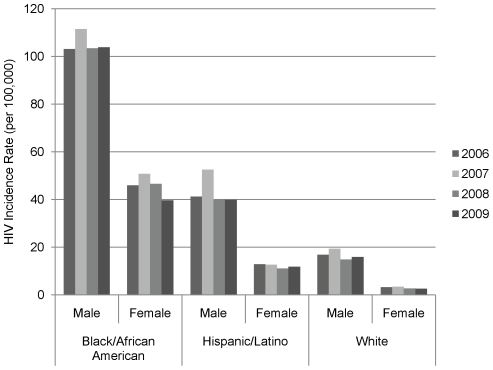
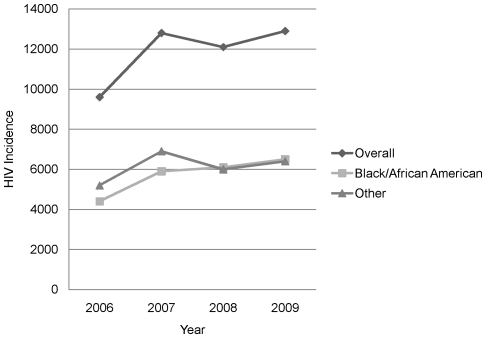
BACKGROUND: The estimated number of new HIV infections in the United States reflects the leading edge of the epidemic. Previously, CDC estimated HIV incidence in the United States in 2006 as 56,300 (95% CI: 48,200-64,500). We updated the 2006 estimate and calculated incidence for 2007-2009 using improved methodology. METHODOLOGY: We estimated incidence using incidence surveillance data from 16 states and 2 cities and a modification of our previously described stratified extrapolation method based on a sample survey approach with multiple imputation, stratification, and extrapolation to account for missing data and heterogeneity of HIV testing behavior among population groups. PRINCIPAL FINDINGS: Estimated HIV incidence among persons aged 13 years and older was 48,600 (95% CI: 42,400-54,700) in 2006, 56,000 (95% CI: 49,100-62,900) in 2007, 47,800 (95% CI: 41,800-53,800) in 2008 and 48,100 (95% CI: 42,200-54,000) in 2009. From 2006 to 2009 incidence did not change significantly overall or among specific race/ethnicity or risk groups. However, there was a 21% (95% CI:1.9%-39.8%; p = 0.017) increase in incidence for people aged 13-29 years, driven by a 34% (95% CI: 8.4%-60.4%) increase in young men who have sex with men (MSM). There was a 48% increase among young black/African American MSM (12.3%-83.0%; p<0.001). Among people aged 13-29, only MSM experienced significant increases in incidence, and among 13-29 year-old MSM, incidence increased significantly among young, black/African American MSM. In 2009, MSM accounted for 61% of new infections, heterosexual contact 27%, injection drug use (IDU) 9%, and MSM/IDU 3%. CONCLUSIONS/SIGNIFICANCE: Overall, HIV incidence in the United States was relatively stable 2006-2009; however, among young MSM, particularly black/African American MSM, incidence increased. HIV continues to be a major public health burden, disproportionately affecting several populations in the United States, especially MSM and racial and ethnic minorities. Expanded, improved, and targeted prevention is necessary to reduce HIV incidence.
Overview
The claims and statistics of this paper haven’t been checked yet.
Free: it reads the open-access text and checks the first 5 claims that cite a source we can check. Create a free account to check every claim.
Integrity signals
Registry
Cites
Statistics
Figures
Verification
Claims the paper makes
The claims and statistics of this paper haven’t been checked yet.
Free: it reads the open-access text and checks the first 5 claims that cite a source we can check. Create a free account to check every claim.
Claims other papers make about this one
Each is checked against this paper’s own text: does it say what the citing paper says it does?
In the citing paper
“HIV is a public health crisis among Black and Latino men in the USA, notably those living in New York City (NYC).”
From Using Syndemic Theory to Understand Vulnerability to HIV Infection among Black and Latino Men in New York City (2014) · cites this paper as [1]
In the citing paper
“That same year, HIV incidence among Black and Latino men was 6.5 and 2.5 times greater, respectively, than it was among White men.”
From Using Syndemic Theory to Understand Vulnerability to HIV Infection among Black and Latino Men in New York City (2014) · cites this paper as [1]
Self-check
Percentages, sums and reported differences re-computed from the paper’s own numbers.
The self-check needs the paper’s full text.
Citations
Cites
Applied Regression Analysis and Other Multivariable Methods
Walker, E. (1989) · Technometrics · doi:10.1080/00401706.1989.10488486 · Cited by 8,538
(2006) · PsycEXTRA Dataset · doi:10.1037/e545592006-001 · Cited by 2,958
Estimation of HIV Incidence in the United States
Hall, H. I. (2008) · JAMA · doi:10.1001/jama.300.5.520 · Cited by 1,317 · cited 6×
“but within the confidence interval of that estimate [4].”
InfluentialSelf-citationMarks, G., Crepaz, N., & Janssen, R. S. (2006) · AIDS · doi:10.1097/01.aids.0000233579.79714.8d · Cited by 1,096 · cited 1×
“, and the majority of new HIV infections transmitted by these individuals”
Parashar, U. (2006) · Medical Entomology and Zoology · Cited by 799
Janssen, R. S. (1998) · JAMA · doi:10.1001/jama.280.1.42 · Cited by 687 · cited 1×
“Since 2004, CDC has funded selected states and localities to conduct HIV incidence surveillance by (1) submitting remnant diagnostic HIV-positive blood specimens for testing using the serologic testing algorithm for recent HIV seroconversion (STARHS)”
BackgroundPurcell, D. W., Johnson, C. H., Lansky, A., Prejean, J., Stein, R., Denning, P., Gau1, Z., Weinstock, H., Su, J., & Crepaz, N. (2012) · The Open AIDS Journal · doi:10.2174/1874613601206010098 · Cited by 356
Self-citationParekh, B. S., Kennedy, M. S., Dobbs, T., Pau, C.-P., Byers, R., Green, T., Hu, D. J., Vanichseni, S., Young, N. L., Choopanya, K., et al. (2002) · AIDS Research and Human Retroviruses · doi:10.1089/088922202753472874 · Cited by 355 · cited 1×
“In addition, the continued refinement of the method for estimating the mean recency period for the BED HIV-1 Capture Enzyme Immunoassay (BED; the assay that currently serves as the serologic marker of recent infection) [6] and for modeling the recency period distribution [7] has allowed for improvement of the method o…”
Self-citationSullivan, P. S., Hamouda, O., Delpech, V., Geduld, J. E., Prejean, J., Semaille, C., Kaldor, J., Folch, C., Op de Coul, E., Marcus, U., et al. (2009) · Annals of Epidemiology · doi:10.1016/j.annepidem.2009.03.004 · Cited by 326
Self-citationUndiagnosed HIV Prevalence Among Adults and Adolescents in the United States at the End of 2006
Campsmith, M. L., Rhodes, P. H., Hall, H. I., & Green, T. A. (2010) · JAIDS Journal of Acquired Immune Deficiency Syndromes · doi:10.1097/qai.0b013e3181bf1c45 · Cited by 219 · cited 1×
“, public health programs are presented with new challenges. There is a need to address the prevention needs both of people at risk for HIV infection as well as of those living with HIV disease—those who are aware of their HIV status and those who are not. With an estimated 21% of people living with HIV unaware of thei…”
BackgroundSelf-citation
Cited by
Items 201–300 of 1,000
Carrico, A. W., Zepf, R., Meanley, S., Batchelder, A., & Stall, R. (2016) · JAIDS Journal of Acquired Immune Deficiency Syndromes · doi:10.1097/qai.0000000000001102 · Cited by 62
“Recent reports also documented an alarming, 34% increase in HIV incidence among young MSM ages 13–29 years, which was most pronounced among young African American MSM.(4) Currently, it is estimated that approximately 1 in 4 MSM in the United States are living with HIV/AIDS.”
BackgroundSexual Networks and HIV Risk among Black Men Who Have Sex with Men in 6 U.S. Cities
Tieu, H., Liu, T., Hussen, S. A., Connor, M. B., Wang, L., Buchbinder, S., Wilton, L., Gorbach, P. M., Mayer, K. H., Griffith, S., et al. (2015) · PLoS ONE · doi:10.1371/journal.pone.0134085 · Cited by 70
Nguyen, T. Q., Weir, B. W., Jarlais, D. C. D., Pinkerton, S. D., & Holtgräve, D. R. (2014) · AIDS and Behavior · doi:10.1007/s10461-014-0789-9 · Cited by 65
“HIV incidence estimates available for the most recent year (2009) served as the basis for our analysis, with 4,500 new HIV infections acquired by PWID and 1,300 by MSM/ PWID [5].”
BackgroundMethodInfluentialTreatment Outcomes in Undocumented Hispanic Immigrants with HIV Infection
Poon, K. K.-Y., Dang, B. N., Davila, J. A., Hartman, C. M., & Giordano, T. P. (2013) · PLoS ONE · doi:10.1371/journal.pone.0060022 · Cited by 65
Jaworski, E. M., Saifuddin, M., Sampey, G. C., Shafagati, N., Duyne, R. V., Iordanskiy, S., Kehn‐Hall, K., Liotta, L. A., Petricoin, E. F., Young, M., et al. (2014) · PLoS ONE · doi:10.1371/journal.pone.0096778 · Cited by 66
Patel, V. V., Masyukova, M., Sutton, D. M., & Horvath, K. J. (2016) · Journal of Urban Health · doi:10.1007/s11524-016-0025-1 · Cited by 65
Homophobia as a Barrier to HIV Prevention Service Access for Young Men Who Have Sex With Men
Santos, G., Beck, J., Wilson, P. A., Hebert, P., Makofane, K., Pyun, T., Do, T., Arreola, S. G., & Ayala, G. (2013) · JAIDS Journal of Acquired Immune Deficiency Syndromes · doi:10.1097/qai.0b013e318294de80 · Cited by 65
Does ART prevent HIV transmission among MSM?
Muessig, K. E., Smith, M. K., Powers, K. A., Lo, Y. R., Burns, D., Grulich, A. E., Phillips, A. N., & Cohen, M. S. (2012) · AIDS · doi:10.1097/qad.0b013e328355713d · Cited by 64
Bingham, T. A., Harawa, N. T., & Williams, J. K. Y. (2012) · American Journal of Public Health · doi:10.2105/ajph.2012.300855 · Cited by 68
Exten, C. L., Maierhofer, C., Fields, K. S., Ervin, M., Lanza, S. T., & Turner, A. N. (2016) · The Journal of Sexual Medicine · doi:10.1016/j.jsxm.2016.01.001 · Cited by 67
Losina, E., Hyle, E. P., Borre, E. D., Linas, B. P., Sax, P. E., Weinstein, M. C., Rusu, C., Ciaranello, A. L., Walensky, R. P., & Freedberg, K. A. (2017) · Clinical Infectious Diseases · doi:10.1093/cid/cix547 · Cited by 62
“We used published data on the average age (36 years) and mean CD4 count (751 cells/μL) at seroconversion [15, 30].”
MethodUnderstanding disparities in viral suppression among Black MSM living with HIV in Atlanta Georgia
Sullivan, P. S., Knox, J., Jones, J., Taussig, J., Valentine Graves, M., Millett, G., Luisi, N., Hall, E., Sanchez, T. H., Del Rio, C., et al. (2021) · Journal of the International AIDS Society · doi:10.1002/jia2.25689 · Cited by 62
Antiretroviral pre‐exposure prophylaxis implementation in the United States: a work in progress
Mayer, K. H., Hosek, S., Cohen, S. E., Liu, A., Pickett, J., Warren, M., Krakower, D., & Grant, R. M. (2015) · Journal of the International AIDS Society · doi:10.7448/ias.18.4.19980 · Cited by 62
Oster, A. M., Wejnert, C., Mena, L. A., Elmore, K., Fisher, H. H., & Heffelfinger, J. D. (2013) · Sexually Transmitted Diseases · doi:10.1097/olq.0b013e3182840373 · Cited by 66
Meng, X., Zou, H., Fan, S., Zheng, B., Zhang, L., Dai, X., Deng, M., Zhang, X., & Lü, B. (2014) · AIDS and Behavior · doi:10.1007/s10461-014-0921-x · Cited by 62
“[1–3].”
The Status of the National HIV Surveillance System, United States, 2013
Cohen, S. M., Gray, K. M., Ocfemia, M. C. B., Johnson, A. S., & Hall, H. I. (2014) · Public Health Reports · doi:10.1177/003335491412900408 · Cited by 62
Self-citationHigh Risk for HIV following Syphilis Diagnosis among Men in Florida, 2000–2011
Peterman, T. A., Newman, D. R., Maddox, L. M., Schmitt, K., & Shiver, S. (2014) · Public Health Reports · doi:10.1177/003335491412900210 · Cited by 66
Higa, D. H., Crepaz, N., Marshall, K. J., Kay, L. S., Vosburgh, H. W., Spikes, P., Lyles, C. M., & Purcell, D. W. (2013) · AIDS and Behavior · doi:10.1007/s10461-013-0418-z · Cited by 68
Thoma, B. C., & Huebner, D. M. (2014) · AIDS and Behavior · doi:10.1007/s10461-014-0717-z · Cited by 62
“Adolescents were recruited from April 2007 to May 2010 through direct outreach at community centers serving LGB youth in four cities in the United States: Indianapolis, IN, Boston, MA, Philadelphia, PA, and Oakland, CA.”
InfluentialLennon, C. A., Huedo-Medina, T. B., Gerwien, D. P., & Johnson, B. T. (2012) · Social Science & Medicine · doi:10.1016/j.socscimed.2012.01.016 · Cited by 57
“N IH -PA Author M anuscript N IH -PA Author M anuscript were women (Prejean et al., 2011).”
Sexual risk behaviors and HIV risk among Americans aged 50 years or older: a review
Pilowsky, D. J., & Wu, L.-T. T. (2015) · Substance Abuse and Rehabilitation · doi:10.2147/sar.s78808 · Cited by 64
“Sex, ethnicity, and health The distribution of prevalent HIV-infected cases in the United States is skewed, with males accounting for 80% of incident cases in 2010.(15) MSM are at increased risk of becoming HIV-infected compared with the general US population.”
Gross, I. M., Hosek, S., Richards, M. H., & Fernandez, M. I. (2016) · AIDS Patient Care and STDs · doi:10.1089/apc.2015.0351 · Cited by 64
Information behavior and HIV testing intentions among young men at risk for HIV / AIDS
Meadowbrooke, C. C., Veinot, T. C., Loveluck, J., Hickok, A., & Bauermeister, J. A. (2014) · Journal of the Association for Information Science and Technology · doi:10.1002/asi.23001 · Cited by 72
Laeyendecker, O. B., Brookmeyer, R., Oliver, A. E., Mullis, C. E., Eaton, K. P., Mueller, A. C., Jacobson, L. P., Margolick, J. B., Brown, J., Rinaldo, C. R., et al. (2011) · AIDS Research and Human Retroviruses · doi:10.1089/aid.2011.0258 · Cited by 60
Hammett, T. M., Phan, S., Gaggin, J., Case, P., Zaller, N., Lutnick, A., Kral, A. H., Fedorova, E. V., Heimer, R., Small, W., et al. (2014) · BMC Health Services Research · doi:10.1186/1472-6963-14-261 · Cited by 63
“epidemics of HIV and other parenterally transmitted viruses such as hepatitis C among PWID in many locations worldwide [4-6].”
Backgroundda Silva, D. T., Bouris, A. M., Voisin, D. R., Hotton, A., Brewer, R., & Schneider, J. A. (2019) · AIDS and Behavior · doi:10.1007/s10461-019-02575-9 · Cited by 62
Grov, C., Rendina, H. J., Ventuneac, A., & Parsons, J. T. (2013) · The Journal of Sexual Medicine · doi:10.1111/jsm.12227 · Cited by 59
The cost-effectiveness of expanded HIV screening in the United States
Lucas, A., & Armbruster, B. (2012) · AIDS · doi:10.1097/qad.0b013e32835c54f9 · Cited by 59
“02% [19,20], with the incidence rate among whites at 0.”
Backgroundfor the HPTN 061 Study Team, Nelson, L. E., Wilton, L., Moineddin, R., Zhang, N., Siddiqi, A., Sa, T., Harawa, N. T., Regan, R., Dyer, T. V., et al. (2016) · Journal of Urban Health · doi:10.1007/s11524-015-0020-y · Cited by 61
Malone, J., Syvertsen, J. L., Johnson, B. E., Mimiaga, M. J., Mayer, K. H., & Bazzi, A. R. (2017) · Culture Health & Sexuality · doi:10.1080/13691058.2017.1368711 · Cited by 61
Mayer, K. H., Skeer, M. R., O’Cleirigh, C. M., Goshe, B. M., & Safren, S. A. (2013) · Annals of Behavioral Medicine · doi:10.1007/s12160-013-9527-1 · Cited by 58
“Despite the advent of highly active antiretroviral therapy, which could conceivably slow the spread of HIV in the United States by decreasing the number of infectious people living with HIV, the number of new infections has not declined among MSM (2).”
BackgroundInfluentialInvestigating a Sexual Network of Black Men Who Have Sex With Men
Hurt, C. B., Beagle, S., Leone, P. A., Sugarbaker, A., Pike, E. C., Kuruc, J. D., Foust, E., Eron, J. J., Cohen, M. S., & Hightow‐Weidman, L. (2012) · JAIDS Journal of Acquired Immune Deficiency Syndromes · doi:10.1097/qai.0b013e31827076a4 · Cited by 58
“The stable annual rate of approximately 50,000 new infections belies an uncomfortable finding: while the pace of infections among most risk groups has remained static or declined, estimated incidence among young Black men who have sex with men (MSM) rose 48% across the 4-year period.(2) North Carolina has experienced…”
BackgroundRoutine HIV Screening in Portugal: Clinical Impact and Cost-Effectiveness
Yazdanpanah, Y., Perelman, J., DiLorenzo, M. A., Alves, J., Barros, H., Mateus, C., Pereira, J., Mansinho, K., Robine, M., Park, J.-E., et al. (2013) · PLoS ONE · doi:10.1371/journal.pone.0084173 · Cited by 61
Aghaizu, A., Wayal, S., Nardone, A., Parsons, V., Copas, A. J., Mercey, D., Hart, G. J., Gilson, R. J. C., & Johnson, A. M. (2016) · The Lancet HIV · doi:10.1016/s2352-3018(16)30037-6 · Cited by 58
Frye, V. A., Wilton, L., Hirshfield, S., Chiasson, M. A., Lucy, D., Usher, D., McCrossin, J., Greene, E., Koblin, B. A., & for the All About Me Study Team (2018) · PLoS ONE · doi:10.1371/journal.pone.0192936 · Cited by 62
HIV Infection and HIV-Associated Behaviors Among Injecting Drug Users—20 Cities, United States, 2009
(2012) · American Journal of Transplantation · doi:10.1111/j.1600-6143.2012.04152.x · Cited by 58
“HIV infections in 2009 occurred among injecting drug users (IDUs) (2).”
BackgroundGamarel, K. E., Darbes, L. A., Hightow‐Weidman, L., Sullivan, P. S., & Stephenson, R. B. (2018) · JMIR Research Protocols · doi:10.2196/10370 · Cited by 58
“Numerous studies suggest that individuals are more likely to have condomless anal sex (CAS) with their primary partner as compared with casual partners [4,7], and relationship factors such as intimacy, closeness, and trust have been identified as powerful motivators for CAS in relationships [8-10].”
BackgroundTrends in HIV Prevalence and HIV Testing Among Young MSM: Five United States Cities, 1994–2011
Oster, A. M., Johnson, C. H., Le, B. C., Balaji, A. B., Finlayson, T., Lansky, A. L., Mermin, J., Valleroy, L. A., MacKellar, D. A., Behel, S. K., et al. (2013) · AIDS and Behavior · doi:10.1007/s10461-013-0566-1 · Cited by 57
Self-citationOldenburg, C. E., Mitty, J. A., Biello, K. B., Closson, E. F., Safren, S. A., Mayer, K. H., & Mimiaga, M. J. (2015) · AIDS and Behavior · doi:10.1007/s10461-015-1226-4 · Cited by 60
Factors Associated with Retention and Viral Suppression Among a Cohort of HIV+ Women of Color
Blank, A. E., Fletcher, J., Verdecias, N., Garcia, I., Blackstock, O. J., & Cunningham, C. O. (2014) · AIDS Patient Care and STDs · doi:10.1089/apc.2014.0272 · Cited by 59
“The incidence of HIV among African American/black women is more than 20 times that of white women, and more than four times that of Hispanics/Latinas.(12,13) African Americans/blacks and Hispanics/Latinos are less likely to be retained in care than whites.”
Kumar, P., Gordon, L. A., Brooks, K. M., George, J. M., Kellogg, A., McManus, M., Alfaro, R. M., Nghiem, K., Lozier, J. N., Hadigan, C. M., et al. (2017) · Antimicrobial Agents and Chemotherapy · doi:10.1128/aac.01201-17 · Cited by 57
Racial and ethnic differences in pulmonary arterial hypertension
Al‐Naamani, N., Paulus, J. K., Roberts, K. E., Pauciulo, M. W., Lutz, K. A., Nichols, W. C., & Kawut, S. M. (2017) · Pulmonary Circulation · doi:10.1177/2045893217732213 · Cited by 57
Bruce, D., Kahana, S., Harper, G. W., Fernández, M. I., & the, A. T. N. (2013) · AIDS Care · doi:10.1080/09540121.2012.720363 · Cited by 55
“Introduction With HIV incidence rising among young men who have sex with men (YMSM; Prejean et al., 2011; CDC, 2010), particularly African Americans, secondary prevention efforts take on increasing significance.”
BackgroundBroz, D., Pham, H., Spiller, M. W., Wejnert, C., Le, B. C., Neaigus, A., & Paz‐Bailey, G. (2013) · AIDS and Behavior · doi:10.1007/s10461-013-0660-4 · Cited by 59
“Generational differences in HIV risk perception have been documented among young men who have sex with men, which have been suggested as contributing to the resurgence of sexually transmitted infections and increased HIV incidence in this population, particularly among minority men [66–69].”
BackgroundRubtsova, A., Wingood, G. M., Dunkle, K., Camp, C. M., & DiClemente, R. J. (2014) · Current HIV Research · doi:10.2174/1570162x12666140129104952 · Cited by 56
“For example, among US women, those aged 13 to 29 years old had the highest incidence of HIV (36%) in 2009 [4].”
BackgroundIntrocaso, C. E., Xu, F., Kilmarx, P. H., Zaidi, A. A., & Markowitz, L. E. (2013) · Sexually Transmitted Diseases · doi:10.1097/01.olq.0000430797.56499.0d · Cited by 63
“A US HIV incidence analysis estimated that 16,560 new heterosexually acquired infections occurred in men and boys 13 years and older in 2006 to 2009.(13) Although most of the US population is white, among those heterosexually acquired infections, 10,900 occurred among black/African American men, 3290 occurred among Hi…”
BackgroundCost-Effectiveness of Frequent HIV Testing of High-Risk Populations in the United States
Hutchinson, A. B., Farnham, P. G., Sansom, S. L., Yaylalı, E., & Mermin, J. (2015) · JAIDS Journal of Acquired Immune Deficiency Syndromes · doi:10.1097/qai.0000000000000838 · Cited by 59
“result in cost savings.(22) Cost savings are rarely achieved for health interventions.”
BackgroundSelf-citationBrown, C. H., Mohr, D. C., Gallo, C. G., Mader, C., Palinkas, L., Wingood, G., Prado, G., Kellam, S. G., Pantin, H., Poduska, J., et al. (2013) · JAIDS Journal of Acquired Immune Deficiency Syndromes · doi:10.1097/qai.0b013e31829372bd · Cited by 55
High and persistent HIV seroincidence in men who have sex with men across 47 U.S. cities.
Ackers, M.-L., Greenberg, A. E., Lin, C. Y., Bartholow, B. N., Goodman, A. H., Longhi, M., & Gurwith, M. (2012) · PLoS ONE · doi:10.1371/journal.pone.0034972 · Cited by 55
Disparities among US states in HIV-related mortality in persons with HIV infection, 2001–2007
Hanna, D. B., Selik, R. M., Tang, T., & Gange, S. J. (2011) · AIDS · doi:10.1097/qad.0b013e32834dcf87 · Cited by 55
Fields, E. L., Bogart, L. M., Galván, F. H., Wagner, G. J., Klein, D. J., & Schuster, M. A. (2013) · American Journal of Public Health · doi:10.2105/ajph.2012.300951 · Cited by 59
“a higher increase in HIV incidence in recent years than has any other racial/ethnic subgroup in the United States.(3) Rates of unprotected anal intercourse (UAI) fail to account for racial/ethnic disparities in HIV prevalence.”
BackgroundDiagnosing HIV Infection in Primary Care Settings: Missed Opportunities
Chin, T., Hicks, C. B., Samsa, G. P., & McKellar, M. (2013) · AIDS Patient Care and STDs · doi:10.1089/apc.2013.0099 · Cited by 55
Westergaard, R. P., Beach, M. C., Saha, S. S., & Jacobs, E. A. (2013) · Journal of General Internal Medicine · doi:10.1007/s11606-013-2554-6 · Cited by 56
“Despite advances in the effectiveness and availability of medical therapy for HIV, we have not yet observed substantial decreases in HIV transmission on a national or global level.(41) HIV vaccine research involving volunteer human subjects will therefore be necessary for the foreseeable future, and participation of r…”
BackgroundState Adolescent Consent Laws and Implications for HIV Pre-Exposure Prophylaxis
Culp, L., & Caucci, L. (2013) · American Journal of Preventive Medicine · doi:10.1016/j.amepre.2012.09.044 · Cited by 54
Basu, A., Dillon, P., & Romero‐Daza, N. (2016) · Health Communication · doi:10.1080/10410236.2015.1072884 · Cited by 59
“Scholarly research and government surveillance reports also demonstrate that, within the general MSM population, African American and Latino MSM bear an inequitable burden of new HIV infections (CDC, 2013b; Prejean et al., 2011).”
BackgroundInfluentialHussen, S. A., Harper, G. W., Bauermeister, J. A., Hightow‐Weidman, L., & the Adolescent Medicine Trials Network for HIV/AIDS Interventions (2015) · AIDS Patient Care and STDs · doi:10.1089/apc.2014.0117 · Cited by 55
Haley, D. F., Lucas, J. P., Golin, C. E., Wang, J., Hughes, J. P., Emel, L., El‐Sadr, W., Frew, P. M., Justman, J. E., Adimora, A. A., et al. (2014) · AIDS Patient Care and STDs · doi:10.1089/apc.2013.0366 · Cited by 58
Newcomb, M. E. (2013) · AIDS and Behavior · doi:10.1007/s10461-013-0470-8 · Cited by 56
“Furthermore, in developing interventions for YMSM specifically, it may be particularly important to be mindful that risk-taking behaviors (including sexual risk and substance use) are more normative in adolescence and young adulthood [40, 41].”
BackgroundInfluentialBeck, E. C., Birkett, M. A., Armbruster, B., & Mustanski, B. S. (2015) · JAIDS Journal of Acquired Immune Deficiency Syndromes · doi:10.1097/qai.0000000000000733 · Cited by 58
“Between 2006 and 2009, the number of new HIV infections in the United States attributable to young men who have sex with men (YMSM) aged 13–29 years rose by 34%, resulting in 27% of all new HIV infections in 2009 attributed to YMSM.(1,2) In contrast, the overall number of new HIV infections has remained stable at an e…”
BackgroundFuture-oriented tweets predict lower county-level HIV prevalence in the United States.
Ireland, M. E., Schwartz, H. A., Chen, Q., Ungar, L., & Albarracín, D. (2015) · Health Psychology · doi:10.1037/hea0000279 · Cited by 57
“Each model controlled for the three best structural correlates of county-level HIV prevalence: Percentage of the population that identifies as Black, percentage of the population that is foreign born, and population density in the county (Prejean et al., 2011).”
Baker, Z. G., Javanbakht, M., Mierzwa, S., Pavel, C., Lally, M., Zimet, G. D., & Gorbach, P. M. (2017) · AIDS and Behavior · doi:10.1007/s10461-017-1958-4 · Cited by 54
Young Men Who Have Sex with Men at High Risk for HIV, Bangkok MSM Cohort Study, Thailand 2006–2014
Thienkrua, W., van Griensven, F., Mock, P. A., Dunne, E. F., Raengsakulrach, B., Wimonsate, W., Howteerakul, N., Ungsedhapand, C., Chiwarakorn, A., & Holtz, T. H. (2017) · AIDS and Behavior · doi:10.1007/s10461-017-1963-7 · Cited by 59
“Consistent with other studies among MSM in Asian and western countries [10, 11, 40, 41], our study found YMSM reported less consistent condom use with steady male partners than with casual partners.”
ResultHIV incidence among men who have sex with men in Beijing: a prospective cohort study
Li, D., Li, S., Liu, Y., Gao, Y., Yu, M., Yang, X., Li, Q., Jiang, S., Zhou, Z., Zhang, Z., et al. (2012) · BMJ Open · doi:10.1136/bmjopen-2012-001829 · Cited by 54
Doshi, R. K., Malebranche, D. J., Bowleg, L., & Sangaramoorthy, T. (2012) · AIDS Patient Care and STDs · doi:10.1089/apc.2012.0269 · Cited by 58
“HIV/AIDS disproportionately affects Black Americans, who account for 44% of new HIV cases in the United States despite constituting only 14% of the population.(1) Of all new HIV diagnoses among Black men in 2010, heterosexual men accounted for 19%, and the number of new diagnoses among Black men who have sex with men…”
Wagenaar, B. H., Christiansen‐Lindquist, L., Khosropour, C. M., Salazar, L. F., Benbow, N., Prachand, N., Sineath, R. C., Stephenson, R., & Sullivan, P. S. (2012) · PLoS ONE · doi:10.1371/journal.pone.0042953 · Cited by 53
HIV Screening in the Health Care Setting: Status, Barriers, and Potential Solutions
Rizza, S. A., MacGowan, R. J., Purcell, D. W., Branson, B. M., & Temesgen, Z. (2012) · Mayo Clinic Proceedings · doi:10.1016/j.mayocp.2012.06.021 · Cited by 53
Alcohol Use, Anal Sex, and Other Risky Sexual Behaviors Among HIV-Infected Women and Men
Hutton, H. E., McCaul, M. E., Chander, G., Jenckes, M. W., Nollen, C., Sharp, V., & Erbelding, E. J. (2012) · AIDS and Behavior · doi:10.1007/s10461-012-0191-4 · Cited by 56
“This would indicate that prevention intervention content to reduce alcohol-associated sexual risk behaviors may be relevant across African Americans and Hispanics who have been particularly affected by HIV [40].”
BackgroundKhosropour, C. M., Johnson, B. A., Ricca, A. V., & Sullivan, P. S. (2013) · Journal of Medical Internet Research · doi:10.2196/jmir.2756 · Cited by 51
“From 2006-2009, HIV incidence increased by 34% among all young MSM aged 13-29, with an increased incidence of 48% noted among young black MSM [3].”
BackgroundThe Ryan White HIV/AIDS Program in the Age of Health Care Reform
Cahill, S., Mayer, K. H., & Boswell, S. (2015) · American Journal of Public Health · doi:10.2105/ajph.2014.302442 · Cited by 53
Wray, T. B., Kahler, C. W., & Monti, P. M. (2016) · AIDS and Behavior · doi:10.1007/s10461-015-1272-y · Cited by 57
Hightow‐Weidman, L., Phillips, G., Outlaw, A. Y., Wohl, A. R., Fields, S. D., Hildalgo, J., & LeGrand, S. (2012) · AIDS and Behavior · doi:10.1007/s10461-012-0331-x · Cited by 55
“In light of recent reports of the continued rise of HIV among this population [45] supportive family-based interventions should be a future focus.”
Johnson, A. S., Song, R., & Hall, H. I. (2017) · JAIDS Journal of Acquired Immune Deficiency Syndromes · doi:10.1097/qai.0000000000001495 · Cited by 56
Self-citationWei, C., McFarland, W., Colfax, G. N., Fuqua, V., & Raymond, H. F. (2012) · Sexually Transmitted Infections · doi:10.1136/sextrans-2012-050619 · Cited by 51
Holtgräve, D. R., Hall, H. I., Wehrmeyer, L., & Maulsby, C. (2012) · AIDS and Behavior · doi:10.1007/s10461-012-0207-0 · Cited by 51
“prevalence have been unveiled [5, 6], and deeper insights gained into the HIV transmission rates both for persons aware and unaware that they are living with HIV [7, 8].”
BackgroundSelf-citationOber, A. J., Dangerfield, D. T., SHOPTAW, S. J., Ryan, G. W., Stucky, B. D., & Friedman, S. R. (2017) · AIDS and Behavior · doi:10.1007/s10461-017-1790-x · Cited by 54
“Among Black MSM in this age group, new infections increased by 48% between 2006 and 2009 [2].”
Ludema, C., Doherty, I. A., White, B. L., Simpson, C. A., Villar-Loubet, O. M., McLellan–Lemal, E., O’Daniels, C., & Adimora, A. A. (2015) · Journal of Health Care for the Poor and Underserved · doi:10.1353/hpu.2015.0005 · Cited by 55
LeGrand, S., Muessig, K. E., Platt, A., Soni, K., Egger, J. R., Nwoko, N., McNulty, T., & Hightow-Weidman, L. B. (2018) · JMIR Research Protocols · doi:10.2196/resprot.8811 · Cited by 48
“Men who have sex with men (MSM) account for nearly two-thirds of all new HIV infections in the United States and young MSM (YMSM) are the only risk group experiencing an increase in HIV incidence [1-3].”
BackgroundHussen, S. A., Jones, M. D., Moore, S. J., Hood, J., Smith, J. C., Camacho-González, A., del Río, C., & Harper, G. W. (2018) · AIDS Care · doi:10.1080/09540121.2018.1527007 · Cited by 52
Kutner, B. A., Simoni, J. M., Aunon, F. M., Creegan, E., & Balán, I. C. (2020) · Archives of Sexual Behavior · doi:10.1007/s10508-019-01595-9 · Cited by 53
Rosenberg, E. S., Khosropour, C. M., & Sullivan, P. S. (2012) · Sexually Transmitted Diseases · doi:10.1097/olq.0b013e31825ec09b · Cited by 49
“Furthermore, since 2000, MSM have been the only transmission group in which incident HIV cases have increased.(1,3,4) In addition to the disparities between MSM and other HIV risk groups, there are substantial disparities among MSM.”
BackgroundInfluentialButtram, M. E., & Kurtz, S. P. (2014) · Journal of Racial and Ethnic Health Disparities · doi:10.1007/s40615-014-0042-2 · Cited by 50
Levels and Predictors of HIV Risk Behavior Among Black Men Who Have Sex With Men
Kelly, J. A., Lawrence, J. S. S., Amirkhanian, Y. A., DiFranceisco, W. J., Anderson-Lamb, M., García, L. I., & Nguyen, M. T. (2013) · AIDS Education and Prevention · doi:10.1521/aeap.2013.25.1.49 · Cited by 56
“Although they constitute only a very small fraction of a percent of the total American population, HIV incidence has increased more rapidly among Black MSM than any other segment of the American population (Centers for Disease Control and Prevention, 2008; Prejean et al., 2011).”
BackgroundInfluentialSteiner, R. J., Finocchario‐Kessler, S., & Dariotis, J. K. (2013) · American Journal of Public Health · doi:10.2105/ajph.2013.301265 · Cited by 53
Sanchez, T., Kelley, C. F., Rosenberg, E. S., Luisi, N., O'Hara, B. M., Lambert, R., Coleman, R., Frew, P. M., Salazar, L. F., Tao, S., et al. (2014) · Open Forum Infectious Diseases · doi:10.1093/ofid/ofu084 · Cited by 49
“More recently, increases in incidence have been concentrated among young MSM of color [2].”
Krakower, D., Ware, N. C., Maloney, K. M., Wilson, I. B., Wong, J. B., & Mayer, K. H. (2017) · AIDS Patient Care and STDs · doi:10.1089/apc.2017.0031 · Cited by 52
“Di-lemmas included decisions about providing PrEP when patients (1) report low-risk behaviors and request PrEP; (2) are at extremely high risk for HIV acquisition and are also anticipated to have poor adherence; and (3) do not follow monitoring recommendations while using PrEP.”
Increased costs of HIV care associated with aging in an HIV ‐infected population
Krentz, H. B., & Gill, M. J. (2014) · HIV Medicine · doi:10.1111/hiv.12176 · Cited by 52
Mayo‐Wilson, L. J. (2014) · Journal of Urban Health · doi:10.1007/s11524-014-9898-z · Cited by 50
Brown, J. L., Littlewood, R. A., & Vanable, P. A. (2013) · AIDS Care · doi:10.1080/09540121.2012.752566 · Cited by 52
Resilience and syndemic risk factors among African-American female sex workers
Buttram, M. E., Surratt, H. L., & Kurtz, S. P. (2013) · Psychology Health & Medicine · doi:10.1080/13548506.2013.824595 · Cited by 48
“Further, HIV incidence rates among African-American women far exceed those of other American women (Prejean et al., 2011).”
BackgroundConron, K. J., Goldberg, S. K., & Halpern, C. T. (2018) · Journal of Epidemiology & Community Health · doi:10.1136/jech-2017-209860 · Cited by 56
Zhang, L., Zhang, D., Yu, B., Wang, S., Liu, Y., Wang, J., Li, X., Shang, X., & Li, H. (2013) · PLoS ONE · doi:10.1371/journal.pone.0058440 · Cited by 51
Reback, C. J., Fletcher, J. B., SHOPTAW, S. J., & Mansergh, G. (2015) · AIDS and Behavior · doi:10.1007/s10461-014-0985-7 · Cited by 51
Safren, S. A., O'Cleirigh, C. M., Skeer, M., Elsesser, S. A., & Mayer, K. H. (2013) · Health Psychology · doi:10.1037/a0028581 · Cited by 48
A Longitudinal Analysis of Antiretroviral Adherence Among Young Black Men Who Have Sex With Men
Voisin, D. R., Quinn, K. G., Kim, D. H., & Schneider, J. A. (2016) · Journal of Adolescent Health · doi:10.1016/j.jadohealth.2016.10.428 · Cited by 47
Merchant, R. C., Clark, M. A., Liu, T., Romanoff, J., Rosenberger, J. G., Bauermeister, J. A., & Mayer, K. H. (2017) · AIDS and Behavior · doi:10.1007/s10461-017-1802-x · Cited by 49
An, Q., Prejean, J., Harrison, K. M., & Fang, X. (2012) · American Journal of Public Health · doi:10.2105/ajph.2012.300853 · Cited by 53
Self-citationChou, R., Selph, S., Dana, T., Bougatsos, C., Zakher, B., Blazina, I., & Korthuis, P. T. (2012) · Annals of Internal Medicine · doi:10.7326/0003-4819-157-10-201211200-00007 · Cited by 46
Quinlivan, E. B., Messer, L. C., Adimora, A. A., Roytburd, K., Bowditch, N., Parnell, H. E., Seay, J., Bell, L., & Pierce, J. K. (2013) · AIDS Patient Care and STDs · doi:10.1089/apc.2012.0434 · Cited by 47
Shaeer, K. M., Sherman, E. M., Shafiq, S., & Hardigan, P. C. (2014) · Journal of the American Pharmacists Association · doi:10.1331/japha.2014.14014 · Cited by 47
Ramírez-Valles, J., Molina, Y., & Dirkes, J. (2013) · AIDS Education and Prevention · doi:10.1521/aeap.2013.25.3.179 · Cited by 46
“Stigma towards people living with HIV/AIDS (PLWHA) is an important public health problem because it is widespread, hinders prevention efforts, negatively affects the health of those being stigmatized (Herek, Chopp, & Strohl, 2007; National Institutes of Health, 2002), and the number of PLWHA will continue to increase…”
Influential
Metadata
- Authors
- Prejean, J., Song, R., Hernandez, A., Ziebell, R., Green, T., Walker, F., Lin, L. S., An, Q., Mermin, J., Lansky, A., Hall, H. I., & for the HIV Incidence Surveillance Group
- Affiliations
- Centers for Disease Control and Prevention (US)
- Corresponding author
- Prejean, Joseph
- ORCID
- Venue
- PLoS ONE
- Publisher
- Public Library of Science (PLoS)
- Published
- 2011-08-03
- Volume
- 6
- Issue
- 8
- Pages
- e17502
- ISSN
- 1932-6203 (ISSN-L)
- PMC
- PMC3149556
- OpenAlex
- W2154463966
- Cited by
- 1,071
- References
- 23
- Citations by year
- 2025: 3 · 2024: 11 · 2023: 9 · 2022: 14 · 2021: 14 · 2020: 14 · 2019: 26 · 2018: 37 · 2017: 80 · 2016: 135 · 2015: 157 · 2014: 184 · 2013: 205 · 2012: 167
- FWCI
- 123.18
- Type
- journal article
- Language
- en
- Open access
- gold
- doi.org
- Licence
- Locations
- PLoS ONE (publishedVersion, public-domain)
- PubMed Central (publishedVersion, public-domain)
- PubMed (publishedVersion)
- DOAJ (DOAJ: Directory of Open Access Journals) (submittedVersion, cc-by-sa)
- University Libraries (University of Maryland) (submittedVersion)
- Figshare (submittedVersion, cc-by)
- Digital Repository at the University of Maryland (University of Maryland College Park)
- Funders
- U.S. Department of Health and Human Services
- U.S. Department of State
- New York State Department of Health
- State of Connecticut Department of Public Health
- New York State Department of Health - Wadsworth Center
- Virginia Department of Health
- Northrop Grumman
- State of New Jersey Department of Health
- Florida Department of Health
- Indiana State Department of Health
- Arizona Department of Health Services
- Washington State University
- Colorado Department of Public Health and Environment
- Louisiana Department of Health
- Missouri Department of Health and Senior Services
- Texas Department of State Health Services
- Mississippi State Department of Health
- Centers for Disease Control and Prevention
- University at Albany
- Topics
- Health Sciences › Medicine › Infectious Diseases › HIV/AIDS Research and Interventions
- Health Sciences › Medicine › Epidemiology › HIV, Drug Use, Sexual Risk
- Health Sciences › Medicine › Public Health, Environmental and Occupational Health › HIV, TB, and STIs Epidemiology
- Keywords
- HIV incidence, HIV epidemic trends, young men who have sex with men, heterosexual transmission, intravenous drug use, HIV testing behavior, HIV risk groups, HIV surveillance, multiple imputation, racial and ethnic disparities
- MeSH terms
- Adolescent, Adult, Female, Humans, Male, Middle Aged, United States, HIV Infections, Incidence, Young Adult
About these checks
Registry, retraction, Cites and statistics results are computed, not judged, with one exception: a printed reference that no index lists is read once by a model before it counts as a citation error. Claims are extracted by a model and kept only when their quote appears verbatim in the text; each cited source is then checked, with a model’s help, for whether it says what the claim relies on. Those verdicts can be wrong — read the claim’s quote and the cited source before relying on one.
Statistics and arithmetic are recomputed, not judged.
Confidence bands are shown only for fields calibrated on our annotated test set. None is calibrated yet, so no band is shown.
What counts as a claim ›How we measure confidence ›How we check this ›
Are you an author, or do you see a problem with this page? Request a review
Data sources
Bibliographic data: Semantic Scholar, OpenAlex, Crossref.
Contains information from the Semantic Scholar Academic Graph Datasets, made available under the ODC Attribution License (ODC-BY 1.0).
Semantic Scholar’s data is described in: Kinney, R., et al. (2023). The Semantic Scholar Open Data Platform. arXiv:2301.10140.
