

Estimated HIV Incidence in the United States, 2006–2009
Open accessThe DOI matches its Crossref record; 23 of the 23 references it cites were found in a registry or an index.
Abstract
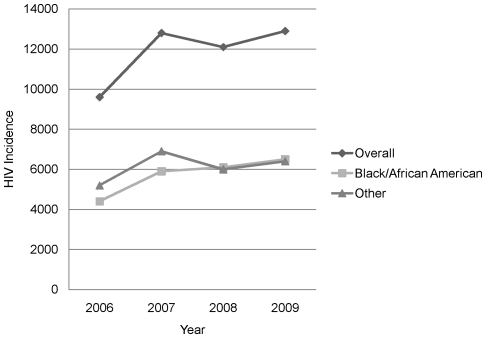
BACKGROUND: The estimated number of new HIV infections in the United States reflects the leading edge of the epidemic. Previously, CDC estimated HIV incidence in the United States in 2006 as 56,300 (95% CI: 48,200-64,500). We updated the 2006 estimate and calculated incidence for 2007-2009 using improved methodology. METHODOLOGY: We estimated incidence using incidence surveillance data from 16 states and 2 cities and a modification of our previously described stratified extrapolation method based on a sample survey approach with multiple imputation, stratification, and extrapolation to account for missing data and heterogeneity of HIV testing behavior among population groups. PRINCIPAL FINDINGS: Estimated HIV incidence among persons aged 13 years and older was 48,600 (95% CI: 42,400-54,700) in 2006, 56,000 (95% CI: 49,100-62,900) in 2007, 47,800 (95% CI: 41,800-53,800) in 2008 and 48,100 (95% CI: 42,200-54,000) in 2009. From 2006 to 2009 incidence did not change significantly overall or among specific race/ethnicity or risk groups. However, there was a 21% (95% CI:1.9%-39.8%; p = 0.017) increase in incidence for people aged 13-29 years, driven by a 34% (95% CI: 8.4%-60.4%) increase in young men who have sex with men (MSM). There was a 48% increase among young black/African American MSM (12.3%-83.0%; p<0.001). Among people aged 13-29, only MSM experienced significant increases in incidence, and among 13-29 year-old MSM, incidence increased significantly among young, black/African American MSM. In 2009, MSM accounted for 61% of new infections, heterosexual contact 27%, injection drug use (IDU) 9%, and MSM/IDU 3%. CONCLUSIONS/SIGNIFICANCE: Overall, HIV incidence in the United States was relatively stable 2006-2009; however, among young MSM, particularly black/African American MSM, incidence increased. HIV continues to be a major public health burden, disproportionately affecting several populations in the United States, especially MSM and racial and ethnic minorities. Expanded, improved, and targeted prevention is necessary to reduce HIV incidence.
Overview
The claims and statistics of this paper haven’t been checked yet.
Free: it reads the open-access text and checks the first 5 claims that cite a source we can check. Create a free account to check every claim.
Integrity signals
Registry
Cites
Statistics
Figures
Verification
Claims the paper makes
The claims and statistics of this paper haven’t been checked yet.
Free: it reads the open-access text and checks the first 5 claims that cite a source we can check. Create a free account to check every claim.
Claims other papers make about this one
Each is checked against this paper’s own text: does it say what the citing paper says it does?
In the citing paper
“HIV is a public health crisis among Black and Latino men in the USA, notably those living in New York City (NYC).”
From Using Syndemic Theory to Understand Vulnerability to HIV Infection among Black and Latino Men in New York City (2014) · cites this paper as [1]
In the citing paper
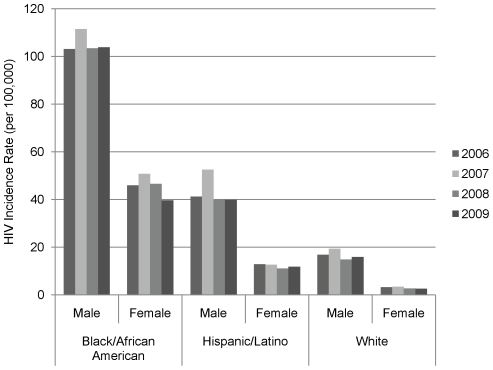
“That same year, HIV incidence among Black and Latino men was 6.5 and 2.5 times greater, respectively, than it was among White men.”
From Using Syndemic Theory to Understand Vulnerability to HIV Infection among Black and Latino Men in New York City (2014) · cites this paper as [1]
Self-check
Percentages, sums and reported differences re-computed from the paper’s own numbers.
The self-check needs the paper’s full text.
Citations
Cites
Applied Regression Analysis and Other Multivariable Methods
Walker, E. (1989) · Technometrics · doi:10.1080/00401706.1989.10488486 · Cited by 8,538
(2006) · PsycEXTRA Dataset · doi:10.1037/e545592006-001 · Cited by 2,958
Estimation of HIV Incidence in the United States
Hall, H. I. (2008) · JAMA · doi:10.1001/jama.300.5.520 · Cited by 1,317 · cited 6×
“but within the confidence interval of that estimate [4].”
InfluentialSelf-citationMarks, G., Crepaz, N., & Janssen, R. S. (2006) · AIDS · doi:10.1097/01.aids.0000233579.79714.8d · Cited by 1,096 · cited 1×
“, and the majority of new HIV infections transmitted by these individuals”
Parashar, U. (2006) · Medical Entomology and Zoology · Cited by 799
Janssen, R. S. (1998) · JAMA · doi:10.1001/jama.280.1.42 · Cited by 687 · cited 1×
“Since 2004, CDC has funded selected states and localities to conduct HIV incidence surveillance by (1) submitting remnant diagnostic HIV-positive blood specimens for testing using the serologic testing algorithm for recent HIV seroconversion (STARHS)”
BackgroundPurcell, D. W., Johnson, C. H., Lansky, A., Prejean, J., Stein, R., Denning, P., Gau1, Z., Weinstock, H., Su, J., & Crepaz, N. (2012) · The Open AIDS Journal · doi:10.2174/1874613601206010098 · Cited by 356
Self-citationParekh, B. S., Kennedy, M. S., Dobbs, T., Pau, C.-P., Byers, R., Green, T., Hu, D. J., Vanichseni, S., Young, N. L., Choopanya, K., et al. (2002) · AIDS Research and Human Retroviruses · doi:10.1089/088922202753472874 · Cited by 355 · cited 1×
“In addition, the continued refinement of the method for estimating the mean recency period for the BED HIV-1 Capture Enzyme Immunoassay (BED; the assay that currently serves as the serologic marker of recent infection) [6] and for modeling the recency period distribution [7] has allowed for improvement of the method o…”
Self-citationSullivan, P. S., Hamouda, O., Delpech, V., Geduld, J. E., Prejean, J., Semaille, C., Kaldor, J., Folch, C., Op de Coul, E., Marcus, U., et al. (2009) · Annals of Epidemiology · doi:10.1016/j.annepidem.2009.03.004 · Cited by 326
Self-citationUndiagnosed HIV Prevalence Among Adults and Adolescents in the United States at the End of 2006
Campsmith, M. L., Rhodes, P. H., Hall, H. I., & Green, T. A. (2010) · JAIDS Journal of Acquired Immune Deficiency Syndromes · doi:10.1097/qai.0b013e3181bf1c45 · Cited by 219 · cited 1×
“, public health programs are presented with new challenges. There is a need to address the prevention needs both of people at risk for HIV infection as well as of those living with HIV disease—those who are aware of their HIV status and those who are not. With an estimated 21% of people living with HIV unaware of thei…”
BackgroundSelf-citation
Cited by
Items 301–400 of 1,000
Ethier, K. A., Harper, C. R., Hoo, E., & Dittus, P. (2016) · Journal of Adolescent Health · doi:10.1016/j.jadohealth.2016.06.011 · Cited by 52
Lubelchek, R., Hoehnen, S., Hotton, A., Kincaid, S. L., Barker, D. E., & French, A. L. (2014) · JAIDS Journal of Acquired Immune Deficiency Syndromes · doi:10.1097/qai.0000000000000404 · Cited by 52
“Nationally, HIV incidence increased 48% among black young men who have sex with men between 2006 and 2009.(5) Importantly, Torrone et al(6) demonstrated that, rather than a few large metropolitan statistical areas driving this increase, 85% of statistical areas with population .”
BackgroundUhrig, J. D., Lewis, M. A., Bann, C., Harris, J. L., Furberg, R., Coomes, C. M., & Kuhns, L. M. (2012) · Journal of Health Communication · doi:10.1080/10810730.2011.649156 · Cited by 49
“Although MSM represent approximately 2–3% of the U.S. population (Purcell et al., 2010), they accounted for 61% of all new infections in 2009 (Prejean et al., 2011) and have an HIV diagnosis rate 60 times that of other men (Purcell et al., 2010).”
BackgroundEmtricitabine/Tenofovir Disoproxil Fumarate: A Review of its Use in HIV-1 Pre-Exposure Prophylaxis
Plosker, G. L. (2013) · Drugs · doi:10.1007/s40265-013-0024-4 · Cited by 47
“In the year 2009, when 48,100 new cases were reported, 61 % accounted for men who have sex with men, 27 % were from heterosexual contact, 9 % were associated with injection drug use and a further 3 % occurred in men who use injectable drugs and have sex with men [5].”
BackgroundMateu‐Gelabert, P., Gwadz, M. V., Guarino, H., Sandoval, M., Cleland, C. M., Jordan, A. E., Hagan, H., Lune, H., & Friedman, S. R. (2014) · AIDS Education and Prevention · doi:10.1521/aeap.2014.26.2.144 · Cited by 45
“The Centers for Disease Control and Prevention (CDC) estimate that in the United States 9% of new HIV infections can be attributed to injection drug use (Prejean et al., 2011), and 18% of PWID are HIV positive.”
BackgroundRobinson, A. C., Knowlton, A. R., Gielen, A. C., & Gallo, J. J. (2016) · Journal of Behavioral Medicine · doi:10.1007/s10865-015-9670-1 · Cited by 44
Global Action to reduce HIV stigma and discrimination
Stangl, A. L., Grossman, C. I., Sidibé, M., Goosby, E., Grossman, C. I., Stangl, A. L., Katz, I. T., Ryu, A. E., Onuegbu, A., Psaros, C., et al. (2013) · Journal of the International AIDS Society · doi:10.7448/ias.16.3.18934 · Cited by 56
Stephenson, R. B., & Finneran, C. A. (2017) · AIDS and Behavior · doi:10.1007/s10461-017-1709-6 · Cited by 51
Chan, P. A., Towey, C., Poceta, J., Rose, J., Bertrand, T., Kantor, R., Harvey, J., Santamaria, E. K., Alexander-Scott, N., & Nunn, A. (2016) · Public Health Reports · doi:10.1177/003335491613100210 · Cited by 43
Grov, C., Agyemang, L. S., Ventuneac, A., & Breslow, A. S. (2013) · AIDS Education and Prevention · doi:10.1521/aeap.2013.25.1.72 · Cited by 50
“Gay and bisexual men and other men who have sex with men (MSM) represent between 2– 5% of the United States’ population; however, in 2010, they accounted for 61% of new HIV cases, and 75% of all diagnoses among males (CDC, 2010; Prejean et al., 2011).”
BackgroundCost Effectiveness of HIV Prevention Interventions in the U.S.
Lin, F., Farnham, P. G., Shrestha, R. K., Mermin, J., & Sansom, S. L. (2016) · American Journal of Preventive Medicine · doi:10.1016/j.amepre.2016.01.011 · Cited by 47
Self-citationHealth Literacy and Demographic Disparities in HIV Care Continuum Outcomes
Rebeiro, P. F., McPherson, T. D., Goggins, K. M., Turner, M. M., Bebawy, S. S., Rogers, W. B., Brinkley‐Rubinstein, L., Person, A. K., Sterling, T. R., Kripalani, S. B., et al. (2018) · AIDS and Behavior · doi:10.1007/s10461-018-2092-7 · Cited by 46
“In the US, Black people are more likely to be infected with HIV [2, 3] and once infected are less likely to adhere to medical appointments and achieve suppression of HIV replication with antiretroviral therapy (ART) [4, 5].”
BackgroundGolin, C. E., Haley, D. F., Wang, J., Hughes, J. P., Kuo, I. C., Justman, J. E., Adimora, A. A., Soto-Torres, L. E., O’Leary, A., & Hodder, S. (2016) · Journal of Health Care for the Poor and Underserved · doi:10.1353/hpu.2016.0093 · Cited by 45
Burgess, M., Kasten, M. J., & Zeuli, J. D. (2015) · HIV/AIDS - Research and Palliative Care · doi:10.2147/hiv.s39655 · Cited by 56
“Older individuals do become infected, and between 2006 and 2009, 11% of new diagnosis in the US occurred in individuals over 50 years.(7) Failure to screen for HIV in older persons likely contributes to late disease presentation and more rapid progression to AIDS.”
Donald, C. A., & Ehrenfeld, J. M. (2015) · Journal of Medical Systems · doi:10.1007/s10916-015-0355-7 · Cited by 44
Cahill, S., Valadéz, R., & Ibarrola, S. (2012) · Journal of Public Health Policy · doi:10.1057/jphp.2012.59 · Cited by 42
“Eleven per cent of new HIV infections in the United States from 2006 to 2009 occurred among people 50 and older.(2) Older gay men often experience declining self-esteem as they age.”
BackgroundSun, C. J., García, M., Mann‐Jackson, L., Alonzo, J., Eng, E., & Rhodes, S. D. (2014) · Health Promotion Practice · doi:10.1177/1524839914559777 · Cited by 46
Quinn, K. G., Kelly, J. A., DiFranceisco, W. J., Tarima, S. S., Petroll, A. E., Sanders, C., Lawrence, J. S. S., & Amirkhanian, Y. A. (2016) · AIDS and Behavior · doi:10.1007/s10461-016-1657-6 · Cited by 43
“These findings are important, as young African American MSM and individuals of low socioeconomic status have disproportionately high rates of HIV incidence and prevalence [60, 61].”
Mustanski, B. S., Madkins, K., Greene, G. J., Parsons, J. T., Johnson, B. A., Sullivan, P. S., Bass, M., & Abel, R. (2017) · JMIR Research Protocols · doi:10.2196/resprot.5740 · Cited by 43
HIV Testing Among Sexually Active Hispanic/Latino MSM in Miami-Dade County and New York City
Joseph, H. A., Belcher, L., O’Donnell, L. N., Fernandez, M. I., Spikes, P., & Flores, S. A. (2014) · Health Promotion Practice · doi:10.1177/1524839914537493 · Cited by 42
“In the United States, HIV infection disproportionately affects the Hispanic/Latino community: The rate of new infections among this population in 2009 was three times that of Whites (Prejean et al., 2011).”
BackgroundInfluentialGlick, S. N., & Golden, M. R. (2013) · AIDS and Behavior · doi:10.1007/s10461-013-0678-7 · Cited by 44
“Given the recent data suggesting that HIV diagnoses among YMSM may be increasing [9], it is important to describe early partnership patterns, social support factors, and their potential associations with sexual risk behaviors among YMSM today.”
Tulloch, T. G., Rotondi, N. K., Ing, S., Myers, T., Calzavara, L., Loutfy, M. R., & Hart, T. A. (2015) · Archives of Sexual Behavior · doi:10.1007/s10508-015-0479-3 · Cited by 44
Du, P., Crook, T., Whitener, C., Albright, P., Greenawalt, D., & Zurlo, J. J. (2013) · Journal of Public Health Management and Practice · doi:10.1097/phh.0000000000000038 · Cited by 41
“HIV transmission risk: (1) any unsafe sexual behavior and (2)”
BackgroundMethodInfluentialMayer, K. H., Oldenburg, C. E., Novak, D. S., Elsesser, S. A., Krakower, D., & Mimiaga, M. J. (2015) · AIDS and Behavior · doi:10.1007/s10461-015-1237-1 · Cited by 43
“In the United States, there are nearly 50,000 new cases of HIV every year [1] and men who have sex with men (MSM) continue to bear a disproportionate burden of the epidemic, accounting for more than 60 % of new HIV infections in the United States [1].”
BackgroundPace, J., Siberry, G. K., Hazra, R., & Kapogiannis, B. G. (2012) · Clinical Infectious Diseases · doi:10.1093/cid/cis1020 · Cited by 41
“More than two-thirds (69%) of all new youth infections occurred in young MSM (YMSM) [3].”
BackgroundInfluentialCooley, L. A., Oster, A. M., Rose, C. E., Wejnert, C., Le, B. C., Paz‐Bailey, G., & for the NHBS Study Group (2014) · PLoS ONE · doi:10.1371/journal.pone.0104162 · Cited by 40
Self-citationHIV Risk Behaviors among African American Women with at-Risk Male Partners
Williams, J. K. (2013) · Journal of AIDS & Clinical Research · doi:10.4172/2155-6113.1000221 · Cited by 40
Monitoring HIV Testing at Visits to Emergency Departments in the United States
Hoover, J. B., Tao, G., & Heffelfinger, J. D. (2012) · JAIDS Journal of Acquired Immune Deficiency Syndromes · doi:10.1097/qai.0b013e3182742933 · Cited by 40
“Despite the widespread availability of HIV testing, an estimated 20% of persons living with HIV were unaware of their infection in 2008.(1) Diagnosis of infection is important because persons aware of their infection tend to be less likely to engage in risky sexual behaviors than unaware persons.”
BackgroundFinding and Recruiting the Highest Risk HIV-Negative Men Who Have Sex With Men
Vial, A. C., Starks, T. J., & Parsons, J. T. (2014) · AIDS Education and Prevention · doi:10.1521/aeap.2014.26.1.56 · Cited by 40
Assessing the Impact of a Community-Wide HIV Testing Scale-Up Initiative in a Major Urban Epidemic
Myers, J. E., Braunstein, S., Shepard, C. W., Cutler, B. H., Mantsios, A. R., Sweeney, M. M., & Tsoi, B. W. (2012) · JAIDS Journal of Acquired Immune Deficiency Syndromes · doi:10.1097/qai.0b013e3182632960 · Cited by 40
“4% of estimated incident infections nationally.(3,4) The Bronx, one of NYC’s 5 boroughs, has a crude death rate from HIV of 21.”
BackgroundKhanna, A. S., Schumm, L. P., & Schneider, J. A. (2016) · Annals of Epidemiology · doi:10.1016/j.annepidem.2016.11.006 · Cited by 42
“Introduction Young (<30 years) Black men who have sex with men (YBMSM) represent the only group in the United States among whom HIV incidence has increased over the past decade.(1) In Chicago, the number of new annual HIV infections among YBMSM (13- 29 years) from 2004-2014 were at least five times higher than among t…”
Prevention of Human Immunodeficiency Virus and AIDS
Beekmann, S. E., & Henderson, D. K. (2014) · Infectious Disease Clinics of North America · doi:10.1016/j.idc.2014.08.005 · Cited by 44
Grov, C., Ventuneac, A., Rendina, H. J., Jimenez, R. H., & Parsons, J. T. (2012) · American Journal of Men s Health · doi:10.1177/1557988312463419 · Cited by 42
“In 2009, men who have sex with men (MSM) accounted for 61% of all new HIV diagnoses and 75% of HIV diagnoses among males (CDC, 2010b; Prejean et al., 2011).”
BackgroundTookes, H., Kral, A. H., Wenger, L. D., Cardenas, G. A., Martinez, A. N., Sherman, R., Pereyra, M. R., Forrest, D. W., LaLota, M., & Metsch, L. R. (2011) · Drug and Alcohol Dependence · doi:10.1016/j.drugalcdep.2011.12.001 · Cited by 40
“In 2007, 15% of the 43,000 new Hepatitis B Virus infections and 44% of the 17,000 new Hepatitis C Virus infections in the U.S. were among persons who reported drug injection as a risk factor (Daniels et al., 2009).”
InfluentialBouris, A. M., Hill, B. J., Fisher, K., Erickson, G., & Schneider, J. A. (2015) · Journal of Adolescent Health · doi:10.1016/j.jadohealth.2015.07.007 · Cited by 39
Murphy, K., Hoover, D. R., Shi, Q., Cohen, M. H., Gandhi, M., Golub, E. T., Gustafson, D., Pearce, C. L., Young, M., & Anastos, K. (2013) · AIDS · doi:10.1097/01.aids.0000432537.92958.73 · Cited by 42
“In the United States, African American women are 19-fold more likely than white women to be diagnosed with HIV [3], and 2007 United States Centers for Disease Control and Prevention data ranked HIV in the top 10 causes of death for African American and Hispanic women aged 20–54 years [4,5].”
BackgroundARVs as HIV Prevention: A Tough Road to Wide Impact
Shelton, J. D. (2011) · Science · doi:10.1126/science.1212353 · Cited by 43
Mitzel, L. D., Vanable, P. A., Brown, J. L., Bostwick, R. A., Sweeney, S. M., & Carey, M. P. (2015) · AIDS and Behavior · doi:10.1007/s10461-015-1038-6 · Cited by 41
Voisin, A. B. D. (2013) · Journal of AIDS & Clinical Research · doi:10.4172/2155-6113.1000236 · Cited by 41
Contribution of Anal Sex to HIV Prevalence Among Heterosexuals: A Modeling Analysis
O’Leary, A., DiNenno, E. A., Honeycutt, A., Allaire, B. T., Neuwahl, S. J., Hicks, K. A., & Sansom, S. L. (2017) · AIDS and Behavior · doi:10.1007/s10461-016-1635-z · Cited by 43
Quinn, K. G., Sanders, C., & Petroll, A. E. (2017) · AIDS Education and Prevention · doi:10.1521/aeap.2017.29.1.62 · Cited by 46
“The prevalence of HIV among older adults in the United States (U.S.) is increasing due to both an increase in survival for HIV-positive individuals and a steady rise in HIV diagnoses in this age group (Prejean et al., 2011; White House Office of National AIDS Policy, 2015).”
Buttram, M. E. (2015) · Journal of Human Behavior in the Social Environment · doi:10.1080/10911359.2015.1040908 · Cited by 40
“Moreover, literature indicates that African American/Black MSM experience greater rates of health and social disparities than other MSM, including HIV incidence, substance use, victimization and gang involvement, incarceration, and poor physical health (Garofalo, Mustanski, Johnson, & Emerson, 2010; Harawa et al., 200…”
BackgroundCompulsive Sexual Behavior and its Relationship to Risky Sexual Behavior
Miner, M. H., & Coleman, E. (2013) · Sexual Addiction & Compulsivity · doi:10.1080/10720162.2013.768133 · Cited by 39
“We are also seeing an increase in HIV infection among MSM (Prejean et al., 2011).”
The Relationship Between Gender Role Conflict and Condom Use Among Black MSM
Malebranche, D. J., Gvetadze, R. J., Millett, G. A., & Sutton, M. Y. (2011) · AIDS and Behavior · doi:10.1007/s10461-011-0055-3 · Cited by 41
“In the United States, black men who have sex with men (MSM) represent 63% of incident HIV infections among all black men, with young black MSM (ages 13–29) experiencing a 48% increase in incident HIV infections from 2006 to 2009, despite HIV incidence not changing significantly overall or among other race/ethnicity or…”
BackgroundGant, Z., Gant, L. M., Song, R., Willis, L. A., & Johnson, A. S. (2014) · PLoS ONE · doi:10.1371/journal.pone.0107701 · Cited by 43
“Given that black MSM accounted for approximately 70% of newly diagnosed HIV infections among black males annually [1,22], examination of the combined populations could skew the conclusions toward those applicable to the MSM population.”
BackgroundSelf-citationFelsen, U. R., Bellin, E. Y., Cunningham, C. O., & Zingman, B. S. (2014) · AIDS Care · doi:10.1080/09540121.2014.911813 · Cited by 39
Thirty years of HIV in Israel: current epidemiology and future challenges
Mor, Z., Weinstein, R., Grotto, I., Levin, Y., & Chemtob, D. (2013) · BMJ Open · doi:10.1136/bmjopen-2013-003078 · Cited by 39
“We also assume that MSM in Israel comprised ∼3% of all men aged 16–45 years (∼94 000 men), as reported from other developed countries.(15) 16 Based on these assumptions, HIV point prevalences in”
BackgroundWhite, D., Rosenberg, E. S., Cooper, H. L. F., del Río, C., Sanchez, T., Salazar, L. F., & Sullivan, P. S. (2014) · Drug and Alcohol Dependence · doi:10.1016/j.drugalcdep.2014.02.025 · Cited by 40
“In the period from 2006 to 2009, the greatest change in HIV incidence was observed among black MSM ages 13 to 29, for whom incidence increased 48 percent (Prejean et al., 2011).”
BackgroundInfluentialCoffin, P. O., Santos, G., Colfax, G. N., Das, M., Matheson, T., DeMicco, E., Dilley, J., Vittinghoff, E., Raiford, J. L., Carry, M., et al. (2014) · AIDS and Behavior · doi:10.1007/s10461-014-0712-4 · Cited by 39
Liu, A., Hessol, N. A., Vittinghoff, E., Amico, K. R., Kroboth, E., Fuchs, J. D., Irvin, R., Sineath, R. C., Sanchez, T., Sullivan, P. S., et al. (2014) · AIDS Patient Care and STDs · doi:10.1089/apc.2014.0195 · Cited by 45
“MSM account for the greatest proportion of new HIV infections in the US,(9) with a 34% increased incidence among 13- to 29year-old MSM and a 48% increased incidence among young African-American MSM between 2006 and 2009.(10) Researchers and the US FDA have noted that PrEP efficacy is closely tied to adherence.”
The Role of Public Schools in HIV Prevention: Perspectives from African Americans in the Rural South
Lloyd, S., Ferguson, Y. O., Corbie-Smith, G. M., Ellison, A., Blumenthal, C., Youmans, S. E., Muhammad, M., Wynn, M. R., Adimora, A. A., & Akers, A. Y. (2012) · AIDS Education and Prevention · doi:10.1521/aeap.2012.24.1.41 · Cited by 38
“Nearly 10,000 African American youth and young adults age 13–29 are infected each year (Prejean et al., 2011).”
Ye, S., Yin, L., Amico, K. R., Simoni, J. M., Vermund, S. H., Ruan, Y., Shao, Y., & Qian, H.-Z. (2014) · PLoS ONE · doi:10.1371/journal.pone.0090788 · Cited by 39
“Approximately 30–45% of MSM reported regular UAI [6,7,8].”
BackgroundThe effect of menopause on the innate antiviral activity of cervicovaginal lavage
Chappell, C. A., Isaacs, C. E., Xu, W., Meyn, L. A., Uranker, K., Dezzutti, C. S., Moncla, B. J., & Hillier, S. L. (2015) · American Journal of Obstetrics and Gynecology · doi:10.1016/j.ajog.2015.03.045 · Cited by 37
“In 2009, an estimated 12% of new HIV-1 infections in US women occurred among those>50 years of age.(2)”
Grov, C., Rendina, H. J., & Parsons, J. T. (2014) · AIDS Education and Prevention · doi:10.1521/aeap.2014.26.4.362 · Cited by 39
Forsyth, A. D., & Valdiserri, R. O. (2012) · Current Opinion in HIV and AIDS · doi:10.1097/coh.0b013e32834fcff6 · Cited by 37
Mindt, M. R., Marquine, M. J., Aghvinian, M. N., Scott, T. M., Cherner, M., Paredes, A. M., Taylor, M. J., Umlauf, A., Suárez, P., Díaz‐Santos, M., et al. (2020) · The Clinical Neuropsychologist · doi:10.1080/13854046.2020.1723707 · Cited by 38
“Latinas/os suffer significant disparities in brain health (i.e., Alzheimer’s Dementia, HIV-associated Neurocognitive Disorder, etc.; Babulal et al., 2019; Prejean et al., 2011).”
Dariotis, J. K., & Chen, F. R. (2020) · Deviant Behavior · doi:10.1080/01639625.2020.1796210 · Cited by 49
“HIV is predominately contracted and transmitted via sexual behaviors and second by intravenous drug use (Prejean et al. 2011).”
BackgroundWang, J., Liu, J., Yao, F., Wen, G., Li, J., Huang, Y., Lü, Y., Wen, X., Wright, D. J., Yu, Q., et al. (2012) · Transfusion · doi:10.1111/j.1537-2995.2012.03940.x · Cited by 36
Acute HIV-1 Infection in the Southeastern United States: A Cohort Study
McKellar, M., Cope, A. B., Gay, C. L., McGee, K. S., Kuruc, J. D., Kerkau, M., Hurt, C. B., Fiscus, S. A., Ferrari, G., Margolis, D. M., et al. (2012) · AIDS Research and Human Retroviruses · doi:10.1089/aid.2012.0064 · Cited by 36
“Recent incidence data indicate that young black MSM have become the driver of new HIV-1 infections nationwide.(21) This trend is reflected in our cohort wherein black MSM £ age 30 represent 34% and comprise a significantly increasing percentage over recent years.”
Profiles of executive functioning: Associations with substance dependence and risky sexual behavior.
Golub, S. A., Starks, T. J., Kowalczyk, W. J., Thompson, L. I., & Parsons, J. T. (2012) · Psychology of Addictive Behaviors · doi:10.1037/a0029034 · Cited by 39
“Prejean J, Song R, Hernandez A, Ziebell R, Green T, Walker F, et al. Estimated HIV incidence in the United States, 2006–2009.”
BackgroundKrakower, D., & Mayer, K. H. (2012) · Annals of Internal Medicine · doi:10.7326/0003-4819-157-7-201210020-00510 · Cited by 41
“Human immunodeficiency virus continues to spread, with more than 2 million new infections globally (1) and 50 000 new infections in the United States per year (2).”
BackgroundNewcomb, M. E., & Mustanski, B. S. (2014) · AIDS and Behavior · doi:10.1007/s10461-014-0766-3 · Cited by 37
“In 2011, YMSM accounted for 77 % of new HIV infections among all 13–24 year olds in the United States, and unlike other risk groups their rate of new infections is increasing [1, 2].”
Dentato, M. P., Orwat, J., Spira, M. K., & Walker, B. (2014) · Journal of Human Behavior in the Social Environment · doi:10.1080/10911359.2013.831009 · Cited by 46
Krakower, D., Beekmann, S. E., Polgreen, P. M., & Mayer, K. H. (2015) · Clinical Infectious Diseases · doi:10.1093/cid/civ736 · Cited by 38
“Because there are 50 000 new immunodeficiency virus infection (HIV) infections in the United States annually [1], implementing effective HIV prevention strategies is a public health priority.”
Gwadz, M. V., Cleland, C. M., Kutnick, A. H., Leonard, N. R., Ritchie, A. S., Lynch, L., Banfield, A., McCright-Gill, T., del Olmo, M., & Martinez, B. Y. (2016) · Frontiers in Public Health · doi:10.3389/fpubh.2016.00076 · Cited by 37
“J Psychoactive Drugs (2005) 37(3):321–9.”
BackgroundInfluentialKerr, J., & Jackson, T. (2016) · International Journal of Drug Policy · doi:10.1016/j.drugpo.2016.07.007 · Cited by 41
Bazzi, A. R., Fergus, K. B., Stephenson, R. B., Finneran, C. A., Coffey-Esquivel, J., Hidalgo, M. A., Hoehnle, S., Sullivan, P. S., Garofalo, R., & Mimiaga, M. J. (2016) · JMIR Research Protocols · doi:10.2196/resprot.6271 · Cited by 36
Estimated HIV Incidence in the United States, 2003–2010
Xia, Q., Teixeira-Pinto, A. M., Forgione, L. A., Wiewel, E. W., Braunstein, S., & Torian, L. V. (2016) · JAIDS Journal of Acquired Immune Deficiency Syndromes · doi:10.1097/qai.0000000000001185 · Cited by 36
MacFadden, D. R., Tan, D. H. S., & Mishra, S. (2016) · Journal of the International AIDS Society · doi:10.7448/ias.19.1.20791 · Cited by 37
Merchant, R. C., Clark, M. A., Liu, T., Rosenberger, J. G., Romanoff, J., Bauermeister, J. A., & Mayer, K. H. (2017) · Public Health · doi:10.1016/j.puhe.2016.12.002 · Cited by 39
Fletcher, F. E., Fisher, C. B., Buchberg, M. K., Floyd, B., Hotton, A., Ehioba, A., & Donenberg, G. R. (2018) · Journal of Empirical Research on Human Research Ethics · doi:10.1177/1556264618755919 · Cited by 37
Justman, J. E., Befus, M., Hughes, J. P., Wang, J., Golin, C. E., Adimora, A. A., Kuo, I. C., Haley, D. F., del Río, C., El‐Sadr, W., et al. (2015) · AIDS and Behavior · doi:10.1007/s10461-014-0992-8 · Cited by 37
Cognitive influences on sexual risk and risk appraisals in men who have sex with men.
Newcomb, M. E., & Mustanski, B. S. (2014) · Health Psychology · doi:10.1037/hea0000010 · Cited by 38
Morales-Alemán, M. M., & Scarinci, I. C. (2016) · Preventive Medicine · doi:10.1016/j.ypmed.2016.03.005 · Cited by 38
Harper, G. W., & Riplinger, A. J. (2012) · AIDS and Behavior · doi:10.1007/s10461-012-0178-1 · Cited by 37
Lanier, Y., & Sutton, M. Y. (2012) · American Journal of Public Health · doi:10.2105/ajph.2012.300921 · Cited by 37
Jain, S., Oldenburg, C. E., Mimiaga, M. J., & Mayer, K. H. (2014) · AIDS Patient Care and STDs · doi:10.1089/apc.2014.0154 · Cited by 35
Community-acquired bacterial pneumonia in adult HIV-infected patients
Cillóniz, C., García‐Vidal, C., Moreno, A., Miró, J. M., & Torres, A. (2018) · Expert Review of Anti-infective Therapy · doi:10.1080/14787210.2018.1495560 · Cited by 38
Malekinejad, M., Horváth, H., Snyder, H., & Brindis, C. D. (2018) · Health Research Policy and Systems · doi:10.1186/s12961-018-0336-7 · Cited by 39
Ro, A. E., Ayala, G., Paul, J. P., & Choi, K. (2013) · Culture Health & Sexuality · doi:10.1080/13691058.2013.785025 · Cited by 47
“Considering the disproportionate concentration of new HIV infection rates among men of colour (Prejean et al. 2011), a better understanding of racism and sexual risk seems especially crucial.”
BackgroundSanchez, T., Sullivan, P. S., Rothman, R. E., Brown, E. H., Fitzpatrick, L. K., Wood, A., Hernandez, P., Nunn, A. S., Serota, M., & Moreno-Walton, L. A. (2014) · JMIR Research Protocols · doi:10.2196/resprot.3378 · Cited by 35
Hickson, D. A., Truong, N. L., Smith-Bankhead, N. K., Sturdevant, N., Duncan, D. T., Schnorr, J., Gipson, J. A., & Mena, L. A. (2015) · PLoS ONE · doi:10.1371/journal.pone.0143823 · Cited by 35
Arnold, E. A., Weeks, J., Benjamin, M., Stewart, W. R., Pollack, L. M., Kegeles, S. M., & Operario, D. (2017) · BMC Health Services Research · doi:10.1186/s12913-017-2011-z · Cited by 36
Women and HIV in the United States
Breskin, A., Adimora, A. A., & Westreich, D. J. (2017) · PLoS ONE · doi:10.1371/journal.pone.0172367 · Cited by 35
Mindt, M. R., Marquine, M. J., Aghvinian, M. N., Paredes, A. M., Kamalyan, L., Suárez, P., Heaton, A., Scott, T. M., Gooding, A. L., Díaz‐Santos, M., et al. (2020) · The Clinical Neuropsychologist · doi:10.1080/13854046.2020.1794046 · Cited by 35
Ayala, G., Santos, G., Arreola, S. G., Garner, A., Makofane, K., & Howell, S. (2018) · Journal of the International AIDS Society · doi:10.1002/jia2.25130 · Cited by 34
Pathela, P., Jamison, K., Braunstein, S., Schillinger, J. A., Varma, J. K., & Blank, S. (2016) · AIDS and Behavior · doi:10.1007/s10461-016-1499-2 · Cited by 35
Ongoing HIV Transmission and the HIV Care Continuum in North Carolina
Cope, A. B., Powers, K. A., Kuruc, J. D., Leone, P. A., Anderson, J. A., Ping, L., Kincer, L. P., Swanstrom, R. I., Mobley, V., Foust, E., et al. (2015) · PLoS ONE · doi:10.1371/journal.pone.0127950 · Cited by 37
Longosz, A. F., Serwadda, D., Nalugoda, F. K., Kigozi, G., Franco, V., Gray, R. H., Quinn, T. C., Eshleman, S. H., & Laeyendecker, O. B. (2013) · AIDS Research and Human Retroviruses · doi:10.1089/aid.2013.0169 · Cited by 34
Allocating HIV Prevention Funds in the United States: Recommendations from an Optimization Model
Lasry, A., Sansom, S. L., Hicks, K. A., & Uzunangelov, V. (2012) · PLoS ONE · doi:10.1371/journal.pone.0037545 · Cited by 34
“Annual HIV incidence has been relatively stable since the year 2000 [1] and was estimated at 48,600 cases in 2006 and 48,100 in 2009 [2].”
BackgroundThe Effects of Social Determinants on Black Women’s HIV Risk: HIV Is Bigger Than Biology
Davis, S. K., & Tucker-Brown, A. (2013) · Journal of Black Studies · doi:10.1177/0021934713481805 · Cited by 35
“In 2009, the rate of new HIV infections for Black women was nearly 15 times as high as that of White women and nearly 3 times that of Hispanic/Latina women (Prejean et al., 2011).”
BackgroundRoberts, E. T., & Matthews, D. D. (2012) · Social Science & Medicine · doi:10.1016/j.socscimed.2012.02.016 · Cited by 35
“In the United States, young MSM represent the only group in which the number of new infections motives has increased since 2006; MSM accounted for 61% of all new infections in 2009 (Prejean et al., 2011).”
Programmatic Cost Evaluation of Nontargeted Opt-Out Rapid HIV Screening in the Emergency Department
Haukoos, J. S., Campbell, J. D., Conroy, A. A., Hopkins, E., Bucossi, M. M., Sasson, C., Al‐Tayyib, A., Thrun, M. W., & For the Denver ED HIV Opt-Out Study Group (2013) · PLoS ONE · doi:10.1371/journal.pone.0081565 · Cited by 34
Self-citationThe Influence of Pastors’ Ideologies of Homosexuality on HIV Prevention in the Black Church
Quinn, K. G., Dickson‐Gómez, J., & Young, S. (2016) · Journal of Religion and Health · doi:10.1007/s10943-016-0243-6 · Cited by 37
“The stigma around homosexuality in Black Churches is prominent and the effects of this on YBMSM or other LGBT individuals are not yet fully understood.”
InfluentialReal-World Impact of HIV-Associated Neurocognitive Impairment
Casaletto, K. B., Weber, E., Iudicello, J. E., & Woods, S. P. (2016) · Springer eBooks · doi:10.1007/978-0-387-98188-8_10 · Cited by 38
Maksut, J. L., Eaton, L. A., Siembida, E. J., Fabius, C. D., & Bradley, A. M. (2018) · Stigma and Health · doi:10.1037/sah0000102 · Cited by 35
“Factors such as disease epidemiology (e.g., younger BMSM have higher HIV incidence than older BMSM; Prejean et al., 2011) and cost effectiveness (e.g., PrEP is most cost effective for younger, at-risk MSM; Paltiel et al., 2009) have likely driven the strong focus on PrEP uptake among youth populations.”
InfluentialD'Anna, L. H., Margolis, A. D., Warner, L., Korosteleva, O. A., O'Donnell, L., Rietmeijer, C. A., Klausner, J. D., Nomura, W., Malotte, C. K., & the Safe City Study Group (2012) · AIDS Care · doi:10.1080/09540121.2012.668285 · Cited by 33
“Men who have sex with men (MSM) bear the overwhelming burden of the US HIV epidemic (Sullivan, Salazar, Buchbinder, & Sanchez, 2009) with especially high incidence rates among young and minority MSM (Prejean et al., 2011).”
BackgroundTurner, A. N., Reese, P. C., Ervin, M., Davis, J. A., Fields, K. S., & Bazan, J. A. (2013) · Sexually Transmitted Diseases · doi:10.1097/olq.0b013e31828fd163 · Cited by 38
“Our study had 2 aims: (1) to assess the prevalence of rectal GC and rectal CT among MSM reporting receptive anal intercourse (RAI) in the last 12 months and (2) to examine the associations between HIV status and prevalence of rectal GC/CT in the same population of MSM.”
Vaughan, A. S., Kramer, M. R., Cooper, H. L. F., Rosenberg, E. S., & Sullivan, P. S. (2016) · Social Science & Medicine · doi:10.1016/j.socscimed.2016.12.034 · Cited by 34
“INTRODUCTION Despite recent global and national declines in new HIV infections, HIV incidence has increased among young MSM and both geographic and racial/ethnic disparities remain (Centers for Disease Control and Prevention, 2015a; Lieb et al., 2011; Prejean et al., 2011).”
BackgroundHieftje, K. D., Rosenthal, M. S., Camenga, D. R., Edelman, E. J., & Fiellin, L. E. (2012) · Games for Health Journal · doi:10.1089/g4h.2012.0025 · Cited by 35
“In 2009 39% of new HIV infections occurred among individuals 13–29 years old, a 21 percent increase in incidence since 2006.(3) More specifically, minority youth are disproportionately affected by HIV infection.”
Background
Metadata
- Authors
- Prejean, J., Song, R., Hernandez, A., Ziebell, R., Green, T., Walker, F., Lin, L. S., An, Q., Mermin, J., Lansky, A., Hall, H. I., & for the HIV Incidence Surveillance Group
- Affiliations
- Centers for Disease Control and Prevention (US)
- Corresponding author
- Prejean, Joseph
- ORCID
- Venue
- PLoS ONE
- Publisher
- Public Library of Science (PLoS)
- Published
- 2011-08-03
- Volume
- 6
- Issue
- 8
- Pages
- e17502
- ISSN
- 1932-6203 (ISSN-L)
- PMC
- PMC3149556
- OpenAlex
- W2154463966
- Cited by
- 1,071
- References
- 23
- Citations by year
- 2025: 3 · 2024: 11 · 2023: 9 · 2022: 14 · 2021: 14 · 2020: 14 · 2019: 26 · 2018: 37 · 2017: 80 · 2016: 135 · 2015: 157 · 2014: 184 · 2013: 205 · 2012: 167
- FWCI
- 123.18
- Type
- journal article
- Language
- en
- Open access
- gold
- doi.org
- Licence
- Locations
- PLoS ONE (publishedVersion, public-domain)
- PubMed Central (publishedVersion, public-domain)
- PubMed (publishedVersion)
- DOAJ (DOAJ: Directory of Open Access Journals) (submittedVersion, cc-by-sa)
- University Libraries (University of Maryland) (submittedVersion)
- Figshare (submittedVersion, cc-by)
- Digital Repository at the University of Maryland (University of Maryland College Park)
- Funders
- U.S. Department of Health and Human Services
- U.S. Department of State
- New York State Department of Health
- State of Connecticut Department of Public Health
- New York State Department of Health - Wadsworth Center
- Virginia Department of Health
- Northrop Grumman
- State of New Jersey Department of Health
- Florida Department of Health
- Indiana State Department of Health
- Arizona Department of Health Services
- Washington State University
- Colorado Department of Public Health and Environment
- Louisiana Department of Health
- Missouri Department of Health and Senior Services
- Texas Department of State Health Services
- Mississippi State Department of Health
- Centers for Disease Control and Prevention
- University at Albany
- Topics
- Health Sciences › Medicine › Infectious Diseases › HIV/AIDS Research and Interventions
- Health Sciences › Medicine › Epidemiology › HIV, Drug Use, Sexual Risk
- Health Sciences › Medicine › Public Health, Environmental and Occupational Health › HIV, TB, and STIs Epidemiology
- Keywords
- HIV incidence, HIV epidemic trends, young men who have sex with men, heterosexual transmission, intravenous drug use, HIV testing behavior, HIV risk groups, HIV surveillance, multiple imputation, racial and ethnic disparities
- MeSH terms
- Adolescent, Adult, Female, Humans, Male, Middle Aged, United States, HIV Infections, Incidence, Young Adult
About these checks
Registry, retraction, Cites and statistics results are computed, not judged, with one exception: a printed reference that no index lists is read once by a model before it counts as a citation error. Claims are extracted by a model and kept only when their quote appears verbatim in the text; each cited source is then checked, with a model’s help, for whether it says what the claim relies on. Those verdicts can be wrong — read the claim’s quote and the cited source before relying on one.
Statistics and arithmetic are recomputed, not judged.
Confidence bands are shown only for fields calibrated on our annotated test set. None is calibrated yet, so no band is shown.
What counts as a claim ›How we measure confidence ›How we check this ›
Are you an author, or do you see a problem with this page? Request a review
Data sources
Bibliographic data: Semantic Scholar, OpenAlex, Crossref.
Contains information from the Semantic Scholar Academic Graph Datasets, made available under the ODC Attribution License (ODC-BY 1.0).
Semantic Scholar’s data is described in: Kinney, R., et al. (2023). The Semantic Scholar Open Data Platform. arXiv:2301.10140.
