

Estimated HIV Incidence in the United States, 2006–2009
Open accessThe DOI matches its Crossref record; 23 of the 23 references it cites were found in a registry or an index.
Abstract
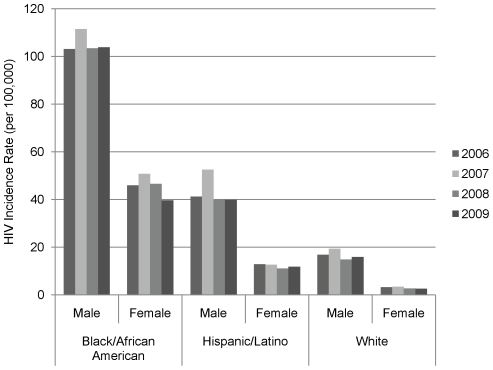
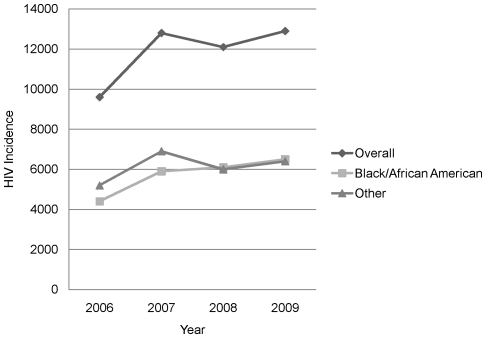
BACKGROUND: The estimated number of new HIV infections in the United States reflects the leading edge of the epidemic. Previously, CDC estimated HIV incidence in the United States in 2006 as 56,300 (95% CI: 48,200-64,500). We updated the 2006 estimate and calculated incidence for 2007-2009 using improved methodology. METHODOLOGY: We estimated incidence using incidence surveillance data from 16 states and 2 cities and a modification of our previously described stratified extrapolation method based on a sample survey approach with multiple imputation, stratification, and extrapolation to account for missing data and heterogeneity of HIV testing behavior among population groups. PRINCIPAL FINDINGS: Estimated HIV incidence among persons aged 13 years and older was 48,600 (95% CI: 42,400-54,700) in 2006, 56,000 (95% CI: 49,100-62,900) in 2007, 47,800 (95% CI: 41,800-53,800) in 2008 and 48,100 (95% CI: 42,200-54,000) in 2009. From 2006 to 2009 incidence did not change significantly overall or among specific race/ethnicity or risk groups. However, there was a 21% (95% CI:1.9%-39.8%; p = 0.017) increase in incidence for people aged 13-29 years, driven by a 34% (95% CI: 8.4%-60.4%) increase in young men who have sex with men (MSM). There was a 48% increase among young black/African American MSM (12.3%-83.0%; p<0.001). Among people aged 13-29, only MSM experienced significant increases in incidence, and among 13-29 year-old MSM, incidence increased significantly among young, black/African American MSM. In 2009, MSM accounted for 61% of new infections, heterosexual contact 27%, injection drug use (IDU) 9%, and MSM/IDU 3%. CONCLUSIONS/SIGNIFICANCE: Overall, HIV incidence in the United States was relatively stable 2006-2009; however, among young MSM, particularly black/African American MSM, incidence increased. HIV continues to be a major public health burden, disproportionately affecting several populations in the United States, especially MSM and racial and ethnic minorities. Expanded, improved, and targeted prevention is necessary to reduce HIV incidence.
Overview
The claims and statistics of this paper haven’t been checked yet.
Free: it reads the open-access text and checks the first 5 claims that cite a source we can check. Create a free account to check every claim.
Integrity signals
Registry
Cites
Statistics
Figures
Verification
Claims the paper makes
The claims and statistics of this paper haven’t been checked yet.
Free: it reads the open-access text and checks the first 5 claims that cite a source we can check. Create a free account to check every claim.
Claims other papers make about this one
Each is checked against this paper’s own text: does it say what the citing paper says it does?
In the citing paper
“HIV is a public health crisis among Black and Latino men in the USA, notably those living in New York City (NYC).”
From Using Syndemic Theory to Understand Vulnerability to HIV Infection among Black and Latino Men in New York City (2014) · cites this paper as [1]
In the citing paper
“That same year, HIV incidence among Black and Latino men was 6.5 and 2.5 times greater, respectively, than it was among White men.”
From Using Syndemic Theory to Understand Vulnerability to HIV Infection among Black and Latino Men in New York City (2014) · cites this paper as [1]
Self-check
Percentages, sums and reported differences re-computed from the paper’s own numbers.
The self-check needs the paper’s full text.
Citations
Cites
Applied Regression Analysis and Other Multivariable Methods
Walker, E. (1989) · Technometrics · doi:10.1080/00401706.1989.10488486 · Cited by 8,538
(2006) · PsycEXTRA Dataset · doi:10.1037/e545592006-001 · Cited by 2,958
Estimation of HIV Incidence in the United States
Hall, H. I. (2008) · JAMA · doi:10.1001/jama.300.5.520 · Cited by 1,317 · cited 6×
“but within the confidence interval of that estimate [4].”
InfluentialSelf-citationMarks, G., Crepaz, N., & Janssen, R. S. (2006) · AIDS · doi:10.1097/01.aids.0000233579.79714.8d · Cited by 1,096 · cited 1×
“, and the majority of new HIV infections transmitted by these individuals”
Parashar, U. (2006) · Medical Entomology and Zoology · Cited by 799
Janssen, R. S. (1998) · JAMA · doi:10.1001/jama.280.1.42 · Cited by 687 · cited 1×
“Since 2004, CDC has funded selected states and localities to conduct HIV incidence surveillance by (1) submitting remnant diagnostic HIV-positive blood specimens for testing using the serologic testing algorithm for recent HIV seroconversion (STARHS)”
BackgroundPurcell, D. W., Johnson, C. H., Lansky, A., Prejean, J., Stein, R., Denning, P., Gau1, Z., Weinstock, H., Su, J., & Crepaz, N. (2012) · The Open AIDS Journal · doi:10.2174/1874613601206010098 · Cited by 356
Self-citationParekh, B. S., Kennedy, M. S., Dobbs, T., Pau, C.-P., Byers, R., Green, T., Hu, D. J., Vanichseni, S., Young, N. L., Choopanya, K., et al. (2002) · AIDS Research and Human Retroviruses · doi:10.1089/088922202753472874 · Cited by 355 · cited 1×
“In addition, the continued refinement of the method for estimating the mean recency period for the BED HIV-1 Capture Enzyme Immunoassay (BED; the assay that currently serves as the serologic marker of recent infection) [6] and for modeling the recency period distribution [7] has allowed for improvement of the method o…”
Self-citationSullivan, P. S., Hamouda, O., Delpech, V., Geduld, J. E., Prejean, J., Semaille, C., Kaldor, J., Folch, C., Op de Coul, E., Marcus, U., et al. (2009) · Annals of Epidemiology · doi:10.1016/j.annepidem.2009.03.004 · Cited by 326
Self-citationUndiagnosed HIV Prevalence Among Adults and Adolescents in the United States at the End of 2006
Campsmith, M. L., Rhodes, P. H., Hall, H. I., & Green, T. A. (2010) · JAIDS Journal of Acquired Immune Deficiency Syndromes · doi:10.1097/qai.0b013e3181bf1c45 · Cited by 219 · cited 1×
“, public health programs are presented with new challenges. There is a need to address the prevention needs both of people at risk for HIV infection as well as of those living with HIV disease—those who are aware of their HIV status and those who are not. With an estimated 21% of people living with HIV unaware of thei…”
BackgroundSelf-citation
Cited by
Items 401–500 of 1,000
Hubach, R. D., Dodge, B., Schick, V., Ramos, W. D., Herbenick, D., Li, M. J., Cola, T., & Reece, M. (2015) · Culture Health & Sexuality · doi:10.1080/13691058.2014.994231 · Cited by 37
“Gay, bisexual and other men who have sex with men are disproportionately impacted upon and continue to face rising rates of infection (Prejean et al. 2011; Hall et al. 2013).”
BackgroundA Degenerative Retinal Process in HIV-Associated Non-Infectious Retinopathy
Kozak, I., Šášik, R., Freeman, W. R., Sprague, L. J., Gomez, M. L., Cheng, L., El-Emam, S., Mojana, F., Bartsch, D., Bosten, J. M., et al. (2013) · PLoS ONE · doi:10.1371/journal.pone.0074712 · Cited by 36
Hussen, S. A., Bowleg, L., Sangaramoorthy, T., & Malebranche, D. J. (2012) · Culture Health & Sexuality · doi:10.1080/13691058.2012.703327 · Cited by 34
Harris, M., Albers, E. R., & Swan, T. (2015) · International Journal of Drug Policy · doi:10.1016/j.drugpo.2015.05.005 · Cited by 34
Paz‐Bailey, G., Pham, H., Oster, A. M., Lansky, A. L., Bingham, T. A., Wiegand, R. E., DiNenno, E. A., Skarbinski, J., & Heffelfinger, J. D. (2013) · AIDS and Behavior · doi:10.1007/s10461-013-0605-y · Cited by 32
“The increase was even more pronounced among young African American MSM (48 %) [2].”
BackgroundResultSelf-citationKarris, M., Anderson, C. M., Morris, S., Smith, D. M., & Little, S. J. (2012) · Journal of Clinical Microbiology · doi:10.1128/jcm.00106-12 · Cited by 32
“The majority of persons with HIV are aware of their status (75 to 80%), yet the incidence of HIV infection in the United States has remained relatively unchanged for the last decade (40).”
BackgroundBazzi, A. R., Shaw, L. C., Biello, K. B., Vahey, S., & Brody, J. K. (2022) · Journal of General Internal Medicine · doi:10.1007/s11606-022-07672-5 · Cited by 32
Acute Human Immunodeficiency Virus Infection
Richey, L. E., & Halperin, J. (2012) · The American Journal of the Medical Sciences · doi:10.1097/maj.0b013e31825d4b88 · Cited by 32
Smith, D. K., Herbst, J. H., & Rose, C. E. (2015) · Sexually Transmitted Diseases · doi:10.1097/olq.0000000000000238 · Cited by 32
Clayton, H. B., Brener, N. D., Barrios, L. C., Jayne, P. E., & Jones, S. E. (2017) · Pedagogy in Health Promotion · doi:10.1177/2373379917718562 · Cited by 34
Sutton, M. Y., Lanier, Y. A., Willis, L. A., Castellanos, T., Dominguez, K., Fitzpatrick, L., & Miller, K. S. (2013) · American Journal of Public Health · doi:10.2105/ajph.2013.301345 · Cited by 31
Controlling the HIV/AIDS epidemic: current status and global challenges
Demberg, T., & Robert-Guroff, M. (2012) · Frontiers in Immunology · doi:10.3389/fimmu.2012.00250 · Cited by 38
Hussen, S. A., Andes, K. L., Gilliard, D., Chakraborty, R., del Río, C., & Malebranche, D. J. (2014) · American Journal of Public Health · doi:10.2105/ajph.2014.301905 · Cited by 31
Correlates of HIV Infection Among African American Women from 20 Cities in the United States
Ivy, W., Miles, I., Le, B. C., & Paz‐Bailey, G. (2013) · AIDS and Behavior · doi:10.1007/s10461-013-0614-x · Cited by 33
“Over 80 % of new infections in African American women are due to heterosexual transmission [55]; therefore, women’s sex partner risk is a particularly important factor in HIV transmission.”
An Approximation Method for Improving Dynamic Network Model Fitting
Carnegie, N. B., Krivitsky, P. N., Hunter, D. R., & Goodreau, S. M. (2015) · Journal of Computational and Graphical Statistics · doi:10.1080/10618600.2014.903087 · Cited by 36
Anal Sex Role Segregation and Versatility Among Men Who Have Sex With Men: EXPLORE Study
Tieu, H., Li, X., Donnell, D. J., Vittinghoff, E., Buchbinder, S., Parente, Z. G., & Koblin, B. A. (2013) · JAIDS Journal of Acquired Immune Deficiency Syndromes · doi:10.1097/qai.0b013e318299cede · Cited by 37
“Higher risk role patterns were consistently common with HIVnegative or unknown status partners than HIV infected, suggesting a practice of seropositioning, a type of seroadaptive behavior36–38 already reported as associated with decreased risk of HIV in EXPLORE.39,40 This demonstrated behavioral adaptation to lower ri…”
BackgroundInfluentialBlashill, A. J., Wilson, J. M., O’Cleirigh, C. M., Mayer, K. H., & Safren, S. A. (2013) · Archives of Sexual Behavior · doi:10.1007/s10508-013-0209-7 · Cited by 32
“Participants and Procedure Thesamplewasdrawnfromparticipantswhowerescreenedand/ or subsequently enrolled in two secondary HIV prevention interventions for HIV-infected MSM (Safren et al., 2011, 2013 (see Fig.”
InfluentialHickson, D. A., Mena, L. A., Wilton, L., Tieu, H., Koblin, B. A., Cummings, V., Latkin, C. A., & Mayer, K. H. (2016) · American Journal of Epidemiology · doi:10.1093/aje/kww144 · Cited by 31
Neighborhood-Level Associations with HIV Infection Among Young Men Who Have Sex with Men in Chicago
Phillips, G., Birkett, M. A., Kuhns, L. M., Hatchel, T. J., Garofalo, R., & Mustanski, B. S. (2015) · Archives of Sexual Behavior · doi:10.1007/s10508-014-0459-z · Cited by 33
Hidalgo, M. A., Kuhns, L. M., Kwon, S., Mustanski, B. S., & Garofalo, R. (2015) · Child Abuse & Neglect · doi:10.1016/j.chiabu.2015.05.005 · Cited by 37
HIV Health Center Affiliation Networks of Black Men Who Have Sex With Men
Schneider, J. A., Walsh, T., Cornwell, B. T., Ostrow, D. E., Michaels, S., & Laumann, E. O. (2012) · Sexually Transmitted Diseases · doi:10.1097/olq.0b013e3182515cee · Cited by 30
“Candidate “seed” participants were eligible for the study if they (1) self-identified as black, (2) identified as male, (3) aged 18 years or older, and (4) reported anal intercourse with a man in the past 12 months.”
BackgroundMethodInfluentialThe Prevalence of Undiagnosed HIV Serodiscordance Among Male Couples Presenting for HIV Testing
Sullivan, P. S., Wall, K. M., O'Hara, B. M., Jones, J. S., Barnes, J., DiClemente, R. J., Hoff, C. C., Scales, L., Salazar, L. F., Sanchez, T., et al. (2013) · Archives of Sexual Behavior · doi:10.1007/s10508-013-0214-x · Cited by 30
Taggart, T., Taboada, A., Stein, J. A., Milburn, N. G., Gere, D., & Lightfoot, A. F. (2016) · Prevention Science · doi:10.1007/s11121-016-0645-4 · Cited by 31
The Adolescent Trials Network for HIV/AIDS Interventions, Cook, S., Valera, P. A., & Wilson, P. A. (2015) · Journal of Behavioral Medicine · doi:10.1007/s10865-015-9624-7 · Cited by 30
“HIV incidence among youth in the United States is on the rise; recent estimates show a 21 % increase in new infections between 2006 and 2009 among 13- to 29-yearolds (Prejean et al., 2011).”
Sexual Behaviours of Homosexual and Bisexual Men in France: A Generational Approach
Méthy, N., Velter, A., Semaille, C., & Bajos, N. (2015) · PLoS ONE · doi:10.1371/journal.pone.0123151 · Cited by 20
“Increases in HIV diagnoses [7], incidence [8] and prevalence [9] in this group have been observed in recent years in some countries, correlated with more high-risk behaviours, which are in turn influenced by various individual and social factors [10].”
BackgroundSenn, T. E., Scott‐Sheldon, L. A. J., & Carey, M. P. (2014) · AIDS and Behavior · doi:10.1007/s10461-014-0726-y · Cited by 34
“Exclusion criteria were: HIV?”
InfluentialImprovements in the continuum of HIV care in an inner-city emergency department
Kelen, G. D., Hsieh, Y., Rothman, R. E., Patel, E. U., Laeyendecker, O. B., Marzinke, M. A., Clarke, W. A., Parsons, T. L., Manucci, J. L., & Quinn, T. C. (2015) · AIDS · doi:10.1097/qad.0000000000000896 · Cited by 32
“burden over time observed by race and sex in Baltimore City [35], in Maryland, and nationally [36].”
BackgroundBouris, A. M., & Hill, B. J. (2017) · Journal of Social Issues · doi:10.1111/josi.12234 · Cited by 30
Adolescent Dating Violence Among Lesbian, Gay, Bisexual, Transgender, and Questioning Youth
Reuter, T. R., & Whitton, S. W. (2018) · Elsevier eBooks · doi:10.1016/b978-0-12-811797-2.00009-8 · Cited by 33
Winter, A. K., Sullivan, P. S., Khosropour, C. M., & Rosenberg, E. S. (2012) · JAIDS Journal of Acquired Immune Deficiency Syndromes · doi:10.1097/qai.0b013e318257d0ac · Cited by 30
Meites, E., Krishna, N. K., Markowitz, L. E., & Oster, A. M. (2013) · Sexually Transmitted Diseases · doi:10.1097/olq.0b013e31827b9e89 · Cited by 29
“AmongMSM, increases in HIV, syphilis, and antibiotic-resistant gonorrhea have been reported in the past decade.(2,3) Also common is human papillomavirus (HPV) infection, with a prevalence of approximately 63.”
Behavioral Factors in Assessing Impact of HIV Treatment as Prevention
Holtgräve, D. R., Maulsby, C., Wehrmeyer, L., & Hall, H. I. (2012) · AIDS and Behavior · doi:10.1007/s10461-012-0186-1 · Cited by 29
Self-citationClinician Practices and Attitudes Regarding Early Antiretroviral Therapy in the US
Kurth, A., Mayer, K. H., Beauchamp, G. G., McKinstry, L. A., Farrior, J., Buchacz, K. A., Donnell, D. J., Branson, B. M., & El‐Sadr, W. (2012) · JAIDS Journal of Acquired Immune Deficiency Syndromes · doi:10.1097/qai.0b013e31826a184c · Cited by 29
Mortality From Sexually Transmitted Diseases in Reproductive-Aged Women: United States, 1999–2010
McElligott, K. A. (2014) · American Journal of Public Health · doi:10.2105/ajph.2014.302044 · Cited by 29
Hydrogels based on carrageenan
Joy, R., Vigneshkumar, P. N., John, F., & George, J. (2021) · Elsevier eBooks · doi:10.1016/b978-0-12-821649-1.00003-9 · Cited by 29
Group Sex and Prevalent Sexually Transmitted Infections Among Men Who Have Sex with Men
Exten, C. L., Lynch, C. D.-J., Norris, A. H., Davis, J. A., Fields, K. S., Ervin, M., & Turner, A. N. (2015) · Archives of Sexual Behavior · doi:10.1007/s10508-015-0554-9 · Cited by 31
HIV Treatment and Prevention: A Simple Model to Determine Optimal Investment
Juusola, J. L., & Brandeau, M. L. (2015) · Medical Decision Making · doi:10.1177/0272989x15598528 · Cited by 32
“This could be similar to the epidemic in some subgroups of MSM, such as young African American MSM.(46,47) When we solve our model for ART and PrEP in this type of epidemic, the optimal solution is again to spend the minimum amount on PrEP and invest the remaining budget in ART Figure 3 Estimated net present costs and…”
InfluentialLi, X., Shan, S., Xiong, M., Xia, X., Xu, J., & Chen, H. (2013) · Lab on a Chip · doi:10.1039/c3lc50587a · Cited by 29
Lorimer, K., Flowers, P., Davis, M., & Frankis, J. S. (2016) · Sexually Transmitted Infections · doi:10.1136/sextrans-2015-052209 · Cited by 30
Tuddenham, S., Page, K. R., Chaulk, P., Lobe, E. B., & Ghanem, K. G. (2016) · International Journal of STD & AIDS · doi:10.1177/0956462416646687 · Cited by 29
“This is particularly relevant given a concerning increase in incident HIV cases in the older patients both in the US and worldwide.(6,7) In 2013, the CDC estimated that approximately 21% of the estimated 47,352 new HIV infections in the US were among patients aged 50 and over.”
Meireles, P., Lucas, R., Carvalho, A. C., Fuertes, R., Brito, J., Campos, M. J., Mendão, L., & Barros, H. (2015) · Eurosurveillance · doi:10.2807/1560-7917.es2015.20.14.21091 · Cited by 34
Cognitive and Behavioral Resilience Among Young Gay and Bisexual Men Living with HIV
Hussen, S. A., Harper, G. W., Rodgers, C. R. R., van den Berg, J. J., Dowshen, N., Hightow‐Weidman, L., & on behalf of the Adolescent Medicine Trials Network for HIV/AIDS Interventions (ATN) (2017) · LGBT Health · doi:10.1089/lgbt.2016.0135 · Cited by 30
“This increase is primarily driven by new diagnoses among young gay, bisexual, and other men who have sex with men (Y-GBMSM); 72% of all new infections among GBMSM occur among persons aged 13–24.(2) Given the large numbers of Y-GBMSM diagnosed with HIV each year in the United States, there is a critical need to improve…”
The Evolving Landscape of HIV Screening in the Emergency Department
Haukoos, J. S., Lyons, M. S., & Rothman, R. E. (2018) · Annals of Emergency Medicine · doi:10.1016/j.annemergmed.2018.01.041 · Cited by 29
Kerr, J., Valois, R. F., Siddiqi, A., Vanable, P. A., Carey, M. P., DiClemente, R. J., Romer, D., Brown, L. K., Farber, N. B., & Salazar, L. F. (2014) · AIDS and Behavior · doi:10.1007/s10461-014-0868-y · Cited by 31
Correction: What Drives the US and Peruvian HIV Epidemics in Men Who Have Sex with Men (MSM)?
Goodreau, S. M., Carnegie, N. B., Vittinghoff, E., Lama, J. R., Sánchez, J., Grinsztejn, B. G. J., Koblin, B. A., Mayer, K. H., & Buchbinder, S. (2013) · PLoS ONE · doi:10.1371/annotation/9a6a0c8e-2d01-4f36-9ab8-f9fdfce6497b · Cited by 29
Mihailović, A., Tobin, K. E., & Latkin, C. A. (2015) · AIDS and Behavior · doi:10.1007/s10461-015-1048-4 · Cited by 28
Newcomb, M. E., & Mustanski, B. S. (2015) · AIDS and Behavior · doi:10.1007/s10461-015-1046-6 · Cited by 29
“Furthermore, YMSM are the only risk group in which rates of new infections are increasing [1, 2].”
BackgroundHolloway, I. W., Traube, D. E., Kubicek, K., Supan, J., Weiss, G., & Kipke, M. D. (2012) · AIDS Education and Prevention · doi:10.1521/aeap.2012.24.5.431 · Cited by 28
Wilson, P. A., Kahana, S. Y., Fernandez, M. I., Harper, G. W., Mayer, K. H., Wilson, C. M., & Hightow‐Weidman, L. (2015) · Archives of Pediatrics and Adolescent Medicine · doi:10.1001/jamapediatrics.2015.3333 · Cited by 29
Lalley-Chareczko, L., Clark, D., Conyngham, C., Zuppa, A. F., Moorthy, G. S., Mounzer, K., & Koenig, H. C. (2018) · JAIDS Journal of Acquired Immune Deficiency Syndromes · doi:10.1097/qai.0000000000001772 · Cited by 28
Jones, J. S., Dominguez, K. D., Stephenson, R. B., Stekler, J. D., Castel, A. D., Mena, L. A., Jenness, S. M., Siegler, A. J., & Sullivan, P. S. (2020) · JMIR Research Protocols · doi:10.2196/16231 · Cited by 28
Perinatal Depression and Anxiety in Women with and without Human Immunodeficiency Virus Infection
Aaron, E. Z., Bonacquisti, A. N., Geller, P. A., & Polansky, M. (2015) · Women s Health Issues · doi:10.1016/j.whi.2015.04.003 · Cited by 31
Cai, Y., Ye, X., Shi, R., Xu, G., Shen, L., Ren, J. Q., & Huang, H. (2013) · BMC Infectious Diseases · doi:10.1186/1471-2334-13-262 · Cited by 32
“Eaton DK, Kann L, Kinchen S, Ross J, Hawkins J, Harris WA, Lowry R, McManus T, Chyen D, Shanklin S, Lim C, Grunbaum JA, Wechsler H: Youth risk behavior surveillance-United States, 2005.”
BackgroundInfluentialHolloway, I. W., Rice, E. R. W., & Kipke, M. D. (2014) · Prevention Science · doi:10.1007/s11121-014-0462-6 · Cited by 30
“Epidemiological data document a 34 % increase in HIV infection among YMSM (ages 13–29) between 2006 and 2009 (Prejean et al. 2011).”
Danielson, C. K., McCauley, J. L., Gros, K. S., Jones, A. M., Barr, S. C., Borkman, A. L., Bryant, B. G., & Ruggiero, K. J. (2014) · Health Informatics Journal · doi:10.1177/1460458214544048 · Cited by 30
“an attention-matched control group with respect to (1) increases in consistent condom use, (2) percentage of condom-protected vaginal sex acts, (3) frequency of applying condoms on a sex partner, and (4) condom use during last sexual encounter.”
BackgroundMethodInfluentialMoskowitz, J., Carrico, A. W., Cohn, M., Duncan, L. G., Bussolari, C. J., Layous, K., Hult, J. R., Brousset, A., Cotten, P. D., Maurer, S., et al. (2014) · Open Access Journal of Clinical Trials · doi:10.2147/oajct.s64645 · Cited by 30
Carter, M. W., Kraft, J. M., Hatfield‐Timajchy, K., Snead, M. C., Ozeryansky, L., Fasula, A. M., Koenig, L. J., & Kourtis, A. P. (2013) · AIDS Patient Care and STDs · doi:10.1089/apc.2013.0208 · Cited by 30
“1 million persons were estimated to be living with HIV in the US, and approximately 50,000 people become infected each year.(1) While infections among women have declined recently, an estimated 9500 new HIV-infections occurred in women in 2010, and women comprised approximately 25% (over 250,000) of people living with…”
Nehl, E. J., Klein, H., Sterk, C. E., & Elifson, K. W. (2015) · AIDS and Behavior · doi:10.1007/s10461-015-1134-7 · Cited by 29
Hoots, B., Finlayson, T., Wejnert, C., Paz‐Bailey, G., & NHBS Study Group (2015) · PLoS ONE · doi:10.1371/journal.pone.0132962 · Cited by 27
Is the US AIDS Drug Assistance Program Cost-effective?
Pinkerton, S. D., Kibicho, J. W., & Galletly, C. L. (2012) · AIDS and Behavior · doi:10.1007/s10461-012-0321-z · Cited by 27
“7 % of the 47,800 incident infections that occurred in 2008 [23].”
BackgroundEthical Challenges of Preexposure Prophylaxis for HIV
Jay, J. S., & Gostin, L. O. (2012) · JAMA · doi:10.1001/2012.jama.10158 · Cited by 27
Frye, V. A., Egan, J. E., Tieu, H., Cerdá, M., Ompad, D. C., & Koblin, B. A. (2013) · Social Science & Medicine · doi:10.1016/j.socscimed.2013.12.002 · Cited by 34
“Gay, bisexual and other men who have sex with men (MSM) continue to be disproportionally affected by HIV in the United States (US) accounting for 61% of new cases in 2010 and 49% of prevalent cases in 2009 (CDC, 2011; Prejean et al., 2011).”
BackgroundInfluentialRelease of Tenofovir from Carrageenan-Based Vaginal Suppositories
Zaveri, T. D., Hayes, J. E., & Ziegler, G. R. (2014) · Pharmaceutics · doi:10.3390/pharmaceutics6030366 · Cited by 27
Using the Health Belief Model to Determine Safer Sexual Behavior among African Immigrants
Asare, M., Sharma, M., Bernard, A. L., Rojas‐Guyler, L., & Wang, L. L. (2013) · Journal of Health Care for the Poor and Underserved · doi:10.1353/hpu.2013.0020 · Cited by 32
Mustanski, B. S., & Newcomb, M. E. (2013) · Journal of Adolescent Health · doi:10.1016/j.jadohealth.2013.03.019 · Cited by 27
“Troubling trends exist in the rate of diagnoses, which went up by 48% between 2006 and 2009 among black YMSMdthe only population to show an increase [4].”
Price, M. N., Ybarra, M. L., & Mitchell, K. J. (2018) · The Journal of Pediatrics · doi:10.1016/j.jpeds.2018.09.059 · Cited by 30
Microfluidic Devices for HIV Diagnosis and Monitoring at Point-of-Care (POC) Settings
Tharakan, S., Faqah, O., Asghar, W., & Ilyas, A. (2022) · Biosensors · doi:10.3390/bios12110949 · Cited by 28
Ivankovich, M. B., Leichliter, J. S., & Douglas, J. M. (2013) · Public Health Reports · doi:10.1177/00333549131282s107 · Cited by 27
“population, (2) were nationally representative, (3) provided individual-level data, (4) addressed elements of sexual health, and (5) had a high likelihood of future data collection.”
BackgroundJones, S. R., LePeau, L. A., & Robbins, C. K. (2013) · The Journal of Higher Education · doi:10.1353/jhe.2013.0010 · Cited by 27
Rakhmanina, N. Y., Messenger, N., Phillips, G., Teach, S. J., Morrison, S. N., Hern, J., Payne, J., Ganesan, K., & Castel, A. D. (2013) · Journal of Adolescent Health · doi:10.1016/j.jadohealth.2013.07.027 · Cited by 27
Edelman, E. J., Cole, C. A., Richardson, W., Boshnack, N., Jenkins, H., & Rosenthal, M. S. (2014) · AIDS and Behavior · doi:10.1007/s10461-013-0692-9 · Cited by 29
“MSM are the group at greatest risk for HIV, with rising incidence among younger populations [6, 7].”
BackgroundAssociation of Toll-like receptor polymorphisms with HIV status in North Americans
Willie, B., Hall, N. B., Stein, C. M., Jurevic, R. J., Weinberg, A., Mehlotra, R. K., & Zimmerman, P. A. (2014) · Genes and Immunity · doi:10.1038/gene.2014.54 · Cited by 28
Binswanger, I. A., Mueller, S. R., Beaty, B. L., Min, S., & Corsi, K. F. (2013) · AIDS Care · doi:10.1080/09540121.2013.859650 · Cited by 27
“Women have a higher reported prevalence of HIV/AIDS (1.9% vs. 1.5% in 2010), and are more likely to have drug dependence and drug offenses than men in prison (Binswanger et al., 2010; Greenfield & Snell, 1999; Guerino et al., 2011; Maruschak, 2012).”
BackgroundInfluentialYanik, E. L., Tamburro, K. M., Eron, J. J., Damania, B., Napravnik, S., & Dittmer, D. P. (2013) · Infectious Agents and Cancer · doi:10.1186/1750-9378-8-18 · Cited by 27
“Our observations reflect these aspects of the changing HIV population [26,27].”
BackgroundHIV Testing Behaviors Among Latinos in Baltimore City
Chen, N. E., Meyer, J. P., Bollinger, R. C., & Page, K. R. (2012) · Journal of Immigrant and Minority Health · doi:10.1007/s10903-012-9573-y · Cited by 27
“Over the last decade the number of new HIV infections per year in the United States has remained stagnant at approximately 50,000 annual infections [1, 2].”
Villandré, L., Stephens, D. A., Labbe, A., Günthard, H. F., Kouyos, R. D., Stadler, T., & Study, T. S. H. C. (2016) · PLoS ONE · doi:10.1371/journal.pone.0148459 · Cited by 27
Janulis, P. F., Newcomb, M. E., Sullivan, P. S., & Mustanski, B. S. (2017) · Archives of Sexual Behavior · doi:10.1007/s10508-016-0910-4 · Cited by 28
“particularly among MSM (Prejean et al., 2011; Sullivan et al., 2015), targeted HIV knowledge interventions may be appropriate and such interventions may be particularly valuable in underserved areas where substantial misinformation regarding HIV may be most likely to be present (Djokic et al.”
BackgroundDraughon, J. E., Anderson, J., Hansen, B. R., & Sheridan, D. J. (2013) · Journal of the Association of Nurses in AIDS Care · doi:10.1016/j.jana.2013.07.001 · Cited by 27
“A convenience sample of 174 SANE/FNE programs in the United States and Canada was drawn from the International Association of Forensic Nurses database, and program coordinators completed Web-based surveys.”
BackgroundInfluentialFrequency of Alcohol Use in Adolescence as a Marker for Subsequent Sexual Risk Behavior in Adulthood
Muchimba, M., Haberstick, B. C., Corley, R. P., & McQueen, M. B. (2013) · Journal of Adolescent Health · doi:10.1016/j.jadohealth.2013.02.005 · Cited by 31
“According to 2009 data, those between the ages of 13 and 29 accounted for 39% of new HIV infections, the largest share of any age group [1].”
MethodShao, B., Li, Y., Lan, Y., Wang, K., Chang, M., Wang, B., & Wang, F. (2013) · Journal of Infection · doi:10.1016/j.jinf.2013.10.014 · Cited by 26
Nwangwu‐Ike, N., Hernandez, A. L., An, Q., Huang, T., & Hall, H. I. (2015) · Women s Health Issues · doi:10.1016/j.whi.2015.07.004 · Cited by 26
Self-citationJaniec, J., Haar, K., Spiteri, G., Likatavicius, G., van de Laar, M., & Amato‐Gauci, A. J. (2013) · Eurosurveillance · doi:10.2807/1560-7917.es2013.18.48.20644 · Cited by 26
“In Australia, increases in new HIV infections, particularly in young MSM, were found to be strongly correlated with increasing trends, since 1998, of MSM younger than 30 years not taking combination antiretroviral therapy (cART) [8].”
ResultInfluentialCarnegie, N. B., Goodreau, S. M., Liu, A., Vittinghoff, E., Sánchez, J., Lama, J. R., & Buchbinder, S. (2015) · JAIDS Journal of Acquired Immune Deficiency Syndromes · doi:10.1097/qai.0000000000000555 · Cited by 28
“The CAI20 strategy seems to be somewhat less effective in reducing new infections at the population level than the same strategy in the United States.”
BackgroundInfluentialOpt-out HIV testing in prison: informed and voluntary?
Rosen, D. L., Golin, C. E., Grodensky, C. A., May, J. M., Bowling, J. M., DeVellis, R. F., White, B. L., & Wohl, D. A. (2014) · AIDS Care · doi:10.1080/09540121.2014.989486 · Cited by 26
“The incidence of HIV infection in the USA has been largely unchanged over the past 10 years with approximately 50,000 cases reported annually (Prejean et al., 2011).”
Racial Disparity in U.S. Diagnoses of Acquired Immune Deficiency Syndrome, 2000-2009
An, Q., Prejean, J., & Hall, H. I. (2012) · American Journal of Preventive Medicine · doi:10.1016/j.amepre.2012.07.040 · Cited by 26
Self-citationHIV testing practices among black primary care physicians in the United States
Wong, E., Jordan, W. C., Malebranche, D. J., DeLaitsch, L. L., Abravanel, R., Bermudez, A., & Baugh, B. (2013) · BMC Public Health · doi:10.1186/1471-2458-13-96 · Cited by 26
“…to 2009, overall HIV incidence did not change significantly in the general population or among specific racial/ethnic groups, but there was a 21% increase in incidence among people aged 13 – 29 years, driven primarily by a 34% increase among young MSM and 48% increase among young, black MSM [9].”
Bachmann, L. H., Grimley, D. M., Gao, H., Aban, I., Chen, H., Raper, J. L., Saag, M. S., Rhodes, S. D., & Hook, E. W. (2013) · AIDS Education and Prevention · doi:10.1521/aeap.2013.25.2.87 · Cited by 27
“4]) increase in 2009 (Prejean et al., 2011).”
But I Trust My Teen: Parents' Attitudes and Response to a Parental Monitoring Intervention
Metzger, A., Lilly, C. L., & Cottrell, L. (2012) · AIDS Research and Treatment · doi:10.1155/2012/396163 · Cited by 26
“Hindawi Publishing Corporation AIDS Research and Treatment Volume 2012, Article ID 396163, 10 pages doi:10.1155/2012/396163 Research Article But I Trust My Teen: Parents’ Attitudes and Response to a Parental Monitoring Intervention Aaron Metzger,1 Christa Ice,2 and Lesley Cottrell3 1 Department of Psychology, West Vir…”
InfluentialCultural influences on HIV testing among Latino youth
Ma, M., & Malcolm, L. R. (2015) · Culture Health & Sexuality · doi:10.1080/13691058.2015.1084650 · Cited by 26
Boodram, B., Hotton, A., Shekhtman, L., Gutfraind, A., & Dahari, H. (2017) · Journal of Urban Health · doi:10.1007/s11524-017-0185-7 · Cited by 27
Thoma, B. C., & Huebner, D. M. (2018) · Annals of Behavioral Medicine · doi:10.1093/abm/kay002 · Cited by 26
Systemic inflammation is elevated among both HIV-uninfected and HIV-infected young MSM
Morgan, E., Taylor, H. E., Ryan, D. T., D’Aquila, R. T., & Mustanski, B. S. (2018) · AIDS · doi:10.1097/qad.0000000000002093 · Cited by 26
“They also represent the demographic group with the highest rate of new HIV diagnoses [2,3].”
Metsch, L. R., Philbin, M. M., Parish, C. L., Shiu, K., Frimpong, J. A., & Giang, L. M. (2015) · JAIDS Journal of Acquired Immune Deficiency Syndromes · doi:10.1097/qai.0000000000000660 · Cited by 26
From Their Voices: Barriers to HIV Testing among Black Men Who Have Sex with Men Remain
Washington, T. A., D’Anna, L. H., Meyer-Adams, N., & Malotte, C. K. (2015) · Healthcare · doi:10.3390/healthcare3040933 · Cited by 28
“In fact, the Centers for Disease Control and Prevention (CDC) announced a social media campaign, “ Testing Makes Us Stronger ,” to encourage HIV testing among BMSM [6].”
Social Justice, Public Health Ethics, and the Use of HIV Pre-Exposure Prophylaxis
Philpott, S. M. (2012) · American Journal of Preventive Medicine · doi:10.1016/j.amepre.2012.09.029 · Cited by 29
Eskandarieh, S., Nikfarjam, A., Tarjoman, T., Nasehi, A., Jafari, F., & Zafarghandi, M. B. S. (2013) · Europe PMC (PubMed Central) · Cited by 26
Determining HIV Incidence in Populations: Moving in the Right Direction
Mastro, T. D. (2012) · The Journal of Infectious Diseases · doi:10.1093/infdis/jis661 · Cited by 26
Parsons, J. T., Rendina, H. J., Grov, C., Ventuneac, A., & Mustanski, B. S. (2014) · JAIDS Journal of Acquired Immune Deficiency Syndromes · doi:10.1097/qai.0000000000000507 · Cited by 28
Stephenson, R. B., Chard, A. N., Finneran, C. A., & Sullivan, P. S. (2013) · AIDS Care · doi:10.1080/09540121.2013.808731 · Cited by 25
“MSM are also the only at-risk group in the US, who have seen a sustained increase in HIV incidence (Prejean et al., 2011), a pattern that is observed in many developed countries.”
Infectious Disease Issues in Underserved Populations
Grief, S. N., & Miller, J. P. (2017) · Primary Care Clinics in Office Practice · doi:10.1016/j.pop.2016.09.011 · Cited by 28
Metadata
- Authors
- Prejean, J., Song, R., Hernandez, A., Ziebell, R., Green, T., Walker, F., Lin, L. S., An, Q., Mermin, J., Lansky, A., Hall, H. I., & for the HIV Incidence Surveillance Group
- Affiliations
- Centers for Disease Control and Prevention (US)
- Corresponding author
- Prejean, Joseph
- ORCID
- Venue
- PLoS ONE
- Publisher
- Public Library of Science (PLoS)
- Published
- 2011-08-03
- Volume
- 6
- Issue
- 8
- Pages
- e17502
- ISSN
- 1932-6203 (ISSN-L)
- PMC
- PMC3149556
- OpenAlex
- W2154463966
- Cited by
- 1,071
- References
- 23
- Citations by year
- 2025: 3 · 2024: 11 · 2023: 9 · 2022: 14 · 2021: 14 · 2020: 14 · 2019: 26 · 2018: 37 · 2017: 80 · 2016: 135 · 2015: 157 · 2014: 184 · 2013: 205 · 2012: 167
- FWCI
- 123.18
- Type
- journal article
- Language
- en
- Open access
- gold
- doi.org
- Licence
- Locations
- PLoS ONE (publishedVersion, public-domain)
- PubMed Central (publishedVersion, public-domain)
- PubMed (publishedVersion)
- DOAJ (DOAJ: Directory of Open Access Journals) (submittedVersion, cc-by-sa)
- University Libraries (University of Maryland) (submittedVersion)
- Figshare (submittedVersion, cc-by)
- Digital Repository at the University of Maryland (University of Maryland College Park)
- Funders
- U.S. Department of Health and Human Services
- U.S. Department of State
- New York State Department of Health
- State of Connecticut Department of Public Health
- New York State Department of Health - Wadsworth Center
- Virginia Department of Health
- Northrop Grumman
- State of New Jersey Department of Health
- Florida Department of Health
- Indiana State Department of Health
- Arizona Department of Health Services
- Washington State University
- Colorado Department of Public Health and Environment
- Louisiana Department of Health
- Missouri Department of Health and Senior Services
- Texas Department of State Health Services
- Mississippi State Department of Health
- Centers for Disease Control and Prevention
- University at Albany
- Topics
- Health Sciences › Medicine › Infectious Diseases › HIV/AIDS Research and Interventions
- Health Sciences › Medicine › Epidemiology › HIV, Drug Use, Sexual Risk
- Health Sciences › Medicine › Public Health, Environmental and Occupational Health › HIV, TB, and STIs Epidemiology
- Keywords
- HIV incidence, HIV epidemic trends, young men who have sex with men, heterosexual transmission, intravenous drug use, HIV testing behavior, HIV risk groups, HIV surveillance, multiple imputation, racial and ethnic disparities
- MeSH terms
- Adolescent, Adult, Female, Humans, Male, Middle Aged, United States, HIV Infections, Incidence, Young Adult
About these checks
Registry, retraction, Cites and statistics results are computed, not judged, with one exception: a printed reference that no index lists is read once by a model before it counts as a citation error. Claims are extracted by a model and kept only when their quote appears verbatim in the text; each cited source is then checked, with a model’s help, for whether it says what the claim relies on. Those verdicts can be wrong — read the claim’s quote and the cited source before relying on one.
Statistics and arithmetic are recomputed, not judged.
Confidence bands are shown only for fields calibrated on our annotated test set. None is calibrated yet, so no band is shown.
What counts as a claim ›How we measure confidence ›How we check this ›
Are you an author, or do you see a problem with this page? Request a review
Data sources
Bibliographic data: Semantic Scholar, OpenAlex, Crossref.
Contains information from the Semantic Scholar Academic Graph Datasets, made available under the ODC Attribution License (ODC-BY 1.0).
Semantic Scholar’s data is described in: Kinney, R., et al. (2023). The Semantic Scholar Open Data Platform. arXiv:2301.10140.
