

The DOI matches its Crossref record; 72 of the 73 references it cites were found in a registry or an index.
Shortened Telomere Length Is Associated with Increased Risk of Cancer: A Meta-Analysis
Open accessAbstract
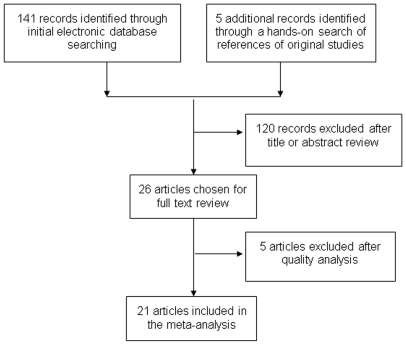
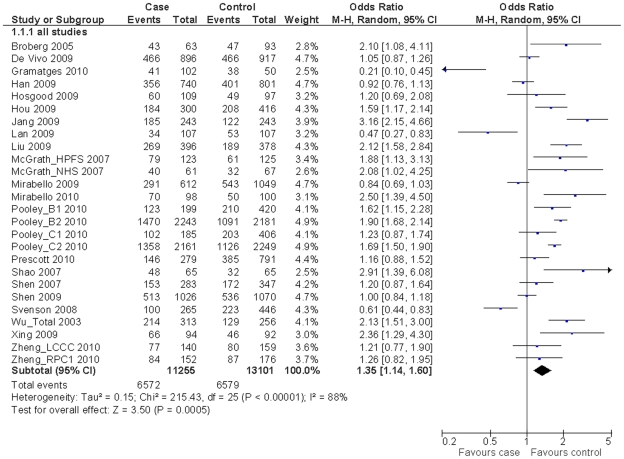
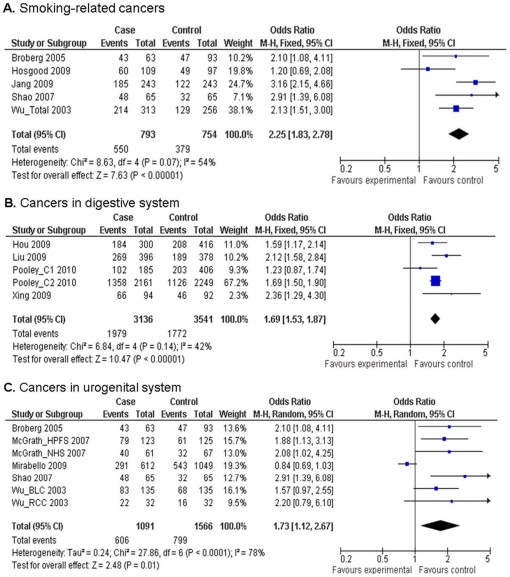
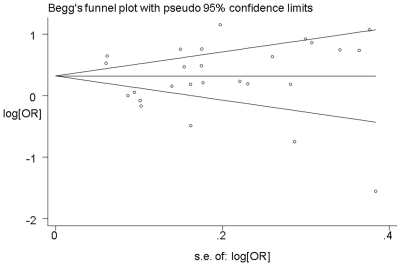
BACKGROUND: Telomeres play a key role in the maintenance of chromosome integrity and stability, and telomere shortening is involved in initiation and progression of malignancies. A series of epidemiological studies have examined the association between shortened telomeres and risk of cancers, but the findings remain conflicting. METHODS: A dataset composed of 11,255 cases and 13,101 controls from 21 publications was included in a meta-analysis to evaluate the association between overall cancer risk or cancer-specific risk and the relative telomere length. Heterogeneity among studies and their publication bias were further assessed by the χ(2)-based Q statistic test and Egger's test, respectively. RESULTS: The results showed that shorter telomeres were significantly associated with cancer risk (OR = 1.35, 95% CI = 1.14-1.60), compared with longer telomeres. In the stratified analysis by tumor type, the association remained significant in subgroups of bladder cancer (OR = 1.84, 95% CI = 1.38-2.44), lung cancer (OR = 2.39, 95% CI = 1.18-4.88), smoking-related cancers (OR = 2.25, 95% CI = 1.83-2.78), cancers in the digestive system (OR = 1.69, 95% CI = 1.53-1.87) and the urogenital system (OR = 1.73, 95% CI = 1.12-2.67). Furthermore, the results also indicated that the association between the relative telomere length and overall cancer risk was statistically significant in studies of Caucasian subjects, Asian subjects, retrospective designs, hospital-based controls and smaller sample sizes. Funnel plot and Egger's test suggested that there was no publication bias in the current meta-analysis (P = 0.532). CONCLUSIONS: The results of this meta-analysis suggest that the presence of shortened telomeres may be a marker for susceptibility to human cancer, but single larger, well-design prospective studies are warranted to confirm these findings.
Overview
The claims and statistics of this paper haven’t been checked yet.
Run the check — free, no account needed. It reads the open-access text and checks the sources it cites.
Integrity signals
Registry
Cites
Statistics
Figures
Verification
Claims the paper makes
The claims and statistics of this paper haven’t been checked yet.
Run the check — free, no account needed. It reads the open-access text and checks the sources it cites.
Claims other papers make about this one
Each is checked against this paper’s own text: does it say what the citing paper says it does?
In the citing paper
“Inter-individual variation in mean leukocyte telomere length (LTL) is associated with cancer and several age-associated diseases.”
From Identification of seven loci affecting mean telomere length and their association with disease (2013) · cites this paper as [4]
Self-check
Percentages, sums and reported differences re-computed from the paper’s own numbers.
The self-check needs the paper’s full text.
Citations
Cites
Bias in meta-analysis detected by a simple, graphical test
Egger, M., Smith, G. D., Schneider, M., & Minder, C. (1997) · BMJ · doi:10.1136/bmj.315.7109.629 · Cited by 56,722 · cited 1×
“The inverted funnel plots and Egger’s test (linear regression analysis) were used to investigate publication bias [49].”
Meta-analysis in clinical trials
DerSimonian, R., & Laird, N. (1986) · Controlled Clinical Trials · doi:10.1016/0197-2456(86)90046-2 · Cited by 39,552 · cited 1×
“The fixedeffects model and the random-effects model, based on the MantelHaenszel method [47] and the DerSimonian and Laird method [48], respectively, were used to combine values from different studies.”
Quantifying heterogeneity in a meta‐analysis
Higgins, J. P. T., & Thompson, S. G. (2002) · Statistics in Medicine · doi:10.1002/sim.1186 · Cited by 36,763 · cited 1×
“Heterogeneity was also quantified with the I(2) statistic, a value that indicates what proportion of the total variation across studies is beyond chance, where 0% indicates no observed heterogeneity and larger values show increasing heterogeneity [46].”
Statistical Aspects of the Analysis of Data From Retrospective Studies of Disease
(1959) · JNCI: Journal of the National Cancer Institute · doi:10.1093/jnci/22.4.719 · Cited by 14,689 · cited 1×
“The fixedeffects model and the random-effects model, based on the MantelHaenszel method [47] and the DerSimonian and Laird method [48], respectively, were used to combine values from different studies.”
Accelerated telomere shortening in response to life stress
Epel, E. S., Blackburn, E. H., Lin, J., Dhabhar, F. S., Adler, N. E., Morrow, J. D., & Cawthon, R. M. (2004) · Proceedings of the National Academy of Sciences · doi:10.1073/pnas.0407162101 · Cited by 3,002
Oxidative stress shortens telomeres
von Zglinicki, T. (2002) · Trends in Biochemical Sciences · doi:10.1016/s0968-0004(02)02110-2 · Cited by 2,524 · cited 1×
“Firstly, several variables may affect the length of telomeres, such as age, sex, obesity, smoking, oxidative stress and chronic inflammation [12,64,65,66].”
Quantitative Synthesis in Systematic Reviews
Lau, J., Ioannidis, J. P. A., & Schmid, C. H. (1997) · Annals of Internal Medicine · doi:10.7326/0003-4819-127-9-199711010-00008 · Cited by 2,517 · cited 1×
“05 [45].”
Telomere length predicts replicative capacity of human fibroblasts.
Allsopp, R. C., Vaziri, H., Patterson, C., Goldstein, S., Younglai, E. V., Futcher, A. B., Greider, C. W., & Harley, C. B. (1992) · Proceedings of the National Academy of Sciences · doi:10.1073/pnas.89.21.10114 · Cited by 2,200 · cited 1×
“Thus, telomere length has been suggested as a ‘‘cellular mitotic clock’’ that defines the number of cell divisions and cellular life span [1,5].”
Switching and Signaling at the Telomere
Blackburn, E. H. (2001) · Cell · doi:10.1016/s0092-8674(01)00492-5 · Cited by 2,139 · cited 2×
“Thus, telomere length has been suggested as a ‘‘cellular mitotic clock’’ that defines the number of cell divisions and cellular life span [1,5].”
Telomere Shortening and Tumor Formation by Mouse Cells Lacking Telomerase RNA
Blasco, M. A., Lee, H.-W., Hande, M. P., Samper, E., Lansdorp, P. M., DePinho, R. A., & Greider, C. W. (1997) · Cell · doi:10.1016/s0092-8674(01)80006-4 · Cited by 2,108 · cited 1×
“For example, short telomeres cause an increased risk of developing epithelial cancers by the formation of complex non-reciprocal translocations [15,16], and telomeres in tumor cells and their precursor lesions are significantly shorter than that in surrounding non-tumor cells [17,18].”
Cited by
Sorted by citations
Items 201–300 of 375
Boyne, D. J., King, W. D., Brenner, D. R., McIntyre, J. B., Courneya, K. S., & Friedenreich, C. M. (2018) · PLoS ONE · doi:10.1371/journal.pone.0198641 · Cited by 15
Incident hand OA is strongly associated with reduced peripheral blood leukocyte telomere length
McAlindon, T. E., Roberts, M. B., Driban, J. B., Schaefer, L. F., Haugen, I. K., Smith, S. E., Duryea, J., Cunha, D., Blanco, F. J., Fernández-García, J., et al. (2018) · Osteoarthritis and Cartilage · doi:10.1016/j.joca.2018.08.010 · Cited by 15
Leukocyte Telomere Length in Patients with Radiographic Knee Osteoarthritis
Mosquera, A., Rego‐Pérez, I., Blanco, F. J., & Fernández, J. L. (2018) · Environmental and Molecular Mutagenesis · doi:10.1002/em.22247 · Cited by 15
“Moreover, several meta‐analyses suggest that telomere size measured in PBL is useful to assess the individual predisposition to numerous pathologies associated to aging, like several cancers, diabetes and cardiovascular disease (Ma et al., 2011; Zhao et al., 2013; Haycock et al., 2014).”
BackgroundShen, G., Huang, J., Huang, Y., & Feng, Y. (2019) · The journal of nutrition health & aging · doi:10.1007/s12603-019-1265-z · Cited by 14
An exploratory analysis of leukocyte telomere length among pregnant and non-pregnant people
Panelli, D. M., Diwan, M., Cruz, G., Leonard, S. A., Chueh, J. T., Gotlib, I. H., & Bianco, K. (2022) · Brain Behavior & Immunity - Health · doi:10.1016/j.bbih.2022.100506 · Cited by 15
Aida, J., Yokoyama, A., Shimomura, N., Nakamura, K., Ishikawa, N., Terai, M., Poon, S. S. S., Matsuura, M., Fujiwara, M., Sawabe, M., et al. (2013) · PLoS ONE · doi:10.1371/journal.pone.0063860 · Cited by 15
“The progression of telomere shortening with age may lead to genomic instability during the initial stage of tumorigenesis [4–7].”
BackgroundRappl, G., Riët, T., Awerkiew, S., Schmidt, A., Hombach, A. A., Pfister, H., & Abken, H. (2012) · PLoS ONE · doi:10.1371/journal.pone.0030713 · Cited by 15
“The number of those T cells increases with progression of the disease [28].”
Telomere length in the colon is related to colorectal adenoma prevalence
Peacock, S. D., Massey, T. E., Vanner, S. J., & King, W. D. (2018) · PLOS ONE · doi:10.1371/journal.pone.0205697 · Cited by 14
Filaggrin variations are associated with PAH metabolites in urine and DNA alterations in blood
Wahlberg, K. E., Liljedahl, E. R., Alhamdow, A., Lindh, C. H., Lidén, C., Albin, M. C., Tinnerberg, H., & Bröberg, K. (2019) · Environmental Research · doi:10.1016/j.envres.2019.108600 · Cited by 14
Telomere Length Is Predictive of Breast Cancer Risk inBRCA2Mutation Carriers
Þorvaldsdóttir, B., Aradóttir, M., Stefánsson, Ó. A., Böðvarsdóttir, S. K., & Eyfjord, J. E. (2017) · Cancer Epidemiology Biomarkers & Prevention · doi:10.1158/1055-9965.epi-16-0946 · Cited by 14
“Not surprisingly, numerous studies have reported a relationship between mean leukocyte TL and cancer incidence and mortality, but for many cancers the results have been inconsistent (20, 21, 37).”
ResultLiljedahl, E. R., Wahlberg, K. E., Lidén, C., Albin, M. C., & Bröberg, K. (2018) · The Science of The Total Environment · doi:10.1016/j.scitotenv.2018.10.328 · Cited by 14
Fabiani, R., Chiavarini, M., Rosignoli, P., & Giacchetta, I. (2024) · Cancers · doi:10.3390/cancers16183218 · Cited by 15
“…between LTL and all cancers combined [16], breast [17], colorectal [18], prostate [19], and lung cancer risk [20]; however, others have found a positive association between short telomere length with an increased risk in all cancers combined [21], and gastrointestinal, head, and neck cancers [22].”
BackgroundPanelli, D. M., Leonard, S. A., Wong, R. J., Becker, M., Mayo, J. A., Wu, E., Girsen, A. I., Gotlib, I. H., Aghaeepour, N., Druzin, M. L., et al. (2022) · BMC Pregnancy and Childbirth · doi:10.1186/s12884-022-04693-0 · Cited by 14
Genetics and Epigenetics of Lung Cancer: Mechanisms and Future Perspectives
Shukla, S., Khan, S. U., Tollefsbol, T. O., & Meeran, S. M. (2013) · Current Cancer Therapy Reviews · doi:10.2174/15733947113099990002 · Cited by 14
“These conflicting results may be due to the fact that chromosomal shortening up to a critical length may result in chromosomal breaks, causing genome instability and thus leading to enhanced potential for malignant transformation in lung cancer, while in the case of breast cancer several other factors such as estrogen…”
BackgroundLack of association between PBMC telomere length and endurance exercise
Denham, J. (2016) · Journal of Applied Biomedicine · doi:10.1016/j.jab.2016.09.004 · Cited by 14
Jiang, M., Wu, H., & Qin, C. (2013) · PLoS ONE · doi:10.1371/journal.pone.0084277 · Cited by 12
Wu, D., YU, H., Sun, J., Qi, J., Liu, Q., LI, R., Zheng, S., Xu, J., & Kang, J. (2012) · Molecular Medicine Reports · doi:10.3892/mmr.2015.3410 · Cited by 12
“…case-control study failed to observe a statistically significant association between leukocyte TL and PCa risk using quantitative PCR (27), two meta‑analyses revealed that shorter telomeres were significantly associated with an increased overall risk of cancer compared with longer telomeres (28).”
Chmelar, C., Jörres, R. A., Kronseder, A., Müller, A., Nowak, D., & Weigl, M. (2017) · Journal of Occupational and Environmental Medicine · doi:10.1097/jom.0000000000001102 · Cited by 11
Cadmium Exposure and Blood Telomere Length in Female University Students in Japan
Mizuno, Y., Konishi, S., Imai, H., Fujimori, E., Kojima, N., & Yoshinaga, J. (2019) · Biological Trace Element Research · doi:10.1007/s12011-019-1656-3 · Cited by 13
“Telomere detrition has been associated with several degenerative diseases and health outcomes in adults, including type II diabetes [10, 11], cancer [12, 13], dementia [14, 15], cardiovascular disease [16, 17], and psychosocial disorders [18].”
BackgroundQiu, G., Zheng, X., Fu, M., Huang, C., & Yang, X. (2019) · Biogerontology · doi:10.1007/s10522-019-09832-3 · Cited by 13
Telomeres susceptibility to environmental arsenic exposure: Shortening or lengthening?
Wai, K. M., Swe, T., Myar, M. T., Aisyah, C. R., & Hninn, T. S. S. (2023) · Frontiers in Public Health · doi:10.3389/fpubh.2022.1059248 · Cited by 12
Guan, X., Wang, L., Liu, Z., Sturgis, E. M., & Wei, Q. (2013) · Journal of Cellular and Molecular Medicine · doi:10.1111/jcmm.12076 · Cited by 12
Self-citationMayer, S. E., Guan, J., Lin, J., Hamlat, E. J., Parker, J. E., Brownell, K., Price, C. A., Mujahid, M. S., Tomiyama, A. J., Slavich, G. M., et al. (2022) · Psychological Medicine · doi:10.1017/s0033291722003397 · Cited by 11
“This finding has important public health implications as adult TL, which is a function of the initial set point and attrition over time (Aviv, 2008), has been linked to stress-related diseases (Darrow et al., 2016; Haycock et al., 2014; Ma et al., 2011).”
BackgroundWan, S., Hann, H., Ye, Z., Hann, R. S., Lai, Y., Wang, C., Li, L., Myers, R. E., Li, B., Xing, J., et al. (2017) · Carcinogenesis · doi:10.1093/carcin/bgx021 · Cited by 11
“Interestingly, two recent meta-analyses indicated that the significant associations between telomere length and cancer risk were observed mostly in retrospective but not the a few prospective studies (23,24).”
BackgroundAndersson, U., Degerman, S., Dahlin, A. M., Wibom, C., Johansson, G. K., Bondy, M. L., & Melin, B. S. (2018) · Cancer Causes & Control · doi:10.1007/s10552-018-1120-2 · Cited by 11
Ko, J. M. Y., Tsang, K. H., Dai, W., Choi, S. S. A., Leong, M. M., Ngan, R. K., Kwong, D. L., Cheng, A. C. K., Lee, A. W. M., Ng, W. T., et al. (2018) · International Journal of Cancer · doi:10.1002/ijc.31617 · Cited by 10
Lifestyle Choices, Psychological Stress and Their Impact on Ageing: The Role of Telomeres
Davinelli, S., & Vivo, I. D. (2019) · Springer eBooks · doi:10.1007/978-3-030-20762-5_8 · Cited by 9
Al‐Daghri, N. M., Sabico, S., Ansari, M. G. A., Abdi, S., Tripathi, G., Chrousos, G. P., & McTernan, P. G. (2022) · Saudi Journal of Biological Sciences · doi:10.1016/j.sjbs.2022.03.026 · Cited by 10
“Epidemiological investigations have shown that associations exist between diminished telomere length (TL) and a number of adverse health outcomes including risk of cardiovascular diseases, type 2 diabetes mellitus (T2DM) and cancer (Hoffmann and Spyridopoulos 2011; Ma et al., 2011).”
BackgroundAndreassi, M. G., Haddy, N., Harms‐Ringdahl, M., Campolo, J., Borghini, A., Chevalier, F., Schwenk, J. M., Fresneau, B. C., Bolle, S., Fuentes, M., et al. (2023) · International Journal of Molecular Sciences · doi:10.3390/ijms24098416 · Cited by 12
Benites-Zapata, V. A., Ulloque‐Badaracco, J. R., Alarcón‐Braga, E. A., Fernández‐Alonso, A. M., López-Baena, M. T., & Pérez-López, F. R. (2023) · Maturitas · doi:10.1016/j.maturitas.2023.107882 · Cited by 12
Religiosity and Telomere Length in Colorectal Cancer Patients in Saudi Arabia
Ahwal, M. S. A., Zaben, F. A., Sehlo, M. G., Khalifa, D. A., & Koenig, H. G. (2018) · Journal of Religion and Health · doi:10.1007/s10943-017-0542-6 · Cited by 10
“Telomeres tend to shorten with increasing age, and with that shortening, there is an increase in vulnerability to agerelated diseases (Ma et al. 2011; Muezzinler et al. 2013; D’Mello et al. 2015).”
BackgroundLeukocyte Telomere Length and Pancreatic Cancer Risk
Antwi, S. O., & Petersen, G. M. (2018) · Pancreas · doi:10.1097/mpa.0000000000000995 · Cited by 10
“Three overlappingmeta-analyses have examined the association between TL and cancer risk.(52,62,63) The first meta-analysis included 11,255 cancer cases and 13,101 controls from 21 studies published up to November 2010(62) and found increased overall cancer risk among individuals with short telomeres (OR, 1.”
Antwi, S. O., Bamlet, W. R., Rabe, K. G., Cawthon, R., Umudi, I., Druliner, B. R., Sicotte, H., Oberg, A. L., Jatoi, A., Boardman, L. A., et al. (2020) · Cancer Epidemiology Biomarkers & Prevention · doi:10.1158/1055-9965.epi-19-1597 · Cited by 10
Sosnowski, D. W., Kliewer, W. L., Valrie, C. R., Winter, M. A., Serpell, Z. N., & Amstadter, A. B. (2020) · Child Development · doi:10.1111/cdev.13441 · Cited by 11
Possible Mechanisms of Subsequent Neoplasia Development in Childhood Cancer Survivors: A Review
Kruseová, J., Vícha, A., Feriančiková, B., & Eckschlager, T. (2021) · Cancers · doi:10.3390/cancers13205064 · Cited by 9
“The above-mentioned studies [65,66] found an increased risk of cancer in persons with shorter telomeres in blood leukocytes and buccal mucosae cells.”
BackgroundWennerström, C., Risques, R. A., Prunkard, D. E., Giffen, C. A., Corley, D. A., Murray, L., Whiteman, D. C., Wu, A. H., Bernstein, L., Ye, W., et al. (2016) · Cancer Medicine · doi:10.1002/cam4.810 · Cited by 10
Miranda-Guevara, A., Muñoz-Acevedo, A., Fiorillo-Moreno, O., Acosta-Hoyos, A. J., Pacheco‐Londoño, L. C., Quintana-Sosa, M., Moya, Y. S. D., Dias, J. F., de Souza, G. S., Martínez‐López, W., et al. (2023) · Environmental Geochemistry and Health · doi:10.1007/s10653-023-01697-3 · Cited by 9
“Given its significance, TL has been suggested as a potential marker for cancer susceptibility in humans (Heaphy et al., 2022; Ma et al., 2011; Sun et al., 2015).”
BackgroundPolygenic risk score of shorter telomere length and risk of depression and anxiety in women
Chang, S., Prescott, J., Vivo, I. D., Kraft, P. L., & Okereke, O. I. (2018) · Journal of Psychiatric Research · doi:10.1016/j.jpsychires.2018.05.021 · Cited by 10
Differences in telomere length between sporadic and familial cutaneous melanoma
Menin, C., Bojnik, E., Bianco, P. D., Elefanti, L., Gianesin, K., Keppel, S., Stagni, C., D, S. M. M., Vecchiato, A., & Rossi, A. D. (2016) · British Journal of Dermatology · doi:10.1111/bjd.14652 · Cited by 9
Ribero, S., Mangino, M., & Bataille, V. A. (2016) · Medical Hypotheses · doi:10.1016/j.mehy.2016.10.010 · Cited by 9
“survival and these results have been confirmed in a metaanalysis [10, 47].”
BackgroundResultLeucocytes telomere length and breast cancer risk/ susceptibility: A case-control study
Pavanello, S., Varesco, L., Gismondi, V., Bruzzi, P., & Bolognesi, C. (2018) · PLoS ONE · doi:10.1371/journal.pone.0197522 · Cited by 10
Senescence research from historical theory to future clinical application
Kameda, M., Mikawa, T., Yokode, M., Inagaki, N., & Kondoh, H. (2020) · Geriatrics and gerontology international/Geriatrics & gerontology international · doi:10.1111/ggi.14121 · Cited by 9
Chen, S.-S., Liao, X., Wei, Q., Zhou, Y., Su, M., Hu, Y., Song, Y., Zhang, Z., & Liang, J. (2022) · Journal of Nutrition · doi:10.1093/jn/nxac063 · Cited by 10
Self-citationSheng, X., Zhang, L., Luo, D., Tong, N., Wang, M., Fang, Y., Li, J., & Zhang, Z. (2012) · Leukemia & lymphoma/Leukemia and lymphoma · doi:10.3109/10428194.2012.671482 · Cited by 9
Hsieh, A. Y. Y., Kimmel, E. R., Pick, N., Sauve, L. J., Brophy, J. C., Kakkar, F., Bitnun, A., Murray, M. C. M., & Côté, H. C. F. (2020) · Aging · doi:10.18632/aging.103703 · Cited by 10
Campolo, J., Borghini, A., Parolini, M., Mercuri, A., Turchi, S., & Andreassi, M. G. (2023) · International Journal of Molecular Sciences · doi:10.3390/ijms241311091 · Cited by 8
“For instance, changes in leukocyte telomere length (LTL) and mitochondrial DNA copy number (mtDNAcn) in blood, which are the expression of genetic instability and DNA damage, are considered other important biological mechanisms initiating and contributing to not only cancer risk [20,21] but also vascular diseases and…”
BackgroundCarlund, O., Thörn, E., Osterman, P., Fors, M., Dernstedt, A., Forsell, M. N. E., Erlanson, M., Landfors, M., Degerman, S., & Hultdin, M. (2024) · Clinical Epigenetics · doi:10.1186/s13148-024-01680-4 · Cited by 9
“Telomere length (TL) in blood has been identified as a prognostic marker in various malignancies, and mutations in telomere-related genes are associated with shortened telomeres and increased risk for hematological malignancies [26, 27].”
BackgroundCumulative risk exposure and child cellular aging in a Dutch low‐risk community sample
Beijers, R., ten Thije, I., Bolhuis, E., O’Donnell, K. J., Tollenaar, M. S., Shalev, I., Hastings, W. J., MacIsaac, J. L., Lin, D. T. S., Meaney, M. J., et al. (2022) · Psychophysiology · doi:10.1111/psyp.14205 · Cited by 8
Lin, S., Abnet, C. C., Freedman, N. D., Murphy, G. A., Risques, R. A., Prunkard, D. E., Rabinovitch, P. S., Pan, Q., Roth, M. J., Wang, G.-Q., et al. (2013) · BMC Cancer · doi:10.1186/1471-2407-13-578 · Cited by 8
“Most previous studies of telomere length in cancer have measured telomeres in peripheral blood lymphocytes or in cells isolated from biopsied tumors or other le sions [28-30,36,37].”
Pregnancy by Assisted Reproductive Technology Is Associated with Shorter Telomere Length in Neonates
Minamoto, T., Nakayama, K., Ishibashi, T., Ishikawa, M., Nakamura, K., Yamashita, H., Shanta, K., Mahmud, H. M., Razia, S., Iida, K., et al. (2020) · International Journal of Molecular Sciences · doi:10.3390/ijms21249688 · Cited by 9
Balducci, L. (2012) · Psycho-Oncologie · doi:10.1007/s11839-012-0352-8 · Cited by 8
Predicted leukocyte telomere length and risk of myeloid neoplasms
Sullivan, S. M., Cole, B., Lane, J., Meredith, J. J., Langer, E. K., Hooten, A. J., Roesler, M. A., McGraw, K. L., Pankratz, N., & Poynter, J. N. (2023) · Human Molecular Genetics · doi:10.1093/hmg/ddad126 · Cited by 7
Telomere Length is a Susceptibility Marker for Tasmanian Devil Facial Tumor Disease
Smith, L. E., Jones, M. E., Hamede, R., Risques, R. A., Patton, A. H., Carter, P. A., & Storfer, A. T. (2020) · EcoHealth · doi:10.1007/s10393-020-01491-y · Cited by 7
Telomerase and Cancer: A Complex Relationship
Fossel, M., & Whittemore, K. (2021) · OBM Geriatrics · doi:10.21926/obm.geriatr.2101156 · Cited by 7
Mammographic density, blood telomere length and lipid peroxidation
Erdmann, N., Harrington, L. A., & Martin, L. J. (2017) · Scientific Reports · doi:10.1038/s41598-017-06036-y · Cited by 7
Telomeres, Aging, and Nutrition
Dhillon, V. S., Bull, C. F., & Fenech, M. F. (2016) · Elsevier eBooks · doi:10.1016/b978-0-12-801816-3.00010-8 · Cited by 8
Castelli, G., Cocconcelli, E., Grimaudo, G., Leo, I. D., Bellani, S., Fiorentù, G., Giulianelli, G., Bernardinello, N., Balestro, E., & Spagnolo, P. (2025) · Journal of Personalized Medicine · doi:10.3390/jpm15050213 · Cited by 7
“A large meta-analysis by Ma et al. found a correlation between shorter telomeres and LC [74], while a Mendelian randomization study found that longer telomeres seem to be associated with several neoplastic diseases, with lung ADC among them [75].”
Bolhuis, E., Belsky, J., Frankenhuis, W. E., Shalev, I., Hastings, W. J., Tollenaar, M. S., O’Donnell, K. J., McGill, M. G., Pokhvisneva, I., Lin, D. T. S., et al. (2022) · Biological Psychology · doi:10.1016/j.biopsycho.2022.108446 · Cited by 7
Psychosocial stress and telomere regulation
Shalev, I., & Hastings, W. J. (2019) · Oxford University Press eBooks · doi:10.1093/oso/9780198793014.003.0017 · Cited by 6
“Two large-scale meta-analysis found shorter telomeres to be significantly associated with specific types of cancer (25, 26).”
Predicted leukocyte telomere length and risk of germ cell tumours
Cigan, S. S., Meredith, J. J., Kelley, S. T., Yang, T., Langer, E. K., Hooten, A. J., Lane, J., Cole, B. R., Krailo, M., Frazier, A. L., et al. (2022) · British Journal of Cancer · doi:10.1038/s41416-022-01798-3 · Cited by 6
Kaya, Z., Akkіprіk, M., Karabulut, S., Eyüboğlu, İ. P., Amuran, G. G., Özmen, T., Gulluoglu, B. M., Kaya, H., & Özer, A. (2016) · Journal of Clinical Laboratory Analysis · doi:10.1002/jcla.22083 · Cited by 6
Luo, X., Sturgis, E. M., Yang, Z., Sun, Y., Wei, P., Liu, Z., Wei, Q., & Li, G. (2019) · Carcinogenesis · doi:10.1093/carcin/bgz019 · Cited by 6
Self-citationClarity, C., Trowbridge, J., Gerona, R. R. L., Ona, K. R., McMaster, M., Bessonneau, V., Rudel, R. A., Buren, H., & Morello-Frosch, R. A. (2020) · medRxiv · doi:10.1101/2020.11.05.20226183 · Cited by 6
From premature birth to premature kidney disease: does accelerated aging play a role?
Sanderson, K., Wekon-Kemeni, C., & Charlton, J. R. (2023) · Pediatric Nephrology · doi:10.1007/s00467-023-06208-1 · Cited by 5
Depressive symptoms and shorter survival in lung cancer: the role of leukocyte telomere length
Siwik, C. J., Cash, E. D., & Sephton, S. E. (2022) · Psychology and Health · doi:10.1080/08870446.2022.2040500 · Cited by 5
“…in the general population (Needham et al., 2015; Rode et al., 2015; Wang et al., 2018) and is associated with increased risk for tumourigenesis (Ma et al., 2011; Shao et al., 2007; Wentzensen et al., 2011; Willeit et al., 2010; Wu et al., 2003), earlier mortality (Wentzensen et al., 2011;…”
BackgroundEpigenetic aging differentially impacts breast cancer risk by self-reported race
Wu, Y., Miller, M. E., Gilmore, H. L., Thompson, C. L., & Schumacher, F. R. (2024) · PLoS ONE · doi:10.1371/journal.pone.0308174 · Cited by 5
Jiao, J., Kang, J. X., Tan, R., Wang, J., & Zhang, Y. (2012) · Analytical and Bioanalytical Chemistry · doi:10.1007/s00216-012-5783-3 · Cited by 5
Odierna, D. H., Afable, A., Ikediobi, O. N., Beattie, M. S., Knight, S. J., Ko, M., Wilson, A., & Ponce, N. A. (2011) · Personalized Medicine · doi:10.2217/pme.11.67 · Cited by 5
Hartmann, D., von Figura, G., Song, Z., Harden, S., Scott, L. C., Evans, T. J., Rudolph, K. L., Bilsland, A. E., & Keith, W. N. (2014) · Future Oncology · doi:10.2217/fon.14.166 · Cited by 5
Is Programmed Aging a Cause for Optimism?
Mitteldorf, J. (2015) · Current Aging Science · doi:10.2174/1874609808666150422112826 · Cited by 5
Effects of Psychological Stress on Telomeres as Genome Regulators
Etzel, L. C., & Shalev, I. (2020) · Elsevier eBooks · doi:10.1016/b978-0-12-813156-5.00009-1 · Cited by 5
Biosensors for cancer biomarker detection
Pirzada, M., & Altıntaş, Z. (2023) · Elsevier eBooks · doi:10.1016/b978-0-323-90222-9.00009-1 · Cited by 5
The Relationship between Dietary Macronutrient Composition and Telomere Length Among US Adults
Koemel, N. A., Laouali, N., Senior, A. M., Celermajer, D. S., Grech, A. L., Solon‐Biet, S. M., Simpson, S. J., Raubenheimer, D., Gill, T. P., & Skilton, M. R. (2024) · Advanced Biology · doi:10.1002/adbi.202300619 · Cited by 5
Relational Victimization and Telomere Length in Adolescent Girls
Manczak, E. M., & Gotlib, I. H. (2018) · Journal of Research on Adolescence · doi:10.1111/jora.12447 · Cited by 5
Hurria, A., Muss, H. B., & Cohen, H. J. (2017) · Wiley eBooks · doi:10.1002/9781119000822.hfcm074 · Cited by 5
Liu, C. J., Wang, F., Zhang, Z., Su, Q., & Li, Y. (2025) · Tropical Medicine and Health · doi:10.1186/s41182-025-00854-x · Cited by 6
EGCG Containing Combined Dietary Supplement Affects Telomeres and Epigenetic Regulation
Pointner, A., Magnet, U., Tomeva, E., Dum, E., Bruckmueller, C., Mayer, C. A., & Haslberger, A. G. (2017) · Journal of Nutrition & Food Sciences · doi:10.4172/2155-9600.1000577 · Cited by 4
“Further, DNA methylation and telomeres are linked to various diseases such as cardiovascular disorders, T2DM and cancer [55-58].”
Gedvilaitė, G., Kriaučiūnienė, L., Tamašauskas, A., & Liutkevičienė, R. (2024) · Cancers · doi:10.3390/cancers16030643 · Cited by 5
“Shorter telomeres are associated with an increased incidence of disease and poorer survival rates [5].”
BackgroundAndreikos, D., Kyrodimos, E., Kotsinas, A., Chrysovergis, A., & Papacharalampous, G. X. (2024) · International Journal of Molecular Sciences · doi:10.3390/ijms25169000 · Cited by 5
Spadigam, A. E., Dhupar, A., Syed, S., & Saluja, T. S. (2016) · Indian Journal of Medical and Paediatric Oncology · doi:10.4103/0971-5851.177002 · Cited by 4
“Categorized as a chronic metabolic disorder, Type 2 diabetes is also the underlying cause of genomic instability secondary to telomere shortening.[30] Using the Southern blot technique to measure terminal restriction fragment, which determines telomere length, shortening of telomere in Type 2 diabetics of Asian-Indian…”
BackgroundOxidative Telomere Attrition, Nutritional Antioxidants and Biological Aging
Glade, M. J. (2015) · International Journal Of Nutrition · doi:10.14302/issn.2379-7835.ijn-14-606 · Cited by 3
Entringer, S., de Punder, K., Verner, G., & Wadhwa, P. D. (2017) · Springer eBooks · doi:10.1007/978-3-319-60289-9_41 · Cited by 4
Min, J., Kim, J. Y., Choi, J. Y., & Kong, I. D. (2022) · Journal of Clinical Medicine · doi:10.3390/jcm11092527 · Cited by 5
“TL is negatively associated with biological aging and age-related diseases such as diabetes [5], dementia [6], cancer [7,8], and chronic psychiatric disorders [9,10].”
BackgroundIs Human Aging a Form of Phenoptosis?
Libertini, G., Corbi, G., Shubernetskaya, O. S., & Ferrara, N. (2022) · Biochemistry (Moscow) · doi:10.1134/s0006297922120033 · Cited by 4
“12-13 2022 – In humans, various studies have shown a relation between short telomeres and cancer risk [115, 116]; – In normal mice, induced telomerase expression delayed aging and increased longevity but did not increase cancer risk [117]; – In yeast, cell senescence causes immediate apoptosis, i.”
BackgroundPrasad, A., Lin, J., Jelliffe‐Pawlowski, L. L., Coleman-Phox, K., Rand, L., & Wojcicki, J. M. (2023) · Maternal Health Neonatology and Perinatology · doi:10.1186/s40748-023-00167-z · Cited by 5
“Shorter LTL is a known risk factor for disease, including certain types of cancer [7, 41] and chronic metabolic disease include type 2 diabetes mellitus and cardiovascular disease [17, 27, 66].”
Background[Research Progress in the Pathogenesis of Idiopathic Pulmonary Fibrosis with Lung Cancer].
Liu, C., & He, Y.-B. (2020) · PubMed Central · doi:10.3779/j.issn.1009-3419.2020.102.23 · Cited by 4
Limardi, P., Panigoro, S. S., Siregar, N. C., Sutandyo, N., Witjaksono, F., Priliani, L., Oktavianthi, S., & Malik, S. G. (2024) · BMC Research Notes · doi:10.1186/s13104-024-06783-y · Cited by 3
Adverse pregnancy outcomes are associated with shorter telomere length in the 17-year-old child
Bianco‐Miotto, T., Phillips, A. L., Heinze, D. R., Pennell, C. E., Maganga, R., Beilin, L. J., Mori, T. A., & Grieger, J. A. (2024) · Journal of Developmental Origins of Health and Disease · doi:10.1017/s2040174424000291 · Cited by 3
“10,11 Risk factors for heart disease, such as elevated plasma glucose and blood pressure also associate with shorter telomeres.”
Tannemann, N., Erbel, R., Nöthen, M. M., Jöckel, K., & Pechlivanis, S. (2024) · PLoS ONE · doi:10.1371/journal.pone.0303357 · Cited by 3
Andreikos, D., Spandidos, D. A., & Georgakopoulou, V. (2025) · International Journal of Oncology · doi:10.3892/ijo.2025.5729 · Cited by 4
“One of the most widely investigated telomere biology‑related biomarkers is TL, yet there are limited studies exploring the potential of TL as a biomarker in MM (22,23,93,123‑127).”
Andreikos, D., & Spandidos, D. A. (2025) · Oncology Letters · doi:10.3892/ol.2025.15141 · Cited by 5
Derenzini, E., Risso, A., Ruella, M., Spatola, T., Milone, G., Pioltelli, P. E., Iori, A. P., Santarone, S., Bosi, A., Rambaldi, A., et al. (2019) · Transplantation and Cellular Therapy · doi:10.1016/j.bbmt.2019.03.026 · Cited by 3
Telomeres and Early Life Stress
Ridout, K. K., Ridout, S. J., Goonan, K., Tyrka, A. R., & Price, L. H. (2017) · Elsevier eBooks · doi:10.1016/b978-0-12-802175-0.00018-8 · Cited by 3
Relationship between interpersonal sensitivity and leukocyte telomere length
Suzuki, A., Matsumoto, Y., Enokido, M., Shirata, T., Goto, K., & Otani, K. (2017) · BMC Medical Genetics · doi:10.1186/s12881-017-0473-9 · Cited by 3
“Previous studies have shown that telomere length is related to coronary heart disease [15, 16], cancer [17, 18], progression of diabetic nephropathy in patients with type 1 diabetes [19], dementia in post-stroke patients [20], and mortality [21, 22].”
BackgroundMandal, P. (2018) · Pathology & Oncology Research · doi:10.1007/s12253-018-0425-5 · Cited by 3
Zhang, A., Tang, Z., Chang, A. C. Y., Gu, J. F., Zhang, J., Yang, Z., & Zhang, H. (2025) · GeroScience · doi:10.1007/s11357-025-01979-x · Cited by 2
Decoding the tumor-aging axis: from bench to clinical
Wang, Y., Lv, G., Gao, X., Zheng, J. H., Huang, J., & Wang, Z. (2026) · Frontiers in Immunology · doi:10.3389/fimmu.2026.1823423 · Cited by 2
Lawrence, T., & Murphy, T. M. (2018) · OBM Genetics · doi:10.21926/obm.genet.1804055 · Cited by 2
Wong, J. Y. Y., Blechter, B., Liu, Z., Shi, J., & Roger, V. L. (2024) · Human Molecular Genetics · doi:10.1093/hmg/ddae063 · Cited by 3
Self-citationMaterial hardship and telomere length in children
Moeckel, C. M., Gaydosh, L. M., Schneper, L. M., Mitchell, C. M., & Notterman, D. A. (2024) · Child Development · doi:10.1111/cdev.14126 · Cited by 1
“Human population studies show associations between shorter TL in adult-hood and a wide range of diseases and health morbidities, including cancer (Ma et al., 2011), coronary artery disease (Farzaneh-Far et al., 2010; Willeit et al., 2010), type 2 diabetes mellitus (Zhao et al., 2013), dementia…”
Metadata
- Authors
- Ma, H., Zhou, Z., Wei, S., Liu, Z., Pooley, K. A., Dunning, A. M., Svenson, U., Roos, G., Hosgood, H. D., Shen, M., & Wei, Q.
- Affiliations
- The University of Texas MD Anderson Cancer Center (US)
- University of Cambridge (GB)
- Umeå University (SE)
- National Institutes of Health (US)
- Corresponding author
- Wei, Qingyi
- ORCID
- Venue
- PLoS ONE
- Publisher
- Public Library of Science (PLoS)
- Published
- 2011-06-10
- Volume
- 6
- Issue
- 6
- Pages
- e20466
- ISSN
- 1932-6203 (ISSN-L)
- PMC
- PMC3112149
- OpenAlex
- W2136996519
- Cited by
- 376
- References
- 73
- Citations by year
- 2026: 6 · 2025: 10 · 2024: 21 · 2023: 16 · 2022: 19 · 2021: 24 · 2020: 25 · 2019: 32 · 2018: 34 · 2017: 27 · 2016: 33 · 2015: 34 · 2014: 35 · 2013: 36 · 2012: 18
- FWCI
- 3.27
- Type
- journal article
- Language
- en
- Open access
- gold
- doi.org
- Locations
- PLoS ONE (publishedVersion, cc-by)
- PubMed Central (publishedVersion, cc-by)
- PubMed (publishedVersion)
- DiVA at Umeå University (Umeå University) (submittedVersion, other-oa)
- RePEc: Research Papers in Economics (submittedVersion)
- DOAJ (DOAJ: Directory of Open Access Journals) (submittedVersion, cc-by-sa)
- Funders
- National Cancer Institute (R01CA131274, P30CA016672)
- National Institute of Environmental Health Sciences (R01ES011740)
- Topics
- Life Sciences › Biochemistry, Genetics and Molecular Biology › Cell Biology › Telomeres, Telomerase, and Senescence
- Life Sciences › Biochemistry, Genetics and Molecular Biology › Genetics › Genetic Associations and Epidemiology
- Life Sciences › Biochemistry, Genetics and Molecular Biology › Molecular Biology › Epigenetics and DNA Methylation
- Keywords
- telomere length, telomere shortening, cancer risk, cancer susceptibility, bladder cancer, lung cancer, tobacco-related cancer, gastrointestinal cancer, urogenital cancer, biomarkers
- MeSH terms
- Humans, Neoplasms, Risk Factors, Confidence Intervals, Odds Ratio, Telomere, Publication Bias, Genetic Predisposition to Disease
About these checks
Registry, retraction, Cites and statistics results are computed, not judged, with one exception: a printed reference that no index lists is read once by a model before it counts as a citation error. Claims are extracted by a model and kept only when their quote appears verbatim in the text; each cited source is then checked, with a model’s help, for whether it says what the claim relies on. Those verdicts can be wrong — read the claim’s quote and the cited source before relying on one.
Statistics and arithmetic are recomputed, not judged.
Confidence bands are shown only for fields calibrated on our annotated test set. None is calibrated yet, so no band is shown.
What counts as a claim ›How we measure confidence ›How we check this ›
Are you an author, or do you see a problem with this page? Request a review
