

The DOI matches its Crossref record; 72 of the 73 references it cites were found in a registry or an index.
Shortened Telomere Length Is Associated with Increased Risk of Cancer: A Meta-Analysis
Open accessAbstract
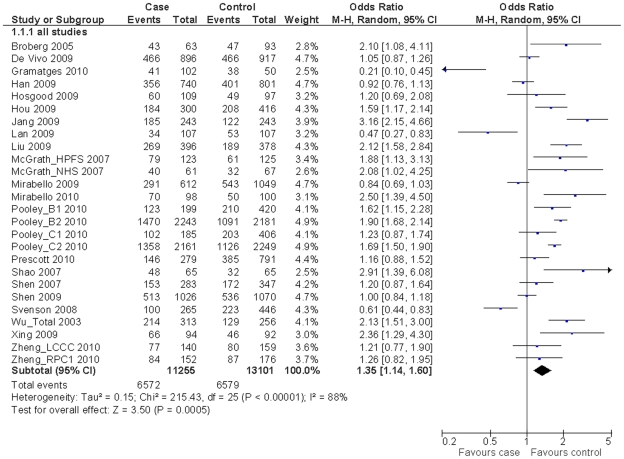
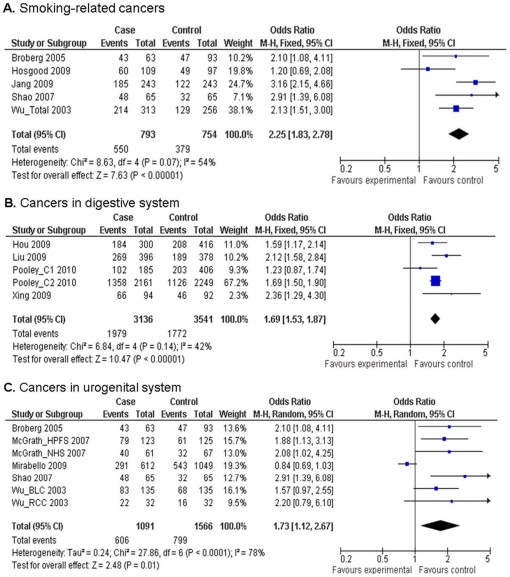
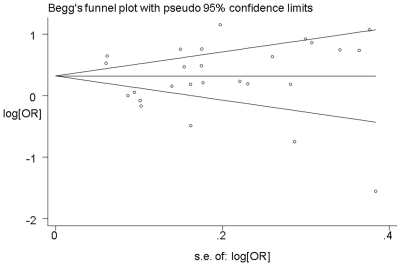
BACKGROUND: Telomeres play a key role in the maintenance of chromosome integrity and stability, and telomere shortening is involved in initiation and progression of malignancies. A series of epidemiological studies have examined the association between shortened telomeres and risk of cancers, but the findings remain conflicting. METHODS: A dataset composed of 11,255 cases and 13,101 controls from 21 publications was included in a meta-analysis to evaluate the association between overall cancer risk or cancer-specific risk and the relative telomere length. Heterogeneity among studies and their publication bias were further assessed by the χ(2)-based Q statistic test and Egger's test, respectively. RESULTS: The results showed that shorter telomeres were significantly associated with cancer risk (OR = 1.35, 95% CI = 1.14-1.60), compared with longer telomeres. In the stratified analysis by tumor type, the association remained significant in subgroups of bladder cancer (OR = 1.84, 95% CI = 1.38-2.44), lung cancer (OR = 2.39, 95% CI = 1.18-4.88), smoking-related cancers (OR = 2.25, 95% CI = 1.83-2.78), cancers in the digestive system (OR = 1.69, 95% CI = 1.53-1.87) and the urogenital system (OR = 1.73, 95% CI = 1.12-2.67). Furthermore, the results also indicated that the association between the relative telomere length and overall cancer risk was statistically significant in studies of Caucasian subjects, Asian subjects, retrospective designs, hospital-based controls and smaller sample sizes. Funnel plot and Egger's test suggested that there was no publication bias in the current meta-analysis (P = 0.532). CONCLUSIONS: The results of this meta-analysis suggest that the presence of shortened telomeres may be a marker for susceptibility to human cancer, but single larger, well-design prospective studies are warranted to confirm these findings.
Overview
The claims and statistics of this paper haven’t been checked yet.
Run the check — free, no account needed. It reads the open-access text and checks the sources it cites.
Integrity signals
Registry
Cites
Statistics
Figures
Verification
Claims the paper makes
The claims and statistics of this paper haven’t been checked yet.
Run the check — free, no account needed. It reads the open-access text and checks the sources it cites.
Claims other papers make about this one
Each is checked against this paper’s own text: does it say what the citing paper says it does?
In the citing paper
“Inter-individual variation in mean leukocyte telomere length (LTL) is associated with cancer and several age-associated diseases.”
From Identification of seven loci affecting mean telomere length and their association with disease (2013) · cites this paper as [4]
Self-check
Percentages, sums and reported differences re-computed from the paper’s own numbers.
The self-check needs the paper’s full text.
Citations
Cites
Bias in meta-analysis detected by a simple, graphical test
Egger, M., Smith, G. D., Schneider, M., & Minder, C. (1997) · BMJ · doi:10.1136/bmj.315.7109.629 · Cited by 56,722 · cited 1×
“The inverted funnel plots and Egger’s test (linear regression analysis) were used to investigate publication bias [49].”
Meta-analysis in clinical trials
DerSimonian, R., & Laird, N. (1986) · Controlled Clinical Trials · doi:10.1016/0197-2456(86)90046-2 · Cited by 39,552 · cited 1×
“The fixedeffects model and the random-effects model, based on the MantelHaenszel method [47] and the DerSimonian and Laird method [48], respectively, were used to combine values from different studies.”
Quantifying heterogeneity in a meta‐analysis
Higgins, J. P. T., & Thompson, S. G. (2002) · Statistics in Medicine · doi:10.1002/sim.1186 · Cited by 36,763 · cited 1×
“Heterogeneity was also quantified with the I(2) statistic, a value that indicates what proportion of the total variation across studies is beyond chance, where 0% indicates no observed heterogeneity and larger values show increasing heterogeneity [46].”
Statistical Aspects of the Analysis of Data From Retrospective Studies of Disease
(1959) · JNCI: Journal of the National Cancer Institute · doi:10.1093/jnci/22.4.719 · Cited by 14,689 · cited 1×
“The fixedeffects model and the random-effects model, based on the MantelHaenszel method [47] and the DerSimonian and Laird method [48], respectively, were used to combine values from different studies.”
Accelerated telomere shortening in response to life stress
Epel, E. S., Blackburn, E. H., Lin, J., Dhabhar, F. S., Adler, N. E., Morrow, J. D., & Cawthon, R. M. (2004) · Proceedings of the National Academy of Sciences · doi:10.1073/pnas.0407162101 · Cited by 3,002
Oxidative stress shortens telomeres
von Zglinicki, T. (2002) · Trends in Biochemical Sciences · doi:10.1016/s0968-0004(02)02110-2 · Cited by 2,524 · cited 1×
“Firstly, several variables may affect the length of telomeres, such as age, sex, obesity, smoking, oxidative stress and chronic inflammation [12,64,65,66].”
Quantitative Synthesis in Systematic Reviews
Lau, J., Ioannidis, J. P. A., & Schmid, C. H. (1997) · Annals of Internal Medicine · doi:10.7326/0003-4819-127-9-199711010-00008 · Cited by 2,517 · cited 1×
“05 [45].”
Telomere length predicts replicative capacity of human fibroblasts.
Allsopp, R. C., Vaziri, H., Patterson, C., Goldstein, S., Younglai, E. V., Futcher, A. B., Greider, C. W., & Harley, C. B. (1992) · Proceedings of the National Academy of Sciences · doi:10.1073/pnas.89.21.10114 · Cited by 2,200 · cited 1×
“Thus, telomere length has been suggested as a ‘‘cellular mitotic clock’’ that defines the number of cell divisions and cellular life span [1,5].”
Switching and Signaling at the Telomere
Blackburn, E. H. (2001) · Cell · doi:10.1016/s0092-8674(01)00492-5 · Cited by 2,139 · cited 2×
“Thus, telomere length has been suggested as a ‘‘cellular mitotic clock’’ that defines the number of cell divisions and cellular life span [1,5].”
Telomere Shortening and Tumor Formation by Mouse Cells Lacking Telomerase RNA
Blasco, M. A., Lee, H.-W., Hande, M. P., Samper, E., Lansdorp, P. M., DePinho, R. A., & Greider, C. W. (1997) · Cell · doi:10.1016/s0092-8674(01)80006-4 · Cited by 2,108 · cited 1×
“For example, short telomeres cause an increased risk of developing epithelial cancers by the formation of complex non-reciprocal translocations [15,16], and telomeres in tumor cells and their precursor lesions are significantly shorter than that in surrounding non-tumor cells [17,18].”
Telomeres and human disease: ageing, cancer and beyond
Blasco, M. A. (2005) · Nature Reviews Genetics · doi:10.1038/nrg1656 · Cited by 1,434 · cited 4×
“Studies have showed that telomeres are critical for maintaining genomic integrity and that telomere dysfunction or shortening is an early, common genetic alteration acquired in the multistep process of malignant transformation [12,50].”
InfluentialObesity, cigarette smoking, and telomere length in women
Valdes, A., Andrew, T., Gardner, J., Kimura, M., Oelsner, E., Cherkas, L., Aviv, A., & Spector, T. (2005) · The Lancet · doi:10.1016/s0140-6736(05)66630-5 · Cited by 1,363 · cited 1×
“Firstly, several variables may affect the length of telomeres, such as age, sex, obesity, smoking, oxidative stress and chronic inflammation [12,64,65,66].”
Hemann, M. T., Strong, M. A., Hao, L.-Y., & Greider, C. W. (2001) · Cell · doi:10.1016/s0092-8674(01)00504-9 · Cited by 1,219 · cited 1×
“In addition, it has been reported that short telomeres on specific chromosome arms may be more important for cancer risk than the overall telomere length in a cell, and chromosome arms with the shortest telomeres were more often found in the telomere fusions, leading to chromosome instability [58,59].”
Telomere dysfunction promotes non-reciprocal translocations and epithelial cancers in mice
Artandi, S. E., Chang, S., Lee, S.-L., Alson, S., Gottlieb, G. J., Chin, L., & DePinho, R. A. (2000) · Nature · doi:10.1038/35020592 · Cited by 1,085 · cited 1×
“For example, short telomeres cause an increased risk of developing epithelial cancers by the formation of complex non-reciprocal translocations [15,16], and telomeres in tumor cells and their precursor lesions are significantly shorter than that in surrounding non-tumor cells [17,18].”
Telomeres and telomerase: Their mechanisms of action and the effects of altering their functions
Blackburn, E. H. (2005) · FEBS Letters · doi:10.1016/j.febslet.2004.11.036 · Cited by 838 · cited 1×
“The possible explanation may be that the difference in hormones, particularly estrogen, may affect telomere dynamics through its antioxidant attributes and its ability to stimulate telomerase, which can elongate telomere ends [57].”
Control of Human Telomere Length by TRF1 and TRF2
Smogorzewska, A., van Steensel, B., Bianchi, A., Oelmann, S., Schaefer, M. R., Schnapp, G., & de Lange, T. (2000) · Molecular and Cellular Biology · doi:10.1128/mcb.20.5.1659-1668.2000 · Cited by 768 · cited 1×
“Additionally, telomere shortening is involved in initiation and progression of malignancies in mouse models and functional studies [13,14].”
Genetic determination of telomere size in humans: a twin study of three age groups.
Slagboom, P. E., Droog, S., & Boomsma, D. I. (1994) · PubMed Central · Cited by 734
White Cell Telomere Length and Risk of Premature Myocardial Infarction
Brouilette, S., Singh, R. K., Thompson, J. R., Goodall, A. H., & Samani, N. J. (2003) · Arteriosclerosis, Thrombosis, and Vascular Biology · doi:10.1161/01.atv.0000067426.96344.32 · Cited by 590 · cited 1×
“Several studies have documented correlations between shortened telomeres and multiple human diseases associated with age, such as Alzheimer’s disease [6], myocardial infarction [7], vascular dementia [8], liver cirrhosis [9], atherosclerosis [10], ulcerative colitis [11] and premature aging syndromes [12].”
Accumulation of single-strand breaks is the major cause of telomere shortening in human fibroblasts
von Zglinicki, T., Pilger, R., & Sitte, N. (2000) · Free Radical Biology and Medicine · doi:10.1016/s0891-5849(99)00207-5 · Cited by 546 · cited 1×
“Additionally, telomere shortening is involved in initiation and progression of malignancies in mouse models and functional studies [13,14].”
Hepatocyte telomere shortening and senescence are general markers of human liver cirrhosis
WIEMANN, S. U., SATYANARAYANA, A., TSAHURIDU, M., TILLMANN, H. L., ZENDER, L., KLEMPNAUER, J., FLEMMING, P., FRANCO, S., BLASCO, M. A., MANNS, M. P., et al. (2002) · The FASEB Journal · doi:10.1096/fj.01-0977com · Cited by 527
Telomere Dysfunction: A Potential Cancer Predisposition Factor
Wu, X., Amos, C. I., Zhu, Y., Zhao, H., Grossman, B. H., Shay, J. W., Luo, S., Hong, W. K., & Spitz, M. R. (2003) · JNCI Journal of the National Cancer Institute · doi:10.1093/jnci/djg011 · Cited by 488 · cited 7×
“Wu [19] 2003 USA Caucasian Lung cancer 54/54 Retrospective Hospital-based Lymphocytes Q-FISHLSC”
InfluentialTelomere shortening in T cells correlates with Alzheimer's disease status
Panossian, L. A. (2002) · Neurobiology of Aging · doi:10.1016/s0197-4580(02)00043-x · Cited by 411 · cited 1×
“Several studies have documented correlations between shortened telomeres and multiple human diseases associated with age, such as Alzheimer’s disease [6], myocardial infarction [7], vascular dementia [8], liver cirrhosis [9], atherosclerosis [10], ulcerative colitis [11] and premature aging syndromes [12].”
Telomerase activity: a prevalent marker of malignant human prostate tissue.
Sommerfeld, H. J., Meeker, A. K., Piatyszek, M. A., Bova, G. S., Shay, J. W., & Coffey, D. S. (1996) · PubMed · Cited by 391
Telomere dysfunction and Atm deficiency compromises organ homeostasis and accelerates ageing
Wong, K.-K., Maser, R. S., Bachoo, R. M., Menon, J., Carrasco, D. R., Gu, Y., Alt, F. W., & DePinho, R. A. (2003) · Nature · doi:10.1038/nature01385 · Cited by 375 · cited 1×
“In addition, telomere dysfunction has been found to be associated with decreased DNA repair capacity and complex cytogenetic abnormalities [51].”
Telomeres: Cancer to Human Aging
Stewart, S. A., & Weinberg, R. A. (2006) · Annual Review of Cell and Developmental Biology · doi:10.1146/annurev.cellbio.22.010305.104518 · Cited by 349 · cited 1×
“For example, the progressive loss of telomeric repeats with each cell division can induce replicative senescence and limit the proliferative potential of a cell, thus functioning as a tumor suppressor [12,55].”
Telomere Length, Cigarette Smoking, and Bladder Cancer Risk in Men and Women
McGrath, M., Wong, J. Y. Y., Michaud, D. S., Hunter, D. J., & Vivo, I. D. (2007) · Cancer Epidemiology Biomarkers & Prevention · doi:10.1158/1055-9965.epi-06-0961 · Cited by 336 · cited 4×
“McGrath [23] 2007 USA Not defined Bladder cancer (HPFS) 123/125 Prospective Population-based Buffy coat Quantitative PCR”
InfluentialTelomere length in different tissues of elderly patients
Friedrich, U., Griese, E.-U., Schwab, M., Fritz, P., Thon, K.-P., & Klotz, U. (2000) · Mechanisms of Ageing and Development · doi:10.1016/s0047-6374(00)00173-1 · Cited by 325 · cited 1×
“length may be genetically determined [69], and cells with different origins show a good intra-individual correlation for telomere length in healthy subjects and case subjects [70,71], it may be disputable for the use of hematopoietic cells to be a proxy of average individual telomere length, because the variation in t…”
Constitutive telomerase expression promotes mammary carcinomas in aging mice
Artandi, S. E., Alson, S., Tietze, M. K., Sharpless, N. E., Ye, S., Greenberg, R. A., Castrillon, D. H., Horner, J. W., Weiler, S. R., Carrasco, R. D., et al. (2002) · Proceedings of the National Academy of Sciences · doi:10.1073/pnas.112515399 · Cited by 317 · cited 1×
“Both of animal studies and clinical observations have shown that shorter telomeres were associated with increased risk of cancers, such as epithelial cancers [52,53,54].”
Mathon, N. F., & Lloyd, A. C. (2001) · Nature reviews. Cancer · doi:10.1038/35106045 · Cited by 313
Short Telomeres Are Associated With Increased Carotid Atherosclerosis in Hypertensive Subjects
Benetos, A., Gardner, J. P., Zureik, M., Labat, C., Xiaobin, L., Adamopoulos, C., Temmar, M., Bean, K. E., Thomas, F., & Aviv, A. (2004) · Hypertension · doi:10.1161/01.hyp.0000113081.42868.f4 · Cited by 313 · cited 1×
“Several studies have documented correlations between shortened telomeres and multiple human diseases associated with age, such as Alzheimer’s disease [6], myocardial infarction [7], vascular dementia [8], liver cirrhosis [9], atherosclerosis [10], ulcerative colitis [11] and premature aging syndromes [12].”
von Zglinicki, T., Serra, V., Lorenz, M., Saretzki, G. C., Lenzen-Großimlinghaus, R., Gessner, R. V., Risch, A., & Steinhagen‐Thiessen, E. (2000) · Laboratory Investigation · doi:10.1038/labinvest.3780184 · Cited by 305
The nature of telomere fusion and a definition of the critical telomere length in human cells
Capper, R., Britt-Compton, B., Tankimanova, M., Rowson, J., Letsolo, B., Man, S., Haughton, M., & Baird, D. M. (2007) · Genes & Development · doi:10.1101/gad.439107 · Cited by 294 · cited 1×
“break, causing genome instability and enhancing potential for malignant transformation via fusion-bridge-breakage cycles [56].”
Constitutional short telomeres are strong genetic susceptibility markers for bladder cancer
Broberg, K., Björk, J., Paulsson, K., Höglund, M., & Albin, M. (2005) · Carcinogenesis · doi:10.1093/carcin/bgi063 · Cited by 255 · cited 5×
“Our meta-analysis included nine breast cancer studies [21,29,31,35,36,38], four bladder studies [19,20,23], three lung cancer studies [19,24,34], two renal cancer studies [19,22], two gastric cancers [27,30], two colorectal cancers [38] and seven studies of other cancers [19,26,28,32,33,37] (Table 1).”
InfluentialMirabello, L. J., Huang, W., Wong, J. Y. Y., Chatterjee, N., Reding, D. J., Crawford, E. D., Vivo, I. D., Hayes, R. B., & Savage, S. A. (2009) · Aging Cell · doi:10.1111/j.1474-9726.2009.00485.x · Cited by 251 · cited 3×
“In fact, we did try to calculate the summary ORs using adjusted ORs available from only nine original papers [21,24,26,27,28, 29,31,36,39], and we found that there were no substantial changes in the pooled, adjusted ORs (OR = 1.”
Telomere length and the risk of lung cancer
Jang, J. S., Choi, Y. Y., Lee, W. K., Choi, J. E., Ick, S., Kim, Y. J., Kim, C. H., Kam, S., Jung, T. H., & Park, J. Y. (2008) · Cancer Science · doi:10.1111/j.1349-7006.2008.00831.x · Cited by 207 · cited 3×
“In fact, we did try to calculate the summary ORs using adjusted ORs available from only nine original papers [21,24,26,27,28, 29,31,36,39], and we found that there were no substantial changes in the pooled, adjusted ORs (OR = 1.”
The Individual Blood Cell Telomere Attrition Rate Is Telomere Length Dependent
Nordfjäll, K., Svenson, U., Norrback, K., Adolfsson, R., Lenner, P., & Roos, G. (2009) · PLoS Genetics · doi:10.1371/journal.pgen.1000375 · Cited by 188 · cited 2×
“Recently, a study by Nordfjäll et al [63] evaluated the blood telomere length in 959 individuals at baseline and after 10 years of follows-up, and they found no differences in telomere length (at baseline or at follow up) between controls and those who later were diagnosed with cancer, which may challenge the hypothes…”
Self-citationBreast Cancer Survival Is Associated with Telomere Length in Peripheral Blood Cells
Svenson, U., Nordfjäll, K., Stegmayr, B., Manjer, J., Nilsson, P. M., Tavelin, B., Henriksson, R., Lenner, P., & Roos, G. (2008) · Cancer Research · doi:10.1158/0008-5472.can-07-6497 · Cited by 179 · cited 5×
“Most of studies provided matching information by age and/or other variables except for three studies [21,25,35].”
InfluentialSelf-citationA Prospective Study of Telomere Length and the Risk of Skin Cancer
Han, J., Qureshi, A. A., Prescott, J., Guo, Q., Ye, L., Hunter, D. J., & Vivo, I. D. (2008) · Journal of Investigative Dermatology · doi:10.1038/jid.2008.238 · Cited by 175
Telomere Length in Prospective and Retrospective Cancer Case-Control Studies
Pooley, K. A., Sandhu, M. S., Tyrer, J. P., Shah, M., Driver, K. E., Luben, R., Bingham, S. A., Ponder, B. A. J., Pharoah, P. D. P., Khaw, K., et al. (2010) · Cancer Research · doi:10.1158/0008-5472.can-09-4595 · Cited by 161 · cited 7×
“Our meta-analysis included nine breast cancer studies [21,29,31,35,36,38], four bladder studies [19,20,23], three lung cancer studies [19,24,34], two renal cancer studies [19,22], two gastric cancers [27,30], two colorectal cancers [38] and seven studies of other cancers [19,26,28,32,33,37] (Table 1).”
InfluentialSelf-citationTelomere Length, Oxidative Damage, Antioxidants and Breast Cancer Risk
Shen, J., Gammon, M. D., Terry, M. B., Wang, Q., Bradshaw, P., Teitelbaum, S. L., Neugut, A. I., & Santella, R. M. (2009) · International Journal of Cancer · doi:10.1002/ijc.24105 · Cited by 159 · cited 5×
“Our meta-analysis included nine breast cancer studies [21,29,31,35,36,38], four bladder studies [19,20,23], three lung cancer studies [19,24,34], two renal cancer studies [19,22], two gastric cancers [27,30], two colorectal cancers [38] and seven studies of other cancers [19,26,28,32,33,37] (Table 1).”
InfluentialShort Telomere Length and Breast Cancer Risk: A Study in Sister Sets
Shen, J., Terry, M. B., Gurvich, I., Liao, Y., Senie, R. T., & Santella, R. M. (2007) · Cancer Research · doi:10.1158/0008-5472.can-06-3490 · Cited by 157 · cited 8×
“Our meta-analysis included nine breast cancer studies [21,29,31,35,36,38], four bladder studies [19,20,23], three lung cancer studies [19,24,34], two renal cancer studies [19,22], two gastric cancers [27,30], two colorectal cancers [38] and seven studies of other cancers [19,26,28,32,33,37] (Table 1).”
InfluentialLeukocyte Telomere Length Predicts Cancer Risk in Barrett's Esophagus
Risques, R. A., Vaughan, T. L., Li, X., Odze, R. D., Blount, P. L., Ayub, K., Gallaher, J. L., Reid, B. J., & Rabinovitch, P. S. (2007) · Cancer Epidemiology Biomarkers & Prevention · doi:10.1158/1055-9965.epi-07-0624 · Cited by 151 · cited 1×
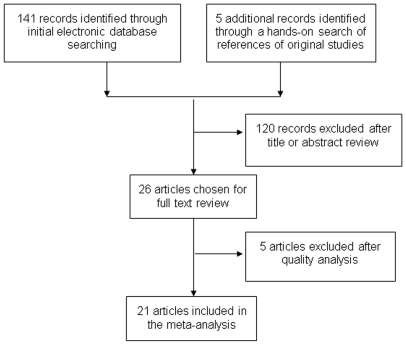
“Among those 26 publications, five were excluded either because they did not provide available data to extract the ORs and 95% CI [40,41,43,44] or the subjects were of cancer-prone predisposition [42].”
Baudis, M. (2007) · BMC Cancer · doi:10.1186/1471-2407-7-226 · Cited by 145 · cited 1×
“frequent chromosomal abnormalities mainly occur on certain chromosome arms, such as gains of 1q, 8q, 17q, and 20q, and losses of 8p, 9p, 16q, and 17p [60,61,62].”
Gadalla, S. M., Cawthon, R., Giri, N., Alter, B. P., & Savage, S. A. (2010) · Aging · doi:10.18632/aging.100235 · Cited by 133 · cited 1×
“length may be genetically determined [69], and cells with different origins show a good intra-individual correlation for telomere length in healthy subjects and case subjects [70,71], it may be disputable for the use of hematopoietic cells to be a proxy of average individual telomere length, because the variation in t…”
A Prospective Study of Relative Telomere Length and Postmenopausal Breast Cancer Risk
Vivo, I. D., Prescott, J., Wong, J. Y. Y., Kraft, P., Hankinson, S. E., & Hunter, D. J. (2009) · Cancer Epidemiology Biomarkers & Prevention · doi:10.1158/1055-9965.epi-08-0998 · Cited by 129 · cited 5×
“Our meta-analysis included nine breast cancer studies [21,29,31,35,36,38], four bladder studies [19,20,23], three lung cancer studies [19,24,34], two renal cancer studies [19,22], two gastric cancers [27,30], two colorectal cancers [38] and seven studies of other cancers [19,26,28,32,33,37] (Table 1).”
InfluentialTelomere Length in Peripheral Leukocyte DNA and Gastric Cancer Risk
Hou, L., Savage, S. A., Blaser, M. J., Perez-Perez, G., Hoxha, M., Dioni, L., Pegoraro, V., Dong, L. M., Zatoński, W. A., Lissowska, J., et al. (2009) · Cancer Epidemiology Biomarkers & Prevention · doi:10.1158/1055-9965.epi-09-0347 · Cited by 124 · cited 2×
“Hou [30] 2009 Poland Caucasian Gastric cancer 300/416 Retrospective Population-based Lymphocytes Quantitative PCR”
Lan, Q., Cawthon, R., Shen, M., Weinstein, S. J., Virtamo, J. R. K., Lim, U., Hosgood, H. D., Albanes, D., & Rothman, N. (2009) · Clinical Cancer Research · doi:10.1158/1078-0432.ccr-09-0845 · Cited by 118 · cited 2×
“Lan [32] 2009 Finland Caucasian Non-Hodgkin Lymphoma 107/107 Prospective Population-based Whole blood Quantitative PCR”
Self-citationGramatges, M. M., Telli, M. L., Balise, R. R., & Ford, J. M. (2010) · Cancer Epidemiology Biomarkers & Prevention · doi:10.1158/1055-9965.epi-09-0896 · Cited by 102 · cited 6×
“Our meta-analysis included nine breast cancer studies [21,29,31,35,36,38], four bladder studies [19,20,23], three lung cancer studies [19,24,34], two renal cancer studies [19,22], two gastric cancers [27,30], two colorectal cancers [38] and seven studies of other cancers [19,26,28,32,33,37] (Table 1).”
InfluentialThe shortest telomeres drive karyotype evolution in transformed cells
Der‐Sarkissian, H., Bacchetti, S., Cazes, L., & Londoño‐Vallejo, A. (2004) · Oncogene · doi:10.1038/sj.onc.1207152 · Cited by 97 · cited 1×
“In addition, it has been reported that short telomeres on specific chromosome arms may be more important for cancer risk than the overall telomere length in a cell, and chromosome arms with the shortest telomeres were more often found in the telomere fusions, leading to chromosome instability [58,59].”
Raynaud, C. M., Sabatier, L., Philipot, O., Olaussen, K. A., & Soria, J. (2008) · Critical Reviews in Oncology/Hematology · doi:10.1016/j.critrevonc.2007.11.006 · Cited by 95 · cited 1×
“Studies have showed that telomeres are critical for maintaining genomic integrity and that telomere dysfunction or shortening is an early, common genetic alteration acquired in the multistep process of malignant transformation [12,50].”
Genetic variation in telomere maintenance genes, telomere length, and lung cancer susceptibility
Hosgood, H. D., Cawthon, R., He, X., Chanock, S. J., & Qing Lan, B. (2009) · Lung Cancer · doi:10.1016/j.lungcan.2009.02.005 · Cited by 89 · cited 5×
“Hosgood [34] 2009 China Asian Lung cancer 109/97 Retrospective Population-based Sputum Quantitative PCR”
InfluentialSelf-citationTelomere Dysfunction in Peripheral Lymphocytes as a Potential Predisposition Factor for Renal Cancer
Shao, L., Wood, C. G., Zhang, D., Tannir, N. M., Matin, S. F., Dinney, C. P., & Wu, X. (2007) · The Journal of Urology · doi:10.1016/j.juro.2007.05.112 · Cited by 83 · cited 6×
“Shao [22] 2007 USA Mixed Renal Cancer 65/65 Retrospective Hospital-based Lymphocytes Q-FISHLSC”
InfluentialXing, J., Ajani, J. A., Chen, M., Izzo, J. G., Lin, J. M., Chen, Z., Gu, J. H., & Wu, X. (2009) · Cancer Prevention Research · doi:10.1158/1940-6207.capr-08-0227 · Cited by 82 · cited 3×
“In fact, we did try to calculate the summary ORs using adjusted ORs available from only nine original papers [21,24,26,27,28, 29,31,36,39], and we found that there were no substantial changes in the pooled, adjusted ORs (OR = 1.”
Telomere length and genetic analyses in population‐based studies of endometrial cancer risk
Prescott, J., McGrath, M., Lee, I.-M. M., Buring, J. E., & Vivo, I. D. (2010) · Cancer · doi:10.1002/cncr.25328 · Cited by 75
Telomere shortening in the colonic mucosa of patients with ulcerative colitis
Kinouchi, Y., Hiwatashi, N., Chida, M., Nagashima, F., Takagi, S., Maekawa, H., & Toyota, T. (1998) · Journal of Gastroenterology · doi:10.1007/s005350050094 · Cited by 74 · cited 1×
“Several studies have documented correlations between shortened telomeres and multiple human diseases associated with age, such as Alzheimer’s disease [6], myocardial infarction [7], vascular dementia [8], liver cirrhosis [9], atherosclerosis [10], ulcerative colitis [11] and premature aging syndromes [12].”
Harley, C. B. (2007) · Novartis Foundation symposium · doi:10.1002/9780470515433.ch9 · Cited by 67 · cited 1×
“Human telomeres are approximately 10–15 kb in somatic cells and progressively shortened by ,30 to 200 bp after each cycle of mitotic division, due to incomplete replication of linear DNA molecules and the absence of a mechanism for elongation of telomeres [3].”
Leukocyte telomere length in a population-based case–control study of ovarian cancer: a pilot study
Mirabello, L. J., García‐Closas, M., Cawthon, R., Lissowska, J., Brinton, L. A., Pepłońska, B., Sherman, M. E., & Savage, S. A. (2009) · Cancer Causes & Control · doi:10.1007/s10552-009-9436-6 · Cited by 66 · cited 2×
“Our meta-analysis included nine breast cancer studies [21,29,31,35,36,38], four bladder studies [19,20,23], three lung cancer studies [19,24,34], two renal cancer studies [19,22], two gastric cancers [27,30], two colorectal cancers [38] and seven studies of other cancers [19,26,28,32,33,37] (Table 1).”
Zee, R. Y. L., Castonguay, A. J., Barton, N. S., & Buring, J. E. (2009) · Cancer Epidemiology Biomarkers & Prevention · doi:10.1158/1055-9965.epi-09-0360 · Cited by 61 · cited 1×
“Among those 26 publications, five were excluded either because they did not provide available data to extract the ORs and 95% CI [40,41,43,44] or the subjects were of cancer-prone predisposition [42].”
Telomere length in blood cells and breast cancer risk: investigations in two case–control studies
Zheng, Y., Ambrosone, C. B., Byrne, C., Davis, W., Nesline, M., & McCann, S. E. (2009) · Breast Cancer Research and Treatment · doi:10.1007/s10549-009-0440-z · Cited by 59 · cited 10×
“Our meta-analysis included nine breast cancer studies [21,29,31,35,36,38], four bladder studies [19,20,23], three lung cancer studies [19,24,34], two renal cancer studies [19,22], two gastric cancers [27,30], two colorectal cancers [38] and seven studies of other cancers [19,26,28,32,33,37] (Table 1).”
InfluentialTelomerase activity and telomere length in benign and malignant human thyroid tissues
Kammori, M. (2000) · Cancer Letters · doi:10.1016/s0304-3835(00)00547-4 · Cited by 57 · cited 1×
“For example, short telomeres cause an increased risk of developing epithelial cancers by the formation of complex non-reciprocal translocations [15,16], and telomeres in tumor cells and their precursor lesions are significantly shorter than that in surrounding non-tumor cells [17,18].”
The human telomere and its relationship to human disease, therapy, and tissue engineering
Ian, K. M. (2007) · Frontiers in bioscience · doi:10.2741/2412 · Cited by 55
Unryn, B. M., Hao, D., Glück, S., & Riabowol, K. T. (2006) · Clinical Cancer Research · doi:10.1158/1078-0432.ccr-06-0486 · Cited by 55 · cited 1×
“Further, there is some evidence that treatment status (chemotherapy or radiation) can alter telomere length [67,68], and we cannot rule out the possibility of such an effect because of unavailable information about the disease treatment status from the studies used in the analysis.”
Telomere Length in Subpopulations of Human Hematopoietic Cells
Ziffle, J. V., Baerlocher, G. M., & Lansdorp, P. M. (2003) · Stem Cells · doi:10.1634/stemcells.21-6-654 · Cited by 51
Joshua, A. M., Vukovic, B., Braudey, I., Hussein, S., Zieleńska, M., Srigleyb, J., Evans, A. J., & Squire, J. A. (2007) · Neoplasia · doi:10.1593/neo.06745 · Cited by 47 · cited 1×
“For example, short telomeres cause an increased risk of developing epithelial cancers by the formation of complex non-reciprocal translocations [15,16], and telomeres in tumor cells and their precursor lesions are significantly shorter than that in surrounding non-tumor cells [17,18].”
Liu, X., Bao, G., Huo, T., Wang, Z., He, X., & Dong, G. (2009) · Cancer Science · doi:10.1111/j.1349-7006.2009.01169.x · Cited by 45 · cited 3×
“In fact, we did try to calculate the summary ORs using adjusted ORs available from only nine original papers [21,24,26,27,28, 29,31,36,39], and we found that there were no substantial changes in the pooled, adjusted ORs (OR = 1.”
Alterations of p16-pRb Pathway and Chromosome Locus 9p21–22 in Sporadic Invasive Breast Carcinomas
Gorgoulis, V. G., Koutroumbi, E., Kotsinas, A., Zacharatos, P., Markopoulos, C. J., Giannikos, L., Kyriakou, V., Voulgaris, Z., Gogas, I., & Kittas, C. N. (1998) · Molecular Medicine · doi:10.1007/bf03401773 · Cited by 40
Barwell, J., Pangon, L., Georgiou, A., Docherty, Z., Kesterton, I., Ball, J., Camplejohn, R. S., Berg, J., Aviv, A., Gardner, J. P., et al. (2007) · British Journal of Cancer · doi:10.1038/sj.bjc.6604085 · Cited by 40 · cited 1×
“Among those 26 publications, five were excluded either because they did not provide available data to extract the ORs and 95% CI [40,41,43,44] or the subjects were of cancer-prone predisposition [42].”
An, H., Niederacher, D., Picard, F., van Roeyen, C. R. C., Bender, H., & Beckmann, M. W. (1996) · Genes Chromosomes and Cancer · doi:10.1002/(sici)1098-2264(199609)17:1 · Cited by 39
Fern, L. A., Pallis, M., Carter, G. I., Seedhouse, C., Russell, N. H., & Byrne, J. (2004) · British Journal of Haematology · doi:10.1111/j.1365-2141.2004.05006.x · Cited by 37 · cited 1×
“Further, there is some evidence that treatment status (chemotherapy or radiation) can alter telomere length [67,68], and we cannot rule out the possibility of such an effect because of unavailable information about the disease treatment status from the studies used in the analysis.”
Lee, I.-M. M., Lin, J., Castonguay, A. J., Barton, N. S., Buring, J. E., & Zee, R. Y. L. (2009) · Clinical Chemistry and Laboratory Medicine (CCLM) · doi:10.1515/cclm.2010.049 · Cited by 37 · cited 1×
“Among those 26 publications, five were excluded either because they did not provide available data to extract the ORs and 95% CI [40,41,43,44] or the subjects were of cancer-prone predisposition [42].”
Telomere Length Changes in Colorectal Cancers and Polyps
Kim, H. R., Kim, Y. J., Kim, H. J., Kim, S. K., & Lee, J. H. (2002) · Journal of Korean Medical Science · doi:10.3346/jkms.2002.17.3.360 · Cited by 32 · cited 1×
“Both of animal studies and clinical observations have shown that shorter telomeres were associated with increased risk of cancers, such as epithelial cancers [52,53,54].”
Idei, T., Sakamoto, H., & Yamamoto, T. (2002) · Journal of International Medical Research · doi:10.1177/147323000203000304 · Cited by 13 · cited 1×
“Among those 26 publications, five were excluded either because they did not provide available data to extract the ORs and 95% CI [40,41,43,44] or the subjects were of cancer-prone predisposition [42].”
Cited by
Sorted by citations
Blackburn, E. H., Epel, E. S., & Lin, J. (2015) · Science · doi:10.1126/science.aab3389 · Cited by 1,596
Identification of seven loci affecting mean telomere length and their association with disease
CARDIoGRAM consortium, Codd, V., Nelson, C. P., Albrecht, E., Mangino, M., Deelen, J., Buxton, J. L., Hottenga, J. J., Fischer, K., Esko, T., et al. (2013) · Nature Genetics · doi:10.1038/ng.2528 · Cited by 933
Leucocyte telomere length and risk of cardiovascular disease: systematic review and meta-analysis
Haycock, P. C., Heydon, E. E., Kaptoge, S., Butterworth, A. S., Thompson, A., & Willeit, P. (2014) · BMJ · doi:10.1136/bmj.g4227 · Cited by 856
Association Between Telomere Length and Risk of Cancer and Non-Neoplastic Diseases
Haycock, P., Burgess, S., Nounu, A., Zheng, J., Okoli, G. N., Bowden, J., Wade, K. H., Timpson, N. J., Evans, D. M., Willeit, P., et al. (2017) · JAMA Oncology · doi:10.1001/jamaoncol.2016.5945 · Cited by 517
“Mechanisms of Association Our cancer findings are compatible with known biology.(127) By limiting the proliferative potential of cells, telomere shorteningmay serve as a tumor suppressor, and individualswith longer telomeres may be more likely to acquire somatic mutationsowing to increasedproliferativepotential.”
BackgroundResultInfluentialSelf-citationA systematic review of leukocyte telomere length and age in adults
Müezzinler, A., Zaineddin, A. K., & Brenner, H. (2013) · Ageing Research Reviews · doi:10.1016/j.arr.2013.01.003 · Cited by 474
“…been linked to mortality, several diseases and ageing related pathologies, including some cancers, cardiovascular diseases, obesity, Alzheimer’s disease, diabetes mellitus and osteoporosis in recent years (Jeyapalan and Sedivy, 2008; Aviv, 2002; Blasco, 2005; Ma et al., 2011; Valdes et al., 2007).”
Background
Metadata
- Authors
- Ma, H., Zhou, Z., Wei, S., Liu, Z., Pooley, K. A., Dunning, A. M., Svenson, U., Roos, G., Hosgood, H. D., Shen, M., & Wei, Q.
- Affiliations
- The University of Texas MD Anderson Cancer Center (US)
- University of Cambridge (GB)
- Umeå University (SE)
- National Institutes of Health (US)
- Corresponding author
- Wei, Qingyi
- ORCID
- Venue
- PLoS ONE
- Publisher
- Public Library of Science (PLoS)
- Published
- 2011-06-10
- Volume
- 6
- Issue
- 6
- Pages
- e20466
- ISSN
- 1932-6203 (ISSN-L)
- PMC
- PMC3112149
- OpenAlex
- W2136996519
- Cited by
- 376
- References
- 73
- Citations by year
- 2026: 6 · 2025: 10 · 2024: 21 · 2023: 16 · 2022: 19 · 2021: 24 · 2020: 25 · 2019: 32 · 2018: 34 · 2017: 27 · 2016: 33 · 2015: 34 · 2014: 35 · 2013: 36 · 2012: 18
- FWCI
- 3.27
- Type
- journal article
- Language
- en
- Open access
- gold
- doi.org
- Locations
- PLoS ONE (publishedVersion, cc-by)
- PubMed Central (publishedVersion, cc-by)
- PubMed (publishedVersion)
- DiVA at Umeå University (Umeå University) (submittedVersion, other-oa)
- RePEc: Research Papers in Economics (submittedVersion)
- DOAJ (DOAJ: Directory of Open Access Journals) (submittedVersion, cc-by-sa)
- Funders
- National Cancer Institute (R01CA131274, P30CA016672)
- National Institute of Environmental Health Sciences (R01ES011740)
- Topics
- Life Sciences › Biochemistry, Genetics and Molecular Biology › Cell Biology › Telomeres, Telomerase, and Senescence
- Life Sciences › Biochemistry, Genetics and Molecular Biology › Genetics › Genetic Associations and Epidemiology
- Life Sciences › Biochemistry, Genetics and Molecular Biology › Molecular Biology › Epigenetics and DNA Methylation
- Keywords
- telomere length, telomere shortening, cancer risk, cancer susceptibility, bladder cancer, lung cancer, tobacco-related cancer, gastrointestinal cancer, urogenital cancer, biomarkers
- MeSH terms
- Humans, Neoplasms, Risk Factors, Confidence Intervals, Odds Ratio, Telomere, Publication Bias, Genetic Predisposition to Disease
About these checks
Registry, retraction, Cites and statistics results are computed, not judged, with one exception: a printed reference that no index lists is read once by a model before it counts as a citation error. Claims are extracted by a model and kept only when their quote appears verbatim in the text; each cited source is then checked, with a model’s help, for whether it says what the claim relies on. Those verdicts can be wrong — read the claim’s quote and the cited source before relying on one.
Statistics and arithmetic are recomputed, not judged.
Confidence bands are shown only for fields calibrated on our annotated test set. None is calibrated yet, so no band is shown.
What counts as a claim ›How we measure confidence ›How we check this ›
Are you an author, or do you see a problem with this page? Request a review
