

The DOI matches its Crossref record; 72 of the 73 references it cites were found in a registry or an index.
Shortened Telomere Length Is Associated with Increased Risk of Cancer: A Meta-Analysis
Open accessAbstract
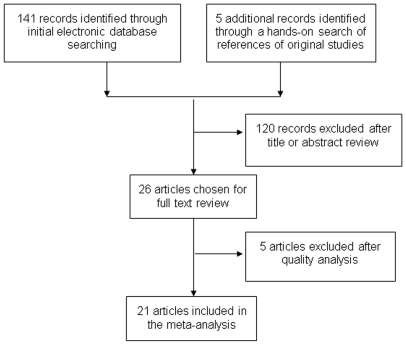
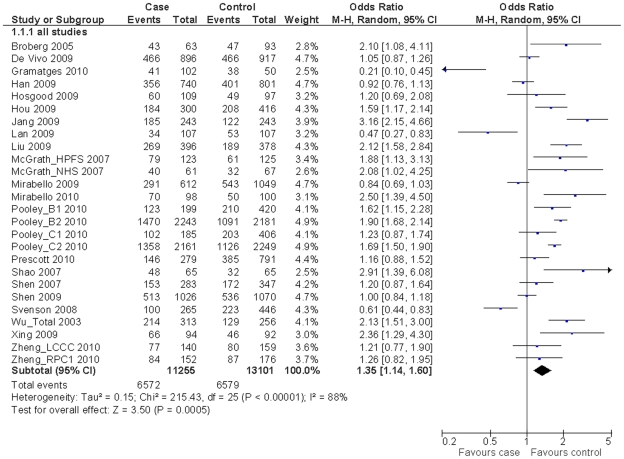
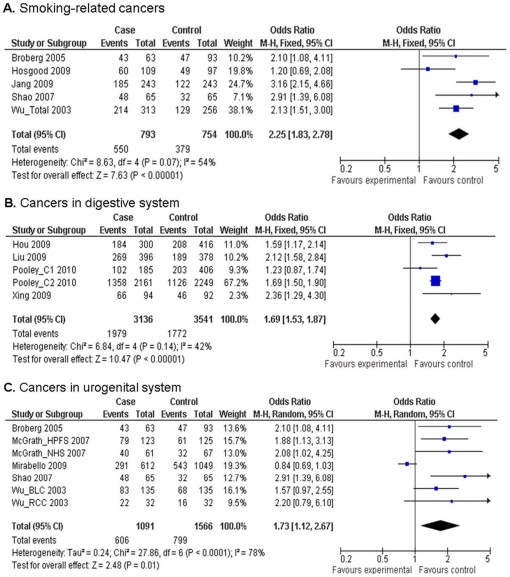
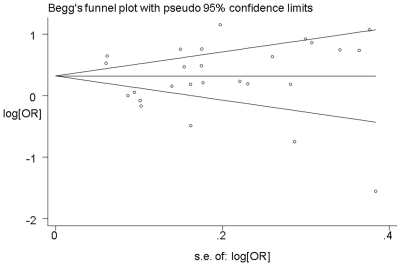
BACKGROUND: Telomeres play a key role in the maintenance of chromosome integrity and stability, and telomere shortening is involved in initiation and progression of malignancies. A series of epidemiological studies have examined the association between shortened telomeres and risk of cancers, but the findings remain conflicting. METHODS: A dataset composed of 11,255 cases and 13,101 controls from 21 publications was included in a meta-analysis to evaluate the association between overall cancer risk or cancer-specific risk and the relative telomere length. Heterogeneity among studies and their publication bias were further assessed by the χ(2)-based Q statistic test and Egger's test, respectively. RESULTS: The results showed that shorter telomeres were significantly associated with cancer risk (OR = 1.35, 95% CI = 1.14-1.60), compared with longer telomeres. In the stratified analysis by tumor type, the association remained significant in subgroups of bladder cancer (OR = 1.84, 95% CI = 1.38-2.44), lung cancer (OR = 2.39, 95% CI = 1.18-4.88), smoking-related cancers (OR = 2.25, 95% CI = 1.83-2.78), cancers in the digestive system (OR = 1.69, 95% CI = 1.53-1.87) and the urogenital system (OR = 1.73, 95% CI = 1.12-2.67). Furthermore, the results also indicated that the association between the relative telomere length and overall cancer risk was statistically significant in studies of Caucasian subjects, Asian subjects, retrospective designs, hospital-based controls and smaller sample sizes. Funnel plot and Egger's test suggested that there was no publication bias in the current meta-analysis (P = 0.532). CONCLUSIONS: The results of this meta-analysis suggest that the presence of shortened telomeres may be a marker for susceptibility to human cancer, but single larger, well-design prospective studies are warranted to confirm these findings.
Overview
The claims and statistics of this paper haven’t been checked yet.
Run the check — free, no account needed. It reads the open-access text and checks the sources it cites.
Integrity signals
Registry
Cites
Statistics
Figures
Verification
Claims the paper makes
The claims and statistics of this paper haven’t been checked yet.
Run the check — free, no account needed. It reads the open-access text and checks the sources it cites.
Claims other papers make about this one
Each is checked against this paper’s own text: does it say what the citing paper says it does?
In the citing paper
“Inter-individual variation in mean leukocyte telomere length (LTL) is associated with cancer and several age-associated diseases.”
From Identification of seven loci affecting mean telomere length and their association with disease (2013) · cites this paper as [4]
Self-check
Percentages, sums and reported differences re-computed from the paper’s own numbers.
The self-check needs the paper’s full text.
Citations
Cites
Bias in meta-analysis detected by a simple, graphical test
Egger, M., Smith, G. D., Schneider, M., & Minder, C. (1997) · BMJ · doi:10.1136/bmj.315.7109.629 · Cited by 56,722 · cited 1×
“The inverted funnel plots and Egger’s test (linear regression analysis) were used to investigate publication bias [49].”
Meta-analysis in clinical trials
DerSimonian, R., & Laird, N. (1986) · Controlled Clinical Trials · doi:10.1016/0197-2456(86)90046-2 · Cited by 39,552 · cited 1×
“The fixedeffects model and the random-effects model, based on the MantelHaenszel method [47] and the DerSimonian and Laird method [48], respectively, were used to combine values from different studies.”
Quantifying heterogeneity in a meta‐analysis
Higgins, J. P. T., & Thompson, S. G. (2002) · Statistics in Medicine · doi:10.1002/sim.1186 · Cited by 36,763 · cited 1×
“Heterogeneity was also quantified with the I(2) statistic, a value that indicates what proportion of the total variation across studies is beyond chance, where 0% indicates no observed heterogeneity and larger values show increasing heterogeneity [46].”
Statistical Aspects of the Analysis of Data From Retrospective Studies of Disease
(1959) · JNCI: Journal of the National Cancer Institute · doi:10.1093/jnci/22.4.719 · Cited by 14,689 · cited 1×
“The fixedeffects model and the random-effects model, based on the MantelHaenszel method [47] and the DerSimonian and Laird method [48], respectively, were used to combine values from different studies.”
Accelerated telomere shortening in response to life stress
Epel, E. S., Blackburn, E. H., Lin, J., Dhabhar, F. S., Adler, N. E., Morrow, J. D., & Cawthon, R. M. (2004) · Proceedings of the National Academy of Sciences · doi:10.1073/pnas.0407162101 · Cited by 3,002
Oxidative stress shortens telomeres
von Zglinicki, T. (2002) · Trends in Biochemical Sciences · doi:10.1016/s0968-0004(02)02110-2 · Cited by 2,524 · cited 1×
“Firstly, several variables may affect the length of telomeres, such as age, sex, obesity, smoking, oxidative stress and chronic inflammation [12,64,65,66].”
Quantitative Synthesis in Systematic Reviews
Lau, J., Ioannidis, J. P. A., & Schmid, C. H. (1997) · Annals of Internal Medicine · doi:10.7326/0003-4819-127-9-199711010-00008 · Cited by 2,517 · cited 1×
“05 [45].”
Telomere length predicts replicative capacity of human fibroblasts.
Allsopp, R. C., Vaziri, H., Patterson, C., Goldstein, S., Younglai, E. V., Futcher, A. B., Greider, C. W., & Harley, C. B. (1992) · Proceedings of the National Academy of Sciences · doi:10.1073/pnas.89.21.10114 · Cited by 2,200 · cited 1×
“Thus, telomere length has been suggested as a ‘‘cellular mitotic clock’’ that defines the number of cell divisions and cellular life span [1,5].”
Switching and Signaling at the Telomere
Blackburn, E. H. (2001) · Cell · doi:10.1016/s0092-8674(01)00492-5 · Cited by 2,139 · cited 2×
“Thus, telomere length has been suggested as a ‘‘cellular mitotic clock’’ that defines the number of cell divisions and cellular life span [1,5].”
Telomere Shortening and Tumor Formation by Mouse Cells Lacking Telomerase RNA
Blasco, M. A., Lee, H.-W., Hande, M. P., Samper, E., Lansdorp, P. M., DePinho, R. A., & Greider, C. W. (1997) · Cell · doi:10.1016/s0092-8674(01)80006-4 · Cited by 2,108 · cited 1×
“For example, short telomeres cause an increased risk of developing epithelial cancers by the formation of complex non-reciprocal translocations [15,16], and telomeres in tumor cells and their precursor lesions are significantly shorter than that in surrounding non-tumor cells [17,18].”
Cited by
Sorted by citations
Blackburn, E. H., Epel, E. S., & Lin, J. (2015) · Science · doi:10.1126/science.aab3389 · Cited by 1,596
Identification of seven loci affecting mean telomere length and their association with disease
CARDIoGRAM consortium, Codd, V., Nelson, C. P., Albrecht, E., Mangino, M., Deelen, J., Buxton, J. L., Hottenga, J. J., Fischer, K., Esko, T., et al. (2013) · Nature Genetics · doi:10.1038/ng.2528 · Cited by 933
Leucocyte telomere length and risk of cardiovascular disease: systematic review and meta-analysis
Haycock, P. C., Heydon, E. E., Kaptoge, S., Butterworth, A. S., Thompson, A., & Willeit, P. (2014) · BMJ · doi:10.1136/bmj.g4227 · Cited by 856
Association Between Telomere Length and Risk of Cancer and Non-Neoplastic Diseases
Haycock, P., Burgess, S., Nounu, A., Zheng, J., Okoli, G. N., Bowden, J., Wade, K. H., Timpson, N. J., Evans, D. M., Willeit, P., et al. (2017) · JAMA Oncology · doi:10.1001/jamaoncol.2016.5945 · Cited by 517
“Mechanisms of Association Our cancer findings are compatible with known biology.(127) By limiting the proliferative potential of cells, telomere shorteningmay serve as a tumor suppressor, and individualswith longer telomeres may be more likely to acquire somatic mutationsowing to increasedproliferativepotential.”
BackgroundResultInfluentialSelf-citationA systematic review of leukocyte telomere length and age in adults
Müezzinler, A., Zaineddin, A. K., & Brenner, H. (2013) · Ageing Research Reviews · doi:10.1016/j.arr.2013.01.003 · Cited by 474
“…been linked to mortality, several diseases and ageing related pathologies, including some cancers, cardiovascular diseases, obesity, Alzheimer’s disease, diabetes mellitus and osteoporosis in recent years (Jeyapalan and Sedivy, 2008; Aviv, 2002; Blasco, 2005; Ma et al., 2011; Valdes et al., 2007).”
BackgroundAgeing and the telomere connection: An intimate relationship with inflammation
Zhang, J., Rane, G., Dai, X., Shanmugam, M. K., Arfuso, F., Samy, R. P., Lai, M. K. P., Kappei, D., Kumar, A. P., & Sethi, G. (2015) · Ageing Research Reviews · doi:10.1016/j.arr.2015.11.006 · Cited by 396
“…shorter LTL to disease risk for metabolic disorders such as cardiovascular disease (Huzen et al., 2010), obesity (Valdes et al., 2005), type 2 diabetes (Adaikalakoteswari et al., 2005), dementia (Eitan et al., 2014; Moverare-Skrtic et al., 2012) and cancer (Ma et al., 2011; Zhang et al., 2015a).”
BackgroundTelomere Biology and Human Phenotype
Turner, K. J., Vasu, V., & Griffin, D. K. (2019) · Cells · doi:10.3390/cells8010073 · Cited by 415
“While some studies report that longer telomeres are associated with an increased risk of developing cancer [165–167], others argue that shortened telomeres increase cancer risk [160,168,169].”
BackgroundThe Biology of Aging and Cancer: A Brief Overview of Shared and Divergent Molecular Hallmarks
Aunan, J. R., Cho, W. C. S., & Søreide, K. (2017) · Aging and Disease · doi:10.14336/ad.2017.0103 · Cited by 389
“Some studies showed that telomere attrition and short telomeres is a risk factor for cancer development [40-42].”
BackgroundThe role of childhood trauma in bipolar disorders
Aas, M., Henry, C., Andreassen, O. A., Bellivier, F., Melle, I. S., & Étain, B. (2016) · International Journal of Bipolar Disorders · doi:10.1186/s40345-015-0042-0 · Cited by 373
“2013), as well as being associated with diabetes mellitus type II, coronary heart disease and cancer in the general population (Haycock et al. 2014; Ma et al. 2011; Wentzensen et al. 2011; Willeit et al. 2014).”
BackgroundTelomeres and early-life stress: an overview
Price, L. H., Kao, H.-T., Burgers, D. E., Carpenter, L. L., & Tyrka, A. R. (2013) · Biological Psychiatry · doi:10.1016/j.biopsych.2012.06.025 · Cited by 339
Entringer, S., Buss, C., & Wadhwa, P. D. (2015) · Psychoneuroendocrinology · doi:10.1016/j.psyneuen.2015.08.019 · Cited by 324
Bone marrow failure and the telomeropathies
Townsley, D. M., Dumitriu, B., & Young, N. S. (2014) · Blood · doi:10.1182/blood-2014-05-526285 · Cited by 297
Marioni, R. E., Harris, S. E., Shah, S. H., McRae, A. F., von Zglinicki, T., Martin-Ruiz, C. M., Wray, N. R., Visscher, P. M., & Deary, I. J. (2016) · International Journal of Epidemiology · doi:10.1093/ije/dyw041 · Cited by 280
Hillary, R. F., Stevenson, A. J., McCartney, D. L., Campbell, A., Walker, R. M., Howard, D. M., Ritchie, C. W., Horvath, S., Hayward, C., McIntosh, A. M., et al. (2020) · Clinical Epigenetics · doi:10.1186/s13148-020-00905-6 · Cited by 209
Short telomere length, cancer survival, and cancer risk in 47102 individuals.
Weischer, M., Nordestgaard, B., Cawthon, R., Freiberg, J., Tybjærg-Hansen, A., & Bojesen, S. (2013) · Journal of the National Cancer Institute · doi:10.1093/jnci/djt016 · Cited by 222
Starkweather, A. R., Alhaeeri, A. A., Montpetit, A. J., Brumelle, J., Filler, K., Montpetit, M., Mohanraj, L., Lyon, D., & Jackson‐Cook, C. K. (2013) · Nursing Research · doi:10.1097/nnr.0000000000000009 · Cited by 225
“…from studies in which TLs have been positively associated with longevity (longer telomeres in centenarians; Atzmon et al., 2010; Garagnani et al., 2013) and negatively associated increased risk of cancer (patients with these conditions have shortened telomeres; Codd et al., 2013; Ma et al., 2011).”
BackgroundWilleit, P., Raschenberger, J., Heydon, E. E., Tsimikas, S., Haun, M., Mayr, A., Weger, S., Witztum, J. L., Butterworth, A. S., Willeit, J., et al. (2014) · PLoS ONE · doi:10.1371/journal.pone.0112483 · Cited by 211
Eisenberg, D. T. A., Hayes, M. G., & Kuzawa, C. W. (2012) · Proceedings of the National Academy of Sciences · doi:10.1073/pnas.1202092109 · Cited by 199
Variants near TERT and TERC influencing telomere length are associated with high-grade glioma risk
Walsh, K. M., Codd, V., Smirnov, I. V., Rice, T., Decker, P. A., Hansen, H. M., Kollmeyer, T. M., Kosel, M., Molinaro, A. M., Mccoy, L. S., et al. (2014) · Nature Genetics · doi:10.1038/ng.3004 · Cited by 188
Physical Activity, Sedentary Behavior, and Leukocyte Telomere Length in Women
Du, M., Prescott, J., Kraft, P. L., Han, J., Giovannucci, E. L., Hankinson, S. E., & Vivo, I. D. (2012) · American Journal of Epidemiology · doi:10.1093/aje/kwr330 · Cited by 182
Weischer, M., Bojesen, S. E., & Nordestgaard, B. G. (2014) · PLoS Genetics · doi:10.1371/journal.pgen.1004191 · Cited by 167
“Several cross-sectional and prospective studies have associated short telomere length with increased risk of any early death [2,4,5], cardiovascular disease [2,6], cancer [7,8], and early death after a cancer diagnosis [9].”
BackgroundPuterman, E., Gemmill, A., Karasek, D., Weir, D., Adler, N. E., Prather, A. A., & Epel, E. S. (2016) · Proceedings of the National Academy of Sciences · doi:10.1073/pnas.1525602113 · Cited by 165
“Other recent meta-analyses support the concurrent associations between short telomeres and diabetes (8) and several cancers (9, 10).”
ResultThe Role of Telomere Biology in Cancer
Xu, L., Li, S., & Stohr, B. A. (2013) · Annual Review of Pathology: Mechanisms of Disease · doi:10.1146/annurev-pathol-020712-164030 · Cited by 160
Heim, C. M., Entringer, S., & Buss, C. (2019) · Psychoneuroendocrinology · doi:10.1016/j.psyneuen.2018.12.011 · Cited by 158
“…including cardiovascular disease, diabetes, obesity, psychiatric diseases like depression, dementia, and schizophrenia (Armanios and Blackburn, 2012; Haycock et al., 2014; Ma et al., 2011; Zhao et al., 2013) and earlier mortality (Cawthon et al., 2003; Kimura et al., 2008; Rode et al., 2015).”
BackgroundThe association between telomere length and cancer risk in population studies
Zhu, X., Han, W., Xue, W., Zou, Y., Xie, C., Du, J., & Jin, G. (2016) · Scientific Reports · doi:10.1038/srep22243 · Cited by 146
Genetic determinants of telomere length and risk of common cancers: a Mendelian randomization study
Zhang, C., Doherty, J. A., Burgess, S., Hung, R. J., Lindström, S., Kraft, P. L., Gong, J., Amos, C. I., Sellers, T. A., Monteiro, Á. N. A., et al. (2015) · Human Molecular Genetics · doi:10.1093/hmg/ddv252 · Cited by 145
“Indeed, short relative TLmeasured in surrogate tissues, such as peripheral blood cells, has been associatedwith increased risk for lung (6,7), ovarian (8), colorectal (9) and breast cancers (10,11) in epidemiological studies (with the interpretation that blood TL predicts cancer risk because it is a proxy for TL in ca…”
BackgroundBojesen, S. E. (2013) · Journal of Internal Medicine · doi:10.1111/joim.12083 · Cited by 143
Ness, K. K., Kirkland, J. L., Gramatges, M. M., Wang, Z., Kundu, M., McCastlain, K., Li-Harms, X., Zhang, J., Tchkonia, T., Pluijm, S. M. F., et al. (2018) · Journal of Clinical Oncology · doi:10.1200/jco.2017.76.7467 · Cited by 143
“leukocyte TL (mLTL) shortening is associated with aging-related diseases(56) including type 2 diabetes,(57) cardiovascular disease,(58) dementia,(59) and increased cancer risk in the general population.(60,61) In addition, shorter mLTL is observed in individuals with impaired grip strength, reduced lean muscle mass, a…”
BackgroundHastings, W. J., Shalev, I., & Belsky, D. W. (2019) · Psychoneuroendocrinology · doi:10.1016/j.psyneuen.2019.03.012 · Cited by 148
Seow, W. J., Cawthon, R., Purdue, M. P., Hu, W., Gao, Y.-T., Huang, W., Weinstein, S. J., Ji, B., Virtamo, J. R. K., Hosgood, H. D., et al. (2014) · Cancer Research · doi:10.1158/0008-5472.can-14-0459 · Cited by 132
Self-citationWong, J. Y. Y., Vivo, I. D., Lin, X., Fang, S. C., & Christiani, D. C. (2014) · PLoS ONE · doi:10.1371/journal.pone.0087348 · Cited by 138
“For instance, previous studies have reported that shorter telomeres were significantly associated with increased overall cancer risk, in addition to decreased survival rate amongst diagnosed cases [2–4].”
ResultBeginning at the ends: telomeres and human disease
Savage, S. A. (2018) · F1000Research · doi:10.12688/f1000research.14068.1 · Cited by 124
Long telomeres and cancer risk among 95 568 individuals from the general population
Rode, L., Nordestgaard, B. G., & Bojesen, S. E. (2016) · International Journal of Epidemiology · doi:10.1093/ije/dyw179 · Cited by 120
Surrogate tissue telomere length and cancer risk: Shorter or Longer?
Hou, L., Zhang, X., Gawron, A. J., & Liu, J. (2012) · Cancer Letters · doi:10.1016/j.canlet.2012.01.028 · Cited by 118
Use of acetochlor and cancer incidence in the A gricultural H ealth S tudy
Lerro, C. C., Koutros, S., Andreotti, G., Hines, C. J., Blair, A. E., Lubin, J. H., Ma, X., Zhang, Y., & Freeman, L. E. B. (2015) · International Journal of Cancer · doi:10.1002/ijc.29416 · Cited by 118
“Telomere length has been implicated in cancer etiology.(35) Another proposed mechanism of carcinogenicity for chloracetanilide herbicides involves bioactivation through several steps to DNA-reactive metabolites (2-methyl-6-ethylbenzoquinone imine for acetochlor and metolachlor and 2,6-diethylbenzoquinone imine for ala…”
BackgroundSystematic and Cell Type-Specific Telomere Length Changes in Subsets of Lymphocytes
Lin, J., Cheon, J., Brown, R. R., Coccia, M., Puterman, E. M., Aschbacher, K., Sinclair, E., Epel, E. S., & Blackburn, E. H. (2016) · Journal of Immunology Research · doi:10.1155/2016/5371050 · Cited by 121
“The cellular signals and pathways that determine telomere length changes are largely unknown, but several have been proposed.”
The Effect on Melanoma Risk of Genes Previously Associated With Telomere Length
Iles, M. M., Bishop, D. T., Taylor, J., Hayward, N. K., Brossard, M., Cust, A. E., Dunning, A. M., Lee, J. E., Moses, E. K., Akslen, L. A., et al. (2014) · JNCI Journal of the National Cancer Institute · doi:10.1093/jnci/dju267 · Cited by 119
“Telomere length has been associated with risk of various age-related diseases, including cancers (3,4).”
BackgroundSelf-citationEffects of physical activity in telomere length: Systematic review and meta-analysis
Mundstock, E., Zatti, H., Louzada, F. M., Oliveira, S. G., Guma, F. T. C. R., Paris, M. M., Rueda, A. M. B., Machado, D. G., Stein, R. T., Jones, M. H., et al. (2015) · Ageing Research Reviews · doi:10.1016/j.arr.2015.02.004 · Cited by 113
Mons, U., Müezzinler, A., Schöttker, B., Dieffenbach, A. K., Butterbach, K., Schick, M., Peasey, A., Vivo, I. D., Trichopoulou, A., Boffetta, P., et al. (2016) · American Journal of Epidemiology · doi:10.1093/aje/kww210 · Cited by 113
Telomere length varies by DNA extraction method: implications for epidemiologic research
Cunningham, J. M., Johnson, R. A., Litzelman, K., Skinner, H. G., Seo, S., Engelman, C. D., Vanderboom, R. J., Kimmel, G. W., Gangnon, R. E., Riegert-Johnson, D. L., et al. (2013) · Cancer Epidemiology, Biomarkers & Prevention · doi:10.1158/1055-9965.epi-13-0409 · Cited by 111
“9 PubMed (US Library of Medicine, Bethesda MD) using the terms “cancer and telomeres” and “cancer and telomere length”, and we cross-referenced these articles with those reported in two published meta-analyses of telomere length and cancer risk (25,31).”
MethodLatifovic, L., Peacock, S. D., Massey, T. E., & King, W. D. (2015) · Cancer Epidemiology Biomarkers & Prevention · doi:10.1158/1055-9965.epi-14-1364 · Cited by 111
“Evidence from two recent meta-analyses supports an inverse association between telomere length and overall risk of cancer, stratified analysis by subtype support an association with lung, bladder, esophageal, gastric, and renal cancers, while results for breast and colorectal cancer were inconsistent (3, 4).”
ResultEisenberg, D. T. A., & Kuzawa, C. W. (2018) · Philosophical Transactions of the Royal Society B Biological Sciences · doi:10.1098/rstb.2016.0442 · Cited by 108
Pellatt, A. J., Wolff, R. K., Torres-Mejı́a, G., John, E. M., Herrick, J. S., Lundgreen, A., Baumgartner, K. B., Giuliano, A. R., Hines, L. M., Fejerman, L., et al. (2013) · Genes Chromosomes and Cancer · doi:10.1002/gcc.22056 · Cited by 107
“Meta-analyses of TL data and cancer further support the inconsistency of data on associations between TL and cancer, although they have summarized that shortened TL in most often associated with increased cancer risk (Ma et al., 2011; Wentzensen et al., 2011).”
ResultSánchez‐Espiridión, B., Chen, M., Chang, J. Y., Lu, C. S., Chang, D. W., Roth, J. A., Wu, X., & Gu, J. H. (2014) · Cancer Research · doi:10.1158/0008-5472.can-13-2968 · Cited by 97
“Authors have reported association of short telomeres with increased risk of bladder, esophageal, gastric, head and neck, ovarian, renal cancer, oral premalignant lesions, and oral squamous cell carcinoma (16, 25, 34, 35).”
BackgroundWalsh, K. M., Codd, V., Rice, T., Nelson, C. P., Smirnov, I. V., Mccoy, L. S., Hansen, H. M., Elhauge, E., Ojha, J., Francis, S. S., et al. (2015) · Oncotarget · doi:10.18632/oncotarget.6468 · Cited by 103
“Observational data support a connection between both longer and shorter telomere length and increased cancer risk [15-17].”
BackgroundShorter Telomeres Associate with a Reduced Risk of Melanoma Development
Nan, H., Du, M., Vivo, I. D., Manson, J. E., Liu, S., McTiernan, A., Curb, J. D., Lessin, L. S., Bonner, M. R., Guo, Q., et al. (2011) · Cancer Research · doi:10.1158/0008-5472.can-11-1988 · Cited by 98
Race, Ethnicity, Psychosocial Factors, and Telomere Length in a Multicenter Setting
Lynch, S. M., Peek, M. K., Mitra, N., Ravichandran, K., Branas, C. C., Spangler, E., Zhou, W., Paskett, E. D., Gehlert, S. J., DeGraffinreid, C. R., et al. (2016) · PLoS ONE · doi:10.1371/journal.pone.0146723 · Cited by 97
“We also found that male cancer cases had longer telomeres compared to non-cancer cases, and this has been observed in literature[57, 58], although inconsistently[59].”
ResultThe Association between Telomere Length and Cancer Prognosis: Evidence from a Meta-Analysis
Zhang, C., Chen, X., Li, L., Zhou, Y. Y., Wang, C., & Hou, S. (2015) · PLoS ONE · doi:10.1371/journal.pone.0133174 · Cited by 95
Machiela, M. J., Hsiung, C. A., Shu, X., Seow, W. J., Wang, Z., Matsuo, K., Hong, Y., Seow, A., Wu, C., Hosgood, H. D., et al. (2015) · International Journal of Cancer · doi:10.1002/ijc.29393 · Cited by 90
Self-citationTelomere Length Maintenance and Cardio-Metabolic Disease Prevention Through Exercise Training
Denham, J., O’Brien, B. J., & Charchar, F. J. (2016) · Sports Medicine · doi:10.1007/s40279-016-0482-4 · Cited by 97
“Shorter average leukocyte telomere length is typically associated with age-related chronic diseases, such as cardiovascular disease [5–7], type 2 diabetes mellitus (T2DM) [8, 9], some cancers [10], and psychological stress [11, 12].”
BackgroundYe, Q., Apsley, A. T., Etzel, L. C., Hastings, W. J., Kozlosky, J. T., Walker, C., Wolf, S. E., & Shalev, I. (2023) · Ageing Research Reviews · doi:10.1016/j.arr.2023.102031 · Cited by 97
“Moreover, shorter TL has been linked with increased risk of cardiovascular diseases (CVDs) (Weischer et al., 2012), certain cancers (Ma et al., 2011; Wentzensen et al., 2011), and more recently, severe COVID-19 (Anderson et al., 2022; Aviv, 2021).”
Mitochondrial DNA Copy Number and Exposure to Polycyclic Aromatic Hydrocarbons
Pavanello, S., Dioni, L., Hoxha, M., Fedeli, U., Mielżyńska‐Švach, D., & Baccarelli, A. (2013) · Cancer Epidemiology Biomarkers & Prevention · doi:10.1158/1055-9965.epi-13-0118 · Cited by 89
“results have provided both positive (26) and negative correlations (27, 28).”
Short telomeres: from dyskeratosis congenita to sporadic aplastic anemia and malignancy
Gramatges, M. M., & Bertuch, A. A. (2013) · Translational research · doi:10.1016/j.trsl.2013.05.003 · Cited by 90
“Although results from individual studies are somewhat conflicting, when taken together, 2 metaanalyses including data from 27 publications have demonstrated an overall increased risk for cancer with shortened telomere length.(108,109) In addition, the risk for developing de novo cancers has been estimated in healthy i…”
ResultGenetic susceptibility to lung cancer--light at the end of the tunnel?
Marshall, A. L., & Christiani, D. C. (2013) · Carcinogenesis · doi:10.1093/carcin/bgt016 · Cited by 85
Shortened telomere length in patients with depression: A meta-analytic study
Lin, P., Huang, Y., & Hung, C. (2016) · Journal of Psychiatric Research · doi:10.1016/j.jpsychires.2016.01.015 · Cited by 90
“…age-related physical illnesses, such as cardiovascular disease (CVD) (Fitzpatrick et al., 2007; Haycock et al., 2014), cancer (Campisi, 2005; Ma et al., 2011), Alzheimer disease (Hochstrasser et al., 2012), cancer mortality or all-cause mortality (Cawthon et al., 2003; Rode et al., 2015;…”
The association of female and male infertility with telomere length (Review)
Vasilopoulos, E., Fragkiadaki, P., Kalliora, C., Fragou, D., Docea, A. O., Vakonaki, E., Tsoukalas, D., Călina, D. C., Bugă, A. M., Georgiadis, G., et al. (2019) · International Journal of Molecular Medicine · doi:10.3892/ijmm.2019.4225 · Cited by 84
“It is known that shorter telomeres are associated with a range of chronic diseases, such as cardiovascular disease (CAD), stroke, cancer, arthritis, osteoporosis, diabetes type 2, hypertension, mental diseases, chronic obstructive pulmonary disease and dementia (27-31).”
BackgroundTelomere length and common disease: study design and analytical challenges
Barrett, J. H., Iles, M. M., Dunning, A. M., & Pooley, K. A. (2015) · Human Genetics · doi:10.1007/s00439-015-1563-4 · Cited by 87
“Wentzensen et al. (2011) and Ma et al. (2011) conducted similar meta-analyses of 25–29 epidemiological studies of TL and cancer risk published prior to 2010, including 13 different cancers and overall incident cancer.”
MethodResultInfluentialSelf-citationRobust measurement of telomere length in single cells
Wang, F., Pan, X., Kalmbach, K., Seth-Smith, M. L., Ye, X., Antumes, D. M. F., Yin, Y., Liu, L., Keefe, D. L., & Weissman, S. M. (2013) · Proceedings of the National Academy of Sciences · doi:10.1073/pnas.1306639110 · Cited by 86
“This process will facilitate the identification and functional studies of cancer stem cells and pluripotent stem cells, and distinguish them from other cells in mixed populations (24), and advance our understanding of the molecular mechanisms underlying variation of individual cells in development, disease, senescence…”
BackgroundTelomere maintenance and the etiology of adult glioma
Walsh, K. M., Wiencke, J. K., Lachance, D. H., Wiemels, J. L., Molinaro, A. M., Eckel‐Passow, J. E., Jenkins, R. B., & Wrensch, M. (2015) · Neuro-Oncology · doi:10.1093/neuonc/nov082 · Cited by 85
Parity associated with telomere length among US reproductive age women
Pollack, A. Z., Rivers, K., & Ahrens, K. A. (2018) · Human Reproduction · doi:10.1093/humrep/dey024 · Cited by 80
Hou, L., Andreotti, G., Baccarelli, A., Savage, S. A., Hoppin, J. A., Sandler, D. P., Barker, J., Zhu, Z., Hoxha, M., Dioni, L., et al. (2013) · Environmental Health Perspectives · doi:10.1289/ehp.1206432 · Cited by 75
“While most studies have reported that shorter telomeres in surrogate tissue are positively associated with cancer [as reviewed by Ma et al. (2011) and Wentzensen et al. (2011)], longer telo meres have been associated with cancer in some studies and reviews (Gramatges et al. 2010; Han et al. 2009;…”
BackgroundMartínez, P., & Blasco, M. A. (2018) · Circulation Research · doi:10.1161/circresaha.118.312202 · Cited by 74
Qu, S., Wen, W., Shu, X., Chow, W., Xiang, Y., Wu, J., Ji, B.-T., Rothman, N., Yang, G., Cai, Q., et al. (2013) · American Journal of Epidemiology · doi:10.1093/aje/kws291 · Cited by 70
“Epidemiologic studies have linked short telomeres in peripheral blood leukocytes to elevated risks of several human cancers, including cancers of the bladder, esophagus, stomach, head and neck, ovary, and kidneys (11, 12, 25).”
BackgroundChange in Peripheral Blood Leukocyte Telomere Length and Mortality in Breast Cancer Survivors
Duggan, C. R., Risques, R. A., Alfano, C. M., Prunkard, D. E., Imayama, I., Holte, S., Baumgartner, K. B., Baumgartner, R., Bernstein, L., Ballard-Barbash, R. R., et al. (2014) · JNCI Journal of the National Cancer Institute · doi:10.1093/jnci/dju035 · Cited by 70
“4- to threefold increased risk of cancer in those with shortest vs longest telomeres (14,15).”
BackgroundLynch, S. M., Major, J. M., Cawthon, R., Weinstein, S. J., Virtamo, J. R. K., Qing Lan, B., Rothman, N., Albanes, D., & Stolzenberg‐Solomon, R. Z. (2013) · International Journal of Cancer · doi:10.1002/ijc.28272 · Cited by 69
“87) were also associated with shorter telomeres as compared to longer telomeres, and an association between relative telomere length and overall cancer risk was reported in studies using retrospective designs, hospital-based controls and smaller sample sizes.(25) Most of the studies included in the meta-analysis measu…”
ResultBlood Telomere Length Attrition and Cancer Development in the Normative Aging Study Cohort
Hou, L., Joyce, B. T., Gao, T., Liu, L., Zheng, Y., Penedo, F. J., Liu, S., Zhang, W., Bergan, R. C., Dai, Q., et al. (2015) · EBioMedicine · doi:10.1016/j.ebiom.2015.04.008 · Cited by 69
“Telomeres are tandem repeats of TTAGGG nucleotides at the ends of eukaryotic chromosomes that, along with telomere binding proteins, help maintain genomic stability (Ma et al., 2011).”
BackgroundTelomere tracking from birth to adulthood and residential traffic exposure
Bijnens, E. M., Zeegers, M. P., Derom, C. A., Martens, D. S., Gielen, M., Hageman, G. J., Plusquin, M., Thiery, E. W., VLIETINCK, R. F., & Nawrot, T. S. (2017) · BMC Medicine · doi:10.1186/s12916-017-0964-8 · Cited by 71
“Short telomeres have been implicated in the pathology of several age-related diseases, including cardiovascular disease [4], diabetes mellitus [5], and cancer [6, 7].”
Chen, S., Yeh, F., Lin, J., Matsuguchi, T., Blackburn, E. H., Lee, E. T., Howard, B. V., & Zhao, J. (2014) · Aging · doi:10.18632/aging.100664 · Cited by 67
“Shorter leukocyte telomere length (LTL) has been associated with a variety of age-related disorders, such as hypertension [2], diabetes [3], cardiovascular diseases (CVD) [4, 5] and certain types of cancers [6, 7].”
BackgroundBrody, G. H., Yu, T., & Shalev, I. (2017) · Health Psychology · doi:10.1037/hea0000443 · Cited by 65
Early-life stress and reproductive cost: A two-hit developmental model of accelerated aging?
Shalev, I., & Belsky, J. (2016) · Medical Hypotheses · doi:10.1016/j.mehy.2016.03.002 · Cited by 66
“And this is because telomere regulation appears receptive and malleable in response to environmental inputs [22], requires energy for its maintenance [23], and is predictive of health [24,25] and early mortality [26].”
BackgroundTelomere Length and Pancreatic Cancer: A Case–Control Study
Skinner, H. G., Gangnon, R. E., Litzelman, K., Johnson, R., Chari, S. T., Petersen, G. M., & Boardman, L. A. (2012) · Cancer Epidemiology Biomarkers & Prevention · doi:10.1158/1055-9965.epi-12-0671 · Cited by 63
Cumulative PM2.5Exposure and Telomere Length in Workers Exposed to Welding Fumes
Wong, J. Y. Y., Vivo, I. D., Lin, X., & Christiani, D. C. (2014) · Journal of Toxicology and Environmental Health · doi:10.1080/15287394.2013.875497 · Cited by 60
“Indeed, telomere length has been established as a biomarker of numerous chronic diseases such as cancer and cardiovascular disease (Ma et al., 2011).”
Cui, Y., Cai, Q., Qu, S., Chow, W., Wen, W., Xiang, Y.-B., Wu, J., Rothman, N., Yang, G., Shu, X., et al. (2012) · Cancer Epidemiology Biomarkers & Prevention · doi:10.1158/1055-9965.epi-12-0657 · Cited by 59
“Recently, several epidemiologic studies have evaluated telomere length as a potential predictor for cancer risk and prognosis, measured using DNA fromperipheral blood cells or buccal cells (6, 15, 16).”
BackgroundObesity, weight loss, and influence on telomere length: New insights for personalized nutrition
Welendorf, C. R., Nicoletti, C. F., Pinhel, M. A. D. S., Noronha, N. Y., de Paula, B. M. F., & Nonino, C. B. (2019) · Nutrition · doi:10.1016/j.nut.2019.05.002 · Cited by 66
Caini, S., Raimondi, S., Johansson, H. A., GIORGI, V. D., Zanna, I., Palli, D., & Gandini, S. (2015) · Journal of Dermatological Science · doi:10.1016/j.jdermsci.2015.08.003 · Cited by 56
Pesticide Use and Relative Leukocyte Telomere Length in the Agricultural Health Study
Andreotti, G., Hoppin, J. A., Hou, L., Koutros, S., Gadalla, S. M., Savage, S. A., Lubin, J. H., Blair, A. E., Hoxha, M., Baccarelli, A., et al. (2015) · PLoS ONE · doi:10.1371/journal.pone.0133382 · Cited by 57
“Both shorter and TL have linked to various diseases; most studies to date have reported associations between shorter TL and higher cancer risk [27,28], although longer TL has also been implicated [29].”
BackgroundAmeer, S. S., Xu, Y., Engström, K. S., Li, H., Tallving, P., Nermell, B., Boemo, A., Parada, L. A., Peñaloza, L. G., Concha, G., et al. (2016) · Frontiers in Cell and Developmental Biology · doi:10.3389/fcell.2016.00087 · Cited by 57
“The mitochondrion is the key organelle for energy metabolism, but it also has important functions in the regulation of apoptosis (Lee and Wei, 2000) and cell proliferation (Martinez-Outschoorn et al., 2011).”
BackgroundImpact of prenatal heavy metal exposure on newborn leucocyte telomere length: A birth-cohort study
Wai, K. M., Umezaki, M., Kosaka, S., Mar, O., Umemura, M., Fillman, T. J., & Watanabe, C. (2018) · Environmental Pollution · doi:10.1016/j.envpol.2018.09.090 · Cited by 56
Li, H., Hedmer, M., Wojdacz, T. K., Hossain, M. B., Lindh, C. H., Tinnerberg, H., Albin, M. C., & Bröberg, K. (2015) · Environmental and Molecular Mutagenesis · doi:10.1002/em.21958 · Cited by 56
“The finding of shorter telomeres in welders suggests that this exposure might be carcinogenic, as short telomeres in peripheral blood have been associated with various types of cancer, including lung cancer [Ma et al., 2011; Willeit et al., 2011].”
BackgroundInfluentialA meta-analysis of the relationship between anxiety and telomere length
Malouff, J. M., & Schutte, N. S. (2016) · Anxiety Stress & Coping · doi:10.1080/10615806.2016.1261286 · Cited by 56
“Shorter telomeres are associated with poor health (Epel, 2012), including increased risk of stroke, myocardial infarction, diabetes (D’Mello et al., 2015), and cancer (Ma et al., 2011).”
BackgroundMendelian Randomization Studies of Cancer Risk: a Literature Review
Pierce, B. L., Kraft, P., & Zhang, C. (2018) · Current Epidemiology Reports · doi:10.1007/s40471-018-0144-1 · Cited by 55
Brody, G. H., Yu, T., Beach, S. R. H., & Philibert, R. A. (2014) · Prevention Science · doi:10.1007/s11121-014-0474-2 · Cited by 56
Effects of maternal exposure to ambient air pollution on newborn telomere length
Song, L., Zhang, B., Liu, B., Wu, M., Zhang, L., Wang, L., Xu, S., Cao, Z., & Wang, Y. (2019) · Environment International · doi:10.1016/j.envint.2019.04.064 · Cited by 53
Müezzinler, A., Mons, U., Dieffenbach, A. K., Butterbach, K., Saum, K.-U., Schick, M., Stammer, H., Boukamp, P., Holleczek, B., Stegmaier, C., et al. (2015) · Experimental Gerontology · doi:10.1016/j.exger.2015.07.002 · Cited by 53
“Numerous studies reported links between TL and ageing-related outcomes such as cardiovascular diseases, some cancers, diabetes mellitus, dementia and osteoporosis (Salpea and Humphries, 2010; Aviv, 2002; Blasco, 2005; Grodstein et al., 2008; Jeyapalan and Sedivy, 2008; Ma et al., 2011).”
BackgroundLeucocyte telomere length, genetic variants at the TERT gene region and risk of pancreatic cancer
Bao, Y., Prescott, J., Yuan, C., Zhang, M., Kraft, P. L., Babić, A., Morales‐Oyarvide, V., Qian, Z. R., Buring, J. E., Cochrane, B. B., et al. (2016) · Gut · doi:10.1136/gutjnl-2016-312510 · Cited by 52
Sharpe, K. H., McMahon, A. D., RAAB, G. M., Brewster, D., & Conway, D. I. (2014) · PLoS ONE · doi:10.1371/journal.pone.0089513 · Cited by 51
Telomere Homeostasis: Interplay with Magnesium
Maguire, D., Neytchev, O., Talwar, D., McMillan, D., & Shiels, P. (2018) · International Journal of Molecular Sciences · doi:10.3390/ijms19010157 · Cited by 50
Biegler, K. A., Anderson, A. K. L., Wenzel, L. B., Osann, K., & Nelson, E. L. (2012) · Cancer Prevention Research · doi:10.1158/1940-6207.capr-12-0008 · Cited by 48
Litzelman, K., Witt, W. P., Gangnon, R. E., Nieto, F. J., Engelman, C. D., Seltzer, M. M., & Skinner, H. G. (2014) · American Journal of Epidemiology · doi:10.1093/aje/kwu066 · Cited by 57
Telomere length, telomerase expression, and oxidative stress in lead smelters
Pawlas, N., Płachetka, A., Kozłowska, A., Mikołajczyk, A., Kasperczyk, A., Dobrakowski, M., & Kasperczyk, S. (2015) · Toxicology and Industrial Health · doi:10.1177/0748233715601758 · Cited by 50
“Shorter telomere lengths are the known predictors of dementia and morbidity (Honig et al., 2012), diabetes type 2 (Willeit et al., 2014; Zhao et al., 2013), cancer (Ma et al., 2011; Willeit et al., 2010a), and cardiovascular diseases (Muller and Rabelink, 2014; Willeit et al., 2010b).”
BackgroundAttachment security moderates the link between adverse childhood experiences and cellular aging
Dagan, O., Asok, A., Steele, H., Steele, M., & Bernard, K. (2017) · Development and Psychopathology · doi:10.1017/s0954579417001705 · Cited by 50
“, 2009), cancer (Ma et al., 2011; Willeit et al., 2010; Zhang et al., 2015), dementia (Honig, Kang, Schupf, Lee, & Mayeux, 2012; von Zglinicki et al.”
BackgroundAlcohol consumption and leukocyte telomere length
Dixit, S., Whooley, M. A., Vittinghoff, E., Roberts, J. D., Heckbert, S. R., Fitzpatrick, A. L., Lin, J., Leung, C. W., Mukamal, K. J., & Marcus, G. M. (2019) · Scientific Reports · doi:10.1038/s41598-019-38904-0 · Cited by 55
Telomere length in children environmentally exposed to low-to-moderate levels of lead
Pawlas, N., Płachetka, A., Kozłowska, A., Bröberg, K., & Kasperczyk, S. (2015) · Toxicology and Applied Pharmacology · doi:10.1016/j.taap.2015.05.005 · Cited by 49
Telomeres, Early-Life Stress and Mental Illness
Ridout, S. J., Ridout, K. K., Kao, H., Carpenter, L. L., Philip, N. S., Tyrka, A. R., & Price, L. H. (2015) · Advances in psychosomatic medicine · doi:10.1159/000369088 · Cited by 51
Shoeb, M., Kodali, V., Farris, B. Y., Bishop, L. M., Meighan, T. G., Salmen, R., Eye, T., Friend, S. A., Schwegler‐Berry, D., Roberts, J. R., et al. (2017) · NanoImpact · doi:10.1016/j.impact.2017.01.001 · Cited by 47
“Both shorter (Ma et al., 2011; Jang et al., 2008) and longer (Seow et al.”
BackgroundXie, H., Wu, X., Wang, S., Chang, D. W., Pollock, R. E., Lev, D. C., & Gu, J. H. (2013) · Cancer · doi:10.1002/cncr.27984 · Cited by 45
Mason, A. E., Adler, J. M., Puterman, E. M., Lakmazaheri, A., Brucker, M., Aschbacher, K., & Epel, E. S. (2018) · Brain Behavior and Immunity · doi:10.1016/j.bbi.2018.12.010 · Cited by 50
“Although much evidence associates short LTL with cancer (Ma et al., 2011; Wentzensen, Mirabello, Pfeiffer, & Savage, 2011; Willeit et al., 2010), there is also some evidence that longer LTL may increase risk for certain cancers (Codd et al.”
BackgroundLi, D., de Glas, N. A., & Hurria, A. (2015) · Clinics in Geriatric Medicine · doi:10.1016/j.cger.2015.08.003 · Cited by 44
“with the shortest versus longest telomeres have been shown to have an increased risk of cancer development.(37,38) Furthermore, telomerase, the enzyme that promotes telomere repair, has been reported to be activated in up to 80% of tumors.”
BackgroundTERT polymorphisms modify the risk of acute lymphoblastic leukemia in Chinese children
Sheng, X., Tong, N., Tao, G., Luo, D., Wang, M., Fang, Y., Li, J., Xu, M. J., Zhang, Z., & Wu, D. (2012) · Carcinogenesis · doi:10.1093/carcin/bgs325 · Cited by 44
“Recent metaanalyses have reported an association between short telomeres and the increased risk of several types of human cancers, including breast cancer, bladder cancer, lung cancer, esophageal cancer, gastric cancer, ovarian cancer, renal cell cancer, non-Hodgkin lymphoma and head and neck cancer (12,13).”
BackgroundLeung, C. W., Fung, T. T., McEvoy, C. T., Lin, J., & Epel, E. S. (2018) · American Journal of Epidemiology · doi:10.1093/aje/kwy124 · Cited by 43
“American Journal of Epidemiology, 187(10), 2192-2201.”
Background
Metadata
- Authors
- Ma, H., Zhou, Z., Wei, S., Liu, Z., Pooley, K. A., Dunning, A. M., Svenson, U., Roos, G., Hosgood, H. D., Shen, M., & Wei, Q.
- Affiliations
- The University of Texas MD Anderson Cancer Center (US)
- University of Cambridge (GB)
- Umeå University (SE)
- National Institutes of Health (US)
- Corresponding author
- Wei, Qingyi
- ORCID
- Venue
- PLoS ONE
- Publisher
- Public Library of Science (PLoS)
- Published
- 2011-06-10
- Volume
- 6
- Issue
- 6
- Pages
- e20466
- ISSN
- 1932-6203 (ISSN-L)
- PMC
- PMC3112149
- OpenAlex
- W2136996519
- Cited by
- 376
- References
- 73
- Citations by year
- 2026: 6 · 2025: 10 · 2024: 21 · 2023: 16 · 2022: 19 · 2021: 24 · 2020: 25 · 2019: 32 · 2018: 34 · 2017: 27 · 2016: 33 · 2015: 34 · 2014: 35 · 2013: 36 · 2012: 18
- FWCI
- 3.27
- Type
- journal article
- Language
- en
- Open access
- gold
- doi.org
- Locations
- PLoS ONE (publishedVersion, cc-by)
- PubMed Central (publishedVersion, cc-by)
- PubMed (publishedVersion)
- DiVA at Umeå University (Umeå University) (submittedVersion, other-oa)
- RePEc: Research Papers in Economics (submittedVersion)
- DOAJ (DOAJ: Directory of Open Access Journals) (submittedVersion, cc-by-sa)
- Funders
- National Cancer Institute (R01CA131274, P30CA016672)
- National Institute of Environmental Health Sciences (R01ES011740)
- Topics
- Life Sciences › Biochemistry, Genetics and Molecular Biology › Cell Biology › Telomeres, Telomerase, and Senescence
- Life Sciences › Biochemistry, Genetics and Molecular Biology › Genetics › Genetic Associations and Epidemiology
- Life Sciences › Biochemistry, Genetics and Molecular Biology › Molecular Biology › Epigenetics and DNA Methylation
- Keywords
- telomere length, telomere shortening, cancer risk, cancer susceptibility, bladder cancer, lung cancer, tobacco-related cancer, gastrointestinal cancer, urogenital cancer, biomarkers
- MeSH terms
- Humans, Neoplasms, Risk Factors, Confidence Intervals, Odds Ratio, Telomere, Publication Bias, Genetic Predisposition to Disease
About these checks
Registry, retraction, Cites and statistics results are computed, not judged, with one exception: a printed reference that no index lists is read once by a model before it counts as a citation error. Claims are extracted by a model and kept only when their quote appears verbatim in the text; each cited source is then checked, with a model’s help, for whether it says what the claim relies on. Those verdicts can be wrong — read the claim’s quote and the cited source before relying on one.
Statistics and arithmetic are recomputed, not judged.
Confidence bands are shown only for fields calibrated on our annotated test set. None is calibrated yet, so no band is shown.
What counts as a claim ›How we measure confidence ›How we check this ›
Are you an author, or do you see a problem with this page? Request a review
