

The DOI matches its Crossref record; 72 of the 73 references it cites were found in a registry or an index.
Evaluation of Methods for the Extraction and Purification of DNA from the Human Microbiome
Open accessAbstract
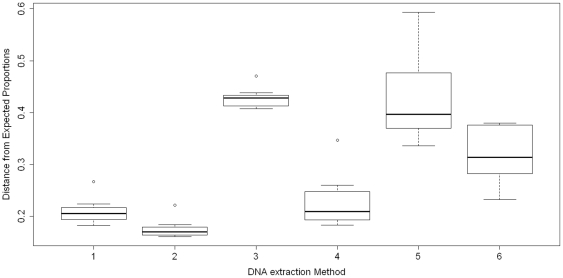
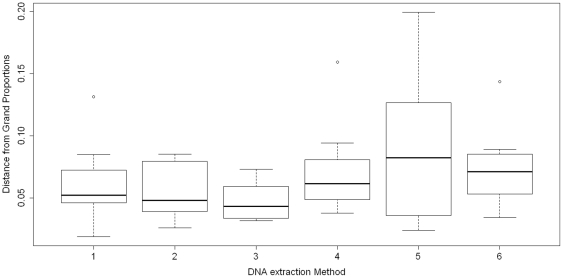
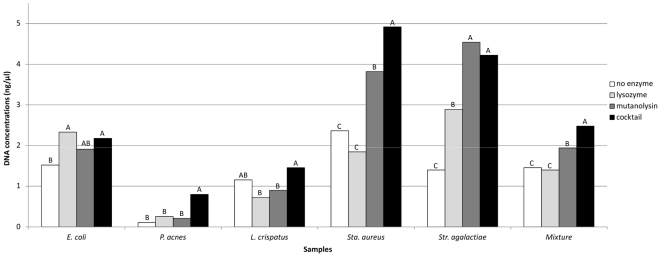
BACKGROUND: DNA extraction is an essential step in all cultivation-independent approaches to characterize microbial diversity, including that associated with the human body. A fundamental challenge in using these approaches has been to isolate DNA that is representative of the microbial community sampled. METHODOLOGY/PRINCIPAL FINDINGS: In this study, we statistically evaluated six commonly used DNA extraction procedures using eleven human-associated bacterial species and a mock community that contained equal numbers of those eleven species. These methods were compared on the basis of DNA yield, DNA shearing, reproducibility, and most importantly representation of microbial diversity. The analysis of 16S rRNA gene sequences from a mock community showed that the observed species abundances were significantly different from the expected species abundances for all six DNA extraction methods used. CONCLUSIONS/SIGNIFICANCE: Protocols that included bead beating and/or mutanolysin produced significantly better bacterial community structure representation than methods without both of them. The reproducibility of all six methods was similar, and results from different experimenters and different times were in good agreement. Based on the evaluations done it appears that DNA extraction procedures for bacterial community analysis of human associated samples should include bead beating and/or mutanolysin to effectively lyse cells.
Overview
The claims and statistics of this paper haven’t been checked yet.
Run the check — free, no account needed. It reads the open-access text and checks the sources it cites.
Integrity signals
Registry
Cites
Statistics
Figures
Verification
Claims the paper makes
The claims and statistics of this paper haven’t been checked yet.
Run the check — free, no account needed. It reads the open-access text and checks the sources it cites.
Claims other papers make about this one
Each is checked against this paper’s own text: does it say what the citing paper says it does?
In the citing paper
“Previous detailed investigations of specific variables in microbiome experiments such as DNA extraction method have, in common with the results we report, enriched for broad classes of Gram-negative rather than Gram-positive bacteria due to technical rather than biological variables9, 24, 27, 28.”
From Assessment of variation in microbial community amplicon sequencing by the Microbiome Quality Control (MBQC) project consortium (2017) · cites this paper as [27]
Self-check
Percentages, sums and reported differences re-computed from the paper’s own numbers.
The self-check needs the paper’s full text.
Citations
Cites
R: A Language and Environment for Statistical Computing
R Core Team (2000) · doi:10.32614/r.manuals · Cited by 355,893
Naive Bayesian Classifier for Rapid Assignment of rRNA Sequences into the New Bacterial Taxonomy
Wang, Q., Garrity, G. M., Tiedje, J. M., & Cole, J. R. (2007) · Applied and Environmental Microbiology · doi:10.1128/aem.00062-07 · Cited by 20,145
Diversity of the Human Intestinal Microbial Flora
Eckburg, P. B., Bik, E. M., Bernstein, C. N., Purdom, E., Dethlefsen, L., Sargent, M., Gill, S. R., Nelson, K. E., & Relman, D. A. (2005) · Science · doi:10.1126/science.1110591 · Cited by 7,913
The gut microbiota as an environmental factor that regulates fat storage
Bäckhed, F., Ding, H., Wang, T., Hooper, L. V., Koh, G. Y., Nagy, A., Semenkovich, C. F., & Gordon, J. I. (2004) · Proceedings of the National Academy of Sciences · doi:10.1073/pnas.0407076101 · Cited by 6,245
Nonparametric Statistical Methods
(1999) · Technometrics · doi:10.1080/00401706.1999.10485954 · Cited by 6,118
Turnbaugh, P. J., Ley, R. E., Hamady, M., Fraser-Liggett, C. M., Knight, R., & Gordon, J. I. (2007) · Nature · doi:10.1038/nature06244 · Cited by 6,091
The gut microbiota shapes intestinal immune responses during health and disease
Round, J. L., & Mazmanian, S. K. (2009) · Nature Reviews Immunology · doi:10.1038/nri2515 · Cited by 5,029
Metagenomic Analysis of the Human Distal Gut Microbiome
Gill, S. R., Pop, M., DeBoy, R. T., Eckburg, P. B., Turnbaugh, P. J., Samuel, B. S., Gordon, J. I., Relman, D. A., Fraser-Liggett, C. M., & Nelson, K. E. (2006) · Science · doi:10.1126/science.1124234 · Cited by 4,699
Vaginal microbiome of reproductive-age women
Ravel, J., Gajer, P., Abdo, Z., Schneider, G. M., Koenig, S. S. K., McCulle, S. L., Karlebach, S., Gorle, R., Russell, J., Tacket, C. O., et al. (2011) · Proceedings of the National Academy of Sciences · doi:10.1073/pnas.1002611107 · Cited by 4,254
Self-citationEvolution of mammals and their gut microbes
Ley, R. E., Hamady, M., Lozupone, C., Turnbaugh, P. J., Ramey, R. R., Bircher, J. S., Schlegel, M. L., Tucker, T. A., Schrenzel, M. D., Knight, R., et al. (2008) · Science · doi:10.1126/science.1155725 · Cited by 3,747
Research works printed but not linked: 1
- J Ravel, 2010, Microbes and Health Sackler Colloquium: Vaginal microbiome of reproductive-age women., Proc Natl Acad Sci U S A
Cited by
Sorted by citations
Byrd, A. L., Belkaid, Y., & Segre, J. A. (2018) · Nature Reviews Microbiology · doi:10.1038/nrmicro.2017.157 · Cited by 2,806
Structure and function of the global topsoil microbiome
Bahram, M., Hildebrand, F., Forslund, S. K., Anderson, J., Soudzilovskaia, N. A., van Bodegom, P. M., Bengtsson‐Palme, J., Anslan, S., Coelho, L. P., Harend, H., et al. (2018) · Nature · doi:10.1038/s41586-018-0386-6 · Cited by 2,638
Shotgun metagenomics, from sampling to analysis
Quince, C., Walker, A. W., Simpson, J. T., Loman, N. J., & Segata, N. (2017) · Nature Biotechnology · doi:10.1038/nbt.3935 · Cited by 2,202
Geller, L. T., Barzily-Rokni, M., Danino, T., Jonas, O. H., Shental, N., Nejman, D., Gavert, N., Zwang, Y., Cooper, Z. A., Shee, K., et al. (2017) · Science · doi:10.1126/science.aah5043 · Cited by 1,817
Salt-responsive gut commensal modulates TH17 axis and disease
Wilck, N., Matus, M. G., Kearney, S. M., Olesen, S. W., Forslund, K., Bartolomaeus, H., Haase, S., Mähler, A., Balogh, A., Markó, L., et al. (2017) · Nature · doi:10.1038/nature24628 · Cited by 1,310
Stoddard, S. F., Smith, B. J., Hein, R., Roller, B. R. K., & Schmidt, T. M. (2014) · Nucleic Acids Research · doi:10.1093/nar/gku1201 · Cited by 1,142
Critical considerations for the application of environmental DNA methods to detect aquatic species
Goldberg, C. S., Turner, C. R., Deiner, K., Klymus, K. E., Thomsen, P. F., Murphy, M. A., Spear, S. F., McKee, A. M., Oyler‐McCance, S. J., Cornman, R. S., et al. (2016) · Methods in Ecology and Evolution · doi:10.1111/2041-210x.12595 · Cited by 1,144
Towards standards for human fecal sample processing in metagenomic studies
Costea, P. I., Zeller, G., Sunagawa, S., Pelletier, E., Alberti, A., Levenez, F., Tramontano, M., Driessen, M., Hercog, R., Jung, F.-E., et al. (2017) · Nature Biotechnology · doi:10.1038/nbt.3960 · Cited by 893
Hilt, E. E., McKinley, K., Pearce, M. M., Rosenfeld, A. B., Zilliox, M. J., Mueller, E. R., Brubaker, L. T., Gai, X., Wolfe, A. J., & Schreckenberger, P. C. (2013) · Journal of Clinical Microbiology · doi:10.1128/jcm.02876-13 · Cited by 863
Systematic improvement of amplicon marker gene methods for increased accuracy in microbiome studies
Gohl, D. M., Vangay, P., Garbe, J., Maclean, A., Hauge, A., Becker, A., Gould, T. J., Clayton, J. B., Johnson, T. J., Hunter, R. C., et al. (2016) · Nature Biotechnology · doi:10.1038/nbt.3601 · Cited by 834
The Female Urinary Microbiome: a Comparison of Women with and without Urgency Urinary Incontinence
Pearce, M. M., Hilt, E. E., Rosenfeld, A. B., Zilliox, M. J., Thomas-White, K. J., Fok, C. S., Kliethermes, S., Schreckenberger, P. C., Brubaker, L. T., Gai, X., et al. (2014) · mBio · doi:10.1128/mbio.01283-14 · Cited by 739
Establishing microbial composition measurement standards with reference frames
Morton, J. T., Marotz, C., Washburne, A., Silverman, J., Zaramela, L. S., Edlund, A., Zengler, K., & Knight, R. (2019) · Nature Communications · doi:10.1038/s41467-019-10656-5 · Cited by 613
Gut mucosal microbiome across stages of colorectal carcinogenesis
Nakatsu, G., Li, X., Zhou, H., Sheng, J., Wong, S. H., Wu, W. K. K., Ng, S. C., Tsoi, H., Dong, Y., Zhang, N., et al. (2015) · Nature Communications · doi:10.1038/ncomms9727 · Cited by 701
The Microbiome Quality Control Project Consortium, Sinha, R., Abu-Ali, G., Vogtmann, E., Fodor, A. A., Ren, B., Amir, A., Schwager, E., Crabtree, J., Ma, S., et al. (2017) · Nature Biotechnology · doi:10.1038/nbt.3981 · Cited by 587
Optimizing methods and dodging pitfalls in microbiome research
Kim, D. J., Hofstaedter, C. E., Zhao, C., Mattei, L. M., Tanes, C., Clarke, E., Lauder, A. P., Sherrill-Mix, S. A., Chehoud, C., Kelsen, J. R., et al. (2017) · Microbiome · doi:10.1186/s40168-017-0267-5 · Cited by 557
The Gastrointestinal Microbiome: Alcohol Effects on the Composition of Intestinal Microbiota
Engen, P. A. (2015) · Alcohol research · doi:10.35946/arcr.v37.2.07 · Cited by 451
Consistent and correctable bias in metagenomic sequencing experiments
McLaren, M. R., Willis, A. D., & Callahan, B. J. (2019) · eLife · doi:10.7554/elife.46923 · Cited by 424
Hu, Y., Yang, H., Wang, J., Zhang, Y., Yu, J., & Wei, H. (2015) · World Journal of Microbiology and Biotechnology · doi:10.1007/s11274-015-1971-6 · Cited by 419
Romero, R. J., Hassan, S. S., Gajer, P., Tarca, A. L., Fadrosh, D. W., Bieda, J., Chaemsaithong, P., Miranda, J., Chaiworapongsa, T., & Ravel, J. (2014) · Microbiome · doi:10.1186/2049-2618-2-18 · Cited by 414
Self-citationThe use of next generation sequencing for improving food safety: Translation into practice
Jagadeesan, B., Gerner‐Smidt, P., Allard, M. W., Leuillet, S., Winkler, A., Xiao, Y., Chaffron, S., van der Vossen, J., Tang, S., Katase, M., et al. (2018) · Food Microbiology · doi:10.1016/j.fm.2018.11.005 · Cited by 389
Fecal microbiota transplantation: current challenges and future landscapes
Yadegar, A., Bar‐Yoseph, H., Monaghan, T. M., Pakpour, S., Severino, A., Kuijper, E. J., Smits, W. K., Terveer, E. M., Neupane, S., Nabavi-Rad, A., et al. (2024) · Clinical Microbiology Reviews · doi:10.1128/cmr.00060-22 · Cited by 397
Jost, T., Lacroix, C., Braegger, C., & Chassard, C. (2013) · British Journal Of Nutrition · doi:10.1017/s0007114513000597 · Cited by 371
Ravel, J., Brotman, R. M., Gajer, P., Ma, B., Nandy, M., Fadrosh, D. W., Sakamoto, J. M., Koenig, S. S. K., Fu, L., Zhou, X., et al. (2013) · Microbiome · doi:10.1186/2049-2618-1-29 · Cited by 349
Self-citationKennedy, N. A., Walker, A. W., Berry, S. H., Duncan, S. H., Farquarson, F. M., Louis, P., Thomson, J., surname):, O. M. N. N. W. T. M. A. L. (. B., Satsangi, J. J., Flint, H. J., et al. (2014) · PLoS ONE · doi:10.1371/journal.pone.0088982 · Cited by 328
The female urinary microbiome in urgency urinary incontinence
Pearce, M. M., Zilliox, M. J., Rosenfeld, A. B., Thomas-White, K. J., Richter, H. E., Nager, C. W., Visco, A. G., Nygaard, I., Barber, M. D., Schaffer, J. I., et al. (2015) · American Journal of Obstetrics and Gynecology · doi:10.1016/j.ajog.2015.07.009 · Cited by 293
Angly, F. E., Dennis, P. G., Skarshewski, A., Vanwonterghem, I., Hugenholtz, P., & Tyson, G. W. (2014) · Microbiome · doi:10.1186/2049-2618-2-11 · Cited by 297
Moon, C. D., Young, W., Maclean, P. H., Cookson, A. L., & Bermingham, E. N. (2018) · MicrobiologyOpen · doi:10.1002/mbo3.677 · Cited by 302
Microbiota of the seminal fluid from healthy and infertile men
Hou, D., Zhou, X., Zhong, X., Settles, M. L., Herring, J., Wang, L., Abdo, Z., Forney, L. J., & Xu, C. (2013) · Fertility and Sterility · doi:10.1016/j.fertnstert.2013.07.1991 · Cited by 263
Self-citationWarinner, C., Speller, C., & Collins, M. J. (2014) · Philosophical Transactions of the Royal Society B Biological Sciences · doi:10.1098/rstb.2013.0376 · Cited by 276
Impact of Sample Type and DNA Isolation Procedure on Genomic Inference of Microbiome Composition
Knudsen, B. E., Bergmark, L., Munk, P., Lukjančenko, O., Priemé, A., Aarestrup, F. M., & Pamp, S. J. (2016) · mSystems · doi:10.1128/msystems.00095-16 · Cited by 260
The microbiome in respiratory medicine: current challenges and future perspectives
Faner, R., Sibila, O., Agustí, A., Bernasconi, E., Chalmers, J. D., Huffnagle, G. B., Manichanh, C., Molyneaux, P. L., Paredes, R., Pérez Brocal, V., et al. (2017) · European Respiratory Journal · doi:10.1183/13993003.02086-2016 · Cited by 247
Significant Impacts of Increasing Aridity on the Arid Soil Microbiome
Neilson, J. W., Califf, K. J., Cardona, C., Copeland, A., Treuren, W. V., Josephson, K. L., Knight, R. D., Gilbert, J. A., Quade, J., Caporaso, J. G., et al. (2017) · mSystems · doi:10.1128/msystems.00195-16 · Cited by 255
Rates of gut microbiome divergence in mammals
Nishida, A. H., & Ochman, H. (2017) · Molecular Ecology · doi:10.1111/mec.14473 · Cited by 241
MECHANISMS IN ENDOCRINOLOGY: Gut microbiota in patients with type 2 diabetes mellitus
Allin, K. H., Nielsen, T., & Pedersen, O. B. (2014) · European Journal of Endocrinology · doi:10.1530/eje-14-0874 · Cited by 243
Performing Skin Microbiome Research: A Method to the Madness
Kong, H. H., Andersson, B., Clavel, T., Common, J., Jackson, S. A., Olson, N. D., Segre, J. A., & Traidl‐Hoffmann, C. (2017) · Journal of Investigative Dermatology · doi:10.1016/j.jid.2016.10.033 · Cited by 232
Antibiotics in ingested human blood affect the mosquito microbiota and capacity to transmit malaria
Gendrin, M., Rodgers, F. H., Yerbanga, R. S., Ouédraogo, J., Basáñez, M.-G., Cohuet, A., & Christophides, G. K. (2015) · Nature Communications · doi:10.1038/ncomms6921 · Cited by 225
Oh, H. Y., Kim, B.-S., Seo, S., Kong, J.-S., Lee, J. K., Park, S.-Y., Hong, K., Kim, H. K., & Kim, M. K. (2015) · Clinical Microbiology and Infection · doi:10.1016/j.cmi.2015.02.026 · Cited by 216
Gut microbial composition in patients with psoriasis
Codoñer, F. M., Ramírez-Boscá, A., Climent, E., Carrión-Gutiérrez, M. A., Guerrero, M., Pérez-Orquín, J. M., de la Parte, J. H., Genovés, S., Ramón, D., Navarro‐López, V., et al. (2018) · Scientific Reports · doi:10.1038/s41598-018-22125-y · Cited by 213
PCR Technologies for Point of Care Testing: Progress and Perspectives
Petralia, S., & Sabrina Conoci, A. (2017) · ACS Sensors · doi:10.1021/acssensors.7b00299 · Cited by 209
Teng, F., Nair, S. S. D., Zhu, P., Li, S., Huang, S. W., Li, X., Xu, J., & Yang, F. (2018) · Scientific Reports · doi:10.1038/s41598-018-34294-x · Cited by 205
Mackenzie, B. W., Waite, D. W., & Taylor, M. W. (2015) · Frontiers in Microbiology · doi:10.3389/fmicb.2015.00130 · Cited by 200
Hickey, R. J., Zhou, X., Settles, M. L., Erb-Alvarez, J. A., Malone, K., Hansmann, M. A., Shew, M. L., Pol, B. J. V. D., Fortenberry, J. D., & Forney, L. J. (2015) · mBio · doi:10.1128/mbio.00097-15 · Cited by 198
Self-citationComparison of DNA extraction methods for human gut microbial community profiling
Lim, M. Y., Song, E., Kim, S. H., Lee, J., & Nam, Y. (2017) · Systematic and Applied Microbiology · doi:10.1016/j.syapm.2017.11.008 · Cited by 192
Metagenomic analysis of a Mexican ripened cheese reveals a unique complex microbiota
Escobar-Zepeda, A., Sanchez-Flores, A., & Quirasco Baruch, M. (2016) · Food Microbiology · doi:10.1016/j.fm.2016.02.004 · Cited by 174
Claassen-Weitz, S., du Toit, E., Kaba, M., Moodley, C., Zar, H. J., & Nicol, M. P. (2013) · Journal of Microbiological Methods · doi:10.1016/j.mimet.2013.05.008 · Cited by 188
Ma, B., France, M., Crabtree, J., Holm, J. B., Humphrys, M. S., Brotman, R. M., & Ravel, J. (2020) · Nature Communications · doi:10.1038/s41467-020-14677-3 · Cited by 170
Self-citationDNA Extraction for Streamlined Metagenomics of Diverse Environmental Samples
Marotz, C. A., Amir, A., Humphrey, G. C., Gaffney, J., Gogul, G., & Knight, R. D. (2017) · BioTechniques · doi:10.2144/000114559 · Cited by 166
Liu, Y., Ko, E. Y.-L., Wong, K. K.-W., Chen, X., Cheung, W.-C., Law, T. S. M., Chung, J. P. W., Tsui, S. K., Li, T. C., & Chim, S. S. C. (2019) · Fertility and Sterility · doi:10.1016/j.fertnstert.2019.05.015 · Cited by 169
Lappan, R. J., Imbrogno, K., Sikazwe, C. T., Anderson, D. R., Mok, D., Coates, H. L. C., Vijayasekaran, S., Bumbak, P., Blyth, C. C., Jamieson, S. E., et al. (2018) · BMC Microbiology · doi:10.1186/s12866-018-1154-3 · Cited by 165
The gut microbiome of nonhuman primates: Lessons in ecology and evolution
Clayton, J. B., Gomez, A. M., Amato, K. R., Knights, D., Travis, D. A., Blekhman, R., Knight, R. D., Leigh, S. R., Stumpf, R. M., Wolf, T. M., et al. (2018) · American Journal of Primatology · doi:10.1002/ajp.22867 · Cited by 168
Disruption of maternal gut microbiota during gestation alters offspring microbiota and immunity
Nyangahu, D. D., Lennard, K. S., Brown, B. P., Darby, M., Wendoh, J. M., Havyarimana, E., Smith, P., Butcher, J., Stintzi, A., Mulder, N., et al. (2018) · Microbiome · doi:10.1186/s40168-018-0511-7 · Cited by 173
Milk microbiota: Characterization methods and role in cheese production
Tilocca, B., Costanzo, N., Morittu, V. M., Spina, A. A., Soggiù, A., Britti, D., Roncada, P., & Piras, C. (2019) · Journal of Proteomics · doi:10.1016/j.jprot.2019.103534 · Cited by 171
A clinician's guide to microbiome analysis
Claesson, M. J., Clooney, A. G., & O'Toole, P. W. (2017) · Nature Reviews Gastroenterology & Hepatology · doi:10.1038/nrgastro.2017.97 · Cited by 153
Evaluation of the urinary microbiota of women with uncomplicated stress urinary incontinence
Thomas-White, K. J., Kliethermes, S., Rickey, L., Lukacz, E. S., Richter, H. E., Moalli, P., Zimmern, P. E., Norton, P., Kusek, J. W., Wolfe, A. J., et al. (2016) · American Journal of Obstetrics and Gynecology · doi:10.1016/j.ajog.2016.07.049 · Cited by 158
Amphibian chytridiomycosis outbreak dynamics are linked with host skin bacterial community structure
Bates, K. A., Clare, F. C., O’Hanlon, S. J., Bosch, J., Brookes, L. M., Hopkins, K., McLaughlin, E. J., Daniel, O. Z., Garner, T. W. J., Fisher, M. C., et al. (2018) · Nature Communications · doi:10.1038/s41467-018-02967-w · Cited by 158
Hart, M. L., Meyer, A. M., Johnson, P. J., & Ericsson, A. C. (2015) · PLoS ONE · doi:10.1371/journal.pone.0143334 · Cited by 167
Hiergeist, A., Reischl, U., & Gessner, A. (2016) · International Journal of Medical Microbiology · doi:10.1016/j.ijmm.2016.03.005 · Cited by 158
Challenges and Opportunities of Airborne Metagenomics
Behzad, H., Gojobori, T., & Mineta, K. (2015) · Genome Biology and Evolution · doi:10.1093/gbe/evv064 · Cited by 160
Effect of preservation method on spider monkey (Ateles geoffroyi) fecal microbiota over 8 weeks
Hale, V. L., Tan, C. L., Knight, R. D., & Amato, K. R. (2015) · Journal of Microbiological Methods · doi:10.1016/j.mimet.2015.03.021 · Cited by 154
Tiny microbes, enormous impacts: what matters in gut microbiome studies?
Debelius, J. W., Song, S. J., Vázquez‐Baeza, Y., Xu, Z. Z., González, A., & Knight, R. D. (2016) · Genome biology · doi:10.1186/s13059-016-1086-x · Cited by 160
The human gut microbiome, a taxonomic conundrum
Sankar, S. A., Lagier, J., Pontarotti, P., Raoult, D., & Fournier, P. (2015) · Systematic and Applied Microbiology · doi:10.1016/j.syapm.2015.03.004 · Cited by 157
Seasonality of the gut microbiota of free-ranging white-faced capuchins in a tropical dry forest
Orkin, J. D., Campos, F. A., Myers, M. S., Cheves Hernandez, S. E., Guadamuz, A., & Melin, A. D. (2019) · The ISME Journal · doi:10.1038/s41396-018-0256-0 · Cited by 140
Impact of contraceptive initiation on vaginal microbiota
Achilles, S. L., Austin, M. N., Meyn, L. A., Mhlanga, F., Chirenje, Z. M., & Hillier, S. L. (2018) · American Journal of Obstetrics and Gynecology · doi:10.1016/j.ajog.2018.02.017 · Cited by 148
The urobiome of continent adult women: a cross‐sectional study
Price, T., Hilt, E. E., Thomas-White, K. J., Mueller, E., Wolfe, A. J., & Brubaker, L. T. (2019) · BJOG An International Journal of Obstetrics & Gynaecology · doi:10.1111/1471-0528.15920 · Cited by 137
Metatranscriptomics for the Human Microbiome and Microbial Community Functional Profiling
Zhang, Y., Thompson, K. N., Branck, T. A., Yan, Y., Nguyen, L. H., Franzosa, E. A., & Huttenhower, C. (2021) · Annual Review of Biomedical Data Science · doi:10.1146/annurev-biodatasci-031121-103035 · Cited by 150
Turner, C. R., Miller, D., Coyne, K. J., & Corush, J. B. (2014) · PLoS ONE · doi:10.1371/journal.pone.0114329 · Cited by 132
Alterations in the Colonic Microbiota in Response to Osmotic Diarrhea
Gorkiewicz, G., Thallinger, G., Trajanoski, S., Lackner, S., Stocker, G., Hinterleitner, T. A., Gülly, C., & Högenauer, C. (2013) · PLoS ONE · doi:10.1371/journal.pone.0055817 · Cited by 132
An accurate and efficient experimental approach for characterization of the complex oral microbiota
Zheng, W., Tsompana, M., Ruscitto, A., Sharma, A., Genco, R. J., Sun, Y., & Buck, M. J. (2015) · Microbiome · doi:10.1186/s40168-015-0110-9 · Cited by 132
Maghini, D. G., Moss, E. L., Vance, S. E., & Bhatt, A. S. (2020) · Nature Protocols · doi:10.1038/s41596-020-00424-x · Cited by 131
One size does not fit all: Tuning eDNA protocols for high‐ and low‐turbidity water sampling
Kumar, G., Farrell, E., Reaume, A. M., Eble, J. A., & Gaither, M. R. (2021) · Environmental DNA · doi:10.1002/edn3.235 · Cited by 128
Computational Methods for Strain-Level Microbial Detection in Colony and Metagenome Sequencing Data
Anyansi, C., Straub, T. J., Manson, A. L., Earl, A. M., & Abeel, T. (2020) · Frontiers in Microbiology · doi:10.3389/fmicb.2020.01925 · Cited by 122
The skin microbiome: Associations between altered microbial communities and disease
Weyrich, L. S., Dixit, S., Farrer, A. G., Cooper, A. J., & Cooper, A. J. (2015) · Australasian Journal of Dermatology · doi:10.1111/ajd.12253 · Cited by 137
DNA/RNA Preparation for Molecular Detection
Thatcher, S. A. (2014) · Clinical Chemistry · doi:10.1373/clinchem.2014.221374 · Cited by 124
Community profiling of the urinary microbiota: considerations for low-biomass samples
Karstens, L., Asquith, M. J., Caruso, V. G., Rosenbaum, J. T., Fair, D. A., Braun, J. G., Gregory, W. T., Nardos, R., & McWeeney, S. K. (2018) · Nature Reviews Urology · doi:10.1038/s41585-018-0104-z · Cited by 127
Urinary microbes and postoperative urinary tract infection risk in urogynecologic surgical patients
Thomas-White, K. J., Gao, X., Lin, H., Fok, C. S., Ghanayem, K., Mueller, E. R., Dong, Q., Brubaker, L. T., & Wolfe, A. J. (2018) · International Urogynecology Journal · doi:10.1007/s00192-018-3767-3 · Cited by 123
Zemb, O., Achard, C. S., Hamelin, J., de Almeida, M., Gabinaud, B., Cauquil, L., Verschuren, L., & Godon, J. (2020) · MicrobiologyOpen · doi:10.1002/mbo3.977 · Cited by 116
Kameoka, S., Motooka, D., Watanabe, S., Kubo, R., Jung, N., Midorikawa, Y., Shinozaki, N. O., Sawai, Y., Takeda, A., & Nakamura, S. (2021) · BMC Genomics · doi:10.1186/s12864-021-07746-4 · Cited by 124
Characterization of the human skin resistome and identification of two microbiota cutotypes
Li, Z., Xia, J., Jiang, L., Tan, Y., An, Y., Zhu, X., Ruan, J., Chen, Z., Zhen, H., Ma, Y., et al. (2021) · Microbiome · doi:10.1186/s40168-020-00995-7 · Cited by 113
Lenchi, N., İnceoǧlu, Ö., Kebbouche-Gana, S., Gana, M. L., Llirós, M., Servais, P., & García–Armisen, T. (2013) · PLoS ONE · doi:10.1371/journal.pone.0066588 · Cited by 106
Hermans, S. M., Buckley, H. L., & Lear, G. (2018) · Molecular Ecology Resources · doi:10.1111/1755-0998.12762 · Cited by 112
Nieto‐Domínguez, M., de Eugenio, L. I., York-Durán, M. J., Rodríguez-Colinas, B., Plou, F. J., Chenoll, E., Pardo, E., Codoñer, F. M., & Martı́nez, M. J. (2017) · Food Chemistry · doi:10.1016/j.foodchem.2017.03.149 · Cited by 107
McCarthy, A., Chiang, E., Schmidt, M. L., & Denef, V. J. (2015) · PLoS ONE · doi:10.1371/journal.pone.0121659 · Cited by 104
Llirós, M., İnceoǧlu, Ö., García–Armisen, T., Anzil, A., Leporcq, B., Pigneur, L., Viroux, L., Darchambeau, F., Descy, J., & Servais, P. (2014) · PLoS ONE · doi:10.1371/journal.pone.0116145 · Cited by 107
Peng, X., Yu, K.-Q., Deng, G., Jiang, Y., Wang, Y., Zhang, G., & Zhou, H. (2013) · Journal of Microbiological Methods · doi:10.1016/j.mimet.2013.07.015 · Cited by 101
Comparison of DNA Extraction Methods in Analysis of Salivary Bacterial Communities
Lazarević, V., Gaïa, N., Girard, M., François, P., & Schrenzel, J. (2013) · PLoS ONE · doi:10.1371/journal.pone.0067699 · Cited by 99
A Single Protocol for Extraction of gDNA from Bacteria and Yeast
Vingataramin, L., & Frost, E. H. (2015) · BioTechniques · doi:10.2144/000114263 · Cited by 95
The mycobiome of the human urinary tract: potential roles for fungi in urology
Ackerman, A. L., & Underhill, D. M. (2017) · Annals of Translational Medicine · doi:10.21037/atm.2016.12.69 · Cited by 91
Body fluid prediction from microbial patterns for forensic application
Hanssen, E. N., Avershina, E., Rudi, K., Gill, P., & Snipen, L. G. (2017) · Forensic Science International Genetics · doi:10.1016/j.fsigen.2017.05.009 · Cited by 91
Han, D., Gao, P., Li, R., Tan, P., Xie, J., Zhang, R., & Li, J. (2020) · Journal of Advanced Research · doi:10.1016/j.jare.2020.07.010 · Cited by 93
Gill, A. C., van de Wijgert, J. H. H. M., Blow, F., & Darby, A. C. (2016) · PLoS ONE · doi:10.1371/journal.pone.0163148 · Cited by 91
Assessment of fecal DNA extraction protocols for metagenomic studies
Yang, F., Sun, J., Luo, H., Ren, H., Zhou, H., Lin, Y., Han, M., Chen, B., Liao, H., Brix, S., et al. (2020) · GigaScience · doi:10.1093/gigascience/giaa071 · Cited by 88
Forming Consensus To Advance Urobiome Research
Brubaker, L. T., Gourdine, J.-P. F., Siddiqui, N. Y., Holland, A., Halverson, T. M., Limeria, R., Pride, D. T., Ackerman, L., Forster, C. S., Jacobs, K. M., et al. (2021) · mSystems · doi:10.1128/msystems.01371-20 · Cited by 98
Assessing the ocular surface microbiome in severe ocular surface diseases
Zilliox, M. J., Gange, W. S., Kuffel, G. R., Mores, C. R., Joyce, C., de Bustros, P., & Bouchard, C. S. (2020) · The Ocular Surface · doi:10.1016/j.jtos.2020.07.007 · Cited by 90
Diaz, M. H., Waller, J. L., Napoliello, R. A., Islam, M. S., Wolff, B. J., Burken, D. J., Holden, R. L., Srinivasan, V., Arvay, M. L., McGee, L., et al. (2013) · PLoS ONE · doi:10.1371/journal.pone.0066183 · Cited by 90
Maropola, M. K. A., Ramond, J., & Trindade, M. (2015) · Journal of Microbiological Methods · doi:10.1016/j.mimet.2015.03.012 · Cited by 89
DNA extraction approaches substantially influence the assessment of the human breast milk microbiome
Douglas, C. A., Ivey, K. L., Papanicolas, L. E., Best, K. P., Mühlhäusler, B. S., & Rogers, G. B. (2020) · Scientific Reports · doi:10.1038/s41598-019-55568-y · Cited by 90
Microbiome Changes during Tuberculosis and Antituberculous Therapy
Hong, B., Maulén, N. P., Adami, A. J., Granados, H., Balcells, M. E., & Cervantes, J. (2016) · Clinical Microbiology Reviews · doi:10.1128/cmr.00096-15 · Cited by 91
The impact of storage buffer, DNA extraction method, and polymerase on microbial analysis
Hallmaier–Wacker, L. K., Lueert, S., Roos, C., & Knauf, S. (2018) · Scientific Reports · doi:10.1038/s41598-018-24573-y · Cited by 89
Hosomi, K., Ohno, H., Murakami, H., Natsume‐Kitatani, Y., Tanisawa, K., Hirata, S., Suzuki, H., Nagatake, T., Nishino, T., Mizuguchi, K., et al. (2017) · Scientific Reports · doi:10.1038/s41598-017-04511-0 · Cited by 89
Temporal Dynamics of the Adult Female Lower Urinary Tract Microbiota
Price, T. K., Wolff, B. J., Halverson, T. M., Limeira, R., Brubaker, L. T., Dong, Q., Mueller, E. R., & Wolfe, A. J. (2020) · mBio · doi:10.1128/mbio.00475-20 · Cited by 85
Metadata
- Authors
- Yuan, S., Cohen, D. B., Ravel, J., Abdo, Z., & Forney, L. J.
- Affiliations
- University of Idaho (US)
- University of Maryland, Baltimore (US)
- Corresponding author
- Forney, Larry J.
- Venue
- PLoS ONE
- Publisher
- Public Library of Science (PLoS)
- Published
- 2012-03-23
- Volume
- 7
- Issue
- 3
- Pages
- e33865
- ISSN
- 1932-6203 (ISSN-L)
- PMC
- PMC3311548
- OpenAlex
- W2090110425
- Cited by
- 511
- References
- 73
- Citations by year
- 2026: 16 · 2025: 19 · 2024: 24 · 2023: 29 · 2022: 24 · 2021: 57 · 2020: 50 · 2019: 50 · 2018: 63 · 2017: 60 · 2016: 37 · 2015: 28 · 2014: 32 · 2013: 20 · 2012: 2
- FWCI
- 23.16
- Type
- journal article
- Language
- en
- Open access
- gold
- doi.org
- Locations
- PLoS ONE (publishedVersion, cc-by)
- PubMed Central (publishedVersion, cc-by)
- PubMed (publishedVersion)
- DOAJ (DOAJ: Directory of Open Access Journals) (submittedVersion, cc-by-sa)
- Figshare (submittedVersion, cc-by)
- Funders
- National Institutes of Health (5u01ai070921-07)
- National Institute of Allergy and Infectious Diseases (U01-AI070921)
- Topics
- Physical Sciences › Environmental Science › Ecology › Microbial Community Ecology and Physiology
- Life Sciences › Biochemistry, Genetics and Molecular Biology › Molecular Biology › Gut microbiota and health
- Life Sciences › Biochemistry, Genetics and Molecular Biology › Molecular Biology › Genomics and Phylogenetic Studies
- Keywords
- DNA extraction, human microbiome, mock communities, bead beating, mutanolysin, DNA shearing, 16S rRNA gene, microbial diversity, extraction method comparison, cell lysis
- MeSH terms
- Bacteria, DNA, Bacterial, Humans, Biodiversity
About these checks
Registry, retraction, Cites and statistics results are computed, not judged, with one exception: a printed reference that no index lists is read once by a model before it counts as a citation error. Claims are extracted by a model and kept only when their quote appears verbatim in the text; each cited source is then checked, with a model’s help, for whether it says what the claim relies on. Those verdicts can be wrong — read the claim’s quote and the cited source before relying on one.
Statistics and arithmetic are recomputed, not judged.
Confidence bands are shown only for fields calibrated on our annotated test set. None is calibrated yet, so no band is shown.
What counts as a claim ›How we measure confidence ›How we check this ›
Are you an author, or do you see a problem with this page? Request a review
