

Deep Sequencing of the Oral Microbiome Reveals Signatures of Periodontal Disease
Open accessThe DOI matches its Crossref record; 90 of the 90 references it cites were found in a registry or an index.
Abstract
The oral microbiome, the complex ecosystem of microbes inhabiting the human mouth, harbors several thousands of bacterial types. The proliferation of pathogenic bacteria within the mouth gives rise to periodontitis, an inflammatory disease known to also constitute a risk factor for cardiovascular disease. While much is known about individual species associated with pathogenesis, the system-level mechanisms underlying the transition from health to disease are still poorly understood. Through the sequencing of the 16S rRNA gene and of whole community DNA we provide a glimpse at the global genetic, metabolic, and ecological changes associated with periodontitis in 15 subgingival plaque samples, four from each of two periodontitis patients, and the remaining samples from three healthy individuals. We also demonstrate the power of whole-metagenome sequencing approaches in characterizing the genomes of key players in the oral microbiome, including an unculturable TM7 organism. We reveal the disease microbiome to be enriched in virulence factors, and adapted to a parasitic lifestyle that takes advantage of the disrupted host homeostasis. Furthermore, diseased samples share a common structure that was not found in completely healthy samples, suggesting that the disease state may occupy a narrow region within the space of possible configurations of the oral microbiome. Our pilot study demonstrates the power of high-throughput sequencing as a tool for understanding the role of the oral microbiome in periodontal disease. Despite a modest level of sequencing (~2 lanes Illumina 76 bp PE) and high human DNA contamination (up to ~90%) we were able to partially reconstruct several oral microbes and to preliminarily characterize some systems-level differences between the healthy and diseased oral microbiomes.
Overview
The claims and statistics of this paper haven’t been checked yet.
Free: it reads the open-access text and checks the first 5 claims that cite a source we can check. Create a free account to check every claim.
Integrity signals
Registry
Cites
Statistics
Figures
Verification
Claims the paper makes
The claims and statistics of this paper haven’t been checked yet.
Free: it reads the open-access text and checks the first 5 claims that cite a source we can check. Create a free account to check every claim.
Claims other papers make about this one
Each is checked against this paper’s own text: does it say what the citing paper says it does?
The source backs part of the claim, not all of it — or backs it for a different population, condition or comparison.
In the citing paper
“It is widely accepted that nonmineralized biofilms consist of over 800 different taxa (20).”
From Dental calculus: the calcified biofilm and its role in disease development (2018) · cites this paper as [20]
Experimental — accuracy not yet measuredIn the citing paper
“This phylum has been linked to inflammatory conditions of the mouth such as periodontitis 46.”
From The composition of the gut microbiota shapes the colon mucus barrier (2015) · cites this paper as [46]
Self-check
Percentages, sums and reported differences re-computed from the paper’s own numbers.
The self-check needs the paper’s full text.
Citations
Cites
Subramanian, A., Tamayo, P., Mootha, V. K., Mukherjee, S., Ebert, B. L., Gillette, M. A., Paulovich, A., Pomeroy, S. L., Golub, T. R., Lander, E. S., et al. (2005) · Proceedings of the National Academy of Sciences · doi:10.1073/pnas.0506580102 · Cited by 53,625 · cited 4×
“GSEA was used to identify functional categories that were enriched in disease or control patients.”
MethodInfluentialKEGG: Kyoto Encyclopedia of Genes and Genomes
Kanehisa, M. (2000) · Nucleic Acids Research · doi:10.1093/nar/28.1.27 · Cited by 37,077 · cited 1×
“Enzyme Based PCA After pre-processing, metagenomic sequences were annotated with specific Kyoto Encyclopedia of Genes and Genomes (KEGG) orthology (KO) codes using BLAST searches against the KEGG sequence repository [83].”
MethodKEGG: Kyoto Encyclopedia of Genes and Genomes
Ogata, H., Goto, S., Sato, K., Fujibuchi, W., Bono, H., & Kanehisa, M. (1999) · Nucleic Acids Research · doi:10.1093/nar/27.1.29 · Cited by 31,232
Ultrafast and memory-efficient alignment of short DNA sequences to the human genome.
Langmead, B., Trapnell, C., Pop, M., & Salzberg, S. L. (2009) · Genome Biology · doi:10.1186/gb-2009-10-3-r25 · Cited by 21,849
Self-citationA human gut microbial gene catalogue established by metagenomic sequencing
MetaHIT Consortium, Qin, J., Li, R., Raes, J., Arumugam, M., Burgdorf, K. S., Manichanh, C., Nielsen, T., Pons, N., Levenez, F., et al. (2010) · Nature · doi:10.1038/nature08821 · Cited by 11,624 · cited 2×
“04 [66] with parameters 2K 23 and 2M 3, as previously used by the MetaHit project [52] to assemble gut microbiome data.”
MethodSelf-citationCircos: An information aesthetic for comparative genomics
Krzywinski, M., Schein, J., Birol, İ., Connors, J., Gascoyne, R., Horsman, D., Jones, S. J., & Marra, M. A. (2009) · Genome Research · doi:10.1101/gr.092759.109 · Cited by 10,964 · cited 1×
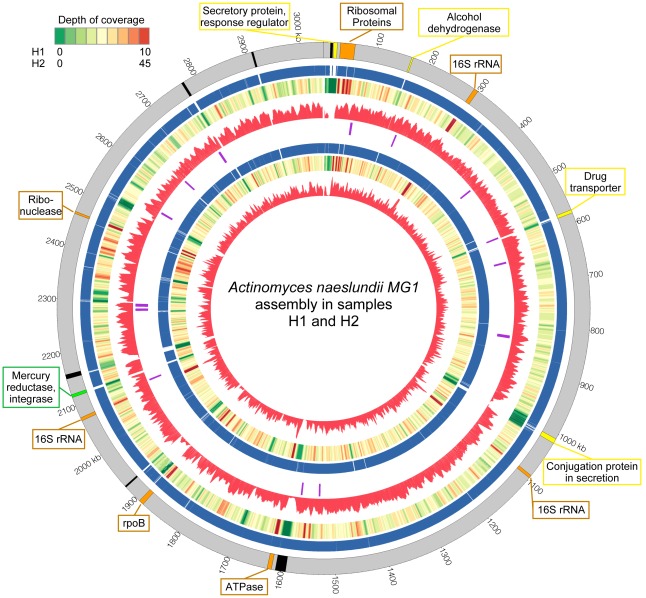
“Image generated with Circos [86].”
Global trends in emerging infectious diseases
Jones, K. E., Patel, N. G., Levy, M. A., Storeygard, A., Balk, D., Gittleman, J. L., & Daszak, P. (2008) · Nature · doi:10.1038/nature06536 · Cited by 8,338 · cited 1×
“This is especially true in light of the slow rate at which new antibiotics are discovered [7], and the increase in the number of microbes that can resist treatment [8,9].”
BackgroundTurnbaugh, P. J., Ley, R. E., Hamady, M., Fraser-Liggett, C. M., Knight, R., & Gordon, J. I. (2007) · Nature · doi:10.1038/nature06244 · Cited by 6,091 · cited 2×
“Understanding the role of microbial communities in human health is emerging as one of the most important and fascinating biomedical challenges of our times [1,2,3,4].”
BackgroundVersatile and open software for comparing large genomes
Kurtz, S., Phillippy, A., Delcher, A. L., Smoot, M., Shumway, M., Antonescu, C., & Salzberg, S. L. (2004) · Genome Biology · doi:10.1186/gb-2004-5-2-r12 · Cited by 5,254 · cited 2×
“We used MUMmer [65] (-maxmatch -l 20 -b) to map the individual reads against the HOMD reference database.”
MethodMicrobial complexes in subgingival plaque
Socransky, S. S., Haffajee, A. D., Cugini, M. A., Smith, C., & Kent, R. L. (1998) · Journal of Clinical Periodontology · doi:10.1111/j.1600-051x.1998.tb02419.x · Cited by 5,050 · cited 1×
“Surprisingly, however, neither Fusobacterium, nor Porphyromonas were found to be significantly more abundant in the periodontal disease samples, despite being previously implicated in this disease [12,39].”
Background
Cited by
Items 301–400 of 410
Bramhachari, P. V., Ahmed, V. K. S., Selvin, J., & Hassan, S. (2019) · Springer eBooks · doi:10.1007/978-981-32-9409-7_10 · Cited by 7
Xu, L., Wu, Z., Wang, Y., Wang, S., Shu, C., Duan, Z., & Deng, S. (2021) · Journal of Zhejiang University SCIENCE B · doi:10.1631/jzus.b2000554 · Cited by 8
Hisamatsu, D., Masuoka, H., Takeshige‐Amano, H., Kurokawa, R., Ogata, Y., Suda, W., Hatano, T., Asaoka, D., Mabuchi, Y., Naraoka, Y., et al. (2025) · iScience · doi:10.1016/j.isci.2025.112593 · Cited by 6
“Fourth, the relationship between the oral microbiome and oral diseases (e.g., oral cancer, 84,85 osteonecrosis of the jaw, 86,87 infections, 88 and periodontitis 89,90 ) was not considered.”
Recent Advances in Studies of Polymicrobial Interactions in Oral Biofilms
James, C. E. (2013) · Current Oral Health Reports · doi:10.1007/s40496-013-0006-3 · Cited by 7
“Recent metagenomic studies, including the human microbiome project, have highlighted further complexity in the relationship between polymicrobial oral communities and human health [3, 7, 8] and the distinction between “commensal” and “pathogenic””
BackgroundApplications of Biosurfactants
Sharma, D., Saharan, B. S., & Kapil, S. (2016) · SpringerBriefs in microbiology · doi:10.1007/978-3-319-26215-4_6 · Cited by 6
Payungporn, S., Arirachakaran, P., Poomipak, W., Praianantathavorn, K., Charalampakis, G., & Poovorawan, Y. (2017) · Jundishapur Journal of Microbiology · doi:10.5812/jjm.13646 · Cited by 9
“Actinobacteria and proteobacteria have been associated with periodontal health in previous microbiome studies (17, 21, 33, 34).”
BackgroundMethodResultInfluentialByrne, S. J., Butler, C. A., Reynolds, E. C., & Dashper, S. G. (2018) · Methods in microbiology · doi:10.1016/bs.mim.2018.07.001 · Cited by 11
Pendegraft, A. H., Guo, B., & Yi, N. (2019) · PLoS ONE · doi:10.1371/journal.pone.0220961 · Cited by 9
Lim, M. Y., Kim, J., & Nam, Y. (2023) · Frontiers in Cellular and Infection Microbiology · doi:10.3389/fcimb.2023.1114014 · Cited by 5
“oral microbiome is associated with dental caries, periodontitis, gingivitis, and oral cancer (Huang et al., 2011; Liu et al., 2012; Jiang et al., 2018; Yang et al., 2018).”
BackgroundAltered oral health and microbiota in drug-free patients with schizophrenia
Huang, H., Yang, N.-Y., Chen, M., Chen, X., Chen, W. J., Li, X., Chen, Y., Deng, Z., Zhou, W., Xu, S., et al. (2025) · BMC Psychiatry · doi:10.1186/s12888-025-06633-6 · Cited by 5
“However, given the concern of host contamination, we ultimately opted for 16 S sequencing [102].”
Lerma, L. L., Aibar‐Almazán, A., Martínez‐Amat, A., Jiménez‐García, J. D., & Hita‐Contreras, F. (2024) · Maturitas · doi:10.1016/j.maturitas.2024.107973 · Cited by 8
Illuzzi, N., Galli, R., Kushugulova, A. R., Zhumadilov, Z. S., Licciardello, O., & Marotta, F. (2014) · Rejuvenation Research · doi:10.1089/rej.2013.1493 · Cited by 6
“Moreover, the site specificity of the oral microbiome, especially between mucosal and dental sites and between saliva and dental sites, is under current investigation.(5) The mouth is the mirror of nutritional status, and the dentist and dental hygienist are often the first to notice nutritional problems, provide diet…”
BackgroundLv, Y., Peng, S., Liu, Y., Yang, H., Li, G., & Peng, Y. (2025) · Journal of Oral Microbiology · doi:10.1080/20002297.2025.2513739 · Cited by 5
“Although N . meningitidis is a known pathogen, Neisseria spp. are commonly believed to be part of the normal bacterial ecology of the oral cavity [53], and some studies have found a link between Neisseria spp. and improved oral health or reduced gingivitis [35,54].”
The Oral Microbiota, Its Evolution, and Aspects of Support for Oral Health
Плескова, С. Н., & Bezrukov, N. A. (2025) · Molecular Oral Microbiology · doi:10.1111/omi.70011 · Cited by 4
“…it was previously believed that disturbances in the oral microflora were associated primarily with caries and periodontitis (Holt et al. 1988; B. Liu et al. 2012), a link has now been established between oral microflora and diseases such as irritable bowel syndrome (Pham et al. 2017), Crohn’s…”
Whole metagenome sequencing: not deep enough for complete microbial function recovery
Liu, J., Coker, M. O., Osazuwa‐Peters, N., Peter, O., Idemudia, N. L., Schlecht, N. F., Obuekwe, O. N., Eki-Udoko, F. E., & Bromberg, Y. (2026) · Microbiome · doi:10.1186/s40168-026-02448-z · Cited by 4
“Reported host DNA content ranges from 61 to 99% in vaginal samples [39, 40], 57–94% in nasal samples [41, 42], and 60–90% in subgingival plaque [43].”
Exploring the Role of Fusobacterium nucleatum in Preterm Birth: A Narrative Review
Rapone, B., Ferrara, E., Converti, I., Loverro, M., Loverro, M. T., Gnoni, A., Petruzzi, M., Corsalini, M., Scacco, S., & Naro, E. D. (2020) · Open Access Macedonian Journal of Medical Sciences · doi:10.3889/oamjms.2020.5409 · Cited by 4
“Fusobacterium nucleatum (FN) is an opportunistic commensal Gram-negative anaerobe microorganism ubiquitous to the oral cavity, one of the most abundant pathogens implicated in severe periodontal disease [18], [38], [39], [40], [41], [42], [43], [44], [45], [46].”
BackgroundInfluentialWinters-Miner, L. A., Bolding, P. S., Hilbe, J. M., Goldstein, M., Hill, T., Nisbet, R. A., Walton, N., & Miner, G. D. (2014) · Elsevier eBooks · doi:10.1016/b978-0-12-411643-6.00013-2 · Cited by 8
The Role of Streptococcus salivarius as a Modulator of Homeostasis in the Oral Cavity
MacDonald, K. W. (2015) · Scholarship@Western (Western University) · Cited by 6
Subgingival Biofilms as Etiological Factors of Periodontal Disease
Thurnheer, T., Bao, K., & Belibasakis, G. N. (2017) · Springer eBooks · doi:10.1007/978-3-319-53737-5_3 · Cited by 4
What can we learn from the microbial ecological interactions associated with polymicrobial diseases?
Antiabong, J. F., Boardman, W., & Ball, A. S. (2013) · Veterinary Immunology and Immunopathology · doi:10.1016/j.vetimm.2013.03.009 · Cited by 6
Ponce, P. N. O., Chaves, L. B., Perce-da-Silva, D. D. S., Carneiro-Alencar, A. L., Rodolphi, C. M., Soares, I. F., Rodrigues‐da‐Silva, R. N., Alves-da-Silva, A. C., Marques, F. V., Peres, R. V., et al. (2025) · Microorganisms · doi:10.3390/microorganisms13040867 · Cited by 5
Perinatal factors influencing the earliest establishment of the infant microbiome
Linehan, K., Healy, K., Hurley, E., O'Shea, C., Ryan, C. A., Ross, R. P., Stanton, C., & Dempsey, E. M. (2025) · Microbiome Research Reports · doi:10.20517/mrr.2024.92 · Cited by 5
Chen, H. M., Liu, X. W., Sun, R., & Fang, J. (2015) · Journal of Digestive Diseases · doi:10.1111/1751-2980.12274 · Cited by 4
Bao, K., Silbereisen, A., Grossmann, J., Nanni, P., Gehrig, P., Emingil, G., Ergüz, M., Karapınar, D. Y., Pekpinarli, B., Belibasakis, G. N., et al. (2024) · PROTEOMICS - CLINICAL APPLICATIONS · doi:10.1002/prca.202400064 · Cited by 3
“Capnocytophag a, identified as one of the most prevalent species in the oral cavity [81] and an early colonizer [82], was unsurprisingly found to be the most affected species after oral hygiene intervention.”
High-Throughput Sequencing as a Tool for Exploring the Human Microbiome
Almeida, M., & Pop, M. (2014) · Elsevier eBooks · doi:10.1016/b978-0-12-410472-3.00004-x · Cited by 3
Self-citationEvaluation of FTA ® Paper for Storage of Oral Meta-Genomic DNA
Foitzik, M., Stumpp, S. N., Grischke, J., Eberhard, J., & Stiesch, M. (2014) · Biopreservation and Biobanking · doi:10.1089/bio.2014.0027 · Cited by 3
“Commonly used molecular biological techniques such as single-strand conformation polymorphism, 13,14 polymerase chain reaction, 8,9 sequencing, 2,15 or DNA hybridization 16,17 bypass microbiological culture and rely solely on nucleic acids as signature molecules for highly sensitive detection and…”
Interkingdom Community Interactions in Disease Ecology
Benbow, M. E., Pechal, J. L., Tomberlin, J. K., & Jordan, H. R. (2018) · Advances in environmental microbiology · doi:10.1007/978-3-319-92373-4_1 · Cited by 4
Almutairi, A., Edris, S., Sabbagh, H. J., Al-Quwaie, D. A. H., Alsubhi, N. H., Abulfaraj, A. A., Alghamdi, R. A., AL-GARNI, S. M. S., BAHIELDIN, A., & Kabli, S. A. (2020) · Applied Ecology and Environmental Research · doi:10.15666/aeer/1805_70897138 · Cited by 4
“For example, early colonization of Veillonella spp. and existence of phylum TM7 guide the development of microbial biofilm communities (Liu et al., 2012; Periasamy and Kolenbrander, 2010).”
BackgroundMolecular tools for the diagnosis of periodontitis
Danku Mohalla, K., Nazir, G., Amin, J., & Danku Mohalla, K. (2021) · International Journal of Dentistry Research · doi:10.31254/dentistry.2021.6304 · Cited by 4
“33,35,37 .”
BackgroundMethodInfluentialAntiabong, J. F., Jardine, D. R., Boardman, W., Brown, M. H., & Ball, A. S. (2013) · Journal of Veterinary Diagnostic Investigation · doi:10.1177/1040638713493628 · Cited by 3
Analysis of bacterial communities of infected primary teeth in a Mexican population
Salas-López, E., Casas‐Flores, S., López-Lozano, N., Layseca‐Espinosa, E., García-Sepúlveda, C. A., Niño-Moreno, P., & Pozos‐Guillén, A. (2020) · Medicina oral, patología oral y cirugía bucal · doi:10.4317/medoral.23689 · Cited by 3
“Microorganisms of the oral cavity have been described as oral microbiota, oral microflora, and recently, as the oral microbiome, which includes a community integrated by commensals, symbiotic, and pathogenic microorganisms, whose interactions can be related to the development of oral diseases such as caries and endodo…”
BackgroundPrecision (personalized) medicine
Walton, N. (2023) · Elsevier eBooks · doi:10.1016/b978-0-323-95274-3.00002-6 · Cited by 3
Robust Parameter Estimation for Biological Systems: A Study on the Dynamics of Microbial CommunitiesPreprint
Chung, M., Krueger, J., & Pop, M. (2015) · arXiv (Cornell University) · doi:10.48550/arxiv.1509.06926 · Cited by 3
“The human associated microbial communities (human microbiota) have been shown to be at least associated with, if not causative of, several human diseases such as periodontitis [25], type 2 diabetes [33], atopic dermatitis [23], ulcerative colitis [45], Crohn’s disease [27], and vaginosis [35].”
BackgroundSelf-citationOlm, M. R. (2019) · eScholarship (California Digital Library) · Cited by 4
Wäge, J., Perduns, R., Vach, K., Beckedorf, A., Volk, J., Schlueter, N., & Staufenbiel, I. (2025) · Journal of Oral Microbiology · doi:10.1080/20002297.2025.2549035 · Cited by 2
“Human DNA contamination poses a significant challenge for next-generation sequencing (NGS) technologies, such as metagenome analyses, which sequence all DNA present in the sample [27].”
Metagenomics: Implications in oral health and disease
Prabhu, V. R., Bhavana, K., Deo, P. N., Suresh, A., Kamalakkannan, R., & Nagarajan, M. (2024) · Elsevier eBooks · doi:10.1016/b978-0-323-91631-8.00020-2 · Cited by 4
Kim, J. H., Choi, Y. H., An, S.-Y., Son, H. Y., Choi, C., Kim, S., Chung, J., & Na, H. S. (2018) · International Journal of Oral Biology · doi:10.11620/ijob.2018.43.1.013 · Cited by 2
Probiotics – a new panacea for periodontal diseases?! Literature review
Taimazova, D. T., Choniashvili, M. Z., Аванисян, В. М., Edisherashvili, U. B., & Jafarov, E. M. (2023) · Medical alphabet · doi:10.33667/2078-5631-2023-20-30-34 · Cited by 2
Oral Microbiome and Its Implication on Systemic Diseases
Unakal, C. G., Saravanakumar, R., Akpaka, P. E., Pandit, B., Daniel, E., & Khurshid, M. (2024) · Springer eBooks · doi:10.1007/978-981-97-3790-1_7 · Cited by 2
Shaw, C. A., Soltero‐Rivera, M. M., Profeta, R., & Weimer, B. C. (2025) · Pathogens · doi:10.3390/pathogens14030228 · Cited by 2
“Shifts in the oral microbiome composition and function have been associated with the onset and progression of multiple periodontal diseases [21,40–43].”
Ganesan, S. M., Maki, K. A., & Kandaswamy, E. (2021) · Springer eBooks · doi:10.1007/978-3-030-86282-4_11 · Cited by 3
Archaea and their potential pathogenicity in human and animal diseases.
KUMONDOROVA, A., & İkiz, S. (2019) · Journal of Istanbul Veterinary Sciences · doi:10.30704/http-www-jivs-net.641538 · Cited by 2
“However, the role of the Archaea in periodontal disease cannot be understand within the frames of a typical host-pathogen interaction, and it has to acknowledge that these are not bona fide pathogens (Bennewies et al., 2006; Liu et al., 2012).”
BackgroundPobozhieva, L. V., Скворцов-Игралов, Г. А., Бочарова, Ю. А., Kopetskiy, I., & Викторович, Ч. И. (2024) · Bulletin of Russian State Medical University · doi:10.24075/brsmu.2024.050 · Cited by 1
Periodontal problems in menopausal women
Musyt, W., Dudziński, S., Pietruszka, W., & Klasicki, P. (2025) · Journal of Education Health and Sport · doi:10.12775/jehs.2025.80.60090 · Cited by 1
Preliminary associations between brain metabolites and oral microbiome profiles during adolescence
Browning, B. D., Kirkland, A. E., Perica, M. I., Engevik, M. A., Alekseyenko, A. V., & Squeglia, L. M. (2025) · Scientific Reports · doi:10.1038/s41598-025-09818-x · Cited by 1
“Higher diversity in the oral microbiome has been linked to conditions such as periodontitis and oral cancer, both of which are associated with chronic inflammation 38–40 .”
Zhang, B., Guo, H., Zhou, L., Lin, H., Zhi, J., Tang, Y., Sun, Y., Xia, Q., Wang, S., Peng, J. C., et al. (2025) · BMC Microbiology · doi:10.1186/s12866-025-04444-z · Cited by 1
“The oral cavity also harbors a substantial microbiota population, and previous studies have established strong associations between oral dysbiosis and clinical parameters of oral diseases, such as gingival inflammation [9], bleeding on probing, and periodontal destruction [10].”
Effect of Smoking on Subgingival Microbiome in Chronic Periodontitis: A 16S rRNA Sequencing Study
Alblowi, J. A. (2025) · Dentistry Journal · doi:10.3390/dj14010010 · Cited by 1
“Its negative sequelae include tooth loss, masticatory dysfunction, and esthetic deficit [2], and if left untreated, it can provoke or aggravate cardiovascular diseases, diabetes mellitus, and pulmonary diseases [3].”
Aysha Jebin, A., GAUR, R. D., & Prabhuji, M. (2025) · Journal of the International Clinical Dental Research Organization · doi:10.4103/jicdro.jicdro_7_25 · Cited by 1
Assessing Evidence to Include Filifactor alocis as a Novel Candidate in Socransky's Complexes
Abdulkareem, A. A., Gul, S. S., Abdulbaqi, H. R., Sha, A. M., & Preshaw, P. M. (2026) · Molecular Oral Microbiology · doi:10.1111/omi.70018 · Cited by 3
“Subsequent introduction of next-generation sequencing (NGS) and metagenomic techniques has revolutionized our understanding of an intricate microbial ecology among over 400 species in periodontal microbiota (Curtis et al. 2020 ; B. Liu et al. 2012 ; J. Wang et al. 2013 ).”
Li, M., Sun, Y., Wang, J., Zhang, Y., Dou, T., Chen, C., Yuan, B., Cui, P., & Liu, Y. (2026) · ACS Applied Materials & Interfaces · doi:10.1021/acsami.6c05016 · Cited by 1
Applications of Next-Generation Sequencing Technologies to the Study of the Human Microbiome
Chuang, P., Walsh, E. K., Yen, T., & Cho, I. (2014) · Comprehensive analytical chemistry · doi:10.1016/b978-0-444-62650-9.00004-x · Cited by 1
Probióticos podem ser usados como adjuvante ao tratamento periodontal?
Lourenço, T. G. B., & Medeiros, F. (2022) · E-Acadêmica · doi:10.52076/eacad-v3i2.136 · Cited by 1
Cohort, Longitudinal and Cross-Sectional Studies: Periodontal Diseases
Teles, F., Feres, M., & Retamal‐Valdes, B. (2025) · Springer series on biofilms · doi:10.1007/978-3-031-82202-5_20 · Cited by 1
The Oral Microbiome and Its Relationship to Genomics and Oral Disease
Glurich, I., Shukla, S. K., Acharya, A., Ginsburg, G. S., & Brilliant, M. H. (2015) · Springer eBooks · doi:10.1007/978-3-319-17942-1_3 · Cited by 2
MetaSMC: a coalescent-based shotgun sequence simulator for evolving microbial populations
Liao, K.-H., Hon, W.-K., Tang, C.-Y., & Hsieh, W. (2018) · Bioinformatics · doi:10.1093/bioinformatics/bty840 · Cited by 2
Comparison of Microbial Composition of Natural Teeth and Implants by 16S rRNA Gene Sequencing
Rajasekar, A., Balu, P., Kumar, S. R., & Varghese, S. S. (2022) · Journal of Long-Term Effects of Medical Implants · doi:10.1615/jlongtermeffmedimplants.2022044519 · Cited by 2
Taqman Real Time PCR Assay for Desulfomicrobium Orale in Chronic Periodontal Lesions
Grimm, W. (2022) · Online Journal of Dentistry & Oral Health · doi:10.33552/ojdoh.2022.05.000621 · Cited by 1
Proatherogenic effects of common pathogens on liver, adipose tissue and coronary artery disease
Hyvärinen, K. (2013) · Helda - University of Helsinki Institutional Repository · Cited by 5
Taxonomic and functional analysis of metagenomes
Barbosa, P. (2013) · Portuguese National Funding Agency for Science, Research and Technology (RCAAP Project by FCT) · Cited by 1
Porphyromonas gingivalis infection in gestational diabetes mellitus and survival in tobacco smokers.
Gogeneni, H. (2017) · ThinkIR: The University of Louisville's Institutional Repository (University of Louisville) · doi:10.18297/etd/2749 · Cited by 1
“Studies involving recent advancements like 16S rRNA and shotgun sequencing have also confirmed the existence of significant differences in microbial communities between healthy and periodontal disease individuals [28-31].”
BackgroundFormulation and investigation of innovative drug delivery systems for the treatment of periodontitis
Léber, A. (2020) · SZTE Repository of Dissertations (University of Szeged) · doi:10.14232/phd.10453 · Cited by 2
Towards the Identification of Condition‐Specific Microbial Populations from Human Metagenomic Data
Laczny, C. C., & Wilmes, P. (2014) · Wiley eBooks · doi:10.1002/9783527672165.ch11
Jiang, H., An, L., Lin, S. M., Feng, G., & Qiu, Y. (2013) · PLoS ONE · doi:10.1371/annotation/c08da7e7-60fe-4f7d-a457-299bf9f24148
Bacterial diversity in children's dental caries
Kim, E., Baik, K. S., & Ha, M.-O. (2013) · Journal of Korean society of Dental Hygiene · doi:10.13065/jksdh.2013.13.05.889
The Prevalence of the Uncultivated Bacterium TM7A in Human Subgingival Plaque
Ghadiri, J. (2013) · San José State University ScholarWorks (San Jose State University) · doi:10.31979/etd.e9uk-me5h
“The most recent and most complete genome of TM7 from the human oral cavity was obtained by utilizing the genomic data of TM7a as a scaffold for 454 pyrosequencing (Liu et al., 2012).”
MethodCharting human microbiome and metabolome changes in disease and stress
Cameron, S. J. S. (2015)
Metabolomics as a tool to explore the staphylococcal biofilm
Stipetic, L. H. (2016) · Enlighten: Theses (The University of Glasgow)
Wang, Y., Zhou, J., Li, Z., Wang, Z., Li, J., Wu, F., Ma, R., Li, S., Huang, H., Yi, G., et al. (2016) · International Conference on Biotechnology and Medical Science (BMS) · doi:10.1142/9789813145870_0067
Self-citationThe influence of human genetics and environment on the salivary microbiota
Stahringer, S. S. (2013) · CU Scholar (University of Colorado Boulder)
de Andrade, P. A. M. (2018) · Digital Library of Theses and Dissertations (Universidade de São Paulo) · doi:10.11606/t.11.2018.tde-03012018-181004
Aminu, R. F., & Ishaleku, D. (2015) · Microbiology Discovery · doi:10.7243/2052-6180-3-6
Donatini, B. (2019) · HEGEL - HEpato-GastroEntérologie Libérale · doi:10.3917/heg.093.0196 · Cited by 4
Nutritional Regulation of the Microbiota - Can One Meal Change a Trillion Lives?
Trikha, S. R. J., Wrigley, S. D., Gentile, C. L., & Weir, T. L. (2019) · Elsevier eBooks · doi:10.1016/b978-0-08-100596-5.22883-7
Defining the Healthy Oral Microbiome
Soares, G. M. S., & Faveri, M. (2019) · Springer eBooks · doi:10.1007/978-3-030-28737-5_7 · Cited by 1
Comparison of periodontal status between middle-aged human and the Macaca fascicularisPreprint
bingpeng, L., Mei, Z., Hongbin, G., Zijun, Z., Hooi-leng, S., Wu, L., Lee, L., Chen, J., Ge, L., & Lijing, W. (2020) · Research Square · doi:10.21203/rs.3.rs-21470/v1
ULTRASMALL BACTERIA AND PERIODONTITIS – THE NOVEL LINK
Balaji Ganesh, S. (2020) · Journal of Indian Dental Association Madras · doi:10.37841/jidam_2020_v7_i3_09
Oral Microbiome: An Opening to Healthy Possibilities
Vasudevan, S., Neelakantan, P., & Solomon, A. P. (2022) · Springer eBooks · doi:10.1007/978-981-16-7672-7_2
Comparison of periodontal status between middle-aged human and the Macaca fascicularisPreprint
Lin, B., Zhong, M., Gao, H., Zhou, Z., Ser, H., Wu, L., Lee, L., Chen, J., Ge, L., & Wang, L. (2020) · Research Square · doi:10.21203/rs.3.rs-17155/v1
Lesões endo-periodontais combinadas: caracterização microbiológica e endotóxica
Chapola, R. C. (2017) · doi:10.47749/t/unicamp.2017.990111 · Cited by 3
Microbial Dysbiosis in Oral Cancer
Khan, S., Sinha, R., Sarkar, S., Dixit, A., & Routray, S. (2022) · Springer eBooks · doi:10.1007/978-981-19-0592-6_8
Pereira, A. P. D. S. (2019) · Digital Library of Theses and Dissertations (Universidade de São Paulo) · doi:10.11606/t.58.2019.tde-09102019-131641
Microbiome and its role in shaping planetary health
Tanwar, A. S. (2024) · Research Publications (Maastricht University) · doi:10.26481/dis.20240124at · Cited by 2
Microbiome and Reproductive Health
Ijaz, M. U., Hayat, M. F., & Ashraf, A. (2024) · Springer eBooks · doi:10.1007/978-981-97-3790-1_8 · Cited by 2
Анатольевна, Г. И., Гриценко, В. А., & Akmalova, G. M. (2024) · Clinical Dentistry (Russia) · doi:10.37988/1811-153x_2024_4_76
Metagenomics in Understanding the Microbial Biofilms and Therapeutic Intervention
Anju, V. T. (2025) · Springer eBooks · doi:10.1007/978-3-031-91863-6_9
Bachtiar, B. M., Bachtiar, E. W., Jakubovics, N. S., Fath, T., Sumardi, S., Ismah, N., Haerani, N., Tadjoedin, F. M., & Radzi, Z. (2025) · Dentistry Journal · doi:10.3390/dj13090405 · Cited by 1
“Despite the fact that the bacteria have been linked in numerous studies to the onset of periodontal disease [55–57], our data might suggest competitive exclusion.”
MacDonald, K. W., Chanyi, R. M., Macklaim, J. M., Cadieux, P. A., Reid, G., & Burton, J. P. (2021) · Figshare · doi:10.6084/m9.figshare.14559100
MacDonald, K. W., Chanyi, R. M., Macklaim, J. M., Cadieux, P. A., Reid, G., & Burton, J. P. (2021) · Figshare · doi:10.6084/m9.figshare.14559103
MacDonald, K. W., Chanyi, R. M., Macklaim, J. M., Cadieux, P. A., Reid, G., & Burton, J. P. (2021) · Figshare · doi:10.6084/m9.figshare.14559106
Burnside, M., Helliwell, E. E., Treerat, P., Rozendal, T., Merritt, J., Baker, J. L., & Kreth, J. (2025) · Microbiology Spectrum · doi:10.1128/spectrum.02973-25
Population-specific dysbiosis of the salivary microbiota in Saudi adults with periodontitis
Abujamel, T. S., Alhazmi, S. M., Assas, M. B., Assas, M. B., Moubayed, N., BinShabaib, M. S., ALHarthi, S. S., & Aabed, K. (2026) · BMC Microbiology · doi:10.1186/s12866-025-04606-z
“In recent years, advances in next-generation sequencing (NGS) technologies have revolutionized our understanding of the oral microbiome, allowing for comprehensive profiling of microbial communities beyond traditional culturing techniques [21, 22].”
Study of oral microbiome by next generation sequencing in T1DM adolescents with periodontal disease
Chakraborty, P., Basu, M., Mukhopadhyay, P., Chowdhury, R., & Ghosh, S. K. (2026) · Acta Diabetologica · doi:10.1007/s00592-026-02655-y
“This microbiota has been frequently isolated in cases of periodontal disease in previous studies [3 ], and specific associations between the proportions of Prevotella and Sele-nomonas and periodontal disease have been reported [28, 29].”
Characterising oral microbial signatures for periodontal disease in the NHANES population
Zhuang, Z., Chen, Y., Wang, Y., & Wei, D. (2026) · Acta Odontologica Scandinavica · doi:10.2340/aos.v85.45662
“Peptostreptococcus , a recognised member of the orange complex [32], has been extensively documented as a pathogenic contributor to periodontitis, with multiple studies confirming this association [13, 15, 17].”
Lannes, R. (2019) · theses.fr (ABES) · doi:10.70675/0b6a9095z5dfaz4dd3zbc18z8dabe66a4e67 · Cited by 1
Metadata
- Authors
- Liu, B., Faller, L. L., Klitgord, N., Mazumdar, V., Ghodsi, M., Sommer, D. D., Gibbons, T. R., Treangen, T. J., Chang, Y.-C., Li, S., Stine, O. C., Hasturk, H., Kasif, S., Segrè, D., Pop, M., & Amar, S.
- Affiliations
- University of Maryland, College Park (US)
- Boston University (US)
- Johns Hopkins University (US)
- University of Maryland, Baltimore (US)
- Corresponding author
- Segrè, Daniel
- Pop, Mihai
- Amar, Salomon
- ORCID
- Venue
- PLoS ONE
- Publisher
- Public Library of Science (PLoS)
- Published
- 2012-06-04
- Volume
- 7
- Issue
- 6
- Pages
- e37919
- ISSN
- 1932-6203 (ISSN-L)
- PMC
- PMC3366996
- OpenAlex
- W2040670736
- Cited by
- 411
- References
- 90
- Citations by year
- 2026: 7 · 2025: 28 · 2024: 20 · 2023: 14 · 2022: 25 · 2021: 39 · 2020: 46 · 2019: 39 · 2018: 26 · 2017: 37 · 2016: 26 · 2015: 34 · 2014: 37 · 2013: 27 · 2012: 6
- FWCI
- 40.10
- Type
- journal article
- Language
- en
- Open access
- gold
- doi.org
- Locations
- PLoS ONE (publishedVersion, cc-by)
- Europe PMC (PubMed Central) (publishedVersion, cc-by)
- PubMed Central (publishedVersion, cc-by)
- PubMed (publishedVersion)
- Touro Scholar (Touro College) (submittedVersion)
- DOAJ (DOAJ: Directory of Open Access Journals) (submittedVersion, cc-by-sa)
- Figshare (submittedVersion, cc-by)
- Funders
- National Science Foundation (0812111)
- Bill and Melinda Gates Foundation
- National Institutes of Health (1rc2gm092602-01)
- National Human Genome Research Institute (R01HG004885, R01-HG04885)
- National Institute of General Medical Sciences (RC2-GM-092602, 1RC2GM092602-01, RC2-GM-092602-01, 1RC2GM092602)
- National Institute of Dental and Craniofacial Research (R01DE015345, R01DE014079)
- Topics
- Health Sciences › Dentistry › Periodontics › Oral microbiology and periodontitis research
- Life Sciences › Biochemistry, Genetics and Molecular Biology › Molecular Biology › Gut microbiota and health
- Life Sciences › Biochemistry, Genetics and Molecular Biology › Molecular Biology › Genomics and Phylogenetic Studies
- Keywords
- oral microbiota, periodontitis, subgingival plaque, 16S rRNA gene sequencing, metagenomics, virulence factors, microbial community structure, host homeostasis, cardiovascular risk, microbial genome reconstruction
- MeSH terms
- Actinomyces, Adult, Genes, Bacterial, Health, Humans, Metals, Middle Aged, Mouth, Periodontal Diseases, Periodontitis, Reference Standards, RNA, Ribosomal, 16S, Genetic Variation, Gene Expression Profiling, Drug Resistance, Bacterial, Virulence Factors, Metabolic Networks and Pathways, Metagenome, Metagenomics, High-Throughput Nucleotide Sequencing
About these checks
Registry, retraction, Cites and statistics results are computed, not judged, with one exception: a printed reference that no index lists is read once by a model before it counts as a citation error. Claims are extracted by a model and kept only when their quote appears verbatim in the text; each cited source is then checked, with a model’s help, for whether it says what the claim relies on. Those verdicts can be wrong — read the claim’s quote and the cited source before relying on one.
Statistics and arithmetic are recomputed, not judged.
Confidence bands are shown only for fields calibrated on our annotated test set. None is calibrated yet, so no band is shown.
What counts as a claim ›How we measure confidence ›How we check this ›
Are you an author, or do you see a problem with this page? Request a review
Data sources
Bibliographic data: Semantic Scholar, OpenAlex, Crossref.
Contains information from the Semantic Scholar Academic Graph Datasets, made available under the ODC Attribution License (ODC-BY 1.0).
Semantic Scholar’s data is described in: Kinney, R., et al. (2023). The Semantic Scholar Open Data Platform. arXiv:2301.10140.
