

Deep Sequencing of the Oral Microbiome Reveals Signatures of Periodontal Disease
Open accessThe DOI matches its Crossref record; 90 of the 90 references it cites were found in a registry or an index.
Abstract
The oral microbiome, the complex ecosystem of microbes inhabiting the human mouth, harbors several thousands of bacterial types. The proliferation of pathogenic bacteria within the mouth gives rise to periodontitis, an inflammatory disease known to also constitute a risk factor for cardiovascular disease. While much is known about individual species associated with pathogenesis, the system-level mechanisms underlying the transition from health to disease are still poorly understood. Through the sequencing of the 16S rRNA gene and of whole community DNA we provide a glimpse at the global genetic, metabolic, and ecological changes associated with periodontitis in 15 subgingival plaque samples, four from each of two periodontitis patients, and the remaining samples from three healthy individuals. We also demonstrate the power of whole-metagenome sequencing approaches in characterizing the genomes of key players in the oral microbiome, including an unculturable TM7 organism. We reveal the disease microbiome to be enriched in virulence factors, and adapted to a parasitic lifestyle that takes advantage of the disrupted host homeostasis. Furthermore, diseased samples share a common structure that was not found in completely healthy samples, suggesting that the disease state may occupy a narrow region within the space of possible configurations of the oral microbiome. Our pilot study demonstrates the power of high-throughput sequencing as a tool for understanding the role of the oral microbiome in periodontal disease. Despite a modest level of sequencing (~2 lanes Illumina 76 bp PE) and high human DNA contamination (up to ~90%) we were able to partially reconstruct several oral microbes and to preliminarily characterize some systems-level differences between the healthy and diseased oral microbiomes.
Overview
The claims and statistics of this paper haven’t been checked yet.
Free: it reads the open-access text and checks the first 5 claims that cite a source we can check. Create a free account to check every claim.
Integrity signals
Registry
Cites
Statistics
Figures
Verification
Claims the paper makes
The claims and statistics of this paper haven’t been checked yet.
Free: it reads the open-access text and checks the first 5 claims that cite a source we can check. Create a free account to check every claim.
Claims other papers make about this one
Each is checked against this paper’s own text: does it say what the citing paper says it does?
The source backs part of the claim, not all of it — or backs it for a different population, condition or comparison.
In the citing paper
“It is widely accepted that nonmineralized biofilms consist of over 800 different taxa (20).”
From Dental calculus: the calcified biofilm and its role in disease development (2018) · cites this paper as [20]
Experimental — accuracy not yet measuredIn the citing paper
“This phylum has been linked to inflammatory conditions of the mouth such as periodontitis 46.”
From The composition of the gut microbiota shapes the colon mucus barrier (2015) · cites this paper as [46]
Self-check
Percentages, sums and reported differences re-computed from the paper’s own numbers.
The self-check needs the paper’s full text.
Citations
Cites
Subramanian, A., Tamayo, P., Mootha, V. K., Mukherjee, S., Ebert, B. L., Gillette, M. A., Paulovich, A., Pomeroy, S. L., Golub, T. R., Lander, E. S., et al. (2005) · Proceedings of the National Academy of Sciences · doi:10.1073/pnas.0506580102 · Cited by 53,625 · cited 4×
“GSEA was used to identify functional categories that were enriched in disease or control patients.”
MethodInfluentialKEGG: Kyoto Encyclopedia of Genes and Genomes
Kanehisa, M. (2000) · Nucleic Acids Research · doi:10.1093/nar/28.1.27 · Cited by 37,077 · cited 1×
“Enzyme Based PCA After pre-processing, metagenomic sequences were annotated with specific Kyoto Encyclopedia of Genes and Genomes (KEGG) orthology (KO) codes using BLAST searches against the KEGG sequence repository [83].”
MethodKEGG: Kyoto Encyclopedia of Genes and Genomes
Ogata, H., Goto, S., Sato, K., Fujibuchi, W., Bono, H., & Kanehisa, M. (1999) · Nucleic Acids Research · doi:10.1093/nar/27.1.29 · Cited by 31,232
Ultrafast and memory-efficient alignment of short DNA sequences to the human genome.
Langmead, B., Trapnell, C., Pop, M., & Salzberg, S. L. (2009) · Genome Biology · doi:10.1186/gb-2009-10-3-r25 · Cited by 21,849
Self-citationA human gut microbial gene catalogue established by metagenomic sequencing
MetaHIT Consortium, Qin, J., Li, R., Raes, J., Arumugam, M., Burgdorf, K. S., Manichanh, C., Nielsen, T., Pons, N., Levenez, F., et al. (2010) · Nature · doi:10.1038/nature08821 · Cited by 11,624 · cited 2×
“04 [66] with parameters 2K 23 and 2M 3, as previously used by the MetaHit project [52] to assemble gut microbiome data.”
MethodSelf-citationCircos: An information aesthetic for comparative genomics
Krzywinski, M., Schein, J., Birol, İ., Connors, J., Gascoyne, R., Horsman, D., Jones, S. J., & Marra, M. A. (2009) · Genome Research · doi:10.1101/gr.092759.109 · Cited by 10,964 · cited 1×
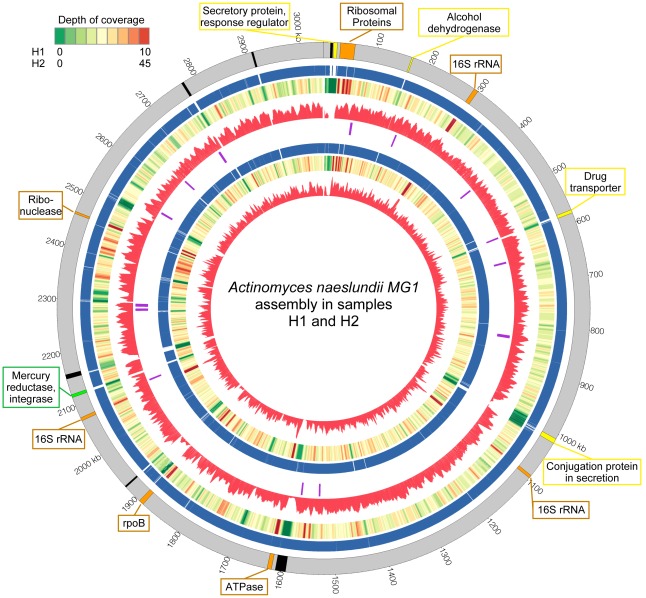
“Image generated with Circos [86].”
Global trends in emerging infectious diseases
Jones, K. E., Patel, N. G., Levy, M. A., Storeygard, A., Balk, D., Gittleman, J. L., & Daszak, P. (2008) · Nature · doi:10.1038/nature06536 · Cited by 8,338 · cited 1×
“This is especially true in light of the slow rate at which new antibiotics are discovered [7], and the increase in the number of microbes that can resist treatment [8,9].”
BackgroundTurnbaugh, P. J., Ley, R. E., Hamady, M., Fraser-Liggett, C. M., Knight, R., & Gordon, J. I. (2007) · Nature · doi:10.1038/nature06244 · Cited by 6,091 · cited 2×
“Understanding the role of microbial communities in human health is emerging as one of the most important and fascinating biomedical challenges of our times [1,2,3,4].”
BackgroundVersatile and open software for comparing large genomes
Kurtz, S., Phillippy, A., Delcher, A. L., Smoot, M., Shumway, M., Antonescu, C., & Salzberg, S. L. (2004) · Genome Biology · doi:10.1186/gb-2004-5-2-r12 · Cited by 5,254 · cited 2×
“We used MUMmer [65] (-maxmatch -l 20 -b) to map the individual reads against the HOMD reference database.”
MethodMicrobial complexes in subgingival plaque
Socransky, S. S., Haffajee, A. D., Cugini, M. A., Smith, C., & Kent, R. L. (1998) · Journal of Clinical Periodontology · doi:10.1111/j.1600-051x.1998.tb02419.x · Cited by 5,050 · cited 1×
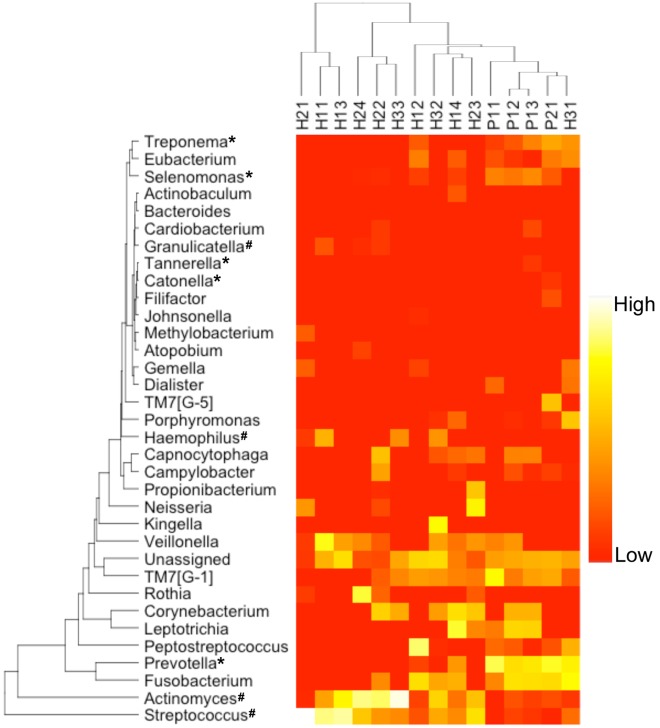
“Surprisingly, however, neither Fusobacterium, nor Porphyromonas were found to be significantly more abundant in the periodontal disease samples, despite being previously implicated in this disease [12,39].”
Background
Cited by
Items 401–410 of 410
Microbial study of periodontal diseases
Benabdelkader, S. (2019) · theses.fr (ABES) · doi:10.70675/ceca4a2fz6c83z4970zad35z921640cd968e
Un nouveau monde microbien chez l’homme : les candidate phyla radiation (CPR)
Naud, S. (2021) · theses.fr (ABES) · doi:10.70675/2c6ab74fz802bz4a59z8eb9z97ba8ac4edd6
Etude des Candidate Phyla Radiation chez l'Homme en situations physiologiques et pathologiques
Valles, C. (2022) · theses.fr (ABES) · doi:10.70675/09108d28zde3fz4cc7zb0c8z7ed19d23d635
Bouderka, F. (2024) · theses.fr (ABES) · doi:10.70675/3d2ed8abz09a5z42a4z9c14z58de20b92eb9
Coyago, M. D. L. R., Reyes, I. N. B., García, M. M. V., Tola, E. F. L., Bravo-Torres, W., & Cordero, J. J. A. (2026) · Microorganisms · doi:10.3390/microorganisms14071447
Metagenomics in the Interplay Among Oral and Gut Dysbiosis
Munzone, M., Marmo, G. M., Polizzi, A., Jovanova, E., Angjelova, A., Lupi, S. M., & Isola, G. (2026) · Metabolites · doi:10.3390/metabo16070502
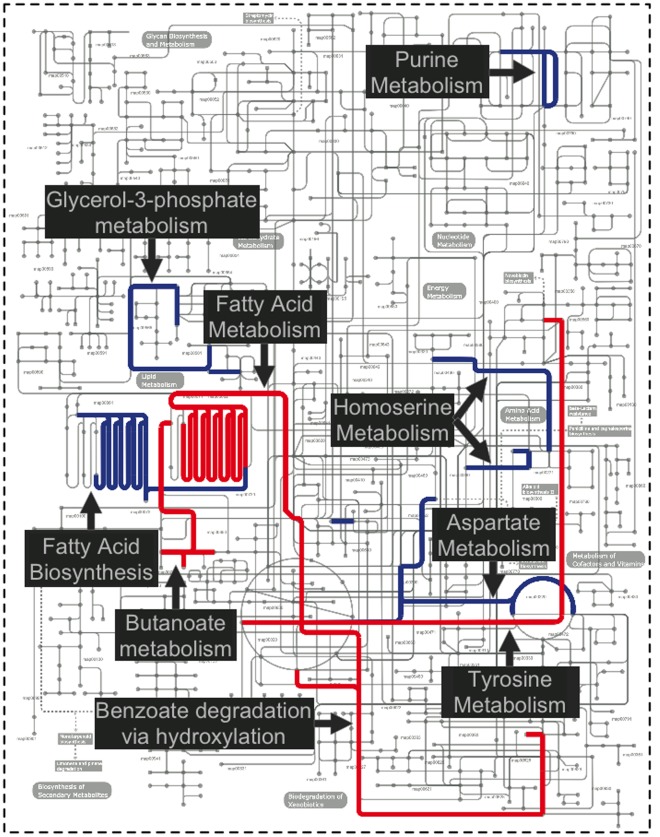
“From a metabolic perspective, bacterial species associated with periodontitis exhibit specific metabolic profiles linked to a parasitic-like behavior, involving pathways related to fatty acid metabolism, ferredoxin oxidation, and acetyl-CoA degradation [75,82,83].”
Clostridioides difficile in the oral microbiome: an in silico analysis
Vernon, J. J., Lynch, J., Xia, Y., & Do, T. (2026) · Journal of Medical Microbiology · doi:10.1099/jmm.0.002188
Novel Computational and Statistical Approaches in Metagenomic Studies
Sohn, M. B. (2015) · UA Campus Repository (The University of Arizona)
Metadata
- Authors
- Liu, B., Faller, L. L., Klitgord, N., Mazumdar, V., Ghodsi, M., Sommer, D. D., Gibbons, T. R., Treangen, T. J., Chang, Y.-C., Li, S., Stine, O. C., Hasturk, H., Kasif, S., Segrè, D., Pop, M., & Amar, S.
- Affiliations
- University of Maryland, College Park (US)
- Boston University (US)
- Johns Hopkins University (US)
- University of Maryland, Baltimore (US)
- Corresponding author
- Segrè, Daniel
- Pop, Mihai
- Amar, Salomon
- ORCID
- Venue
- PLoS ONE
- Publisher
- Public Library of Science (PLoS)
- Published
- 2012-06-04
- Volume
- 7
- Issue
- 6
- Pages
- e37919
- ISSN
- 1932-6203 (ISSN-L)
- PMC
- PMC3366996
- OpenAlex
- W2040670736
- Cited by
- 411
- References
- 90
- Citations by year
- 2026: 7 · 2025: 28 · 2024: 20 · 2023: 14 · 2022: 25 · 2021: 39 · 2020: 46 · 2019: 39 · 2018: 26 · 2017: 37 · 2016: 26 · 2015: 34 · 2014: 37 · 2013: 27 · 2012: 6
- FWCI
- 40.10
- Type
- journal article
- Language
- en
- Open access
- gold
- doi.org
- Locations
- PLoS ONE (publishedVersion, cc-by)
- Europe PMC (PubMed Central) (publishedVersion, cc-by)
- PubMed Central (publishedVersion, cc-by)
- PubMed (publishedVersion)
- Touro Scholar (Touro College) (submittedVersion)
- DOAJ (DOAJ: Directory of Open Access Journals) (submittedVersion, cc-by-sa)
- Figshare (submittedVersion, cc-by)
- Funders
- National Science Foundation (0812111)
- Bill and Melinda Gates Foundation
- National Institutes of Health (1rc2gm092602-01)
- National Human Genome Research Institute (R01HG004885, R01-HG04885)
- National Institute of General Medical Sciences (RC2-GM-092602, 1RC2GM092602-01, RC2-GM-092602-01, 1RC2GM092602)
- National Institute of Dental and Craniofacial Research (R01DE015345, R01DE014079)
- Topics
- Health Sciences › Dentistry › Periodontics › Oral microbiology and periodontitis research
- Life Sciences › Biochemistry, Genetics and Molecular Biology › Molecular Biology › Gut microbiota and health
- Life Sciences › Biochemistry, Genetics and Molecular Biology › Molecular Biology › Genomics and Phylogenetic Studies
- Keywords
- oral microbiota, periodontitis, subgingival plaque, 16S rRNA gene sequencing, metagenomics, virulence factors, microbial community structure, host homeostasis, cardiovascular risk, microbial genome reconstruction
- MeSH terms
- Actinomyces, Adult, Genes, Bacterial, Health, Humans, Metals, Middle Aged, Mouth, Periodontal Diseases, Periodontitis, Reference Standards, RNA, Ribosomal, 16S, Genetic Variation, Gene Expression Profiling, Drug Resistance, Bacterial, Virulence Factors, Metabolic Networks and Pathways, Metagenome, Metagenomics, High-Throughput Nucleotide Sequencing
About these checks
Registry, retraction, Cites and statistics results are computed, not judged, with one exception: a printed reference that no index lists is read once by a model before it counts as a citation error. Claims are extracted by a model and kept only when their quote appears verbatim in the text; each cited source is then checked, with a model’s help, for whether it says what the claim relies on. Those verdicts can be wrong — read the claim’s quote and the cited source before relying on one.
Statistics and arithmetic are recomputed, not judged.
Confidence bands are shown only for fields calibrated on our annotated test set. None is calibrated yet, so no band is shown.
What counts as a claim ›How we measure confidence ›How we check this ›
Are you an author, or do you see a problem with this page? Request a review
Data sources
Bibliographic data: Semantic Scholar, OpenAlex, Crossref.
Contains information from the Semantic Scholar Academic Graph Datasets, made available under the ODC Attribution License (ODC-BY 1.0).
Semantic Scholar’s data is described in: Kinney, R., et al. (2023). The Semantic Scholar Open Data Platform. arXiv:2301.10140.
