

The DOI matches its Crossref record; 65 of the 65 references it cites were found in a registry or an index.
Updating Fearful Memories with Extinction Training during Reconsolidation: A Human Study Using Auditory Aversive Stimuli
Open accessAbstract
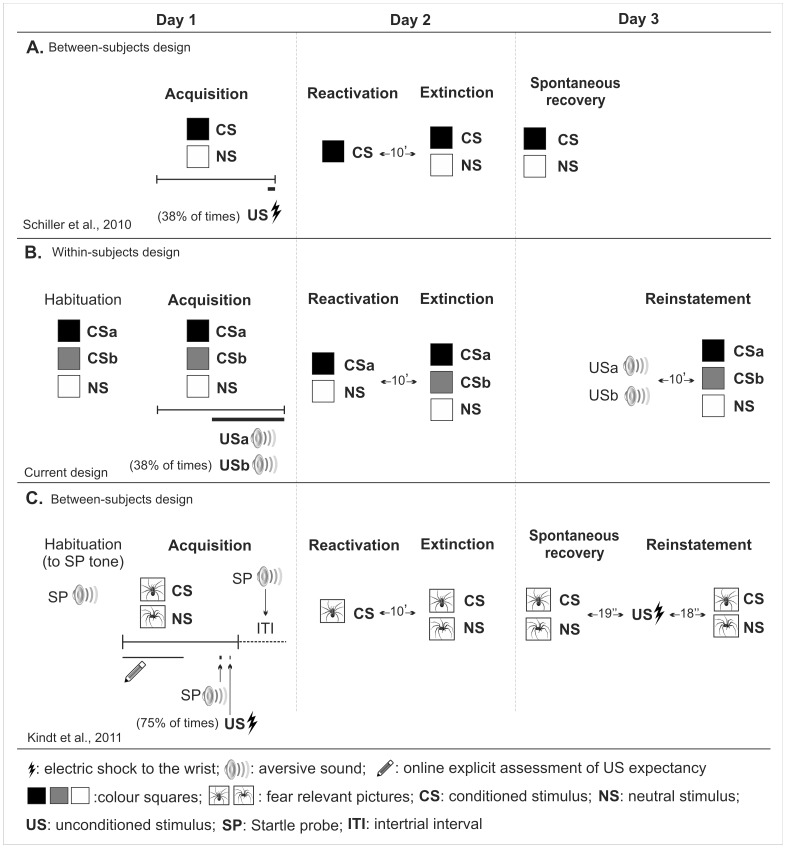
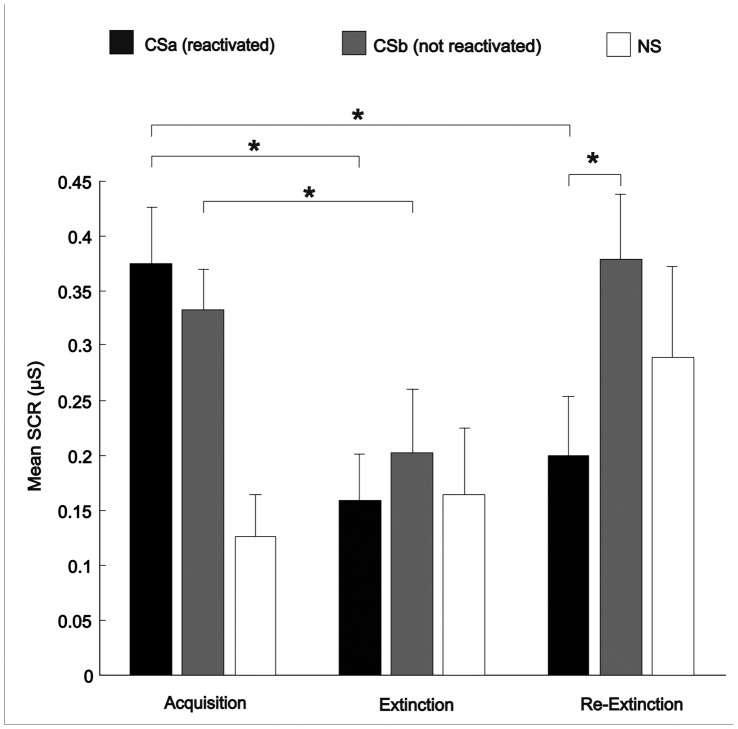
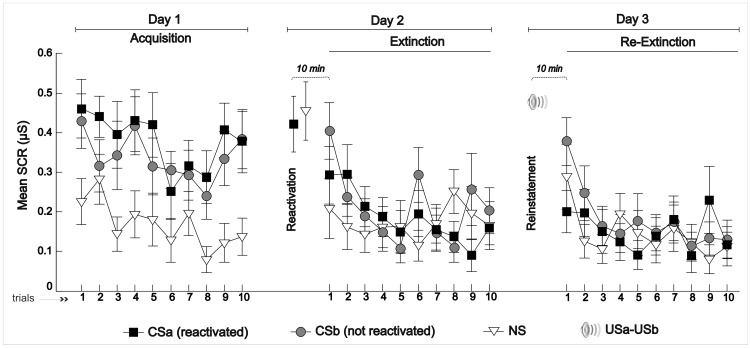
Learning to fear danger in the environment is essential to survival, but dysregulation of the fear system is at the core of many anxiety disorders. As a consequence, a great interest has emerged in developing strategies for suppressing fear memories in maladaptive cases. Recent research has focused in the process of reconsolidation where memories become labile after being retrieved. In a behavioral manipulation, Schiller et al., (2010) reported that extinction training, administrated during memory reconsolidation, could erase fear responses. The implications of this study are crucial for the possible treatment of anxiety disorders without the administration of drugs. However, attempts to replicate this effect by other groups have been so far unsuccessful. We sought out to reproduce Schiller et al., (2010) findings in a different fear conditioning paradigm based on auditory aversive stimuli instead of electric shock. Following a within-subject design, participants were conditioned to two different sounds and skin conductance response (SCR) was recorded as a measure of fear. Our results demonstrated that only the conditioned stimulus that was reminded 10 minutes before extinction training did not reinstate a fear response after a reminder trial consisting of the presentation of the unconditioned stimuli. For the first time, we replicated Schiller et al., (2010) behavioral manipulation and extended it to an auditory fear conditioning paradigm.
Overview
The claims and statistics of this paper haven’t been checked yet.
Run the check — free, no account needed. It reads the open-access text and checks the sources it cites.
Integrity signals
Registry
Cites
Statistics
Figures
Verification
Claims the paper makes
The claims and statistics of this paper haven’t been checked yet.
Run the check — free, no account needed. It reads the open-access text and checks the sources it cites.
Claims other papers make about this one
Each is checked against this paper’s own text: does it say what the citing paper says it does?
In the citing paper
“These conditions include, but are not limited to, the type of psychophysiological measure employed, the schedule of reinforcement used during acquisition, the fear-relevancy of the conditioned stimuli presented, the strength of the fear memory following acquisition, and the presence or absence of on-line measures of expectancy or fear ratings [see Ref. (37, 91–93)].”
From Conditioned fear associated phenotypes as robust, translational indices of trauma-, stressor-, and anxiety-related behaviors (2014) · cites this paper as [92]
Self-check
Percentages, sums and reported differences re-computed from the paper’s own numbers.
The self-check needs the paper’s full text.
Citations
Cites
Contributions of the Amygdala to Emotion Processing: From Animal Models to Human Behavior
Phelps, E. A., & LeDoux, J. E. (2005) · Neuron · doi:10.1016/j.neuron.2005.09.025 · Cited by 3,203 · cited 2×
“Learning to fear is critical for human survival because it impels us to quickly recognize and avoid stimuli that could represent a threat to our lives [1].”
Fears, phobias, and preparedness: toward an evolved module of fear and fear learning
Öhman, A., & Mineka, S. (2001) · Psychological Review · doi:10.1037/0033-295x.108.3.483 · Cited by 3,147 · cited 1×
“These fearrelevant stimuli, although successfully extinguished on day 2, generated a stronger conditioning [39] making this fear association more resistant to undergo reconsolidation [40].”
Fear memories require protein synthesis in the amygdala for reconsolidation after retrieval
Nader, K., Schafe, G. E., & Le Doux, J. E. (2000) · Nature · doi:10.1038/35021052 · Cited by 2,706
Context, ambiguity, and unlearning: sources of relapse after behavioral extinction
Bouton, M. E. (2002) · Biological Psychiatry · doi:10.1016/s0006-3223(02)01546-9 · Cited by 1,662
Neural Mechanisms of Extinction Learning and Retrieval
Quirk, G. J., & Mueller, D. (2008) · Neuropsychopharmacology · doi:10.1038/sj.npp.1301555 · Cited by 1,645
Neurobiology of Pavlovian fear conditioning
Maren, S. (2001) · Annual Review of Neuroscience · doi:10.1146/annurev.neuro.24.1.897 · Cited by 1,543
Fear Extinction as a Model for Translational Neuroscience: Ten Years of Progress
Milad, M. R., & Quirk, G. J. (2012) · Annual Review of Psychology · doi:10.1146/annurev.psych.121208.131631 · Cited by 1,466
Bechara, A., Tranel, D., Damasio, H., Adolphs, R., Rockland, C., & Damasio, A. R. (1995) · Science · doi:10.1126/science.7652558 · Cited by 1,400
Rauch, S. L., Shin, L. M., & Phelps, E. A. (2006) · Biological Psychiatry · doi:10.1016/j.biopsych.2006.06.004 · Cited by 1,397
Myers, K. M., & Davis, M. (2007) · Molecular Psychiatry · doi:10.1038/sj.mp.4001939 · Cited by 1,277
Cited by
Sorted by citations
Fear Extinction and Relapse: State of the Art
Vervliet, B., Craske, M. G., & Hermans, D. (2013) · Annual Review of Clinical Psychology · doi:10.1146/annurev-clinpsy-050212-185542 · Cited by 671
An Update on Memory Reconsolidation Updating
Lee, J. L. C., Nader, K., & Schiller, D. (2017) · Trends in Cognitive Sciences · doi:10.1016/j.tics.2017.04.006 · Cited by 557
Extinction during reconsolidation of threat memory diminishes prefrontal cortex involvement
Schiller, D., Kanen, J. W., LeDoux, J. E., Monfils, M., & Phelps, E. A. (2013) · Proceedings of the National Academy of Sciences · doi:10.1073/pnas.1320322110 · Cited by 310
Reconsolidation of Human Memory: Brain Mechanisms and Clinical Relevance
Schwabe, L., Nader, K., & Pruessner, J. C. (2014) · Biological Psychiatry · doi:10.1016/j.biopsych.2014.03.008 · Cited by 261
Human memory reconsolidation: A guiding framework and critical review of the evidence.
Elsey, J. W. B., Van Ast, V. A., & Kindt, M. (2018) · Psychological Bulletin · doi:10.1037/bul0000152 · Cited by 199
The fate of memory: Reconsolidation and the case of Prediction Error
Fernández, R. S., Boccia, M. M., & Pedreira, M. E. (2016) · Neuroscience & Biobehavioral Reviews · doi:10.1016/j.neubiorev.2016.06.004 · Cited by 189
The computational nature of memory modification
Gershman, S. J., Monfils, M.-H., Norman, K. A., & Niv, Y. (2017) · eLife · doi:10.7554/elife.23763 · Cited by 172
Beckers, T., & Kindt, M. (2017) · Annual Review of Clinical Psychology · doi:10.1146/annurev-clinpsy-032816-045209 · Cited by 184
Navigating the garden of forking paths for data exclusions in fear conditioning research
Lonsdorf, T. B., Klingelhöfer-Jens, M., Andreatta, M., Beckers, T., Chalkia, A., Gerlicher, A., Jentsch, V. L., Meir Drexler, S., Mertens, G., Richter, J., et al. (2019) · eLife · doi:10.7554/elife.52465 · Cited by 164
Human reconsolidation: A reactivation and update
Ågren, T. (2014) · Brain Research Bulletin · doi:10.1016/j.brainresbull.2013.12.010 · Cited by 175
Prediction Error and Memory Reactivation: How Incomplete Reminders Drive Reconsolidation
Sinclair, A. H., & Barense, M. D. (2019) · Trends in Neurosciences · doi:10.1016/j.tins.2019.08.007 · Cited by 172
Monfils, M., & Holmes, E. A. (2018) · The Lancet Psychiatry · doi:10.1016/s2215-0366(18)30270-0 · Cited by 150
Kredlow, M. A., Unger, L. D., & Otto, M. W. (2016) · Psychological Bulletin · doi:10.1037/bul0000034 · Cited by 130
Golkar, A., Bellander, M., Olsson, A., & Öhman, A. (2012) · Frontiers in Behavioral Neuroscience · doi:10.3389/fnbeh.2012.00080 · Cited by 120
Epigenetic mechanisms of memory formation and reconsolidation
Jarome, T. J., & Lubin, F. D. (2014) · Neurobiology of Learning and Memory · doi:10.1016/j.nlm.2014.08.002 · Cited by 116
Briscione, M. A., Jovanovic, T., & Norrholm, S. D. (2014) · Frontiers in Psychiatry · doi:10.3389/fpsyt.2014.00088 · Cited by 105
A behavioural neuroscience perspective on the aetiology and treatment of anxiety disorders
Kindt, M. (2014) · Behaviour Research and Therapy · doi:10.1016/j.brat.2014.08.012 · Cited by 103
Visser, R. M., Lau-Zhu, A., Henson, R. N., & Holmes, E. A. (2018) · Philosophical Transactions of the Royal Society B: Biological Sciences · doi:10.1098/rstb.2017.0209 · Cited by 95
New learning and unlearning: strangers or accomplices in threat memory attenuation?
Clem, R. L., & Schiller, D. (2016) · Trends in Neurosciences · doi:10.1016/j.tins.2016.03.003 · Cited by 90
Effect of a Brief Memory Updating Intervention on Smoking Behavior
Germeroth, L. J., Carpenter, M. J., Baker, N. L., Froeliger, B., LaRowe, S. D., & Saladin, M. E. (2017) · JAMA Psychiatry · doi:10.1001/jamapsychiatry.2016.3148 · Cited by 88
Disruption of human fear reconsolidation using imaginal and in vivo extinction
Ågren, T., Björkstrand, J., & Fredrikson, M. G. (2016) · Behavioural Brain Research · doi:10.1016/j.bbr.2016.11.014 · Cited by 79
Chalkia, A., Schroyens, N., Leng, L., Vanhasbroeck, N., Zenses, A., Oudenhove, L. V., & Beckers, T. (2020) · Cortex · doi:10.1016/j.cortex.2020.04.017 · Cited by 77
From Extinction Learning to Anxiety Treatment: Mind the Gap
Carpenter, J. K., Pinaire, M., & Hofmann, S. G. (2019) · Brain Sciences · doi:10.3390/brainsci9070164 · Cited by 77
Reconsolidation of traumatic memories for PTSD: a randomized controlled trial of 74 male veterans
Gray, R., Budden-Potts, D., & Bourke, F. (2019) · Psychotherapy Research · doi:10.1080/10503307.2017.1408973 · Cited by 66
Translational Approaches Targeting Reconsolidation
Kroes, M. C. W., Schiller, D., LeDoux, J. E., & Phelps, E. A. (2015) · Current topics in behavioral neurosciences · doi:10.1007/7854_2015_5008 · Cited by 65
Reconsolidation and psychopathology: Moving towards reconsolidation-based treatments
Dunbar, A. B., & Taylor, J. R. (2016) · Neurobiology of Learning and Memory · doi:10.1016/j.nlm.2016.11.005 · Cited by 70
Björkstrand, J., Agren, T., Frick, A., Engman, J., Larsson, E.-M., Furmark, T., & Fredrikson, M. (2015) · PLOS ONE · doi:10.1371/journal.pone.0129393 · Cited by 65
Memory destabilization is critical for the success of the reactivation–extinction procedurePreprint
Piñeyro, M. E., Monti, R. I. F., Alfei, J. M., Bueno, A. M., & Urcelay, G. P. (2013) · Learning & Memory · doi:10.1101/lm.032714.113 · Cited by 68
Warren, V. T., Anderson, K. M., Kwon, C., Bosshardt, L., Jovanovic, T., Bradley, B., & Norrholm, S. D. (2014) · Neurobiology of Learning and Memory · doi:10.1016/j.nlm.2013.10.014 · Cited by 62
Shiban, Y., Brütting, J., Pauli, P., & Mühlberger, A. (2015) · Journal of Behavior Therapy and Experimental Psychiatry · doi:10.1016/j.jbtep.2014.09.009 · Cited by 60
Asthana, M. K., Brunhuber, B. S., Mühlberger, A., Reif, A., Schneider, S., & Herrmann, M. J. (2015) · The International Journal of Neuropsychopharmacology · doi:10.1093/ijnp/pyv137 · Cited by 55
Targeting memory reconsolidation to prevent the return of fear in patients with fear of flying
Maples‐Keller, J. L., Price, M., Jovanović, T., Norrholm, S. D., Odenat, L., Post, L. M., Zwiebach, L. C., Breazeale, K. G., Gross, R. E., Kim, S.-J., et al. (2017) · Depression and Anxiety · doi:10.1002/da.22626 · Cited by 55
Ecker, B. (2018) · International Journal of Neuropsychotherapy · doi:10.12744/ijnpt.2018.0001-0092 · Cited by 56
Effects of postretrieval-extinction learning on return of contextually controlled cued fear.
Drexler, S. M., Merz, C. J., Hamacher‐Dang, T. C., Marquardt, V., Fritsch, N., Otto, T., & Wolf, O. T. (2014) · Behavioral Neuroscience · doi:10.1037/a0036688 · Cited by 50
Mertens, G., & Houwer, J. D. (2015) · Biological Psychology · doi:10.1016/j.biopsycho.2015.11.014 · Cited by 48
Use of a Brief Fear Memory Reactivation Procedure for Enhancing Exposure Therapy
Telch, M. J., York, J., Lancaster, C. L., & Monfils, M. H. (2017) · Clinical Psychological Science · doi:10.1177/2167702617690151 · Cited by 40
Thompson, A., & Lipp, O. V. (2017) · Behaviour Research and Therapy · doi:10.1016/j.brat.2017.01.017 · Cited by 44
Absence of conditioned responding in humans: A bad measure or individual differences?
Marin, M., Barbey, F. M., Rosenbaum, B. L., Hammoud, M. Z., Orr, S. P., & Milad, M. R. (2019) · Psychophysiology · doi:10.1111/psyp.13350 · Cited by 41
Weems, C. F., Russell, J. D., Banks, D. M., Graham, R. A., Neill, E. L., & Scott, B. G. (2014) · Journal of Experimental Psychology General · doi:10.1037/xge0000016 · Cited by 38
Modification of Fear Memory by Pharmacological and Behavioural Interventions during Reconsolidation
Thome, J., Koppe, G., Hauschild, S., Liebke, L., Schmahl, C. G., Lis, S., & Bohus, M. (2016) · PLoS ONE · doi:10.1371/journal.pone.0161044 · Cited by 38
Grégoire, L., & Greening, S. G. (2018) · Cognition · doi:10.1016/j.cognition.2018.12.001 · Cited by 35
Easy to remember, difficult to forget: The development of fear regulation
Johnson, D. C., & Casey, B. J. (2014) · Developmental Cognitive Neuroscience · doi:10.1016/j.dcn.2014.07.006 · Cited by 37
Exploring the boundaries of post-retrieval extinction in healthy and anxious individuals
Kredlow, M. A., Orr, S. P., & Otto, M. W. (2018) · Behaviour Research and Therapy · doi:10.1016/j.brat.2018.06.010 · Cited by 35
Disrupting Reconsolidation of Fear Memory in Humans by a Noradrenergic β-Blocker
Kindt, M., Soeter, M., & Sevenster, D. (2014) · Journal of Visualized Experiments · doi:10.3791/52151 · Cited by 37
Zuccolo, P. F., & Hunziker, M. H. L. (2019) · Behavioural Processes · doi:10.1016/j.beproc.2019.01.011 · Cited by 32
Delayed extinction fails to reduce skin conductance reactivity to fear‐conditioned stimuli
Fricchione, J. G., Greenberg, M. S., Spring, J. D., Wood, N. E., Mueller‐Pfeiffer, C., Milad, M. R., Pitman, R. K., & Orr, S. P. (2016) · Psychophysiology · doi:10.1111/psyp.12687 · Cited by 35
Reliability of web-based affective auditory stimulus presentation
Seow, T. X. F., & Hauser, T. U. (2021) · Behavior Research Methods · doi:10.3758/s13428-021-01643-0 · Cited by 31
Hupbach, A., Gómez, R. L., & Nadel, L. (2015) · Wiley eBooks · doi:10.1002/9781118332634.ch12 · Cited by 27
Ruglass, L. M., López‐Castro, T., Cheref, S., Papini, S., & Hien, D. A. (2014) · Current Psychiatry Reports · doi:10.1007/s11920-014-0505-5 · Cited by 28
Memory reconsolidation and the crisis of mechanism in psychotherapy
Ecker, B., & Vaz, A. (2022) · New Ideas in Psychology · doi:10.1016/j.newideapsych.2022.100945 · Cited by 27
The evidence for and against reactivation-induced memory updating in humans and nonhuman animals
Jardine, K. H., Huff, A. E., Wideman, C. E., McGraw, S. D., & Winters, B. D. (2022) · Neuroscience & Biobehavioral Reviews · doi:10.1016/j.neubiorev.2022.104598 · Cited by 32
Recent developments in the behavioural and pharmacological enhancement of extinction of drug seeking
Chesworth, R., & Corbit, L. H. (2015) · Addiction Biology · doi:10.1111/adb.12337 · Cited by 25
Auchter, A., Shumake, J., Gonzalez-Lima, F., & Monfils, M. (2017) · Scientific Reports · doi:10.1038/srep46071 · Cited by 22
Kreutzmann, J. C., Marin, M., Fendt, M., Milad, M. R., Ressler, K. J., & Jovanović, T. (2021) · Behavioural Brain Research · doi:10.1016/j.bbr.2020.113105 · Cited by 23
A comparison of behavioral and pharmacological interventions to attenuate reactivated fear memoriesPreprint
Monti, R. I. F., Alfei, J. M., Mugnaini, M., Bueno, A. M., Beckers, T., Urcelay, G. P., & Molina, V. A. (2017) · Learning & Memory · doi:10.1101/lm.045385.117 · Cited by 24
Extinction after fear memory reactivation fails to eliminate renewal in rats
Goode, T. D., Holloway-Erickson, C. M., & Maren, S. (2017) · Neurobiology of Learning and Memory · doi:10.1016/j.nlm.2017.03.001 · Cited by 21
The Computational Nature of Memory ModificationPreprint
Gershman, S. J., Monfils, M., Norman, K. A., & Niv, Y. (2016) · bioRxiv (Cold Spring Harbor Laboratory) · doi:10.1101/036442 · Cited by 21
Bolsoni, L. M., & Zuardi, A. W. (2019) · Neurobiology of Stress · doi:10.1016/j.ynstr.2019.100194 · Cited by 19
Forcato, C., Klinzing, J. G., Carbone, J., Radloff, M., Weber, F. D., Jan Born, A., & Diekelmann, S. (2020) · Communications Biology · doi:10.1038/s42003-020-01457-4 · Cited by 17
Marchetta, E., Mancini, G. F., Morena, M., & Campolongo, P. (2022) · Current Neuropharmacology · doi:10.2174/1570159x21666221207162750 · Cited by 17
Sound tuning of amygdala plasticity in auditory fear conditioning
Park, S., Lee, J., Park, K., Kim, J., Song, B., Hong, I., Kim, J., Lee, S., & Choi, S. (2016) · Scientific Reports · doi:10.1038/srep31069 · Cited by 19
Demarcating the boundary conditions of memory reconsolidation: An unsuccessful replication
Stemerding, L., Stibbe, D., van Ast, V. A., & Kindt, M. (2022) · Scientific Reports · doi:10.1038/s41598-022-06119-5 · Cited by 19
Unconscious learning of likes and dislikes is persistent, resilient, and reconsolidates
Pine, A., Mendelsohn, A., & Dudai, Y. (2014) · Frontiers in Psychology · doi:10.3389/fpsyg.2014.01051 · Cited by 19
Lancaster, C. L., Monfils, M., & Telch, M. J. (2020) · Behaviour Research and Therapy · doi:10.1016/j.brat.2020.103730 · Cited by 18
Zimmermann, J., & Bach, D. R. (2020) · Learning & Memory · doi:10.1101/lm.050211.119 · Cited by 15
Is Reconsolidation a General Property of Memory?
Kim, G., Kwon, M., Kang, W., & Lee, S. (2021) · Frontiers in Human Neuroscience · doi:10.3389/fnhum.2021.643106 · Cited by 16
Kitamura, H., Johnston, P., Johnson, L. R., & Strodl, E. S. (2020) · Neurobiology of Learning and Memory · doi:10.1016/j.nlm.2020.107285 · Cited by 13
Bui, U. T. D., & Milton, A. L. (2023) · Neuroscience · doi:10.1016/j.neuroscience.2023.03.013 · Cited by 13
Fear of Acupuncture Enhances Sympathetic Activation to Acupuncture Stimulation
Lee, I., Jo, H.-J., Lee, S. H., Lee, H., Lee, H., Park, H., & Chae, Y. (2013) · Acupuncture in Medicine · doi:10.1136/acupmed-2012-010291 · Cited by 12
Rey, J. F., Gonzalez-Gonzalez, D., & Redondo, J. (2018) · Behavioral Neuroscience · doi:10.1037/bne0000245 · Cited by 13
Oyarzún, J. P., Càmara, E., Kouider, S., Fuentemilla, L., & de Diego‐Balaguer, R. (2018) · Brain and Behavior · doi:10.1002/brb3.1157 · Cited by 13
Self-citationGong, Z., Wang, Z., Jiang, L., Wang, X., Zhang, B., Vashisth, M. K., & Zhou, Q. (2022) · Experimental Neurology · doi:10.1016/j.expneurol.2022.114224 · Cited by 12
Piñeyro, M. E., Monti, R. I. F., Díaz, H., Bueno, A. M., Bustos, S. G., & Molina, V. A. (2018) · Neurobiology of Learning and Memory · doi:10.1016/j.nlm.2018.08.003 · Cited by 16
Looking Beyond Fear and Extinction Learning: Considering Novel Treatment Targets for Anxiety
Britton, J. C., Evans, T. C., & Hernandez, M. V. (2014) · Current Behavioral Neuroscience Reports · doi:10.1007/s40473-014-0015-0 · Cited by 11
Chiamulera, C., Hinnenthal, I., Auber, A., & Cibin, M. (2014) · Frontiers in Psychiatry · doi:10.3389/fpsyt.2014.00107 · Cited by 12
Dnmt3a in the dorsal dentate gyrus is a key regulator of fear renewal
Gong, Z., & Zhou, Q. (2018) · Scientific Reports · doi:10.1038/s41598-018-23533-w · Cited by 11
Avoidance Behavior Prevents Modification of Fear Memory During Reconsolidation
Nitta, Y., Takahashi, T., Haitani, T., Sugimori, E., & Kumano, H. (2018) · Psychological Reports · doi:10.1177/0033294118811116 · Cited by 10
Threat processing: models and mechanisms
Bentz, D., & Schiller, D. (2015) · Wiley Interdisciplinary Reviews Cognitive Science · doi:10.1002/wcs.1353 · Cited by 13
Lee, D., Guiomar, R. N. R. M., Gonçalves, Ó. F., Almeida, J., & Ganho-Ávila, A. (2022) · International Journal of Clinical and Health Psychology · doi:10.1016/j.ijchp.2022.100342 · Cited by 10
Phelps, E. A., & Schiller, D. (2013) · Elsevier eBooks · doi:10.1016/b978-0-12-386892-3.00009-3 · Cited by 10
Houtekamer, M. C., Henckens, M. J. A. G., Mackey, W. E., Dunsmoor, J. E., Homberg, J. R., & Kroes, M. C. W. (2020) · Scientific Reports · doi:10.1038/s41598-020-73139-4 · Cited by 11
Reconsolidation and Fear Extinction: An Update
Raskin, M., & Monfils, M. (2023) · Current topics in behavioral neurosciences · doi:10.1007/7854_2023_438 · Cited by 9
Metamemory ratings predict long-term changes in reactivated episodic memories
Yacoby, A., Dudai, Y., & Mendelsohn, A. (2015) · Frontiers in Behavioral Neuroscience · doi:10.3389/fnbeh.2015.00020 · Cited by 9
Ganho-Ávila, A., Guiomar, R. N. R. M., Valério, D., Gonçalves, Ó. F., & Almeida, J. (2021) · Experimental Brain Research · doi:10.1007/s00221-021-06248-9 · Cited by 6
Ecker, B. (2017) · PsyArXiv (OSF Preprints) · doi:10.31234/osf.io/zrq2m · Cited by 6
Hussain, S., Menchaca, I., Shalchy, M. A., Yaghoubi, K. C., Langley, J. A., Seitz, A. R., Hu, X. P., & Peters, M. A. K. (2023) · Brain Research Bulletin · doi:10.1016/j.brainresbull.2023.110733 · Cited by 6
Dural, S., Gür, E., & Çetınkaya, H. (2022) · Learning & Behavior · doi:10.3758/s13420-022-00536-2 · Cited by 6
Picco, S., Bavassi, L., Fernández, R. S., & Pedreira, M. E. (2022) · Neuroscience · doi:10.1016/j.neuroscience.2022.07.001 · Cited by 8
Weems, C. F. (2025) · Clinical Child and Family Psychology Review · doi:10.1007/s10567-025-00528-4 · Cited by 5
Interfering with fear memories by eye movement desensitization and reprocessing
Jellestad, L., Zeffiro, T. A., Piccirelli, M., Malamud, J., Klimke, B. B. M., Rauen, K., Rufer, M., Orr, S. P., & Mueller‐Pfeiffer, C. (2021) · International Journal of Psychophysiology · doi:10.1016/j.ijpsycho.2021.04.006 · Cited by 7
Ecker, B. (2024) · Journal of Psychiatry and Psychiatric Disorders · doi:10.26502/jppd.2572-519x0226 · Cited by 7
Preventing fear return in humans: Music-based intervention during reactivation-extinction paradigm
Verma, A., Mitra, S., Khamaj, A., Kant, V., & Asthana, M. K. (2024) · PLoS ONE · doi:10.1371/journal.pone.0293880 · Cited by 5
Is it possible to modify fear memories in humans with extinction training within a single day?
Redondo, J., Rey, J. F., & Gonzalez-Gonzalez, D. (2018) · Psychological Research · doi:10.1007/s00426-018-1017-4 · Cited by 4
Hardwicke, T. E. (2017) · Thesis Commons (OSF Preprints) · doi:10.31237/osf.io/r4c32 · Cited by 4
The Cognitive Neuroscience of Fear Learning
Stjepanović, D., & LaBar, K. S. (2018) · Wiley eBooks · doi:10.1002/9781119170174.epcn102 · Cited by 4
Reconsolidation and Trauma Memory
Kessler, H., Blackwell, S. E., & Kehyayan, A. (2017) · Studies in neuroscience, psychology and behavioral economics · doi:10.1007/978-3-319-45066-7_22 · Cited by 5
AMPA Receptor Plasticity in Retrieval, Reconsolidation and Post-retrieval Extinction of Memories
Rao‐Ruiz, P., Schmitz, L. J. M., Smit, A. B., & Spijker, S. (2015) · Springer eBooks · doi:10.1007/978-3-319-24364-1_2 · Cited by 3
Zuccolo, P. F., & Hunziker, M. H. L. (2018) · Revista Brasileira de Análise do Comportamento · doi:10.18542/rebac.v14i2.7532 · Cited by 3
Guo, W., Li, W., Liu, Y.-C., Zhao, Y., Xu, L., & Qi-xin, Z. (2024) · Neuroscience Bulletin · doi:10.1007/s12264-024-01324-w · Cited by 2
La terapia de la coherencia: un enfoque constructivista apoyado por la neurociencia contemporánea
Jasiński, M., Paz, C., & Feixas, G. (2016) · Acción Psicológica · doi:10.5944/ap.13.1.16137 · Cited by 1
Metadata
- Authors
- Oyarzún, J. P., Lopez-Barroso, D., Fuentemilla, L., Cucurell, D., Pedraza, C., Rodriguez-Fornells, A., & de Diego-Balaguer, R.
- Affiliations
- Institut d'Investigació Biomédica de Bellvitge (ES)
- Universidad de Málaga (ES)
- Venue
- PLoS ONE
- Publisher
- Public Library of Science (PLoS)
- Published
- 2012-06-29
- Volume
- 7
- Issue
- 6
- Pages
- e38849
- ISSN
- 1932-6203 (ISSN-L)
- PMC
- PMC3387215
- OpenAlex
- W2091957319
- Cited by
- 125
- References
- 64
- Citations by year
- 2025: 6 · 2024: 3 · 2023: 4 · 2022: 11 · 2021: 7 · 2020: 6 · 2019: 11 · 2018: 14 · 2017: 14 · 2016: 11 · 2015: 11 · 2014: 17 · 2013: 8 · 2012: 2
- FWCI
- 6.22
- Type
- journal article
- Language
- en
- Open access
- gold
- doi.org
- Locations
- PLoS ONE (publishedVersion, cc-by)
- Europe PMC (PubMed Central) (publishedVersion, cc-by)
- PubMed Central (publishedVersion, cc-by)
- PubMed (publishedVersion)
- RECERCAT (Consorci de Serveis Universitaris de Catalunya) (publishedVersion, other-oa)
- RePEc: Research Papers in Economics (submittedVersion, cc-by)
- Dipòsit Digital de la Universitat de Barcelona (Universitat de Barcelona) (submittedVersion, cc-by)
- DOAJ (DOAJ: Directory of Open Access Journals) (submittedVersion, cc-by-sa)
- Funders
- Generalitat de Catalunya (2009 SGR 93)
- Ministerio de Ciencia e Innovación
- Universitat de Barcelona
- Topics
- Life Sciences › Neuroscience › Cognitive Neuroscience › Memory and Neural Mechanisms
- Life Sciences › Neuroscience › Cognitive Neuroscience › Memory Processes and Influences
- Social Sciences › Psychology › Clinical Psychology › Posttraumatic Stress Disorder Research
- Keywords
- fear memory reconsolidation, extinction training, fear extinction, auditory fear conditioning, anxiety disorders, skin conductance response, fear reinstatement, replication, aversive sounds
- MeSH terms
- Acoustic Stimulation, Extinction, Psychological, Fear, Female, Galvanic Skin Response, Humans, Male, Memory, Photic Stimulation, Young Adult
About these checks
Registry, retraction, Cites and statistics results are computed, not judged, with one exception: a printed reference that no index lists is read once by a model before it counts as a citation error. Claims are extracted by a model and kept only when their quote appears verbatim in the text; each cited source is then checked, with a model’s help, for whether it says what the claim relies on. Those verdicts can be wrong — read the claim’s quote and the cited source before relying on one.
Statistics and arithmetic are recomputed, not judged.
Confidence bands are shown only for fields calibrated on our annotated test set. None is calibrated yet, so no band is shown.
What counts as a claim ›How we measure confidence ›How we check this ›
Are you an author, or do you see a problem with this page? Request a review
