

Dietary fibre intake and risks of cancers of the colon and rectum in the European prospective investigation into cancer and nutrition (EPIC).
Open accessThe DOI matches its Crossref record; 38 of the 40 references it cites were found in a registry or an index, and 1 are not checked yet.
Abstract
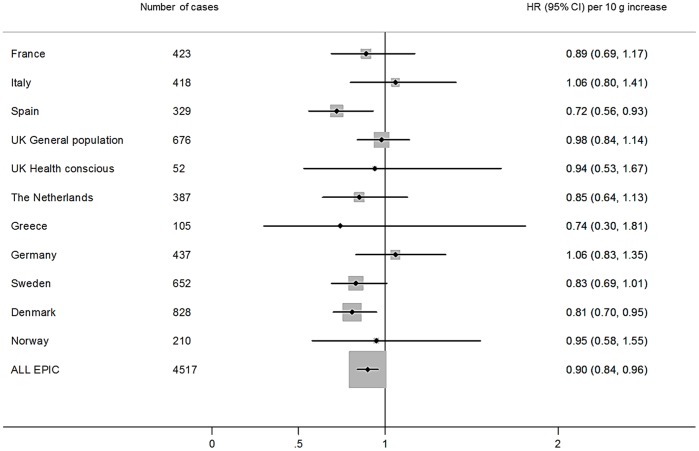
BACKGROUND: Earlier analyses within the EPIC study showed that dietary fibre intake was inversely associated with colorectal cancer risk, but results from some large cohort studies do not support this finding. We explored whether the association remained after longer follow-up with a near threefold increase in colorectal cancer cases, and if the association varied by gender and tumour location. METHODOLOGY/PRINCIPAL FINDINGS: After a mean follow-up of 11.0 years, 4,517 incident cases of colorectal cancer were documented. Total, cereal, fruit, and vegetable fibre intakes were estimated from dietary questionnaires at baseline. Hazard ratios (HRs) and 95% confidence intervals (CIs) were estimated using Cox proportional hazards models stratified by age, sex, and centre, and adjusted for total energy intake, body mass index, physical activity, smoking, education, menopausal status, hormone replacement therapy, oral contraceptive use, and intakes of alcohol, folate, red and processed meats, and calcium. After multivariable adjustments, total dietary fibre was inversely associated with colorectal cancer (HR per 10 g/day increase in fibre 0.87, 95% CI: 0.79-0.96). Similar linear associations were observed for colon and rectal cancers. The association between total dietary fibre and risk of colorectal cancer risk did not differ by age, sex, or anthropometric, lifestyle, and dietary variables. Fibre from cereals and fibre from fruit and vegetables were similarly associated with colon cancer; but for rectal cancer, the inverse association was only evident for fibre from cereals. CONCLUSIONS/SIGNIFICANCE: Our results strengthen the evidence for the role of high dietary fibre intake in colorectal cancer prevention.
Overview
The claims and statistics of this paper haven’t been checked yet.
Free: it reads the open-access text and checks the first 5 claims that cite a source we can check. Create a free account to check every claim.
Integrity signals
Registry
Cites
Statistics
Figures
Verification
Claims the paper makes
The claims and statistics of this paper haven’t been checked yet.
Free: it reads the open-access text and checks the first 5 claims that cite a source we can check. Create a free account to check every claim.
Self-check
Percentages, sums and reported differences re-computed from the paper’s own numbers.
The self-check needs the paper’s full text.
Citations
Cites
Home visits: a strategy to improve newborn survival - Authors' reply
(2008) · Americanae (AECID Library) · doi:10.1016/s0140 · Cited by 22,524
Food, nutrition, physical activity, and the prevention of cancer: a global perspective
(2008) · Choice Reviews Online · doi:10.5860/choice.45-5024 · Cited by 5,350
Partial residuals for the proportional hazards regression model
SCHOENFELD, D. (1982) · Biometrika · doi:10.1093/biomet/69.1.239 · Cited by 3,111 · cited 1×
“Hazard ratios (HRs) and 95% confidence intervals (CIs) were estimated using Cox proportional hazards models. Age was the primary time variable in all models. Time at entry was age at recruitment. Exit time was age at whichever of the following came first: colorectal cancer diagnosis, death, or the date at which follow…”
Flexible regression models with cubic splines
Durrleman, S., & Simon, R. (1989) · Statistics in Medicine · doi:10.1002/sim.4780080504 · Cited by 2,689 · cited 1×
“[30] Heterogeneity of associations across cancer sub-sites was assessed by calculating x(2) statistics.”
Methods for Trend Estimation from Summarized Dose-Response Data, with Applications to Meta-Analysis
Greenland, S., & Longnecker, M. P. (1992) · American Journal of Epidemiology · doi:10.1093/oxfordjournals.aje.a116237 · Cited by 2,353 · cited 1×
“[31] We further combined the country specific risk estimates using a random-effects model.”
Riboli, E., Hunt, K., Slimani, N., Ferrari, P., Norat, T., Fahey, M., Charrondière, U., Hémon, B., Casagrande, C., Vignat, J., et al. (2002) · Public Health Nutrition · doi:10.1079/phn2002394 · Cited by 1,866 · cited 1×
“[20,21] In summary, 521,448 participants (,70% women) mostly aged 35 years or above were recruited between 1992 and 2000.”
Self-citationEpidemiology of cancer of the colon and rectum
Burkitt, D. P. (1971) · Cancer · doi:10.1002/1097-0142(197107)28:1<3::aid-cncr2820280104>3.0.co;2-n · Cited by 1,333
Aune, D., Chan, D. S. M., Lau, R., Vieira, R., Greenwood, D. C., Kampman, E., & Norat, T. (2011) · BMJ · doi:10.1136/bmj.d6617 · Cited by 1,146
Self-citationBingham, S. A., Day, N. E., Luben, R., Ferrari, P., Slimani, N., Norat, T., Clavel-Chapelon, F., Kesse, E., Nieters, A., Boeing, H., et al. (2003) · The Lancet · doi:10.1016/s0140-6736(03)13174-1 · Cited by 1,111
Self-citationRiboli, E. (1997) · International Journal of Epidemiology · doi:10.1093/ije/26.suppl_1.s6 · Cited by 945 · cited 1×
“[20,21] In summary, 521,448 participants (,70% women) mostly aged 35 years or above were recruited between 1992 and 2000.”
Self-citation
Cited by
Items 101–200 of 291
Shen, R., Wang, Z., Dong, J., Xiang, Q., & Liu, Y. (2016) · Food and Agricultural Immunology · doi:10.1080/09540105.2016.1148664 · Cited by 34
“Epidemiological study concluded that total dietary fiber was inversely associated with colon cancer in humans (Murphy et al., 2012).”
BackgroundNutrition and gut health: the impact of specific dietary components – it's not just five-a-day
Rhodes, J. M. (2020) · Proceedings of The Nutrition Society · doi:10.1017/s0029665120000026 · Cited by 34
“The protective effect of fibre in the EPIC study was predominantly against proximal (right-sided) colon cancer((9)).”
BackgroundResultKopp, T. I., Andersen, V. C., Tjønneland, A. M., & Vogel, U. B. (2015) · PLoS ONE · doi:10.1371/journal.pone.0116394 · Cited by 31
“Conversely, fibre, fruit and vegetables provide short-chain fatty acids (SCFAs) to the colonic epithelium by fermentation of unabsorbed dietary fibre and starch [11–15].”
BackgroundSelf-citationOrtiz‐Rivera, Y., García-Amézquita, E., Acosta‐Muñiz, C. H., & Sepulveda, D. R. (2017) · Springer eBooks · doi:10.1007/978-1-4939-6496-3_5 · Cited by 38
Comparative Evaluation of Preliminary Screening Methods for Colorectal Cancer in a Mass Program
Ding, Y., Huang, Q.-C., Li, Q., Jiang, X., Mayila, M., Tang, M., Wang, J., & Chen, K. (2017) · Digestive Diseases and Sciences · doi:10.1007/s10620-017-4648-1 · Cited by 30
Fibre Intake Is Associated with Cardiovascular Health in European Children
Larrosa, S., Luque, V., Grote, V., Closa‐Monasterolo, R., Ferré, N., Koletzko, B. V., Verduci, E., Gruszfeld, D., Xhonneux, A., & Escribano, J. (2020) · Nutrients · doi:10.3390/nu13010012 · Cited by 31
y Abreu, A. T. A., Milke-García, M. D. P., Argüello-Arévalo, G. A., de la Barca, A. M. C., Carmona-Sánchez, R., Consuelo‐Sánchez, A., Coss‐Adame, E., Cedillo, M. F. G., Hernández-Rosiles, V., Icaza-Chávez, M. E., et al. (2021) · Revista de Gastroenterología de México · doi:10.1016/j.rgmx.2021.02.004 · Cited by 33
Sexual dimorphism in the context of nutrition and health
Pontifex, M. G., Vauzour, D., & Müller, M. M. (2023) · Proceedings of The Nutrition Society · doi:10.1017/s0029665123003610 · Cited by 29
Importance of consumer perceptions in fiber-enriched food products. A case study with sponge cakes
Tárrega, A., Quiles, A., Morell, P., Fiszman, S., & Hernando, I. (2016) · Food & Function · doi:10.1039/c6fo01022a · Cited by 28
Dietary Fiber and Fiber Fraction Intakes and Colorectal Cancer Risk in Chinese Adults
Zhong, X. Y., Fang, Y., Pan, Z.-Z., Lu, M.-S., Zheng, M.-C., Chen, Y., & Zhang, C. (2014) · Nutrition and Cancer · doi:10.1080/01635581.2013.877496 · Cited by 28
“The protective effect of total dietary fiber consumption on colorectal cancer risk observed in the present study was consistent with some previous epidemiological studies (7,23,25,36).”
BackgroundResultGenua, F., Mirković, B., Mullee, A., Levý, M., Gallagher, W. M., Vodička, P., & Hughes, D. J. (2021) · Clinical Nutrition ESPEN · doi:10.1016/j.clnesp.2021.09.740 · Cited by 28
World Gastroenterology Organisation Global Guidelines: Diet and the Gut
Makharia, G., Gibson, P. R., Bai, J. C., Karakan, T., Lee, Y. Y., Collins, L., Muir, J., Oruc, N., Quigley, E. M. M., Sanders, D. S., et al. (2021) · Journal of Clinical Gastroenterology · doi:10.1097/mcg.0000000000001588 · Cited by 28
The Risk of Cancer in Patients with Benign Anal Lesions: A Nationwide Population-based Study
Lee, P., Hu, Y., Hung, M., Chen, C.-C., Lin, H., Lee, F., Hung, Y., Su, V. Y., Yen, S.-H., Tzeng, C., et al. (2013) · The American Journal of Medicine · doi:10.1016/j.amjmed.2013.05.016 · Cited by 23
Botteri, E., Crosta, C., Bagnardi, V., Tamayo, D., Sonzogni, A., Roberto, G. D., de Leone, A., Lowenfels, A. B., & Maisonneuve, P. (2015) · Digestive and Liver Disease · doi:10.1016/j.dld.2015.11.020 · Cited by 23
“The detection and removal of precancerous esions through CRC screening and the intervention on modifiable isk factors for CRC, such as physical activity, dietary fibre intake, lcohol consumption and smoking habits [2–6], are strategies for”
BackgroundTakaoka, Y., & Kawakami, N. (2013) · BMC Public Health · doi:10.1186/1471-2458-13-1206 · Cited by 25
“Fruits and vegetables supply dietary fiber, and fiber intake is linked to lower incidence of cardiovascular disease [42], diabetes [43], cancer [44,45], and obesity [46].”
BackgroundFauziah, F., Mas’udah, S., Hapsari, L., & Nurfadilah, S. (2020) · AGRIVITA Journal of Agricultural Science · doi:10.17503/agrivita.v0i0.2552 · Cited by 22
“It is suggested to consume adequate amounts and recommended levels of dietary fiber from various plant foods as it is beneficial for health, to improve gastrointestinal function, reduce cardiovascular disease, diabetes, some cancers, lower body weights (Dahl & Stewart, 2015; Murphy et al., 2012; Slavin, 2013).”
BackgroundVieytes, C. A. M., Mondul, A. M., Li, Z., Zarins, K. R., Wolf, G. T., Rozek, L. S., & Arthur, A. E. (2019) · Nutrients · doi:10.3390/nu11102304 · Cited by 22
“The categorization of dietary variables considered their distributions in addition to the treatment of these variables in previous analyses [14,20].”
MethodSchlörmann, W., Atanasov, J., Lorkowski, S., Dawczynski, C., & Glei, M. (2020) · Food & Function · doi:10.1039/c9fo03009c · Cited by 21
Impact of Diet and Exercise on Colorectal Cancer
Lee, S., & Meyerhardt, J. A. (2022) · Hematology/Oncology Clinics of North America · doi:10.1016/j.hoc.2022.02.004 · Cited by 21
Kwao‐Zigah, G., Bediako‐Bowan, A., Boateng, P. A., Aryee, G. K., Abbang, S. M., Atampugbire, G. A., Quaye, O., & Tagoe, E. A. (2024) · Cancer Control · doi:10.1177/10732748241263650 · Cited by 19
Schlörmann, W., Lamberty, J., Lorkowski, S., Ludwig, D., Mothes, H. K., Saupe, C., & Glei, M. (2016) · Molecular Carcinogenesis · doi:10.1002/mc.22606 · Cited by 23
“an inverse relationship between dietary fiber consumption and the risk for colon cancer development.(22) The consumption of nuts can contribute up to 10% of the recommended dietary fiber intake of 30 g per day.”
BackgroundChemopreventive Potential of Raw and Roasted Pistachios Regarding Colon Carcinogenesis
Glei, M., Ludwig, D., Lamberty, J., Fischer, S., Lorkowski, S., & Schlörmann, W. (2017) · Nutrients · doi:10.3390/nu9121368 · Cited by 19
“Different studies already demonstrated that dietary fiber can decrease risk for colon cancer [8,9].”
BackgroundFahimirad, B., Asghari, A., & Rajabi, M. (2017) · Journal of Molecular Liquids · doi:10.1016/j.molliq.2017.12.133 · Cited by 19
Suresh, H., Ho, V., & Zhou, J. (2020) · Nutrients · doi:10.3390/nu12082479 · Cited by 20
Fruits, Vegetables, and Health
van Berleere, M., & Dauchet, L. (2017) · Elsevier eBooks · doi:10.1016/b978-0-12-803968-7.00013-7 · Cited by 20
Severe pan-sensory neuropathy in leprosy.
Pandya, S. S., & Ws, B. (1994) · PubMed · Cited by 19
Model with the GBDT for Colorectal Adenoma Risk Diagnosis
Gao, J., Zhang, L., Yu, G., Qu, G., Li, Y., & Yang, X. (2019) · Current Bioinformatics · doi:10.2174/1574893614666191120142005 · Cited by 18
Ruiz-Saavedra, S., Zapico, A., del Rey, C. G., González, C., Suárez, A., Díaz, Y., Reyes‐Gavilán, C. G. D. L., & González, S. (2022) · Nutrients · doi:10.3390/nu14173482 · Cited by 18
Self-citationHorniblow, R. D., Latunde-Dada, G. O., Harding, S. E., Schneider, M., Almutairi, F. M., Sahni, M., Bhatti, A., Ludwig, C., Norton, I. T., Iqbal, T. H., et al. (2016) · Molecular Nutrition & Food Research · doi:10.1002/mnfr.201500882 · Cited by 19
“Nondigestible fibres have been demonstrated to improve gastrointestinal health,[30] yet whether these effects are attributed to their iron binding properties is unknown.”
BackgroundEgg, S., Erler, J., Perktold, B., Hasenegger, V., Rust, P., Ramoner, R. E., König, J. S., & Purtscher, A. E. (2018) · Public Health Nutrition · doi:10.1017/s1368980018003270 · Cited by 19
Non-intrinsic cancer risk factors
Yıldırım-Kahrıman, S. (2023) · Experimental Oncology · doi:10.32471/exp-oncology.2312-8852.vol-43-no-4.16804 · Cited by 18
Nikinmaa, M., Alam, S. A., Raulio, M., Katina, K., Kajala, I., Nordlund, E., & Sözer, N. (2016) · LWT · doi:10.1016/j.lwt.2016.11.041 · Cited by 18
Budijanto, S., Nurtiana, W., Muniroh, A., Kurniati, Y., Nuraida, L., Priosoeryanto, B. P., Dewi, F. N., Ardiansyah, A., Yuliana, N. D., Safrida, S., et al. (2023) · Heliyon · doi:10.1016/j.heliyon.2023.e18528 · Cited by 17
Weber, A. M., Ibrahim, H., Baxter, B. A., Kumar, R., Maurya, A. K., Kumar, D., Agarwal, R., Raina, K., & Ryan, E. P. (2023) · Cancers · doi:10.3390/cancers15082231 · Cited by 16
Wheat Bran Dietary Fiber: Promising Source of Prebiotics with Antioxidant Potential
Gunenc, A., Alswiti, C., & Hosseinian, F. S. (2017) · Journal of Food Research · doi:10.5539/jfr.v6n2p1 · Cited by 18
Guiné, R. P. F., Duarte, J., Ferreira, M., Correia, P., Leal, M., Rumbak, I., Barić, I. C., Komes, D., Šatalić, Z., Sarić, M. M., et al. (2016) · Public Health · doi:10.1016/j.puhe.2016.03.031 · Cited by 17
Fibra dietaria: una alternativa para la alimentación
Flores, R. M. V. (2019) · Ingeniería Industrial · doi:10.26439/ing.ind2019.n037.4550 · Cited by 21
Wholegrain oat quality indicators for production of extruded snacks
Nikinmaa, M., Mustonen, S. A., Huitula, L., Laaksonen, O. A., Linderborg, K. M., Nordlund, E., & Sözer, N. (2023) · LWT · doi:10.1016/j.lwt.2023.114457 · Cited by 16
Cancer incidence attributable to insufficient fibre consumption in Alberta in 2012
Grundy, A. L., Poirier, A. E., Khandwala, F., McFadden, A., Friedenreich, C. M., & Brenner, D. R. (2017) · CMAJ Open · doi:10.9778/cmajo.20160043 · Cited by 15
Yang, Y., Yang, L., Zhou, L., & Tang, S. (2021) · Journal of Healthcare Engineering · doi:10.1155/2021/6680698 · Cited by 16
Chan, H. T. C., & Lee, P. H. (2016) · Journal of Human Nutrition and Dietetics · doi:10.1111/jhn.12389 · Cited by 16
Strategies for the treatment of colorectal cancer caused by gut microbiota
de Souza, J. B., de Castro, M. C. A. B., & Cavalcanti, I. M. F. (2021) · Life Sciences · doi:10.1016/j.lfs.2021.120202 · Cited by 15
Chinese consensus on prevention of colorectal neoplasia (2021, S hanghai)
Fang, J.-Y. (2022) · Journal of Digestive Diseases · doi:10.1111/1751-2980.13079 · Cited by 15
“85),(49) which was further confirmed by the 2012 EPIC study.(50)”
ResultUS Adults Fall Short of the Dietary Guidelines for Cancer Prevention Regardless of BMI Category
Good, M., Braun, A. C., Taylor, C. A., & Spees, C. (2021) · Journal of the Academy of Nutrition and Dietetics · doi:10.1016/j.jand.2021.02.013 · Cited by 13
Awofadeju, O. F. J., Awe, A. B., Adewumi, O. J., & Adeyemo, E. A. (2021) · Croatian Journal of Food Science and Technology · doi:10.17508/cjfst.2021.13.1.01 · Cited by 13
Eid, N. M. S., Walton, G., Costabile, A., Kuhnle, G., & Spencer, J. P. E. (2014) · Nutrition and Aging · doi:10.3233/nua-130029 · Cited by 17
“However, in 2012, the EPIC consortium indicated a strong relationship between the consumption of foods rich in fibre and phytochemicals, such as fruits, vegetables and cereals, and a reduction in the risk of CRC in non-smokers [92] and highly physical active participants [93].”
BackgroundHarris, K. F., Overcash, F. M., Belobrajdic, D. P., & Slavin, J. L. (2022) · Frontiers in Public Health · doi:10.3389/fpubh.2022.817967 · Cited by 15
“As such, the aforementioned recommendations for fiber intake among youth are extrapolated from studies among adult populations that showed improved outcomes with higher dietary fiber intake, namely cardiovascular disease and colon cancer (37, 38).”
BackgroundGivens, D. I. (2024) · animal · doi:10.1016/j.animal.2024.101263 · Cited by 14
Mahno, N. E., Tay, D. D., Khalid, N. S. A., Yassim, A. S. M., Alias, N., Termizi, S. A., Kasian, J., Mokhtar, N. M., & Ahmad, H. F. (2023) · Indian Journal of Microbiology · doi:10.1007/s12088-023-01135-z · Cited by 14
“Lifestyle factors such as diet [29, 42], alcohol, and radiation may play a role in the sporadic etiology [28, 29].”
Leptin as a risk factor for the development of colorectal cancer
Rodríguez, A. J., Mastronardi, C. A., & Paz-Filho, G. (2013) · Translational gastrointestinal cancer · doi:10.3978/j.issn.2224-4778.2013.10.04 · Cited by 12
“As elevated levels of HDL-cholesterol have been associated with a reduced risk of colon cancer, its decrease could potentially predispose to the development of CRC (43).”
BackgroundImad, F. E., Drissi, H., Tawfiq, N., Bendahhou, K., Jouti, N. T., Benider, A., & Radallah, D. (2019) · Pan African Medical Journal · doi:10.11604/pamj.2019.32.56.10548 · Cited by 12
“ont montré qu’un régime riche en fibres est inversement associé au risque de CCR et pourrait jouer un rôle préventif contre cette pathologie [23].”
BackgroundComponents of the Mediterranean Diet with chemopreventive activity toward colorectal cancer
Fazio, C., & Ricciardiello, L. (2014) · Phytochemistry Reviews · doi:10.1007/s11101-014-9346-4 · Cited by 11
Associations between Dietary Fiber and Colorectal Polyp Risk Differ by Polyp Type and Smoking Status
Fu, Z., Shrubsole, M. J., Smalley, W. E., Ness, R. M., & Zheng, W. (2014) · Journal of Nutrition · doi:10.3945/jn.113.183319 · Cited by 12
Guiné, R. P. F., Duarte, J., Ferreira, M., Correia, P., Leal, M., Rumbak, I., Barić, I. C., Komes, D., Šatalić, Z., Sarić, M. M., et al. (2016) · Public Health · doi:10.1016/j.puhe.2016.08.015 · Cited by 16
Chapter 2 Mono- and Disaccharides Selected Physicochemical and Functional Aspects
Jouppila, K. (2016) · CRC Press eBooks · doi:10.1201/9781315372822-3 · Cited by 11
Colon cancer trends in Norway and Denmark by socio-economic group: A cohort study
Lynge, E., Martinsen, J. I., Larsen, I. K., & Kjærheim, K. (2015) · Scandinavian Journal of Public Health · doi:10.1177/1403494815600015 · Cited by 11
“The risk of colon, as well as rectal, cancer is related to lifestyle, where physical activity and dietary fibre intake are protective and intake of red/processed meat and alcohol and high body fatness and height increase the risk [7,8].”
BackgroundOverview of the Health Benefits of Adequate Fiber Intake
Dreher, M. L. (2017) · Springer eBooks · doi:10.1007/978-3-319-50557-2_2 · Cited by 13
Tributyrin in Inflammation: Does White Adipose Tissue Affect Colorectal Cancer?
Biondo, L. A., Teixeira, A. A. D. S., Silveira, L. S., de Souza, C. O., Costa, R., Diniz, T. A., Mosele, F. C., & Neto, J. C. R. (2019) · Nutrients · doi:10.3390/nu11010110 · Cited by 12
“Epidemiological data has shown an inverse association between total dietary fibre content and colon cancer risk [4], demonstrating that high fibre intake was associated with a lower risk of colon cancer [5]; however, the type of fibre that is ingested is also important [6].”
BackgroundFrom Underutilized Side-Streams to Hybrid Food Ingredients for Health
(2018) · Cereal Foods World · doi:10.1094/cfw-63-4-0137 · Cited by 11
Burhannudin, B., Mahmudah, N. A. R. A. A., Widyarini, S., & Purnomosari, D. (2018) · PubMed Central · doi:10.22034/apjcp.2018.19.3.839 · Cited by 16
“Some studies revealed that high dietary intake of fibre and calcium have been associated with lower CRC risk (Haggar and Boushey, 2009; Murphy et al., 2012; Ahearn et al., 2012).”
BackgroundWhole Pulses and Pulse Fiber: Modulating Gastrointestinal Function and the Microbiome
Dahl, W. J., & Alvarez, M. M. (2019) · Springer eBooks · doi:10.1007/978-3-030-12763-3_7 · Cited by 10
Schlörmann, W., Bockwoldt, J. A., Mayr, M. F., Lorkowski, S., Dawczynski, C., Rohn, S., Ehrmann, M. A., & Glei, M. (2021) · Food & Function · doi:10.1039/d1fo02175c · Cited by 10
Simpson, H. L., Roberts, C. L., Thompson, L. M., Leiper, C. R., Gittens, N., Trotter, E., Duckworth, C. A., Papoutsopoulou, S., Miyajima, F., Roberts, P., et al. (2021) · Frontiers in Pharmacology · doi:10.3389/fphar.2021.766293 · Cited by 13
“In keeping with this it is notable that the large EPIC cohort study showed a protective effect for dietary fibre against proximal but not distal colon cancer (Murphy et al., 2012) and the Nurses’Health cohort study has shown a protective effect for fruit fibre against Crohn’s disease, which typically affects the ileum…”
ResultAithal, R. R., Shetty, R. S., Binu, V. S. N., Mallya, S. D., Rajgopal Shenoy, K., & Nair, S. (2017) · Asian Journal of Pharmaceutical and Clinical Research · doi:10.22159/ajpcr.2017.v10i4.16194 · Cited by 12
“The present study did not show an association between smoking status or alcohol consumption and colorectal cancer risk similar to the findings of earlier studies from India and Malaysia [7,15].”
ResultDietary Fiber and Gastrointestinal Disease: an Evolving Story
O’Grady, J., & Shanahan, F. (2018) · Current Gastroenterology Reports · doi:10.1007/s11894-018-0667-0 · Cited by 10
The Life-Long Role of Nutrition on the Gut Microbiome and Gastrointestinal Disease
Romano-Keeler, J., Zhang, J., & Sun, J. (2021) · Gastroenterology Clinics of North America · doi:10.1016/j.gtc.2020.10.008 · Cited by 10
Han, B. R., Zhang, Y., Feng, X., Yang, J. J. J., Wang, B., Fang, J., Wang, Z., Zhu, J., Niu, G., & Guo, Y. (2025) · Frontiers in Oncology · doi:10.3389/fonc.2025.1563886 · Cited by 11
Current trends in the development and application of molecular technologies for cancer epigenetics
Jang, H., & Shin, H. (2013) · World Journal of Gastroenterology · doi:10.3748/wjg.v19.i7.1030 · Cited by 10
Colorectal Cancer Prevention with a Plant-Based diet
Rose, S. (2019) · Cancer therapy & Oncology International Journal · doi:10.19080/ctoij.2019.15.555906 · Cited by 10
“2 years of follow-up and 1,721 colorectal cancer cases, a 21% reduced risk amongst participants in the highest fiber intake quintile was observed when compared against the lowest intake group [54,55].”
BackgroundHe, Z., Yang, C., Yuan, Y., He, W., Wang, H., & Li, H. (2023) · Critical Reviews in Food Science and Nutrition · doi:10.1080/10408398.2023.2195495 · Cited by 9
“…natural food sources is currently receiving increased attention, and numerous studies have demonstrated that polyphenol anti-oxidants and DF in fruits, vegetables, and whole grains are inversely related to cancer risk (Murphy et al. 2012; Ramos 2008; Steinmetz and Potter 1991; Turati et al. 2015).”
Huxley, R., Woodward, M., & Clifton, P. M. (2012) · Current Nutrition Reports · doi:10.1007/s13668-012-0030-2 · Cited by 14
Nutrition and Cancer Research: Resources for the Nutrition and Dietetics Practitioner
Emenaker, N. J., & Vargas, A. J. (2017) · Journal of the Academy of Nutrition and Dietetics · doi:10.1016/j.jand.2017.10.011 · Cited by 11
Schlörmann, W., Horlebein, C., Hübner, S. M., Wittwer, E., & Glei, M. (2023) · Cancers · doi:10.3390/cancers15020440 · Cited by 10
Rolle der Ballaststoffe in der Ernährung von Menschen mit Typ-2-Diabetes
Tombek, A. (2023) · Info Diabetologie · doi:10.1007/s15034-022-4447-4 · Cited by 9
Nutrients Impact the Pathogenesis and Development of Colorectal Cancer
Du, W., & Fang, J. (2015) · Gastrointestinal Tumors · doi:10.1159/000441212 · Cited by 10
Alves, I. S. S., Coser, P. H. P., Loureiro, G. J. Z., da Gama, L. P. N., Ribeiro, F. D. S. S., Bautz, W. G., Coburn, K. L. A., Pacheco, M. D. S., & da Gama-de-Souza, L. N. (2016) · Journal of Gastrointestinal Cancer · doi:10.1007/s12029-016-9829-1 · Cited by 8
“include a diet with high red meat consumption [3], alcohol intake [4], tobacco [5], and lower ingestion of leafy greens, carotenoids, fruits [6], and milk [7].”
BackgroundChallenges for Dietary Fiber: Benefits and Costs of New U.S. Regulations
Salmas, G., DeVries, J. W., & Plank, D. (2017) · Cereal Foods World · doi:10.1094/cfw-62-3-0088 · Cited by 7
Huang, Y., Lin, C., Pan, P., Echeveste, C. E., Dong, A., Oshima, K., Yearsley, M., Yu, J., & Wang, L. (2021) · Journal of Cancer Prevention · doi:10.15430/jcp.2021.26.1.32 · Cited by 7
“Many factors are associated with the development of colorectal cancer, such as “unhealthy” diets [2-6], gut inflammation [7-10], and microbial dysbiosis [11-14].”
BackgroundIn vitro bacterial fermentation of tropical fruit fibres
Vong, M. H., & Stewart, M. (2013) · Beneficial Microbes · doi:10.3920/bm2013.0006 · Cited by 7
Interaction between Gut Microbiota and Dendritic Cells in Colorectal Cancer
Zaher, K. A., & Basingab, F. S. (2023) · Biomedicines · doi:10.3390/biomedicines11123196 · Cited by 6
Miedes, D., Cilla, A., & Alegría, A. (2023) · Foods · doi:10.3390/foods13010112 · Cited by 6
Cancer incidence in Ireland—the possible role of diet, nutrition and lifestyle
McCartney, D. M. A., Byrne, D., Cantwell, M. M., & Turner, M. J. (2016) · Journal of Public Health · doi:10.1007/s10389-016-0769-9 · Cited by 6
“Prospective studies and meta-analyses have also shown an association between low dietary fibre intakes and increased risk of breast (Dong et al. 2011a), colo-rectal (Murphy et al. 2012) and oesophageal (Coleman et al. 2013) malignancy, further highlighting the importance of these high fibre foods.”
Ramai, D., Ofosu, A., Solanki, V., Lai, J., Barakat, M., Dhaliwal, A., Aamar, A., Aloreidi, K., Mohan, B. P., Reddy, M., et al. (2020) · Journal of Clinical Gastroenterology · doi:10.1097/mcg.0000000000001381 · Cited by 6
Sera, F., & Ferrari, P. (2015) · PLoS ONE · doi:10.1371/journal.pone.0117815 · Cited by 6
“This individual-level relationship was recently evaluated in the EPIC study using a standard approach [20].”
BackgroundMethodInfluentialSelf-citationPräventives Potenzial von Ballaststoffen − Ernährungsphysiologie und Epidemiologie
Ströhle, A., Wolters, M., & Hahn, A. (2018) · Aktuelle Ernährungsmedizin · doi:10.1055/s-0044-101812 · Cited by 8
“[67] Murphy N, Norat T, Ferrari P et al.”
BackgroundEpidemiology of Colorectal Cancer and the Risk Factors in Kermanshah Province-Iran 2009–2014
Karimi, S., Abdi, A., Khatony, A., Akbari, M., & Faraji, A. (2018) · Journal of Gastrointestinal Cancer · doi:10.1007/s12029-018-0142-z · Cited by 6
“Consistent with our results, Karimi et al. (2016), Ward et al. (2013), and Murphy et al. (2012) reported that majority of CRC patients had low-fiber high-fat diet [16, 17].”
BackgroundResultZakrevskii, V. V., & Liflyandsky, V. G. (2017) · Vestnik of Saint Petersburg University Medicine · doi:10.21638/11701/spbu11.2017.409 · Cited by 7
“Обобщение результатов EPIC по 14 локализациям рака позволило установить, что на момент анализа (2014 г.) только для пяти локализаций было выявлено благоприятное влияние фруктов, овощей или ПВ [18].”
InfluentialLiji, P., Skariyachan, S., & Thampi, H. (2021) · Journal of Molecular Structure · doi:10.1016/j.molstruc.2021.130832 · Cited by 7
Buonaccorsi, J. P., Dalen, I., Laake, P., Hjartåker, A., Engeset, D., & Thoresen, M. (2015) · Statistics in Medicine · doi:10.1002/sim.6420 · Cited by 5
Self-citationDietary fibre intake in the adult Swiss population: a comprehensive analysis of timing and sources
von Blumenthal, F., Schönenberger, K. A., Huwiler, V. V., Stanga, Z. G., Pestoni, G., & Faeh, D. (2025) · Journal of Nutritional Science · doi:10.1017/jns.2025.6 · Cited by 7
Gesunde Ernährung und Mangelernährung bei Krebs: Risiko, Screening und Assessment
von Grundherr, J., & Reudelsterz, C. (2020) · Der Onkologe · doi:10.1007/s00761-020-00856-w · Cited by 5
The effectiveness of specialized detoxification nutrition for cancers
Daikhes, N. A., Львовна, П. Т., Burkin, A. V., Виноградов, В. В., Reshul’skii, S. S., Федорова, Е. Б., & Khanferyan, R. A. (2020) · P A Herzen Journal of Oncology · doi:10.17116/onkolog2020906159 · Cited by 5
Mohammed, S. G. A. A., & Qoronfleh, M. W. (2020) · Advances in neurobiology · doi:10.1007/978-3-030-30402-7_10 · Cited by 5
Moosavi, D., Mullens, D. A., Davidson, L. A., Fan, Y.-Y., Goldsby, J. S., Ivanov, I. V., Levy, L., Kahsai, O. J., Curtis, K. R., Raftery, D., et al. (2025) · American Journal of Clinical Nutrition · doi:10.1016/j.ajcnut.2025.04.031 · Cited by 5
Kassab, A., Landolsi, S., Miled, A., Ahmed, S. B., & Olfa, G. (2013) · Immuno-analyse & Biologie Spécialisée · doi:10.1016/j.immbio.2013.05.003 · Cited by 5
Personalized nutrition for colorectal cancer
Wang, K., & Song, M. (2021) · Advances in cancer research · doi:10.1016/bs.acr.2021.02.004 · Cited by 7
Inthachat, W., Suttisansanee, U., Kruawan, K., On‐Nom, N., Chupeerach, C., & Temviriyanukul, P. (2022) · Foods · doi:10.3390/foods11193090 · Cited by 5
“A study by the European Prospective Investigation into Cancer and Nutrition (EPIC) with 11 years of follow-up recommended increasing the consumption of fiber for colorectal cancer prevention [11].”
BackgroundChinese consensus on the prevention of colorectal cancer (2016, S hanghai)
Fang, J., Yong Quan, S. H. I., Chen, Y., Li, J., & Sheng, J. Q. (2017) · Journal of Digestive Diseases · doi:10.1111/1751-2980.12450 · Cited by 5
Flour − Cooked or uncooked?: A Healthy Food Component
Qi, X., Al‐Ghazzewi, F. H., & Tester, R. F. (2018) · Starch - Stärke · doi:10.1002/star.201700343 · Cited by 5
Metadata
- Authors
- Murphy, N., Norat, T., Ferrari, P., Jenab, M., Bueno-de-Mesquita, B., Skeie, G., Dahm, C. C., Overvad, K., Olsen, A., Tjønneland, A., Clavel-Chapelon, F., Boutron-Ruault, M. C., Racine, A., Kaaks, R., Teucher, B., Boeing, H., Bergmann, M. M., Trichopoulou, A., Trichopoulos, D., Lagiou, P., Palli, D., Pala, V., Panico, S., Tumino, R., Vineis, P., Siersema, P., van Duijnhoven, F., Peeters, P. H. M., Hjartaker, A., Engeset, D., González, C. A., Sánchez, M.-J., Dorronsoro, M., Navarro, C., Ardanaz, E., Quirós, J. R., Sonestedt, E., Ericson, U., Nilsson, L., Palmqvist, R., Khaw, K.-T., Wareham, N., Key, T. J., Crowe, F. L., Fedirko, V., Wark, P. A., Chuang, S.-C., & Riboli, E.
- Affiliations
- Imperial College London (GB)
- Centre international de recherche sur le cancer (FR)
- University Medical Center Utrecht (NL)
- UiT The Arctic University of Norway (NO)
- Aarhus University (DK)
- Danish Cancer Society (DK)
- Université Paris-Sud (FR)
- German Cancer Research Center (DE)
- German Institute of Human Nutrition (DE)
- National and Kapodistrian University of Athens (GR)
- Harvard University (US)
- Istituto per lo Studio e la Prevenzione Oncologica (IT)
- Fondazione IRCCS Istituto Nazionale dei Tumori (IT)
- Federico II University Hospital (IT)
- Azienda Usl 8 Arezzo (IT)
- Italian institute for Genomic Medicine (IT)
- Biogipuzkoa Health Research Institute (ES)
- Centro de Investigación Biomédica en Red de Epidemiología y Salud Pública (ES)
- Gobierno del Principado de Asturias (ES)
- Lund University (SE)
- Umeå University (SE)
- University of Cambridge (GB)
- University of Oxford (GB)
- Corresponding author
- Norat, Teresa
- ORCID
- Murphy, Neil
- Ferrari, Pietro
- Jenab, Mazda
- Bueno-de-Mesquita, Bas
- Skeie, Guri
- Dahm, Christina C.
- Overvad, Kim
- Olsen, Anja
- Tjønneland, Anne
- Racine, Antoine
- Kaaks, Rudolf
- Boeing, Heiner
- Bergmann, Manuela M.
- Trichopoulou, Antonia
- Palli, Domenico
- Pala, Valeria
- Panico, Salvatore
- Tumino, Rosario
- Vineis, Paolo
- Siersema, Peter
- Peeters, Petra H. M.
- Engeset, Dagrun
- Navarro, Carmen
- Quirós, José R.
- Sonestedt, Emily
- Ericson, Ulrika
- Nilsson, Lena
- Palmqvist, Richard
- Khaw, Kay-Tee
- Key, Timothy J.
- Crowe, Francesca L.
- Fedirko, Veronika
- Wark, Petra A.
- Venue
- PLoS ONE
- Publisher
- Public Library of Science (PLoS)
- Published
- 2012-06-22
- Volume
- 7
- Issue
- 6
- Pages
- e39361
- ISSN
- 1932-6203 (ISSN-L)
- PMC
- PMC3382210
- OpenAlex
- W2146274257
- Cited by
- 271
- References
- 38
- Citations by year
- 2026: 7 · 2025: 6 · 2024: 6 · 2023: 15 · 2022: 14 · 2021: 26 · 2020: 23 · 2019: 26 · 2018: 21 · 2017: 33 · 2016: 28 · 2015: 23 · 2014: 19 · 2013: 21 · 2012: 2
- FWCI
- 20.09
- Type
- journal article
- Language
- en
- Open access
- gold
- doi.org
- Locations
- PLoS ONE (publishedVersion, cc-by)
- Europe PMC (PubMed Central) (publishedVersion, cc-by)
- PubMed Central (publishedVersion, cc-by)
- PubMed (publishedVersion)
- Socio-Environmental Systems Modeling (acceptedVersion)
- Pure (Coventry University) (submittedVersion, cc-by)
- Digital Access to Scholarship at Harvard (DASH) (Harvard University) (submittedVersion, cc-by)
- KTH Publication Database DiVA (KTH Royal Institute of Technology) (submittedVersion, other-oa)
- DOAJ (DOAJ: Directory of Open Access Journals) (submittedVersion, cc-by-sa)
- Figshare (submittedVersion, cc-by)
- Lund University Publications (Lund University) (submittedVersion, other-oa)
- NORA - Norwegian Open Research Archives (submittedVersion, other-oa)
- RISalud Institutional Health Repository of Andalucía (submittedVersion, other-oa)
- Data Archiving and Networked Services (DANS) (submittedVersion, other-oa)
- Funders
- Deutsches Krebsforschungszentrum (RD06/0020)
- Centre International de Recherche sur le Cancer (RD06/0020)
- Wellcome Trust
- Cancer Research UK (RD06/0020)
- National Institute for Health and Care Research
- British Heart Foundation
- European Commission (RD06/0020)
- Institut National de la Santé et de la Recherche Médicale (RD06/0020)
- Bundesministerium für Bildung und Forschung (RD06/0020)
- Cancerfonden (ERC-2009-AdG 232997)
- Ligue Contre le Cancer (RD06/0020)
- Stavros Niarchos Foundation (RD06/0020)
- NordForsk
- Associazione Italiana per la Ricerca sul Cancro (RD06/0020)
- Deutsche Krebshilfe (RD06/0020)
- Associazione Iblea per la Ricerca Epidemiologica
- Institut Gustave-Roussy (RD06/0020)
- Ministry of Health and Social Solidarity, Greece
- Hellenic Health Foundation (ERC-2009-AdG 232997, RD06/0020)
- Medical Research Council (RD06/0020)
- World Cancer Research Fund (ERC-2009-AdG 232997, RD06/0020)
- Instituto de Salud Carlos III (RD06/0020)
- Topics
- Health Sciences › Medicine › Public Health, Environmental and Occupational Health › Nutritional Studies and Diet
- Health Sciences › Nursing › Nutrition and Dietetics › Food composition and properties
- Health Sciences › Medicine › Oncology › Colorectal Cancer Screening and Detection
- Keywords
- dietary fiber, colorectal cancer, colon cancer, rectal cancer, cancer risk, cereal fiber, cancer prevention, EPIC cohort, tumor location, sex differences
- MeSH terms
- Adult, Aged, Colonic Neoplasms, Diet, Dietary Fiber, Europe, Female, Follow-Up Studies, Humans, Life Style, Male, Middle Aged, Nutritional Status, Prospective Studies, Surveys and Questionnaires, Rectal Neoplasms, Risk, Vegetables, Incidence
About these checks
Registry, retraction, Cites and statistics results are computed, not judged, with one exception: a printed reference that no index lists is read once by a model before it counts as a citation error. Claims are extracted by a model and kept only when their quote appears verbatim in the text; each cited source is then checked, with a model’s help, for whether it says what the claim relies on. Those verdicts can be wrong — read the claim’s quote and the cited source before relying on one.
Statistics and arithmetic are recomputed, not judged.
Confidence bands are shown only for fields calibrated on our annotated test set. None is calibrated yet, so no band is shown.
What counts as a claim ›How we measure confidence ›How we check this ›
Are you an author, or do you see a problem with this page? Request a review
Data sources
Bibliographic data: Semantic Scholar, OpenAlex, Crossref.
Contains information from the Semantic Scholar Academic Graph Datasets, made available under the ODC Attribution License (ODC-BY 1.0).
Semantic Scholar’s data is described in: Kinney, R., et al. (2023). The Semantic Scholar Open Data Platform. arXiv:2301.10140.
