

Dietary fibre intake and risks of cancers of the colon and rectum in the European prospective investigation into cancer and nutrition (EPIC).
Open accessThe DOI matches its Crossref record; 38 of the 40 references it cites were found in a registry or an index, and 1 are not checked yet.
Abstract
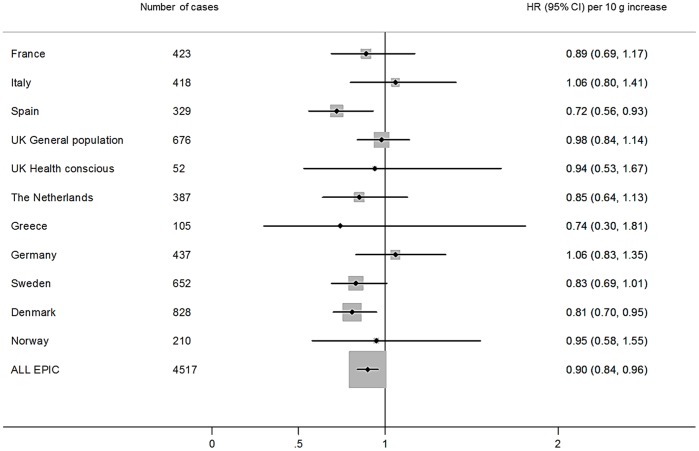
BACKGROUND: Earlier analyses within the EPIC study showed that dietary fibre intake was inversely associated with colorectal cancer risk, but results from some large cohort studies do not support this finding. We explored whether the association remained after longer follow-up with a near threefold increase in colorectal cancer cases, and if the association varied by gender and tumour location. METHODOLOGY/PRINCIPAL FINDINGS: After a mean follow-up of 11.0 years, 4,517 incident cases of colorectal cancer were documented. Total, cereal, fruit, and vegetable fibre intakes were estimated from dietary questionnaires at baseline. Hazard ratios (HRs) and 95% confidence intervals (CIs) were estimated using Cox proportional hazards models stratified by age, sex, and centre, and adjusted for total energy intake, body mass index, physical activity, smoking, education, menopausal status, hormone replacement therapy, oral contraceptive use, and intakes of alcohol, folate, red and processed meats, and calcium. After multivariable adjustments, total dietary fibre was inversely associated with colorectal cancer (HR per 10 g/day increase in fibre 0.87, 95% CI: 0.79-0.96). Similar linear associations were observed for colon and rectal cancers. The association between total dietary fibre and risk of colorectal cancer risk did not differ by age, sex, or anthropometric, lifestyle, and dietary variables. Fibre from cereals and fibre from fruit and vegetables were similarly associated with colon cancer; but for rectal cancer, the inverse association was only evident for fibre from cereals. CONCLUSIONS/SIGNIFICANCE: Our results strengthen the evidence for the role of high dietary fibre intake in colorectal cancer prevention.
Overview
The claims and statistics of this paper haven’t been checked yet.
Free: it reads the open-access text and checks the first 5 claims that cite a source we can check. Create a free account to check every claim.
Integrity signals
Registry
Cites
Statistics
Figures
Verification
Claims the paper makes
The claims and statistics of this paper haven’t been checked yet.
Free: it reads the open-access text and checks the first 5 claims that cite a source we can check. Create a free account to check every claim.
Self-check
Percentages, sums and reported differences re-computed from the paper’s own numbers.
The self-check needs the paper’s full text.
Citations
Cites
Home visits: a strategy to improve newborn survival - Authors' reply
(2008) · Americanae (AECID Library) · doi:10.1016/s0140 · Cited by 22,524
Food, nutrition, physical activity, and the prevention of cancer: a global perspective
(2008) · Choice Reviews Online · doi:10.5860/choice.45-5024 · Cited by 5,350
Partial residuals for the proportional hazards regression model
SCHOENFELD, D. (1982) · Biometrika · doi:10.1093/biomet/69.1.239 · Cited by 3,111 · cited 1×
“Hazard ratios (HRs) and 95% confidence intervals (CIs) were estimated using Cox proportional hazards models. Age was the primary time variable in all models. Time at entry was age at recruitment. Exit time was age at whichever of the following came first: colorectal cancer diagnosis, death, or the date at which follow…”
Flexible regression models with cubic splines
Durrleman, S., & Simon, R. (1989) · Statistics in Medicine · doi:10.1002/sim.4780080504 · Cited by 2,689 · cited 1×
“[30] Heterogeneity of associations across cancer sub-sites was assessed by calculating x(2) statistics.”
Methods for Trend Estimation from Summarized Dose-Response Data, with Applications to Meta-Analysis
Greenland, S., & Longnecker, M. P. (1992) · American Journal of Epidemiology · doi:10.1093/oxfordjournals.aje.a116237 · Cited by 2,353 · cited 1×
“[31] We further combined the country specific risk estimates using a random-effects model.”
Riboli, E., Hunt, K., Slimani, N., Ferrari, P., Norat, T., Fahey, M., Charrondière, U., Hémon, B., Casagrande, C., Vignat, J., et al. (2002) · Public Health Nutrition · doi:10.1079/phn2002394 · Cited by 1,866 · cited 1×
“[20,21] In summary, 521,448 participants (,70% women) mostly aged 35 years or above were recruited between 1992 and 2000.”
Self-citationEpidemiology of cancer of the colon and rectum
Burkitt, D. P. (1971) · Cancer · doi:10.1002/1097-0142(197107)28:1<3::aid-cncr2820280104>3.0.co;2-n · Cited by 1,333
Aune, D., Chan, D. S. M., Lau, R., Vieira, R., Greenwood, D. C., Kampman, E., & Norat, T. (2011) · BMJ · doi:10.1136/bmj.d6617 · Cited by 1,146
Self-citationBingham, S. A., Day, N. E., Luben, R., Ferrari, P., Slimani, N., Norat, T., Clavel-Chapelon, F., Kesse, E., Nieters, A., Boeing, H., et al. (2003) · The Lancet · doi:10.1016/s0140-6736(03)13174-1 · Cited by 1,111
Self-citationRiboli, E. (1997) · International Journal of Epidemiology · doi:10.1093/ije/26.suppl_1.s6 · Cited by 945 · cited 1×
“[20,21] In summary, 521,448 participants (,70% women) mostly aged 35 years or above were recruited between 1992 and 2000.”
Self-citation
Cited by
Rectal cancer: ESMO Clinical Practice Guidelines for diagnosis, treatment and follow-up
Glynne-Jones, R., Wyrwicz, L., Tiret, E., Brown, G., Rödel, C., Cervantes, A., & Arnold, D. (2017) · Annals of Oncology · doi:10.1093/annonc/mdx224 · Cited by 2,046
“Consumption of garlic, milk, calcium and high dietary fibre are regarded as protective [5].”
The impact of diet and lifestyle on gut microbiota and human health
Conlon, M., & Bird, A. (2014) · Nutrients · doi:10.3390/nu7010017 · Cited by 1,567
“Epidemiological and experimental studies show that DF is both preventative and therapeutic for many large bowel disorders and other conditions or diseases, including cardiovascular diseases, type II diabetes and obesity [67–71].”
BackgroundStephen, A. M., Champ, M. M.-J., Cloran, S. J., Fleith, M., van Lieshout, L., Mejborn, H., & Burley, V. J. (2017) · Nutrition Research Reviews · doi:10.1017/s095442241700004x · Cited by 798
“, the results from EPIC on the relationship between total and fibre sources and risk of colorectal cancer have been published((72)).”
BackgroundInfluence of the Gut Microbiome, Diet, and Environment on Risk of Colorectal Cancer
Song, M., Chan, A. T., & Sun, J. (2020) · Gastroenterology · doi:10.1053/j.gastro.2019.06.048 · Cited by 752
Nutrients, foods, and colorectal cancer prevention
Song, M., Garrett, W. S., & Chan, A. T. (2015) · Gastroenterology · doi:10.1053/j.gastro.2014.12.035 · Cited by 700
Position of the Academy of Nutrition and Dietetics: Health implications of dietary fiber
Dahl, W. J., & Stewart, M. L. (2015) · Journal of the Academy of Nutrition and Dietetics · doi:10.1016/j.jand.2015.09.003 · Cited by 471
“The European Prospective Investigation into Cancer and Nutrition (EPIC) study continues to follow subjects, and the most recent publication on dietary fiber and colorectal cancer supports the protective effect mentioned previously.(41) Fiber intake quintiles ranged from <16.”
BackgroundThe 2015 Dutch food-based dietary guidelines
for the Committee Dutch Dietary Guidelines 2015, Kromhout, D., Spaaij, C. J. K., de Goede, J., & Weggemans, R. M. (2016) · European Journal of Clinical Nutrition · doi:10.1038/ejcn.2016.52 · Cited by 401
Bradbury, K. E., Appleby, P. N., & Key, T. J. (2014) · The American Journal of Clinical Nutrition · doi:10.3945/ajcn.113.071357 · Cited by 328
“Similarly to the observed quantile analyses, in the continuous calibrated analyses there were significant inverse associations between total fiber and cancers of the colorectum (25), liver (26), and breast (27).”
InfluentialSelf-citationHealth effects of resistant starch
Lockyer, S., & Nugent, A. P. (2017) · Nutrition Bulletin · doi:10.1111/nbu.12244 · Cited by 312
“Fibre is suggested to reduce colon cancer risk by increasing faecal bulk, reducing transit time and diluting faecal contents (Aune et al. 2011; Murphy et al. 2012).”
Hunt, R., Armstrong, D., Katelaris, P., Afihene, M., Bane, A., Bhatia, S., Chen, M.-H., Choi, M. G., Melo, A. C., Fock, K. M., et al. (2017) · Journal of Clinical Gastroenterology · doi:10.1097/mcg.0000000000000854 · Cited by 306
Bottom‐up vs. top‐down effects on terrestrial insect herbivores: a meta‐analysis
Vidal, M. C., & Murphy, S. M. (2018) · Ecology Letters · doi:10.1111/ele.12874 · Cited by 287
“For example, Murphy et al. (2012) found a positive effect of fertilisation on herbivores and natural enemy populations, with stronger responses by predators than by herbivores to this bottom-up effect.”
BackgroundCombined impact of healthy lifestyle factors on colorectal cancer: a large European cohort study
Aleksandrova, K., Pischon, T., Jenab, M., Bueno-de-Mesquita, H. B., Fedirko, V., Norat, T., Romaguera, D., Knüppel, S., Boutron-Ruault, M.-C., Dossus, L., et al. (2014) · BMC Medicine · doi:10.1186/s12916-014-0168-4 · Cited by 257
“We generated the HLI based on a priori knowledge of the CRC risk factors [2-13] and available national and international public health recommendations (that is, WCRF/AICR (2007)) [15,16].”
Self-citationInfluence of Early Life, Diet, and the Environment on the Microbiome
Dong, T. S., & Gupta, A. (2019) · Clinical Gastroenterology and Hepatology · doi:10.1016/j.cgh.2018.08.067 · Cited by 218
“Several studies have shown fiber to be protective against such diseases as type II diabetes, cardiovascular disease, colon cancer, and obesity.(77,78) One of the main mechanism by which fiber and the microbiome impact health is through the production of SCFAs.”
Bishehsari, F., Engen, P. A., Preite, N. Z., Tuncil, Y. E., Naqib, A., Shaikh, M., Rossi, M., Wilber, S., Green, S. J., Hamaker, B. R., et al. (2018) · Genes · doi:10.3390/genes9020102 · Cited by 214
“Dietary fiber has been shown to reduce CRC risk by several epidemiological studies [3,4].”
BackgroundFiber Intake and Survival After Colorectal Cancer Diagnosis
Song, M., Wu, K., Meyerhardt, J. A., Ogino, S., Wang, M., Fuchs, C. S., Giovannucci, E. L., & Chan, A. T. (2018) · JAMA Oncology · doi:10.1001/jamaoncol.2017.3684 · Cited by 197
Mediterranean Diet and Prevention of Chronic Diseases
Romagnolo, D. F., & Selmin, O. I. (2017) · Nutrition Today · doi:10.1097/nt.0000000000000228 · Cited by 187
How Important are Cereals and Cereal Products in the Average Polish Diet?
Laskowski, W., Górska-Warsewicz, H., Rejman, K., Czeczotko, M., & Zwolińska, J. (2019) · Nutrients · doi:10.3390/nu11030679 · Cited by 177
Mediterranean diet and colorectal cancer: A systematic review
Farinetti, A., Zurlo, V., Manenti, A., Coppi, F., & Mattioli, A. V. (2017) · Nutrition · doi:10.1016/j.nut.2017.06.008 · Cited by 173
“Previously observed associations for fruit and vegetable consumption and related fiber were found to be stronger for colon than for rectal cancer [70,71].”
BackgroundReview article: dietary fibre in the era of microbiome science
O’Grady, J., O’Connor, E. M., & Shanahan, F. (2019) · Alimentary Pharmacology & Therapeutics · doi:10.1111/apt.15129 · Cited by 172
Katzke, V. A., Kaaks, R., & Kühn, T. (2015) · The Cancer Journal · doi:10.1097/ppo.0000000000000101 · Cited by 168
“Although prospective cohort studies show very modest, if any, reduction in cancer risk at higher intake levels of vegetables, they do point to a protective effect of fruit intake concerning cancers of the upper digestive tract and have provided convincing evidence for a protective effect from foods (in particular cere…”
BackgroundSelf-citationUbago‐Guisado, E., Rodríguez‐Barranco, M., Ching-López, A., Petrova, D., Molina‐Montes, E., Amiano, P., Barricarte, A., Chirlaque, M., Agudo, A., & Sánchez, M. (2021) · Nutrients · doi:10.3390/nu13103582 · Cited by 184
“96) per 10 g/day increase in fibre [25].”
BackgroundSelf-citationLe Leu, R. K., Winter, J. M., Christophersen, C. T., Young, G. P., Humphreys, K. J., Hu, Y., Gratz, S. W., Miller, R. B., Topping, D. L., Bird, A. R., et al. (2015) · British Journal of Nutrition · doi:10.1017/s0007114515001750 · Cited by 157
“increases the risk of CRC, whereas intake of dietary fibre is protective((4)).”
Diet and liver cancer risk: a narrative review of epidemiological evidence
Yang, W.-S., Zeng, X.-F., Liu, Z.-N., Zhao, Q.-H., Tan, Y.-T., Gao, J., Li, H.-L., & Xiang, Y.-B. (2020) · British Journal of Nutrition · doi:10.1017/s0007114520001208 · Cited by 162
Resistant starch in food industry: A changing outlook for consumer and producer
Rad, A. H., Amini, A., Keshtiban, A. K., Mortazavian, A. M., Esazadeh, K., & Pourmoradian, S. (2013) · Starch - Stärke · doi:10.1002/star.201300110 · Cited by 164
Yu, X., & Yang, H. (2016) · Food Chemistry · doi:10.1016/j.foodchem.2016.08.115 · Cited by 148
Bonnefond, A., Skrobek, B., Lobbens, S., Eury, E., Thuillier, D., Cauchi, S., Lantieri, O., Balkau, B., Riboli, E., Marre, M., et al. (2013) · Nature Genetics · doi:10.1038/ng.2700 · Cited by 139
Colon Carcinogenesis: The Interplay Between Diet and Gut Microbiota
Loke, Y. L., Chew, M. T., Ngeow, Y. F., Lim, W. W.-D., & Peh, S. C. (2020) · Frontiers in Cellular and Infection Microbiology · doi:10.3389/fcimb.2020.603086 · Cited by 147
“, 2018) and European Prospective Investigation into Cancer and Nutrition (EPIC) studies (Murphy et al., 2012; Bradbury et al., 2014).”
BackgroundSingh, P., Tuck, C. J., Gibson, P. R., & Chey, W. D. (2022) · The American Journal of Gastroenterology · doi:10.14309/ajg.0000000000001767 · Cited by 131
“Dietary fiber represents a wide variety of fiber types with varied functional properties (11).”
BackgroundHullings, A. G., Sinha, R., Liao, L. M., Freedman, N. D., Graubard, B. I., & Loftfield, E. (2020) · American Journal of Clinical Nutrition · doi:10.1093/ajcn/nqaa161 · Cited by 129
“As for dietary fiber intake, the prior literature is inconsistent, with some studies finding associations (4, 10, 12, 27) and others not (6, 14, 15, 28).”
ResultAndersen, V., Chan, S., Luben, R., Khaw, K.-T., Olsen, A., Tjonneland, A., Kaaks, R., Grip, O., Bergmann, M. M., Boeing, H., et al. (2018) · Journal of Crohn's and Colitis · doi:10.1093/ecco-jcc/jjx136 · Cited by 110
Self-citationZamora‐Ros, R., Shivappa, N., Steck, S. E., Canzian, F., Landi, S., Alonso, M. H., Hébert, J. R., & Moreno, V. R. (2014) · Genes & Nutrition · doi:10.1007/s12263-014-0447-x · Cited by 119
“…similar associations were reported for colon and rectal cancer risks with DII score (Shivappa et al. 2014a), and intakes of fruits and vegetables , fiber, and flavonoids (World Research Cancer Fund and American Institute for Cancer Research 2007; Zamora- Ros et al. 2013b; Murphy et al. 2012).”
BackgroundCuéllar-Núñez, M. L., Luzardo‐Ocampo, I., Campos-Vega, R., Gallegos‐Corona, M. A., de Mejía, E. G., & Loarca-Piña, G. F. (2017) · Food Research International · doi:10.1016/j.foodres.2017.11.004 · Cited by 120
Chemoprevention of Colorectal Cancer by Dietary Compounds
Costea, T., Hudiță, A., Ciolac, O.-A., Gălățeanu, B., Ginghină, O., Costache, M., Ganea, C., & Mocanu, M. (2018) · International Journal of Molecular Sciences · doi:10.3390/ijms19123787 · Cited by 117
“In another multicenter prospective cohort study, a high intake of dietary fibers was significantly associated with low risk of distal/proximal colon and rectum cancers [234].”
BackgroundEid, N., Osmanova, H., Natchez, C., Walton, G., Costabile, A., Gibson, G., Rowland, I., & Spencer, J. P. E. (2015) · British Journal of Nutrition · doi:10.1017/s0007114515002780 · Cited by 103
“Dates contain relatively high levels of polyphenols and insoluble fibre((2)), both of which have been postulated to possess anti-cancer activity, especially in the gastrointestinal (GI) tract((3)).”
BackgroundDiversity of fibers in common foods: Key to advancing dietary research
Khorasaniha, R., Olof, H., Voisin, A., Armstrong, K., Wine, E., Vasanthan, T., & Armstrong, H. (2023) · Food Hydrocolloids · doi:10.1016/j.foodhyd.2023.108495 · Cited by 108
Yang, W., Ma, Y., Liu, Y., Smith‐Warner, S. A., Simon, T. G., Chong, D. Q., Qi, Q., Meyerhardt, J. A., Giovannucci, E. L., Chan, A. T., et al. (2019) · JAMA Oncology · doi:10.1001/jamaoncol.2018.7159 · Cited by 108
Greenhalgh, K., Ramiro‐Garcia, J., Heinken, A., Ullmann, P., Bintener, T., Pacheco, M. P., Bagińska, J., Shah, P., Frachet, A., Halder, R., et al. (2019) · Cell Reports · doi:10.1016/j.celrep.2019.04.001 · Cited by 103
“The health benefits attributed to dietary fiber and prebiotics in the prevention of CRC (Murphy et al., 2012; Raman et al., 2013) are mainly attributed to the metabolic activity of the gut microbiome resulting in specific fermentation products, such as lactate and short-chain fatty acids (SCFAs) and not to the fiber i…”
Liu, X., Yang, W., Petrick, J. L., Liao, L. M., Wang, W., He, N., Campbell, P. T., Zhang, Z., Giovannucci, E. L., McGlynn, K. A., et al. (2021) · Nature Communications · doi:10.1038/s41467-021-26448-9 · Cited by 101
Is dietary fibre truly protective against colon cancer? A systematic review and meta-analysis
Gianfredi, V., Salvatori, T., Villarini, M., Moretti, M., Nucci, D., & Realdon, S. (2018) · International Journal of Food Sciences and Nutrition · doi:10.1080/09637486.2018.1446917 · Cited by 93
“…2015), of which two articles in Sweden (Terry et al. 2001; Vulcan et al. 2015) and one in Scandinavia (Hansen et al. 2012), one in United Kingdom (Dahm et al. 2010), one in Netherlands (Diergaarde et al. 2003) and three multi-centric European study (Bingham et al. 2003, 2005; Murphy et al. 2012).”
BackgroundInfluentialThe sensory acceptance of fibre‐enriched cereal foods: a meta‐analysis
Grigor, J., Brennan, C. S., Hutchings, S. C., & ROWLANDS, D. S. (2015) · International Journal of Food Science & Technology · doi:10.1111/ijfs.13005 · Cited by 95
Papillo, V. A., Vitaglione, P., Graziani, G., Gökmen, V., & Fogliano, V. (2014) · Journal of Agricultural and Food Chemistry · doi:10.1021/jf500695a · Cited by 88
Polyphenol Extracts from Red Wine and Grapevine: Potential Effects on Cancers
Amor, S., Châlons, P., Aires, V., & Delmas, D. (2018) · Diseases · doi:10.3390/diseases6040106 · Cited by 89
“Also, high intake of dietary fiber from fruit, vegetables, and whole grains is inversely associated with colorectal cancer risk [34].”
BackgroundLeenders, M. B., Leufkens, A. M., Siersema, P. D., van Duijnhoven, F. J. B., Vrieling, A., Hulshof, P. J. M., van Gils, C. H., Overvad, K., Roswall, N., Kyrø, C., et al. (2014) · International Journal of Cancer · doi:10.1002/ijc.28938 · Cited by 94
“Similarly, previously observed associations for fruit and vegetable consumption and related fiber were found to be stronger for colon than for rectal cancer.(37,39) Unfortunately, in this study, the number of cases was too low to stratify observed associations with (proximal) colon cancer by factors related to oxidati…”
BackgroundSelf-citationKyrø, C., Olsen, A., Landberg, R., Skeie, G., Loft, S., Åman, P., Leenders, M., Dik, V. K., Siersema, P. D., Pischon, T., et al. (2014) · JNCI: Journal of the National Cancer Institute · doi:10.1093/jnci/djt352 · Cited by 83
“the most recent study on intake of dietary fiber and incidence risk of colorectal cancer in the entire ePIC cohort also found a statistically significant inverse association with distal colon cancer risk only and no association with risk of proximal colon cancer in the uncalibrated analysis (40).”
BackgroundSelf-citationSo, D., Gibson, P. R., Muir, J. G., & Yao, C. K. (2021) · Gut · doi:10.1136/gutjnl-2021-324891 · Cited by 84
Dietary fiber intake and risks of proximal and distal colon cancers: A meta-analysis
Ma, Y., Hu, M., Zhou, L., Ling, S., Li, Y., Kong, B., & Huang, P. (2018) · Medicine · doi:10.1097/md.0000000000011678 · Cited by 91
“Seven studies were conducted in the United States; 4 studies were conducted in Europe (1 in 10 European countries,([16]) 2 in Sweden,([9,10]) and 1 in Denmark([15])); 6 studies involved only women, and 5 involved both men and women, 1 of which reported sex-specific results.”
BackgroundBhattarai, N., Prevost, A. T., Wright, A. J., Charlton, J., Rudisill, C., & Gulliford, M. C. (2013) · BMC Public Health · doi:10.1186/1471-2458-13-1203 · Cited by 68
“A higher intake of dietary fibre is associated with lower risk of all-cause mortality [3], as well as lower incidence of colorectal cancer [4] and stroke [5].”
BackgroundThe Mediterranean diet and risk of colorectal cancer in the UK Women’s Cohort Study
Jones, P., Cade, J. E., Evans, C. E., Hancock, N., & Greenwood, D. C. (2017) · International Journal of Epidemiology · doi:10.1093/ije/dyx155 · Cited by 72
“In EPIC, inverse associations were observed for cereal fibre and colon and rectal cancer, whereas fibre from cereals but not from fruit and vegetables was associated with decreased rectal cancer.(24) The estimated associations for vegetables, legumes, fish and red meat reported in Table 4, though not all strong, are i…”
BackgroundAnticarcinogenic Actions of Tributyrin, A Butyric Acid Prodrug
Heidor, R., Ortega, J. F., de Conti, A., Ong, T. P., & Moreno, F. S. (2012) · Current Drug Targets · doi:10.2174/138945012804545443 · Cited by 78
“In this regard, several epidemiologic and preclinical studies have convincingly argued for a definitive role of bioactive food compounds (BFCs) for the prevention and treatment of some cancers [5-10].”
BackgroundChang, S. H., Patel, N., Du, M., & Liang, P. S. (2021) · Clinical Gastroenterology and Hepatology · doi:10.1016/j.cgh.2021.07.035 · Cited by 77
Time trends in municipal distribution patterns of cancer mortality in Spain
López‐Abente, G., Aragonés, N., Pérez‐Gómez, B., Pollán, M., García‐Pérez, J., Ramis, R., & Fernández‐Navarro, P. (2014) · BMC Cancer · doi:10.1186/1471-2407-14-535 · Cited by 72
“Reported protective factors include intake of vegetables, fruit, fibre, calcium and some medications [27,28].”
BackgroundCarbohydrate Nutrition and the Risk of Cancer
Vieytes, C. A. M., Taha, H. M., Burton-Obanla, A. A., Douglas, K. G., & Arthur, A. E. (2019) · Current Nutrition Reports · doi:10.1007/s13668-019-0264-3 · Cited by 73
Dietary fibre for the prevention of recurrent colorectal adenomas and carcinomas
Yao, Y., Suo, T., Andersson, R., Cao, Y., Wang, C., Lu, J., & Chui, E. (2017) · Cochrane Database of Systematic Reviews · doi:10.1002/14651858.cd003430.pub2 · Cited by 69
Zamora‐Ros, R., Barupal, D. K., Rothwell, J. A., Jenab, M., Fedirko, V., Romieu, I., Aleksandrova, K., Overvad, K., Kyrø, C., Tjønneland, A. M., et al. (2017) · International Journal of Cancer · doi:10.1002/ijc.30582 · Cited by 73
“Complete follow-up censoring dates varied among centres, ranging between 2005 and 2010.(20) The analytic cohort excluded: prevalent cancer cases other than non-melanoma skin cancer at baseline or subjects with missing information on date of diagnosis or incomplete followup data (n5 28,283), missing data on dietary or…”
Self-citationThe gastro-intestinal tract as the major site of biological action of dietary melanoidins
Tagliazucchi, D., & Bellesia, A. (2015) · Amino Acids · doi:10.1007/s00726-015-1951-z · Cited by 67
Diet, Genes, and Microbes: Complexities of Colon Cancer Prevention
Birt, D. F., & Phillips, G. J. (2013) · Toxicologic Pathology · doi:10.1177/0192623313506791 · Cited by 79
Colorectal Cancer Classification and Cell Heterogeneity: A Systems Oncology Approach
Blanco, M., Concha, Á., Figueroa, A., Garrido, F., & Valladares‐Ayerbes, M. (2015) · International Journal of Molecular Sciences · doi:10.3390/ijms160613610 · Cited by 72
“In fact, from findings in recent studies it is becoming clear that parameters such as dietary fibre intake [23], vitamin D, and blood lipid”
BackgroundHe, X., Wu, K., Zhang, X., Nishihara, R., Cao, Y., Fuchs, C. S., Giovannucci, E. L., Ogino, S., Chan, A. T., & Song, M. (2019) · International Journal of Cancer · doi:10.1002/ijc.32382 · Cited by 68
“the European Prospective Investigation into Cancer and Nutrition (EPIC) study observed a statistically significant 40% lower risk of CRC when comparing participants who consumed the highest amount to the lowest amount, confirmed by several follow-up analyses in the cohort.(2,40,41) Although the exact reasons for the d…”
ResultDietary fibre and health in children and adolescents
Edwards, C. A., Xie, C., & Garcia, A. L. (2015) · Proceedings of the Nutrition Society · doi:10.1017/s0029665115002335 · Cited by 59
“org/int/research-we-fund/continuous-update-project-cup/ second-expert-report) concluded there was probable evidence for a reduction in risk of colorectal cancer by consumption of fibre-rich foods and the more recent European Prospective Investigation into Cancer and Nutrition study has reported stronger evidence for t…”
Pan, P., Yu, J., & Wang, L. (2017) · Surgical Oncology Clinics of North America · doi:10.1016/j.soc.2017.11.002 · Cited by 61
Subsite-Specific Dietary Risk Factors for Colorectal Cancer: A Review of Cohort Studies
Hjartåker, A., Aagnes, B., Robsahm, T. E., Langseth, H., Bray, F., & Larsen, I. K. (2013) · Journal of Oncology · doi:10.1155/2013/703854 · Cited by 62
“Cohort Reference Exposure RR (95% CI) Proximal EPIC Murphy, 2012 [44] 25–70 Per 10 g/day increase 0.”
BackgroundInfluentialChapkin, R. S., Navarro, S. L., Hullar, M. A. J., & Lampe, J. W. (2020) · Digestive Diseases and Sciences · doi:10.1007/s10620-020-06106-8 · Cited by 60
Chakraborty, P., Witt, T., Harris, D., Ashton, J., Stokes, J. R., & Smyth, H. E. (2019) · Food Research International · doi:10.1016/j.foodres.2019.01.070 · Cited by 58
Microbiota-Associated Metabolites and Related Immunoregulation in Colorectal Cancer
Chen, Y., & Chen, Y. (2021) · Cancers · doi:10.3390/cancers13164054 · Cited by 58
Moen, B., Henjum, K., Måge, I., Knutsen, S. H., Rud, I., Hetland, R. B., & Paulsen, J. E. (2016) · PLoS ONE · doi:10.1371/journal.pone.0155402 · Cited by 57
Sustainable approaches to boost soluble dietary fibre in foods: A path to healthier foods
Faruq, A. A., Farahnaky, A., Torley, P. J., Buckow, R., Eri, R. D., & Majzoobi, M. (2024) · Food Hydrocolloids · doi:10.1016/j.foodhyd.2024.110880 · Cited by 57
Makarem, N., Nicholson, J., Bandera, E. V., McKeown, N. M., & Parekh, N. (2016) · Nutrition Reviews · doi:10.1093/nutrit/nuw003 · Cited by 58
Process-Induced Changes in the Quantity and Characteristics of Grain Dietary Fiber
Maina, N. H., Rieder, A., Bondt, Y. D., Mäkelä, N., Sahlstrøm, S., Mattila, O., Lamothe, L. M., Nyström, L., Courtin, C. M., Katina, K., et al. (2021) · Foods · doi:10.3390/foods10112566 · Cited by 58
“The European Prospective Investigation into Cancer and Nutrition (EPIC) showed a statistically significant 11% decrease in colorectal cancer risk per 10 grams/day cereal DF intake [7].”
BackgroundNavarro, S. L., Neuhouser, M. L., Cheng, T. D., Tinker, L. F., Shikany, J. M., Snetselaar, L., Martinez, J. A., Kato, I., Beresford, S. A. A., Chapkin, R. S., et al. (2016) · Nutrients · doi:10.3390/nu8120779 · Cited by 54
“Although many case-control studies have found inverse associations between fiber and fat intakes and CRC [4], data from epidemiologic studies are mixed [4–25], possibly due to differences in intake assessment, the type of fiber or fat analyzed, and residual confounding by other lifestyle and dietary factors.”
Gianfredi, V., Nucci, D., Salvatori, T., Dallagiacoma, G., Fatigoni, C., Moretti, M., & Realdon, S. (2019) · Nutrients · doi:10.3390/nu11071579 · Cited by 58
“Of the included studies, five were conducted between 1992 and 2004 [10,21,22,24,27], eight were carried out in the time frame 2005–2010 [18,20,25,28–32], while five were published between 2011 and 2016 [17,19,23,26,33].”
BackgroundResultFood Intake and Colorectal Cancer
Kumar, A., Chinnathambi, S., Kumar, M., & Pandian, G. N. (2023) · Nutrition and Cancer · doi:10.1080/01635581.2023.2242103 · Cited by 54
Chappell, A., Scott, K. P., Griffiths, I., Cowan, A. A., Hawes, C., Wishart, J., & Martin, P. (2017) · Journal of Cereal Science · doi:10.1016/j.jcs.2017.01.005 · Cited by 50
Trends of colorectal cancer incidence by education and socioeconomic status in Finland
Savijärvi, S., Seppä, K., Malila, N. K., Pitkäniemi, J. M., & Heikkinen, S. M. M. (2019) · Acta Oncologica · doi:10.1080/0284186x.2019.1652340 · Cited by 48
“A diet rich in fiber [8] and physical activity [9] are considered as protective factors.”
BackgroundAbreu y Abreu, A. T., Milke-García, M. P., Argüello-Arévalo, G. A., Calderón-de la Barca, A. M., Carmona-Sánchez, R. I., Consuelo-Sánchez, A., Coss-Adame, E., García-Cedillo, M. F., Hernández-Rosiles, V., Icaza-Chávez, M. E., et al. (2021) · Revista de Gastroenterología de México (English Edition) · doi:10.1016/j.rgmxen.2021.02.002 · Cited by 32
Health Benefits of Prebiotic Fibers
Meyer, D. (2015) · Advances in food and nutrition research · doi:10.1016/bs.afnr.2014.11.002 · Cited by 52
Pan, P., Skaer, C. W., Wang, H., Oshima, K., Huang, Y., Yu, J., Zhang, J., Yearsley, M., Agle, K. A., Drobyski, W. R., et al. (2016) · Carcinogenesis · doi:10.1093/carcin/bgw122 · Cited by 47
Azzeh, F. S., Al-Shammari, E., Alazzeh, A. Y., Jazar, A. S., Dabbour, I., Taani, H. A. E., Obeidat, A. A., Kattan, F. A., & Tashtoush, S. H. (2017) · BMC Public Health · doi:10.1186/s12889-017-4520-4 · Cited by 51
Dagbasi, A., Lett, A. M., Murphy, K., & Frost, G. (2020) · Proceedings of the Nutrition Society · doi:10.1017/s0029665120006941 · Cited by 44
“This inverse relationship can also be observed for weight gain((93)), visceral adiposity((94)), cardiometabolic diseases((26)), type 2 diabetes((95)) and colorectal cancer((96)).”
Wang, Z.-Q., Zhang, L., Zheng, H., Guo, W., Gao, Y., Zhao, Y., Liu, D., Zhou, M., & Li, M. (2021) · European Journal of Nutrition · doi:10.1007/s00394-021-02556-6 · Cited by 46
“Prospective evidence has shown that a 10 g/day higher dietary fiber intake is associated with a 15% lower IHD risk and a 13% lower CRC risk [12, 13].”
BackgroundChe, L., Chen, H., Yu, B., He, J., Zheng, P., Mao, X., Yu, J., Huang, Z., & Chen, D. (2014) · Nutrition and Cancer · doi:10.1080/01635581.2014.884229 · Cited by 45
“Meanwhile, the colon cancer risk was believed to be inversely related to dietary fiber intake (45).”
BackgroundSchlörmann, W., Birringer, M., Lochner, A., Lorkowski, S., Richter, I., Rohrer, C., & Glei, M. (2015) · European Journal of Nutrition · doi:10.1007/s00394-015-1020-0 · Cited by 47
Kopp, T. I., Vogel, U. B., Tjønneland, A. M., & Andersen, V. C. (2018) · American Journal of Clinical Nutrition · doi:10.1093/ajcn/nqx011 · Cited by 43
Self-citationDietary Fibre Protective against Colorectal Cancer Patients in Asia: A Meta-Analysis
Masrul, M., & Nindrea, R. D. (2019) · Open Access Macedonian Journal of Medical Sciences · doi:10.3889/oamjms.2019.265 · Cited by 42
“Dietary fibre is inversely proportional to the risk of colorectal cancer; high dietary fibre is evident in the prevention of colorectal cancer [6], [7].”
BackgroundKong, S. Y., Takeuchi, M., Hyogo, H., McKeown-Eyssen, G., Yamagishi, S.-I., Chayama, K., O'Brien, P. J., Ferrari, P., Overvad, K., Olsen, A., et al. (2015) · Cancer Epidemiology, Biomarkers & Prevention · doi:10.1158/1055-9965.epi-15-0422 · Cited by 40
“(g/day), and red/processed meats (g/day) (43-48), and diabetes status (49, 50).”
Self-citationIntestinal Macrophages at the Crossroad between Diet, Inflammation, and Cancer
Caprara, G., Allavena, P., & Erreni, M. (2020) · International Journal of Molecular Sciences · doi:10.3390/ijms21144825 · Cited by 40
“Several publications have demonstrated an association between fiber intake and reduced risk of CRC [161,203,204].”
BackgroundGałaś, A., Augustyniak, M., & Sochacka-Tatara, E. (2013) · Nutrition Journal · doi:10.1186/1475-2891-12-134 · Cited by 37
“Besides, there is evidence in colon cancer research showing protective effect of fiber [18,22] which is consumed in different food than calcium.”
BackgroundPino‐García, R. D., Rivero-Perez, M. D., José, M., Ortega-Herás, M., García‐Lomillo, J., & Múñiz, P. (2016) · Journal of Agricultural and Food Chemistry · doi:10.1021/acs.jafc.6b04561 · Cited by 37
Ferjančič, B., Skrt, M., Korošec, M., & Bertoncelj, J. (2022) · Food Chemistry · doi:10.1016/j.foodchem.2022.133753 · Cited by 41
The InterAct Consortium (2016) · Diabetologia · doi:10.1007/s00125-016-4090-5 · Cited by 38
“Calculation of one serving for each food item was based on previous publications from the EPIC-InterAct study and main EPIC studies: dairy 150 g/day; cereal fibre 10 g/day; olive oil 10 g/day; and coffee 125 g/day [26, 38, 39].”
MethodKong, S. Y., Tran, H. Q., Gewirtz, A. T., McKeown-Eyssen, G., Fedirko, V., Romieu, I., Tjønneland, A., Olsen, A., Overvad, K., Boutron-Ruault, M.-C., et al. (2016) · Cancer Epidemiology, Biomarkers & Prevention · doi:10.1158/1055-9965.epi-15-0798 · Cited by 34
Self-citationAmaretti, A., Bottari, B., Morreale, F., Sardaro, M. L. S., Angelino, D., Raimondi, S., Rossi, M., & Pellegrini, N. (2020) · International Journal of Food Sciences and Nutrition · doi:10.1080/09637486.2019.1711026 · Cited by 36
“Notwithstanding such known health benefits of dietary fibres, their overall intake from naturally rich sources such as vegetables or cereal-based products remains limited compared to the recommended values (USDA 2006; EFSA 2010; Murphy et al. 2012).”
BackgroundAlfawaz, H., Khan, N., Alhuthayli, H. F., Wani, K., Aljumah, M. A., Khattak, M. N. K., Alghanim, S. A., & Al‐Daghri, N. M. (2020) · International Journal of Environmental Research and Public Health · doi:10.3390/ijerph17124226 · Cited by 34
“Recommendations of total fiber intake for an average population are different in some countries and range from 20–45 g/day [16].”
BackgroundDevelopment of low‐fat chicken bologna sausages enriched with inulin, oat fibre or psyllium
Ferjančič, B., Kugler, S., Korošec, M., Polak, T., & Bertoncelj, J. (2020) · International Journal of Food Science & Technology · doi:10.1111/ijfs.14808 · Cited by 34
Atzler, J. J., Sahin, A. W., Gallagher, E., Zannini, E., & Arendt, E. K. (2021) · European Food Research and Technology · doi:10.1007/s00217-021-03762-6 · Cited by 35
Zhuo, M., Chen, Z., Zhong, M., Liu, Y.-M., Lei, F., Qin, J., Sun, T., Yang, C., Chen, M., Song, X., et al. (2022) · Public Health Nutrition · doi:10.1017/s1368980022001987 · Cited by 37
“Epidemiological evidence has shown that a 10 g/d increase in dietary fibre intake reduces the IHD risk by 15 % and the CRC risk by 13 %(5,6).”
BackgroundStarch-based extruded cereals enriched in fibers: A behavior of composite solid foams
Chanvrier, H., Desbois, F., Perotti, F., Salzmann, C., Chassagne, S., Gumy, J.-C., & Blank, I. (2013) · Carbohydrate Polymers · doi:10.1016/j.carbpol.2013.07.005 · Cited by 34
Tojjari, A., Choucair, K., Sadeghipour, A., Saeed, A., & Saeed, A. (2023) · Cancers · doi:10.3390/cancers15174294 · Cited by 34
“While most studies from the US did not report any association [38,39], the European Prospective Investigation into Cancer and Nutrition cohort consistently found that consuming fiber is linked to a lower risk of CRC [40,41].”
BackgroundPark, S., Wilkens, L. R., Kolonel, L. N., Henderson, B. E., & Marchand, L. L. (2016) · International Journal of Cancer · doi:10.1002/ijc.30172 · Cited by 33
“the previous findings from the European Prospective Investigation into Cancer and Nutrition.(22) Besides the MEC, two cohort studies in Scandinavia(20) and Japan(23) reported a stronger inverse association in men than in women.”
ResultGibson, R., Eriksen, R., Chambers, E., Gao, H., Aresu, M., Heard, A., Chan, Q., Elliott, P., & Frost, G. (2019) · Nutrients · doi:10.3390/nu11081839 · Cited by 31
Vulcan, A., Brändstedt, J., Manjer, J., Jirström, K., Ohlsson, B., & Ericson, U. (2015) · British Journal Of Nutrition · doi:10.1017/s0007114515002743 · Cited by 35
“risk for CRC((5,8)), but in contrast this study did not show a significant overall association with high intake of fibre-rich cereal products.”
BackgroundResultInfluentialSelf-citation
Metadata
- Authors
- Murphy, N., Norat, T., Ferrari, P., Jenab, M., Bueno-de-Mesquita, B., Skeie, G., Dahm, C. C., Overvad, K., Olsen, A., Tjønneland, A., Clavel-Chapelon, F., Boutron-Ruault, M. C., Racine, A., Kaaks, R., Teucher, B., Boeing, H., Bergmann, M. M., Trichopoulou, A., Trichopoulos, D., Lagiou, P., Palli, D., Pala, V., Panico, S., Tumino, R., Vineis, P., Siersema, P., van Duijnhoven, F., Peeters, P. H. M., Hjartaker, A., Engeset, D., González, C. A., Sánchez, M.-J., Dorronsoro, M., Navarro, C., Ardanaz, E., Quirós, J. R., Sonestedt, E., Ericson, U., Nilsson, L., Palmqvist, R., Khaw, K.-T., Wareham, N., Key, T. J., Crowe, F. L., Fedirko, V., Wark, P. A., Chuang, S.-C., & Riboli, E.
- Affiliations
- Imperial College London (GB)
- Centre international de recherche sur le cancer (FR)
- University Medical Center Utrecht (NL)
- UiT The Arctic University of Norway (NO)
- Aarhus University (DK)
- Danish Cancer Society (DK)
- Université Paris-Sud (FR)
- German Cancer Research Center (DE)
- German Institute of Human Nutrition (DE)
- National and Kapodistrian University of Athens (GR)
- Harvard University (US)
- Istituto per lo Studio e la Prevenzione Oncologica (IT)
- Fondazione IRCCS Istituto Nazionale dei Tumori (IT)
- Federico II University Hospital (IT)
- Azienda Usl 8 Arezzo (IT)
- Italian institute for Genomic Medicine (IT)
- Biogipuzkoa Health Research Institute (ES)
- Centro de Investigación Biomédica en Red de Epidemiología y Salud Pública (ES)
- Gobierno del Principado de Asturias (ES)
- Lund University (SE)
- Umeå University (SE)
- University of Cambridge (GB)
- University of Oxford (GB)
- Corresponding author
- Norat, Teresa
- ORCID
- Murphy, Neil
- Ferrari, Pietro
- Jenab, Mazda
- Bueno-de-Mesquita, Bas
- Skeie, Guri
- Dahm, Christina C.
- Overvad, Kim
- Olsen, Anja
- Tjønneland, Anne
- Racine, Antoine
- Kaaks, Rudolf
- Boeing, Heiner
- Bergmann, Manuela M.
- Trichopoulou, Antonia
- Palli, Domenico
- Pala, Valeria
- Panico, Salvatore
- Tumino, Rosario
- Vineis, Paolo
- Siersema, Peter
- Peeters, Petra H. M.
- Engeset, Dagrun
- Navarro, Carmen
- Quirós, José R.
- Sonestedt, Emily
- Ericson, Ulrika
- Nilsson, Lena
- Palmqvist, Richard
- Khaw, Kay-Tee
- Key, Timothy J.
- Crowe, Francesca L.
- Fedirko, Veronika
- Wark, Petra A.
- Venue
- PLoS ONE
- Publisher
- Public Library of Science (PLoS)
- Published
- 2012-06-22
- Volume
- 7
- Issue
- 6
- Pages
- e39361
- ISSN
- 1932-6203 (ISSN-L)
- PMC
- PMC3382210
- OpenAlex
- W2146274257
- Cited by
- 271
- References
- 38
- Citations by year
- 2026: 7 · 2025: 6 · 2024: 6 · 2023: 15 · 2022: 14 · 2021: 26 · 2020: 23 · 2019: 26 · 2018: 21 · 2017: 33 · 2016: 28 · 2015: 23 · 2014: 19 · 2013: 21 · 2012: 2
- FWCI
- 20.09
- Type
- journal article
- Language
- en
- Open access
- gold
- doi.org
- Locations
- PLoS ONE (publishedVersion, cc-by)
- Europe PMC (PubMed Central) (publishedVersion, cc-by)
- PubMed Central (publishedVersion, cc-by)
- PubMed (publishedVersion)
- Socio-Environmental Systems Modeling (acceptedVersion)
- Pure (Coventry University) (submittedVersion, cc-by)
- Digital Access to Scholarship at Harvard (DASH) (Harvard University) (submittedVersion, cc-by)
- KTH Publication Database DiVA (KTH Royal Institute of Technology) (submittedVersion, other-oa)
- DOAJ (DOAJ: Directory of Open Access Journals) (submittedVersion, cc-by-sa)
- Figshare (submittedVersion, cc-by)
- Lund University Publications (Lund University) (submittedVersion, other-oa)
- NORA - Norwegian Open Research Archives (submittedVersion, other-oa)
- RISalud Institutional Health Repository of Andalucía (submittedVersion, other-oa)
- Data Archiving and Networked Services (DANS) (submittedVersion, other-oa)
- Funders
- Deutsches Krebsforschungszentrum (RD06/0020)
- Centre International de Recherche sur le Cancer (RD06/0020)
- Wellcome Trust
- Cancer Research UK (RD06/0020)
- National Institute for Health and Care Research
- British Heart Foundation
- European Commission (RD06/0020)
- Institut National de la Santé et de la Recherche Médicale (RD06/0020)
- Bundesministerium für Bildung und Forschung (RD06/0020)
- Cancerfonden (ERC-2009-AdG 232997)
- Ligue Contre le Cancer (RD06/0020)
- Stavros Niarchos Foundation (RD06/0020)
- NordForsk
- Associazione Italiana per la Ricerca sul Cancro (RD06/0020)
- Deutsche Krebshilfe (RD06/0020)
- Associazione Iblea per la Ricerca Epidemiologica
- Institut Gustave-Roussy (RD06/0020)
- Ministry of Health and Social Solidarity, Greece
- Hellenic Health Foundation (ERC-2009-AdG 232997, RD06/0020)
- Medical Research Council (RD06/0020)
- World Cancer Research Fund (ERC-2009-AdG 232997, RD06/0020)
- Instituto de Salud Carlos III (RD06/0020)
- Topics
- Health Sciences › Medicine › Public Health, Environmental and Occupational Health › Nutritional Studies and Diet
- Health Sciences › Nursing › Nutrition and Dietetics › Food composition and properties
- Health Sciences › Medicine › Oncology › Colorectal Cancer Screening and Detection
- Keywords
- dietary fiber, colorectal cancer, colon cancer, rectal cancer, cancer risk, cereal fiber, cancer prevention, EPIC cohort, tumor location, sex differences
- MeSH terms
- Adult, Aged, Colonic Neoplasms, Diet, Dietary Fiber, Europe, Female, Follow-Up Studies, Humans, Life Style, Male, Middle Aged, Nutritional Status, Prospective Studies, Surveys and Questionnaires, Rectal Neoplasms, Risk, Vegetables, Incidence
About these checks
Registry, retraction, Cites and statistics results are computed, not judged, with one exception: a printed reference that no index lists is read once by a model before it counts as a citation error. Claims are extracted by a model and kept only when their quote appears verbatim in the text; each cited source is then checked, with a model’s help, for whether it says what the claim relies on. Those verdicts can be wrong — read the claim’s quote and the cited source before relying on one.
Statistics and arithmetic are recomputed, not judged.
Confidence bands are shown only for fields calibrated on our annotated test set. None is calibrated yet, so no band is shown.
What counts as a claim ›How we measure confidence ›How we check this ›
Are you an author, or do you see a problem with this page? Request a review
Data sources
Bibliographic data: Semantic Scholar, OpenAlex, Crossref.
Contains information from the Semantic Scholar Academic Graph Datasets, made available under the ODC Attribution License (ODC-BY 1.0).
Semantic Scholar’s data is described in: Kinney, R., et al. (2023). The Semantic Scholar Open Data Platform. arXiv:2301.10140.
