

The DOI matches its Crossref record; 179 of the 179 references it cites were found in a registry or an index.
Alexithymia and the Processing of Emotional Facial Expressions (EFEs): Systematic Review, Unanswered Questions and Further Perspectives
Open accessAbstract
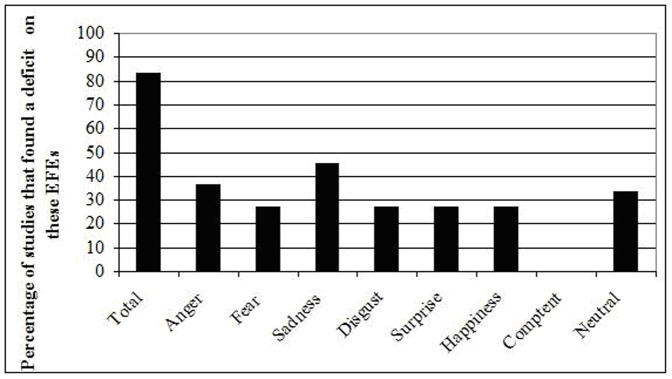
Alexithymia is characterized by difficulties in identifying, differentiating and describing feelings. A high prevalence of alexithymia has often been observed in clinical disorders characterized by low social functioning. This review aims to assess the association between alexithymia and the ability to decode emotional facial expressions (EFEs) within clinical and healthy populations. More precisely, this review has four main objectives: (1) to assess if alexithymia is a better predictor of the ability to decode EFEs than the diagnosis of clinical disorder; (2) to assess the influence of comorbid factors (depression and anxiety disorder) on the ability to decode EFE; (3) to investigate if deficits in decoding EFEs are specific to some levels of processing or task types; (4) to investigate if the deficits are specific to particular EFEs. Twenty four studies (behavioural and neuroimaging) were identified through a computerized literature search of Psycinfo, PubMed, and Web of Science databases from 1990 to 2010. Data on methodology, clinical characteristics, and possible confounds were analyzed. The review revealed that: (1) alexithymia is associated with deficits in labelling EFEs among clinical disorders, (2) the level of depression and anxiety partially account for the decoding deficits, (3) alexithymia is associated with reduced perceptual abilities, and is likely to be associated with impaired semantic representations of emotional concepts, and (4) alexithymia is associated with neither specific EFEs nor a specific valence. These studies are discussed with respect to processes involved in the recognition of EFEs. Future directions for research on emotion perception are also discussed.
Overview
The claims and statistics of this paper haven’t been checked yet.
Run the check — free, no account needed. It reads the open-access text and checks the sources it cites.
Integrity signals
Registry
Cites
Statistics
Figures
Verification
Claims the paper makes
The claims and statistics of this paper haven’t been checked yet.
Run the check — free, no account needed. It reads the open-access text and checks the sources it cites.
Claims other papers make about this one
Each is checked against this paper’s own text: does it say what the citing paper says it does?
The cited source says what the claim attributes to it.
In the citing paper
“alexithymia is associated with impaired abilities known to rely upon interoception, such as emotion regulation (Stasiewicz et al., 2012), emotion recognition (Grynberg et al., 2012), empathy (e.g. Enzi et al., 2016; Gleichgerrcht et al., 2015; Moriguchi et al., 2007a; Silani et al., 2008), reward processing (Bibby and Ferguson, 2011; Goerlich et al., 2016; Morie et al., 2016) and decision-making,”
From Atypical interoception as a common risk factor for psychopathology: A review (2021) · cites this paper as Grynberg et al., 2012
The cited source says what the claim attributes to it.
In the citing paper
“Alexithymia has been shown to predict performance on other tasks that require participants to match emotion words to faces (Grynberg et al., 2012), meaning that increased rates of alexithymia in ASD may explain the ASD impairment on the RMET if emotion recognition ability, rather than ToM, drives performance.”
From ‘Theory of Mind’ is not Theory of Emotion: a cautionary note on the reading the Mind in the Eyes test (2016) · cites this paper as Grynberg et al., 2012
Self-check
Percentages, sums and reported differences re-computed from the paper’s own numbers.
The self-check needs the paper’s full text.
Citations
Cites
Preferred Reporting Items for Systematic Reviews and Meta-Analyses: the PRISMA statement
Moher, D., Liberati, A., Tetzlaff, J., Altman, D. G., & for the PRISMA Group (2009) · BMJ · doi:10.1136/bmj.b2535 · Cited by 83,823
Preferred reporting items for systematic reviews and meta-analyses: the PRISMA Statement.
(2009) · PubMed Central · Cited by 44,859
Applied Multiple Regression/Correlation Analysis for the Behavioral Sciences
Cohen, P., Cohen, P., West, S. G., & Aiken, L. S. (2014) · Psychology Press eBooks · doi:10.4324/9781410606266 · Cited by 20,870
Preferred Reporting Items for Systematic Reviews and Meta-Analyses: The PRISMA Statement
Moher, D., Liberati, A., Tetzlaff, J., & Altman, D. G. (2009) · Journal of Clinical Epidemiology · doi:10.1016/j.jclinepi.2009.06.005 · Cited by 19,575
Journal of experimental psychology: Human Perception and performance
Jong, R. D., Coles, M. G. H., Logan, G. D., & Gratton, G. (1987) · Journal of Sound and Vibration · doi:10.1016/0022-460x(87)90423-8 · Cited by 5,411
Bagby, R. M., Parker, J. D. A., & Taylor, G. J. (1994) · Journal of Psychosomatic Research · doi:10.1016/0022-3999(94)90005-1 · Cited by 5,293
The distributed human neural system for face perception
Haxby, J. V., Hoffman, E. A., & Gobbini, M. I. (2000) · Trends in Cognitive Sciences · doi:10.1016/s1364-6613(00)01482-0 · Cited by 4,891
Applied Multiple Regression/Correlation Analysis for the Behavioral Sciences.
Fong, G. T., Cohen, J., & Cohen, P. R. (1985) · Journal of the American Statistical Association · doi:10.2307/2287930 · Cited by 4,610
Baron‐Cohen, S., Wheelwright, S., Hill, J., Raste, Y., & Plumb, I. (2001) · Journal of Child Psychology and Psychiatry · doi:10.1111/1469-7610.00715 · Cited by 4,555
Ekman, P. (1976) · Medical Entomology and Zoology · Cited by 4,345
Baron‐Cohen, S., Wheelwright, S. J., Hill, J., Raste, Y., & Plumb, I. (2001) · PubMed · Cited by 4,313
Empathy for Pain Involves the Affective but not Sensory Components of Pain
Singer, T., Seymour, B., O'Doherty, J., Kaube, H., Dolan, R. J., & Frith, C. D. (2004) · Science · doi:10.1126/science.1093535 · Cited by 3,929
Conflict monitoring and anterior cingulate cortex: an update
Botvinick, M. M., Cohen, J. D., & Carter, C. S. (2004) · Trends in Cognitive Sciences · doi:10.1016/j.tics.2004.10.003 · Cited by 3,623
Neural systems supporting interoceptive awareness
Critchley, H. D., Wiens, S., Rotshtein, P., Öhman, A., & Dolan, R. J. (2004) · Nature Neuroscience · doi:10.1038/nn1176 · Cited by 3,406 · cited 1×
“The anterior insula has been critically involved in interoceptive awareness [138] and the conscious representation of internal bodily states.”
BackgroundEmotional processing in anterior cingulate and medial prefrontal cortex
Etkin, A., Egner, T., & Kalisch, R. (2011) · Trends in Cognitive Sciences · doi:10.1016/j.tics.2010.11.004 · Cited by 3,059 · cited 1×
“Furthermore, alexithymia was associated with lower activity in the dACC, a region which play a role in conflict processing in an emotional context [90,91].”
BackgroundThe role of rumination in depressive disorders and mixed anxiety/depressive symptoms.
Nolen-Hoeksema, S. (2000) · Journal of Abnormal Psychology · doi:10.1037//0021-843x.109.3.504 · Cited by 2,998
Gusnard, D. A., Akbudak, E., Shulman, G. L., & Raichle, M. E. (2001) · Proceedings of the National Academy of Sciences · doi:10.1073/pnas.071043098 · Cited by 2,997
Personality and Individual Differences
Smith, M. B., Jordan, P., & Wallace, J. C. (2015) · Wiley eBooks · doi:10.1002/9781118979013.ch2 · Cited by 2,572
Both of Us Disgusted in My Insula
Wicker, B., Keysers, C., Plailly, J., Royet, J.-P., Gallese, V., & Rizzolatti, G. (2003) · Neuron · doi:10.1016/s0896-6273(03)00679-2 · Cited by 2,185
Neural systems for recognizing emotion
Adolphs, R. (2002) · Current Opinion in Neurobiology · doi:10.1016/s0959-4388(02)00301-x · Cited by 1,933
The Infant's Response to Entrapment between Contradictory Messages in Face-to-Face Interaction
Tronick, E., Als, H., Adamson, L., Wise, S., & Brazelton, T. B. (1978) · Journal of the American Academy of Child Psychiatry · doi:10.1016/s0002-7138(09)62273-1 · Cited by 1,880 · cited 1×
“Another evidence that face with no expression is odd stems from studies that investigated the ‘‘still face’’ [33], which showed that during a face to face interaction between a mother and her child, the child displayed distress behaviours (e.”
BackgroundTowards a Cognitive Theory of Emotions
Oatley, K., & Johnson-laird, P. N. (1987) · Cognition & Emotion · doi:10.1080/02699938708408362 · Cited by 1,751
Effects of Attention and Emotion on Face Processing in the Human Brain
Vuilleumier, P., Armony, J. L., Driver, J., & Dolan, R. J. (2001) · Neuron · doi:10.1016/s0896-6273(01)00328-2 · Cited by 1,664
Categorical Perception: The Groundwork of Cognition
Harnad, S. R. (1990) · Medical Entomology and Zoology · Cited by 1,434
The Existence of Publication Bias and Risk Factors for Its Occurrence
Dickersin, K. (1990) · JAMA: The Journal of the American Medical Association · doi:10.1001/jama.1990.03440100097014 · Cited by 1,417
(1997) · Medical Entomology and Zoology · Cited by 1,407
Journal of Autism and Developmental Disorders
(2013) · Journal of Autism and Developmental Disorders · doi:10.1007/10803.1573-3432 · Cited by 1,358
Social Psychiatry and Psychiatric Epidemiology
(2013) · Social Psychiatry and Psychiatric Epidemiology · doi:10.1007/127.1433-9285 · Cited by 1,330
Journal of the International Neuropsychological Society
(1996) · Journal of the International Neuropsychological Society · doi:10.1017/s1355617700001089 · Cited by 1,220
Neural mechanisms of autonomic, affective, and cognitive integration
Critchley, H. D. (2005) · Journal of Comparative Neurology · doi:10.1002/cne.20749 · Cited by 1,214
International Journal of Eating Disorders
(2006) · doi:10.1002/(issn)1098-108x · Cited by 1,147
Perceiving Affective Content in Ambiguous Visual Stimuli: A Component of Emotional Intelligence
Mayer, J. D., DiPaolo, M., & Salovey, P. (1990) · Journal of Personality Assessment · doi:10.1080/00223891.1990.9674037 · Cited by 1,104
Schultz, R. T. (2005) · International Journal of Developmental Neuroscience · doi:10.1016/j.ijdevneu.2004.12.012 · Cited by 1,071
(2004) · Cited by 964
The Prevalence of Anxiety and Mood Problems among Children with Autism and Asperger Syndrome
Kim, J. A., Szatmári, P., Bryson, S. E., Streiner, D. L., & Wilson, F. (2000) · Autism · doi:10.1177/1362361300004002002 · Cited by 937
Sergerie, K., Chochol, C., & Armony, J. L. (2008) · Neuroscience & Biobehavioral Reviews · doi:10.1016/j.neubiorev.2007.12.002 · Cited by 917
Toward the Development of a New Self-Report Alexithymia Scale
Taylor, G. J., Ryan, D., & Bagby, M. R. (2010) · Psychotherapy and Psychosomatics · doi:10.1159/000287912 · Cited by 902
Facial Reactions to Facial Expressions
Dimberg, U. (1982) · Psychophysiology · doi:10.1111/j.1469-8986.1982.tb02516.x · Cited by 867
The functional neuroanatomy of social behaviour
Critchley, H. D., Daly, E. M., Bullmore, E. T., Williams, S. C. R., Van Amelsvoort, T., Robertson, D. M., Rowe, A., Phillips, M., McAlonan, G., Howlin, P., et al. (2000) · Brain · doi:10.1093/brain/123.11.2203 · Cited by 816
Characterization of N200 and P300: selected studies of the Event-Related Potential
Patel, S. H., & Azzam, P. N. (2005) · International Journal of Medical Sciences · doi:10.7150/ijms.2.147 · Cited by 794
Recent Developments in Alexithymia Theory and Research
Taylor, G. J. (2000) · The Canadian Journal of Psychiatry · doi:10.1177/070674370004500203 · Cited by 755
Maintaining internal representations: the role of the human superior parietal lobe
Wolpert, D. M., Goodbody, S. J., & Husain, M. (1998) · Nature Neuroscience · doi:10.1038/2245 · Cited by 745
Blair, J., Colledge, E., Murray, L. K., & Mitchell, D. G. V. (2001) · Research on Child and Adolescent Psychopathology · doi:10.1023/a:1012225108281 · Cited by 745
British Journal of Clinical Psychology
(2010) · British Journal of Clinical Psychology · doi:10.1111/(issn)2044-8260 · Cited by 702
Effects of Direct and Averted Gaze on the Perception of Facially Communicated Emotion.
Adams, R. B., & Kleck, R. E. (2005) · Emotion · doi:10.1037/1528-3542.5.1.3 · Cited by 685
Configural information in facial expression perception.
Calder, A. J., Young, A. W., Keane, J., & Dean, M. P. (2000) · Journal of Experimental Psychology Human Perception & Performance · doi:10.1037//0096-1523.26.2.527 · Cited by 651
Alexithymia : a view of the psychosomatic process
Nemiah, J. C. (1976) · Medical Entomology and Zoology · Cited by 626
Validity and reliability of the Bermond-Vorst Alexithymia Questionnaire
Vorst, H. C. M., & Bermond, B. (2001) · Personality and Individual Differences · doi:10.1016/s0191-8869(00)00033-7 · Cited by 608
Somatoform disorders in general practice
de Waal, M. W. M., Arnold, I. A., Eekhof, J. A., & van Hemert, A. M. (2004) · The British Journal of Psychiatry · doi:10.1192/bjp.184.6.470 · Cited by 544
Impaired Verbal and Nonverbal Emotion Recognition in Alexithymia
Lane, R. D., Lee, S., Reidel, R., Weldon, V., Kaszniak, A. W., & Schwartz, G. E. (1996) · Psychosomatic Medicine · doi:10.1097/00006842-199605000-00002 · Cited by 529
Surguladze, S. A., Young, A. W., Senior, C., Brébion, G., Travis, M. J., & Phillips, M. L. (2004) · Neuropsychology · doi:10.1037/0894-4105.18.2.212 · Cited by 525
Levels of emotional awareness and autism: an fMRI study
Silani, G., Bird, G., Brindley, R., Singer, T., Frith, C., & Frith, U. (2008) · Social Neuroscience · doi:10.1080/17470910701577020 · Cited by 485
American-Japanese cultural differences in intensity ratings of facial expressions of emotion
Matsumoto, D., & Ekman, P. (1989) · Motivation and Emotion · doi:10.1007/bf00992959 · Cited by 448
Covert Visual Attention Modulates Face-Specific Activity in the Human Fusiform Gyrus: fMRI Study
Wojciulik, E., Kanwisher, N., & Driver, J. (1998) · Journal of Neurophysiology · doi:10.1152/jn.1998.79.3.1574 · Cited by 447
Configural information in facial expression perception.
Calder, A. J., Young, A. W., Keane, J., et al. (2000) · Journal of Experimental Psychology Human Perception & Performance · doi:10.1037/0096-1523.26.2.527 · Cited by 439
Herbert, B. M., Herbert, C., & Pollatos, O. (2011) · Journal of Personality · doi:10.1111/j.1467-6494.2011.00717.x · Cited by 437
Social Anxiety in High-functioning Children and Adolescents with Autism and Asperger Syndrome
Kuusikko, S., Pollock, R. A., Jussila, K. K., Carter, A. S., Mattila, M., Ebeling, H. E., Pauls, D. L., & Moilanen, I. K. (2008) · Journal of Autism and Developmental Disorders · doi:10.1007/s10803-008-0555-9 · Cited by 423
Perceiving Affective Content in Ambiguous Visual Stimuli: A Component of Emotional Intelligence
Mayer, J. D., DiPaolo, M., & Salovey, P. (1990) · Journal of Personality Assessment · doi:10.1207/s15327752jpa5403&4_29 · Cited by 419
Anxiety disorders in anorexia nervosa and bulimia nervosa: co-morbidity and chronology of appearance
Godart, N. T., Flament, M. F., Lecrubier, Y., & Jeammet, P. (2000) · European Psychiatry · doi:10.1016/s0924-9338(00)00212-1 · Cited by 407
Integration of touch and sound in auditory cortex.
Kayser, C., Petkov, C., Augath, M., & Logothetis, N. (2005) · Neuron · doi:10.1016/j.neuron.2005.09.018 · Cited by 404
Impaired self-awareness and theory of mind: An fMRI study of mentalizing in alexithymia
Moriguchi, Y., Ohnishi, T., Lane, R. D., Maeda, M., Mori, T., Nemoto, K., Matsuda, H., & Komaki, G. (2006) · NeuroImage · doi:10.1016/j.neuroimage.2006.04.186 · Cited by 397
Alexithymia in the German general population
Franz, M., Popp, K., Schaefer, R., Sitte, W., Schneider, C. B., Hardt, J., Decker, O., & Brähler, E. (2007) · Social Psychiatry and Psychiatric Epidemiology · doi:10.1007/s00127-007-0265-1 · Cited by 394
How are alexithymia and physical illness linked? A review and critique of pathways
Lumley, M. A., Stettner, L. J., & Wehmer, F. (1996) · Journal of Psychosomatic Research · doi:10.1016/s0022-3999(96)00222-x · Cited by 388
The Oxford Handbook of Social Neuroscience
Decety, J., & Cacioppo, J. T. (2011) · Oxford University Press eBooks · doi:10.1093/oxfordhb/9780195342161.001.0001 · Cited by 375
Let’s face it: It’s a cortical network
Ishai, A. (2007) · NeuroImage · doi:10.1016/j.neuroimage.2007.10.040 · Cited by 372
Bagby, R. M., Taylor, G. J., Parker, J. D. A., & Dickens, S. E. (2005) · Psychotherapy and Psychosomatics · doi:10.1159/000089224 · Cited by 359
Nonverbal Decoding Skills and Relationship Well-Being in Adults
Carton, J. S., Kessler, E. A., & Pape, C. L. (1999) · Journal of Nonverbal Behavior · doi:10.1023/a:1021339410262 · Cited by 352
Brain structures mediating cardiovascular arousal and interoceptive awareness
Pollatos, O., Schandry, R., Auer, D. P., & Kaufmann, C. (2007) · Brain Research · doi:10.1016/j.brainres.2007.01.026 · Cited by 351
Emotion-processing deficits in eating disorders
Bydlowski, S., Corcos, M., Jeammet, P., Paterniti, S., Berthoz, S., Laurier, C., Chambry, J., & Consoli, S. M. (2005) · International Journal of Eating Disorders · doi:10.1002/eat.20132 · Cited by 348
Self-citationCombs, D. R., Adams, S. D., Penn, D. L., Roberts, D., Tiegreen, J., & Stem, P. (2007) · Schizophrenia Research · doi:10.1016/j.schres.2006.12.010 · Cited by 340
Swart, M., Kortekaas, R., & Aleman, A. (2009) · PLoS ONE · doi:10.1371/journal.pone.0005751 · Cited by 338
Age differences in recognition of emotion in lexical stimuli and facial expressions.
Isaacowitz, D. M., Löckenhoff, C. E., Lane, R. D., Wright, R., SECHREST, L. B., Riedel, R., & Costa, P. T. (2007) · Psychology and Aging · doi:10.1037/0882-7974.22.1.147 · Cited by 328
Alexithymia and Interpersonal Problems
Spitzer, C., Siebel, U., Barnow, S., Grabe, H. J., & Freyberger, H. J. (2005) · Psychotherapy and Psychosomatics · doi:10.1159/000085148 · Cited by 327
Pervasive Emotion Recognition Deficit Common to Alexithymia and the Repressive Coping Style
Lane, R. D., SECHREST, L. B., Riedel, R., Shapiro, D., & Kaszniak, A. W. (2000) · Psychosomatic Medicine · doi:10.1097/00006842-200007000-00007 · Cited by 318
Facial expressions: What the mirror neuron system can and cannot tell us
van der Gaag, C., Minderaa, R. B., & Keysers, C. (2007) · Social Neuroscience · doi:10.1080/17470910701376878 · Cited by 314
Luminet, O., Bagby, R. M., & Taylor, G. J. (2001) · Psychotherapy and Psychosomatics · doi:10.1159/000056263 · Cited by 288
Self-citationAccurate identification of fear facial expressions predicts prosocial behavior.
Marsh, A. A., Kozak, M. N., & Ambady, N. (2007) · Emotion · doi:10.1037/1528-3542.7.2.239 · Cited by 288
Dynamics of Visual Information Integration in the Brain for Categorizing Facial Expressions
Schyns, P. G., Petro, L. S., & Smith, M. L. (2007) · Current Biology · doi:10.1016/j.cub.2007.08.048 · Cited by 280
Neuroanatomical correlates of electrodermal skin conductance responses
Tranel, D., & Damásio, H. (1994) · Psychophysiology · doi:10.1111/j.1469-8986.1994.tb01046.x · Cited by 276
Alexithymia in the interpersonal domain: A general deficit of empathy?
Grynberg, D., Luminet, O., Corneille, O., Grèzes, J., & Berthoz, S. (2010) · Personality and Individual Differences · doi:10.1016/j.paid.2010.07.013 · Cited by 260
Self-citationAlexithymia and interpersonal problems
Vanheule, S., Desmet, M., Meganck, R., & Bogaerts, S. (2007) · Journal of Clinical Psychology · doi:10.1002/jclp.20324 · Cited by 243
Disorders of Affect Regulation: Alexithymia in Medical and Psychiatric Illness
Griffith, J. L. (1998) · Psychosomatics · doi:10.1016/s0033-3182(98)71291-5 · Cited by 240
Cooney, R. E., Atlas, L. Y., Joormann, J., Eugène, F., & Gotlib, I. H. (2006) · Psychiatry Research: Neuroimaging · doi:10.1016/j.pscychresns.2006.05.003 · Cited by 236
Specific brain processing of facial expressions in people with alexithymia: an H215O‐PET study
Kano, M., Fukudo, S., Gyoba, J., Kamachi, M., Tagawa, M., Mochizuki, H., Itoh, M., Hongo, M., & Yanai, K. (2003) · Brain · doi:10.1093/brain/awg131 · Cited by 232
Alexithymia, empathy, and psychological symptoms in a family context
Guttman, H. A., & Laporte, L. (2002) · Comprehensive Psychiatry · doi:10.1053/comp.2002.35905 · Cited by 230
Moral cognition and its neural constituents
Casebeer, W. D. (2003) · Nature reviews. Neuroscience · doi:10.1038/nrn1223 · Cited by 227
Laterality effect on emotional faces processing: ALE meta-analysis of evidence
Fusar‐Poli, P., Placentino, A., Carletti, F., Allen, P., Landi, P., Abbamonte, M., Barale, F., Pérez, J., McGuire, P. K., & Politi, P. (2009) · Neuroscience Letters · doi:10.1016/j.neulet.2009.01.065 · Cited by 220
Atkinson, A. P., Tunstall, M. L., & Dittrich, W. H. (2006) · Cognition · doi:10.1016/j.cognition.2006.05.005 · Cited by 219
Pichon, S., de Gelder, B., & Grèzes, J. (2009) · NeuroImage · doi:10.1016/j.neuroimage.2009.03.084 · Cited by 217
Dynamic Properties Influence the Perception of Facial Expressions
Kamachi, M., Bruce, V., Mukaida, S., Gyoba, J., Yoshikawa, S., & Akamatsu, S. (2013) · Perception · doi:10.1068/p3131n · Cited by 215
The existence of publication bias and risk factors for its occurrence
Dickersin, K. (1990) · JAMA · doi:10.1001/jama.263.10.1385 · Cited by 209
Anxiety disorders in subjects seeking treatment for eating disorders: A DSM-IV controlled study
Godart, N. T., Flament, M. F., Curt, F., Perdereau, F., Lang, F., Venisse, J. L., Halfon, O., Bizouard, P., Loas, G., Corcos, M., et al. (2003) · Psychiatry Research · doi:10.1016/s0165-1781(03)00038-6 · Cited by 207 · cited 1×
“, [106,107,108,109]) and alexithymia has been related to social anxiety (e.”
BackgroundProblems of Psychotherapy of Patients with Alexithymic Characteristics and Physical Disease
Sifneos, P. E. (2010) · Psychotherapy and Psychosomatics · doi:10.1159/000286912 · Cited by 201
An Observer Scale to Measure Alexithymia
Haviland, M. G., Warren, W. L., & Riggs, M. L. (2000) · Psychosomatics · doi:10.1176/appi.psy.41.5.385 · Cited by 197
Krystal, J. H., Giller, E. L., & Cicchetti, D. (1986) · Psychosomatic Medicine · doi:10.1097/00006842-198601000-00007 · Cited by 195
The role of alexithymia in reduced eye-fixation in autism spectrum conditions
Bird, G., Press, C., & Richardson, D. C. (2011) · Journal of Autism and Developmental Disorders · doi:10.1007/s10803-011-1183-3 · Cited by 189
The recognition of emotion in the faces and voice of anorexia nervosa
Kucharska‐Pietura, K., Nikolaou, V., Masiak, M., & Treasure, J. L. (2003) · International Journal of Eating Disorders · doi:10.1002/eat.10219 · Cited by 187
Dynamic Properties Influence the Perception of Facial Expressions
Kamachi, M., Bruce, V., Mukaida, S., Gyoba, J., Yoshikawa, S., & Akamatsu, S. (2001) · Perception · doi:10.1068/p3131 · Cited by 184
Recognition bias for critical faces in social phobics
Lundh, L., & Öst, L. (1996) · Behaviour Research and Therapy · doi:10.1016/0005-7967(96)00035-6 · Cited by 182
Facial affect recognition training in autism: Can we animate the fusiform gyrus?
Bölte, S., Hubl, D., Feineis-Matthews, S., Prvulovic, D., Dierks, T., & Poustka, F. (2006) · Behavioral Neuroscience · doi:10.1037/0735-7044.120.1.211 · Cited by 182
Alexithymia and facial emotion recognition in patients with eating disorders
Kessler, H., Schwarze, M., Filipic, S., Traue, H. C., & von Wietersheim, J. (2006) · International Journal of Eating Disorders · doi:10.1002/eat.20228 · Cited by 177
Alexithymia and anxiety: compounded relationships? A psychometric study
Berthoz, S., Consoli, S. M., Pérez-Díaz, F., & Jouvent, R. (1999) · European Psychiatry · doi:10.1016/s0924-9338(99)00233-3 · Cited by 176
Self-citationIndividual differences in alexithymia and brain response to masked emotion faces
Reker, M., Ohrmann, P., Rauch, A. V., Kugel, H., Bauer, J., Dannlowski, U., Arolt, V., Heindel, W. L., & Suslow, T. (2009) · Cortex · doi:10.1016/j.cortex.2009.05.008 · Cited by 174
Journal of Clinical Psychology in Medical Settings
(2013) · Journal of Clinical Psychology in Medical Settings · doi:10.1007/10880.1573-3572 · Cited by 170
Emotion regulation strategies in patients with schizophrenia
van der Meer, L., Wout, M. V., & Aleman, A. (2009) · Psychiatry Research · doi:10.1016/j.psychres.2009.07.010 · Cited by 162
Emotion‐processing deficit in alexithymia
Roedema, T. M., & Simons, R. F. (1999) · Psychophysiology · doi:10.1017/s0048577299980290 · Cited by 161
Alexithymia: A Right Hemisphere Dysfunction Specific to Recognition of Certain Facial Expressions?
Jessimer, M., & Markham, R. H. (1997) · Brain and Cognition · doi:10.1006/brcg.1997.0900 · Cited by 160
The effect of graded aversive stimuli on limbic and visual activation
Taylor, S. F., Liberzon, I., & Koeppe, R. A. (2000) · Neuropsychologia · doi:10.1016/s0028-3932(00)00032-4 · Cited by 159
Task-Independent Functional Brain Activity Correlation with Skin Conductance Changes: An fMRI Study
Patterson, J. (2002) · NeuroImage · doi:10.1006/nimg.2002.1306 · Cited by 153
Rossignol, M., Philippot, P., Douilliez, C., Crommelinck, M., & Campanella, S. (2005) · Neuroscience Letters · doi:10.1016/j.neulet.2004.11.091 · Cited by 151
Austin, E. J. (2004) · Personality and Individual Differences · doi:10.1016/j.paid.2003.07.006 · Cited by 150
The Infant's Response to Entrapment between Contradictory Messages in Face-to-Face Interaction
Tronick, E. Z., Als, H., Adamson, L. B., Wise, S., & Brazelton, T. B. (1978) · PEDIATRICS · doi:10.1542/peds.62.3.403 · Cited by 150
Alexithymia and perception of facial expressions of emotion
Prkachin, G. C., Casey, C., & Prkachin, K. M. (2008) · Personality and Individual Differences · doi:10.1016/j.paid.2008.11.010 · Cited by 148
Alexithymia and its relationships with anxiety and depression in eating disorders
Eizaguirre, A. E., Ortego, A., de Apellániz, I. O. D. A. M., Olariaga, L. J., & Juaniz, M. (2003) · Personality and Individual Differences · doi:10.1016/s0191-8869(03)00099-0 · Cited by 143
Vermeulen, N., Luminet, O., & Corneille, O. (2006) · Cognition & Emotion · doi:10.1080/02699930500304654 · Cited by 143
Self-citationMemory Bias in Generalized Social Phobia
Foa, E. B., Gilboa-Schechtman, E., Amir, N., & Freshman, M. (2000) · Journal of Anxiety Disorders · doi:10.1016/s0887-6185(00)00036-0 · Cited by 142
Gery, I., Miljkovitch, R., Berthoz, S., & Soussignan, R. (2009) · Psychiatry Research · doi:10.1016/j.psychres.2007.11.006 · Cited by 142
Self-citationSocial attachment and aversion in human moral cognition
Moll, J., & Schulkin, J. (2009) · Neuroscience & Biobehavioral Reviews · doi:10.1016/j.neubiorev.2008.12.001 · Cited by 141
Montagne, B., van Honk, J., Kessels, R. P. C., Frigerio, E., Burt, D. M., van Zandvoort, M. J. E., Perrett, D. I., & de Haan, E. H. F. (2004) · Personality and Individual Differences · doi:10.1016/j.paid.2004.02.008 · Cited by 140
The expression and perception of facial emotion in alexithymia: a pilot study.
McDonald, P., & Prkachin, K. M. (1990) · Psychosomatic Medicine · doi:10.1097/00006842-199003000-00007 · Cited by 139
The Role of the Fusiform-Amygdala System in the Pathophysiology of Autism
Dziobek, I., Bahnemann, M., Convit, A. J., & Heekeren, H. R. (2010) · Archives of General Psychiatry · doi:10.1001/archgenpsychiatry.2010.31 · Cited by 138
Alexithymia and levels of processing: Evidence for an overall deficit in remembering emotion words
Luminet, O., Vermeulen, N., Demaret, C., Taylor, G. J., & Bagby, R. M. (2005) · Journal of Research in Personality · doi:10.1016/j.jrp.2005.09.001 · Cited by 138
Self-citationKoelkebeck, K., Pedersen, A., Suslow, T., Kueppers, K. A., Arolt, V., & Ohrmann, P. (2010) · Schizophrenia Research · doi:10.1016/j.schres.2009.12.015 · Cited by 136
Secondary alexithymia as a state reaction in panic disorder and social phobia
Fukunishi, I., Kikuchi, M., Wogan, J., & Takubo, M. (1997) · Comprehensive Psychiatry · doi:10.1016/s0010-440x(97)90070-5 · Cited by 133
Silver, H., Goodman, C., Knoll, G., & Isakov, V. (2004) · Psychiatry Research · doi:10.1016/j.psychres.2004.06.002 · Cited by 120
Parker, P. D., Prkachin, K. M., & Prkachin, G. C. (2005) · Journal of Personality · doi:10.1111/j.1467-6494.2005.00339.x · Cited by 119
Naranjo, C., Kornreich, C., Campanella, S., Noël, X., Vandriette, Y., Gillain, B., de Longueville, X., Delatte, B., Verbanck, P., & Constant, E. (2011) · Journal of Affective Disorders · doi:10.1016/j.jad.2010.06.039 · Cited by 117
Cross-Cultural Validation of the Empathy Quotient in a French-Speaking Sample
Berthoz, S., Wessa, M., Kedia, G., Wicker, B., & Grèzes, J. (2008) · Canadian journal of psychiatry. Revue canadienne de psychiatrie · doi:10.1177/070674370805300712 · Cited by 116
Self-citationVrana, S. R., & Gross, D. (2003) · Biological Psychology · doi:10.1016/j.biopsycho.2003.07.004 · Cited by 116
Mériau, K., Wartenburger, I., Kazzer, P., Prehn, K., Lammers, C., van der Meer, E. E., Villringer, A., & Heekeren, H. R. (2006) · NeuroImage · doi:10.1016/j.neuroimage.2006.07.031 · Cited by 116
Understanding deficits in empathy after traumatic brain injury: The role of affective responsivity
de Sousa, A., McDonald, S., Rushby, J. A., Li, S. H., Dimoska, A., & James, C. (2010) · Cortex · doi:10.1016/j.cortex.2010.02.004 · Cited by 115
Alexithymic features and automatic amygdala reactivity to facial emotion
Kugel, H., Eichmann, M., Dannlowski, U., Ohrmann, P., Bauer, J., Arolt, V., Heindel, W. L., & Suslow, T. (2008) · Neuroscience Letters · doi:10.1016/j.neulet.2008.02.005 · Cited by 112
Multivariate Response Patterning of Fear and Anger
Sinha, R. (1996) · Cognition & Emotion · doi:10.1080/026999396380321 · Cited by 110
Predictive value of novel stimuli modifies visual event-related potentials and behavior
Suwazono, S., Machado, L., & Knight, R. T. (2000) · Clinical Neurophysiology · doi:10.1016/s1388-2457(99)00186-8 · Cited by 110
Impaired Central Processing of Emotional Faces in Anorexia Nervosa
Pollatos, O., Herbert, B. M., Schandry, R., & Gramann, K. (2008) · Psychosomatic Medicine · doi:10.1097/psy.0b013e31817e41e6 · Cited by 104
Impaired recognition of facial emotions from low-spatial frequencies in Asperger syndrome
Kätsyri, J., Saalasti, S., Tiippana, K. M., von Wendt, L., & Sams, M. E. (2008) · Neuropsychologia · doi:10.1016/j.neuropsychologia.2008.01.005 · Cited by 104
Emotional scenes and facial expressions elicit different psychophysiological responses
Alpers, G. W., Adolph, D., & Pauli, P. (2011) · International Journal of Psychophysiology · doi:10.1016/j.ijpsycho.2011.01.010 · Cited by 98
Facial emotion recognition and alexithymia in adults with somatoform disorders
Gil, F. P., Ridout, N., Kessler, H., Neuffer, M., Schoechlin, C., Traue, H. C., & Nickel, M. (2008) · Depression and Anxiety · doi:10.1002/da.20456 · Cited by 98
Alexithymia, Affect Recognition, and the Five-Factor Model of Personality in Normal Subjects
Mann, L. S., Wise, T. N., Trinidad, A. C., & Kohanski, R. (1994) · Psychological Reports · doi:10.2466/pr0.1994.74.2.563 · Cited by 97
Social anxiety as a barrier to treatment for eating disorders
Goodwin, R. D., & Fitzgibbon, M. (2002) · International Journal of Eating Disorders · doi:10.1002/eat.10051 · Cited by 96
Seitz, R. J., Schäfer, R., Scherfeld, D., Friederichs, S., Popp, K., Wittsack, H., Azari, N. P., & Franz, M. (2008) · Neuroscience · doi:10.1016/j.neuroscience.2007.10.066 · Cited by 95
Brain responses to facial expressions of pain: Emotional or motor mirroring?
Budell, L., Jackson, P. L., & Rainville, P. (2010) · NeuroImage · doi:10.1016/j.neuroimage.2010.05.037 · Cited by 92
Emotional processing in women with anorexia nervosa and in healthy volunteers
Jänsch, C., Harmer, C. J., & Cooper, M. J. (2009) · Eating Behaviors · doi:10.1016/j.eatbeh.2009.06.001 · Cited by 89
Dinges, D. F., Rider, R., Dorrian, J., McGlinchey, E. L., Rogers, N. L., Cizman, Z., Goldenstein, S. K., Vogler, C., Venkataraman, S., & Metaxas, D. (2005) · PubMed · Cited by 89
THE OVERLAP BETWEEN ALEXITHYMIA AND ASPERGER’S SYNDROME
Fitzgerald, M., & Bellgrove, M. A. (2006) · Journal of Autism and Developmental Disorders · doi:10.1007/s10803-006-0096-z · Cited by 87
Neuropsychological correlates of organic alexithymia
Wood, R. L., & Williams, C. (2007) · Journal of the International Neuropsychological Society · doi:10.1017/s1355617707070518 · Cited by 84
Aging and alexithymia association with reduced right rostral cingulate volume
Paradiso, S., Vaidya, J. G., McCormick, L. M., Jones, A., & Robinson, R. G. (2008) · The American Journal of Geriatric Psychiatry · doi:10.1097/jgp.0b013e31817e73b0 · Cited by 80
Emotion recognition and alexithymia in females with non-clinical disordered eating
Ridout, N., Thom, C., & Wallis, D. J. (2009) · Eating Behaviors · doi:10.1016/j.eatbeh.2009.07.008 · Cited by 79
Alexithymia and Cognitive Dysfunctions in Patients with Panic Disorder
Galderisi, S., Mancuso, F., Mucci, A., S., G., Zamboli, R., & Maj, M. (2008) · Psychotherapy and Psychosomatics · doi:10.1159/000119738 · Cited by 77
Psychopathy and alexithymia in female offenders.
Louth, S. M., Hare, R. D., & Linden, W. (1998) · Canadian Journal of Behavioural Science/Revue canadienne des sciences du comportement · doi:10.1037/h0085809 · Cited by 76
The role of the amygdala in visual awareness
Duncan, S., & Barrett, L. F. (2007) · Trends in Cognitive Sciences · doi:10.1016/j.tics.2007.01.007 · Cited by 76
The Awareness of Social Inference Test
McDonald, S., Flanagan, S., Rollins, J., & Kinch, J. (2003) · PsycTESTS Dataset · doi:10.1037/t37092-000 · Cited by 76
Lane, R. D., Kivley, L. S., Bois, M. A. D., Shamasundara, P., & SCHWARTZ, G. E. R. (1995) · Neuropsychologia · doi:10.1016/0028-3932(94)00131-8 · Cited by 74
Alexithymia, Verbal Ability and Emotion Recognition
Montebarocci, O., Surcinelli, P., Rossi, N. C. F., & Baldaro, B. (2010) · Psychiatric Quarterly · doi:10.1007/s11126-010-9166-7 · Cited by 71
The recognition of facial expressions of emotion in Alzheimer’s disease: a review of findings
McLellan, T., Johnston, L. C., Dalrymple‐Alford, J. C., & Porter, R. (2008) · Acta Neuropsychiatrica · doi:10.1111/j.1601-5215.2008.00315.x · Cited by 70
Understanding Others: Imitation, Language, and Empathy.
Iacoboni, M. (2005) · Cited by 68
Neural mechanism of unconscious perception of surprised facial expression
Duan, X., Dai, Q., Gong, Q., & Chen, H. (2010) · NeuroImage · doi:10.1016/j.neuroimage.2010.04.021 · Cited by 67
Cerebral and autonomic responses to emotional facial expressions in depersonalisation disorder
Lemche, E., Anilkumar, A. P., Giampietro, V., Brammer, M. J., Surguladze, S. A., Lawrence, N., Gasston, D., Chitnis, X. A., Williams, S., Sierra, M., et al. (2008) · The British Journal of Psychiatry · doi:10.1192/bjp.bp.107.044263 · Cited by 59
Deficit in the discrimination of nonverbal emotions in children with obesity and their mothers
Baldaro, B., Rossi, N. C. F., Caterina, R., Codispoti, M., Balsamo, A., & Trombini, G. (2003) · International Journal of Obesity · doi:10.1038/sj.ijo.802228 · Cited by 57
Emotion recognition, emotional awareness and cognitive bias in individuals with bulimia nervosa
Legenbauer, T., Vocks, S., & Rüddel, H. (2008) · Journal of Clinical Psychology · doi:10.1002/jclp.20483 · Cited by 53
Heinzel, A., Schäfer, R. B., Müller, H.-W., Schieffer, A., Ingenhag, A., Eickhoff, S. B., Northoff, G., Franz, M., & Hautzel, H. (2010) · Psychotherapy and Psychosomatics · doi:10.1159/000320121 · Cited by 48
Categorical perception of anger is disrupted in alexithymia: Evidence from a visual ERP study
Vermeulen, N., Luminet, O., de Sousa, M. C., & Campanella, S. (2008) · Cognition & Emotion · doi:10.1080/02699930701597635 · Cited by 47
Self-citationNeuropsychological correlates of alexithymia in Parkinson's disease
da Costa, A. L. C., Peppe, A., Carlesimo, G. A., Salamone, G., & Caltagirone, C. (2007) · Journal of the International Neuropsychological Society · doi:10.1017/s1355617707071329 · Cited by 46
Alexithymia factors and memory performances for neutral and emotional words
Vermeulen, N., & Luminet, O. (2009) · Personality and Individual Differences · doi:10.1016/j.paid.2009.03.018 · Cited by 43
Self-citationProcessing of facial expressions of emotion and alexithymia
Pandey, R., & Mandal, M. K. (1997) · British Journal of Clinical Psychology · doi:10.1111/j.2044-8260.1997.tb01269.x · Cited by 42
Alexithymia, Affect Recognition, and Five Factors of Personality in Substance Abusers
Mann, L. S., Wise, T. N., Trinidad, A. C., & Kohanski, R. (1995) · Perceptual and Motor Skills · doi:10.2466/pms.1995.81.1.35 · Cited by 40
Neural processing of threat cues in social environments
Han, S., Gao, X., Humphreys, G. W., & Ge, J. (2007) · Human Brain Mapping · doi:10.1002/hbm.20439 · Cited by 33
Overlap Between Alexithymia and Asperger’s Syndrome
Fitzgerald, M. P., & Molyneux, G. (2004) · American Journal of Psychiatry · doi:10.1176/appi.ajp.161.11.2134 · Cited by 31
Alexithymia from the Social Neuroscience Perspective
Berthoz, S., Pouga, L., & Wessa, M. (2011) · Oxford University Press eBooks · doi:10.1093/oxfordhb/9780195342161.013.0060 · Cited by 30
Self-citationEichmann, M., Kugel, H., & Suslow, T. (2008) · Perceptual and Motor Skills · doi:10.2466/pms.107.3.915-922 · Cited by 30
Alexithymia and automatic processing of verbal and facial affect stimuli
Suslow, T., Junghanns, K., Donges, U., & Arolt, V. (2001) · Cahiers De Psychologie Cognitive-current Psychology of Cognition · Cited by 29
A mood moderation of the Extrinsic Affective Simon Task
Vermeulen, N., Corneille, O., & Luminet, O. (2007) · European Journal of Personality · doi:10.1002/per.621 · Cited by 23
Self-citationEvren, B., & Evren, C. (2007) · Journal of Clinical Psychology in Medical Settings · doi:10.1007/s10880-007-9072-9 · Cited by 14
European review of applied psychology : Revue européenne de psychologie appliquée.
ScienceDirect (1991) · Cited by 14
Luminet, O., Vermeulen, N., & Corneille, O. (2006) · PsycEXTRA Dataset · doi:10.1037/e524352011-046 · Cited by 13
Self-citationLecours, S., Robert, G., & Desruisseaux, F. (2009) · European Review of Applied Psychology · doi:10.1016/j.erap.2009.03.001 · Cited by 11
Silver, H., Goodman, C., Knoll, G., & Isakov, V. (2004) · Psychiatry Research · doi:10.1016/j.psychres.2004.11.001 · Cited by 4
Eichmann, M. (2008) · Perceptual and Motor Skills · doi:10.2466/pms.107.7.915-922 · Cited by 4
Vermeulen, N., Luminet, O., de Sousa, M. C., & Campanella, S. (2005) · Digital Access to Libraries (Université catholique de Louvain (UCL), l'Université de Namur (UNamur) and the Université Saint-Louis (USL-B)) · Cited by 1
Self-citation
Cited by
Sorted by citations
Oakley, B. F. M., Brewer, R., Bird, G., & Catmur, C. (2016) · Journal of Abnormal Psychology · doi:10.1037/abn0000182 · Cited by 431
Interoception and psychopathology: A developmental neuroscience perspective
Murphy, J., Brewer, R., Catmur, C., & Bird, G. (2017) · Developmental Cognitive Neuroscience · doi:10.1016/j.dcn.2016.12.006 · Cited by 404
Alexithymia: A general deficit of interoception
Brewer, R., Cook, R., & Bird, G. (2016) · Royal Society Open Science · doi:10.1098/rsos.150664 · Cited by 400
Neural correlates of alexithymia: A meta-analysis of emotion processing studies
van der Velde, J., Servaas, M. N., Goerlich, K. S., Bruggeman, R., Horton, P., Costafreda, S. G., & Aleman, A. (2013) · Neuroscience & Biobehavioral Reviews · doi:10.1016/j.neubiorev.2013.07.008 · Cited by 294
Brewer, R., Biotti, F., Catmur, C., Press, C., Happé, F., Cook, R., & Bird, G. (2016) · Autism Research · doi:10.1002/aur.1508 · Cited by 233
Metadata
- Authors
- Grynberg, D., Chang, B., Corneille, O., Maurage, P., Vermeulen, N., Berthoz, S., & Luminet, O.
- Affiliations
- UCLouvain (BE)
- Inserm (FR)
- Corresponding author
- Grynberg, Delphine
- ORCID
- Venue
- PLoS ONE
- Publisher
- Public Library of Science (PLoS)
- Published
- 2012-08-23
- Volume
- 7
- Issue
- 8
- Pages
- e42429
- ISSN
- 1932-6203 (ISSN-L)
- PMC
- PMC3426527
- OpenAlex
- W2017164168
- Cited by
- 305
- References
- 178
- Citations by year
- 2026: 12 · 2025: 23 · 2024: 22 · 2023: 18 · 2022: 22 · 2021: 24 · 2020: 32 · 2019: 33 · 2018: 25 · 2017: 24 · 2016: 18 · 2015: 23 · 2014: 16 · 2013: 13
- FWCI
- 2.24
- Type
- journal article
- Language
- en
- Open access
- gold
- doi.org
- Locations
- PLoS ONE (publishedVersion, cc-by)
- PubMed Central (publishedVersion, cc-by)
- PubMed (publishedVersion)
- HAL (submittedVersion)
- DIAL (Catholic University of Leuven) (submittedVersion, other-oa)
- DOAJ (DOAJ: Directory of Open Access Journals) (submittedVersion, cc-by-sa)
- Figshare (submittedVersion, cc-by)
- Funders
- Fonds De La Recherche Scientifique - FNRS
- Topics
- Health Sciences › Medicine › Psychiatry and Mental health › Psychosomatic Disorders and Their Treatments
- Life Sciences › Neuroscience › Cognitive Neuroscience › Face Recognition and Perception
- Social Sciences › Psychology › Experimental and Cognitive Psychology › Anxiety, Depression, Psychometrics, Treatment, Cognitive Processes
- Keywords
- alexithymia, emotional facial expressions, emotion perception, facial expression recognition, depression, anxiety disorders, comorbidities, emotion labeling, social functioning
- MeSH terms
- Affective Symptoms, Emotions, Facial Expression, Humans, Neuroimaging
About these checks
Registry, retraction, Cites and statistics results are computed, not judged, with one exception: a printed reference that no index lists is read once by a model before it counts as a citation error. Claims are extracted by a model and kept only when their quote appears verbatim in the text; each cited source is then checked, with a model’s help, for whether it says what the claim relies on. Those verdicts can be wrong — read the claim’s quote and the cited source before relying on one.
Statistics and arithmetic are recomputed, not judged.
Confidence bands are shown only for fields calibrated on our annotated test set. None is calibrated yet, so no band is shown.
What counts as a claim ›How we measure confidence ›How we check this ›
Are you an author, or do you see a problem with this page? Request a review
