

The DOI matches its Crossref record; 179 of the 179 references it cites were found in a registry or an index.
Alexithymia and the Processing of Emotional Facial Expressions (EFEs): Systematic Review, Unanswered Questions and Further Perspectives
Open accessAbstract
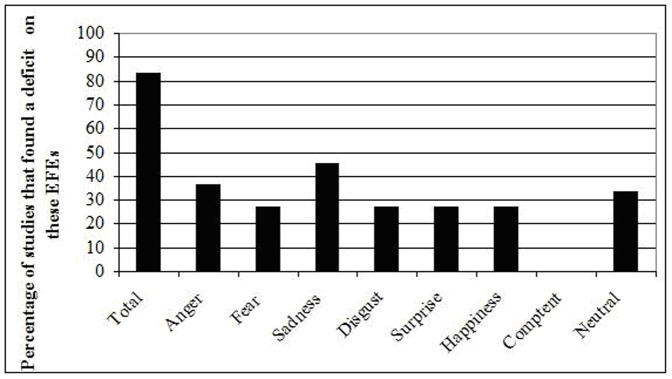
Alexithymia is characterized by difficulties in identifying, differentiating and describing feelings. A high prevalence of alexithymia has often been observed in clinical disorders characterized by low social functioning. This review aims to assess the association between alexithymia and the ability to decode emotional facial expressions (EFEs) within clinical and healthy populations. More precisely, this review has four main objectives: (1) to assess if alexithymia is a better predictor of the ability to decode EFEs than the diagnosis of clinical disorder; (2) to assess the influence of comorbid factors (depression and anxiety disorder) on the ability to decode EFE; (3) to investigate if deficits in decoding EFEs are specific to some levels of processing or task types; (4) to investigate if the deficits are specific to particular EFEs. Twenty four studies (behavioural and neuroimaging) were identified through a computerized literature search of Psycinfo, PubMed, and Web of Science databases from 1990 to 2010. Data on methodology, clinical characteristics, and possible confounds were analyzed. The review revealed that: (1) alexithymia is associated with deficits in labelling EFEs among clinical disorders, (2) the level of depression and anxiety partially account for the decoding deficits, (3) alexithymia is associated with reduced perceptual abilities, and is likely to be associated with impaired semantic representations of emotional concepts, and (4) alexithymia is associated with neither specific EFEs nor a specific valence. These studies are discussed with respect to processes involved in the recognition of EFEs. Future directions for research on emotion perception are also discussed.
Overview
The claims and statistics of this paper haven’t been checked yet.
Run the check — free, no account needed. It reads the open-access text and checks the sources it cites.
Integrity signals
Registry
Cites
Statistics
Figures
Verification
Claims the paper makes
The claims and statistics of this paper haven’t been checked yet.
Run the check — free, no account needed. It reads the open-access text and checks the sources it cites.
Claims other papers make about this one
Each is checked against this paper’s own text: does it say what the citing paper says it does?
The cited source says what the claim attributes to it.
In the citing paper
“alexithymia is associated with impaired abilities known to rely upon interoception, such as emotion regulation (Stasiewicz et al., 2012), emotion recognition (Grynberg et al., 2012), empathy (e.g. Enzi et al., 2016; Gleichgerrcht et al., 2015; Moriguchi et al., 2007a; Silani et al., 2008), reward processing (Bibby and Ferguson, 2011; Goerlich et al., 2016; Morie et al., 2016) and decision-making,”
From Atypical interoception as a common risk factor for psychopathology: A review (2021) · cites this paper as Grynberg et al., 2012
The cited source says what the claim attributes to it.
In the citing paper
“Alexithymia has been shown to predict performance on other tasks that require participants to match emotion words to faces (Grynberg et al., 2012), meaning that increased rates of alexithymia in ASD may explain the ASD impairment on the RMET if emotion recognition ability, rather than ToM, drives performance.”
From ‘Theory of Mind’ is not Theory of Emotion: a cautionary note on the reading the Mind in the Eyes test (2016) · cites this paper as Grynberg et al., 2012
Self-check
Percentages, sums and reported differences re-computed from the paper’s own numbers.
The self-check needs the paper’s full text.
Citations
Cites
Preferred Reporting Items for Systematic Reviews and Meta-Analyses: the PRISMA statement
Moher, D., Liberati, A., Tetzlaff, J., Altman, D. G., & for the PRISMA Group (2009) · BMJ · doi:10.1136/bmj.b2535 · Cited by 83,823
Preferred reporting items for systematic reviews and meta-analyses: the PRISMA Statement.
(2009) · PubMed Central · Cited by 44,859
Applied Multiple Regression/Correlation Analysis for the Behavioral Sciences
Cohen, P., Cohen, P., West, S. G., & Aiken, L. S. (2014) · Psychology Press eBooks · doi:10.4324/9781410606266 · Cited by 20,870
Preferred Reporting Items for Systematic Reviews and Meta-Analyses: The PRISMA Statement
Moher, D., Liberati, A., Tetzlaff, J., & Altman, D. G. (2009) · Journal of Clinical Epidemiology · doi:10.1016/j.jclinepi.2009.06.005 · Cited by 19,575
Journal of experimental psychology: Human Perception and performance
Jong, R. D., Coles, M. G. H., Logan, G. D., & Gratton, G. (1987) · Journal of Sound and Vibration · doi:10.1016/0022-460x(87)90423-8 · Cited by 5,411
Bagby, R. M., Parker, J. D. A., & Taylor, G. J. (1994) · Journal of Psychosomatic Research · doi:10.1016/0022-3999(94)90005-1 · Cited by 5,293
The distributed human neural system for face perception
Haxby, J. V., Hoffman, E. A., & Gobbini, M. I. (2000) · Trends in Cognitive Sciences · doi:10.1016/s1364-6613(00)01482-0 · Cited by 4,891
Applied Multiple Regression/Correlation Analysis for the Behavioral Sciences.
Fong, G. T., Cohen, J., & Cohen, P. R. (1985) · Journal of the American Statistical Association · doi:10.2307/2287930 · Cited by 4,610
Baron‐Cohen, S., Wheelwright, S., Hill, J., Raste, Y., & Plumb, I. (2001) · Journal of Child Psychology and Psychiatry · doi:10.1111/1469-7610.00715 · Cited by 4,555
Ekman, P. (1976) · Medical Entomology and Zoology · Cited by 4,345
Cited by
Sorted by citations
Oakley, B. F. M., Brewer, R., Bird, G., & Catmur, C. (2016) · Journal of Abnormal Psychology · doi:10.1037/abn0000182 · Cited by 431
Interoception and psychopathology: A developmental neuroscience perspective
Murphy, J., Brewer, R., Catmur, C., & Bird, G. (2017) · Developmental Cognitive Neuroscience · doi:10.1016/j.dcn.2016.12.006 · Cited by 404
Alexithymia: A general deficit of interoception
Brewer, R., Cook, R., & Bird, G. (2016) · Royal Society Open Science · doi:10.1098/rsos.150664 · Cited by 400
Neural correlates of alexithymia: A meta-analysis of emotion processing studies
van der Velde, J., Servaas, M. N., Goerlich, K. S., Bruggeman, R., Horton, P., Costafreda, S. G., & Aleman, A. (2013) · Neuroscience & Biobehavioral Reviews · doi:10.1016/j.neubiorev.2013.07.008 · Cited by 294
Brewer, R., Biotti, F., Catmur, C., Press, C., Happé, F., Cook, R., & Bird, G. (2016) · Autism Research · doi:10.1002/aur.1508 · Cited by 233
Alexithymia and Autism Spectrum Disorder: A Complex Relationship
Poquérusse, J., Pastore, L., Dellantonio, S., & Esposito, G. (2018) · Frontiers in Psychology · doi:10.3389/fpsyg.2018.01196 · Cited by 197
Atypical interoception as a common risk factor for psychopathology: A review
Brewer, R., Murphy, J., & Bird, G. (2021) · Neuroscience & Biobehavioral Reviews · doi:10.1016/j.neubiorev.2021.07.036 · Cited by 180
The feeling of Me feeling for you: interoception, alexithymia and empathy in autism
Mul, C.-L., Stagg, S. D., Herbelin, B., & Aspell, J. E. (2018) · Journal of Autism and Developmental Disorders · doi:10.1007/s10803-018-3564-3 · Cited by 180
Cognitive-emotional processing in alexithymia: an integrative review
Luminet, O., Nielson, K. A., & Ridout, N. (2021) · Cognition & Emotion · doi:10.1080/02699931.2021.1908231 · Cited by 149
Self-citationNeuroimaging studies of alexithymia: physical, affective, and social perspectives
Moriguchi, Y., & Komaki, G. (2013) · BioPsychoSocial Medicine · doi:10.1186/1751-0759-7-8 · Cited by 138
Thoma, P., Friedmann, C., & Suchan, B. (2013) · Neuroscience & Biobehavioral Reviews · doi:10.1016/j.neubiorev.2013.01.024 · Cited by 134
A new look at emotion perception: Concepts speed and shape facial emotion recognition.
Nook, E. C., Lindquist, K. A., & Zaki, J. (2015) · Emotion · doi:10.1037/a0039166 · Cited by 147
Taylor, G. J., Bagby, R. M., & Parker, J. D. A. (2016) · Neuroscience & Biobehavioral Reviews · doi:10.1016/j.neubiorev.2016.05.025 · Cited by 127
Brewer, R., Happé, F., Cook, R., & Bird, G. (2015) · Neuroscience & Biobehavioral Reviews · doi:10.1016/j.neubiorev.2015.07.006 · Cited by 117
Emotional processing in obesity: a systematic review and exploratory meta‐analysis
Fernandes, J., Ferreira‐Santos, F., Miller, K., & Torres, S. (2017) · Obesity Reviews · doi:10.1111/obr.12607 · Cited by 126
Are emotion recognition abilities related to everyday social functioning in ASD? A meta-analysis
Trevisan, D. A., & Birmingham, E. (2016) · Research in Autism · doi:10.1016/j.rasd.2016.08.004 · Cited by 117
Interoception and Social Connection
Arnold, A. J., Winkielman, P., & Dobkins, K. (2019) · Frontiers in Psychology · doi:10.3389/fpsyg.2019.02589 · Cited by 104
Four decades of research on alexithymia: moving toward clinical applications
Samur, D., Tops, M., Schlinkert, C., Quirin, M., Cuijpers, P., & Koole, S. L. (2013) · Frontiers in Psychology · doi:10.3389/fpsyg.2013.00861 · Cited by 104
Emotion recognition deficits in eating disorders are explained by co-occurring alexithymia
Brewer, R., Cook, R., Cardi, V., Treasure, J. L., & Bird, G. (2015) · Royal Society Open Science · doi:10.1098/rsos.140382 · Cited by 97
Alexithymia and automatic processing of emotional stimuli: a systematic review
Donges, U., & Suslow, T. (2017) · Reviews in the Neurosciences · doi:10.1515/revneuro-2016-0049 · Cited by 106
Development of alexithymic personality features
Karukivi, M. (2014) · World Journal of Psychiatry · doi:10.5498/wjp.v4.i4.91 · Cited by 90
Low emotional awareness as a transdiagnostic mechanism underlying psychopathology in adolescence
Weissman, D. G., Nook, E. C., Dews, A. A., Miller, A. B., Lambert, H. K., Sasse, S. F., Somerville, L. H., & McLaughlin, K. A. (2020) · Clinical Psychological Science · doi:10.1177/2167702620923649 · Cited by 91
Adaptive and maladaptive emotion processing and regulation, and the case of alexithymia
Panayiotou, G., Panteli, M., & Vlemincx, E. (2019) · Cognition & Emotion · doi:10.1080/02699931.2019.1671322 · Cited by 95
Deficits in Social Cognition: An Unveiled Signature of Multiple Sclerosis
Chalah, M. A., & Ayache, S. S. (2017) · Journal of the International Neuropsychological Society · doi:10.1017/s1355617716001156 · Cited by 86
Facial emotion recognition in autistic adult females correlates with alexithymia, not autism
Ola, L., & Gullon-Scott, F. (2020) · Autism · doi:10.1177/1362361320932727 · Cited by 85
Individual Differences in Facial Emotion Processing
Matthews, G., Pérez-González, J. C., Fellner, A. N., Funke, G. J., Emo, A. K., Zeidner, M., & Roberts, R. D. (2014) · Journal of Psychoeducational Assessment · doi:10.1177/0734282914550386 · Cited by 79
Brain response during visual emotional processing: an fMRI study of alexithymia
Deng, Y., Ma, X., & Tang, Q. (2013) · Psychiatry Research Neuroimaging · doi:10.1016/j.pscychresns.2013.03.007 · Cited by 73
The Role of Language in Alexithymia: Moving Towards a Multiroute Model of Alexithymia
Hobson, H., Brewer, R., Catmur, C., & Bird, G. (2019) · Emotion Review · doi:10.1177/1754073919838528 · Cited by 82
Facial Expression Production and Recognition in Autism Spectrum Disorders
Keating, C. T., & Cook, J. L. (2020) · Child and Adolescent Psychiatric Clinics of North America · doi:10.1016/j.chc.2020.02.006 · Cited by 70
Alexithymia in individuals maltreated as children and adolescents: a meta‐analysis
Khan, A. N., & Jaffee, S. R. (2022) · Journal of Child Psychology and Psychiatry · doi:10.1111/jcpp.13616 · Cited by 69
The role of alexithymia in social cognition: Evidence from a non-clinical population
Tella, M. D., Adenzato, M., Catmur, C., Miti, F., Castelli, L., & Ardito, R. B. (2020) · Journal of Affective Disorders · doi:10.1016/j.jad.2020.05.012 · Cited by 71
An investigation of facial emotion recognition impairments in alexithymia and its neural correlates
Jongen, S., Axmacher, N., Kremers, N. A. W., Hoffmann, H., Limbrecht-Ecklundt, K., Traue, H. C., & Kessler, H. (2014) · Behavioural Brain Research · doi:10.1016/j.bbr.2014.05.069 · Cited by 80
The relationship between alexithymia and theory of mind: A systematic review
Pisani, S., Murphy, J., Conway, J. R., Millgate, E., Catmur, C., & Bird, G. (2021) · Neuroscience & Biobehavioral Reviews · doi:10.1016/j.neubiorev.2021.09.036 · Cited by 77
Alexithymia, a compounding factor for eating and social avoidance symptoms in anorexia nervosa
Courty, A., Godart, N. T., Lalanne, C., & Berthoz, S. (2014) · Comprehensive Psychiatry · doi:10.1016/j.comppsych.2014.09.011 · Cited by 62
Self-citationRelationship between alexithymia and coping strategies in patients with somatoform disorder
Tominaga, T., Choi, H., Nagoshi, Y., Wada, Y., & Fukui, K. (2013) · Neuropsychiatric Disease and Treatment · doi:10.2147/ndt.s55956 · Cited by 60
Alexithymia and Mood: Recognition of Emotion in Self and Others
Lyvers, M., Kohlsdorf, S. M., Edwards, M. S., & Thorberg, F. A. (2017) · The American Journal of Psychology · doi:10.5406/amerjpsyc.130.1.0083 · Cited by 60
Cecchetto, C., Aiello, M., D’Amico, D., Cutuli, D., Cargnelutti, D., Eleopra, R., & Rumiati, R. I. (2014) · Journal of the International Neuropsychological Society · doi:10.1017/s1355617714000939 · Cited by 65
Pfaltz, M. C., Passardi, S., Auschra, B., Fares‐Otero, N. E., Schnyder, U., & Peyk, P. (2019) · European Journal of Psychotraumatology · doi:10.1080/20008198.2019.1682929 · Cited by 68
The left amygdala: A shared substrate of alexithymia and empathy
Goerlich, K. S., Lamm, C., Pripfl, J., Habel, U., & Votinov, M. (2015) · NeuroImage · doi:10.1016/j.neuroimage.2015.08.014 · Cited by 64
Alexithymia influences brain activation during emotion perception but not regulation
van der Velde, J., Gromann, P. M., Swart, M., Wiersma, D., de Haan, L., Bruggeman, R., Krabbendam, L., & Aleman, A. (2014) · Social Cognitive and Affective Neuroscience · doi:10.1093/scan/nsu056 · Cited by 67
The impact of autism spectrum disorder and alexithymia on judgments of moral acceptability.
Brewer, R., Marsh, A. A., Catmur, C., Cardinale, E. M., Stoycos, S. A., Cook, R., & Bird, G. (2015) · Journal of Abnormal Psychology · doi:10.1037/abn0000076 · Cited by 60
Alexithymia in multiple sclerosis: A systematic review of literature
Chalah, M. A., & Ayache, S. S. (2017) · Neuropsychologia · doi:10.1016/j.neuropsychologia.2017.07.034 · Cited by 61
Alexithymic features and the labeling of brief emotional facial expressions – An fMRI study
Ihme, K. A., Sacher, J., Lichev, V., Rosenberg, N., Kugel, H., Rufer, M., Grabe, H. J., Pampel, A., Lepsien, J., Kersting, A., et al. (2014) · Neuropsychologia · doi:10.1016/j.neuropsychologia.2014.09.044 · Cited by 59
Gender Differences in Empathy During Adolescence: Does Emotional Self-Awareness Matter?
Trentini, C., Tambelli, R., Maiorani, S., & Lauriola, M. (2022) · Psychological Reports · doi:10.1177/0033294120976631 · Cited by 53
Self perception and facial emotion perception of others in anorexia nervosa
Phillipou, A., Abel, L. A., Castle, D. J., Hughes, M. E., Gurvich, C., Nibbs, R. G., & Rossell, S. L. (2015) · Frontiers in Psychology · doi:10.3389/fpsyg.2015.01181 · Cited by 52
Expressive Incoherence and Alexithymia in Autism Spectrum Disorder
Costa, A. P., Steffgen, G., & Samson, A. C. (2017) · Journal of Autism and Developmental Disorders · doi:10.1007/s10803-017-3073-9 · Cited by 51
Aaron, R. V., Snodgress, M. A., Blain, S. D., & Park, S. (2018) · Psychiatry Research · doi:10.1016/j.psychres.2018.02.014 · Cited by 49
Alexithymia components in excessive internet users: A multi-factorial analysis
Kandri, T. A., Bonotis, K. S., Floros, G. D., & Zafiropoulou, M. (2014) · Psychiatry Research · doi:10.1016/j.psychres.2014.07.066 · Cited by 49
Emotion processing deficits in alexithymia and response to a depth of processing intervention
Constantinou, E., Panayiotou, G., & Theodorou, M. (2014) · Biological Psychology · doi:10.1016/j.biopsycho.2014.09.011 · Cited by 48
Kajanoja, J., Scheinin, N. M., Karlsson, L., Karlsson, H., & Karukivi, M. (2017) · Journal of Psychosomatic Research · doi:10.1016/j.jpsychores.2017.04.010 · Cited by 48
Blunted feelings: Alexithymia is associated with a diminished neural response to speech prosody
Goerlich, K. S., Witteman, J., Schiller, N. O., van Heuven, V. J., Aleman, A., & Martens, S. (2013) · Social Cognitive and Affective Neuroscience · doi:10.1093/scan/nst075 · Cited by 49
Lyvers, M., McCann, K., Coundouris, S. P., Edwards, M. S., & Thorberg, F. A. (2018) · The American Journal of Psychology · doi:10.5406/amerjpsyc.131.1.0041 · Cited by 46
Common and distinct impacts of autistic traits and alexithymia on social reward
Foulkes, L., Bird, G., Gökçen, E., McCrory, E., & Viding, E. (2015) · PLoS ONE · doi:10.1371/journal.pone.0121018 · Cited by 45
“Recent research has demonstrated that alongside deficits in processing their own emotions, individuals with alexithymia also have difficulties with processing others’ emotions, such that these individuals have difficulty recognising others’ facial expressions [26–29] and have reduced levels of empathy [30–31].”
The effect of alexithymia on early visual processing of emotional body postures
Borhani, K., Borgomaneri, S., Làdavas, E., & Bertini, C. (2016) · Biological Psychology · doi:10.1016/j.biopsycho.2015.12.010 · Cited by 46
Interaction without intent: the shape of the social world in Huntington’s disease
Eddy, C. M., & Rickards, H. E. (2015) · Social Cognitive and Affective Neuroscience · doi:10.1093/scan/nsv012 · Cited by 43
Hobson, H., Hogeveen, J., Brewer, R., Catmur, C., Gordon, B., Krueger, F., Chau, A., Bird, G., & Grafman, J. (2018) · Neuropsychologia · doi:10.1016/j.neuropsychologia.2017.12.037 · Cited by 42
Impaired emotion recognition is linked to alexithymia in heroin addicts
Craparo, G., Gori, A., Dell’Aera, S., Costanzo, G., Fasciano, S., Tomasello, A., & Vicario, C. M. (2016) · PeerJ · doi:10.7717/peerj.1864 · Cited by 42
Facial mimicry, facial emotion recognition and alexithymia in post-traumatic stress disorder
Passardi, S., Peyk, P., Rufer, M., Wingenbach, T. S. H., & Pfaltz, M. C. (2019) · Behaviour Research and Therapy · doi:10.1016/j.brat.2019.103436 · Cited by 47
Zorzella, K. P. M., Muller, R. T., Cribbie, R. A., Bambrah, V., & Classen, C. C. (2019) · Psychological Trauma Theory Research Practice and Policy · doi:10.1037/tra0000433 · Cited by 51
Gaggero, G., Bonassi, A., Dellantonio, S., Pastore, L., Aryadoust, V., & Esposito, G. (2020) · Frontiers in Psychiatry · doi:10.3389/fpsyt.2020.611489 · Cited by 40
Tella, M. D., Tesio, V., Ghiggia, A., Romeo, A., Colonna, F., Fusaro, E., Geminiani, G. C., Bruzzone, M., Torta, R., & Castelli, L. (2017) · Scandinavian Journal of Psychology · doi:10.1111/sjop.12405 · Cited by 40
Samur, D., Tops, M., Slapšinskaitė, R., & Koole, S. L. (2020) · Cognition & Emotion · doi:10.1080/02699931.2020.1732876 · Cited by 40
Demers, L. A., Schreiner, M. W., Hunt, R. H., Mueller, B. A., Klimes-Dougan, B., Thomas, K. M., & Cullen, K. R. (2019) · Journal of Affective Disorders · doi:10.1016/j.jad.2019.02.038 · Cited by 38
Social Cognitive Interventions in Neuropsychiatric Patients: A Meta-Analysis
Roelofs, R. L., Wingbermühle, E., Egger, J. I. M., & Kessels, R. P. C. (2016) · Brain Impairment · doi:10.1017/brimp.2016.31 · Cited by 39
Looking at the eyes interferes with facial emotion recognition in alexithymia.
Fujiwara, E. (2018) · Journal of Abnormal Psychology · doi:10.1037/abn0000361 · Cited by 38
Ihme, K. A., Sacher, J., Lichev, V., Rosenberg, N., Kugel, H., Rufer, M., Grabe, H. J., Pampel, A., Lepsien, J., Kersting, A., et al. (2014) · BMC Neuroscience · doi:10.1186/1471-2202-15-40 · Cited by 42
Interaction of HPA axis genetics and early life stress shapes emotion recognition in healthy adults
Hartling, C., Fan, Y., Weigand, A., Trilla, I., Gärtner, M., Bajbouj, M., Dziobek, I., & Grimm, S. (2018) · Psychoneuroendocrinology · doi:10.1016/j.psyneuen.2018.08.030 · Cited by 39
Mancini, G., Biolcati, R., Agnoli, S., Andrei, F., & Trombini, E. (2018) · Frontiers in Psychology · doi:10.3389/fpsyg.2018.01303 · Cited by 36
Starita, F., Borhani, K., Bertini, C., & Scarpazza, C. (2018) · Frontiers in Psychology · doi:10.3389/fpsyg.2018.00929 · Cited by 35
Investigating individual differences in emotion recognition ability using the ERAM test
Laukka, P., Bänziger, T., Israelsson, A., Cortes, D. S., Tornberg, C., Scherer, K. R., & Fischer, H. (2021) · Acta Psychologica · doi:10.1016/j.actpsy.2021.103422 · Cited by 43
Dissociation between Emotional Remapping of Fear and Disgust in Alexithymia
Scarpazza, C., Làdavas, E., & di Pellegrino, G. (2015) · PLoS ONE · doi:10.1371/journal.pone.0140229 · Cited by 41
Delle‐Vigne, D., Kornreich, C., Verbanck, P., & Campanella, S. (2014) · Frontiers in Human Neuroscience · doi:10.3389/fnhum.2014.00106 · Cited by 33
Disentangling interoceptive abilities in alexithymia
Scarpazza, C., Zangrossi, A., Huang, Y., Sartori, G., & Massaro, S. (2021) · Psychological Research · doi:10.1007/s00426-021-01538-x · Cited by 37
Alexithymia and emotional reactions to odors
Cecchetto, C., Rumiati, R. I., & Aiello, M. (2017) · Scientific Reports · doi:10.1038/s41598-017-14404-x · Cited by 33
Seeing mixed emotions: Alexithymia, emotion perception bias, and quality in dyadic interactions
Kafetsios, K. G., & Heß, U. (2018) · Personality and Individual Differences · doi:10.1016/j.paid.2018.08.014 · Cited by 32
Yürümez, E., Akça, Ö. F., Uğur, Ç., Uslu, R. I., & Kılıç, B. G. (2014) · International Journal of Psychiatry in Clinical Practice · doi:10.3109/13651501.2014.940055 · Cited by 31
Parruti, G., Vadini, F., Sozio, F., Mazzott, E., Ursini, T., Polill, E., Stefano, P. D., Tontodonati, M., Verrocchio, M. C., Fulcheri, M., et al. (2013) · PLoS ONE · doi:10.1371/journal.pone.0054555 · Cited by 31
Experiments on real-life emotions challenge Ekman's model
Coppini, S., Lucifora, C., Vicario, C. M., & Aldo Gangemi, A. (2023) · Scientific Reports · doi:10.1038/s41598-023-36201-5 · Cited by 30
Alexithymia and automatic processing of facial emotions: behavioral and neural findings
Rosenberg, N., Ihme, K. A., Lichev, V., Sacher, J., Rufer, M., Grabe, H. J., Kugel, H., Pampel, A., Lepsien, J., Kersting, A., et al. (2020) · BMC Neuroscience · doi:10.1186/s12868-020-00572-6 · Cited by 30
Reduced anticipation of negative emotional events in alexithymia
Starita, F., Làdavas, E., & di Pellegrino, G. (2016) · Scientific Reports · doi:10.1038/srep27664 · Cited by 29
Dinkler, L., Dobrescu, S. R., Råstam, M., Gillberg, I. C., Gillberg, C., Wentz, E., & Hadjikhani, N. K. (2019) · International Journal of Eating Disorders · doi:10.1002/eat.23066 · Cited by 31
Invisible side of emotions: somato-motor responses to affective facial displays in alexithymia
Scarpazza, C., Làdavas, E., & Cattaneo, L. (2017) · Experimental Brain Research · doi:10.1007/s00221-017-5118-x · Cited by 35
Relationship between Parenting Style, Alexithymia and Aggression in Emerging Adults
McErlean, A. B. J., & Lim, L. X. C. (2019) · Journal of Family Issues · doi:10.1177/0192513x19886647 · Cited by 32
Hobson, H., Westwood, H., Conway, J. R., McEwen, F. S., Colvert, E., Catmur, C., Bird, G., & Happe, F. G. E. (2020) · Research in Autism · doi:10.1016/j.rasd.2020.101531 · Cited by 27
Huggins, C. F., Donnan, G. L. J., Cameron, I. M., & Williams, J. H. G. (2020) · Research in Autism · doi:10.1016/j.rasd.2020.101612 · Cited by 26
Regional cortical thinning may be a biological marker for borderline personality disorder
Bøen, E., Westlye, L. T., Elvsåshagen, T., Hummelen, B., Hol, P. K., Boye, B., Andersson, S., Karterud, S., & Malt, U. F. (2013) · Acta Psychiatrica Scandinavica · doi:10.1111/acps.12234 · Cited by 29
The effect of constraining eye-contact during dynamic emotional face perception—an fMRI study
Hadjikhani, N. K., Zürcher, N. R., Lassalle, A., Hippolyte, L., Ward, N., & Johnels, J. Å. (2017) · Social Cognitive and Affective Neuroscience · doi:10.1093/scan/nsx046 · Cited by 33
“Lacking warmth”: alexithymia trait is related to warm-specific thermal somatosensory processing
Borhani, K., Làdavas, E., Fotopoulou, A., & Haggard, P. (2017) · Biological Psychology · doi:10.1016/j.biopsycho.2017.07.012 · Cited by 26
Kosonogov, V., & Titova, A. (2018) · International Journal of Psychology · doi:10.1002/ijop.12512 · Cited by 28
No effect of age on emotion recognition after accounting for cognitive factors and depression
Murphy, J., Millgate, E., Geary, H., Catmur, C., & Bird, G. (2019) · Quarterly Journal of Experimental Psychology · doi:10.1177/1747021819859514 · Cited by 26
Emotion Knowledge and Emotion Regulation in Alexithymia
Luminet, O., & Zamariola, G. (2018) · Cambridge University Press eBooks · doi:10.1017/9781108241595.006 · Cited by 28
Self-citationAre Autistic and Alexithymic Traits Distinct? A Factor-Analytic and Network Approach
Cuve, H. C., Murphy, J., Hobson, H., Ichijo, E., Catmur, C., & Bird, G. (2021) · Journal of Autism and Developmental Disorders · doi:10.1007/s10803-021-05094-6 · Cited by 27
Alexithymia, not fibromyalgia, predicts the attribution of pain to anger-related facial expressions
Tella, M. D., Enrici, I., Castelli, L., Colonna, F., Fusaro, E., Ghiggia, A., Romeo, A., Tesio, V., & Adenzato, M. (2017) · Journal of Affective Disorders · doi:10.1016/j.jad.2017.10.048 · Cited by 25
Zucchelli, M. M., & Ugazio, G. (2019) · Frontiers in Psychology · doi:10.3389/fpsyg.2019.01427 · Cited by 27
Nam, G., Lee, H., Lee, J.-H., & Hur, J. (2020) · Frontiers in Psychiatry · doi:10.3389/fpsyt.2020.00698 · Cited by 27
Zdankiewicz-Ścigała, E., & Ścigała, D. K. (2018) · Frontiers in Psychology · doi:10.3389/fpsyg.2018.02039 · Cited by 24
Smith, R. S., Kaszniak, A. W., Katsanis, J., Lane, R. D., & Nielsen, L. (2018) · Consciousness and Cognition · doi:10.1016/j.concog.2018.12.004 · Cited by 23
Renzi, A., Mariani, R., Trani, M. D., & Tambelli, R. (2020) · Research in Psychotherapy Psychopathology Process and Outcome · doi:10.4081/ripppo.2020.452 · Cited by 28
Visual Attention to Ambiguous Emotional Faces in Eating Disorders: Role of Alexithymia
Fujiwara, E., Kube, V. L., Rochman, D., Macrae‐Korobkov, A. K., & Peynenburg, V. A. (2017) · European Eating Disorders Review · doi:10.1002/erv.2535 · Cited by 22
Abnormalities in Automatic Processing of Illness-Related Stimuli in Self-Rated Alexithymia
Brandt, L., Pintzinger, N. M., & Tran, U. S. (2015) · PLoS ONE · doi:10.1371/journal.pone.0129905 · Cited by 24
Metadata
- Authors
- Grynberg, D., Chang, B., Corneille, O., Maurage, P., Vermeulen, N., Berthoz, S., & Luminet, O.
- Affiliations
- UCLouvain (BE)
- Inserm (FR)
- Corresponding author
- Grynberg, Delphine
- ORCID
- Venue
- PLoS ONE
- Publisher
- Public Library of Science (PLoS)
- Published
- 2012-08-23
- Volume
- 7
- Issue
- 8
- Pages
- e42429
- ISSN
- 1932-6203 (ISSN-L)
- PMC
- PMC3426527
- OpenAlex
- W2017164168
- Cited by
- 305
- References
- 178
- Citations by year
- 2026: 12 · 2025: 23 · 2024: 22 · 2023: 18 · 2022: 22 · 2021: 24 · 2020: 32 · 2019: 33 · 2018: 25 · 2017: 24 · 2016: 18 · 2015: 23 · 2014: 16 · 2013: 13
- FWCI
- 2.24
- Type
- journal article
- Language
- en
- Open access
- gold
- doi.org
- Locations
- PLoS ONE (publishedVersion, cc-by)
- PubMed Central (publishedVersion, cc-by)
- PubMed (publishedVersion)
- HAL (submittedVersion)
- DIAL (Catholic University of Leuven) (submittedVersion, other-oa)
- DOAJ (DOAJ: Directory of Open Access Journals) (submittedVersion, cc-by-sa)
- Figshare (submittedVersion, cc-by)
- Funders
- Fonds De La Recherche Scientifique - FNRS
- Topics
- Health Sciences › Medicine › Psychiatry and Mental health › Psychosomatic Disorders and Their Treatments
- Life Sciences › Neuroscience › Cognitive Neuroscience › Face Recognition and Perception
- Social Sciences › Psychology › Experimental and Cognitive Psychology › Anxiety, Depression, Psychometrics, Treatment, Cognitive Processes
- Keywords
- alexithymia, emotional facial expressions, emotion perception, facial expression recognition, depression, anxiety disorders, comorbidities, emotion labeling, social functioning
- MeSH terms
- Affective Symptoms, Emotions, Facial Expression, Humans, Neuroimaging
About these checks
Registry, retraction, Cites and statistics results are computed, not judged, with one exception: a printed reference that no index lists is read once by a model before it counts as a citation error. Claims are extracted by a model and kept only when their quote appears verbatim in the text; each cited source is then checked, with a model’s help, for whether it says what the claim relies on. Those verdicts can be wrong — read the claim’s quote and the cited source before relying on one.
Statistics and arithmetic are recomputed, not judged.
Confidence bands are shown only for fields calibrated on our annotated test set. None is calibrated yet, so no band is shown.
What counts as a claim ›How we measure confidence ›How we check this ›
Are you an author, or do you see a problem with this page? Request a review
