

Cognition in Males and Females with Autism: Similarities and Differences
Open accessThe DOI matches its Crossref record; 141 of the 146 references it cites were found in a registry or an index.
Abstract
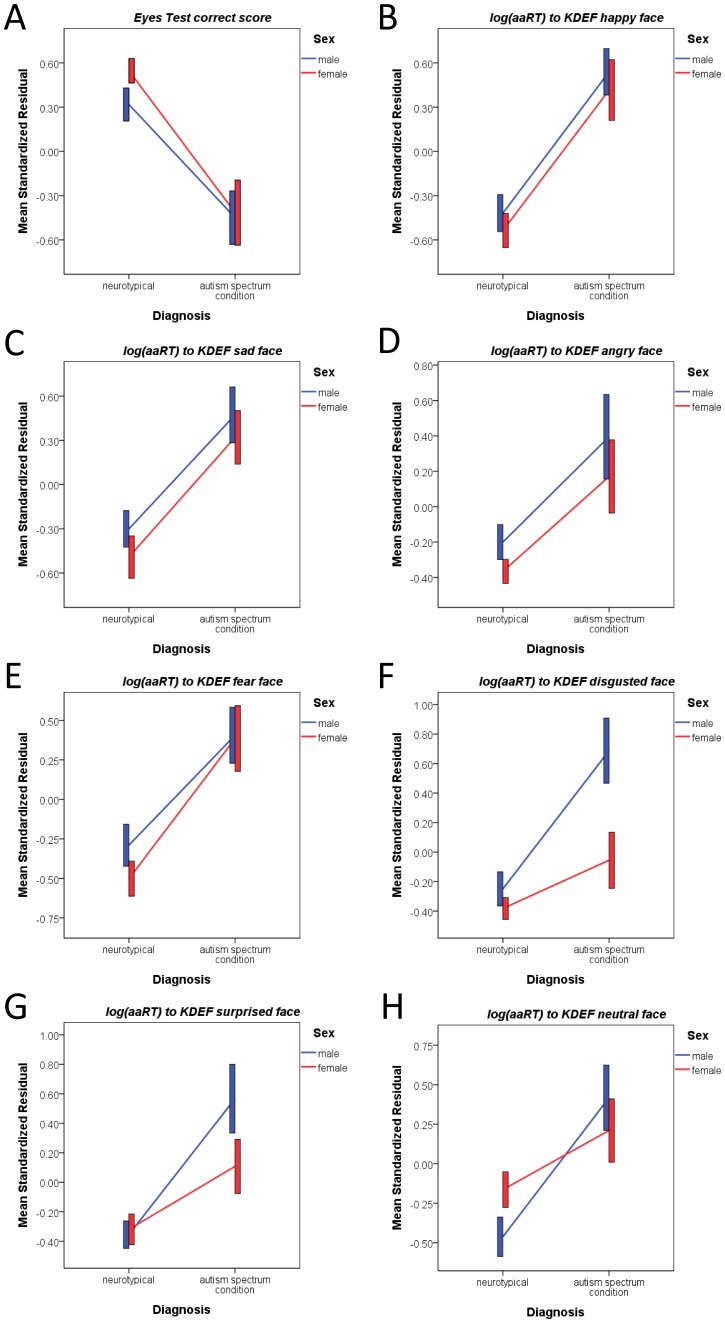
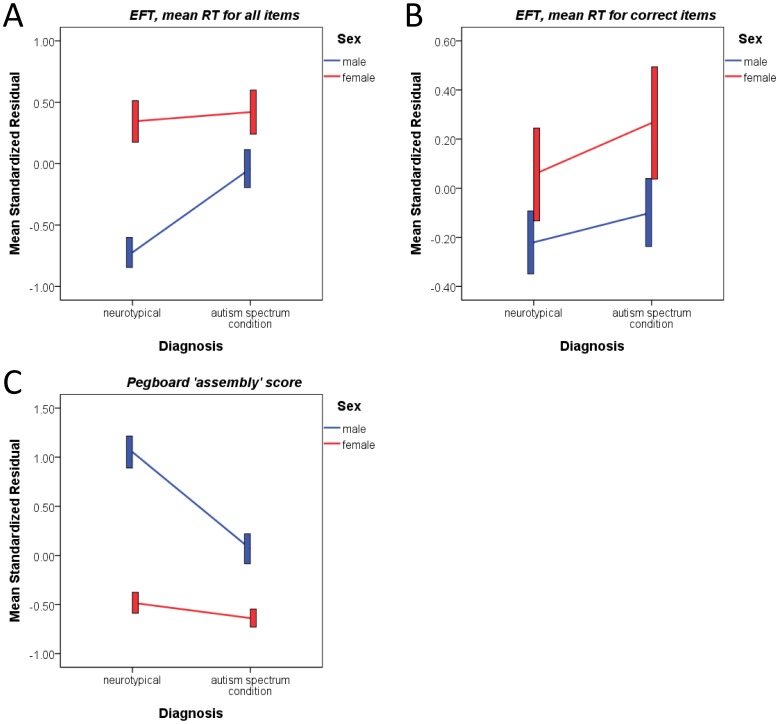
The male bias in autism spectrum conditions (ASC) has led to females with ASC being under-researched. This lack of attention to females could hide variability due to sex that may explain some of the heterogeneity within ASC. In this study we investigate four key cognitive domains (mentalizing and emotion perception, executive function, perceptual attention to detail, and motor function) in ASC, to test for similarities and differences between males and females with and without ASC (n = 128 adults; n = 32 per group). In the mentalizing and facial emotion perception domain, males and females with ASC showed similar deficits compared to neurotypical controls. However, in attention to detail and dexterity involving executive function, although males with ASC showed poorer performance relative to neurotypical males, females with ASC performed comparably to neurotypical females. We conclude that performance in the social-cognitive domain is equally impaired in male and female adults with ASC. However, in specific non-social cognitive domains, performance within ASC depends on sex. This suggests that in specific domains, cognitive profiles in ASC are modulated by sex.
Overview
The claims and statistics of this paper haven’t been checked yet.
Free: it reads the open-access text and checks the first 5 claims that cite a source we can check. Create a free account to check every claim.
Integrity signals
Registry
Cites
Statistics
Figures
Verification
Claims the paper makes
The claims and statistics of this paper haven’t been checked yet.
Free: it reads the open-access text and checks the first 5 claims that cite a source we can check. Create a free account to check every claim.
Self-check
Percentages, sums and reported differences re-computed from the paper’s own numbers.
The self-check needs the paper’s full text.
Citations
Cites
(1966) · Medical Entomology and Zoology · Cited by 10,293
Lord, C., Rutter, M., & Le Couteur, A. (1994) · Journal of Autism and Developmental Disorders · doi:10.1007/bf02172145 · Cited by 9,065 · cited 1×
“The ASC participants were further selected based on their ADIR scores [42].”
Does the autistic child have a “theory of mind” ?
Baron-Cohen, S., Leslie, A. M., & Frith, U. (1985) · Cognition · doi:10.1016/0010-0277(85)90022-8 · Cited by 8,599 · cited 1×
“For cognition related to secondary intersubjectivity, theory of mind (ToM) or mentalizing deficits have been found across the life span, from the classical first-order ToM deficit in children [52], to complex ToM deficits revealed in moral judgments [53] and spontaneous ToM [54] in adults with ASC.”
Self-citationSignal detection theory and psychophysics
Ingleby, J. D. (1967) · Journal of Sound and Vibration · doi:10.1016/0022-460x(67)90197-6 · Cited by 8,509
Lord, C., Risi, S., Lambrecht, L., Cook, E. H., Leventhal, B. L., DiLavore, P. C., Pickles, A., & Rutter, M. (2000) · Journal of Autism and Developmental Disorders · doi:10.1023/a:1005592401947 · Cited by 7,520 · cited 4×
“MA scored significantly higher than FA in ADOS scores even after correction for multiple comparisons.”
InfluentialBaron‐Cohen, S., Wheelwright, S., Hill, J., Raste, Y., & Plumb, I. (2001) · Journal of Child Psychology and Psychiatry · doi:10.1111/1469-7610.00715 · Cited by 4,555 · cited 17×
“Bo¨lte and colleagues found that adolescent females with high-functioning ASC outperformed males with high-functioning ASC on the Trail Making Test (measuring set-shifting), but the opposite was observed in their unaffected siblings [35].”
InfluentialSelf-citationBaron‐Cohen, S., Wheelwright, S. J., Hill, J., Raste, Y., & Plumb, I. (2001) · PubMed · Cited by 4,313
Self-citationFrith, C., & Frith, U. (2005) · Current Biology · doi:10.1016/j.cub.2005.08.041 · Cited by 3,481
Voyer, D., Voyer, S., & Bryden, M. P. (1995) · Psychological Bulletin · doi:10.1037/0033-2909.117.2.250 · Cited by 2,868 · cited 2×
“Thirdly, to fully address the relationship between sex and ASC it is best to have tasks showing the largest effect sizes for typical sex differences, such as those measuring visuospatial abilities of targeting, mental rotation, and aggression [129,137].”
(1989) · UCL Discovery (University College London) · Cited by 2,724
Research works printed but not linked: 1
- [40]40. American Psychiatric Association (2000) Diagnostic and Statistical Manual of Mental Disorders, 4th edition text revision (DSM-IV-TR). Washington, DC: American Psychiatric Publishing, Inc.
Cited by
James, S. L., Abate, D., Abate, K. H., Abay, S. M., Abbafati, C., Abbasi, N., Abbastabar, H., Abd-Allah, F., Abdela, J., Abdelalim, A., et al. (2018) · The Lancet · doi:10.1016/s0140-6736(18)32279-7 · Cited by 13,867
Vos, T., Abajobir, A. A., Abate, K. H., Abbafati, C., Abbas, K. M., Abd-Allah, F., Abdulkader, R. S., Abdulle, A. M., Abebo, T. A., Abera, S. F., et al. (2017) · The Lancet · doi:10.1016/s0140-6736(17)32154-2 · Cited by 13,220
Sex/Gender Differences and Autism: Setting the Scene for Future Research
Lai, M.-C., Lombardo, M. V., Auyeung, B., Chakrabarti, B., & Baron-Cohen, S. (2015) · Journal of the American Academy of Child & Adolescent Psychiatry · doi:10.1016/j.jaac.2014.10.003 · Cited by 1,120
“Some have attempted to clarify how males and females with autism are similar or different in behavioral features via metaanalyses,(10) multi-site large datasets,(11,12) and by means of a male/female-balanced design.(13,14) This has been extended to proteomics,(15) anthropometrics,(16) brain structure,(17) and neural/s…”
BackgroundSelf-citationQuantifying and exploring camouflaging in men and women with autism
Lai, M.-C., Lombardo, M. V., Ruigrok, A. N., Chakrabarti, B., Auyeung, B., Szatmari, P., Happé, F., Baron-Cohen, S., & MRC AIMS Consortium (2017) · Autism · doi:10.1177/1362361316671012 · Cited by 705
“Additional details of the implementation of cognitive tasks were reported earlier (Lai et al., 2012).”
InfluentialSelf-citationSHANK proteins: roles at the synapse and in autism spectrum disorder
Monteiro, P., & Feng, G. (2017) · Nature Reviews Neuroscience · doi:10.1038/nrn.2016.183 · Cited by 681
Halladay, A. K., Bishop, S., Constantino, J. N., Daniels, A. M., Koenig, K., Palmer, K., Messinger, D., Pelphrey, K., Sanders, S. J., Singer, A. T., et al. (2015) · Molecular Autism · doi:10.1186/s13229-015-0019-y · Cited by 574
“As mentioned previously, females with a clinical diagnosis of ASD tend to be underrepresented at the higher ends of the IQ distribution [8,24-26].”
Neuroimaging in autism spectrum disorder: brain structure and function across the lifespan
Ecker, C., Bookheimer, S. Y., & Murphy, D. G. M. (2015) · The Lancet Neurology · doi:10.1016/s1474-4422(15)00050-2 · Cited by 519
A Review of the Role of Female Gender in Autism Spectrum Disorders
Kirkovski, M., Enticott, P. G., & Fitzgerald, P. B. (2013) · Journal of Autism and Developmental Disorders · doi:10.1007/s10803-013-1811-1 · Cited by 389
“2011), or adults (Lai et al. 2012).”
“Autism is me”: an investigation of how autistic individuals make sense of autism and stigma
Botha, M., Dibb, B., & Frost, D. M. (2022) · Disability & Society · doi:10.1080/09687599.2020.1822782 · Cited by 412
“A meta-analysis found that for every cis-gendered female in an autism study, there were at least four cis-gendered males (Lai et al. 2012).”
MethodFrazier, T. W., Georgiades, S., Bishop, S. L., & Hardan, A. Y. (2014) · Journal of the American Academy of Child & Adolescent Psychiatry · doi:10.1016/j.jaac.2013.12.004 · Cited by 409
Rynkiewicz, A., Schuller, B., Marchi, E., Piana, S., Camurri, A., Lassalle, A., & Baron-Cohen, S. (2016) · Molecular Autism · doi:10.1186/s13229-016-0073-0 · Cited by 404
“6:1 [8–10] which can be attributed to better knowledge and improved diagnostic skills of mental health professionals as”
BackgroundSelf-citationNaturally occurring chalcones and their biological activities
Rozmer, Z., & Perjési, P. (2016) · Phytochemistry Reviews · doi:10.1007/s11101-014-9387-8 · Cited by 382
Sex differences in autism spectrum disorder: a review
Ferri, S. L., Abel, T., & Brodkin, E. S. (2018) · Current Psychiatry Reports · doi:10.1007/s11920-018-0874-2 · Cited by 392
Subgrouping the Autism Spectrum: Reflections on DSM-5
Lai, M.-C., Lombardo, M. V., Chakrabarti, B., & Baron-Cohen, S. (2013) · PLoS Biology · doi:10.1371/journal.pbio.1001544 · Cited by 330
“, behavior and cognition [37,38], genetics [39,40], proteomics [41], and neuroanatomy [42,43]), which contribute to heterogeneity.”
Self-citationVelikonja, T., Fett, A.-K., & Velthorst, E. (2019) · JAMA Psychiatry · doi:10.1001/jamapsychiatry.2018.3645 · Cited by 292
Biological sex affects the neurobiology of autism
Lai, M.-C., Lombardo, M. V., Suckling, J., Ruigrok, A. N. V., Chakrabarti, B., Ecker, C., Deoni, S. C. L., Craig, M. C., Murphy, D. G. M., Bullmore, E. T., et al. (2013) · Brain · doi:10.1093/brain/awt216 · Cited by 298
“…to answer two questions about how autism is modulated by biological sex at the level of the brain: (i) is the neuroanatomy of autism different in males and females? and (ii) does the neuroanatomy of autism fit predictions from the ‘extreme male brain’ theory of autism, in males and/or in females?”
BackgroundMethodInfluentialSelf-citationMandy, W., & Lai, M. (2016) · Journal of Child Psychology and Psychiatry · doi:10.1111/jcpp.12501 · Cited by 283
“…vulnerability to the condition, and sex/gender-specific ASC symptom profiles (Frazier, Georgiades, Bishop, & Hardan, 2014; Hiller, Young, & Weber, 2014; Lai et al., 2011, 2012, 2015; Mandy & Tchanturia, 2015; Mandy et al., 2012; Messinger et al., 2015; Supekar & Menon, 2015; Szatmari et al., 2012).”
BackgroundSelf-citationDemetriou, E. A., DeMayo, M. M., & Guastella, A. J. (2019) · Frontiers in Psychiatry · doi:10.3389/fpsyt.2019.00753 · Cited by 274
Wallace, G. L., Kenworthy, L., Pugliese, C. E., Popal, H. S., White, E. I., Brodsky, E., & Martin, A. (2016) · Journal of Autism and Developmental Disorders · doi:10.1007/s10803-015-2655-7 · Cited by 261
Jones, C. R. G., Simonoff, E., Baird, G., Pickles, A., Marsden, A. J. S., Tregay, J., Happé, F., & Charman, T. (2018) · Autism Research · doi:10.1002/aur.1873 · Cited by 259
“A cluster of studies have explored cognition in ASD across domains and using multiple measures (Brunsdon et al. 2015; Cantio et al. 2016; Kimhi et al. 2014; Lai et al. 2012; Lam 2013; Losh et al. 2009; Narzisi et al. 2013; Pellicano et al. 2006; Wilson et al. 2014; Yang et al. 2009).”
BackgroundHull, L., Mandy, W., & Petrides, K. (2017) · Autism · doi:10.1177/1362361316669087 · Cited by 254
“No significant sex/gender and diagnosis interaction was found for either the Reading the Mind in the Eyes Task (RMET) or the Karolinska Directed Emotional Faces Task (Holt et al., 2014; Lai et al., 2012; see Table 2).”
BackgroundMethodInfluentialBaron-Cohen, S., Bowen, D. C., Holt, R. J., Allison, C., Auyeung, B., Lombardo, M. V., Smith, P., & Lai, M.-C. (2015) · PLOS ONE · doi:10.1371/journal.pone.0136521 · Cited by 238
“The present findings of similar performance between adult males and females with autism, and the larger shift in females than in males with autism away from same-sex controls, replicates our earlier findings from a smaller adult sample [37].”
ResultSelf-citationNeurobiology of social behavior abnormalities in autism and Williams syndrome
Barak, B., & Feng, G. (2016) · Nature Neuroscience · doi:10.1038/nn.4276 · Cited by 225
‘Happy and a bit Nervous’: the experiences of children with autism in physical education
Healy, S., Msetfi, R., & Gallagher, S. (2013) · British Journal of Learning Disabilities · doi:10.1111/bld.12053 · Cited by 163
“Motor deficits also appear to be less evident in females than males (Lai et al. 2012).”
BackgroundEcker, C. (2017) · Autism · doi:10.1177/1362361315627136 · Cited by 165
“Such externalizing problems include aggressive behaviour, hyperactivity, reduced pro-social behaviour and increased repetitive/ restricted behaviours and interests (Bölte et al., 2011; Lai et al., 2012; Szatmari et al., 2012).”
BackgroundAttenuation of Typical Sex Differences in 800 Adults with Autism vs. 3,900 Controls
Baron-Cohen, S., Cassidy, S., Auyeung, B., Allison, C., Achoukhi, M., Robertson, S., Pohl, A., & Lai, M.-C. (2014) · PLoS ONE · doi:10.1371/journal.pone.0102251 · Cited by 177
“Second, the persistence of normative sex differences in autism corresponds with recent findings of less maletypical, possibly ‘compensated’, ‘masked’ or qualitatively different ‘female phenotypes’ of autism [18,20,21,25,38,39].”
BackgroundResultSelf-citationSex and Gender Differences in Central Nervous System-Related Disorders
Zagni, E., Simoni, L., & Colombo, D. (2016) · Neuroscience Journal · doi:10.1155/2016/2827090 · Cited by 173
“[14] M.”
BackgroundEvaluating Posed and Evoked Facial Expressions of Emotion from Adults with Autism Spectrum Disorder
Faso, D. J., Sasson, N. J., & Pinkham, A. E. (2014) · Journal of Autism and Developmental Disorders · doi:10.1007/s10803-014-2194-7 · Cited by 179
“Although the small sample size precludes definitive conclusions about these gender effects, recent research in the field has reported marked gender differences in ASD on many dimensions, including diagnostic severity and aspects of social cognition (Dworzynski et al. 2012; Lai et al. 2012).”
BackgroundCorbett, B. A., Schwartzman, J. M., Libsack, E. J., Muscatello, R. A., Lerner, M. D., Simmons, G. L., & White, S. W. (2021) · Autism Research · doi:10.1002/aur.2440 · Cited by 113
“…specific cognitive domains (e.g., attention to detail, dexterity in executive function) appear modulated by sex, such that females with ASD without co-occurring intellectual impairment demonstrate abilities similar to neurotypical females and superior to males with ASD (Lai et al., 2012).”
BackgroundLehnhardt, F.-G., Falter, C. M., Gawronski, A., Pfeiffer, K., Tepest, R., Franklin, J., & Vogeley, K. (2016) · Journal of Autism and Developmental Disorders · doi:10.1007/s10803-015-2558-7 · Cited by 153
Biotransformations and biological activities of hop flavonoids
Karabín, M., Hudcová, T., Jelínek, L., & Dostálek, P. (2015) · Biotechnology Advances · doi:10.1016/j.biotechadv.2015.02.009 · Cited by 146
Imaging sex/gender and autism in the brain: Etiological implications
Lai, M., Lerch, J. P., Floris, D. L., Ruigrok, A. N. V., Pohl, A., Lombardo, M. V., & Baron‐Cohen, S. (2017) · Journal of Neuroscience Research · doi:10.1002/jnr.23948 · Cited by 140
“…of substantial sex/gender differences in autism are also found in other levels including cognition (Bolte et al., 2011; Lemon et al., 2011; Lai et al., 2012; Goddard et al., 2014; Kauschke et al., 2016; Lehnhardt et al., 2016), early physical growth trajectory (Suren et al., 2013;…”
BackgroundSelf-citationSpain, D., & Blainey, S. H. (2015) · Autism · doi:10.1177/1362361315587659 · Cited by 126
“It has, however, been hypothesised that men and women with ASD have differing clinical presentations (e.g. Lai et al., 2011, 2012), and hence, they may have unique (as well as overlapping) needs (e.g. Byers et al., 2013) from SSI groups.”
BackgroundSupekar, K., & Menon, V. (2015) · Molecular Autism · doi:10.1186/s13229-015-0042-z · Cited by 130
“A few studies have reported greater social abilities and higher social-competence ratings in males, compared to females, with ASD [6, 15], other studies have observed no sex differences in nonverbal social behavior, social-cognitive behavior, and on the social domain of the Autism Diagnostic Interview, Revised (ADI-R)…”
Peñuelas‐Calvo, I., Sareen, A., Sevilla‐Llewellyn‐Jones, J., & Fernández‐Berrocal, P. (2018) · Journal of Autism and Developmental Disorders · doi:10.1007/s10803-018-3814-4 · Cited by 143
Does sex influence the diagnostic evaluation of autism spectrum disorder in adults?
Wilson, C. E., Murphy, C. M., McAlonan, G., Robertson, D. M., Spain, D., Hayward, H., Woodhouse, E., Deeley, P. Q., Gillan, N., Ohlsen, J. C., et al. (2016) · Autism · doi:10.1177/1362361315611381 · Cited by 129
“…including executive functioning (e.g. Bölte et al., 2011; Lai et al., 2012; Lemon et al., 2011), perceptual attention to detail and motor function (Lai et al., 2012), adaptive skills (Frazier et al., 2014), autobiographical memory (Goddard et al., 2014) and sleep habits (Hartley et al., 2009).”
BackgroundPsychosis in autism: Comparison of the features of both conditions in a dually affected cohort
Larson, F. V., Wagner, A. P., Jones, P. B., Tantam, D., Lai, M.-C., Baron-Cohen, S., & Holland, A. J. (2017) · British Journal of Psychiatry · doi:10.1192/bjp.bp.116.187682 · Cited by 121
“They were recruited via the Cambridge arm of the Medical Research Council Autism Imaging Multicentre Study (MRC AIMS) project (17), and are termed the ASD-No”
Self-citationVan Eylen, L., Boets, B., Steyaert, J., Wagemans, J., & Noens, I. (2015) · European Child & Adolescent Psychiatry · doi:10.1007/s00787-015-0689-1 · Cited by 123
“[66] failed to replicate this finding in adults and did not observe a group by gender interaction for generativity impairments either, in line with our results (for a general review of gender effects in ASD, see [22]).”
ResultAllely, C. S. (2019) · Advances in Autism · doi:10.1108/aia-09-2018-0036 · Cited by 123
The Neuropsychology of Male Adults With High‐Functioning Autism or Asperger Syndrome
Wilson, C. E., Happé, F., Wheelwright, S. J., Ecker, C., Lombardo, M. V., Johnston, P., Daly, E., Murphy, C. M., Spain, D., Lai, M., et al. (2014) · Autism Research · doi:10.1002/aur.1394 · Cited by 112
“…adults with ASD outperform typical controls on tasks where a local processing bias is advantageous [Bonnel et al., 2010; Jolliffe & Baron-Cohen, 1997; Shah & Frith, 1983, 1993], but others have not replicated this [Lai et al., 2012a; White & Saldana, 2011; for a review, see Happé & Frith, 2006].”
BackgroundMethodResultSelf-citationWhite, E. I., Wallace, G. L., Bascom, J., Armour, A. C., Register‐Brown, K., Popal, H. S., Ratto, A. B., Martin, A., & Kenworthy, L. (2017) · Autism Research · doi:10.1002/aur.1811 · Cited by 104
“In contrast, no differences in sensitivity to signals nor response inhibition was found between sexes on a Go/No-Go task [Lai et al., 2012]; this finding was in the context of a female sample with significantly lower social and communication difficulites on the ADOS than males.”
ResultRynkiewicz, A., & Łucka, I. (2018) · Psychiatria Polska · doi:10.12740/pp/onlinefirst/58837 · Cited by 90
“Badania naukowe ostatnich lat coraz częściej wskazują jednak na proporcję niższą, rzędu 2–2,6:1 [8–10], co może wynikać m.in. z doskonalenia umiejętności diagnostycznych profesjonalistów, rewizji narzędzi i kry-teriów diagnostycznych.”
Bringas, M. E., Carvajal-Flores, F. N., López-Ramírez, T. A., Atzori, M., & Flores, G. (2013) · Neuroscience · doi:10.1016/j.neuroscience.2013.03.030 · Cited by 114
Parent-reported differences between school-aged girls and boys on the autism spectrum
Sutherland, R., Hodge, A., Bruck, S., Costley, D., & Klieve, H. (2017) · Autism · doi:10.1177/1362361316668653 · Cited by 87
“One suggestion is that boys and girls may differ in their presentation, making the detection of girls more difficult (Dworzynski et al., 2012; Kirkovski et al., 2013; Lai et al., 2012).”
BackgroundOpinion: Sex, gender and the diagnosis of autism—A biosocial view of the male preponderance
Goldman, S. (2013) · Research in Autism Spectrum Disorders · doi:10.1016/j.rasd.2013.02.006 · Cited by 108
Floris, D. L., Lai, M., Auer, T., Lombardo, M. V., Ecker, C., Chakrabarti, B., Wheelwright, S. J., Bullmore, E. T., Murphy, D. G. M., Baron‐Cohen, S., et al. (2016) · Human Brain Mapping · doi:10.1002/hbm.23023 · Cited by 108
Self-citationTye, C., Mercure, E., Ashwood, K. L., Azadi, B., Asherson, P. J., Johnson, M. H., Bolton, P., & McLoughlin, G. (2013) · Developmental Cognitive Neuroscience · doi:10.1016/j.dcn.2013.01.001 · Cited by 116
Sex Differences in Autism Spectrum Disorder: Focus on High Functioning Children and Adolescents
de Giambattista, C., Ventura, P., Trerotoli, P., Margari, F., & Margari, L. (2021) · Frontiers in Psychiatry · doi:10.3389/fpsyt.2021.539835 · Cited by 116
He, C., Chen, Y., Jian, T., Chen, H., Guo, X., Wang, J., Wu, L., Chen, H., & Duan, X. (2018) · Autism Research · doi:10.1002/aur.2020 · Cited by 107
“Subjects were excluded for the following reasons: (a) female sex (because the pathogenesis of ASD is known to show gender differences) [Lai et al., 2012], (b) low-quality images determined by manual checking, (c) fewer than 150 “good” time points (time points with frame-wise displacement (FD) <0.”
Background‘Reading the Mind in the Eyes’: an fMRI study of adolescents with autism and their siblings
Holt, R. J., Chura, L. R., Lai, M.-C., Suckling, J., von dem Hagen, E., Calder, A. J., Bullmore, E. T., Baron-Cohen, S., & Spencer, M. D. (2014) · Psychological Medicine · doi:10.1017/s0033291714000233 · Cited by 93
Self-citationLeppanen, J., Sedgewick, F., Treasure, J., & Tchanturia, K. (2018) · Neuroscience & Biobehavioral Reviews · doi:10.1016/j.neubiorev.2018.04.009 · Cited by 93
Unsupervised data-driven stratification of mentalizing heterogeneity in autism
Lombardo, M. V., Lai, M.-C., Auyeung, B., Holt, R. J., Allison, C., Smith, P., Chakrabarti, B., Ruigrok, A. N. V., Suckling, J., Bullmore, E. T., et al. (2016) · Scientific Reports · doi:10.1038/srep35333 · Cited by 88
Self-citationGuo, X., Duan, X., Suckling, J., Chen, H., Liao, W., Cui, Q., & Chen, H. (2018) · Human Brain Mapping · doi:10.1002/hbm.24447 · Cited by 96
“of cognition (Lai et al., 2012), core impairments (Van Wijngaarden-”
BackgroundMontgomery, C. B., Allison, C., Lai, M.-C., Cassidy, S., Langdon, P. E., & Baron-Cohen, S. (2016) · Journal of Autism and Developmental Disorders · doi:10.1007/s10803-016-2698-4 · Cited by 77
“…observed among participants with both HFA and AS on the EQ and Eyes Test is consistent with previous research (Barnes 2012; Baron-Cohen et al. 2001; Baron-Cohen and Wheelwright 2004; Fabio et al. 2011; Lai et al. 2011, 2012) and supports the mind-blindness theory of autism (Baron-Cohen 1995).”
Self-citationDefault Mode Hypoconnectivity Underlies a Sex-Related Autism Spectrum
Ypma, R. J. F., Moseley, R. L., Holt, R. J., Rughooputh, N., Floris, D. L., Chura, L. R., Spencer, M. D., Baron-Cohen, S., Suckling, J., Bullmore, E. T., et al. (2016) · Biological Psychiatry: Cognitive Neuroscience and Neuroimaging · doi:10.1016/j.bpsc.2016.04.006 · Cited by 84
“There are nevertheless 230 some brain and behavioral commonalities between males and females with ASC (4; 59; 60), 231 and our study is to our knowledge the first functional connectivity investigation to report that 232 reduced DMN intra-connectivity is shared across the sexes, with both males and females with 233 ASC…”
BackgroundSelf-citationTrajectories of Autism Symptom Severity Change During Early Childhood
Waizbard-Bartov, E., Ferrer, E., Young, G. S., Heath, B., Rogers, S., Wu Nordahl, C., Solomon, M., & Amaral, D. G. (2021) · Journal of Autism and Developmental Disorders · doi:10.1007/s10803-020-04526-z · Cited by 81
Whole-brain functional hypoconnectivity as an endophenotype of autism in adolescents
Moseley, R. L., Ypma, R. J. F., Holt, R. J., Floris, D., Chura, L. R., Spencer, M. D., Baron-Cohen, S., Suckling, J., Bullmore, E., & Rubinov, M. (2015) · NeuroImage: Clinical · doi:10.1016/j.nicl.2015.07.015 · Cited by 84
Self-citationFacial emotion recognition in autistic adult females correlates with alexithymia, not autism
Ola, L., & Gullon-Scott, F. (2020) · Autism · doi:10.1177/1362361320932727 · Cited by 93
“One study with a sufficient number of participants did find an FER deficit in autistic females (Lai et al., 2012), while another did not (Ketelaars et al., 2016).”
BackgroundSung, C. Y. Y., Sánchez, J., Kuo, H. J., Wang, C.-C., & Leahy, M. J. (2015) · Journal of Autism and Developmental Disorders · doi:10.1007/s10803-015-2480-z · Cited by 89
“Thus, individuals with ASD would likely benefit from gender-independent and gender-specific interventions (Lai et al. 2012), depending on the limitations looking to be ameliorated.”
BackgroundGoddard, L., Dritschel, B., & Howlin, P. (2014) · Journal of Autism and Developmental Disorders · doi:10.1007/s10803-014-2109-7 · Cited by 95
“Levine, B. (2004). Autobiographical memory and the self in time: Brain lesion effects, functional neuroanatomy and lifespan development. Brain and Cognition, 55, 54–68. Lind, S. (2010). Memory and the self in autism: A review and theoretical framework. Autism, 14(4), 430–456. Lind, S., Williams, D. M., Bowler, D., & P…”
BackgroundInfluentialKnutsen, J., Crossman, M., Perrin, J., Shui, A., & Kuhlthau, K. (2019) · Autism · doi:10.1177/1362361318786490 · Cited by 78
“…of 54 prevalence studies in ASD suggest that the male:female ratio may be lower than current estimates (Jensen et al., 2014; Kim et al., 2011; Lai et al., 2012; Loomes et al., 2017), in part given (1) the likely underreporting of female cases (Giarelli et al., 2010; Russell et al., 2011) and…”
BackgroundProtective Effect or Missed Diagnosis? Females with Autism Spectrum Disorder
Hull, L., & Mandy, W. (2017) · Future Neurology · doi:10.2217/fnl-2017-0006 · Cited by 73
A review of executive functioning challenges and strengths in autistic adults
John, T. S., Woods, S. E. O., Bode, T., Ritter, C., & Estes, A. M. (2021) · The Clinical Neuropsychologist · doi:10.1080/13854046.2021.1971767 · Cited by 83
“…n Fluency n n Koshino et al. (2008) autism = 24.5 Working memory n n Control = 28.7 Kuschner et al. (2009) autism = 24.0 planning y W Control = 22.9 lai et al. (2012) autism = 28.0 inhibition y W Control = 28.0 landsiedel and Williams (2020) autism = 34.8 inhibition n n Control = 38.2 Cognitive…”
BackgroundInfluentialExploring ‘The autisms’ at a cognitive level
Cantio, C., Jepsen, J. R. M., Madsen, G. F., Bilenberg, N., & White, S. J. (2016) · Autism Research · doi:10.1002/aur.1630 · Cited by 66
“…cognitive impairments in autism are similarly separable [Brunsdon & Happ e, 2014]; very few studies have examined ToM, EF, and LB simultaneously in ASD and these findings have been contradictory [Brunsdon et al., 2014; Lai et al., 2012; Lam, 2013; Pellicano, Maybery, Durkin, & Maley, 2006].”
Westwood, H., Mandy, W., Simic, M., & Tchanturia, K. (2018) · Journal of Abnormal Child Psychology · doi:10.1007/s10802-017-0301-x · Cited by 66
“Females with ASD are underrepresented at the higher end of the IQ distribution (Lai et al. 2012) and often present with fewer social difficulties than their male counterparts (Head et al. 2014).”
BackgroundFace individual identity recognition: a potential endophenotype in autism
Minio-Paluello, I., Porciello, G., Pascual-Leone, A., & Baron-Cohen, S. (2020) · Molecular Autism · doi:10.1186/s13229-020-00371-0 · Cited by 66
Self-citationSaure, E., Castrén, M. L., Mikkola, K., & Salmi, J. (2022) · Journal of Intellectual Disability Research · doi:10.1111/jir.12989 · Cited by 82
García‐Pastor, T., Salinero, J. J., Theirs, C., & Ruiz-Vicente, D. (2018) · Journal of Autism and Developmental Disorders · doi:10.1007/s10803-018-3692-9 · Cited by 78
Mahendiran, T., Dupuis, A., Crosbie, J., Georgiades, S., Kelley, E. A., Liu, X., Nicolson, R., Schachar, R. J., Anagnostou, E. A., & Brian, J. A. (2019) · Frontiers in Psychiatry · doi:10.3389/fpsyt.2019.00607 · Cited by 73
Self-reported sex differences in high-functioning adults with autism: a meta-analysis
Moseley, R. L., Hitchiner, R., & Kirkby, J. A. (2018) · Molecular Autism · doi:10.1186/s13229-018-0216-6 · Cited by 56
“Not all studies, however, have found differences between autistic men and women in executive function (for example, a lack of difference in response inhibition [54]): it is important to note that ‘executive function’ , as a construct, in fact consists of multiple processes, each with distinct developmental trajectorie…”
BackgroundRoss, L. A., Del Bene, V. A., Molholm, S., Frey, H.-P., & Foxe, J. J. (2015) · Frontiers in Neuroscience · doi:10.3389/fnins.2015.00185 · Cited by 58
“Keywords: autism spectrum disorder, cross-modal, development, gender, audio-visual, ASD, language, speech perception”
BackgroundNetwork-specific sex differentiation of intrinsic brain function in males with autism
Floris, D. L., Lai, M.-C., Nath, T., Milham, M. P., & Di Martino, A. (2018) · Molecular Autism · doi:10.1186/s13229-018-0192-x · Cited by 66
“One significant source of heterogeneity in ASD is biological sex [3, 4], as highlighted by the 3–4:1 male preponderance in prevalence [5, 6].”
BackgroundSelf-citationBrown, T. M., Ross, P. S., Reimer, K. J., Veldhoen, N., Dangerfield, N. J., Fisk, A. T., & Helbing, C. C. (2014) · Environmental Science & Technology · doi:10.1021/es5032294 · Cited by 65
Sex differences in the reciprocal behaviour of children with autism
Backer van Ommeren, T., Koot, H. M., Scheeren, A. M., & Begeer, S. (2017) · Autism · doi:10.1177/1362361316669622 · Cited by 52
“The use of imitation in females with ASD often allows them to camouflage or hide their impairments (Attwood, 2007; Kothari et al., 2013; Lai et al., 2012; Wing, 1981).”
BackgroundGeurts, H. M., Pol, S. E., Lobbestael, J., & Simons, C. J. P. (2020) · Journal of Autism and Developmental Disorders · doi:10.1007/s10803-020-04368-9 · Cited by 66
Belcher, H., Morein‐Zamir, S., Stagg, S. D., & Ford, R. M. (2022) · Journal of Autism and Developmental Disorders · doi:10.1007/s10803-022-05583-2 · Cited by 73
Eylen, L. V., Boets, B., Steyaert, J. G., Wagemans, J. P., & Noens, I. L. J. (2015) · Journal of Autism and Developmental Disorders · doi:10.1007/s10803-015-2526-2 · Cited by 67
“Only a few studies investigated gender effects in individuals with ASD and they yielded inconsistent findings, probably due to differences in task paradigm and participants’ age (Bölte et al. 2011; Lai et al. 2012).”
Camouflaging Intent, First Impressions, and Age of ASC Diagnosis in Autistic Men and Women
Belcher, H., Morein‐Zamir, S., Mandy, W., & Ford, R. M. (2021) · Journal of Autism and Developmental Disorders · doi:10.1007/s10803-021-05221-3 · Cited by 70
Sturrock, A., Yau, N., Freed, J., & Adams, C. (2019) · Journal of Autism and Developmental Disorders · doi:10.1007/s10803-019-03920-6 · Cited by 62
Developmental neurogenetics and multimodal neuroimaging of sex differences in autism
GENDAAR Research Consortium, Chen, C., & Van Horn, J. D. (2017) · Brain Imaging and Behavior · doi:10.1007/s11682-015-9504-3 · Cited by 47
“5 4 Oman China Iran Venezuela Taiwan UK Australia Canada U.S. South Korea”
BackgroundInfluentialWright, S. D., Brooks, D., D’Astous, V., & Grandin, T. (2013) · Autism Insights · doi:10.4137/aui.s11072 · Cited by 68
Neuroanatomy of Individual Differences in Language in Adult Males with Autism
Lai, M.-C., Lombardo, M. V., Ecker, C., Chakrabarti, B., Suckling, J., Bullmore, E. T., Happé, F., MRC AIMS Consortium, Murphy, D. G. M., & Baron-Cohen, S. (2015) · Cerebral Cortex · doi:10.1093/cercor/bhu211 · Cited by 52
“These procedures are the same as those used in our earlier studies (Lai et al. 2010, 2011; Lom-bardo et al. 2010, 2011; Ecker et al. 2012; Lai, Lombardo, Ruigrok et al. 2012; Ecker, Ginestet et al. 2013; Wilson et al. 2014).”
Self-citationEapen, V., Črnčec, R., & Walter, A. (2013) · Frontiers in Human Neuroscience · doi:10.3389/fnhum.2013.00567 · Cited by 50
“For example, Lai et al. (2012) observed that while performance in the social-cognitive domain was equally impaired in male and female adults with ASD, in the specific non-socialcognitive domains of attention to detail and dexterity involving executive function, there were differences based on…”
BackgroundSocial skills characteristics of students with autism spectrum disorder
Syriopoulou–Delli, C. K., Agaliotis, I., & Papaefstathiou, E. (2016) · International Journal of Developmental Disabilities · doi:10.1080/20473869.2016.1219101 · Cited by 60
“Similar results were reported by Lai et al. (2012) and Head et al. (2014).”
BackgroundResultA developmental psychopathology perspective on autobiographical memory in autism spectrum disorder
McDonnell, C. G., Valentino, K., & Diehl, J. J. (2017) · Developmental Review · doi:10.1016/j.dr.2017.01.001 · Cited by 51
Sturrock, A., Marsden, A., Adams, C., & Freed, J. (2019) · Journal of Autism and Developmental Disorders · doi:10.1007/s10803-019-04288-3 · Cited by 54
Schneider, K., Regenbogen, C., Pauly, K. D., Gossen, A., Schneider, D. A., Mevissen, L., Michel, T. M., Gur, R. C., Habel, U., & Schneider, F. (2013) · Autism Research · doi:10.1002/aur.1310 · Cited by 47
“…et al./Gender-specific endophenotypes in autism 515Schneider et al./Gender-specific endophenotypes in autismINSAR INSAR516 Schneider et al./Gender-specific endophenotypes in autism information [Lai et al., 2012], emotional speech in particular [Eigsti et al., 2012], as its underlying factor.”
BackgroundGeniole, S. N., Molnar, D. S., Carré, J. M., & McCormick, C. M. (2014) · Journal of Experimental Psychology Human Perception & Performance · doi:10.1037/a0036732 · Cited by 58
Emotion recognition and alexithymia in high functioning females with autism spectrum disorder
Ketelaars, M., Velt, A. I., Mol, A. J. J., Swaab, H., & van Rijn, S. (2015) · Research in Autism · doi:10.1016/j.rasd.2015.09.006 · Cited by 58
Yam, K., Ruigrok, S. R., Ziko, I., Luca, S. N. D., Lucassen, P. J., Spencer, S. J., & Kőrösi, A. (2017) · Psychoneuroendocrinology · doi:10.1016/j.psyneuen.2017.09.006 · Cited by 47
A multilocus phylogeny of a major New World avian radiation: The Vireonidae
Slager, D. L., Battey, C. J., Bryson, R. W., Voelker, G., & Klicka, J. (2014) · Molecular Phylogenetics and Evolution · doi:10.1016/j.ympev.2014.07.021 · Cited by 45
Otsuka, S., Uono, S., Yoshimura, S., Zhao, S., & Toichi, M. (2017) · Journal of Autism and Developmental Disorders · doi:10.1007/s10803-017-3036-1 · Cited by 48
Wang, S., Deng, H., You, C., Chen, K., Li, J., Chun, T., Ceng, C.-Q., Zou, Y., & Zou, X. (2017) · Neuroscience Bulletin · doi:10.1007/s12264-017-0102-9 · Cited by 48
Mair, K. H., Koinig, H. C., Gerner, W., Höhne, A., Bretthauer, J., Kroll, J., Roof, M., Saalmüller, A., Stadler, K., & Libanova, R. (2015) · Veterinary Microbiology · doi:10.1016/j.vetmic.2015.02.001 · Cited by 47
Reduced Volume of the Arcuate Fasciculus in Adults with High-Functioning Autism Spectrum Conditions
Moseley, R. L., Correia, M., Baron‐Cohen, S., Юрьевич, Ш. Ю., Pulvermüller, F., & Mohr, B. (2016) · Frontiers in Human Neuroscience · doi:10.3389/fnhum.2016.00214 · Cited by 43
Self-citationOnaolapo, A. Y., Onaolapo, O. J., & Nwoha, P. U. (2017) · Neurobiology of Learning and Memory · doi:10.1016/j.nlm.2016.12.021 · Cited by 42
Rizvi, S. A. H., Hussain, M., Askari, S. H., HASHMI, A. H., Lal, M., & Zafar, M. N. (2017) · British Journal of Urology · doi:10.1111/bju.13848 · Cited by 38
Anshu, K., Nair, A. K., Kumaresan, U. D., Kutty, B. M., Srinath, S., & Laxmi, T. R. (2017) · Autism Research · doi:10.1002/aur.1852 · Cited by 40
“This is broadly in line with previous reports in ASD clinical population [Halladay et al.,2015; Lai et al.,2015].”
ResultMahendiran, T., Brian, J. A., Dupuis, A., Muhe, N., Wong, P. Y., Iaboni, A., & Anagnostou, E. A. (2019) · Frontiers in Psychiatry · doi:10.3389/fpsyt.2019.00804 · Cited by 38
No Sex Differences in Cognitive Ability in Young Children with Autism Spectrum Disorder
Duvall, S. W., Huang-Storms, L. Y., Hill, A. P., Myers, J., & Fombonne, E. J. (2019) · Journal of Autism and Developmental Disorders · doi:10.1007/s10803-019-03933-1 · Cited by 41
Metadata
- Authors
- Lai, M.-C., Lombardo, M. V., Ruigrok, A. N. V., Chakrabarti, B., Wheelwright, S. J., Auyeung, B., Allison, C., MRC AIMS Consortium, & Baron-Cohen, S.
- Affiliations
- University of Cambridge (GB)
- Corresponding author
- Lai, Meng-Chuan
- ORCID
- Venue
- PLoS ONE
- Publisher
- Public Library of Science (PLoS)
- Published
- 2012-10-17
- Volume
- 7
- Issue
- 10
- Pages
- e47198
- ISSN
- 1932-6203 (ISSN-L)
- PMC
- PMC3474800
- OpenAlex
- W1983626034
- Semantic Scholar
- e1e0984b77a3170ee0702efd242e5aaecab6280a
- Cited by
- 217
- References
- 146
- Citations by year
- 2026: 9 · 2025: 7 · 2024: 10 · 2023: 12 · 2022: 12 · 2021: 10 · 2020: 7 · 2019: 18 · 2018: 28 · 2017: 24 · 2016: 25 · 2015: 25 · 2014: 15 · 2013: 13 · 2012: 2
- FWCI
- 9.00
- Type
- journal article
- Language
- en
- Open access
- gold
- doi.org
- Locations
- PLoS ONE (publishedVersion, cc-by)
- Europe PMC (PubMed Central) (publishedVersion, cc-by)
- PubMed Central (publishedVersion, cc-by)
- PubMed (publishedVersion)
- CentAUR (University of Reading) (acceptedVersion)
- Research Bank (Australian Catholic University) (submittedVersion, cc-by)
- DOAJ (DOAJ: Directory of Open Access Journals) (submittedVersion, cc-by-sa)
- Research Portal (King's College London) (submittedVersion)
- Research Explorer (The University of Manchester) (submittedVersion, other-oa)
- Edinburgh Research Explorer (University of Edinburgh) (submittedVersion, cc-by)
- Funders
- Wellcome Trust
- Waterloo Foundation
- National Institute for Health and Care Research (RP-PG-0606-1045, NF-SI-0510-10268)
- British Academy
- King's College London
- University of Oxford
- Medical Research Council (400061, GO 400061)
- Menzies Centre for Australian Studies, King's College London, University of London
- Topics
- Life Sciences › Neuroscience › Cognitive Neuroscience › Autism Spectrum Disorder Research
- Life Sciences › Biochemistry, Genetics and Molecular Biology › Genetics › Genetics and Neurodevelopmental Disorders
- Life Sciences › Neuroscience › Developmental Neuroscience › Williams Syndrome Research
- Keywords
- autism spectrum disorder, sex differences, cognitive profile, mentalization, emotional face processing, executive function, attention to detail, motor function, dexterity, social cognition, autistic adults
- MeSH terms
- Adolescent, Adult, Attention, Autistic Disorder, Cognition, Emotions, Female, Humans, Male, Middle Aged, Motor Activity, Sex Factors, Social Behavior, Case-Control Studies, Genetic Heterogeneity, Executive Function, Theory of Mind, Emotional Intelligence
About these checks
Registry, retraction, Cites and statistics results are computed, not judged, with one exception: a printed reference that no index lists is read once by a model before it counts as a citation error. Claims are extracted by a model and kept only when their quote appears verbatim in the text; each cited source is then checked, with a model’s help, for whether it says what the claim relies on. Those verdicts can be wrong — read the claim’s quote and the cited source before relying on one.
Statistics and arithmetic are recomputed, not judged.
Confidence bands are shown only for fields calibrated on our annotated test set. None is calibrated yet, so no band is shown.
What counts as a claim ›How we measure confidence ›How we check this ›
Are you an author, or do you see a problem with this page? Request a review
Data sources
Bibliographic data: Semantic Scholar, OpenAlex, Crossref.
Contains information from the Semantic Scholar Academic Graph Datasets, made available under the ODC Attribution License (ODC-BY 1.0).
Semantic Scholar’s data is described in: Kinney, R., et al. (2023). The Semantic Scholar Open Data Platform. arXiv:2301.10140.
