

I Should but I Won’t: Why Young Children Endorse Norms of Fair Sharing but Do Not Follow Them
Open accessThe DOI matches its Crossref record; 49 of the 49 references it cites were found in a registry or an index.
Abstract
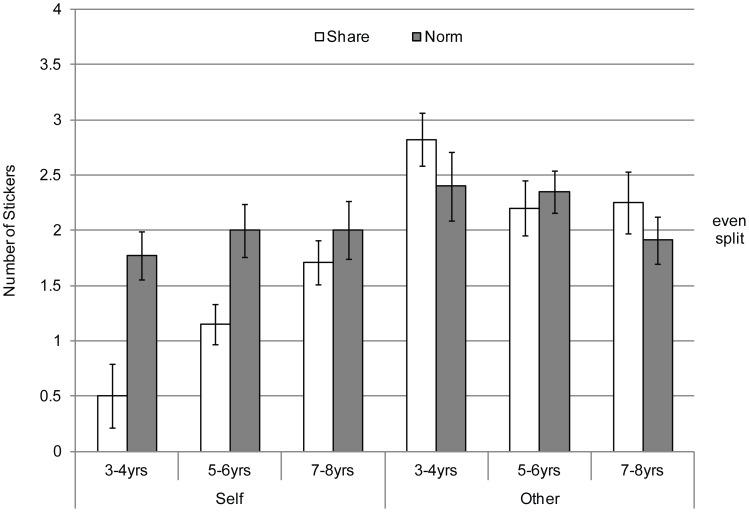
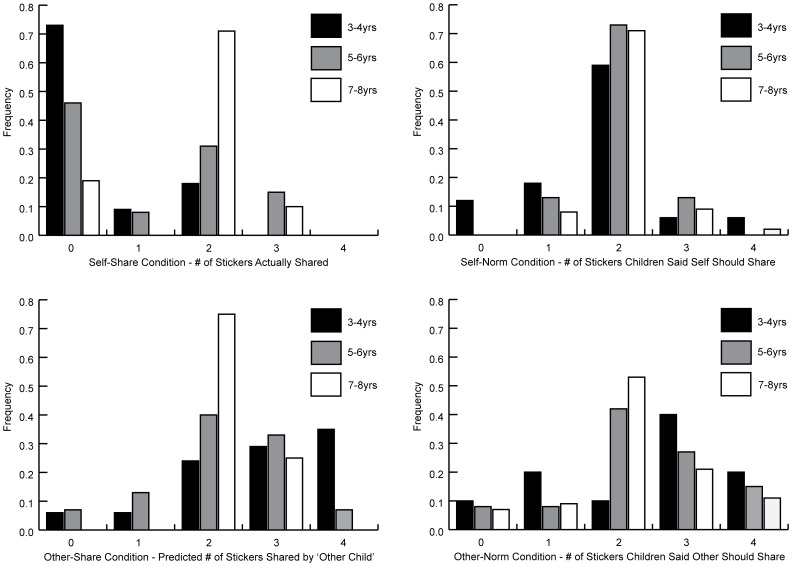
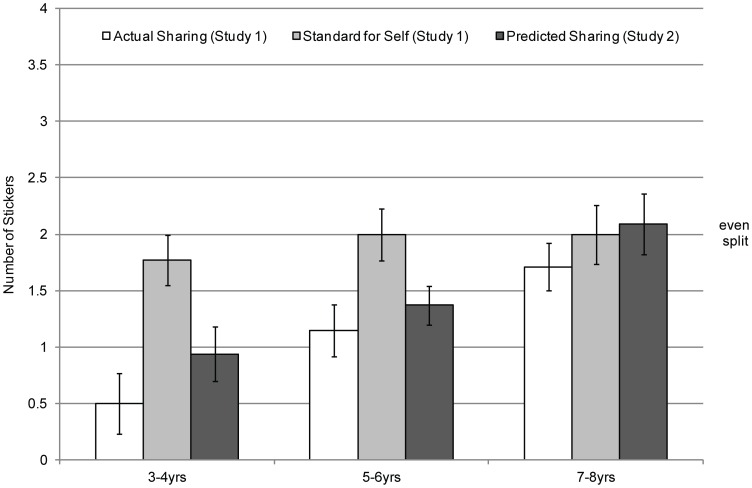
Young children endorse fairness norms related to sharing, but often act in contradiction to those norms when given a chance to share. This phenomenon has rarely been explored in the context of a single study. Using a novel approach, the research presented here offers clear evidence of this discrepancy and goes on to examine possible explanations for its diminution with age. In Study 1, 3-8-year-old children readily stated that they themselves should share equally, asserted that others should as well, and predicted that others had shared equally with them. Nevertheless, children failed to engage in equal sharing until ages 7-8. In Study 2, 7-8-year-olds correctly predicted that they would share equally, and 3-6-year-olds correctly predicted that they would favor themselves, ruling out a failure-of-willpower explanation for younger children's behavior. Similarly, a test of inhibitory control in Study 1 also failed to explain the shift with age toward adherence to the endorsed norm. The data suggest that, although 3-year-olds know the norm of equal sharing, the weight that children attach to this norm increases with age when sharing involves a cost to the self.
Overview
The claims and statistics of this paper haven’t been checked yet.
Free: it reads the open-access text and checks the first 5 claims that cite a source we can check. Create a free account to check every claim.
Integrity signals
Registry
Cites
Statistics
Figures
Verification
Claims the paper makes
The claims and statistics of this paper haven’t been checked yet.
Free: it reads the open-access text and checks the first 5 claims that cite a source we can check. Create a free account to check every claim.
Claims other papers make about this one
Each is checked against this paper’s own text: does it say what the citing paper says it does?
The source backs part of the claim, not all of it — or backs it for a different population, condition or comparison.
In the citing paper
“With increasing age, children typically share equally and sharing equally becomes affectively rewarding (Kogut, 2012; Smith, Blake, & Harris, 2013).”
From Emotion understanding and the moral self-concept as motivators of prosocial behavior in middle childhood (2020) · cites this paper as Smith et al., 2013
Experimental — accuracy not yet measuredThe cited source says what the claim attributes to it.
In the citing paper
“With increasing age, children typically share equally and sharing equally becomes affectively rewarding (Kogut, 2012; Smith, Blake, & Harris, 2013).”
From Emotion understanding and the moral self-concept as motivators of prosocial behavior in middle childhood (2020) · cites this paper as Smith et al., 2013
The cited source says what the claim attributes to it.
In the citing paper
“Our finding corresponds to work by Smith and colleagues (2013) who reported that younger children knew that sharing equally would be required, but actually shared less than half.”
From Emotion understanding and the moral self-concept as motivators of prosocial behavior in middle childhood (2020) · cites this paper as Smith et al., 2013
Self-check
Percentages, sums and reported differences re-computed from the paper’s own numbers.
The self-check needs the paper’s full text.
Citations
Cites
Baron, R. M., & Kenny, D. A. (1986) · Journal of Personality and Social Psychology · doi:10.1037/0022-3514.51.6.1173 · Cited by 91,532 · cited 1×
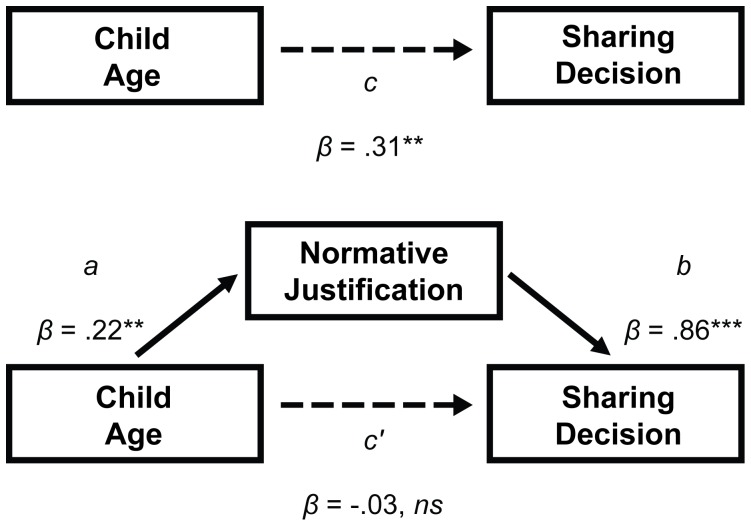
“Following Baron and Kenny [33], we tested the possibility that inhibitory control mediated the link between age and sharing.”
MethodThe emotional dog and its rational tail: A social intuitionist approach to moral judgment.
Haidt, J. (2001) · Psychological Review · doi:10.1037/0033-295x.108.4.814 · Cited by 8,048
Behavioral Game Theory: Experiments in Strategic Interaction
Camerer, C. F. (2003) · Cited by 3,722
Estimating Mediated Effects in Prevention Studies
Mackinnon, D. P., & Dwyer, J. H. (1993) · Evaluation Review · doi:10.1177/0193841x9301700202 · Cited by 1,937 · cited 1×
“Again, a series of regression models (see Figure 3) was calculated using equations designed for testing mediation models containing dichotomous mediators [34].”
MethodPreferences, property rights, and anonymity in bargaining games.
Hoffman, E., McCabe, K., Shachat, K., & Smith, V. (1994) · Games and Economic Behavior · doi:10.1006/game.1994.1056 · Cited by 1,674
Gerstadt, C. L., Hong, Y. J., & Diamond, A. (1994) · Cognition · doi:10.1016/0010-0277(94)90068-x · Cited by 1,598
Egalitarianism in young children
Fehr, E., Bernhard, H., & Rockenbach, B. (2008) · Nature · doi:10.1038/nature07155 · Cited by 1,475 · cited 4×
“Inhibitory control cannot fully explain age-related increases in fair sharing, because positive age-sharing associations are observed even when sharing is not costly for children [16,26].”
BackgroundInfluentialGod Is Watching You: Priming God Concepts Increases Prosocial Behavior in an Anonymous Economic Game
Shariff, A. F., & Norenzayan, A. (2007) · Psychological Science · doi:10.1111/j.1467-9280.2007.01983.x · Cited by 1,136
Inhibitory Control in Young Children and Its Role in Emerging Internalization
Kochanska, G., Murray, K. T., Jacques, T. Y., Koenig, A. L., & Vandegeest, K. A. (1996) · Child Development · doi:10.1111/j.1467-8624.1996.tb01747.x · Cited by 940 · cited 4×
“Next, children in the Self-Share/Other-Norm group received two measures of inhibitory control: the Day-Night Task [29] and the Bear-Dragon Task [30].”
MethodInfluentialNicholas Epley, A., & Dunning, D. A. (2000) · Journal of Personality and Social Psychology · doi:10.1037//0022-3514.79.6.861 · Cited by 820 · cited 1×
“, [43,44]).”
Research works printed but not linked: 1
- Burford HC, Foley LA, Rollins PG, Rosario KS (1996) Gender differences in preschoolers' sharing behavior. J Soc Behav Pers 11: 17– 25.
Cited by
Items 101–200 of 513
Does the intra-individual structure of values exist in young children?
Lee, J. A., Ye, S., Sneddon, J., Collins, P. R., & Daniel, E. (2017) · Personality and Individual Differences · doi:10.1016/j.paid.2017.01.038 · Cited by 39
How social status influences our understanding of others’ mental states
Rizzo, M. T., & Killen, M. (2018) · Journal of Experimental Child Psychology · doi:10.1016/j.jecp.2017.12.008 · Cited by 41
Reparative prosocial behaviors alleviate children’s guilt.
Donohue, M. R., & Tully, E. C. (2019) · Developmental Psychology · doi:10.1037/dev0000788 · Cited by 43
“Our dictator task mirrored those used in previous studies of children’s sharing (C. E. Smith et al., 2013) given that dictator tasks have not been used to measure children’s reparative behavior.”
ResultThe Development of a Preference for Procedural Justice for Self and Others
Dunham, Y. C., Durkin, A., & Tyler, T. R. (2018) · Scientific Reports · doi:10.1038/s41598-018-36072-1 · Cited by 42
Moral sciences and the role of education
Krettenauer, T. (2020) · Journal of Moral Education · doi:10.1080/03057240.2020.1784713 · Cited by 44
Self-determination theory, morality, and education: introduction to special issue
Krettenauer, T., & Curren, R. (2020) · Journal of Moral Education · doi:10.1080/03057240.2020.1794173 · Cited by 43
You, robot? The role of anthropomorphic emotion attributions in children’s sharing with a robot
Nijssen, S. R. R., Müller, B. C. N., Bosse, T., & Paulus, M. (2021) · International Journal of Child-Computer Interaction · doi:10.1016/j.ijcci.2021.100319 · Cited by 40
Doan, T. M., Ong, D. C., & Wu, Y. (2025) · Psychological Review · doi:10.1037/rev0000507 · Cited by 38
Castelli, I., Massaro, D., Bicchieri, C., Chavez, A. K., & Marchetti, A. (2014) · PLoS ONE · doi:10.1371/journal.pone.0105024 · Cited by 40
Rottman, J., Zizik, V., Minard, K., Young, L., Blake, P. R., & Kelemen, D. A. (2020) · Cognition · doi:10.1016/j.cognition.2020.104441 · Cited by 37
“When children stand to gain or lose from their distributions of resources, they tend to be strategically self-interested (Fehr et al., 2008; Larsen et al., 2018; Shaw et al., 2014; Sheskin et al., 2014; Smith et al., 2013; Steinbeis & Over, 2017) and do not always behave in accordance with their principles (Blake et a…”
BackgroundSelf-citationProsocial Behavior: The Role of Theory of Mind and Executive Functions
Traverso, L., Viterbori, P., & Usai, M. C. (2020) · Journal of Cognition and Development · doi:10.1080/15248372.2020.1828425 · Cited by 38
Xu, J. (2014) · Ethos · doi:10.1111/etho.12049 · Cited by 34
Neurocognitive mechanisms of prosociality in childhood
Steinbeis, N. (2017) · Current Opinion in Psychology · doi:10.1016/j.copsyc.2017.08.012 · Cited by 37
The moral self-concept in preschool children: Its dimensions and relation to prosocial behaviors
Sticker, R. M., Christner, N., Pletti, C., & Paulus, M. (2021) · Cognitive Development · doi:10.1016/j.cogdev.2021.101033 · Cited by 37
An evolutionary contractualist theory of moralityPreprint
André, J., Fitouchi, L., Debove, S., & Baumard, N. (2022) · PsyArXiv (OSF Preprints) · doi:10.31234/osf.io/2hxgu · Cited by 49
Feel good, do good? Subjective well-being and sharing behavior among children
Sabato, H., & Kogut, T. (2018) · Journal of Experimental Child Psychology · doi:10.1016/j.jecp.2018.08.009 · Cited by 34
Lenz, S., & Paulus, M. (2021) · Journal of Experimental Child Psychology · doi:10.1016/j.jecp.2021.105101 · Cited by 35
Motivation Counts: Autonomous But Not Obligated Sharing Promotes Happiness in Preschoolers
Wu, Z., Zhang, Z., Guo, R., & Gros-Louis, J. J. (2017) · Frontiers in Psychology · doi:10.3389/fpsyg.2017.00867 · Cited by 32
“These findings are consistent with studies in which children shared resources after collaborating with real social partners directly (Warneken et al., 2011), showing that our Frontiers in Psychology | www.frontiersin.org 6 May 2017 | Volume 8 | Article 867 manipulation was overall successful.”
BackgroundResultChildren imitate antisocial in‐group members
Wilks, M., Kirby, J. N., & Nielsen, M. (2018) · Developmental Science · doi:10.1111/desc.12675 · Cited by 32
Xie, D., Pei, M., & Su, Y. (2019) · Journal of Experimental Child Psychology · doi:10.1016/j.jecp.2019.03.004 · Cited by 32
Normative foundations of reciprocity in preschoolers
Wörle, M., & Paulus, M. (2019) · Journal of Experimental Child Psychology · doi:10.1016/j.jecp.2019.104693 · Cited by 32
Paulus, M., & Essler, S. (2020) · Developmental Review · doi:10.1016/j.dr.2020.100933 · Cited by 30
Sabato, H., & Kogut, T. (2018) · Developmental Psychology · doi:10.1037/dev0000526 · Cited by 29
Children are more forgiving of accidental harms across development
Amir, D., Ahl, R. E., Parsons, W. S., & McAuliffe, K. (2021) · Journal of Experimental Child Psychology · doi:10.1016/j.jecp.2020.105081 · Cited by 31
Chai, Q., & He, J. (2017) · Developmental Psychology · doi:10.1037/dev0000359 · Cited by 29
Davoodi, T., Darling, L. N., & Blake, P. R. (2018) · Child Development · doi:10.1111/cdev.13163 · Cited by 29
Self-citationPreschoolers’ Understanding of Merit in Two Asian Societies
Chevallier, C., Xu, J., Adachi, K., der Henst, J. V., & Baumard, N. (2015) · PLoS ONE · doi:10.1371/journal.pone.0114717 · Cited by 28
“3-year-olds share mostly equally after having worked together to obtain rewards in a collaborative task [4]; they take merit into account when distributing the product of common work [5–7] and even in circumstances when they choose not to be fair, they appear to have a good understanding of the fact that they should h…”
BackgroundTo Punish or to Restore: How Children Evaluate Victims' Responses to Immorality
Liu, X., Yang, X., & Wu, Z. (2021) · Frontiers in Psychology · doi:10.3389/fpsyg.2021.696160 · Cited by 28
“For instance, preschool children understand fairness principles and prefer fair allocations but they do not allocate resources fairly (Rogers and Tisak, 1996; Smith et al., 2013).”
BackgroundWilliams, A., & Moore, C. L. (2014) · Frontiers in Psychology · doi:10.3389/fpsyg.2014.01088 · Cited by 27
Children’s developing metaethical judgments
Schmidt, M. F. H., Gonzalez-Cabrera, I. D., & Tomasello, M. (2017) · Journal of Experimental Child Psychology · doi:10.1016/j.jecp.2017.07.008 · Cited by 31
Preschoolers’ resource allocations align with their normative judgments
Paulus, M., Nöth, A., & Wörle, M. (2018) · Journal of Experimental Child Psychology · doi:10.1016/j.jecp.2018.05.001 · Cited by 28
Children’s respect for ownership across diverse societies.
Kanngießer, P., Rossano, F., Zeidler, H., Haun, D. B. M., & Tomasello, M. (2019) · Developmental Psychology · doi:10.1037/dev0000787 · Cited by 31
Young children’s moral judgments depend on the social relationship between agents
Mammen, M., Köymen, B., & Tomasello, M. (2020) · Cognitive Development · doi:10.1016/j.cogdev.2020.100973 · Cited by 26
Russell, S. J., & Cain, K. (2022) · Journal of Experimental Child Psychology · doi:10.1016/j.jecp.2022.105392 · Cited by 30
The Building Blocks of Thought: A Rationalist Account of the Origins of Concepts
Laurence, S., & Margolis, E. (2024) · doi:10.1093/9780191925375.001.0001 · Cited by 32
The neural correlates of dealing with social exclusion in childhood
van der Meulen, M., Steinbeis, N., Achterberg, M., Bilo, E., van den Bulk, B. G., van IJzendoorn, M. H., & Crone, E. A. (2017) · Neuropsychologia · doi:10.1016/j.neuropsychologia.2017.07.008 · Cited by 29
Young children’s understanding of justifications for breaking a promise
Kanngießer, P., Mammen, M., & Tomasello, M. (2021) · Cognitive Development · doi:10.1016/j.cogdev.2021.101127 · Cited by 28
Ire and punishment: Incidental anger and costly punishment in children, adolescents, and adults
Gummerum, M., López‐Pérez, B., van Dijk, E., & van Dillen, L. F. (2022) · Journal of Experimental Child Psychology · doi:10.1016/j.jecp.2022.105376 · Cited by 26
Fairness: What It Isn’t, What It Is, and What It Might Be For
Shaw, A. (2016) · Evolutionary psychology · doi:10.1007/978-3-319-29986-0_8 · Cited by 28
Wilks, M., Kirby, J. N., & Nielsen, M. (2019) · Developmental Psychology · doi:10.1037/dev0000667 · Cited by 27
The ontogeny of children's social emotions in response to (un)fairness
Gerdemann, S. C., McAuliffe, K., Blake, P. R., Haun, D. B. M., & Hepach, R. (2022) · Royal Society Open Science · doi:10.1098/rsos.191456 · Cited by 32
“Thus, prior findings on children ’ s acceptance of unfairness towards others might have reflected a lack of behavioural control required to align one ’ s behaviour with social norms of fairness (see [23,75]), rather than children ’ s underlying concern with fairness towards others.”
Self-citationPreschoolers Favor Their Ingroup When Resources Are Limited
Lee, K. J. J., Esposito, G., & Setoh, P. (2018) · Frontiers in Psychology · doi:10.3389/fpsyg.2018.01752 · Cited by 27
Krettenauer, T., Bauer, K., & Sengsavang, S. (2019) · British Journal of Developmental Psychology · doi:10.1111/bjdp.12289 · Cited by 25
Paulus, M., Christner, N., & Wörle, M. (2020) · Journal of Experimental Child Psychology · doi:10.1016/j.jecp.2020.104826 · Cited by 24
Does third-party punishment in children aim at equality?
Lee, Y.-E., & Warneken, F. (2022) · Developmental Psychology · doi:10.1037/dev0001331 · Cited by 24
The effect of hunger on children’s sharing behavior and fairness preferences
Huppert, E., Shaw, A., & Decety, J. (2020) · Journal of Experimental Child Psychology · doi:10.1016/j.jecp.2019.104786 · Cited by 23
Young children will lie to prevent a moral transgression
Harvey, T., Davoodi, T., & Blake, P. R. (2017) · Journal of Experimental Child Psychology · doi:10.1016/j.jecp.2017.06.004 · Cited by 22
Self-citationMagid, R. W., DePascale, M., & Schulz, L. (2018) · Open Mind · doi:10.1162/opmi_a_00019 · Cited by 28
“, 2015), as noted above, the vast majority of work suggests that preschoolers will act in self-interested ways in first-person interactions (Blake & McAuliffe, 2011; Fehr et al., 2008; Shaw & Olson, 2012; Smith et al., 2013).”
BackgroundQiu, X., Yu, J., Li, T., Cheng, N., & Zhu, L. (2017) · Frontiers in Psychology · doi:10.3389/fpsyg.2017.01855 · Cited by 22
“By the age of 8, children start to show aversion to AI; they are able to allocate resources equally even their self-interest is involved, and are more satisfied in complying with the fairness norm than younger participants (Smith et al., 2013).”
BackgroundResultInfluentialWho, how, and when do children help? A systematic review of children's outgroup prosocial behavior
Moran, D., Liu, V., & Taylor, L. K. (2024) · Political Psychology · doi:10.1111/pops.12948 · Cited by 24
Being Sticker Rich: Numerical Context Influences Children’s Sharing Behavior
Posid, T., Fazio, A., & Cordes, S. (2015) · PLoS ONE · doi:10.1371/journal.pone.0138928 · Cited by 23
A social cognitive developmental perspective on moral judgment
Heiphetz, L., & Young, L. (2014) · Behaviour · doi:10.1163/1568539x-00003131 · Cited by 29
Children disassociate from antisocial in-group members
Wilks, M., & Nielsen, M. (2017) · Journal of Experimental Child Psychology · doi:10.1016/j.jecp.2017.06.003 · Cited by 21
“In addition, whereas previous studies have used only demonstrations of sharing, research has shown that children have different expectations about sharing relative to other prosocial behaviors such as helping (Eisenberg & Shell, 1986; Smith et al., 2013; Warneken & Tomasello, 2013).”
ResultWörle, M., Essler, S., & Paulus, M. (2020) · Journal of Experimental Child Psychology · doi:10.1016/j.jecp.2020.104886 · Cited by 23
Zhang, X., Corbit, J. D., Xiao, X., Xu, L., Wei, B., & Li, Y. (2021) · Journal of Experimental Child Psychology · doi:10.1016/j.jecp.2021.105147 · Cited by 23
Sharing scenarios facilitate division performance in preschoolers
Hamamouche, K. A., Chernyak, N., & Cordes, S. (2020) · Cognitive Development · doi:10.1016/j.cogdev.2020.100954 · Cited by 21
“…work demonstrates that by preschool, children understand the principles of equal sharing both conceptually (Sarnecka & Wright, 2013; Schmidt & Sommerville, 2011; Smith, Blake, & Harris, 2013) and behaviorally (Chernyak et al., 2016, 2019; Muldoon, Lewis, & Berridge, 2007; Olson & Spelke, 2008).”
Kaur, J., & Sharma, A. (2021) · SAGE Open · doi:10.1177/21582440211031873 · Cited by 21
“This practice for children is a key part of getting along with others, in and out of the classroom, which impacts their happiness and their behavior with others around them (Ferreira et al., 2016; Smith et al., 2013).”
BackgroundThinking of me: Self-focus reduces sharing and helping in seven- to eight-year-olds
Weltzien, S. M., Marsh, L. E., & Hood, B. M. (2018) · PLoS ONE · doi:10.1371/journal.pone.0189752 · Cited by 24
“Smith and colleagues [27] investigated the gap between sharing standards and sharing behaviour in 3- to 8-year-olds.”
BackgroundPreschoolers prefer in‐group to out‐group members, but equally condemn their immoral acts
Schuhmacher, N., & Kärtner, J. (2019) · Social Development · doi:10.1111/sode.12380 · Cited by 19
Warthon-Medina, M., Qualter, P., Zavaleta, N., Dillon, S. A., Lazarte, F., & Lowe, N. M. (2015) · Nutrients · doi:10.3390/nu7085302 · Cited by 20
“This ability to inhibit a dominant response improves with age [45].”
BackgroundDogs’ reaction to inequity is affected by inhibitory control
Brucks, D., Range, F., & Marshall‐Pescini, S. (2017) · Scientific Reports · doi:10.1038/s41598-017-16087-w · Cited by 19
Increased sharing between collaborators extends beyond the spoils of collaboration
Corbit, J. D. (2019) · Journal of Experimental Child Psychology · doi:10.1016/j.jecp.2019.06.003 · Cited by 19
Caporaso, J. S., Ball, C. L., Marble, K. E., Boseovski, J. J., Marcovitch, S., Bettencourt, K. M., & Zarecky, L. A. (2022) · Visitor Studies · doi:10.1080/10645578.2022.2051386 · Cited by 20
“Nonetheless, young children are notoriously poor at the equitable sharing of desired possessions until ages 7–8 (Smith et al., 2013).”
BackgroundLi, Y., Deng, T., & Kanske, P. (2023) · Cognitive Development · doi:10.1016/j.cogdev.2023.101343 · Cited by 21
Li, J., Hou, W., Zhu, L., & Tomasello, M. (2020) · International Journal of Behavioral Development · doi:10.1177/0165025420935636 · Cited by 20
“These results indicated that there is a gap between children’s knowledge and their behavior, as some studies revealed that children struggle to allocate resources in accordance with what they think they should do (Blake et al., 2014; Smith et al., 2013).”
ResultTheory of Mind and Moral Decision-Making in the Context of Autism Spectrum Disorder
Ringshaw, J. E., Hamilton, K., & Malcolm‐Smith, S. (2021) · Journal of Autism and Developmental Disorders · doi:10.1007/s10803-021-05055-z · Cited by 24
Preschoolers agree to and enforce prosocial, but not selfish, sharing norms
Friedrich, J. P., & Schmidt, M. F. H. (2021) · Journal of Experimental Child Psychology · doi:10.1016/j.jecp.2021.105303 · Cited by 21
Do sex and age affect strategic behavior and inequity aversion in children?
Guerra, N. B., Leiva, D., Colell, M., & Call, J. (2016) · Journal of Experimental Child Psychology · doi:10.1016/j.jecp.2016.05.011 · Cited by 22
“However, recent data suggest that children still act in the same way when the problem of inhibition is removed (Smith et al., 2013).”
BackgroundWhen preferences are in the way: Children’s predictions of goal-directed behaviors.
Yang, F., & Frye, D. A. (2017) · Developmental Psychology · doi:10.1037/dev0000490 · Cited by 17
“Preschoolers know they should share equally with others, but they do not predict they would do it that way until age 7 (Smith et al., 2013).”
BackgroundI may not like you, but I still care: Children differentiate moral concern from other constructs.
Neldner, K., Wilks, M., Crimston, C. R., Jaymes, R. W. M., & Nielsen, M. (2023) · Developmental Psychology · doi:10.1037/dev0001485 · Cited by 18
When development constricts our moral circle
Marshall, J., Wilks, M., Caviola, L., & Neldner, K. (2025) · Nature Human Behaviour · doi:10.1038/s41562-025-02212-7 · Cited by 20
“https://doi.org/10.1038/s41562-025-02212-7 is often a gap between moral judgements and behaviours, in both children and adults 46,47 .”
InfluentialThe influence of age and experience of (un)fairness on third‐party punishment in children
Lee, Y.-E., & Warneken, F. (2022) · Social Development · doi:10.1111/sode.12604 · Cited by 19
Children use rules to coordinate in a social dilemma
Grueneisen, S., & Tomasello, M. (2018) · Journal of Experimental Child Psychology · doi:10.1016/j.jecp.2018.11.001 · Cited by 18
Varieties of normative understanding and their relation to sharing behavior in preschool children
Christner, N., & Paulus, M. (2022) · Journal of Experimental Child Psychology · doi:10.1016/j.jecp.2022.105498 · Cited by 16
Guidetti, M., Carraro, L., & Castelli, L. (2021) · PLoS ONE · doi:10.1371/journal.pone.0261603 · Cited by 19
A longitudinal exploration of advantageous and disadvantageous inequality aversion in children
Williams, A., & Moore, C. L. (2016) · Journal of Experimental Child Psychology · doi:10.1016/j.jecp.2016.07.006 · Cited by 16
Fairness takes time: Development of cooperative decision making in fairness context
Chajes, J. R., Großmann, T., & Vaish, A. (2022) · Journal of Experimental Child Psychology · doi:10.1016/j.jecp.2021.105344 · Cited by 16
The effect of group status on children's hierarchy‐reinforcing beliefs
Rizzo, M. T., Roberts, S. O., & Rhodes, M. (2023) · Developmental Science · doi:10.1111/desc.13393 · Cited by 17
Dobbelaar, S., Achterberg, M., van Duijvenvoorde, A. C. K., van IJzendoorn, M. H., & Crone, E. A. (2023) · Developmental Cognitive Neuroscience · doi:10.1016/j.dcn.2023.101264 · Cited by 17
“late childhood are marked by the internalization of fairness norms and learning to act upon those norms (House, 2018; McAuliffe et al., 2017; Smith et al., 2013) and increases in reciprocity (van den Bos et al.”
Söldner, L., & Paulus, M. (2024) · British Journal of Developmental Psychology · doi:10.1111/bjdp.12481 · Cited by 16
Give and take: Ownership affects how 2- and 3-year-olds allocate resources
Pesowski, M. L., Kanngießer, P., & Friedman, O. (2019) · Journal of Experimental Child Psychology · doi:10.1016/j.jecp.2019.04.011 · Cited by 15
Child Distributive Behavior and Inhibitory Control in a Private Context
Reis, R. M. A., & Sampaio, L. R. (2019) · Paidéia (Ribeirão Preto) · doi:10.1590/1982-4327e2933 · Cited by 15
“…pointed to the non-existence of the influence of inhibitory control on child distributive behavior (Aguilar-Pardo et al., 2013; Liu et al., 2016; Smith et al., 2013), this is the first study in which the effect of social desirability as an intervening variable was controlled, by allowing…”
BackgroundResultInfluentialYoung children’s prosocial responses toward peers and adults in two social contexts
Ulber, J., & Tomasello, M. (2020) · Journal of Experimental Child Psychology · doi:10.1016/j.jecp.2020.104888 · Cited by 15
Levy, B., Sabato, H., Bereby‐Meyer, Y., & Kogut, T. (2020) · Journal of Experimental Child Psychology · doi:10.1016/j.jecp.2020.104996 · Cited by 16
Gaviria, E., Quintanilla, L., & Navas, M. J. (2021) · Frontiers in Psychology · doi:10.3389/fpsyg.2021.663735 · Cited by 14
“Children may know what the socially prescribed norms are in a particular situation and may not follow those norms when they harm them (Smith et al., 2013).”
BackgroundEstablishing Early Foundations to Promote Emotional Competence in Preschool Children
Kaur, J., & Sharma, A. (2021) · Journal of Applied Social Science · doi:10.1177/19367244211054381 · Cited by 17
“This practice for children is considered a key part of getting along with others, in and out of the home, which impacts their happiness and their behavior with others around them (Ferreira et al. 2016; Smith et al. 2013).”
BackgroundA Neurocognitive Perspective on the Development of Social Decision-Making
Will, G., & Güroğlu, B. (2016) · Studies in neuroscience, psychology and behavioral economics · doi:10.1007/978-3-642-35923-1_15 · Cited by 19
“…not differ from 8-yearolds in their judgments about what constitutes an equal division of rewards, they still tend to keep more than half of the rewards to themselves in a Dictator Game and the willingness to give away half of the rewards increases between the ages of 3 to 8 (Smith et al., 2013).”
BackgroundHow children use accuracy information to infer informant intentions and to make reward decisions
Ronfard, S., Darling, L. N., Dunham, Y. C., & Blake, P. R. (2018) · Journal of Experimental Child Psychology · doi:10.1016/j.jecp.2018.07.017 · Cited by 15
Self-citationChildren’s and Adults’ Affectionate Generosity Toward Members of Different Religious Groups
Heiphetz, L., & Young, L. (2019) · American Behavioral Scientist · doi:10.1177/0002764219850870 · Cited by 16
Partner in crime: Beneficial cooperation overcomes children’s aversion to antisocial others
Myślińska‐Szarek, K., Bocian, K., Baryła, W., & Wojciszke, B. (2020) · Developmental Science · doi:10.1111/desc.13038 · Cited by 17
Preschool Children’s Perceptions of Fairness
Hod-Shemer, O., Zimerman, H., Arafat, S. H., & Wertheim, C. (2017) · Early Childhood Education Journal · doi:10.1007/s10643-017-0855-9 · Cited by 16
Children’s Reasoning About Empathy and Social Relationships
Smith-Flores, A. S., Bonamy, G. J., & Powell, L. J. (2023) · Open Mind · doi:10.1162/opmi_a_00109 · Cited by 21
“Concepts of social relationships involve the expectation that relationship partners care about one another ’ s goals and welfare (Afshordi & Liberman, 2021; Jern & Kemp, 2014; Powell, 2022).”
ResultInfluentialSchiele, T., Mues, A., Wirth, A., Christner, N., Paulus, M., Birtwistle, E., & Niklas, F. (2024) · Social and Emotional Learning Research Practice and Policy · doi:10.1016/j.sel.2024.100027 · Cited by 16
Structural explanations lead young children and adults to rectify resource inequalities
Vasil, N., Srinivasan, M., Ellwood-Lowe, M. E., Delaney, S., Gopnik, A., & Lombrozo, T. (2024) · Journal of Experimental Child Psychology · doi:10.1016/j.jecp.2024.105896 · Cited by 14
“…2015; Geraci & Surian, 2011; McAuliffe et al., 2017; Olson & Spelke, 2008; Rizzo et al., 2018; Schmidt et al., 2016; Shaw & Olson, 2012; Sigelman & Waitzman, 1991; Sloane et al., 2012; Smith et al., 2013; Sommerville et al., 2013; Stowe et al., 2022; Warneken et al., 2011; Ziv & Sommerville, 2017).”
McGuire, L., & Rutland, A. (2020) · British Journal of Developmental Psychology · doi:10.1111/bjdp.12342 · Cited by 15
Ayre, S. K., White, M. J., Harris, H. A., & Byrne, R. (2023) · Maternal and Child Nutrition · doi:10.1111/mcn.13484 · Cited by 14
“For example, when tasked with distributing resources, studies have shown that preschool‐aged children tend to prefer advantageous over equal divisions (Sheskin et al., 2014; Smith et al., 2013), which may be due to their decisions being driven mostly by affective rather than cognitive factors (Paulus & Essler, 2020).”
BackgroundSchunk, D., & Zipperle, I. (2023) · Journal of Economic Surveys · doi:10.1111/joes.12553 · Cited by 15
van Schaik, J. E., & Hunnius, S. (2018) · PLoS ONE · doi:10.1371/journal.pone.0194102 · Cited by 16
Costs of helping only influence children’s intention to help ethnic out-group peers
Sierksma, J. (2018) · Journal of Experimental Child Psychology · doi:10.1016/j.jecp.2018.03.016 · Cited by 14
Neural basis for egalitarian sharing in five-to six-year-old children
Meng, X., & Moriguchi, Y. (2021) · Neuropsychologia · doi:10.1016/j.neuropsychologia.2021.107787 · Cited by 15
Metadata
- Authors
- Smith, C. E., Blake, P. R., & Harris, P. L.
- Affiliations
- University of Michigan (US)
- Boston University (US)
- Harvard University (US)
- Corresponding author
- Smith, Craig E.
- Venue
- PLoS ONE
- Publisher
- Public Library of Science (PLoS)
- Published
- 2013-03-20
- Volume
- 8
- Issue
- 3
- Pages
- e59510
- ISSN
- 1932-6203 (ISSN-L)
- PMC
- PMC3603928
- OpenAlex
- W1965699991
- Semantic Scholar
- 6d59a9f7bcfc05d46d6df3cc23213408ce0137cc
- Cited by
- 482
- References
- 49
- Citations by year
- 2026: 30 · 2025: 31 · 2024: 73 · 2023: 41 · 2022: 42 · 2021: 40 · 2020: 40 · 2019: 30 · 2018: 40 · 2017: 36 · 2016: 28 · 2015: 26 · 2014: 21 · 2013: 4
- FWCI
- 54.44
- Type
- journal article
- Language
- en
- Update notices
- correction (2013-08-21)
- Open access
- gold
- doi.org
- Locations
- PLoS ONE (publishedVersion, cc-by)
- Europe PMC (PubMed Central) (publishedVersion, cc-by)
- PubMed Central (publishedVersion, cc-by)
- PubMed (publishedVersion)
- RePEc: Research Papers in Economics (submittedVersion)
- DOAJ (DOAJ: Directory of Open Access Journals) (submittedVersion)
- Funders
- John Templeton Foundation
- Topics
- Social Sciences › Psychology › Developmental and Educational Psychology › Child and Animal Learning Development
- Life Sciences › Neuroscience › Cognitive Neuroscience › Psychology of Moral and Emotional Judgment
- Social Sciences › Economics, Econometrics and Finance › Economics and Econometrics › Experimental Behavioral Economics Studies
- Keywords
- fair sharing, fairness norms, rule compliance, young children, age differences, self-other bias, self-serving bias, inhibitory control, willpower, moral development, prosocial behavior
- MeSH terms
- Age Factors, Analysis of Variance, Child, Child Development, Child, Preschool, Cooperative Behavior, Games, Experimental, Humans, Interpersonal Relations, Massachusetts, Surveys and Questionnaires, Social Behavior, Moral Development
About these checks
Registry, retraction, Cites and statistics results are computed, not judged, with one exception: a printed reference that no index lists is read once by a model before it counts as a citation error. Claims are extracted by a model and kept only when their quote appears verbatim in the text; each cited source is then checked, with a model’s help, for whether it says what the claim relies on. Those verdicts can be wrong — read the claim’s quote and the cited source before relying on one.
Statistics and arithmetic are recomputed, not judged.
Confidence bands are shown only for fields calibrated on our annotated test set. None is calibrated yet, so no band is shown.
What counts as a claim ›How we measure confidence ›How we check this ›
Are you an author, or do you see a problem with this page? Request a review
Data sources
Bibliographic data: Semantic Scholar, OpenAlex, Crossref.
Contains information from the Semantic Scholar Academic Graph Datasets, made available under the ODC Attribution License (ODC-BY 1.0).
Semantic Scholar’s data is described in: Kinney, R., et al. (2023). The Semantic Scholar Open Data Platform. arXiv:2301.10140.
