

I Should but I Won’t: Why Young Children Endorse Norms of Fair Sharing but Do Not Follow Them
Open accessThe DOI matches its Crossref record; 49 of the 49 references it cites were found in a registry or an index.
Abstract
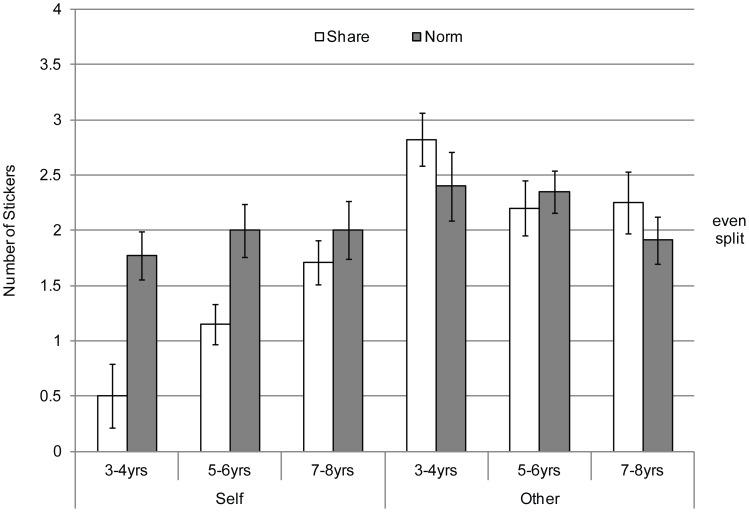
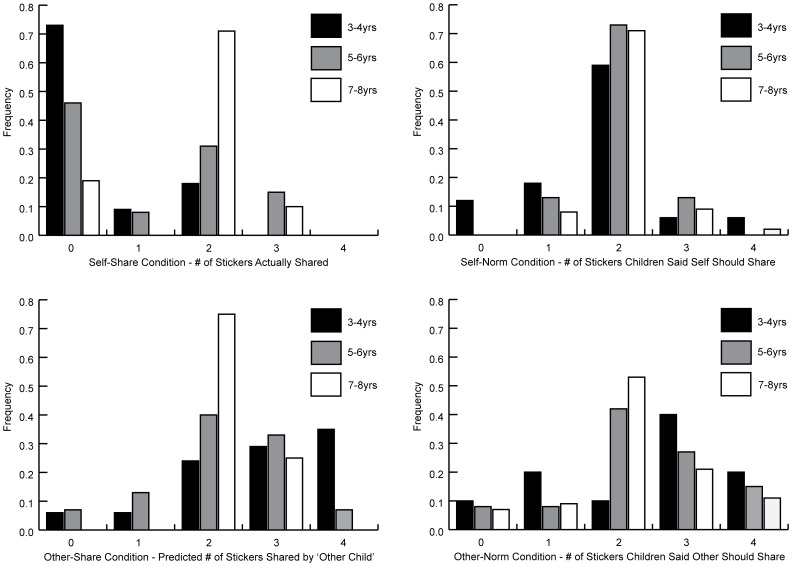
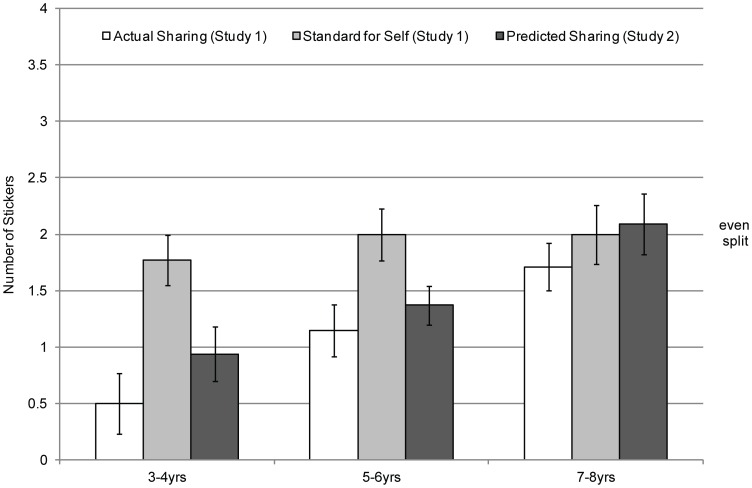
Young children endorse fairness norms related to sharing, but often act in contradiction to those norms when given a chance to share. This phenomenon has rarely been explored in the context of a single study. Using a novel approach, the research presented here offers clear evidence of this discrepancy and goes on to examine possible explanations for its diminution with age. In Study 1, 3-8-year-old children readily stated that they themselves should share equally, asserted that others should as well, and predicted that others had shared equally with them. Nevertheless, children failed to engage in equal sharing until ages 7-8. In Study 2, 7-8-year-olds correctly predicted that they would share equally, and 3-6-year-olds correctly predicted that they would favor themselves, ruling out a failure-of-willpower explanation for younger children's behavior. Similarly, a test of inhibitory control in Study 1 also failed to explain the shift with age toward adherence to the endorsed norm. The data suggest that, although 3-year-olds know the norm of equal sharing, the weight that children attach to this norm increases with age when sharing involves a cost to the self.
Overview
The claims and statistics of this paper haven’t been checked yet.
Free: it reads the open-access text and checks the first 5 claims that cite a source we can check. Create a free account to check every claim.
Integrity signals
Registry
Cites
Statistics
Figures
Verification
Claims the paper makes
The claims and statistics of this paper haven’t been checked yet.
Free: it reads the open-access text and checks the first 5 claims that cite a source we can check. Create a free account to check every claim.
Claims other papers make about this one
Each is checked against this paper’s own text: does it say what the citing paper says it does?
The source backs part of the claim, not all of it — or backs it for a different population, condition or comparison.
In the citing paper
“With increasing age, children typically share equally and sharing equally becomes affectively rewarding (Kogut, 2012; Smith, Blake, & Harris, 2013).”
From Emotion understanding and the moral self-concept as motivators of prosocial behavior in middle childhood (2020) · cites this paper as Smith et al., 2013
Experimental — accuracy not yet measuredThe cited source says what the claim attributes to it.
In the citing paper
“With increasing age, children typically share equally and sharing equally becomes affectively rewarding (Kogut, 2012; Smith, Blake, & Harris, 2013).”
From Emotion understanding and the moral self-concept as motivators of prosocial behavior in middle childhood (2020) · cites this paper as Smith et al., 2013
The cited source says what the claim attributes to it.
In the citing paper
“Our finding corresponds to work by Smith and colleagues (2013) who reported that younger children knew that sharing equally would be required, but actually shared less than half.”
From Emotion understanding and the moral self-concept as motivators of prosocial behavior in middle childhood (2020) · cites this paper as Smith et al., 2013
Self-check
Percentages, sums and reported differences re-computed from the paper’s own numbers.
The self-check needs the paper’s full text.
Citations
Cites
Baron, R. M., & Kenny, D. A. (1986) · Journal of Personality and Social Psychology · doi:10.1037/0022-3514.51.6.1173 · Cited by 91,532 · cited 1×
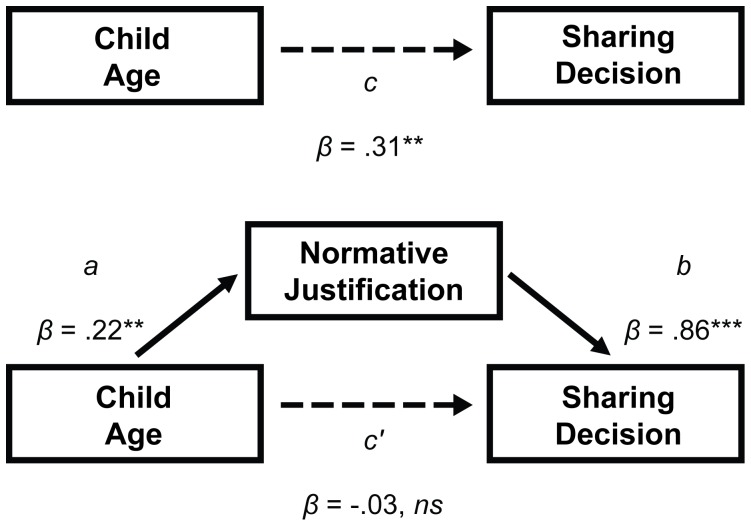
“Following Baron and Kenny [33], we tested the possibility that inhibitory control mediated the link between age and sharing.”
MethodThe emotional dog and its rational tail: A social intuitionist approach to moral judgment.
Haidt, J. (2001) · Psychological Review · doi:10.1037/0033-295x.108.4.814 · Cited by 8,048
Behavioral Game Theory: Experiments in Strategic Interaction
Camerer, C. F. (2003) · Cited by 3,722
Estimating Mediated Effects in Prevention Studies
Mackinnon, D. P., & Dwyer, J. H. (1993) · Evaluation Review · doi:10.1177/0193841x9301700202 · Cited by 1,937 · cited 1×
“Again, a series of regression models (see Figure 3) was calculated using equations designed for testing mediation models containing dichotomous mediators [34].”
MethodPreferences, property rights, and anonymity in bargaining games.
Hoffman, E., McCabe, K., Shachat, K., & Smith, V. (1994) · Games and Economic Behavior · doi:10.1006/game.1994.1056 · Cited by 1,674
Gerstadt, C. L., Hong, Y. J., & Diamond, A. (1994) · Cognition · doi:10.1016/0010-0277(94)90068-x · Cited by 1,598
Egalitarianism in young children
Fehr, E., Bernhard, H., & Rockenbach, B. (2008) · Nature · doi:10.1038/nature07155 · Cited by 1,475 · cited 4×
“Inhibitory control cannot fully explain age-related increases in fair sharing, because positive age-sharing associations are observed even when sharing is not costly for children [16,26].”
BackgroundInfluentialGod Is Watching You: Priming God Concepts Increases Prosocial Behavior in an Anonymous Economic Game
Shariff, A. F., & Norenzayan, A. (2007) · Psychological Science · doi:10.1111/j.1467-9280.2007.01983.x · Cited by 1,136
Inhibitory Control in Young Children and Its Role in Emerging Internalization
Kochanska, G., Murray, K. T., Jacques, T. Y., Koenig, A. L., & Vandegeest, K. A. (1996) · Child Development · doi:10.1111/j.1467-8624.1996.tb01747.x · Cited by 940 · cited 4×
“Next, children in the Self-Share/Other-Norm group received two measures of inhibitory control: the Day-Night Task [29] and the Bear-Dragon Task [30].”
MethodInfluentialNicholas Epley, A., & Dunning, D. A. (2000) · Journal of Personality and Social Psychology · doi:10.1037//0022-3514.79.6.861 · Cited by 820 · cited 1×
“, [43,44]).”
Research works printed but not linked: 1
- Burford HC, Foley LA, Rollins PG, Rosario KS (1996) Gender differences in preschoolers' sharing behavior. J Soc Behav Pers 11: 17– 25.
Cited by
Items 201–300 of 513
Berger, J. L., Vogt, S., & Efferson, C. M. (2021) · Evolution and Human Behavior · doi:10.1016/j.evolhumbehav.2021.07.001 · Cited by 16
Children Consider Procedures, Outcomes, and Emotions When Judging the Fairness of Inequality
Stowe, L. M., Peretz‐Lange, R., & Blake, P. R. (2022) · Frontiers in Psychology · doi:10.3389/fpsyg.2022.815901 · Cited by 13
Self-citationAct generously when others do so: Majority influence on young children's sharing behavior
Chai, Q., Yin, J., Shen, M., & He, J. (2024) · Developmental Science · doi:10.1111/desc.13472 · Cited by 14
The Impact of Self-Relevance on Preschool Children’s Sharing
Zhang, W., Xiang, S., Dai, H., Ren, M., Shen, Y., Fan, W., & Zhong, Y. (2019) · Frontiers in Psychology · doi:10.3389/fpsyg.2019.01028 · Cited by 15
‘I see you sharing, thus I share with you’: indirect reciprocity in toddlers but not infants
Nava, E., Croci, E., & Turati, C. (2019) · Humanities and Social Sciences Communications · doi:10.1057/s41599-019-0268-z · Cited by 28
Sumpter, L., & Hedefalk, M. (2023) · Nordisk barnehageforskning · doi:10.23865/nbf.v20.256 · Cited by 13
Preschoolers’ Selfish Sharing Is Reduced by Prior Experience With Proportional Generosity
Chernyak, N., Trieu, B. Y., & Kushnir, T. (2017) · Open Mind · doi:10.1162/opmi_a_00004 · Cited by 15
Adult criticism and vigilance diminish free riding by children in a social dilemma
Dutra, N. B., Boccardi, N. C., Silva, P. R. R., Siqueira, J. D. O., Hattori, W. T., Yamamoto, M. E., & Alencar, A. I. (2017) · Journal of Experimental Child Psychology · doi:10.1016/j.jecp.2017.10.007 · Cited by 15
How Experiments with Children Inform Economics
List, J. A., Petrie, R., & Samek, A. S. (2021) · National Bureau of Economic Research · doi:10.3386/w28825 · Cited by 24
Perspective taking as a mechanism for children’s developing preferences for equitable distributions
Sobel, D. M., & Blankenship, J. (2021) · Scientific Reports · doi:10.1038/s41598-021-84968-2 · Cited by 12
One for me, two for you: Agency increases children's satisfaction with disadvantageous inequity
Gordon‐Hecker, T., Shaw, A., & Choshen‐Hillel, S. (2022) · Journal of Experimental Social Psychology · doi:10.1016/j.jesp.2022.104286 · Cited by 13
How fairness and dominance guide young children’s bargaining decisions
Grueneisen, S., & Tomasello, M. (2022) · Child Development · doi:10.1111/cdev.13757 · Cited by 12
“Yet, they tend to proclaim that one ought to share equally (Smith et al., 2013) and hold egalitarian preferences when allocating resources among third parties (Shaw & Olson, 2012).”
Wei, B., Zhang, X., Xiao, X., & Li, Y. (2023) · Social Development · doi:10.1111/sode.12663 · Cited by 12
Children’s experience of economic inequality: How earning position influences prosocial behavior
Kirkland, K., Jetten, J., Wilks, M., & Nielsen, M. (2021) · Cognitive Development · doi:10.1016/j.cogdev.2021.101043 · Cited by 12
Neural processing of moral content reflects moral identity in 10‐year‐old children
Pletti, C., Decety, J., & Paulus, M. (2022) · Developmental Science · doi:10.1111/desc.13232 · Cited by 13
“Inchildhood,refrainingfrombehaviorssuchasfighting (Boulton, 1993) and unfair sharing (Smith et al., 2013) is an important challenge and plays a crucial role in moral development (Dahl, 2016; Hay et al., 2021).”
The Tension Between Division and Fair Share
Eriksson, H., Hedefalk, M., & Sumpter, L. (2023) · Springer eBooks · doi:10.1007/978-3-031-37663-4_6 · Cited by 12
Kumaki, Y., Moriguchi, Y., & Myowa‐Yamakoshi, M. (2017) · Journal of Experimental Child Psychology · doi:10.1016/j.jecp.2017.10.013 · Cited by 12
What’s fair? How children assign reward to members of teams with differing causal structures
Koskuba, K., Gerstenberg, T., Gordon, H., Lagnado, D. A., & Schlottmann, A. (2018) · Cognition · doi:10.1016/j.cognition.2018.03.016 · Cited by 13
Children’s Evaluations of Informants and their Surprising Claims in Direct and Overheard Contexts
Li, P. H., & Koenig, M. A. (2020) · Journal of Cognition and Development · doi:10.1080/15248372.2020.1745208 · Cited by 12
Prospection and delay of gratification support the development of calculated reciprocityPreprint
Grueneisen, S., Leimgruber, K. L., Vogt-Yerem, R. L., & Warneken, F. (2023) · PsyArXiv (OSF Preprints) · doi:10.1016/j.cognition.2023.105369 · Cited by 13
Levy‐Friedman, B., & Kogut, T. (2023) · Child Development · doi:10.1111/cdev.13975 · Cited by 12
Being good and feeling good: What happiness means to children
Yang, F. (2025) · Child Development Perspectives · doi:10.1111/cdep.12522 · Cited by 16
Children recognize and reject favoritism in norm enforcement
Huff, L., Déniz, T., Gronem, L., & Grueneisen, S. (2024) · Cognition · doi:10.1016/j.cognition.2024.105981 · Cited by 11
“First, vignettes can only assess children ’ s theoretical third-party judgments, which are known to occasionally diverge from their actual behavior in first-party contexts (e. g., Smith et al., 2013).”
Counting promotes proportional moral evaluation in preschool-aged children
Chernyak, N., Turnbull, V., Gordon, R., Harris, P. L., & Cordes, S. (2020) · Cognitive Development · doi:10.1016/j.cogdev.2020.100969 · Cited by 12
Self-citationChildren’s group identity is related to their assessment of fair and unfair advantages
D’Esterre, A. P., Woodward, B., & Killen, M. (2021) · Journal of Experimental Child Psychology · doi:10.1016/j.jecp.2021.105292 · Cited by 13
“Throughout development, however, individuals must coordinate concerns for fairness with concerns for factors such as personal benefit (Blake et al., 2014; Smith et al., 2013), costs to equality (Williams & Moore, 2014), in-group preference (Baron & Dunham, 2015; McAuliffe & Dunham, 2017), and group identity (McGuire e…”
BackgroundA counting intervention promotes fair sharing in preschoolers
Chernyak, N., Harris, P. L., & Cordes, S. (2022) · Child Development · doi:10.1111/cdev.13775 · Cited by 13
“Prior work has already documented the importance of motivational constraints on sharing behavior (Smith et al., 2013).”
BackgroundResultInfluentialSelf-citationCorbit, J. D., Dockrill, M., Hartlin, S., & Moore, C. L. (2022) · Developmental Science · doi:10.1111/desc.13344 · Cited by 13
Ahl, R. E., Hannan, K., Amir, D., Baker, A., Sheskin, M., & McAuliffe, K. (2023) · Cognitive Development · doi:10.1016/j.cogdev.2023.101313 · Cited by 12
The evolution and development of human cooperation
Amici, F. (2015) · Interaction Studies Social Behaviour and Communication in Biological and Artificial Systems · doi:10.1075/is.16.3.03ami · Cited by 11
Yang, Q., Huo, J., & Xi, Y. (2021) · Work · doi:10.3233/wor-205017 · Cited by 13
“Previous studies believed that individuals first tended to upward social comparison, that means, compared with people with higher or better grades than their own: when the current status of the individual is consistent with the upward comparison goal, it will produce an assimilation effect, that means, the individual’…”
BackgroundYoung children selectively adopt sharing norms according to norm content and donor age
Messer, E. J. E., Lumsden, A., Burgess, V., & McGuigan, N. (2021) · Cognitive Development · doi:10.1016/j.cogdev.2021.101088 · Cited by 13
Children’s consideration of collaboration and merit when making sharing decisions in private
Schäfer, M., Haun, D. B. M., & Tomasello, M. (2022) · Journal of Experimental Child Psychology · doi:10.1016/j.jecp.2022.105609 · Cited by 11
“…children aged 8 years as an older comparison group because this is when children in Western societies begin to show preferences for equity and even merit-based sharing even in situations where this is in conflict with their self-interests (Blake et al., 2015; Hook & Cook, 1979; Smith et al., 2013).”
Hedefalk, M., Caiman, C., & Ottander, C. (2022) · Forskning om undervisning och lärande · doi:10.61998/forskul.v10i2.19006 · Cited by 11
An investigation of children's empathic dispositions and behaviours across seven countries
Kozloff, V., Cowell, J. M., Huppert, E., Gómez-Sicard, N., Lee, K., Mahasneh, R. A., Malcolm‐Smith, S., Selçuk, B., Zhou, X., & Decety, J. (2021) · Infant and Child Development · doi:10.1002/icd.2251 · Cited by 12
Children’s understanding of friendship formation caused by gossip
Shinohara, A., & Kobayashi, T. (2022) · Journal of Experimental Child Psychology · doi:10.1016/j.jecp.2021.105370 · Cited by 11
Nameda, A., Kumaki, Y., Hashimoto, Y., & Toda, Y. (2022) · Journal of Moral Education · doi:10.1080/03057240.2022.2134095 · Cited by 10
“For example, in Smith et al. (2013), children aged 3–8 years were asked to judge how they should allocate four stickers between themselves and another child in hypothetical scenarios and later were presented with a real situation following the same conditions.”
BackgroundVanderbilt, K. E., Rizzo, M. T., & Blankenship, J. (2022) · Journal of Experimental Child Psychology · doi:10.1016/j.jecp.2022.105610 · Cited by 10
When it is ok to give the Robot Less: Children’s Fairness Intuitions Towards Robots
Ayalon, O., Hok, H., Shaw, A., & Gordon, G. (2023) · International Journal of Social Robotics · doi:10.1007/s12369-023-01047-4 · Cited by 10
“Research has demonstrated that there are considerable developments in children’s fairness cognition between the ages of 4-to 9-years old [44, 52, 53, 55, 56, 58, 77].”
BackgroundLenz, S., Essler, S., Wörle, M., & Paulus, M. (2020) · Journal of Experimental Child Psychology · doi:10.1016/j.jecp.2020.105037 · Cited by 10
Lombardi, E., Valle, A., Rinaldi, T., Massaro, D., & Marchetti, A. (2021) · Europe’s Journal of Psychology · doi:10.5964/ejop.2453 · Cited by 10
Trustworthiness is distinct from generosity in children.
Amir, D., Parsons, W. S., Ahl, R. E., & McAuliffe, K. (2021) · Developmental Psychology · doi:10.1037/dev0001214 · Cited by 11
Bocian, K., & Myślińska‐Szarek, K. (2020) · Social Development · doi:10.1111/sode.12480 · Cited by 12
Children show economic trust for both ingroup and outgroup partners
Grueneisen, S., Rosati, A. G., & Warneken, F. (2021) · Cognitive Development · doi:10.1016/j.cogdev.2021.101077 · Cited by 10
Messaging about descriptive and injunctive norms can promote honesty in young children
Liu, X., Zhao, C., Zhang, X., Compton, B. J., Sai, L., & Heyman, G. D. (2022) · Child Development · doi:10.1111/cdev.13830 · Cited by 10
Early prosociality is conditional on opportunity cost and familiarity with the target
Lee, K. J. J., & Setoh, P. (2022) · Evolution and Human Behavior · doi:10.1016/j.evolhumbehav.2022.10.003 · Cited by 10
The influence of intention and outcome on young children’s reciprocal sharing
Zhang, Z., Grocke, P., & Tomasello, M. (2019) · Journal of Experimental Child Psychology · doi:10.1016/j.jecp.2019.05.012 · Cited by 9
Children avoid inefficient but fair partners in a cooperative game
Prétôt, L., González, G. T., & McAuliffe, K. (2020) · Scientific Reports · doi:10.1038/s41598-020-65452-9 · Cited by 11
The early development of the normative mind
Paulus, M., & Schmidt, M. F. H. (2017) · Journal of Experimental Child Psychology · doi:10.1016/j.jecp.2017.09.011 · Cited by 10
Cooperative behavior in adolescents: a contribution of empathy and emotional regulation?
Martínez-Velázquez, E. S., Juárez, S. P. P., Furlong, A. D., & Sequeira, H. (2024) · Frontiers in Psychology · doi:10.3389/fpsyg.2024.1342458 · Cited by 5
“…behaviors could change with age (Garaigordobil and García de Galdeano, 2006; Gilar Corbi et al., 2008; Eisenberg et al., 2010; Belli et al., 2012; Smith et al., 2013; Gutiérrez-Roig et al., 2014; Keil et al., 2017; Taheri et al., 2018; Castellano Navarro et al., 2019; Zhang et al., 2019; Nava et…”
BackgroundYoung children enlarge the pie: Antecedents of negotiation skills.
Santhanagopalan, R., Keysar, B., & Kinzler, K. D. (2022) · Journal of Experimental Psychology General · doi:10.1037/xge0001220 · Cited by 9
“For example, when American children divided resources between themselves and someone else, it was only around the age of 7 that they started to avoid prioritizing themselves (Smith et al., 2013).”
BackgroundThe influence of birth order and sibling age gap on children’s sharing decision
Xiao, E., Qin, H., Zhu, X., & Jin, J. (2023) · Early Child Development and Care · doi:10.1080/03004430.2023.2178429 · Cited by 8
Preschool‐aged children's responses to unfairness and subsequent sharing behavior in dyadic contexts
Kim, E., LoBue, V., & de Walle, G. V. (2023) · Social Development · doi:10.1111/sode.12681 · Cited by 10
“In this kind of first-party context, children are still able to articulate that they should share their resources, but 3-year-old children nonetheless behave selfishly, choosing to distribute resources in their own favor (Callaghan & Corbit, 2018; Fehr et al., 2008; Smith et al., 2013).”
BackgroundTeaching Mathematics as to be Meaningful – Foregrounding Play and Children’s Perspectives
Palmér, H., Björklund, C., Reikerås, E. K. L., & Elofsson, J. (2023) · Springer eBooks · doi:10.1007/978-3-031-37663-4 · Cited by 11
Liang, G., Fan, W., Hu, Z., Zhang, W., & Zhong, Y. (2020) · Early Child Development and Care · doi:10.1080/03004430.2020.1729143 · Cited by 8
“Second, in a study by Smith, Blake, and Harris (2013), the children had four stickers, whereas children in the present study owned 10 sweets.”
BackgroundCollaboration increases children’s normative concern for fairness
Corbit, J. D. (2020) · Journal of Experimental Child Psychology · doi:10.1016/j.jecp.2020.104887 · Cited by 8
Children's understanding of economic demand: A dissociation between inference and choice
Smith-Flores, A. S., Applin, J. B., Blake, P. R., & Kibbe, M. M. (2021) · Cognition · doi:10.1016/j.cognition.2021.104747 · Cited by 8
Self-citationCabral, G. R. E., Sampaio, L. R., Cabral, G. R. E., & Santana, R. B. (2021) · Behavior Research Methods · doi:10.3758/s13428-021-01661-y · Cited by 9
Distinct Inhibitory-Control Processes Underlie Children’s Judgments of Fairness
Sobel, D. M., Kamper, D. G., & Song, J. (2024) · Psychological Science · doi:10.1177/09567976231217420 · Cited by 13
“Researchers often correlate measures of inhibition with measures of social cognition to show relations between them (e.g., Aguilar-Pardo et al., 2013; Smith et al., 2013; Steinbeis & Over, 2017).”
BackgroundSharing in Private and Public Situations: does this really Matter for Children?
Sampaio, L. R., & Pires, M. F. D. N. (2015) · The Spanish Journal of Psychology · doi:10.1017/sjp.2015.45 · Cited by 9
Peng, Q., Zhang, J., Liu, G., & Li, H. (2025) · NeuroImage · doi:10.1016/j.neuroimage.2025.121434 · Cited by 9
Preschoolers consider (absent) others when choosing a distribution procedure
Grocke, P., Rossano, F., & Tomasello, M. (2019) · PLoS ONE · doi:10.1371/journal.pone.0221186 · Cited by 8
“They know from very early on what would be the right thing to do, but they struggle to overcome their selfish motives [8].”
InfluentialThe Emergence of Lying for Reputational Concerns in 5-Year-Olds
Klafka, M., & Liszkowski, U. (2021) · Frontiers in Psychology · doi:10.3389/fpsyg.2021.700695 · Cited by 7
Sohail, S., Dunfield, K. A., & Chernyak, N. (2021) · Journal of Cognition and Development · doi:10.1080/15248372.2021.1998064 · Cited by 11
“…be intrinsically motivated, requiring little explicit encouragement (Warneken & Tomasello, 2008), whereas sharing, relies more heavily on cuing (Brownell, Svetlova, & Nichols, 2009), and appears more difficult to motivate even when the recipient’s desires are clear (Smith, Blake, & Harris, 2013).”
BackgroundJacobs, C., Flowers, M., Aboody, R., Maier, M., & Jara‐Ettinger, J. (2022) · Cognition · doi:10.1016/j.cognition.2022.105128 · Cited by 8
How Prosocial Modeling Promotes Children's Sharing: A Goal Contagion Account
Chai, Q., Wu, X., Yu, J., Vaish, A., Shen, M., & He, J. (2025) · Developmental Science · doi:10.1111/desc.70020 · Cited by 6
Is Distributional Justice Equivalent to Prosocial Sharing in Children’s Cognition?
Zhu, Y., Zhang, J., & Liu, X. (2022) · Frontiers in Psychology · doi:10.3389/fpsyg.2022.888028 · Cited by 6
Valcke, A., & Nilsen, E. S. (2022) · Journal of Cognition and Development · doi:10.1080/15248372.2022.2119976 · Cited by 6
Moral Self and Identity in Children, Adolescents, and Adults: A Measurement Invariance Examination
Bäker, N., Eilts, J., & Wilke, J. (2025) · Psychological Test Adaptation and Development · doi:10.1027/2698-1866/a000092 · Cited by 7
Castellano‐Navarro, A., Guillén‐Salazar, F., & Albiach‐Serrano, A. (2019) · Journal of Experimental Child Psychology · doi:10.1016/j.jecp.2019.104715 · Cited by 6
Children strategically conceal selfishness
González, G. T., Ahl, R. E., Cordes, S., & McAuliffe, K. (2022) · Child Development · doi:10.1111/cdev.13687 · Cited by 7
Christner, N., Wörle, M., & Paulus, M. (2022) · International Journal of Behavioral Development · doi:10.1177/01650254221096813 · Cited by 6
“, 2020; Turiel, 2003) or a discrepancy (Blake, 2018; Blasi, 1983; Smith et al., 2013; Tan et al., 2021).”
BackgroundInfluentialChildren’s third-party punishment does not change depending on the prospect of future interaction.
Lee, Y.-E., He, S., & Warneken, F. (2024) · Journal of Experimental Psychology General · doi:10.1037/xge0001515 · Cited by 8
Wang, S., Yang, Z., Hu, K., Guo, C., Xiao, J., Meng, G., Liu, X., & Li, Q. (2024) · Journal of Experimental Child Psychology · doi:10.1016/j.jecp.2024.106047 · Cited by 6
Egalitarian preferences in young children depend on the genders of the interacting partners
van Wingerden, M., Oberließen, L., & Kalenscher, T. (2024) · Communications Psychology · doi:10.1038/s44271-024-00139-9 · Cited by 6
Effect of group membership on unfairness perception under coexperience conditions
Lv, S., Sun, X., Shen, L., Yuqing, W. U., Shu, Z. H. A. O., Wang, F., & Wang, Z. (2021) · Acta Psychologica Sinica · doi:10.3724/sp.j.1041.2021.00773 · Cited by 6
Reichelson, S., Zax, A., Patalano, A. L., & Barth, H. C. (2018) · Quarterly Journal of Experimental Psychology · doi:10.1177/1747021818777720 · Cited by 6
The interplay between moral actions and moral judgments in children and adults
Prabhakar, J., Weisberg, D. S., & Leslie, A. M. (2018) · Consciousness and Cognition · doi:10.1016/j.concog.2018.05.007 · Cited by 7
Young children selectively ignore quality to promote self-interest
Zhao, L., Sun, W., Jia, X., He, X., Liu, Y., Lee, K., Fu, G., Compton, B. J., & Heyman, G. D. (2019) · Journal of Experimental Child Psychology · doi:10.1016/j.jecp.2019.104679 · Cited by 6
But That’s Not Fair! The Experience of Economic Inequality from a Child’s Perspective
Kirkland, K., Jetten, J., & Nielsen, M. (2019) · Springer eBooks · doi:10.1007/978-3-030-28856-3_12 · Cited by 11
Merit overrules theory of mind when young children share resources with others
Stack, J., & Romero-Rivas, C. (2020) · PLoS ONE · doi:10.1371/journal.pone.0227375 · Cited by 6
“Although the effect of gender on sharing behaviour is mixed, with some studies showing no effect [2,14], numerous studies have demonstrated a gender difference in sharing behaviours with boys sharing less than girls [52, 53, 54].”
BackgroundResultInfluentialMechanisms of social influence : reputation management in typical and autistic individuals
Cage, E. (2015) · IOE EPrints · Cited by 8
You need to take turns! Sibling sharing and the emergence of conscience in early childhood
Volling, B. L., Beyers-Carlson, E. E. A., Tan, L., Rosenberg, L., & Gonzalez, R. (2025) · Journal of Social and Personal Relationships · doi:10.1177/02654075251316316 · Cited by 5
“…based on tasks borrowed from behavioral economics (e.g., dictator game), wherein individual children are asked to distribute resources with an experimenter, a hypothetical peer, or a puppet as a means of assessing sharing (e.g., Blake & McAuliffe, 2011; Chernyak & Sobel, 2016; Smith et al., 2013).”
Testing the bounds of compassion in young children
Kirby, J. N., Kirkland, K., Wilks, M., Green, M., Tanjitpiyanond, P., Chowdhury, N., & Nielsen, M. (2023) · Royal Society Open Science · doi:10.1098/rsos.221448 · Cited by 5
Food sharing with friends and acquaintances: A study in preschool boys and girls
Hallers‐Haalboom, E. T., Vermande, M. M., van Leeuwen, E. J. C., & Sterck, E. H. M. (2023) · Frontiers in Psychology · doi:10.3389/fpsyg.2023.1130632 · Cited by 5
Do Children Expect Boys and Girls to Be Rewarded Differently for Doing the Same Work?
McAuliffe, K., Kumar, M. M., Coogan, S., & Dunham, Y. C. (2023) · Collabra Psychology · doi:10.1525/collabra.74790 · Cited by 5
No one is going to recess: How children evaluate collective and targeted punishment
Thomas, S., Kelsey, C. M., & Vaish, A. (2024) · Social Development · doi:10.1111/sode.12730 · Cited by 6
“…be shared equally, they nonetheless continue to accept and actively engage in unequal distributions that are advantageous to themselves and they do not reject distributions that advantage them until a few years later (around 7–8 years; e.g., Fehr et al., 2008; Kogut, 2012; Smith et al., 2013).”
BackgroundThe costs and benefits of kindness for kids
Curry, O. S., Miguel, C. S., & Tunç, M. N. (2024) · Journal of Experimental Child Psychology · doi:10.1016/j.jecp.2024.105987 · Cited by 5
Adult instruction limits children’s flexibility in moral decision making
Hardecker, S., Buryn-Weitzel, J. C., & Tomasello, M. (2019) · Journal of Experimental Child Psychology · doi:10.1016/j.jecp.2019.06.005 · Cited by 5
On the Practical Impossibility of Being Both Well-Informed and Impartial
Sivertsen, S. S. (2019) · Erasmus Journal for Philosophy and Economics · doi:10.23941/ejpe.v12i1.377 · Cited by 6
Li, X., Wu, X., Hou, M., Zeng, M., Jiang, N., & Zhang, J. (2021) · PsyCh Journal · doi:10.1002/pchj.418 · Cited by 6
Moreno, C. (2020) · Revista Colombiana de Psicología · doi:10.15446/.v29n1.76536 · Cited by 7
Sampaio, L. R., & Cabral, G. R. E. (2015) · Suma Psicológica · doi:10.1016/j.sumpsi.2015.05.003 · Cited by 5
Richardot, S. (2014) · Les cahiers internationaux de psychologie sociale · doi:10.3917/cips.103.0421 · Cited by 5
Neural processing of equitable and inequitable distributions in 5-year-old children
Pletti, C., & Paulus, M. (2020) · Social Neuroscience · doi:10.1080/17470919.2020.1816578 · Cited by 5
Does Distance Matter? How Physical and Social Distance Shape Our Perceived Obligations to Others
Marshall, J., & Wilks, M. (2024) · Open Mind · doi:10.1162/opmi_a_00138 · Cited by 6
Impact of decision‐making autonomy and social distance on young Chinese children's sharing behaviour
Zhang, W., Li, Y., Long, R., Yang, T., Ning, Y., & Fan, W. (2024) · Infant and Child Development · doi:10.1002/icd.2535 · Cited by 4
Children's needs-oriented decision-making: A developmental perspective
Peng, Q., Li, M., & Li, H. (2024) · Cognitive Development · doi:10.1016/j.cogdev.2024.101506 · Cited by 4
Parenting Skills as The Closest Teacher to Early Childhood at Home
Amin, A. A., & Eliasa, E. I. (2023) · JPUD - Jurnal Pendidikan Usia Dini · doi:10.21009/jpud.172.09 · Cited by 7
“By age 3, kids support standards of balance in outsider asset assignment errands where they don't remain to acquire in assets (Smith et al., 2013).”
BackgroundPang, Y., & Li, H. (2024) · International Journal of Human-Computer Interaction · doi:10.1080/10447318.2024.2378247 · Cited by 5
“We adopted the Dictator Game (DG) research paradigm (Gummerum et al., 2010; Kahneman et al., 1986), which has been widely used as a behavioral measure of children’s sharing (Allgaier et al., 2020; Benenson et al., 2007; Blake & Rand, 2010; Okumura et al., 2023; Smith et al., 2013; Yu et al., 2016).”
Love Redirected: On Adam Smith's Love of Praiseworthiness
Sivertsen, S. S. (2017) · Journal of Scottish Philosophy · doi:10.3366/jsp.2017.0154 · Cited by 5
“Frazer, Michael L. (2010) The Enlightenment of Sympathy: Justice and the Moral Sentiments in the Eighteenth Century and Today, Kindle Edition, New York: Oxford University Press.”
BackgroundInfluential
Metadata
- Authors
- Smith, C. E., Blake, P. R., & Harris, P. L.
- Affiliations
- University of Michigan (US)
- Boston University (US)
- Harvard University (US)
- Corresponding author
- Smith, Craig E.
- Venue
- PLoS ONE
- Publisher
- Public Library of Science (PLoS)
- Published
- 2013-03-20
- Volume
- 8
- Issue
- 3
- Pages
- e59510
- ISSN
- 1932-6203 (ISSN-L)
- PMC
- PMC3603928
- OpenAlex
- W1965699991
- Semantic Scholar
- 6d59a9f7bcfc05d46d6df3cc23213408ce0137cc
- Cited by
- 482
- References
- 49
- Citations by year
- 2026: 30 · 2025: 31 · 2024: 73 · 2023: 41 · 2022: 42 · 2021: 40 · 2020: 40 · 2019: 30 · 2018: 40 · 2017: 36 · 2016: 28 · 2015: 26 · 2014: 21 · 2013: 4
- FWCI
- 54.44
- Type
- journal article
- Language
- en
- Update notices
- correction (2013-08-21)
- Open access
- gold
- doi.org
- Locations
- PLoS ONE (publishedVersion, cc-by)
- Europe PMC (PubMed Central) (publishedVersion, cc-by)
- PubMed Central (publishedVersion, cc-by)
- PubMed (publishedVersion)
- RePEc: Research Papers in Economics (submittedVersion)
- DOAJ (DOAJ: Directory of Open Access Journals) (submittedVersion)
- Funders
- John Templeton Foundation
- Topics
- Social Sciences › Psychology › Developmental and Educational Psychology › Child and Animal Learning Development
- Life Sciences › Neuroscience › Cognitive Neuroscience › Psychology of Moral and Emotional Judgment
- Social Sciences › Economics, Econometrics and Finance › Economics and Econometrics › Experimental Behavioral Economics Studies
- Keywords
- fair sharing, fairness norms, rule compliance, young children, age differences, self-other bias, self-serving bias, inhibitory control, willpower, moral development, prosocial behavior
- MeSH terms
- Age Factors, Analysis of Variance, Child, Child Development, Child, Preschool, Cooperative Behavior, Games, Experimental, Humans, Interpersonal Relations, Massachusetts, Surveys and Questionnaires, Social Behavior, Moral Development
About these checks
Registry, retraction, Cites and statistics results are computed, not judged, with one exception: a printed reference that no index lists is read once by a model before it counts as a citation error. Claims are extracted by a model and kept only when their quote appears verbatim in the text; each cited source is then checked, with a model’s help, for whether it says what the claim relies on. Those verdicts can be wrong — read the claim’s quote and the cited source before relying on one.
Statistics and arithmetic are recomputed, not judged.
Confidence bands are shown only for fields calibrated on our annotated test set. None is calibrated yet, so no band is shown.
What counts as a claim ›How we measure confidence ›How we check this ›
Are you an author, or do you see a problem with this page? Request a review
Data sources
Bibliographic data: Semantic Scholar, OpenAlex, Crossref.
Contains information from the Semantic Scholar Academic Graph Datasets, made available under the ODC Attribution License (ODC-BY 1.0).
Semantic Scholar’s data is described in: Kinney, R., et al. (2023). The Semantic Scholar Open Data Platform. arXiv:2301.10140.
