

I Should but I Won’t: Why Young Children Endorse Norms of Fair Sharing but Do Not Follow Them
Open accessThe DOI matches its Crossref record; 49 of the 49 references it cites were found in a registry or an index.
Abstract
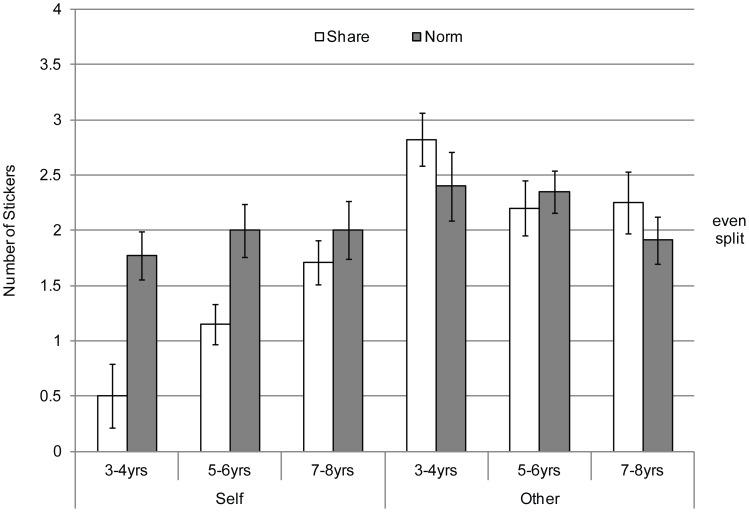
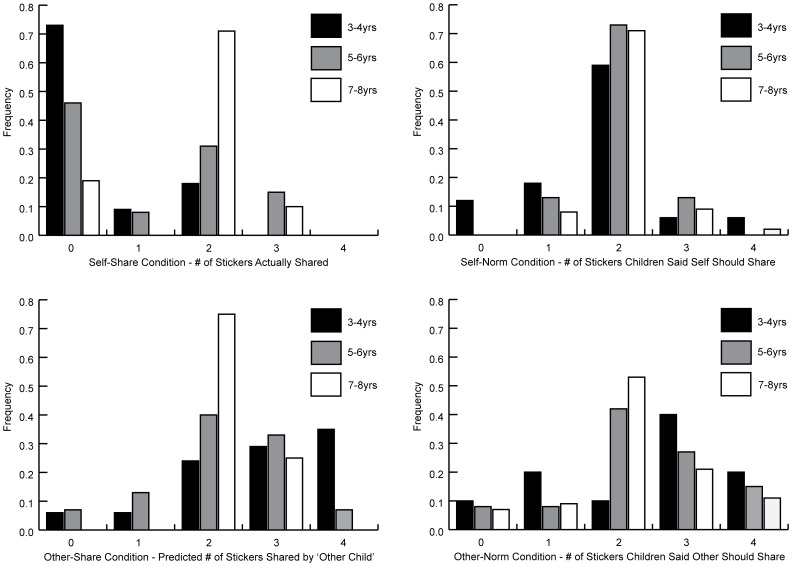
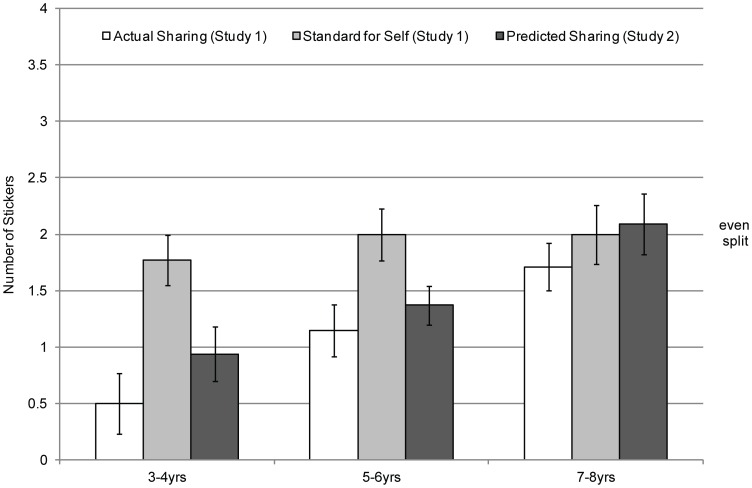
Young children endorse fairness norms related to sharing, but often act in contradiction to those norms when given a chance to share. This phenomenon has rarely been explored in the context of a single study. Using a novel approach, the research presented here offers clear evidence of this discrepancy and goes on to examine possible explanations for its diminution with age. In Study 1, 3-8-year-old children readily stated that they themselves should share equally, asserted that others should as well, and predicted that others had shared equally with them. Nevertheless, children failed to engage in equal sharing until ages 7-8. In Study 2, 7-8-year-olds correctly predicted that they would share equally, and 3-6-year-olds correctly predicted that they would favor themselves, ruling out a failure-of-willpower explanation for younger children's behavior. Similarly, a test of inhibitory control in Study 1 also failed to explain the shift with age toward adherence to the endorsed norm. The data suggest that, although 3-year-olds know the norm of equal sharing, the weight that children attach to this norm increases with age when sharing involves a cost to the self.
Overview
The claims and statistics of this paper haven’t been checked yet.
Free: it reads the open-access text and checks the first 5 claims that cite a source we can check. Create a free account to check every claim.
Integrity signals
Registry
Cites
Statistics
Figures
Verification
Claims the paper makes
The claims and statistics of this paper haven’t been checked yet.
Free: it reads the open-access text and checks the first 5 claims that cite a source we can check. Create a free account to check every claim.
Claims other papers make about this one
Each is checked against this paper’s own text: does it say what the citing paper says it does?
The source backs part of the claim, not all of it — or backs it for a different population, condition or comparison.
In the citing paper
“With increasing age, children typically share equally and sharing equally becomes affectively rewarding (Kogut, 2012; Smith, Blake, & Harris, 2013).”
From Emotion understanding and the moral self-concept as motivators of prosocial behavior in middle childhood (2020) · cites this paper as Smith et al., 2013
Experimental — accuracy not yet measuredThe cited source says what the claim attributes to it.
In the citing paper
“With increasing age, children typically share equally and sharing equally becomes affectively rewarding (Kogut, 2012; Smith, Blake, & Harris, 2013).”
From Emotion understanding and the moral self-concept as motivators of prosocial behavior in middle childhood (2020) · cites this paper as Smith et al., 2013
The cited source says what the claim attributes to it.
In the citing paper
“Our finding corresponds to work by Smith and colleagues (2013) who reported that younger children knew that sharing equally would be required, but actually shared less than half.”
From Emotion understanding and the moral self-concept as motivators of prosocial behavior in middle childhood (2020) · cites this paper as Smith et al., 2013
Self-check
Percentages, sums and reported differences re-computed from the paper’s own numbers.
The self-check needs the paper’s full text.
Citations
Cites
Baron, R. M., & Kenny, D. A. (1986) · Journal of Personality and Social Psychology · doi:10.1037/0022-3514.51.6.1173 · Cited by 91,532 · cited 1×
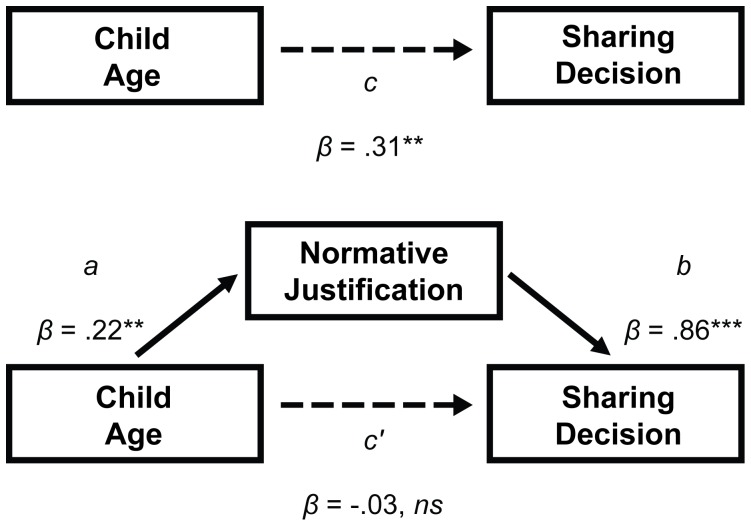
“Following Baron and Kenny [33], we tested the possibility that inhibitory control mediated the link between age and sharing.”
MethodThe emotional dog and its rational tail: A social intuitionist approach to moral judgment.
Haidt, J. (2001) · Psychological Review · doi:10.1037/0033-295x.108.4.814 · Cited by 8,048
Behavioral Game Theory: Experiments in Strategic Interaction
Camerer, C. F. (2003) · Cited by 3,722
Estimating Mediated Effects in Prevention Studies
Mackinnon, D. P., & Dwyer, J. H. (1993) · Evaluation Review · doi:10.1177/0193841x9301700202 · Cited by 1,937 · cited 1×
“Again, a series of regression models (see Figure 3) was calculated using equations designed for testing mediation models containing dichotomous mediators [34].”
MethodPreferences, property rights, and anonymity in bargaining games.
Hoffman, E., McCabe, K., Shachat, K., & Smith, V. (1994) · Games and Economic Behavior · doi:10.1006/game.1994.1056 · Cited by 1,674
Gerstadt, C. L., Hong, Y. J., & Diamond, A. (1994) · Cognition · doi:10.1016/0010-0277(94)90068-x · Cited by 1,598
Egalitarianism in young children
Fehr, E., Bernhard, H., & Rockenbach, B. (2008) · Nature · doi:10.1038/nature07155 · Cited by 1,475 · cited 4×
“Inhibitory control cannot fully explain age-related increases in fair sharing, because positive age-sharing associations are observed even when sharing is not costly for children [16,26].”
BackgroundInfluentialGod Is Watching You: Priming God Concepts Increases Prosocial Behavior in an Anonymous Economic Game
Shariff, A. F., & Norenzayan, A. (2007) · Psychological Science · doi:10.1111/j.1467-9280.2007.01983.x · Cited by 1,136
Inhibitory Control in Young Children and Its Role in Emerging Internalization
Kochanska, G., Murray, K. T., Jacques, T. Y., Koenig, A. L., & Vandegeest, K. A. (1996) · Child Development · doi:10.1111/j.1467-8624.1996.tb01747.x · Cited by 940 · cited 4×
“Next, children in the Self-Share/Other-Norm group received two measures of inhibitory control: the Day-Night Task [29] and the Bear-Dragon Task [30].”
MethodInfluentialNicholas Epley, A., & Dunning, D. A. (2000) · Journal of Personality and Social Psychology · doi:10.1037//0022-3514.79.6.861 · Cited by 820 · cited 1×
“, [43,44]).”
Research works printed but not linked: 1
- Burford HC, Foley LA, Rollins PG, Rosario KS (1996) Gender differences in preschoolers' sharing behavior. J Soc Behav Pers 11: 17– 25.
Cited by
Two new Later Stone Age sites from the Final Pleistocene in the Falémé Valley, eastern Senegal
Ndiaye, M., Lespez, L., Tribolo, C., Rassé, M., Hadjas, I., Davidoux, S., Huysecom, É., & Douze, K. (2024) · Monash University Research Portal (Monash University) · doi:10.3929/ethz-b-000667478 · Cited by 23,868
Why people prefer unequal societies
Starmans, C., Sheskin, M., & Bloom, P. (2017) · Nature Human Behaviour · doi:10.1038/s41562-017-0082 · Cited by 508
The ontogeny of fairness in seven societies
Blake, P. R., McAuliffe, K., Corbit, J., Callaghan, T. C., Barry, O., Bowie, A., Kleutsch, L., Kramer, K. L., Ross, E., Vongsachang, H., et al. (2015) · Nature · doi:10.1038/nature15703 · Cited by 534
Self-citationOntogeny of prosocial behavior across diverse societies
House, B. R., Silk, J. B., Henrich, J., Barrett, H. C., Scelza, B. A., Boyette, A. H., Hewlett, B. S., McElreath, R., & Laurence, S. (2013) · Proceedings of the National Academy of Sciences · doi:10.1073/pnas.1221217110 · Cited by 457
A construct divided: prosocial behavior as helping, sharing, and comforting subtypes
Dunfield, K. A. (2014) · Frontiers in Psychology · doi:10.3389/fpsyg.2014.00958 · Cited by 396
“Indeed, multiple studies, conducted across a variety of labs, confirm this tendency (Geraci and Surian, 2011; Schmidt and Sommerville, 2011; Sommerville et al., 2013).”
The Origins and Psychology of Human Cooperation
Henrich, J., & Muthukrishna, M. (2021) · Annual Review of Psychology · doi:10.1146/annurev-psych-081920-042106 · Cited by 457
“…et al. 2014, Olson & Spelke 2008), the development of actual reciprocity-based cooperation and contingent helping does not robustly emerge until middle childhood (Chernyak et al. 2019, House et al. 2013a, Warneken 2018)—just when children begin to adhere to costly norms (Smith et al. 2013).”
BackgroundThe developmental foundations of human fairness
McAuliffe, K., Blake, P. R., Steinbeis, N., & Warneken, F. (2017) · Nature Human Behaviour · doi:10.1038/s41562-016-0042 · Cited by 296
Self-citationZaki, J., & Mitchell, J. P. (2013) · Current Directions in Psychological Science · doi:10.1177/0963721413492764 · Cited by 326
Costly third-party punishment in young children
McAuliffe, K., Jordan, J. J., & Warneken, F. (2015) · Cognition · doi:10.1016/j.cognition.2014.08.013 · Cited by 272
The emergence of prosocial behavior: Why do infants and toddlers help, comfort, and share?
Paulus, M. (2014) · Child Development Perspectives · doi:10.1111/cdep.12066 · Cited by 267
The developmental origins of fairness: the knowledge–behavior gap
Blake, P. R., McAuliffe, K., & Warneken, F. (2014) · Trends in Cognitive Sciences · doi:10.1016/j.tics.2014.08.003 · Cited by 215
Self-citationRizzo, M. T., Elenbaas, L., Cooley, S., & Killen, M. (2016) · Developmental Psychology · doi:10.1037/dev0000134 · Cited by 180
Children's understanding of equity in the context of inequality
Rizzo, M. T., & Killen, M. (2016) · British Journal of Developmental Psychology · doi:10.1111/bjdp.12150 · Cited by 168
GüroÄŸlu, B., van den Bos, W., & Crone, E. A. (2014) · Frontiers in Psychology · doi:10.3389/fpsyg.2014.00291 · Cited by 159
“ORIGINAL RESEARCH ARTICLE published: 11 April 2014 doi: 10.3389/fpsyg.2014.00291 Sharing and giving across adolescence: an experimental study examining the development of prosocial behavior”
BackgroundInfluentialHuppert, E., Cowell, J. M., Cheng, Y., Contreras‐Ibáñez, C., Gomez‐Sicard, N., Gonzalez‐Gadea, M. L., Huepe, D., Ibanez, A., Lee, K., Mahasneh, R., et al. (2019) · Developmental Science · doi:10.1111/desc.12729 · Cited by 160
Do Infants in the First Year of Life Expect Equal Resource Allocations?
Buyukozer Dawkins, M., Sloane, S., & Baillargeon, R. (2019) · Frontiers in Psychology · doi:10.3389/fpsyg.2019.00116 · Cited by 165
Children's developing understanding of legitimate reasons for allocating resources unequally
Schmidt, M. F. H., Svetlova, M., Johe, J., & Tomasello, M. (2016) · Cognitive Development · doi:10.1016/j.cogdev.2015.11.001 · Cited by 164
“This finding is consistent with recent research suggesting a more differentiated notion of distributive justice at around 8 years of age (Blake & McAuliffe, 2011; DeJesus et al., 2014; Fehr et al., 2008; Shaw & Olson, 2012; Smith et al., 2013).”
BackgroundResultThe development of generosity and moral cognition across five cultures
Cowell, J. M., Lee, K., Malcolm‐Smith, S., Selçuk, B., Zhou, X., & Decety, J. (2016) · Developmental Science · doi:10.1111/desc.12403 · Cited by 177
“In the second study, inhibitory control was not found to account for the difference between what children said they should share and what they actually shared (Smith et al., 2013).”
BackgroundThe cognitive and cultural foundations of moral behavior
Purzycki, B. G., Pisor, A. C., Apicella, C., Atkinson, Q., Cohen, E., Henrich, J., McElreath, R., McNamara, R. A., Norenzayan, A., Willard, A. K., et al. (2018) · Evolution and Human Behavior · doi:10.1016/j.evolhumbehav.2018.04.004 · Cited by 159
“prescriptions actually influence the behavior of those who espouse them (e.g., Graham et al., 2015; Haidt, 2001; Perry, 2017; Smith et al., 2013).”
Yu, J., Zhu, L., & Leslie, A. M. (2016) · Child Development · doi:10.1111/cdev.12635 · Cited by 172
Who's the Boss? Concepts of Social Power Across Development
Gülgöz, S., & Gelman, S. A. (2016) · Child Development · doi:10.1111/cdev.12643 · Cited by 150
Anti-equality: Social comparison in young children
Sheskin, M., Bloom, P., & Wynn, K. (2014) · Cognition · doi:10.1016/j.cognition.2013.10.008 · Cited by 132
“In a recent study by Steinbeis and Singer (2013), 7- to 13-year-olds received information about their own performance and another child’s performance on a speeded reaction time task. Children liked doing well and disliked doing poorly, and these reactions were exacerbated when told the other child did differently: vic…”
Measuring the development of inhibitory control: The challenge of heterotypic continuity
Petersen, I., Hoyniak, C., McQuillan, M. E., Bates, J., & Staples, A. D. (2016) · Developmental Review · doi:10.1016/j.dr.2016.02.001 · Cited by 137
The development of adaptive conformity in young children: effects of uncertainty and consensus
Morgan, T. J. H., Laland, K. N., & Harris, P. L. (2014) · Developmental Science · doi:10.1111/desc.12231 · Cited by 148
“508 Younger children even predict that they will not share, ruling out the possibility that their lack of 509 sharing is due to a last-minute failure of willpower (Smith et al., 2013).”
Self-citationThe multidimensional nature of early prosocial behavior: a motivational perspective
Paulus, M. (2017) · Current Opinion in Psychology · doi:10.1016/j.copsyc.2017.09.003 · Cited by 151
“5 to 3 years children hold the normative view that resources should be distributed equally [46-47] and by 5 years that one ought to give more to a poor than to a rich individual [48].”
BackgroundPreverbal Infants' Ability to Encode the Outcome of Distributive Actions
Meristo, M., Strid, K., & Surian, L. (2015) · Infancy · doi:10.1111/infa.12124 · Cited by 154
Fairness informs social decision making in infancy
Lucca, K., Pospisil, J., & Sommerville, J. A. (2018) · PLoS ONE · doi:10.1371/journal.pone.0192848 · Cited by 142
Sharing economies: moving beyond binaries in a digital age
Davies, A. R., Donald, B., Gray, M., & Knox‐Hayes, J. (2017) · Cambridge Journal of Regions Economy and Society · doi:10.1093/cjres/rsx005 · Cited by 158
Children’s Sense of Fairness as Equal Respect
Engelmann, J. M., & Tomasello, M. (2019) · Trends in Cognitive Sciences · doi:10.1016/j.tics.2019.03.001 · Cited by 144
Paulus, M. (2014) · Frontiers in Psychology · doi:10.3389/fpsyg.2014.00344 · Cited by 142
“Thus, the main test was a 2 (Age Group: 3, 5) × 2 (Recipient: Rich agent, Poor agent) × 2 (Trials: even, uneven) mixed-model repeated measures analysis of variance (ANOVA).”
BackgroundMethodResultProsocial norms in the classroom: The role of self-regulation in following norms of giving
Blake, P. R., Piovesan, M., Montinari, N., Warneken, F., & Gino, F. (2014) · Journal of Economic Behavior & Organization · doi:10.1016/j.jebo.2014.10.004 · Cited by 144
Self-citationNormative expectations about fairness: The development of a charity norm in preschoolers
Wörle, M., & Paulus, M. (2017) · Journal of Experimental Child Psychology · doi:10.1016/j.jecp.2017.03.016 · Cited by 126
Do Children Distinguish Between Resource Inequalities With Individual Versus Structural Origins?
Rizzo, M. T., Elenbaas, L., & Vanderbilt, K. E. (2018) · Child Development · doi:10.1111/cdev.13181 · Cited by 102
Children’s evaluations of individually and structurally based inequalities: The role of status.
Rizzo, M. T., & Killen, M. (2020) · Developmental Psychology · doi:10.1037/dev0001118 · Cited by 109
“…documenting a connection between children’s judgments of inequalities and their behavioral responses to those inequalities (Essler et al., 2020; Rizzo & Killen, 2016, but see Smith et al., 2013), these results suggest that one way to help children reject and rectify structurally- Dev Psychol.”
ResultThe Curious Relation between Theory of Mind and Sharing in Preschool Age Children
Cowell, J. M., Samek, A. S., List, J. A., & Decety, J. (2015) · PLoS ONE · doi:10.1371/journal.pone.0117947 · Cited by 103
Give as I give: Adult influence on children’s giving in two cultures
Blake, P. R., Corbit, J. D., Callaghan, T. C., & Warneken, F. (2016) · Journal of Experimental Child Psychology · doi:10.1016/j.jecp.2016.07.010 · Cited by 113
“American children as young as 3 years recognize an equal split as a norm in giving tasks, and this seems to act as a ceiling on giving (Blake, Piovesan, Montinari, Warneken, & Gino, 2015; Blake & Rand, 2010; Smith et al., 2013).”
InfluentialSelf-citationChildren are sensitive to norms of giving
McAuliffe, K., Raihani, N., & Dunham, Y. C. (2017) · Cognition · doi:10.1016/j.cognition.2017.01.006 · Cited by 107
“For instance, Smith et al. (2013) showed that American children between the ages of three and eight understand that they ought to share equally and even expect others to share equally with them.”
InfluentialChildren’s reasoning about distributive and retributive justice across development.
Smith, C. E., & Warneken, F. (2016) · Developmental Psychology · doi:10.1037/a0040069 · Cited by 100
Self-citationI won’t tell: Young children show loyalty to their group by keeping group secrets
Misch, A., Over, H., & Carpenter, M. (2015) · Journal of Experimental Child Psychology · doi:10.1016/j.jecp.2015.09.016 · Cited by 100
Infants Distinguish Antisocial Actions Directed towards Fair and Unfair Agents
Meristo, M., & Surian, L. (2014) · PLoS ONE · doi:10.1371/journal.pone.0110553 · Cited by 98
Adopted Utility Calculus: Origins of a Concept of Social Affiliation
Powell, L. J. (2022) · Perspectives on Psychological Science · doi:10.1177/17456916211048487 · Cited by 111
Modeling social norms increasingly influences costly sharing in middle childhood
House, B. R., & Tomasello, M. (2018) · Journal of Experimental Child Psychology · doi:10.1016/j.jecp.2017.12.014 · Cited by 95
Differentiating “could” from “should”: Developmental changes in modal cognition
Shtulman, A., & Phillips, J. (2017) · Journal of Experimental Child Psychology · doi:10.1016/j.jecp.2017.05.012 · Cited by 99
Parochialism in preschool boys' resource allocation
Benozio, A., & Diesendruck, G. (2014) · Evolution and Human Behavior · doi:10.1016/j.evolhumbehav.2014.12.002 · Cited by 94
“This interpretation is consistent with the finding that with age, children evaluate unequal distributions more negatively, even if still expecting in-group favoritism (Dejesus, Rhodes, & Kinzler, 2014; Smith et al., 2013), and that among adults, “individualizing” the other tempers group biases (Ensari & Miller, 2002;…”
BackgroundResultHierarchy, Dominance, and Deliberation: Egalitarian Values Require Mental Effort
Van Berkel, L., Crandall, C. S., Eidelman, S., & Blanchar, J. C. (2015) · Personality and Social Psychology Bulletin · doi:10.1177/0146167215591961 · Cited by 80
Giving what one should: explanations for the knowledge-behavior gap for altruistic giving
Blake, P. R. (2017) · Current Opinion in Psychology · doi:10.1016/j.copsyc.2017.07.041 · Cited by 95
Self-citationSocial norms and cultural diversity in the development of third-party punishment
House, B. R., Kanngießer, P., Barrett, H. C., Yilmaz, S., Smith, A., Sebastián‐Enesco, C., Erut, A. S., & Silk, J. B. (2020) · Proceedings of the Royal Society B Biological Sciences · doi:10.1098/rspb.2019.2794 · Cited by 92
Transmission and development of costly punishment in children
Salalι, G. D., Juda, M., & Henrich, J. (2014) · Evolution and Human Behavior · doi:10.1016/j.evolhumbehav.2014.09.004 · Cited by 89
“However, as children's adherence to the norm of equal sharing increases with age (Blake, McAuliffe, & Warneken, 2014; Smith et al., 2013), we expect older children to be less imitative when the model's action violates the fairness expectations, because older children will be bringing in equality norms acquired outside…”
BackgroundHow 18- and 24-month-old peers divide resources among themselves
Ulber, J., Hamann, K., & Tomasello, M. (2015) · Journal of Experimental Child Psychology · doi:10.1016/j.jecp.2015.07.009 · Cited by 83
Communicative eye contact signals a commitment to cooperate for young children
Šipošová, B., Tomasello, M., & Carpenter, M. (2018) · Cognition · doi:10.1016/j.cognition.2018.06.010 · Cited by 84
Grocke, P., Rossano, F., & Tomasello, M. (2015) · Journal of Experimental Child Psychology · doi:10.1016/j.jecp.2015.07.008 · Cited by 83
Young children understand the normative force of standards of equal resource distribution
Rakoczy, H., Kaufmann, M., & Lohse, K. (2016) · Journal of Experimental Child Psychology · doi:10.1016/j.jecp.2016.05.015 · Cited by 78
“Recent research in this area has uncovered ‘‘knowledge–behavior gaps” (Blake et al., 2014), such that children in some situations can state what fairness principles would dictate (how one ‘‘ought to” distribute) but fail to act in accordance with them (Smith et al., 2013).”
BackgroundChildren’s collaboration induces fairness rather than generosity
Corbit, J. D., McAuliffe, K., Callaghan, T. C., Blake, P. R., & Warneken, F. (2017) · Cognition · doi:10.1016/j.cognition.2017.07.006 · Cited by 80
“For example, in Dictator Games, younger children tend to keep most of the resources, whereas by 5 years of age children often share equally, a tendency that increases in subsequent years with 8- and 9-year-olds splitting resources equally most of the time (Benenson, Pascoe, & Radmore, 2007; Blake, Corbit, Callaghan, &…”
Self-citationUrban food sharing: Emerging geographies of production, consumption and exchange
Davies, A. R., & Evans, D. M. (2018) · Geoforum · doi:10.1016/j.geoforum.2018.11.015 · Cited by 88
Neighborhood Deprivation Negatively Impacts Children’s Prosocial Behavior
Safra, L., Tecu, T., Lambert, S., Sheskin, M., Baumard, N., & Chevallier, C. (2016) · Frontiers in Psychology · doi:10.3389/fpsyg.2016.01760 · Cited by 76
“Although more costly forms of prosociality, like spontaneous sharing, typically emerge later (Smith et al., 2013; Sheskin et al., 2014), costly prosociality can be seen during the preschool years in cooperative contexts (Hamann et al.”
BackgroundPreschool children and chimpanzees incur costs to watch punishment of antisocial others
Mendes, N., Steinbeis, N., Guerra, N. B., Call, J., & Singer, T. (2017) · Nature Human Behaviour · doi:10.1038/s41562-017-0264-5 · Cited by 84
Wang, Y., & Henderson, A. M. E. (2018) · Journal of Experimental Child Psychology · doi:10.1016/j.jecp.2018.02.008 · Cited by 77
Insights into the biological foundation of human altruistic sentiments
Warneken, F. (2015) · Current Opinion in Psychology · doi:10.1016/j.copsyc.2015.07.013 · Cited by 81
Paulus, M. (2016) · Journal of Experimental Child Psychology · doi:10.1016/j.jecp.2016.02.001 · Cited by 77
Children’s allocation of resources in social dominance situations.
Charafeddine, R., Mercier, H., Clément, F., Kaufmann, L., Reboul, A., & der Henst, J. V. (2016) · Developmental Psychology · doi:10.1037/dev0000164 · Cited by 77
Children’s perceptions of the moral worth of live agents, robots, and inanimate objects
Sommer, K., Nielsen, M., Draheim, M., Redshaw, J., Vanman, E. J., & Wilks, M. (2019) · Journal of Experimental Child Psychology · doi:10.1016/j.jecp.2019.06.009 · Cited by 72
Christner, N., Pletti, C., & Paulus, M. (2020) · Cognitive Development · doi:10.1016/j.cogdev.2020.100893 · Cited by 71
Altruistic sharing behavior in children: Role of theory of mind and inhibitory control
Liu, B., Huang, Z., Xu, G., Yu, J. Z., Chen, Y., Li, X., Wang, Q., Song, S., & Jin, J. (2015) · Journal of Experimental Child Psychology · doi:10.1016/j.jecp.2015.09.010 · Cited by 80
“Aguilar-Pardo, Martinez-Arias, and Colmenares (2013) found that inhibitory control could predict children’s decision to share or not, whereas Smith, Blake, and Harris (2013) argued that inhibitory control could not explain the development of children’s sharing behavior.”
BackgroundChernyak, N., Harris, P. L., & Cordes, S. (2018) · Developmental Science · doi:10.1111/desc.12695 · Cited by 71
“Thus, young children appear to be moral hypocrites with regard to fairness: a phenomenon that has been referred to as the ‘knowledge–behavior gap’ (Blake, McAuliffe, & Warneken, 2014; Smith et al., 2013).”
BackgroundResultInfluentialSelf-citationThe Emergence of Forgiveness in Young Children
Oostenbroek, J., & Vaish, A. (2019) · Child Development · doi:10.1111/cdev.13069 · Cited by 66
Evaluations Versus Expectations: Children's Divergent Beliefs About Resource Distribution
DeJesus, J. M., Rhodes, M., & Kinzler, K. D. (2013) · Cognitive Science · doi:10.1111/cogs.12093 · Cited by 68
Equal But Not Always Fair: Value‐laden Sharing in Preschool‐aged Children
Chernyak, N., & Sobel, D. M. (2015) · Social Development · doi:10.1111/sode.12136 · Cited by 64
Ahl, R. E., & Dunham, Y. C. (2017) · Child Development · doi:10.1111/cdev.12922 · Cited by 65
Five‐year‐olds punish antisocial adults
Kenward, B., & Östh, T. (2014) · Aggressive Behavior · doi:10.1002/ab.21568 · Cited by 62
Numerical cognition explains age-related changes in third-party fairness.
Chernyak, N., Sandham, B., Harris, P. L., & Cordes, S. (2016) · Developmental Psychology · doi:10.1037/dev0000196 · Cited by 61
Self-citationDevelopment of Equity Preferences in Boys and Girls Across Adolescence
Meuwese, R., Crone, E. A., de Rooij, M., & Güroğlu, B. (2014) · Child Development · doi:10.1111/cdev.12290 · Cited by 61
“Smith et al. (2013) explain an increase in equal sharing between ages 3 and 8 by the weight that older children attach to the norm of equity.”
BackgroundChernyak, N., Leimgruber, K. L., Dunham, Y. C., Hu, J., & Blake, P. R. (2019) · Psychological Science · doi:10.1177/0956797619854975 · Cited by 64
Self-citationAgainst unfairness: Young children’s judgments about merit, equity, and equality
Elenbaas, L. (2019) · Journal of Experimental Child Psychology · doi:10.1016/j.jecp.2019.05.009 · Cited by 55
Life-history theory explains childhood moral development
Sheskin, M., Chevallier, C., Lambert, S., & Baumard, N. (2014) · Trends in Cognitive Sciences · doi:10.1016/j.tics.2014.08.004 · Cited by 64
Taxing behavioral control diminishes sharing and costly punishment in childhood
Steinbeis, N. (2016) · Developmental Science · doi:10.1111/desc.12492 · Cited by 60
“Studies on altruistic behavior have reported a discrepancy between children’s knowledge of fairness norms and how they adhere to them when deciding to share (Smith et al., 2013; Steinbeis et al., 2012).”
BackgroundHindering Harm and Preserving Purity: How Can Moral Psychology Save the Planet?
Rottman, J., Kelemen, D. A., & Young, L. (2015) · Philosophy Compass · doi:10.1111/phc3.12195 · Cited by 55
Extrinsic Rewards Diminish Costly Sharing in 3-Year-Olds
Ulber, J., Hamann, K., & Tomasello, M. (2016) · Child Development · doi:10.1111/cdev.12534 · Cited by 64
Enhancing behavioral control increases sharing in children
Steinbeis, N., & Over, H. (2017) · Journal of Experimental Child Psychology · doi:10.1016/j.jecp.2017.02.001 · Cited by 61
Children’s Cognitive and Behavioral Reactions to an Autonomous Versus Controlled Social Robot Dog
Chernyak, N., & Gary, H. E. (2016) · Early Education and Development · doi:10.1080/10409289.2016.1158611 · Cited by 50
“We chose these age groups on the basis of prior work, which has found that the ages of 4 – 7 are associated with changes in children ’ s perceptions of robots (Bernstein & Crowley, 2008) and children ’ s abilities to share fairly (e.g., Smith, Blake, & Harris, 2013).”
MethodSchütz, J., & Koglin, U. (2022) · Current Psychology · doi:10.1007/s12144-022-03226-4 · Cited by 36
The link between cognitive control and decision-making across child and adolescent development
Steinbeis, N., & Crone, E. A. (2016) · Current Opinion in Behavioral Sciences · doi:10.1016/j.cobeha.2016.04.009 · Cited by 60
Dahl, A., Gross, R. L., & Siefert, C. (2020) · Cognitive Development · doi:10.1016/j.cogdev.2020.100908 · Cited by 59
“Around this age, children also endorse norms about how to distribute resources fairly (Rizzo & Killen, 2016; Smith et al., 2013; Wörle & Paulus, 2018).”
BackgroundYoung Children’s Development of Fairness Preference
Li, J., Wen, W., Yu, J., & Zhu, L. (2016) · Frontiers in Psychology · doi:10.3389/fpsyg.2016.01274 · Cited by 53
Some Equalities Are More Equal Than Others: Quality Equality Emerges Later Than Numerical Equality
Sheskin, M., Cazzell, A. R., Croom, A. M., Mayer, T., Nissel, J., & Bloom, P. (2016) · Child Development · doi:10.1111/cdev.12544 · Cited by 50
“These design choices avoid task demands drawing attention to the possibility that quality should be equally distributed (see also Smith et al., 2013).”
BackgroundNeldner, K., Crimston, C. R., Wilks, M., Redshaw, J., & Nielsen, M. (2018) · PLoS ONE · doi:10.1371/journal.pone.0197819 · Cited by 48
“Further, girls possess more expansive moral circles than boys, and human-related MES responses predict children’s willingness to donate rewards to an unknown peer, affirming a link between moral reasoning and prosocial behavior in development [13,18,31].”
BackgroundInfluentialChildren engage in competitive altruism
Herrmann, E., Engelmann, J. M., & Tomasello, M. (2018) · Journal of Experimental Child Psychology · doi:10.1016/j.jecp.2018.11.008 · Cited by 51
Niklas, F., Birtwistle, E., & Wirth, A. (2020) · BMC Pediatrics · doi:10.1186/s12887-020-02432-y · Cited by 52
Preschool Children's Anticipation of Recipients' Emotions Affects Their Resource Allocation
Paulus, M., & Moore, C. L. (2015) · Social Development · doi:10.1111/sode.12126 · Cited by 48
Hao, J. (2017) · Frontiers in Psychology · doi:10.3389/fpsyg.2017.02182 · Cited by 47
“Despite this supporting evidence, some studies fail to reveal the relationships between inhibitory control and sharing behavior in preschool and elementary school children (Liu et al., 2016) and in 3- to 8-year old children (Smith et al., 2013).”
Helping and sharing in preschool children with autism
Paulus, M., & Rosal-Grifoll, B. (2017) · Experimental Brain Research · doi:10.1007/s00221-017-4947-y · Cited by 46
Peter, J., Kühne, R., & Barco, A. (2021) · Computers in Human Behavior · doi:10.1016/j.chb.2021.106712 · Cited by 42
Moral learning as intuitive theory revision
Rhodes, M., & Wellman, H. M. (2016) · Cognition · doi:10.1016/j.cognition.2016.08.013 · Cited by 49
The psychology of cooperation: Insights from chimpanzees and children
Melis, A. P., & Warneken, F. (2016) · Evolutionary Anthropology Issues News and Reviews · doi:10.1002/evan.21507 · Cited by 52
Mcloughlin, N. C., & Over, H. (2018) · Developmental Science · doi:10.1111/desc.12774 · Cited by 46
Preschoolers’ group bias in punishing selfishness in the Ultimatum Game
Wu, Z., & Gao, X. (2017) · Journal of Experimental Child Psychology · doi:10.1016/j.jecp.2017.08.015 · Cited by 44
“Second, starting from 3 or 4 years of age, children can explicitly state that equality is a norm that should be adhered to when distributing resources (Smith et al., 2013), and they can also reject unfair allocations (Blake et al., 2015; McAuliffe, Blake, & Warneken, 2014).”
BackgroundIndividual Differences in Theory of Mind Predict Inequity Aversion in Children
Tsoi, L., & McAuliffe, K. (2019) · Personality and Social Psychology Bulletin · doi:10.1177/0146167219867957 · Cited by 49
“It is not until they reach middle childhood that children start to more consistently allocate resources fairly between themselves and others (Smith et al., 2013), a developmental change potentially facilitated by changes in their ability to consider the expectations and thoughts of others.”
BackgroundIntention-based evaluations of distributive actions by 4-month-olds
Geraci, A., & Surian, L. (2022) · Infant Behavior and Development · doi:10.1016/j.infbeh.2022.101797 · Cited by 45
(Peer) Group influence on children's prosocial and antisocial behavior.
Misch, A., & Dunham, Y. C. (2020) · Journal of Experimental Child Psychology · doi:10.1016/j.jecp.2020.104994 · Cited by 28
Nilsen, E. S., & Valcke, A. (2018) · Journal of Applied Developmental Psychology · doi:10.1016/j.appdev.2018.08.001 · Cited by 41
First Arrival and Collective Land Ownership: How Children Reason About Who Owns the Land
Verkuyten, M., Sierksma, J., & Martinović, B. (2015) · Social Development · doi:10.1111/sode.12128 · Cited by 39
“…age children favour equal sharing, particularly when they make judgements about third party characters (e.g., Baumard, Mascaro, & Cheval-lier, 2012; Fehr, Bernhard, & Rockenbach, 2008; Olson & Spelke, 2008; Peterson, Peterson, & MacDonald, 1975; Rochat et al., 2009; Smith, Blake, & Harris, 2013).”
Metadata
- Authors
- Smith, C. E., Blake, P. R., & Harris, P. L.
- Affiliations
- University of Michigan (US)
- Boston University (US)
- Harvard University (US)
- Corresponding author
- Smith, Craig E.
- Venue
- PLoS ONE
- Publisher
- Public Library of Science (PLoS)
- Published
- 2013-03-20
- Volume
- 8
- Issue
- 3
- Pages
- e59510
- ISSN
- 1932-6203 (ISSN-L)
- PMC
- PMC3603928
- OpenAlex
- W1965699991
- Semantic Scholar
- 6d59a9f7bcfc05d46d6df3cc23213408ce0137cc
- Cited by
- 482
- References
- 49
- Citations by year
- 2026: 30 · 2025: 31 · 2024: 73 · 2023: 41 · 2022: 42 · 2021: 40 · 2020: 40 · 2019: 30 · 2018: 40 · 2017: 36 · 2016: 28 · 2015: 26 · 2014: 21 · 2013: 4
- FWCI
- 54.44
- Type
- journal article
- Language
- en
- Update notices
- correction (2013-08-21)
- Open access
- gold
- doi.org
- Locations
- PLoS ONE (publishedVersion, cc-by)
- Europe PMC (PubMed Central) (publishedVersion, cc-by)
- PubMed Central (publishedVersion, cc-by)
- PubMed (publishedVersion)
- RePEc: Research Papers in Economics (submittedVersion)
- DOAJ (DOAJ: Directory of Open Access Journals) (submittedVersion)
- Funders
- John Templeton Foundation
- Topics
- Social Sciences › Psychology › Developmental and Educational Psychology › Child and Animal Learning Development
- Life Sciences › Neuroscience › Cognitive Neuroscience › Psychology of Moral and Emotional Judgment
- Social Sciences › Economics, Econometrics and Finance › Economics and Econometrics › Experimental Behavioral Economics Studies
- Keywords
- fair sharing, fairness norms, rule compliance, young children, age differences, self-other bias, self-serving bias, inhibitory control, willpower, moral development, prosocial behavior
- MeSH terms
- Age Factors, Analysis of Variance, Child, Child Development, Child, Preschool, Cooperative Behavior, Games, Experimental, Humans, Interpersonal Relations, Massachusetts, Surveys and Questionnaires, Social Behavior, Moral Development
About these checks
Registry, retraction, Cites and statistics results are computed, not judged, with one exception: a printed reference that no index lists is read once by a model before it counts as a citation error. Claims are extracted by a model and kept only when their quote appears verbatim in the text; each cited source is then checked, with a model’s help, for whether it says what the claim relies on. Those verdicts can be wrong — read the claim’s quote and the cited source before relying on one.
Statistics and arithmetic are recomputed, not judged.
Confidence bands are shown only for fields calibrated on our annotated test set. None is calibrated yet, so no band is shown.
What counts as a claim ›How we measure confidence ›How we check this ›
Are you an author, or do you see a problem with this page? Request a review
Data sources
Bibliographic data: Semantic Scholar, OpenAlex, Crossref.
Contains information from the Semantic Scholar Academic Graph Datasets, made available under the ODC Attribution License (ODC-BY 1.0).
Semantic Scholar’s data is described in: Kinney, R., et al. (2023). The Semantic Scholar Open Data Platform. arXiv:2301.10140.
