

A Method for Selectively Enriching Microbial DNA from Contaminating Vertebrate Host DNA
Open accessThe DOI matches its Crossref record; 48 of the 48 references it cites were found in a registry or an index.
Abstract
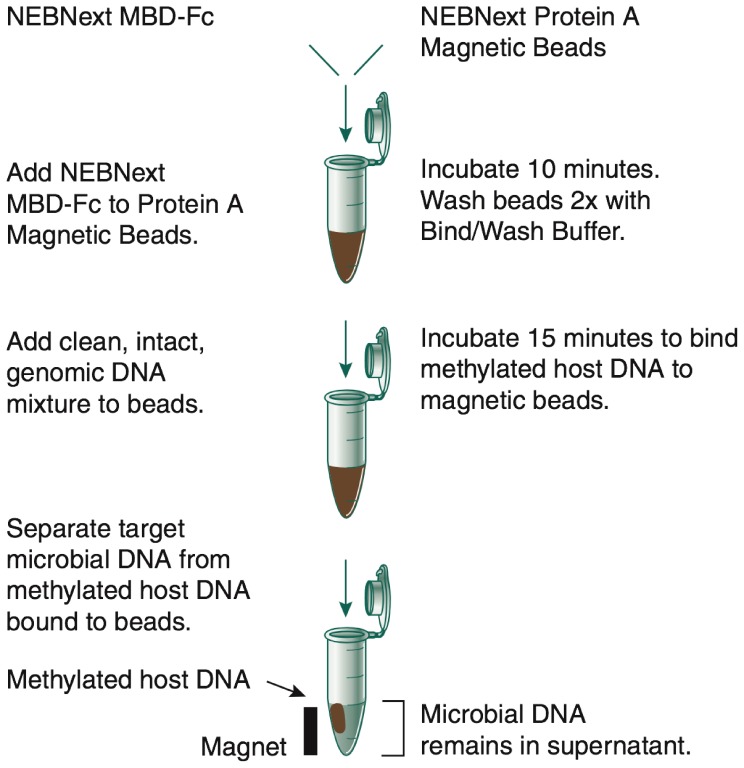
DNA samples derived from vertebrate skin, bodily cavities and body fluids contain both host and microbial DNA; the latter often present as a minor component. Consequently, DNA sequencing of a microbiome sample frequently yields reads originating from the microbe(s) of interest, but with a vast excess of host genome-derived reads. In this study, we used a methyl-CpG binding domain (MBD) to separate methylated host DNA from microbial DNA based on differences in CpG methylation density. MBD fused to the Fc region of a human antibody (MBD-Fc) binds strongly to protein A paramagnetic beads, forming an effective one-step enrichment complex that was used to remove human or fish host DNA from bacterial and protistan DNA for subsequent sequencing and analysis. We report enrichment of DNA samples from human saliva, human blood, a mock malaria-infected blood sample and a black molly fish. When reads were mapped to reference genomes, sequence reads aligning to host genomes decreased 50-fold, while bacterial and Plasmodium DNA sequences reads increased 8-11.5-fold. The Shannon-Wiener diversity index was calculated for 149 bacterial species in saliva before and after enrichment. Unenriched saliva had an index of 4.72, while the enriched sample had an index of 4.80. The similarity of these indices demonstrates that bacterial species diversity and relative phylotype abundance remain conserved in enriched samples. Enrichment using the MBD-Fc method holds promise for targeted microbiome sequence analysis across a broad range of sample types.
Overview
The claims and statistics of this paper haven’t been checked yet.
Free: it reads the open-access text and checks the first 5 claims that cite a source we can check. Create a free account to check every claim.
Integrity signals
Registry
Cites
Statistics
Figures


Verification
Claims the paper makes
The claims and statistics of this paper haven’t been checked yet.
Free: it reads the open-access text and checks the first 5 claims that cite a source we can check. Create a free account to check every claim.
Claims other papers make about this one
Each is checked against this paper’s own text: does it say what the citing paper says it does?
The source backs part of the claim, not all of it — or backs it for a different population, condition or comparison.
In the citing paper
“Limited enrichment in the 3–5 times range can be achieved with the use of antibodies against methylated human host DNA98, which enriches microbial reads owing to the lack of methylated DNA in most pathogen genomes.”
From Clinical metagenomics (2019) · cites this paper as [98]
Experimental — accuracy not yet measured
Self-check
Percentages, sums and reported differences re-computed from the paper’s own numbers.
The self-check needs the paper’s full text.
Citations
Cites
Fast gapped-read alignment with Bowtie 2
Langmead, B., & Salzberg, S. L. (2012) · Nature Methods · doi:10.1038/nmeth.1923 · Cited by 56,400
BLAST+: architecture and applications
Camacho, C., Coulouris, G., Avagyan, V., Ma, N., Papadopoulos, J., Bealer, K., & Madden, T. L. (2009) · BMC Bioinformatics · doi:10.1186/1471-2105-10-421 · Cited by 22,074 · cited 2×
“In a recent report, analysis of the human salivary microbiome using WGS sequencing revealed a large fraction of the BLASTN [36]”
BackgroundInfluentialChanges of Intestinal Functions in Liver Cirrhosis
Fukui, H., & Wiest, R. (2016) · Inflammatory Intestinal Diseases · doi:10.1159/000444436 · Cited by 6,808
Host-Bacterial Mutualism in the Human Intestine
Bäckhed, F., Ley, R. E., Sonnenburg, J. L., Peterson, D. A., & Gordon, J. I. (2005) · Science · doi:10.1126/science.1104816 · Cited by 5,277
Finishing the euchromatic sequence of the human genome
International Human Genome Sequencing Consortium (2004) · Nature · doi:10.1038/nature03001 · Cited by 4,971
Human DNA methylomes at base resolution show widespread epigenomic differences
Lister, R., Pelizzola, M., Dowen, R. H., Hawkins, R. D., Hon, G., Tonti-Filippini, J., Nery, J. R., Lee, L., Ye, Z., Ngo, Q.-M., et al. (2009) · Nature · doi:10.1038/nature08514 · Cited by 4,673
Meyer, F., Paarmann, D., D'Souza, M., Olson, R., Glass, E., Kubal, M., Paczian, T., Rodriguez, A., Stevens, R., Wilke, A., et al. (2008) · BMC Bioinformatics · doi:10.1186/1471-2105-9-386 · Cited by 3,565
A framework for human microbiome research
The Human Microbiome Project Consortium (2012) · Nature · doi:10.1038/nature11209 · Cited by 2,650
The NIH Human Microbiome Project
The NIH HMP Working Group, Peterson, J., Garges, S., Giovanni, M., McInnes, P., Wang, L., Schloss, J. A., Bonazzi, V., McEwen, J. E., Wetterstrand, K. A., et al. (2009) · Genome Research · doi:10.1101/gr.096651.109 · Cited by 2,066
Metagenomic microbial community profiling using unique clade-specific marker genes
Segata, N., Waldron, L., Ballarini, A., Narasimhan, V., Jousson, O., & Huttenhower, C. (2012) · Nature Methods · doi:10.1038/nmeth.2066 · Cited by 1,776
Research works printed but not linked: 1
- Lister R, Pelizzola M, Dowen RH, Hawkins RD, Hon G, et al (2009) NIH Public Access. Nature 462: 315– 322 10.1038/nature08514.Human 19829295 PMC2857523 · doi:10.1038/nature08514.human
Cited by
Chiu, C. Y., & Miller, S. A. (2019) · Nature Reviews Genetics · doi:10.1038/s41576-019-0113-7 · Cited by 1,620
Nanopore metagenomics enables rapid clinical diagnosis of bacterial lower respiratory infection
Charalampous, T., Kay, G. L., Richardson, H., Aydin, A., Baldan, R., Jeanes, C., Rae, D., Grundy, S., Turner, D. J., Wain, J., et al. (2019) · Nature Biotechnology · doi:10.1038/s41587-019-0156-5 · Cited by 681
A new view of the fish gut microbiome: advances from next-generation sequencing
Ghanbari, M., Kneifel, W., & Domig, K. J. (2015) · Aquaculture · doi:10.1016/j.aquaculture.2015.06.033 · Cited by 669
Gut Microbiota, Inflammation, and Colorectal Cancer
Brennan, C. A., & Garrett, W. S. (2016) · Annual Review of Microbiology · doi:10.1146/annurev-micro-102215-095513 · Cited by 578
Insights into the human oral microbiome
Verma, D., Garg, P. K., & Dubey, A. K. (2018) · Archives of Microbiology · doi:10.1007/s00203-018-1505-3 · Cited by 541
The use of next generation sequencing for improving food safety: Translation into practice
Jagadeesan, B., Gerner-Smidt, P., Allard, M. W., Leuillet, S., Winkler, A., Xiao, Y., Chaffron, S., Van Der Vossen, J., Tang, S., Katase, M., et al. (2019) · Food Microbiology · doi:10.1016/j.fm.2018.11.005 · Cited by 364
Neugent, M. L., Hulyalkar, N. V., Nguyen, V. H., Zimmern, P. E., & De Nisco, N. J. (2020) · mBio · doi:10.1128/mbio.00218-20 · Cited by 326
Improving saliva shotgun metagenomics by chemical host DNA depletion
Marotz, C. A., Sanders, J. G., Zuniga, C., Zaramela, L. S., Knight, R., & Zengler, K. (2018) · Microbiome · doi:10.1186/s40168-018-0426-3 · Cited by 347
Clinical and biological insights from viral genome sequencing
Houldcroft, C. J., Beale, M. A., & Breuer, J. (2017) · Nature Reviews Microbiology · doi:10.1038/nrmicro.2016.182 · Cited by 334
Beckers, B., Op De Beeck, M., Thijs, S., Truyens, S., Weyens, N., Boerjan, W., & Vangronsveld, J. (2016) · Frontiers in Microbiology · doi:10.3389/fmicb.2016.00650 · Cited by 322
Genomic structure in Europeans dating back at least 36,200 years
Seguin-Orlando, A., Korneliussen, T. S., Sikora, M., Malaspinas, A.-S., Manica, A., Moltke, I., Albrechtsen, A., Ko, A., Margaryan, A., Moiseyev, V., et al. (2014) · Science · doi:10.1126/science.aaa0114 · Cited by 315
Forgotten fungi—the gut mycobiome in human health and disease
Huseyin, C. E., O’Toole, P. W., Cotter, P. D., & Scanlan, P. D. (2017) · FEMS Microbiology Reviews · doi:10.1093/femsre/fuw047 · Cited by 278
Diao, Z., Han, D., Zhang, R., & Li, J. (2022) · Journal of Advanced Research · doi:10.1016/j.jare.2021.09.012 · Cited by 265
High‐Throughput Metagenomics for Identification of Pathogens in the Clinical Settings
Li, N., Cai, Q., Miao, Q., Song, Z., Fang, Y., & Hu, B. (2021) · Small Methods · doi:10.1002/smtd.202000792 · Cited by 255
Identification of Prosthetic Joint Infection Pathogens Using a Shotgun Metagenomics Approach
Thoendel, M. J., Jeraldo, P. R., Greenwood-Quaintance, K. E., Yao, J. Z., Chia, N., Hanssen, A. D., Abdel, M. P., & Patel, R. (2018) · Clinical Infectious Diseases · doi:10.1093/cid/ciy303 · Cited by 253
Nanopore adaptive sampling: a tool for enrichment of low abundance species in metagenomic samples
Martin, S., Heavens, D., Lan, Y., Horsfield, S., Clark, M. D., & Leggett, R. M. (2022) · Genome Biology · doi:10.1186/s13059-021-02582-x · Cited by 224
Thomas, M., Webb, M., Ghimire, S., Blair, A., Olson, K., Fenske, G. J., Fonder, A. T., Christopher-Hennings, J., Brake, D., & Scaria, J. (2017) · Scientific Reports · doi:10.1038/s41598-017-12481-6 · Cited by 170
From Theory to Practice: Translating Whole-Genome Sequencing (WGS) into the Clinic
Balloux, F., Brønstad Brynildsrud, O., van Dorp, L., Shaw, L. P., Chen, H., Harris, K. A., Wang, H., & Eldholm, V. (2018) · Trends in Microbiology · doi:10.1016/j.tim.2018.08.004 · Cited by 174
Metagenomic Sequencing for Microbial DNA in Human Samples: Emerging Technological Advances
Shi, Y. H., Wang, G., Lau, H. C.-H., & Yu, J. Q. (2022) · International Journal of Molecular Sciences · doi:10.3390/ijms23042181 · Cited by 182
Comparison of microbial DNA enrichment tools for metagenomic whole genome sequencing
Thoendel, M., Jeraldo, P. R., Greenwood-Quaintance, K. E., Yao, J. Z., Chia, N., Hanssen, A. D., Abdel, M. P., & Patel, R. (2016) · Journal of Microbiological Methods · doi:10.1016/j.mimet.2016.05.022 · Cited by 150
“Both techniques have been shown to be effective at enriching microbial DNA (Feehery et al., 2013; Zheng et al., 2014; Benitez-Paez et al., 2013; Gebert et al., 2008; Handschur et al., 2009; Hansen et al., 2009; Horz et al., 2008; Loonen et al., 2012; Votintseva et al., 2015), however no direct comparisons between the…”
InfluentialWhat is new and relevant for sequencing-based microbiome research? A mini-review
Fricker, A. M., Podlesny, D., & Fricke, W. F. (2019) · Journal of Advanced Research · doi:10.1016/j.jare.2019.03.006 · Cited by 159
Fecal Microbiota Analysis: An Overview of Sample Collection Methods and Sequencing Strategies
Thomas, V., Clark, J., & Doré, J. (2015) · Future Microbiology · doi:10.2217/fmb.15.87 · Cited by 123
A horizon scan of priorities for coastal marine microbiome research
Trevathan‐Tackett, S. M., Sherman, C. D. H., Huggett, M. J., Campbell, A. H., Laverock, B., Hurtado-McCormick, V., Seymour, J. R., Firl, A. J., Messer, L. F., Ainsworth, T. D., et al. (2019) · Nature Ecology & Evolution · doi:10.1038/s41559-019-0999-7 · Cited by 163
Giving back to the community: microbial mechanisms of plant–soil interactions
Paredes, S. H., & Lebeis, S. L. (2016) · Functional Ecology · doi:10.1111/1365-2435.12684 · Cited by 148
Coral holobiont cues prime Endozoicomonas for a symbiotic lifestyle
Pogoreutz, C., Oakley, C. A., Rädecker, N., Cárdenas, A., Perna, G., Xiang, N., Peng, L., Davy, S. K., Ngugi, D. K., & Voolstra, C. R. (2022) · The ISME Journal · doi:10.1038/s41396-022-01226-7 · Cited by 146
Genome-resolved metagenomics: a game changer for microbiome medicine
Kim, N., Ma, J., Kim, W., Kim, J., Belenky, P. A., & Lee, I. (2024) · Experimental & Molecular Medicine · doi:10.1038/s12276-024-01262-7 · Cited by 144
New opportunities for managing acute and chronic lung infections
Cookson, W., Cox, M. J., & Moffatt, M. F. (2017) · Nature Reviews Microbiology · doi:10.1038/nrmicro.2017.122 · Cited by 128
Böhme, U., Otto, T. D., Cotton, J. A., Steinbiss, S., Sanders, M. J., Oyola, S. O., Nicot, A., Gandon, S., Patra, K. P., Herd, C., et al. (2018) · Genome Research · doi:10.1101/gr.218123.116 · Cited by 133
Self-citationNoyes, N. R., Weinroth, M. D., Parker, J. K., Dean, C. J., Lakin, S. M., Raymond, R., Rovira, P., Doster, E., Abdo, Z., Martin, J. N., et al. (2017) · Microbiome · doi:10.1186/s40168-017-0361-8 · Cited by 106
Metagenomics Approaches for Improving Food Safety: A Review
Billington, C., Kingsbury, J. M., & Rivas, L. (2021) · Journal of Food Protection · doi:10.4315/jfp-21-301 · Cited by 124
Chiou, K. L., & Bergey, C. M. (2018) · Scientific Reports · doi:10.1038/s41598-018-20427-9 · Cited by 101
Tracking the Dairy Microbiota from Farm Bulk Tank to Skimmed Milk Powder
McHugh, A. J., Feehily, C., Fenelon, M. A., Gleeson, D. E., Hill, C., & Cotter, P. D. (2020) · mSystems · doi:10.1128/msystems.00226-20 · Cited by 89
Detection and Enumeration of Spore-Forming Bacteria in Powdered Dairy Products
McHugh, A. J., Feehily, C., Hill, C., & Cotter, P. D. (2017) · Frontiers in Microbiology · doi:10.3389/fmicb.2017.00109 · Cited by 85
Amar, Y., Lagkouvardos, I., Silva, R. L., Ishola, O. A., Foesel, B. U., Kublik, S., Schöler, A., Niedermeier, S., Bleuel, R., Zink, A., et al. (2021) · Microbiome · doi:10.1186/s40168-021-01067-0 · Cited by 96
Precision food safety: A systems approach to food safety facilitated by genomics tools
Kovač, J., den Bakker, H. C., Carroll, L. M., & Wiedmann, M. (2017) · TrAC Trends in Analytical Chemistry · doi:10.1016/j.trac.2017.06.001 · Cited by 91
Validation of high throughput sequencing and microbial forensics applications
Budowle, B., Connell, N. D., Bielecka-Oder, A., Colwell, R. R., Corbett, C. R., Fletcher, J., Forsman, M., Kadavy, D. R., Markotić, A., Morse, S., et al. (2014) · Investigative Genetics · doi:10.1186/2041-2223-5-9 · Cited by 82
Pros and cons of methylation-based enrichment methods for ancient DNA
Seguin-Orlando, A., Gamba, C., Sarkissian, C. D., Ermini, L., Louvel, G., Boulygina, E., Sokolov, A., Nedoluzhko, A., Lorenzen, E. D., Lopez, P., et al. (2015) · Scientific Reports · doi:10.1038/srep11826 · Cited by 58
Srinivas, M., O’Sullivan, Ó., Cotter, P. D., van Sinderen, D., & Kenny, J. G. (2022) · Foods · doi:10.3390/foods11203297 · Cited by 74
Domagalska, M. A., Imamura, H., Sanders, M. J., den Broeck, F. V., Bhattarai, N. R., Vanaerschot, M., Maes, I., D’haenens, E., Rai, K., Rijal, S., et al. (2019) · PLoS neglected tropical diseases · doi:10.1371/journal.pntd.0007900 · Cited by 67
Chen, H., Zheng, Y., Zhang, X., Liu, S., Yin, Y., Guo, Y., Wang, X., Zhang, Y., Zhao, C., Gai, W., et al. (2023) · Journal of Advanced Research · doi:10.1016/j.jare.2023.02.018 · Cited by 70
Sloan, T. J., Turton, J. C., Tyson, J., Musgrove, A., Fleming, V. M., Lister, M. M., Loose, M., Sockett, R. E., Diggle, M. A., Game, F. L., et al. (2019) · Journal of Medical Microbiology · doi:10.1099/jmm.0.000907 · Cited by 64
Optimization of DNA extraction for advancing coral microbiota investigations
Weber, L., DeForce, E., & Apprill, A. M. (2017) · Microbiome · doi:10.1186/s40168-017-0229-y · Cited by 54
Oral Microbiome and Cancer Therapy-Induced Oral Mucositis
Mougeot, J.-L., Stevens, C. B., Morton, D. S., Brennan, M. T., & Mougeot, F. B. (2019) · JNCI Monographs · doi:10.1093/jncimonographs/lgz002 · Cited by 81
Application of Nanopore Sequencing in the Diagnosis and Treatment of Pulmonary Infections
Chen, J., & Xu, F. (2023) · Molecular Diagnosis & Therapy · doi:10.1007/s40291-023-00669-8 · Cited by 54
Progress in the molecular diagnosis of Lyme disease
Ružić‐Sabljić, E., & Cerar, T. (2016) · Expert Review of Molecular Diagnostics · doi:10.1080/14737159.2016.1246959 · Cited by 50
Ganda, E., Beck, K. L., Haiminen, N., Silverman, J. D., Kawas, B., Cronk, B. D., Anderson, R. R., Goodman, L. B., & Wiedmann, M. (2021) · mSystems · doi:10.1128/msystems.00619-21 · Cited by 55
Experimental metagenomics and ribosomal profiling of the human skin microbiome
Ferretti, P., Farina, S., Cristofolini, M., Girolomoni, G., Tett, A., & Segata, N. (2016) · Experimental Dermatology · doi:10.1111/exd.13210 · Cited by 54
Genomic Advances in Avian Malaria Research
Videvall, E. (2019) · Trends in Parasitology · doi:10.1016/j.pt.2018.12.005 · Cited by 56
Optimization of 16S rRNA gene analysis for use in the diagnostic clinical microbiology service
Sune, D., Rydberg, H., Augustinsson, Å. N., Serrander, L., & Jungeström, M. B. (2020) · Journal of Microbiological Methods · doi:10.1016/j.mimet.2020.105854 · Cited by 57
Li, M., Yang, F., Lu, Y., & Huang, W. (2020) · BMC Infectious Diseases · doi:10.1186/s12879-020-05179-0 · Cited by 49
McArdle, A. J., & Kaforou, M. (2020) · Access Microbiology · doi:10.1099/acmi.0.000104 · Cited by 44
Dhakal, S., Wang, L., Antony, L., Rank, J., Bernardo, P., Ghimire, S., Bondra, K., Siems, C., Lakshmanappa, Y. S., Renu, S., et al. (2019) · Frontiers in Immunology · doi:10.3389/fimmu.2019.01509 · Cited by 41
Benchmarking short-read metagenomics tools for removing host contamination
Gao, Y., Luo, H., Lyu, H., Yang, H., Yousuf, S., Huang, S. W., & Liu, Y. (2025) · GigaScience · doi:10.1093/gigascience/giaf004 · Cited by 50
Longitudinal Metagenomic Analysis of Hospital Air Identifies Clinically Relevant Microbes
King, P. A., Pham, L. K., Waltz, S., Sphar, D., Yamamoto, R. T., Conrad, D., Taplitz, R. A., Torriani, F. J., & Forsyth, A. (2016) · PLoS ONE · doi:10.1371/journal.pone.0160124 · Cited by 43
Impact of DNA source on genetic variant detection from human whole-genome sequencing data
Trost, B., Walker, S., Haider, S., Sung, W. W. L., Pereira, S. L., Phillips, C. L., Higginbotham, E. J., Strug, L. J., Nguyen, C. M., Raajkumar, A., et al. (2019) · Journal of Medical Genetics · doi:10.1136/jmedgenet-2019-106281 · Cited by 48
Rapid and accurate testing for urinary tract infection: new clothes for the emperor
Moreland, R. B., Brubaker, L. T., Tinawi, L., & Wolfe, A. J. (2024) · Clinical Microbiology Reviews · doi:10.1128/cmr.00129-24 · Cited by 44
Rapid Diagnosis of Lower Respiratory Infection using Nanopore-based Clinical Metagenomics
Charalampous, T., Richardson, H., Kay, G. L., Baldan, R., Jeanes, C., Rae, D., Grundy, S., Turner, D. J., Wain, J., Leggett, R. M., et al. (2018) · doi:10.1101/387548 · Cited by 37
Optimized Whole-Genome Amplification Strategy for Extremely AT-Biased Template
Oyola, S. O., Manske, M., Campino, S. G., Claessens, A., Hamilton, W. L., Kekre, M., Drury, E., Mead, D. G., Gu, Y., Miles, A., et al. (2014) · DNA Research · doi:10.1093/dnares/dsu028 · Cited by 37
Self-citationO’Donnell, V. K., Grau, F. R., Mayr, G. A., Sturgill, T. L., Dodd, K. A., & Barrette, R. W. (2019) · Journal of Clinical Microbiology · doi:10.1128/jcm.01104-19 · Cited by 39
Biotechnological Applications of MBD Domain Proteins for DNA Methylation Analysis
Jeltsch, A., Broche, J., Lungu, C., & Bashtrykov, P. (2019) · Journal of Molecular Biology · doi:10.1016/j.jmb.2019.08.020 · Cited by 37
Sepich‐Poore, G. D., Guccione, C., Laplane, L., Pradeu, T., Curtius, K., & Knight, R. (2022) · BioEssays · doi:10.1002/bies.202100252 · Cited by 33
Irinyi, L., Hu, Y., Hoang, M. T. V., Pasic, L., Halliday, C. L., Jayawardena, M. B., Basu, I., McKinney, W. P., Morris, A. J., Rathjen, J. P., et al. (2019) · Medical Mycology · doi:10.1093/mmy/myz109 · Cited by 36
Evaluation of full-length nanopore 16S sequencing for detection of pathogens in microbial keratitis
Low, L., Fuentes‐Utrilla, P., Hodson, J. A., O’Neil, J. D., Rossiter, A. E., Begum, G., Suleiman, K., Murray, P. I., Wallace, G. R., Loman, N. J., et al. (2021) · PeerJ · doi:10.7717/peerj.10778 · Cited by 34
Haro, C., Anguita‐Maeso, M., METSIS, M. L., Navas‐Cortés, J. A., & Landa, B. B. (2021) · Frontiers in Plant Science · doi:10.3389/fpls.2021.640829 · Cited by 34
Zaręba-Marchewka, K., Szymańska-Czerwińska, M., & Niemczuk, K. (2020) · Journal of Veterinary Research · doi:10.2478/jvetres-2020-0077 · Cited by 31
Metagenomic Insights Into the Structure and Function of Intestinal Microbiota of the Hadal Amphipods
Chan, J., Geng, D., Pan, B., Zhang, Q., & Xu, Q. (2021) · Frontiers in Microbiology · doi:10.3389/fmicb.2021.668989 · Cited by 34
Lazarević, V., Gaïa, N., Emonet, S., Girard, M., Renzi, G., Després, L., Wozniak, H., Marcos, J. Y., Veyrieras, J., Chatellier, S., et al. (2014) · Frontiers in Cellular and Infection Microbiology · doi:10.3389/fcimb.2014.00065 · Cited by 34
Benchmarking microbial DNA enrichment protocols from human intestinal biopsies
Marchukov, D., Li, J., Juillerat, P., Misselwitz, B., & Yılmaz, B. (2023) · Frontiers in Genetics · doi:10.3389/fgene.2023.1184473 · Cited by 31
Culture-Independent Diagnostics for Health Security
Doggett, N. A., Mukundan, H., Lefkowitz, E. J., SLEZAK, T. R., Chain, P. S. G., Morse, S., Anderson, K., Hodge, D. R., & Pillai, S. P. (2016) · Health Security · doi:10.1089/hs.2015.0074 · Cited by 31
Rai, K., Bhattarai, N. R., Vanaerschot, M., Imamura, H., Gebru, G., Khanal, B., Rijal, S., Boelaert, M., Pal, C., Karki, P., et al. (2017) · PLoS neglected tropical diseases · doi:10.1371/journal.pntd.0005420 · Cited by 30
Ide, K., Nishikawa, Y., Maruyama, T., Tsukada, Y., Kogawa, M., Takeda, H., Ito, H., Wagatsuma, R., Miyaoka, R., Nakano, Y., et al. (2022) · Microbiome · doi:10.1186/s40168-022-01395-9 · Cited by 36
Santos, M. T. B. R., Siqueira, W. L., & Nicolau, J. C. (2007) · Quintessence International · Cited by 35
Thurlow, C. M., Joseph, S. J., Ganova-Raeva, L. M., Katz, S. S., Pereira, L., Chen, C., Debra, A., Vilfort, K., Workowski, K., Cohen, S. E., et al. (2022) · mSphere · doi:10.1128/msphere.00009-22 · Cited by 28
Exploring the Plant Microbiome Through Multi-omics Approaches
López‐Mondéjar, R., Kostovčík, M., Lladó, S., Carro, L., & García‐Fraile, P. (2017) · Springer eBooks · doi:10.1007/978-981-10-4059-7_13 · Cited by 35
Gan, H. M., Szegedi, E., Fersi, R., Chebil, S., Kovács, L., Kawaguchi, A., Hudson, A. O., Bürr, T. J., & Savka, M. A. (2019) · Frontiers in Microbiology · doi:10.3389/fmicb.2019.01896 · Cited by 27
Culture-independent approaches to chlamydial genomics
Taylor–Brown, A., Madden, D. E., & Polkinghorne, A. (2018) · Microbial Genomics · doi:10.1099/mgen.0.000145 · Cited by 27
Tyagi, A., Yadav, N., Pandit, A., & Ramakrishnan, U. (2024) · Molecular Ecology · doi:10.1111/mec.17461 · Cited by 20
Grützke, J., Gwida, M., Deneke, C., Brendebach, H., Projahn, M., Schattschneider, A., Hofreuter, D., El-Ashker, M. R., Malorny, B., & Dahouk, S. A. (2021) · Microbial Genomics · doi:10.1099/mgen.0.000552 · Cited by 24
Metagenomic Studies in Inflammatory Skin Diseases
Godlewska, U., Brzoza, P., Kwiecień, K., Kwitniewski, M., & Cichy, J. (2020) · Current Microbiology · doi:10.1007/s00284-020-02163-4 · Cited by 26
Next-Generation Molecular Surveillance of TriTryp Diseases
Domagalska, M. A., & Dujardin, J. (2020) · Trends in Parasitology · doi:10.1016/j.pt.2020.01.008 · Cited by 23
Huang, X., Hansson, R., Palinauskas, V., Valkiūnas, G., Hellgren, O., & Bensch, S. (2018) · International Journal for Parasitology · doi:10.1016/j.ijpara.2018.05.009 · Cited by 23
The Use of Molecular Methods in Studies of Avian Haemosporidians
Bensch, S., & Hellgren, O. (2020) · Springer eBooks · doi:10.1007/978-3-030-51633-8_4 · Cited by 23
Moragues-Solanas, L., Le-Viet, T., McSorley, E., Halford, C., Lockhart, D. S., Aydin, A., Kay, G. L., Elumogo, N., Mullen, W. H., O’Grady, J., et al. (2024) · BMC Medical Genomics · doi:10.1186/s12920-024-01835-5 · Cited by 24
Sajib, M. S. I., Brunker, K., Oravcová, K., Everest, P. H., Murphy, M. E., & Forde, T. (2024) · Journal of Molecular Diagnostics · doi:10.1016/j.jmoldx.2024.05.008 · Cited by 25
Pathirana, E., McPherson, A. S., Whittington, R. J., & Hick, P. M. (2019) · Journal of Applied Microbiology · doi:10.1111/jam.14326 · Cited by 23
Itsko, M., Retchless, A. C., Joseph, S. J., Turner, A. N., Bazan, J. A., Sadji, A. Y., Ouedraogo-Traoré, R., & Wang, X. (2020) · Journal of Clinical Microbiology · doi:10.1128/jcm.01780-20 · Cited by 24
Moragues-Solanas, L., Scotti, R., & O’Grady, J. (2021) · Expert Review of Molecular Diagnostics · doi:10.1080/14737159.2021.1906652 · Cited by 21
Mesophilic Sporeformers Identified in Whey Powder by Using Shotgun Metagenomic Sequencing
McHugh, A. J., Feehily, C., Tobin, J. T., Fenelon, M. A., Hill, C., & Cotter, P. D. (2018) · Applied and Environmental Microbiology · doi:10.1128/aem.01305-18 · Cited by 21
Nijo, T., Iwabuchi, N., Tokuda, R., Suzuki, T., Matsumoto, O., Miyazaki, A., Maejima, K., Oshima, K., NAMBA, S., & Yamaji, Y. (2021) · Journal of General Plant Pathology · doi:10.1007/s10327-021-00993-z · Cited by 21
Tyagi, A., Khan, A., Thatte, P., & Ramakrishnan, U. (2022) · Animal Conservation · doi:10.1111/acv.12770 · Cited by 20
Insights gained from ancient biomolecules into past and present tuberculosis—a personal perspective
Donoghue, H. D. (2016) · International Journal of Infectious Diseases · doi:10.1016/j.ijid.2016.11.413 · Cited by 22
Palladino, G., Caroselli, E., Tavella, T., D’Amico, F., Prada, F., Mancuso, A., Franzellitti, S., Rampelli, S., Candela, M., Goffredo, S., et al. (2022) · ISME Communications · doi:10.1038/s43705-022-00152-1 · Cited by 20
Cumpănaş, A. A., Bratu, O. G., Bardan, R. T., Ferician, O. C., Cumpănaș, A. D., Horhat, F. G., Licker, M., Pricop, C., & Cretu, O. M. (2020) · Diagnostics · doi:10.3390/diagnostics10060343 · Cited by 22
Duan, W., Yang, Y., Zhao, J., Yan, T., & Tian, X. (2022) · Frontiers in Public Health · doi:10.3389/fpubh.2022.901549 · Cited by 23
High Sensitivity of Shotgun Metagenomic Sequencing in Colon Tissue Biopsy by Host DNA Depletion
Cheng, W. Y., Liu, W., Ding, Y., Wang, G., Shi, Y. H., Chu, E. S., Wong, S. H., Sung, J. J. �., & Yu, J. Q. (2022) · Genomics Proteomics & Bioinformatics · doi:10.1016/j.gpb.2022.09.003 · Cited by 21
Fragment Ends of Circulating Microbial DNA as Signatures for Pathogen Detection in Sepsis
Wang, G., Lam, W. K., Ling, L., Ma, M.-J. L., Ramakrishnan, S., Chan, D. C. T., Lee, W., Cheng, S. H., Chan, R. W. Y., Yu, S. C. Y., et al. (2022) · Clinical Chemistry · doi:10.1093/clinchem/hvac197 · Cited by 20
Clokie, B. G. J., Elsheshtawy, A., Albalat, A., Nylund, A., Beveridge, A., Payne, C. J., & MacKenzie, S. A. (2022) · Microbiology Spectrum · doi:10.1128/spectrum.02255-22 · Cited by 20
Shi, X., Shao, C., Luo, C., Chu, Y., Wang, J., Meng, Q., Yu, J. M., Gao, Z., & Kang, Y. (2019) · mSystems · doi:10.1128/msystems.00198-19 · Cited by 20
Environmental DNA Epigenetics Accurately Predicts the Age of Cultured Fish Larvae
Ruiz, E., Leprieur, F., Sposito, G., Lüthi, M. N., Schmidlin, M., Panfili, J., Pellissier, L., & Albouy, C. P. (2025) · Ecology and Evolution · doi:10.1002/ece3.70645 · Cited by 16
Brun, A., Rangé, H., Prouvost, B., Mazighi, M., Kapila, Y. L., Bouchard, P., & Michel, J. (2020) · Journal of Oral Microbiology · doi:10.1080/20002297.2020.1742523 · Cited by 16
Metadata
- Authors
- Feehery, G. R., Yigit, E., Oyola, S. O., Langhorst, B. W., Schmidt, V. T., Stewart, F. J., Dimalanta, E. T., Amaral-Zettler, L. A., Davis, T., Quail, M. A., & Pradhan, S.
- Affiliations
- New England Biolabs (United States) (US)
- Wellcome Sanger Institute (GB)
- Marine Biological Laboratory (US)
- Corresponding author
- Pradhan, Sriharsa
- ORCID
- Venue
- PLoS ONE
- Publisher
- Public Library of Science (PLoS)
- Published
- 2013-10-28
- Volume
- 8
- Issue
- 10
- Pages
- e76096
- ISSN
- 1932-6203 (ISSN-L)
- PMC
- PMC3810253
- OpenAlex
- W2109424333
- Cited by
- 212
- References
- 48
- Citations by year
- 2026: 9 · 2025: 19 · 2024: 23 · 2023: 8 · 2022: 26 · 2021: 22 · 2020: 24 · 2019: 21 · 2018: 19 · 2017: 13 · 2016: 15 · 2015: 5 · 2014: 7
- FWCI
- 4.03
- Type
- journal article
- Language
- en
- Open access
- gold
- doi.org
- Locations
- PLoS ONE (publishedVersion, cc-by)
- Europe PMC (PubMed Central) (publishedVersion, cc-by)
- PubMed Central (publishedVersion, cc-by)
- PubMed (publishedVersion)
- Open Access Server of the Woods Hole Scientific Community (Woods Hole Scientific Community) (submittedVersion, cc-by)
- DOAJ (DOAJ: Directory of Open Access Journals) (submittedVersion, cc-by-sa)
- Figshare (submittedVersion, cc-by)
- Funders
- Brown University
- Wellcome Trust (079355/Z/06/Z, 098051)
- University of Oxford
- Topics
- Life Sciences › Biochemistry, Genetics and Molecular Biology › Molecular Biology › Genomics and Phylogenetic Studies
- Physical Sciences › Environmental Science › Ecology › Microbial Community Ecology and Physiology
- Life Sciences › Biochemistry, Genetics and Molecular Biology › Molecular Biology › Gut microbiota and health
- Keywords
- host DNA removal, methyl-CpG binding domain, CpG methylation, paramagnetic beads, saliva microbiota, blood microbiome, malaria, Plasmodium, bacterial diversity, microbiome sequencing
- MeSH terms
- Animals, DNA, DNA-Binding Proteins, DNA, Bacterial, Humans, Immunoglobulin Fc Fragments, Protein Binding, Recombinant Fusion Proteins, Saliva, Vertebrates, DNA, Protozoan, CpG Islands, DNA Methylation, DNA Contamination
About these checks
Registry, retraction, Cites and statistics results are computed, not judged, with one exception: a printed reference that no index lists is read once by a model before it counts as a citation error. Claims are extracted by a model and kept only when their quote appears verbatim in the text; each cited source is then checked, with a model’s help, for whether it says what the claim relies on. Those verdicts can be wrong — read the claim’s quote and the cited source before relying on one.
Statistics and arithmetic are recomputed, not judged.
Confidence bands are shown only for fields calibrated on our annotated test set. None is calibrated yet, so no band is shown.
What counts as a claim ›How we measure confidence ›How we check this ›
Are you an author, or do you see a problem with this page? Request a review
Data sources
Bibliographic data: Semantic Scholar, OpenAlex, Crossref.
Contains information from the Semantic Scholar Academic Graph Datasets, made available under the ODC Attribution License (ODC-BY 1.0).
Semantic Scholar’s data is described in: Kinney, R., et al. (2023). The Semantic Scholar Open Data Platform. arXiv:2301.10140.
