

Dynamics and Correlation of Serum Cortisol and Corticosterone under Different Physiological or Stressful Conditions in Mice
Open accessThe DOI matches its Crossref record; 40 of the 41 references it cites were found in a registry or an index.
Abstract
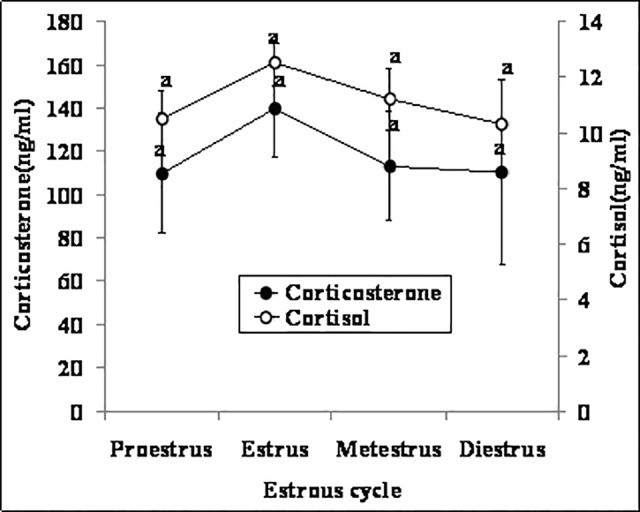
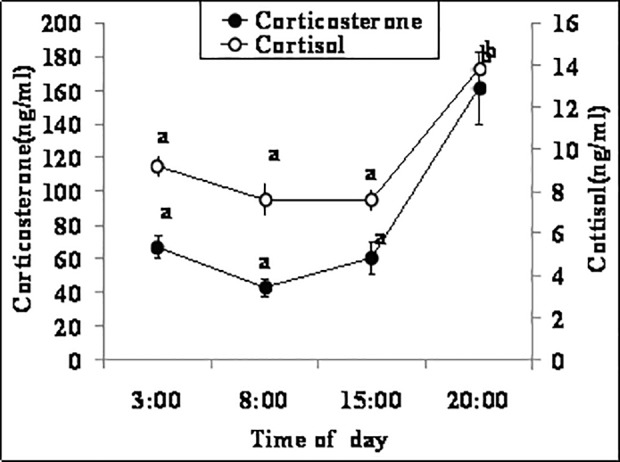
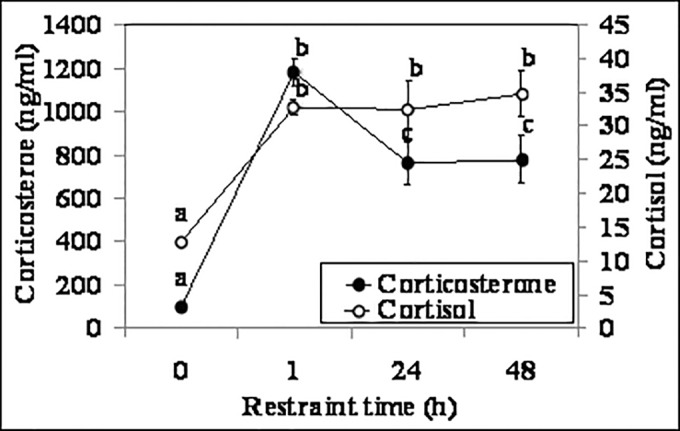
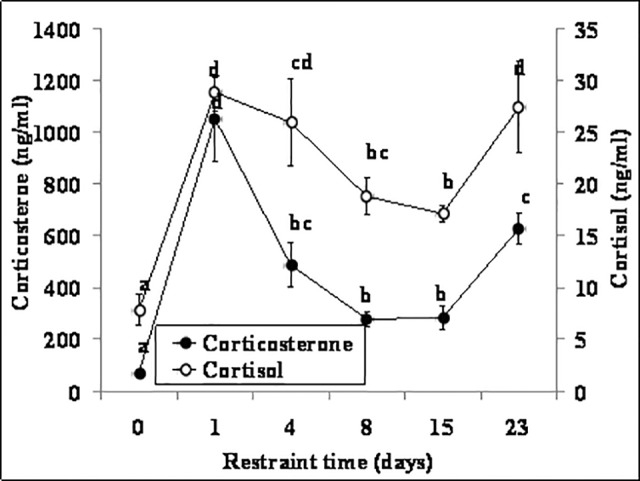
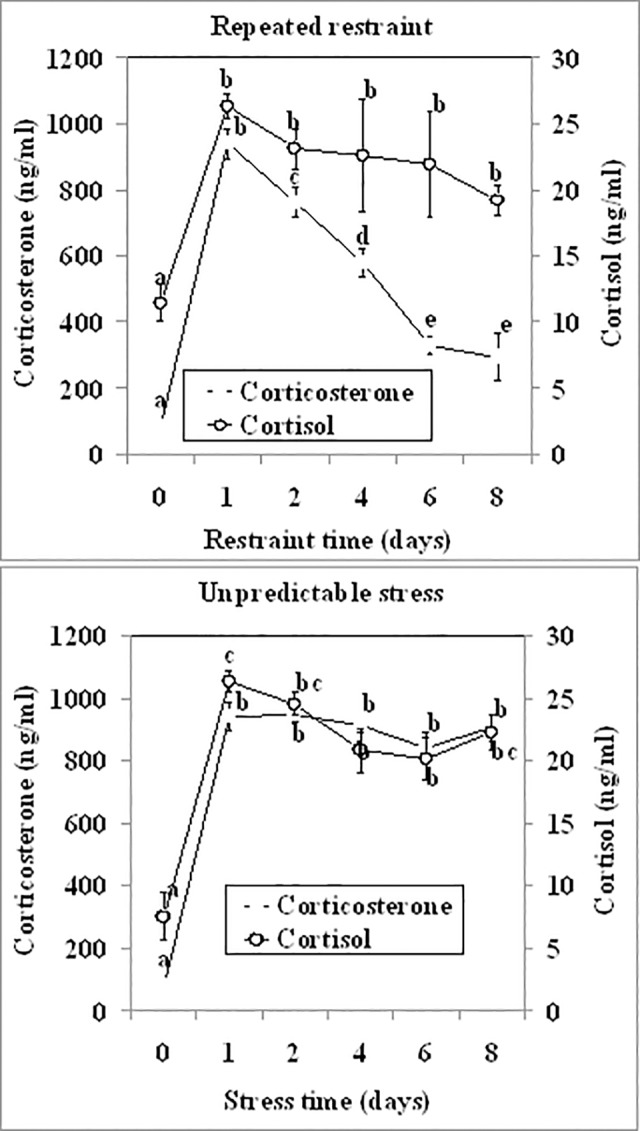
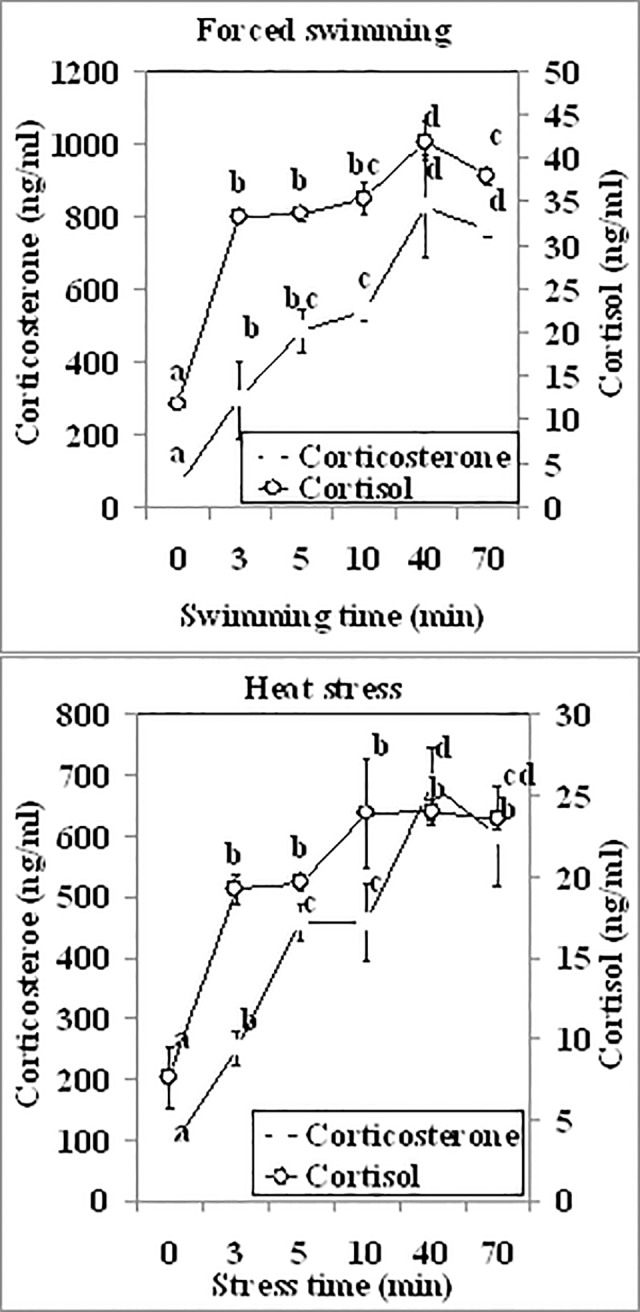
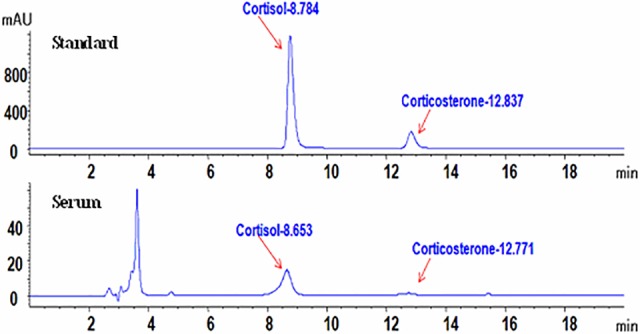
Although plasma corticosterone is considered the main glucocorticoid involved in regulation of stress responses in rodents, the presence of plasma cortisol and whether its level can be used as an indicator for rodent activation of stress remain to be determined. In this study, effects of estrous cycle stage, circadian rhythm, and acute and chronic (repeated or unpredictable) stressors of various severities on dynamics and correlation of serum cortisol and corticosterone were examined in mice. A strong (r = 0.6-0.85) correlation between serum cortisol and corticosterone was observed throughout the estrous cycle, all day long, and during acute or repeated restraints, chronic unpredictable stress and acute forced swimming or heat stress. Both hormones increased to the highest level on day 1 of repeated-restraint or unpredictable stresses, but after that, whereas the concentration of cortisol did not change, that of corticosterone showed different dynamics. Thus, whereas corticosterone declined dramatically during repeated restraints, it remained at the high level during unpredictable stress. During forced swimming or heat stress, whereas cortisol increased to the highest level within 3 min., corticosterone did not reach maximum until 40 min. of stress. Analysis with HPLC and HPLC-MS further confirmed the presence of cortisol in mouse serum. Taken together, results (i) confirmed the presence of cortisol in mouse serum and (ii) suggested that mouse serum cortisol and corticosterone are closely correlated in dynamics under different physiological or stressful conditions, but, whereas corticosterone was a more adaptation-related biomarker than cortisol during chronic stress, cortisol was a quicker responder than corticosterone during severe acute stress.
Overview
The claims and statistics of this paper haven’t been checked yet.
Free: it reads the open-access text and checks the first 5 claims that cite a source we can check. Create a free account to check every claim.
Integrity signals
Registry
Cites
Statistics
Figures
Verification
Claims the paper makes
The claims and statistics of this paper haven’t been checked yet.
Free: it reads the open-access text and checks the first 5 claims that cite a source we can check. Create a free account to check every claim.
Claims other papers make about this one
Each is checked against this paper’s own text: does it say what the citing paper says it does?
The cited source says what the claim attributes to it.
In the citing paper
“Both hormones peaked on day 1 of repeated or unpredictable stress, but the dynamics differed afterward. The corticosterone declined during repeated restraints but remained high during unpredictable stress.”
From The Role of Cortisol in Chronic Stress, Neurodegenerative Diseases, and Psychological Disorders (2023) · cites this paper as [30]
The cited source says what the claim attributes to it.
In the citing paper
“During forced swimming or heat stress, cortisol peaked within 3 min, while corticosterone peaked after 40 min.”
From The Role of Cortisol in Chronic Stress, Neurodegenerative Diseases, and Psychological Disorders (2023) · cites this paper as [30]
The cited source says what the claim attributes to it.
In the citing paper
“The research found a strong correlation (r = 0.6–0.85) between serum cortisol and corticosterone across both conditions or predictable and unpredictable stress.”
From The Role of Cortisol in Chronic Stress, Neurodegenerative Diseases, and Psychological Disorders (2023) · cites this paper as [30]
The cited source says what the claim attributes to it.
In the citing paper
“The results conclude that corticosterone is a more adaptation-related biomarker during chronic stress, while cortisol responds more quickly during severe acute stress.”
From The Role of Cortisol in Chronic Stress, Neurodegenerative Diseases, and Psychological Disorders (2023) · cites this paper as [30]
Self-check
Percentages, sums and reported differences re-computed from the paper’s own numbers.
The self-check needs the paper’s full text.
Citations
Cites
1 retracted
Ovejero, R., Novillo, A., Soto-Gamboa, M. R., MOSCA-TORRES, M. E., Cuello, P. A., Gregorio, P. F., Jahn, G. A., & Carmanchahi, P. (2013) · Journal of Experimental Zoology Part A Ecological Genetics and Physiology · doi:10.1002/jez.1833 · Cited by 12 · cited 2×
“Furthermore, in wild species, both cortisol and corticosterone are formed in a species-specific extent and may vary in ratio according to the demands [20,21].”
BackgroundRetractedGlucocorticoids and the circadian clock
Dickmeis, T. (2009) · Journal of Endocrinology · doi:10.1677/joe-08-0415 · Cited by 494 · cited 1×
“One striking feature of the regulation of glucocorticoids is a diurnal release pattern, with peak levels linked to the start of the daily activity phase [40].”
BackgroundAtkinson, H. C., & Waddell, B. J. (1997) · Endocrinology · doi:10.1210/endo.138.9.5395 · Cited by 438 · cited 1×
“plasma corticosterone was evident in male and female rats, with the average peak time ranging from 21 min before to 70 min after lights off [42].”
BackgroundThe influence of ovarian steroids on hypothalamic-pituitary-adrenal regulation in the female rat
Carey, M. P., Deterd, C. H., de Koning, J., Helmerhorst, F., & de Kloet, E. R. (1995) · Journal of Endocrinology · doi:10.1677/joe.0.1440311 · Cited by 385 · cited 1×
“Both in vivo [37,38] and in vitro studies [39] showed that estradiol enhanced the production of corticosterone by adrenal glands in rats.”
BackgroundRestraint stress in biomedical research: A review
Paré, W. P., & Glavin, G. B. (1986) · Neuroscience & Biobehavioral Reviews · doi:10.1016/0149-7634(86)90017-5 · Cited by 376 · cited 1×
“Restraint of small animals is an experimental procedure developed for studying psychogenic stress [24,25].”
BackgroundRestraint stress in biomedical research: An update
Glavin, G. B., Paré, W. P., Sandbak, T., Bakke, H.-K., & Murison, R. (1994) · Neuroscience & Biobehavioral Reviews · doi:10.1016/0149-7634(94)90027-2 · Cited by 304 · cited 1×
“Restraint of small animals is an experimental procedure developed for studying psychogenic stress [24,25].”
BackgroundDetermining the Stage of the Estrous Cycle in the Mouse by the Appearance of the Vagina
Champlin, A. K., Dorr, D. L., & Gates, A. H. (1973) · Biology of Reproduction · doi:10.1093/biolreprod/8.4.491 · Cited by 298 · cited 1×
“The stage of the estrous cycle in female mice was determined by observing vaginal appearance [22] between 19:30 and 20:00 pm on each experimental day.”
MethodFear of novelty in infant rats predicts adult corticosterone dynamics and an early death
Cavigelli, S. A., & McClintock, M. K. (2003) · Proceedings of the National Academy of Sciences · doi:10.1073/pnas.2535721100 · Cited by 226 · cited 1×
“Furthermore, Cavigelli and McClintock [31] found that serum corticosterone in rats exposed to a 5-min exploration-arena test or to a 30-min restraint did not reach the highest level until 40 min after the end of the treatment.”
BackgroundCortisol and corticosterone independence in cortisol-dominant wildlife
Koren, L., Whiteside, D. P., Fahlman, Å., Ruckstuhl, K. E., Kutz, S. J., Checkley, S., Dumond, M., & Wynne‐Edwards, K. E. (2012) · General and Comparative Endocrinology · doi:10.1016/j.ygcen.2012.02.020 · Cited by 141 · cited 1×
“Furthermore, in wild species, both cortisol and corticosterone are formed in a species-specific extent and may vary in ratio according to the demands [20,21].”
BackgroundAtkinson, H. C., Wood, S. A., Kershaw, Y. M., Bate, E., & Lightman, S. L. (2006) · Journal of Neuroendocrinology · doi:10.1111/j.1365-2826.2006.01444.x · Cited by 97 · cited 1×
“In rodents, for example, there are no endogenous corticosterone pulses during the early light phase but hourly pulses of corticosterone secretion are observed during the early dark phase [41].”
Background
Research works printed but not linked: 4
- Fazekas IG, Fazekas AT (1966) Papierchromatographischer Nachweis der Corticosteroidfunktion in Kaninchenorganen und -geweben. Endokrinologie 50: 130– 138. 5998873
- Snell GD (1941) Reproduction. In: Snell GD (ed.), Biology of the Laboratory Mouse. New York: Blakiston; 53– 58.
- Champlin AK (1969) Ph.D. Thesis, University of Rochester, Rochester, N.Y.
- Hafez ESE (1993) Reproductive cycles. In: Hafez ESE, editor. Reproduction in Farm Animals. Lea & Febiger pp. 94– 113.
Cited by
Items 301–400 of 480
Features of the functional state of the organism of sheep under stress
Yuldashbaev, Y. A., Vatnikov, Y. A., Rudenko, P. A., & Rudenko, A. A. (2022) · RUDN Journal of Agronomy and Animal Industries · doi:10.22363/2312-797x-2022-17-2-193-202 · Cited by 4
The epigenetic mechanisms of adaption to the hot and humid climate in Hu sheep (Ovis aries)
Ren, H., Jiang, J., Li, J., Sun, X., Chen, C., Liu, L., Lv, S., Qu, M., Fan, Y., Zhou, P., et al. (2024) · Physiological Reports · doi:10.14814/phy2.16164 · Cited by 5
“…signaling pathway (Figure 7), which is obviously different from other animals with increasing cortisol level in blood under heat stress (Bagath et al., 2019; Gong et al., 2015; Hooper et al., 2018; Megahed et al., 2008; Oluwagbenga et al., 2022; Rasooli et al., 2010; Wang et al., 2015).”
Terajima, Y., Sato, J., Inagaki, H., & Ushida, T. (2025) · PLoS ONE · doi:10.1371/journal.pone.0317767 · Cited by 4
Gundersen, J. K., Sabir, H., Wood, T. R., Osredkar, D., Falck, M., Loeberg, E., Walløe, L., Menassa, D. A., & Thoresen, M. (2023) · Physiological Reports · doi:10.14814/phy2.15562 · Cited by 4
Zhang, Y., Wang, G., Shao, Y., Zheng, P., Guo, C., Liu, Z., Shen, L., Liu, Z., Ding, J., & Zhang, H. (2024) · The Analyst · doi:10.1039/d4an00524d · Cited by 4
Chronic psychosocial stress affects insulin-like growth factor 1 and its receptors in mouse ovaries
Igonina, T. N., Lebedeva, D., Tsybko, A. S., Рожкова, И. Н., Babochkina, T. I., Levinson, A. L., & Amstislavsky, S. Y. (2024) · Reproduction Fertility and Development · doi:10.1071/rd24101 · Cited by 4
Experimental Comparative Study of potential anxiolytic effect of Vitamin C and Buspirone in rats
Soliman, G. F., Khattab, A. A., & Habil, M. R. (2018) · Functional Foods in Health and Disease · doi:10.31989/ffhd.v8i2.365 · Cited by 5
“Then it was diluted as 1:200 into Enzyme Immunoassay (EIA) diluent [22].”
MethodGuzzoni, V., Briet, L., Costa, R., de Souza, R. W. A., Carani, F. R., Dal‐Pai‐Silva, M., Silva, K. A. S., Cunha, T. S., & Marcondes, F. K. (2019) · Stress · doi:10.1080/10253890.2019.1573364 · Cited by 4
“Indeed, corticosterone has been used as a key biomarker of stress in rodents (Contarteze, Manchado, Gobatto, & De Mello, 2008; Gong et al., 2015) and high levels of glucocorticoids are associated with skeletal muscle catabolism (Hasselgren, 1999).”
BackgroundMethodInfluentialInvolvement of PKCβI-SERT activity in stress vulnerability of mice exposed to twice-swim stress
Ito, T., Hiramatsu, Y., Mouri, A., Yoshigai, T., Takahashi, A., Yoshimi, A., Mamiya, T., Ozaki, N., & Noda, Y. (2021) · Neuroscience Research · doi:10.1016/j.neures.2021.01.002 · Cited by 4
Cochlear Preconditioning as a Modulator of Susceptibility to Hearing Loss
Harrison, R. T., Debacker, J. R., Trevino, M., Bielefeld, E. C., & Lobariñas, E. (2022) · Antioxidants and Redox Signaling · doi:10.1089/ars.2021.0055 · Cited by 5
Harbour, K., & Baccei, M. L. (2024) · Journal of Pain · doi:10.1016/j.jpain.2024.104609 · Cited by 3
Sarfi, M., Salmani, M. E., Lashkarbolouki, T., & Goudarzi, I. (2025) · Pharmacology Biochemistry and Behavior · doi:10.1016/j.pbb.2025.173997 · Cited by 3
Cotto, H. A. M., Farra, Y. M., Sorenson, A. G., Shingwekar, S., Chen, Y., Sebastiani, P., Bellini, C. M., & Oakes, J. M. (2025) · Nicotine & Tobacco Research · doi:10.1093/ntr/ntaf084 · Cited by 3
Baumbach, J., Mui, C. Y. Y., Leonetti, A. M., & Martin, L. J. (2025) · Progress in Neuro-Psychopharmacology and Biological Psychiatry · doi:10.1016/j.pnpbp.2025.111579 · Cited by 3
Hanning, N., Verboven, R., Man, J. G. D., Ceuleers, H., Schepper, H. U. D., Smet, A., & Winter, B. Y. D. (2023) · American Journal of Physiology-Gastrointestinal and Liver Physiology · doi:10.1152/ajpgi.00203.2022 · Cited by 4
Reis, L. G., Teeple, K., Schoonmaker, J., Davis, C., Scinto, S., Schinckel, A. P., & Casey, T. (2024) · PLoS ONE · doi:10.1371/journal.pone.0312419 · Cited by 4
Chuang, C., Tai, Y.-A., Wu, T.-J., Ho, Y., & Yeh, S.-L. (2025) · Frontiers in Nutrition · doi:10.3389/fnut.2025.1530132 · Cited by 5
“In agreement with the previous study (23), the increases in corticosterone level induced by CDDP were more marked than that of cortisol; it was about 8 times and 5 times higher compared to the control group at week 7 and week 11, respectively (Figure 3).”
Saxu, R., Tang, H., Yu, H., Ge, H., & Gu, H. F. (2025) · Journal of Ethnopharmacology · doi:10.1016/j.jep.2025.119936 · Cited by 5
Teleken, J. L., Rosolen, A. P. F., Morari, J., Balbo, S. L., Ribeiro, R. A., & Bonfleur, M. L. (2025) · Naunyn-Schmiedeberg s Archives of Pharmacology · doi:10.1007/s00210-025-04652-4 · Cited by 3
“Regarding cortisol levels, although this glucocorticoid is not predominant in rodents, a study demonstrated that cortisol and corticosterone exhibit similar plasma responses under different physiological or stress conditions in mice (Gong et al. 2015).”
Change in light-dark cycle affects experimental autoimmune encephalomyelitis
Moriguchi, K., Miyamoto, K., Fukumoto, Y., & Kusunoki, S. (2021) · Journal of Neuroimmunology · doi:10.1016/j.jneuroim.2021.577495 · Cited by 3
Ma, Y.-J., Lu, C., Ji, B., Qin, J., Cai, C., Yang, Y., Zhao, Y., Liang, G., Guo, X., Cao, G., et al. (2022) · Frontiers in Microbiology · doi:10.3389/fmicb.2022.881099 · Cited by 6
Xhakaza, N. K., Nkomozepi, P., & Mbajiorgu, E. F. (2022) · Anatomy & Cell Biology · doi:10.5115/acb.22.120 · Cited by 3
“Corticosterone and BDNF levels A significant increase in the brain corticosterone was observed in stressed control animals of the current study, in agreement with previous authors [63-68].”
ResultAn, J.-S., Wang, G., Wang, D., Yang, Y.-Q., Wu, J.-S., Zhao, Y., Gong, S., & Tan, J. (2022) · Cells · doi:10.3390/cells11233891 · Cited by 3
“A significant elevation in serum corticosterone and cortisol was observed after mice were exposed to various stresses [11,12].”
BackgroundSelf-citationSchiffmann, D., Lampkemeyer, V., Lindner, M., Fleck, A.-K., Koch, K., Eschborn, M., Liebmann, M., Strecker, J., Minnerup, J., Wiendl, H., et al. (2023) · International Journal of Molecular Sciences · doi:10.3390/ijms242115798 · Cited by 3
“To exclude potential confounding effects caused by stress elicited by excessive exercise, we analyzed serum corticosterone levels as an established biomarker for stress assessment [25,26].”
MethodMunalisa, R., Lien, T.-S., Tsai, P.-Y., Sun, D., Cheng, C., Wu, W., Li, C., Hu, C., Tsai, K., Lee, Y. L., et al. (2024) · International Journal of Molecular Sciences · doi:10.3390/ijms25105261 · Cited by 4
“During restraint stress, mice undergo fluctuations in stress hormone levels [66,67].”
BackgroundHarbour, K., Eid, F., Serafin, E. K., Hayes, M., & Baccei, M. L. (2024) · Pain · doi:10.1097/j.pain.0000000000003416 · Cited by 3
Guijarro, A., Mauri, S., Avilés, C., & Peña, F. (2019) · Journal of Applied Animal Welfare Science · doi:10.1080/10888705.2019.1654384 · Cited by 3
“It is recognized that stress increases the activity of the hypothalamus-pituitary-adrenal axis and results in increased corticosteroid secretion from the adrenal cortex (Gong et al., 2015).”
BackgroundAnxiolytic effect of minocycline in posttraumatic stress disorder model of Syrian hamsters
Patankar, P., Joshi, S. S., Mane, A., Manjesh, P. S., & Kokate, D. (2021) · Tzu Chi Medical Journal · doi:10.4103/tcmj.tcmj_243_20 · Cited by 2
“Due to insufficient funds, we had to use serum cortisol as a biochemical marker which is less specific than serum corticosterone in rodents [28] b.”
MethodEffects of ultrasound-induced stress on gut microbiota of mice
Chernukha, I. M., Vasilevskaya, E. R., Klimina, K. M., Yunes, R. А., Kupaeva, N. V., Сергеевна, Т. Г., Kibitkina, A. A., Даниленко, В. Н., Karabanov, S. Y., & Fedulova, L. (2023) · Veterinary World · doi:10.14202/vetworld.2023.929-938 · Cited by 2
Kwon, O. W., Park, Y. H., Kim, D., Kwon, H. Y., & Yang, H. (2024) · Journal of Ginseng Research · doi:10.1016/j.jgr.2024.03.005 · Cited by 2
“As an end product of the stress response, corticosterone is known as a main corticosteroid hormone in rodents, but cortisol is also significantly detected in stress environments of rodents [60,61].”
BackgroundOginga, F. O., & Mpofana, T. (2024) · Behavioural Brain Research · doi:10.1016/j.bbr.2024.115053 · Cited by 2
“…of corticosterone levels in early life impact studies using rodent models is essential for understanding the physiological stress response, assessing the effects of early life experiences, studying stress-related disorders, evaluating treatments, and establishing translational relevance [32].”
Peripheral contributions to resting state brain dynamics
Bricault, S., Dawson, M., Lee, J., Desai, M., Schwalm, M., Chung, K. S., DeTienne, E., Fagan, E., Li, N., Becker, A., et al. (2024) · Nature Communications · doi:10.1038/s41467-024-55064-6 · Cited by 3
Čulig, L., Kashyap, A., Kuribayashi, W., Claybourne, Q. C., & Beerman, I. (2025) · GeroScience · doi:10.1007/s11357-025-01793-5 · Cited by 2
“Many types of stress increase corticosterone in mice [24, 25], and increasing neurogenesis (which declines with age) can lower the elevated basal corticosterone levels in stressed animals [26].”
Prajapati, K., Tote, M., Mathur, S., Kazi, J., Prajapati, A., & Patil, S. (2025) · Journal of Drug Delivery and Therapeutics · doi:10.22270/jddt.v15i9.7333 · Cited by 3
“Plasma corticosterone levels were determined using a commercial radioimmunoassay (RIA) kit (125I RIA, MP Biomedicals, Orangeburg, NY), as per the manufacturer’s instructions 38 – 40 .”
Vajdová, D., Ježková, J., Procházková, P., Roubalová, R., & Patrono, E. (2025) · Frontiers in Behavioral Neuroscience · doi:10.3389/fnbeh.2025.1653807 · Cited by 2
Abioui-Mourgues, M., Bonnet, A. E., Lepillier, C., Brodin, C., Diebolt, S., Béraud, K., Tanter, M., Deffieux, T., Vivien, D., & Orset, C. (2025) · Stroke · doi:10.1161/strokeaha.125.052950 · Cited by 2
Yue, L., Craig, M. T., & Morris, B. J. (2025) · bioRxiv · doi:10.1007/s12035-025-05369-4 · Cited by 2
“Similarly, in mice, resting total corticosterone levels are around 100–350 nM (free concentrations ~ 20–70 nM), rising to 1000–3000 nM (free concentrations ~ 200–600 nM) during stress [55].”
Ha, S.-M., Ha, M., & Lee, M. C. (2025) · Frontiers in Physiology · doi:10.3389/fphys.2025.1712471 · Cited by 3
Zhang, S., Wang, D., Qi, J., Li, J., Liu, S., Sun, H., Liang, S., & Sun, B. (2026) · Journal of Animal Science and Biotechnology/Journal of animal science and biotechnology · doi:10.1186/s40104-025-01336-0 · Cited by 2
“Through behavioral observations and measurements of body temperature and scrotal temperature, THI, cortisol and HSP70, these results demonstrated that HS-induced anxiety and elevated body temperature in boars, which is consistent with the findings of previous reports [48–51].”
BDNF and IL-33 Dynamics in an Ultrasound Stress Model of Fibromyalgia-like Phenotypes
Schroeter, C. A., Pavlov, D., de Munter, J., Umriukhin, A., Cespuglio, R., Kuznetsova, M., Deykin, A. V., Askarova, S., Sicker, M., Вячеславовна, Г. А., et al. (2026) · International Journal of Molecular Sciences · doi:10.3390/ijms27094051 · Cited by 2
Rojas, C. M., DeLucca, J., Brown, C. A., Yasrebi, A., Chiou, S., Bello, N. T., & Roepke, T. A. (2026) · Endocrinology · doi:10.1210/endocr/bqag051 · Cited by 3
Sex-specific mitochondrial dysregulation and metformin response in Wilson disease
Medici, V., Shibata, N. M., Vorkapich, A., Dang, J., Mullah, R., Tork, A., Snodgrass, I. F., Kim, D., Newman, J. W., Greenblatt, Z. L., et al. (2026) · Scientific Reports · doi:10.1038/s41598-026-58720-7 · Cited by 2
Microscale serum extraction method for the simultaneous analysis of corticosterone and lipids
Rister, A. L., Bidne, K. L., Wood, J. R., & Dodds, E. D. (2019) · Analytical Methods · doi:10.1039/c9ay01757g · Cited by 2
Effects of Immobilization Stress on Some Reproductive Functions in Adult Female Albino Rats
Abd-El-Fattah, M. E.-S. (2018) · The Medical Journal of Cairo University/The Medical Journal of Cairo University · doi:10.21608/mjcu.2018.57871 · Cited by 3
Al-Khaza’leh, J. M., Kridli, R. T., Obeidat, B. S., Zaitoun, S. T., & Abdelqader, A. (2020) · Animals · doi:10.3390/ani10030379 · Cited by 2
“[43] showed that rodent serum cortisol and corticosterone were closely correlated in patterns under different physiological or stressful conditions.”
BackgroundTumors modulate fenestrated vascular beds and host endocrine status
Hargreaves, A., Barry, S. T., Bigley, A. L., Kendrew, J., & Price, S. (2021) · Journal of Applied Toxicology · doi:10.1002/jat.4176 · Cited by 2
“…stimulation (ACTH/TSH), and end-organ function (corti- costeroid/thyroxine production), in addition to further exploration around other confounding factors that may influence these signaling axes (De Vries et al., 2016; Gong et al., 2015; Louis et al., 2017; Romanò et al., 2020; Wondisford, 2018).”
BackgroundRajabi, S., Nayebi, A. M., Khabbaz, A., Hosseinzadeh, N., Hosseini, L., & Naebi, S. M. (2023) · Biomedical Research Bulletin · doi:10.34172/biomedrb.2023.09 · Cited by 2
Budiman, C., Miatmoko, A., Tyas, V. E. P. S., Ardianto, C., & Retnowati, D. (2024) · Science & Technology Indonesia · doi:10.26554/sti.2024.9.2.470-479 · Cited by 3
Body weight modulates the impact of oxytocin on chronic cold-immobilization stress response
Önal, D., Korkmaz, H., Önal, G., & Pehlivanoğlu, B. (2024) · Peptides · doi:10.1016/j.peptides.2024.171202 · Cited by 2
Healing of chronic wounds at the remodeling stage: the ratio of hormonal and immune parameters
PAVLOV, S. B., Babenko, N., Kumetchko, M., Litvinova, O. B., Komarchuk, I., & Kudrevych, I. (2024) · EMERGENCY MEDICINE · doi:10.22141/2224-0586.20.6.2024.1758 · Cited by 2
Khan, I., Ullah, S., Ullah, S., Ali, N., Huma, Z., Yaşar, S., Khan, S., Haq, R. U., Khan, A. A., & Khan, I. (2024) · Neuroscience Letters · doi:10.1016/j.neulet.2024.138059 · Cited by 2
Effects of restraint stress and orthodontic treatment on physical and psychological states in rats
Cheng, Y., Nie, H., Qian, J., Ji, L., Li, Y., Li, H., & Yan, F. (2024) · Journal of the World Federation of Orthodontists · doi:10.1016/j.ejwf.2024.10.002 · Cited by 3
Self-citationLim, K. M., Song, J. H., Lim, E. Y., Kim, G.-D., Lee, S., Lee, S., Lee, D. K., Cho, Y. B., & Shin, H. S. (2024) · Applied Food Research · doi:10.1016/j.afres.2024.100662 · Cited by 3
Lim, J.-S., Seong, Y.-S., Oh, G., Im, J.-H., Fu, X., Kim, M.-H., Roh, J.-H., & Lee, O. (2025) · Journal of the Korean Society of Food Science and Nutrition · doi:10.3746/jkfn.2025.54.6.489 · Cited by 2
Cao, Z., Wen, Y., Chen, Y., Fu, Y., Yang, H., Chu, C., Guo, X., Yuan, Y., Lei, C., Huan, S., et al. (2025) · Advanced Science · doi:10.1002/advs.202503409 · Cited by 3
Differential gene expression profile analysis in corticosterone-treated PC12 cells.
Zhao, J., Zhang, P., Li, L., Chen, S., Joines, A., Wu, D., Wong, M., Shahan, J., Golden, T. A., Wu, N., et al. (2018) · PubMed · Cited by 2
Jin, Y., Jarmasz, J. S., & Cattini, P. A. (2021) · DNA and Cell Biology · doi:10.1089/dna.2020.6293 · Cited by 2
Primindari, R. S., Rohmah, A. N., & Irawan, D. D. (2022) · MAGNA MEDICA Berkala Ilmiah Kedokteran dan Kesehatan · doi:10.26714/magnamed.9.2.2022.80-88 · Cited by 4
Pereira-Júnior, A. A., de Amorim, G. E. S., Garcia, R. C. T., Ribeiro, J. M., Silva, A. O., Almeida, C. A. D. F., Ceron, C. S., Ruginsk, S. G., Antunes‐Rodrigues, J., Elias, L. L. K., et al. (2022) · International Journal of Developmental Neuroscience · doi:10.1002/jdn.10227 · Cited by 2
“*p < 0.05; **p < 0.01; and ***p < 0.001. corticosterone levels (Gong et al., 2015).”
BackgroundInfluentialObradović, N., Belić, B., Cincović, M., Vujin, D., Potkonjak, A., Stojanović, D., Hristov, S., & Lakić, I. (2021) · ACTA SCIENTIAE VETERINARIAE · doi:10.22456/1679-9216.111103 · Cited by 1
Uzun, M., & Çakan, P. (2021) · Namık Kemal Tıp Dergisi · doi:10.4274/nkmj.galenos.2021.32032 · Cited by 1
Lonc, G., Hrabia, A., Krakowska, I., Korzekwa, A. J., Zarzycka, M., Wolak, D., Wajdzik, M., & Kotula‐Balak, M. (2024) · Journal of Experimental Zoology Part A Ecological and Integrative Physiology · doi:10.1002/jez.2806 · Cited by 1
Igonina, T. N., Lebedeva, D. A., Shavshaeva, N. A., Brusentsev, E. Y., Levinson, A. L., & Amstislavsky, S. Y. (2024) · Journal of Evolutionary Biochemistry and Physiology · doi:10.1134/s0022093024050065 · Cited by 1
“Elevated corticosterone level is the key indicator of the stress response in rodents, reflecting activation of the hypothalamic–pituitary–adrenal (HPA) axis [46].”
Sundarrajan, L., Mustapha, U. F., & Unniappan, S. (2024) · Discover Animals · doi:10.1007/s44338-024-00031-0 · Cited by 1
Reference physiological and biochemical values of adult albino rats
Maty, H. N., Mohammed, I. A., Adnan, H. O., Hussein, A. A., & Kakel, S. J. (2025) · Al-mağallaẗ al-ʻirāqiyyaẗ li-l-ʻulūm al-bayṭariyyaẗ/Iraqi journal of veterinary sciences · doi:10.33899/ijvs.2024.154123.3922 · Cited by 1
“During this study, the rats were not exposed to any stress agent, and the cortisol rates did not match with the control group of another study in Shiraz, Iran (52), while in Mumbai, India, they did not fall within the acceptable range of the current study (53).”
Dongare, V., & Kolhe, S. (2025) · Brain Disorders · doi:10.1016/j.dscb.2025.100194 · Cited by 1
The impact of environmental enrichment on energy metabolism in ovariectomized mice
Ju, C., Ogura, A., Hayashi, Y., Kawabata, Y., D’Acquisto, F., Kawakubo‐Yasukochi, T., & Jimi, E. (2025) · PLoS ONE · doi:10.1371/journal.pone.0320180 · Cited by 1
“Serum corticosterone contents in mice other than EE-sham mice increased over the reference range, suggesting that these mice might be in a stressful environment [28].”
Shi, X., Cheng, Z., Zheng, C., Wang, K., Yang, J., Jie, H., Li, Y., & Zhang, M. (2025) · BMC Genomics · doi:10.1186/s12864-025-11577-y · Cited by 1
Metabolic abnormalities of the cortico‑striato‑thalamo‑cortical circuit of rats with tic disorder
Yu, J., Su, J., Yu, G., Zhang, Z., Wu, Y., Xiao, G., Zhang, X., & Hao, J. (2025) · Molecular Medicine Reports · doi:10.3892/mmr.2025.13592 · Cited by 1
“…severity of tics in Td (44), and chronic stress is a triggering factor of Td (45). corticosterone is the primary stress response hormone in rats (46), while cortisol is the primary stress response hormone in humans (47) and the hypothalamic‑pituitary‑adrenal (HPa) axis is the central stress…”
Vanroy, T., Catfolis, B., Verbrugghe, E., Verheyen, K., Lens, L., Strubbe, D., Pasmans, F., Martel, A., Croubels, S., Cherlet, M., et al. (2025) · Experimental Parasitology · doi:10.1016/j.exppara.2025.108999 · Cited by 2
Khan, N., Ullah, S., Ilyas, M., & Khan, M. W. (2025) · Journal of Biochemical and Molecular Toxicology · doi:10.1002/jbt.70473 · Cited by 1
“Absorbance was measured at 450 nm with an ELISA microplate reader to quantify cortisol concentrations [30].”
Kuehnel, I. M., González‐Irarrázabal, C. E., Pardo, R., Julio‐Pieper, M., & Bravo, J. A. (2025) · Journal of Neurochemistry · doi:10.1111/jnc.70224 · Cited by 1
“While acute stress from behavioral tasks can elevate corticosterone levels (Gong et al. 2015), which is typically associated with weight loss (Harris et al. 2002; Scherer et al. 2011), we did not assess corticosterone in this study.”
Acute Anxiolytic Effects of Salvia Heldreichiana Essential Oil in Rats: Reduction in Serum Cortisol
Daştan, A. O., Gül, A. Ş. D., Yılmaz, G., Arıhan, O., & Erdem, A. (2025) · Brain and Behavior · doi:10.1002/brb3.70701 · Cited by 2
Burks, J. H., & Smarr, B. L. (2026) · Scientific Reports · doi:10.1038/s41598-025-31953-8 · Cited by 1
“For female mice, days of estrous were determined in Smarr, 2017 based on 4-day periods in which CBT had prolonged elevation as suggested in Sanchez-Alavez, 2010 22 .”
Tung, Y., Yang, C.-H., Chen, B.-C., Hsieh, C.-C., Yang, Y.-C. S. H., Yang, C.-T., Xu, J.-W., & Wu, J. (2026) · Biomedicine & Pharmacotherapy · doi:10.1016/j.biopha.2026.119093 · Cited by 1
Choi, S.-H., Im, G. H., & Kim, S.-G. (2026) · Frontiers in Neuroscience · doi:10.3389/fnins.2026.1773151 · Cited by 1
“CORT levels are known to be sensitive to both sex and circadian rhythms (Fahrenkrug et al., 2012; Gong et al., 2015; Lindhardt et al., 2022; Thanos et al., 2009).”
Sex Differences in Behavioral Responses to Chronic Unpredictable Mild Stress in Swiss Mice
de Barros‐Telles, R., da Silva, A. C. F., Medeiros, I., de Souza, R. V., Cardoso, A. R., Souza, I. N. D. O., & Neves, G. A. (2026) · European Journal of Neuroscience · doi:10.1111/ejn.70631 · Cited by 2
Lys, O. B. (2018) · Technology transfer innovative solutions in medicine · doi:10.21303/2585-663.2018.00751 · Cited by 1
Determination of corticosterone from rat hair samples by HPLC-MS method
Ferencz, E., Ferenc, B., Gáll, Z., Kolcsár, M., Donáth-Nagy, G., & Vancea, S. (2019) · Orvostudományi Értesítö · doi:10.2478/orvtudert-2019-0008 · Cited by 1
Zhao, W., Hu, Y., Sun, Q., Li, S., Gao, Z., Lin, M., Ding, Z., Sun, J., & Li, C. (2020) · The Anatomical Record · doi:10.1002/ar.24470 · Cited by 1
“…that the acute restraint stress (Nohara, Tohei, Sato, & Amao, 2016; Thakare, Dhakane, & Patel, 2016; Wang et al., 2019; Zhang et al., 2015) or CRS (Gong et al., 2015; Ngoupaye, Yassi, Bahane, & Bum, 2018; Wang et al., 2019) can increase the corticosterone level in serum, which correlates with the…”
BackgroundGaligniana, M. D., Ciucci, S. M., & Mazaira, G. I. (2022) · Current Clinical Pharmacology · doi:10.2174/2772432817666220428135138 · Cited by 3
Kayan, A., Koomkrong, N., Laenoi, W., & Rattanasrisomporn, J. (2024) · Tropical Animal Science Journal · doi:10.5398/tasj.2024.47.1.125 · Cited by 1
Comparison of Novel and Traditional Bleeding Techniques in Neonatal and Juvenile Mice
Prentiss, R. L., Bollinger, B. L., Lamont, K. A., Gaston, K. N., Fletcher, C., Williams, M. D., Atkins, H., & Galex, I. A. (2024) · Journal of the American Association for Laboratory Animal Science · doi:10.30802/aalas-jaalas-23-000116 · Cited by 1
Abe, Y., Murase, T., Mitsuma, M., Shinba, Y., Yamashita, H., & Ikematsu, K. (2024) · Scientific Reports · doi:10.1038/s41598-024-58621-7 · Cited by 1
Shalan, M. A., & Alhasan, L. (2023) · Journal of education for pure science. · doi:10.32792/jeps.v13i4.376 · Cited by 1
Dharmasanti, H. N., Rejeki, P. S., Sulistiawati, S., Halim, S., Antoni, M. F., Subagio, I., Samudra, F. E., & Pranoto, A. (2024) · Retos · doi:10.47197/retos.v59.109107 · Cited by 1
“Stress increases the activity of the hypothalamic ‒ pituitary ‒ adrenal (HPA) axis and results in elevated secretion of corticosteroids from the adrenal cortex (Gong et al., 2015).”
BackgroundPrednisolone at a therapeutic dose is not detrimental to mouse oocyte competence
Muthukumar, S., Shetty, V., Daddangadi, A., Adiga, S. K., & Uppangala, S. (2024) · JBRA · doi:10.5935/1518-0557.20240108 · Cited by 1
“A concentration of 0.1 μM corresponds to the physiological level of GCs (Burkuš et al. , 2013; Gong et al. , 2015), 1 μM is close to the therapeutic dose (5-6 mg/day), and 10 μM is ten times the therapeutic dose and is hence considered the supraphysiological concentration.”
InfluentialHeat stress response in the cave nectar bat Eonycteris spelaea differs from that of Mus musculus
Tang, L. J. W., Gamage, A. M., Ng, W. L., Sia, W. R., Foo, R., Shen, N. Y., Chan, W. O. Y., Chen, S., Chen, V. C.-W., Lim, B. L., et al. (2025) · Communications Biology · doi:10.1038/s42003-025-08224-3 · Cited by 1
“This method has been shown to be species independent 39 – 41 .”
Pernecker, M., Dibos, M., Götz, S., Al-Monajjed, R., Barz, V., Albiker, C., Schröter, R., Neugebauer, U., Ludwig-Radtke, L., Taudte, R. V., et al. (2025) · Journal of Biomedical Science · doi:10.1186/s12929-025-01158-2 · Cited by 1
Gestel, M. V., Matthysen, E., Fracasso, G., Verheyen, K., & Heylen, D. (2025) · Experimental and Applied Acarology · doi:10.1007/s10493-025-01063-1 · Cited by 1
“…animals may be perceived by I. ricinus from the blood characteristics; ticks, while feeding, may be exposed to biochemical (e.g. cortisol levels) as well as physiological (e.g. elevated pressure) stress indicators from the host (Farah et al. 2004; Goldstein and Kopin 2008; Gong et al. 2015).”
Responding to Stress: Genomic and Nongenomic Actions of Corticosteroid Receptors in the Brain
Haque, S. N., Mifsud, K. R., Price, E. M., & Reul, J. M. H. M. (2020) · Elsevier eBooks · doi:10.1016/b978-0-12-813156-5.00020-0 · Cited by 1
Maria, A. C. B. E. (2016) · Digital Library of Theses and Dissertations (Universidade de São Paulo) · doi:10.11606/t.10.2016.tde-16092015-115043 · Cited by 2
Fernandes, M. E. (2020) · Digital Library of Theses and Dissertations (Universidade de São Paulo) · doi:10.11606/t.10.2020.tde-12082020-083139 · Cited by 1
Hypothalamic CRH Neurons Modulate Sevoflurane Anesthesia and The Post-anesthesia Stress ResponsesPreprint
Jiang, S., Chen, L., Qu, W., Huang, Z., & Chen, C. (2024) · eLife · doi:10.7554/elife.90191.2 · Cited by 1
Efecto de los glucocorticoides sobre la vía de señalización enterohepática de FXR/FGF19
Alaqil, F. A. (2017) · Gredos (University of Salamanca) · doi:10.14201/gredos.135701
Hypothalamic pituitary adrenal axis dysregulation in obese pregnancy
Stirrat, L. (2018) · ERA
Chin, S. (2017) · Carleton University's Institutional Repository (MacOdrum Library, Carleton University) · doi:10.22215/etd/2017-12055
“Neurometabolic changes, such as increased corticosterone secretion, are also observed in mice exposed to this paradigm (Gong et al., 2015).”
BackgroundFORMATION OF MULTI-CELLULAR SPHEROIDS IN DIFFERENT AGE PORCINE ADRENAL CELL CULTURE
Ushakova, Y. M., Сидоренко, О. С., Бабийчук, Г. А., Бондаренко, Т. П., & Божок, Г. А. (2018) · Bulletin of Problems Biology and Medicine · doi:10.29254/2077-4214-2018-1-1-142-79-83
Tarren, J. R. (2018) · Queensland University of Technology · doi:10.5204/thesis.eprints.118142
Metadata
- Authors
- Gong, S., Miao, Y.-L., Jiao, G.-Z., Sun, M.-J., Li, H., Lin, J., Luo, M.-J., & Tan, J.-H.
- Affiliations
- Shandong Agricultural University (CN)
- Corresponding author
- Tan, Jing-He
- Venue
- PLOS ONE
- Publisher
- Public Library of Science (PLoS)
- Published
- 2015-02-20
- Volume
- 10
- Issue
- 2
- Pages
- e0117503
- ISSN
- 1932-6203 (ISSN-L)
- PMC
- PMC4336318
- OpenAlex
- W1963903389
- Semantic Scholar
- 69f1a822982494a749ed49a0132bfd6f4ed2bd58
- Cited by
- 460
- References
- 41
- Citations by year
- 2026: 32 · 2025: 53 · 2024: 53 · 2023: 52 · 2022: 41 · 2021: 56 · 2020: 45 · 2019: 50 · 2018: 27 · 2017: 25 · 2016: 24 · 2015: 2
- FWCI
- 13.41
- Type
- journal article
- Language
- en
- Open access
- gold
- doi.org
- Licence
- Locations
- PLoS ONE (publishedVersion, cc-by)
- Europe PMC (PubMed Central) (publishedVersion, cc-by)
- PubMed Central (publishedVersion, cc-by)
- PubMed (publishedVersion)
- DOAJ (DOAJ: Directory of Open Access Journals) (submittedVersion, cc-by-sa)
- Funders
- National Key Research and Development Program of China (2014CB138503, 2012CB944403)
- Topics
- Life Sciences › Neuroscience › Behavioral Neuroscience › Stress Responses and Cortisol
- Health Sciences › Medicine › Endocrinology, Diabetes and Metabolism › Adrenal Hormones and Disorders
- Life Sciences › Agricultural and Biological Sciences › Animal Science and Zoology › Animal Behavior and Welfare Studies
- Keywords
- serum cortisol, corticosterone, glucocorticoids, stress response, estrous cycle, circadian rhythm, restraint stress, chronic unpredictable mild stress, forced swim test, heat stress, acute stress, chronic stress, stress biomarkers, mice
- MeSH terms
- Animals, Chromatography, High Pressure Liquid, Circadian Rhythm, Corticosterone, Female, Hot Temperature, Hydrocortisone, Male, Restraint, Physical, Stress, Physiological, Swimming, Spectrometry, Mass, Electrospray Ionization, Mice
About these checks
Registry, retraction, Cites and statistics results are computed, not judged, with one exception: a printed reference that no index lists is read once by a model before it counts as a citation error. Claims are extracted by a model and kept only when their quote appears verbatim in the text; each cited source is then checked, with a model’s help, for whether it says what the claim relies on. Those verdicts can be wrong — read the claim’s quote and the cited source before relying on one.
Statistics and arithmetic are recomputed, not judged.
Confidence bands are shown only for fields calibrated on our annotated test set. None is calibrated yet, so no band is shown.
What counts as a claim ›How we measure confidence ›How we check this ›
Are you an author, or do you see a problem with this page? Request a review
Data sources
Bibliographic data: Semantic Scholar, OpenAlex, Crossref.
Contains information from the Semantic Scholar Academic Graph Datasets, made available under the ODC Attribution License (ODC-BY 1.0).
Semantic Scholar’s data is described in: Kinney, R., et al. (2023). The Semantic Scholar Open Data Platform. arXiv:2301.10140.
