

Dynamics and Correlation of Serum Cortisol and Corticosterone under Different Physiological or Stressful Conditions in Mice
Open accessThe DOI matches its Crossref record; 40 of the 41 references it cites were found in a registry or an index.
Abstract
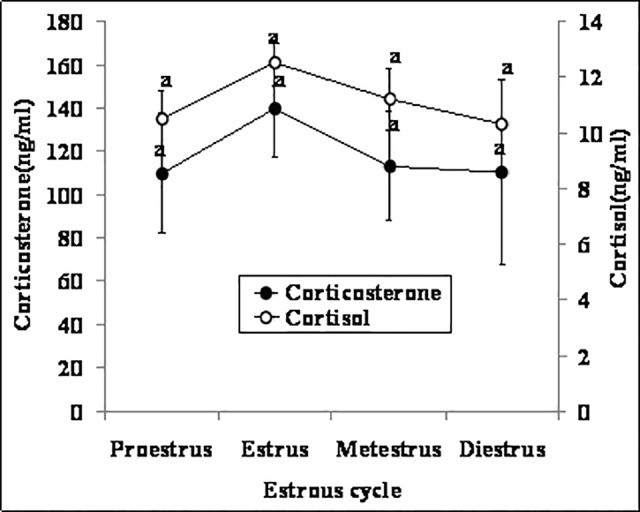
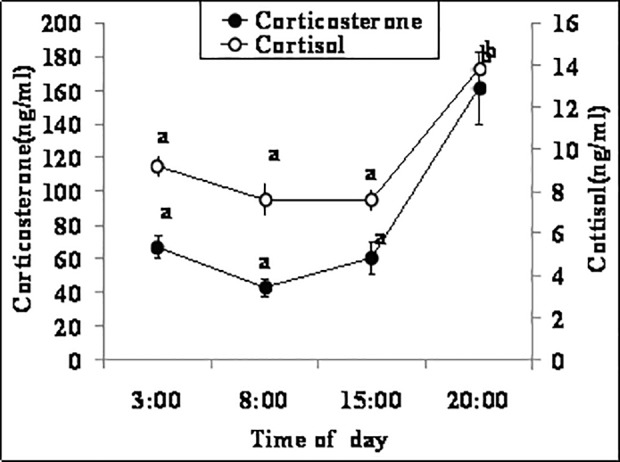
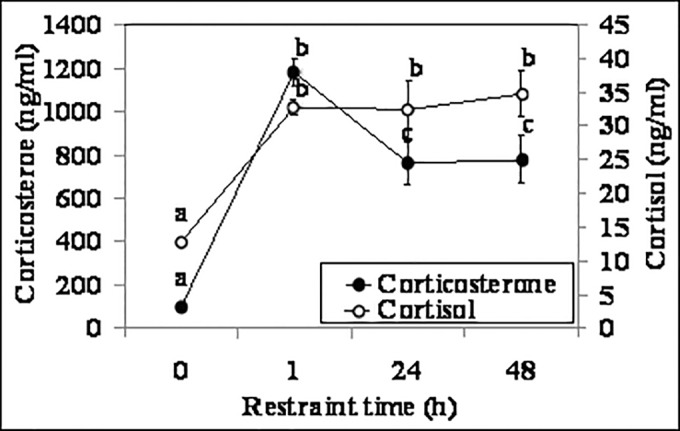
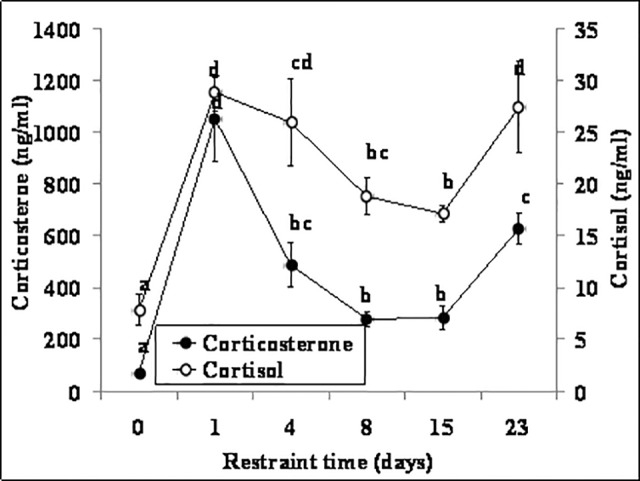
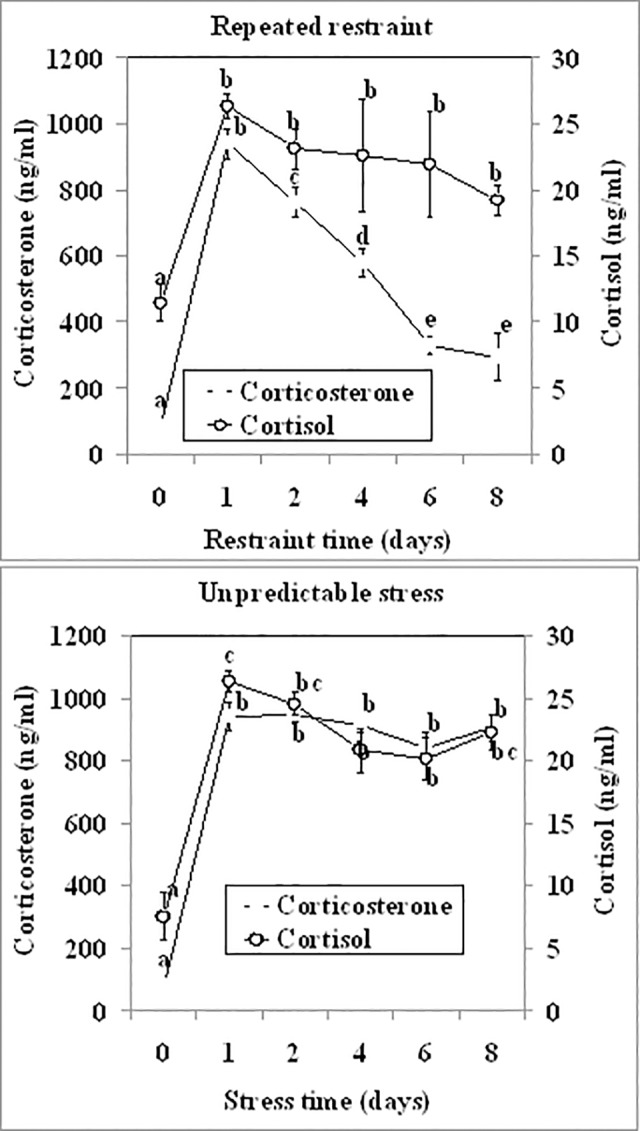
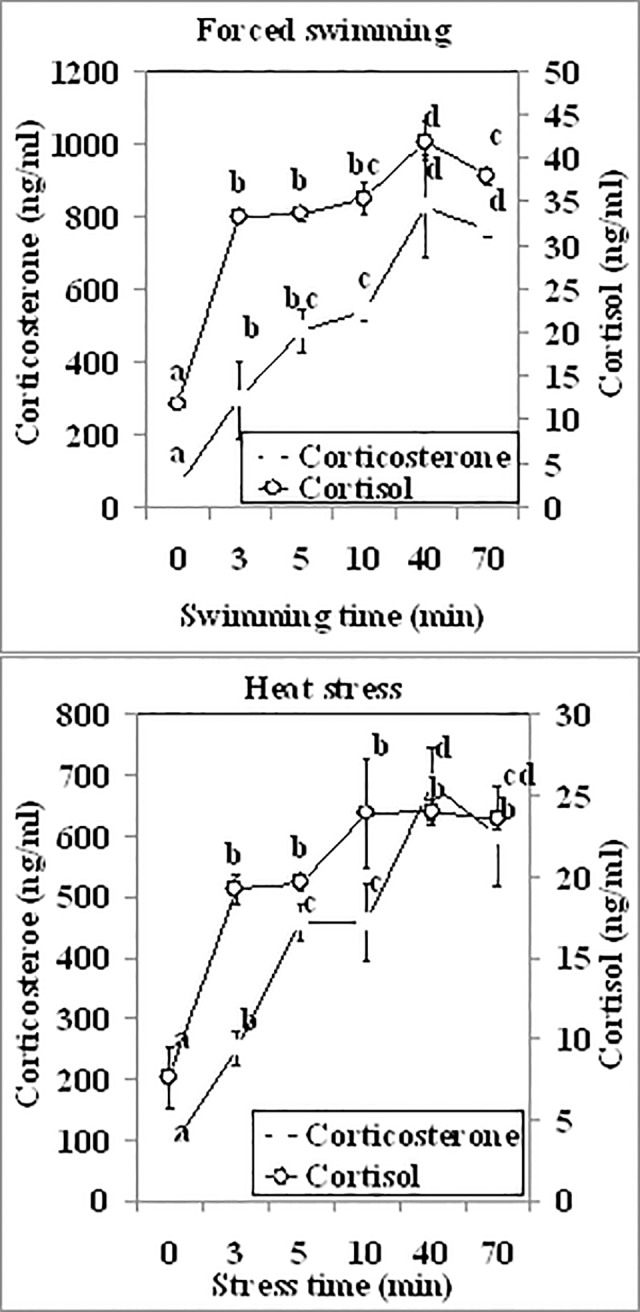
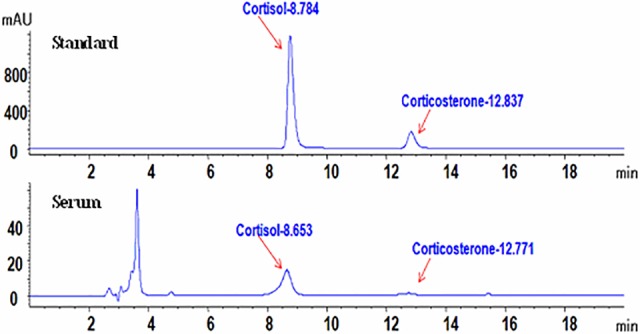
Although plasma corticosterone is considered the main glucocorticoid involved in regulation of stress responses in rodents, the presence of plasma cortisol and whether its level can be used as an indicator for rodent activation of stress remain to be determined. In this study, effects of estrous cycle stage, circadian rhythm, and acute and chronic (repeated or unpredictable) stressors of various severities on dynamics and correlation of serum cortisol and corticosterone were examined in mice. A strong (r = 0.6-0.85) correlation between serum cortisol and corticosterone was observed throughout the estrous cycle, all day long, and during acute or repeated restraints, chronic unpredictable stress and acute forced swimming or heat stress. Both hormones increased to the highest level on day 1 of repeated-restraint or unpredictable stresses, but after that, whereas the concentration of cortisol did not change, that of corticosterone showed different dynamics. Thus, whereas corticosterone declined dramatically during repeated restraints, it remained at the high level during unpredictable stress. During forced swimming or heat stress, whereas cortisol increased to the highest level within 3 min., corticosterone did not reach maximum until 40 min. of stress. Analysis with HPLC and HPLC-MS further confirmed the presence of cortisol in mouse serum. Taken together, results (i) confirmed the presence of cortisol in mouse serum and (ii) suggested that mouse serum cortisol and corticosterone are closely correlated in dynamics under different physiological or stressful conditions, but, whereas corticosterone was a more adaptation-related biomarker than cortisol during chronic stress, cortisol was a quicker responder than corticosterone during severe acute stress.
Overview
The claims and statistics of this paper haven’t been checked yet.
Free: it reads the open-access text and checks the first 5 claims that cite a source we can check. Create a free account to check every claim.
Integrity signals
Registry
Cites
Statistics
Figures
Verification
Claims the paper makes
The claims and statistics of this paper haven’t been checked yet.
Free: it reads the open-access text and checks the first 5 claims that cite a source we can check. Create a free account to check every claim.
Claims other papers make about this one
Each is checked against this paper’s own text: does it say what the citing paper says it does?
The cited source says what the claim attributes to it.
In the citing paper
“Both hormones peaked on day 1 of repeated or unpredictable stress, but the dynamics differed afterward. The corticosterone declined during repeated restraints but remained high during unpredictable stress.”
From The Role of Cortisol in Chronic Stress, Neurodegenerative Diseases, and Psychological Disorders (2023) · cites this paper as [30]
The cited source says what the claim attributes to it.
In the citing paper
“During forced swimming or heat stress, cortisol peaked within 3 min, while corticosterone peaked after 40 min.”
From The Role of Cortisol in Chronic Stress, Neurodegenerative Diseases, and Psychological Disorders (2023) · cites this paper as [30]
The cited source says what the claim attributes to it.
In the citing paper
“The research found a strong correlation (r = 0.6–0.85) between serum cortisol and corticosterone across both conditions or predictable and unpredictable stress.”
From The Role of Cortisol in Chronic Stress, Neurodegenerative Diseases, and Psychological Disorders (2023) · cites this paper as [30]
The cited source says what the claim attributes to it.
In the citing paper
“The results conclude that corticosterone is a more adaptation-related biomarker during chronic stress, while cortisol responds more quickly during severe acute stress.”
From The Role of Cortisol in Chronic Stress, Neurodegenerative Diseases, and Psychological Disorders (2023) · cites this paper as [30]
Self-check
Percentages, sums and reported differences re-computed from the paper’s own numbers.
The self-check needs the paper’s full text.
Citations
Cites
1 retracted
Ovejero, R., Novillo, A., Soto-Gamboa, M. R., MOSCA-TORRES, M. E., Cuello, P. A., Gregorio, P. F., Jahn, G. A., & Carmanchahi, P. (2013) · Journal of Experimental Zoology Part A Ecological Genetics and Physiology · doi:10.1002/jez.1833 · Cited by 12 · cited 2×
“Furthermore, in wild species, both cortisol and corticosterone are formed in a species-specific extent and may vary in ratio according to the demands [20,21].”
BackgroundRetractedGlucocorticoids and the circadian clock
Dickmeis, T. (2009) · Journal of Endocrinology · doi:10.1677/joe-08-0415 · Cited by 494 · cited 1×
“One striking feature of the regulation of glucocorticoids is a diurnal release pattern, with peak levels linked to the start of the daily activity phase [40].”
BackgroundAtkinson, H. C., & Waddell, B. J. (1997) · Endocrinology · doi:10.1210/endo.138.9.5395 · Cited by 438 · cited 1×
“plasma corticosterone was evident in male and female rats, with the average peak time ranging from 21 min before to 70 min after lights off [42].”
BackgroundThe influence of ovarian steroids on hypothalamic-pituitary-adrenal regulation in the female rat
Carey, M. P., Deterd, C. H., de Koning, J., Helmerhorst, F., & de Kloet, E. R. (1995) · Journal of Endocrinology · doi:10.1677/joe.0.1440311 · Cited by 385 · cited 1×
“Both in vivo [37,38] and in vitro studies [39] showed that estradiol enhanced the production of corticosterone by adrenal glands in rats.”
BackgroundRestraint stress in biomedical research: A review
Paré, W. P., & Glavin, G. B. (1986) · Neuroscience & Biobehavioral Reviews · doi:10.1016/0149-7634(86)90017-5 · Cited by 376 · cited 1×
“Restraint of small animals is an experimental procedure developed for studying psychogenic stress [24,25].”
BackgroundRestraint stress in biomedical research: An update
Glavin, G. B., Paré, W. P., Sandbak, T., Bakke, H.-K., & Murison, R. (1994) · Neuroscience & Biobehavioral Reviews · doi:10.1016/0149-7634(94)90027-2 · Cited by 304 · cited 1×
“Restraint of small animals is an experimental procedure developed for studying psychogenic stress [24,25].”
BackgroundDetermining the Stage of the Estrous Cycle in the Mouse by the Appearance of the Vagina
Champlin, A. K., Dorr, D. L., & Gates, A. H. (1973) · Biology of Reproduction · doi:10.1093/biolreprod/8.4.491 · Cited by 298 · cited 1×
“The stage of the estrous cycle in female mice was determined by observing vaginal appearance [22] between 19:30 and 20:00 pm on each experimental day.”
MethodFear of novelty in infant rats predicts adult corticosterone dynamics and an early death
Cavigelli, S. A., & McClintock, M. K. (2003) · Proceedings of the National Academy of Sciences · doi:10.1073/pnas.2535721100 · Cited by 226 · cited 1×
“Furthermore, Cavigelli and McClintock [31] found that serum corticosterone in rats exposed to a 5-min exploration-arena test or to a 30-min restraint did not reach the highest level until 40 min after the end of the treatment.”
BackgroundCortisol and corticosterone independence in cortisol-dominant wildlife
Koren, L., Whiteside, D. P., Fahlman, Å., Ruckstuhl, K. E., Kutz, S. J., Checkley, S., Dumond, M., & Wynne‐Edwards, K. E. (2012) · General and Comparative Endocrinology · doi:10.1016/j.ygcen.2012.02.020 · Cited by 141 · cited 1×
“Furthermore, in wild species, both cortisol and corticosterone are formed in a species-specific extent and may vary in ratio according to the demands [20,21].”
BackgroundAtkinson, H. C., Wood, S. A., Kershaw, Y. M., Bate, E., & Lightman, S. L. (2006) · Journal of Neuroendocrinology · doi:10.1111/j.1365-2826.2006.01444.x · Cited by 97 · cited 1×
“In rodents, for example, there are no endogenous corticosterone pulses during the early light phase but hourly pulses of corticosterone secretion are observed during the early dark phase [41].”
Background
Research works printed but not linked: 4
- Fazekas IG, Fazekas AT (1966) Papierchromatographischer Nachweis der Corticosteroidfunktion in Kaninchenorganen und -geweben. Endokrinologie 50: 130– 138. 5998873
- Snell GD (1941) Reproduction. In: Snell GD (ed.), Biology of the Laboratory Mouse. New York: Blakiston; 53– 58.
- Champlin AK (1969) Ph.D. Thesis, University of Rochester, Rochester, N.Y.
- Hafez ESE (1993) Reproductive cycles. In: Hafez ESE, editor. Reproduction in Farm Animals. Lea & Febiger pp. 94– 113.
Cited by
Items 401–480 of 480
11β-hydroxysteroid dehydrogenase type I inhibition in solid tumours
Davidson, C. (2018) · ERA
Examination of Time-of-Day Differences in Fear-Related Memory Behavior in Male and Female Rats
Brennan, N. J. (2019) · CU Scholar (University of Colorado Boulder)
Park, J. H., Lim, I. H., & Lee, S. (2020) · Korean Journal of Stress Research · doi:10.17547/kjsr.2020.28.4.285
“2), 다른 연구에서 보고되었던 일과적 스트레스 노출에 의한 현상과는 차이가 있었다(Gong et al., 2015).”
Shime, H., Odanaka, M., Tsuiji, M., Matoba, T., Imai, M., Yasumizu, Y., Uraki, R., Minohara, K., Watanabe, M., Bonito, A. J., et al. (2021) · Proceedings of the National Academy of Sciences · doi:10.1073/pnas.2021919118
Тіткова, А. М., Берченко, О. Г., Veselovska, O. V., & Shliakhova, A. V. (2020) · Regulatory Mechanisms in Biosystems · doi:10.15421/022084
“Although corticosterone is the predominant glucocorticoid hormone in rats, cortisol is also synthesized and released in the blood and brain structures, and the sensitivity of mineralocorticoid and glucocorticoid receptors has similar parameters for both neurosteroids (Carroll & Heath, 1975; Chapman еt аl., 2013; Gong…”
BackgroundMale and female rats differ in homeostatic shifts during pre-slaughter fear stress
Grabovskyi, S. S., Panchuk, R. R., Skorokhyd, N. R., & Stoika, R. S. (2021) · The Ukrainian Biochemical Journal · doi:10.15407/ubj93.01.068
“Cortisol is a biomarker for stress and depressive disorders [18].”
BackgroundStocke, K. S. (2019) · ThinkIR: The University of Louisville's Institutional Repository (University of Louisville) · doi:10.18297/etd/3308
Woodman, J. L. (2021) · The Atrium (University of Guelph)
Ashokan, A., Hegde, A., & Mitra, R. (2021) · Psychoneuroendocrinology · doi:10.1016/j.psyneuen.2021.105370
Stress Evaluation of Various Breeding Environments in MousePreprint
Lee, G., Choi, H.-Y., Jo, W., & Kim, K. (2021) · bioRxiv (Cold Spring Harbor Laboratory) · doi:10.1101/2021.08.27.457934
Shvets, V. A., & Гасюк, О. М. (2021) · Bulletin Of Medical And Biological Research · doi:10.11603/bmbr.2706-6290.2021.2.11942
Vitamin D levels do not cause vitamin-drug interactions with dexamethasone or dasatinib in mice
Annu, K., Yasuda, K., Caufield, W. V., Freeman, B. B., & Schuetz, E. G. (2021) · PLoS ONE · doi:10.1371/journal.pone.0258579
Hypoxia-induced muscle atrophy: regulation of muscle protein turnover
Theye, C. C. D. (2016) · Research Publications (Maastricht University) · doi:10.26481/dis.20160122cd
Schroeder, R. E., Stevens, H. E., Pieper, A. A., Weiner, J. A., Williams, A. J., & Taylor, E. B. (2021) · doi:10.17077/etd.005842
Li, Y., Wang, W., & Liu, J. (2023) · bioRxiv (Cold Spring Harbor Laboratory) · doi:10.1101/2023.05.12.540547
“adding diluted biotinylated anti-immunoglobulin G (IgG), incubating, washing, HRP and measuring OD[14].”
MethodEffect of chronic physiological stress on rat oocyte reserve: Role of IGF-1, AMH and Bcl-2
ERÇETİN, D., Sapmaz‐Metin, M., & Topuz, R. D. (2023) · Indian Journal of Experimental Biology · doi:10.56042/ijeb.v61i06.1929
Gonçalez, J. L. (2023) · Digital Library of Theses and Dissertations (Universidade de São Paulo) · doi:10.11606/d.17.2023.tde-10082023-110451
Hypothalamic CRH Neurons Modulate Sevoflurane Anesthesia and The Post-anesthesia Stress ResponsesPreprint
Jiang, S., Chen, L., Qu, W., Huang, Z., & Chen, C. (2023) · eLife · doi:10.7554/elife.90191.1
Stratégies d'adaptation de la souris face à un environnement volatil
Euvrard, M. (2021) · theses.fr (ABES) · doi:10.70675/ac39df15zc07dz4632zb62az45e0663baf2a · Cited by 2
Time-dependent dual mode of action of COX-2 inhibition on mouse serum corticosterone levels
Pańczyszyn-Trzewik, P., Sowa-Kućma, M., Misztak, P., Tabęcka-Łonczyńska, A., & Stachowicz, K. (2024) · Steroids · doi:10.1016/j.steroids.2024.109438 · Cited by 1
A Social Stimulation Paradigm to Ameliorate Memory Deficit in Alzheimer's Disease
Ren, Q., Wang, S., Xie, W., & Liu, A. (2024) · BIO-PROTOCOL · doi:10.21769/bioprotoc.5046
Jiang, S., Chen, L., Qu, W., Huang, Z., & Chen, C. (2024) · eLife · doi:10.7554/elife.90191.3.sa0
Hypothalamic CRH Neurons Modulate Sevoflurane Anesthesia and The Post-anesthesia Stress ResponsesPreprint
Jiang, S., Chen, L., Qu, W., Huang, Z., & Chen, C. (2024) · eLife · doi:10.7554/elife.90191.3
Babalola, E., Gabriel, E. J., Enyojo, E. R., & Aminat, E. O. (2025) · Research Square · doi:10.21203/rs.3.rs-6874801/v1
Perhoč, A. B., Kovač, D., Homolak, J., Virag, D., Knezović, A., Šalković‐Petrišić, M., & Barilar, J. O. (2025) · Journal of Neural Transmission · doi:10.1007/s00702-025-02969-1
“The hypothalamic–pituitary–adrenal axis controls the secretion of corticosterone, the primary glucocorticoid in charge of rodent stress responses (Gong et al. 2015) and is often used as a proxy for chronic and acute stress Fig.”
Kendricks, D. R., Sleiman, S. J., Fry, S. A., Stallone, J., Bernstein, B. J., Stevanovic, K. D., Wilson, L. R., Alexander, G. M., McCann, K. E., Dudek, S. M., et al. (2025) · Hormones and Behavior · doi:10.1016/j.yhbeh.2025.105794
Kaur, M., Sharma, A., John, P. J., & Bhatnagar, P. (2025) · Springer proceedings in earth and environmental sciences · doi:10.1007/978-3-031-93444-5_19
Borthiry, F. L. D. L. C., Beltrame, J. S., Cañumil, V. A., Scheffer, F., Bogetti, M. E., Cella, M., Vermeulen, M., Giménez, L. G., Malbrán, M. N., Repetto, E. M., et al. (2025) · Placenta · doi:10.1016/j.placenta.2025.10.003
Erlina, I., Arief, I. I., Budiman, C., Sena, A., & Fujiyama, K. (2025) · Research Square · doi:10.21203/rs.3.rs-7681425/v1
Facial Vein Venipuncture for Murine Blood Collection
Kalinowski, S., & Jakubzick, C. (2025) · Journal of Visualized Experiments · doi:10.3791/68776
Kim, J., & Hwang, S. (2025) · Neurochemical Journal · doi:10.1134/s1819712425700552
Validierung einer Methode der intraventrikulären Kanülierung zur Liquorabnahme in der Maus
Nadig, J. (2024) · Gutenberg Open Science · doi:10.25358/openscience-10485
Lee, K. M. (2017) · eScholarship (California Digital Library)
Efeito do Enriquecimento Ambiental a nível cognitivo em Murganhos “Mus Musculus”
Nogueira, D. J. A. (2024) · Repositório Comum (Repositório Científico de Acesso Aberto de Portugal)
Pinto-Santini, L. (2023) · LA Referencia (Red Federada de Repositorios Institucionales de Publicaciones Científicas)
Meesmann, A., Sager, H., & München, T. U. (2022) · mediaTUM (Technical University of Munich)
Electrifying extinction: how transcranial direct current stimulation sparks fear reduction in mice
Schuerbeek, A. V. (2023) · VUBIR (Vrije Universiteit Brussel)
Mechanisms of Selective Vulnerability in Alzheimer’s Disease and Stress Disorders
Ehrenberg, A. J. (2024) · eScholarship (California Digital Library)
DAILY FEEDING PROCEDURE MODULATES IMPULSIVE CHOICE IN RODENT MODELS OF DECISION-MAKING
Tapp, D. N. (2018) · OhioLink ETD Center (Ohio Library and Information Network)
環境エンリッチメントが卵巣摘出マウスのエネルギー代謝に与える影響
鞠, 超. (2025) · Institutional Repositories DataBase (IRDB)
Kobayashi, K. (2026) · Journal of Psychology and Neuroscience · doi:10.47485/2693-2490.1143
Cell-free mitochondrial DNA as a potential predictor for hypoxic stress
Qu, Q., Xiao, C., Liu, X., Huang, A., Li, H., Xu, G., Shao, N., Zhao, Y., & Gao, B. (2026) · Molecular Biology Reports · doi:10.1007/s11033-025-11396-0
“The exosomes were lysed with RIPA lysis buffer, and the expressions of exosome - biomarker proteins CD63 and TSG101 in the extracts were detected by Western blot.”
Self-citationÇelik, A., Şahin, N., Orhan, C., Er, B., Erten, F., Ozmen, B., Tuzcu, M., Ozercan, I., & Şahin, K. (2026) · Journal of Physiology and Biochemistry · doi:10.1007/s13105-026-01153-7
“Chronic stress has been shown to significantly increase serum corticosterone and ACTH levels, likely due to hyper - activation of the hypothalamic-pituitary-adrenal axis as part of the physiological stress response [51].”
Gonchar, D. I., Shmigol, T. A., Lyakhmun, D. N., Soloveva, A., Yankovskaya, S. K., Krendeleva, O. V., Vizgalina, V. D., Efimova, E. V., Ezdoglian, A. A., Kiseleva, N. M., et al. (2026) · Biomedicines · doi:10.3390/biomedicines14020356
Intensity and exposure proximity as determinants of differential stress-related health outcomes
Lebow, M., Rotkopf, R., Malik, E., Amitai, M., Weizman, A., Krieger, O., Geyshin, A., Israel, A., Merzon, E., Magen, E., et al. (2026) · Molecular Psychiatry · doi:10.1038/s41380-026-03515-5
“Repeated exposure to stressors of the same intensity may lead to habituation of behavioral and neuroendocrine responses [16], but unpredictable stressors sustain high corticosterone levels days after exposure, while intensity height-ens corticosterone responses [17].”
Bludau, A., Kabas, M., Menon, R., & Neumann, I. D. (2026) · Journal of Neuroendocrinology · doi:10.1111/jne.70153
“44,45 The adolescent rodent is suggested to be more susceptible to stressors aresulting ito high glucocorticoid levels compared to the adult brain, which ultimately leads to short-and long-term behavioral alterations, such as anxiety-related behavior, exploratory behavior, and avoidance learning.”
Gao, L., Rao, Y., Gao, H., Li, J., Huang, J., & Wang, W. (2026) · Future Integrative Medicine · doi:10.14218/fim.2025.00047
Belhaj, M. R., Broadhurst, D., Dignan, T., Whitfield, J., Murray-Segal, L. J., Ling, N. X. Y., Oakhill, J. S., Kemp, B. E., Hawley, J. A., Reinke, S. N., et al. (2026) · Metabolites · doi:10.3390/metabo16030205
Etomidate Relieves Oxaliplatin‐Induced Neuropathic Pain by Regulating AMPK/Nrf2/HO‐1 Axis
Chen, K., Lin, Y., Han, X., Zhao, L., Wang, J., & Li, Y. (2026) · Journal of Biochemical and Molecular Toxicology · doi:10.1002/jbt.70823
Personality, life history and metabolism in the Bush Karoo rat (Otomys unisulcatus)
Qiu, J. (2024) · theses.fr (ABES) · doi:10.70675/9728fd81z2dccz49e9z92f8zf2ab08f1c399
Flanagan, M. M., Luhring, T. M., & Gabor, C. R. (2026) · Conservation · doi:10.3390/conservation6020047
“In mice, corticosterone functions as the primary glucocorticoid involved in longer-term stress adaptation, whereas cortisol acts as a faster responder to severe acute stressors [48].”
Solano, J. L., Daigle, B., Lebel, M., Peña, C. J., & Ménard, C. (2026) · bioRxiv (Cold Spring Harbor Laboratory) · doi:10.64898/2026.04.16.718991
“Consistent with a GC-dependent mechanism, our results suggest that group/environmental enrichment after ELS increased in sociability co-occurred with CORT desensitization and transcriptional changes of GC genes ( Fkbp5 , Nr3c1 , Nr3c2 , Crhbp and Crhr1 ).”
InfluentialJuszczak, G. R. (2026) · The FASEB Journal · doi:10.1096/fj.202504113r · Cited by 1
“Additionally, the mineralocorticoid activity of cortisol is diminished in some tissues (kidney, parotid and colon) by enzymatic transformation to an inactive steroid [24] Corticosterone The primary glucocorticoid hormone in mice [25], rats, and rabbits [20].”
Hornsby, A. K. E., Powell, O., Guschina, I. A., Williams, T. J., Lines, K., Roberts, L. D., Davies, J. S., & Wells, T. (2026) · Frontiers in Nutrition · doi:10.3389/fnut.2026.1735869
“It is important to note that the measured corticosterone values in both AL-fed and 5:2-fed mice (70-110 ng/mL) fall within the normal circadian range for mice (50-160 ng/mL) and were an order of magnitude lower than that seen following restraint stress (800-1200 ng/mL) (58).”
Dindar, O., Aydın, M. A., Taştekin, E., Palabıyık, O., Korkmaz, S., & Vardar, S. A. (2026) · Marmara medical journal · doi:10.5472/marumj.1954066
Lac-Phe elicits anxiolytic-like effects associated with monoaminergic signaling in mice
Suzuki, S., Chiba, K., Kanzaki, H., Takahashi, H., Yamazaki, Y., Takahashi, N., Naoi, M., Kise, R., Inoue, A., Tsuzuki, K., et al. (2026) · Translational Psychiatry · doi:10.1038/s41398-026-04106-2
“Corticosterone is a well-established stress hormone, and elevated levels are closely associated with anxiety-and depression-related states [29, 30].”
Sleep interruption aggravates sepsis by rewiring the macrophage immune response
Allen, J. A., Ali, T., Rodarte, D., Garcia, L., Murray, M. E., Morgan, M., Ugochukwu, C. G., Patel, A., Ligon, S., Dwivedi, A. K., et al. (2026) · The Journal of Immunology · doi:10.1093/jimmun/vkag130
Vásquez, M. R. S., Alvarado-García, P. A. A., Jara-Aguilar, R., Gavídia-Valencia, J. G., Ruiz-Reyes, S. G., & Penadillos, R. A. R. (2026) · Molecules · doi:10.3390/molecules31132378
“The 90-min time point was selected to capture an acute posttreatment endocrine–immune window while avoiding direct contamination by behavioral test-induced stress responses [57,69].”
Jaswal, P., Chaudhary, R., Basu, J., Bag, S., Gupta, S., & Bansal, S. (2026) · Journal of Pharmacology and Pharmacotherapeutics · doi:10.1177/0976500x261462646
Malinowska, B., Sęk, O., Słocińska, M., & Rychlik, L. (2026) · Comparative Biochemistry and Physiology Part A Molecular & Integrative Physiology · doi:10.1016/j.cbpa.2026.112056
Guzzoni, V., Ferreira, F. G., de Souza, L. B., Salomão, R., Kesler, N. J., Yokota, R., Damaceno‐Rodrigues, N. R., Caldini, E. T. E. G., Marcondes, F. K., Marqueti, R. D. C., et al. (2026) · Journal of Cellular and Molecular Medicine · doi:10.1111/jcmm.71218
“Notably, corticosterone, a key hormone regulating the stress response in rodents [46], was significantly elevated in NTS rats compared to NT and T rats (Figure 3A).”
Soto, M. D. C., Wang, C., Kang, E., Martinez, S., Toller, J. M., Vasquez, H. E., Herrera, S. V., & Alviña, K. (2026) · Physiology & Behavior · doi:10.1016/j.physbeh.2026.115485
Adipocyte-specific MC2R overexpression exerts minimal metabolic effects in mice
Lim, S., Evallo, E., Kim, D., & Park, M.-J. (2026) · Laboratory Animal Research · doi:10.1186/s42826-026-00296-4
“…the exogenous administration of ACTH, ACTH fragment 1–24 (#A0298, Sigma-Aldrich) was injected intraperitoneally at 09:00 AM, considering the circadian pattern of circulating corticosterone levels in mice [27], at a dose of 57 ng per mouse per injection, following a previously described method [28].”
Huang, Y., Liu, X., Fan, G., Gong, G., & Lee, S. M. (2026) · British Journal of Pharmacology · doi:10.1111/bph.70662
Nolasco-Pérez, T. D. J., Cervantes-Candelas, L. A., Salazar-Castañón, V. H., Buendía-González, F. O., Chavira‐Ramírez, D. R., & Legorreta‐Herrera, M. (2026) · International Journal of Molecular Sciences · doi:10.3390/ijms27198649
“It is likely that the physiological stress induced by infection led to an increase in the production of glucocorticoids such as cortisol and corticosterone [28].”
Nhu, H., Đuc, N. K., Hung, T. M., Nguyen, T. D., Do, H.-H., Tuong, L.-T., Nguyen, C. V., Udomluck, N., Nguyen, P. T., Khuu, H. M., et al. (2026) · International Journal of Molecular Sciences · doi:10.3390/ijms27198731
“Although corticosterone is the predominant glucocorticoid in rodents, cortisol has also been measured in rodent studies and has been reported to change under stress-related conditions [58–60].”
Hendrawan, V. F., Oktanella, Y., Firmawati, A., Agustina, G., Lisnanti, E. F., & Widjiati, W. (2026) · Open Veterinary Journal · doi:10.5455/ovj.2026.v16.i9.56
Halder, D. S., Sarkar, M., Dey, S., Ghosh, P., Bhunia, S. K., Bandyopadhyay, D., & Giri, B. (2022) · International Journal of Life Science and Pharma Research
Cong, C., Wang, J., Zhou, Y., Bian, X., Fu, F., Luo, M., & Gong, S. (2026) · Animals · doi:10.3390/ani16213403
Self-citationGlucocorticoids Across Life Stages in Northern Glassfrogs (Hyalinobatrachium fleischmanni)
Terrill-Sondag, E., Stevenson, A., Surber-Cunningham, L. L., Westrick, S. E., & Fischer, E. K. (2026) · Journal of Herpetology · doi:10.1670/2875963
Metadata
- Authors
- Gong, S., Miao, Y.-L., Jiao, G.-Z., Sun, M.-J., Li, H., Lin, J., Luo, M.-J., & Tan, J.-H.
- Affiliations
- Shandong Agricultural University (CN)
- Corresponding author
- Tan, Jing-He
- Venue
- PLOS ONE
- Publisher
- Public Library of Science (PLoS)
- Published
- 2015-02-20
- Volume
- 10
- Issue
- 2
- Pages
- e0117503
- ISSN
- 1932-6203 (ISSN-L)
- PMC
- PMC4336318
- OpenAlex
- W1963903389
- Semantic Scholar
- 69f1a822982494a749ed49a0132bfd6f4ed2bd58
- Cited by
- 460
- References
- 41
- Citations by year
- 2026: 32 · 2025: 53 · 2024: 53 · 2023: 52 · 2022: 41 · 2021: 56 · 2020: 45 · 2019: 50 · 2018: 27 · 2017: 25 · 2016: 24 · 2015: 2
- FWCI
- 13.41
- Type
- journal article
- Language
- en
- Open access
- gold
- doi.org
- Licence
- Locations
- PLoS ONE (publishedVersion, cc-by)
- Europe PMC (PubMed Central) (publishedVersion, cc-by)
- PubMed Central (publishedVersion, cc-by)
- PubMed (publishedVersion)
- DOAJ (DOAJ: Directory of Open Access Journals) (submittedVersion, cc-by-sa)
- Funders
- National Key Research and Development Program of China (2014CB138503, 2012CB944403)
- Topics
- Life Sciences › Neuroscience › Behavioral Neuroscience › Stress Responses and Cortisol
- Health Sciences › Medicine › Endocrinology, Diabetes and Metabolism › Adrenal Hormones and Disorders
- Life Sciences › Agricultural and Biological Sciences › Animal Science and Zoology › Animal Behavior and Welfare Studies
- Keywords
- serum cortisol, corticosterone, glucocorticoids, stress response, estrous cycle, circadian rhythm, restraint stress, chronic unpredictable mild stress, forced swim test, heat stress, acute stress, chronic stress, stress biomarkers, mice
- MeSH terms
- Animals, Chromatography, High Pressure Liquid, Circadian Rhythm, Corticosterone, Female, Hot Temperature, Hydrocortisone, Male, Restraint, Physical, Stress, Physiological, Swimming, Spectrometry, Mass, Electrospray Ionization, Mice
About these checks
Registry, retraction, Cites and statistics results are computed, not judged, with one exception: a printed reference that no index lists is read once by a model before it counts as a citation error. Claims are extracted by a model and kept only when their quote appears verbatim in the text; each cited source is then checked, with a model’s help, for whether it says what the claim relies on. Those verdicts can be wrong — read the claim’s quote and the cited source before relying on one.
Statistics and arithmetic are recomputed, not judged.
Confidence bands are shown only for fields calibrated on our annotated test set. None is calibrated yet, so no band is shown.
What counts as a claim ›How we measure confidence ›How we check this ›
Are you an author, or do you see a problem with this page? Request a review
Data sources
Bibliographic data: Semantic Scholar, OpenAlex, Crossref.
Contains information from the Semantic Scholar Academic Graph Datasets, made available under the ODC Attribution License (ODC-BY 1.0).
Semantic Scholar’s data is described in: Kinney, R., et al. (2023). The Semantic Scholar Open Data Platform. arXiv:2301.10140.
