

Dynamics and Correlation of Serum Cortisol and Corticosterone under Different Physiological or Stressful Conditions in Mice
Open accessThe DOI matches its Crossref record; 40 of the 41 references it cites were found in a registry or an index.
Abstract
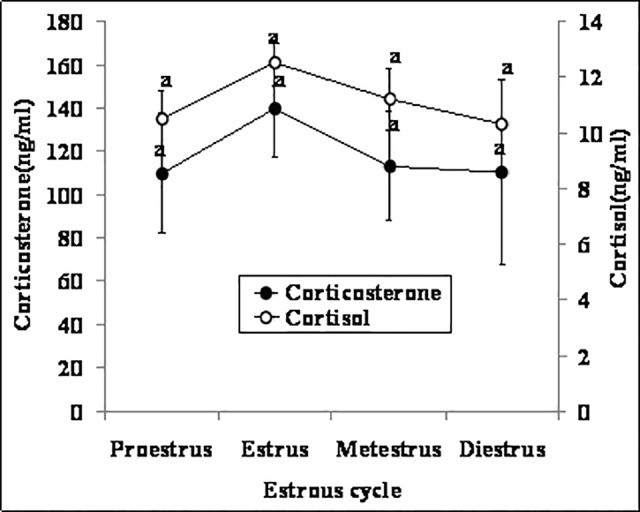
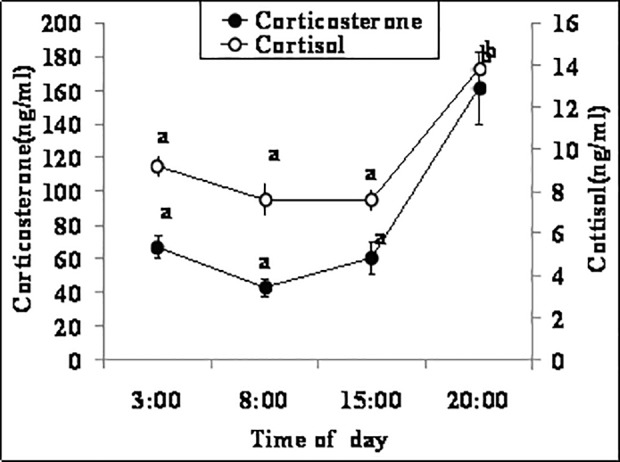
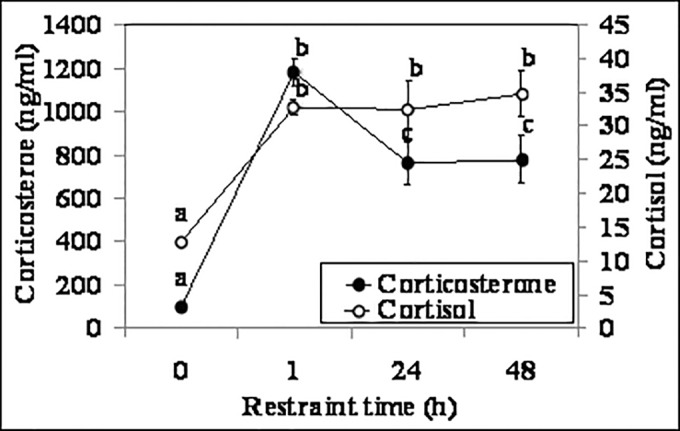
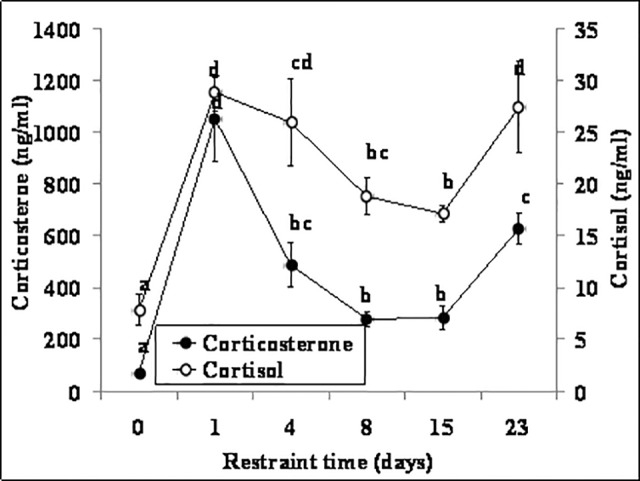
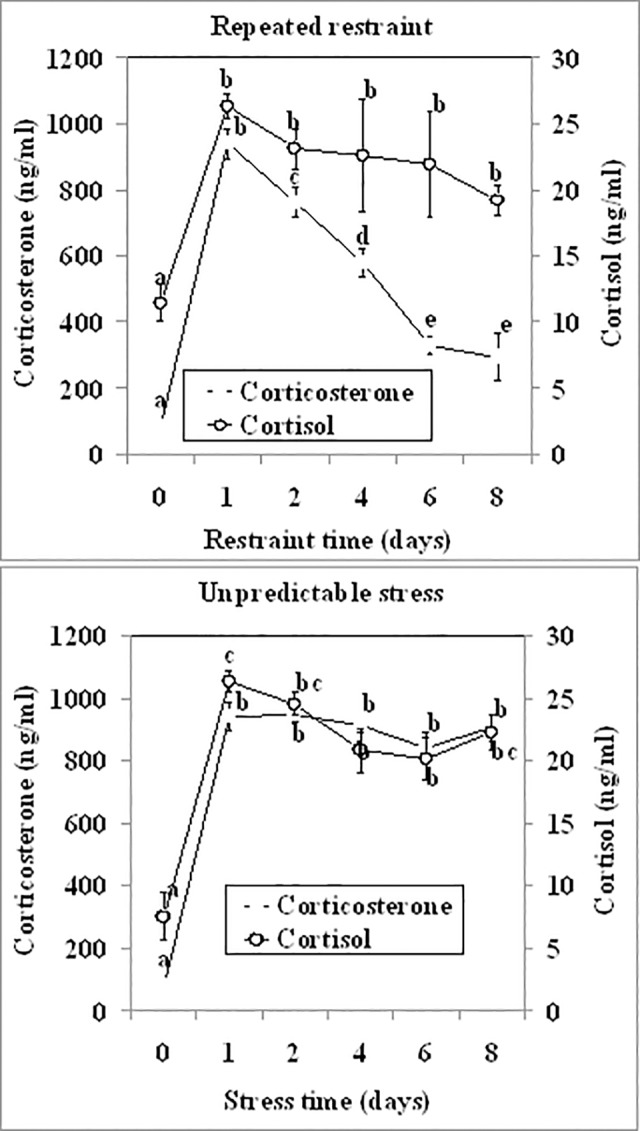
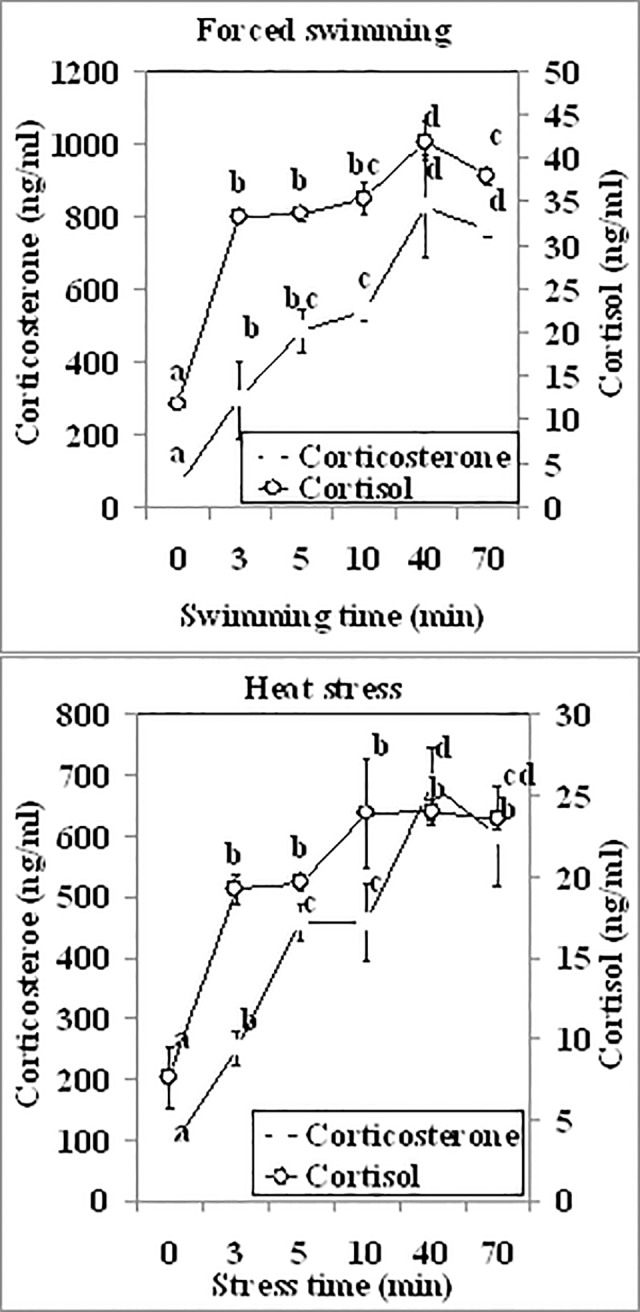
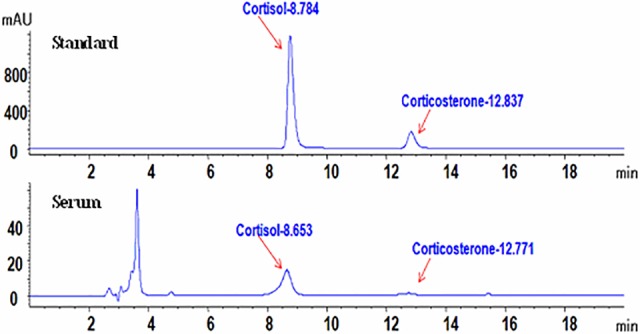
Although plasma corticosterone is considered the main glucocorticoid involved in regulation of stress responses in rodents, the presence of plasma cortisol and whether its level can be used as an indicator for rodent activation of stress remain to be determined. In this study, effects of estrous cycle stage, circadian rhythm, and acute and chronic (repeated or unpredictable) stressors of various severities on dynamics and correlation of serum cortisol and corticosterone were examined in mice. A strong (r = 0.6-0.85) correlation between serum cortisol and corticosterone was observed throughout the estrous cycle, all day long, and during acute or repeated restraints, chronic unpredictable stress and acute forced swimming or heat stress. Both hormones increased to the highest level on day 1 of repeated-restraint or unpredictable stresses, but after that, whereas the concentration of cortisol did not change, that of corticosterone showed different dynamics. Thus, whereas corticosterone declined dramatically during repeated restraints, it remained at the high level during unpredictable stress. During forced swimming or heat stress, whereas cortisol increased to the highest level within 3 min., corticosterone did not reach maximum until 40 min. of stress. Analysis with HPLC and HPLC-MS further confirmed the presence of cortisol in mouse serum. Taken together, results (i) confirmed the presence of cortisol in mouse serum and (ii) suggested that mouse serum cortisol and corticosterone are closely correlated in dynamics under different physiological or stressful conditions, but, whereas corticosterone was a more adaptation-related biomarker than cortisol during chronic stress, cortisol was a quicker responder than corticosterone during severe acute stress.
Overview
The claims and statistics of this paper haven’t been checked yet.
Free: it reads the open-access text and checks the first 5 claims that cite a source we can check. Create a free account to check every claim.
Integrity signals
Registry
Cites
Statistics
Figures
Verification
Claims the paper makes
The claims and statistics of this paper haven’t been checked yet.
Free: it reads the open-access text and checks the first 5 claims that cite a source we can check. Create a free account to check every claim.
Claims other papers make about this one
Each is checked against this paper’s own text: does it say what the citing paper says it does?
The cited source says what the claim attributes to it.
In the citing paper
“Both hormones peaked on day 1 of repeated or unpredictable stress, but the dynamics differed afterward. The corticosterone declined during repeated restraints but remained high during unpredictable stress.”
From The Role of Cortisol in Chronic Stress, Neurodegenerative Diseases, and Psychological Disorders (2023) · cites this paper as [30]
The cited source says what the claim attributes to it.
In the citing paper
“During forced swimming or heat stress, cortisol peaked within 3 min, while corticosterone peaked after 40 min.”
From The Role of Cortisol in Chronic Stress, Neurodegenerative Diseases, and Psychological Disorders (2023) · cites this paper as [30]
The cited source says what the claim attributes to it.
In the citing paper
“The research found a strong correlation (r = 0.6–0.85) between serum cortisol and corticosterone across both conditions or predictable and unpredictable stress.”
From The Role of Cortisol in Chronic Stress, Neurodegenerative Diseases, and Psychological Disorders (2023) · cites this paper as [30]
The cited source says what the claim attributes to it.
In the citing paper
“The results conclude that corticosterone is a more adaptation-related biomarker during chronic stress, while cortisol responds more quickly during severe acute stress.”
From The Role of Cortisol in Chronic Stress, Neurodegenerative Diseases, and Psychological Disorders (2023) · cites this paper as [30]
Self-check
Percentages, sums and reported differences re-computed from the paper’s own numbers.
The self-check needs the paper’s full text.
Citations
Cites
1 retracted
Ovejero, R., Novillo, A., Soto-Gamboa, M. R., MOSCA-TORRES, M. E., Cuello, P. A., Gregorio, P. F., Jahn, G. A., & Carmanchahi, P. (2013) · Journal of Experimental Zoology Part A Ecological Genetics and Physiology · doi:10.1002/jez.1833 · Cited by 12 · cited 2×
“Furthermore, in wild species, both cortisol and corticosterone are formed in a species-specific extent and may vary in ratio according to the demands [20,21].”
BackgroundRetractedGlucocorticoids and the circadian clock
Dickmeis, T. (2009) · Journal of Endocrinology · doi:10.1677/joe-08-0415 · Cited by 494 · cited 1×
“One striking feature of the regulation of glucocorticoids is a diurnal release pattern, with peak levels linked to the start of the daily activity phase [40].”
BackgroundAtkinson, H. C., & Waddell, B. J. (1997) · Endocrinology · doi:10.1210/endo.138.9.5395 · Cited by 438 · cited 1×
“plasma corticosterone was evident in male and female rats, with the average peak time ranging from 21 min before to 70 min after lights off [42].”
BackgroundThe influence of ovarian steroids on hypothalamic-pituitary-adrenal regulation in the female rat
Carey, M. P., Deterd, C. H., de Koning, J., Helmerhorst, F., & de Kloet, E. R. (1995) · Journal of Endocrinology · doi:10.1677/joe.0.1440311 · Cited by 385 · cited 1×
“Both in vivo [37,38] and in vitro studies [39] showed that estradiol enhanced the production of corticosterone by adrenal glands in rats.”
BackgroundRestraint stress in biomedical research: A review
Paré, W. P., & Glavin, G. B. (1986) · Neuroscience & Biobehavioral Reviews · doi:10.1016/0149-7634(86)90017-5 · Cited by 376 · cited 1×
“Restraint of small animals is an experimental procedure developed for studying psychogenic stress [24,25].”
BackgroundRestraint stress in biomedical research: An update
Glavin, G. B., Paré, W. P., Sandbak, T., Bakke, H.-K., & Murison, R. (1994) · Neuroscience & Biobehavioral Reviews · doi:10.1016/0149-7634(94)90027-2 · Cited by 304 · cited 1×
“Restraint of small animals is an experimental procedure developed for studying psychogenic stress [24,25].”
BackgroundDetermining the Stage of the Estrous Cycle in the Mouse by the Appearance of the Vagina
Champlin, A. K., Dorr, D. L., & Gates, A. H. (1973) · Biology of Reproduction · doi:10.1093/biolreprod/8.4.491 · Cited by 298 · cited 1×
“The stage of the estrous cycle in female mice was determined by observing vaginal appearance [22] between 19:30 and 20:00 pm on each experimental day.”
MethodFear of novelty in infant rats predicts adult corticosterone dynamics and an early death
Cavigelli, S. A., & McClintock, M. K. (2003) · Proceedings of the National Academy of Sciences · doi:10.1073/pnas.2535721100 · Cited by 226 · cited 1×
“Furthermore, Cavigelli and McClintock [31] found that serum corticosterone in rats exposed to a 5-min exploration-arena test or to a 30-min restraint did not reach the highest level until 40 min after the end of the treatment.”
BackgroundCortisol and corticosterone independence in cortisol-dominant wildlife
Koren, L., Whiteside, D. P., Fahlman, Å., Ruckstuhl, K. E., Kutz, S. J., Checkley, S., Dumond, M., & Wynne‐Edwards, K. E. (2012) · General and Comparative Endocrinology · doi:10.1016/j.ygcen.2012.02.020 · Cited by 141 · cited 1×
“Furthermore, in wild species, both cortisol and corticosterone are formed in a species-specific extent and may vary in ratio according to the demands [20,21].”
BackgroundAtkinson, H. C., Wood, S. A., Kershaw, Y. M., Bate, E., & Lightman, S. L. (2006) · Journal of Neuroendocrinology · doi:10.1111/j.1365-2826.2006.01444.x · Cited by 97 · cited 1×
“In rodents, for example, there are no endogenous corticosterone pulses during the early light phase but hourly pulses of corticosterone secretion are observed during the early dark phase [41].”
Background
Research works printed but not linked: 4
- Fazekas IG, Fazekas AT (1966) Papierchromatographischer Nachweis der Corticosteroidfunktion in Kaninchenorganen und -geweben. Endokrinologie 50: 130– 138. 5998873
- Snell GD (1941) Reproduction. In: Snell GD (ed.), Biology of the Laboratory Mouse. New York: Blakiston; 53– 58.
- Champlin AK (1969) Ph.D. Thesis, University of Rochester, Rochester, N.Y.
- Hafez ESE (1993) Reproductive cycles. In: Hafez ESE, editor. Reproduction in Farm Animals. Lea & Febiger pp. 94– 113.
Cited by
Items 101–200 of 480
Saccharomyces boulardii attenuates lipopolysaccharide-induced anxiety-like behaviors in rats
Babaei, F., Mirzababaei, M., Mohammadi, G., Dargahi, L., & Nassiri‐Asl, M. (2022) · Neuroscience Letters · doi:10.1016/j.neulet.2022.136600 · Cited by 26
Peti, A. P. F., Locachevic, G. A., Prado, M. K. B., de Moraes, L. A. B., & Faccioli, L. H. (2018) · Journal of Mass Spectrometry · doi:10.1002/jms.4075 · Cited by 28
Andero, R. (2025) · Molecular Psychiatry · doi:10.1038/s41380-025-02910-8 · Cited by 31
“Interestingly, estradiol plays a complex role in modulating cortisol and corticosterone levels in rodents and humans, with effects dependent on the species, sex, and context of exposure [58 – 60].”
Madkour, M., Aboelenin, M. M., Shakweer, W. M. E.-S., Alfarraj, S. A., Alharbi, S. A., Abdel-Fattah, S. A., & Alagawany, M. M. (2021) · Italian Journal of Animal Science · doi:10.1080/1828051x.2021.1914207 · Cited by 26
“Depending on this, corticosterone is used as stress biomarkers (Gong et al. 2015; de Bruijn and Romero 2018).”
MethodGoldim, M. P. D. S., Giustina, A. D., Mathias, K., de Oliveira, A., Fileti, M. E., Carli, R. J. D., Zarbato, G. F., Garbossa, L., da Rosa, N., de Oliveira, J. M., et al. (2020) · Inflammation · doi:10.1007/s10753-020-01187-z · Cited by 25
Tangseefa, P., Martin, S. K., Fitter, S., Baldock, P. A. J., Proud, C. G., & Zannettino, A. C. W. (2017) · Journal of Cellular Physiology · doi:10.1002/jcp.26163 · Cited by 29
“Similarly, in rodents, the levels of corticosterone remain constant from early morning to afternoon followed by a significant elevation at 20:00 in the evening (Gong et al., 2015).”
BackgroundHalder, S., Sarkar, M., Dey, S., Bhunia, S. K., Koley, A. R., & Giri, B. (2017) · Journal of Thermal Biology · doi:10.1016/j.jtherbio.2017.10.011 · Cited by 27
Mees, L. M., Coulter, M. M., Chrenek, M. A., Motz, C. T., Landis, E. G., Boatright, J. H., & Pardue, M. T. (2019) · Investigative Ophthalmology & Visual Science · doi:10.1167/iovs.18-25883 · Cited by 28
Restraint stress affects circulating NUCB2/nesfatin-1 and phoenixin levels in male rats
Schalla, M. A., Goebel‐Stengel, M., Friedrich, T., Kühne, S. G., Kobelt, P., Rose, M., & Stengel, A. (2020) · Psychoneuroendocrinology · doi:10.1016/j.psyneuen.2020.104906 · Cited by 24
Smart Bioelectronics for Real-Time Diagnosis and Therapy of Body Organ Functions
Guo, L., Lee, H. K., Oh, S., Koirala, G. R., & Kim, T. (2025) · ACS Sensors · doi:10.1021/acssensors.5c00024 · Cited by 24
Zhang, H., Lian, H., Li, S., Zhai, M., Ma, S., Jin, G., Li, M., Zhou, F., Tian, H., Nuerkaman, T., et al. (2023) · Journal of Affective Disorders · doi:10.1016/j.jad.2023.03.085 · Cited by 24
Zheng, R., Zhang, X., Gao, Y., Gao, D., Gong, W., Zhang, C., Dong, G., & Li, Z. (2023) · Brain and Behavior · doi:10.1002/brb3.3004 · Cited by 24
“Although it is difficult to objectively quantify the stress situation of mice to obtain accurateCORT levels, in this study, theCORT levels ofmicewere significantly increased, consistent with previous reports (Gong et al., 2015; Gupta et al., 2019).”
ResultEffects of voluntary exercise on apoptosis and cortisol after chronic restraint stress in mice
Seo, H.-B., Park, C.-H., Choi, S., Kim, W., Jeon, B.-D., & Ryu, S. (2016) · Physical Activity and Nutrition · doi:10.20463/jenb.2016.09.20.3.3 · Cited by 27
Gong, S., Sun, G.-Y., Zhang, M., Yuan, H.-J., Zhu, S., Jiao, G.-Z., Luo, M., & Tan, J. (2017) · Biology of Reproduction · doi:10.1093/biolre/iox026 · Cited by 23
“05 μg/ml [4,9], and treatment of sows with adrenocorticotropic hormone (ACTH) significantly elevated concentrations of cortisol from 0.”
BackgroundSelf-citationKumstel, S., Tang, G., Zhang, X., Kerndl, H., Vollmar, B., & Zechner, D. (2019) · Animals · doi:10.3390/ani9040145 · Cited by 23
“The plasma corticosterone level, however, does not always indicate distress, but is also influenced by physiological processes such as the circadian rhythm [3,8,9], sexual arousal [10], and the estrus cycle [3,11,12].”
InfluentialAbdelrahman, A., Kumstel, S., Zhang, X., Liebig, M., Wendt, E. H. U., Eichberg, J., Palme, R., Thum, T., Vollmar, B., & Zechner, D. (2019) · Scientific Reports · doi:10.1038/s41598-019-50682-3 · Cited by 27
Do follicles matter? Testing the effect of follicles on hair cortisol levels
Sergiel, A., Cattet, M., Kapronczai, L., Janz, D. M., Selva, N., Bartoń, K. A., Swenson, J. E., & Zedrosser, A. (2020) · Conservation Physiology · doi:10.1093/conphys/coaa003 · Cited by 23
Impact of Enriched Environment on Murine T Cell Differentiation and Gene Expression Profile
Rattazzi, L., Piras, G., Brod, S., Smith, K. E., Lab), M. O. (., & D’Acquisto, F. (2016) · Frontiers in Immunology · doi:10.3389/fimmu.2016.00381 · Cited by 26
“Yet, there are a number of studies that suggest the possible changes in the emotional status of mice might not be “measurable” through classical behavioral tests or corticosterone levels (62, 63).”
BackgroundAnandamide modulation of circadian- and stress-dependent effects on rat short-term memory
Santori, A., Colucci, P., Mancini, G. F., Morena, M., Palmery, M., Trezza, V., Puglisi‐Allegra, S., Hill, M. N., & Campolongo, P. (2019) · Psychoneuroendocrinology · doi:10.1016/j.psyneuen.2019.06.018 · Cited by 24
Deficits across multiple behavioral domains align with susceptibility to stress in 129S1/SvImJ mice
Rodriguez, G., Moore, S. J., Neff, R. C., Glass, E., Stevenson, T. K., Stinnett, G. S., Seasholtz, A. F., Murphy, G. G., & Cazares, V. A. (2020) · Neurobiology of Stress · doi:10.1016/j.ynstr.2020.100262 · Cited by 24
Stress and Thyroid Function—From Bench to Bedside
Petrowski, K., & Kahaly, G. J. (2025) · Endocrine Reviews · doi:10.1210/endrev/bnaf015 · Cited by 29
Prabakaran, A. D., McFarland, K., Miz, K., Durumutla, H. B., Piczer, K., Abdellaoui-Soussi, F. E., Latimer, H., Werbrich, C., Chung, H.-J., Blair, N. S., et al. (2024) · Journal of Clinical Investigation · doi:10.1172/jci177427 · Cited by 22
Niranjan, M. K., & Srivastava, R. (2019) · Steroids · doi:10.1016/j.steroids.2019.03.002 · Cited by 25
László, C., Montoya, J. P., Shamseddin, M., Martino, F. D., Béguin, A., Nellen, R., Bruce, S. J., Moniatte, M., Henry, H., & Brisken, C. (2019) · Journal of Pharmaceutical and Biomedical Analysis · doi:10.1016/j.jpba.2019.07.004 · Cited by 22
Balkaya, M., Seidel, J. L., Sadeghian, H., Qin, T., Chung, D. Y., Eikermann‐Haerter, K., van den Maagdenberg, A. M. J. M., Ferrari, M. D., & Ayata, C. (2019) · Neuroscience · doi:10.1016/j.neuroscience.2019.07.006 · Cited by 21
“, 1992) and corticosterone responses greatly vary among different stressors, stress durations and sampling times (Gong et al., 2015).”
BackgroundA Neurodevelopmental Model of Combined Pyrethroid and Chronic Stress Exposure
Vester, A. I., Chen, M., Marsit, C. J., & Caudle, W. M. (2019) · Toxics · doi:10.3390/toxics7020024 · Cited by 21
“CORT was dissolved in the drinking water to minimize handling stress and reduce variation in CORT levels seen in behavioral chronic stress paradigms [75,76].”
BackgroundElmi, A., Galligioni, V., Govoni, N., Bertocchi, M., Aniballi, C., Bacci, M. L., Sánchez-Morgado, J. M., & Ventrella, D. (2020) · Animals · doi:10.3390/ani10122408 · Cited by 21
“Despite plasma levels of cortisol and corticosterone being closely correlated in mice, with both hormones being interchangeably used as indicators of stress, CORT has been identified as the best adaptation-related biomarker of chronic stress in this species [10].”
BackgroundLowe, C., Hunt, K. E., Robbins, J., Seton, R. E., Rogers, M. C., Gabriele, C. M., Neilson, J. L., Landry, S., Teerlink, S. S., & Buck, C. L. (2021) · Conservation Physiology · doi:10.1093/conphys/coab096 · Cited by 20
“In a study of mice, both cortisol and corticosterone increased on Day 1 of stress (using repeated or unpredictable acute and chronic stressors), but afterwards cortisol levels remained stable while corticosterone dramatically declined during repeated restraints (Gong et al., 2015).”
Vester, A. I., Hermetz, K. E., Burt, A., Everson, T. M., Marsit, C. J., & Caudle, W. M. (2020) · Neurotoxicology and Teratology · doi:10.1016/j.ntt.2020.106887 · Cited by 21
Hanis, F., Chung, E. L. T., Kamalludin, M. H., & ZULKIFLI, I. (2020) · Journal of Veterinary Behavior · doi:10.1016/j.jveb.2020.05.012 · Cited by 22
Buckinx, A., Schuerbeek, A. V., Bossuyt, J., Allaoui, W., Herrewegen, Y. V. D., Smolders, I. J., & Bundel, D. D. (2021) · Frontiers in Behavioral Neuroscience · doi:10.3389/fnbeh.2021.743959 · Cited by 23
Stress Evaluation of Mouse Husbandry Environments for Improving Laboratory Animal Welfare
Lee, G., Kim, K., & Jo, W. (2023) · Animals · doi:10.3390/ani13020249 · Cited by 22
“Cortisol is widely considered in studies on large laboratory animals such as beagles [23,24], whereas for smaller animals, such as rodents, corticosterone is the more important glucocorticoid in responding to stress exposure [19].”
BIOLOGICAL ACTIVITY OF HYPERICUM PERFORATUM L. (HYPERICACEAE): A REVIEW
Буданцев, А. Л., Александровна, П. В., Varganova, I. V., & Оковитый, С. В. (2021) · Pharmacy & Pharmacology · doi:10.19163/2307-9266-2021-9-1-17-31 · Cited by 24
“perforatum treatment has been shown to inhibit the release of adrenocorticotropin and, as a result, that of the glucocorticoid corticosterone, which is the main hormonal mediator of chronic stress response in rodents [68, 69].”
BackgroundLi, Y., Yao, G., Wang, R., Zhu, J., Li, H., Yang, D., Ma, S., Fu, Y., Liu, C., & Guan, S. (2023) · International Immunopharmacology · doi:10.1016/j.intimp.2023.111308 · Cited by 19
Self-citationProgesterone-regulated Hsd11b2 as a barrier to balance mouse uterine corticosterone
Zheng, H., Fu, T., Zhang, H.-Y., Yang, Z., Zheng, Z., & Yang, Z. (2019) · Journal of Endocrinology · doi:10.1530/joe-19-0349 · Cited by 19
Sakurai, K., Itou, T., Morita, M., Kasahara, E., Moriyama, T., Macpherson, T., Ozawa, T., Miyamoto, Y., Yoneda, Y., Sekiyama, A., et al. (2021) · PLoS ONE · doi:10.1371/journal.pone.0258364 · Cited by 23
“Sampling was performed before noon (0900–1130) when basal corticosterone levels are low [38] to exclude the effects of circadian changes in corticosterone.”
BackgroundGhareghani, M., Pons, V., Laflamme, N., Zibara, K., & Rivest, S. (2023) · Experimental & Molecular Medicine · doi:10.1038/s12276-023-00925-1 · Cited by 19
The Role of Musk in Relieving the Neurodegenerative Changes Induced After Exposure to Chronic Stress
Wahab, M. G. A. E., Ali, S. S., & Ayuob, N. N. (2018) · American Journal of Alzheimer s Disease & Other Dementias® · doi:10.1177/1533317518755993 · Cited by 19
Preclinical techniques to investigate exercise training in vascular pathophysiology
Sangha, G. S., Goergen, C. J., Prior, S. J., Ranadive, S. M., & Clyne, A. M. (2021) · American Journal of Physiology-Heart and Circulatory Physiology · doi:10.1152/ajpheart.00719.2020 · Cited by 18
Langhammer, M., Michaelis, M., Hartmann, M. F., Wudy, S. A., Sobczak, A., Nürnberg, G., Reinsch, N., Schön, J., & Weitzel, J. M. (2017) · Reproduction · doi:10.1530/rep-16-0434 · Cited by 17
Pubertal glyphosate-based herbicide exposure aggravates high-fat diet-induced obesity in female mice
Rosolen, A. P. F., Ribeiro, R. A., Teleken, J. L., Chaves, J. D. O., Padilha, S. C., Goes, M. E., Morari, J., Boschero, A. C., Balbo, S. L., & Bonfleur, M. L. (2024) · Environmental Science and Pollution Research · doi:10.1007/s11356-024-32234-z · Cited by 17
“…were submitted to this procedure during the phases of the estrous cycle in females and between 8:00 am and 1:00 pm, as this is the period when glucocorticoid levels are at their circadian lowest in mice and show no significant fluctuations in concentrations during this period (Gong et al. 2015).”
Kim, J. S., Kim, J. H., Eo, H., Ju, I. G., Son, S.-R., Kim, J., Jang, D. S., & Oh, M. S. (2024) · Molecular Neurobiology · doi:10.1007/s12035-024-04094-8 · Cited by 17
“In rodent models, corticosterone (CORT) has been shown to play a major role in the HPA axis dysfunction in depression [16, 17].”
Hardiman, R. L., & Bratt, A. M. (2016) · Physiology & Behavior · doi:10.1016/j.physbeh.2016.09.030 · Cited by 21
Early Blood Profile of C57BL/6 Mice Exposed to Chronic Unpredictable Stress
McDonald, L. T., Lopez, M. F., Helke, K. L., McCrackin, M. A., Cray, J., Becker, H. C., & LaRue, A. C. (2019) · Frontiers in Psychiatry · doi:10.3389/fpsyt.2019.00230 · Cited by 20
“following 10 days of CUS procedures [t(20) = 2.”
BackgroundMethodMeasurement of corticosterone in mice: a protocol for a mapping review
Leenaars, C. H. C., van der Mierden, S., Durst, M. S., Goerlich, V. C., Ripoli, F. L., Keubler, L. M., Talbot, S. R., Boyle, E. C., Jaap, A., Jirkof, P., et al. (2019) · Laboratory Animals · doi:10.1177/0023677219868499 · Cited by 21
“In mice, corticosterone is the main glucocorticoid.(23,24) With the number of new scientific publications increasing daily, the need for objective literature reviews rises.”
Lafourcade, C., Fernández, A., Ramírez, J. P., Corvalán, K., Carrasco, M., Iturriaga, A., Bátiz, L. F., Luarte, A., & Wyneken, Ú. (2020) · Cells · doi:10.3390/cells9061364 · Cited by 19
Names, G. R., Schultz, E. M., Krause, J. S., Hahn, T. P., Wingfield, J. C., Heal, M., Cornelius, J. M., Klasing, K. C., & Hunt, K. E. (2021) · Journal of Experimental Biology · doi:10.1242/jeb.242951 · Cited by 17
Determination of Salivary Cortisol in Donkey Stallions
Bonelli, F., Rota, A., Aurich, C., Ille, N., Camillo, F., Panzani, D., & Sgorbini, M. (2019) · Journal of Equine Veterinary Science · doi:10.1016/j.jevs.2019.02.027 · Cited by 18
Tan, X., Ji, C.-L., Zheng, L.-L., Zhang, J., Yuan, H.-J., Gong, S., Zhu, J., & Tan, J. (2017) · Human Reproduction · doi:10.1093/humrep/dex217 · Cited by 18
“Mice exposed to stress showed significant elevation of serum corticosterone and cortisol (Zhang et al., 2011; Gong et al., 2015).”
BackgroundSelf-citationGrading animal distress and side effects of therapies
Kumstel, S., Wendt, E. H. U., Eichberg, J., Talbot, S. R., Häger, C., Zhang, X., Abdelrahman, A., Schönrogge, M., Palme, R., Bleich, A., et al. (2020) · Annals of the New York Academy of Sciences · doi:10.1111/nyas.14338 · Cited by 19
Challa, S. R., Fornal, C. A., Wang, B. C., Boyineni, J., DeVera, R. E., Unnam, P., Song, Y., Soares, M. B., Malchenko, S., Gyarmati, P., et al. (2023) · Chronic Stress · doi:10.1177/24705470231207010 · Cited by 19
“47 In support of our conclusion, chronic social stress in the aforementioned study had no effect on circulating levels of norepinephrine, epinephrine, or corticosterone in female mice; however, norepinephrine was elevated in male mice.”
BackgroundDarbepoetin alpha has an anxiolytic and anti-neuroinflammatory effect in male rats
Çalışkan, H., Önal, D., & Nalçacı, E. (2024) · BMC Immunology · doi:10.1186/s12865-024-00665-5 · Cited by 17
Effect of different light intensities on performance, welfare and behavior of turkey poults
Mohammed, H., Ibrahim, M. T., & Saleem, A.-S. Y. (2016) · Journal of Advanced Veterinary and Animal Research · doi:10.5455/javar.2016.c126 · Cited by 16
“(2000); Kristensen et al. (2006), who found that low light intensity improves the growth performance.”
BackgroundPeña‐Juárez, M. C., Campos‐Rodríguez, R., Godínez‐Victoria, M., Cruz-Hernández, T. R., Reyna-Garfias, H., Barbosa-Cabrera, R. E., & Drago-Serrano, M. E. (2016) · Immunological Investigations · doi:10.1080/08820139.2016.1202959 · Cited by 16
“, 2009), which is regarded as a stress biomarker (Gong et al., 2015).”
BackgroundRomana‐Souza, B., Chen, L., & DiPietro, L. A. (2023) · Journal of Neuroimmunology · doi:10.1016/j.jneuroim.2023.578104 · Cited by 15
Effects of circadian rhythm on behavior and physiology of the sea cucumber Apostichopus japonicus
Zhao, Z., Yu, Y., Wang, H., Huang, X., Ding, P., Sun, Y., Ding, J., Chang, Y., & Zhao, C. (2023) · Marine Environmental Research · doi:10.1016/j.marenvres.2023.106069 · Cited by 16
Effects of chronic intermittent cold stress on anxiety-depression-like behaviors in adolescent rats
Değirmenci, M. D., Çalışkan, H., & Güneş, E. (2024) · Behavioural Brain Research · doi:10.1016/j.bbr.2024.115130 · Cited by 15
Xiao, B., Xiao, L., Feng, X.-Y., Gong, S., Li, Z., Zhang, J., Yuan, H.-J., & Tan, J. (2019) · Biology of Reproduction · doi:10.1093/biolre/ioz057 · Cited by 15
Self-citationNames, G. R., Krause, J. S., Schultz, E. M., Angelier, F., Parenteau, C., Ribout, C., Hahn, T. P., & Wingfield, J. C. (2021) · General and Comparative Endocrinology · doi:10.1016/j.ygcen.2021.113784 · Cited by 16
Lindsay, A., & Russell, A. P. (2023) · Scientific Reports · doi:10.1038/s41598-023-32163-w · Cited by 15
Bertocchi, I., Oberto, A., Longo, A., Palanza, P., & Eva, C. E. (2020) · Hormones and Behavior · doi:10.1016/j.yhbeh.2020.104824 · Cited by 16
Zheng, H., Zhang, H., Chen, S., Li, M., Fu, T., & Yang, Z. (2020) · The FASEB Journal · doi:10.1096/fj.201902911rr · Cited by 15
Steroid sulfates in domestic mammals and laboratory rodents
Schuler, G. C. (2021) · Domestic Animal Endocrinology · doi:10.1016/j.domaniend.2021.106622 · Cited by 15
Bao, C., Jin, D., Sun, S., Xu, L., Wang, C., Tang, W., Zhang, W., Bao, Y., Xu, D., Zhou, S., et al. (2022) · Frontiers in Psychiatry · doi:10.3389/fpsyt.2022.762719 · Cited by 18
“Researchers have found significantly increased plasma corticosterone levels in the classic depressionmodel of rodents (21).”
BackgroundCorticosterone Can Be an Essential Stress Index in Channel Catfish (Ictalurus punctatus)
Xiao, K., Wang, X., Liu, W., Zhang, D., Li, X., Zhang, C., Chen, W., Abasubong, K. P., & Jiang, G. (2021) · Frontiers in Marine Science · doi:10.3389/fmars.2021.692726 · Cited by 14
Lorente, J. D., Cuitavi, J., Rullo, L., Candeletti, S., Romualdi, P., & Hipólito, L. (2023) · Neuropharmacology · doi:10.1016/j.neuropharm.2023.109764 · Cited by 15
“However, in the presence of chronic stress cortisol levels have also been reported to be decreased (Adzic et al., 2009; Costache et al., 2020; Gong et al., 2015; Kim et al., 2018).”
BackgroundThe phase of the estrous cycle modifies the endocrine, metabolic and behavior rhythms in ewes
Pinto-Santini, L., & Ungerfeld, R. (2019) · Physiology & Behavior · doi:10.1016/j.physbeh.2019.03.011 · Cited by 14
Toit, E. F. D., Tai, W. S., Cox, A. J., O’Connor, D., Griffith, T. A., Helman, T. J., Wendt, L., Peart, J. N., Stapelberg, N. J. C., & Headrick, J. P. (2020) · American Journal of Physiology-Regulatory, Integrative and Comparative Physiology · doi:10.1152/ajpregu.00322.2019 · Cited by 16
“Restraint episodes, from as little as 15 min to a protracted 8 h, transiently increase corticosterone in mice (28, 34), with baseline concentrations ultimately recovering to control levels with chronically repeated restraint (7, 12, 78), distinct from sustained elevations with heterotypic stressors (28).”
BackgroundKhan, S., Kaur, M., & Mallick, B. N. (2021) · Neuroscience Letters · doi:10.1016/j.neulet.2021.135631 · Cited by 14
Hassan, S. A., Ali, A. A. H., Yassine, M., Sohn, D., Pfeffer, M., Jänicke, R. U., Korf, H., & von Gall, C. (2021) · Journal of Pineal Research · doi:10.1111/jpi.12724 · Cited by 14
Sierra-Ramírez, J. A., Saucedo-Bueno, L., García‐Hernández, A. L., Martínez-Dávalos, A., Rodríguez-López, C., Drago-Serrano, M. E., & Godínez‐Victoria, M. (2022) · Journal of Biomechanics · doi:10.1016/j.jbiomech.2022.111035 · Cited by 15
Gao, L., Gao, H., & Wang, W. (2022) · Frontiers in Endocrinology · doi:10.3389/fendo.2022.951928 · Cited by 16
“, cortisol (CORT) in humans, corticosterone (CORTN) in rodents (7)] can be damaging to the reproductive system owing to extreme or chronic stress exposure (8).”
BackgroundCorticosterone regulates fear memory via Rac1 activity in the hippocampus
Gan, P., Ding, Z.-Y., Gan, C., Mao, R., Zhou, H., Xu, L., & Zhou, Q. (2016) · Psychoneuroendocrinology · doi:10.1016/j.psyneuen.2016.05.011 · Cited by 17
“Hormones may be released at several to even a hundred times the baseline, decided by stressors or individual reactions (Gong et al., 2015; WynneEdwards et al., 2013).”
BackgroundFadel, L. C., Patel, I. V., Romero, J., Tan, I., Kesler, S. R., Rao, V., Subasinghe, S. A. A. S., Ray, R. S., Yustein, J. T., Allen, M. J., et al. (2022) · Biosensors · doi:10.3390/bios12080616 · Cited by 13
Zhang, Y., Guinnefollau, L., Sullivan, M. L., & Phillips, C. J. C. (2018) · Applied Animal Behaviour Science · doi:10.1016/j.applanim.2018.05.017 · Cited by 14
Nonaka, K., Une, S., KOMATSU, M., Yamaji, R., & Akiyama, J. (2018) · Physiological Research · doi:10.33549/physiolres.933617 · Cited by 13
“HS exacerbated the loss of body weight in DM rats, suggesting that HS has a harmful effect on DM. HS has been reported to increase corticosterone and cortisol (Gong et al. 2015), which increase blood glucose level.”
BackgroundMantanona, C. P., Alsiö, J., Elson, J. L., Fisher, B. M., Dalley, J. W., Bussey, T. J., & Pienaar, I. S. (2019) · Brain Structure and Function · doi:10.1007/s00429-019-01957-y · Cited by 16
Universal health coverage mitigated COVID-19 health-related consequences in Asia Oceania
Saengtabtim, K., Tang, J. Y., Leelawat, N., Egawa, S., Suppasri, A., & Imamura, F. (2023) · International Journal of Disaster Risk Reduction · doi:10.1016/j.ijdrr.2023.103725 · Cited by 12
Monarca, R. I., Silva, R., Gabriel, S. I., Cerveira, A. M., & von Merten, S. (2025) · Journal of Experimental Zoology Part A Ecological and Integrative Physiology · doi:10.1002/jez.2904 · Cited by 16
“• Different rodent species exhibit different responses to the open field test. that cortisol responds quicker to acute stressful situations than corticosterone (Gong et al. 2015).”
Serum-Derived Neuronal Exosomal miRNAs as Biomarkers of Acute Severe Stress
Sung, M. K., Sung, S., Kang, K., Choi, J.-H., Lee, S., Kim, K., Lim, J., Lee, G. W., Rim, H.-D., Kim, B., et al. (2021) · International Journal of Molecular Sciences · doi:10.3390/ijms22189960 · Cited by 12
“This model was used as previous studies have shown that electric foot shock causes activation of the HPA axis and psychiatric disorders, such as anxiety and post-traumatic stress disorder, in animals [32,35,36].”
BackgroundMethodImpact of circadian time of dosing on cardiomyocyte-autonomous effects of glucocorticoids
Wintzinger, M., Panta, M., Miz, K., Prabakaran, A. D., Durumutla, H. B., Sargent, M. A., Peek, C. B., Bass, J. T., Molkentin, J. D., & Quattrocelli, M. (2022) · Molecular Metabolism · doi:10.1016/j.molmet.2022.101528 · Cited by 13
Lee, Y. B., Hwang, H. J., Kim, E., Lim, S. H., Chung, C. H., & Choi, E. H. (2023) · Scientific Reports · doi:10.1038/s41598-023-36294-y · Cited by 12
Mezhibovsky, E., Tveter, K. M., Villa-Rodríguez, J. A., Bacalia, K. M. A., Kshatriya, D., Desai, N., Cabales, A., Wu, Y., Sui, K., Duran, R. M., et al. (2023) · Journal of the Endocrine Society · doi:10.1210/jendso/bvad095 · Cited by 13
“Cortisol is the primary glucocorticoid in most mammals; however, rodents lack 17α-hydroxylase in the adrenal cortex to produce sufficient amounts of cortisol; as such, corticosterone (CORT) is regarded as the physiological marker of HPAA function in rodents [16].”
BackgroundEffect of estradiol replacement in ovariectomized NMRI mice in response to acute and chronic stress
Ghobadi, N., Sahraei, H., Meftahi, G. H., Bananej, M., & Salehi, S. (2016) · Journal of Applied Pharmaceutical Science · doi:10.7324/japs.2016.601128 · Cited by 12
“…Studies showed that corticosterone is the main glucocorticoid in rodents and especially mice, but also cortisol increase in mice during the stress (Gong et al., 2015) and in this study, we measured plasma cortisol concentration which stress caused significant increased in plasma cortisol…”
BackgroundLi, M., Teng, H., Sun, G., Zhao, J., Fan, M., Zhao, Z., Zhou, J., & Zhao, M. (2019) · Psychiatry Research · doi:10.1016/j.psychres.2019.04.017 · Cited by 16
Gao, L., Zhang, Y., Xu, H., Zhao, F., & Wang, W. (2020) · Drug Design Development and Therapy · doi:10.2147/dddt.s279553 · Cited by 13
Effect of exercise on peritoneal microenvironment and progression of ovarian cancer.
Morrisson, M. J., Bi, F., Yang, K. B., Cady, S. L., Hartwich, T. M. P., Cerchia, A. P., Li, Z., Kim, J., Irwin, M. L., & Yang‐Hartwich, Y. (2021) · American Journal of Cancer Research · Cited by 20
Timmermans, S., Verhoog, N. J. D., Looveren, K. V., Dewaele, S., Hochepied, T., Eggermont, M., Gilbert, B., Munck, A. B., Vanderhaeghen, T., Berghe, J. V., et al. (2022) · Journal of Biological Chemistry · doi:10.1016/j.jbc.2022.101574 · Cited by 12
“(40) we estimated the endogenous GC concentration in mice to be 0.”
BackgroundAdrenal Gland Irradiation Causes Fatigue Accompanied by Reactive Changes in Cortisol Levels
Huang, Y., Chi, C., Wu, P., Tai, H.-C., Chien, M.-N., & Chen, Y.-J. (2022) · Journal of Clinical Medicine · doi:10.3390/jcm11051214 · Cited by 14
“The duration of starting swimming to fail to rise within 7 s was recorded as the swimming endurance time [17,29].”
BackgroundGharibeh, N., Chaumontet, C., Darcel, N., Fromentin, G., Denis, I., & Zeeni, N. (2022) · Appetite · doi:10.1016/j.appet.2022.106123 · Cited by 12
Dominguez, S., Rodríguez, G., Fazelinia, H., Ding, H., Spruce, L. A., Seeholzer, S. H., & Dong, H. (2020) · Journal of Alzheimer s Disease · doi:10.3233/jad-191009 · Cited by 12
TGF-β1 plays a protective role in glucocorticoid-induced dystrophic calcification
La, L., Xiang, S., Wang, B., Lin, H., Kihara, S., Sun, H., Alexander, P. G., & Tuan, R. S. (2020) · Bone · doi:10.1016/j.bone.2020.115355 · Cited by 12
Okudaira, N., Akimoto, M., Susa, T., Akimoto, M., Hisaki, H., Iizuka, M., Okinaga, H., Almunia, J. A., Ogiso, N., Okazaki, T., et al. (2024) · Aging Cell · doi:10.1111/acel.14206 · Cited by 12
“The plasma level of mouse corticosterone (CORT), a hormone equivalent to human GC and whose diurnal rhythm allows young mice to adapt to stressful environments (Gong et al., 2015); (Son et al., 2008), has also been reported to increase with age (Ferrari et al., 2008); (Schouten et al., 2020).”
Li, H., Zhu, Y., Liu, P., Song, S., Zhang, X., Liu, C., Hu, M., Zhang, Y., Wang, C., & Hu, Y. (2026) · Neurobiology of Disease · doi:10.1016/j.nbd.2026.107278 · Cited by 13
Self-citationBacus, S., & Kelley, A. (2023) · Marine Ecology Progress Series · doi:10.3354/meps14308 · Cited by 11
The MoxFo initiative—Mechanisms of action: Biomarkers in multiple sclerosis exercise studies
Rosenkranz, S. C., Ploughman, M., Hvid, L. G., Zimmer, P., Erickson, K. I., Stellmann, J., Centonze, D., & Friese, M. A. (2023) · Multiple Sclerosis Journal · doi:10.1177/13524585231204453 · Cited by 11
Hoke, M. K., & Long, A. M. (2023) · American Journal of Human Biology · doi:10.1002/ajhb.24018 · Cited by 11
“Rodent models have documented distinct patterns of glucocorticoids (GC) associated with unpredictable stress, with corticosterone more strongly associated with unpredictable stress than cortisol (Algamal et al., 2021; Gong et al., 2015; Joëls et al., 2018).”
BackgroundThe unconditioned fear response in vertebrates deficient in dystrophin
Gharibi, S., Vaillend, C., & Lindsay, A. (2024) · Progress in Neurobiology · doi:10.1016/j.pneurobio.2024.102590 · Cited by 11
“Cortisol is believed to be a faster responder to stress relative to corticosterone, while corticosterone acts more like an adaptation-related biomarker during stress (Gong et al., 2015).”
Saber, M., Ortiz, J. B., Rojas-Valencia, L. M., Ma, X., Tallent, B. R., Adelson, P. D., Rowe, R. K., Qiu, S., & Lifshitz, J. (2021) · Journal of Neurotrauma · doi:10.1089/neu.2021.0048 · Cited by 11
“As a behavioral stressor, plasma corticosterone levels were expected to be above the published resting value of 50–150 ng/mL by 15 min after the start of TST. 57 There were no significant differences in plasma corticosterone levels among any groups attributable to gTBI ( F (1, 36) = 0.119, p = 0.732), but males had hig…”
InfluentialTesticular induced corticosterone synthesis in male rats under fasting stress
Maeda, N., Fujiki, J., Hasegawa, Y., Ieko, T., Miyasho, T., Iwasaki, T., & Yokota, H. (2021) · Steroids · doi:10.1016/j.steroids.2021.108947 · Cited by 11
Metadata
- Authors
- Gong, S., Miao, Y.-L., Jiao, G.-Z., Sun, M.-J., Li, H., Lin, J., Luo, M.-J., & Tan, J.-H.
- Affiliations
- Shandong Agricultural University (CN)
- Corresponding author
- Tan, Jing-He
- Venue
- PLOS ONE
- Publisher
- Public Library of Science (PLoS)
- Published
- 2015-02-20
- Volume
- 10
- Issue
- 2
- Pages
- e0117503
- ISSN
- 1932-6203 (ISSN-L)
- PMC
- PMC4336318
- OpenAlex
- W1963903389
- Semantic Scholar
- 69f1a822982494a749ed49a0132bfd6f4ed2bd58
- Cited by
- 460
- References
- 41
- Citations by year
- 2026: 32 · 2025: 53 · 2024: 53 · 2023: 52 · 2022: 41 · 2021: 56 · 2020: 45 · 2019: 50 · 2018: 27 · 2017: 25 · 2016: 24 · 2015: 2
- FWCI
- 13.41
- Type
- journal article
- Language
- en
- Open access
- gold
- doi.org
- Licence
- Locations
- PLoS ONE (publishedVersion, cc-by)
- Europe PMC (PubMed Central) (publishedVersion, cc-by)
- PubMed Central (publishedVersion, cc-by)
- PubMed (publishedVersion)
- DOAJ (DOAJ: Directory of Open Access Journals) (submittedVersion, cc-by-sa)
- Funders
- National Key Research and Development Program of China (2014CB138503, 2012CB944403)
- Topics
- Life Sciences › Neuroscience › Behavioral Neuroscience › Stress Responses and Cortisol
- Health Sciences › Medicine › Endocrinology, Diabetes and Metabolism › Adrenal Hormones and Disorders
- Life Sciences › Agricultural and Biological Sciences › Animal Science and Zoology › Animal Behavior and Welfare Studies
- Keywords
- serum cortisol, corticosterone, glucocorticoids, stress response, estrous cycle, circadian rhythm, restraint stress, chronic unpredictable mild stress, forced swim test, heat stress, acute stress, chronic stress, stress biomarkers, mice
- MeSH terms
- Animals, Chromatography, High Pressure Liquid, Circadian Rhythm, Corticosterone, Female, Hot Temperature, Hydrocortisone, Male, Restraint, Physical, Stress, Physiological, Swimming, Spectrometry, Mass, Electrospray Ionization, Mice
About these checks
Registry, retraction, Cites and statistics results are computed, not judged, with one exception: a printed reference that no index lists is read once by a model before it counts as a citation error. Claims are extracted by a model and kept only when their quote appears verbatim in the text; each cited source is then checked, with a model’s help, for whether it says what the claim relies on. Those verdicts can be wrong — read the claim’s quote and the cited source before relying on one.
Statistics and arithmetic are recomputed, not judged.
Confidence bands are shown only for fields calibrated on our annotated test set. None is calibrated yet, so no band is shown.
What counts as a claim ›How we measure confidence ›How we check this ›
Are you an author, or do you see a problem with this page? Request a review
Data sources
Bibliographic data: Semantic Scholar, OpenAlex, Crossref.
Contains information from the Semantic Scholar Academic Graph Datasets, made available under the ODC Attribution License (ODC-BY 1.0).
Semantic Scholar’s data is described in: Kinney, R., et al. (2023). The Semantic Scholar Open Data Platform. arXiv:2301.10140.
