

The DOI matches its Crossref record; 73 of the 73 references it cites were found in a registry or an index; none of the 45 sources its claims cite is checked for support yet.
Comparison of Fecal Microbiota in Children with Autism Spectrum Disorders and Neurotypical Siblings in the Simons Simplex Collection
Open accessAbstract
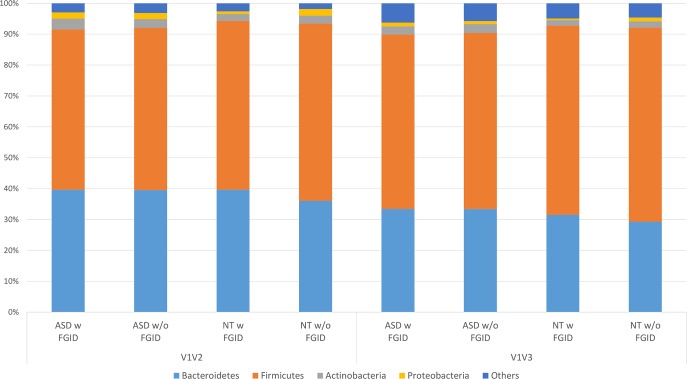
In order to assess potential associations between autism spectrum disorder (ASD) phenotype, functional GI disorders and fecal microbiota, we recruited simplex families, which had only a single ASD proband and neurotypical (NT) siblings, through the Simons Simplex Community at the Interactive Autism Network (SSC@IAN). Fecal samples and metadata related to functional GI disorders and diet were collected from ASD probands and NT siblings of ASD probands (age 7-14). Functional gastrointestinal disorders (FGID) were assessed using the parent-completed ROME III questionnaire for pediatric FGIDs, and problem behaviors were assessed using the Child Behavior Check List (CBCL). Targeted quantitative polymerase chain reaction (qPCR) assays were conducted on selected taxa implicated in ASD, including Sutterella spp., Bacteroidetes spp. and Prevotella spp. Illumina sequencing of the V1V2 and the V1V3 regions of the bacterial 16S rRNA genes from fecal DNA was performed to an average depth of 208,000 and 107,000 high-quality reads respectively. Twenty-five of 59 ASD children and 13 of 44 NT siblings met ROME III criteria for at least one FGID. Functional constipation was more prevalent in ASD (17 of 59) compared to NT siblings (6 of 44, P = 0.035). The mean CBCL scores in NT siblings with FGID, ASD children with FGID and ASD without FGID were comparably higher (58-62 vs. 44, P < 0.0001) when compared to NT children without FGID. There was no significant difference in macronutrient intake between ASD and NT siblings. There was no significant difference in ASD severity scores between ASD children with and without FGID. No significant difference in diversity or overall microbial composition was detected between ASD children with NT siblings. Exploratory analysis of the 16S rRNA sequencing data, however, identified several low abundance taxa binned at the genus level that were associated with ASD and/or first order ASD*FGID interactions (FDR <0.1).
Overview
AI snapshot
Written from the paper’s full text.
TL;DR
In simplex families from SSC@IAN, ASD children and their neurotypical siblings showed no significant difference in overall fecal microbial diversity or composition, but functional constipation was more common in ASD children. Exploratory 16S analyses found only low-abundance genus-level taxa associated with ASD and/or ASD*FGID interactions.
Key findings
- Among 59 ASD children and 44 NT siblings from 66 families, 25/59 ASD children (42%) and 13/44 NT siblings (30%) met ROME III criteria for at least one FGID; functional constipation was more prevalent in ASD children (17/59) than NT siblings (6/44, P = 0.035).
- Mean CBCL scores in NT siblings with FGID, ASD children with FGID, and ASD children without FGID were comparably higher than NT children without FGID (58–62 vs. 44, P < 0.0001); no significant difference in macronutrient intake was found between ASD and NT siblings, and ADOS-CSS did not differ significantly between ASD children with and without FGID.
- No significant difference in α-diversity, β-diversity, or overall microbial composition was detected between ASD children and NT siblings; targeted qPCR showed no significant differences for Sutterella, Prevotella, Bacteroidetes, C. coccoides-E. rectales, Faecalibacterium prausnitzii, or Escherichia coli.
- Exploratory 16S rRNA sequencing identified several low-abundance genus-level taxa associated with ASD and/or first-order ASD*FGID interactions at FDR < 0.1, including Cyanobacteria/Chloroplast, which was increased in the ASD-with-FGID group and appeared linked to chia seed consumption in two ASD children with functional constipation.
Methods
- Families were recruited through the Simons Simplex Community at the Interactive Autism Network (SSC@IAN); of 245 potentially eligible families with 339 children, 107 families with 145 children consented and 66 families with 103 children completed the study. Participants were ASD probands and NT siblings aged 7–14, excluding those with GI disease, serious medical problems, or antibiotics within one month of stool collection.
- Parents completed the ROME III questionnaire for pediatric FGIDs, the CBCL/6-18, and a one-week food diary; fecal samples underwent targeted qPCR for selected bacterial subgroups and Illumina sequencing of the V1V2 and V1V3 regions of bacterial 16S rRNA genes.
- Analyses included Fisher exact tests, mixed-effect models with ASD, FGID, and ASD*FGID as fixed effects and family as random effect, α-diversity indices, PERMANOVA for β-diversity, and negative binomial/zero-inflated negative binomial models for individual OTUs with Benjamini-Hochberg FDR adjustment.
Limitations
- The paper states that although this is one of the larger studies of its kind, the sample size is still modest given the number of variables included, and that additional ASD children, NT siblings (preferably family matched), and unrelated controls using the same phenotyping tools are needed to confirm the findings.
- The paper states that it may be necessary to restrict dietary intake of plant-derived supplements such as chia seeds to determine whether the Cyanobacteria/Chloroplast signal is biologically significant for ASD pathophysiology.
- Evident from the text: the study lacked unrelated NT controls, so it cannot distinguish whether NT siblings of ASD children have altered microbiomes relative to the general population; the significant microbial findings are exploratory, low-abundance, and not consistently replicated across V1V2 and V1V3 datasets.
Model-written summary. Check it against the paper before relying on it.
Integrity signals
Registry
Cites
Statistics
Figures
Verification
Claims the paper makes
43 Own result · 19 Not checked yet · 7 Own method · 3 Own interpretation · 3 No basis given
A result the paper reports from its own data — it cites no other source for it, so there is none to check. The quote shows it is in the paper.
In the paper
“No significant difference (p < 0.05) was noted in β-diversity between ASD and NT sibling bacterial communities analyzed at the phyla, family or genus level and using Bray-Curtis, Jaccard or Morisita-Horn indices as dissimilarity measurements.”
§ Comparison of Fecal Microbiota in Children with Autism Spectrum Disorders and Neurotypical Siblings in the Simons Simplex Collection > Results > 16S rRNA sequence analysis of ASD children and NT siblings
plain- Asserted: passes — The authors put it forward as true.
- Checkable: passes — It can be checked against evidence.
- Load-bearing: passes — The paper’s conclusions depend on it.
- Based: passes — The paper gives a reason why it holds.
- Rests on an assumption: The study had adequate statistical power to detect differences in the microbial outcomes measured between ASD and NT siblings.
A result the paper reports from its own data — it cites no other source for it, so there is none to check. The quote shows it is in the paper.
In the paper
“there was no significant change in the prevalence of the GI symptoms occurred over time.”
- Also stated in: § Demographics and functional GI disorders (FGID) in ASD and NT siblings · plain
“There was no significant change in the prevalence of any of the seven problematic GI symptoms in the ASD children at the two time points.”
§ Comparison of Fecal Microbiota in Children with Autism Spectrum Disorders and Neurotypical Siblings in the Simons Simplex Collection > Results > Demographics and functional GI disorders (FGID) in ASD and NT siblings
plainn = 59- Asserted: passes — The authors put it forward as true.
- Checkable: passes — It can be checked against evidence.
- Load-bearing: unclear — It is unclear whether the paper’s conclusions depend on it.
- Based: passes — The paper gives a reason why it holds.
- Also stated in: § Demographics and functional GI disorders (FGID) in ASD and NT siblings · plain
A result the paper reports from its own data — it cites no other source for it, so there is none to check. The quote shows it is in the paper.
In the paper
“The mean relative abundance of this genus was increased in the ASD-with FGID group compared to those of the other three categories (ASD without FGID, NT siblings with FGID and NT siblings without FGID, see S4 Table for mean relative abundances).”
§ Comparison of Fecal Microbiota in Children with Autism Spectrum Disorders and Neurotypical Siblings in the Simons Simplex Collection > Results > 16S rRNA sequence analysis of ASD children and NT siblings
plaincorrelationaln = 2- Asserted: passes — The authors put it forward as true.
- Checkable: passes — It can be checked against evidence.
- Load-bearing: unclear — It is unclear whether the paper’s conclusions depend on it.
- Based: passes — The paper gives a reason why it holds.
A result the paper reports from its own data — it cites no other source for it, so there is none to check. The quote shows it is in the paper.
In the paper
“No significant associations were detected between the relative abundance of the Sutterella or Prevotella genera and ASD, FGID or ASD*FGID first order interactions (see Table 6) in either the V1V2 or V1V3 datasets.”
§ Comparison of Fecal Microbiota in Children with Autism Spectrum Disorders and Neurotypical Siblings in the Simons Simplex Collection > Results > 16S rRNA sequence analysis of ASD children and NT siblings
plain- Asserted: passes — The authors put it forward as true.
- Checkable: passes — It can be checked against evidence.
- Load-bearing: unclear — It is unclear whether the paper’s conclusions depend on it.
- Based: passes — The paper gives a reason why it holds.
A result the paper reports from its own data — it cites no other source for it, so there is none to check. The quote shows it is in the paper.
In the paper
“Inspection of the daily dietary logs of the ASD children with high counts of Chloroplast sequences revealed that these particular children were fed shakes containing chia seeds.”
§ Comparison of Fecal Microbiota in Children with Autism Spectrum Disorders and Neurotypical Siblings in the Simons Simplex Collection > Discussion
plaincorrelational- Asserted: passes — The authors put it forward as true.
- Checkable: passes — It can be checked against evidence.
- Load-bearing: passes — The paper’s conclusions depend on it.
- Based: passes — The paper gives a reason why it holds.
A result the paper reports from its own data — it cites no other source for it, so there is none to check. The quote shows it is in the paper.
In the paper
“Exploratory analysis of the 16S rRNA sequencing data, however, identified several low abundance taxa binned at the genus level that were associated with ASD and/or first order ASD*FGID interactions (FDR <0.1).”
§ Comparison of Fecal Microbiota in Children with Autism Spectrum Disorders and Neurotypical Siblings in the Simons Simplex Collection > Abstract
plaincorrelational- Asserted: passes — The authors put it forward as true.
- Checkable: passes — It can be checked against evidence.
- Load-bearing: passes — The paper’s conclusions depend on it.
- Based: passes — The paper gives a reason why it holds.
A result the paper reports from its own data — it cites no other source for it, so there is none to check. The quote shows it is in the paper.
In the paper
“Functional constipation was more prevalent in ASD (17 of 59) compared to NT siblings (6 of 44, P = 0.035).”
- Also stated in: § Demographics and functional GI disorders (FGID) in ASD and NT siblings · plain
“ASD children exhibited a higher prevalence of functional constipation in compared to NT siblings (P = 0.035) when both matched and unmatched individuals were included in the analysis.”
§ Comparison of Fecal Microbiota in Children with Autism Spectrum Disorders and Neurotypical Siblings in the Simons Simplex Collection > Abstract
plaincorrelational- Asserted: passes — The authors put it forward as true.
- Checkable: passes — It can be checked against evidence.
- Load-bearing: unclear — It is unclear whether the paper’s conclusions depend on it.
- Based: passes — The paper gives a reason why it holds.
- Also stated in: § Demographics and functional GI disorders (FGID) in ASD and NT siblings · plain
A result the paper reports from its own data — it cites no other source for it, so there is none to check. The quote shows it is in the paper.
In the paper
“Permutational Hotelling T test revealed no significant difference in the overall microbial composition when binned at the phyla level, between ASD children and NT siblings.”
§ Comparison of Fecal Microbiota in Children with Autism Spectrum Disorders and Neurotypical Siblings in the Simons Simplex Collection > Results > 16S rRNA sequence analysis of ASD children and NT siblings
plain- Asserted: passes — The authors put it forward as true.
- Checkable: passes — It can be checked against evidence.
- Load-bearing: unclear — It is unclear whether the paper’s conclusions depend on it.
- Based: passes — The paper gives a reason why it holds.
A result the paper reports from its own data — it cites no other source for it, so there is none to check. The quote shows it is in the paper.
In the paper
“No significant difference was observed for any of these bacterial subgroups in the 37 ASD/NT sibling pairs (see Methods).”
§ Comparison of Fecal Microbiota in Children with Autism Spectrum Disorders and Neurotypical Siblings in the Simons Simplex Collection > Results > No associations (FDR < 0.1) detected in targeted bacterial subgroups between ASD, FGID and/or first order ASD*FGID by QPCR
plain- Asserted: passes — The authors put it forward as true.
- Checkable: passes — It can be checked against evidence.
- Load-bearing: passes — The paper’s conclusions depend on it.
- Based: passes — The paper gives a reason why it holds.
- Rests on an assumption: The study had adequate statistical power to detect differences in the microbial outcomes measured between ASD and NT siblings.
A result the paper reports from its own data — it cites no other source for it, so there is none to check. The quote shows it is in the paper.
In the paper
“We also detected no significant difference in the prevalence of specific FGIDs such as functional constipation in the family matched ASD/NT sibling pairs.”
§ Comparison of Fecal Microbiota in Children with Autism Spectrum Disorders and Neurotypical Siblings in the Simons Simplex Collection > Results > Demographics and functional GI disorders (FGID) in ASD and NT siblings
plainn = 37- Asserted: passes — The authors put it forward as true.
- Checkable: passes — It can be checked against evidence.
- Load-bearing: unclear — It is unclear whether the paper’s conclusions depend on it.
- Based: passes — The paper gives a reason why it holds.
- It may state two separate claims as one. 11
- Probably not a substantial claim. 23
A result the paper reports from its own data — it cites no other source for it, so there is none to check. The quote shows it is in the paper.
In the paper
“Comparisons of the relative abundances of the Bacteroidetes phylum, and the Sutterella and Prevotella genera reveal high correlations between MiSeq V1V2 and V1V3 (ρ≈0.9) and small proportional biases (S5 Table and S1 Fig).”
§ Comparison of Fecal Microbiota in Children with Autism Spectrum Disorders and Neurotypical Siblings in the Simons Simplex Collection > Results > Comparison of MiSeq V1V2, V1V3 and qPCR measurements of selected bacterial categories
plaincorrelational- Asserted: passes — The authors put it forward as true.
- Checkable: passes — It can be checked against evidence.
- Load-bearing: unclear — It is unclear whether the paper’s conclusions depend on it.
- Based: passes — The paper gives a reason why it holds.
It may state two separate claims as one.
A result the paper reports from its own data — it cites no other source for it, so there is none to check. The quote shows it is in the paper.
In the paper
“No significant effect of ASD, FGID or ASD*FGID was observed on OTU complexity or richness, two measures of α-diversity, Shannon diversity and Chao 1 (see Table 5for mean values).”
§ Comparison of Fecal Microbiota in Children with Autism Spectrum Disorders and Neurotypical Siblings in the Simons Simplex Collection > Results > 16S rRNA sequence analysis of ASD children and NT siblings
plain- Asserted: passes — The authors put it forward as true.
- Checkable: passes — It can be checked against evidence.
- Load-bearing: passes — The paper’s conclusions depend on it.
- Based: passes — The paper gives a reason why it holds.
It may state two separate claims as one.
- Rests on an assumption: The study had adequate statistical power to detect differences in the microbial outcomes measured between ASD and NT siblings.
A result the paper reports from its own data — it cites no other source for it, so there is none to check. The quote shows it is in the paper.
In the paper
“Fifteen ASD children and 13 NT siblings in 37 families met ROME III criteria for at least one FGID, with concordance for FGIDs in 6 (18%) ASD/NT sibling pairs.”
§ Comparison of Fecal Microbiota in Children with Autism Spectrum Disorders and Neurotypical Siblings in the Simons Simplex Collection > Results > Demographics and functional GI disorders (FGID) in ASD and NT siblings
plainn = 37- Asserted: passes — The authors put it forward as true.
- Checkable: passes — It can be checked against evidence.
- Load-bearing: unclear — It is unclear whether the paper’s conclusions depend on it.
- Based: passes — The paper gives a reason why it holds.
It may state two separate claims as one.
The paper states this without a source or data behind it here, so there is nothing to check it against. The quote shows it is in the paper.
In the paper
“None of the other subjects consumed chia seeds except one ASD child who ingested a serving of mixed grain bread that included chia grain.”
§ Comparison of Fecal Microbiota in Children with Autism Spectrum Disorders and Neurotypical Siblings in the Simons Simplex Collection > Results > 16S rRNA sequence analysis of ASD children and NT siblings
plainSingle case- Asserted: passes — The authors put it forward as true.
- Checkable: passes — It can be checked against evidence.
- Load-bearing: fails — The paper’s conclusions may not depend on it.
- Based: passes — The paper gives a reason why it holds.
Probably not a substantial claim. The paper’s conclusions may not depend on it. It may state two separate claims as one.
A result the paper reports from its own data — it cites no other source for it, so there is none to check. The quote shows it is in the paper.
In the paper
“Mean total, internalizing, externalizing and subscale CBCL scores were significantly increased (p < 0.05) in the ASD children in both the ASD/NT sibling pairs and in comparison of all the ASD with NT children (matched and unmatched).”
§ Comparison of Fecal Microbiota in Children with Autism Spectrum Disorders and Neurotypical Siblings in the Simons Simplex Collection > Results > Comparison of CBCL and macronutrient intake
plaincorrelational- Asserted: passes — The authors put it forward as true.
- Checkable: passes — It can be checked against evidence.
- Load-bearing: unclear — It is unclear whether the paper’s conclusions depend on it.
- Based: passes — The paper gives a reason why it holds.
It may state two separate claims as one.
The paper states this without a source or data behind it here, so there is nothing to check it against. The quote shows it is in the paper.
In the paper
“While there were generally positively correlated measurements between the MiSeq and qPCR platforms, we observed large systematic biases particularly with the two relative low abundance genera, Sutterella and Provetella.”
§ Comparison of Fecal Microbiota in Children with Autism Spectrum Disorders and Neurotypical Siblings in the Simons Simplex Collection > Results > Comparison of MiSeq V1V2, V1V3 and qPCR measurements of selected bacterial categories
plaincorrelational- Asserted: passes — The authors put it forward as true.
- Checkable: passes — It can be checked against evidence.
- Load-bearing: unclear — It is unclear whether the paper’s conclusions depend on it.
- Based: passes — The paper gives a reason why it holds.
It may state two separate claims as one.
A result the paper reports from its own data — it cites no other source for it, so there is none to check. The quote shows it is in the paper.
In the paper
“Our study also detected no differences in either α or β diversity between ASD and NT siblings.”
§ Comparison of Fecal Microbiota in Children with Autism Spectrum Disorders and Neurotypical Siblings in the Simons Simplex Collection > Discussion
plain- Asserted: passes — The authors put it forward as true.
- Checkable: passes — It can be checked against evidence.
- Load-bearing: passes — The paper’s conclusions depend on it.
- Based: passes — The paper gives a reason why it holds.
It may state two separate claims as one.
A result the paper reports from its own data — it cites no other source for it, so there is none to check. The quote shows it is in the paper.
In the paper
“Phyla of lower abundance, including RF3, Tenericutes, Cyanobacteria, Verrucomicrobia, Lentisphaerae, and Fusobacterium were also detected (see S3 Table).”
§ Comparison of Fecal Microbiota in Children with Autism Spectrum Disorders and Neurotypical Siblings in the Simons Simplex Collection > Results > 16S rRNA sequence analysis of ASD children and NT siblings
plain- Asserted: passes — The authors put it forward as true.
- Checkable: passes — It can be checked against evidence.
- Load-bearing: fails — The paper’s conclusions may not depend on it.
- Based: passes — The paper gives a reason why it holds.
Probably not a substantial claim. The paper’s conclusions may not depend on it.
The paper states this without a source or data behind it here, so there is nothing to check it against. The quote shows it is in the paper.
In the paper
“The Silva database used in the current study, however, binned the Melainabacteria sequences in a taxon that was distinct from the Chloroplast taxon.”
§ Comparison of Fecal Microbiota in Children with Autism Spectrum Disorders and Neurotypical Siblings in the Simons Simplex Collection > Results > 16S rRNA sequence analysis of ASD children and NT siblings
plain- Asserted: passes — The authors put it forward as true.
- Checkable: passes — It can be checked against evidence.
- Load-bearing: fails — The paper’s conclusions may not depend on it.
- Based: passes — The paper gives a reason why it holds.
Probably not a substantial claim. The paper’s conclusions may not depend on it.
A result the paper reports from its own data — it cites no other source for it, so there is none to check. The quote shows it is in the paper.
In the paper
“At the genus level, 359 operational taxonomic units (OTU) were detected for the V1V2 dataset and 189 OTUs for the V1-V3 datasets, respectively.”
§ Comparison of Fecal Microbiota in Children with Autism Spectrum Disorders and Neurotypical Siblings in the Simons Simplex Collection > Results > 16S rRNA sequence analysis of ASD children and NT siblings
plain- Asserted: passes — The authors put it forward as true.
- Checkable: passes — It can be checked against evidence.
- Load-bearing: fails — The paper’s conclusions may not depend on it.
- Based: passes — The paper gives a reason why it holds.
Probably not a substantial claim. The paper’s conclusions may not depend on it. It may state two separate claims as one.
In the paper
“The CBCL/6-18 is a parent report form to screen for emotional, behavioral, and social problems in children ages 6–18 [33].”
§ Comparison of Fecal Microbiota in Children with Autism Spectrum Disorders and Neurotypical Siblings in the Simons Simplex Collection > Materials and Methods > Child Behavior Checklist (CBCL)
What the sources say
- Not checked yetcites [33] TM Achenbach, 2001
plain- Asserted: passes — The authors put it forward as true.
- Checkable: passes — It can be checked against evidence.
- Load-bearing: fails — The paper’s conclusions may not depend on it.
- Based: passes — The paper gives a reason why it holds.
Probably not a substantial claim. The paper’s conclusions may not depend on it.
A conclusion the paper draws from its own results — it cites no other source for it, so there is none to check. The quote shows it is in the paper.
In the paper
“This may reflect the smaller number of subjects enrolled in the previous studies, possibly resulting in Type 1 errors.”
§ Comparison of Fecal Microbiota in Children with Autism Spectrum Disorders and Neurotypical Siblings in the Simons Simplex Collection > Discussion
hedgedconditionaln = 59- Asserted: passes — The authors put it forward as true.
- Checkable: passes — It can be checked against evidence.
- Load-bearing: passes — The paper’s conclusions depend on it.
- Based: passes — The paper gives a reason why it holds.
Probably not a substantial claim.
In the paper
“The p-values for each OTU were adjusted for multiple comparisons to calculate a false discovery rate (FDR) using the Benjamini-Hochberg procedure [59].”
§ Comparison of Fecal Microbiota in Children with Autism Spectrum Disorders and Neurotypical Siblings in the Simons Simplex Collection > Materials and Methods > Statistical analysis
What the sources say
- Not checked yetcites [59] Y Benjamini, 1995, Controlling the false discovery rate: a practical and powerful approach to multiple testing, J R Statist Soc B source
plain- Asserted: passes — The authors put it forward as true.
- Checkable: passes — It can be checked against evidence.
- Load-bearing: passes — The paper’s conclusions depend on it.
- Based: passes — The paper gives a reason why it holds.
Probably not a substantial claim.
In the paper
“Studies tracking siblings of ASD children have detected vulnerabilities in some neurocognitive domains in the absence of an ASD diagnosis [72] suggesting that some of the NT siblings may exhibit a broader subclinical ASD phenotype.”
§ Comparison of Fecal Microbiota in Children with Autism Spectrum Disorders and Neurotypical Siblings in the Simons Simplex Collection > Discussion
What the sources say
- Not checked yetcites [72] M Wade, 2015, Using sibling designs to understand neurodevelopmental disorders: from genes and environments to prevention programming, Biomed Res Int source
hedgedcorrelational- Asserted: passes — The authors put it forward as true.
- Checkable: passes — It can be checked against evidence.
- Load-bearing: unclear — It is unclear whether the paper’s conclusions depend on it.
- Based: passes — The paper gives a reason why it holds.
It may state two separate claims as one.
In the paper
“An alternative explanation for why a study comparing ASD children with NT siblings did not replicate differences reported between ASD children with unrelated controls, is that NT siblings of ASD children have altered microbiomes compared to that of unrelated children [24].”
§ Comparison of Fecal Microbiota in Children with Autism Spectrum Disorders and Neurotypical Siblings in the Simons Simplex Collection > Discussion
What the sources say
- Not checked yetcites [24] R Krajmalnik-Brown, 2015, Gut bacteria in children with autism spectrum disorders: challenges and promise of studying how a complex community influences a complex disease, Microb Ecol Health Dis
hedgedconditional- Asserted: passes — The authors put it forward as true.
- Checkable: passes — It can be checked against evidence.
- Load-bearing: passes — The paper’s conclusions depend on it.
- Based: passes — The paper gives a reason why it holds.
Probably not a substantial claim.
What the paper did — it cites no source for this, so there is none to check. The quote shows it is in the paper.
In the paper
“Plasmid quantification standards were prepared from representative clones of the target organisms to insure that the assays were conducted within the linear range and with similar slopes.”
§ Comparison of Fecal Microbiota in Children with Autism Spectrum Disorders and Neurotypical Siblings in the Simons Simplex Collection > Materials and Methods > Quantitative PCR (qPCR) for targeted bacterial subgroups
plain- Asserted: passes — The authors put it forward as true.
- Checkable: passes — It can be checked against evidence.
- Load-bearing: fails — The paper’s conclusions may not depend on it.
- Based: passes — The paper gives a reason why it holds.
Probably not a substantial claim. The paper’s conclusions may not depend on it.
In the paper
“which is the current international standard by which functional GI disorders (FGID) are diagnosed and classified [24].”
§ Comparison of Fecal Microbiota in Children with Autism Spectrum Disorders and Neurotypical Siblings in the Simons Simplex Collection > Introduction
What the sources say
- Not checked yetcites [24] R Krajmalnik-Brown, 2015, Gut bacteria in children with autism spectrum disorders: challenges and promise of studying how a complex community influences a complex disease, Microb Ecol Health Dis
plain- Asserted: passes — The authors put it forward as true.
- Checkable: passes — It can be checked against evidence.
- Load-bearing: passes — The paper’s conclusions depend on it.
- Based: passes — The paper gives a reason why it holds.
Probably not a substantial claim.
What the paper did — it cites no source for this, so there is none to check. The quote shows it is in the paper.
In the paper
“All assays were carried out in triplicate.”
§ Comparison of Fecal Microbiota in Children with Autism Spectrum Disorders and Neurotypical Siblings in the Simons Simplex Collection > Materials and Methods > Quantitative PCR (qPCR) for targeted bacterial subgroups
plain- Asserted: passes — The authors put it forward as true.
- Checkable: passes — It can be checked against evidence.
- Load-bearing: fails — The paper’s conclusions may not depend on it.
- Based: passes — The paper gives a reason why it holds.
Probably not a substantial claim. The paper’s conclusions may not depend on it.
None of the sources cited for this claim have been checked yet.
In the paper
“Previous epidemiological studies using the ROME III process to survey the prevalence of a child having at least one FGID in general pediatric clinics reported a prevalence of 2% and 16%, respectively [73,74]”
§ Comparison of Fecal Microbiota in Children with Autism Spectrum Disorders and Neurotypical Siblings in the Simons Simplex Collection > Discussion
What the sources say
- Not checked yetcites [73] E Miele, 2004, Functional gastrointestinal disorders in children: an Italian prospective survey, Pediatrics source
- Not checked yetcites [74] GS Karabulut, 2013, The incidence of irritable bowel syndrome in children using the Rome III criteria and the effect of trimebutine treatment, J Neurogastroenterol Motil source
plain- Asserted: passes — The authors put it forward as true.
- Checkable: passes — It can be checked against evidence.
- Load-bearing: passes — The paper’s conclusions depend on it.
- Based: passes — The paper gives a reason why it holds.
Probably not a substantial claim.
In the paper
“One study used intestinal mucosal [10] rather than fecal samples.”
§ Comparison of Fecal Microbiota in Children with Autism Spectrum Disorders and Neurotypical Siblings in the Simons Simplex Collection > Discussion
What the sources say
- Not checked yetcites [10] BL Williams, 2012, Application of novel PCR-based methods for detection, quantitation, and phylogenetic characterization of Sutterella species in intestinal biopsy samples from children with autism and gastrointestinal disturbances, MBio source
plain- Asserted: passes — The authors put it forward as true.
- Checkable: passes — It can be checked against evidence.
- Load-bearing: fails — The paper’s conclusions may not depend on it.
- Based: passes — The paper gives a reason why it holds.
Probably not a substantial claim. The paper’s conclusions may not depend on it.
None of the sources cited for this claim have been checked yet.
In the paper
“Review of previous studies suggest that GI symptoms are more common in ASD children than in NT children, but these studies suffer from methodological differences in assessing GI symptoms [28–31].”
§ Comparison of Fecal Microbiota in Children with Autism Spectrum Disorders and Neurotypical Siblings in the Simons Simplex Collection > Discussion
What the sources say
- Not checked yetcites [28] BO McElhanon, 2014, Gastrointestinal symptoms in autism spectrum disorder: a meta-analysis, Pediatrics source
- Not checked yetcites [29] EY Hsiao, 2014, Gastrointestinal issues in autism spectrum disorder, Harv Rev Psychiatry source
- Not checked yetcites [30] GT Furuta, 2012, Management of constipation in children and adolescents with autism spectrum disorders, Pediatrics source
- Not checked yetcites [31] P Gorrindo, 2012, Gastrointestinal dysfunction in autism: parental report, clinical evaluation, and associated factors, Autism Res source
hedgedcorrelational- Asserted: passes — The authors put it forward as true.
- Checkable: passes — It can be checked against evidence.
- Load-bearing: fails — The paper’s conclusions may not depend on it.
- Based: passes — The paper gives a reason why it holds.
Probably not a substantial claim. The paper’s conclusions may not depend on it.
What the paper did — it cites no source for this, so there is none to check. The quote shows it is in the paper.
In the paper
“Our assessment of GI symptoms differs from previous studies in that we used the international standard for assessing FGIDs in the general pediatric population.”
§ Comparison of Fecal Microbiota in Children with Autism Spectrum Disorders and Neurotypical Siblings in the Simons Simplex Collection > Discussion
plain- Asserted: passes — The authors put it forward as true.
- Checkable: passes — It can be checked against evidence.
- Load-bearing: fails — The paper’s conclusions may not depend on it.
- Based: passes — The paper gives a reason why it holds.
Probably not a substantial claim. The paper’s conclusions may not depend on it.
What the paper did — it cites no source for this, so there is none to check. The quote shows it is in the paper.
In the paper
“In this study, 16S rRNA sequencing using MiSeq was carried out to a greater depth than previous studies utilizing pyrosequencing.”
§ Comparison of Fecal Microbiota in Children with Autism Spectrum Disorders and Neurotypical Siblings in the Simons Simplex Collection > Discussion
plain- Asserted: passes — The authors put it forward as true.
- Checkable: passes — It can be checked against evidence.
- Load-bearing: fails — The paper’s conclusions may not depend on it.
- Based: fails — The paper may give no reason why it holds.
Probably not a substantial claim. The paper’s conclusions may not depend on it. The paper may give no reason why it holds.
What the paper did — it cites no source for this, so there is none to check. The quote shows it is in the paper.
In the paper
“Of the 44 NT siblings, 37 were family matched to the ASD children in the study and the remaining seven NT children were siblings of ASD children who were not in the current study, in some cases because the ASD child was older than 14 years of age.”
§ Comparison of Fecal Microbiota in Children with Autism Spectrum Disorders and Neurotypical Siblings in the Simons Simplex Collection > Discussion
plainn = 37- Asserted: passes — The authors put it forward as true.
- Checkable: passes — It can be checked against evidence.
- Load-bearing: fails — The paper’s conclusions may not depend on it.
- Based: passes — The paper gives a reason why it holds.
Probably not a substantial claim. The paper’s conclusions may not depend on it. It may state two separate claims as one.
What the paper did — it cites no source for this, so there is none to check. The quote shows it is in the paper.
In the paper
“Although this is one of the larger studies comparing ASD, FGID and the gut microbiota in ASD children and NT siblings, our sample size is still modest given the number of variables included.”
§ Comparison of Fecal Microbiota in Children with Autism Spectrum Disorders and Neurotypical Siblings in the Simons Simplex Collection > Discussion
plain- Asserted: passes — The authors put it forward as true.
- Checkable: fails — It may be too vague to check against evidence.
- Load-bearing: fails — The paper’s conclusions may not depend on it.
- Based: passes — The paper gives a reason why it holds.
Probably not a substantial claim. It may be too vague to check against evidence. The paper’s conclusions may not depend on it.
In the paper
“The Actinobacteria/Mobiluncus genus has previously been associated with bacterial vaginosis [71].”
§ Comparison of Fecal Microbiota in Children with Autism Spectrum Disorders and Neurotypical Siblings in the Simons Simplex Collection > Results > 16S rRNA sequence analysis of ASD children and NT siblings
What the sources say
- Not checked yetcites [71] RF Lamont, 2011, The vaginal microbiome: new information about genital tract flora using molecular based techniques, BJOG source
plaincorrelational- Asserted: passes — The authors put it forward as true.
- Checkable: passes — It can be checked against evidence.
- Load-bearing: fails — The paper’s conclusions may not depend on it.
- Based: passes — The paper gives a reason why it holds.
Probably not a substantial claim. The paper’s conclusions may not depend on it.
In the paper
“The Firmicutes/Asteroleplasma genus appears to represent a group of uncultured wall-less mycobacterium like organisms within the class Erysipelotrichia [69].”
§ Comparison of Fecal Microbiota in Children with Autism Spectrum Disorders and Neurotypical Siblings in the Simons Simplex Collection > Results > 16S rRNA sequence analysis of ASD children and NT siblings
What the sources say
- Not checked yetcites [69] JJ Davis, 2013, Genomes of the class Erysipelotrichia clarify the firmicute origin of the class Mollicutes, Int J Syst Evol Microbiol source
hedged- Asserted: passes — The authors put it forward as true.
- Checkable: passes — It can be checked against evidence.
- Load-bearing: fails — The paper’s conclusions may not depend on it.
- Based: passes — The paper gives a reason why it holds.
Probably not a substantial claim. The paper’s conclusions may not depend on it.
In the paper
“The Proteobacteria/Thalassospira genus appears to represent alpha-proteobacteria present in bacterioplankton and a number of uncultivated organisms [70].”
§ Comparison of Fecal Microbiota in Children with Autism Spectrum Disorders and Neurotypical Siblings in the Simons Simplex Collection > Results > 16S rRNA sequence analysis of ASD children and NT siblings
What the sources say
- Not checked yetcites [70] Q Lai, 2014, Multilocus sequence analysis for assessment of phylogenetic diversity and biogeography in Thalassospira bacteria from diverse marine environments, PLoS One source
hedged- Asserted: passes — The authors put it forward as true.
- Checkable: passes — It can be checked against evidence.
- Load-bearing: fails — The paper’s conclusions may not depend on it.
- Based: passes — The paper gives a reason why it holds.
Probably not a substantial claim. The paper’s conclusions may not depend on it.
None of the sources cited for this claim have been checked yet.
In the paper
“Constipation has been previously recognized as a significant comorbidity in ASD children [28–31].”
§ Comparison of Fecal Microbiota in Children with Autism Spectrum Disorders and Neurotypical Siblings in the Simons Simplex Collection > Discussion
What the sources say
- Not checked yetcites [28] BO McElhanon, 2014, Gastrointestinal symptoms in autism spectrum disorder: a meta-analysis, Pediatrics source
- Not checked yetcites [29] EY Hsiao, 2014, Gastrointestinal issues in autism spectrum disorder, Harv Rev Psychiatry source
- Not checked yetcites [30] GT Furuta, 2012, Management of constipation in children and adolescents with autism spectrum disorders, Pediatrics source
- Not checked yetcites [31] P Gorrindo, 2012, Gastrointestinal dysfunction in autism: parental report, clinical evaluation, and associated factors, Autism Res source
plaincorrelational- Asserted: passes — The authors put it forward as true.
- Checkable: passes — It can be checked against evidence.
- Load-bearing: fails — The paper’s conclusions may not depend on it.
- Based: passes — The paper gives a reason why it holds.
Probably not a substantial claim. The paper’s conclusions may not depend on it.
None of the sources cited for this claim have been checked yet.
In the paper
“Metagenomic studies have detected a novel nonphotosynthetic taxa termed “Melainabacteria” present in human gut flora that represents either a sibling phylum or a class within the Cyanobacteria phylum [65,66].”
§ Comparison of Fecal Microbiota in Children with Autism Spectrum Disorders and Neurotypical Siblings in the Simons Simplex Collection > Results > 16S rRNA sequence analysis of ASD children and NT siblings
What the sources say
- Not checked yetcites [65] SC Di Rienzi, 2013, The human gut and groundwater harbor non-photosynthetic bacteria belonging to a new candidate phylum sibling to Cyanobacteria, Elife source
- Not checked yetcites [66] RM Soo, 2014, An expanded genomic representation of the phylum cyanobacteria, Genome Biol Evol source
plain- Asserted: passes — The authors put it forward as true.
- Checkable: passes — It can be checked against evidence.
- Load-bearing: fails — The paper’s conclusions may not depend on it.
- Based: passes — The paper gives a reason why it holds.
Probably not a substantial claim. The paper’s conclusions may not depend on it. It may state two separate claims as one.
The paper relies on this without support.
The 7-day parent-recorded food diary accurately estimates children's daily macronutrient intake.
“The parents were asked to record the daily dietary intake of ASD and NT siblings on the Stony Brook University Medical Center Department of Pediatrics Food Diary/Calorie Count sheet for 7 days prior to the collection of the stool sample.”
The paper relies on this without support.
The study had adequate statistical power to detect differences in the microbial outcomes measured between ASD and NT siblings.
“No significant difference in diversity or overall microbial composition was detected between ASD children with NT siblings.”
“No significant difference was observed for any of these bacterial subgroups in the 37 ASD/NT sibling pairs (see Methods).”
The paper relies on this without support.
The study had adequate statistical power to detect differences in macronutrient intake between ASD and NT siblings.
“There was no significant difference in macronutrient intake between ASD and NT siblings.”
Claims other papers make about this one
Each is checked against this paper’s own text: does it say what the citing paper says it does?
The source backs part of the claim, not all of it — or backs it for a different population, condition or comparison.
In the citing paper
“At the phylum level, none of the six studies showed an increase in absolute or relative abundance [31, 33, 36, 48, 51, 54].”
From Gut microbiota changes in children with autism spectrum disorder: a systematic review (2020) · cites this paper as [48]
Experimental — accuracy not yet measuredThe source backs part of the claim, not all of it — or backs it for a different population, condition or comparison.
In the citing paper
“Whereas, in the study of Son et al.21, there was no difference of functional modules between ASD patients and HCs, which was accordance with the result of gut microbiota composition.”
From Altered composition and function of intestinal microbiota in autism spectrum disorders: A systematic review (2019) · cites this paper as [21]
Experimental — accuracy not yet measuredThe cited source says what the claim attributes to it.
In the citing paper
“Despite speculation that Sutterella was increased in children with ASD [53, 55], this was not true in every study. There were three studies suggesting no significant differences [38, 41, 48] and one suggesting a decrease [44], but this particular study included adolescents in their cohort.”
From Gut microbiota changes in children with autism spectrum disorder: a systematic review (2020) · cites this paper as [48]
In the citing paper
“Two studies showed increases [31, 33] and six studies showed no significant changes in alpha diversity [36, 42, 43, 48, 50, 54].”
From Gut microbiota changes in children with autism spectrum disorder: a systematic review (2020) · cites this paper as [48]
In the citing paper
“The rest of the studies observed either a decrease in Bacteroidetes percentage [50, 54] or no significant differences between cases and controls [31, 36, 48].”
From Gut microbiota changes in children with autism spectrum disorder: a systematic review (2020) · cites this paper as [48]
In the citing paper
“Among the seven [31, 36, 40–42, 48, 50] papers that reported on beta diversity, four [31, 40, 41, 50] papers showed significant differences in beta diversity between ASD and SIB/HC while the rest did not (Additional file 1: Table S2).”
From Gut microbiota changes in children with autism spectrum disorder: a systematic review (2020) · cites this paper as [48]
In the citing paper
“The two studies on absolute abundance did not reveal any differences between ASD, SIB, and HC [48, 51].”
From Gut microbiota changes in children with autism spectrum disorder: a systematic review (2020) · cites this paper as [48]
In the citing paper
“Instead, these seven studies showed either a non-significant result in relative abundance [41, 48, 50, 52] or a lower relative abundance in children classified as ASD versus SIB or HC [31, 39, 42].”
From Gut microbiota changes in children with autism spectrum disorder: a systematic review (2020) · cites this paper as [48]
In the citing paper
“Cluster XIVa and XIVb, however, were quantitatively similar in percentage [52] and counts [45, 48, 49] in the available four studies.”
From Gut microbiota changes in children with autism spectrum disorder: a systematic review (2020) · cites this paper as [48]
In the citing paper
“For relative abundance in both total and metabolically active Firmicutes, the studies demonstrated either a decrease [31, 33, 36] or no significant differences between children with ASD, SIB, and HC [48, 51, 54].”
From Gut microbiota changes in children with autism spectrum disorder: a systematic review (2020) · cites this paper as [48]
In the citing paper
“Actinobacteria as a phylum did not reveal any compelling results [33, 36, 48];”
From Gut microbiota changes in children with autism spectrum disorder: a systematic review (2020) · cites this paper as [48]
In the citing paper
“The general trend, however, supports no alterations in E. coli for children in ASD in five studies [30, 35, 42, 48, 52] vs one study [31] documenting a decrease in E. coli percentage among other microbiota.”
From Gut microbiota changes in children with autism spectrum disorder: a systematic review (2020) · cites this paper as [48]
In the citing paper
“Fusobacteria phylum suggested a lower relative abundance in children with ASD vs unaffected siblings, although one study [48] demonstrated the opposite in terms of Fusobacterium absolute numbers.”
From Gut microbiota changes in children with autism spectrum disorder: a systematic review (2020) · cites this paper as [48]
In the citing paper
“No specific findings were identified in the Verrucomicrobia phylum [31, 33, 36, 39, 48] and in the Verrucomicrobiaceae family [31, 37, 39, 41, 52].”
From Gut microbiota changes in children with autism spectrum disorder: a systematic review (2020) · cites this paper as [48]
In the citing paper
“In this review, only a few studies have involved developmental specialists and psychologists who are apt in monitoring changes in ASD symptoms [32, 48].”
From Gut microbiota changes in children with autism spectrum disorder: a systematic review (2020) · cites this paper as [48]
In the citing paper
“One study suggests that children with ASD may have an increased intake of chia seeds in smoothies, which is associated with specific microbiome findings [48].”
From Gut microbiota changes in children with autism spectrum disorder: a systematic review (2020) · cites this paper as [48]
In the citing paper
“but more recent studies failed to reach a consensus as to whether an ASD-specific microbial signature exists.24, 51”
From Distinct Microbiome-Neuroimmune Signatures Correlate With Functional Abdominal Pain in Children With Autism Spectrum Disorder (2017) · cites this paper as [51]
In the citing paper
“In addition, Son et al.21 conducted further nutritional analysis of one-week food diary, no significant difference between two group with respect to daily intake of macronutrients (calories, protein, fats, carbohydrates, sugars or dietary fiber) were noted.”
From Altered composition and function of intestinal microbiota in autism spectrum disorders: A systematic review (2019) · cites this paper as [21]
In the citing paper
“Besides, Son et al.21, De Angelis et al.23 and Gondalia et al.26 recruited healthy siblings as control, whereas other studies recruited normal control from the whole population.”
From Altered composition and function of intestinal microbiota in autism spectrum disorders: A systematic review (2019) · cites this paper as [21]
In the citing paper
“It can be an alternative explanation that why studies21,26 using NT sibling controls did not find any significant difference, while other studies using non-sibling controls did.”
From Altered composition and function of intestinal microbiota in autism spectrum disorders: A systematic review (2019) · cites this paper as [21]
Self-check
Percentages, sums and reported differences re-computed from the paper’s own numbers.
Each contradiction between two passages listed here was confirmed by an independent check.
Rated major: it would touch a result — a value a result rests on, reported and recomputed p-values on opposite sides of the significance level, two passages that conflict with no sign which is right, or a cited work retracted before this paper was published.
In the paper
§ Comparison of Fecal Microbiota in Children with Autism Spectrum Disorders and Neurotypical Siblings in the Simons Simplex Collection > Materials and Methods > Patient recruitment
“66 families with 103 children (66 ASD probands and 37 NT siblings) completed the study.”
§ Comparison of Fecal Microbiota in Children with Autism Spectrum Disorders and Neurotypical Siblings in the Simons Simplex Collection > Results > Demographics and functional GI disorders (FGID) in ASD and NT siblings
“A total of 59 ASD children and 44 NT siblings from 66 families completed the study (Table 1).”
Rated minor: it would not touch a result — a value no result rests on, a p-value that stays on the same side of the significance level, or a conflict that is clerical, resolved elsewhere in the paper, or outside its own findings.
In the paper
“Only 4 children were reported to adhere to a gluten and/or casein free diet.”
§ Comparison of Fecal Microbiota in Children with Autism Spectrum Disorders and Neurotypical Siblings in the Simons Simplex Collection > Results > Comparison of CBCL and macronutrient intake
Reported 4 · recomputed 5
Rated minor: it would not touch a result — a value no result rests on, a p-value that stays on the same side of the significance level, or a conflict that is clerical, resolved elsewhere in the paper, or outside its own findings.
In the paper
“with concordance for FGIDs in 6 (18%) ASD/NT sibling pairs.”
§ Comparison of Fecal Microbiota in Children with Autism Spectrum Disorders and Neurotypical Siblings in the Simons Simplex Collection > Results > Demographics and functional GI disorders (FGID) in ASD and NT siblings
Reported 18 · recomputed 16.216216
Rated minor: it would not touch a result — a value no result rests on, a p-value that stays on the same side of the significance level, or a conflict that is clerical, resolved elsewhere in the paper, or outside its own findings.
In the paper
§ Comparison of Fecal Microbiota in Children with Autism Spectrum Disorders and Neurotypical Siblings in the Simons Simplex Collection > Results > Demographics and functional GI disorders (FGID) in ASD and NT siblings
“Fifteen ASD children and 13 NT siblings in 37 families met ROME III criteria for at least one FGID”
§ Comparison of Fecal Microbiota in Children with Autism Spectrum Disorders and Neurotypical Siblings in the Simons Simplex Collection > Results > Demographics and functional GI disorders (FGID) in ASD and NT siblings
“| FGID present (family matched) | 15 (41%) | 12 (32%) | 0.31 |”
Rated minor: it would not touch a result — a value no result rests on, a p-value that stays on the same side of the significance level, or a conflict that is clerical, resolved elsewhere in the paper, or outside its own findings.
In the paper
§ Comparison of Fecal Microbiota in Children with Autism Spectrum Disorders and Neurotypical Siblings in the Simons Simplex Collection > Results > Demographics and functional GI disorders (FGID) in ASD and NT siblings
“H1b) Cyclic vomiting syndrome; H1c) Aerophagia.”
§ Comparison of Fecal Microbiota in Children with Autism Spectrum Disorders and Neurotypical Siblings in the Simons Simplex Collection > Results > Demographics and functional GI disorders (FGID) in ASD and NT siblings
“| H1b. Aerophagia | 2 | 2 | 0.44 | | H1c. Cyclic Vomiting Syndrome | 0 | 1 | 0.33 |”
Citations
Cites
Controlling the False Discovery Rate: A Practical and Powerful Approach to Multiple Testing
Benjamini, Y., & Hochberg, Y. (1995) · Journal of the Royal Statistical Society Series B: Statistical Methodology · doi:10.1111/j.2517-6161.1995.tb02031.x · Cited by 109,482
The SILVA ribosomal RNA gene database project: improved data processing and web-based tools
Quast, C., Pruesse, E., Yilmaz, P., Gerken, J., Schweer, T., Yarza, P., Peplies, J., & Glöckner, F. O. (2012) · Nucleic Acids Research · doi:10.1093/nar/gks1219 · Cited by 33,055
lavaan : An R Package for Structural Equation Modeling
Rosseel, Y. (2012) · Journal of Statistical Software · doi:10.18637/jss.v048.i02 · Cited by 27,955
vegan: Community Ecology Package
Oksanen, J., Simpson, G. L., Blanchet, F. G., Kindt, R., Legendre, P., Minchin, P. R., O’Hara, R. B., Sólymos, P., Stevens, M. H. H., Szöcs, E., et al. (2001) · doi:10.32614/cran.package.vegan · Cited by 27,099
Biometry: The Principles and Practice of Statistics in Biological Research
Sokal, R. R., & Rohlf, F. J. (1969) · Cited by 20,963
UCHIME improves sensitivity and speed of chimera detection
Edgar, R. C., Haas, B. J., Clemente, J. C., Quince, C., & Knight, R. (2011) · Bioinformatics · doi:10.1093/bioinformatics/btr381 · Cited by 15,114
A new method for non-parametric multivariate analysis of variance
Anderson, M. J. (2001) · Austral Ecology · doi:10.1111/j.1442-9993.2001.01070.pp.x · Cited by 13,828
Base-Calling of Automated Sequencer Traces Using Phred. I. Accuracy AssessmentPreprint
Ewing, B., Hillier, L., Wendl, M. C., & Green, P. (1998) · Genome Research · doi:10.1101/gr.8.3.175 · Cited by 6,993
Baio, J., Wiggins, L., Christensen, D. L., Maenner, M. J., Daniels, J., Warren, Z., Kurzius-Spencer, M., Zahorodny, W., Robinson, C., Rosenberg, et al. (2018) · MMWR. Surveillance Summaries · doi:10.15585/mmwr.ss6706a1 · Cited by 6,078
Linear Mixed-Effects Models using 'Eigen' and S4
Bates, D. M., Maechler, M., Bolker, B. M., & Walker, S. C. (2015) · Cited by 5,924
Research works printed but not linked: 2
- R Krajmalnik-Brown, 2015, Gut bacteria in children with autism spectrum disorders: challenges and promise of studying how a complex community influences a complex disease, Microb Ecol Health Dis, 26, 26914
- Y Rosseel, 2012, lavaanAn R package for structural equation modeling, JSS, 48, 1
Cited by
Sorted by citations
The gut microbiota–brain axis in behaviour and brain disorders
Morais, L. H., Schreiber, H. L., & Mazmanian, S. K. (2021) · Nature Reviews Microbiology · doi:10.1038/s41579-020-00460-0 · Cited by 2,149
Identification, Evaluation, and Management of Children With Autism Spectrum Disorder
Hyman, S. L., Levy, S. E., Myers, S. M., COUNCIL ON CHILDREN WITH DISABILITIES, S. O. D. A. B. P., Kuo, D. Z., Apkon, S., Davidson, L. F., Ellerbeck, K. A., Foster, J. E. A., Noritz, G. H., et al. (2020) · Pediatrics · doi:10.1542/peds.2019-3447 · Cited by 1,798
The central nervous system and the gut microbiome
Sharon, G., Sampson, T. R., Geschwind, D. H., & Mazmanian, S. K. (2016) · Cell · doi:10.1016/j.cell.2016.10.027 · Cited by 1,513
Kang, D.-W., Adams, J. B., Gregory, A. C., Borody, T., Chittick, L., Fasano, A., Khoruts, A., Geis, E., Maldonado, J., McDonough-Means, S., et al. (2017) · Microbiome · doi:10.1186/s40168-016-0225-7 · Cited by 1,391
Human Gut Microbiota from Autism Spectrum Disorder Promote Behavioral Symptoms in Mice
Sharon, G., Cruz, N. J., Kang, D.-W., Gandal, M. J., Wang, B., Kim, Y.-M., Zink, E. M., Casey, C. P., Taylor, B. C., Lane, C. J., et al. (2019) · Cell · doi:10.1016/j.cell.2019.05.004 · Cited by 1,182
New evidences on the altered gut microbiota in autism spectrum disorders
Strati, F., Cavalieri, D., Albanese, D., De Felice, C., Donati, C., Hayek, J., Jousson, O., Leoncini, S., Renzi, D., Calabrò, A., et al. (2017) · Microbiome · doi:10.1186/s40168-017-0242-1 · Cited by 1,040
Microbiome differential abundance methods produce different results across 38 datasets
Nearing, J. T., Douglas, G. M., Hayes, M. G., MacDonald, J., Desai, D., McCormick, N. E., Jones, C. M. A., Wright, R., Dhanani, A. S., Comeau, A., et al. (2022) · Nature Communications · doi:10.1038/s41467-022-28034-z · Cited by 1,050
Gut instincts: microbiota as a key regulator of brain development, ageing and neurodegeneration
Dinan, T. G., & Cryan, J. F. (2017) · The Journal of Physiology · doi:10.1113/jp273106 · Cited by 813
Long-term benefit of microbiota transfer therapy on autism symptoms and gut microbiota
Kang, D.-W., Adams, J. B., Coleman, D. M., Pollard, E. L., Maldonado, J., McDonough-Means, S., Caporaso, J. G., & Krajmalnik-Brown, R. (2019) · Scientific Reports · doi:10.1038/s41598-019-42183-0 · Cited by 749
Feeding the microbiota–gut–brain axis: Diet, microbiome, and neuropsychiatry
Sandhu, K. V., Sherwin, E., Schellekens, H., Stanton, C., Dinan, T. G., & Cryan, J. F. (2017) · Translational Research · doi:10.1016/j.trsl.2016.10.002 · Cited by 491
The Gut Microbiota and Autism Spectrum Disorders
Li, Q., Han, Y., Dy, A. B. C., & Hagerman, R. J. (2017) · Frontiers in Cellular Neuroscience · doi:10.3389/fncel.2017.00120 · Cited by 462
Microbiota and the social brain
Sherwin, E., Bordenstein, S. R., Quinn, J. L., Dinan, T. G., & Cryan, J. F. (2019) · Science · doi:10.1126/science.aar2016 · Cited by 462
Fecal Microbiota Transplantation in Neurological Disorders
Vendrik, K. E. W., Ooijevaar, R. E., de Jong, P. R. C., Laman, J. D., van Oosten, B. W., van Hilten, J. J., Ducarmon, Q. R., Keller, J. J., Kuijper, E. J., & Contarino, M. F. (2020) · Frontiers in Cellular and Infection Microbiology · doi:10.3389/fcimb.2020.00098 · Cited by 413
The Possible Role of the Microbiota-Gut-Brain-Axis in Autism Spectrum Disorder
Srikantha, P., & Mohajeri, M. H. (2019) · International Journal of Molecular Sciences · doi:10.3390/ijms20092115 · Cited by 400
Differences in fecal microbial metabolites and microbiota of children with autism spectrum disorders
Kang, D.-W., Ilhan, Z. E., Isern, N. G., Hoyt, D. W., Howsmon, D. P., Shaffer, M., Lozupone, C. A., Hahn, J., Adams, J. B., & Krajmalnik-Brown, R. (2018) · Anaerobe · doi:10.1016/j.anaerobe.2017.12.007 · Cited by 381
Autism-related dietary preferences mediate autism-gut microbiome associations
Yap, C. X., Henders, A. K., Alvares, G. A., Wood, D., Krause, L., Tyson, G. W., Restuadi, R., Wallace, L. M., McLaren, T., Hansell, N. K., et al. (2021) · Cell · doi:10.1016/j.cell.2021.10.015 · Cited by 371
Iglesias-Vázquez, L., Van Ginkel Riba, G., Arija, V., & Canals, J. (2020) · Nutrients · doi:10.3390/nu12030792 · Cited by 352
Mucosal Prevalence and Interactions with the Epithelium Indicate Commensalism of Sutterella spp.
Hiippala, K., Kainulainen, V., Kalliomäki, M., Arkkila, P., & Satokari, R. (2016) · Frontiers in Microbiology · doi:10.3389/fmicb.2016.01706 · Cited by 351
“Sutterella parvirubra adhered better than the two other Sutterella spp. to differentiated Caco-2 cells and was capable of decreasing the adherence of S. wadsworthensis, which preferably bound to mucus and human extracellular matrix proteins.”
BackgroundLiu, F., Li, J., Wu, F., Zheng, H., Peng, Q., & Zhou, H. (2019) · Translational Psychiatry · doi:10.1038/s41398-019-0389-6 · Cited by 336
Brain-Gut-Microbiota Axis and Mental Health
Dinan, T. G., & Cryan, J. F. (2017) · Psychosomatic Medicine · doi:10.1097/psy.0000000000000519 · Cited by 325
Heiss, C. N., & Olofsson, L. E. (2019) · Journal of Neuroendocrinology · doi:10.1111/jne.12684 · Cited by 304
Sherwin, E., Sandhu, K. V., Dinan, T. G., & Cryan, J. F. (2016) · CNS Drugs · doi:10.1007/s40263-016-0370-3 · Cited by 309
Luna, R. A., Oezguen, N., Balderas, M., Venkatachalam, A., Runge, J. K., Versalovic, J., Veenstra-VanderWeele, J., Anderson, G. M., Savidge, T., & Williams, K. C. (2017) · Cellular and Molecular Gastroenterology and Hepatology · doi:10.1016/j.jcmgh.2016.11.008 · Cited by 295
Cross talk: the microbiota and neurodevelopmental disorders
Kelly, J. R., Minuto, C., Cryan, J. F., Clarke, G., & Dinan, T. G. (2017) · Frontiers in Neuroscience · doi:10.3389/fnins.2017.00490 · Cited by 271
Liu, Y.-W., Liong, M., Chung, Y.-C. E., Huang, H.-Y., Peng, W.-S., Cheng, Y.-F., Lin, Y.-S., Wu, Y., & Tsai, Y.-C. (2019) · Nutrients · doi:10.3390/nu11040820 · Cited by 272
Wirbel, J., Zych, K., Essex, M., Karcher, N., Kartal, E., Salazar, G., Bork, P., Sunagawa, S., & Zeller, G. (2021) · Genome Biology · doi:10.1186/s13059-021-02306-1 · Cited by 269
Gut microbiome composition and diversity are related to human personality traits
Johnson, K. V. ‐. (2019) · Human Microbiome Journal · doi:10.1016/j.humic.2019.100069 · Cited by 257
The Microbiome in Psychology and Cognitive Neuroscience
Sarkar, A., Harty, S., Lehto, S. M., Moeller, A. H., Dinan, T. G., Dunbar, R., Cryan, J. F., & Burnet, P. W. J. (2018) · Trends in Cognitive Sciences · doi:10.1016/j.tics.2018.04.006 · Cited by 238
Rose, D. R., Yang, H., Serena, G., Sturgeon, C., Ma, B., Careaga, M., Hughes, H. K., Angkustsiri, K., Rose, M., Hertz-Picciotto, I., et al. (2018) · Brain, Behavior, and Immunity · doi:10.1016/j.bbi.2018.03.025 · Cited by 227
The Gut Microbiota and Dysbiosis in Autism Spectrum Disorders
Hughes, H. K., Rose, D., & Ashwood, P. (2018) · Current Neurology and Neuroscience Reports · doi:10.1007/s11910-018-0887-6 · Cited by 225
Epigenetic Matters: The Link between Early Nutrition, Microbiome, and Long-term Health Development
Indrio, F., Martini, S., Francavilla, R., Corvaglia, L., Cristofori, F., Mastrolia, S. A., Neu, J., Rautava, S., Spena, G. R., Raimondi, F., et al. (2017) · Frontiers in Pediatrics · doi:10.3389/fped.2017.00178 · Cited by 253
Morton, J. T., Jin, D.-M., Mills, R. H., Shao, Y., Rahman, G., McDonald, D. T., Zhu, Q., Balaban, M., Jiang, Y., Cantrell, K., et al. (2023) · Nature Neuroscience · doi:10.1038/s41593-023-01361-0 · Cited by 246
Self-citationAltered Gut Microbiota in Chinese Children With Autism Spectrum Disorders
Ma, B., Liang, J., Dai, M., Wang, J., Luo, J., Zhang, Z., & Jing, J. (2019) · Frontiers in Cellular and Infection Microbiology · doi:10.3389/fcimb.2019.00040 · Cited by 202
Qiao, Y., Wu, M., Feng, Y., Zhou, Z., Chen, L., & Chen, F. (2018) · Scientific Reports · doi:10.1038/s41598-018-19982-y · Cited by 174
Moreno-Pérez, D., Bressa, C., Bailén, M., Hamed-Bousdar, S., Naclerio, F., Carmona, M., Pérez, M., González-Soltero, R., Montalvo-Lominchar, M., Carabaña, C., et al. (2018) · Nutrients · doi:10.3390/nu10030337 · Cited by 158
Moody microbes or fecal phrenology: what do we know about the microbiota-gut-brain axis?
Forsythe, P., Kunze, W., & Bienenstock, J. (2016) · BMC Medicine · doi:10.1186/s12916-016-0604-8 · Cited by 162
Gut microbiota changes in children with autism spectrum disorder: a systematic review
Ho, L. K. H., Tong, V. J. W., Syn, N., Nagarajan, N., Tham, E. H., Tay, S. K., Shorey, S., Tambyah, P. A., & Law, E. C. N. (2020) · Gut Pathogens · doi:10.1186/s13099-020-0346-1 · Cited by 149
Microbiome and nutrition in autism spectrum disorder: Current knowledge and research needs
Berding, K., & Donovan, S. M. (2016) · Nutrition Reviews · doi:10.1093/nutrit/nuw048 · Cited by 146
Kong, X., Liu, J., Çetinbaş, M., Sadreyev, R. I., Koh, M., Huang, H. Y., Adeseye, A., He, P., Zhu, J., Russell, H., et al. (2019) · Nutrients · doi:10.3390/nu11092128 · Cited by 155
Diet can impact microbiota composition in children with autism spectrum disorder
Berding, K., & Donovan, S. M. (2018) · Frontiers in Neuroscience · doi:10.3389/fnins.2018.00515 · Cited by 144
Autism Spectrum Disorder as a Brain-Gut-Microbiome Axis Disorder
Saurman, V. E., Margolis, K. G., & Luna, R. A. (2020) · Digestive Diseases and Sciences · doi:10.1007/s10620-020-06133-5 · Cited by 144
The role of the microbiome in the neurobiology of social behaviour
Sarkar, A., Harty, S., Johnson, K. V. ‐., Moeller, A. H., Carmody, R. N., Lehto, S. M., Erdman, S. E., Dunbar, R. I. M., & Burnet, P. W. J. (2020) · Biological Reviews · doi:10.1111/brv.12603 · Cited by 135
Spichak, S., Bastiaanssen, T. F. S., Berding, K., Vlckova, K., Clarke, G., Dinan, T. G., & Cryan, J. F. (2021) · Neuroscience & Biobehavioral Reviews · doi:10.1016/j.neubiorev.2021.02.044 · Cited by 127
The Gut-Microglia Connection: Implications for Central Nervous System Diseases
Wang, Y., Wang, Z., Wang, Y., Li, F., Jia, J., Song, X., Qin, S., Wang, R., Jin, F., Kitazato, K., et al. (2018) · Frontiers in Immunology · doi:10.3389/fimmu.2018.02325 · Cited by 130
Bundgaard‐Nielsen, C., Knudsen, J. K., Leutscher, P. D. C., Lauritsen, M. B., Nyegaard, M., Hagstrøm, S., & Sørensen, S. (2020) · Gut Microbes · doi:10.1080/19490976.2020.1748258 · Cited by 125
Cattane, N., Richetto, J., & Cattaneo, A. (2018) · Neuroscience & Biobehavioral Reviews · doi:10.1016/j.neubiorev.2018.07.001 · Cited by 129
Liu, J., Liu, X., Xiong, X.-Q., Yang, T., Cui, T., Hou, N.-L., Lai, X., Liu, S., Guo, M., Liang, X.-H., et al. (2017) · BMC Microbiology · doi:10.1186/s12866-017-1096-1 · Cited by 115
García-Gutiérrez, E., Narbad, A., & Rodríguez, J. M. (2020) · Frontiers in Neuroscience · doi:10.3389/fnins.2020.578666 · Cited by 118
Diet: the keystone of autism spectrum disorder?
Peretti, S., Mariano, M. R. G., Mazzocchetti, C., Mazza, M., Pino, M. C., di Pianella, A. V., & Valenti, M. (2018) · Nutritional Neuroscience · doi:10.1080/1028415x.2018.1464819 · Cited by 112
Brain Autoimmunity and Intestinal Microbiota: 100 Trillion Game Changers
Wekerle, H. (2017) · Trends in Immunology · doi:10.1016/j.it.2017.03.008 · Cited by 104
Averina, O. V., Kovtun, A. S., Polyakova, S. I., Savilova, A. M., Rebrikov, D. V., & Даниленко, В. Н. (2020) · Journal of Medical Microbiology · doi:10.1099/jmm.0.001178 · Cited by 105
Dargenio, V. N., Dargenio, C., Castellaneta, S., De Giacomo, A., Laguardia, M., Schettini, F., Francavilla, R., & Cristofori, F. (2023) · Nutrients · doi:10.3390/nu15071620 · Cited by 98
Fecal Microbial Transplantation for Diseases Beyond Recurrent Clostridium Difficile Infection
D’Haens, G., & Jobin, C. (2019) · Gastroenterology · doi:10.1053/j.gastro.2019.04.053 · Cited by 104
Analysis of the Duodenal Microbiome in Autistic Individuals: Association With Carbohydrate Digestion
Kushak, R. I., Winter, H. S., Buie, T. M., Cox, S. B., Phillips, C. D., & Ward, N. L. (2017) · Journal of Pediatric Gastroenterology and Nutrition · doi:10.1097/mpg.0000000000001458 · Cited by 92
Hung, L. Y., & Margolis, K. G. (2024) · Nature Reviews Gastroenterology & Hepatology · doi:10.1038/s41575-023-00857-1 · Cited by 96
Low-Abundant Microorganisms: The Human Microbiome’s Dark Matter, a Scoping Review
de Cena, J. A., Zhang, J., Deng, D., Damé‐Teixeira, N., & Do, T. (2021) · Frontiers in Cellular and Infection Microbiology · doi:10.3389/fcimb.2021.689197 · Cited by 88
Lim, J. S., Lim, M. Y., Choi, Y., & Ko, G. (2017) · Molecular Brain · doi:10.1186/s13041-017-0292-0 · Cited by 89
Dong, T. S., & Mayer, E. A. (2024) · Cellular and Molecular Gastroenterology and Hepatology · doi:10.1016/j.jcmgh.2024.01.024 · Cited by 86
Gestational Diabetes Is Uniquely Associated With Altered Early Seeding of the Infant Gut Microbiota
Soderborg, T. K., Carpenter, C. M., Janssen, R. C., Weir, T. L., Robertson, C. E., Ir, D., Young, B. E., Krebs, N. F., Hernandez, T. L., Barbour, L. A., et al. (2020) · Frontiers in Endocrinology · doi:10.3389/fendo.2020.603021 · Cited by 82
Self-citationMicrobiota in Autism Spectrum Disorder: A Systematic Review
Lewandowska, Z., Figlerowicz, M., & Mazur‐Melewska, K. (2023) · International Journal of Molecular Sciences · doi:10.3390/ijms242316660 · Cited by 99
Oral microbiome activity in children with autism spectrum disorder
Hicks, S. D., Uhlig, R., Afshari, P., Williams, J. R., Chroneos, M. Z., Tierney‐Aves, C., Wagner, K. E., & Middleton, F. A. (2018) · Autism Research · doi:10.1002/aur.1972 · Cited by 86
Gargari, G., Taverniti, V., Balzaretti, S., Ferrario, C., Gardana, C., Simonetti, P., & Guglielmetti, S. (2016) · Applied and Environmental Microbiology · doi:10.1128/aem.01753-16 · Cited by 82
Gevi, F., Belardo, A., & Zolla, L. (2020) · Biochimica et Biophysica Acta (BBA) - Molecular Basis of Disease · doi:10.1016/j.bbadis.2020.165859 · Cited by 79
An approach to gut microbiota profile in children with autism spectrum disorder
Andreo‐Martínez, P., García-Martínez, N., Sánchez‐Samper, E. P., & Martínez‐González, A. E. (2019) · Environmental Microbiology Reports · doi:10.1111/1758-2229.12810 · Cited by 77
Systematic Review: Autism Spectrum Disorder and the Gut Microbiota
Korteniemi, J., Karlsson, L., & Aatsinki, A. (2023) · Acta Psychiatrica Scandinavica · doi:10.1111/acps.13587 · Cited by 77
Incontinence in autism spectrum disorder: a systematic review
Niemczyk, J., Wagner, C., & von Gontard, A. (2017) · European Child & Adolescent Psychiatry · doi:10.1007/s00787-017-1062-3 · Cited by 78
The Brain-Gut-Microbiome Axis: What Role Does it Play in Autism Spectrum Disorder?
Luna, R. A., Savidge, T., & Williams, K. C. (2016) · Current Developmental Disorders Reports · doi:10.1007/s40474-016-0077-7 · Cited by 74
Oral microbiota and autism spectrum disorder (ASD)
Olsen, I., & Hicks, S. D. (2019) · Journal of Oral Microbiology · doi:10.1080/20002297.2019.1702806 · Cited by 74
Gastrointestinal alterations in autism spectrum disorder: What do we know?
Bjørklund, G., Pivina, L. M., Dadar, M., Meguid, N. A., Semenova, Y. M., Anwar, M., & Chirumbolo, S. (2020) · Neuroscience & Biobehavioral Reviews · doi:10.1016/j.neubiorev.2020.06.033 · Cited by 71
Ahmed, S. M., El-Hefnawy, A. M., Azouz, H. G., Roshdy, Y. S., Ashry, M. H., Ibrahim, A. E., & Meheissen, M. A. (2020) · Journal of Molecular Neuroscience · doi:10.1007/s12031-020-01500-3 · Cited by 74
The Role of Gut Microbiota in Gastrointestinal Symptoms of Children with ASD
Martínez-González, A. E., & Andreo-Martínez, P. (2019) · Medicina · doi:10.3390/medicina55080408 · Cited by 67
Bundgaard‐Nielsen, C., Lauritsen, M. B., Knudsen, J. K., Rold, L. S., Larsen, M. H., Hindersson, P., Villadsen, A. B., Leutscher, P. D. C., Hagstrøm, S., Nyegaard, M., et al. (2023) · Gut Microbes · doi:10.1080/19490976.2023.2211923 · Cited by 69
Lasheras, I., Seral, P., Latorre, E., Barroso, E., Gracia‐García, P., & Santabárbara, J. (2019) · Asian Journal of Psychiatry · doi:10.1016/j.ajp.2019.101874 · Cited by 66
Comparative study of classifiers for human microbiome data
Wang, X., & Liu, Y. (2020) · Medicine in Microecology · doi:10.1016/j.medmic.2020.100013 · Cited by 65
Berding, K., Holscher, H. D., Arthur, A. E., & Donovan, S. M. (2018) · The Journal of Nutritional Biochemistry · doi:10.1016/j.jnutbio.2018.01.002 · Cited by 61
Gut microbiome: An intermediary to neurotoxicity
Dempsey, J. L., Little, M., & Cui, J. Y. (2019) · NeuroToxicology · doi:10.1016/j.neuro.2019.08.005 · Cited by 63
The developing airway and gut microbiota in early life is influenced by age of older siblings
Christensen, E. D., Hjelmsø, M. H., Thorsen, J., Shah, S. A., Redgwell, T. A., Poulsen, C. E., Trivedi, U., Russel, J., Gupta, S., Chawes, B., et al. (2022) · Microbiome · doi:10.1186/s40168-022-01305-z · Cited by 60
Cristiano, C., Lama, A., Lembo, F., Mollica, M. P., Calignano, A., & Raso, G. M. (2018) · Frontiers in Physiology · doi:10.3389/fphys.2018.00184 · Cited by 60
Elucidating the Beta-Diversity of the Microbiome: from Global Alignment to Local Alignment
Su, X. (2021) · mSystems · doi:10.1128/msystems.00363-21 · Cited by 61
Ye, F., Gao, X., Wang, Z., Cao, S., Liang, G., He, D., Lv, Z., Wang, L., Xu, P., & Zhang, Q. (2021) · Synthetic and Systems Biotechnology · doi:10.1016/j.synbio.2021.03.003 · Cited by 56
Kohli, M., Kar, A. K., & Sinha, S. (2022) · IEEE Access · doi:10.1109/access.2022.3208587 · Cited by 62
Gut Microbiome and Modulation of CNS Function
Osadchiy, V., Martin, C. R., & Mayer, E. A. (2019) · Comprehensive Physiology · doi:10.1002/cphy.c180031 · Cited by 53
Gut Microbiota in Psychiatric Disorders: A Systematic Review
Chen, L. L., Abbaspour, A., Mkoma, G. F., Bulik, C. M., Rück, C., & Djurfeldt, D. R. (2021) · Psychosomatic Medicine · doi:10.1097/psy.0000000000000959 · Cited by 57
Pietrucci, D., Teofani, A., Milanesi, M., Fosso, B., Putignani, L., Messina, F., Pesole, G., Desideri, A., & Chillemi, G. (2022) · Biomedicines · doi:10.3390/biomedicines10082028 · Cited by 55
Eshraghi, R. S., Deth, R. C., Mittal, R., Aranke, M., Kay, S.-I. S., Moshiree, B., & Eshraghi, A. A. (2018) · Frontiers in Cellular Neuroscience · doi:10.3389/fncel.2018.00256 · Cited by 58
Comparing the Gut Microbiome in Autism and Preclinical Models: A Systematic Review
Alamoudi, M. U. A., Hosie, S., Shindler, A. E., Wood, J. L., Franks, A. E., & Hill‐Yardin, E. L. (2022) · Frontiers in Cellular and Infection Microbiology · doi:10.3389/fcimb.2022.905841 · Cited by 59
The gut microbiome in psychiatry: A primer for clinicians
Ameringen, M. V., Turna, J., Patterson, B. A., Pipe, A., Mao, R. Q., Anglin, R., & Surette, M. G. (2019) · Depression and Anxiety · doi:10.1002/da.22936 · Cited by 51
Medeiros, K., Mazurek, M. O., & Kanne, S. (2017) · Research in Autism Spectrum Disorders · doi:10.1016/j.rasd.2017.06.001 · Cited by 50
The microbiome and childhood diseases: Focus on brain‐gut axis
O’Mahony, S. M., Stilling, R. M., Dinan, T. G., & Cryan, J. F. (2015) · Birth Defects Research Part C Embryo Today Reviews · doi:10.1002/bdrc.21118 · Cited by 53
A Systematic Review of the Microbiome in Children With Neurodevelopmental Disorders
Lacorte, E., Gervasi, G., Bacigalupo, I., Vanacore, N., Raucci, U., & Parisi, P. (2019) · Frontiers in Neurology · doi:10.3389/fneur.2019.00727 · Cited by 52
Gut-to-Brain Axis in Autism Spectrum Disorders
Kraneveld, A. D., Szklany, K., de Theije, C. G. M., & Garssen, J. (2016) · International review of neurobiology · doi:10.1016/bs.irn.2016.09.001 · Cited by 47
Targeting Gut Microbiota Dysbiosis: Potential Intervention Strategies for Neurological Disorders
Wu, W., Kong, Q., Tian, P., Zhai, Q., Wang, G., Liu, X., Zhao, J., Zhang, H., Lee, Y. K., & Chen, W. (2020) · Engineering · doi:10.1016/j.eng.2019.07.026 · Cited by 52
Dietary interventions for autism spectrum disorder: New perspectives from the gut-brain axis
Doenyas, C. (2018) · Physiology & Behavior · doi:10.1016/j.physbeh.2018.07.014 · Cited by 52
Potential of gut microbiome for detection of autism spectrum disorder
Wu, T., Wang, H., Lu, W., Zhai, Q., Zhang, Q., Yuan, W., Gu, Z., Zhao, J., Zhang, H., & Chen, W. (2020) · Microbial Pathogenesis · doi:10.1016/j.micpath.2020.104568 · Cited by 46
Between Dysbiosis, Maternal Immune Activation and Autism: Is There a Common Pathway?
Suprunowicz, M., Tomaszek, N., Urbaniak, A., Zackiewicz, K., Modzelewski, S., & Waszkiewicz, N. (2024) · Nutrients · doi:10.3390/nu16040549 · Cited by 44
Lagod, P. P., & Naser, S. A. (2023) · International Journal of Molecular Sciences · doi:10.3390/ijms242417432 · Cited by 54
Caputi, V., Hill, L., Figueiredo, M., Popov, J., Hartung, E., Margolis, K. G., Baskaran, K., Joharapurkar, P., Moshkovich, M., & Pai, N. (2024) · Frontiers in Neuroscience · doi:10.3389/fnins.2024.1341656 · Cited by 41
Gut microbiota, metabolism and psychopathology: A critical review and novel perspectives
Groen, R. N., de Clercq, N. C., Nieuwdorp, M., Hoenders, R. H. J., & Groen, A. K. (2018) · Critical Reviews in Clinical Laboratory Sciences · doi:10.1080/10408363.2018.1463507 · Cited by 44
Gut Microbiota Profiles in Children and Adolescents with Psychiatric Disorders
Šoltýsová, M., Tomova, A., & Ostatníková, D. (2022) · Microorganisms · doi:10.3390/microorganisms10102009 · Cited by 44
Metadata
- Authors
- Son, J. S., Zheng, L. J., Rowehl, L. M., Tian, X., Zhang, Y., Zhu, W., Litcher-Kelly, L., Gadow, K. D., Gathungu, G., Robertson, C. E., Ir, D., Frank, D. N., & Li, E.
- Affiliations
- Stony Brook University (US)
- University of Colorado Anschutz (US)
- Corresponding author
- Li, Ellen
- Venue
- PLOS ONE
- Publisher
- Public Library of Science (PLoS)
- Published
- 2015-10-01
- Volume
- 10
- Issue
- 10
- Pages
- e0137725
- ISSN
- 1932-6203 (ISSN-L)
- PMC
- PMC4591364
- OpenAlex
- W1860290282
- Cited by
- 229
- References
- 73
- Citations by year
- 2026: 9 · 2025: 17 · 2024: 23 · 2023: 17 · 2022: 18 · 2021: 29 · 2020: 29 · 2019: 33 · 2018: 24 · 2017: 13 · 2016: 14 · 2015: 1
- FWCI
- 7.52
- Type
- journal article
- Language
- en
- Open access
- gold
- doi.org
- Licence
- Locations
- PLoS ONE (publishedVersion, cc-by)
- Europe PMC (PubMed Central) (publishedVersion, cc-by)
- PubMed Central (publishedVersion, cc-by)
- PubMed (publishedVersion)
- Academic Commons (Stony Brook University) (submittedVersion, cc-by)
- DOAJ (DOAJ: Directory of Open Access Journals) (submittedVersion, cc-by-sa)
- Figshare (submittedVersion, cc-by)
- Funders
- Simons Foundation
- Simons Foundation Autism Research Initiative
- Topics
- Life Sciences › Biochemistry, Genetics and Molecular Biology › Molecular Biology › Gut microbiota and health
- Life Sciences › Neuroscience › Cognitive Neuroscience › Autism Spectrum Disorder Research
- Health Sciences › Medicine › Gastroenterology › Gastrointestinal motility and disorders
- Keywords
- autism spectrum disorder, fecal microbiota, functional gastrointestinal disorders, constipation, siblings, gut microbiota, Sutterella, Bacteroidetes, Prevotella, child behavior problems, macronutrient intake, ASD severity, microbial taxa
- MeSH terms
- Autism Spectrum Disorder, Adolescent, Bacteria, Child, Diet, Feces, Female, Humans, Male, Phenotype, RNA, Ribosomal, 16S, Case-Control Studies, Siblings, Gastrointestinal Tract, Microbiota
About these checks
Registry, retraction, Cites and statistics results are computed, not judged, with one exception: a printed reference that no index lists is read once by a model before it counts as a citation error. Claims are extracted by a model and kept only when their quote appears verbatim in the text; each cited source is then checked, with a model’s help, for whether it says what the claim relies on. Those verdicts can be wrong — read the claim’s quote and the cited source before relying on one.
A language model drew the claims from the paper on 2026-10-09, under version 3 of the claim definition (model deepseek-v4.1-flash, prompt extract-v3).
A second model labelled each claim on 2026-10-09 (model jev-1.13-20260917, definition revision gold-guideline-v0.2).
Statistics and arithmetic are recomputed, not judged.
Confidence bands are shown only for fields calibrated on our annotated test set. None is calibrated yet, so no band is shown.
What counts as a claim ›How we measure confidence ›How we check this ›
Are you an author, or do you see a problem with this page? Request a review
