

Statistically Controlling for Confounding Constructs Is Harder than You Think
Open accessThe DOI matches its Crossref record; 58 of the 58 references it cites were found in a registry or an index.
Abstract
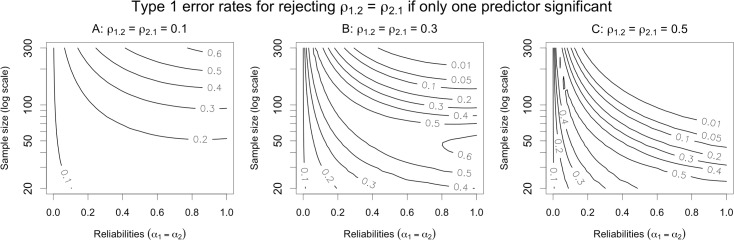
Social scientists often seek to demonstrate that a construct has incremental validity over and above other related constructs. However, these claims are typically supported by measurement-level models that fail to consider the effects of measurement (un)reliability. We use intuitive examples, Monte Carlo simulations, and a novel analytical framework to demonstrate that common strategies for establishing incremental construct validity using multiple regression analysis exhibit extremely high Type I error rates under parameter regimes common in many psychological domains. Counterintuitively, we find that error rates are highest--in some cases approaching 100%--when sample sizes are large and reliability is moderate. Our findings suggest that a potentially large proportion of incremental validity claims made in the literature are spurious. We present a web application (http://jakewestfall.org/ivy/) that readers can use to explore the statistical properties of these and other incremental validity arguments. We conclude by reviewing SEM-based statistical approaches that appropriately control the Type I error rate when attempting to establish incremental validity.
Overview
The claims and statistics of this paper haven’t been checked yet.
Free: it reads the open-access text and checks the first 5 claims that cite a source we can check. Create a free account to check every claim.
Integrity signals
Registry
Cites
Statistics
Figures
Verification
Claims the paper makes
The claims and statistics of this paper haven’t been checked yet.
Free: it reads the open-access text and checks the first 5 claims that cite a source we can check. Create a free account to check every claim.
Claims other papers make about this one
Each is checked against this paper’s own text: does it say what the citing paper says it does?
The source backs part of the claim, not all of it — or backs it for a different population, condition or comparison.
In the citing paper
“meaning that the association between loneliness and mental health outcomes in these studies is very likely to be inflated.16”
From Rapid Systematic Review: The Impact of Social Isolation and Loneliness on the Mental Health of Children and Adolescents in the Context of COVID-19 (2020) · cites this paper as [16]
Experimental — accuracy not yet measured
Self-check
Percentages, sums and reported differences re-computed from the paper’s own numbers.
The self-check needs the paper’s full text.
Citations
Cites
(1998) · Cited by 36,049
Structural Equations with Latent Variables.
Clogg, C. C., & Bollen, K. A. (1991) · Contemporary Sociology · doi:10.2307/2072165 · Cited by 17,442
Structural Equations with Latent Variables
Bollen, K. A. (1989) · Wiley series in probability and statistics · doi:10.1002/9781118619179 · Cited by 17,277
Construct validity in psychological tests.
Cronbach, L. J., & Meehl, P. E. (1955) · Psychological Bulletin · doi:10.1037/h0040957 · Cited by 11,195 · cited 2×
“After all, in any given analysis, there is a simple fact of the matter as to whether or not the unique contribution of one or more variables in a regression is statistically significant when controlling for other variables; what room is there for inferential error? Trouble arises, however, when researchers behave as i…”
BackgroundTHE BIG FIVE PERSONALITY DIMENSIONS AND JOB PERFORMANCE: A META‐ANALYSIS
BARRICK, M. R., & MOUNT, M. K. (1991) · Personnel Psychology · doi:10.1111/j.1744-6570.1991.tb00688.x · Cited by 8,689
Handbook of Personality: Theory and Research
Krueger, R. F., & Johnson, W. (2008) · Cited by 7,884
Implicit social cognition: Attitudes, self-esteem, and stereotypes
Greenwald, A. G., & Banaji, M. R. (1995) · Psychological Review · doi:10.1037/0033-295x.102.1.4 · Cited by 6,682
Handbook of Personality : Theory and Research
Pervin, L. A. (1992) · Cited by 4,543
Understanding and using the Implicit Association Test: III. Meta-analysis of predictive validity.
Greenwald, A. G., Poehlman, T. A., Uhlmann, E. L., & Banaji, M. R. (2009) · Journal of Personality and Social Psychology · doi:10.1037/a0015575 · Cited by 3,257
The New Statistics: Why and How
Cumming, G. (2014) · Psychological Science · doi:10.1177/0956797613504966 · Cited by 3,200 · cited 1×
“For example, suppose one takes the view that the null hypothesis is almost never exactly true, and that researchers should instead focus on parameter estimation [34,35].”
Background
Research works printed but not linked: 1
- Goldberg LR. The Eugene-Springfield community sample: Information available from the research participants. ORI Tech Rep. 2008; 45(1).
Cited by
Items 301–400 of 545
Castagna, P. J., & Crowley, M. J. (2021) · Developmental Neuropsychology · doi:10.1080/87565641.2021.1952206 · Cited by 10
“This is particularly important as age and pubertal maturation are intricately linked, there is no way to truly equate participants on age (Westfall & Yarkoni, 2016).”
BackgroundRachev, N. R., Geiger, S. J., Vintr, J., Kirilova, D. K., Nabutovsky, A., & Nelsson, J. (2022) · European Journal of Psychological Assessment · doi:10.1027/1015-5759/a000685 · Cited by 13
O’Reilly, L. M., Elam, K. K., Quinn, P. D., Adams, S. M., Chirica, M. G., Klonsky, E. D., Pettersson, E., Lundström, S., Larsson, H., Lichtenstein, P., et al. (2022) · Development and Psychopathology · doi:10.1017/s0954579422000724 · Cited by 16
“Many of the aforementioned studies included some statistical controls for measured covariates, but such approaches are unlikely to account for all confounds (Westfall & Yarkoni, 2016).”
BackgroundLawn, E. C. R., Laham, S. M., Zhao, K., Christensen, A. P., & Smillie, L. D. (2023) · Collabra Psychology · doi:10.1525/collabra.74468 · Cited by 11
Hill, P. L., Allemand, M., & Burrow, A. L. (2018) · Social and Personality Psychology Compass · doi:10.1111/spc3.12417 · Cited by 9
Dealing with Distributional Assumptions in Preregistered Research
Williams, M. N., & Albers, C. J. (2019) · Meta-Psychology · doi:10.15626/mp.2018.1592 · Cited by 10
May, A. K., & Pitman, M. M. (2021) · Current Psychology · doi:10.1007/s12144-021-02035-5 · Cited by 12
Rethinking executive function developmentPreprint
Doebel, S. (2019) · PsyArXiv (OSF Preprints) · doi:10.31234/osf.io/au9rn · Cited by 10
Summit, A. G., Moseley, M. C., Chaku, N., Elam, K. K., Jacobs, W., Lederer, A. M., Vaughan, E. L., & Quinn, P. D. (2024) · Addiction · doi:10.1111/add.16716 · Cited by 12
Accounting for Expected Adjusted Effect
Sorjonen, K., Melin, B., & Ingre, M. (2020) · Frontiers in Psychology · doi:10.3389/fpsyg.2020.542082 · Cited by 10
Does Twitter language reliably predict heart disease? A commentary on Eichstaedt et al. (2015a)
Brown, N. J. L., & Coyne, J. C. (2018) · PeerJ · doi:10.7717/peerj.5656 · Cited by 10
Donegan, C., Chun, Y., & Griffith, D. A. (2021) · International Journal of Environmental Research and Public Health · doi:10.3390/ijerph18136856 · Cited by 15
Statistical Thinking from Scratch: A Primer for Scientists
Edge, M. D. (2019) · doi:10.1093/oso/9780198827627.001.0001 · Cited by 10
Orona, G. A., Eccles, J., Zitzmann, S., Fischer, C., & Arum, R. (2023) · Contemporary Educational Psychology · doi:10.1016/j.cedpsych.2023.102206 · Cited by 13
Wu, H.-Y., Kung, F. Y. H., Chen, H., & Kim, Y.-H. (2016) · Social Psychological and Personality Science · doi:10.1177/1948550616675667 · Cited by 14
“Compared to traditional methods of assessing change (e.g., linear mixed models), LGM is advantageous for testing incremental validities of predictors because the model accounts for measurement unreliability which could inflate Type I error (see Westfall et al., 2016).”
MethodExploring the Unique and Shared Variance of Propensity to Trust and Suspicion Propensity
Capiola, A., Jessup, S. A., Ryan, T. J., & Alarcon, G. M. (2019) · Journal of Individual Differences · doi:10.1027/1614-0001/a000294 · Cited by 9
Is musical ability related to second-language acquisition? A meta-analysis
Thompson, R. M., Salig, L. K., & Slevc, L. R. (2025) · Royal Society Open Science · doi:10.1098/rsos.241193 · Cited by 7
Genetic and Environmental Factors of Non-Ability-Based Confidence
Vogt-Yerem, R. L., Zheng, A., Briley, D. A., Malanchini, M., Harden, K. P., & Tucker–Drob, E. M. (2021) · Social Psychological and Personality Science · doi:10.1177/19485506211036610 · Cited by 9
“By taking this approach, we more robustly assess confidence and ability (Murphy et al., 2017), minimize weak measurement (Westfall & Yarkoni, 2016), and separate nonshared environmental variance from random measurement error.”
BackgroundFinancial Mindfulness: A Scale
Garbinsky, E. N., Blanchard, S. J., & Kim, L. (2024) · Personality and Social Psychology Bulletin · doi:10.1177/01461672241265995 · Cited by 13
“As past work has found that incremental predictive validity can be underpowered when measurement error is not taken into account (Westfall & Yarkoni, 2016), we conducted an additional nonpreregistered analysis using structural equation models.”
Harnessing population diversity: in search of tools of the trade
Bzdok, D., Wolf, G., & Kopál, J. (2024) · GigaScience · doi:10.1093/gigascience/giae068 · Cited by 7
“Clumsy handling of variation outside of primary scientific interest can lead to spurious associations induced between pairs of otherwise independent variables or biased significance of real brain–behavior associations [ 41 ].”
Gelino, B. W., Stone, B. M., Kahn, G. D., Strickland, J. C., Felton, J. W., Maher, B. S., Yi, R., & Rabinowitz, J. A. (2025) · Journal of Experimental Child Psychology · doi:10.1016/j.jecp.2025.106239 · Cited by 11
Not using social media. A socioanalytic perspective
Burtăverde, V., Avram, E., & Sebastian, V. (2019) · Computers in Human Behavior · doi:10.1016/j.chb.2019.07.030 · Cited by 9
Can specific personality traits better explain EU attitudes?
Aichholzer, J., & Rammstedt, B. (2020) · Acta Politica · doi:10.1057/s41269-020-00164-6 · Cited by 5
Perceiving couples as discrete units: The existence of couple‐level identities
Wang, A. M., Chen, S., & Aron, A. P. (2020) · Personal Relationships · doi:10.1111/pere.12359 · Cited by 8
“This can pose problems for subsequent tests of incremental validity, which are precisely the tests we planned to implement: imprecision in even one predictor in a multiple regression model can vastly inflate the Type I error rate (Westfall & Yarkoni, 2016).”
When Fixed and Random Effects Mismatch: Another Case of Inflation of Evidence in Non-Maximal Models
Veríssimo, J. (2022) · Computational Brain & Behavior · doi:10.1007/s42113-022-00152-3 · Cited by 12
“Crucially, multiple regression takes into account the correlations that exist between predictors, so that each effect is ‘controlled’ (i.e., adjusted) for all of the others (Friedman & Wall, 2005; Vanhove, 2021; Wurm & Fisicaro, 2014; but see Westfall & Yarkoni, 2016).”
BackgroundFostering healthy relationships: A preliminary investigation of relationship education
Barden, S. M., Carlson, R. G., Taylor, D. D., Gao, R., & Velez, M. (2024) · Journal of Counseling & Development · doi:10.1002/jcad.12504 · Cited by 10
Heino, M. T. J., Knittle, K. P., Haukkala, A., Vasankari, T. J., & Hankonen, N. E. (2018) · BMC Public Health · doi:10.1186/s12889-018-6121-2 · Cited by 5
Tong, S., Zhang, Y., Burtch, G., & Lin, Z. (2024) · Production and Operations Management · doi:10.1177/10591478241302768 · Cited by 9
“Capturing all of these items would threaten the reliability of responses we obtain (Westfall and Yarkoni, 2016).”
Andersson, P., Li, X., & Persson, J. (2025) · Cerebral Cortex · doi:10.1093/cercor/bhaf105 · Cited by 9
“Relying on a noisy proxy measurement such as GABA + or Glx is also potentially affecting the interpretation of mediation analyses (Westfall and Yarkoni 2016) and has an additional limitation that it cannot capture the hypothesized mediating factor directly.”
Antoniou, K., & Spanoudis, G. C. (2024) · Bilingualism Language and Cognition · doi:10.1017/s1366728924000506 · Cited by 7
Sakaluk, J. K., Joel, S., Quinn‐Nilas, C., Camanto, O. J., Pevie, N., Tu, E., & Jorgensen-Wells, M. A. (2025) · Social and Personality Psychology Compass · doi:10.1111/spc3.70045 · Cited by 8
McMurray, B., Oleson, J., & Kutlu, E. (2025) · Brain Research · doi:10.1016/j.brainres.2025.149786 · Cited by 9
Mignault, M.-C., Heyman, J. L., Biesanz, J. C., & Human, L. J. (2021) · Journal of Research in Personality · doi:10.1016/j.jrp.2021.104185 · Cited by 7
Incremental Validity of Decision-Making Styles in Predicting Real-Life and Work-Related Outcomes
Erceg, N., & Galić, Z. (2023) · Journal of Individual Differences · doi:10.1027/1614-0001/a000404 · Cited by 7
Language Experience Predicts Eye Movements During Online Auditory Comprehension
James, A. N., Minnihan, C. J., & Watson, D. G. (2023) · Journal of Cognition · doi:10.5334/joc.285 · Cited by 13
In-school arts education and academic achievement: A child fixed effects approach
Todhunter-Reid, A. (2018) · Arts Education Policy Review · doi:10.1080/10632913.2018.1423595 · Cited by 11
“Moreover, if the control measures are imprecise or represent latent constructs, their inclusion in analysis will introduce bias (Westfall & Yarkoni, 2016).”
BackgroundDoes Smokers’ Self-Construal Moderate the Effect of (Self-)persuasion on Smoking?
Li, S., Ritter, S. M., Bi, C., van Baaren, R., & Müller, B. C. N. (2019) · Health Psychology Bulletin · doi:10.5334/hpb.17 · Cited by 6
Kurdi, B., Carroll, T. J., & Banaji, M. R. (2021) · Cognitive Research Principles and Implications · doi:10.1186/s41235-021-00324-y · Cited by 13
“In line with recent recommendations (Kurdi et al., 2019b; Westfall & Yarkoni, 2016), we probed incremental predictive validity of each measure using a structural equation modeling (SEM) approach.4 In the SEM, a latent legal judgment variable was predicted by a latent self trait judgment variable, a…”
BackgroundMethodEstimating the causal effects of cognitive effort and policy information on party cue influencePreprint
Tappin, B. M., & McKay, R. (2021) · doi:10.31234/osf.io/tdk3y · Cited by 6
What You See is What You Get: The Effect of Perceived Inequality on Subjective Well-Being
John, M., Bless, H., & Wänke, M. (2025) · Journal of Happiness Studies · doi:10.1007/s10902-025-00905-4 · Cited by 7
“Latent regressions are recommended to disen - tangle effects from correlated predictors and to account for measurement unreliability which would otherwise inflate type I error rates (Westfall & Yarkoni, 2016).”
InfluentialSpecific within-domain cognitive impairments predict depression severity six-months after stroke
Kelleher, K., Demeyere, N., & Kusec, A. (2025) · Topics in Stroke Rehabilitation · doi:10.1080/10749357.2025.2557317 · Cited by 8
“44 Potentially, this indicates collider bias of the anxiety severity variable, limiting internal validity for the praxis models.”
Biased and inattentive responding contribute to apparent metacognitive biases in mental health
Sarna, N., Dar, R., & Mazor, M. (2026) · Proceedings of the National Academy of Sciences · doi:10.1073/pnas.2520832123 · Cited by 9
“…the significance of the effects of interest becomes difficult to interpret; in such cases, as sample size increases, the error rate also increases, raising the likelihood of a confusion between true effects and confounds (48) (see also SI Appendix , Reply to Gillan et al., 2025, for more details).”
Humberg, S., Grund, S., & Nestler, S. (2024) · Behavior Research Methods · doi:10.3758/s13428-024-02462-9 · Cited by 8
“This finding is consistent with prior studies that have evaluated two-step approaches as alternatives to single-or multilevel SEMs (e.g., Ledgerwood & Shrout, 2011; Liu & Rhem-123 tulla, 2022; Lüdtke et al., 2018; Savalei, 2019; Westfall & Yarkoni, 2016).”
BackgroundResultEffects of substance use treatment on recidivism for youth in need of treatment
Pankow, J., Joe, G. W., Robertson, A. A., Gardner, S. K., McReynolds, L. S., Dickson, M. F., Bartkowski, J. P., Arrigona, N., Johansson, P., Joseph, E. D., et al. (2024) · Journal of Criminal Justice · doi:10.1016/j.jcrimjus.2024.102304 · Cited by 6
Govindaraju, D. R., & Goldstein, A. M. (2025) · Evolution Education and Outreach · doi:10.1186/s12052-025-00218-3 · Cited by 6
“"Error rates are highest—in some cases approaching 100%—when sample sizes are large and reliability is moderate," which often leads to drawing spurious conclusions (Rice 2008; Westfall and Yarkoni 2016).”
McCreath, G. A., Linehan, C. M. J., & Mar, R. A. (2017) · Discourse Processes · doi:10.1080/0163853x.2017.1289794 · Cited by 5
Individual differences and retrieval interference in L2 Processing
Montrul, S., & Tanner, D. (2016) · Bilingualism Language and Cognition · doi:10.1017/s136672891600095x · Cited by 5
“However, single measures of latent constructs have higher measurement error lead to an increased false positive rate in individual differences research (Westfall & Yarkoni, 2016), and do not adequately measure full constructs.”
BackgroundMethodJaeger, B. (2021) · European Journal of Social Psychology · doi:10.1002/ejsp.2806 · Cited by 7
Obtaining unbiased results in meta-analysis: the importance of correcting for statistical artefactsPreprint
Wiernik, B. M., & Dahlke, J. A. (2019) · PsyArXiv (OSF Preprints) · doi:10.31234/osf.io/9mpbn · Cited by 5
Sieghartsleitner, S., Schreiner, L., Grünwald, J., Jordan, M., Spataro, R., Scharinger, J., & Guger, C. (2025) · Scientific Reports · doi:10.1038/s41598-025-18275-5 · Cited by 4
“Predictive power, however, is crucial for improving generalizability, reproducibility and exploration of individual differences in neuroimaging research 25–29 .”
Where next for partial randomisation of research funding? The feasibility of RCTs and alternatives
Stafford, T., Rombach, I., Hind, D., Mateen, B. A., Woods, H. B., Dimario, M., & Wilsdon, J. (2023) · Wellcome Open Research · doi:10.12688/wellcomeopenres.19565.1 · Cited by 9
Bayesian Tools of the Trade for Developmental Psychologists: A Quick-Start Guide Using JASP
Coon, J., Silva, P. N., Etz, A. J., & Sarnecka, B. W. (2024) · Journal of Cognition and Development · doi:10.1080/15248372.2024.2386032 · Cited by 8
“Researchers often view statistical procedures as objective, but in practice the results depend on the decisions and assumptions researchers make both in collecting and analyzing data (Chambers, 2017; Westfall et al., 2016).”
The Relation Between Updated Implicit Evaluations and the Trust Game
Shen, X., Maiolatesi, A. J., Mann, T. C., & Ferguson, M. J. (2022) · Social Psychological and Personality Science · doi:10.1177/19485506221141661 · Cited by 4
How Metaphor and Political Ideology Shape Lay Theories of Mental Disorders
Flusberg, S. J., Dellavalle, M., & Thibodeau, P. H. (2023) · Journal of Social and Clinical Psychology · doi:10.1521/jscp.2023.42.4.293 · Cited by 4
“Accounting for the variance of each variable and the covariances between variables allows us to more precisely quantify the relationships between target variables shown in Figure 1 (by, e.g., controlling for response biases of individual participants; see Westfall & Yarkoni, 2016).”
Do stress and anxiety lead to belief in conspiracy theories?
Fox, N., & Williams, M. N. (2023) · Routledge Open Research · doi:10.12688/routledgeopenres.17925.1 · Cited by 5
Integration and holistic analysis of multiple multidimensional soil data sets
Pilkington, L. I., Kerner, W., Bertoldi, D., Larcher, R., Lee, S., Goddard, M. R., Albanese, D., Franceschi, P., & Fedrizzi, B. (2024) · Talanta · doi:10.1016/j.talanta.2024.125954 · Cited by 4
“To mitigate the impacts of these confounding variables, various strategies can be used [22], but those utilised are often dictated by the nature of the data, and difficulties arise with certain types of data that are studied, including metagenomic data, which is intrinsically compositional [23 –…”
Selective insensitivity for losses but not gains in decision making under risk among the poor
Ronzani, P., Savadori, L., Folloni, G., & Mittone, L. (2018) · Journal of Behavioral and Experimental Economics · doi:10.1016/j.socec.2018.10.001 · Cited by 5
Response to ‘Jangle fallacy epidemic in obesity research: a comment on Ruddock et al. (2017)’
Ruddock, H. K., Christiansen, P., Halford, J. C. G., & Hardman, C. A. (2017) · International Journal of Obesity · doi:10.1038/ijo.2017.290 · Cited by 3
“This approach provides a more reliable estimate of incremental validity (compared to the regression analysis reported) by controlling for measurement error (5).”
ResultBohn, M., Eckert, J., Hanus, D., & Haun, D. B. M. (2021) · doi:10.31234/osf.io/pdt5w · Cited by 4
“Including them as a default or to control for potential effects might make models unnecessarily complex – and might not even have the desired effect (see Westfall & Yarkoni, 2016).”
BackgroundImplicit transgender attitudes independently predict beliefs about gender and transgender peoplePreprint
Axt, J. R., Conway, M. A., Westgate, E. C., & Buttrick, N. (2020) · PsyArXiv (OSF Preprints) · doi:10.31234/osf.io/wjts3 · Cited by 4
The Relation Between Evaluation and Racial Categorization of Emotional FacesPreprint
Axt, J. R., Bar‐Anan, Y., & Vianello, M. (2019) · PsyArXiv (OSF Preprints) · doi:10.31234/osf.io/gtbpe · Cited by 5
Are fluctuations in personality states more than fluctuations in affect?Preprint
Wilson, R. E., Thompson, R. J., & Vazire, S. (2016) · OSF Preprints (OSF Preprints) · doi:10.31219/osf.io/jw3fu · Cited by 8
How to Conduct Power Analysis for Structural Equation Models: A Practical PrimerPreprint
Wang, Y. A. (2023) · PsyArXiv (OSF Preprints) · doi:10.31234/osf.io/4n3uk · Cited by 8
Yang, H., Weidmann, R., Chopik, W. J., & Lucas, R. E. (2025) · European Journal of Personality · doi:10.1177/08902070251369070 · Cited by 5
“If these additional sources of variance do exist, then this can also lead to biased estimates of the causal effects (Hern´an & Cole, 2009; Westfall & Yarkoni, 2016).”
Is Domain-General Object Recognition Ability a Novel Construct?
Smithson, C. J. R., & Gauthier, L. (2025) · Annual Review of Psychology · doi:10.1146/annurev-psych-020325-034053 · Cited by 7
Vogt-Yerem, R. L., Cheng, J. T., & Briley, D. A. (2020) · Learning and Individual Differences · doi:10.1016/j.lindif.2020.101933 · Cited by 4
“Wigfield and Eccles (2000) suggest that the development of and changes in these domain-specific self-concepts and expectancy values may also result from children's greater understanding of how to interpret academic feedback and evaluations from teachers, as well as comparison and competition with…”
BackgroundBrandt, N. D., Savage, C., Roberts, B. W., Baumert, J., & Wagner, J. (2022) · Journal of Research in Personality · doi:10.1016/j.jrp.2022.104288 · Cited by 5
“Although these single-item measures are well-established in the field (Freitag & Traunmüller, 2009; Poulin & Haase, 2015), we additionally applied a single-indicator latent variable approach to separate true variance from measurement error (Westfall & Yarkoni, 2016).”
BackgroundMethodInfluentialGao, R., Liu, J., Hardie, S., Ding, R., & Hood, S. K. (2023) · Current Psychology · doi:10.1007/s12144-023-04939-w · Cited by 3
Fabrigar, L. R., Vaughan‐Johnston, T. I., & Wegener, D. T. (2024) · Cambridge University Press eBooks · doi:10.1017/9781009170123.009 · Cited by 6
McVay, S. S., Santo, J. B., & Lydiatt, H. (2025) · Social Sciences · doi:10.3390/socsci14090559 · Cited by 11
“…instances where predictors and/or outcome variables are subject to random errors (which is anticipated in any psychological research), regression parameter estimates may exhibit biases (Westfall and Yarkoni 2016), and the correlations may be attenuated by measurement errors (Feng and Hancock 2022).”
Disease avoidance: A predictor of sexist attitudes toward females
Fitzgerald, H. N., McDonald, R. G., Thomas, R. G., & Shook, N. J. (2021) · Current Psychology · doi:10.1007/s12144-020-01343-6 · Cited by 3
“To allay concerns of measurement error and multicollinearity that may occur in regression analyses, as well as the use of a composite variable for disease avoidance (Graham, 2003; Westfall & Yarkoni, 2016), SEM was utilized to test indirect effects.”
Methodvan den Boer, M., & Zeguers, M. H. T. (2021) · Bilingualism Language and Cognition · doi:10.1017/s1366728921000900 · Cited by 6
How musicality changes moral consideration: People judge musical entities as more wrong to harm
Agrawal, T., Rottman, J., & Schachner, A. (2022) · Psychology of Music · doi:10.1177/03057356221096507 · Cited by 6
“…intelligence are noisy, it may be possible for another variable to improve prediction above these measurements, even if the latent construct of musicality does not actually add unique predictive value above experience and agency, if all constructs were measured perfectly (Westfall & Yarkoni, 2016).”
BackgroundGagnon, R. J., Garst, B. A., & Heffington, L. E. (2023) · Journal of Social and Personal Relationships · doi:10.1177/02654075231173459 · Cited by 4
“Rather, measurement error becomes an embedded component of the model (Westfall & Yarkoni, 2016), thus reducing potential type 1 error.”
MethodStatus-impact assessment: is accuracy linked with status motivations?
Durkee, P. K., Lukaszewski, A. W., & Buss, D. (2023) · Evolutionary Human Sciences · doi:10.1017/ehs.2023.12 · Cited by 2
Judging Guilt: Implicit Evaluations of Defendants Predict Verdicts
Korkmaz, A., Mann, T. C., Eibelman, J., Sommers, R., & Ferguson, M. J. (2023) · Social Psychological and Personality Science · doi:10.1177/19485506231177328 · Cited by 4
“…whether implicit evaluations uniquely predict verdicts over and above explicit evaluations using a structural equation modeling (SEM) approach (Westfall & Yarkoni, 2016; see Supplemental Analyses for a non-preregistered pilot study and also for the initial preregistered binomial logistic…”
MethodAmbridge, B., Arnon, I., & Bekman, D. (2023) · Glossa Psycholinguistics · doi:10.5070/g6011177 · Cited by 4
Ditrich, L., Reinhardt, J., Roth, G., & Sassenberg, K. (2024) · PLoS ONE · doi:10.1371/journal.pone.0296520 · Cited by 4
“Based on our secondary goal, we followed recommendations by Westfall and Yarkoni [51] and aimed to collect 650 responses.”
MethodSorjonen, K., Nilsonne, G., Ingre, M., & Melin, B. (2024) · PLoS ONE · doi:10.1371/journal.pone.0297216 · Cited by 3
Is the folk concept of luck normative?
Attie‐Picker, M. (2019) · Synthese · doi:10.1007/s11229-019-02137-5 · Cited by 3
“, unreliable measurements) might inflate the odds of a Type I error (Westfall and Yarkoni 2016).”
BackgroundA Comparison of the Sensitivity of Four Indirect Evaluation Measures to Evaluative InformationPreprint
Bar‐Anan, Y., & Nosek, B. A. (2017) · SocArXiv (OSF Preprints) · doi:10.31235/osf.io/edw6z · Cited by 3
Kirkegaard, E. O. W. (2018) · doi:10.31234/osf.io/9qnwy · Cited by 3
Zheng, A., Briley, D. A., Jacobucci, R., Harden, K. P., & Tucker–Drob, E. M. (2020) · PsyArXiv (OSF Preprints) · doi:10.31234/osf.io/652qz · Cited by 3
Öberg, S. (2021) · SocArXiv (OSF Preprints) · doi:10.31235/osf.io/peuvz · Cited by 3
Re-assessing the incremental predictive validity of Implicit Association TestsPreprint
Axt, J. R., Buttrick, N., Ebersole, C. R., & Huband, J. M. (2019) · PsyArXiv (OSF Preprints) · doi:10.31234/osf.io/94by7 · Cited by 5
Komeyer, V., Eickhoff, S. B., Grefkes, C., Patil, K. R., & Raimondo, F. (2024) · medRxiv · doi:10.1101/2024.02.02.24302198 · Cited by 4
“Conversely, removal of too many confounders can eliminate signal of interest and lead to unstable models 32,45,46 .”
BackgroundAn out-of-sample perspective on the assessment of incremental predictive validity
Pratiwi, B. C., Dusseldorp, E., & de Rooij, M. (2024) · Behaviormetrika · doi:10.1007/s41237-024-00224-7 · Cited by 5
“We would like to assess the incremental predictive validity (IV, Sechrest 1963; Schmidt and Hunter 1998; Westfall and Yarkoni 2016) of the target test.”
Uanhoro, J., & Soyoye, O. (2025) · Educational and Psychological Measurement · doi:10.1177/00131644251330851 · Cited by 3
“Under the assumption that the common-factor model is correct (Rhemtulla et al., 2020), the importance of accounting for measurement error using SEM is clear (e.g., Bollen, 1989; Cole & Preacher, 2014; Westfall & Yarkoni, 2016).”
Pinto, N. S., Arana, F., Nieto, M., Zabala-Baños, M. D. C., & Ricarte, J. J. (2025) · Current Psychology · doi:10.1007/s12144-025-08469-5 · Cited by 3
The relationship between newspaper reading preferences and attitudes towards autism
Dickinson, M., & Karaminis, T. N. (2025) · Autism · doi:10.1177/13623613251394523 · Cited by 3
“…behaviour and trust are shaped by deeper psychological and social orientations – factors which may not be adequately captured by simple self-report measures of political ideology (see, for example, Westfall & Yarkoni, 2016 about challenges in measuring and accounting for confounding factors).”
The Impact of Financial Inclusion on Sustainable Development in China: A Panel fsQCA Analysis
Zhou, M., Sun, Y., & Ji, H. (2025) · SAGE Open · doi:10.1177/21582440251404221 · Cited by 3
“However, Westfall and Yarkoni (2016) stated that controlling variables can sometimes obscure rather than clarify relationships in regression models.”
Wu, E. Z., Molden, D. C., & Eastwick, P. W. (2025) · Journal of Personality · doi:10.1111/jopy.70043 · Cited by 3
“This approach directly models the measurement error in the independent and dependent variables and reduces the bias such error can create in traditional multiple regression approaches (see Culpepper and Aguinis 2011; Wang and Eastwick 2020; Westfall and Yarkoni 2016).”
Erceg, N., Vrhovnik, A., Galić, Z., & Ružojčić, M. (2025) · Judgment and Decision Making · doi:10.1017/jdm.2025.10008 · Cited by 3
Longitudinal associations between self-control and pro-environmental behaviors
Wang, X., Liu, Y., Zhang, Y., Su, Z., Hua, L., Zhao, Y., & Li, J. (2026) · Journal of Environmental Psychology · doi:10.1016/j.jenvp.2026.102946 · Cited by 2
Familial confounding and causal inference in child and adolescent neurodevelopment and mental health
Mataix‐Cols, D., Pol-Fuster, J., de la Cruz, L. F., Lichtenstein, P., D'Onofrio, B. M., Brander, G., & Gardner, R. (2026) · The Lancet Child & Adolescent Health · doi:10.1016/s2352-4642(26)00045-3 · Cited by 3
Louie, J. C. Y. (2026) · Journal of Nutrition · doi:10.1016/j.tjnut.2026.101575 · Cited by 2
“The direction and magnitude of bias depend on error correlation structures that are difficult to estimate empirically [56].”
Individual and environmental determinants of serum ferritin levels: A structural equation model
Vinkenoog, M., de Groot, R., Lakerveld, J., Janssen, M. P., & van den Hurk, K. (2022) · Transfusion Medicine · doi:10.1111/tme.12902 · Cited by 3
“to multiple (linear) regression, more complex models can be tested, and for each variable measurement error is taken into account.(34) Moreover, the percentage of variance explained by groups of related”
BackgroundPalsola, M., Araújo‐Soares, V., Hardeman, W., Haukkala, A., Heino, M. T. J., Sniehotta, F. F., Sund, R., Vasankari, T. J., & Hankonen, N. E. (2024) · British Journal of Health Psychology · doi:10.1111/bjhp.12744 · Cited by 5
Gomez, R., & Brown, T. (2024) · Pediatric Reports · doi:10.3390/pediatric16040095 · Cited by 3
Samayoa, J. A. G., Moore, C. A., Ruisch, B. C., Ladanyi, J. T., & Fázio, R. H. (2025) · PLoS ONE · doi:10.1371/journal.pone.0319896 · Cited by 2
“A failure to account for measurement error can lead to inflated Type I error rates [72].”
Metadata
- Authors
- Westfall, J., & Yarkoni, T.
- Affiliations
- The University of Texas at Austin (US)
- Corresponding author
- Westfall, Jacob
- Venue
- PLOS ONE
- Publisher
- Public Library of Science (PLoS)
- Published
- 2016-03-31
- Volume
- 11
- Issue
- 3
- Pages
- e0152719
- ISSN
- 1932-6203 (ISSN-L)
- PMC
- PMC4816570
- OpenAlex
- W2333692357
- Semantic Scholar
- 0a1e930a87c0f634549c6d0ed64fb6b7f2d07ca2
- Cited by
- 547
- References
- 57
- Citations by year
- 2026: 37 · 2025: 44 · 2024: 43 · 2023: 51 · 2022: 39 · 2021: 67 · 2020: 60 · 2019: 72 · 2018: 60 · 2017: 57 · 2016: 16
- FWCI
- 74.91
- Type
- journal article
- Language
- en
- Open access
- gold
- doi.org
- Licence
- Locations
- PLoS ONE (publishedVersion, cc-by)
- Europe PMC (PubMed Central) (publishedVersion, cc-by)
- PubMed Central (publishedVersion, cc-by)
- PubMed (publishedVersion)
- RePEc: Research Papers in Economics (submittedVersion)
- DOAJ (DOAJ: Directory of Open Access Journals) (submittedVersion, cc-by-sa)
- Funders
- National Institute of Mental Health (R01MH096906)
- Topics
- Social Sciences › Decision Sciences › Management Science and Operations Research › Psychometric Methodologies and Testing
- Physical Sciences › Mathematics › Statistics and Probability › Statistical Methods and Bayesian Inference
- Social Sciences › Decision Sciences › Statistics, Probability and Uncertainty › Meta-analysis and systematic reviews
- Keywords
- type I error rate, measurement error, multiple linear regression, structural equation modeling, statistical power
- MeSH terms
- Humans, Monte Carlo Method, Probability, Psychometrics, Social Sciences, Reproducibility of Results, Models, Statistical
About these checks
Registry, retraction, Cites and statistics results are computed, not judged, with one exception: a printed reference that no index lists is read once by a model before it counts as a citation error. Claims are extracted by a model and kept only when their quote appears verbatim in the text; each cited source is then checked, with a model’s help, for whether it says what the claim relies on. Those verdicts can be wrong — read the claim’s quote and the cited source before relying on one.
Statistics and arithmetic are recomputed, not judged.
Confidence bands are shown only for fields calibrated on our annotated test set. None is calibrated yet, so no band is shown.
What counts as a claim ›How we measure confidence ›How we check this ›
Are you an author, or do you see a problem with this page? Request a review
Data sources
Bibliographic data: Semantic Scholar, OpenAlex, Crossref.
Contains information from the Semantic Scholar Academic Graph Datasets, made available under the ODC Attribution License (ODC-BY 1.0).
Semantic Scholar’s data is described in: Kinney, R., et al. (2023). The Semantic Scholar Open Data Platform. arXiv:2301.10140.
