

Statistically Controlling for Confounding Constructs Is Harder than You Think
Open accessThe DOI matches its Crossref record; 58 of the 58 references it cites were found in a registry or an index.
Abstract
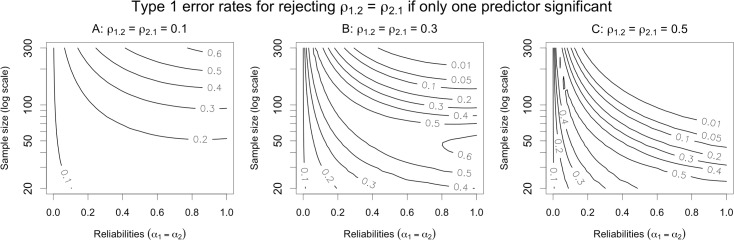
Social scientists often seek to demonstrate that a construct has incremental validity over and above other related constructs. However, these claims are typically supported by measurement-level models that fail to consider the effects of measurement (un)reliability. We use intuitive examples, Monte Carlo simulations, and a novel analytical framework to demonstrate that common strategies for establishing incremental construct validity using multiple regression analysis exhibit extremely high Type I error rates under parameter regimes common in many psychological domains. Counterintuitively, we find that error rates are highest--in some cases approaching 100%--when sample sizes are large and reliability is moderate. Our findings suggest that a potentially large proportion of incremental validity claims made in the literature are spurious. We present a web application (http://jakewestfall.org/ivy/) that readers can use to explore the statistical properties of these and other incremental validity arguments. We conclude by reviewing SEM-based statistical approaches that appropriately control the Type I error rate when attempting to establish incremental validity.
Overview
The claims and statistics of this paper haven’t been checked yet.
Free: it reads the open-access text and checks the first 5 claims that cite a source we can check. Create a free account to check every claim.
Integrity signals
Registry
Cites
Statistics
Figures
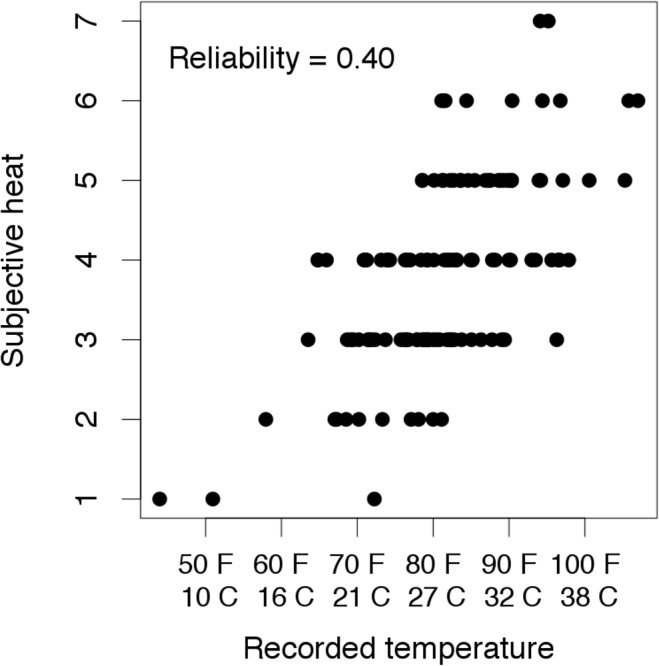
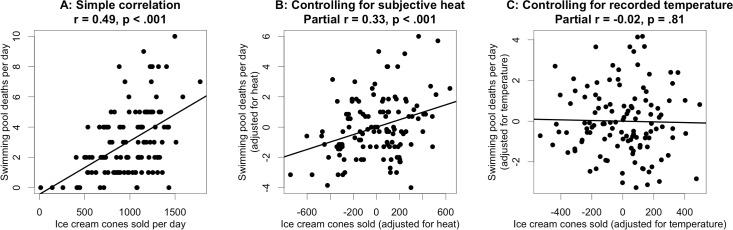
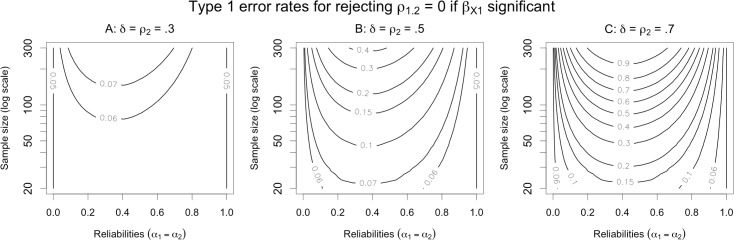
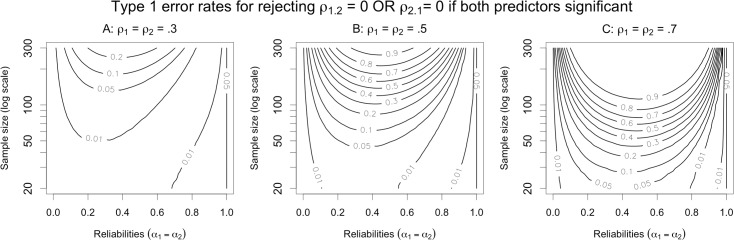
Verification
Claims the paper makes
The claims and statistics of this paper haven’t been checked yet.
Free: it reads the open-access text and checks the first 5 claims that cite a source we can check. Create a free account to check every claim.
Claims other papers make about this one
Each is checked against this paper’s own text: does it say what the citing paper says it does?
The source backs part of the claim, not all of it — or backs it for a different population, condition or comparison.
In the citing paper
“meaning that the association between loneliness and mental health outcomes in these studies is very likely to be inflated.16”
From Rapid Systematic Review: The Impact of Social Isolation and Loneliness on the Mental Health of Children and Adolescents in the Context of COVID-19 (2020) · cites this paper as [16]
Experimental — accuracy not yet measured
Self-check
Percentages, sums and reported differences re-computed from the paper’s own numbers.
The self-check needs the paper’s full text.
Citations
Cites
(1998) · Cited by 36,049
Structural Equations with Latent Variables.
Clogg, C. C., & Bollen, K. A. (1991) · Contemporary Sociology · doi:10.2307/2072165 · Cited by 17,442
Structural Equations with Latent Variables
Bollen, K. A. (1989) · Wiley series in probability and statistics · doi:10.1002/9781118619179 · Cited by 17,277
Construct validity in psychological tests.
Cronbach, L. J., & Meehl, P. E. (1955) · Psychological Bulletin · doi:10.1037/h0040957 · Cited by 11,195 · cited 2×
“After all, in any given analysis, there is a simple fact of the matter as to whether or not the unique contribution of one or more variables in a regression is statistically significant when controlling for other variables; what room is there for inferential error? Trouble arises, however, when researchers behave as i…”
BackgroundTHE BIG FIVE PERSONALITY DIMENSIONS AND JOB PERFORMANCE: A META‐ANALYSIS
BARRICK, M. R., & MOUNT, M. K. (1991) · Personnel Psychology · doi:10.1111/j.1744-6570.1991.tb00688.x · Cited by 8,689
Handbook of Personality: Theory and Research
Krueger, R. F., & Johnson, W. (2008) · Cited by 7,884
Implicit social cognition: Attitudes, self-esteem, and stereotypes
Greenwald, A. G., & Banaji, M. R. (1995) · Psychological Review · doi:10.1037/0033-295x.102.1.4 · Cited by 6,682
Handbook of Personality : Theory and Research
Pervin, L. A. (1992) · Cited by 4,543
Understanding and using the Implicit Association Test: III. Meta-analysis of predictive validity.
Greenwald, A. G., Poehlman, T. A., Uhlmann, E. L., & Banaji, M. R. (2009) · Journal of Personality and Social Psychology · doi:10.1037/a0015575 · Cited by 3,257
The New Statistics: Why and How
Cumming, G. (2014) · Psychological Science · doi:10.1177/0956797613504966 · Cited by 3,200 · cited 1×
“For example, suppose one takes the view that the null hypothesis is almost never exactly true, and that researchers should instead focus on parameter estimation [34,35].”
Background
Research works printed but not linked: 1
- Goldberg LR. The Eugene-Springfield community sample: Information available from the research participants. ORI Tech Rep. 2008; 45(1).
Cited by
Advanced Bayesian Multilevel Modeling with the R Package brms
Bürkner, P.-C. (2018) · The R Journal · doi:10.32614/rj-2018-017 · Cited by 3,015
Loades, M. E., Chatburn, E., Higson-Sweeney, N., Reynolds, S., Shafran, R., Brigden, A., Linney, C., McManus, M. N., Borwick, C., & Crawley, E. (2020) · Journal of the American Academy of Child & Adolescent Psychiatry · doi:10.1016/j.jaac.2020.05.009 · Cited by 2,906
“In cross-sectional studies, likely confounders (eg, adversity, socioeconomic status [SES]) were rarely controlled for, meaning that the association between loneliness and mental health outcomes in these studies is very likely to be inflated.(16) Four longitudinal studies used multi-informant approaches, including self…”
BackgroundChoosing Prediction Over Explanation in Psychology: Lessons From Machine Learning
Yarkoni, T., & Westfall, J. (2017) · Perspectives on Psychological Science · doi:10.1177/1745691617693393 · Cited by 1,916
“For example, we and others have demonstrated that under typical measurement conditions, statistical significance patterns observed in fitted regression models are often very unstable and can produce highly misleading conclusions (Shear & Zumbo, 2013; Westfall & Yarkoni, 2016).”
BackgroundSelf-citationThinking Clearly About Correlations and Causation: Graphical Causal Models for Observational Data
Rohrer, J. M. (2018) · Advances in Methods and Practices in Psychological Science · doi:10.1177/2515245917745629 · Cited by 1,002
“Westfall and Yarkoni (2016) assessed how the false positive rate for an effect is affected by measurement error of covariates that are being controlled for.”
BackgroundInfluentialShort and extra-short forms of the Big Five Inventory–2: The BFI-2-S and BFI-2-XS
Soto, C. J., & John, O. P. (2017) · Journal of Research in Personality · doi:10.1016/j.jrp.2017.02.004 · Cited by 927
If, Why, and When Subjective Well‐Being Influences Health, and Future Needed Research
Diener, E., Pressman, S. D., Hunter, J., & Delgadillo‐Chase, D. (2017) · Applied Psychology: Health and Well-Being · doi:10.1111/aphw.12090 · Cited by 679
Power Analysis for Parameter Estimation in Structural Equation Modeling: A Discussion and Tutorial
Wang, Y. A., & Rhemtulla, M. (2021) · Advances in Methods and Practices in Psychological Science · doi:10.1177/2515245920918253 · Cited by 544
“…dotted and solid lines in Figure 3 reveals a large effect of the analysis method on power: Conducting a multiple regression on observed composite scores instead of conducting latent-variable SEM resulted in greater power to detect the target regression effect (see also Westfall & Yarkoni, 2016).”
MethodRethinking Executive Function and Its Development
Doebel, S. (2020) · Perspectives on Psychological Science · doi:10.1177/1745691620904771 · Cited by 517
“As a result, confounds usually are not well controlled, making it difficult to draw causal conclusions (Westfall & Yarkoni, 2016).”
BackgroundDevelopmental cognitive neuroscience using latent change score models: A tutorial and applications
Kievit, R. A., Brandmaier, A. M., Ziegler, G., van Harmelen, A.-L., de Mooij, S. M. M., Moutoussis, M., Goodyer, I. M., Bullmore, E., Jones, P. B., Fonagy, P., et al. (2018) · Developmental Cognitive Neuroscience · doi:10.1016/j.dcn.2017.11.007 · Cited by 516
“, 2004), and improve the use of covariates (Westfall and Yarkoni, 2016).”
BackgroundIndividual Differences in Language Acquisition and Processing
Kidd, E., Donnelly, S., & Christiansen, M. H. (2018) · Trends in Cognitive Sciences · doi:10.1016/j.tics.2017.11.006 · Cited by 507
“Second, if covariates are measured unreliably, the relationship between independent and dependent variables can be artificially inflated [140].”
BackgroundWhy the cross-lagged panel model is almost never the right choice
Lucas, R. E. (2023) · Advances in Methods and Practices in Psychological Science · doi:10.1177/25152459231158378 · Cited by 361
“But as Westfall and Yarkoni (2016) pointed out when discussing the difficulty of establishing incremental predictive validity of any kind, if the measure that they include as a control (i.”
BackgroundInfluentialKline, R. B. (2018) · Canadian Studies in Population · doi:10.25336/csp29418 · Cited by 336
Statistical Challenges in “Big Data” Human Neuroimaging
Smith, S. M., & Nichols, T. E. (2018) · Neuron · doi:10.1016/j.neuron.2017.12.018 · Cited by 330
“…is incomplete and increasing N just increases sensitivity to the un-adjusted variance that ‘leaks’ through ; addressing this requires measures of confound uncertainty and a more complex modelling approach that propagates this uncertainty through the modelling process (Westfall and Yarkoni 2014).”
A distributed brain network predicts general intelligence from resting-state human neuroimaging data
Dubois, J., Galdi, P., Paul, L. K., & Adolphs, R. (2018) · Philosophical Transactions of the Royal Society B: Biological Sciences · doi:10.1098/rstb.2017.0284 · Cited by 316
Investigating the genetic architecture of noncognitive skills using GWAS-by-subtraction
Demange, P. A., Malanchini, M., Mallard, T. T., Biroli, P., Cox, S. R., Grotzinger, A. D., Tucker-Drob, E. M., Abdellaoui, A., Arseneault, L., van Bergen, E., et al. (2021) · Nature Genetics · doi:10.1038/s41588-020-00754-2 · Cited by 298
That’s a Lot to Process! Pitfalls of Popular Path Models
Rohrer, J. M., Hünermund, P., Arslan, R. C., & Elson, M. (2022) · Advances in Methods and Practices in Psychological Science · doi:10.1177/25152459221095827 · Cited by 267
“However, the models may be too complex to result in useful description (for a similar argument, see Foster, 2010b), and they are not complex and flexible enough to result in useful prediction (for an introduction to machine learning, see Westfall & Yarkoni, 2016).”
BackgroundMeaningful Mediation Analysis: Plausible Causal Inference and Informative Communication
Pieters, R. (2017) · Journal of Consumer Research · doi:10.1093/jcr/ucx081 · Cited by 266
“Importantly, structural equation modeling can also account for measurement error when mediator and/or outcome are measured with single items, if estimates of their reliability are available from previous studies, meta-analyses, or other sources (Anderson and Gerbing 1988; Westfall and Yarkoni 2016).”
BackgroundMethodWorse than measurement error: Consequences of inappropriate latent variable measurement models.
Rhemtulla, M., van Bork, R., & Borsboom, D. (2020) · Psychological Methods · doi:10.1037/met0000220 · Cited by 257
Confound modelling in UK Biobank brain imaging
Alfaro-Almagro, F., McCarthy, P., Afyouni, S., Andersson, J. L. R., Bastiani, M., Miller, K. L., Nichols, T. E., & Smith, S. M. (2021) · NeuroImage · doi:10.1016/j.neuroimage.2020.117002 · Cited by 249
“So far, we have assumed that confound variable A was estimated perfectly, but as discussed in (Westfall and Yarkoni, 2016), this may not be absolutely true.”
Nutritional Psychiatry: Where to Next?
Jacka, F. N. (2017) · eBioMedicine · doi:10.1016/j.ebiom.2017.02.020 · Cited by 245
“Less commonly-utilized statistical approaches to data analysis, such as structural equationmodeling, may help tomitigate some of the most pernicious issues relating to residual confounding in observational studies (Westfall and Yarkoni, 2016).”
Statistical Control Requires Causal Justification
Wysocki, A. C., Lawson, K. M., & Rhemtulla, M. (2022) · Advances in Methods and Practices in Psychological Science · doi:10.1177/25152459221095823 · Cited by 230
“…(b) the predictor and control variables must be measured without error or a model that deals with the measurement error must be used (Savalei, 2019; Westfall & Yarkoni, 2016), and (c) the relevant variables must be measured at a time when the causal process can be captured.5 Causal inference is…”
BackgroundMethodObjections to the HEXACO Model of Personality Structure—and why those Objections Fail
Ashton, M. C., & Lee, K. (2020) · European Journal of Personality · doi:10.1002/per.2242 · Cited by 224
“As discussed by Schmidt, Hunter, and Caplan (1981) and by Westfall and Yarkoni (2016), the incremental validity provided by one scale over another can sometimes occur simply because the former helps to make up for the imperfect reliability of the latter.”
BackgroundResultHow to Characterize the Function of a Brain Region
Genon, S., Reid, A., Langner, R., Amunts, K., & Eickhoff, S. B. (2018) · Trends in Cognitive Sciences · doi:10.1016/j.tics.2018.01.010 · Cited by 220
“The internal validity is further reduced by the consideration that behavioral measurements could be relatively noisy proxies of the latent construct(s) they aim to target [68].”
BackgroundMethodInfluentialSilva, S., Gutman, B. A., Romero, E., Thompson, P. M., Altmann, A., & Lorenzi, M. (2019) · 2019 IEEE 16th International Symposium on Biomedical Imaging (ISBI 2019) · doi:10.1109/isbi.2019.8759317 · Cited by 189
“Interestingly, the issue of “leaking” spurious variability of confounders after correction has been already reported in a number of multi-centric studies, and is matter of ongoing research [14, 15].”
BackgroundPsychology's Replication Crisis and Clinical Psychological Science
Tackett, J. L., Brandes, C. M., King, K. M., & Markon, K. E. (2019) · Annual Review of Clinical Psychology · doi:10.1146/annurev-clinpsy-050718-095710 · Cited by 198
Vainik, U., García‐García, I., & Dagher, A. (2019) · European Journal of Neuroscience · doi:10.1111/ejn.14352 · Cited by 186
“…validities of each eating questionnaire to predict an outcome, such as food intake or weight gain, should be rigorously demonstrated (Vainik et al., 2015b; Westfall & Yarkoni, 2016; Vainik & Meule, 2018) and not just assumed to exist because the questionnaires happen to have different names.”
BackgroundOut of Control: The (Over) Use of Controls in Accounting Research
Whited, R. L., Swanquist, Q. T., Shipman, J. E., & Moon, J. R. (2022) · The Accounting Review · doi:10.2308/tar-2019-0637 · Cited by 177
“Unlike other settings where statistical power can diminish concerns with noise (e.g., noisy Y ), large sample sizes do not alleviate this issue (Westfall and Yarkoni 2016).”
Quantifying performance of machine learning methods for neuroimaging data
Jollans, L., Boyle, R., Artiges, E., Banaschewski, T., Desrivières, S., Grigis, A., Martinot, J.-L., Paus, T., Smolka, M. N., Walter, H., et al. (2019) · NeuroImage · doi:10.1016/j.neuroimage.2019.05.082 · Cited by 173
“…iterations of analyses without reporting the findings (e.g., with and without covariates), or to tweak parameters for group inclusion to better represent the problem has been termed ‘researcher degrees of freedom’ (Simmons, Nelson, & Simonsohn, 2011; Loken & Gelman, 2017; Westfall & Yarkoni, 2016).”
BackgroundDubois, J., Galdi, P., Han, Y., Paul, L. K., & Adolphs, R. (2018) · Personality Neuroscience · doi:10.1017/pen.2018.8 · Cited by 172
“The easiest way (though perhaps not the best way, see Westfall & Yarkoni, 2016) to control for these confounds is by regressing the confounding variables on the score of interest in our sample of subjects.”
A Critical Appraisal of the Dark-Triad Literature and Suggestions for Moving Forward
Miller, J. D., Vize, C., Crowe, M. L., & Lynam, D. R. (2019) · Current Directions in Psychological Science · doi:10.1177/0963721419838233 · Cited by 169
Russo, D., Hanel, P. H. P., Altnickel, S., & van Berkel, N. (2021) · Empirical Software Engineering · doi:10.1007/s10664-021-09945-9 · Cited by 162
“Unlike many other types of analyses, structural equation modeling adjusts for reliability [107].”
BackgroundEvaluating the Big Five as an organizing framework for commonly used psychological trait scales.
Bainbridge, T. F., Ludeke, S. G., & Smillie, L. D. (2022) · Journal of Personality and Social Psychology · doi:10.1037/pspp0000395 · Cited by 162
Sibling Constructs: What Are They, Why Do They Matter, and How Should You Handle Them?
Lawson, K. M., & Robins, R. W. (2021) · Personality and Social Psychology Review · doi:10.1177/10888683211047101 · Cited by 144
“Therefore, in addition to using construct valid measures, we also recommend evaluating Criterion 4 by examining correlations between latent variables, which account for measurement error (Borsboom, 2008; Westfall & Yarkoni, 2016).”
MethodHow to control for confounds in decoding analyses of neuroimaging data
Snoek, L., Miletić, S., & Scholte, H. S. (2019) · NeuroImage · doi:10.1016/j.neuroimage.2018.09.074 · Cited by 143
“First, one needs to obtain an accurate measurement of potential confounds (Westfall and Yarkoni, 2016).”
Brandt, N. D., Lechner, C. M., Tetzner, J., & Rammstedt, B. (2019) · Journal of Personality · doi:10.1111/jopy.12482 · Cited by 164
Obtaining Unbiased Results in Meta-Analysis: The Importance of Correcting for Statistical Artifacts
Wiernik, B. M., & Dahlke, J. A. (2020) · Advances in Methods and Practices in Psychological Science · doi:10.1177/2515245919885611 · Cited by 135
“…by the product of the square root of the reliabilities (Spearman, 1904)4: r r r r c xx yy = obs ′ ′ (3) This formula is analogous to estimating the correlation between latent variables in a structural equation model when the specified model has simple structure (Westfall & Yarkoni, 2016).”
BackgroundTanner, D. (2018) · Cortex · doi:10.1016/j.cortex.2018.10.011 · Cited by 145
Measurement Error and Bias in Causal Models in Accounting Research
Jennings, J. N., Kim, J. M., Lee, J. A., & Taylor, D. J. (2020) · Review of Accounting Studies · doi:10.1007/s11142-023-09754-z · Cited by 177
“…variables in the regression model (Y, X, and Z), the effect of measurement error in X does not always attenuate the coefficient on X. Similarly, Westfall and Yarkoni (2016) show that measurement error in multiple explanatory variables can lead to false rejection of a true null hypothesis, even…”
Individual Differences in First Language Acquisition
Kidd, E., & Donnelly, S. (2020) · Annual Review of Linguistics · doi:10.1146/annurev-linguistics-011619-030326 · Cited by 124
“Controlling for unreliably measured variables in statistical models can lead to unacceptable Type I error rates for variables of substantive interest, with the error rates increasing as the sample size increases (Westfall & Yarkoni 2016).”
BackgroundBrick, C., & Lai, C. K. (2018) · Journal of Environmental Psychology · doi:10.1016/j.jenvp.2018.07.003 · Cited by 120
“Reports of My Death Were Greatly Exaggerated”: Behavior Genetics in the Postgenomic Era
Harden, K. P. (2020) · Annual Review of Psychology · doi:10.1146/annurev-psych-052220-103822 · Cited by 134
A structural after measurement approach to structural equation modeling.
Rosseel, Y., & Loh, W. W. (2024) · Psychological Methods · doi:10.1037/met0000503 · Cited by 157
Can We Trust Measures of Political Trust? Assessing Measurement Equivalence in Diverse Regime Types
Schneider, I. (2016) · Social Indicators Research · doi:10.1007/s11205-016-1400-8 · Cited by 160
“Westfall and Yarkoni (2016, 12) and van der Veld and Saris (2011, 241) demonstrate that multiple regression capitalizes on measurement error by incorrectly apportioning the amount of explained variance in the dependent variable between different error-laden predictors.”
Show Don’t Tell: Diversity Dishonesty Harms Racial/Ethnic Minorities at Work
Wilton, L. S., Bell, A. N., Vahradyan, M., & Kaiser, C. R. (2020) · Personality and Social Psychology Bulletin · doi:10.1177/0146167219897149 · Cited by 143
“Because regression models are associated with inflated Type I error rates (Westfall & Yarkoni, 2016), we also constructed a series of structural equation models (SEMs) to test our main hypothesis.”
MethodBambi : A Simple Interface for Fitting Bayesian Linear Models in Python
Capretto, T., Piho, C., Kumar, R. R., Westfall, J., Yarkoni, T., & Martin, O. A. (2022) · Journal of Statistical Software · doi:10.18637/jss.v103.i15 · Cited by 215
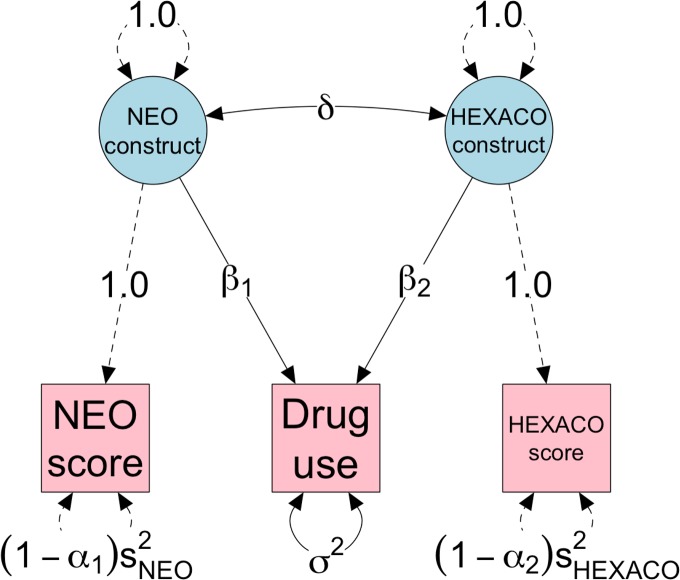
“We may further be interested in asking: which of these personality dimensions matter more for the prediction of drug use? There are many possible ways to think about what it means for one predictor to be relatively “more important” another predictor (Hunsley and Meyer 2003; Westfall and Yarkoni 2016), but one conceptu…”
BackgroundSelf-citationHaines, N., Kvam, P. D., Irving, L. H., Smith, C. T., Beauchaine, T. P., Pitt, M. A., Ahn, W., & Turner, B. M. (2020) · doi:10.31234/osf.io/xr7y3 · Cited by 112
Sirota, M., Dewberry, C., Juanchich, M., Valuš, L., & Marshall, A. C. (2020) · Journal of Behavioral Decision Making · doi:10.1002/bdm.2213 · Cited by 145
Mar, R. A. (2018) · Discourse Processes · doi:10.1080/0163853x.2018.1448209 · Cited by 108
“That said, it is very difficult to appropriately rule out the influence of third-variables statistically (Westfall & Yarkoni, 2016), and so further investigation of potential third-variable explanations is warranted.”
BackgroundAccounting for Confounding in Observational Studies
D'Onofrio, B. M., Sjölander, A., Lahey, B. B., Lichtenstein, P., & Öberg, A. S. (2020) · Annual Review of Clinical Psychology · doi:10.1146/annurev-clinpsy-032816-045030 · Cited by 122
Jach, H. K., Sun, J., Loton, D. J., Chin, T., & Waters, L. E. (2017) · Journal of Happiness Studies · doi:10.1007/s10902-016-9841-y · Cited by 149
“As incremental validity claims can be misleading, with substantially-inflated Type I error rates when observed variables are used (Westfall and Yarkoni 2016), we used latent variables for these analyses.”
BackgroundMethodInfluentialTo fear or fly to the unknown: Tolerance for ambiguity and Big Five personality traits
Jach, H. K., & Smillie, L. D. (2019) · Journal of Research in Personality · doi:10.1016/j.jrp.2019.02.003 · Cited by 129
Thielmann, I., Moshagen, M., Hilbig, B. E., & Zettler, I. (2021) · European Journal of Personality · doi:10.1177/08902070211026793 · Cited by 126
“…may either underestimate a scale’s reliability (McCrae et al., 2011; Osburn, 2000) or be positively biased (Green & Hershberger, 2000; Waller, 2008)—not correcting for unreliability can lead to inaccurate theoretical conclusions (Westfall & Yarkoni, 2016), which is arguably even more problematic.”
BackgroundBrothers, T. A., & Kuperberg, G. R. (2020) · Journal of Memory and Language · doi:10.1016/j.jml.2020.104174 · Cited by 134
A comparison of several approaches for controlling measurement error in small samples.
Savalei, V. (2018) · Psychological Methods · doi:10.1037/met0000181 · Cited by 110
Hyatt, C. S., Owens, M. M., Crowe, M. L., Carter, N. T., Lynam, D. R., & Miller, J. D. (2019) · NeuroImage · doi:10.1016/j.neuroimage.2019.116225 · Cited by 103
“This should not be considered surprising, since there are documented concerns about Type I error rates and interpretation when the predictors are strongly correlated and/or measurement error is high (e.g., Christenfeld et al., 2004; Culpepper and Aguinas, 2011; Lynam et al., 2006; Miller and Chapman, 2001; Shear and Z…”
Understanding Implicit Bias: Putting the Criticism into Perspective
Brownstein, M., Madva, A., & Gawronski, B. (2020) · Pacific philosophical quarterly · doi:10.1111/papq.12302 · Cited by 110
Are fluctuations in personality states more than fluctuations in affect?
Wilson, R. E., Thompson, R. J., & Vazire, S. (2017) · Journal of Research in Personality · doi:10.1016/j.jrp.2016.06.006 · Cited by 90
“…beyond affect for most of the Big Five personality states, except conscientiousness (though it is important to remember that this model assumes no error in our measurement of affect, and thus may overestimate the incremental predictive validity of the situation variable; Westfall & Yarkoni, 2016).”
BackgroundSassenhagen, J., & Alday, P. M. (2016) · Brain and Language · doi:10.1016/j.bandl.2016.08.001 · Cited by 91
“imated, and assuming the assumptions of the linear model are fulfilled (including all relevant variables being present and homoskedasticity of errors) and the included variables are reliably measured (Westfall and Yarkoni 2016), these estimates are unbiased (in the sense of a Best Linear Unbiased Estimator). Thus, a ma…”
MethodSchlaegel, C., Richter, N., & Taras, V. (2021) · Journal of World Business · doi:10.1016/j.jwb.2021.101209 · Cited by 132
The incremental validity of average state self-reports over global self-reports of personality.
Finnigan, K. M., & Vazire, S. (2018) · Journal of Personality and Social Psychology · doi:10.1037/pspp0000136 · Cited by 87
“As in Study 1, we ran separate models for each Big Five factor (though we only measured four of the Big Five factors in Study 2), and we followed the recommendations of Westfall and Yarkoni (2016).”
MethodMunakata, Y., & Michaelson, L. (2021) · Annual Review of Developmental Psychology · doi:10.1146/annurev-devpsych-121318-085005 · Cited by 116
McGrath, R. E., Hall-Simmonds, A., & Goldberg, L. R. (2017) · Assessment · doi:10.1177/1073191117738047 · Cited by 91
“Westfall and Yarkoni (2016).”
InfluentialMultimodal mapping of the face connectome
Wang, Y., Metoki, A., Smith, D. V., Medaglia, J. D., Zang, Y., Benear, S. L., Popal, H. S., Lin, Y., & Olson, I. R. (2020) · Nature Human Behaviour · doi:10.1038/s41562-019-0811-3 · Cited by 98
Mega‐analysis methods in ENIGMA : The experience of the generalized anxiety disorder working group
Zugman, A., Harrewijn, A., Cardinale, E. M., Zwiebel, H., Freitag, G. F., Werwath, K. E., Bas‐Hoogendam, J. M., Groenewold, N. A., Aghajani, M., Hilbert, K., et al. (2022) · Human Brain Mapping · doi:10.1002/hbm.25096 · Cited by 80
“Moreover, controlling for poorly reliable measures may not completely remove their putative effects, leading to false conclusions about effects (J. Westfall & Yarkoni, 2016).”
BackgroundA critical review of research on executive functions in sport and exercise
Furley, P., Schütz, L.-M., & Wood, G. (2023) · International Review of Sport and Exercise Psychology · doi:10.1080/1750984x.2023.2217437 · Cited by 98
“Recent methodological advances have suggested that controlling for several confounding factors to detect ‘ true moderate e ff ect sizes ’ requires impractically large sample sizes (Westfall & Yarkoni, 2016).”
Frost, A. D. S., & Ledgerwood, A. (2020) · Journal of Pacific Rim Psychology · doi:10.1017/prp.2020.7 · Cited by 76
“…(e.g., you usemultiple regression rather than latent variables to test the incremental validity of a psychological variable, which can produce spurious results due to measurement error; see Westfall & Yarkoni, 2016; Wang & Eastwick, in press), your type I error rate may be higher than you imagine.”
BackgroundThe social brain automatically predicts others’ future mental states
Thornton, M. A., Weaverdyck, M. E., & Tamir, D. I. (2019) · The Journal of Neuroscience · doi:10.1523/jneurosci.1431-18.2018 · Cited by 76
“Again, we observed similar results when using transition ratings from each imaging participant instead of independent raters for both the symmetric analysis (mean r 0.03, d 0.35, than measurement error in the covariate (Westfall and Yarkoni, 2016).”
ResultInfluentialHow to play 20 questions with nature and lose: Reflections on 100 years of brain-training research
Katz, B., Shah, P., & Meyer, D. E. (2018) · Proceedings of the National Academy of Sciences · doi:10.1073/pnas.1617102114 · Cited by 76
“Hundreds of participants may be required to adequately test whether or not a construct with a true moderate effect size had an impact on an outcome variable above and beyond a reasonably reliable confound (64).”
BackgroundIndicators of Affect Dynamics: Structure, Reliability, and Personality Correlates
Wendt, L. P., Wright, A. G. C., Pilkonis, P. A., Woods, W. C., Denissen, J. J. A., Kühnel, A., & Zimmermann, J. (2020) · European Journal of Personality · doi:10.1002/per.2277 · Cited by 88
“Thereby, validity estimates may be biased when residualized IADs are insufficiently cleared of their redundancies with mean level and general variability (Westfall & Yarkoni, 2016), but this might also occur in the presence of non-linear dependencies (Mestdagh et al., 2018).”
BackgroundScarecrow, Tin Woodsman, and Cowardly Lion: The three-factor model of virtue
McGrath, R. E., Greenberg, M. J., & Hall-Simmonds, A. (2017) · The Journal of Positive Psychology · doi:10.1080/17439760.2017.1326518 · Cited by 93
“Recently, Westfall and Yarkoni (2016) have criticized the use of multiple regression for the evaluation of incremental validity.”
BackgroundIndividual differences in musical training and executive functions: A latent variable approach
Okada, B. M., & Slevc, L. R. (2018) · Memory & Cognition · doi:10.3758/s13421-018-0822-8 · Cited by 91
“To guard against spurious effects produced via the inclusion of these factors (i.e., residual confounding; Kahneman, 1965; Westfall & Yarkoni, 2016), we also re-ran all models without including these covariates, which did not substantively change the pattern of results. of musical training, musical…”
BackgroundCislak, A., Wojcik, A. D., & Cichocka, A. (2018) · Journal of Environmental Psychology · doi:10.1016/j.jenvp.2018.08.009 · Cited by 60
Lechner, C. M., Danner, D., & Rammstedt, B. (2017) · Personality and Individual Differences · doi:10.1016/j.paid.2017.01.040 · Cited by 84
“Latent-variable models explicitlymodelingmeasurement error are required lest researchers fall prey to spurious support for incremental validity (Westfall & Yarkoni, 2016, p. 19), such aswhether personality predicts achievement over intelligence.”
BackgroundMethodInfluentialValente, J. Y., Cogo‐Moreira, H., & Sanchez, Z. M. (2017) · Drug and Alcohol Dependence · doi:10.1016/j.drugalcdep.2017.08.015 · Cited by 92
CHIELD: the causal hypotheses in evolutionary linguistics database
Roberts, S. G., Killin, A., Deb, A., Sheard, C., Greenhill, S. J., Sinnemäki, K. T.-K., Segovia‐Martín, J., Nölle, J., Berdičevskis, A., Humphreys-Balkwill, A., et al. (2020) · Journal of Language Evolution · doi:10.1093/jole/lzaa001 · Cited by 76
“This property of colliders means that spurious correlations can sometimes be introduced by statistical controls (see Elwert and Winship 2014; Ding and Miratrix 2015; Middleton et al. 2016; Westfall and Yarkoni 2016; Rohrer 2018; York 2018).”
BackgroundMichaelson, L., & Munakata, Y. (2020) · Psychological Science · doi:10.1177/0956797619896270 · Cited by 79
Bowes, S. M., Blanchard, M. C., Costello, T. H., Abramowitz, A. I., & Lilienfeld, S. O. (2020) · Journal of Research in Personality · doi:10.1016/j.jrp.2020.103992 · Cited by 68
Anomalies in implicit attitudes research
Machery, É. (2021) · Wiley Interdisciplinary Reviews Cognitive Science · doi:10.1002/wcs.1569 · Cited by 78
“…the incremental predictive validity of indirect measures such as the IAT face an additional difficulty: When measurement error is not controlled for, the risk of Type I error is inflated when scientists claim that indirect measures have incremental predictive validity (Westfall & Yarkoni, 2016).”
BackgroundNaragon-Gainey, K., & Watson, D. (2018) · Assessment · doi:10.1177/1073191116659741 · Cited by 67
R-squared change in structural equation models with latent variables and missing data
Hayes, T. (2021) · Behavior Research Methods · doi:10.3758/s13428-020-01532-y · Cited by 96
Lay Theories of Gender Influence Support for Women and Transgender People’s Legal Rights
Wilton, L. S., Bell, A. N., Carpinella, C. M., Young, D. M., Meyers, C., & Clapham, R. B. (2018) · Social Psychological and Personality Science · doi:10.1177/1948550618803608 · Cited by 80
Wallace, L., Wegener, D. T., & Petty, R. E. (2019) · Personality and Social Psychology Bulletin · doi:10.1177/0146167219858654 · Cited by 83
“Some readers may be concerned about using covariates in regression frameworks because measurement error can at times inflate the Type I error rates for incremental validity claims (Westfall & Yarkoni, 2016).”
BackgroundPutting Psychology to the Test: Rethinking Model Evaluation Through Benchmarking and Prediction
Rocca, R., & Yarkoni, T. (2021) · Advances in Methods and Practices in Psychological Science · doi:10.1177/25152459211026864 · Cited by 63
“…that a construct of interest has incremental validity over and above other constructs simply because a given measure of that construct makes a statistically significant contribution after “controlling for” putative confounds (Kahneman, 1965; Shear & Zumbo, 2013; Westfall & Yarkoni, 2016).”
BackgroundSelf-citationSadikaj, G., Wright, A. G. C., Dunkley, D. M., Zuroff, D. C., & Moskowitz, D. S. (2021) · Elsevier eBooks · doi:10.1016/b978-0-12-813995-0.00033-9 · Cited by 77
Bayesian Inference for Correlations in the Presence of Measurement Error and Estimation Uncertainty
Matzke, D., Ly, A., Selker, R., Weeda, W. D., Scheibehenne, B., Lee, M. D., & Wagenmakers, E. (2017) · Collabra Psychology · doi:10.1525/collabra.78 · Cited by 68
Happiness and Prosocial Behavior: An Evaluation of the Evidence
Aknin, L. B., Whillans, A. V., Norton, M. I., & Dunn, E. W. (2019) · Cited by 121
The Implicit Association Test at age 20: What is known and what is not known about implicit biasPreprint
Greenwald, A. G., Brendl, C. M., Cai, H., Cvencek, D., Dovidio, J. F., Friese, M., Hahn, A., Hehman, E., Hofmann, W., Hughes, S., et al. (2020) · PsyArXiv (OSF Preprints) · doi:10.31234/osf.io/bf97c · Cited by 77
“Kurdi et al.’s (2018) meta-analysis confirmed this mutual incremental predictive validity, improving on the methods of Greenwald et al.’s (2009) and Oswald et al. (2013) by using a structural equation method described by Westfall and Yarkoni (2016).”
MethodWhat Explains Personality Covariation? A Test of the Socioecological Complexity Hypothesis
Lukaszewski, A. W., Gurven, M., Rueden, C. R. V., & Schmitt, D. P. (2017) · Social Psychological and Personality Science · doi:10.1177/1948550617697175 · Cited by 84
“Quantitative simulations suggest that controlling for confounding variables is problematic when measures for covariates are unreliable or vary in reliability (Westfall & Yarkoni, 2016).”
BackgroundSystematic review and meta‐analysis of adverse pregnancy outcomes after uterine adenomyosis
Razavi, M., Maleki‐Hajiagha, A., Sepidarkish, M., Rouholamin, S., Almasi‐Hashiani, A., & Rezaeinejad, M. (2019) · International Journal of Gynecology & Obstetrics · doi:10.1002/ijgo.12799 · Cited by 68
Hoyle, R. H., Lynam, D. R., Miller, J. D., & Pek, J. C. X. (2023) · Annual Review of Clinical Psychology · doi:10.1146/annurev-clinpsy-071720-015436 · Cited by 73
Implicit Transgender Attitudes Independently Predict Beliefs About Gender and Transgender People
Axt, J. R., Conway, M. A., Westgate, E. C., & Buttrick, N. R. (2020) · Personality and Social Psychology Bulletin · doi:10.1177/0146167220921065 · Cited by 71
“In addition, we sought statistically robust evidence that implicit transgender attitudes predict such outcomes beyond explicit transgender attitudes by relying on structural equation modeling analyses that account for measurement reliability (Westfall & Yarkoni, 2016).”
InfluentialWhy the Cross-Lagged Panel Model is Almost Never the Right ChoicePreprint
Lucas, R. E. (2022) · doi:10.31234/osf.io/pkec7 · Cited by 58
Brown, A. W., Aslibekyan, S. W., Bier, D. M., da Silva, R. F., Hoover, A. W., Klurfeld, D. M., Loken, E., Mayo‐Wilson, E., Menachemi, N., Pavela, G., et al. (2021) · Critical Reviews in Food Science and Nutrition · doi:10.1080/10408398.2021.1985427 · Cited by 65
Öberg, S. (2017) · The History of the Family · doi:10.1080/1081602x.2017.1302890 · Cited by 68
“Imperfect empirical measures of confounding factors, resulting from for example measurement error, drastically reduce the possibilities of removing the effect of confounding through variable adjustment (Phillips & Davey Smith, 1993; Shear & Zumbo, 2013; Westfall & Yarkoni, 2016).”
BackgroundSolutions to the problems of incremental validity testing in relationship science
Wang, Y. A., & Eastwick, P. W. (2020) · Personal Relationships · doi:10.1111/pere.12309 · Cited by 57
Zielinski, M. J., & Veilleux, J. C. (2018) · Psychological Assessment · doi:10.1037/pas0000584 · Cited by 73
“However, because recent simulation studies indicate that Type I error rates can be substantially inflated when using observed variables in incremental validity analyses (Westfall & Yarkoni, 2016), these analyses should be viewed tentatively.”
BackgroundCausal inference on human behaviour
Bailey, D. H., Jung, A. J., Beltz, A. M., Eronen, M. I., Gische, C., Hamaker, E. L., Kording, K. P., Lebel, C., Lindquist, M. A., Moeller, J., et al. (2024) · Nature Human Behaviour · doi:10.1038/s41562-024-01939-z · Cited by 56
“…(for example, depression and poverty), which pose unique challenges related to reliability and validity, along with conceptual challenges (for example, whether measurements are better understood as effects or causes of the construct of interest), all of which can affect causal inferences 26,70,71 .”
Connor, P., Sarafidis, V., Zyphur, M. J., Keltner, D. J., & Chen, S. (2019) · Psychological Science · doi:10.1177/0956797618815441 · Cited by 69
“This also raises concerns because it is well understood that statistically controlling for confounders that are measured with error (as all of our model variables likely are) does not fully remove confounding biases (Westfall & Yarkoni, 2016).”
Why do people seek information? The role of personality traits and situation perception.
Jach, H. K., DeYoung, C. G., & Smillie, L. D. (2022) · Journal of Experimental Psychology General · doi:10.1037/xge0001109 · Cited by 70
Age-of-acquisition effects: A literature review.
Elsherif, M. M., Preece, E., & Catling, J. C. (2023) · Journal of Experimental Psychology Learning Memory and Cognition · doi:10.1037/xlm0001215 · Cited by 73
Metadata
- Authors
- Westfall, J., & Yarkoni, T.
- Affiliations
- The University of Texas at Austin (US)
- Corresponding author
- Westfall, Jacob
- Venue
- PLOS ONE
- Publisher
- Public Library of Science (PLoS)
- Published
- 2016-03-31
- Volume
- 11
- Issue
- 3
- Pages
- e0152719
- ISSN
- 1932-6203 (ISSN-L)
- PMC
- PMC4816570
- OpenAlex
- W2333692357
- Semantic Scholar
- 0a1e930a87c0f634549c6d0ed64fb6b7f2d07ca2
- Cited by
- 547
- References
- 57
- Citations by year
- 2026: 37 · 2025: 44 · 2024: 43 · 2023: 51 · 2022: 39 · 2021: 67 · 2020: 60 · 2019: 72 · 2018: 60 · 2017: 57 · 2016: 16
- FWCI
- 74.91
- Type
- journal article
- Language
- en
- Open access
- gold
- doi.org
- Licence
- Locations
- PLoS ONE (publishedVersion, cc-by)
- Europe PMC (PubMed Central) (publishedVersion, cc-by)
- PubMed Central (publishedVersion, cc-by)
- PubMed (publishedVersion)
- RePEc: Research Papers in Economics (submittedVersion)
- DOAJ (DOAJ: Directory of Open Access Journals) (submittedVersion, cc-by-sa)
- Funders
- National Institute of Mental Health (R01MH096906)
- Topics
- Social Sciences › Decision Sciences › Management Science and Operations Research › Psychometric Methodologies and Testing
- Physical Sciences › Mathematics › Statistics and Probability › Statistical Methods and Bayesian Inference
- Social Sciences › Decision Sciences › Statistics, Probability and Uncertainty › Meta-analysis and systematic reviews
- Keywords
- type I error rate, measurement error, multiple linear regression, structural equation modeling, statistical power
- MeSH terms
- Humans, Monte Carlo Method, Probability, Psychometrics, Social Sciences, Reproducibility of Results, Models, Statistical
About these checks
Registry, retraction, Cites and statistics results are computed, not judged, with one exception: a printed reference that no index lists is read once by a model before it counts as a citation error. Claims are extracted by a model and kept only when their quote appears verbatim in the text; each cited source is then checked, with a model’s help, for whether it says what the claim relies on. Those verdicts can be wrong — read the claim’s quote and the cited source before relying on one.
Statistics and arithmetic are recomputed, not judged.
Confidence bands are shown only for fields calibrated on our annotated test set. None is calibrated yet, so no band is shown.
What counts as a claim ›How we measure confidence ›How we check this ›
Are you an author, or do you see a problem with this page? Request a review
Data sources
Bibliographic data: Semantic Scholar, OpenAlex, Crossref.
Contains information from the Semantic Scholar Academic Graph Datasets, made available under the ODC Attribution License (ODC-BY 1.0).
Semantic Scholar’s data is described in: Kinney, R., et al. (2023). The Semantic Scholar Open Data Platform. arXiv:2301.10140.
