

Statistically Controlling for Confounding Constructs Is Harder than You Think
Open accessThe DOI matches its Crossref record; 58 of the 58 references it cites were found in a registry or an index.
Abstract
Social scientists often seek to demonstrate that a construct has incremental validity over and above other related constructs. However, these claims are typically supported by measurement-level models that fail to consider the effects of measurement (un)reliability. We use intuitive examples, Monte Carlo simulations, and a novel analytical framework to demonstrate that common strategies for establishing incremental construct validity using multiple regression analysis exhibit extremely high Type I error rates under parameter regimes common in many psychological domains. Counterintuitively, we find that error rates are highest--in some cases approaching 100%--when sample sizes are large and reliability is moderate. Our findings suggest that a potentially large proportion of incremental validity claims made in the literature are spurious. We present a web application (http://jakewestfall.org/ivy/) that readers can use to explore the statistical properties of these and other incremental validity arguments. We conclude by reviewing SEM-based statistical approaches that appropriately control the Type I error rate when attempting to establish incremental validity.
Overview
The claims and statistics of this paper haven’t been checked yet.
Free: it reads the open-access text and checks the first 5 claims that cite a source we can check. Create a free account to check every claim.
Integrity signals
Registry
Cites
Statistics
Figures
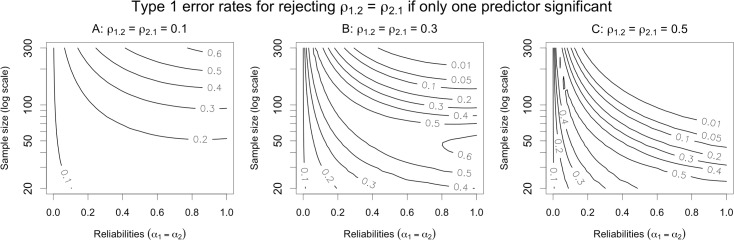
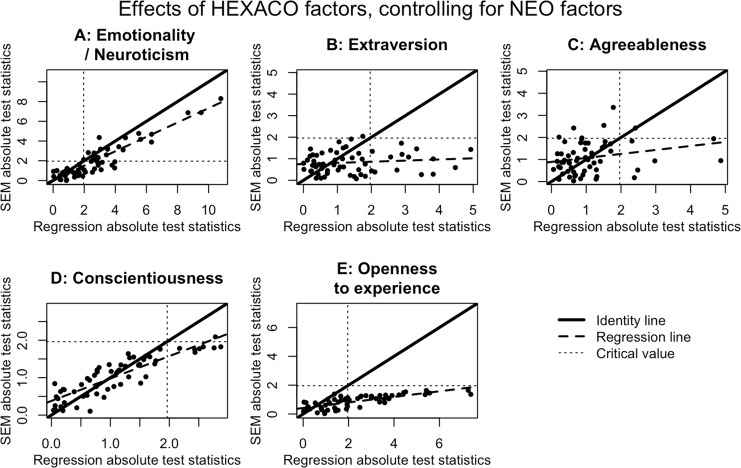
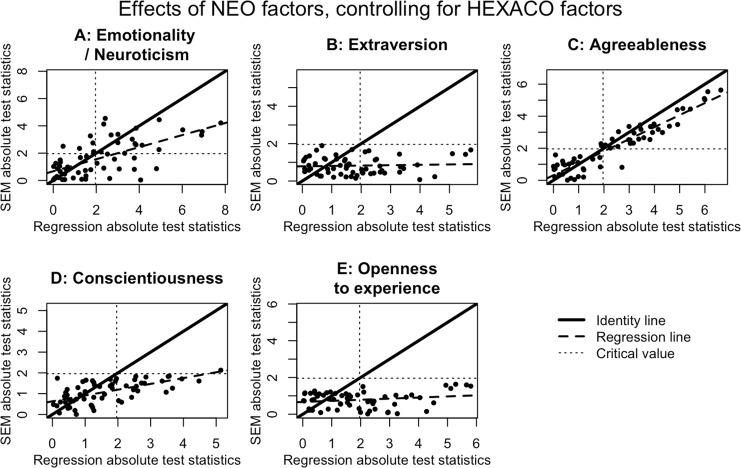
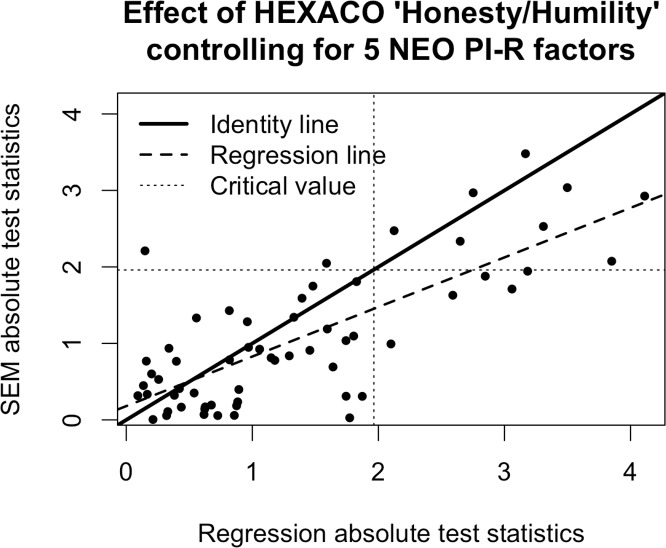
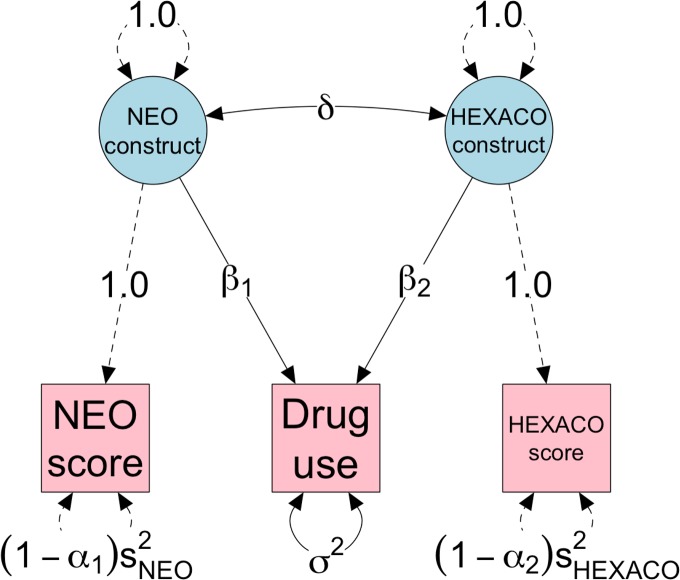
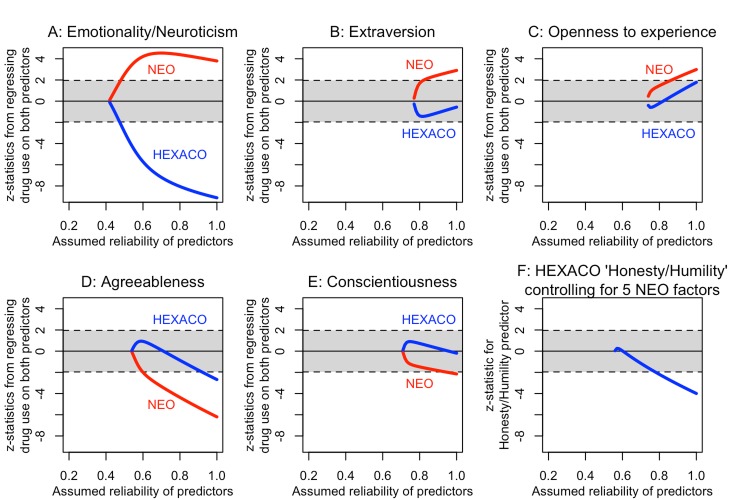
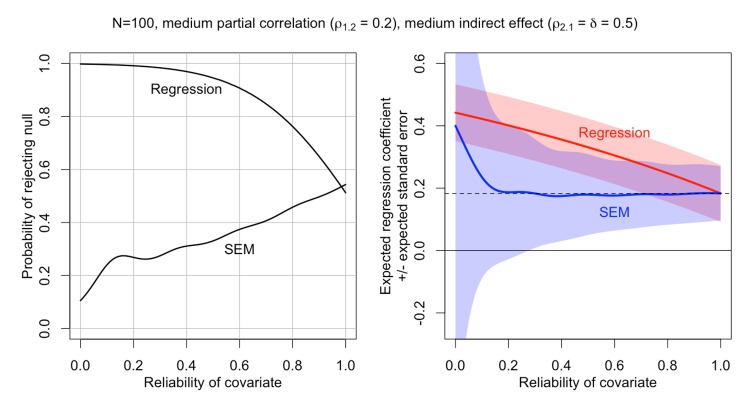
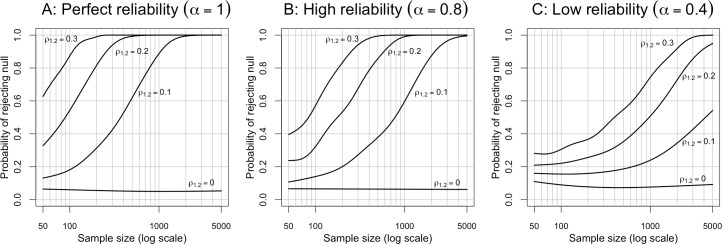
Verification
Claims the paper makes
The claims and statistics of this paper haven’t been checked yet.
Free: it reads the open-access text and checks the first 5 claims that cite a source we can check. Create a free account to check every claim.
Claims other papers make about this one
Each is checked against this paper’s own text: does it say what the citing paper says it does?
The source backs part of the claim, not all of it — or backs it for a different population, condition or comparison.
In the citing paper
“meaning that the association between loneliness and mental health outcomes in these studies is very likely to be inflated.16”
From Rapid Systematic Review: The Impact of Social Isolation and Loneliness on the Mental Health of Children and Adolescents in the Context of COVID-19 (2020) · cites this paper as [16]
Experimental — accuracy not yet measured
Self-check
Percentages, sums and reported differences re-computed from the paper’s own numbers.
The self-check needs the paper’s full text.
Citations
Cites
(1998) · Cited by 36,049
Structural Equations with Latent Variables.
Clogg, C. C., & Bollen, K. A. (1991) · Contemporary Sociology · doi:10.2307/2072165 · Cited by 17,442
Structural Equations with Latent Variables
Bollen, K. A. (1989) · Wiley series in probability and statistics · doi:10.1002/9781118619179 · Cited by 17,277
Construct validity in psychological tests.
Cronbach, L. J., & Meehl, P. E. (1955) · Psychological Bulletin · doi:10.1037/h0040957 · Cited by 11,195 · cited 2×
“After all, in any given analysis, there is a simple fact of the matter as to whether or not the unique contribution of one or more variables in a regression is statistically significant when controlling for other variables; what room is there for inferential error? Trouble arises, however, when researchers behave as i…”
BackgroundTHE BIG FIVE PERSONALITY DIMENSIONS AND JOB PERFORMANCE: A META‐ANALYSIS
BARRICK, M. R., & MOUNT, M. K. (1991) · Personnel Psychology · doi:10.1111/j.1744-6570.1991.tb00688.x · Cited by 8,689
Handbook of Personality: Theory and Research
Krueger, R. F., & Johnson, W. (2008) · Cited by 7,884
Implicit social cognition: Attitudes, self-esteem, and stereotypes
Greenwald, A. G., & Banaji, M. R. (1995) · Psychological Review · doi:10.1037/0033-295x.102.1.4 · Cited by 6,682
Handbook of Personality : Theory and Research
Pervin, L. A. (1992) · Cited by 4,543
Understanding and using the Implicit Association Test: III. Meta-analysis of predictive validity.
Greenwald, A. G., Poehlman, T. A., Uhlmann, E. L., & Banaji, M. R. (2009) · Journal of Personality and Social Psychology · doi:10.1037/a0015575 · Cited by 3,257
The New Statistics: Why and How
Cumming, G. (2014) · Psychological Science · doi:10.1177/0956797613504966 · Cited by 3,200 · cited 1×
“For example, suppose one takes the view that the null hypothesis is almost never exactly true, and that researchers should instead focus on parameter estimation [34,35].”
Background
Research works printed but not linked: 1
- Goldberg LR. The Eugene-Springfield community sample: Information available from the research participants. ORI Tech Rep. 2008; 45(1).
Cited by
Items 501–545 of 545
Kiper, G., Newman, D. J., & Oyserman, D. (2025) · Self and Identity · doi:10.1080/15298868.2025.2487537 · Cited by 2
“Then we followed Westfall et al.’s (2016) recommendation of using structural equation modeling to examine results for evidence of the incremental validity of difficulty-as-improvement.”
Rachev, N. R., Peycheva, E. D., Kamburidis, J., & McElroy, T. (2025) · Journal of Cognitive Psychology · doi:10.1080/20445911.2025.2498573 · Cited by 1
“More generally, many positive incremental validity claims in a multiple regression context might be spurious due to measurement unreliability and Type I error (Erceg et al., 2020; Westfall & Yarkoni, 2016).”
França, T. F. A., Cogo‐Moreira, H., & Pompéia, S. (2025) · PsyArXiv (OSF Preprints) · doi:10.31234/osf.io/nw26z_v2
Krumbholz, F. (2025) · Springer eBooks · doi:10.1007/978-3-658-47919-0_17
França, T. F. A., Cogo‐Moreira, H., & Pompéia, S. (2025) · Hormones and Behavior · doi:10.1016/j.yhbeh.2025.105803 · Cited by 2
Cígler, H., Daňsová, P., Javůrková, A., Raudenská, J., & Prikner, O. (2025) · SSRN Electronic Journal · doi:10.2139/ssrn.5412596
Summit, A. G., Lin, H., Wisner, K., Chen, C., Pettersson, E., Boersma, K., D'Onofrio, B. M., Lichtenstein, P., & Quinn, P. D. (2025) · Pain · doi:10.1097/j.pain.0000000000003809
Nguyen, M. (2025) · Springer eBooks · doi:10.1007/978-3-032-01719-2_10
Hiemer, J., & Andresen, M. (2025) · German Journal of Human Resource Management Zeitschrift für Personalforschung · doi:10.1177/23970022251391028
Noulton, R. D., & Smillie, L. D. (2025) · Personality Science · doi:10.1177/27000710251408730 · Cited by 1
“…s (2025) analyses, we conducted these analyses with structural equation modelling using the Δ R 2 function from Hayes (2021), thereby accounting for measurement error and mitigating the in fl ated risk of making false positive conclusions when testing incremental validity (Westfall & Yarkoni, 2016).”
Sorjonen, K., Nilsonne, G., Melin, B., & Ingre, M. (2021) · Figshare · doi:10.6084/m9.figshare.14385325
Sorjonen, K., Nilsonne, G., Melin, B., & Ingre, M. (2021) · Figshare · doi:10.6084/m9.figshare.14385322
Sorjonen, K., Nilsonne, G., Melin, B., & Ingre, M. (2021) · Figshare · doi:10.6084/m9.figshare.14385319
Products of correlational analyses of MIDUS2 personality data
Altschul, D. (2023) · Octopus · doi:10.57874/y7r6-dr29
Jabutay, F. A., Ilao, D., Espiritu, G., Swangchaeng, N., & Betantos, L. N. (2026) · Leadership and Policy in Schools · doi:10.1080/15700763.2025.2610626
Brindal, E., Bainbridge, T. F., & Kakoschke, N. (2026) · Frontiers in Psychology · doi:10.3389/fpsyg.2025.1627029
Hamdani, L., Demel, R., Hutter, S., & Specht, J. (2026) · Social Psychological and Personality Science · doi:10.1177/19485506251413297 · Cited by 1
“Nevertheless, a lack of reliability can lead to Type-I errors (Westfall & Yarkoni, 2016).”
Slik kan du som sykepleier vurdere helsepåstander kritisk
Elvsaas, I. Ø. (2026) · Sykepleien Forskning · doi:10.4220/sykepleiens.2026.105157
Fincham, F. D., & Tudder, A. (2026) · Journal of Religion and Health · doi:10.1007/s10943-026-02608-3
Restorative justice and the evidence hierarchy: implications for policy and practice
Robinson, C. G., Logan, M. W., Dulisse, B. C., Adams, I. T., & Morgan, M. A. (2026) · Evidence Base · doi:10.1080/30679125.2026.2632868
“Even still, selecting confounder controls perfectly does not rid concerns of other fatal mistakes such as measurement error (Westfall & Yarkoni, 2016).”
Román-Caballero, R., Trujillo, L., Martín-Sánchez, P. D. C., Martín‐Arévalo, E., & Lupiáñez, J. (2026) · British Journal of Psychology · doi:10.1111/bjop.70068
“…identifies all third variables included in our propensity-score matching procedure as confounders (e.g., Corrigall et al., 2013), measurement error in our observed variables warrants caution when generalizing these conclusions to the level of latent constructs (Westfall & Yarkoni, 2016).”
Grente, O. (2021) · theses.fr (ABES) · doi:10.70675/01765038z878fz47d8z975fzf51a6294494c · Cited by 12
Benner, G. J., Smolkowski, K., Allor, J. H., Otaiba, S. A., Preast, J. L., Small, J. W., Hermecz, S. B., & Strycker, L. A. (2026) · Remedial and Special Education · doi:10.1177/07419325261420807
Swamping and masking rate in binomial regression model
Saleh, N. N. (2026) · Boletim da Sociedade Paranaense de Matemática · doi:10.5269/bspm.80163
Lechner, C., Roemer, L., & Rammstedt, B. (2025) · OSF Preprints (OSF Preprints)
513 Statistical mediation analysis for communication science
Goodboy, A. K., & Kline, R. B. (2026) · De Gruyter eBooks · doi:10.1515/9783111203577-003
No Need to Be Indirect: On the Role of Data in the Validation of Theoretical Models
Vanhasbroeck, N., Yu, K., & Ariens, S. (2026) · Theory & Psychology · doi:10.1177/09593543261450876
Jovanović, V., & Jefferies, P. (2026) · Adversity and Resilience Science · doi:10.1007/s42844-026-00232-4
“However, it does not control for measurement error, leading to an increase in type I error rates and biased and potentially invalid conclusions (Westfall & Yarkoni, 2016).”
Shen, J. (2026) · School Effectiveness and School Improvement · doi:10.1080/09243453.2026.2693486
“This design requires justification because controlling for a related construct risks overcontrol bias (Westfall & Yarkoni, 2016).”
Sample sizes in sport and exercise psychology: Have they increased in the past decade?
Pindl, T., Schweizer, G., & Furley, P. (2026) · Psychology of sport and exercise · doi:10.1016/j.psychsport.2026.103231 · Cited by 12
Ten recommendations for improving the study of executive functions in sport and exercise
Schütz, L.-M., Brimmell, J., Furley, P., Uiga, L., & Wood, G. (2026) · International Review of Sport and Exercise Psychology · doi:10.1080/1750984x.2026.2710156
Specific cognitive abilities: A discussion of advantages and disadvantages of measurement methods
Ree, M. J., & Carretta, T. R. (2026) · Intelligence · doi:10.1016/j.intell.2026.102043
Knox-Lane, T., Hayes, T., Waguespack, A. M., & Hart, K. C. (2026) · Journal of Education for Students Placed at Risk (JESPAR) · doi:10.1080/10824669.2026.2707596
“Thus, an SEM approach will generally result in unbiased estimates and more accurate statistical inferences that are no longer prone to excessive high Type I error (see Cole & Preacher, 2014; Ledgerwood & Shrout, 2011; Westfall & Yarkoni, 2016).”
Musicians, Memory, and General Cognitive Ability: A Commentary on Grassi et al. (2025)
Toffalini, E., & Feraco, T. (2026) · Advances in Methods and Practices in Psychological Science · doi:10.1177/25152459261452948
“…or more pragmatically, as variables to be conditioned on when asking whether musicians still outperform nonmusicians at the same level of some other cognitive abilities (yet without a measurement model, this strategy carries a substantial risk of spurious conclusions; Westfall & Yarkoni, 2016).”
Elishar-Malka, V., Saks, D. W., & Ariel, Y. (2026) · Social Science Quarterly · doi:10.1111/ssqu.70198
Lindberg, L., & Maddow‐Zimet, I. (2026) · Contraception · doi:10.1016/j.contraception.2026.111727
Getting Estimation Thinking into Educational Leadership: Challenges and Next Steps
Kline, R. B. (2026) · Educational Administration Quarterly · doi:10.1177/0013161x261487655
Tsomokos, D. I., Alley, J. C., Mengelkoch, S., Norman, J., & Slavich, G. M. (2026) · Assessment · doi:10.1177/10731911261484451 · Cited by 1
Schmalz, X., & Rothe, J. (2026) · Written Language & Literacy · doi:10.1075/wll.00102.sch
Reply to Gillan et al.: What should be the null hypothesis in computational psychiatry?
Sarna, N., Dar, R., & Mazor, M. (2026) · Proceedings of the National Academy of Sciences · doi:10.1073/pnas.2628596123
“1 A ), the CIT–confidence associ - ation in these datasets remains consistent with the effect being entirely driven by residual response biases (8).”
Cognitive Abilities, Personality, and Sustainable Attitudes and Behavior
Lubczyk, T., Bleidorn, W., Hopwood, C. J., & Kretzschmar, A. (2026) · European Journal of Personality · doi:10.1177/08902070261486523
Ardini, S. J., & Triastuti, N. (2026) · Priviet Social Sciences Journal · doi:10.55942/pssj.v6i10.2326
“…it can inflate or deflate individual coefficients and change their ranking (Cole & Preacher, 2014), and the apparent unique contribution of a predictor over correlated others is biased, with sharply inflated Type I error rates for claims of incremental validity (Westfall & Yarkoni, 2016).”
Syarifah, T., & Aprida, C. A. (2026) · Priviet Social Sciences Journal · doi:10.55942/pssj.v6i10.2328
“With an HTMT ratio above 1, the two composites do not measure separable constructs in this sample, and when two unreliable measures of overlapping constructs compete in one equation, the unique association attributed to each is biased and prone to false positives (Westfall & Yarkoni, 2016).”
Wijaya, S. D., & Bakti, S. (2026) · Priviet Social Sciences Journal · doi:10.55942/pssj.v6i10.2324
“…in correlated predictors can then inflate some partial coefficients, deflate others, and reorder them (Cole & Preacher, 2014), and controlling statistically for one unreliably measured construct while estimating another produces spurious incremental effects at high rates (Westfall & Yarkoni, 2016).”
Ramadhani, B. O., & Triastuti, N. (2026) · Priviet Social Sciences Journal · doi:10.55942/pssj.v6i10.2325
“…partial coefficients are biased in directions that depend on the reliabilities and intercorrelations; therefore, their ranking can change (Cole & Preacher, 2014), and tests of incremental validity reject the null hypothesis far more often than their nominal error rate (Westfall & Yarkoni, 2016).”
Metadata
- Authors
- Westfall, J., & Yarkoni, T.
- Affiliations
- The University of Texas at Austin (US)
- Corresponding author
- Westfall, Jacob
- Venue
- PLOS ONE
- Publisher
- Public Library of Science (PLoS)
- Published
- 2016-03-31
- Volume
- 11
- Issue
- 3
- Pages
- e0152719
- ISSN
- 1932-6203 (ISSN-L)
- PMC
- PMC4816570
- OpenAlex
- W2333692357
- Semantic Scholar
- 0a1e930a87c0f634549c6d0ed64fb6b7f2d07ca2
- Cited by
- 547
- References
- 57
- Citations by year
- 2026: 37 · 2025: 44 · 2024: 43 · 2023: 51 · 2022: 39 · 2021: 67 · 2020: 60 · 2019: 72 · 2018: 60 · 2017: 57 · 2016: 16
- FWCI
- 74.91
- Type
- journal article
- Language
- en
- Open access
- gold
- doi.org
- Licence
- Locations
- PLoS ONE (publishedVersion, cc-by)
- Europe PMC (PubMed Central) (publishedVersion, cc-by)
- PubMed Central (publishedVersion, cc-by)
- PubMed (publishedVersion)
- RePEc: Research Papers in Economics (submittedVersion)
- DOAJ (DOAJ: Directory of Open Access Journals) (submittedVersion, cc-by-sa)
- Funders
- National Institute of Mental Health (R01MH096906)
- Topics
- Social Sciences › Decision Sciences › Management Science and Operations Research › Psychometric Methodologies and Testing
- Physical Sciences › Mathematics › Statistics and Probability › Statistical Methods and Bayesian Inference
- Social Sciences › Decision Sciences › Statistics, Probability and Uncertainty › Meta-analysis and systematic reviews
- Keywords
- type I error rate, measurement error, multiple linear regression, structural equation modeling, statistical power
- MeSH terms
- Humans, Monte Carlo Method, Probability, Psychometrics, Social Sciences, Reproducibility of Results, Models, Statistical
About these checks
Registry, retraction, Cites and statistics results are computed, not judged, with one exception: a printed reference that no index lists is read once by a model before it counts as a citation error. Claims are extracted by a model and kept only when their quote appears verbatim in the text; each cited source is then checked, with a model’s help, for whether it says what the claim relies on. Those verdicts can be wrong — read the claim’s quote and the cited source before relying on one.
Statistics and arithmetic are recomputed, not judged.
Confidence bands are shown only for fields calibrated on our annotated test set. None is calibrated yet, so no band is shown.
What counts as a claim ›How we measure confidence ›How we check this ›
Are you an author, or do you see a problem with this page? Request a review
Data sources
Bibliographic data: Semantic Scholar, OpenAlex, Crossref.
Contains information from the Semantic Scholar Academic Graph Datasets, made available under the ODC Attribution License (ODC-BY 1.0).
Semantic Scholar’s data is described in: Kinney, R., et al. (2023). The Semantic Scholar Open Data Platform. arXiv:2301.10140.
