

The DOI matches its Crossref record; 45 of the 45 references it cites were found in a registry or an index.
Performance of a commercial multi-sensor wearable (Fitbit Charge HR) in measuring physical activity and sleep in healthy children
Open accessAbstract
PURPOSE: This study sought to assess the performance of the Fitbit Charge HR, a consumer-level multi-sensor activity tracker, to measure physical activity and sleep in children. METHODS: 59 healthy boys and girls aged 9-11 years old wore a Fitbit Charge HR, and accuracy of physical activity measures were evaluated relative to research-grade measures taken during a combination of 14 standardized laboratory- and field-based assessments of sitting, stationary cycling, treadmill walking or jogging, stair walking, outdoor walking, and agility drills. Accuracy of sleep measures were evaluated relative to polysomnography (PSG) in 26 boys and girls during an at-home unattended PSG overnight recording. The primary analyses included assessment of the agreement (biases) between measures using the Bland-Altman method, and epoch-by-epoch (EBE) analyses on a minute-by-minute basis. RESULTS: Fitbit Charge HR underestimated steps (~11.8 steps per minute), heart rate (~3.58 bpm), and metabolic equivalents (~0.55 METs per minute) and overestimated energy expenditure (~0.34 kcal per minute) relative to research-grade measures (p< 0.05). The device showed an overall accuracy of 84.8% for classifying moderate and vigorous physical activity (MVPA) and sedentary and light physical activity (SLPA) (sensitivity MVPA: 85.4%; specificity SLPA: 83.1%). Mean estimates of bias for measuring total sleep time, wake after sleep onset, and heart rate during sleep were 14 min, 9 min, and 1.06 bpm, respectively, with 95.8% sensitivity in classifying sleep and 56.3% specificity in classifying wake epochs. CONCLUSIONS: Fitbit Charge HR had adequate sensitivity in classifying moderate and vigorous intensity physical activity and sleep, but had limitations in detecting wake, and was more accurate in detecting heart rate during sleep than during exercise, in healthy children. Further research is needed to understand potential challenges and limitations of these consumer devices.
Overview
The claims and statistics of this paper haven’t been checked yet.
Run the check — free, no account needed. It reads the open-access text and checks the sources it cites.
Integrity signals
Registry
Cites
Statistics
Figures
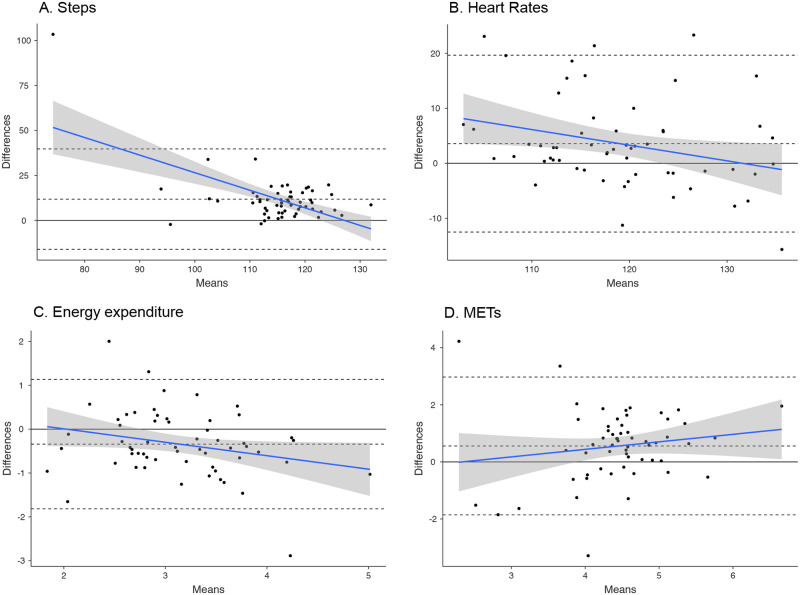
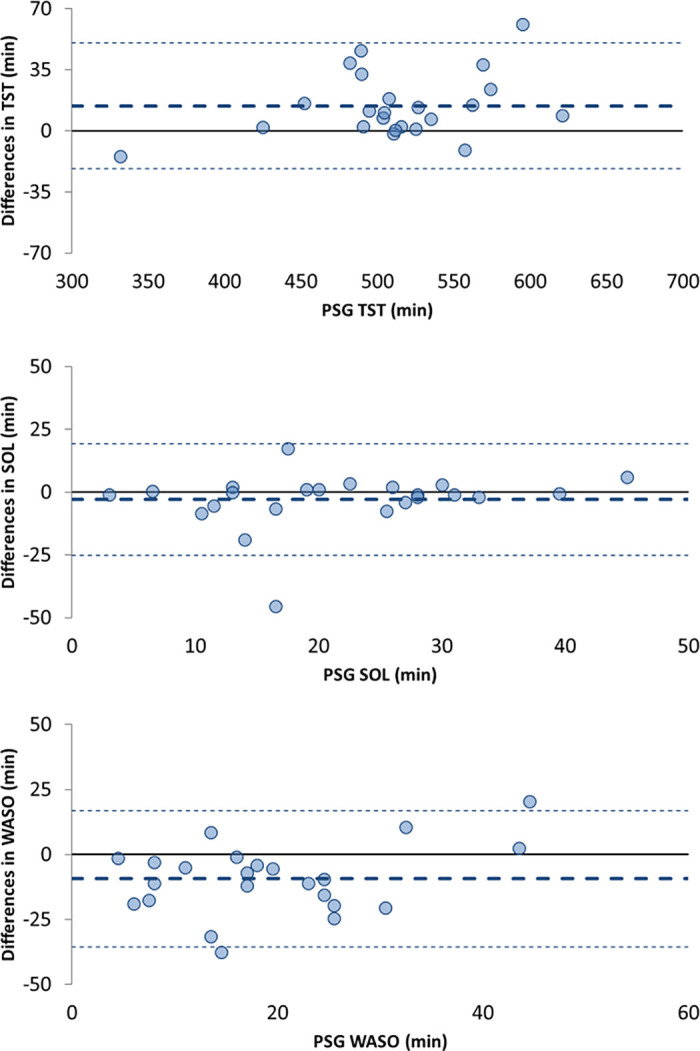
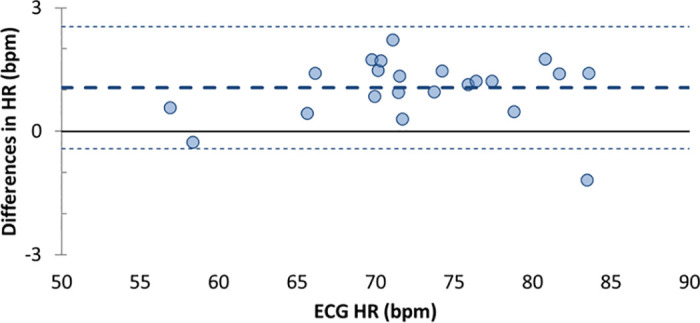
Verification
Claims the paper makes
The claims and statistics of this paper haven’t been checked yet.
Run the check — free, no account needed. It reads the open-access text and checks the sources it cites.
Claims other papers make about this one
Each is checked against this paper’s own text: does it say what the citing paper says it does?
In the citing paper
“For the validation study, considering as a first main outcome HR, a sample size of n = 20 participants is deemed sufficient, as reported in the literature [50–52].”
In the citing paper
“There is limited evidence on whether long-term health monitoring using wearable devices will yield reliable and equitable real-world data18 across the diverse socioeconomic and demographic19,20 population spectrum,21,22 particularly among racial and ethnic minority groups.23”
From Association of Demographic and Socioeconomic Indicators With the Use of Wearable Devices Among Children (2023) · cites this paper as [20]
Self-check
Percentages, sums and reported differences re-computed from the paper’s own numbers.
The self-check needs the paper’s full text.
Citations
Cites
(2014) · Medical Entomology and Zoology · Cited by 9,400
Global physical activity levels: surveillance progress, pitfalls, and prospects
Hallal, P. C., Andersen, L. B., Bull, F. C., Guthold, R., Haskell, W., & Ekelund, U. (2012) · The Lancet · doi:10.1016/s0140-6736(12)60646-1 · Cited by 5,711 · cited 1×
“[3,4] Although some of this heterogeneity may result from true biological mechanisms, the challenge of precisely measuring these complex habitual behaviors is likely a major contributor.”
BackgroundCalibration of two objective measures of physical activity for children
Evenson, K. R., Catellier, D. J., Gill, K., Ondrak, K. S., & McMurray, R. G. (2008) · Journal of Sports Sciences · doi:10.1080/02640410802334196 · Cited by 2,677 · cited 1×
“[34] It is important to highlight that aforementioned research-grade accelerometers must be hip-worn to measure physical activity intensity, whereas the Fitbit Charge HR is worn on the wrist.”
BackgroundSleep duration and all-cause mortality: a systematic review and meta-analysis of prospective studies
Cappuccio, F. P., D'Elia, L., Strazzullo, P., & Miller, M. A. (2010) · Sleep · doi:10.1093/sleep/33.5.585 · Cited by 2,224 · cited 1×
“[3,4] Although some of this heterogeneity may result from true biological mechanisms, the challenge of precisely measuring these complex habitual behaviors is likely a major contributor.”
BackgroundAASM Scoring Manual Updates for 2017 (Version 2.4)
Berry, R. B., Brooks, R., Gamaldo, C. E., Harding, S. M., Lloyd, R. M., Quan, S. F., Troester, M. M., & Vaughn, B. V. (2017) · Journal of Clinical Sleep Medicine · doi:10.5664/jcsm.6576 · Cited by 1,605 · cited 2×
“[27] Those who agreed had a trained technician arrive at their home approximately one hour before their usual bedtime to prepare for the recording.”
BackgroundMethodActivity-Based Sleep-Wake Identification: An Empirical Test of Methodological Issues
Sadeh, A., Sharkey, M., & Carskadon, M. A. (1994) · Sleep · doi:10.1093/sleep/17.3.201 · Cited by 1,487 · cited 1×
“[28,29] The corresponding minute-level metrics from the Fitbit Charge HR were defined as ‘sleep’, ‘restless’, and ‘wake’.”
The role and validity of actigraphy in sleep medicine: an update
Sadeh, A. (2011) · Sleep Medicine Reviews · doi:10.1016/j.smrv.2010.10.001 · Cited by 1,415 · cited 1×
“However, in concordance with research-grade actigraphy, [38] the Fitbit Charge HR had a lower specificity, accurately detecting wake epochs at a rate of 56%.”
Evolution of accelerometer methods for physical activity research
Troiano, R. P., McClain, J. J., Brychta, R. J., & Chen, K. Y. (2014) · British Journal of Sports Medicine · doi:10.1136/bjsports-2014-093546 · Cited by 968 · cited 1×
“[7,8] However, recent advances in microtechnology, data processing, wireless communication, and battery capacity have resulted in the proliferation of low-cost, non-invasive, devices within the consumer space.”
BackgroundSedentary behavior and health outcomes: an overview of systematic reviews.
Rezende, L. F. M. D., Rodrigues Lopes, M., Rey-López, J. P., Matsudo, V. K. R., & Luiz, O. D. C. (2014) · PLoS ONE · doi:10.1371/journal.pone.0105620 · Cited by 965
A LIFE COURSE APPROACH TO CHRONIC DISEASE EPIDEMIOLOGY
Lynch, J. W., & Smith, G. D. (2005) · Annual Review of Public Health · doi:10.1146/annurev.publhealth.26.021304.144505 · Cited by 956 · cited 1×
“[5,6] Tools for the objective assessment of the frequency, intensity (or quality), and duration of physical activity and sleep in adults and children have largely been developed for short-term use (i.”
BackgroundLuyster, F. S., Strollo, P. J., Zee, P. C., & Walsh, J. K. (2012) · SLEEP · doi:10.5665/sleep.1846 · Cited by 923
Use of actigraphy for assessment in pediatric sleep research
Meltzer, L. J., Montgomery‐Downs, H. E., Insana, S., & Walsh, C. M. (2012) · Sleep Medicine Reviews · doi:10.1016/j.smrv.2011.10.002 · Cited by 679 · cited 2×
“Validation studies of actigraphy in children have generally reported a similar pattern of high sensitivity and relatively lower specificity (for a review, see [8]).”
BackgroundWearable Sleep Technology in Clinical and Research Settings
DE ZAMBOTTI, M., CELLINI, N., GOLDSTONE, A., COLRAIN, I. M., & BAKER, F. C. (2019) · Medicine & Science in Sports & Exercise · doi:10.1249/mss.0000000000001947 · Cited by 564 · cited 7×
“[29,42,43] The level of accuracy that we will be able to reach by using peripheral physiology and motion and advancing signal processing, to estimate EEG-based sleep macrostructure, is still unknown.”
BackgroundMethodResultInfluentialBrage, S., Brage, N., Franks, P. W., Ekelund, U., Wong, M.-Y., Andersen, L. B., Froberg, K., & Wareham, N. J. (2004) · Journal of Applied Physiology · doi:10.1152/japplphysiol.00703.2003 · Cited by 473 · cited 1×
“[13] The combination of these data streams through branched equation modeling and/or machine learned algorithms may result in more accurate measurement of physical activity and sleep, [13,14] and allows for the assessment of newly developed PLOS ONE Performance of a commercial activity tracker in children”
BackgroundA validation study of Fitbit Charge 2™ compared with polysomnography in adults
de Zambotti, M., Goldstone, A., Claudatos, S. A., Colrain, I. M., & Baker, F. C. (2017) · Chronobiology International · doi:10.1080/07420528.2017.1413578 · Cited by 435
Validity of Consumer-Based Physical Activity Monitors
LEE, J.-M., KIM, Y., & WELK, G. J. (2014) · Medicine & Science in Sports & Exercise · doi:10.1249/mss.0000000000000287 · Cited by 401
Accuracy of wrist-worn heart rate monitors
Wang, R., Blackburn, G., Desai, M., Phelan, D., Gillinov, L., Houghtaling, P., & Gillinov, M. (2017) · JAMA Cardiology · doi:10.1001/jamacardio.2016.3340 · Cited by 386
Reliability and validity of ten consumer activity trackers
Kooiman, T. J. M., Dontje, M. L., Sprenger, S. R., Krijnen, W. P., van der Schans, C. P., & de Groot, M. (2015) · BMC Sports Science, Medicine and Rehabilitation · doi:10.1186/s13102-015-0018-5 · Cited by 360
Direct Comparison of Two New Actigraphs and Polysomnography in Children and Adolescents
Meltzer, L. J., Walsh, C. M., Traylor, J. T., & Westin, A. M. L. (2011) · SLEEP · doi:10.5665/sleep.1608 · Cited by 339 · cited 2×
“[37] In that study, authors analyzed in-lab overnight sleep in 115 children and adolescents (3–18 y old).”
BackgroundMethodDobkin, B. H., & Dorsch, A. K. (2011) · Neurorehabilitation and neural repair · doi:10.1177/1545968311425908 · Cited by 311
Brage, S., Ekelund, U., Brage, N., Hennings, M. A., Froberg, K., Franks, P. W., & Wareham, N. J. (2007) · Journal of Applied Physiology · doi:10.1152/japplphysiol.00092.2006 · Cited by 303 · cited 1×
“[11,12] For example, heart rate monitors can accurately assess high intensity physical activity that accelerometers measure poorly (e.”
BackgroundMovement toward a novel activity monitoring device
Montgomery-Downs, H. E., Insana, S. P., & Bond, J. A. (2012) · Sleep and Breathing · doi:10.1007/s11325-011-0585-y · Cited by 301
Wareham, N. J., & Rennie, K. L. (1998) · PubMed · Cited by 256
Depner, C. M., Cheng, P., Devine, J. K., Khosla, S., de Zambotti, M., Robillard, R., Vakulin, A., & Drummond, S. P. A. (2019) · SLEEP · doi:10.1093/sleep/zsz254 · Cited by 245
Dooley, E. E., Golaszewski, N. M., & Bartholomew, J. B. (2017) · JMIR mHealth and uHealth · doi:10.2196/mhealth.7043 · Cited by 242
How consumer physical activity monitors could transform human physiology research
Wright, S. P., Hall Brown, T. S., Collier, S. R., & Sandberg, K. (2017) · American Journal of Physiology-Regulatory, Integrative and Comparative Physiology · doi:10.1152/ajpregu.00349.2016 · Cited by 234 · cited 1×
“[18] However, our understanding of the performance of these devices is still largely unknown.”
BackgroundMeltzer, L. J., Hiruma, L., Avis, K. T., Montgomery‐Downs, H. E., & Valentin, J. (2015) · SLEEP · doi:10.5665/sleep.4918 · Cited by 228 · cited 1×
“Our findings are also consistent with other validation studies examining the use of Fitbit devices in healthy adolescent [15,39] and adult samples.”
Resultde Zambotti, M., Baker, F. C., Willoughby, A. R., Godino, J. G., Wing, D., Patrick, K., & Colrain, I. M. (2016) · Physiology & Behavior · doi:10.1016/j.physbeh.2016.03.006 · Cited by 222 · cited 2×
“[16,40] For example, Fitbit Charge HR showed a specificity of 42% in a sample of 12–21 y old healthy adolescents, [36] while a similar Fitbit model (Fitbit Charge 2) showed a specificity of 61% in a sample of 19–61 y old adults.”
BackgroundResultSelf-citationTudor-Locke, C. E., Barreira, T. V., Schuna, J. M., Mire, E. F., Chaput, J., Fogelholm, M., Hu, G., Kuriyan, R., Kurpad, A. V., Lambert, E. V., et al. (2015) · International Journal of Behavioral Nutrition and Physical Activity · doi:10.1186/s12966-015-0172-x · Cited by 208
Physical activity: more of the same is not enough
Hallal, P. C., Bauman, A. E., Heath, G. W., Kohl, H. W., Lee, I.-M. M., & Pratt, M. (2012) · The Lancet · doi:10.1016/s0140-6736(12)61027-7 · Cited by 197 · cited 1×
“[1,2] However, the observed associations of physical activity and sleep vary considerably with a variety of health outcomes.”
BackgroundAdolescent Sleep, Risk Behaviors, and Depressive Symptoms: Are They Linked?
Pasch, K. (2010) · American Journal of Health Behavior · doi:10.5993/ajhb.34.2.11 · Cited by 196 · cited 1×
“[45,46] Insomnia has also been associated with poor mental health outcomes, including depression and suicidal ideation among youth.”
BackgroundBrage, S., Westgate, K., Franks, P. W., Stegle, O., Wright, A., Ekelund, U., & Wareham, N. J. (2015) · PLOS ONE · doi:10.1371/journal.pone.0137206 · Cited by 151
Bagot, K. S., Matthews, S. A., Mason, M., Squeglia, L. M., Fowler, J., Gray, K., Herting, M., May, A., Colrain, I., Godino, J., et al. (2018) · Developmental Cognitive Neuroscience · doi:10.1016/j.dcn.2018.03.008 · Cited by 145 · cited 1×
“[44] This study provides the opportunity to use a relatively inexpensive, consumer-level activity tracker to examine the diverse biological and environmental mechanisms contributing to physical activity and sleep, as well as the impact of physical activity and sleep on mental and physical health throughout development.”
BackgroundSelf-citationThompson, D., Batterham, A. M., Bock, S., Robson, C., & Stokes, K. (2006) · The Journal of Nutrition · doi:10.1093/jn/136.4.1037 · Cited by 129 · cited 1×
“[13] The combination of these data streams through branched equation modeling and/or machine learned algorithms may result in more accurate measurement of physical activity and sleep, [13,14] and allows for the assessment of newly developed PLOS ONE Performance of a commercial activity tracker in children”
BackgroundDemeter, F., Shackelford, L., Westaway, K., Duringer, P., Bacon, A., Ponche, J., Wu, X., Sayavongkhamdy, T., Zhao, J., Barnes, L., et al. (2015) · PLoS ONE · doi:10.1371/journal.pone.0121193 · Cited by 121
Feasibility of Comprehensive, Unattended Ambulatory Polysomnography in School-Aged Children
Marcus, C. L., Traylor, J. T., Biggs, S. N., Roberts, R. S., Nixon, G. M., Narang, I., Bhattacharjee, R., Davey, M. J., Horne, R. S. C., Cheshire, M., et al. (2014) · Journal of Clinical Sleep Medicine · doi:10.5664/jcsm.3970 · Cited by 104 · cited 1×
“Regarding sleep, although unattended at-home PSG is feasible, technically adequate, and well-tolerated in school-aged children when performed under research conditions, [48] and may be used in wearable validation studies, in-lab PSG is the true gold standard for assessing the performance of sleep-tracking technology.”
BackgroundSensors Capabilities, Performance, and Use of Consumer Sleep Technology
de Zambotti, M., Cellini, N., Menghini, L., Sarlo, M., & Baker, F. C. (2020) · Sleep Medicine Clinics · doi:10.1016/j.jsmc.2019.11.003 · Cited by 95 · cited 4×
“[29,42,43] The level of accuracy that we will be able to reach by using peripheral physiology and motion and advancing signal processing, to estimate EEG-based sleep macrostructure, is still unknown.”
BackgroundResultInfluentialAssociations among sleep problems, learning difficulties and substance use in adolescence
Fakier, N., & Wild, L. G. (2010) · Journal of Adolescence · doi:10.1016/j.adolescence.2010.09.010 · Cited by 77 · cited 1×
“[45,46] Insomnia has also been associated with poor mental health outcomes, including depression and suicidal ideation among youth.”
BackgroundEstimating sleep from multisensory armband measurements: validity and reliability in teens
Roane, B. M., Reen, E. V., Hart, C. N., Wing, R. R., & Carskadon, M. A. (2015) · Journal of Sleep Research · doi:10.1111/jsr.12317 · Cited by 43 · cited 1×
“[15,30,31] The agreement between measures from the Fitbit Charge HR and corresponding researchgrade measures were examined using the Bland-Altman method.”
MethodValidity of Actigraphy in Measurement of Sleep in Young Adults With Type 1 Diabetes
Farabi, S. S., Quinn, L. T., & Carley, D. W. (2017) · Journal of Clinical Sleep Medicine · doi:10.5664/jcsm.6580 · Cited by 36 · cited 1×
“[15,30,31] The agreement between measures from the Fitbit Charge HR and corresponding researchgrade measures were examined using the Bland-Altman method.”
MethodValidity of Cardiorespiratory Fitness Measured with Fitbit Compared to V˙O2max
KLEPIN, K., Wing, D., Higgins, M., Nichols, J. F., & Godino, J. (2019) · Medicine & Science in Sports & Exercise · doi:10.1249/mss.0000000000002041 · Cited by 23
Self-citationEvaluation on Step Counting Performance of Wristband Activity Monitors in Daily Living Environment
Wang, L., Liu, T., Wang, Y., Li, Q., Yi, J., & INOUE, Y. (2017) · IEEE Access · doi:10.1109/access.2017.2721098 · Cited by 20
Use of consumer monitors for estimating energy expenditure in youth
LaMunion, S. R., Blythe, A. L., Hibbing, P. R., Kaplan, A. S., Clendenin, B. J., & Crouter, S. E. (2019) · Applied Physiology, Nutrition, and Metabolism · doi:10.1139/apnm-2019-0129 · Cited by 20
Gardner, R. F., Voss, C., Dean, P. H., & Harris, K. C. (2016) · Canadian Journal of Cardiology · doi:10.1016/j.cjca.2016.07.193 · Cited by 9
Use of Consumer Monitors for Estimating Energy Expenditure in Youth
Kaplan, A. S., LaMunion, S. R., Hibbing, P. R., & Crouter, S. E. (2018) · Medicine & Science in Sports & Exercise · doi:10.1249/01.mss.0000535947.47131.e7 · Cited by 1 · cited 1×
“[25] The results from these studies are mixed, yet with increasing concern about the importance of physical activity and sleep in youth, validated, cost-effective and appealing instruments are needed for studies of youth health.”
Background
Research works printed but not linked: 2
- M de Zambotti, 2016, Measures of sleep and cardiac functioning during sleep using a multi-sensory commercially-available wristband in adolescents, Physiol Behav, 158, 143, 10.1016/j.physbeh.2016.03.006 · DOI · Paper page
- M de Zambotti, 2018, A validation study of Fitbit Charge 2™ compared with polysomnography in adults, Chronobiol Int
Cited by
Sorted by citations
de Zambotti, M., Goldstein, C. A., Cook, J. D., Menghini, L., Altini, M., Cheng, P., & Robillard, R. (2023) · SLEEP · doi:10.1093/sleep/zsad325 · Cited by 276
“…to the device may result in sensor positioning disparate from that observed when an adult uses the device; however, as an example, the Fitbit Charge HR is designed to fit wrists that are 5.4 to 8.7 inches in diameter (inclusive of the average wrist size of children as young as 3 years of age) [62].”
InfluentialYouth screen use in the ABCD® study
Bagot, K., Tomko, R., Marshall, A. T., Hermann, J., Cummins, K. M., Ksinan, A. J., Kakalis, M., Breslin, F. J., Lisdahl, K., Mason, M. J., et al. (2022) · Developmental Cognitive Neuroscience · doi:10.1016/j.dcn.2022.101150 · Cited by 108
Evaluating reliability in wearable devices for sleep staging
Birrer, V., Elgendi, M., Lambercy, O., & Menon, C. (2024) · npj Digital Medicine · doi:10.1038/s41746-024-01016-9 · Cited by 129
“If one or both epochs are classi fi ed as wake, they are scored as wake, and if both are classi fi edas sleep, they are scored as sleep 17,20,24,27,28,32,34 .”
Association of Physical Activity and Screen Time With Body Mass Index Among US Adolescents
Nagata, J. M., Smith, N., Alsamman, S., Lee, C. M., Dooley, E. E., Kiss, O., Ganson, K., Wing, D., Baker, F., & Gabriel, K. (2023) · JAMA Network Open · doi:10.1001/jamanetworkopen.2022.55466 · Cited by 93
Wulterkens, B. M., Fonseca, P. M., Hermans, L. W., Ross, M., Cerny, A., Anderer, P., Long, X., van Dijk, J. P., Vandenbussche, N., Pillen, S., et al. (2021) · Nature and Science of Sleep · doi:10.2147/nss.s306808 · Cited by 70
Metadata
- Authors
- Godino, J. G., Wing, D., de Zambotti, M., Baker, F. C., Bagot, K., Inkelis, S., Pautz, C., Higgins, M., Nichols, J., Brumback, T., Chevance, G., Colrain, I. M., Patrick, K., & Tapert, S. F.
- Affiliations
- University of California San Diego (US)
- SRI International (US)
- Northern Kentucky University (US)
- Corresponding author
- Godino, Job G.
- ORCID
- Venue
- PLoS ONE
- Publisher
- Public Library of Science (PLoS)
- Published
- 2020-09-04
- Volume
- 15
- Issue
- 9
- Pages
- e0237719
- ISSN
- 1932-6203 (ISSN-L)
- PMC
- PMC7473549
- OpenAlex
- W3083535211
- Cited by
- 107
- References
- 45
- Citations by year
- 2026: 14 · 2025: 14 · 2024: 35 · 2023: 17 · 2022: 16 · 2021: 11
- FWCI
- 6.62
- Type
- journal article
- Language
- en
- Open access
- gold
- doi.org
- Licence
- Locations
- PLoS ONE (publishedVersion, cc-by)
- PubMed Central (publishedVersion, cc-by)
- PubMed (publishedVersion)
- eScholarship (California Digital Library) (submittedVersion, cc-by)
- HAL (submittedVersion, cc-by)
- DOAJ (DOAJ: Directory of Open Access Journals) (submittedVersion, cc-by-sa)
- eScholarship (California Digital Library) (submittedVersion)
- VUBIR (Vrije Universiteit Brussel) (submittedVersion)
- Funders
- National Institute on Drug Abuse (U01DA041089)
- Topics
- Health Sciences › Medicine › Public Health, Environmental and Occupational Health › Physical Activity and Health
- Physical Sciences › Computer Science › Computer Vision and Pattern Recognition › Context-Aware Activity Recognition Systems
- Physical Sciences › Engineering › Biomedical Engineering › Non-Invasive Vital Sign Monitoring
- Keywords
- wearable activity trackers, physical activity measurement, sleep assessment, children, step count accuracy, heart rate monitoring, energy expenditure, moderate-to-vigorous physical activity, sedentary behavior, device validation
- MeSH terms
- Fitness Trackers, Child, Energy Metabolism, Female, Heart Rate, Humans, Male, Sleep, Biosensing Techniques, Exercise, Polysomnography
About these checks
Registry, retraction, Cites and statistics results are computed, not judged, with one exception: a printed reference that no index lists is read once by a model before it counts as a citation error. Claims are extracted by a model and kept only when their quote appears verbatim in the text; each cited source is then checked, with a model’s help, for whether it says what the claim relies on. Those verdicts can be wrong — read the claim’s quote and the cited source before relying on one.
Statistics and arithmetic are recomputed, not judged.
Confidence bands are shown only for fields calibrated on our annotated test set. None is calibrated yet, so no band is shown.
What counts as a claim ›How we measure confidence ›How we check this ›
Are you an author, or do you see a problem with this page? Request a review
