

Early Occupational Therapy Intervention post-stroke (EOTIPS): A randomized controlled trial
Open accessThe DOI matches its Crossref record; 67 of the 70 references it cites were found in a registry or an index; 23 of the 63 sources its claims cite were checked for support.
Abstract
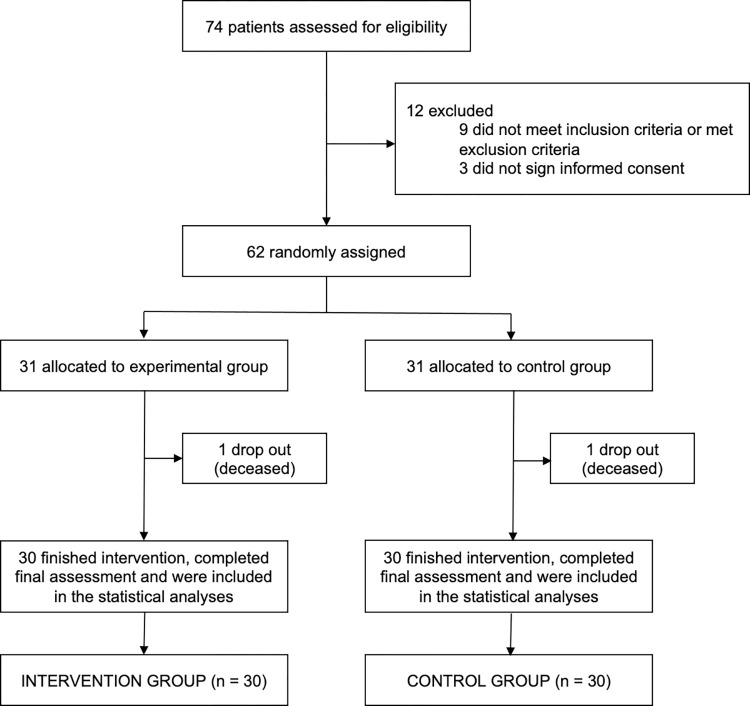
We conducted a prospective, randomized controlled clinical trial that included 60 adults who suffered a stroke and were discharged home.
Overview
CoChat Summary
## TL;DR
This randomized controlled trial tested an early occupational therapy discharge intervention for stroke patients in Spain and found better outcomes for quality of life, cognition, independence, and depression than usual care. The intervention was delivered to 30 patients and compared with 30 controls over a 3-month follow-up.
## Key findings
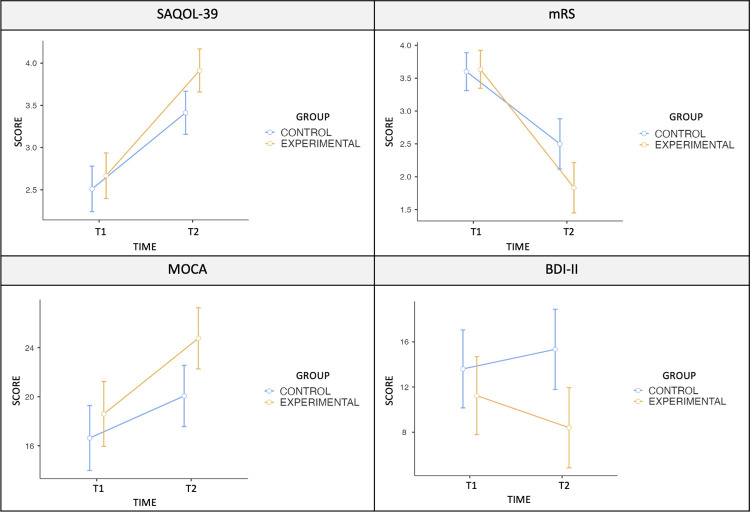
- The primary outcome, quality of life on SAQOL-39, improved more in the intervention group than the control group (p = .029).
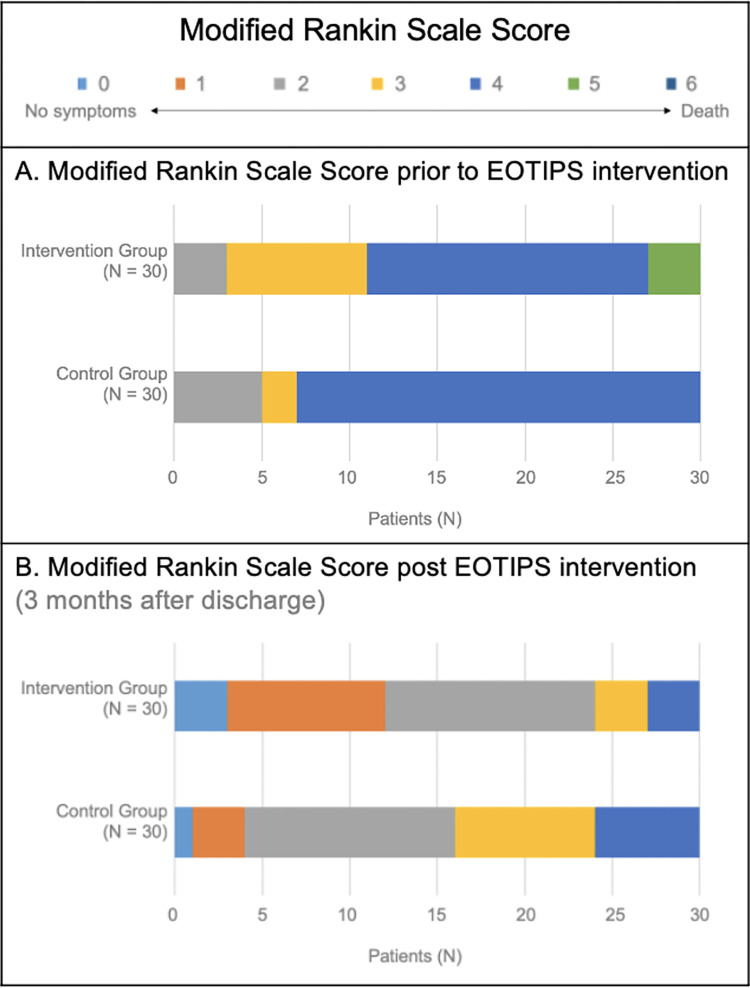
- Significant between-group improvements also favored the intervention group for independence on the modified Rankin Scale (mRS; p = .004), cognition on MoCA (p = .012), and depression on BDI-II (p = .011).
- The paper reports a 33% higher percentage of change on SAQOL-39 for the experimental group compared with the control group.
- Secondary outcomes such as Barthel Index, SIS-16, FMA, HAM-A, CAL, and BBS did not show significant between-group differences; mRS improved in both groups (p < .001).
## Methods
- Prospective, longitudinal, randomized controlled clinical trial in Spain; registration: NCT04835363.
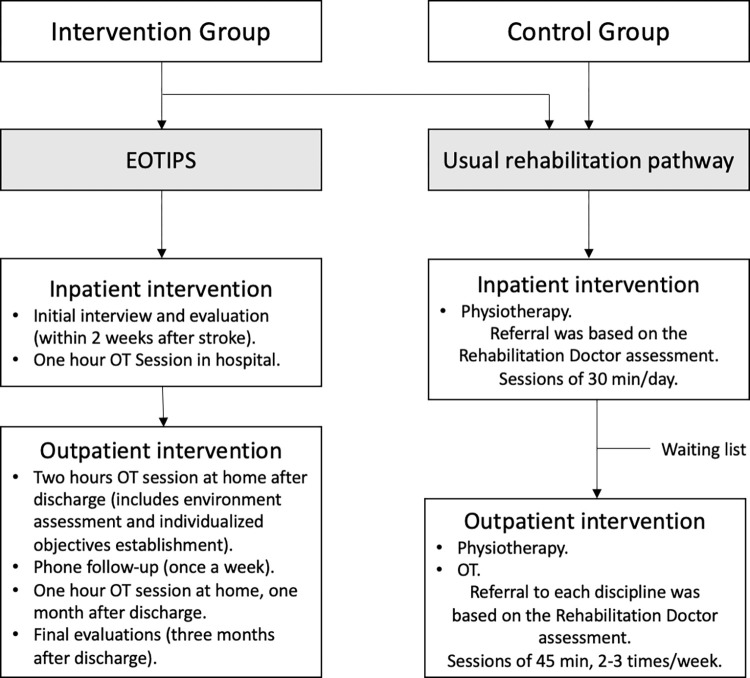
- Sample: 60 adults with stroke discharged home from Virgen de la Victoria University Hospital in Málaga; 30 assigned to early OT intervention (EOTIPS) and 30 to control, all in the early sub-acute phase and assessed within 2 weeks post-stroke and again at 3 months.
- Main analysis: repeated-measures ANOVA for group × time effects, with post-hoc pairwise comparisons when significant; intent-to-treat analysis was also performed.
## Limitations
- The paper states that 6-block randomization may not have been optimal and could have reduced comparability across covariates, potentially introducing bias and reducing power.
- The occupational therapist leading the intervention and participating in statistical analysis was not blinded, which the paper says could have influenced outcomes.
- The sample included patients with mild-moderate sequelae, so results may not be valid for moderate-severe sequelae; participants with moderate-severe aphasia were excluded.
- Rehabilitation exposure varied across participants, and some outside-hospital/private treatment data were inaccessible or unreliable; this is stated in the paper and could confound results.
Model-written summary. Check it against the paper before relying on it.
Integrity signals
Registry
Cites
Statistics
Figures
Verification
Claims the paper makes
20 Valid · 0 Not valid · 18 Not checked · 56 Own results and interpretations
Every source the paper cites for this claim was checked and supports it.
In the paper
“The power was finally recalculated with the G*Power tool [40] assuming SAQOL-39 as the primary outcome, an effect size of 0.3, a sample size of 30, a calculated measurement coefficient of 0.654, two repeated measures and two groups, obtaining a final power in the study of 96%.”
§ Early Occupational Therapy Intervention post-stroke (EOTIPS): A randomized controlled trial > Materials and methods > Statistical analysis
What the sources say
- Supportedcites [40] F Faul, 2009, Statistical power analyses using G*Power 3.1: Tests for correlation and regression analyses., Behavior Research Methods source
The cited paper describes G*Power and states in its Abstract that post hoc analysis computes statistical power from inputs including sample size and effect size. The SAQOL-39 inputs and 96% result are the citing authors’ own calculation, not findings attributed to Faul et al. (LLM, conf=0.90)
plain- Asserted: passes — The authors put it forward as true.
- Checkable: passes — It can be checked against evidence.
- Load-bearing: passes — The paper’s conclusions depend on it.
- Based: passes — The paper gives a reason why it holds.
- Supported
The sources with a verdict support this claim; the rest weren’t checked yet, have no full text we could read, or their verdicts aren’t rated yet.
In the paper
“It was calculated based on the primary outcome SAQOL-39 [20–22] with the sample size determination formula for two independent groups, assuming a mean of 2.50, standard deviation of 0.75, significance level of 5%, a power of 80% and a critical difference of 0.54, obtaining a sample of 30 participants per group, and a total of 60 participants.”
§ Early Occupational Therapy Intervention post-stroke (EOTIPS): A randomized controlled trial > Materials and methods > Statistical analysis
What the sources say
- Not checked — no full text of the sourcecites [20] A Ahmadi, 2017, Acceptability, reliability, and validity of the Stroke and Aphasia Quality of Life Scale-39 (SAQOL-39) across languages: a systematic review., Clin Rehabil. source
- Not checked — no full text of the sourcecites [21] MC Lata-Caneda, 2009, Spanish adaptation of the Stroke and Aphasia Quality of Life Scale-39 (SAQOL-39)., Eur J Phys Rehabil Med
- Supportedcites [22] K Hilari, 2009, Psychometric properties of the Stroke and Aphasia Quality of Life Scale (SAQOL-39) in a generic stroke population., Clin Rehabil. source
Split into 2 atoms — 2 confirmed, 0 partially supported, 0 disputed, 0 misattributed, 0 unverifiable. Expand the claim to see per-atom verdicts.
plainn = 60- Asserted: passes — The authors put it forward as true.
- Checkable: passes — It can be checked against evidence.
- Load-bearing: passes — The paper’s conclusions depend on it.
- Based: passes — The paper gives a reason why it holds.
The cited sources support only part of this claim — read each source’s verdict below.
In the paper
“In regards to symptoms of depression, they reduced significantly after intervention in a 69% compared to the control group, being this data cohesive with a previously published study by Feng et al. [5], although they also found a significant decline on levels of anxiety that was not reflected in our research.”
§ Early Occupational Therapy Intervention post-stroke (EOTIPS): A randomized controlled trial > Discussion
What the sources say
- Partly supportedcites Feng et al. [5] W Feng, 2021, Applicationeffectofthe hospital-community integrated service model in home rehabilitation of stroke in disabled elderly: a randomised trial, Ann Palliat Med sourceExperimental — accuracy not yet measured
The 'Adverse mood' section of our copy confirms the direction and significance of the attributed finding: after 3 months the SDS (Zung depression) scores of the observation group were lower than the control group (t=6.288, P=0.000), with no baseline difference (t=0.219, P=0.827), and the Abstract likewise reports reduced negative emotions. However, no passage in our copy states a 69% reduction or any percentage magnitude for depression: the paper reports SDS as mean±SD continuous scores (Statistical analyses section), and Table 5, which holds the actual SDS values, is not reproduced in our copy (only Tables 1-3 appear). The specific '69%' magnitude attributed to Feng et al. is therefore unsupported by our copy. (LLM, conf=0.78)
plainstates a cause- Asserted: passes — The authors put it forward as true.
- Checkable: passes — It can be checked against evidence.
- Load-bearing: passes — The paper’s conclusions depend on it.
- Based: passes — The paper gives a reason why it holds.
- Partly supported
A result the paper reports from its own data — it cites no other source for it, so there is none to check. The quote shows it is in the paper.
In the paper
“Repeated measures ANOVA results indicated that mean change in the pre-post evaluation for four of the evaluation scores were significantly different between groups, being those evaluations SAQOL-39 (F = 5.02, p = 0.029), mRS (F = 8.97, p = 0.004), MOCA (F = 6.80, p = 0.012) and BDI-II (F = 6.93, p = 0.011).”
§ Early Occupational Therapy Intervention post-stroke (EOTIPS): A randomized controlled trial > Outcome analysis
hedgedstates an association- Asserted: passes — The authors put it forward as true.
- Checkable: passes — It can be checked against evidence.
- Load-bearing: passes — The paper’s conclusions depend on it.
- Based: passes — The paper gives a reason why it holds.
A result the paper states — it cites no source for it, so there is none to check. The quote shows it is in the paper.
In the paper
“Therefore, all participants were in the early sub-acute phase of their first stroke (see Table 2).”
- Also stated in: § Participants and recruitment procedures · plain
“Therefore, this research took place exclusively with early sub-acute post-stroke patients.”
§ Early Occupational Therapy Intervention post-stroke (EOTIPS): A randomized controlled trial > Results > Recruitment and participant characteristics
plainn = 60- Asserted: passes — The authors put it forward as true.
- Checkable: passes — It can be checked against evidence.
- Load-bearing: passes — The paper’s conclusions depend on it.
- Based: passes — The paper gives a reason why it holds.
- Also stated in: § Participants and recruitment procedures · plain
34 more claims
Create a free account to see all 94 claims and to verify the 7 references still open.
- It may state two separate claims as one. 40
- Probably not a substantial claim. 29
Citations
Cites
Statistical power analyses using G∗Power 3.1: tests for correlation and regression analyses
Faul, F., Erdfelder, E., Buchner, A., & Lang, A.-G. (2009) · Behavior Research Methods · doi:10.3758/brm.41.4.1149 · Cited by 37,615
The Montreal Cognitive Assessment, MoCA: a brief screening tool for mild cognitive impairment
Nasreddine, Z. S., Phillips, N. A., Bédirian, V., Charbonneau, S., Whitehead, V., Collin, I., Cummings, J. L., & Chertkow, H. (2005) · Journal of the American Geriatrics Society · doi:10.1111/j.1532-5415.2005.53221.x · Cited by 25,553
Interobserver agreement for the assessment of handicap in stroke patients
van Swieten, J. C., Koudstaal, P. J., Visser, M. C., Schouten, H. J., & van Gijn, J. (1988) · Stroke · doi:10.1161/01.str.19.5.604 · Cited by 6,512
Comparison of Beck Depression Inventories -IA and -II in psychiatric outpatients
Beck, A. T., Steer, R. A., Ball, R., & Ranieri, W. F. (1996) · Journal of Personality Assessment · doi:10.1207/s15327752jpa6703_13 · Cited by 5,965 · cited 1×
“The maximum score is 63 (higher score, higher level of depression) [38].”
The post-stroke hemiplegic patient. 1. a method for evaluation of physical performance
Fugl-Meyer, A., Jääskö, L., Leyman, I., Olsson, S., & Steglind, S. (1975) · Journal of Rehabilitation Medicine · doi:10.2340/1650197771331 · Cited by 5,564 · cited 1×
“Items are scored on a 3-grade ordinal scale, with 0 as the minimum and 2 as the maximum [28–30].”
Classification and natural history of clinically identifiable subtypes of cerebral infarction
Bamford, J., Sandercock, P., Dennis, M., Warlow, C., & Burn, J. (1991) · The Lancet · doi:10.1016/0140-6736(91)93206-o · Cited by 3,294 · cited 1×
“According to the Oxford-shire Community Stroke Project classification [60], the most common type of stroke within the RCT was lacunar syndrome (LACS), followed by partial anterior circulation stroke (PACS) and posterior circulation syndrome (POCS).”
Pocock, S. J., & Simon, R. (1975) · Biometrics · doi:10.2307/2529712 · Cited by 2,350
CONSORT 2010 statement: updated guidelines for reporting parallel group randomised trials
Schulz, K. F., Altman, D. G., Moher, D., & for the CONSORT Group (2010) · PLoS Medicine · doi:10.1371/journal.pmed.1000251 · Cited by 2,296
CONSORT 2010 Statement: updated guidelines for reporting parallel group randomised trials
the CONSORT Group, Schulz, K. F., Altman, D. G., & Moher, D. (2010) · Trials · doi:10.1186/1745-6215-11-32 · Cited by 1,871
Occupational Therapy Practice Framework: Domain and Process—Fourth Edition
(2020) · American Journal of Occupational Therapy · doi:10.5014/ajot.2020.74s2001 · Cited by 1,449 · cited 1×
“Before beginning rehabilitation, the occupational therapist and their family explored the needs and wishes of the patient and set individual goals for the intervention period [19].”
CONSORT 2010 statement: Updated guidelines for reporting parallel group randomised trials
Schulz, K. F., Altman, D. G., & Moher, D. (2011) · International Journal of Surgery · doi:10.1016/j.ijsu.2011.09.004 · Cited by 1,044
A systematic review of quality of life research in medicine and health sciences
the LIVSFORSK network, Haraldstad, K., Wahl, A., Andenæs, R., Andersen, J. R., Andersen, M. H., Beisland, E., Borge, C. R., Engebretsen, E., Eisemann, M., et al. (2019) · Quality of Life Research · doi:10.1007/s11136-019-02214-9 · Cited by 1,011
Issues in Outcomes Research: An Overview of Randomization Techniques for Clinical Trials
Kang, M., Ragan, B. G., & Park, J.-H. (2008) · Journal of Athletic Training · doi:10.4085/1062-6050-43.2.215 · Cited by 555 · cited 1×
“Therefore, the 4-block randomization method could have been a more optimal technique to use for this study [69].”
Hemorrhagic and Ischemic Strokes Compared: Stroke Severity, Mortality, and Risk Factors
Andersen, K. K., Olsen, T. S., Dehlendorff, C., & Kammersgaard, L. P. (2009) · Stroke · doi:10.1161/strokeaha.108.540112 · Cited by 552 · cited 1×
“Moreover, hemorrhagic strokes are associated with a considerable increase of mortality [61], although that did not show in our study, being mortality rate identical between groups.”
There’s No Place Like Home: An Evaluation of Early Supported Discharge for Stroke
Mayo, N. E., Wood-Dauphinee, S., Côté, R., Gayton, D., Carlton, J., Buttery, J., & Tamblyn, R. (2000) · Stroke · doi:10.1161/01.str.31.5.1016 · Cited by 395
Lobo, A., Chamorro, L., Luque, A., Dal-Ré, R., Badia, X., & Baró, E. (2002) · Medicina Clínica · doi:10.1016/s0025-7753(02)72429-9 · Cited by 362
Stroke Impact Scale-16: A brief assessment of physical function
Duncan, P. W., Lai, S. M., Bode, R. K., Perera, S., DeRosa, J., & the GAIN Americas Investigators (2003) · Neurology · doi:10.1212/01.wnl.0000041493.65665.d6 · Cited by 299
Aphasia therapy on a neuroscience basis
Pulvermüller, F., & Berthier, M. L. (2008) · Aphasiology · doi:10.1080/02687030701612213 · Cited by 296
Paolucci, S., Antonucci, G., Grasso, M. G., Bragoni, M., Coiro, P., De Angelis, D., Fusco, F. R., Morelli, D., Venturiero, V., Troisi, E., et al. (2003) · Stroke · doi:10.1161/01.str.0000102902.39759.d3 · Cited by 283
Occupational therapy for patients with problems in activities of daily living after stroke
Legg, L., Drummond, A., & Langhorne, P. (2006) · Cochrane Database of Systematic Reviews · doi:10.1002/14651858.cd003585.pub2 · Cited by 230
Use of Montreal Cognitive Assessment in Patients With Stroke
Chiti, G., & Pantoni, L. (2014) · Stroke · doi:10.1161/strokeaha.114.004590 · Cited by 183
Clinimetric Properties of the Timed Up and Go Test for Patients With Stroke: A Systematic Review
Hafsteinsdóttir, T. B., Rensink, M., & Schuurmans, M. (2014) · Topics in Stroke Rehabilitation · doi:10.1310/tsr2103-197 · Cited by 176
Stroke and transient ischemic attack incidence rate in Spain: the IBERICTUS study.
Díaz-Guzmán, J., Egido, J.-A., Gabriel-Sánchez, R., Barberá-Comes, G., Fuentes-Gimeno, B., Fernández-Pérez, C., & on behalf of the IBERICTUS Study Investigators of the Stroke Project of the Spanish Cerebrovascular Diseases Study Group (2012) · Cerebrovascular Diseases · doi:10.1159/000342652 · Cited by 174 · cited 1×
“However, advances in stroke prevention and treatment suppose that more people survive and live with its long-term consequences [1].”
Stolwyk, R. J., Mihaljcic, T., Wong, D. K., Chapman, J. E., & Rogers, J. M. (2021) · Stroke · doi:10.1161/strokeaha.120.032215 · Cited by 158
A Consensus on Stroke: Early Supported Discharge
Fisher, R. J., Gaynor, C., Kerr, M., Langhorne, P., Anderson, C., Bautz-Holter, E., Indredavik, B., Mayo, N. E., Power, M., Rodgers, H., et al. (2011) · Stroke · doi:10.1161/strokeaha.110.606285 · Cited by 148 · cited 3×
“…are not many studies on the effectivity of a multidisciplinary intervention in the process of hospital discharge after stroke that includes the figure of the occupational therapist, with the majority being carried out in northern Europe [3, 4, 53–55], UK [56], China [12, 57] and Australia [47].”
Patient-Reported Outcome Measures (PROMs) for Acute Stroke: Rationale, Methods and Future Directions
Reeves, M., Lisabeth, L., Williams, L., Katzan, I., Kapral, M., Deutsch, A., & Prvu-Bettger, J. (2018) · Stroke · doi:10.1161/strokeaha.117.018912 · Cited by 147
Factors Associated With Participation in Life Situations for Adults With Stroke: A Systematic Review
Ezekiel, L., Collett, J., Mayo, N. E., Pang, L., Field, L., & Dawes, H. (2018) · Archives of Physical Medicine and Rehabilitation · doi:10.1016/j.apmr.2018.06.017 · Cited by 147
Hilari, K., Lamping, D. L., Smith, S. C., Northcott, S., Lamb, A., & Marshall, J. (2009) · Clinical Rehabilitation · doi:10.1177/0269215508101729 · Cited by 145 · cited 2×
“It was calculated based on the primary outcome SAQOL-39 [20–22] with the sample size determination formula for two independent groups, assuming a mean of 2.50, standard deviation of 0.75, significance level of 5%, a power of 80% and a critical difference of 0.54, obtaining a sample of 30…”
InfluentialShi, D., Chen, X., & Zheng, L. (2018) · Neurological Sciences · doi:10.1007/s10072-018-3254-0 · Cited by 124
Rasmussen, R. S., Østergaard, A., Kjær, P., Skerris, A., Skou, C., Christoffersen, J., Seest, L. S., Poulsen, M. B., Rønholt, F., & Overgaard, K. (2016) · Clinical Rehabilitation · doi:10.1177/0269215515575165 · Cited by 114 · cited 6×
“The experimental group have shown a 33% higher percentage of change on SAQOL-39 compering to the control group, being consistent with quality-of-life improvements from a previously published study [4].”
InfluentialMild cognitive impairment in symptomatic and asymptomatic cerebrovascular disease
Popović, I. M., Šerić, V., & Demarin, V. (2007) · Journal of the Neurological Sciences · doi:10.1016/j.jns.2007.01.029 · Cited by 113
Salvadori, E., Papi, G., Insalata, G., Rinnoci, V., Donnini, I., Martini, M., Falsini, C., Hakiki, B., Romoli, A., Barbato, C., et al. (2020) · Diagnostics · doi:10.3390/diagnostics11010038 · Cited by 107 · cited 1×
“…patients usually presenting with worse functional and clinical status compared to ischemic stroke, there are studies that support the same or even better functional prognosis in stroke survivors with hemorrhagic stroke, with age and initial stroke severity as the main prognostic factors [62, 63].”
Delgado, C., Araneda, A. M., & Behrens, M. I. (2019) · Neurología (English Edition) · doi:10.1016/j.nrleng.2018.12.008 · Cited by 102
Lloyd, A., Bannigan, K., Sugavanam, T., & Freeman, J. A. (2018) · The JBI Database of Systematic Reviews and Implementation Reports · doi:10.11124/jbisrir-2017-003499 · Cited by 98 · cited 1×
“This research has relevance as it provides evidence supporting an intervention that addresses challenges found at home after discharge and emphasizes the importance of a personal-centered approach [44– 46].”
Caregiver-Delivered Stroke Rehabilitation in Rural China: The RECOVER Randomized Controlled Trial
Zhou, B., Zhang, J., Zhao, Y., Li, X., Anderson, C. S., Xie, B., Wang, N., Zhang, Y., Tang, X., Prvu Bettger, J., et al. (2019) · Stroke · doi:10.1161/strokeaha.118.021558 · Cited by 96 · cited 1×
“Decision on evaluations and intervention duration was made after reviewing recent and similar published papers, as showing main changes between groups 3 months after discharge [3, 4, 49, 53, 58] and being Barthel Index and the mRS the most widely used evaluations [3, 4, 53, 59].”
Occupational therapy for cognitive impairment in stroke patients
Gibson, E. M., Koh, C., Eames, S., Bennett, S. H., Scott, A. M., & Hoffmann, T. (2022) · Cochrane Database of Systematic Reviews · doi:10.1002/14651858.cd006430.pub3 · Cited by 89
Rehabilitation Outcomes: Ischemic versus Hemorrhagic Strokes
Perna, R., & Temple, J. (2015) · Behavioural Neurology · doi:10.1155/2015/891651 · Cited by 86
Effects of Early Mobilization after Acute Stroke: A Meta-Analysis of Randomized Control Trials
Li, Z., Zhang, X., Wang, K., & Wen, J. (2018) · Journal of Stroke and Cerebrovascular Diseases · doi:10.1016/j.jstrokecerebrovasdis.2017.12.021 · Cited by 79
Wu, Z., Xu, J., Yue, C., Li, Y., & Liang, Y. (2020) · Journal of Stroke and Cerebrovascular Diseases · doi:10.1016/j.jstrokecerebrovasdis.2020.105328 · Cited by 78 · cited 2×
“…are not many studies on the effectivity of a multidisciplinary intervention in the process of hospital discharge after stroke that includes the figure of the occupational therapist, with the majority being carried out in northern Europe [3, 4, 53–55], UK [56], China [12, 57] and Australia [47].”
Occupational identity in occupational therapy: A concept analysis
Hansson, S. O., Björklund Carlstedt, A., & Morville, A.-L. (2022) · Scandinavian Journal of Occupational Therapy · doi:10.1080/11038128.2021.1948608 · Cited by 67 · cited 1×
“However, they were also related to social participation and significant activities which is, in turn, their sense of self and occupational identity [42, 43].”
Fjærtoft, H., Rohweder, G., & Indredavik, B. (2011) · Stroke · doi:10.1161/strokeaha.110.601153 · Cited by 66 · cited 1×
“…are not many studies on the effectivity of a multidisciplinary intervention in the process of hospital discharge after stroke that includes the figure of the occupational therapist, with the majority being carried out in northern Europe [3, 4, 53–55], UK [56], China [12, 57] and Australia [47].”
Scales to Assess Gross Motor Function in Stroke Patients: A Systematic Review
Gor-García-Fogeda, M. D., Molina-Rueda, F., Cuesta-Gómez, A., Carratalá-Tejada, M., Alguacil-Diego, I. M., & Miangolarra-Page, J. C. (2014) · Archives of Physical Medicine and Rehabilitation · doi:10.1016/j.apmr.2014.02.013 · Cited by 65
Gittins, M., Lugo-Palacios, D., Vail, A., Bowen, A., Paley, L., Bray, B., & Tyson, S. (2021) · Clinical Rehabilitation · doi:10.1177/0269215520966473 · Cited by 62
Reliability and Validity of the Berg Balance Scale in the Stroke Population: A Systematic Review
Kudlac, M., Sabol, J., Kaiser, K., Kane, C., & Phillips, R. S. (2019) · Physical & Occupational Therapy In Geriatrics · doi:10.1080/02703181.2019.1631423 · Cited by 53
Patient with stroke: hospital discharge planning, functionality and quality of life
Nunes, H. J. M., & Queirós, P. J. P. (2017) · Revista Brasileira de Enfermagem · doi:10.1590/0034-7167-2016-0166 · Cited by 47 · cited 1×
“Patients should be informed and aware of the importance of discharge transition and carefully plan this moment together with professionals and caregivers, since the impact of this situation can affect quality of life and functionality [9].”
(2009) · PubMed · Cited by 39
Familism and Health Care Provision to Hispanic Older Adults
Savage, B., Foli, K. J., Edwards, N. E., & Abrahamson, K. (2016) · Journal of Gerontological Nursing · doi:10.3928/00989134-20151124-03 · Cited by 34 · cited 1×
“Only 5 participants in total (2 in the experimental group and 3 in the control group) had not a caregiver to support them on discharge, fact that may also be related to Spanish culture [65].”
Rafsten, L., Danielsson, A., Nordin, A., Björkdahl, A., Lundgren-Nilsson, A., Larsson, M. E. H., & Sunnerhagen, K. S. (2019) · BMC Neurology · doi:10.1186/s12883-019-1503-3 · Cited by 31 · cited 5×
“The included studies agreed that individual planning and rehabilitation should start before discharge and patients with both social and physical needs could benefit from multidisciplinary services [3–5], which could lead to a more rapid independence recovery [6].”
InfluentialFeng, W., Yu, H., Wang, J., & Xia, J. (2021) · Annals of Palliative Medicine · doi:10.21037/apm-21-602 · Cited by 30
Effect of a stroke support service in Germany: a randomized trial
Saal, S., Becker, C., Lorenz, S., Schubert, M., Kuss, O., Stang, A., Müller, T., Kraft, A., & Behrens, J. (2015) · Topics in Stroke Rehabilitation · doi:10.1179/1074935714z.0000000047 · Cited by 28 · cited 1×
“…are not many studies on the effectivity of a multidisciplinary intervention in the process of hospital discharge after stroke that includes the figure of the occupational therapist, with the majority being carried out in northern Europe [3, 4, 53–55], UK [56], China [12, 57] and Australia [47].”
Ahmadi, A., Tohidast, S. A., Mansuri, B., Kamali, M., & Krishnan, G. (2017) · Clinical Rehabilitation · doi:10.1177/0269215517690017 · Cited by 27 · cited 4×
“It was calculated based on the primary outcome SAQOL-39 [20–22] with the sample size determination formula for two independent groups, assuming a mean of 2.50, standard deviation of 0.75, significance level of 5%, a power of 80% and a critical difference of 0.54, obtaining a sample of 30…”
InfluentialA qualitative investigation of sense of self and continuity in younger adults with stroke
Hutton, L., & Ownsworth, T. (2019) · Neuropsychological Rehabilitation · doi:10.1080/09602011.2017.1292922 · Cited by 27
Chen, S., Lv, C., Wu, J., Zhou, C., Shui, X., & Wang, Y. (2021) · Asian Nursing Research · doi:10.1016/j.anr.2020.08.007 · Cited by 27
Escalas específicas de evaluación de calidad de vida en el ictus
Carod Artal, F. J. (2004) · Revista de Neurología · doi:10.33588/rn.3911.2004447 · Cited by 26
Ability in daily activities after early supported discharge models of stroke rehabilitation
Taule, T., Strand, L. I., Assmus, J., & Skouen, J. S. (2015) · Scandinavian Journal of Occupational Therapy · doi:10.3109/11038128.2015.1042403 · Cited by 24
Effect of carer education on functional abilities of patients with stroke
Mudzi, W., Stewart, A., & Musenge, E. (2012) · International Journal of Therapy and Rehabilitation · doi:10.12968/ijtr.2012.19.7.380 · Cited by 22
[Specific scales for rating quality of life after stroke].
Carod-Artal, F. J. (2005) · PubMed · Cited by 17
Barnden, R., Cadilhac, D. A.-M., Lannin, N. A., Kneebone, I., Hersh, D., Godecke, E., Stolwyk, R. J., Purvis, T. L., Nicks, R. J., Farquhar, M., et al. (2021) · PEC Innovation · doi:10.1016/j.pecinn.2021.100008 · Cited by 16
Rafsten, L., & Sunnerhagen, K. S. (2022) · Disability and Rehabilitation · doi:10.1080/09638288.2022.2141357 · Cited by 16
McGill, K., Sackley, C., Godwin, J., Gavaghan, D., Ali, M., Ballester, B. R., Brady, M. C., Brady, M. C., Ali, M., Ashburn, A., et al. (2022) · Journal of Stroke and Cerebrovascular Diseases · doi:10.1016/j.jstrokecerebrovasdis.2021.106229 · Cited by 14
Lannin, N. A., Clemson, L., Drummond, A., Stanley, M., Churilov, L., Laver, K., O'Keefe, S., Cameron, I., Crotty, M., Usherwood, T., et al. (2021) · BMJ Open · doi:10.1136/bmjopen-2020-044573 · Cited by 11 · cited 3×
“Studies with an evaluation protocol as extensive and complete are not common [47].”
Yamakawa, S., Nagayama, H., Tomori, K., Ikeda, K., & Niimi, A. (2023) · Frontiers in Rehabilitation Sciences · doi:10.3389/fresc.2022.1045231 · Cited by 10 · cited 2×
“Furthermore, this research exposed cohesion with other published articles significant results: improvements in functional independence [48–50], cognition skills [51] and symptoms of depression [5].”
García-Pérez, P., Lara, J. P., Rodríguez-Martínez, M. D. C., & de la Cruz-Cosme, C. (2022) · Healthcare · doi:10.3390/healthcare10091645 · Cited by 7
Self-citationOccupational therapy for persons with cognitive impairments
Schnell‐Inderst, P., Conrads‐Frank, A., Stojkov, I., Krenn, C., Kofler, L.-M., & Siebert, U. (2023) · German medical science · doi:10.3205/000316 · Cited by 5
Caregivers of Stroke Survivors’ Perspectives on Stressful Caregiver Activities.
Thomas, M., & Watson, J. (2020) · American Journal of Occupational Therapy · doi:10.5014/ajot.2020.74s1-po1731 · Cited by 4 · cited 2×
“…for stroke survivors going home on discharge shows that, although most of them are effective in terms of patients’ functional recovery, as well as caregivers’ improvements in self-efficacy and fatigue reduction, the heterogeneity of the interventions precludes to draw specific conclusions [11–13].”
Association of Cognitive Impairment With Rate of Functional Gain Among Older Adults With Stroke
Cogan, A. M., Weaver, J., Davidson, L., et al. (2022) · Journal of the American Medical Directors Association · doi:10.1016/j.jamda.2022.07.026 · Cited by 3 · cited 1×
“Furthermore, this research exposed cohesion with other published articles significant results: improvements in functional independence [48–50], cognition skills [51] and symptoms of depression [5].”
Sreekrishnan, A., Leasure, A., Zhou, S., Greer, D., & Sheth, K. (2017) · Neurology · doi:10.1212/wnl.88.16_supplement.p5.051 · Cited by 1 · cited 1×
“Moreover, while the mRS has a plateau effect in measuring recovery for this patient population between 3 and 6 months, the BI may be a more sensitive measure for assessing recovery up to 12 months [68].”
Research works printed but not linked: 6
- Patricia García-Pérez, 2024, EOTIPS DATA.xlsx. figshare, Dataset
- M Gittins, 2021, Stroke impairment categories: A new waytoclassifytheeffectsofstrokebasedonstroke-relatedimpairments., Clin Rehabil, 35, 446
- JJ Baztán, 1993, Índice de Barthel: Instrumento válido para la valoración funcional de pacientes con enfermedad cerebrovascular., Rev Esp Geriatr Gerontol, 28, 32
- BM Ferrer González, 2016, Adaptación y validación al español de la escala Fugl-Meyer en el manejo de la rehabilitación de pacientes con ictus
- C Delgado, 2019, Validación del Montreal Cognitive Assessment (MoCA): test de cribado para el deterioro cognitivo leve. Datos preliminares, Neurología, 34, 376
- Jamovi, 2022, The jamovi project (2022) [Internet].
Cited by
Gao, L., Chu, F., Liu, X., Chen, J., Zhang, M., & Zhang, Y. (2025) · PLoS ONE · doi:10.1371/journal.pone.0320142 · Cited by 7
“It can be regarded as an applicable non-drug treatment tool, leading to positive outcomes for patients after a stroke [17].”
Feng, X., Sun, X., Liu, J., Li, Y., Yao, Y.-H., Fu, J., & Gu, X. (2025) · Frontiers in Aging Neuroscience · doi:10.3389/fnagi.2025.1590783 · Cited by 12
Sloan-Garza, E., Wilson, J., Techan, A. K., Joseph, S., Weerasinghe, H., Kim, Y. J., & Olson, D. M. (2026) · American Journal of Critical Care · doi:10.4037/ajcc2026529 · Cited by 2
Zhang, L. Y., Yu, P., Yang, L., & Zhong, Z. (2026) · Neuropsychiatric Disease and Treatment · doi:10.2147/ndt.s580089 · Cited by 2
Transitional care interventions and outcome measures in stroke rehabilitation: a scoping review
Tierney‐Hendricks, C., Garza, A., Keefe, L., Cullen, R., Noordzij, R. C., Li, J. J., Bell, J. G., & Bettger, J. P. (2026) · Disability and Rehabilitation · doi:10.1080/09638288.2026.2694097 · Cited by 2
Metadata
- Authors
- García-Pérez, P., Rodríguez-Martínez, M. C., Gallardo-Tur, A., Blanco-Reina, E., de la Cruz-Cosme, C., & Lara, J. P.
- Affiliations
- Universidad de Málaga (ES)
- Andalusian Centre for Nanomedicine and Biotechnology (ES)
- Venue
- PLoS ONE
- Publisher
- Public Library of Science (PLoS)
- Published
- 2024-08-19
- Volume
- 19
- Issue
- 8
- Pages
- e0308800
- ISSN
- 1932-6203 (ISSN-L)
- PMC
- PMC11332918
- OpenAlex
- W4401691449
- Cited by
- 19
- References
- 70
- Citations by year
- 2026: 12 · 2025: 7
- FWCI
- 2.99
- Type
- journal article
- Language
- en
- Open access
- gold
- doi.org
- Licence
- Locations
- PLoS ONE (publishedVersion, cc-by)
- PubMed Central (publishedVersion, cc-by)
- PubMed (publishedVersion)
- DOAJ (DOAJ: Directory of Open Access Journals) (submittedVersion, cc-by-sa)
- Repositorio Institucional de la Universidad de Málaga (University of Málaga) (submittedVersion, cc-by-nc-nd)
- Funders
- IBIMA Plataforma BIONAND
- University of Málaga
- Topics
- Health Sciences › Medicine › Rehabilitation › Stroke Rehabilitation and Recovery
- Health Sciences › Health Professions › Occupational Therapy › Occupational Therapy Practice and Research
- Health Sciences › Health Professions › Speech and Hearing › Dysphagia Assessment and Management
- Keywords
- stroke, hospital discharge, quality of life, functional independence, perceptual-cognitive skills, depression, upper limb function, balance, non-pharmacological treatment, stroke rehabilitation
- MeSH terms
- Stroke Rehabilitation, Aged, Female, Humans, Male, Middle Aged, Occupational Therapy, Prospective Studies, Quality of Life, Spain, Treatment Outcome, Stroke
About these checks
Registry, retraction, Cites and statistics results are computed, not judged, with one exception: a printed reference that no index lists is read once by a model before it counts as a citation error. Claims are extracted by a model and kept only when their quote appears verbatim in the text; each cited source is then checked, with a model’s help, for whether it says what the claim relies on. Those verdicts can be wrong — read the claim’s quote and the cited source before relying on one.
The claim verdicts this report counts are experimental: their accuracy is not yet measured.
A language model drew the claims from the paper on 2026-10-10, under version 3 of the claim definition (model deepseek-v4.1-flash, prompt extract-v3).
A second model labelled each claim on 2026-10-10 (model jev-1.13-20260917, definition revision gold-guideline-v0.2).
Cited sources are checked with a language model’s help (gpt-6-sol and qwen3.8-omni-flash).
Statistics and arithmetic are recomputed, not judged.
Confidence bands are shown only for fields calibrated on our annotated test set. None is calibrated yet, so no band is shown.
What counts as a claim ›How we measure confidence ›How we check this ›
Are you an author, or do you see a problem with this page? Request a review
Data sources
Bibliographic data: Semantic Scholar, OpenAlex, Crossref.
Contains information from the Semantic Scholar Academic Graph Datasets, made available under the ODC Attribution License (ODC-BY 1.0).
Semantic Scholar’s data is described in: Kinney, R., et al. (2023). The Semantic Scholar Open Data Platform. arXiv:2301.10140.
