

The DOI matches its Crossref record; 61 of the 62 references it cites were found in a registry or an index.
A Novel Co-Crystal Structure Affords the Design of Gain-of-Function Lentiviral Integrase Mutants in the Presence of Modified PSIP1/LEDGF/p75
Open accessAbstract
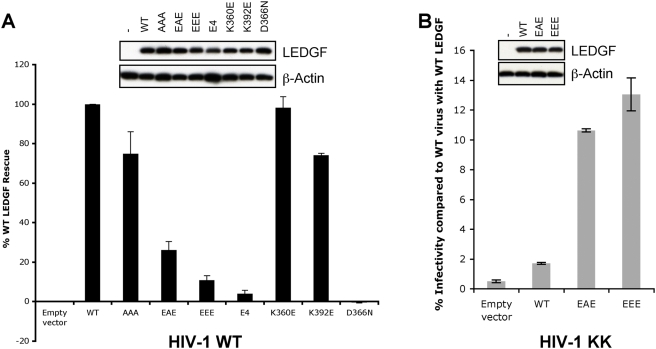
Lens epithelium derived growth factor (LEDGF), also known as PC4 and SFRS1 interacting protein 1 (PSIP1) and transcriptional co-activator p75, is the cellular binding partner of lentiviral integrase (IN) proteins. LEDGF accounts for the characteristic propensity of Lentivirus to integrate within active transcription units and is required for efficient viral replication. We now present a crystal structure containing the N-terminal and catalytic core domains (NTD and CCD) of HIV-2 IN in complex with the IN binding domain (IBD) of LEDGF. The structure extends the known IN-LEDGF interface, elucidating primarily charge-charge interactions between the NTD of IN and the IBD. A constellation of acidic residues on the NTD is characteristic of lentiviral INs, and mutations of the positively charged residues on the IBD severely affect interaction with all lentiviral INs tested. We show that the novel NTD-IBD contacts are critical for stimulation of concerted lentiviral DNA integration by LEDGF in vitro and for its function during the early steps of HIV-1 replication. Furthermore, the new structural details enabled us to engineer a mutant of HIV-1 IN that primarily functions only when presented with a complementary LEDGF mutant. These findings provide structural basis for the high affinity lentiviral IN-LEDGF interaction and pave the way for development of LEDGF-based targeting technologies for gene therapy.
Overview
The claims and statistics of this paper haven’t been checked yet.
Run the check — free, no account needed. It reads the open-access text and checks the sources it cites.
Integrity signals
Registry
Cites
Statistics
Figures
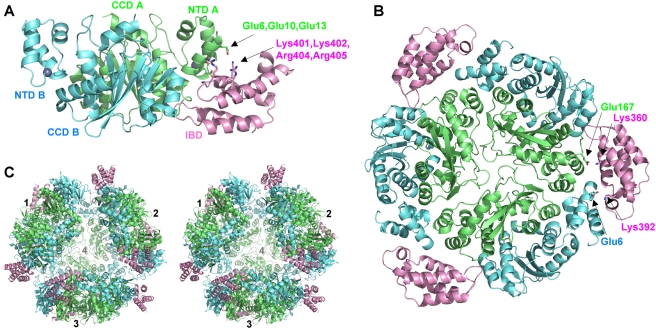
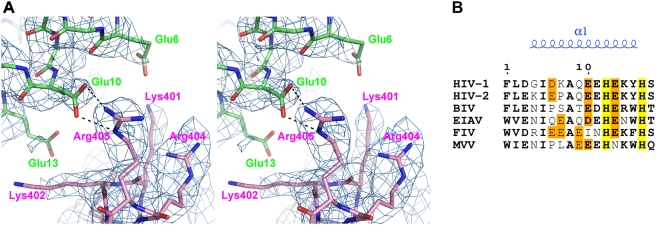
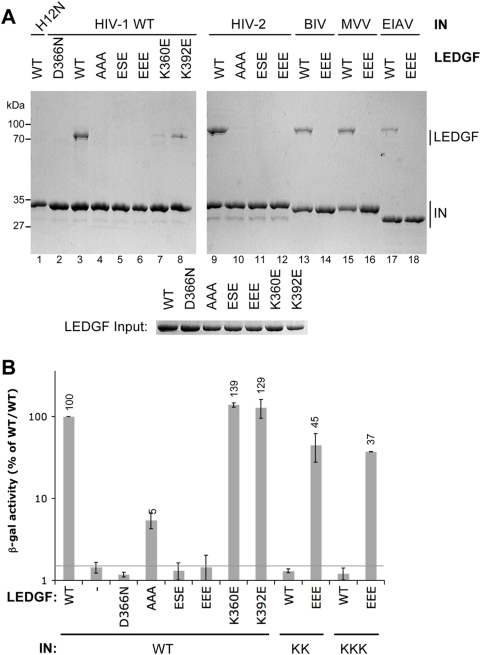
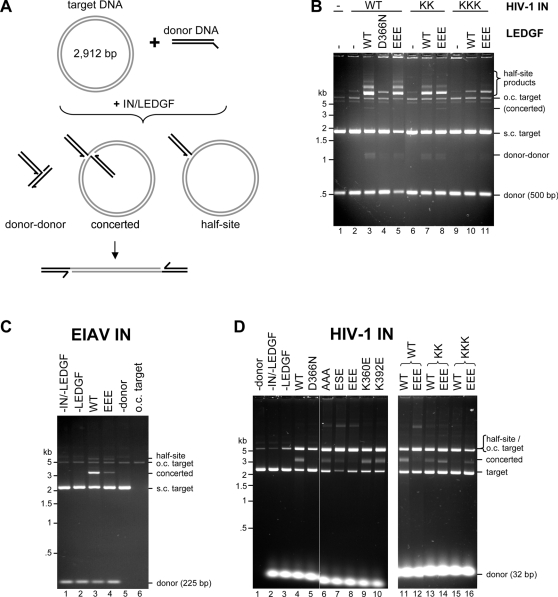
Verification
Claims the paper makes
The claims and statistics of this paper haven’t been checked yet.
Run the check — free, no account needed. It reads the open-access text and checks the sources it cites.
Claims other papers make about this one
Each is checked against this paper’s own text: does it say what the citing paper says it does?
The source backs part of the claim, not all of it — or backs it for a different population, condition or comparison.
In the citing paper
“Residues Ile356 and Asp366 located on the loop between α-helices 1 and 2 mediate interactions with both IN monomers of the CCD dimer while electropositive residues on the outward face of α-helix 4 interface with electronegative residues of IN NTD α-helix 1 (REF.107,109).”
From Structure and function of retroviral integrase (2022) · cites this paper as [107]
Experimental — accuracy not yet measuredThe cited source says what the claim attributes to it.
In the citing paper
“The CCD is the main IN binding determinant, with the NTD contributing secondary interactions for full binding affinity106,107.”
From Structure and function of retroviral integrase (2022) · cites this paper as [107]
Self-check
Percentages, sums and reported differences re-computed from the paper’s own numbers.
The self-check needs the paper’s full text.
Citations
Cites
Coot : model-building tools for molecular graphics
Emsley, P., & Cowtan, K. (2004) · Acta Crystallographica Section D Biological Crystallography · doi:10.1107/s0907444904019158 · Cited by 30,571
Phaser crystallographic software
McCoy, A. J., Grosse-Kunstleve, R. W., Adams, P. D., Winn, M. D., Storoni, L. C., & Read, R. J. (2007) · Journal of Applied Crystallography · doi:10.1107/s0021889807021206 · Cited by 20,612
The CCP4 suite: programs for protein crystallography
Number Collaborative Computational Project (1994) · Acta Crystallographica Section D Biological Crystallography · doi:10.1107/s0907444994003112 · Cited by 17,317
Refinement of Macromolecular Structures by the Maximum-Likelihood Method
Murshudov, G. N., Vagin, A. A., & Dodson, E. J. (1997) · Acta Crystallographica Section D Biological Crystallography · doi:10.1107/s0907444996012255 · Cited by 14,796
MOLREP : an Automated Program for Molecular Replacement
Vagin, A. A., & Teplyakov, A. (1997) · Journal of Applied Crystallography · doi:10.1107/s0021889897006766 · Cited by 4,756
PHENIX : building new software for automated crystallographic structure determination
Adams, P. D., Grosse-Kunstleve, R. W., Hung, L.-W., Ioerger, T. R., McCoy, A. J., Moriarty, N. W., Read, R. J., Sacchettini, J. C., Sauter, N. K., & Terwilliger, T. C. (2002) · Acta Crystallographica Section D Biological Crystallography · doi:10.1107/s0907444902016657 · Cited by 4,361
LMO2 -Associated Clonal T Cell Proliferation in Two Patients after Gene Therapy for SCID-X1
Hacein-Bey-Abina, S., Von Kalle, C., Schmidt, M., McCormack, M. P., Wulffraat, N., Leboulch, P., Lim, A., Osborne, C. S., Pawliuk, R., Morillon, E., et al. (2003) · Science · doi:10.1126/science.1088547 · Cited by 3,587
Dyda, F., Hickman, A. B., Jenkins, T. M., Engelman, A., Craigie, R., & Davies, D. R. (1994) · Science · doi:10.1126/science.7801124 · Cited by 810 · cited 1×
“The CCD spans the most conserved region of IN and bears close structural homology to prokaryotic transposases [6].”
BackgroundSelf-citationMossessova, E., & Lima, C. D. (2000) · Molecular Cell · doi:10.1016/s1097-2765(00)80326-3 · Cited by 704
HIV-1 Integrase Forms Stable Tetramers and Associates with LEDGF/p75 Protein in Human Cells
Cherepanov, P., Maertens, G., Proost, P., Devreese, B., Van Beeumen, J., Engelborghs, Y., De Clercq, E., & Debyser, Z. (2003) · Journal of Biological Chemistry · doi:10.1074/jbc.m209278200 · Cited by 704
Self-citationA role for LEDGF/p75 in targeting HIV DNA integration
Ciuffi, A., Llano, M., Poeschla, E., Hoffmann, C., Leipzig, J., Shinn, P., Ecker, J. R., & Bushman, F. (2005) · Nature Medicine · doi:10.1038/nm1329 · Cited by 658
Making and Breaking Nucleic Acids: Two-Mg2+-Ion Catalysis and Substrate Specificity
Yang, W., Lee, J. Y., & Nowotny, M. (2006) · Molecular Cell · doi:10.1016/j.molcel.2006.03.013 · Cited by 573
Menin Critically Links MLL Proteins with LEDGF on Cancer-Associated Target Genes
Yokoyama, A., & Cleary, M. L. (2008) · Cancer Cell · doi:10.1016/j.ccr.2008.05.003 · Cited by 551
An essential role for LEDGF/p75 in HIV integration
Llano, M., Saenz, D. T., Meehan, A., Wongthida, P., Peretz, M., Walker, W. H., Teo, W., & Poeschla, E. M. (2006) · Science · doi:10.1126/science.1132319 · Cited by 537
Engelman, A., & Craigie, R. (1992) · Journal of Virology · doi:10.1128/jvi.66.11.6361-6369.1992 · Cited by 519
Self-citationThe structural biology of HIV assembly
Ganser‐Pornillos, B. K., Yeager, M. J., & Sundquist, W. I. (2008) · Current Opinion in Structural Biology · doi:10.1016/j.sbi.2008.02.001 · Cited by 500
LEDGF/p75 Is Essential for Nuclear and Chromosomal Targeting of HIV-1 Integrase in Human Cells
Maertens, G., Cherepanov, P., Pluymers, W., Busschots, K., De Clercq, E., Debyser, Z., & Engelborghs, Y. (2003) · Journal of Biological Chemistry · doi:10.1074/jbc.m303594200 · Cited by 493
Self-citationShun, M.-C., Raghavendra, N. K., Vandegraaff, N., Daigle, J. E., Hughes, S., Kellam, P., Cherepanov, P., & Engelman, A. (2007) · Genes & Development · doi:10.1101/gad.1565107 · Cited by 467
Self-citationStructural basis for the recognition between HIV-1 integrase and transcriptional coactivator p75
Cherepanov, P., Ambrosio, A. L. B., Rahman, S., Ellenberger, T., & Engelman, A. (2005) · Proceedings of the National Academy of Sciences · doi:10.1073/pnas.0506924102 · Cited by 408
Self-citationThree new structures of the core domain of HIV-1 integrase: An active site that binds magnesium
Goldgur, Y., Dyda, F., Hickman, A. B., Jenkins, T. M., Craigie, R., & Davies, D. R. (1998) · Proceedings of the National Academy of Sciences · doi:10.1073/pnas.95.16.9150 · Cited by 380
Engelman, A., Bushman, F. D., & Craigie, R. (1993) · The EMBO Journal · doi:10.1002/j.1460-2075.1993.tb05996.x · Cited by 350
Self-citationBushman, F. D., Engelman, A., Palmer, I. W., Wingfield, P. T., & Craigie, R. (1993) · Proceedings of the National Academy of Sciences · doi:10.1073/pnas.90.8.3428 · Cited by 349
Self-citationSolution structure of the N-terminal zinc binding domain of HIV-1 integrase
Cai, M., Zheng, R., Caffrey, M., Craigie, R., Clore, G. M., & Gronenborn, A. M. (1997) · Nature Structural Biology · doi:10.1038/nsb0797-567 · Cited by 342
Wang, J.-Y., Ling, H., Yang, W., & Craigie, R. (2001) · The EMBO Journal · doi:10.1093/emboj/20.24.7333 · Cited by 332
Llano, M., Vanegas, M., Fregoso, O., Saenz, D., Chung, S., Peretz, M., & Poeschla, E. M. (2004) · Journal of Virology · doi:10.1128/jvi.78.17.9524-9537.2004 · Cited by 305
Solution Structure of the DNA Binding Domain of HIV-1 Integrase
Lodi, P. J., Ernst, J. A., Kuszewski, J., Hickman, A. B., Engelman, A., Craigie, R., Clore, G. M., & Gronenborn, A. M. (1995) · Biochemistry · doi:10.1021/bi00031a002 · Cited by 300
Self-citationCherepanov, P., Devroe, E., Silver, P. A., & Engelman, A. (2004) · Journal of Biological Chemistry · doi:10.1074/jbc.m406307200 · Cited by 287
Self-citationThe DNA-binding domain of HIV-1 integrase has an SH3-like fold
Eijkelenboom, A. P. A. M., Lutzke, R. A. P., Boelens, R., Plasterk, R. H. A., Kaptein, R., & Hård, K. (1995) · Nature Structural & Molecular Biology · doi:10.1038/nsb0995-807 · Cited by 254
Emiliani, S., Mousnier, A., Busschots, K., Maroun, M., Maele, B. V., Tempé, D., Vandekerckhove, L., Moisant, F., Benslama, L., Witvrouw, M., et al. (2005) · Journal of Biological Chemistry · doi:10.1074/jbc.m501378200 · Cited by 243
Role of PSIP1/LEDGF/p75 in Lentiviral Infectivity and Integration Targeting
Marshall, H. M., Ronen, K., Berry, C., Llano, M., Sutherland, H., Saenz, D., Bickmore, W., Poeschla, E., & Bushman, F. D. (2007) · PLoS ONE · doi:10.1371/journal.pone.0001340 · Cited by 241
Solution structure of the HIV-1 integrase-binding domain in LEDGF/p75
Cherepanov, P., Sun, Z.-Y. J., Rahman, S., Maertens, G., Wagner, G., & Engelman, A. (2005) · Nature Structural & Molecular Biology · doi:10.1038/nsmb937 · Cited by 235 · cited 4×
“Conversely, the complementary basic residues are conserved among all known LEDGF and HRP2 orthologs, with some variation only at the position corresponding to LEDGF Arg-405, where Arg or Lys is accommodated [22,24,33,34].”
BackgroundMethodResultInfluentialSelf-citationRetroviral DNA integration: reaction pathway and critical intermediates
Li, M., Mizuuchi, M., Burke, T. R., & Craigie, R. (2006) · The EMBO Journal · doi:10.1038/sj.emboj.7601005 · Cited by 233
The lentiviral integrase binding protein LEDGF/p75 and HIV-1 replication
Engelman, A., & Cherepanov, P. (2008) · PLoS Pathogens · doi:10.1371/journal.ppat.1000046 · Cited by 231
Self-citationThe Unfolding Story of Three-Dimensional Domain Swapping
Rousseau, F., Schymkowitz, J. W. H., & Itzhaki, L. S. (2003) · Structure · doi:10.1016/s0969-2126(03)00029-7 · Cited by 213
The Interaction of LEDGF/p75 with Integrase Is Lentivirus-specific and Promotes DNA Binding
Busschots, K., Vercammen, J., Emiliani, S., Benarous, R., Engelborghs, Y., Christ, F., & Debyser, Z. (2005) · Journal of Biological Chemistry · doi:10.1074/jbc.m411681200 · Cited by 208
Hindmarsh, P. L., & Leis, J. P. (1999) · Microbiology and Molecular Biology Reviews · doi:10.1128/mmbr.63.4.836-843.1999 · Cited by 203
Llano, M., Vanegas, M., Hutchins, N., Thompson, D., Delgado, S., & Poeschla, E. M. (2006) · Journal of Molecular Biology · doi:10.1016/j.jmb.2006.04.073 · Cited by 199
HIV-1 integrase crosslinked oligomers are active in vitro
Faure, A. (2005) · Nucleic Acids Research · doi:10.1093/nar/gki241 · Cited by 197
Turlure, F. (2006) · Nucleic Acids Research · doi:10.1093/nar/gkl052 · Cited by 181
In Vivo Analysis of Retroviral Integrase Structure and Function
Engelman, A. (1999) · Advances in Virus Research · doi:10.1016/s0065-3527(08)60309-7 · Cited by 176
Self-citationCherepanov, P. (2007) · Nucleic Acids Research · doi:10.1093/nar/gkl885 · Cited by 173
Self-citationVanegas, M., Llano, M., Delgado, S., Thompson, D., Peretz, M., & Poeschla, E. M. (2005) · Journal of Cell Science · doi:10.1242/jcs.02299 · Cited by 172
Burke, C. J., Sanyal, G., Bruner, M. W., Ryan, J. A., LaFemina, R. L., Robbins, H. L., Zeft, A. S., Middaugh, C. R., & Cordingley, M. G. (1992) · Journal of Biological Chemistry · doi:10.1016/s0021-9258(19)50138-7 · Cited by 171
Retroviral DNA Integration—Mechanism and Consequences
Lewinski, M. K., & Bushman, F. D. (2005) · Advances in genetics · doi:10.1016/s0065-2660(05)55005-3 · Cited by 140
Functional and structural characterization of the integrase from the prototype foamy virus
Valkov, E., Gupta, S. S., Hare, S., Helander, A., Roversi, P., McClure, M., & Cherepanov, P. (2009) · Nucleic Acids Research · doi:10.1093/nar/gkn938 · Cited by 130
Self-citationVirus Evolution Reveals an Exclusive Role for LEDGF/p75 in Chromosomal Tethering of HIV
Hombrouck, A., Rijck, J. D., Hendrix, J., Vandekerckhove, L., Voet, A. R. D., Maeyer, M. D., Witvrouw, M., Engelborghs, Y., Christ, F., Gijsbers, R., et al. (2007) · PLoS Pathogens · doi:10.1371/journal.ppat.0030047 · Cited by 129
Eijkelenboom, A. P. A. M., van den Ent, F. M. I., Vos, A., Doreleijers, J. F., Hård, K., Tullius, T. D., Plasterk, R. H. A., Kaptein, R., & Boelens, R. (1997) · Current Biology · doi:10.1016/s0960-9822(06)00332-0 · Cited by 128
Singh, D. P., Fatma, N., Kimura, A., Chylack, L. T., & Shinohara, T. (2001) · Biochemical and Biophysical Research Communications · doi:10.1006/bbrc.2001.4887 · Cited by 126
Lu, R., Limón, A., Devroe, E., Silver, P. A., Cherepanov, P., & Engelman, A. (2004) · Journal of Virology · doi:10.1128/jvi.78.23.12735-12746.2004 · Cited by 123
Self-citationProcessing of Viral DNA Ends Channels the HIV-1 Integration Reaction to Concerted Integration*[boxs]
Li, M., & Craigie, R. (2005) · Journal of Biological Chemistry · doi:10.1074/jbc.m505367200 · Cited by 107
Sinha, S., & Grandgenett, D. P. (2005) · Journal of Virology · doi:10.1128/jvi.79.13.8208-8216.2005 · Cited by 77
Wu, X., Daniels‐Wells, T. R., Molinaro, C., Lilly, M. B., & Casiano, C. A. (2002) · Cell Death and Differentiation · doi:10.1038/sj.cdd.4401063 · Cited by 77
Shun, M.-C., Daigle, J. E., Vandegraaff, N., & Engelman, A. (2006) · Journal of Virology · doi:10.1128/jvi.01953-06 · Cited by 74
Self-citationFunctional Oligomeric State of Avian Sarcoma Virus Integrase
Bao, K. K., Wang, H., Miller, J. K., Erie, D. A., Skalka, A. M., & Wong, I. (2003) · Journal of Biological Chemistry · doi:10.1074/jbc.c200550200 · Cited by 69
Ciuffi, A., Diamond, T. L., Hwang, Y. S., Marshall, H. M., & Bushman, F. D. (2006) · Human Gene Therapy · doi:10.1089/hum.2006.17.960 · Cited by 67
Rahman, S., Lu, R., Vandegraaff, N., Cherepanov, P., & Engelman, A. (2006) · Virology · doi:10.1016/j.virol.2006.08.011 · Cited by 64
Self-citationPandey, K. K., Sinha, S., & Grandgenett, D. P. (2007) · Journal of Virology · doi:10.1128/jvi.02322-06 · Cited by 58
Activity of recombinant HIV-1 integrase on mini-HIV DNA
Cherepanov, P., Surratt, D., Toelen, J., Pluymers, W., Griffith, J. D., Clercq, E. D., & Debyser, Z. (1999) · Nucleic Acids Research · doi:10.1093/nar/27.10.2202 · Cited by 47
Self-citationRaghavendra, N. K., & Engelman, A. (2007) · Virology · doi:10.1016/j.virol.2006.12.022 · Cited by 43
Self-citationLesbats, P., Métifiot, M., Calmels, C., Владимировна, Б. С., Nevinsky, G. A., Andréola, M., & Parissi, V. (2008) · Nucleic Acids Research · doi:10.1093/nar/gkn796 · Cited by 33
Craigie, R. (2002) · doi:10.1128/9781555817954.ch25 · Cited by 24
Research works printed but not linked: 2
- AGW Leslie, 1992, Recent changes to the MOSFLM package for processing film and image plate data., Joint CCP4+ESF-EAMCB Newsletter on Protein Crystallography, 26
- PR Evans, 1993, Data reduction., Proceedings of CCP4 Study Weekend, 1993, on Data Collection & Processing, 114
Cited by
Sorted by citations
Integrase-mediated spacer acquisition during CRISPR–Cas adaptive immunity
Nuñez, J. K., Lee, A. S. Y., Engelman, A., & Doudna, J. A. (2015) · Nature · doi:10.1038/nature14237 · Cited by 347
Self-citationCraigie, R., & Bushman, F. D. (2012) · Cold Spring Harbor Perspectives in Medicine · doi:10.1101/cshperspect.a006890 · Cited by 327
Lesbats, P., Engelman, A., & Cherepanov, P. (2016) · Chemical Reviews · doi:10.1021/acs.chemrev.6b00125 · Cited by 250
Self-citationProtein delivery using engineered virus-like particles
Kaczmarczyk, S. J., Sitaraman, K., Young, H. A., Hughes, S. H., & Chatterjee, D. K. (2011) · Proceedings of the National Academy of Sciences · doi:10.1073/pnas.1101874108 · Cited by 220
Structural basis for high-affinity binding of LEDGF PWWP to mononucleosomes
Eidahl, J. O., Crowe, B. L., North, J. A., McKee, C. J., Shkriabai, N., Feng, L., Plumb, M., Graham, R. L., Gorelick, R. J., Hess, S., et al. (2013) · Nucleic Acids Research · doi:10.1093/nar/gkt074 · Cited by 207
Metadata
- Authors
- Hare, S., Shun, M.-C., Gupta, S. S., Valkov, E., Engelman, A., & Cherepanov, P.
- Affiliations
- Imperial College London (GB)
- Dana-Farber Cancer Institute (US)
- Corresponding author
- Engelman, Alan
- Cherepanov, Peter
- Venue
- PLoS Pathogens
- Publisher
- Public Library of Science (PLoS)
- Published
- 2009-01-09
- Volume
- 5
- Issue
- 1
- Pages
- e1000259
- ISSN
- 1553-7366 (ISSN-L)
- 1553-7374
- PMC
- PMC2606027
- OpenAlex
- W2032297596
- Cited by
- 166
- References
- 62
- Citations by year
- 2026: 3 · 2025: 2 · 2024: 2 · 2023: 3 · 2022: 6 · 2021: 6 · 2020: 6 · 2019: 4 · 2018: 6 · 2017: 6 · 2016: 7 · 2015: 15 · 2014: 26 · 2013: 11 · 2012: 13
- FWCI
- 12.09
- Type
- journal article
- Language
- en
- Open access
- gold
- doi.org
- Locations
- PLoS Pathogens (publishedVersion, cc-by)
- PubMed Central (publishedVersion, cc-by)
- PubMed (publishedVersion)
- Sussex Research Online (University of Sussex) (submittedVersion, cc-by)
- DOAJ (DOAJ: Directory of Open Access Journals) (submittedVersion)
- Figshare (submittedVersion, cc-by)
- Funders
- University College London
- European Synchrotron Radiation Facility (ID23‐1)
- National Institutes of Health
- Medical Research Council
- National Institute of Allergy and Infectious Diseases (AI07245, AI70042, AI39394, R01AI039394, R01AI070042, R37AI039394, T32AI007245)
- Topics
- Life Sciences › Biochemistry, Genetics and Molecular Biology › Genetics › Virus-based gene therapy research
- Life Sciences › Immunology and Microbiology › Virology › HIV Research and Treatment
- Health Sciences › Medicine › Infectious Diseases › HIV/AIDS drug development and treatment
- Keywords
- LEDGF, PSIP1, p75, HIV-1 integrase, crystal structure, gain-of-function mutants, charge-charge interactions, HIV-1 replication
- MeSH terms
- Humans, Mutation, Protein Binding, Transcription Factors, Virus Replication, HIV-2, Lentivirus, Crystallography, X-Ray, HIV Integrase, Adaptor Proteins, Signal Transducing, Human Immunodeficiency Virus Proteins
About these checks
Registry, retraction, Cites and statistics results are computed, not judged, with one exception: a printed reference that no index lists is read once by a model before it counts as a citation error. Claims are extracted by a model and kept only when their quote appears verbatim in the text; each cited source is then checked, with a model’s help, for whether it says what the claim relies on. Those verdicts can be wrong — read the claim’s quote and the cited source before relying on one.
Statistics and arithmetic are recomputed, not judged.
Confidence bands are shown only for fields calibrated on our annotated test set. None is calibrated yet, so no band is shown.
What counts as a claim ›How we measure confidence ›How we check this ›
Are you an author, or do you see a problem with this page? Request a review
