

Host Cell Invasion and Virulence Mediated by Candida albicans Ssa1
Open accessThe DOI matches its Crossref record; 68 of the 69 references it cites were found in a registry or an index.
Abstract
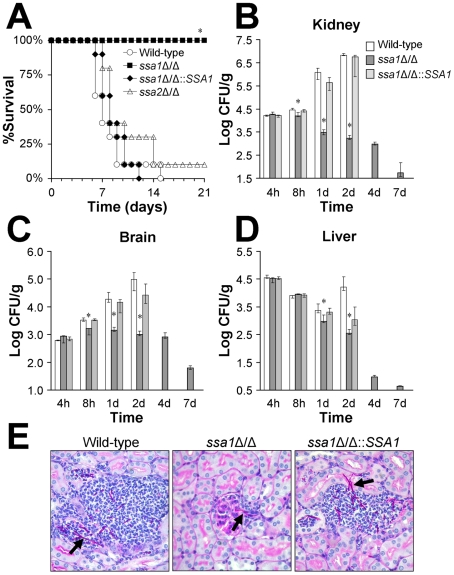
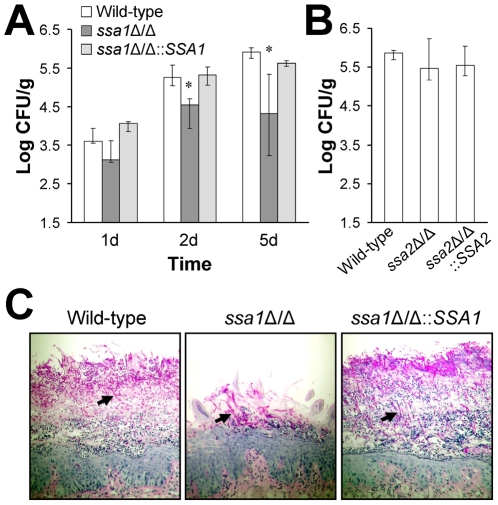
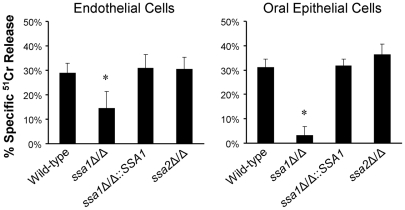
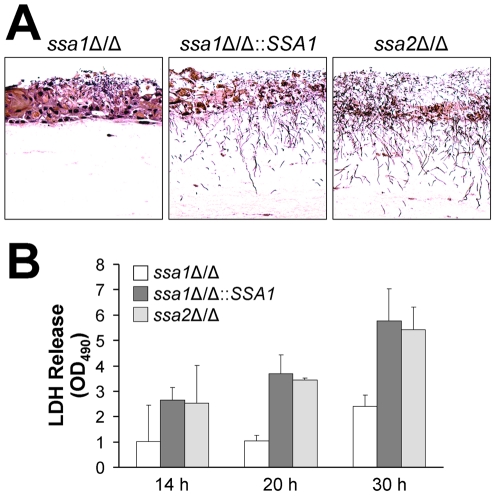
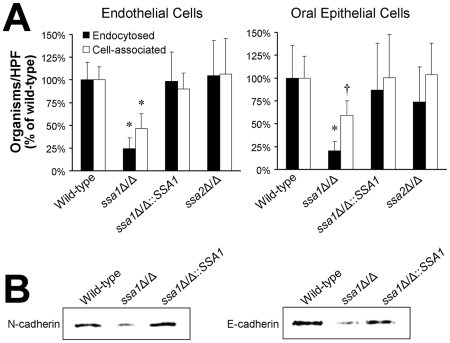
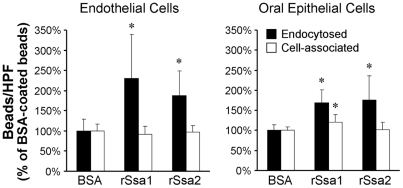
Candida albicans Ssa1 and Ssa2 are members of the HSP70 family of heat shock proteins that are expressed on the cell surface and function as receptors for antimicrobial peptides such as histatins. We investigated the role of Ssa1 and Ssa2 in mediating pathogenic host cell interactions and virulence. A C. albicans ssa1Δ/Δ mutant had attenuated virulence in murine models of disseminated and oropharyngeal candidiasis, whereas an ssa2Δ/Δ mutant did not. In vitro studies revealed that the ssa1Δ/Δ mutant caused markedly less damage to endothelial cells and oral epithelial cell lines. Also, the ssa1Δ/Δ mutant had defective binding to endothelial cell N-cadherin and epithelial cell E-cadherin, receptors that mediate host cell endocytosis of C. albicans. As a result, this mutant had impaired capacity to induce its own endocytosis by endothelial cells and oral epithelial cells. Latex beads coated with recombinant Ssa1 were avidly endocytosed by both endothelial cells and oral epithelial cells, demonstrating that Ssa1 is sufficient to induce host cell endocytosis. These results indicate that Ssa1 is a novel invasin that binds to host cell cadherins, induces host cell endocytosis, and is critical for C. albicans to cause maximal damage to host cells and induce disseminated and oropharyngeal disease.
Overview
The claims and statistics of this paper haven’t been checked yet.
Free: it reads the open-access text and checks the first 5 claims that cite a source we can check. Create a free account to check every claim.
Integrity signals
Registry
Cites
Statistics
Figures
Verification
Claims the paper makes
The claims and statistics of this paper haven’t been checked yet.
Free: it reads the open-access text and checks the first 5 claims that cite a source we can check. Create a free account to check every claim.
Claims other papers make about this one
Each is checked against this paper’s own text: does it say what the citing paper says it does?
The source backs part of the claim, not all of it — or backs it for a different population, condition or comparison.
In the citing paper
“Previously, we identified two C. albicans invasins, Als3 and Ssa1 that mediate invasion of oral epithelial cells by interacting with E-cadherin and EGFR [16,17,19].”
From Candida albicans stimulates formation of a multi-receptor complex that mediates epithelial cell invasion during oropharyngeal infection (2023) · cites this paper as [19]
Experimental — accuracy not yet measuredIn the citing paper
“These invasins bind epithelial cell E-cadherin and initiate endocytosis through an actin-dependent mechanism that requires clathrin [199, 201–205].”
From Mechanisms of fungal dissemination (2021) · cites this paper as [202]
Self-check
Percentages, sums and reported differences re-computed from the paper’s own numbers.
The self-check needs the paper’s full text.
Citations
Cites
Analysis of Relative Gene Expression Data Using Real-Time Quantitative PCR and the 2−ΔΔCT Method
Livak, K. J., & Schmittgen, T. D. (2001) · Methods · doi:10.1006/meth.2001.1262 · Cited by 180,860 · cited 1×
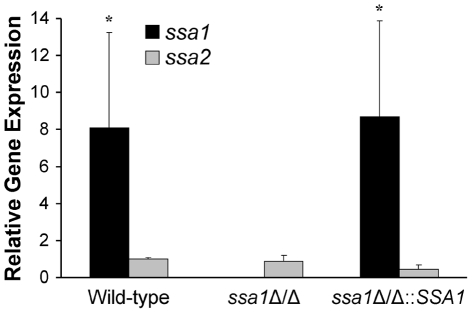
“The results were analyzed by the 2 method [65] using ACT1 as the endogenous control.”
MethodJaffe, E. A., Nachman, R. L., Becker, C. G., & Minick, C. R. (1973) · Journal of Clinical Investigation · doi:10.1172/jci107470 · Cited by 6,856 · cited 1×
“[60] and cultured as described [32] in M-199 medium supplemented with 10% fetal bovine serum and 10% defined bovine calf serum (Gemini Bio-Products), and containing 2 mM L-glutamine with penicillin and streptomycin (Irvine Scientific).”
MethodWisplinghoff, H., Bischoff, T., Tallent, S. M., Seifert, H., Wenzel, R. P., & Edmond, M. B. (2004) · Clinical Infectious Diseases · doi:10.1086/421946 · Cited by 4,496 · cited 1×
“albicans are associated with a 37% mortality [1].”
BackgroundIsogenic strain construction and gene mapping in Candida albicans.
Fonzi, W. A., & Irwin, M. Y. (1993) · Genetics · doi:10.1093/genetics/134.3.717 · Cited by 1,687
Rapid Hypothesis Testing with Candida albicans through Gene Disruption with Short Homology Regions
Wilson, R. B., Davis, D., & Mitchell, A. P. (1999) · Journal of Bacteriology · doi:10.1128/jb.181.6.1868-1874.1999 · Cited by 762 · cited 3×
“These PCR products were then used to successively transform the Ura- ssa1D/D strain [57].”
MethodAls3 Is a Candida albicans Invasin That Binds to Cadherins and Induces Endocytosis by Host Cells
Phan, Q. T., Myers, C. L., Fu, Y., Sheppard, D. C., Yeaman, M. R., Welch, W. H., Ibrahim, A. S., Edwards, J. E., & Filler, S. G. (2007) · PLoS Biology · doi:10.1371/journal.pbio.0050064 · Cited by 641 · cited 6×
“Assessment of surface expression of Als3 and Ssa1 Flow cytometry was used to quantify the amount of Als3 on the surface of the various strains using a slight modification of our previously described method [37].”
BackgroundMethodSelf-citation[27] Preparation of high molecular weight RNA
Köhrer, K., & Domdey, H. (1991) · Methods in Enzymology · doi:10.1016/0076-6879(91)94030-g · Cited by 563 · cited 1×
“At a later time, the cells were thawed on ice and the fungal RNA was extracted by the hot phenol method [64].”
MethodCritical Role of Bcr1-Dependent Adhesins in C. albicans Biofilm Formation In Vitro and In Vivo
Nobile, C. J., Andes, D. R., Nett, J. E., Smith, F. J., Yue, F., Phan, Q.-T., Edwards, J. E., Filler, S. G., & Mitchell, A. P. (2006) · PLoS Pathogens · doi:10.1371/journal.ppat.0020063 · Cited by 507
Self-citationEvidence implicating phospholipase as a virulence factor of Candida albicans
Ibrahim, A. S., Mirbod, F., Filler, S. G., Banno, Y., Cole, G. T., Kitajima, Y., Edwards, J. E., Nozawa, Y., & Ghannoum, M. A. (1995) · Infection and Immunity · doi:10.1128/iai.63.5.1993-1998.1995 · Cited by 351 · cited 2×
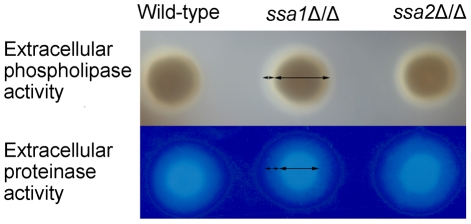
“albicans causes host cell damage is incompletely understood, it is probable that phospholipases and aspartyl proteases secreted by the organism participate in this process [35,40–46].”
BackgroundSelf-citationCellular interactions of Candida albicans with human oral epithelial cells and enterocytes
Dalle, F., Wächtler, B., L'Ollivier, C., Holland, G., Bannert, N., Wilson, D., Labruère, C., Bonnin, A., & Hube, B. (2010) · Cellular Microbiology · doi:10.1111/j.1462-5822.2009.01394.x · Cited by 347 · cited 1×
“albicans invades endothelial cells and oral epithelial cells is by inducing its own endocytosis [27,31,33,35].”
Background
Cited by
Candida albicans pathogenicity mechanisms
Mayer, F. L., Wilson, D., & Hube, B. (2013) · Virulence · doi:10.4161/viru.22913 · Cited by 1,848
Candida albicans Als3, a multifunctional adhesin and invasin
Liu, Y., & Filler, S. G. (2011) · Eukaryotic Cell · doi:10.1128/ec.00279-10 · Cited by 354
“albicans mutants with impaired capacity to invade and damage host cells in vitro frequently have attenuated virulence in murine models of oropharyngeal and hematogenously disseminated candidiasis (12, 39, 43, 51, 61).”
BackgroundSelf-citationd'Enfert, C., Kaune, A.-K., Alaban, L.-R., Chakraborty, S., Cole, N., Delavy, M., Kosmala, D., Marsaux, B., Fróis-Martins, R., Morelli, M., et al. (2021) · FEMS Microbiology Reviews · doi:10.1093/femsre/fuaa060 · Cited by 347
Kalia, N., Singh, J., & Kaur, M. (2020) · Annals of Clinical Microbiology and Antimicrobials · doi:10.1186/s12941-020-0347-4 · Cited by 275
Candida albicans interactions with epithelial cells and mucosal immunity
Naglik, J. R., Moyes, D. L., Wächtler, B., & Hube, B. (2011) · Microbes and Infection · doi:10.1016/j.micinf.2011.06.009 · Cited by 277
“Both Als3 and Ssa1 bind to E-cadherin and probably initiate epithelial entry via clathrin-mediated mechanisms [23], although this has not been officially demonstrated for Ssa1.”
BackgroundInfluentialWächtler, B., Citiulo, F., Jablonowski, N., Förster, S., Dalle, F., Schaller, M., Wilson, D., & Hube, B. (2012) · PLoS ONE · doi:10.1371/journal.pone.0036952 · Cited by 250
“Although Als3/Ssa1-E-cadherin binding on epithelial cells has been shown to mediate induced endocytosis [10,11], we sought to determine whether E–cadherin independent endocytic pathways of epithelial cells exist.”
BackgroundMethodInfluentialHöfs, S., Mogavero, S., & Hube, B. (2016) · Journal of Microbiology · doi:10.1007/s12275-016-5514-0 · Cited by 238
“Receptors that have been identified to serve as host ligands include E-cadherin on epithelial cells, N-cadherin on endothelial cells and the receptor tyrosine kinases, EGF receptor (EGFR) and HEGF receptor 2 (HER2) (Phan et al., 2007; Sun et al., 2010; Zhu et al., 2012).”
BackgroundInfluentialMouse model of oropharyngeal candidiasis
Solis, N. V., & Filler, S. G. (2012) · Nature Protocols · doi:10.1038/nprot.2012.011 · Cited by 208
Self-citationPolke, M., Hube, B., & Jacobsen, I. D. (2015) · Advances in Applied Microbiology · doi:10.1016/bs.aambs.2014.12.002 · Cited by 184
Zhu, W., Phan, Q. T., Boontheung, P., Solis, N. V., Loo, J. A., & Filler, S. G. (2012) · Proceedings of the National Academy of Sciences · doi:10.1073/pnas.1117676109 · Cited by 180
“14194–14199 | PNAS | August 28, 2012 | vol. 109 | no. 35 www.pnas.org/cgi/doi/10.1073/pnas.1117676109 To determine if Als3 and Ssa1 interact with EGFR and HER2, we tested strains of Saccharomyces cerevisiae that expressed C. albicans ALS3 or SSA1.”
BackgroundInfluentialSelf-citationHyphal Growth in Human Fungal Pathogens and Its Role in Virulence
Brand, A. (2012) · International Journal of Microbiology · doi:10.1155/2012/517529 · Cited by 180
“These proteins have alternative cellular functions (Als3 is an amyloid-like, hypha-specific adhesion, and Ssa1 is an intracellular heat-shock protein), but Ssa1 interacts with Ncadherin on endothelial cells and both interact with E-cadherin on epithelial cells [33, 57, 59].”
Candida albicans-epithelial interactions and pathogenicity mechanisms: scratching the surface
Moyes, D. L., Richardson, J. P., & Naglik, J. R. (2015) · Virulence · doi:10.1080/21505594.2015.1012981 · Cited by 179
Oral Cavity and Candida albicans: Colonisation to the Development of Infection
Patel, M. (2022) · Pathogens · doi:10.3390/pathogens11030335 · Cited by 170
Candida albicans–epithelial interactions and induction of mucosal innate immunity
Naglik, J. R., König, A., Hube, B., & Gaffen, S. L. (2017) · Current Opinion in Microbiology · doi:10.1016/j.mib.2017.10.030 · Cited by 163
Interaction of Candida Species with the Skin
Kühbacher, A., Burger-Kentischer, A., & Rupp, S. (2017) · Microorganisms · doi:10.3390/microorganisms5020032 · Cited by 161
“albicans has been shown to induce its own passive uptake into normally non-phagocytic cells by a clathrin-dependent mechanism [21] that is dependent on Als3 or Ssa1 interaction with E-cadherin or N-cadherin expressed on epithelial host cells [22,23] or alternative pathways [24].”
BackgroundBertuzzi, M., Schrettl, M., Alcazar-Fuoli, L., Cairns, T. C., Muñoz, A., Walker, L. A., Herbst, S., Safari, M., Cheverton, A. M., Chen, D., et al. (2014) · PLoS Pathogens · doi:10.1371/journal.ppat.1004413 · Cited by 158
“fumigatus lacks any homologue of the Als3 invasin altogether [63,64].”
BackgroundSelf-citationInteractions of Candida albicans with host epithelial surfaces
Williams, D. W., Jordan, R. P. C., Wei, X.-Q., Alves, C. T., Wise, M. P., Wilson, M. J., & Lewis, M. A. O. (2013) · Journal of Oral Microbiology · doi:10.3402/jom.v5i0.22434 · Cited by 149
“In addition to PRRs, other cell-surface proteins, such as E-cadherin and Epidermal Growth Factor Receptor (EGFR), can also recognise Candida and as discussed previously, these are unsurprisingly implicated in Candida adherence and endocytosis (62, 63).”
Mechanism of Candida pathogenesis: Revisiting the vital drivers
Mba, I. E., & Nweze, E. I. (2020) · European Journal of Clinical Microbiology & Infectious Diseases · doi:10.1007/s10096-020-03912-w · Cited by 143
“, Als3 and Ssa1 mutants exhibited reduced adhesion and invasion of epithelial cells [43].”
BackgroundMechanisms of fungal dissemination
Strickland, A. B., & Shi, M. (2021) · Cellular and Molecular Life Sciences · doi:10.1007/s00018-020-03736-z · Cited by 127
Conti, H. R., Huppler, A. R., Whibley, N., & Gaffen, S. L. (2014) · Current Protocols in Immunology · doi:10.1002/0471142735.im1906s105 · Cited by 126
“…demonstrate the various host immune components involved in protection to C. albicans (Conti et al., Animal Models forInfectious Diseases 19.6.13 Current Protocols in Immunology Supplement 105 2009; Kagami et al., 2010) as well as identify virulence genes associated with disease (Sun et al., 2010).”
BackgroundInfluentialMoharamzadeh, K., Colley, H., Murdoch, C., Hearnden, V. L., Chai, W. L., Brook, I. M., Thornhill, M. H., & MacNeil, S. (2012) · Journal of Dental Research · doi:10.1177/0022034511435702 · Cited by 149
“albicans genes (Hwp1, Hyr1, Ssa1, IPT1) and their products are crucial for adhesion to and invasion of the oral epithelium during oral candidiasis (Sun et al., 2010; Dwivedi et al., 2011; Rouabhia et al., 2011).”
BackgroundSwidergall, M., Khalaji, M., Solis, N. V., Moyes, D. L., Drummond, R. A., Hube, B., Lionakis, M. S., Murdoch, C., Filler, S. G., & Naglik, J. R. (2019) · The Journal of Infectious Diseases · doi:10.1093/infdis/jiz322 · Cited by 111
“In previous studies, 2 other fungal proteins, Ssa1p and Als3p, were shown to mediate C albicans endocytosis in endothelial cells via N-cadherin [6, 7, 39].”
BackgroundSelf-citationOropharyngeal Candidiasis: Fungal Invasion and Epithelial Cell Responses
Swidergall, M., & Filler, S. G. (2017) · PLOS Pathogens · doi:10.1371/journal.ppat.1006056 · Cited by 112
Self-citationLopes, R. L., Borges, T. J., Zanin, R. F., & Bonorino, C. (2016) · Cytokine · doi:10.1016/j.cyto.2016.06.018 · Cited by 107
Divergent Approaches to Virulence in C. albicans and C. glabrata: Two Sides of the Same Coin
Galocha, M., Pais, P., Cavalheiro, M., Pereira, D., Viana, R., & Teixeira, M. C. (2019) · International Journal of Molecular Sciences · doi:10.3390/ijms20092345 · Cited by 105
“Similarly, Ssa1, a member of the HPS70 heat shock protein family, was reported to play the same role as Als3, being essential for maximal host cell damage and subsequently fungal cell endocytosis [32].”
BackgroundGong, Y., Li, T., Yu, C., & Sun, S. (2017) · Frontiers in Cellular and Infection Microbiology · doi:10.3389/fcimb.2017.00520 · Cited by 102
“albicans mediated pathogenic host cell interactions and increased virulence (Sun et al., 2010).”
BackgroundInfluentialMayer, F. L., Wilson, D., Jacobsen, I. D., Miramón, P., Slesiona, S., Bohovych, I. M., Brown, A. J. P., & Hube, B. (2012) · PLoS ONE · doi:10.1371/journal.pone.0038584 · Cited by 99
“There are five major families of Hsps [3,4]; four of them - Hsp100s, Hsp90s, Hsp70s and Hsp60s - consist of ATPdependent high-molecular-mass Hsps, while the fifth family - the small heat shock proteins (sHsps) - consist of ATP-independent low-molecular-mass Hsps with sizes ranging from 12 to 42 kDa [5].”
BackgroundInfluentialThrough the back door: Unconventional protein secretion
Cohen, M. J., Chirico, W. J., & Lipke, P. N. (2020) · The Cell Surface · doi:10.1016/j.tcsw.2020.100045 · Cited by 114
Candida–Epithelial Interactions
Richardson, J., Ho, J., & Naglik, J. (2018) · Journal of Fungi · doi:10.3390/jof4010022 · Cited by 98
“Infection of tongue tissue by C. glabrata during murine OPC is enhanced when co-infected with C. albicans or when added to a pre-established C. albicans infection [99], strongly suggesting that an initial epithelial interaction with one spp. of Candida can have a dramatic influence on the pathogenicity of a different…”
BackgroundInfluentialPellón, A., Nasab, S. D. S., & Moyes, D. L. (2020) · Frontiers in Cellular and Infection Microbiology · doi:10.3389/fcimb.2020.00081 · Cited by 113
“Interestingly, non-classical receptors including E-cadherin and EGFR/Her2 have been implicated in the epithelial recognition process (Phan et al., 2007; Sun et al., 2010; Zhu et al., 2012).”
BackgroundInfluentialNimrichter, L., de Souza, M. M., Poeta, M. D., Nosanchuk, J. D., Joffe, L. S., Tavares, P. D. M., & Rodrigues, M. L. (2016) · Frontiers in Microbiology · doi:10.3389/fmicb.2016.01034 · Cited by 102
“Furthermore, SSA1 appears to act as an invasin contributing to C. albicans virulence in hematogenously disseminated and oropharyngeal candidiasis (Sun et al., 2010).”
BackgroundAspergillus fumigatus CalA binds to integrin α5β1 and mediates host cell invasion
Liu, H., Lee, M. J., Solis, N. V., Phan, Q. T., Swidergall, M., Ralph, B., Ibrahim, A. S., Sheppard, D. C., & Filler, S. G. (2016) · Nature Microbiology · doi:10.1038/nmicrobiol.2016.211 · Cited by 95
Self-citationMechanisms of Candida albicans Trafficking to the Brain
Liu, Y., Mittal, R., Solis, N. V., Prasadarao, N. V., & Filler, S. G. (2011) · PLoS Pathogens · doi:10.1371/journal.ppat.1002305 · Cited by 93
“of our previously described method [14].”
BackgroundResultInfluentialSelf-citationPathogenicity mechanisms and host response during oral Candida albicans infections
Hebecker, B., Naglik, J. R., Hube, B., & Jacobsen, I. D. (2014) · Expert Review of Anti-infective Therapy · doi:10.1586/14787210.2014.916210 · Cited by 91
“Ssa1 Member of heat shock protein 70 family Induction of induced endocytosis via interaction with host cadherins [62]”
BackgroundInfluential“ Candida Albicans Interactions With The Host: Crossing The Intestinal Epithelial Barrier”
Basmaciyan, L., Bon, F., Paradis, T., Lapaquette, P., & Dalle, F. (2019) · Tissue Barriers · doi:10.1080/21688370.2019.1612661 · Cited by 89
“Two fungal invasins were reported as major stimulators of the endocytic machinery.(194,228) First, the multifunctional hypha-specific surface protein Als3, a key virulence factor for C.”
BackgroundPuri, S., Kumar, R., Chadha, S., Tati, S., Conti, H. R., Hube, B., Cullen, P. J., & Edgerton, M. (2012) · PLoS ONE · doi:10.1371/journal.pone.0046020 · Cited by 87
“albicans strains, in a murine model of oropharyngeal candidiasis as previously described [49].”
Self-citationHost Cell Invasion by Medically Important Fungi
Sheppard, D. C., & Filler, S. G. (2015) · Cold Spring Harbor Perspectives in Medicine · doi:10.1101/cshperspect.a019687 · Cited by 89
“…Ssa1, induce fungal endocytosis by human endothelial cells from multiple different vascular beds, including umbilical vein endothelial cells, dermal microvascular endothelial cells, and brain microvascular endothelial cells (Phan et al. 2007; Sun et al. 2010; Liu et al. 2011; Seidl et al. 2012).”
BackgroundInfluentialSelf-citationLu, Y., Su, C., Solis, N. V., Filler, S. G., & Liu, H. (2013) · Cell Host & Microbe · doi:10.1016/j.chom.2013.10.008 · Cited by 85
“The virulence of the various strains was analyzed in the mouse model of hematogenously disseminated candidiasis as described previously (Sanchez et al., 2004; Sun et al., 2010).”
BackgroundSelf-citationNew signaling pathways govern the host response to C. albicans infection in various niches
Liu, Y., Shetty, A. C., Schwartz, J. A. J., Bradford, L. L., Xu, W., Phan, Q. T., Kumari, P., Mahurkar, A., Mitchell, A. P., Ravel, J., et al. (2015) · Genome Research · doi:10.5281/zenodo.13524844 · Cited by 97
Self-citationActivation of EphA2-EGFR signaling in oral epithelial cells by Candida albicans virulence factors
Swidergall, M., Solis, N. V., Millet, N., Huang, M. Y., Lin, J., Phan, Q. T., Lazarus, M. D., Wang, Z., Yeaman, M. R., Mitchell, A. P., et al. (2021) · PLOS Pathogens · doi:10.1371/journal.ppat.1009221 · Cited by 83
Self-citationInnate immune cell response upon Candida albicans infection
Qin, Y., Zhang, L., Xu, Z., Zhang, J., Jiang, Y.-Y., Cao, Y., & Yan, T. (2016) · Virulence · doi:10.1080/21505594.2016.1138201 · Cited by 80
Fungal invasion of epithelial cells
Yang, W., Yan, L., Wu, C., Zhao, X., & Tang, J. (2014) · Microbiological Research · doi:10.1016/j.micres.2014.02.013 · Cited by 79
“In order to further investigate the potential relationship between Ssa1 and Als3, Sun et al. (2010) constructed an Ssa1 / –Als3 / double mutant and compared its host cell interactions with Ssa1 / and Als3 / single mutants.”
BackgroundInfluentialKarkowska‐Kuleta, J., & Kozik, A. (2014) · Molecular Oral Microbiology · doi:10.1111/omi.12078 · Cited by 83
Chin, V. K., Lee, T. Y., Basir, R., & Chong, P. P. (2016) · International Journal of Molecular Sciences · doi:10.3390/ijms17101643 · Cited by 92
“More recently, Als3 was found to be an invasin along with Ssa1 [17,23].”
BackgroundAdherence of Candida sp. to host tissues and cells as one of its pathogenicity features.
Modrzewska, B., & Kurnatowski, P. (2015) · PubMed · Cited by 106
Moonlighting Proteins at the Candidal Cell Surface
Satała, D., Karkowska‐Kuleta, J., Zelazna, A., Rąpała‐Kozik, M., & Kozik, A. (2020) · Microorganisms · doi:10.3390/microorganisms8071046 · Cited by 73
“coated with recombinant Ssa1 were found to be rapidly endocytosed by both oral epithelial and endothelial cells, thus suggesting the crucial role of this protein in virulence [45].”
BackgroundInfluentialCandida innate immunity at the mucosa
Richardson, J. P., Moyes, D. L., Ho, J., & Naglik, J. R. (2019) · Seminars in Cell & Developmental Biology · doi:10.1016/j.semcdb.2018.02.026 · Cited by 71
The Aryl Hydrocarbon Receptor Governs Epithelial Cell Invasion during Oropharyngeal Candidiasis
Solis, N. V., Swidergall, M., Bruno, V. M., Gaffen, S. L., & Filler, S. G. (2017) · mBio · doi:10.1128/mbio.00025-17 · Cited by 69
“The extent of oral epithelial cell damage caused by the different treatments was measured using our previously described 51Cr release assay (22).”
Self-citationSilva, D. R., Sardi, J. D. C. O., Freires, I. A., da Silva, A. C. B., & Rosalen, P. L. (2018) · European Journal of Pharmacology · doi:10.1016/j.ejphar.2018.10.016 · Cited by 72
Allert, S., Schulz, D., Kämmer, P., Großmann, P., Wolf, T., Schäuble, S., Panagiotou, G., Brunke, S., & Hube, B. (2022) · Virulence · doi:10.1080/21505594.2022.2026037 · Cited by 66
The Role of Host and Fungal Factors in the Commensal-to-Pathogen Transition of Candida albicans
Jacobsen, I. D. (2023) · Current Clinical Microbiology Reports · doi:10.1007/s40588-023-00190-w · Cited by 79
Lopez, C. M., Wallich, R., Riesbeck, K., Skerka, C., & Zipfel, P. F. (2014) · PLoS ONE · doi:10.1371/journal.pone.0090796 · Cited by 72
“In addition to Gpm1 candida also uses Als3 and Ssa1 for interaction with human endothelial cells [47,48,49].”
BackgroundThe Novel Candida albicans Transporter Dur31 Is a Multi-Stage Pathogenicity Factor
Mayer, F. L., Wilson, D., Jacobsen, I. D., Miramón, P., Große, K., & Hube, B. (2012) · PLoS Pathogens · doi:10.1371/journal.ppat.1002592 · Cited by 62
“Comparable levels of cell surfaceassociated Ssa1/2 were detected in both the wild type and dur31D/D mutant (Figure S3C).”
BackgroundMethodInfluentialBandara, N., & Samaranayake, L. P. (2019) · Periodontology 2000 · doi:10.1111/prd.12273 · Cited by 74
Virulence of Clinical Candida Isolates
Mroczyńska, M., & Brillowska‐Dąbrowska, A. (2021) · Pathogens · doi:10.3390/pathogens10040466 · Cited by 70
“There are known two proteins responsible for invasion: Als3 (plays role of adhesin) and Ssa1 (heat shock protein—Hsp70) [6,7].”
BackgroundRoudbarmohammadi, S., Roudbary, M., Bakhshi, B., Katiraee, F., Mohammadi, R., & Falahati, M. (2016) · Advanced Biomedical Research · doi:10.4103/2277-9175.183666 · Cited by 70
Eastman, A. J., He, X., Qiu, Y., Davis, M. J., Vedula, P., Lyons, D. M., Park, Y., Hardison, S. E., Malachowski, A. N., Osterholzer, J. J., et al. (2015) · The Journal of Immunology · doi:10.4049/jimmunol.1402719 · Cited by 60
“Some pathogens express Hsp70 homologs that unfavorably modulate the host immune response, including Mycobacterium tuberculosis (29) and Candida albicans (30, 31).”
BackgroundSilveira, C. P., Piffer, A. C., Kmetzsch, L., Fonseca, F. L., Soares, D. A., Staats, C. C., Rodrigues, M. L., Schrank, A., & Vainstein, M. H. (2013) · Fungal Genetics and Biology · doi:10.1016/j.fgb.2013.08.005 · Cited by 63
The role of pattern recognition receptors in the innate recognition of Candida albicans
Zheng, N.-X., Wang, Y., Hu, D.-D., Yan, L., & Jiang, Y.-Y. (2015) · Virulence · doi:10.1080/21505594.2015.1014270 · Cited by 52
Oral candidosis in relation to oral immunity
Feller, L., Khammissa, R. A. G., Chandran, R., Altini, M., & Lemmer, J. (2013) · Journal of Oral Pathology and Medicine · doi:10.1111/jop.12120 · Cited by 59
Candida lusitaniae: Biology, Pathogenicity, Virulence Factors, Diagnosis, and Treatment
Mendoza-Reyes, D. F., Gómez-Gaviria, M., & Mora-Montes, H. M. (2022) · Infection and Drug Resistance · doi:10.2147/idr.s383785 · Cited by 69
“0 94 Acts as invasin, facilitating host cell endocytosis.(150)”
BackgroundIntegrated inference and evaluation of host–fungi interaction networks
Remmele, C. W., Luther, C. H., Balkenhol, J., Dandekar, T., Müller, T., & Dittrich, M. T. (2015) · Frontiers in Microbiology · doi:10.3389/fmicb.2015.00764 · Cited by 58
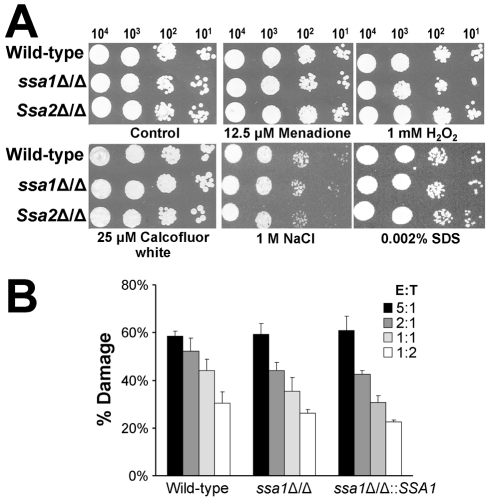
“In vitro studies showed that a Candida HSP70 mutant caused less damage to endothelial cells and oral epithelial cell lines (Sun et al., 2010).”
BackgroundXie, J. L., Bohovych, I., Wong, E. O. Y., Lambert, J., Gingras, A., Khalimonchuk, O., Cowen, L. E., & Leach, M. D. (2017) · Microbial Cell · doi:10.15698/mic2017.10.594 · Cited by 51
Chow, B. D. W., Linden, J. R., & Bliss, J. M. (2012) · Expert Review of Anti-infective Therapy · doi:10.1586/eri.12.74 · Cited by 62
Role of Cellular Metabolism during Candida-Host Interactions
Pellón, A., Begum, N., Nasab, S. D. S., Harzandi, A., Shoaie, S., & Moyes, D. L. (2022) · Pathogens · doi:10.3390/pathogens11020184 · Cited by 50
Targeting Virulence Factors of Candida albicans with Natural Products
Bu, Q., Bao, M.-Y., Yang, Y., Wang, T.-M., & Wang, C. (2022) · Foods · doi:10.3390/foods11192951 · Cited by 54
“Jianning reported that the pivotal role of Ssa1 in host cell invasion is reflected in the declined ability of Ssa1 null mutants to induce in vitro uptake by epithelial and endothelial cells themselves, and in mouse models of oropharyngeal candidiasis and disseminated candidiasis, where the virulence of the mutants was…”
BackgroundJia, L., Rafiq, M., Radosa, L., Hortschansky, P., Cunha, C., Cseresnyés, Z., Krüger, T., Schmidt, F., Heinekamp, T., Straßburger, M., et al. (2022) · Cell Host & Microbe · doi:10.1016/j.chom.2023.02.002 · Cited by 45
Moonlight-like proteins of the cell wall protect sessile cells of Candida from oxidative stress
Serrano‐Fujarte, I., López-Romero, E., & Cuéllar‐Cruz, M. (2015) · Microbial Pathogenesis · doi:10.1016/j.micpath.2015.10.001 · Cited by 49
Role of Endothelial Cell Septin 7 in the Endocytosis of Candida albicans
Phan, Q. T., Eng, D. K.-M., Mostowy, S., Park, H., Cossart, P., & Filler, S. G. (2013) · mBio · doi:10.1128/mbio.00542-13 · Cited by 54
“albicans als3 / and ssa1 / mutants (5, 6) bound weakly to the N-cadherin–SEPT7 complex (Fig.”
BackgroundSelf-citationHow Gut Bacterial Dysbiosis Can Promote Candida albicans Overgrowth during Colonic Inflammation
Jawhara, S. (2022) · Microorganisms · doi:10.3390/microorganisms10051014 · Cited by 59
“albicans hyphae by binding to the epithelial receptor E-cadherin [11,12].”
BackgroundAlbac, S., Schmitz, A., Lopez-Alayon, C., d'Enfert, C., Sautour, M., Ducreux, A., Labruère-Chazal, C., Laue, M., Holland, G., Bonnin, A., et al. (2016) · Cellular Microbiology · doi:10.1111/cmi.12495 · Cited by 42
Sheehan, G., Tully, L., & Kavanagh, K. A. (2020) · Microbiology · doi:10.1099/mic.0.000892 · Cited by 46
“SSA1 can induce host cell endocytosis of C. albicans , which leads to increased virulence [70] and plays a role in resistance to antimicrobial peptides and antifungal agents [71–73].”
Opportunistic yeast pathogen Candida spp.: Secreted and membrane-bound virulence factors
Lim, S. J., Ali, M. S. M., Sabri, S., Noor, N. D. M., Salleh, A. B., & Oslan, S. N. (2021) · Medical Mycology · doi:10.1093/mmy/myab053 · Cited by 50
Zhang, S. Q., Zou, Z., Shen, H., Shen, S. S., Miao, Q., Huang, X., Liu, W., Li, L. P., Chen, S. M., Yan, L., et al. (2016) · PLOS Pathogens · doi:10.1371/journal.ppat.1005617 · Cited by 41
Lachat, J., Pascault, A., Thibaut, D., Borgne, R. L., Verbavatz, J., & Weiner, A. (2022) · Nature Communications · doi:10.1038/s41467-022-31237-z · Cited by 46
“…around one or two hours after attachment, host cell damage, measured by LDH or 51Cr release assays, has been reported to occur at a later stage, usually after 6-24 hours, depending on the epithelial tissue (Zakikhany et al., 2007; Dalle et al., 2010; Sun et al., 2010; Böhringer et al., 2016).”
BackgroundHan, Q., Wang, N., Yao, G., Mu, C., Wang, Y., & Sang, J. (2019) · Molecular Microbiology · doi:10.1111/mmi.14176 · Cited by 38
Pidwill, G. R., Rego, S., Jenkinson, H. F., Lamont, R. J., & Nobbs, A. H. (2018) · Infection and Immunity · doi:10.1128/iai.00669-17 · Cited by 43
“Other major candidal adhesins, including Hwp1, Als3, and Ssa1, are expressed exclusively on the filamentous hyphae (22, 26, 27).”
BackgroundTati, S., Li, R., Puri, S., Kumar, R., Davidow, P., & Edgerton, M. (2014) · Antimicrobial Agents and Chemotherapy · doi:10.1128/aac.01851-13 · Cited by 36
“Next, we tested the efficacy of Hst 54 –15-Spd as a topical application to an established infection in a murine model of oral candidiasis (34).”
MethodSelf-citationThe Heat Shock Protein 60 and Pap1 Participate in the Sporothrix schenckii-Host Interaction
García-Carnero, L. C., Salinas-Marín, R., Lozoya‐Pérez, N. E., Wróbel, K., Wróbel, K., Martínez-Duncker, I., Niño‐Vega, G. A., & Mora-Montes, H. M. (2021) · Journal of Fungi · doi:10.3390/jof7110960 · Cited by 38
Endothelial Progenitor Cells in the Host Defense Response
Shi, X., Seidle, K. A., Simms, K. J., Dong, F., Chilian, W. M., & Zhang, P. (2022) · Pharmacology & Therapeutics · doi:10.1016/j.pharmthera.2022.108315 · Cited by 44
Candida Pathogenicity and Interplay with the Immune System
Valand, N., & Girija, U. V. (2021) · Advances in experimental medicine and biology · doi:10.1007/978-3-030-67452-6_11 · Cited by 43
Virulence Factors in Sporothrix schenckii, One of the Causative Agents of Sporotrichosis
Tamez-Castrellón, A. K., Romeo, O., García-Carnero, L. C., Lozoya‐Pérez, N. E., & Mora-Montes, H. M. (2019) · Current Protein and Peptide Science · doi:10.2174/1389203720666191007103004 · Cited by 37
The Transcriptome of Exophiala dermatitidis during Ex-vivo Skin Model Infection
Poyntner, C., Blasi, B., Arcalís, E., Mirastschijski, U., Sterflinger, K., & Tafer, H. (2016) · Frontiers in Cellular and Infection Microbiology · doi:10.3389/fcimb.2016.00136 · Cited by 37
Huertas, B., Prieto, D., Pitarch, A., Gil, C., Plá, J., & Diez‐Orejas, R. (2016) · Journal of Proteome Research · doi:10.1021/acs.jproteome.6b00383 · Cited by 34
Regulators of commensal and pathogenic life‐styles of an opportunistic fungus— Candida albicans
Rai, L. S., van Wijlick, L., Bougnoux, M., Bachellier‐Bassi, S., & d’Enfert, C. (2021) · Yeast · doi:10.1002/yea.3550 · Cited by 46
“Induced endocytosis is mainly achieved by two invasins, Als3 and Ssa1, through binding to the N-cadherin and E-cadherin of host endothelial and epithelial cells (Phan et al., 2007; Sun et al., 2010).”
BackgroundChaperone Networks in Fungal Pathogens of Humans
Horianopoulos, L. C., & Kronstad, J. W. (2021) · Journal of Fungi · doi:10.3390/jof7030209 · Cited by 34
“albicans specifically through facilitating host cell invasion [51].”
BackgroundBéven, L., Duret, S., Batailler, B., Dubrana, M.-P., Saillard, C., Renaudin, J., & Arricau-Bouvery, N. (2012) · PLoS ONE · doi:10.1371/journal.pone.0048606 · Cited by 32
“Adhesin-induced internalization of latex beads into the host cells has also been reported for the internalin of Listeria monocytogenes [34] and the surface-expressed heat-shock protein Ssa1 of Candida albicans [35].”
BackgroundPimentel, B. N. A. D. S., Marin-Dett, F. H., Assis, M., Barbugli, P. A., Longo, E., & Vergani, C. E. (2022) · Frontiers in Bioengineering and Biotechnology · doi:10.3389/fbioe.2022.826123 · Cited by 41
“…by C. albicans cells was observed, which is in agreement with the literature, in both in vivo assays and in vitro models (Villar et al., 2007; Sun et al., 2010; Yang Frontiers in Bioengineering and Biotechnology | www.frontiersin.org February 2022 | Volume 10 | Article 8261239 et al., 2014;…”
Seidl, K., Solis, N. V., Bayer, A. S., Abdelhady, W., Ellison, S., Klashman, M., Xiong, Y. Q., & Filler, S. G. (2012) · PLoS ONE · doi:10.1371/journal.pone.0039633 · Cited by 34
“albicans ssa1D/D+SSA1 and als3D/D+ALS3 complemented strains was described previously [12,15].”
BackgroundInfluentialSelf-citationHeat Shock Proteins in Dermatophytes: Current Advances and Perspectives
Martinez-Rossi, N. M., Jacob, T. R., Sanches, P. R., Peres, N. T. A., Lang, E. A. S., Martins, M. P., & Rossi, A. (2015) · Current Genomics · doi:10.2174/1389202917666151116212437 · Cited by 34
“The null mutant presents significantly attenuated virulence in murine models of oropharyngeal candidiasis and disseminated candidiasis [85].”
BackgroundSolis, N. V., Park, Y., Swidergall, M., Daniels, K. J., Filler, S. G., & Soll, D. R. (2018) · Infection and Immunity · doi:10.1128/iai.00774-17 · Cited by 35
Self-citationMoonlighting proteins in medically relevant fungi
Arvizu-Rubio, V., García-Carnero, L. C., & Mora-Montes, H. M. (2022) · PeerJ · doi:10.7717/peerj.14001 · Cited by 36
“, 1996), where it binds to endothelial cells N-cadherin and epithelial cells E-cadherin, thus being essential for host cell endocytosis and invasion (Sun et al., 2010).”
BackgroundSignalling mucin Msb2 Regulates adaptation to thermal stress in C andida albicans
Saraswat, D., Kumar, R., Pande, T., Edgerton, M., & Cullen, P. J. (2016) · Molecular Microbiology · doi:10.1111/mmi.13326 · Cited by 36
“…CIp30 (URA3 HIS1 ARG4) (Wimalasena et al., 2008) ssa1D Dura3::imm434 Dssa1::FRT/Dura3::imm434Dssa1::FRT (Sun et al., 2010) ssa2D Dura3::imm434 Dssa2::FRT/Dura3::imm434Dssa2::FRT (Sun et al., 2010) muc1D his1D/his1D leu2D/leu2D arg4D/arg4D::C.dubliniensis…”
BackgroundSelf-citationPhan, Q. T., Solis, N. V., Cravener, M. V., Swidergall, M., Lin, J., Huang, M. Y., Liu, H., Singh, S., Ibrahim, A. S., Mazzone, M., et al. (2023) · PLOS Pathogens · doi:10.1371/journal.ppat.1011579 · Cited by 29
Self-citationCadherin‐mediated host–pathogen interactions
Dash, S., Duraivelan, K., & Samanta, D. (2021) · Cellular Microbiology · doi:10.1111/cmi.13316 · Cited by 33
“In addition, a heat shock protein, Ssa1, expressed by C. albicans, was also reported to function as a virulence factor by binding to E-cadherin expressed on oral epithelial cells following its invasion and endocytosis to cause oropharyngeal candidiasis (Sun et al., 2010).”
BackgroundImmunoglobulins at the interface of the gut mycobiota and anti-fungal immunity
Doron, I., Kusakabe, T., & Iliev, I. D. (2023) · Seminars in Immunology · doi:10.1016/j.smim.2023.101757 · Cited by 34
Poyntner, C., Mirastschijski, U., Sterflinger, K., & Tafer, H. (2018) · Frontiers in Microbiology · doi:10.3389/fmicb.2018.01457 · Cited by 28
“Among those terms, 55 gene ontologies were clustered into three categories (DNAdependent DNA replication, monocarboxylic acid metabolism and cellular component biogenesis, Supplementary Table S1) by Revigo (Supek et al., 2011) indicating an increase in DNA replication and active growth during the skin experiment compa…”
BackgroundMethodGenome sequence of the opportunistic human pathogen Magnusiomyces capitatus
Brejová, B., Lichancová, H., Brázdovič, F., Hegedűsová, E., Jakúbková, M., Hodorová, V., Džugasová, V., Baláž, A., Zeiselová, L., Cillingová, A., et al. (2018) · Current Genetics · doi:10.1007/s00294-018-0904-y · Cited by 29
Sheehan, G., & Kavanagh, K. A. (2019) · Journal of Fungi · doi:10.3390/jof5010007 · Cited by 27
“Hsp SSA1 and SSA2 induce host cell endocytosis which lead to increased virulence [42] and also play a role in resistance to antimicrobial peptides and antifungal agents [35,43,44].”
Candida Infections: The Role of Saliva in Oral Health—A Narrative Review
Tamai, R., & Kiyoura, Y. (2025) · Microorganisms · doi:10.3390/microorganisms13040717 · Cited by 38
“…and acts as an invasin that binds to host cell cadherins and Ssa1, a heat shock protein in C. albicans , functions as a cell surface receptor for antimicrobial peptides such as histatins and acts as an invasin that binds to host cell cadherins and EGFR/HER2, inducing endocytosis [144,145].”
Influential
Metadata
- Authors
- Sun, J. N., Solis, N. V., Phan, Q. T., Bajwa, J. S., Kashleva, H., Thompson, A., Liu, Y., Dongari-Bagtzoglou, A., Edgerton, M., & Filler, S. G.
- Affiliations
- University at Buffalo, State University of New York (US)
- University of California, Los Angeles (US)
- University of Connecticut (US)
- Corresponding author
- Edgerton, Mira
- Filler, Scott G.
- Venue
- PLoS Pathogens
- Publisher
- Public Library of Science (PLoS)
- Published
- 2010-11-11
- Volume
- 6
- Issue
- 11
- Pages
- e1001181
- ISSN
- 1553-7366 (ISSN-L)
- 1553-7374
- PMC
- PMC2978716
- OpenAlex
- W2090227081
- Cited by
- 220
- References
- 69
- Citations by year
- 2026: 7 · 2025: 14 · 2024: 12 · 2023: 14 · 2022: 22 · 2021: 21 · 2020: 14 · 2019: 17 · 2018: 16 · 2017: 11 · 2016: 14 · 2015: 14 · 2014: 13 · 2013: 14 · 2012: 11
- FWCI
- 6.22
- Type
- journal article
- Language
- en
- Open access
- gold
- doi.org
- Locations
- PLoS Pathogens (publishedVersion, cc-by)
- Europe PMC (PubMed Central) (publishedVersion, cc-by)
- PubMed Central (publishedVersion, cc-by)
- PubMed (publishedVersion)
- eScholarship (California Digital Library) (submittedVersion, cc-by)
- DOAJ (DOAJ: Directory of Open Access Journals) (submittedVersion, cc-by-sa)
- eScholarship (California Digital Library) (submittedVersion)
- Figshare (submittedVersion, cc-by)
- Funders
- National Institutes of Health
- National Institute of Allergy and Infectious Diseases (R01AI054928)
- National Institute of Dental and Craniofacial Research (R01 DE 13986, R01DE013986, R01DE017088, R01DE010641)
- National Center for Research Resources (M01RR000425, M01-RR00425)
- NIH Clinical Center
- Topics
- Health Sciences › Medicine › Infectious Diseases › Antifungal resistance and susceptibility
- Life Sciences › Biochemistry, Genetics and Molecular Biology › Molecular Biology › Fungal and yeast genetics research
- Health Sciences › Medicine › Infectious Diseases › Fungal Infections and Studies
- Keywords
- Candida albicans, Ssa1, Ssa2, host cell invasion, virulence, cadherins, N-cadherin, E-cadherin, endothelial cells, oral epithelial cells, systemic candidiasis, oropharyngeal candidiasis, cell surface receptors
- MeSH terms
- Animals, Candida albicans, Candidiasis, DNA, Bacterial, Endocytosis, Epithelial Cells, Male, Mice, Inbred BALB C, Virulence, Cadherins, Polymerase Chain Reaction, HSP70 Heat-Shock Proteins, Endothelial Cells, Mice
About these checks
Registry, retraction, Cites and statistics results are computed, not judged, with one exception: a printed reference that no index lists is read once by a model before it counts as a citation error. Claims are extracted by a model and kept only when their quote appears verbatim in the text; each cited source is then checked, with a model’s help, for whether it says what the claim relies on. Those verdicts can be wrong — read the claim’s quote and the cited source before relying on one.
Statistics and arithmetic are recomputed, not judged.
Confidence bands are shown only for fields calibrated on our annotated test set. None is calibrated yet, so no band is shown.
What counts as a claim ›How we measure confidence ›How we check this ›
Are you an author, or do you see a problem with this page? Request a review
Data sources
Bibliographic data: Semantic Scholar, OpenAlex, Crossref.
Contains information from the Semantic Scholar Academic Graph Datasets, made available under the ODC Attribution License (ODC-BY 1.0).
Semantic Scholar’s data is described in: Kinney, R., et al. (2023). The Semantic Scholar Open Data Platform. arXiv:2301.10140.
