

Candida auris: Epidemiology, biology, antifungal resistance, and virulence
Open accessThe DOI matches its Crossref record; 86 of the 86 references it cites were found in a registry or an index.
Abstract
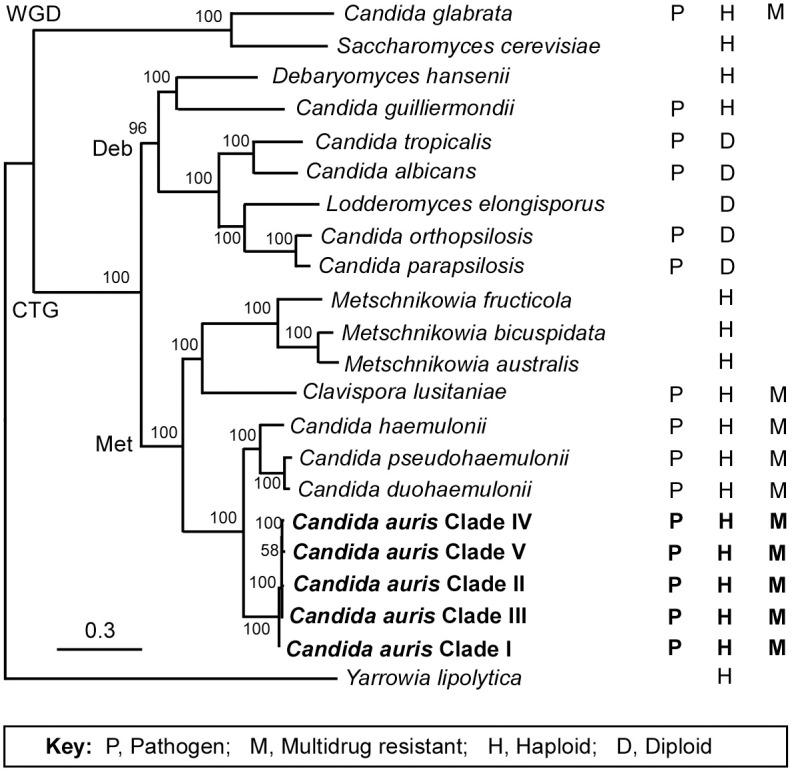
First described in 2009 in Japan, the emerging multidrug-resistant fungal pathogen Candida auris is becoming a worldwide public health threat that has been attracting considerable attention due to its rapid and widespread emergence over the past decade. The reasons behind the recent emergence of this fungus remain a mystery to date. Genetic analyses indicate that this fungal pathogen emerged simultaneously in several different continents, where 5 genetically distinct clades of C. auris were isolated from distinct geographical locations. Although C. auris belongs to the CTG clade (its constituent species translate the CTG codon as serine instead of leucine, as in the standard code), C. auris is a haploid fungal species that is more closely related to the haploid and often multidrug-resistant species Candida haemulonii and Candida lusitaniae and is distantly related to the diploid and clinically common fungal pathogens Candida albicans and Candida tropicalis. Infections and outbreaks caused by C. auris in hospitals settings have been rising over the past several years. Difficulty in its identification, multidrug resistance properties, evolution of virulence factors, associated high mortality rates in patients, and long-term survival on surfaces in the environment make C. auris particularly problematic in clinical settings. Here, we review progress made over the past decade on the biological and clinical aspects of C. auris. Future efforts should be directed toward understanding the mechanistic details of its biology, epidemiology, antifungal resistance, and pathogenesis with a goal of developing novel tools and methods for the prevention, diagnosis, and treatment of C. auris infections.
Overview
The claims and statistics of this paper haven’t been checked yet.
Free: it reads the open-access text and checks the first 5 claims that cite a source we can check. Create a free account to check every claim.
Integrity signals
Registry
Cites
Statistics
Figures
Verification
Claims the paper makes
The claims and statistics of this paper haven’t been checked yet.
Free: it reads the open-access text and checks the first 5 claims that cite a source we can check. Create a free account to check every claim.
Claims other papers make about this one
Each is checked against this paper’s own text: does it say what the citing paper says it does?
The source backs part of the claim, not all of it — or backs it for a different population, condition or comparison.
In the citing paper
“While resistance to FCZ or AmB is frequently observed among clade I isolates, the frequency of ECN resistance remains low at the moment (11, 12, 35).”
From Transcriptomics and Phenotyping Define Genetic Signatures Associated with Echinocandin Resistance in Candida auris (2022) · cites this paper as [35]
Experimental — accuracy not yet measuredThe source backs part of the claim, not all of it — or backs it for a different population, condition or comparison.
In the citing paper
“Since biofilms are often associated with increased persistence on the environmental surfaces and colonization on host skin4,5,11,49, this mutation could contribute to the prevalence and rapid transmission of C. auris.”
From The Wor2 phenotypic switching regulator controls biofilm formation in Candida auris (2026) · cites this paper as [4]
Experimental — accuracy not yet measuredThe cited source says what the claim attributes to it.
In the citing paper
“While resistance to FCZ or AmB is frequently observed among clade I isolates, the frequency of ECN resistance remains low at the moment (11, 12, 35).”
From Transcriptomics and Phenotyping Define Genetic Signatures Associated with Echinocandin Resistance in Candida auris (2022) · cites this paper as [35]
The cited source says what the claim attributes to it.
In the citing paper
“Clinical isolates of C. auris can exhibit different morphotypes such as filamentous, pseudohyphal, and yeast forms (8–14).”
From Yeast and filamentous Candida auris stimulate distinct immune responses in the skin (2024) · cites this paper as [11]
The cited source says what the claim attributes to it.
In the citing paper
“Clinical isolates of C. auris can exhibit different morphotypes, such as yeast, filamentous, and aggregative forms (9–13).”
From Cell aggregation mediated by ACE2 deletion in Candida auris modulates fungal colonization and host immune responses in the skin (2024) · cites this paper as [12]
1 more claim about this paper
Create a free account to see every claim other papers make about this one.
Self-check
Percentages, sums and reported differences re-computed from the paper’s own numbers.
The self-check needs the paper’s full text.
Citations
Cites
Bacterial biofilms: from the Natural environment to infectious diseases
Hall-Stoodley, L., Costerton, J. W., & Stoodley, P. (2004) · Nature Reviews Microbiology · doi:10.1038/nrmicro821 · Cited by 7,143
Wisplinghoff, H., Bischoff, T., Tallent, S. M., Seifert, H., Wenzel, R. P., & Edmond, M. B. (2004) · Clinical Infectious Diseases · doi:10.1086/421946 · Cited by 4,496 · cited 1×
“Candida species are the predominant cause of nosocomial fungal infections and are the fourth leading cause of all hospital-acquired infections [2].”
BackgroundHidden Killers: Human Fungal Infections
Brown, G. D., Denning, D. W., Gow, N. A. R., Levitz, S. M., Netea, M. G., & White, T. C. (2012) · Science Translational Medicine · doi:10.1126/scitranslmed.3004404 · Cited by 4,284
Epidemiology of Invasive Candidiasis: a Persistent Public Health Problem
Pfaller, M. A., & Diekema, D. J. (2007) · Clinical Microbiology Reviews · doi:10.1128/cmr.00029-06 · Cited by 4,174 · cited 1×
“Candida species is Candida albicans; however, the incidence of non-albicans species, such as Candida tropicalis, Candida parapsilosis, and Candida glabrata, has increased over recent decades due to the long-term use and limited options of antifungal drugs [3,4].”
BackgroundEmerging fungal threats to animal, plant and ecosystem health
Fisher, M. C., Henk, D. A., Briggs, C. J., Brownstein, J. S., Madoff, L. C., McCraw, S. L., & Gurr, S. J. (2012) · Nature · doi:10.1038/nature10947 · Cited by 3,310 · cited 1×
“It seems likely that novel fungal pathogens will similarly emerge in the future due to changes in global temperatures, atmospheric CO2 levels, humidity, and other alterations to natural environmental niches [84].”
BackgroundLockhart, S. R., Etienne, K. A., Vallabhaneni, S., Farooqi, J., Chowdhary, A., Govender, N. P., Colombo, A. L., Calvo, B., Cuomo, C. A., Desjardins, C. A., et al. (2017) · Clinical Infectious Diseases · doi:10.1093/cid/ciw691 · Cited by 1,662 · cited 14×
“The genome of C. auris B8441 was sequenced by the CDC [10], and its sequence information and annotation is available on the Candida Genome Database (CGD) database (https://www.candidagenome.org).”
BackgroundMethodInfluentialSatoh, K., Makimura, K., Hasumi, Y., Nishiyama, Y., Uchida, K., & Yamaguchi, H. (2009) · Microbiology and Immunology · doi:10.1111/j.1348-0421.2008.00083.x · Cited by 1,381 · cited 3×
“auris belongs to the Metschnikowiaceae family within the Candida/Clavispora clade (Fig 3) [5,13,14].”
BackgroundThe Fungi: 1, 2, 3 … 5.1 million species?
Blackwell, M. (2011) · American Journal of Botany · doi:10.3732/ajb.1000298 · Cited by 1,324
Candida albicans Biofilms and Human Disease
Nobile, C. J., & Johnson, A. D. (2015) · Annual Review of Microbiology · doi:10.1146/annurev-micro-091014-104330 · Cited by 1,057 · cited 1×
“Biofilms are structured microbial communities that form on abiotic and biotic surfaces and are embedded in an extracellular matrix [64].”
BackgroundSelf-citationFirst hospital outbreak of the globally emerging Candida auris in a European hospital
Schelenz, S., Hagen, F., Rhodes, J. L., Abdolrasouli, A., Chowdhary, A., Hall, A., Ryan, L., Shackleton, J., Trimlett, R., Meis, J. F., et al. (2016) · Antimicrobial Resistance & Infection Control · doi:10.1186/s13756-016-0132-5 · Cited by 768
Cited by
Items 201–300 of 619
Elgammal, Y., Salama, E. A., & Seleem, M. N. (2023) · Medical Mycology · doi:10.1093/mmy/myad081 · Cited by 16
Tools and techniques to identify, study, and control Candida auris
Carty, J., Chowdhary, A., Bernstein, D. A., & Thangamani, S. (2023) · PLoS Pathogens · doi:10.1371/journal.ppat.1011698 · Cited by 16
Guedes, P. H. G., Brussasco, J. G., Moço, A. C. R., de Moraes, D. D., Flauzino, J. M. R., Luz, L. F. G., de Almeida, M. T. G., Soares, M. M. C. N., de Oliveira, R. J., Madurro, J. M., et al. (2021) · Talanta · doi:10.1016/j.talanta.2021.122694 · Cited by 17
Green, R. M., & Bicker, K. L. (2022) · ACS Infectious Diseases · doi:10.1021/acsinfecdis.1c00449 · Cited by 12
de Oliveira, H. C., Castelli, R. F., Alves, L. R., Nosanchuk, J. D., Salama, E. A., Seleem, M. N., & Rodrigues, M. L. (2022) · Medical Mycology · doi:10.1093/mmy/myac033 · Cited by 12
Oh, K. H., & Lee, S. H. (2022) · Antibiotics · doi:10.3390/antibiotics11060803 · Cited by 16
Antifungal pipeline: Is there light at the end of the tunnel?
Schinas, G., Spernovasilis, N. A., & Akinosoglou, K. (2024) · World Journal of Clinical Cases · doi:10.12998/wjcc.v12.i16.2686 · Cited by 13
Octenidine effectively reduces Candida auris colonisation on human skin
Cerbu, D., Seiser, S., Phan-Canh, T., Moser, D., Freystätter, C., Matiasek, J., Kuchler, K., & Elbe‐Bürger, A. (2025) · Scientific Reports · doi:10.1038/s41598-025-11914-x · Cited by 11
Bing, J., Li, S., Ji, L., Du, H., Shamoon, N. M., Nobile, C. J., & Huang, G. (2026) · Clinical Microbiology Reviews · doi:10.1128/cmr.00394-25 · Cited by 15
Self-citationAntimicrobial Studies on Garlic Lectin
Sharma, S., Raj, K., Riyaz, M., & Singh, D. D. (2022) · Probiotics and Antimicrobial Proteins · doi:10.1007/s12602-022-10001-1 · Cited by 12
Candida auris in skilled nursing facilities
Yune, P. S., Coe, J., Rao, M., & Lin, M. Y. (2023) · Therapeutic Advances in Infectious Disease · doi:10.1177/20499361231189958 · Cited by 23
Kavaliauskas, P., Grybaitė, B., Sapijanskaitė-Banevič, B., Vaickelionienė, R., Petraitis, V., Petraitienė, R., Naing, E., Garcia, A. J., Grigalevičiūtė, R., & Mickevičius, V. (2024) · Antibiotics · doi:10.3390/antibiotics13020193 · Cited by 13
The sphingolipid inhibitor myriocin increases Candida auris susceptibility to amphotericin B
Stieber, H., Junghanns, L., Wilhelm, H., Batliner, M., Aldejohann, A. M., Kurzai, O., & Martin, R. (2024) · Mycoses · doi:10.1111/myc.13723 · Cited by 13
Antifungal resistance: why are we losing this battle?
Macedo, J. D. P., & Dias, V. C. (2024) · Future Microbiology · doi:10.1080/17460913.2024.2342150 · Cited by 19
Curtoni, A., Pastrone, L., Cordovana, M., Bondi, A., Piccinini, G., Genco, M., Bottino, P., Polizzi, C., Cavallo, L., Mandras, N., et al. (2024) · Microorganisms · doi:10.3390/microorganisms12071312 · Cited by 11
A multicentric outbreak of Candida auris in Mexico: 2020 to 2023
la Garza, P. R.-D., Cruz, C., Bejarano, J. I. C., López-Romo, A. E., Delgado, J. V., Ramos, B. A., Neira, M. N. M., Rodríguez, D. S., Rodríguez, H. M. S., & Selvera, O. A. R. (2024) · American Journal of Infection Control · doi:10.1016/j.ajic.2024.07.012 · Cited by 11
Mechanism of action and synergistic effect of Eugenia uniflora extract in Candida spp.
de Souza, L. B. F. C., Bento, A. D. O., Lourenço, E. M. G., Ferreira, M. R. A., de Oliveira, W. N., Soares, L. A. L., Barbosa, E. G., Rocha, H. A. O., & Chaves, G. M. (2024) · PLoS ONE · doi:10.1371/journal.pone.0303878 · Cited by 13
Janeczko, M., & Skrzypek, T. (2025) · Pathogens · doi:10.3390/pathogens14010040 · Cited by 13
Mishra, S. K., Yasir, M., Kuppusamy, R., Wong, E. H. H., Hui, A., Sørensen, K., Lin, J. S., Jenssen, H., Barron, A. E., & Willcox, M. D. P. (2025) · Journal of Applied Microbiology · doi:10.1093/jambio/lxaf031 · Cited by 12
Rosario-Colon, J., EBERLE, K. E., & Xin, H. (2025) · iScience · doi:10.1016/j.isci.2025.112459 · Cited by 13
Climate change: shifting boundaries of fungal disease in Europe and beyond
Bottery, M. J., Sedik, S., Schwartz, I. S., Hoenigl, M., & van Rhijn, N. (2025) · Thorax · doi:10.1136/thorax-2024-222168 · Cited by 21
Steinmann, J., Schrauzer, T., Kirchhoff, L., Meis, J. F. G. M., & Rath, P. (2021) · Journal of Fungi · doi:10.3390/jof7050380 · Cited by 13
Machine Learning for Antimicrobial Resistance Research and Drug Development
Shankarnarayan, S. A., Guthrie, J. D., & Charlebois, D. A. (2022) · IntechOpen eBooks · doi:10.5772/intechopen.104841 · Cited by 13
Urban, A. M., Morikava, F. S., Schoeffel, A. C., Novatski, A., Moraes, G. S., Cachoeira, V. S., Matioli, G., Ito, C. A. S., Ferrari, P. C., Neppelenbroek, K. H., et al. (2022) · Current Drug Delivery · doi:10.2174/1567201820666221017103119 · Cited by 11
Xie, F., Hao, Y., Liu, Y., Bao, J., Wang, R., Chi, X., Wang, T., Yu, S., Jin, Y., Li, L., et al. (2024) · Journal of Medicinal Chemistry · doi:10.1021/acs.jmedchem.3c02292 · Cited by 11
Wu, F., Wang, Y., Mai, Z.-P., Xu, Z., Li, S., Li, Y., Yin, R., Li, J., Yu, Z., Wu, Y., et al. (2025) · Nature Communications · doi:10.1038/s41467-025-64914-w · Cited by 15
Singh, R., Shukla, J., Ali, M. S., & Dubey, A. K. (2024) · Journal of Applied Microbiology · doi:10.1093/jambio/lxae139 · Cited by 11
Lipids from a snail host regulate the multicellular behavior of a predator of parasitic schistosomes
Kidner, R. Q., Goldstone, E. B., Laidemitt, M. R., Sanchez, M. C., Gerdt, C., Brokaw, L. P., Ros-Rocher, N., Morris, J. C., Davidson, W. S., & Gerdt, J. P. (2024) · iScience · doi:10.1016/j.isci.2024.110724 · Cited by 10
Zhang, Y., Han, J., Ma, Y., Zhang, F., Li, C., Zhao, J., Lu, B., & Cao, B. (2024) · Infection · doi:10.1007/s15010-024-02378-8 · Cited by 11
Wijeyatunga, S. K., Sauceda‐Oloño, P. Y., Dona, N. L. K., Guinati, B. G. S., Derr, K. M., Tisdale, K. A., Smith, A. D., Tennyson, A. G., & Smith, R. C. (2025) · Molecules · doi:10.3390/molecules30071614 · Cited by 13
Korsten, K., van den Ende, B. G., Piqué, R., Hagen, F., & van Dijk, K. (2025) · Mycopathologia · doi:10.1007/s11046-025-00944-8 · Cited by 11
Future developments in training
Last, K., Power, N. R., Dellière, S., Velikov, P., Šterbenc, A., Antunovic, I. A., Lopes, M. J., Schweitzer, V. A., & Barac, A. M. (2021) · Clinical Microbiology and Infection · doi:10.1016/j.cmi.2021.06.032 · Cited by 15
Ortíz, B., Aguilar, K., Galindo, C., Molina, L., & Fontecha, G. A. (2022) · Current Medical Mycology · doi:10.18502/cmm.8.3.11212 · Cited by 15
Enablers of Candida auris persistence on medical devices and their mode of eradication.
Nwachukwu, K. C., Nwarunma, E., Uchenna, C. D., & Ugbogu, O. C. (2023) · PubMed Central · doi:10.18502/cmm.2023.150673 · Cited by 15
Cerqueira, F. M., Bertsch, J., DeMaet, M. A., York, T., McDougal, A. N., Patel, J. A., & Ren, P. (2024) · Journal of Fungi · doi:10.3390/jof10040285 · Cited by 13
The Search for Cryptic L-Rhamnosyltransferases on the Sporothrix schenckii Genome
Mora-Montes, H. M., García‐Gutiérrez, K., García-Carnero, L. C., Lozoya‐Pérez, N. E., & Ramírez-Prado, J. H. (2022) · Journal of Fungi · doi:10.3390/jof8050529 · Cited by 9
Candida auris PCR for high-throughput infection control screening
Crawford, L. C., Kidd, S. E., Anninos, T. M., Turra, M., & Weldhagen, G. F. (2022) · Medical Mycology · doi:10.1093/mmy/myac057 · Cited by 10
Ploidy changes in human fungal pathogens: Going beyond sexual reproduction
Du, H., Zheng, Q., Bennett, R. J., & Huang, G. (2022) · PLoS Pathogens · doi:10.1371/journal.ppat.1010954 · Cited by 9
Self-citationWells, K. M., Ciftci, Y., Peddinti, B. S. T., Ghiladi, R. A., Vediyappan, G., Spontak, R. J., & Govind, R. (2023) · Journal of Colloid and Interface Science · doi:10.1016/j.jcis.2023.08.088 · Cited by 9
Does repeated exposure to hydrogen peroxide induce Candida auris resistance?
Cobrado, L., Ricardo, E., Ramalho, P. A., Fernandes, Â. R., & Rodrigues, A. G. (2023) · Antimicrobial Resistance and Infection Control · doi:10.1186/s13756-023-01281-5 · Cited by 11
Tlapale-Lara, N., López, J., Gómez, E., Villa‐Tanaca, L., Barrera, E., Escalante, C. H., Tamariz, J., Delgado, F., Andrade-Pavón, D., & Gómez‐García, O. (2024) · International Journal of Molecular Sciences · doi:10.3390/ijms25105091 · Cited by 11
Bloch, A., Bogiel, T., Prażyńska, M. B., & Gospodarek-Komkowska, E. (2025) · Methods and Protocols · doi:10.3390/mps8050098 · Cited by 11
Differential susceptibility of Candida (Candidozyma) auris clades to surface disinfectants
Lang, A., Gabriel, H., Meister, T. L., Meis, J. F. G. M., Steinmann, E., Brill, F. H. H., & Steinmann, J. (2025) · Journal of Hospital Infection · doi:10.1016/j.jhin.2025.10.003 · Cited by 10
Singh, S., Youssef, E. G., Barbarino, A. M., Hautau, H., Nabeela, S., Gebremariam, T., Alkhazraji, S., Ostroff, G. R., Christensen, D., Cochrane, T., et al. (2025) · Scientific Reports · doi:10.1038/s41598-025-32488-8 · Cited by 10
Accounting for the Biological Complexity of Pathogenic Fungi in Phylogenetic Dating
Edwards, H. M., & Rhodes, J. L. (2021) · Journal of Fungi · doi:10.3390/jof7080661 · Cited by 11
Molecular investigation of the incidence of Candida auris infections at selected hospitals in Iran
Safari, F., Madani, M., Kheirollahi, M., & Mirhendi, H. (2022) · Mycoses · doi:10.1111/myc.13504 · Cited by 12
Streamlined instrument-free lysis for the detection of Candida auris
Jin, M., Trick, A. Y., Totten, M., Lee, P., Zhang, S. X., & Wang, T. (2023) · Scientific Reports · doi:10.1038/s41598-023-47220-7 · Cited by 8
Areitio, M., Antoran, A., Rodriguez-Erenaga, O., Aparicio-Fernandez, L., Martin–Souto, L., Buldain, I., Zaldibar, B., Gaitán, A. C. R., Pemán, J., Rementería, A., et al. (2024) · Journal of Proteome Research · doi:10.1021/acs.jproteome.3c00752 · Cited by 10
Verma, N., Riyaz, M., Kaur, G., Negi, P., Ghawri, H., & Raj, K. (2024) · Indian Journal of Microbiology · doi:10.1007/s12088-024-01277-8 · Cited by 13
Belarmino, A. B., de Sousa, D. S., Roberto, C. H. A., de Oliveira, V. M., da Rocha, M. N., Mendes, F. R. D. S., Marinho, M. M., da Fonseca, A. M., & Marinho, G. S. (2024) · Steroids · doi:10.1016/j.steroids.2024.109453 · Cited by 11
The identification of essential cellular genes is critical for validating drug targets
Xu, T., Wang, S., Ma, T., Dong, Y., Ashby, C. R., & Hao, G. (2024) · Drug Discovery Today · doi:10.1016/j.drudis.2024.104215 · Cited by 10
The role of non-standard translation in Candida albicans pathogenesis
Bezerra, A. R., Oliveira, C., Correia, I., Guimarães, A. R., Sousa, G., Carvalho, M. J., Moura, G. R., & Santos, M. A. S. (2021) · FEMS Yeast Research · doi:10.1093/femsyr/foab032 · Cited by 8
Khairat, S. M., ElAnany, M. G., Ashmawy, M. M., & Hussein, A. F. A. (2021) · Open Access Macedonian Journal of Medical Sciences · doi:10.3889/oamjms.2021.6095 · Cited by 10
Jusuf, S., Zhan, Y., Zhang, M., Alexander, N. J., Viens, A. L., Mansour, M. K., & Cheng, J. (2022) · Photochemistry and Photobiology · doi:10.1111/php.13719 · Cited by 9
A loophole in soap dispensers mediates contamination with Gram‐negative bacteria
Lucassen, R. W., van Leuven, N., & Bockmühl, D. P. (2023) · MicrobiologyOpen · doi:10.1002/mbo3.1384 · Cited by 8
Short-term evolution and dispersal patterns of fluconazole-resistance in Candida auris clade III
Cancino‐Muñoz, I., Bayona, J. V. M., García, C. S., Tormo, N., Guna, R., Cardona, C. G., & Gónzález‐Candelas, F. (2024) · mBio · doi:10.1128/mbio.03164-24 · Cited by 10
Copper-functionalized hydroxyapatite nanoparticles to counteract fungal infections
Casado, G. E., Fusacchia, C., Esposti, L. D., Cacaci, M., Squitieri, D., Bugli, F., Iafisco, M., & Mino, L. (2025) · Surfaces and Interfaces · doi:10.1016/j.surfin.2025.106179 · Cited by 10
Areitio, M., Rodriguez-Erenaga, O., Aparicio-Fernandez, L., Abio-Dorronsoro, L., Martin–Souto, L., Perez‐Cuesta, U., Buldain, I., Zaldibar, B., Gaitán, A. C. R., Pemán, J., et al. (2025) · Microbiological Research · doi:10.1016/j.micres.2025.128353 · Cited by 10
Tuan, D. A., & Masák, J. (2026) · Current Microbiology · doi:10.1007/s00284-025-04713-0 · Cited by 10
Updated Genomic Epidemiologic Description of Candida (Candidozyma) auris , United States
Parnell, L. A., dos Santos, A. R., Forsberg, K., Lyman, M., Misas, E., Gade, L., Sexton, D. J., Litvintseva, A. P., & Chow, N. A. (2026) · Emerging infectious diseases · doi:10.3201/eid3205.250760 · Cited by 10
Mrs4 loss of function in fungi during adaptation to the cystic fibrosis lung
Murante, D., Demers, E. G., Kurbessoian, T., Ruzic, M., Ashare, A., Stajich, J., & Hogan, D. A. (2023) · mBio · doi:10.1128/mbio.01171-23 · Cited by 9
Baicalein induces apoptosis by targeting ribosomes in Candida auris
Li, C., Wang, J., Wu, H., Zang, L., Qiu, W., Wei, W., Wang, T., & Wang, C. (2024) · Archives of Microbiology · doi:10.1007/s00203-024-04136-8 · Cited by 9
Buonanno, A., Salvatore, M. M., Feola, A., Siciliano, A., Bellavita, R., Imbò, L. E., Guida, M., Andolfi, A., Nicoletti, R., Maione, A., et al. (2024) · Molecules · doi:10.3390/molecules29245949 · Cited by 10
Garvey, M., Kremer, T. A., & Rowan, N. J. (2025) · Journal of Applied Microbiology · doi:10.1093/jambio/lxaf005 · Cited by 12
Transcriptional Response of Candida auris to the Mrr1 Inducers Methylglyoxal and Benomyl
Biermann, A. R., & Hogan, D. A. (2022) · mSphere · doi:10.1128/msphere.00124-22 · Cited by 9
Alam, H., Srivastava, V., Sekgele, W., Wani, M. Y., Al‐Bogami, A. S., Molepo, J., & Ahmad, A. (2023) · PLoS ONE · doi:10.1371/journal.pone.0285473 · Cited by 10
New Insights in Phenothiazinium-Mediated Photodynamic Inactivation of Candida Auris
da Silva, A. R., Cabral, F. V., Silva, C. R., da Silva, D. D. F. T., de Freitas, A. Z., Fontes, A., & Ribeiro, M. S. (2023) · Journal of Fungi · doi:10.3390/jof9070717 · Cited by 9
Climate Change Exacerbating Fungal Disease Disparities
Bonifáz, A., García-Salazar, E., & León, M. G. F.-D. (2024) · Current Fungal Infection Reports · doi:10.1007/s12281-023-00479-9 · Cited by 16
Oganesyan, E. G., Klimenteva, V., Vybornova, I. V., Venchakova, V. V., Parshikova, E., Kovyrshin, S., Oe, O., Kruglov, A., Александровна, Г. С., Vasilyeva, N. V., et al. (2025) · Journal of Fungi · doi:10.3390/jof11010035 · Cited by 9
Gil, G. A., Kakuda, L., Tonani, L., Kress, M. R. V. Z., & OLIVEIRA, W. P. D. (2025) · ACS Omega · doi:10.1021/acsomega.4c08578 · Cited by 8
Emergence and characterization of mixed Candida auris strain infections in China
Du, H., Huang, Y., Guo, P., Liang, W., Zheng, T., Guan, Z., Bing, J., Chu, H., & Huang, G. (2025) · Infection · doi:10.1007/s15010-025-02536-6 · Cited by 7
Self-citationPuumala, E., Zaslaver, O., Chen, A., Duncan, D., Fogal, M., Shapiro, R. S., Mazhab‐Jafari, M. T., Whitesell, L. J., Montenegro-Burke, J. R., Robbins, N., et al. (2022) · mBio · doi:10.1128/mbio.02730-22 · Cited by 9
Borgio, J. F., Alhujaily, R., Alquwaie, R., Alabdullah, M. J., Alhasani, E. S., Alothman, W., Alaqeel, R. K., Alfaraj, A. S., Kaabi, A., Alhur, N. F., et al. (2023) · Computational and Structural Biotechnology Journal · doi:10.1016/j.csbj.2023.08.031 · Cited by 9
Bohner, F., Papp, C., Takács, T., Varga, M., Szekeres, A., Nosanchuk, J. D., Vágvölgyi, C., Tóth, R., & Gácser, A. (2023) · Journal of Fungi · doi:10.3390/jof9121148 · Cited by 10
Saputra, H., Safaat, M., Santoso, P., Wakabayashi, R., Goto, M., Taira, T., & Kamiya, N. (2024) · International Journal of Molecular Sciences · doi:10.3390/ijms25073567 · Cited by 8
The Ecology of Pathogenic Onygenales Fungi and the Impacts of Climate Change
Luberto, E. T., Ramsey, M. L., & Kollath, D. R. (2024) · Current Clinical Microbiology Reports · doi:10.1007/s40588-024-00223-y · Cited by 8
Ahaik, I., Nunez‐Rodriguez, J. C., Abrini, J., Bouhdid, S., & Gabaldón, T. (2024) · Journal of Fungi · doi:10.3390/jof10060373 · Cited by 13
Spectrum of infection and outcomes in individuals with Candida auris infection in Qatar
Ajmi, J. A. A., Malik, A. B., Nafady‐Hego, H., Hanana, F., Abraham, J. C., Garcell, H. G., Hudaib, G., Al-Wali, W., Eltayeb, F., Shams, S., et al. (2024) · PLoS ONE · doi:10.1371/journal.pone.0302629 · Cited by 8
Fiala, J., Roach, T., Holzinger, A., Husiev, Y., Delueg, L., Hammerle, F. J., Armengol, E. S., Schöbel, H., Bonnet, S., Laffleur, F., et al. (2024) · Planta Medica · doi:10.1055/a-2249-9110 · Cited by 8
Insight into Virulence and Mechanisms of Amphotericin B Resistance in the Candida haemulonii Complex
Huang, Y., Su, Y., Chen, X., Xiao, M., & Xu, Y. (2024) · Journal of Fungi · doi:10.3390/jof10090615 · Cited by 8
Rahman, M. A., Victoros, E., Shanjana, Y., Thomas, M. R., & Islam, M. R. (2024) · Health Science Reports · doi:10.1002/hsr2.70160 · Cited by 8
Macedo, D., Berrío, I., Escandón, P., Gamarra, S. P., & García‐Effrón, G. (2024) · Mycoses · doi:10.1111/myc.13757 · Cited by 8
Yang, S., Wan, F., Zhang, M., Lin, H., Hu, L., Zhou, Z., Wang, D., Zhou, A., Ni, L., Guo, J., et al. (2024) · Journal of Fungi · doi:10.3390/jof10060397 · Cited by 8
Ahmed, F., El-Kholy, I. M. A., Abdou, D. A. M., El-Mehalawy, A. A., & Elkady, N. A. (2025) · Scientific Reports · doi:10.1038/s41598-025-15302-3 · Cited by 9
A study of genomic complexity underlying multidrug resistance in Candida auris strains in Thailand
Opassathian, K., Boonmee, N., Swangkaew, S., Jenjaroenpun, P., Wongsurawat, T., Kruasuwan, W., Ngamskulrungroj, P., & Mitrpant, C. (2025) · Scientific Reports · doi:10.1038/s41598-025-25386-6 · Cited by 9
Li, X., Chen, S., Lyu, X., & Tian, J. (2022) · Medical Mycology · doi:10.1093/mmy/myac087 · Cited by 9
Infection caused by Candida auris: state of the art
Marena, G. D., Carvalho, G. C., Monazzi, L., Maschio-Lima, T., Almeida, M. D., Silva, J. D., Fortunato, G., Araújo, V., Venancio, D. C. V., Chang, M., et al. (2022) · Mycosphere · doi:10.5943/mycosphere/13/1/10 · Cited by 6
Colosi, I. A., Crişan, M., Țoc, D. A., Colosi, H. A., Georgiu, C., Sabou, M., & Costache, C. A. (2023) · Journal of Fungi · doi:10.3390/jof9080839 · Cited by 7
Clonal Dissemination of Candida auris Clinical Isolates in Northern Italy, 2021
Amadesi, S., Palombo, M., Bovo, F., Liberatore, A., Vecchi, E., Cricca, M., Lazzarotto, T., Ambretti, S., & Gaibani, P. (2024) · Microbial Drug Resistance · doi:10.1089/mdr.2023.0150 · Cited by 6
A Fungus for Our Time: Candida auris Emerges into the Anthropocene
Stephenson, J. C., Garza, D. R., & Bouklas, T. (2023) · Current Tropical Medicine Reports · doi:10.1007/s40475-023-00293-w · Cited by 7
Photoinactivation by UVA radiation and visible light of Candida auris compared to other fungi
Gierke, A.-M., & Heßling, M. (2024) · Photochemical & Photobiological Sciences · doi:10.1007/s43630-024-00543-4 · Cited by 9
Nutritional Immunity and Fungal Pathogens: A New Role for Manganese
Wildeman, A. S., & Culotta, V. (2024) · Current Clinical Microbiology Reports · doi:10.1007/s40588-024-00222-z · Cited by 7
Yang, J.-X., Ma, G., Li, Y.-T., Shi, Y.-P., & Liang, G.-W. (2024) · Clinics · doi:10.1016/j.clinsp.2024.100497 · Cited by 9
Isolation of Candida auris in Clinical Specimens
Yadav, A., Singh, A. K., & Chowdhary, A. (2022) · Methods in molecular biology · doi:10.1007/978-1-0716-2417-3_1 · Cited by 7
Xu, Z., Zhang, L., Han, R., Ding, C., Shou, H., Duan, X., & Zhang, S. (2023) · Infection and Drug Resistance · doi:10.2147/idr.s409708 · Cited by 8
Bao, J., Hao, Y., Ni, T., Wang, R., Liu, J., Chi, X., Wang, T., Yu, S., Jin, Y., Yan, L., et al. (2023) · Journal of Enzyme Inhibition and Medicinal Chemistry · doi:10.1080/14756366.2023.2244696 · Cited by 7
Candida auris: A bibliometric analysis of an emerging global health threat
Ragusa, P., Prinzivalli, A., Pizzini, S., Libero, G., Moro, G. L., Brescia, V., Scaioli, G., Minniti, D., Siliquini, R., & Bert, F. (2023) · Journal of Infection and Public Health · doi:10.1016/j.jiph.2023.08.012 · Cited by 8
Initial Results of the International Efforts in Screening New Agents against Candida auris
Poester, V. R., Munhoz, L. S., Benelli, J. L., Melo, A. M., Al‐Hatmi, A. M. S., Larwood, D. J., Martinez, M., Stevens, D. A., & Xavier, M. O. (2022) · Journal of Fungi · doi:10.3390/jof8080771 · Cited by 8
State of The Globe: Candida auris-A Global Healthcare Threat
Thakur, S. (2022) · Journal of Global Infectious Diseases · doi:10.4103/jgid.jgid_215_22 · Cited by 7
Candida albicans Horizontal Transmission in COVID-19 Patients Hospitalized in Intensive Care Unit
Skóra, M., Rosam, K., Namysł, M., Sepioło, A., Gajda, M., Jędras, J., Krzyściak, P., Zorska, J., Wordliczek, J., Heczko, P. B., et al. (2024) · Journal of Fungi · doi:10.3390/jof10120864 · Cited by 7
Metadata
- Authors
- Du, H., Bing, J., Hu, T., Ennis, C. L., Nobile, C. J., & Huang, G.
- Affiliations
- Fudan University (CN)
- University of California, Merced (US)
- Corresponding author
- Huang, Guanghua
- Venue
- PLOS Pathogens
- Publisher
- Public Library of Science (PLoS)
- Published
- 2020-10-22
- Volume
- 16
- Issue
- 10
- Pages
- e1008921
- ISSN
- 1553-7366 (ISSN-L)
- 1553-7374
- PMC
- PMC7581363
- OpenAlex
- W3093683101
- Cited by
- 609
- References
- 86
- Citations by year
- 2026: 76 · 2025: 105 · 2024: 110 · 2023: 139 · 2022: 126 · 2021: 53
- FWCI
- 3.77
- Type
- journal article
- Language
- en
- Open access
- gold
- doi.org
- Licence
- Locations
- PLoS Pathogens (publishedVersion, cc-by)
- PubMed Central (publishedVersion, cc-by)
- PubMed (publishedVersion)
- eScholarship (California Digital Library) (submittedVersion, cc-by)
- DOAJ (DOAJ: Directory of Open Access Journals) (submittedVersion, cc-by-sa)
- eScholarship (California Digital Library) (submittedVersion)
- Funders
- Natural Science Foundation of Shanghai (19ZR1405100)
- National Natural Science Foundation of China (31625002, 31930005)
- National Institutes of Health
- National Institute of General Medical Sciences (R35GM124594)
- National Institute of Allergy and Infectious Diseases (R21AI125801)
- National Institute of Dental and Craniofacial Research (F31DE028488)
- Topics
- Health Sciences › Medicine › Infectious Diseases › Antifungal resistance and susceptibility
- Life Sciences › Immunology and Microbiology › Microbiology › Yeasts and Rust Fungi Studies
- Health Sciences › Medicine › Infectious Diseases › Fungal Infections and Studies
- Keywords
- Candida auris, multidrug resistance, antifungal resistance, virulence factors, fungal pathogenesis, Candida haemulonii, Candida lusitaniae, Candida albicans, Candida tropicalis, hospital outbreak, fungal epidemiology, environmental survival, fungal identification, emerging fungal pathogens
- MeSH terms
- Antifungal Agents, Candida, Candidiasis, Saccharomycetales, Humans, Virulence, Drug Resistance, Fungal
About these checks
Registry, retraction, Cites and statistics results are computed, not judged, with one exception: a printed reference that no index lists is read once by a model before it counts as a citation error. Claims are extracted by a model and kept only when their quote appears verbatim in the text; each cited source is then checked, with a model’s help, for whether it says what the claim relies on. Those verdicts can be wrong — read the claim’s quote and the cited source before relying on one.
Statistics and arithmetic are recomputed, not judged.
Confidence bands are shown only for fields calibrated on our annotated test set. None is calibrated yet, so no band is shown.
What counts as a claim ›How we measure confidence ›How we check this ›
Are you an author, or do you see a problem with this page? Request a review
Data sources
Bibliographic data: Semantic Scholar, OpenAlex, Crossref.
Contains information from the Semantic Scholar Academic Graph Datasets, made available under the ODC Attribution License (ODC-BY 1.0).
Semantic Scholar’s data is described in: Kinney, R., et al. (2023). The Semantic Scholar Open Data Platform. arXiv:2301.10140.
