

Candida auris: Epidemiology, biology, antifungal resistance, and virulence
Open accessThe DOI matches its Crossref record; 86 of the 86 references it cites were found in a registry or an index.
Abstract
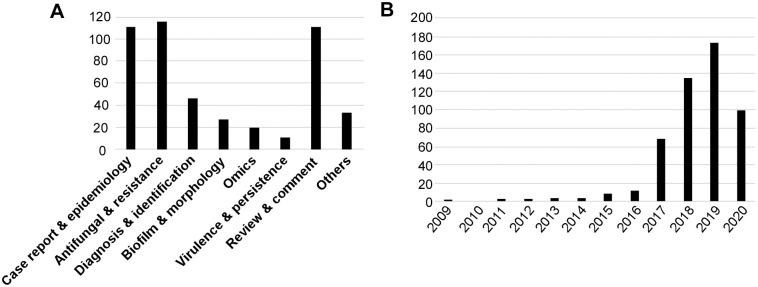
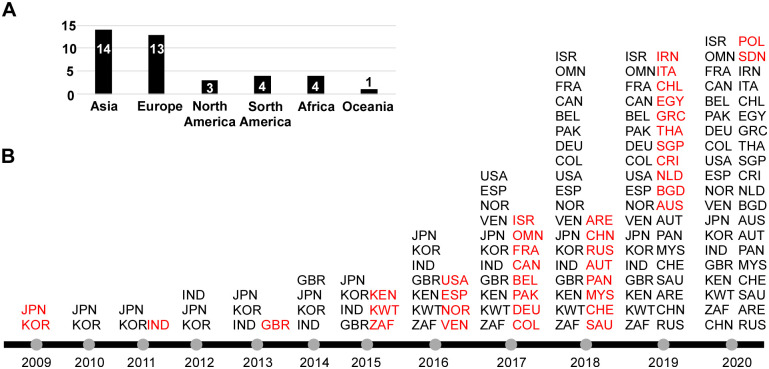
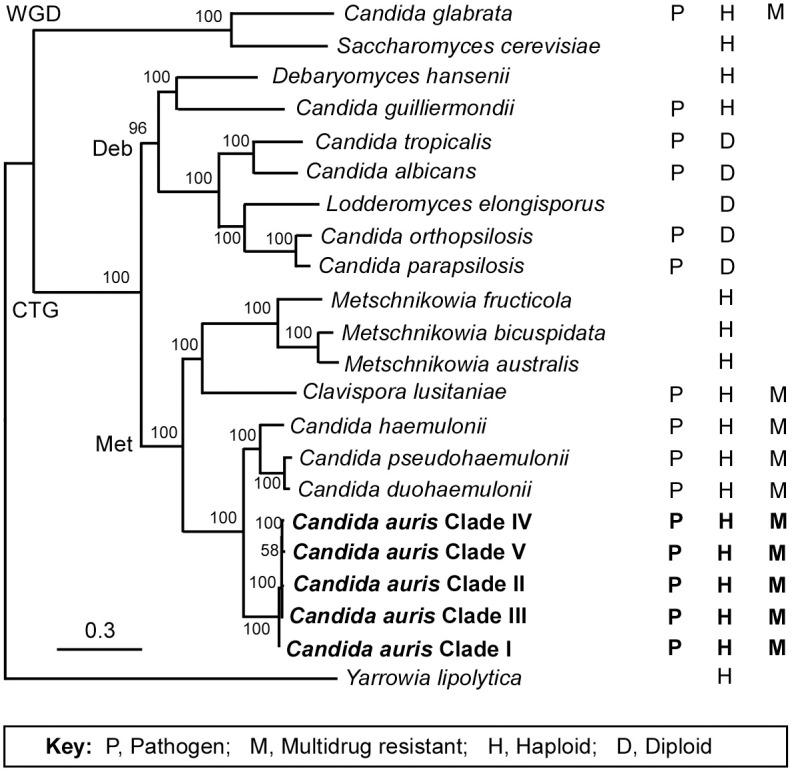
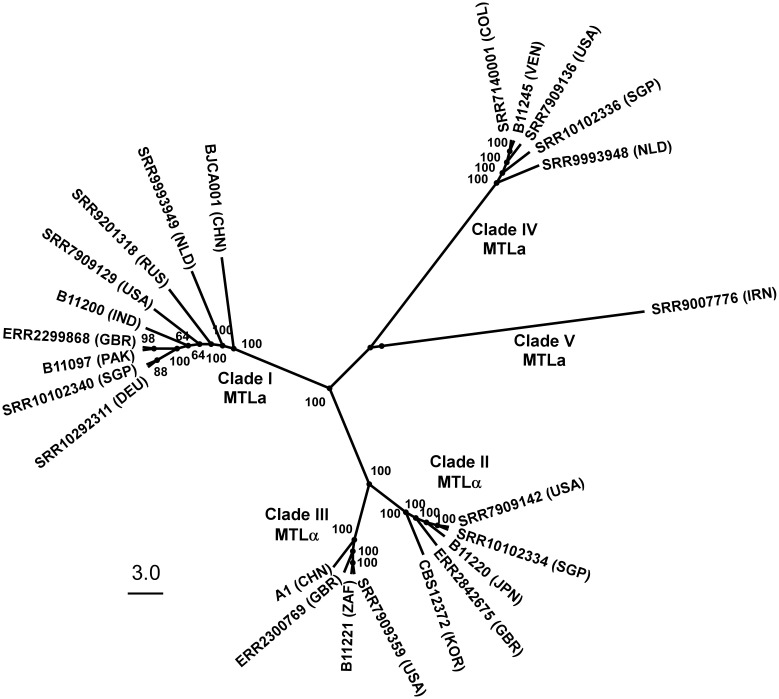
First described in 2009 in Japan, the emerging multidrug-resistant fungal pathogen Candida auris is becoming a worldwide public health threat that has been attracting considerable attention due to its rapid and widespread emergence over the past decade. The reasons behind the recent emergence of this fungus remain a mystery to date. Genetic analyses indicate that this fungal pathogen emerged simultaneously in several different continents, where 5 genetically distinct clades of C. auris were isolated from distinct geographical locations. Although C. auris belongs to the CTG clade (its constituent species translate the CTG codon as serine instead of leucine, as in the standard code), C. auris is a haploid fungal species that is more closely related to the haploid and often multidrug-resistant species Candida haemulonii and Candida lusitaniae and is distantly related to the diploid and clinically common fungal pathogens Candida albicans and Candida tropicalis. Infections and outbreaks caused by C. auris in hospitals settings have been rising over the past several years. Difficulty in its identification, multidrug resistance properties, evolution of virulence factors, associated high mortality rates in patients, and long-term survival on surfaces in the environment make C. auris particularly problematic in clinical settings. Here, we review progress made over the past decade on the biological and clinical aspects of C. auris. Future efforts should be directed toward understanding the mechanistic details of its biology, epidemiology, antifungal resistance, and pathogenesis with a goal of developing novel tools and methods for the prevention, diagnosis, and treatment of C. auris infections.
Overview
The claims and statistics of this paper haven’t been checked yet.
Free: it reads the open-access text and checks the first 5 claims that cite a source we can check. Create a free account to check every claim.
Integrity signals
Registry
Cites
Statistics
Figures
Verification
Claims the paper makes
The claims and statistics of this paper haven’t been checked yet.
Free: it reads the open-access text and checks the first 5 claims that cite a source we can check. Create a free account to check every claim.
Claims other papers make about this one
Each is checked against this paper’s own text: does it say what the citing paper says it does?
The source backs part of the claim, not all of it — or backs it for a different population, condition or comparison.
In the citing paper
“While resistance to FCZ or AmB is frequently observed among clade I isolates, the frequency of ECN resistance remains low at the moment (11, 12, 35).”
From Transcriptomics and Phenotyping Define Genetic Signatures Associated with Echinocandin Resistance in Candida auris (2022) · cites this paper as [35]
Experimental — accuracy not yet measuredThe source backs part of the claim, not all of it — or backs it for a different population, condition or comparison.
In the citing paper
“Since biofilms are often associated with increased persistence on the environmental surfaces and colonization on host skin4,5,11,49, this mutation could contribute to the prevalence and rapid transmission of C. auris.”
From The Wor2 phenotypic switching regulator controls biofilm formation in Candida auris (2026) · cites this paper as [4]
Experimental — accuracy not yet measuredThe cited source says what the claim attributes to it.
In the citing paper
“While resistance to FCZ or AmB is frequently observed among clade I isolates, the frequency of ECN resistance remains low at the moment (11, 12, 35).”
From Transcriptomics and Phenotyping Define Genetic Signatures Associated with Echinocandin Resistance in Candida auris (2022) · cites this paper as [35]
The cited source says what the claim attributes to it.
In the citing paper
“Clinical isolates of C. auris can exhibit different morphotypes such as filamentous, pseudohyphal, and yeast forms (8–14).”
From Yeast and filamentous Candida auris stimulate distinct immune responses in the skin (2024) · cites this paper as [11]
The cited source says what the claim attributes to it.
In the citing paper
“Clinical isolates of C. auris can exhibit different morphotypes, such as yeast, filamentous, and aggregative forms (9–13).”
From Cell aggregation mediated by ACE2 deletion in Candida auris modulates fungal colonization and host immune responses in the skin (2024) · cites this paper as [12]
1 more claim about this paper
Create a free account to see every claim other papers make about this one.
Self-check
Percentages, sums and reported differences re-computed from the paper’s own numbers.
The self-check needs the paper’s full text.
Citations
Cites
Bacterial biofilms: from the Natural environment to infectious diseases
Hall-Stoodley, L., Costerton, J. W., & Stoodley, P. (2004) · Nature Reviews Microbiology · doi:10.1038/nrmicro821 · Cited by 7,143
Wisplinghoff, H., Bischoff, T., Tallent, S. M., Seifert, H., Wenzel, R. P., & Edmond, M. B. (2004) · Clinical Infectious Diseases · doi:10.1086/421946 · Cited by 4,496 · cited 1×
“Candida species are the predominant cause of nosocomial fungal infections and are the fourth leading cause of all hospital-acquired infections [2].”
BackgroundHidden Killers: Human Fungal Infections
Brown, G. D., Denning, D. W., Gow, N. A. R., Levitz, S. M., Netea, M. G., & White, T. C. (2012) · Science Translational Medicine · doi:10.1126/scitranslmed.3004404 · Cited by 4,284
Epidemiology of Invasive Candidiasis: a Persistent Public Health Problem
Pfaller, M. A., & Diekema, D. J. (2007) · Clinical Microbiology Reviews · doi:10.1128/cmr.00029-06 · Cited by 4,174 · cited 1×
“Candida species is Candida albicans; however, the incidence of non-albicans species, such as Candida tropicalis, Candida parapsilosis, and Candida glabrata, has increased over recent decades due to the long-term use and limited options of antifungal drugs [3,4].”
BackgroundEmerging fungal threats to animal, plant and ecosystem health
Fisher, M. C., Henk, D. A., Briggs, C. J., Brownstein, J. S., Madoff, L. C., McCraw, S. L., & Gurr, S. J. (2012) · Nature · doi:10.1038/nature10947 · Cited by 3,310 · cited 1×
“It seems likely that novel fungal pathogens will similarly emerge in the future due to changes in global temperatures, atmospheric CO2 levels, humidity, and other alterations to natural environmental niches [84].”
BackgroundLockhart, S. R., Etienne, K. A., Vallabhaneni, S., Farooqi, J., Chowdhary, A., Govender, N. P., Colombo, A. L., Calvo, B., Cuomo, C. A., Desjardins, C. A., et al. (2017) · Clinical Infectious Diseases · doi:10.1093/cid/ciw691 · Cited by 1,662 · cited 14×
“The genome of C. auris B8441 was sequenced by the CDC [10], and its sequence information and annotation is available on the Candida Genome Database (CGD) database (https://www.candidagenome.org).”
BackgroundMethodInfluentialSatoh, K., Makimura, K., Hasumi, Y., Nishiyama, Y., Uchida, K., & Yamaguchi, H. (2009) · Microbiology and Immunology · doi:10.1111/j.1348-0421.2008.00083.x · Cited by 1,381 · cited 3×
“auris belongs to the Metschnikowiaceae family within the Candida/Clavispora clade (Fig 3) [5,13,14].”
BackgroundThe Fungi: 1, 2, 3 … 5.1 million species?
Blackwell, M. (2011) · American Journal of Botany · doi:10.3732/ajb.1000298 · Cited by 1,324
Candida albicans Biofilms and Human Disease
Nobile, C. J., & Johnson, A. D. (2015) · Annual Review of Microbiology · doi:10.1146/annurev-micro-091014-104330 · Cited by 1,057 · cited 1×
“Biofilms are structured microbial communities that form on abiotic and biotic surfaces and are embedded in an extracellular matrix [64].”
BackgroundSelf-citationFirst hospital outbreak of the globally emerging Candida auris in a European hospital
Schelenz, S., Hagen, F., Rhodes, J. L., Abdolrasouli, A., Chowdhary, A., Hall, A., Ryan, L., Shackleton, J., Trimlett, R., Meis, J. F., et al. (2016) · Antimicrobial Resistance & Infection Control · doi:10.1186/s13756-016-0132-5 · Cited by 768
Cited by
Items 101–200 of 619
Emergence of Candida auris in intensive care units in Algeria
Zerrouki, H., Ibrahim, A., Rebiahi, S., Elhabiri, Y., Benhaddouche, D., de Groot, T., Meis, J. F. G. M., Rolain, J., & Bittar, F. (2022) · Mycoses · doi:10.1111/myc.13470 · Cited by 30
Bandara, N., & Samaranayake, L. P. (2022) · Journal of Medical Microbiology · doi:10.1099/jmm.0.001548 · Cited by 33
Candida auris: the new fungal threat.
Pallotta, F., Viale, P., & Barchiesi, F. (2023) · PubMed Central · doi:10.53854/liim-3103-6 · Cited by 40
Hsu, C., & Yassin, M. (2025) · Microorganisms · doi:10.3390/microorganisms13071461 · Cited by 34
First Cases of Candida auris in a Referral Intensive Care Unit in Piedmont Region, Italy
Corcione, S., Montrucchio, G. G., Shbaklo, N., Benedetto, I. D., Sales, G., Cedrone, M., Vita, D., Costa, C. S., Zozzoli, S., Zaccaria, T., et al. (2022) · Microorganisms · doi:10.3390/microorganisms10081521 · Cited by 28
Vito, M. D., Garzoli, S., Rosato, R., Mariotti, M., Gervasoni, J., Santucci, L., Ovidi, E., Cacaci, M., Lombarini, G., Torelli, R., et al. (2023) · Microbiology Spectrum · doi:10.1128/spectrum.04385-22 · Cited by 32
Barião, P. H. G., Tonani, L., Brancini, G. T. P., Nascimento, É., Braga, G. Ú. L., Wainwright, M., & Kress, M. R. V. Z. (2022) · Photochemical & Photobiological Sciences · doi:10.1007/s43630-022-00258-4 · Cited by 27
Small molecules for combating multidrug-resistant superbug Candida auris infections
Tu, J., Liu, N., Huang, Y., Yang, W., & Sheng, C. (2022) · Acta Pharmaceutica Sinica B · doi:10.1016/j.apsb.2022.08.001 · Cited by 29
Unveiling the menace: a thorough review of potential pandemic fungal disease
Jafarlou, M. (2024) · Frontiers in Fungal Biology · doi:10.3389/ffunb.2024.1338726 · Cited by 24
“…rapid spreading, intrinsic and acquired resistance to antifungal drugs and disinfectants, its ability to adhere to and invade host tissues, and its ability to form bio fi lms (Caceres et al., 2019; Du et al., 2020; Horton and Nett, 2020; Ahmad and Alfouzan, 2021; Sharma and Goel, 2022).”
BackgroundInfluentialKim, J.-S., Lee, K.-T., & Bahn, Y.-S. (2023) · Microbiology Spectrum · doi:10.1128/spectrum.02152-23 · Cited by 24
“auris infection is estimated to be between 30% and 60% (7).”
Wasylyshyn, A. I., & Stoneman, E. K. (2024) · JAMA · doi:10.1001/jama.2023.24921 · Cited by 27
Ennis, C. L., Hernday, A. D., & Nobile, C. J. (2021) · Microbiology Spectrum · doi:10.1128/spectrum.01820-21 · Cited by 23
Self-citationPrevalence of Fungal Drug Resistance in COVID-19 Infection: a Global Meta-analysis
Habibzadeh, A., Lankarani, K. B., Farjam, M., Akbari, M., Kashani, S. M. A., Karimimoghadam, Z., Wang, K., Imanieh, M. H., Tabrizi, R., & Ahmadizar, F. (2022) · Current Fungal Infection Reports · doi:10.1007/s12281-022-00439-9 · Cited by 32
Thomsen, J., Abdulrazzaq, N. M., Oulhaj, A., Nyasulu, P. S., Alatoom, A. A., Denning, D. W., Dhaheri, F. A. A., Menezes, G. A., Moubareck, C. A., Senok, A. C., et al. (2024) · Frontiers in Public Health · doi:10.3389/fpubh.2023.1244358 · Cited by 30
Satała, D., Juszczak, M., Wronowska, E., Surowiec, M., Kulig, K., Kozik, A., Rąpała‐Kozik, M., & Karkowska‐Kuleta, J. (2022) · Cellular Microbiology · doi:10.1155/2022/2599136 · Cited by 28
Detection and Molecular Identification of Eight Candida Species in Clinical Samples by Simplex PCR
García-Salazar, E., Acosta‐Altamirano, G., Betancourt-Cisneros, P., Reyes-Montes, M. D. R., de Paz, E. R., Duarte-Escalante, E., Sánchez-Conejo, A. R., Hernández, E. O., & León, M. G. F.-D. (2022) · Microorganisms · doi:10.3390/microorganisms10020374 · Cited by 39
Human Disseminated Protothecosis: The Skin is the “Window”?
Wang, X., Ran, Y., Jia, S., Ahmed, S. A., Long, X., Jiang, Y., & Jiang, Y. (2022) · Frontiers in Immunology · doi:10.3389/fimmu.2022.880196 · Cited by 23
Dekkerová, J., Černáková, L., Kendra, S., Borghi, E., Ottaviano, E., Willinger, B., & Bujdáková, H. (2022) · Journal of Fungi · doi:10.3390/jof8080783 · Cited by 23
Ashkenazi‐Hoffnung, L., & Danziger, C. R. (2023) · Journal of Fungi · doi:10.3390/jof9020176 · Cited by 29
Shivarathri, R., Chauhan, M., Datta, A., Das, D., Karuli, A., Aptekmann, A., Jenull, S., Kuchler, K., Thangamani, S., Chowdhary, A., et al. (2024) · mBio · doi:10.1128/mbio.02748-24 · Cited by 22
Jaiswal, N., & Kumar, A. (2022) · Microchemical Journal · doi:10.1016/j.microc.2022.107572 · Cited by 24
Antifungal metabolites, their novel sources, and targets to combat drug resistance
Choudhary, M., Kumar, V., Naik, B., Verma, A., Saris, P. E. J., Kumar, V., & Gupta, S. (2022) · Frontiers in Microbiology · doi:10.3389/fmicb.2022.1061603 · Cited by 25
Extracellular Vesicles from Candida haemulonii var. vulnera Modulate Macrophage Oxidative Burst
Oliveira, B. T. M., Dourado, T. M. H., dos Santos, P. W. D. S., Bitencourt, T. A., Tirapelli, C. R., Colombo, A. L., & Almeida, F. B. D. R. (2023) · Journal of Fungi · doi:10.3390/jof9050562 · Cited by 20
Virulence Traits and Azole Resistance in Korean Candida auris Isolates
Byun, S. A., Kwon, Y. J., Lee, G. Y., Choi, M. J., Jeong, S. H., Kim, D., Choi, M. H., Kee, S., Kim, S. H., Shin, M., et al. (2023) · Journal of Fungi · doi:10.3390/jof9100979 · Cited by 26
Lee, E. H., Choi, M. H., Lee, K. H., Kim, D., Jeong, S. H., Song, Y. G., & Han, S. H. (2023) · Journal of Hospital Infection · doi:10.1016/j.jhin.2023.10.017 · Cited by 21
Erganiş, S., Öztürk, A., Uzuntaş, S. T., Kırca, F., Dogan, A., Dinç, B., & Kalkancı, A. (2024) · BMC Microbiology · doi:10.1186/s12866-024-03605-w · Cited by 26
Candida auris and COVID-19: A health threatening combination
Khojasteh, S., Jafarzdeh, J., Hosseini, S. A., Haghani, I., Turki, H., Gharehbolagh, S. A., Abastabar, M., & Mahmoudi, S. (2022) · Current Medical Mycology · doi:10.18502/cmm.8.3.11211 · Cited by 35
Alginate oligosaccharides enhance the antifungal activity of nystatin against candidal biofilms
Powell, L. C., Adams, J. Y. M., Quoraishi, S., Py, C., Oger, A., Gazze, S. A., Francis, L. W., von Ruhland, C. J., Owens, D., Rye, P. D., et al. (2023) · Frontiers in Cellular and Infection Microbiology · doi:10.3389/fcimb.2023.1122340 · Cited by 25
Misas, E., Escandón, P., Gade, L., Cáceres, D. H., Hurst, S., Le, N., Min, B., Lyman, M., Duarte, C., & Chow, N. A. (2024) · mSphere · doi:10.1128/msphere.00577-23 · Cited by 23
Machine learning to identify clinically relevant Candida yeast species
Shankarnarayan, S. A., & Charlebois, D. A. (2023) · Medical Mycology · doi:10.1093/mmy/myad134 · Cited by 30
FungiFun3: systemic gene set enrichment analysis for fungal species
López, A. G., Albrecht-Eckardt, D., Panagiotou, G., & Schäuble, S. (2024) · Bioinformatics · doi:10.1093/bioinformatics/btae620 · Cited by 20
Zhang, W., Cao, X., Liu, C., & Gao, S. (2025) · Frontiers in Microbiology · doi:10.3389/fmicb.2025.1694108 · Cited by 24
Pezzotti, G., Kobara, M., Nakaya, T., Imamura, H., Asai, T., Miyamoto, N., Adachi, T., Yamamoto, T., Kanamura, N., Ohgitani, E., et al. (2022) · Frontiers in Microbiology · doi:10.3389/fmicb.2022.896359 · Cited by 20
Al-Dossary, H. A., Rehman, S., Jermy, B. R., AlJindan, R. Y., Aldayel, A., AbdulAzeez, S., Akhtar, S., Khan, F. A., Borgio, J. F., & Al-Suhaimi, E. A. (2022) · Pharmaceutics · doi:10.3390/pharmaceutics14102251 · Cited by 20
Bappy, M. N. I., Robin, T. B., Prome, A. A., Patil, R. B., Moin, A. T., Akter, R., Laskar, F. S., Roy, A., Akter, H., & Zinnah, K. M. A. (2023) · Heliyon · doi:10.1016/j.heliyon.2023.e17026 · Cited by 24
Gugsch, F., Tan, C., Oh, D. Y., Paßvogel, L., & Steinhauer, K. (2023) · Journal of Hospital Infection · doi:10.1016/j.jhin.2023.10.018 · Cited by 22
Adnan, M., Siddiqui, A. J., Ashraf, S. A., Bardakçi, F., Alreshidi, M. M., Badraoui, R., Noumi, E., Tepe, B., Sachidanandan, M., & Patel, M. B. (2023) · Pathogens · doi:10.3390/pathogens12111369 · Cited by 22
Intra-clade Heterogeneity in Candida auris: Risk of Management
Fayed, B. E., Lazreg, I. K., Al-Humaidi, R. B., Qasem, M. A. A. A., Alajmy, B. M. G. N., Bojbarah, F. M. A. M., Senok, A. C., Husseiny, M. I., & Soliman, S. S. M. (2023) · Current Microbiology · doi:10.1007/s00284-023-03416-8 · Cited by 21
Zhu, H.-H., Liu, M., Boekhout, T., & Wang, Q. (2024) · Microbiology Spectrum · doi:10.1128/spectrum.01444-24 · Cited by 25
Repositioning Antimicrobial Peptides Against WHO‐Priority Fungi
Roque‐Borda, C. A., Medina‐Alarcón, K. P., Pereira, J. P. S. G., Sevilhano, T. C. D. A., Aguilar‐Morón, B., Díaz‐Cárdenas, F., da Cruz, L. S., Júnior, F. H. X., Vicente, E. F., Perdigão, J., et al. (2025) · Advanced Science · doi:10.1002/advs.202509567 · Cited by 24
Balancing Positive and Negative Selection: In Vivo Evolution of Candida lusitaniae MRR1
Demers, E. G., Stajich, J., Ashare, A., Occhipinti, P., & Hogan, D. A. (2021) · mBio · doi:10.1128/mbio.03328-20 · Cited by 21
Vaccine development for pathogenic fungi: current status and future directions
Chechi, J. L., da Costa, F. A. C., Figueiredo, J., de Souza, C. M., Valdez, A. F., Zamith‐Miranda, D., Camara, A. C., Taborda, C. P., & Nosanchuk, J. D. (2023) · Expert Review of Vaccines · doi:10.1080/14760584.2023.2279570 · Cited by 48
Description of Candida auris Occurrence in a Tertiary Health Institution in Riyadh, Saudi Arabia
Alshahrani, F. S., Elgujja, A. A., Alsubaie, S., Ezreqat, S., Albarraq, A. M., Barry, M. A., Binkhamis, K. M., & Alabdan, L. I. (2023) · Healthcare · doi:10.3390/healthcare11243150 · Cited by 21
The first invasive Candida auris infection in Taiwan
Tsai, Y.-T., Lu, P., Tang, H.-J., Huang, C., Hung, W., Tseng, Y.-T., Lee, K.-M., & Lin, S. (2022) · Emerging Microbes & Infections · doi:10.1080/22221751.2022.2100280 · Cited by 21
Bezerra, T. B., da Penha, A. A. G., da Silva, A. K. A., Ferreira, M. S., Lavor, S. D. F., Mendes, S. C., Quirino, G. D. S., & Pinto, A. G. A. (2022) · Paulo Sérgio da Paz Silva Filho eBooks · doi:10.56161/sci.ed.20221028c13 · Cited by 17
Carolis, E. D., Marchionni, F., Rosa, M. L., Meis, J. F. G. M., Chowdhary, A., Posteraro, B., & Sanguinetti, M. (2021) · Frontiers in Cellular and Infection Microbiology · doi:10.3389/fcimb.2021.645049 · Cited by 22
Oh, S.-H., Schliep, K. P., Isenhower, A., Rodriguez-Bobadilla, R., Vuong, V. M., Fields, C. J., Hernandez, A. G., & Hoyer, L. L. (2021) · Frontiers in Cellular and Infection Microbiology · doi:10.3389/fcimb.2021.794529 · Cited by 22
Hamdy, R., Hamoda, A. M., Al-Khalifa, M., Menon, V., El‐Awady, R., & Soliman, S. S. M. (2022) · RSC Medicinal Chemistry · doi:10.1039/d2md00196a · Cited by 20
Candida auris biofilm: a review on model to mechanism conservation
Khari, A., Biswas, B., Gangwar, G., Thakur, A., & Puria, R. (2023) · Expert Review of Anti-infective Therapy · doi:10.1080/14787210.2023.2179036 · Cited by 18
Das, D., HogenEsch, H., & Thangamani, S. (2023) · Frontiers in Immunology · doi:10.3389/fimmu.2023.1123200 · Cited by 18
Candida vulturna Outbreak Caused by Cluster of Multidrug-Resistant Strains, China
Du, H., Bing, J., Xiao-hong, X., Zheng, Q., Hu, T., Hao, Y., Li, S., Nobile, C. J., Zhan, P., & Huang, G. (2023) · Emerging infectious diseases · doi:10.3201/eid2907.230254 · Cited by 20
Self-citationMarena, G. D., Gaitán, A. C. R., García-Bustos, V., Tormo‐Más, M. Á., Pérez-Royo, J. M., López, A., Bernarbe, P., Ruiz, M. D. P., Macián, L. Z., Saez, C. V., et al. (2023) · Microorganisms · doi:10.3390/microorganisms11071626 · Cited by 20
Carolis, E. D., Posteraro, B., Falasca, B., Spruijtenburg, B., Meis, J. F. G. M., & Sanguinetti, M. (2023) · Microbiology Spectrum · doi:10.1128/spectrum.02388-23 · Cited by 20
Kurakado, S., Matsumoto, Y., & Sugita, T. (2023) · Medical Mycology · doi:10.1093/mmy/myad108 · Cited by 18
Akinbobola, A., Kean, R., & Quilliam, R. S. (2023) · Marine Pollution Bulletin · doi:10.1016/j.marpolbul.2023.115841 · Cited by 25
Finding a Needle in a Haystack – In Silico Search for Environmental Traces of Candida auris
Irinyi, L., Roper, M., Malik, R., & Meyer, W. (2022) · Japanese Journal of Infectious Diseases · doi:10.7883/yoken.jjid.2022.068 · Cited by 19
Antifungal Activity of Plant Secondary Metabolites on Candida albicans: An Updated Review
Khan, A., Moni, S. S., Ali, M., Mohan, S., Jan, H., Rasool, S., Kamal, M. A., Alshahrani, S., Halawi, M., & Alhazmi, H. A. (2023) · Current Molecular Pharmacology · doi:10.2174/1874467215666220304143332 · Cited by 17
Candida aurisfrom the Egyptian cobra: Role of snakes as potential reservoirs
Cafarchia, C., Mendoza‐Roldan, J. A., Rhimi, W., Ugochukwu, I. C. I., Miglianti, M., Beugnet, F., Giuffrè, L., Romeo, O., & Otranto, D. (2024) · Medical Mycology · doi:10.1093/mmy/myae056 · Cited by 17
Public Health Risks of Pathogenic Fungi in China
Miao, B., Yao, J., Zhang, S., Guo, X., Geng, Y., & Gong, J. (2026) · iFungi · doi:10.26599/ifungi.2026.9670003 · Cited by 21
Antifungal lock therapy: an eternal promise or an effective alternative therapeutic approach?
Kovács, R., & Majoros, L. (2022) · Letters in Applied Microbiology · doi:10.1111/lam.13653 · Cited by 19
Superior Conjugative Plasmids Delivered by Bacteria to Diverse Fungi
Cochrane, R. R., Shrestha, A., de Almeida, M. M. S., Agyare-Tabbi, M. R., Brumwell, S. L., Hamadache, S., Meaney, J. S., Nucifora, D. P., Say, H., Sharma, J., et al. (2022) · BioDesign Research · doi:10.34133/2022/9802168 · Cited by 19
Lorenzo-Villegas, D. L., Gohil, N. V., Lamo, P., Gurajala, S., Bagiu, I. C., Vulcănescu, D. D., Horhat, F. G., Sorop, V. B., Diaconu, M. M., Sorop, M. I., et al. (2023) · Life · doi:10.3390/life13102099 · Cited by 23
Heuer, C. P., Bahnemann, J., Scheper, T. H., & Segal, E. (2021) · Small Methods · doi:10.1002/smtd.202100713 · Cited by 21
Candida auris skin tropism and antifungal resistance are mediated by carbonic anhydrase Nce103
Phan-Canh, T., Coman, C., Lackner, M., Troppmair, N., Müller, C., Cerbu, D., Seiser, S., Penninger, P., Tsymala, I., Khunweeraphong, N., et al. (2025) · Nature Microbiology · doi:10.1038/s41564-025-02189-z · Cited by 16
“3b) 26 .”
Activity of rezafungin against Candida auris
Locke, J. B., Andes, D. R., Flanagan, S., Redell, M. A., Ong, V. S., Aram, J. A., Pappas, P. G., Castanheira, M., & Thompson, G. R. (2025) · Journal of Antimicrobial Chemotherapy · doi:10.1093/jac/dkaf124 · Cited by 20
Candida auris cells form giant lipid droplets to survive in harsh environments
Zheng, Q., Li, C., Hu, T., Bing, J., Nobile, C. J., Chu, H., & Huang, G. (2025) · Communications Biology · doi:10.1038/s42003-025-08204-7 · Cited by 19
Self-citationGe, X., Gao, M., He, B., Cao, N., Li, K., Liu, Y., Tang, S., Liu, K., Zhang, J., Hu, F., et al. (2022) · Biomaterials · doi:10.1016/j.biomaterials.2022.121618 · Cited by 17
Contreras, D. A., & Morgan, M. A. (2022) · Frontiers in Cellular and Infection Microbiology · doi:10.3389/fcimb.2022.887754 · Cited by 17
Chen, X.-F., Zhang, H., Jia, X., Cao, J., Li, L., Hu, X., Li, N., Xiao, Y., Xia, F., Ye, L., et al. (2022) · Frontiers in Microbiology · doi:10.3389/fmicb.2022.1001845 · Cited by 16
Potent antifungal properties of gallic acid in Sarcochlamys pulcherrima against Candida auris
Akhtar, N., Mannan, M. A.-U., Pandey, D., Sarkar, A., Sharma, H., Kumar, M., & Ghosh, A. (2023) · Biotechnologia · doi:10.5114/bta.2023.127202 · Cited by 18
The Gordian Knot of C. auris: If You Cannot Cut It, Prevent It
Rapti, V., Iliopoulou, K., & Poulakou, G. (2023) · Pathogens · doi:10.3390/pathogens12121444 · Cited by 20
Deng, Y., Xu, M., Li, S., Bing, J., Zheng, Q., Huang, G., Liao, W., Pan, W., & Tao, L. (2024) · PLOS Pathogens · doi:10.1371/journal.ppat.1012362 · Cited by 16
Self-citationReis, R. C. F. M., Silva, A. V. P., Torres, A. D. V., Iemini, R. D. C. A., Lapa, I. R., Franco, L. L., Braga, S. F. P., Carvalho, D. T., Dias, D. F., & de Souza, T. B. (2024) · Future Medicinal Chemistry · doi:10.1080/17568919.2024.2419376 · Cited by 17
Liposomal amphotericin B—the future
Hoenigl, M., Lewis, R. E., van de Veerdonk, F. L., Verweij, P. E., & Cornely, O. A. (2022) · Journal of Antimicrobial Chemotherapy · doi:10.1093/jac/dkac353 · Cited by 20
Politi, L., Vrioni, G., Hatzianastasiou, S., Lada, M., Martsoukou, M., Sipsas, N. V., Chini, M., Baka, V., Kafkoula, E., Masgala, A., et al. (2024) · Journal de Mycologie Médicale · doi:10.1016/j.mycmed.2024.101477 · Cited by 17
Sathi, F. A., Aung, M. S., Paul, S. K., Nasreen, S. A., Haque, N., Roy, S., Ahmed, S., Alam, M. M., Khan, S., Rabbany, M. A., et al. (2023) · Journal of Fungi · doi:10.3390/jof9060658 · Cited by 19
Psychogenetic, genetic and epigenetic mechanisms in Candida auris: Role in drug resistance
Rabaan, A. A., Eljaaly, K., Alfouzan, W. A., Mutair, A. A., Alhumaid, S., Alfaraj, A. H., Aldawood, Y., Alsaleh, A. A., Albayat, H., Azmi, R. A., et al. (2023) · Journal of Infection and Public Health · doi:10.1016/j.jiph.2022.12.012 · Cited by 14
Early Introductions of Candida auris Detected by Wastewater Surveillance, Utah, USA, 2022–2023
Chavez, J., Crank, K. C., Barber, C. A., Gerrity, D. W., Iverson, T., Mongillo, J., Weil, A., Rider, L. J., LaCross, N. C., Oakeson, K. F., et al. (2024) · Emerging infectious diseases · doi:10.3201/eid3010.240173 · Cited by 15
Chromophore-Targeting Precision Antimicrobial Phototherapy
Jusuf, S., & Dong, P. (2023) · Cells · doi:10.3390/cells12222664 · Cited by 14
Organoselenium compounds as an enriched source for the discovery of new antimicrobial agents
Friberg, L. I. M., Kavanagh, A. M., Amado, M., Lowe, G. J., Zuegg, J., de Paula, M. N., Onawole, A. T., Floyd, H. E. E., Кравченко, А. Н., Guan, D., et al. (2025) · RSC Medicinal Chemistry · doi:10.1039/d4md00677a · Cited by 14
Phytotherapy: A Solution to Decrease Antifungal Resistance in the Dental Field
Cuenca-León, K., Pacheco-Quito, E.-M., Granda-Granda, Y., Vélez-León, E. M., & Castañeda, A. Z. (2022) · Biomolecules · doi:10.3390/biom12060789 · Cited by 25
Aşkun, T. (2022) · IntechOpen eBooks · doi:10.5772/intechopen.100869 · Cited by 16
Yeast and filamentous Candida auris stimulate distinct immune responses in the skin
Bryak, G., Cox, A., Lionakis, M. S., & Thangamani, S. (2024) · mSphere · doi:10.1128/msphere.00055-24 · Cited by 13
Key Factors to Consider for Candida auris Screening in Healthcare Settings: A Systematic Review
Danielsen, A. S., Ødeskaug, L. E., Raastad, R., Kjerulf, A., Andersen, A., Tornes, R. A., Himmels, J. P. W., Dahle, U. R., Sare, M., Kristensen, B., et al. (2025) · Mycoses · doi:10.1111/myc.70043 · Cited by 14
In silico environmental sampling of emerging fungal pathogens via big data analysis
Irinyi, L., Roper, M., Malík, R., & Meyer, W. (2022) · Fungal ecology · doi:10.1016/j.funeco.2022.101212 · Cited by 11
Discovery of a new chemical scaffold for the treatment of superbug Candida auris infections
Tu, J., Zhu, T., Wang, Q., Yang, W., Huang, Y., Xu, D., Liu, N., & Sheng, C. (2023) · Emerging Microbes & Infections · doi:10.1080/22221751.2023.2208687 · Cited by 13
Candida spondylodiscitis: a systematic review and meta-analysis of seventy two studies
Adelhoefer, S. J., Gonzalez, M. R., Bedi, A. D. S., Kienzle, A., Bäcker, H. C., Andronic, O., & Karczewski, D. C. (2023) · International Orthopaedics · doi:10.1007/s00264-023-05989-2 · Cited by 18
Pata, J., Moréno, A., Wiseman, B., Magnard, S., Lehlali, I., Dujardin, M., Banerjee, A., Högbom, M., Boumendjel, A., Chaptal, V., et al. (2023) · Biochimie · doi:10.1016/j.biochi.2023.12.007 · Cited by 15
Wani, M. Y., Ahmad, A., Aqlan, F. M., & Al‐Bogami, A. S. (2022) · Bioorganic & Medicinal Chemistry Letters · doi:10.1016/j.bmcl.2022.128922 · Cited by 13
Candida auris, a singular emergent pathogenic yeast: its resistance and new therapeutic alternatives
Fernandes, L., Ribeiro, R., Henriques, M., & Rodrigues, M. E. (2022) · European Journal of Clinical Microbiology & Infectious Diseases · doi:10.1007/s10096-022-04497-2 · Cited by 17
Materials used to prevent adhesion, growth, and biofilm formation ofCandidaspecies
Tornero-Gutiérrez, F., Ortiz-Ramírez, J. A., López-Romero, E., & Cuéllar‐Cruz, M. (2023) · Medical Mycology · doi:10.1093/mmy/myad065 · Cited by 15
Balakumar, A., Cox, A., & Thangamani, S. (2024) · mSphere · doi:10.1128/msphere.00734-24 · Cited by 12
Motta, J. C., Rivas-Pinedo, P., & Oñate, J. (2025) · Journal of Fungi · doi:10.3390/jof11090609 · Cited by 15
Candida auris : host interactions, antifungal drug resistance, and diagnostics
Chowdhary, A., Lionakis, M. S., & Chauhan, N. (2025) · Microbiology and Molecular Biology Reviews · doi:10.1128/mmbr.00187-22 · Cited by 22
From pandemic influenza to novel coronaviruses: emerging infectious diseases of the 21st century
Asokan, S., Isiaka, I. D., Kumar, S., Pandey, R. K., Verma, G., Banerjee, N., Radhamanalan, G., Vijayan, S., Jacob, T., & Rajeswary, D. (2026) · Diagnostic Microbiology and Infectious Disease · doi:10.1016/j.diagmicrobio.2026.117277 · Cited by 12
Suppressing the virulence factors of Candida auris with baicalein through multifaceted mechanisms
Li, C., Wang, J., Li, H., Wang, Y., Wu, H., Wei, W., Wu, D., Shao, J., Wang, T., & Wang, C. (2024) · Archives of Microbiology · doi:10.1007/s00203-024-04038-9 · Cited by 14
Characterization of susceptibility patterns and adaptability of the newly emerged Candida auris
Semenya, M. D., Aladejana, A. E., & Ndlovu, S. I. (2024) · International Microbiology · doi:10.1007/s10123-024-00563-1 · Cited by 16
Ferreira, N. S., Moreno, T. D. J. C., Duarte, C. E. D. S., Moreira, M. G., Ucella-Filho, J. G. M., Ferreira, I. M., Severi, J. A., Ignacchiti, M. D. C., Villanova, J. C. O., & Resende, J. A. (2025) · Microbial Pathogenesis · doi:10.1016/j.micpath.2025.107596 · Cited by 12
Cell Surface Expression of Nrg1 Protein in Candida auris
Paudyal, A., & Vediyappan, G. (2021) · Journal of Fungi · doi:10.3390/jof7040262 · Cited by 14
Zhang, X. R., Ma, T., Wang, Y. C., Hu, S., & Yang, Y. (2023) · Microbiology Spectrum · doi:10.1128/spectrum.04912-22 · Cited by 12
Metadata
- Authors
- Du, H., Bing, J., Hu, T., Ennis, C. L., Nobile, C. J., & Huang, G.
- Affiliations
- Fudan University (CN)
- University of California, Merced (US)
- Corresponding author
- Huang, Guanghua
- Venue
- PLOS Pathogens
- Publisher
- Public Library of Science (PLoS)
- Published
- 2020-10-22
- Volume
- 16
- Issue
- 10
- Pages
- e1008921
- ISSN
- 1553-7366 (ISSN-L)
- 1553-7374
- PMC
- PMC7581363
- OpenAlex
- W3093683101
- Cited by
- 609
- References
- 86
- Citations by year
- 2026: 76 · 2025: 105 · 2024: 110 · 2023: 139 · 2022: 126 · 2021: 53
- FWCI
- 3.77
- Type
- journal article
- Language
- en
- Open access
- gold
- doi.org
- Licence
- Locations
- PLoS Pathogens (publishedVersion, cc-by)
- PubMed Central (publishedVersion, cc-by)
- PubMed (publishedVersion)
- eScholarship (California Digital Library) (submittedVersion, cc-by)
- DOAJ (DOAJ: Directory of Open Access Journals) (submittedVersion, cc-by-sa)
- eScholarship (California Digital Library) (submittedVersion)
- Funders
- Natural Science Foundation of Shanghai (19ZR1405100)
- National Natural Science Foundation of China (31625002, 31930005)
- National Institutes of Health
- National Institute of General Medical Sciences (R35GM124594)
- National Institute of Allergy and Infectious Diseases (R21AI125801)
- National Institute of Dental and Craniofacial Research (F31DE028488)
- Topics
- Health Sciences › Medicine › Infectious Diseases › Antifungal resistance and susceptibility
- Life Sciences › Immunology and Microbiology › Microbiology › Yeasts and Rust Fungi Studies
- Health Sciences › Medicine › Infectious Diseases › Fungal Infections and Studies
- Keywords
- Candida auris, multidrug resistance, antifungal resistance, virulence factors, fungal pathogenesis, Candida haemulonii, Candida lusitaniae, Candida albicans, Candida tropicalis, hospital outbreak, fungal epidemiology, environmental survival, fungal identification, emerging fungal pathogens
- MeSH terms
- Antifungal Agents, Candida, Candidiasis, Saccharomycetales, Humans, Virulence, Drug Resistance, Fungal
About these checks
Registry, retraction, Cites and statistics results are computed, not judged, with one exception: a printed reference that no index lists is read once by a model before it counts as a citation error. Claims are extracted by a model and kept only when their quote appears verbatim in the text; each cited source is then checked, with a model’s help, for whether it says what the claim relies on. Those verdicts can be wrong — read the claim’s quote and the cited source before relying on one.
Statistics and arithmetic are recomputed, not judged.
Confidence bands are shown only for fields calibrated on our annotated test set. None is calibrated yet, so no band is shown.
What counts as a claim ›How we measure confidence ›How we check this ›
Are you an author, or do you see a problem with this page? Request a review
Data sources
Bibliographic data: Semantic Scholar, OpenAlex, Crossref.
Contains information from the Semantic Scholar Academic Graph Datasets, made available under the ODC Attribution License (ODC-BY 1.0).
Semantic Scholar’s data is described in: Kinney, R., et al. (2023). The Semantic Scholar Open Data Platform. arXiv:2301.10140.
