

Candida auris: Epidemiology, biology, antifungal resistance, and virulence
Open accessThe DOI matches its Crossref record; 86 of the 86 references it cites were found in a registry or an index.
Abstract
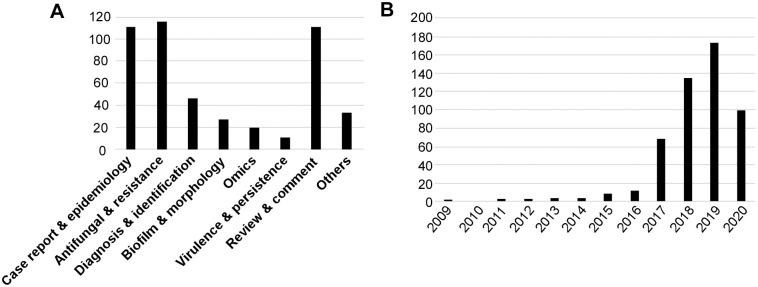
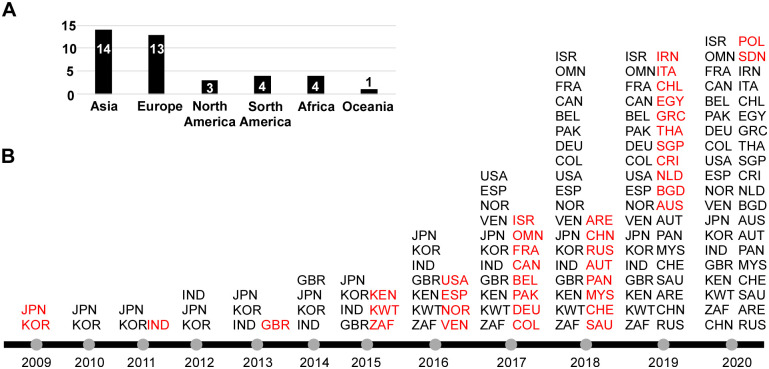
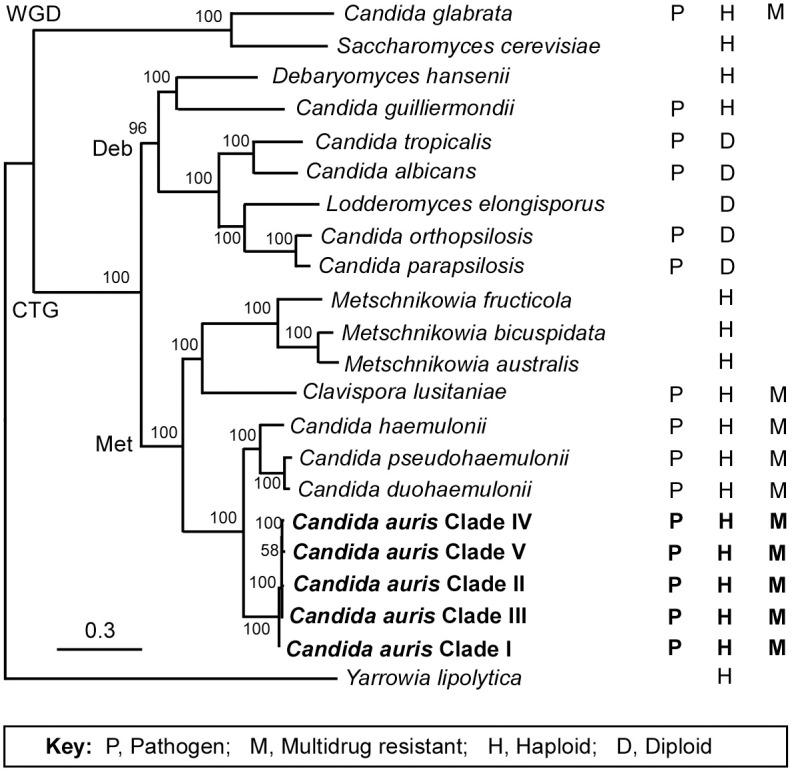
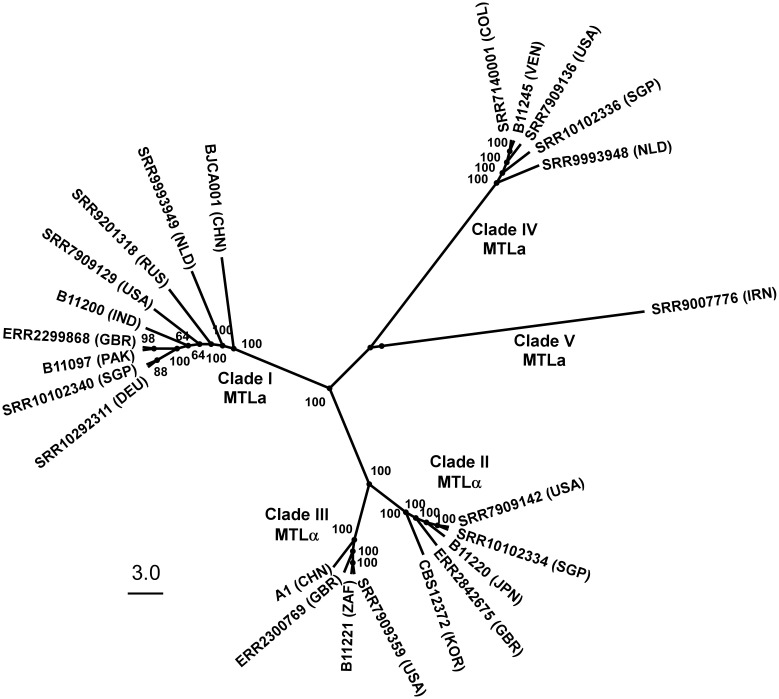
First described in 2009 in Japan, the emerging multidrug-resistant fungal pathogen Candida auris is becoming a worldwide public health threat that has been attracting considerable attention due to its rapid and widespread emergence over the past decade. The reasons behind the recent emergence of this fungus remain a mystery to date. Genetic analyses indicate that this fungal pathogen emerged simultaneously in several different continents, where 5 genetically distinct clades of C. auris were isolated from distinct geographical locations. Although C. auris belongs to the CTG clade (its constituent species translate the CTG codon as serine instead of leucine, as in the standard code), C. auris is a haploid fungal species that is more closely related to the haploid and often multidrug-resistant species Candida haemulonii and Candida lusitaniae and is distantly related to the diploid and clinically common fungal pathogens Candida albicans and Candida tropicalis. Infections and outbreaks caused by C. auris in hospitals settings have been rising over the past several years. Difficulty in its identification, multidrug resistance properties, evolution of virulence factors, associated high mortality rates in patients, and long-term survival on surfaces in the environment make C. auris particularly problematic in clinical settings. Here, we review progress made over the past decade on the biological and clinical aspects of C. auris. Future efforts should be directed toward understanding the mechanistic details of its biology, epidemiology, antifungal resistance, and pathogenesis with a goal of developing novel tools and methods for the prevention, diagnosis, and treatment of C. auris infections.
Overview
The claims and statistics of this paper haven’t been checked yet.
Free: it reads the open-access text and checks the first 5 claims that cite a source we can check. Create a free account to check every claim.
Integrity signals
Registry
Cites
Statistics
Figures
Verification
Claims the paper makes
The claims and statistics of this paper haven’t been checked yet.
Free: it reads the open-access text and checks the first 5 claims that cite a source we can check. Create a free account to check every claim.
Claims other papers make about this one
Each is checked against this paper’s own text: does it say what the citing paper says it does?
The source backs part of the claim, not all of it — or backs it for a different population, condition or comparison.
In the citing paper
“While resistance to FCZ or AmB is frequently observed among clade I isolates, the frequency of ECN resistance remains low at the moment (11, 12, 35).”
From Transcriptomics and Phenotyping Define Genetic Signatures Associated with Echinocandin Resistance in Candida auris (2022) · cites this paper as [35]
Experimental — accuracy not yet measuredThe source backs part of the claim, not all of it — or backs it for a different population, condition or comparison.
In the citing paper
“Since biofilms are often associated with increased persistence on the environmental surfaces and colonization on host skin4,5,11,49, this mutation could contribute to the prevalence and rapid transmission of C. auris.”
From The Wor2 phenotypic switching regulator controls biofilm formation in Candida auris (2026) · cites this paper as [4]
Experimental — accuracy not yet measuredThe cited source says what the claim attributes to it.
In the citing paper
“While resistance to FCZ or AmB is frequently observed among clade I isolates, the frequency of ECN resistance remains low at the moment (11, 12, 35).”
From Transcriptomics and Phenotyping Define Genetic Signatures Associated with Echinocandin Resistance in Candida auris (2022) · cites this paper as [35]
The cited source says what the claim attributes to it.
In the citing paper
“Clinical isolates of C. auris can exhibit different morphotypes such as filamentous, pseudohyphal, and yeast forms (8–14).”
From Yeast and filamentous Candida auris stimulate distinct immune responses in the skin (2024) · cites this paper as [11]
The cited source says what the claim attributes to it.
In the citing paper
“Clinical isolates of C. auris can exhibit different morphotypes, such as yeast, filamentous, and aggregative forms (9–13).”
From Cell aggregation mediated by ACE2 deletion in Candida auris modulates fungal colonization and host immune responses in the skin (2024) · cites this paper as [12]
1 more claim about this paper
Create a free account to see every claim other papers make about this one.
Self-check
Percentages, sums and reported differences re-computed from the paper’s own numbers.
The self-check needs the paper’s full text.
Citations
Cites
Bacterial biofilms: from the Natural environment to infectious diseases
Hall-Stoodley, L., Costerton, J. W., & Stoodley, P. (2004) · Nature Reviews Microbiology · doi:10.1038/nrmicro821 · Cited by 7,143
Wisplinghoff, H., Bischoff, T., Tallent, S. M., Seifert, H., Wenzel, R. P., & Edmond, M. B. (2004) · Clinical Infectious Diseases · doi:10.1086/421946 · Cited by 4,496 · cited 1×
“Candida species are the predominant cause of nosocomial fungal infections and are the fourth leading cause of all hospital-acquired infections [2].”
BackgroundHidden Killers: Human Fungal Infections
Brown, G. D., Denning, D. W., Gow, N. A. R., Levitz, S. M., Netea, M. G., & White, T. C. (2012) · Science Translational Medicine · doi:10.1126/scitranslmed.3004404 · Cited by 4,284
Epidemiology of Invasive Candidiasis: a Persistent Public Health Problem
Pfaller, M. A., & Diekema, D. J. (2007) · Clinical Microbiology Reviews · doi:10.1128/cmr.00029-06 · Cited by 4,174 · cited 1×
“Candida species is Candida albicans; however, the incidence of non-albicans species, such as Candida tropicalis, Candida parapsilosis, and Candida glabrata, has increased over recent decades due to the long-term use and limited options of antifungal drugs [3,4].”
BackgroundEmerging fungal threats to animal, plant and ecosystem health
Fisher, M. C., Henk, D. A., Briggs, C. J., Brownstein, J. S., Madoff, L. C., McCraw, S. L., & Gurr, S. J. (2012) · Nature · doi:10.1038/nature10947 · Cited by 3,310 · cited 1×
“It seems likely that novel fungal pathogens will similarly emerge in the future due to changes in global temperatures, atmospheric CO2 levels, humidity, and other alterations to natural environmental niches [84].”
BackgroundLockhart, S. R., Etienne, K. A., Vallabhaneni, S., Farooqi, J., Chowdhary, A., Govender, N. P., Colombo, A. L., Calvo, B., Cuomo, C. A., Desjardins, C. A., et al. (2017) · Clinical Infectious Diseases · doi:10.1093/cid/ciw691 · Cited by 1,662 · cited 14×
“The genome of C. auris B8441 was sequenced by the CDC [10], and its sequence information and annotation is available on the Candida Genome Database (CGD) database (https://www.candidagenome.org).”
BackgroundMethodInfluentialSatoh, K., Makimura, K., Hasumi, Y., Nishiyama, Y., Uchida, K., & Yamaguchi, H. (2009) · Microbiology and Immunology · doi:10.1111/j.1348-0421.2008.00083.x · Cited by 1,381 · cited 3×
“auris belongs to the Metschnikowiaceae family within the Candida/Clavispora clade (Fig 3) [5,13,14].”
BackgroundThe Fungi: 1, 2, 3 … 5.1 million species?
Blackwell, M. (2011) · American Journal of Botany · doi:10.3732/ajb.1000298 · Cited by 1,324
Candida albicans Biofilms and Human Disease
Nobile, C. J., & Johnson, A. D. (2015) · Annual Review of Microbiology · doi:10.1146/annurev-micro-091014-104330 · Cited by 1,057 · cited 1×
“Biofilms are structured microbial communities that form on abiotic and biotic surfaces and are embedded in an extracellular matrix [64].”
BackgroundSelf-citationFirst hospital outbreak of the globally emerging Candida auris in a European hospital
Schelenz, S., Hagen, F., Rhodes, J. L., Abdolrasouli, A., Chowdhary, A., Hall, A., Ryan, L., Shackleton, J., Trimlett, R., Meis, J. F., et al. (2016) · Antimicrobial Resistance & Infection Control · doi:10.1186/s13756-016-0132-5 · Cited by 768
Cited by
Infectious disease in an era of global change
Baker, R. E., Mahmud, A. S., Miller, I. F., Rajeev, M., Rasambainarivo, F., Rice, B. L., Takahashi, S., Tatem, A. J., Wagner, C. E., Wang, L.-F., et al. (2022) · Nature Reviews Microbiology · doi:10.1038/s41579-021-00639-z · Cited by 2,059
Lass-Flörl, C., Kanj, S. S., Govender, N. P., Thompson, G. R., Ostrosky- Zeichner, L., & Govrins, M. A. (2024) · Nature Reviews Disease Primers · doi:10.1038/s41572-024-00503-3 · Cited by 298
Ahmad, S., & Alfouzan, W. (2021) · Microorganisms · doi:10.3390/microorganisms9040807 · Cited by 269
“However, tentative breakpoints have been suggested by the Centers for Disease Control and prevention (CDC) based on expert opinion and those established for other closely related Candida species [62,72,73,89,155,156].”
BackgroundInfluentialInvasive candidiasis: current clinical challenges and unmet needs in adult populations
Soriano, A., Honore, P. M., Puerta-Alcalde, P., Garcia-Vidal, C., Pagotto, A., Gonçalves-Bradley, D. C., & Verweij, P. E. (2023) · Journal of Antimicrobial Chemotherapy · doi:10.1093/jac/dkad139 · Cited by 190
Diagnosis and Treatment of Invasive Candidiasis
Barantsevich, N., & Barantsevich, E. (2022) · Antibiotics · doi:10.3390/antibiotics11060718 · Cited by 178
Initial antimicrobial management of sepsis
Niederman, M. S., Baron, R. M., Bouadma, L., Calandra, T., Daneman, N., DeWaele, J., Kollef, M. H., Lipman, J., & Nair, G. B. (2021) · Critical Care · doi:10.1186/s13054-021-03736-w · Cited by 180
Candida auris: An Overview of the Emerging Drug-Resistant Fungal Infection
Sanyaolu, A., Okorie, C., Marinkovic, A., Abbasi, A. F., Prakash, S., Mangat, J., Hosein, Z., Haider, N., & Chan, J. (2022) · Infection & Chemotherapy · doi:10.3947/ic.2022.0008 · Cited by 170
Confirmation of fifth Candida auris clade by whole genome sequencing
Spruijtenburg, B., Badali, H., Abastabar, M., Mirhendi, H., Khodavaisy, S., Sharifisooraki, J., Taghizadeh Armaki, M., de Groot, T., & Meis, J. F. (2022) · Emerging Microbes & Infections · doi:10.1080/22221751.2022.2125349 · Cited by 164
“colonizes human skin, hospital environments and causes nosocomial outbreaks and invasive candidiasis [2].”
BackgroundCOVID-19-associated opportunistic infections: a snapshot on the current reports
Abdoli, A., Falahi, S., & Kenarkoohi, A. (2021) · Clinical and Experimental Medicine · doi:10.1007/s10238-021-00751-7 · Cited by 184
Candida albicans the main opportunistic pathogenic fungus in humans
Macias-Paz, I. U., Pérez-Hernández, S., Tavera-Tapia, A., Luna-Arias, J. P., Guerra-Cárdenas, J. E., & Reyna-Beltrán, E. (2023) · Revista Argentina de Microbiología · doi:10.1016/j.ram.2022.08.003 · Cited by 141
“…species such as C. glabrata , C. parapsilosis , C. tropicalis , C. krusei ( Pichia kudriavzevii ) , C. dubliniensis , C. kefyr , C. famata , C. auris and others have become highly relevant at the clinical level due to their increasing prevalence as etiologic agents of candidiasis 20,49,73,79,82 .”
BackgroundAdvances in Antifungal Drug Development: An Up-To-Date Mini Review
Bouz, G., & Doležal, M. (2021) · Pharmaceuticals · doi:10.3390/ph14121312 · Cited by 150
Candida auris Outbreaks: Current Status and Future Perspectives
Gaetano, S. D., Midiri, A., Mancuso, G., Avola, M. G., & Biondo, C. (2024) · Microorganisms · doi:10.3390/microorganisms12050927 · Cited by 125
An Overview on Candida auris in Healthcare Settings
Cristina, M. L., Spagnolo, A. M., Sartini, M., Carbone, A., Oliva, M., Schinca, E., Boni, S., & Pontali, E. (2023) · Journal of Fungi · doi:10.3390/jof9090913 · Cited by 124
Kim, H. Y., Nguyen, T. A., Kidd, S. E., Chambers, J., Alastruey‐Izquierdo, A., Shin, J.-H., Dao, A., Forastiero, A., Wahyuningsih, R., Chakrabarti, A., et al. (2024) · Medical Mycology · doi:10.1093/mmy/myae042 · Cited by 123
Takashima, M., & Sugita, T. (2022) · Medical Mycology Journal · doi:10.3314/mmj.22.004 · Cited by 84
Bing, J., Guan, Z., Zheng, T., Zhang, Z., Fan, S., Ennis, C. L., Nobile, C. J., & Huang, G. (2023) · PLOS Pathogens · doi:10.1371/journal.ppat.1011239 · Cited by 84
Self-citationSansom, S. E., Gussin, G. M., Schoeny, M., Singh, R. D., Adil, H., Bell, P., Benson, E. C., Bittencourt, C. E., Black, S., Del Mar Villanueva Guzman, M., et al. (2024) · Clinical Infectious Diseases · doi:10.1093/cid/ciad752 · Cited by 78
Biogenic silver nanoparticles as antifungal agents
Mussin, J. E., & Giusiano, G. (2022) · Frontiers in Chemistry · doi:10.3389/fchem.2022.1023542 · Cited by 86
Candida auris: A Quick Review on Identification, Current Treatments, and Challenges
Černáková, L., Roudbary, M., Brás, S., Tafaj, S., & Rodrigues, C. F. (2021) · International Journal of Molecular Sciences · doi:10.3390/ijms22094470 · Cited by 91
What Do We Know about Candida auris? State of the Art, Knowledge Gaps, and Future Directions
García-Bustos, V., Cabañero-Navalón, M. D., Ruiz‐Saurí, A., Gaitán, A. C. R., Salavert, M., Tormo‐Más, M. Á., & Pemán, J. (2021) · Microorganisms · doi:10.3390/microorganisms9102177 · Cited by 89
Environmental reservoirs of the drug-resistant pathogenic yeast Candida auris
Akinbobola, A., Kean, R., Hanifi, S. M. A., & Quilliam, R. S. (2023) · PLoS Pathogens · doi:10.1371/journal.ppat.1011268 · Cited by 88
León‐Buitimea, A., Garza-Cervantes, J. A., Gallegos-Alvarado, D. Y., Osorio-Concepción, M., & Morones‐Ramírez, J. R. (2021) · Pathogens · doi:10.3390/pathogens10101303 · Cited by 93
Rapid evolution of an adaptive multicellular morphology of Candida auris during systemic infection
Bing, J., Guan, Z., Zheng, T., Ennis, C. L., Nobile, C. J., Chen, C., Chu, H., & Huang, G. (2024) · Nature Communications · doi:10.1038/s41467-024-46786-8 · Cited by 74
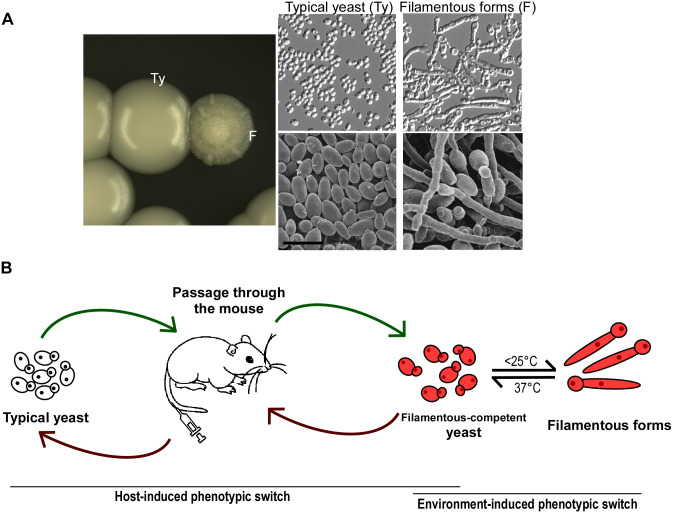
“Since the fi lamentous and fi lament-competent cells exhibit cellular memory of their cell state, we suspect that genetic or epigenetic changes could be involved in this regulation 2 .”
Self-citationShu, C., Ge, L., Li, Z., Chen, B., Liao, S., Lu, L., Wu, Q., Jiang, X., An, Y., Wang, Z., et al. (2024) · Frontiers in Pharmacology · doi:10.3389/fphar.2024.1378434 · Cited by 72
Drug repurposing strategies in the development of potential antifungal agents
Zhang, Q., Liu, F., Zeng, M., Xin, C., Zhang, J., Mao, Y., & Song, Z. (2021) · Applied Microbiology and Biotechnology · doi:10.1007/s00253-021-11407-7 · Cited by 82
Ten decadal advances in fungal biology leading towards human well-being
Mapook, A., Hyde, K. D., Hassan, K., Kemkuignou, B. M., Čmoková, A., Surup, F., Kuhnert, E., Paomephan, P., Cheng, T., de Hoog, S., et al. (2022) · Fungal Diversity · doi:10.1007/s13225-022-00510-3 · Cited by 81
Allert, S., Schulz, D., Kämmer, P., Großmann, P., Wolf, T., Schäuble, S., Panagiotou, G., Brunke, S., & Hube, B. (2022) · Virulence · doi:10.1080/21505594.2022.2026037 · Cited by 66
Chen, L., Zhang, L., Xie, Y., Wang, Y., Tian, X., Fang, W., Xue, X., & Wang, L. (2023) · Advanced Drug Delivery Reviews · doi:10.1016/j.addr.2023.115007 · Cited by 63
Vaseghi, N., Sharifisooraki, J., Khodadadi, H., Nami, S., Safari, F., Ahangarkani, F., Meis, J. F., Badali, H., & Morovati, H. (2022) · Mycoses · doi:10.1111/myc.13471 · Cited by 63
Candida auris as an Emergent Public Health Problem: A Current Update on European Outbreaks and Cases
Geremia, N., Brugnaro, P., Solinas, M. L., Scarparo, C., & Panese, S. (2023) · Healthcare · doi:10.3390/healthcare11030425 · Cited by 79
Classes and phyla of the kingdom Fungi
Wijayawardene, N. N., Hyde, K. D., Mikhailov, K. V., Péter, G., Aptroot, A., Pires‐Zottarelli, C. L. A., Goto, B. T., Tokarev, Y. S., Haelewaters, D., Karunarathna, S. C., et al. (2024) · Fungal Diversity · doi:10.1007/s13225-024-00540-z · Cited by 81
Gómez-Gaviria, M., Martínez-Álvarez, J. A., Chávez-Santiago, J. O., & Mora-Montes, H. M. (2023) · Infection and Drug Resistance · doi:10.2147/idr.s402754 · Cited by 69
The potential role of plant secondary metabolites on antifungal and immunomodulatory effect
Zhou, X., Zeng, M., Huang, F., Qin, G., Song, Z., & Liu, F. (2023) · Applied Microbiology and Biotechnology · doi:10.1007/s00253-023-12601-5 · Cited by 82
Candida auris -associated hospitalizations and outbreaks, China, 2018–2023
Bing, J., Du, H., Guo, P., Hu, T., Xiao, M., Lu, S., Nobile, C. J., Chu, H., & Huang, G. (2024) · Emerging Microbes & Infections · doi:10.1080/22221751.2024.2302843 · Cited by 58
Self-citationSharma, C., & Kadosh, D. (2023) · PLoS Pathogens · doi:10.1371/journal.ppat.1011190 · Cited by 63
Martins‐Santana, L., Rezende, C. P., Rossi, A., Martinez-Rossi, N. M., & Almeida, F. B. D. R. (2023) · Pathogens · doi:10.3390/pathogens12020293 · Cited by 66
Kim, J.-S., Lee, K.-T., Lee, M. H., Cheong, E., & Bahn, Y.-S. (2021) · mBio · doi:10.1128/mbio.02729-21 · Cited by 53
“auris is markedly resistant to the azole family (7, 67, 68), more so than most fungi.”
Azole resistance in Candida auris: mechanisms and combinatorial therapy
Jangir, P., Kalra, S., Tanwar, S., & Bari, V. K. (2023) · Apmis · doi:10.1111/apm.13336 · Cited by 61
Dickwella Widanage, M. C., Singh, K., Li, J., Yarava, J. R., Scott, F. J., Xu, Y., Gow, N. A. R., Mentink-Vigier, F., Wang, P., Lamoth, F., et al. (2025) · Nature Communications · doi:10.1038/s41467-025-61678-1 · Cited by 51
“All relaxation curves were analyzed and fi t using OriginPro 9.”
Al-Rashdi, A., Al-Maani, A. S., Wahaibi, A. S. A., Alqayoudhi, A., Al‐Jardani, A., & Al-Abri, S. (2021) · Journal of Fungi · doi:10.3390/jof7010031 · Cited by 58
Candida auris: an emerging antimicrobial-resistant organism with the highest level of concern
Mishra, S. K., Yasir, M., & Willcox, M. D. P. (2023) · The Lancet Microbe · doi:10.1016/s2666-5247(23)00114-3 · Cited by 62
Álvarez, C., Morales-López, S. E., Rodríguez, G. J., Rodríguez, J. Y., Robert, E., Picot, C., Ceballos-Garzón, A., Parra‐Giraldo, C. M., & Pape, P. L. (2023) · Journal of Fungi · doi:10.3390/jof9040430 · Cited by 59
Comprehensive Overview of Candida auris : An Emerging Multidrug-Resistant Fungal Pathogen
Kim, J.-S., Cha, H., & Bahn, Y. (2024) · Journal of Microbiology and Biotechnology · doi:10.4014/jmb.2404.04040 · Cited by 63
The rise of Candida auris: from unique traits to co-infection potential
Egger, N. B., Kainz, K., Schulze, A., Bauer, M. A., Madeo, F., & Carmona‐Gutiérrez, D. (2022) · Microbial Cell · doi:10.15698/mic2022.08.782 · Cited by 53
Candida auris: A Mini Review on Epidemiology in Healthcare Facilities in Asia
Thatchanamoorthy, N., Rukumani, D. V., Samudi, C., & Tay, S. T. (2022) · Journal of Fungi · doi:10.3390/jof8111126 · Cited by 54
Antifungal Activity of Mycogenic Silver Nanoparticles on Clinical Yeasts and Phytopathogens
Ribeiro, L. G., Roque, G. S. C., Conrado, R., & de Souza, A. O. (2023) · Antibiotics · doi:10.3390/antibiotics12010091 · Cited by 49
Strategies of targeting CYP51 for IFIs therapy: Emerging prospects, opportunities and challenges
Zhang, R., Wang, Y., Wu, A., Wang, J., & Zhang, J. (2023) · European Journal of Medicinal Chemistry · doi:10.1016/j.ejmech.2023.115658 · Cited by 51
MycoSNP: A Portable Workflow for Performing Whole-Genome Sequencing Analysis of Candida auris
Bagal, U. R., Phan, J., Welsh, R. M., Misas, E., Wagner, D., Gade, L., Litvintseva, A. P., Cuomo, C. A., & Chow, N. A. (2022) · Methods in molecular biology · doi:10.1007/978-1-0716-2417-3_17 · Cited by 44
Langfeldt, A., Gold, J. A. W., & Chiller, T. M. (2022) · Current Clinical Microbiology Reports · doi:10.1007/s40588-022-00181-3 · Cited by 48
Gurgel, R. S., Pereira, D. Í. D. M., Garcia, A. V. F., de Souza, A. T. F., da Silva, T. M., de Andrade, C. P., da Silva, W. L., Núñez, C. V., Fantin, C., Procópio, R. E. D. L., et al. (2023) · Journal of Fungi · doi:10.3390/jof9080864 · Cited by 57
Fungal cell wall components modulate our immune system
Briard, B., Fontaine, T., Kanneganti, T.-D., Gow, N. A. R., & Papon, N. (2021) · The Cell Surface · doi:10.1016/j.tcsw.2021.100067 · Cited by 42
Ortiz-Roa, C., Valderrama-Ríos, M. C., Sierra-Umaña, S. F., Rodríguez, J. Y., Muñeton-López, G. A., Solórzano, C., Escandón, P., Álvarez, C., & Cortés, J. A. (2023) · Journal of Fungi · doi:10.3390/jof9070715 · Cited by 54
Comparative Transcriptomics Reveal Possible Mechanisms of Amphotericin B Resistance in Candida auris
Shivarathri, R., Jenull, S., Chauhan, M., Singh, A., Mazumdar, R., Chowdhary, A., Kuchler, K., & Chauhan, N. (2022) · Antimicrobial Agents and Chemotherapy · doi:10.1128/aac.02276-21 · Cited by 41
Lara-Aguilar, V., Rueda, C., García-Barbazán, I., Varona, S., Monzón, S., Jiménez, P., Cuesta, I., Zaballos, Á., & Zaragoza, Ó. (2021) · Virulence · doi:10.1080/21505594.2021.1927609 · Cited by 40
Marena, G. D., Ramos, M. A. D. S., de Lima, L. C., Chorilli, M., & Bauab, T. M. (2021) · The Science of The Total Environment · doi:10.1016/j.scitotenv.2021.151023 · Cited by 43
Recognition of fungal priority pathogens: What next?
Rodrigues, M. L., & Nosanchuk, J. D. (2023) · PLoS neglected tropical diseases · doi:10.1371/journal.pntd.0011136 · Cited by 48
Biran, R., Cohen, R., Finn, T., Brosh-Nissimov, T., Rahav, G., Yahav, D., Amit, S., Shachor-Meyouhas, Y., Atamna, A., Bishara, J., et al. (2023) · Emerging Infectious Diseases · doi:10.3201/eid2907.221888 · Cited by 39
Successful control of Candida auris transmission in a German COVID‐19 intensive care unit
Hinrichs, C., Wiese‐Posselt, M., Graf, B., Geffers, C., Weikert, B., Enghard, P., Aldejohann, A., Schrauder, A., Knaust, A., Eckardt, K., et al. (2022) · Mycoses · doi:10.1111/myc.13443 · Cited by 41
Antifungal Development and the Urgency of Minimizing the Impact of Fungal Diseases on Public Health
de Oliveira, H. C., Bezerra, B. T., & Rodrigues, M. L. (2022) · ACS Bio & Med Chem Au · doi:10.1021/acsbiomedchemau.2c00055 · Cited by 46
Yadav, A., Wang, Y., Jain, K., Panwar, V. A. R., Kaur, H., Kasana, V., Xu, J., & Chowdhary, A. (2023) · Journal of Fungi · doi:10.3390/jof9070720 · Cited by 38
Simm, C., Weerasinghe, H., Thomas, D. R., Harrison, P. F., Newton, H. J., Beilharz, T. H., & Traven, A. (2022) · Microbiology Spectrum · doi:10.1128/spectrum.00100-22 · Cited by 38
Application of Machine Learning Classifier to Candida auris Drug Resistance Analysis
Li, D., Wang, Y., Hu, W., Chen, F., Zhao, J., Chen, X., & Li, H. (2021) · Frontiers in Cellular and Infection Microbiology · doi:10.3389/fcimb.2021.742062 · Cited by 40
Current Progress in Sporothrix brasiliensis Basic Aspects
Gómez-Gaviria, M., Martínez-Álvarez, J. A., & Mora-Montes, H. M. (2023) · Journal of Fungi · doi:10.3390/jof9050533 · Cited by 45
Biofilm-Associated Candidiasis: Pathogenesis, Prevalence, Challenges and Therapeutic Options
Amann, V., Kissmann, A., Firacative, C., & Rosenau, F. (2025) · Pharmaceuticals · doi:10.3390/ph18040460 · Cited by 48
In Vitro Synergistic Interactions of Isavuconazole and Echinocandins against Candida auris
Caballero, U., Kim, S., Eraso, E., Quindós, G., Vozmediano, V., Schmidt, S., & Jauregizar, N. (2021) · Antibiotics · doi:10.3390/antibiotics10040355 · Cited by 38
Overview about Candida auris: What's up 12 years after its first description?
Désoubeaux, G., Coste, A. T., Imbert, C., & Hennequin, C. (2022) · Journal de Mycologie Médicale · doi:10.1016/j.mycmed.2022.101248 · Cited by 43
Carvajal, S. K., Alvarado, M., Rodríguez, Y. M., Parra-Giraldo, C. M., Varón, C., Morales-López, S. E., Rodríguez, J. Y., Gómez, B. L., & Escandón, P. (2021) · Journal of Fungi · doi:10.3390/jof7060401 · Cited by 36
Candida auris from colonisation to candidemia: A four‐year study
Mulet Bayona, J. V., Tormo Palop, N., Salvador García, C., Guna Serrano, M. D. R., & Gimeno Cardona, C. (2023) · Mycoses · doi:10.1111/myc.13626 · Cited by 35
Candida auris: Epidemiology Update and a Review of Strategies to Prevent Spread
Hayes, J. F. (2024) · Journal of Clinical Medicine · doi:10.3390/jcm13226675 · Cited by 45
How urgent is the need for new antifungals?
Stewart, A. G., & Paterson, D. L. (2021) · Expert Opinion on Pharmacotherapy · doi:10.1080/14656566.2021.1935868 · Cited by 36
Candida auris infections in China
Du, H., Bing, J., Nobile, C. J., & Huang, G. (2022) · Virulence · doi:10.1080/21505594.2022.2054120 · Cited by 40
Self-citationJenull, S., Shivarathri, R., Tsymala, I., Penninger, P., Trinh, P.-C., Nogueira, F., Chauhan, M., Singh, A., Petryshyn, A., Stoiber, A., et al. (2022) · mBio · doi:10.1128/mbio.00799-22 · Cited by 32
“Although resistance to ECN has been considered infrequent (35), recent reports sug-”
BackgroundA Chronic Autochthonous Fifth Clade Case of Candida auris Otomycosis in Iran
Safari, F., Madani, M., Badali, H., Kargoshaie, A.-A., Fakhim, H., Kheirollahi, M., Meis, J. F. G. M., & Mirhendi, H. (2021) · Mycopathologia · doi:10.1007/s11046-021-00605-6 · Cited by 42
Liang, X., Chen, D., Wang, J., Liao, B., Shen, J., Ye, X., Wang, Z., Zhu, C., Gou, L., Zhou, X., et al. (2023) · International Journal of Oral Science · doi:10.1038/s41368-023-00245-0 · Cited by 32
Transcriptome Signatures Predict Phenotypic Variations of Candida auris
Jenull, S., Tscherner, M., Kashko, N., Shivarathri, R., Stoiber, A., Chauhan, M., Petryshyn, A., Chauhan, N., & Kuchler, K. (2021) · Frontiers in Cellular and Infection Microbiology · doi:10.3389/fcimb.2021.662563 · Cited by 32
Immunomodulatory Potential of Fungal Extracellular Vesicles: Insights for Therapeutic Applications
Nenciarini, S., & Cavalieri, D. (2023) · Biomolecules · doi:10.3390/biom13101487 · Cited by 36
Fan, S., Zhan, P., Bing, J., Jiang, N., Huang, Y., Chen, D., Hu, T., Du, H., & Huang, G. (2021) · Virulence · doi:10.1080/21505594.2021.1928410 · Cited by 34
Self-citationThe Menace of Candida auris Epidemic Amidst the COVID-19 Pandemic: A Systematic Review
Najeeb, H., Siddiqui, S. A., Anas, Z., Ali, S. H., Usmani, S. U. R., Jawed, F., & Jatoi, H. N. (2022) · Diseases · doi:10.3390/diseases10030058 · Cited by 36
Kaki, R. (2023) · Mycology: An International Journal on Fungal Biology · doi:10.1080/21501203.2023.2227218 · Cited by 37
Beyond the usual suspects: emerging uropathogens in the microbiome age
Moreland, R. B., Choi, B. I., Geaman, W., Gonzalez, C., Hochstedler, B. R., John, J., Kaindl, J., Kesav, N., Lamichhane, J., Lucio, L., et al. (2023) · Frontiers in Urology · doi:10.3389/fruro.2023.1212590 · Cited by 54
Cruz, M. R., Cristy, S., Guha, S., De Cesare, G. B., Evdokimova, E., Sanchez, H., Borek, D., Miramón, P., Yano, J., Fidel, P. L., et al. (2022) · Nature Communications · doi:10.1038/s41467-022-33613-1 · Cited by 30
Kolge, H., Patil, G., Jadhav, S. H., & Ghormade, V. (2022) · International Journal of Biological Macromolecules · doi:10.1016/j.ijbiomac.2022.12.139 · Cited by 32
John, L. L. H., Thomson, D. D., Bicanic, T. A., Hoenigl, M., Brown, A. J. P., Harrison, T. S., & Bignell, E. (2023) · Antimicrobial Agents and Chemotherapy · doi:10.1128/aac.01645-22 · Cited by 37
Mariita, R. M., Davis, J., Lottridge, M. M., & Randive, R. V. (2022) · MicrobiologyOpen · doi:10.1002/mbo3.1261 · Cited by 32
Maione, A., Bellavita, R., de Alteriis, E., Galdiero, S., Albarano, L., Pietra, A. L., Guida, M., Parrilli, E., D’Angelo, C., Galdiero, E., et al. (2022) · International Journal of Molecular Sciences · doi:10.3390/ijms23042151 · Cited by 32
Narayanan, A., Selvakumar, P., Siddharthan, R., & Sanyal, K. (2022) · Microbiology Spectrum · doi:10.1128/spectrum.00634-22 · Cited by 36
Zhang, Y., Zeng, L., Huang, X., Wang, Y., Chen, G., Moses, M., Zou, Y., Xiong, S., Xue, W., Dong, Y., et al. (2025) · Nature Communications · doi:10.1038/s41467-025-59898-6 · Cited by 33
Williamson, B., Wilk, A. S., Guerrero, K. D., Mikulski, T. D., Elias, T. N., Sawh, I., Cancino-Prado, G., Gardam, D., Heath, C. H., Govender, N. P., et al. (2021) · Antimicrobial Agents and Chemotherapy · doi:10.1128/aac.01624-21 · Cited by 30
Deng, Y., Li, S., Bing, J., Liao, W., & Li, T. (2021) · Microbiology Spectrum · doi:10.1128/spectrum.00779-21 · Cited by 31
Self-citationGarcia-Bustos, V., Pemán, J., Ruiz-Gaitán, A., Cabañero-Navalon, M. D., Cabanilles-Boronat, A., Fernández-Calduch, M., Marcilla-Barreda, L., Sigona-Giangreco, I. A., Salavert, M., Tormo-Mas, M. Á., et al. (2022) · Emerging Microbes & Infections · doi:10.1080/22221751.2021.2017756 · Cited by 30
Khan, T., Suleman, M., Ali, S. S., Sarwar, M. F., Ali, I., Ali, L., Khan, A., Rokhan, B., Wang, Y., Zhao, R., et al. (2022) · Computers in Biology and Medicine · doi:10.1016/j.compbiomed.2022.105462 · Cited by 32
Marathe, A., Zhu, Y., Chaturvedi, V. P., & Chaturvedi, S. (2022) · Mycopathologia · doi:10.1007/s11046-022-00656-3 · Cited by 32
Transcriptional and translational landscape of Candida auris in response to caspofungin
Zamith-Miranda, D., Amatuzzi, R. F., Munhoz da Rocha, I. F., Martins, S. T., Lucena, A. C. R., Vieira, A. Z., Trentin, G., Almeida, F., Rodrigues, M. L., Nakayasu, E. S., et al. (2021) · Computational and Structural Biotechnology Journal · doi:10.1016/j.csbj.2021.09.007 · Cited by 29
Potential Environmental Reservoirs of Candida auris: A Systematic Review
da Silva, I. C. B., Miranda, I. M., & Costa‐de‐Oliveira, S. (2024) · Journal of Fungi · doi:10.3390/jof10050336 · Cited by 43
Raman Metabolomics of Candida auris Clades: Profiling and Barcode Identification
Pezzotti, G., Kobara, M., Nakaya, T., Imamura, H., Fujii, T., Miyamoto, N., Adachi, T., Yamamoto, T., Kanamura, N., Ohgitani, E., et al. (2022) · International Journal of Molecular Sciences · doi:10.3390/ijms231911736 · Cited by 30
Nanotechnology-Based Approaches for Voriconazole Delivery Applied to Invasive Fungal Infections
Campos, L. D. A., Fin, M. T., dos Santos, K. S., Gualque, M. W. D. L., Cabral, A. K. L. F., Khalil, N. M., Fusco‐Almeida, A. M., Mainardes, R. M., & Mendes‐Giannini, M. J. S. (2023) · Pharmaceutics · doi:10.3390/pharmaceutics15010266 · Cited by 33
First Fluconazole-resistant Candida auris isolated from fungal otitis in Iran
Armaki, M. T., Omran, S. M., Kiakojuri, K., Khojasteh, S., Jafarzadeh, J., Tavakoli, M., Badali, H., Haghani, I., Shokohi, T., Hedayati, M. T., et al. (2021) · Current Medical Mycology · doi:10.18502/cmm.7.1.6243 · Cited by 36
Bing, J., Wang, S., Xu, H., Fan, S., Du, H., Nobile, C. J., & Huang, G. (2021) · Mycology: An International Journal on Fungal Biology · doi:10.1080/21501203.2021.1994479 · Cited by 30
Self-citationUniqueness of Candida auris cell wall in morphogenesis, virulence, resistance, and immune evasion
Dakalbab, S., Hamdy, R., Holigová, P., Abuzaid, E. J., Abu-Qiyas, A., Lashine, Y., Mohammad, M. G., & Soliman, S. S. M. (2024) · Microbiological Research · doi:10.1016/j.micres.2024.127797 · Cited by 31
Willaert, R., Kayacan, Y., & Devreese, B. V. (2021) · Pathogens · doi:10.3390/pathogens10111397 · Cited by 27
Metadata
- Authors
- Du, H., Bing, J., Hu, T., Ennis, C. L., Nobile, C. J., & Huang, G.
- Affiliations
- Fudan University (CN)
- University of California, Merced (US)
- Corresponding author
- Huang, Guanghua
- Venue
- PLOS Pathogens
- Publisher
- Public Library of Science (PLoS)
- Published
- 2020-10-22
- Volume
- 16
- Issue
- 10
- Pages
- e1008921
- ISSN
- 1553-7366 (ISSN-L)
- 1553-7374
- PMC
- PMC7581363
- OpenAlex
- W3093683101
- Cited by
- 609
- References
- 86
- Citations by year
- 2026: 76 · 2025: 105 · 2024: 110 · 2023: 139 · 2022: 126 · 2021: 53
- FWCI
- 3.77
- Type
- journal article
- Language
- en
- Open access
- gold
- doi.org
- Licence
- Locations
- PLoS Pathogens (publishedVersion, cc-by)
- PubMed Central (publishedVersion, cc-by)
- PubMed (publishedVersion)
- eScholarship (California Digital Library) (submittedVersion, cc-by)
- DOAJ (DOAJ: Directory of Open Access Journals) (submittedVersion, cc-by-sa)
- eScholarship (California Digital Library) (submittedVersion)
- Funders
- Natural Science Foundation of Shanghai (19ZR1405100)
- National Natural Science Foundation of China (31625002, 31930005)
- National Institutes of Health
- National Institute of General Medical Sciences (R35GM124594)
- National Institute of Allergy and Infectious Diseases (R21AI125801)
- National Institute of Dental and Craniofacial Research (F31DE028488)
- Topics
- Health Sciences › Medicine › Infectious Diseases › Antifungal resistance and susceptibility
- Life Sciences › Immunology and Microbiology › Microbiology › Yeasts and Rust Fungi Studies
- Health Sciences › Medicine › Infectious Diseases › Fungal Infections and Studies
- Keywords
- Candida auris, multidrug resistance, antifungal resistance, virulence factors, fungal pathogenesis, Candida haemulonii, Candida lusitaniae, Candida albicans, Candida tropicalis, hospital outbreak, fungal epidemiology, environmental survival, fungal identification, emerging fungal pathogens
- MeSH terms
- Antifungal Agents, Candida, Candidiasis, Saccharomycetales, Humans, Virulence, Drug Resistance, Fungal
About these checks
Registry, retraction, Cites and statistics results are computed, not judged, with one exception: a printed reference that no index lists is read once by a model before it counts as a citation error. Claims are extracted by a model and kept only when their quote appears verbatim in the text; each cited source is then checked, with a model’s help, for whether it says what the claim relies on. Those verdicts can be wrong — read the claim’s quote and the cited source before relying on one.
Statistics and arithmetic are recomputed, not judged.
Confidence bands are shown only for fields calibrated on our annotated test set. None is calibrated yet, so no band is shown.
What counts as a claim ›How we measure confidence ›How we check this ›
Are you an author, or do you see a problem with this page? Request a review
Data sources
Bibliographic data: Semantic Scholar, OpenAlex, Crossref.
Contains information from the Semantic Scholar Academic Graph Datasets, made available under the ODC Attribution License (ODC-BY 1.0).
Semantic Scholar’s data is described in: Kinney, R., et al. (2023). The Semantic Scholar Open Data Platform. arXiv:2301.10140.
