

Candida auris: Epidemiology, biology, antifungal resistance, and virulence
Open accessThe DOI matches its Crossref record; 86 of the 86 references it cites were found in a registry or an index.
Abstract
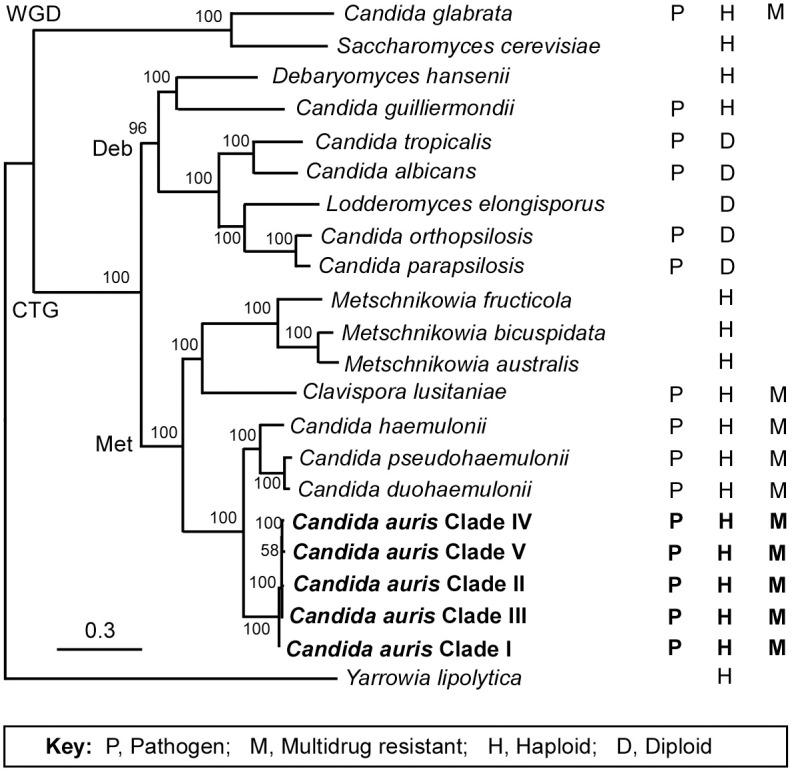
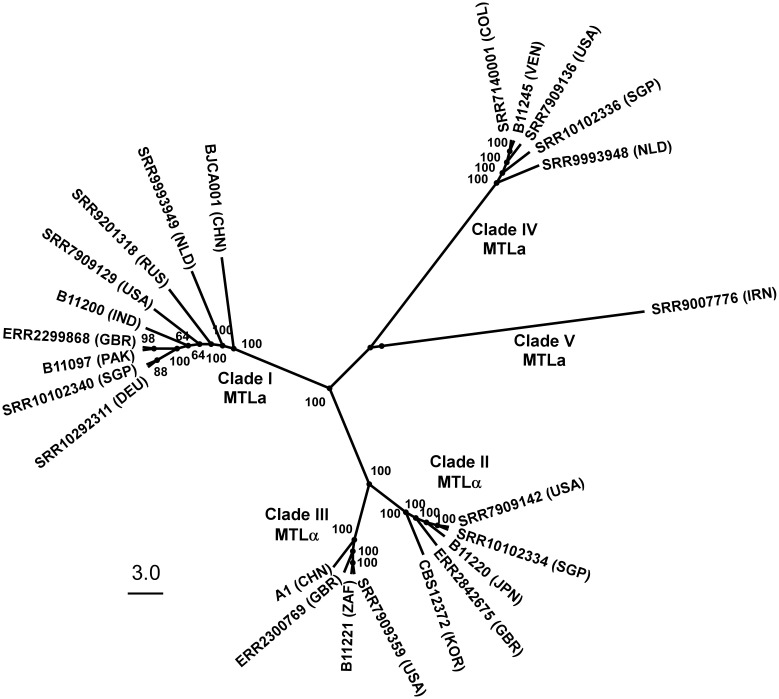
First described in 2009 in Japan, the emerging multidrug-resistant fungal pathogen Candida auris is becoming a worldwide public health threat that has been attracting considerable attention due to its rapid and widespread emergence over the past decade. The reasons behind the recent emergence of this fungus remain a mystery to date. Genetic analyses indicate that this fungal pathogen emerged simultaneously in several different continents, where 5 genetically distinct clades of C. auris were isolated from distinct geographical locations. Although C. auris belongs to the CTG clade (its constituent species translate the CTG codon as serine instead of leucine, as in the standard code), C. auris is a haploid fungal species that is more closely related to the haploid and often multidrug-resistant species Candida haemulonii and Candida lusitaniae and is distantly related to the diploid and clinically common fungal pathogens Candida albicans and Candida tropicalis. Infections and outbreaks caused by C. auris in hospitals settings have been rising over the past several years. Difficulty in its identification, multidrug resistance properties, evolution of virulence factors, associated high mortality rates in patients, and long-term survival on surfaces in the environment make C. auris particularly problematic in clinical settings. Here, we review progress made over the past decade on the biological and clinical aspects of C. auris. Future efforts should be directed toward understanding the mechanistic details of its biology, epidemiology, antifungal resistance, and pathogenesis with a goal of developing novel tools and methods for the prevention, diagnosis, and treatment of C. auris infections.
Overview
The claims and statistics of this paper haven’t been checked yet.
Free: it reads the open-access text and checks the first 5 claims that cite a source we can check. Create a free account to check every claim.
Integrity signals
Registry
Cites
Statistics
Figures
Verification
Claims the paper makes
The claims and statistics of this paper haven’t been checked yet.
Free: it reads the open-access text and checks the first 5 claims that cite a source we can check. Create a free account to check every claim.
Claims other papers make about this one
Each is checked against this paper’s own text: does it say what the citing paper says it does?
The source backs part of the claim, not all of it — or backs it for a different population, condition or comparison.
In the citing paper
“While resistance to FCZ or AmB is frequently observed among clade I isolates, the frequency of ECN resistance remains low at the moment (11, 12, 35).”
From Transcriptomics and Phenotyping Define Genetic Signatures Associated with Echinocandin Resistance in Candida auris (2022) · cites this paper as [35]
Experimental — accuracy not yet measuredThe source backs part of the claim, not all of it — or backs it for a different population, condition or comparison.
In the citing paper
“Since biofilms are often associated with increased persistence on the environmental surfaces and colonization on host skin4,5,11,49, this mutation could contribute to the prevalence and rapid transmission of C. auris.”
From The Wor2 phenotypic switching regulator controls biofilm formation in Candida auris (2026) · cites this paper as [4]
Experimental — accuracy not yet measuredThe cited source says what the claim attributes to it.
In the citing paper
“While resistance to FCZ or AmB is frequently observed among clade I isolates, the frequency of ECN resistance remains low at the moment (11, 12, 35).”
From Transcriptomics and Phenotyping Define Genetic Signatures Associated with Echinocandin Resistance in Candida auris (2022) · cites this paper as [35]
The cited source says what the claim attributes to it.
In the citing paper
“Clinical isolates of C. auris can exhibit different morphotypes such as filamentous, pseudohyphal, and yeast forms (8–14).”
From Yeast and filamentous Candida auris stimulate distinct immune responses in the skin (2024) · cites this paper as [11]
The cited source says what the claim attributes to it.
In the citing paper
“Clinical isolates of C. auris can exhibit different morphotypes, such as yeast, filamentous, and aggregative forms (9–13).”
From Cell aggregation mediated by ACE2 deletion in Candida auris modulates fungal colonization and host immune responses in the skin (2024) · cites this paper as [12]
1 more claim about this paper
Create a free account to see every claim other papers make about this one.
Self-check
Percentages, sums and reported differences re-computed from the paper’s own numbers.
The self-check needs the paper’s full text.
Citations
Cites
Bacterial biofilms: from the Natural environment to infectious diseases
Hall-Stoodley, L., Costerton, J. W., & Stoodley, P. (2004) · Nature Reviews Microbiology · doi:10.1038/nrmicro821 · Cited by 7,143
Wisplinghoff, H., Bischoff, T., Tallent, S. M., Seifert, H., Wenzel, R. P., & Edmond, M. B. (2004) · Clinical Infectious Diseases · doi:10.1086/421946 · Cited by 4,496 · cited 1×
“Candida species are the predominant cause of nosocomial fungal infections and are the fourth leading cause of all hospital-acquired infections [2].”
BackgroundHidden Killers: Human Fungal Infections
Brown, G. D., Denning, D. W., Gow, N. A. R., Levitz, S. M., Netea, M. G., & White, T. C. (2012) · Science Translational Medicine · doi:10.1126/scitranslmed.3004404 · Cited by 4,284
Epidemiology of Invasive Candidiasis: a Persistent Public Health Problem
Pfaller, M. A., & Diekema, D. J. (2007) · Clinical Microbiology Reviews · doi:10.1128/cmr.00029-06 · Cited by 4,174 · cited 1×
“Candida species is Candida albicans; however, the incidence of non-albicans species, such as Candida tropicalis, Candida parapsilosis, and Candida glabrata, has increased over recent decades due to the long-term use and limited options of antifungal drugs [3,4].”
BackgroundEmerging fungal threats to animal, plant and ecosystem health
Fisher, M. C., Henk, D. A., Briggs, C. J., Brownstein, J. S., Madoff, L. C., McCraw, S. L., & Gurr, S. J. (2012) · Nature · doi:10.1038/nature10947 · Cited by 3,310 · cited 1×
“It seems likely that novel fungal pathogens will similarly emerge in the future due to changes in global temperatures, atmospheric CO2 levels, humidity, and other alterations to natural environmental niches [84].”
BackgroundLockhart, S. R., Etienne, K. A., Vallabhaneni, S., Farooqi, J., Chowdhary, A., Govender, N. P., Colombo, A. L., Calvo, B., Cuomo, C. A., Desjardins, C. A., et al. (2017) · Clinical Infectious Diseases · doi:10.1093/cid/ciw691 · Cited by 1,662 · cited 14×
“The genome of C. auris B8441 was sequenced by the CDC [10], and its sequence information and annotation is available on the Candida Genome Database (CGD) database (https://www.candidagenome.org).”
BackgroundMethodInfluentialSatoh, K., Makimura, K., Hasumi, Y., Nishiyama, Y., Uchida, K., & Yamaguchi, H. (2009) · Microbiology and Immunology · doi:10.1111/j.1348-0421.2008.00083.x · Cited by 1,381 · cited 3×
“auris belongs to the Metschnikowiaceae family within the Candida/Clavispora clade (Fig 3) [5,13,14].”
BackgroundThe Fungi: 1, 2, 3 … 5.1 million species?
Blackwell, M. (2011) · American Journal of Botany · doi:10.3732/ajb.1000298 · Cited by 1,324
Candida albicans Biofilms and Human Disease
Nobile, C. J., & Johnson, A. D. (2015) · Annual Review of Microbiology · doi:10.1146/annurev-micro-091014-104330 · Cited by 1,057 · cited 1×
“Biofilms are structured microbial communities that form on abiotic and biotic surfaces and are embedded in an extracellular matrix [64].”
BackgroundSelf-citationFirst hospital outbreak of the globally emerging Candida auris in a European hospital
Schelenz, S., Hagen, F., Rhodes, J. L., Abdolrasouli, A., Chowdhary, A., Hall, A., Ryan, L., Shackleton, J., Trimlett, R., Meis, J. F., et al. (2016) · Antimicrobial Resistance & Infection Control · doi:10.1186/s13756-016-0132-5 · Cited by 768
Amphotericin primarily kills yeast by simply binding ergosterol
Gray, K. C., Palacios, D. S., Dailey, I., Endo, M. M., Uno, B. E., Wilcock, B. C., & Burke, M. D. (2012) · Proceedings of the National Academy of Sciences · doi:10.1073/pnas.1117280109 · Cited by 608
Morphological plasticity as a bacterial survival strategy
Justice, S. S., Hunstad, D. A., Cegelski, L., & Hultgren, S. J. (2008) · Nature Reviews Microbiology · doi:10.1038/nrmicro1820 · Cited by 600
Candida auris: a Review of the Literature
Jeffery-Smith, A., Taori, S. K., Schelenz, S., Jeffery, K., Johnson, E. M., Borman, A., Candida auris Incident Management Team, Manuel, R., & Brown, C. S. (2018) · Clinical Microbiology Reviews · doi:10.1128/cmr.00029-17 · Cited by 595
"White-opaque transition": a second high-frequency switching system in Candida albicans
Slutsky, B., Staebell, M., Anderson, J., Risen, L., Pfaller, M., & Soll, D. R. (1987) · Journal of Bacteriology · doi:10.1128/jb.169.1.189-197.1987 · Cited by 570
Kathuria, S., Singh, P. K., Sharma, C., Prakash, A., Masih, A., Kumar, A., Meis, J. F., & Chowdhary, A. (2015) · Journal of Clinical Microbiology · doi:10.1128/jcm.00367-15 · Cited by 532
First Three Reported Cases of Nosocomial Fungemia Caused by Candida auris
Lee, W. G., Shin, J. H., Uh, Y., Kang, M. G., Kim, S. H., Park, K. H., & Jang, H.-C. (2011) · Journal of Clinical Microbiology · doi:10.1128/jcm.00319-11 · Cited by 523
A Candida auris Outbreak and Its Control in an Intensive Care Setting
Eyre, D. W., Sheppard, A. E., Madder, H., Moir, I., Moroney, R., Quan, T. P., Griffiths, D., George, S., Butcher, L., Morgan, M., et al. (2018) · New England Journal of Medicine · doi:10.1056/nejmoa1714373 · Cited by 517
Biswas, S., Van Dijck, P., & Datta, A. (2007) · Microbiology and Molecular Biology Reviews · doi:10.1128/mmbr.00009-06 · Cited by 516
On the emergence of Candida auris: climate change, azoles, swamps, and birds
Casadevall, A., Kontoyiannis, D. P., & Robert, V. (2019) · mBio · doi:10.1128/mbio.01397-19 · Cited by 515
Welsh, R. M., Bentz, M. L., Shams, A., Houston, H., Lyons, A., Rose, L. J., & Litvintseva, A. P. (2017) · Journal of Clinical Microbiology · doi:10.1128/jcm.00921-17 · Cited by 499
Muñoz, J. F., Gade, L., Chow, N. A., Loparev, V. N., Juieng, P., Berkow, E. L., Farrer, R. A., Litvintseva, A. P., & Cuomo, C. A. (2018) · Nature Communications · doi:10.1038/s41467-018-07779-6 · Cited by 458
Calvo, B., Melo, A. S. A., Perozo-Mena, A., Hernandez, M., Francisco, E. C., Hagen, F., Meis, J. F., & Colombo, A. L. (2016) · Journal of Infection · doi:10.1016/j.jinf.2016.07.008 · Cited by 448
Biofilm-Forming Capability of Highly Virulent, Multidrug-Resistant Candida auris
Sherry, L., Ramage, G., Kean, R., Borman, A., Johnson, E. M., Richardson, M. D., & Rautemaa-Richardson, R. (2017) · Emerging Infectious Diseases · doi:10.3201/eid2302.161320 · Cited by 420
New Clonal Strain of Candida auris, Delhi, India
Chowdhary, A., Sharma, C., Duggal, S., Agarwal, K., Prakash, A., Singh, P. K., Jain, S., Kathuria, S., Randhawa, H. S., Hagen, F., et al. (2013) · Emerging Infectious Diseases · doi:10.3201/eid1910.130393 · Cited by 418
Emerging Threats in Antifungal-Resistant Fungal Pathogens
Sanglard, D. (2016) · Frontiers in Medicine · doi:10.3389/fmed.2016.00011 · Cited by 416
Candida auris: an Emerging Fungal Pathogen
Spivak, E. S., & Hanson, K. E. (2018) · Journal of Clinical Microbiology · doi:10.1128/jcm.01588-17 · Cited by 393
Morphogenesis in Candida albicans
Whiteway, M., & Bachewich, C. (2007) · Annual Review of Microbiology · doi:10.1146/annurev.micro.61.080706.093341 · Cited by 388
Multidrug-resistant endemic clonal strain of Candida auris in India
Chowdhary, A., Anil Kumar, V., Sharma, C., Prakash, A., Agarwal, K., Babu, R., Dinesh, K. R., Karim, S., Singh, S. K., Hagen, F., et al. (2014) · European Journal of Clinical Microbiology & Infectious Diseases · doi:10.1007/s10096-013-2027-1 · Cited by 373 · cited 3×
“auris strains are resistant to all available classes of antifungal drugs [10,11].”
BackgroundCandida auris candidaemia in Indian ICUs: analysis of risk factors
Rudramurthy, S. M., Chakrabarti, A., Paul, R. A., Sood, P., Kaur, H., Capoor, M. R., Kindo, A. J., Marak, R. S. K., Arora, A., Sardana, R., et al. (2017) · Journal of Antimicrobial Chemotherapy · doi:10.1093/jac/dkx034 · Cited by 357 · cited 1×
“, central venous catheter), an immunosuppressed state, the use of hemodialysis, a neutropenic state, chronic renal disease, or the use of broad-spectrum antibiotic and/or antifungal drugs [6,7,23,38,41,42].”
BackgroundPotential Fifth Clade of Candida auris, Iran, 2018
Chow, N. A., de Groot, T., Badali, H., Abastabar, M., Chiller, T. M., & Meis, J. F. (2019) · Emerging Infectious Diseases · doi:10.3201/eid2509.190686 · Cited by 356
Ruiz‐Gaitán, A., Moret, A. M., Tasias‐Pitarch, M., Aleixandre‐López, A. I., Martínez‐Morel, H., Calabuig, E., Salavert‐Lletí, M., Ramírez, P., López‐Hontangas, J. L., Hagen, F., et al. (2018) · Mycoses · doi:10.1111/myc.12781 · Cited by 343
Borman, A. M., Szekely, A., & Johnson, E. M. (2016) · mSphere · doi:10.1128/msphere.00189-16 · Cited by 333
Hsp90 Orchestrates Temperature-Dependent Candida albicans Morphogenesis via Ras1-PKA Signaling
Shapiro, R. S., Uppuluri, P., Zaas, A. K., Collins, C., Senn, H., Perfect, J. R., Heitman, J., & Cowen, L. E. (2009) · Current Biology · doi:10.1016/j.cub.2009.03.017 · Cited by 311
Kim, M., Shin, J. H., Sung, H., Lee, K., Kim, E., Ryoo, N., Lee, J., Jung, S., Park, K. H., Kee, S. J., et al. (2009) · Clinical Infectious Diseases · doi:10.1086/597108 · Cited by 309
Osei Sekyere, J. (2018) · MicrobiologyOpen · doi:10.1002/mbo3.578 · Cited by 300
The ‘obligate diploid’ Candida albicans forms mating-competent haploids
Hickman, M. A., Zeng, G., Forche, A., Hirakawa, M. P., Abbey, D., Harrison, B. D., Wang, Y.-M., Su, C.-H., Bennett, R. J., Wang, Y., et al. (2013) · Nature · doi:10.1038/nature11865 · Cited by 284
The Multifunctional Fungal Ergosterol
Rodrigues, M. L. (2018) · mBio · doi:10.1128/mbio.01755-18 · Cited by 275
Arendrup, M. C., Prakash, A., Meletiadis, J., Sharma, C., & Chowdhary, A. (2017) · Antimicrobial Agents and Chemotherapy · doi:10.1128/aac.00485-17 · Cited by 270
Candida auris–Associated Candidemia, South Africa
Magobo, R. E., Corcoran, C., Seetharam, S., & Govender, N. P. (2014) · Emerging Infectious Diseases · doi:10.3201/eid2007.131765 · Cited by 259
Draft genome of a commonly misdiagnosed multidrug resistant pathogen Candida auris
Chatterjee, S., Alampalli, S. V., Nageshan, R. K., Chettiar, S. T., Joshi, S., & Tatu, U. S. (2015) · BMC Genomics · doi:10.1186/s12864-015-1863-z · Cited by 247 · cited 3×
“auris has approximately 5,500 predicted genes [13,14].”
BackgroundUnderstanding Echinocandin Resistance in the Emerging Pathogen Candida auris
Kordalewska, M., Lee, A., Park, S., Berrio, I., Chowdhary, A., Zhao, Y., & Perlin, D. S. (2018) · Antimicrobial Agents and Chemotherapy · doi:10.1128/aac.00238-18 · Cited by 247 · cited 1×
“auris with an S639F mutation in Fks1 were caspofungin resistant, while other isolates harboring a wild-type Fks1 were susceptible to caspofungin at human therapeutic doses [74].”
BackgroundCandida auris Isolates Resistant to Three Classes of Antifungal Medications — New York, 2019
Ostrowsky, B., Greenko, J., Adams, E., Quinn, M., O’Brien, B., Chaturvedi, V., Berkow, E., Vallabhaneni, S., Forsberg, K., Chaturvedi, S., et al. (2020) · MMWR. Morbidity and Mortality Weekly Report · doi:10.15585/mmwr.mm6901a2 · Cited by 246
Unique phenotype of opaque cells in the white-opaque transition of Candida albicans
Anderson, J. M., & Soll, D. R. (1987) · Journal of Bacteriology · doi:10.1128/jb.169.12.5579-5588.1987 · Cited by 237
Biswal, M., Rudramurthy, S. M., Jain, N., Shamanth, A. S., Sharma, D., Jain, K., Yaddanapudi, L. N., & Chakrabarti, A. (2017) · Journal of Hospital Infection · doi:10.1016/j.jhin.2017.09.009 · Cited by 223
Kean, R., Delaney, C., Sherry, L., Borman, A., Johnson, E. M., Richardson, M. D., Rautemaa-Richardson, R., Williams, C., & Ramage, G. (2018) · mSphere · doi:10.1128/msphere.00334-18 · Cited by 220
Mutations in TAC1B : a Novel Genetic Determinant of Clinical Fluconazole Resistance in Candida auris
Rybak, J. M., Muñoz, J. F., Barker, K. S., Parker, J. E., Esquivel, B. D., Berkow, E. L., Lockhart, S. R., Gade, L., Palmer, G. E., White, T. C., et al. (2020) · mBio · doi:10.1128/mbio.00365-20 · Cited by 202
Kordalewska, M., Zhao, Y., Lockhart, S. R., Chowdhary, A., Berrio, I., & Perlin, D. S. (2017) · Journal of Clinical Microbiology · doi:10.1128/jcm.00630-17 · Cited by 195
The first isolate of Candida auris in China: clinical and biological aspects
Wang, X., Bing, J., Zheng, Q., Zhang, F., Liu, J., Yue, H., Tao, L., Du, H., Wang, Y., Wang, H., et al. (2018) · Emerging Microbes & Infections · doi:10.1038/s41426-018-0095-0 · Cited by 191
Self-citationYue, H., Bing, J., Zheng, Q., Zhang, Y., Hu, T., Du, H., Wang, H., & Huang, G. (2018) · Emerging Microbes & Infections · doi:10.1038/s41426-018-0187-x · Cited by 176
Self-citationLeach, L., Zhu, Y., & Chaturvedi, S. (2018) · Journal of Clinical Microbiology · doi:10.1128/jcm.01223-17 · Cited by 169
Regulation of phenotypic transitions in the fungal pathogen Candida albicans
Huang, G. (2012) · Virulence · doi:10.4161/viru.20010 · Cited by 163
Self-citationOn the Origins of a Species: What Might Explain the Rise of Candida auris?
Jackson, B. R., Chow, N., Forsberg, K., Litvintseva, A. P., Lockhart, S. R., Welsh, R., Vallabhaneni, S., & Chiller, T. (2019) · Journal of Fungi · doi:10.3390/jof5030058 · Cited by 162
Emerging fungal pathogen Candida auris evades neutrophil attack
Johnson, C. J., Davis, J. M., Huttenlocher, A., Kernien, J. F., & Nett, J. E. (2018) · mBio · doi:10.1128/mbio.01403-18 · Cited by 157
Mg, C., & Ma, P. (1995) · PubMed · Cited by 154
Oh, B. J., Shin, J. H., Kim, M.-N., Sung, H., Lee, K., Joo, M. Y., Shin, M. G., Suh, S. P., & Ryang, D. W. (2011) · Medical Mycology · doi:10.3109/13693786.2010.493563 · Cited by 143
Pfaller, M. A. (1995) · Journal of Hospital Infection · doi:10.1016/0195-6701(95)90036-5 · Cited by 140
Kim, S. H., Iyer, K. R., Pardeshi, L., Muñoz, J. F., Robbins, N., Cuomo, C. A., Wong, K. H., & Cowen, L. E. (2019) · mBio · doi:10.1128/mbio.02529-18 · Cited by 136
Candida auris: Epidemiology, risk factors, virulence, resistance, and therapeutic options
de Cássia Orlandi Sardi, J., Silva, D. R., Soares Mendes-Giannini, M. J., & Rosalen, P. L. (2018) · Microbial Pathogenesis · doi:10.1016/j.micpath.2018.09.014 · Cited by 134
Desnos-Ollivier, M., Bretagne, S., Raoux, D., Hoinard, D., Dromer, F., & Dannaoui, E. (2008) · Antimicrobial Agents and Chemotherapy · doi:10.1128/aac.00088-08 · Cited by 132
Surface disinfection challenges for Candida auris: an in-vitro study
Kean, R., Sherry, L., Townsend, E., McKloud, E., Short, B., Akinbobola, A., Mackay, W. G., Williams, C., Jones, B. L., & Ramage, G. (2018) · Journal of Hospital Infection · doi:10.1016/j.jhin.2017.11.015 · Cited by 125
Fakhim, H., Vaezi, A., Dannaoui, E., Chowdhary, A., Nasiry, D., Faeli, L., Meis, J. F., & Badali, H. (2018) · Mycoses · doi:10.1111/myc.12754 · Cited by 122
Candida auris: What Have We Learned About Its Mechanisms of Pathogenicity?
Rossato, L., & Colombo, A. L. (2018) · Frontiers in Microbiology · doi:10.3389/fmicb.2018.03081 · Cited by 121
Hog1 regulates stress tolerance and virulence in the emerging fungal pathogen Candida auris
Day, A. M., McNiff, M. M., da Silva Dantas, A., Gow, N. A. R., & Quinn, J. (2018) · mSphere · doi:10.1128/msphere.00506-18 · Cited by 116
The genetic code of the fungal CTG clade
Santos, M. A. S., Gomes, A. C., Santos, M. C., Carreto, L. C., & Moura, G. R. (2011) · Comptes Rendus. Biologies · doi:10.1016/j.crvi.2011.05.008 · Cited by 110 · cited 2×
“Species within this clade translate the CTG codon into serine instead of leucine [15].”
BackgroundPhenotypic switching and filamentation in Candida glabrata
Lachke, S. A., Joly, S., Daniels, K., & Soll, D. R. (2002) · Microbiology · doi:10.1099/00221287-148-9-2661 · Cited by 103
Bravo Ruiz, G., Ross, Z. K., Gow, N. A. R., & Lorenz, A. (2020) · mSphere · doi:10.1128/msphere.00151-20 · Cited by 101
The Candida auris Alert: Facts and Perspectives
Lamoth, F., & Kontoyiannis, D. P. (2018) · The Journal of Infectious Diseases · doi:10.1093/infdis/jix597 · Cited by 95
Ruiz-Gaitán, A., Martínez, H., Moret, A. M., Calabuig, E., Tasias, M., Alastruey-Izquierdo, A., Zaragoza, Ó., Mollar, J., Frasquet, J., Salavert-Lletí, M., et al. (2019) · Expert Review of Anti-infective Therapy · doi:10.1080/14787210.2019.1592675 · Cited by 92
Candidemia caused by amphotericin B and Fluconazole resistant Candida auris
Sarma, S., Kumar, N., Sharma, S., Govil, D., Ali, T., Mehta, Y., & Rattan, A. (2013) · Indian Journal of Medical Microbiology · doi:10.4103/0255-0857.108746 · Cited by 91
Eldesouky, H. E., Li, X., Abutaleb, N. S., Mohammad, H., & Seleem, M. N. (2018) · International Journal of Antimicrobial Agents · doi:10.1016/j.ijantimicag.2018.08.016 · Cited by 90
Biofilm formation by Candida auris isolated from colonising sites and candidemia cases
Singh, R., Kaur, M., Chakrabarti, A., Shankarnarayan, S. A., & Rudramurthy, S. M. (2019) · Mycoses · doi:10.1111/myc.12947 · Cited by 86
Candida auris outbreak: Mortality, interventions and cost of sustaining control
Taori, S. K., Khonyongwa, K., Hayden, I., Athukorala, G. D. A., Letters, A., Fife, A., Desai, N., & Borman, A. M. (2019) · Journal of Infection · doi:10.1016/j.jinf.2019.09.007 · Cited by 86
The role of phenotypic switching in the basic biology and pathogenesis of Candida albicans
Soll, D. (2014) · Journal of Oral Microbiology · doi:10.3402/jom.v6.22993 · Cited by 84
Kumar, A., Sachu, A., Mohan, K., Vinod, V., Dinesh, K. R., & Karim, S. (2017) · Revista Iberoamericana de Micología · doi:10.1016/j.riam.2016.11.004 · Cited by 74
Pathirana, R. U., Friedman, J., Norris, H. L., Salvatori, O., McCall, A. D., Kay, J., & Edgerton, M. (2018) · Antimicrobial Agents and Chemotherapy · doi:10.1128/aac.01872-17 · Cited by 70
Iguchi, S., Itakura, Y., Yoshida, A., Kamada, K., Mizushima, R., Arai, Y., Uzawa, Y., & Kikuchi, K. (2019) · Journal of Infection and Chemotherapy · doi:10.1016/j.jiac.2019.05.034 · Cited by 69
Gaitán, A. C. R., Fernández-Pereira, J., Valentín, E., Tormo‐Más, M. Á., Eraso, E., Pemán, J., & de Groot, P. W. J. (2018) · International Journal of Medical Microbiology · doi:10.1016/j.ijmm.2018.06.014 · Cited by 59
Tian, S., Rong, C., Nian, H., Li, F., Chu, Y., Cheng, S., & Shang, H. (2018) · Emerging Microbes & Infections · doi:10.1038/s41426-018-0131-0 · Cited by 58
Jain, N., Hasan, F., & Fries, B. C. (2008) · Current Fungal Infection Reports · doi:10.1007/s12281-008-0026-y · Cited by 54
Wurster, S., Bandi, A., Beyda, N. D., Albert, N. D., Raman, N. M., Raad, I. I., & Kontoyiannis, D. P. (2019) · Journal of Antimicrobial Chemotherapy · doi:10.1093/jac/dkz100 · Cited by 52
Arensman, K., Miller, J. L., Chiang, A., Mai, N., Levato, J., LaChance, E., Anderson, M., Beganovic, M., & Dela Pena, J. (2020) · Emerging Infectious Diseases · doi:10.3201/eid2605.191588 · Cited by 52
Hata, D. J., Humphries, R., Lockhart, S. R., & for the College of American Pathologists Microbiology Committee (2020) · Archives of Pathology & Laboratory Medicine · doi:10.5858/arpa.2018-0508-ra · Cited by 49
Phenotypic switching in newly emerged multidrug-resistant pathogen Candida auris
Bentz, M. L., Sexton, D. J., Welsh, R. M., & Litvintseva, A. P. (2019) · Medical Mycology · doi:10.1093/mmy/myy100 · Cited by 44
Potential transmission pathways of clinically relevant fungi in indoor swimming pool facilities
Ekowati, Y., Ferrero, G., Kennedy, M. D., Husman, A. M. D. R., & Schets, F. M. (2018) · International Journal of Hygiene and Environmental Health · doi:10.1016/j.ijheh.2018.07.013 · Cited by 35
Tracking a Global Threat: a New Genotyping Method for Candida auris
Cuomo, C. A., & Alanio, A. (2020) · mBio · doi:10.1128/mbio.00259-20 · Cited by 14
Cited by
Infectious disease in an era of global change
Baker, R. E., Mahmud, A. S., Miller, I. F., Rajeev, M., Rasambainarivo, F., Rice, B. L., Takahashi, S., Tatem, A. J., Wagner, C. E., Wang, L.-F., et al. (2022) · Nature Reviews Microbiology · doi:10.1038/s41579-021-00639-z · Cited by 2,059
Lass-Flörl, C., Kanj, S. S., Govender, N. P., Thompson, G. R., Ostrosky- Zeichner, L., & Govrins, M. A. (2024) · Nature Reviews Disease Primers · doi:10.1038/s41572-024-00503-3 · Cited by 298
Ahmad, S., & Alfouzan, W. (2021) · Microorganisms · doi:10.3390/microorganisms9040807 · Cited by 269
“However, tentative breakpoints have been suggested by the Centers for Disease Control and prevention (CDC) based on expert opinion and those established for other closely related Candida species [62,72,73,89,155,156].”
BackgroundInfluentialInvasive candidiasis: current clinical challenges and unmet needs in adult populations
Soriano, A., Honore, P. M., Puerta-Alcalde, P., Garcia-Vidal, C., Pagotto, A., Gonçalves-Bradley, D. C., & Verweij, P. E. (2023) · Journal of Antimicrobial Chemotherapy · doi:10.1093/jac/dkad139 · Cited by 190
Diagnosis and Treatment of Invasive Candidiasis
Barantsevich, N., & Barantsevich, E. (2022) · Antibiotics · doi:10.3390/antibiotics11060718 · Cited by 178
Metadata
- Authors
- Du, H., Bing, J., Hu, T., Ennis, C. L., Nobile, C. J., & Huang, G.
- Affiliations
- Fudan University (CN)
- University of California, Merced (US)
- Corresponding author
- Huang, Guanghua
- Venue
- PLOS Pathogens
- Publisher
- Public Library of Science (PLoS)
- Published
- 2020-10-22
- Volume
- 16
- Issue
- 10
- Pages
- e1008921
- ISSN
- 1553-7366 (ISSN-L)
- 1553-7374
- PMC
- PMC7581363
- OpenAlex
- W3093683101
- Cited by
- 609
- References
- 86
- Citations by year
- 2026: 76 · 2025: 105 · 2024: 110 · 2023: 139 · 2022: 126 · 2021: 53
- FWCI
- 3.77
- Type
- journal article
- Language
- en
- Open access
- gold
- doi.org
- Licence
- Locations
- PLoS Pathogens (publishedVersion, cc-by)
- PubMed Central (publishedVersion, cc-by)
- PubMed (publishedVersion)
- eScholarship (California Digital Library) (submittedVersion, cc-by)
- DOAJ (DOAJ: Directory of Open Access Journals) (submittedVersion, cc-by-sa)
- eScholarship (California Digital Library) (submittedVersion)
- Funders
- Natural Science Foundation of Shanghai (19ZR1405100)
- National Natural Science Foundation of China (31625002, 31930005)
- National Institutes of Health
- National Institute of General Medical Sciences (R35GM124594)
- National Institute of Allergy and Infectious Diseases (R21AI125801)
- National Institute of Dental and Craniofacial Research (F31DE028488)
- Topics
- Health Sciences › Medicine › Infectious Diseases › Antifungal resistance and susceptibility
- Life Sciences › Immunology and Microbiology › Microbiology › Yeasts and Rust Fungi Studies
- Health Sciences › Medicine › Infectious Diseases › Fungal Infections and Studies
- Keywords
- Candida auris, multidrug resistance, antifungal resistance, virulence factors, fungal pathogenesis, Candida haemulonii, Candida lusitaniae, Candida albicans, Candida tropicalis, hospital outbreak, fungal epidemiology, environmental survival, fungal identification, emerging fungal pathogens
- MeSH terms
- Antifungal Agents, Candida, Candidiasis, Saccharomycetales, Humans, Virulence, Drug Resistance, Fungal
About these checks
Registry, retraction, Cites and statistics results are computed, not judged, with one exception: a printed reference that no index lists is read once by a model before it counts as a citation error. Claims are extracted by a model and kept only when their quote appears verbatim in the text; each cited source is then checked, with a model’s help, for whether it says what the claim relies on. Those verdicts can be wrong — read the claim’s quote and the cited source before relying on one.
Statistics and arithmetic are recomputed, not judged.
Confidence bands are shown only for fields calibrated on our annotated test set. None is calibrated yet, so no band is shown.
What counts as a claim ›How we measure confidence ›How we check this ›
Are you an author, or do you see a problem with this page? Request a review
Data sources
Bibliographic data: Semantic Scholar, OpenAlex, Crossref.
Contains information from the Semantic Scholar Academic Graph Datasets, made available under the ODC Attribution License (ODC-BY 1.0).
Semantic Scholar’s data is described in: Kinney, R., et al. (2023). The Semantic Scholar Open Data Platform. arXiv:2301.10140.
