

Candida auris: Epidemiology, biology, antifungal resistance, and virulence
Open accessThe DOI matches its Crossref record; 86 of the 86 references it cites were found in a registry or an index.
Abstract
First described in 2009 in Japan, the emerging multidrug-resistant fungal pathogen Candida auris is becoming a worldwide public health threat that has been attracting considerable attention due to its rapid and widespread emergence over the past decade. The reasons behind the recent emergence of this fungus remain a mystery to date. Genetic analyses indicate that this fungal pathogen emerged simultaneously in several different continents, where 5 genetically distinct clades of C. auris were isolated from distinct geographical locations. Although C. auris belongs to the CTG clade (its constituent species translate the CTG codon as serine instead of leucine, as in the standard code), C. auris is a haploid fungal species that is more closely related to the haploid and often multidrug-resistant species Candida haemulonii and Candida lusitaniae and is distantly related to the diploid and clinically common fungal pathogens Candida albicans and Candida tropicalis. Infections and outbreaks caused by C. auris in hospitals settings have been rising over the past several years. Difficulty in its identification, multidrug resistance properties, evolution of virulence factors, associated high mortality rates in patients, and long-term survival on surfaces in the environment make C. auris particularly problematic in clinical settings. Here, we review progress made over the past decade on the biological and clinical aspects of C. auris. Future efforts should be directed toward understanding the mechanistic details of its biology, epidemiology, antifungal resistance, and pathogenesis with a goal of developing novel tools and methods for the prevention, diagnosis, and treatment of C. auris infections.
Overview
The claims and statistics of this paper haven’t been checked yet.
Free: it reads the open-access text and checks the first 5 claims that cite a source we can check. Create a free account to check every claim.
Integrity signals
Registry
Cites
Statistics
Figures
Verification
Claims the paper makes
The claims and statistics of this paper haven’t been checked yet.
Free: it reads the open-access text and checks the first 5 claims that cite a source we can check. Create a free account to check every claim.
Claims other papers make about this one
Each is checked against this paper’s own text: does it say what the citing paper says it does?
The source backs part of the claim, not all of it — or backs it for a different population, condition or comparison.
In the citing paper
“While resistance to FCZ or AmB is frequently observed among clade I isolates, the frequency of ECN resistance remains low at the moment (11, 12, 35).”
From Transcriptomics and Phenotyping Define Genetic Signatures Associated with Echinocandin Resistance in Candida auris (2022) · cites this paper as [35]
Experimental — accuracy not yet measuredThe source backs part of the claim, not all of it — or backs it for a different population, condition or comparison.
In the citing paper
“Since biofilms are often associated with increased persistence on the environmental surfaces and colonization on host skin4,5,11,49, this mutation could contribute to the prevalence and rapid transmission of C. auris.”
From The Wor2 phenotypic switching regulator controls biofilm formation in Candida auris (2026) · cites this paper as [4]
Experimental — accuracy not yet measuredThe cited source says what the claim attributes to it.
In the citing paper
“While resistance to FCZ or AmB is frequently observed among clade I isolates, the frequency of ECN resistance remains low at the moment (11, 12, 35).”
From Transcriptomics and Phenotyping Define Genetic Signatures Associated with Echinocandin Resistance in Candida auris (2022) · cites this paper as [35]
The cited source says what the claim attributes to it.
In the citing paper
“Clinical isolates of C. auris can exhibit different morphotypes such as filamentous, pseudohyphal, and yeast forms (8–14).”
From Yeast and filamentous Candida auris stimulate distinct immune responses in the skin (2024) · cites this paper as [11]
The cited source says what the claim attributes to it.
In the citing paper
“Clinical isolates of C. auris can exhibit different morphotypes, such as yeast, filamentous, and aggregative forms (9–13).”
From Cell aggregation mediated by ACE2 deletion in Candida auris modulates fungal colonization and host immune responses in the skin (2024) · cites this paper as [12]
1 more claim about this paper
Create a free account to see every claim other papers make about this one.
Self-check
Percentages, sums and reported differences re-computed from the paper’s own numbers.
The self-check needs the paper’s full text.
Citations
Cites
Bacterial biofilms: from the Natural environment to infectious diseases
Hall-Stoodley, L., Costerton, J. W., & Stoodley, P. (2004) · Nature Reviews Microbiology · doi:10.1038/nrmicro821 · Cited by 7,143
Wisplinghoff, H., Bischoff, T., Tallent, S. M., Seifert, H., Wenzel, R. P., & Edmond, M. B. (2004) · Clinical Infectious Diseases · doi:10.1086/421946 · Cited by 4,496 · cited 1×
“Candida species are the predominant cause of nosocomial fungal infections and are the fourth leading cause of all hospital-acquired infections [2].”
BackgroundHidden Killers: Human Fungal Infections
Brown, G. D., Denning, D. W., Gow, N. A. R., Levitz, S. M., Netea, M. G., & White, T. C. (2012) · Science Translational Medicine · doi:10.1126/scitranslmed.3004404 · Cited by 4,284
Epidemiology of Invasive Candidiasis: a Persistent Public Health Problem
Pfaller, M. A., & Diekema, D. J. (2007) · Clinical Microbiology Reviews · doi:10.1128/cmr.00029-06 · Cited by 4,174 · cited 1×
“Candida species is Candida albicans; however, the incidence of non-albicans species, such as Candida tropicalis, Candida parapsilosis, and Candida glabrata, has increased over recent decades due to the long-term use and limited options of antifungal drugs [3,4].”
BackgroundEmerging fungal threats to animal, plant and ecosystem health
Fisher, M. C., Henk, D. A., Briggs, C. J., Brownstein, J. S., Madoff, L. C., McCraw, S. L., & Gurr, S. J. (2012) · Nature · doi:10.1038/nature10947 · Cited by 3,310 · cited 1×
“It seems likely that novel fungal pathogens will similarly emerge in the future due to changes in global temperatures, atmospheric CO2 levels, humidity, and other alterations to natural environmental niches [84].”
BackgroundLockhart, S. R., Etienne, K. A., Vallabhaneni, S., Farooqi, J., Chowdhary, A., Govender, N. P., Colombo, A. L., Calvo, B., Cuomo, C. A., Desjardins, C. A., et al. (2017) · Clinical Infectious Diseases · doi:10.1093/cid/ciw691 · Cited by 1,662 · cited 14×
“The genome of C. auris B8441 was sequenced by the CDC [10], and its sequence information and annotation is available on the Candida Genome Database (CGD) database (https://www.candidagenome.org).”
BackgroundMethodInfluentialSatoh, K., Makimura, K., Hasumi, Y., Nishiyama, Y., Uchida, K., & Yamaguchi, H. (2009) · Microbiology and Immunology · doi:10.1111/j.1348-0421.2008.00083.x · Cited by 1,381 · cited 3×
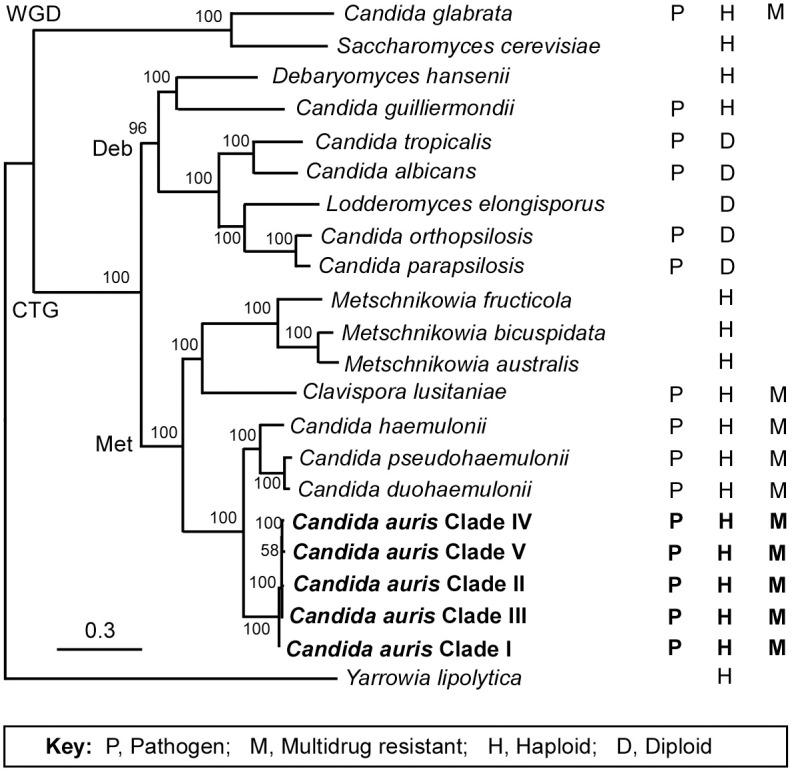
“auris belongs to the Metschnikowiaceae family within the Candida/Clavispora clade (Fig 3) [5,13,14].”
BackgroundThe Fungi: 1, 2, 3 … 5.1 million species?
Blackwell, M. (2011) · American Journal of Botany · doi:10.3732/ajb.1000298 · Cited by 1,324
Candida albicans Biofilms and Human Disease
Nobile, C. J., & Johnson, A. D. (2015) · Annual Review of Microbiology · doi:10.1146/annurev-micro-091014-104330 · Cited by 1,057 · cited 1×
“Biofilms are structured microbial communities that form on abiotic and biotic surfaces and are embedded in an extracellular matrix [64].”
BackgroundSelf-citationFirst hospital outbreak of the globally emerging Candida auris in a European hospital
Schelenz, S., Hagen, F., Rhodes, J. L., Abdolrasouli, A., Chowdhary, A., Hall, A., Ryan, L., Shackleton, J., Trimlett, R., Meis, J. F., et al. (2016) · Antimicrobial Resistance & Infection Control · doi:10.1186/s13756-016-0132-5 · Cited by 768
Cited by
Items 301–400 of 619
Alvarruiz, J., Gaitán, A. C. R., Cabañero-Navalón, M. D., Pemán, J., Blanes-Hernández, R., Tejido, S. D. C., & García-Bustos, V. (2025) · Journal of Fungi · doi:10.3390/jof11060406 · Cited by 6
Romero, O., & Geddes‐McAlister, J. (2025) · mBio · doi:10.1128/mbio.02303-24 · Cited by 6
Cosio, T., Pedretti, N., Spaggiari, L., Ruda, L. T., Kenno, S., Sabbatini, S., Pistoia, E. S., Comar, M., Monari, C., Ardizzoni, A., et al. (2025) · Journal of Fungi · doi:10.3390/jof11090625 · Cited by 7
Kalkancı, A., Erganiş, S., Şahin, E. A., Kılıç, E., Algın, S., Martlı, H. F., Yavuz, B., Dogan, A., Kırca, F., Uzuntaş, S. T., et al. (2025) · Annals of Clinical Microbiology and Antimicrobials · doi:10.1186/s12941-025-00821-8 · Cited by 7
The emerging pathogen Candida auris: host interactions and disease drivers
Sanya, D. R. A., Arevalo, A. V., Onésime, D., & Nobile, C. J. (2026) · Journal of Biomedical Science · doi:10.1186/s12929-026-01230-5 · Cited by 6
Self-citationCandida auris inpatient screening in collaboration with the public health department
Greco, C., Smith, H., Gilbert, B., Martin, J. R., Smyer, J., Haden, M., Liscynesky, C., Day, S. R., & Colburn, N. E. (2024) · American Journal of Infection Control · doi:10.1016/j.ajic.2024.05.010 · Cited by 5
Andrade-Pavón, D., Gómez‐García, O., & Villa‐Tanaca, L. (2024) · Journal of Fungi · doi:10.3390/jof10090629 · Cited by 10
Borgio, J. F., Alhujaily, R., Alfaraj, A. S., Alabdullah, M. J., Alaqeel, R. K., Kaabi, A., Alquwaie, R., Alhur, N. F., AlJindan, R. Y., Almofty, S. A., et al. (2024) · International Journal of Molecular Sciences · doi:10.3390/ijms251910408 · Cited by 7
Emergence of Candida auris in Vietnam: A case series
Pham, H. T., Truong, T. H., Su, M.-T. N., Van, A. H., Nguyen, H. H., & Tran, M. (2024) · SAGE Open Medical Case Reports · doi:10.1177/2050313x241297216 · Cited by 6
Valente, M. R., Alcântara, L. M., Cintra, D. S., Mendoza, S. R., Medeiros, E. G., Gomes, K. X., Honorato, L., Almeida, M. D. A., Vieira, C. B., Nosanchuk, J. D., et al. (2024) · Microbiology Spectrum · doi:10.1128/spectrum.01746-24 · Cited by 6
Barough, R. E., Abastabar, M., Moazeni, M., Javidnia, J., Valadan, R., Bandegani, A., Nosratabadi, M., Haghani, I., Spruijtenburg, B., Armstrong-James, D. P. H., et al. (2025) · Mycopathologia · doi:10.1007/s11046-025-00945-7 · Cited by 5
Development of a novel family of antifungal agents based on a quinone methide oxime framework
Janeczko, M., Masłyk, M., Demchuk, O. M., Kurowska-Okoń, A., Kwaśnik, M., Górka, K., Martyna, A., Josselin, B., Ruchaud, S., Bach, S., et al. (2025) · Scientific Reports · doi:10.1038/s41598-025-98609-5 · Cited by 6
Biocompatible narrow size nanohydrogels for drug delivery
Cemal, S. D., Kazimirsky, G., Shadkchan, Y., Eswaran, L., Abramovitch, R., Abudi, N., Cuestas, M. L., Osherov, N., & Byk, G. (2025) · Nanomedicine Nanotechnology Biology and Medicine · doi:10.1016/j.nano.2025.102824 · Cited by 5
HIV protease inhibitors restore amphotericin B activity against Candida
Elgammal, Y., Salama, E. A., & Seleem, M. N. (2025) · PLoS ONE · doi:10.1371/journal.pone.0324080 · Cited by 7
Arslan, E., Turan, D., Karaşahin, Ö., Çaydaşı, Ö., Olçar, Y., Tekin, M. D., Adıyeke, E., Karadağ, F. Y., & Öztürk-Engin, D. (2025) · Scandinavian Journal of Infectious Diseases · doi:10.1080/23744235.2025.2546482 · Cited by 11
First report of Candidozyma auris (Candida auris) in a cat: A case of persistent shedding
Grassi, A., Rigamonti, S., Danesi, P., Olivieri, E., Sgubin, S., & Prati, P. (2025) · Medical Mycology Case Reports · doi:10.1016/j.mmcr.2025.100729 · Cited by 5
Gaitán, A. C. R., & del Pozo, J. L. (2021) · Revista Iberoamericana de Micología · doi:10.1016/j.riam.2021.03.004 · Cited by 9
RESISTOR: A New OSPREY Module to Predict Resistance Mutations
Guerin, N., Kaserer, T., & Donald, B. R. (2022) · Journal of Computational Biology · doi:10.1089/cmb.2022.0254 · Cited by 6
Gómez-Casanova, N., Copa-Patiño, J. L., & Heredero‐Bermejo, I. (2023) · IntechOpen eBooks · doi:10.5772/intechopen.106892 · Cited by 6
Genomic landscape of the DHA1 family in Candida auris and mapping substrate repertoire of CauMdr1
Khatoon, R., Sharma, S., Vishwakarma, P., Saini, A., Aggarwal, P., Lynn, A. M., Prakash, A., Prasad, R., & Banerjee, A. (2022) · Applied Microbiology and Biotechnology · doi:10.1007/s00253-022-12189-2 · Cited by 6
Bastos, R. C., Alves, E. F., Neves, A. M., Vasconcelos, C. F. M., de Brito, É. H. S., & Fontenelle, R. O. D. S. (2023) · Research Society and Development · doi:10.33448/rsd-v12i4.41088 · Cited by 5
Wurster, S., Albert, N. D., & Kontoyiannis, D. P. (2022) · Methods in molecular biology · doi:10.1007/978-1-0716-2417-3_24 · Cited by 7
Li, C., Li, S., Zheng, Q., Li, T., Bing, J., Guan, Z., Hu, T., Chu, H., & Huang, G. (2025) · Science China Life Sciences · doi:10.1007/s11427-024-2902-9 · Cited by 4
Self-citationda Silva, A. R., Raposo, B. L., de Lima, G. S., Bueno-Janice, J. C., Sellera, F. P., Filho, P. E. C., Fontes, A. M., & Ribeiro, M. S. (2025) · BioNanoScience · doi:10.1007/s12668-025-01932-4 · Cited by 4
Candida auris infection at a pediatric burn center: Treatment and infection control measures
Özen, S., Gülhan, B., Demir, S., Uzuntaş, S. T., Yahşi, A., Yüksek, S. K., Erat, T., Güney, A. Y., Güder, L., Bayhan, G. İ., et al. (2025) · Northern Clinics of Istanbul · doi:10.14744/nci.2024.26429 · Cited by 7
Oworae, K. O., Rayens, E. A., Chapman, T., Wychrij, D. A., Buzzelli, L., Rabacal, W., & Norris, K. A. (2025) · Vaccines · doi:10.3390/vaccines13101033 · Cited by 5
Burn Infections and Sepsis: Challenges and Future Prospects of Antibacterial Therapy
Dadashizadeh, G., Elloso, M. S., & Jeschke, M. G. (2026) · Antibiotics · doi:10.3390/antibiotics15040383 · Cited by 4
Chandler, C. E., Hernandez, F. G., Totten, M., Robinett, N. G., Schatzman, S. S., Zhang, S. X., & Culotta, V. (2022) · ACS Infectious Diseases · doi:10.1021/acsinfecdis.1c00590 · Cited by 5
Head skin infection by Candida auris: A case report
Tang, J., Yang, K., Cui, Z., Guan, Y. J., & Li, Z. (2025) · Journal de Mycologie Médicale · doi:10.1016/j.mycmed.2025.101544 · Cited by 4
de Sousa, D. S. M., Monari, G. P. D. M., da Rosa, C. F., Meis, J. F. G. M., Pereira, A. F. M., Zapata, T. B., dos Santos, C. B. T., Aal, M. C. E., Delella, F. K., Bosco, S. M. G., et al. (2025) · Journal of Applied Microbiology · doi:10.1093/jambio/lxaf197 · Cited by 4
Krummenauer, M. E., Camargo, M. D. S., Gentz, C. D. B., Lopes, M. S., Luz, L. F., Trentin, D. D. S., Rodrigues, B. Á., Zimmer, K. R., de Andrade, S. F., & Vainstein, M. H. (2025) · Pathogens · doi:10.3390/pathogens14100999 · Cited by 6
Guo, P., Fang, J., Wang, R., Lin, W., Jiang, Y., Long, J., Chen, L., Huang, X., Liao, K., & Peng, Y. (2025) · Frontiers in Microbiology · doi:10.3389/fmicb.2025.1689176 · Cited by 6
Mattos, E. C., Gupta, K. D., Quintanilla, D., Hautau, H., Ibrahim, A. S., & Singh, S. (2026) · Frontiers in Immunology · doi:10.3389/fimmu.2025.1731315 · Cited by 4
Crystal structure of dihydrofolate reductase from the emerging pathogenic fungus Candida auris
Kirkman, T., Sketcher, A., Barroso, V. D. M., Ishida, K., Tosin, M., & Dias, M. V. B. (2023) · Acta Crystallographica Section D Structural Biology · doi:10.1107/s2059798323004709 · Cited by 4
Candida auris: lessons learnt from the first detected case in Aotearoa New Zealand
Roberts, S., Fox‐Lewis, S., Buckwell, L., McKinney, W. P., Tang, R., Upton, G., & Francis, B. (2023) · New Zealand Medical Journal · doi:10.26635/6965.6222 · Cited by 5
Pan, B., Weerasinghe, H., Sezmis, A. L., McDonald, M. J., Traven, A., Thompson, P. E., & Simm, C. (2023) · ACS Infectious Diseases · doi:10.1021/acsinfecdis.3c00199 · Cited by 5
Chen, T., Yao, J., Quan, K., Xu, J., Hang, X., Tong, Q., Liu, G., Luo, P., Zeng, L., Feng, G., et al. (2023) · Antimicrobial Agents and Chemotherapy · doi:10.1128/aac.01131-23 · Cited by 6
Potent anti-biofilm properties of plumbagin against fluconazole-resistant Candida auris
Jin, H.-W., & Eom, Y. (2024) · Journal of Traditional and Complementary Medicine · doi:10.1016/j.jtcme.2024.06.005 · Cited by 6
Gierke, A.-M., & Heßling, M. (2024) · Pathogens and Immunity · doi:10.20411/pai.v9i2.723 · Cited by 7
Characterization and Differentiation of Candida auris on Dixon’s Agar Using Raman Spectroscopy
Petrokilidou, C., Pavlou, E., Velegraki, A., Simou, A., Marsellou, I., Filis, G., Bassukas, I. D., Gaitanis, G., & Kourkoumelis, N. (2024) · Pathogens · doi:10.3390/pathogens13110978 · Cited by 4
Valdez, A. F., Bohner, F., Goldman, J. P., Jaquiery, A. B., do Amaral, E. V. C., Corrêa-Junior, D., Draganski, A. R., Nimrichter, L., Nosanchuk, J. D., & Zamith‐Miranda, D. (2025) · Microbiology Research · doi:10.3390/microbiolres16010015 · Cited by 4
Kamran, M., Aftab, M., Amir, A., Javed, F. T., Latif, A. Q., Saldera, K. A., Ahad, A., Jardan, Y. A. B., Walker, L. A., Nisa, K., et al. (2025) · Pharmaceuticals · doi:10.3390/ph18040506 · Cited by 8
Diagnostic and clinical management of Candida auris infections in immunocompromised patients
Posteraro, B., Cosio, T., Torelli, R., Carolis, E. D., Magrì, C., Posteraro, P., Angelis, G. D., & Sanguinetti, M. (2025) · Expert Review of Anti-infective Therapy · doi:10.1080/14787210.2025.2505567 · Cited by 8
Fungal pathogenesis: A new venom
Papon, N., Naglik, J. R., Hube, B., & Goldman, G. H. (2021) · Current Biology · doi:10.1016/j.cub.2021.03.015 · Cited by 4
Opportunistic Yeast Infections and Climate Change: The Emergence of Candida auris
León, M. G. F.-D., García-Salazar, E., Reyes-Montes, M. D. R., Duarte-Escalante, E., & Acosta‐Altamirano, G. (2022) · Fungal biology · doi:10.1007/978-3-030-89664-5_10 · Cited by 5
Feng, W., Yang, J., Ma, Y., Liu, Y., Yin, R., Qiao, Z., Ji, Y., & Zhou, Y. (2022) · Canadian Journal of Microbiology · doi:10.1139/cjm-2022-0139 · Cited by 4
Mathur, K., Singh, B., Puria, R., & Nain, V. (2024) · Archives of Microbiology · doi:10.1007/s00203-024-03969-7 · Cited by 4
Host–Candida auris interactions in the skin
Thangamani, S., Balakumar, A., Datta, A., Bryak, G., & Lionakis, M. S. (2026) · PLOS Pathogens · doi:10.1371/journal.ppat.1014075 · Cited by 3
A Bibliometric Review on Candida auris of the First Fifteen Years of Research (2009‐2023)
Villanueva‐Lozano, H., Trejo-Castro, A. I., Carrión-Álvarez, D., Lozano-Díaz, S. T., & Martínez‐Torteya, A. (2023) · BioMed Research International · doi:10.1155/2023/2385018 · Cited by 4
Akinosoglou, K., Skintzi, K., Chandroulis, I., Polyzou, E., Siapika, A., Fligkou, F., Paliogianni, F., Gogos, C. A., & Dimοpoulos, G. (2025) · Journal of Fungi · doi:10.3390/jof11060407 · Cited by 4
TBK1 phagosomal recruitment enhances antifungal immunity via positive feedback regulation with SRC
Feng, Y., Cheng, X., Yang, Y., Liu, C., Shi, Y., Qi, X., Zhao, W., Liu, B., Chen, T., & Gao, C. (2025) · Cell Reports · doi:10.1016/j.celrep.2025.115972 · Cited by 3
Masum, M. H. U., & Ferdous, J. (2025) · In Silico Research in Biomedicine · doi:10.1016/j.insi.2025.100034 · Cited by 3
Candida auris adhesins, specifically Als3, a key target to understand and mitigate
Lashine, Y., Hamdy, R., Dakalbab, S., Lazreg, I. K., Dhaheri, F. A. A., Chin, S. P., Hashim, N. M., & Soliman, S. S. M. (2025) · Mycologia · doi:10.1080/00275514.2025.2536345 · Cited by 3
Genetic and environmental control of parasexual reproduction in the pathogenic Candida species
Cao, C., Li, T., Hu, T., Chu, H., Perry, A. M., Nobile, C. J., & Huang, G. (2025) · Microbiology and Molecular Biology Reviews · doi:10.1128/mmbr.00002-25 · Cited by 3
Self-citationChanges in nomenclature, virulence factors, and antifungal resistance of the genus Candida
Fernandes, M. A. A., de Aguiar, F. L. L., Coutinho, M. G. S., de Brito, É. H. S., Coelho, C. G. V., & Fontenelle, R. O. D. S. (2025) · Frontiers in Fungal Biology · doi:10.3389/ffunb.2025.1677892 · Cited by 16
Stergiou, K. I., Skourtsidis, K., Kiosis, G., Ioannou, D., Tseriotis, V., Fouskas, V., Karachrysafi, S., Iosifidis, Ε., Roilides, E., Papamitsou, T., et al. (2026) · Microorganisms · doi:10.3390/microorganisms14010228 · Cited by 5
Microbe Profile: Candidozyma auris: an emergent and resilient yeast and new antifungal strategies
Ramage, G., Sherry, L., & Kean, R. (2026) · Microbiology · doi:10.1099/mic.0.001664 · Cited by 3
Antifungal activity of the antimicrobial peptide RP557 against priority fungal pathogens
Poester, V. R., Xavier, M. O., Hidalgo, J. E. D., dos Santos, M. C., Trápaga, M. R., Al‐Hatmi, A. M. S., Jaynes, J. M., & Stevens, D. A. (2026) · Microbiology · doi:10.1099/mic.0.001663 · Cited by 3
Vaccaro, A., Cooper, J. F., Rodríguez, A. V., Badali, H., Kean, R., Ramage, G., & Lopez-Ribot, J. L. (2026) · Journal of Fungi · doi:10.3390/jof12040247 · Cited by 4
Thatchanamoorthy, N., Velayuthan, R. D., Raju, C. S., Bhassu, S., Karajacob, A. S., Ponnampalavanar, S. S. L., Rao, M., & Tay, S. T. (2026) · Mycopathologia · doi:10.1007/s11046-026-01059-4 · Cited by 3
Detection and Control of Candida auris in Healthcare Settings
Kwon, Y. J., & Shin, J. H. (2022) · Korean Journal of Healthcare-Associated Infection Control and Prevention · doi:10.14192/kjicp.2022.27.1.4 · Cited by 3
Evaluation of the Synthetic Multifunctional Peptide Hp-MAP3 Derivative of Temporin-PTa
Silva, P. S. E., Guindo, A. S., Cardoso, P. H. D. O., de Moraes, L. F. R. N., Boleti, A. P. D. A., Ferreira, M. A., de Oliveira, C. F. R., Macedo, M. L. R., Rossato, L. L., Simionatto, S., et al. (2023) · Toxins · doi:10.3390/toxins15010042 · Cited by 3
Fakhim, H., Vaezi, A., Morovati, H., Bandegani, A., Abbasi, K., Emami, S., Nasiry, D., Hashemi, S. M., Ahangarkani, F., & Badali, H. (2023) · Journal de Mycologie Médicale · doi:10.1016/j.mycmed.2023.101437 · Cited by 3
Report of the First Case of Candida auris Identified in Jordan
Wadi, J., Ghanem, R. A., Sayyouh, O., Al-Jammal, D., Said, M. M., Nasrat, S., El-Shokry, M., Gazo, M., & Osman, T. S. (2023) · Microbiology Research · doi:10.3390/microbiolres14040107 · Cited by 4
Streptomyces: a natural source of anti-Candida agents
Martins, N. D. R. C., da Silva, A. R., Ratcliffe, N. A., Evangelho, V. G. O., Castro, H. C., & Quinn, G. A. (2023) · Journal of Medical Microbiology · doi:10.1099/jmm.0.001777 · Cited by 6
Environmental and Social Determinants Related to Candidiasis
Morales-Ramírez, K. D. C., Ávila-Sosa, R., Cid-Pérez, T. S., Avelino-Flores, F., Duarte-Escalante, E., & Munguía-Pérez, R. (2024) · IntechOpen eBooks · doi:10.5772/intechopen.1004600 · Cited by 7
Recurrent Fungemia Due to Candida auris
Griffith, E. M., Marsalisi, C., Verdecia, J., Buchanan, S. R., & Goulart, M. A. (2024) · Cureus · doi:10.7759/cureus.62478 · Cited by 3
Reedy, J. M., Fernando, T., Awuor, S. O., Omwenga, E. O., Koutchma, T., & Mariita, R. M. (2024) · Hygiene · doi:10.3390/hygiene4030030 · Cited by 4
Minimal domain peptides derived from enterocins exhibit potent antifungal activity
Cohen, D. G., Heidenreich, T. M., Schorey, J. W., Ross, J. N., Hammers, D. E., Vu, H. M., Moran, T. E., Winski, C. J., Stuckey, P. V., Ross, R. L., et al. (2024) · Frontiers in Fungal Biology · doi:10.3389/ffunb.2024.1506315 · Cited by 3
Ahlawat, V., Sura, K., Dangi, M., & Chhillar, A. K. (2025) · Journal of Genetic Engineering and Biotechnology · doi:10.1016/j.jgeb.2025.100474 · Cited by 5
Risk Factors for Candidozyma auris Among Admitted Patients in Riyadh, Saudi Arabia (2020–2022)
Alshahrani, F. S., Elgujja, A. A., Alsubaie, S., Ezreqat, S., Albarrag, A., Barry, M. A., Binkhamis, K. M., Alabdan, L. I., Bugshan, H. S., Ledesma, D. R., et al. (2025) · Infection and Drug Resistance · doi:10.2147/idr.s528127 · Cited by 5
Asadzadeh, M., Ahmad, S., Meis, J. F. G. M., Parker, J. E., & Alfouzan, W. A. (2025) · Journal of Fungi · doi:10.3390/jof11080570 · Cited by 4
Kumaran, S. U., & Rajagopal, L. (2022) · Mathematical Methods in the Applied Sciences · doi:10.1002/mma.8212 · Cited by 5
Romero, M., Chitiva, L. C., Bravo-Chaucanés, C. P., Hernández, A. X., Parra‐Giraldo, C. M., & Costa, G. M. (2023) · Universitas Scientiarum · doi:10.11144/javeriana.sc282.besv · Cited by 3
N-unsubstituted Imidazoles: Design, Synthesis, and Antimicrobial Evaluation
Davood, A., nassimi, Y. E., Sardari, S., & Farahani, Y. F. (2023) · Current Pharmaceutical Design · doi:10.2174/1381612829666230807120704 · Cited by 4
The Potential of Dutasteride for Treating Multidrug-Resistant Candida auris Infection
Borgio, J. F., Almandil, N. B., Selvaraj, P., Sherlin John, J., Alquwaie, R., Alhasani, E. S., Alhur, N. F., Aldahhan, R., AlJindan, R. Y., Almohazey, D., et al. (2024) · Pharmaceutics · doi:10.3390/pharmaceutics16060810 · Cited by 3
Subhi, A. F., Alshamsi, S. O., Vitus, A., & Harazeen, A. (2024) · Cureus · doi:10.7759/cureus.69988 · Cited by 9
Pichowicz, A., Torres, S. R., Torres-Velez, F. J., Longyear, A. D., Singh, N., Lasek‐Nesselquist, E., & Jesus, M. D. (2022) · Microorganisms · doi:10.3390/microorganisms10020330 · Cited by 3
Candida auris as a pathogen that can cause emerging infectious disease: a literature review
Arthisari, N. N. N., Budayanti, N. N. S., & Tarini, N. M. A. (2023) · Intisari Sains Medis · doi:10.15562/ism.v14i1.1679 · Cited by 5
Pérez‐Lazo, G., Sandoval‐Ahumada, R., Soto‐Febres, F., Ballena-López, J. C., Morales-Castillo, L., Trujillo‐Gregorio, L., Garay‐Quintana, R., & Arenas-Ramírez, B. (2024) · Mycoses · doi:10.1111/myc.13765 · Cited by 2
Fandilolu, P. M., Kumar, C., Palia, D., & Idicula‐Thomas, S. (2024) · Archives of Microbiology · doi:10.1007/s00203-024-04159-1 · Cited by 3
Kashiwaba, A., Mitani, A., Sonoda, T., Shigemune, N., & Takahashi, H. (2025) · Journal of Microbiological Methods · doi:10.1016/j.mimet.2025.107184 · Cited by 2
Scheffersomyces spartinae Fungemia among Pediatric Patients, Pakistan, 2020–2024
Jabeen, K., Farooqi, J. Q., Simons, L. M., Hultquist, J. F., Lorenzo-Redondo, R., Evans, C. T., Hartmann, E. M., Hanif, M., Hasan, Z., Mahmood, S. F., et al. (2025) · Emerging infectious diseases · doi:10.3201/eid3108.241604 · Cited by 2
Kamil, W. N. W. A., Mokhtar, M., Baharom, M. B., Bandara, N., Alrashdan, M. S., Cirillo, N., & Arzmi, M. H. (2025) · Journal of Oral Pathology and Medicine · doi:10.1111/jop.70043 · Cited by 2
Bae, J.-H., & Eom, Y. (2025) · Frontiers in Cellular and Infection Microbiology · doi:10.3389/fcimb.2025.1631780 · Cited by 2
Zainal, M., Sarmin, N. ‘. M., Ibrahim, M. J., Cirillo, N., Dashper, S. G., & Arzmi, M. H. (2025) · Archives of Oral Biology · doi:10.1016/j.archoralbio.2025.106478 · Cited by 2
Biocide Response of Candida auris
Erganiş, S., Öztürk, A., Şahin, E. A., & KALKANCI, A. (2026) · Mycoses · doi:10.1111/myc.70169 · Cited by 2
Dimopoulou, G., Papadoulakis, M., Premetis, I., Papachristou, K., & Magira, E. E. (2026) · Journal of Fungi · doi:10.3390/jof12090629 · Cited by 2
Pancholi, V. (2021) · International Archives of Medical Microbiology · doi:10.23937/2643-4008/1710014 · Cited by 3
Candida auris Infection in a Meningococcal Septicemia Survivor, Poland
Prażyńska, M. B., Zalas‐Więcek, P., Bogiel, T., Włodarczyk, Z., Deptuła, A., Woźniak, M., & Gospodarek-Komkowska, E. (2022) · Mycopathologia · doi:10.1007/s11046-022-00697-8 · Cited by 4
A case of fungal otitis externa caused by coinfection of Candida auris and Aspergillus flavus
Ito, Y., Inoue, N., Kaneko, N., Otsuka, M., Shintaro, Y., & Yoshikawa, M. (2023) · Journal of Infection and Chemotherapy · doi:10.1016/j.jiac.2023.04.014 · Cited by 3
Infection Control and Prevention for Hospital Staff
Connor, A. (2023) · Journal of Community Medicine & Public Health · doi:10.29011/2577-2228.100335 · Cited by 3
Candida auris: Emerging fungal pathogen in the US
Borton, D. (2023) · Nursing · doi:10.1097/01.nurse.0000995556.96229.86 · Cited by 2
Barbosa, P. F., Gonçalves, D. D. S., Ramos, L. S., de Mello, T. P., Braga-Silva, L. A., Pinto, M. R., Taborda, C. P., Branquinha, M. H., & dos Santos, A. L. S. (2024) · Infectious Disease Reports · doi:10.3390/idr16040043 · Cited by 2
Yue, H., Xu, X., Peng, B., Wang, X., Zhang, S., Tian, J., Wang, S., Song, M., & Liu, Q. (2024) · Infection and Drug Resistance · doi:10.2147/idr.s467418 · Cited by 2
Queiroz, H. A., da Silva, L. J., Barroso, F. D. D., Sá, L. G. D. A. V., Neto, J. B. D. A., da Costa, É. R. M., de Oliveira, L. C., Barbosa, A. D., Cabral, V. P. D. F., Rodrigues, D. S., et al. (2024) · Future Microbiology · doi:10.1080/17460913.2024.2390286 · Cited by 2
Langourani-Kosteletou, P., Kamariotis, S., Palavos, I., Georgousi, K. K., Vrioni, G., & Chatzikomninos, I. (2024) · Discover Medicine · doi:10.1007/s44337-024-00081-z · Cited by 2
Zheng, Q., Bing, J., Han, S., Guan, S., Hu, T., Cai, L., Chu, H., & Huang, G. (2024) · New Microbes and New Infections · doi:10.1016/j.nmni.2024.101506 · Cited by 3
Self-citationCoutinho, T. D. N. P., Rodrigues, F. A. M., de Assis, D. A., Rebouças, L. M., Ferreira, T. L., Cabral, V. P. D. F., Rodrigues, D. S., Sá, L. G. D. A. V., Lopes, F. F. D. S., do Nascimento, G. A., et al. (2025) · International Journal of Biological Macromolecules · doi:10.1016/j.ijbiomac.2025.139788 · Cited by 2
Clinical Outcomes Amongst Patients Infected With Candida Auris: A Single‐Center Study
AlJabi, S., El-Lababidi, R. M., Abidi, E., Afif, C., & Nekidy, W. S. E. (2025) · Mycoses · doi:10.1111/myc.70054 · Cited by 2
Metadata
- Authors
- Du, H., Bing, J., Hu, T., Ennis, C. L., Nobile, C. J., & Huang, G.
- Affiliations
- Fudan University (CN)
- University of California, Merced (US)
- Corresponding author
- Huang, Guanghua
- Venue
- PLOS Pathogens
- Publisher
- Public Library of Science (PLoS)
- Published
- 2020-10-22
- Volume
- 16
- Issue
- 10
- Pages
- e1008921
- ISSN
- 1553-7366 (ISSN-L)
- 1553-7374
- PMC
- PMC7581363
- OpenAlex
- W3093683101
- Cited by
- 609
- References
- 86
- Citations by year
- 2026: 76 · 2025: 105 · 2024: 110 · 2023: 139 · 2022: 126 · 2021: 53
- FWCI
- 3.77
- Type
- journal article
- Language
- en
- Open access
- gold
- doi.org
- Licence
- Locations
- PLoS Pathogens (publishedVersion, cc-by)
- PubMed Central (publishedVersion, cc-by)
- PubMed (publishedVersion)
- eScholarship (California Digital Library) (submittedVersion, cc-by)
- DOAJ (DOAJ: Directory of Open Access Journals) (submittedVersion, cc-by-sa)
- eScholarship (California Digital Library) (submittedVersion)
- Funders
- Natural Science Foundation of Shanghai (19ZR1405100)
- National Natural Science Foundation of China (31625002, 31930005)
- National Institutes of Health
- National Institute of General Medical Sciences (R35GM124594)
- National Institute of Allergy and Infectious Diseases (R21AI125801)
- National Institute of Dental and Craniofacial Research (F31DE028488)
- Topics
- Health Sciences › Medicine › Infectious Diseases › Antifungal resistance and susceptibility
- Life Sciences › Immunology and Microbiology › Microbiology › Yeasts and Rust Fungi Studies
- Health Sciences › Medicine › Infectious Diseases › Fungal Infections and Studies
- Keywords
- Candida auris, multidrug resistance, antifungal resistance, virulence factors, fungal pathogenesis, Candida haemulonii, Candida lusitaniae, Candida albicans, Candida tropicalis, hospital outbreak, fungal epidemiology, environmental survival, fungal identification, emerging fungal pathogens
- MeSH terms
- Antifungal Agents, Candida, Candidiasis, Saccharomycetales, Humans, Virulence, Drug Resistance, Fungal
About these checks
Registry, retraction, Cites and statistics results are computed, not judged, with one exception: a printed reference that no index lists is read once by a model before it counts as a citation error. Claims are extracted by a model and kept only when their quote appears verbatim in the text; each cited source is then checked, with a model’s help, for whether it says what the claim relies on. Those verdicts can be wrong — read the claim’s quote and the cited source before relying on one.
Statistics and arithmetic are recomputed, not judged.
Confidence bands are shown only for fields calibrated on our annotated test set. None is calibrated yet, so no band is shown.
What counts as a claim ›How we measure confidence ›How we check this ›
Are you an author, or do you see a problem with this page? Request a review
Data sources
Bibliographic data: Semantic Scholar, OpenAlex, Crossref.
Contains information from the Semantic Scholar Academic Graph Datasets, made available under the ODC Attribution License (ODC-BY 1.0).
Semantic Scholar’s data is described in: Kinney, R., et al. (2023). The Semantic Scholar Open Data Platform. arXiv:2301.10140.
