

The DOI matches its Crossref record; 24 of the 25 references it cites were found in a registry or an index.
Gut inflammation and dysbiosis in human motor neuron disease
Open accessAbstract
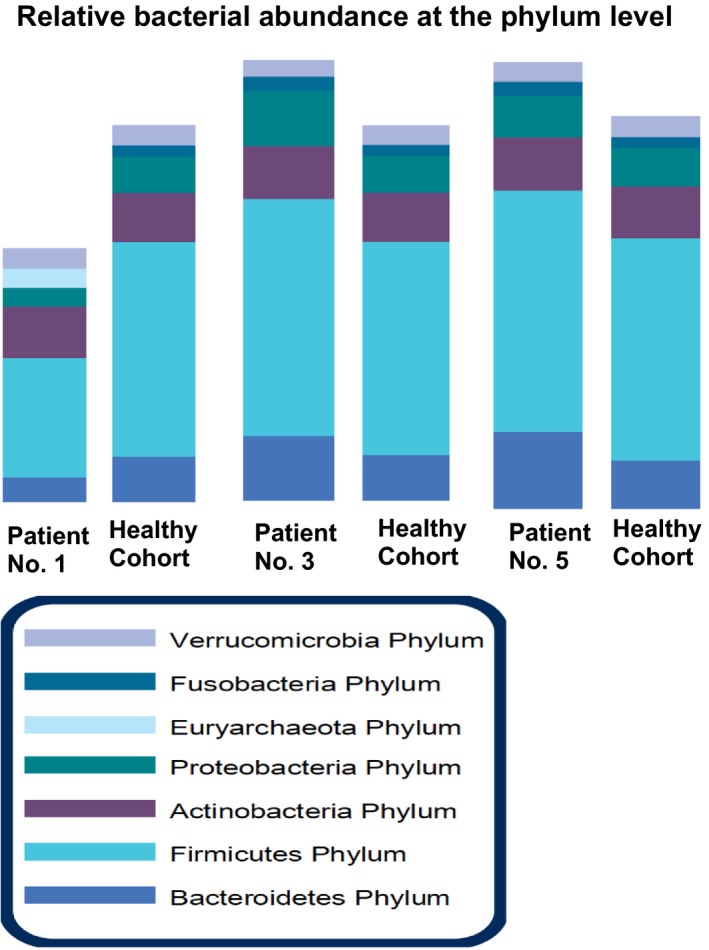
Amyotrophic lateral sclerosis (ALS) is a systemic disorder that involves dysfunction of multiple organs. Growing evidence has shown that neurodegenerative disorders with gut dysbiosis affect the central nervous system via pro-inflammatory mediators thus impacting gut-brain communications. We have demonstrated dysbiosis and increased intestinal permeability in the SOD1G93A ALS mouse model. In this study, we comprehensively examined the human gut microbiome in stool samples and evaluated infection and markers of intestinal inflammation in five patients with ALS and motor neuron disorders. Five patients we studied all had alteration in their gut microbiome characterized by a low diversity of the microbiome, compared to healthy cohorts with relatively intact abundance. Firmicutes and Bacteroidetes are the two major members of bacteria at the phylum level. Low Ruminococcus spp. occurred in three patients with low Firmicutes/Bacteroidetes (F/B) ratio. A majority of patients had signs of intestinal inflammation. This is the first comprehensive examination of inflammatory markers in the stool of ALS patients. Studies in gut health and microbiome related to the onset and progression of ALS may reveal novel therapeutic targets for disease modulation.
Overview
The claims and statistics of this paper haven’t been checked yet.
Run the check — free, no account needed. It reads the open-access text and checks the sources it cites.
Integrity signals
Registry
Cites
Statistics
Figures
Verification
Claims the paper makes
The claims and statistics of this paper haven’t been checked yet.
Run the check — free, no account needed. It reads the open-access text and checks the sources it cites.
Claims other papers make about this one
Each is checked against this paper’s own text: does it say what the citing paper says it does?
In the citing paper
“Studies have found that, in ALS patients, gastrointestinal symptoms precede neurological symptoms in all cases (33); these include gastroesophageal reflux, chronic constipation, intermittent diarrhea, bloating, and abdominal pain.”
From Modulation of the gut–brain axis via the gut microbiota: a new era in treatment of amyotrophic lateral sclerosis (2023) · cites this paper as [33]
In the citing paper
“Blood endotoxin levels are elevated in ALS patients [10], possibly as a result of gut inflammation and microbiome changes [102].”
From The endotoxin hypothesis of neurodegeneration (2019) · cites this paper as [102]
Self-check
Percentages, sums and reported differences re-computed from the paper’s own numbers.
The self-check needs the paper’s full text.
Citations
Cites
1 retracted
Kouchaki, E., Tamtaji, O. R., Salami, M., Bahmani, F., Daneshvar Kakhaki, R., Akbari, E., Tajabadi-Ebrahimi, M., Jafari, P., & Asemi, Z. (2017) · Clinical Nutrition · doi:10.1016/j.clnu.2016.08.015 · Cited by 317 · cited 1×
“Probiotic supplements have been demonstrated their protective roles in anti-inflammation and restoring microbiome in various human diseases, including autoimmune diseases (de Oliveira et al. 2017) and multiple sclerosis (Kouchaki et al. 2017).”
BackgroundRetractedGut microbiota regulate motor deficits and neuroinflammation in a model of Parkinson's disease
Sampson, T. R., Debelius, J. W., Thron, T., Janssen, S., Shastri, G. G., Ilhan, Z. E., Challis, C., Schretter, C. E., Rocha, S., Gradinaru, V., et al. (2016) · Cell · doi:10.1016/j.cell.2016.11.018 · Cited by 3,622 · cited 5×
“The complex interplay of gastrointestinal - central nervous system (CNS) communication involves autonomic and enteric nervous systems, neuroendocrine, and immune systems (Forsyth et al. 2011; Hsiao et al. 2013; Sampson et al. 2016).”
BackgroundMethodInfluentialHsiao, E. Y., McBride, S. W., Hsien, S., Sharon, G., Hyde, E. R., McCue, T., Codelli, J. A., Chow, J., Reisman, S. E., Petrosino, J. F., et al. (2013) · Cell · doi:10.1016/j.cell.2013.11.024 · Cited by 3,283 · cited 2×
“The complex interplay of gastrointestinal - central nervous system (CNS) communication involves autonomic and enteric nervous systems, neuroendocrine, and immune systems (Forsyth et al. 2011; Hsiao et al. 2013; Sampson et al. 2016).”
BackgroundForsyth, C. B., Shannon, K. M., Kordower, J. H., Voigt, R. M., Shaikh, M., Jaglin, J. A., Estes, J. D., Dodiya, H. B., & Keshavarzian, A. (2011) · PLoS ONE · doi:10.1371/journal.pone.0028032 · Cited by 974 · cited 2×
“The complex interplay of gastrointestinal - central nervous system (CNS) communication involves autonomic and enteric nervous systems, neuroendocrine, and immune systems (Forsyth et al. 2011; Hsiao et al. 2013; Sampson et al. 2016).”
BackgroundDysbiosis in inflammatory bowel disease
Tamboli, C. P., Neut, C., Desreumaux, P., & Colombel, J. F. (2004) · Gut · doi:10.1136/gut.53.1.1 · Cited by 743
Miller, R. G., Jackson, C. E., Kasarskis, E. J., England, J. D., Forshew, D. A., Johnston, W. S. W., Kalra, S., Katz, J., Mitsumoto, H., Rosenfeld, J., et al. (2009) · Neurology · doi:10.1212/wnl.0b013e3181bc01a4 · Cited by 677 · cited 1×
“The ALS death is due to respiratory failure, typically occurring two to 5 years from diagnosis (Forshew and Bromberg 2003; Miller et al. 2009). ª 2017 The Authors.”
BackgroundGut Microbiota Diversity and Human Diseases: Should We Reintroduce Key Predators in Our Ecosystem?
Mosca, A., Leclerc, M., & Hugot, J. P. (2016) · Frontiers in Microbiology · doi:10.3389/fmicb.2016.00455 · Cited by 612 · cited 2×
“Dysbiosis (e.g., loss of microbial diversity in the gut microbiota) are correlated with intestinal inflammation and change in intestinal integrity (Sun and Chang 2014; Mosca et al. 2016).”
BackgroundIntestinal epithelial vitamin D receptor deletion leads to defective autophagy in colitis
Wu, S., Zhang, Y., Lu, R., Xia, Y., Zhou, D., Petrof, E. O., Claud, E. C., Chen, D., Chang, E. B., Carmeliet, G., et al. (2014) · Gut · doi:10.1136/gutjnl-2014-307436 · Cited by 353 · cited 4×
“We have demonstrated increased serum IL-17 in the SOD1G93A ALS mice, compared to the wild-type mice (Wu et al. 2015a).”
BackgroundInfluentialSelf-citationA role for the gut microbiota in IBS
Collins, S. M. (2014) · Nature Reviews Gastroenterology & Hepatology · doi:10.1038/nrgastro.2014.40 · Cited by 351 · cited 5×
“Changes in the ratio of F/B ratio correlate with various human gut disorders, like irritable bowel syndrome (Collins 2014) and inflammatory bowel diseases (Tamboli et al. 2004) and with certain central nervous system disorders like Parkinson’s disease (Sampson et al. 2016).”
BackgroundMethodInfluentialIntestinal dysbiosis and probiotic applications in autoimmune diseases
de Oliveira, G. L. V., Leite, A. Z., Higuchi, B. S., Gonzaga, M. I., & Mariano, V. S. (2017) · Immunology · doi:10.1111/imm.12765 · Cited by 324 · cited 1×
“Probiotic supplements have been demonstrated their protective roles in anti-inflammation and restoring microbiome in various human diseases, including autoimmune diseases (de Oliveira et al. 2017) and multiple sclerosis (Kouchaki et al. 2017).”
Background
Research works printed but not linked: 1
- Sun, 2015, Does the gut drive ALS progression?, Future Medicine., 5, 375
Cited by
Sorted by citations
Leaky gut: mechanisms, measurement and clinical implications in humans
Camilleri, M. (2019) · Gut · doi:10.1136/gutjnl-2019-318427 · Cited by 1,081
The blood-brain barrier in aging and neurodegeneration
Knox, E. G., Aburto, M. R., Clarke, G., Cryan, J. F., & O’Driscoll, C. M. (2022) · Molecular Psychiatry · doi:10.1038/s41380-022-01511-z · Cited by 738
Microbiome–microglia connections via the gut–brain axis
Abdel-Haq, R., Schlachetzki, J. C. M., Glass, C. K., & Mazmanian, S. K. (2019) · Journal of Experimental Medicine · doi:10.1084/jem.20180794 · Cited by 471
The endotoxin hypothesis of neurodegeneration
Brown, G. C. (2019) · Journal of Neuroinflammation · doi:10.1186/s12974-019-1564-7 · Cited by 457
Fecal Microbiota Transplantation in Neurological Disorders
Vendrik, K. E. W., Ooijevaar, R. E., de Jong, P. R. C., Laman, J. D., van Oosten, B. W., van Hilten, J. J., Ducarmon, Q. R., Keller, J. J., Kuijper, E. J., & Contarino, M. F. (2020) · Frontiers in Cellular and Infection Microbiology · doi:10.3389/fcimb.2020.00098 · Cited by 413
“…(Strati et al., 2016), epilepsy (Xie et al., 2017; Peng et al., 2018; Lindefeldt et al., 2019), amyotrophic lateral sclerosis (Fang et al., 2016; Rowin et al., 2017; Mazzini et al., 2018), cerebral infarction (Karlsson et al., 2012; Yin et al., 2015), spinal cord injury (Gungor et al., 2016),…”
BackgroundMicroglia, Lifestyle Stress, and Neurodegeneration
Madore, C., Yin, Z., Leibowitz, J. A., & Butovsky, O. (2020) · Immunity · doi:10.1016/j.immuni.2019.12.003 · Cited by 313
“In a small pilot study, the gut microbiome of 5 human ALS patients was examined, and all displayed altered gut microbiome characterized by low diversity with relatively intact abundance (Rowin et al., 2017).”
BackgroundChanges of colonic bacterial composition in Parkinson's disease and other neurodegenerative diseases
Gerhardt, S., & Mohajeri, M. H. (2018) · Nutrients · doi:10.3390/nu10060708 · Cited by 298
Unhealthy gut, unhealthy brain: The role of the intestinal microbiota in neurodegenerative diseases
Spielman, L. J., Gibson, D. L., & Klegeris, A. (2018) · Neurochemistry International · doi:10.1016/j.neuint.2018.08.005 · Cited by 266
“A recent clinical study examining stool from a small group of patients found that gastrointestinal symptoms preceded neurological symptoms in ALS patients, and also demonstrated that all ALS patients display a decreased diversity in their intestinal microbiome, compared to healthy controls (Rowin et al., 2017).”
Chidambaram, S. B., Essa, M. M., Rathipriya, A. G., Bishir, M., Ray, B., Mahalakshmi, A. M., Tousif, A. H., Sakharkar, M. K., Kashyap, R. S., Friedland, R. P., et al. (2022) · Pharmacology & Therapeutics · doi:10.1016/j.pharmthera.2021.107988 · Cited by 204
Wasser, C. I., Mercieca, E.-C., Kong, G., Hannan, A. J., McKeown, S. J., Glikmann-Johnston, Y., & Stout, J. C. (2020) · Brain Communications · doi:10.1093/braincomms/fcaa110 · Cited by 198
“Consistent with our current findings in Huntington’s disease of lower alpha diversity and beta diversity differences, indicating less than normal richness, evenness and altered microbial gut composition, others have reported similar observations in neurodegenerative conditions such as Parkinson’s disease, Alzheimer’s…”
ResultThe effects of dairy and dairy derivatives on the gut microbiota: a systematic literature review
Aslam, H., Marx, W., Rocks, T., Loughman, A., Chandrasekaran, V., Ruusunen, A., Dawson, S. L., West, M., Mullarkey, E., Pasco, J. A., et al. (2020) · Gut Microbes · doi:10.1080/19490976.2020.1799533 · Cited by 170
Traumatic Brain Injury in Mice Induces Acute Bacterial Dysbiosis Within the Fecal Microbiome
Treangen, T. J., Wagner, J., Burns, M. P., & Villapol, S. (2018) · Frontiers in Immunology · doi:10.3389/fimmu.2018.02757 · Cited by 164
“A decrease of Ruminococcus spp was previously documented in amyotrophic lateral sclerosis patients with signs of intestinal inflammation (34).”
BackgroundSeaweed Components as Potential Modulators of the Gut Microbiota
Shannon, E., Conlon, M. A., & Hayes, M. (2021) · Marine Drugs · doi:10.3390/md19070358 · Cited by 171
A prospective longitudinal study on the microbiota composition in amyotrophic lateral sclerosis
Di Gioia, D., Bozzi Cionci, N., Baffoni, L., Amoruso, A., Pane, M., Mogna, L., Gaggìa, F., Lucenti, M. A., Bersano, E., Cantello, R., et al. (2020) · BMC Medicine · doi:10.1186/s12916-020-01607-9 · Cited by 151
“A correlation between ALS and an altered gut microbiota composition has previously been reported in animal models [10, 11], while only few preliminary studies have analyzed the composition of the fecal microbiota in ALS patients, with no conclusive results [12, 13].”
BackgroundResultThe gut microbiome: a key player in the complexity of amyotrophic lateral sclerosis (ALS)
Boddy, S. L., Giovannelli, I., Sassani, M., Cooper-Knock, J., Snyder, M. P., Segal, E., Elinav, E., Barker, L. A., Shaw, P. J., & McDermott, C. J. (2021) · BMC Medicine · doi:10.1186/s12916-020-01885-3 · Cited by 127
“Nonetheless, those studies detected evidence of dysbiosis in ALS, although they utilised small cohorts (6, 5 and 8 ALS patients, respectively) and one [30] was confined to a specific subgroup of patients with gastrointestinal symptoms.”
BackgroundRomo‐Vaquero, M., Cortés‐Martín, A., Loria‐Kohen, V., de Molina, A. R., García‐Mantrana, I., Collado, M. C., Espín, J. C., & Selma, M. V. (2018) · Molecular Nutrition & Food Research · doi:10.1002/mnfr.201800958 · Cited by 141
Breast and gut microbiome in health and cancer
Zhang, J., Xia, Y., & Sun, J. (2020) · Genes & Diseases · doi:10.1016/j.gendis.2020.08.002 · Cited by 130
Self-citationBéland, L.-C., Markovinovic, A., Jakovac, H., De Marchi, F., Bilic, E., Mazzini, L., Kriz, J., & Munitic, I. (2020) · Brain Communications · doi:10.1093/braincomms/fcaa124 · Cited by 125
The human gut microbiota in people with amyotrophic lateral sclerosis
Nicholson, K., Bjornevik, K., Abu-Ali, G., Chan, J., Cortese, M., Dedi, B., Jeon, M., Xavier, R., Huttenhower, C., Ascherio, A., et al. (2021) · Amyotrophic Lateral Sclerosis and Frontotemporal Degeneration · doi:10.1080/21678421.2020.1828475 · Cited by 123
Praveenraj, S. S., Sonali, S., Anand, N., Hediyal, T. A., Vichitra, C., Kalyan, M., Kanna, P. V., Chandana, K. A., Paneyala, S., Mahalakshmi, A. M., et al. (2022) · Molecular Neurobiology · doi:10.1007/s12035-022-02990-5 · Cited by 116
“The presence of gut dysbiosis in ALS patients supports the hypothesis of formaldehyde formation [126], which was confirmed experimentally [128, 129].”
BackgroundParodi, B., & de Rosbo, N. K. (2021) · Frontiers in Immunology · doi:10.3389/fimmu.2021.718220 · Cited by 114
The microbiota–microglia axis in central nervous system disorders
Mossad, O., & Erny, D. (2020) · Brain Pathology · doi:10.1111/bpa.12908 · Cited by 98
“showed a lower abundance, with a shift in the Firmicutes/ Bacteroidetes (F/B) ratio toward higher abundance of Bacteroidetes compared to the healthy controls (105).”
BackgroundFigueroa-Romero, C., Guo, K., Murdock, B. J., Paez-Colasante, X., Bassis, C. M., Mikhail, K. A., Raue, K. D., Evans, M. C., Taubman, G. F., McDermott, A. J., et al. (2019) · Disease Models & Mechanisms · doi:10.1242/dmm.041947 · Cited by 94
“In contrast to our findings of lowered levels of Bacteriodes vulgatus , Rowin et al. identified increased levels of Bacteroides vulgatus in stool samples from two ALS patients (Rowin et al., 2017).”
InfluentialHarnessing machine learning for development of microbiome therapeutics
McCoubrey, L. E., Elbadawi, M., Orlu, M., Gaisford, S., & Basit, A. W. (2021) · Gut Microbes · doi:10.1080/19490976.2021.1872323 · Cited by 97
“59 Etiological factors are believed to be increased intestinal permeability and inflammation, decreased short-chain fatty acid (SCFA) production, and increased levels of lipoprotein lipase.”
BackgroundThe Microbiota–Gut–Brain Axis and Neurological Disorders: A Comprehensive Review
Nakhal, M. M., Yassin, L. K., Alyaqoubi, R., Saeed, S., Alderei, A., Alhammadi, A., Alshehhi, M., Almehairbi, A., Houqani, S. A., BaniYas, S., et al. (2024) · Life · doi:10.3390/life14101234 · Cited by 136
Moțățăianu, A., Şerban, G. M., & Andone, S. R. (2023) · International Journal of Molecular Sciences · doi:10.3390/ijms242015094 · Cited by 94
Tilocca, B., Pieroni, L., Soggiù, A., Britti, D., Bonizzi, L., Roncada, P., & Greco, V. (2020) · International Journal of Molecular Sciences · doi:10.3390/ijms21114045 · Cited by 86
“The authors therefore assumed that gut-mediated inflammation is likely to be involved in ALS onset or progression [38].”
BackgroundMandrioli, J., Amedei, A., Cammarota, G., Niccolai, E., Zucchi, E., D’Amico, R., Ricci, F., Quaranta, G., Spanu, T., & Masucci, L. (2019) · Frontiers in Neurology · doi:10.3389/fneur.2019.01021 · Cited by 81
Shi, K., Qu, L., Lin, X., Xie, Y., Tu, J., Liu, X., Zhou, Z., Cao, G., Li, S., & Liu, Y. (2019) · International Journal of Molecular Sciences · doi:10.3390/ijms21010124 · Cited by 75
“Abundant variations of these are able to render intestinal mucosa more sensitive to bacterial infection and trigger gastroenteric diseases such as diarrhea and enteritis [51].”
BackgroundGut microbiome differences between amyotrophic lateral sclerosis patients and spouse controls
Hertzberg, V., Singh, H., Fournier, C. N., Moustafa, A., Polak, M. A., Kuelbs, C., Torralba, M., Tansey, M. G., Nelson, K. E., & Glass, J. D. (2021) · Amyotrophic Lateral Sclerosis and Frontotemporal Degeneration · doi:10.1080/21678421.2021.1904994 · Cited by 81
Probiotics for Neurodegenerative Diseases: A Systemic Review
Ojha, S., Patil, N., Jain, M., Kole, C., & Kaushik, P. (2023) · Microorganisms · doi:10.3390/microorganisms11041083 · Cited by 80
“An imbalance in microbiota and translocation of the lumen through a leaky gut are key mechanisms of the disease [50].”
BackgroundO’Sullivan, S. J., Malahias, E., Park, J., Srivastava, A., Reyes, B. A. S., Gorky, J., Vadigepalli, R., Bockstaele, E. J. V., & Schwaber, J. S. (2019) · Frontiers in Neuroscience · doi:10.3389/fnins.2019.00665 · Cited by 71
Masrori, P., Beckers, J., Gossye, H., & Damme, P. V. (2022) · Molecular Neurodegeneration · doi:10.1186/s13024-022-00525-z · Cited by 80
Gut microbiome and cardiovascular disease
Zhao, Y., & Wang, Z. (2020) · Current Opinion in Cardiology · doi:10.1097/hco.0000000000000720 · Cited by 70
Antibiotics use and risk of amyotrophic lateral sclerosis in Sweden
Sun, J., Zhan, Y., Mariosa, D., Larsson, H., Almqvist, C., Ingre, C., Zagai, U., Yudi Pawitan, Y., & Fang, F. (2019) · European Journal of Neurology · doi:10.1111/ene.13986 · Cited by 69
“Low diversity of gut microbiota [3,4] and altered composition of microorganisms [5,6] have been suggested in ALS patients in some studies, although a recent study did not observe a substantial alteration of gut microbiota composition when comparing 25 ALS patients with 32 age and sex matched healthy controls [7].”
BackgroundResultSelf-citationPeripheral and Central Nervous System Immune Response Crosstalk in Amyotrophic Lateral Sclerosis
Liu, Z., Cheng, X., Zhong, S., Zhang, X., Liu, C., Liu, F., & Zhao, C. (2020) · Frontiers in Neuroscience · doi:10.3389/fnins.2020.00575 · Cited by 68
The Gut Microbiota-Immunity Axis in ALS: A Role in Deciphering Disease Heterogeneity?
Niccolai, E., Pilato, V. D., Nannini, G., Baldi, S., Russo, E., Zucchi, E., Martinelli, I., Menicatti, M., Bartolucci, G., Mandrioli, J., et al. (2021) · Biomedicines · doi:10.3390/biomedicines9070753 · Cited by 66
“Findings about the F/B ratio in ALS are quite controversial, since while some studies have reported a reduced ratio [18,19], others have reported the opposite [17], or no change [21].”
ResultAberrant enteric neuromuscular system and dysbiosis in amyotrophic lateral sclerosis
Zhang, Y., Ogbu, D., Garrett, S., Xia, Y., & Sun, J. (2021) · Gut Microbes · doi:10.1080/19490976.2021.1996848 · Cited by 61
“ALS patients have elevated intestinal inflammation and dysbiosis.(10,11) The ENS and smooth muscle automatism are unable to modulate the motor functions of the digestive tract, which provide an anatomical explanation for these clinical manifestations.”
BackgroundSelf-citationWhat Are the Key Gut Microbiota Involved in Neurological Diseases? A Systematic Review
Bonnechère, B., Amin, N., & van Duijn, C. M. (2022) · International Journal of Molecular Sciences · doi:10.3390/ijms232213665 · Cited by 68
Giovannini, M. G., Lana, D., Traini, C., & Vannucchi, M. G. (2021) · Journal of Clinical Medicine · doi:10.3390/jcm10112358 · Cited by 64
TMA/TMAO in Hypertension: Novel Horizons and Potential Therapies
Zhang, W., Wang, Y., Zhang, A., Ding, Y., Zhang, X., Jia, Q.-J., Zhu, Y., Li, Y., Lv, S., & Zhang, J. (2021) · Journal of Cardiovascular Translational Research · doi:10.1007/s12265-021-10115-x · Cited by 59
Gudkov, S. V., Burmistrov, D. E., Kondakova, E. V., Sarimov, R. M., Yarkov, R. S., Franceschi, C., & Vedunova, M. V. (2022) · Ageing Research Reviews · doi:10.1016/j.arr.2022.101775 · Cited by 57
Gentile, F., Doneddu, P. E., Riva, N., Nobile‐Orazio, E., & Quattrini, A. (2020) · International Journal of Molecular Sciences · doi:10.3390/ijms21207471 · Cited by 58
“The rise in harmful bacteria implicates the development of an inflammatory environment in gut, witnessed in both ALS patients and mice [364,366].”
BackgroundRiccio, P., & Rossano, R. (2019) · Nutrients · doi:10.3390/nu11112714 · Cited by 60
“Specific dysbiotic intestinal conditions have been reported in the following neuro inflammatory diseases: Alzheimer’s disease [49–51]; Parkinson’s disease [52–54]; autism spectrum disorders [20,55]; multiple sclerosis [25,56] and amyotrophic lateral sclerosis (ALS) [57].”
BackgroundAmyotrophic lateral sclerosis and intestinal microbiota—toward establishing cause and effect
Gotkine, M., Kviatcovsky, D., & Elinav, E. (2020) · Gut Microbes · doi:10.1080/19490976.2020.1767464 · Cited by 55
“The human form of ALS is a complex condition, and there are many ways in which the disease process itself could impact on the microbiome.(29,30) Addressing these potentially confounding effects in human disease will be a major challenge to establishing causality.”
BackgroundA Gut Feeling in Amyotrophic Lateral Sclerosis: Microbiome of Mice and Men
Martin, S., Battistini, C., & Sun, J. (2022) · Frontiers in Cellular and Infection Microbiology · doi:10.3389/fcimb.2022.839526 · Cited by 54
Self-citationInterplay between immunity and amyotrophic lateral sclerosis: Clinical impact
Marchi, F. D., Munitić, I., Amedei, A., Berry, J. D., Feldman, E. L., Aronica, E., Nardo, G., Weehaeghe, D. V., Niccolai, E., Prtenjača, N., et al. (2021) · Neuroscience & Biobehavioral Reviews · doi:10.1016/j.neubiorev.2021.06.027 · Cited by 52
Progression and survival of patients with motor neuron disease relative to their fecal microbiota
Ngo, S. T., Restuadi, R., McRae, A. F., van Eijk, R. P. A., Garton, F. C., Henderson, R. D., Wray, N. R., McCombe, P., & Steyn, F. J. (2020) · Amyotrophic Lateral Sclerosis and Frontotemporal Degeneration · doi:10.1080/21678421.2020.1772825 · Cited by 53
Dynamic Changes in the Gut Microbiome at the Acute Stage of Ischemic Stroke in a Pig Model
Jeon, J. H., Lourenco, J. M., Kaiser, E. E., Waters, E. S., Scheulin, K. M., Fang, X., Kinder, H. A., Platt, S. R., Rothrock, M. J., Callaway, T. R., et al. (2020) · Frontiers in Neuroscience · doi:10.3389/fnins.2020.587986 · Cited by 55
Wang, J., Feng, W., Zhang, S., Chen, L., Sheng, Y., Tang, F., He, J., Xu, X., Ao, H., & Peng, C. Y. (2019) · Journal of Ethnopharmacology · doi:10.1016/j.jep.2019.111887 · Cited by 52
The microbiota restrains neurodegenerative microglia in a model of amyotrophic lateral sclerosis
Cox, L. M., Calcagno, N., Gauthier, C., Madore, C., Butovsky, O., & Weiner, H. L. (2022) · Microbiome · doi:10.1186/s40168-022-01232-z · Cited by 53
“Two independent studies have found that butyrate producing bacteria were depleted in ALS [7, 8].”
BackgroundKim, H. S., Son, J. L., Lee, D., Tsai, J., Wang, D., Chocrón, E. S., Jeong, S., Kittrell, P., Murchison, C., Kennedy, R., et al. (2022) · BMC Neurology · doi:10.1186/s12883-022-02586-5 · Cited by 54
Healthy Gut, Healthy Brain: The Gut Microbiome in Neurodegenerative Disorders
Chandra, S., Alam, M. T., Dey, J., Sasidharan, B. C. P., Ray, U., Srivastava, A. K., Gandhi, S., & Tripathi, P. P. (2020) · Current Topics in Medicinal Chemistry · doi:10.2174/1568026620666200413091101 · Cited by 50
Bacteriophages: Uncharacterized and Dynamic Regulators of the Immune System
Sinha, A., & Maurice, C. F. (2019) · Mediators of Inflammation · doi:10.1155/2019/3730519 · Cited by 51
“Consequently, a number of immunological disorders have been associated with shifts in microbial community composition [10, 73, 74].”
BackgroundGut microbiota in ALS: possible role in pathogenesis?
McCombe, P. A., Henderson, R. D., Lee, A., Lee, J. D., Woodruff, T. M., Restuadi, R., McRae, A., Wray, N. R., Ngo, S., & Steyn, F. J. (2019) · Expert Review of Neurotherapeutics · doi:10.1080/14737175.2019.1623026 · Cited by 46
“Within existing studies [250,251,253], it is possible that dysphagia contributed to the clear differences in reported outcomes between patients with ALS and controls.”
BackgroundMethodInfluentialHashim, H. M., & Makpol, S. (2022) · Frontiers in Cellular Neuroscience · doi:10.3389/fncel.2022.1007166 · Cited by 47
“healthy cohorts with relatively intact abundance (Rowin et al., 2017).”
Lu, G., Wen, Q., Cui, B., Li, Q., & Zhang, F. (2022) · Journal of Biomedical Research · doi:10.7555/jbr.36.20220088 · Cited by 43
Gubert, C., Love, C. J., Kodikara, S., Mei Liew, J. J., Renoir, T., Lê Cao, K.-A., & Hannan, A. J. (2022) · iScience · doi:10.1016/j.isci.2021.103687 · Cited by 41
Zhang, Y., Xia, Y., & Sun, J. (2024) · Gut Microbes · doi:10.1080/19490976.2024.2363880 · Cited by 42
“3 Microbiome and intestinal homeostasis are known to play essential roles in neurological diseases, such as ALS, 4,5 Alzheimer’s disease , 6–8 and Parkinson’s disease.”
BackgroundSelf-citationMunir, M. U., Ali, S. A., Chung, K. H. K., Käkinen, A., Javed, I., & Davis, T. P. (2024) · Gut Microbes · doi:10.1080/19490976.2024.2422468 · Cited by 45
Gut microbiome and amyotrophic lateral sclerosis: a systematic review of current evidence
Sun, J., Huang, T., Debelius, J. W., & Fang, F. (2021) · Journal of Internal Medicine · doi:10.1111/joim.13336 · Cited by 43
Self-citationButyrate as a potential therapeutic agent for neurodegenerative disorders
Chakraborty, P., Gamage, H. K. A. H., & Laird, A. S. (2024) · Neurochemistry International · doi:10.1016/j.neuint.2024.105745 · Cited by 44
Microbial signatures and therapeutic strategies in neurodegenerative diseases
Rob, M., Yousef, M., Lakshmanan, A. P., Mahboob, A., Terranegra, A., & Châari, A. (2025) · Biomedicine & Pharmacotherapy · doi:10.1016/j.biopha.2025.117905 · Cited by 43
Convergent pathways of the gut microbiota–brain axis and neurodegenerative disorders
Gubert, C., Gasparotto, J., & Morais, L. H. (2022) · Gastroenterology report · doi:10.1093/gastro/goac017 · Cited by 40
Chiu, L. S., & Anderton, R. S. (2022) · European Journal of Neuroscience · doi:10.1111/ejn.15892 · Cited by 36
“A small case study examined inflammatory markers and stool samples in five MND patients, associating their condition with gut inflammation and dysbiosis (Rowin et al., 2017).”
BackgroundHong, D., Zhang, C., Wu, W., Lu, X., & Zhang, L. (2023) · Frontiers in Neurology · doi:10.3389/fneur.2023.1133546 · Cited by 38
Chen, S., Cai, X., Lao, L., Wang, Y., Su, H., & Sun, H. (2024) · Aging and Disease · doi:10.14336/ad.2023.0524 · Cited by 40
“…of patients with ALS found that the concentrations of inflammatory markers such as sIgA, calmodulin and eosinophils in the feces of patients increased [116], which indicated that adaptive immune response activated in ALS patients may also pose challenges to the survival of some gut microbiota.”
BackgroundChen, S., Zhang, P., Duan, H., Wang, J., Qiu, Y., Cui, Z., Yin, Y., Wan, D., & Xie, L. (2023) · The Innovation · doi:10.1016/j.xinn.2023.100479 · Cited by 40
“They had higher levels of immunoglobulin A (IgA), calprotectin, and eosinophilic protein X in feces.(61) IL-2 levels were also greater in patients with ALS.”
Zhou, X., Lian, P., Liu, H., Wang, Y., Zhou, M., & Feng, Z. (2023) · Nutrients · doi:10.3390/nu15204445 · Cited by 40
Cryptosporidiosis Modulates the Gut Microbiome and Metabolism in a Murine Infection Model
Karpe, A. V., Hutton, M. L., Mileto, S. J., James, M. L., Evans, C., Shah, R., Ghodke, A. B., Hillyer, K. E., Metcalfe, S. S., Liu, J., et al. (2021) · Metabolites · doi:10.3390/metabo11060380 · Cited by 36
“Synthesis and metabolism of SCFAs by the gut microbiome modulate inflammatory cytokine activity [25], especially by increased butanoate and propionate production in the caecum and colon [24].”
BackgroundAdvancing human disease research with fish evolutionary mutant models
Beck, E. A., Healey, H. M., Small, C. M., Currey, M. C., Desvignes, T., Cresko, W. A., & Postlethwait, J. H. (2021) · Trends in Genetics · doi:10.1016/j.tig.2021.07.002 · Cited by 38
Gut microbiota immune cross-talk in amyotrophic lateral sclerosis
Kaul, M., Mukherjee, D., Weiner, H. L., & Cox, L. M. (2024) · Neurotherapeutics · doi:10.1016/j.neurot.2024.e00469 · Cited by 36
Uceda, S., Echeverry‐Alzate, V., Reiriz, M., Miguel, E. M., Pérez-Curiel, A., Gómez-Senent, S., & Beltrán-Velasco, A. I. (2023) · International Journal of Molecular Sciences · doi:10.3390/ijms241713294 · Cited by 36
Bhuiyan, P., Chen, Y., Karim, M., Dong, H., & Qian, Y. (2021) · Brain Research Bulletin · doi:10.1016/j.brainresbull.2021.04.010 · Cited by 33
Jiang, H., Li, R., Zhao, M., Peng, X., Sun, M., Liu, C., Liu, G., & Xue, H. (2024) · Aquatic Toxicology · doi:10.1016/j.aquatox.2024.106844 · Cited by 31
Seguella, L., Capuano, R., Sarnelli, G., & Esposito, G. (2019) · Expert Review of Clinical Pharmacology · doi:10.1080/17512433.2019.1612744 · Cited by 31
“with the pathogenesis of such neurological diseases [71,77,78].”
BackgroundWhat the Gut Tells the Brain—Is There a Link between Microbiota and Huntington’s Disease?
Wronka, D., Karlik, A., Misiorek, J. O., & Przybył, Ł. (2023) · International Journal of Molecular Sciences · doi:10.3390/ijms24054477 · Cited by 32
Trabjerg, M. S., Andersen, D. C., Huntjens, P., Oklinski, K. E., Bolther, L., Hald, J. L., Baisgaard, A. E., Mørk, K., Warming, N., Kullab, U. B., et al. (2021) · Communications Biology · doi:10.1038/s42003-021-02034-z · Cited by 31
Fontdevila, L., Povedano, M., Domínguez, R., Boada, J., Serrano, J. C. E., Pamplona, R., Ayala, V., & Portero‐Otín, M. (2024) · Scientific Reports · doi:10.1038/s41598-024-75083-z · Cited by 29
“Nonetheless, our results mainly agree with previous reports 22 23 , mainly showing that fecal SCFA concentrations did not significantly differ between ALS patients and controls, or between patients with different clinical characteristics.”
ResultBoeri, L., Perottoni, S., Izzo, L., Giordano, C., & Albani, D. (2021) · Advanced Healthcare Materials · doi:10.1002/adhm.202002043 · Cited by 28
Chu, X., Hou, Y., Meng, Q., Croteau, D. L., Wei, Y. Q., De, S., Becker, K. G., & Bohr, V. A. (2022) · Frontiers in Aging Neuroscience · doi:10.3389/fnagi.2022.993615 · Cited by 28
“In addition, a low Firmicutes to Bacteroidetes (F/B) ratio is believed to be correlated with inflammation (Rowin et al., 2017).”
BackgroundErber, A. C., Çetin, H., Berry, D., & Schernhammer, E. S. (2019) · International Journal of Neuroscience · doi:10.1080/00207454.2019.1702549 · Cited by 28
“differences in the gut microbiome of ALS patients compared to controls [29,31,32,34,36,37], and four of these studies have been summarized in recent reviews [17,18].”
BackgroundResultCasani-Cubel, J., Benlloch, M., Sanchis-Sanchis, C. E., Marín, R., Lajara-Romance, J. M., & Ortí, J. E. D. L. R. (2021) · Metabolites · doi:10.3390/metabo11020120 · Cited by 31
“…that a decrease in the relation of the Firmicutes/Bacteroidetes phyla has been observed, causing an increase in Bacteroidetes phylum in ALS [55], as also described in the study conducted by Rowin et al. (2017) [56], and associated with a poor quality gut microbiota in babies and the elderly [57].”
BackgroundMinich, D. J., Madden, C. C., Evans, M. V., Ballash, G. A., Barr, D. J., Poulsen, K. P., Dennis, P. M., & Hale, V. L. (2021) · Scientific Reports · doi:10.1038/s41598-021-89896-9 · Cited by 28
Contribution of CNS and extra-CNS infections to neurodegeneration: a narrative review
Kettunen, P., Koıstınaho, J., & Rõlova, T. (2024) · Journal of Neuroinflammation · doi:10.1186/s12974-024-03139-y · Cited by 30
Onisiforou, A., & Spyrou, G. M. (2022) · Frontiers in Immunology · doi:10.3389/fimmu.2022.843128 · Cited by 25
“(78), but also other diseases such as Chron’s disease (79–81).”
BackgroundDiet-microbiome-gut-brain nexus in acute and chronic brain injury
Krakovski, M., Arora, N., Jain, S., Glover, J., Dombrowski, K. E., Hernandez, B., Yadav, H., & Sarma, A. K. (2022) · Frontiers in Neuroscience · doi:10.3389/fnins.2022.1002266 · Cited by 27
“Several human studies noted low Firmicutes/Bacteroidetes ratio in ALS patients (Fang et al., 2016; Rowin et al., 2017; Zeng et al., 2020).”
BackgroundGut-Modulating Agents and Amyotrophic Lateral Sclerosis: Current Evidence and Future Perspectives
Eddin, A. N., Alfuwais, M., Eddin, R. N., AlKattan, K. M., & Yaqinuddin, A. (2024) · Nutrients · doi:10.3390/nu16050590 · Cited by 32
“Some studies have reported that ALS patients exhibit significant shifts in the gut microbiome in favor of either Firmicutes [30,32,38] or Bacteroides [28,31,39,40], while others failed to detect any difference in the F/B ratio between ALS patients and controls [41].”
BackgroundGut microbiota links with cognitive impairment in amyotrophic lateral sclerosis: A multi-omics study
Gong, Z., Ba, L., Tang, J., Yang, Y., Li, Z., Liu, M., Yang, C., Ding, F., & Zhang, M. (2022) · Journal of Biomedical Research · doi:10.7555/jbr.36.20220198 · Cited by 25
Shibayama, J., Kuda, T., Shikano, A., Fukunaga, M., Takahashi, H., Kimura, B., & Ishizaki, S. (2018) · Food Bioscience · doi:10.1016/j.fbio.2018.07.002 · Cited by 25
Cuffaro, F., Lamminpää, I., Niccolai, E., & Amedei, A. (2024) · Nutrients · doi:10.3390/nu17010102 · Cited by 25
“Emerging evidence suggests that GI symptoms often precede motor symptoms, highlighting a potential link between GM dysbiosis and the disease’s underlying mechanisms [68].”
Liu, C., Cheng, Y., Guo, Y., & Qian, H. (2021) · Brain Research Bulletin · doi:10.1016/j.brainresbull.2021.06.009 · Cited by 24
Brain–body mechanisms contribute to sexual dimorphism in amyotrophic lateral sclerosis
Jacob, S. M., Lee, S., Kim, S. H., Sharkey, K. A., Pfeffer, G., & Nguyen, M. D. (2024) · Nature Reviews Neurology · doi:10.1038/s41582-024-00991-7 · Cited by 25
Ayoola, M. B., Pillai, N., Nanduri, B., Rothrock, M. J., & Ramkumar, M. (2023) · Animal Microbiome · doi:10.1186/s42523-023-00260-w · Cited by 24
“Relationships between microbiome dysbiosis and diseases such as ulcerative colitis, obesity and amyotrophic lateral sclerosis in humans has been established [19–21].”
BackgroundOnisiforou, A., & Spyrou, G. M. (2021) · Briefings in Bioinformatics · doi:10.1093/bib/bbab141 · Cited by 23
Gut-Brain Axis Deregulation and Its Possible Contribution to Neurodegenerative Disorders
Villavicencio-Tejo, F., Olesen, M. A., Navarro, L., Calisto, N., Iribarren, C., GARCÍA, K. P., Corsini, G., & Quintanilla, R. A. (2023) · Neurotoxicity Research · doi:10.1007/s12640-023-00681-0 · Cited by 24
“Inflammatory markers have also been found in ALS patients’ fecal sediments, determining a significant increase in fecal secretory IgA, calprotectin, and eosinophilic protein X, which is suggested to accompany ALS progression (Rowin et al. 2017).”
Gut Symptoms, Gut Dysbiosis and Gut-Derived Toxins in ALS
Lee, A., Henderson, R. D., Aylward, J., & McCombe, P. (2024) · International Journal of Molecular Sciences · doi:10.3390/ijms25031871 · Cited by 25
Parobková, E., & Matěj, R. (2021) · Diagnostics · doi:10.3390/diagnostics11030509 · Cited by 25
“Several preliminary studies have analyzed the fecal microbiota in ALS patients, but with no conclusive results [120,121].”
BackgroundFournier, C. N., Houser, M. C., Tansey, M. G., Glass, J. D., & Hertzberg, V. (2018) · Neurobiology of Disease · doi:10.1016/j.nbd.2018.10.007 · Cited by 21
A network biology approach to unraveling inherited axonopathies
Bis‐Brewer, D. M., Danzi, M. C., Wuchty, S., & Zuchner, S. L. (2019) · Scientific Reports · doi:10.1038/s41598-018-37119-z · Cited by 19
Metadata
- Authors
- Rowin, J., Xia, Y., Jung, B., & Sun, J.
- Affiliations
- Wellness and Integrative Neurology; Westchester Illinois
- University of Illinois Chicago (US)
- Corresponding author
- Sun, Jun
- Venue
- Physiological Reports
- Publisher
- Wiley
- Published
- 2017-09
- Volume
- 5
- Issue
- 18
- Pages
- e13443
- ISSN
- 2051-817X (ISSN-L)
- PMC
- PMC5617930
- OpenAlex
- W2759952551
- Cited by
- 224
- References
- 25
- Citations by year
- 2026: 23 · 2025: 21 · 2024: 32 · 2023: 22 · 2022: 29 · 2021: 38 · 2020: 25 · 2019: 20 · 2018: 13 · 2017: 1
- FWCI
- 6.59
- Type
- journal article
- Language
- en
- Open access
- gold
- doi.org
- Licence
- Locations
- Physiological Reports (publishedVersion, cc-by)
- PubMed Central (publishedVersion, cc-by)
- PubMed (publishedVersion)
- Funders
- National Institutes of Health (R01 DK105118)
- Topics
- Life Sciences › Biochemistry, Genetics and Molecular Biology › Molecular Biology › Gut microbiota and health
- Health Sciences › Medicine › Clinical Neurology › Amyotrophic Lateral Sclerosis Research
- Health Sciences › Medicine › Gastroenterology › Gastrointestinal motility and disorders
- Keywords
- amyotrophic lateral sclerosis, motor neuron disease, gut microbiota, dysbiosis, intestinal inflammation, intestinal permeability, gut-brain axis, Firmicutes/Bacteroidetes ratio, Ruminococcus, microbial diversity, SOD1 G93A mouse model
- MeSH terms
- Gastrointestinal Microbiome, Adult, Aged, Aged, 80 and over, Amyotrophic Lateral Sclerosis, Female, Humans, Male, Middle Aged, Inflammatory Bowel Diseases, Bacteroidetes, Ruminococcus, Dysbiosis
About these checks
Registry, retraction, Cites and statistics results are computed, not judged, with one exception: a printed reference that no index lists is read once by a model before it counts as a citation error. Claims are extracted by a model and kept only when their quote appears verbatim in the text; each cited source is then checked, with a model’s help, for whether it says what the claim relies on. Those verdicts can be wrong — read the claim’s quote and the cited source before relying on one.
Statistics and arithmetic are recomputed, not judged.
Confidence bands are shown only for fields calibrated on our annotated test set. None is calibrated yet, so no band is shown.
What counts as a claim ›How we measure confidence ›How we check this ›
Are you an author, or do you see a problem with this page? Request a review
