

Lead toxicity: a review
Open accessThe DOI matches its Crossref record; 88 of the 90 references it cites were found in a registry or an index.
Abstract
Lead toxicity is an important environmental disease and its effects on the human body are devastating. There is almost no function in the human body which is not affected by lead toxicity. Though in countries like US and Canada the use of lead has been controlled up to a certain extent, it is still used vehemently in the developing countries. This is primarily because lead bears unique physical and chemical properties that make it suitable for a large number of applications for which humans have exploited its benefits from historical times and thus it has become a common environmental pollutant. Lead is highly persistent in the environment and because of its continuous use its levels rise in almost every country, posing serious threats. This article reviews the works listed in the literature with recent updates regarding the toxicity of lead. Focus is also on toxic effects of lead on the renal, reproductive and nervous system. Finally the techniques available for treating lead toxicity are presented with some recent updates.
Overview
The claims and statistics of this paper haven’t been checked yet.
Free: it reads the open-access text and checks the first 5 claims that cite a source we can check. Create a free account to check every claim.
Integrity signals
Registry
Cites
Statistics
Figures
Verification
Claims the paper makes
The claims and statistics of this paper haven’t been checked yet.
Free: it reads the open-access text and checks the first 5 claims that cite a source we can check. Create a free account to check every claim.
Claims other papers make about this one
Each is checked against this paper’s own text: does it say what the citing paper says it does?
The cited source says what the claim attributes to it.
In the citing paper
“The human body is exposed to various toxic metals through inhalation, ingestion, and skin such as arsenic (As) (28), cadmium (Cd) (29), chromium (Cr) (30), lead (Pb) (31), and mercury (Hg) (23).”
From The dark side of beauty: an in-depth analysis of the health hazards and toxicological impact of synthetic cosmetics and personal care products (2024) · cites this paper as [30]
The check wasn’t confident either way, so it gives no verdict — never disputed.
In the citing paper
“These heavy metals are mostly found in these products such as sunscreens, moisturizers, whitening toothpaste, nail polish, concealer, lipstick, and eyeliner (30).”
From The dark side of beauty: an in-depth analysis of the health hazards and toxicological impact of synthetic cosmetics and personal care products (2024) · cites this paper as [30]
Experimental — accuracy not yet measured
Self-check
Percentages, sums and reported differences re-computed from the paper’s own numbers.
The self-check needs the paper’s full text.
Citations
Cites
Toxicity of lead: a review with recent updates
Flora, G., Gupta, D., & Tiwari, A. (2012) · Interdisciplinary Toxicology · doi:10.2478/v10102-012-0009-2 · Cited by 2,144 · cited 1×
“A new technique called nano-encapsulation of antioxidants may provide improved biodistribution and bioavailability of poorly soluble therapeutics through solubilisation (Flora et al., 2012).”
MethodGoyer, R. A., & Clarkson, T. W. (1991) · Cited by 1,200
The Long-Term Effects of Exposure to Low Doses of Lead in Childhood: An 11-Year Follow-up Report
Needleman, H. L., Schell, A., Bellinger, D., Leviton, A., & Allred, E. N. (1990) · New England Journal of Medicine · doi:10.1056/nejm199001113220203 · Cited by 1,158
Needleman, H. (2004) · Annual Review of Medicine · doi:10.1146/annurev.med.55.091902.103653 · Cited by 1,144
Lead Exposure and Cardiovascular Disease—A Systematic Review
Navas-Acien, A., Guallar, E., Silbergeld, E. K., & Rothenberg, S. J. (2007) · Environmental Health Perspectives · doi:10.1289/ehp.9785 · Cited by 1,112 · cited 2×
“Activities like motility and the general morphology of sperm are also affected at this level (Navas-Acien et al., 2007).”
BackgroundNeurotoxic Effects and Biomarkers of Lead Exposure: A Review
Sanders, T., Liu, Y., Buchner, V., & Tchounwou, P. B. (2009) · Reviews on Environmental Health · doi:10.1515/reveh.2009.24.1.15 · Cited by 1,076 · cited 3×
“With increased lead exposure in children, an increase in neuropsychiatric disorders like attention deficit hyperactivity disorder and antisocial behaviour were found (Sanders et al., 2009).”
BackgroundLead toxicity, a review of the literature. Part 1: Exposure, evaluation, and treatment.
Patrick, L. (2006) · PubMed · Cited by 927
(2008) · PubMed · Cited by 886
Longitudinal Analyses of Prenatal and Postnatal Lead Exposure and Early Cognitive Development
Bellinger, D., Leviton, A., Waternaux, C., Needleman, H., & Rabinowitz, M. (1987) · New England Journal of Medicine · doi:10.1056/nejm198704233161701 · Cited by 855
Barbosa, F., Tanus-Santos, J. E., Gerlach, R. F., & Parsons, P. J. (2005) · Environmental Health Perspectives · doi:10.1289/ehp.7917 · Cited by 761 · cited 1×
“It has been found to impair development and have harmful effects even at lower levels (Rossi, 2008; Barbosa et al., 2005).”
BackgroundPb Neurotoxicity: Neuropsychological Effects of Lead Toxicity
Mason, L. H., Harp, J. P., & Han, D. Y. (2014) · BioMed Research International · doi:10.1155/2014/840547 · Cited by 668
Very low lead exposures and children's neurodevelopment
Bellinger, D. C. (2008) · Current Opinion in Pediatrics · doi:10.1097/mop.0b013e3282f4f97b · Cited by 634
Landrigan, P. J., Schechter, C. B., Lipton, J. M., Fahs, M. C., & Schwartz, J. (2002) · Environmental Health Perspectives · doi:10.1289/ehp.02110721 · Cited by 529
The prevalence of lead-based paint hazards in U.S. housing.
Jacobs, D. E., Clickner, R. P., Zhou, J. Y., Viet, S. M., Marker, D. A., Rogers, J. W., Zeldin, D. C., Broene, P., & Friedman, W. (2002) · Environmental Health Perspectives · doi:10.1289/ehp.021100599 · Cited by 424
New and evolving concepts in the neurotoxicology of lead☆
White, L. D., Cory-Slechta, D. A., Gilbert, M. E., Tiffany-Castiglioni, E., Zawia, N. H., Virgolini, M., Rossi-George, A., Lasley, S. M., Qian, Y. C., & Basha, M. R. (2007) · Toxicology and Applied Pharmacology · doi:10.1016/j.taap.2007.08.001 · Cited by 405
Disposition of Toxic Drugs and Chemicals in Man
Drummer, O. H. (2009) · Australian Journal of Forensic Sciences · doi:10.1080/00450610903019561 · Cited by 367
Lead-related nephrotoxicity: A review of the epidemiologic evidence
Ekong, E. B., Jaar, B. G., & Weaver, V. M. (2006) · Kidney International · doi:10.1038/sj.ki.5001809 · Cited by 366
How Lead Exposure Relates to Temporal Changes in IQ, Violent Crime, and Unwed Pregnancy
Nevin, R. (2000) · Environmental Research · doi:10.1006/enrs.1999.4045 · Cited by 365
Lead Exposures in U.S. Children, 2008: Implications for Prevention
Levin, R., Brown, M. J., Kashtock, M. E., Jacobs, D. E., Whelan, E. A., Rodman, J., Schock, M. R., Padilla, A., & Sinks, T. (2008) · Environmental Health Perspectives · doi:10.1289/ehp.11241 · Cited by 362 · cited 2×
“However old houses may still contain substantial amounts of lead paint (Levin et al. 2008).”
BackgroundRogan, W. J., Dietrich, K. N., Ware, J. H., Dockery, D. W., Salganik, M., Radcliffe, J., Jones, R. L., Ragan, N. B., Chisolm, J. J., & Rhoads, G. G. (2001) · New England Journal of Medicine · doi:10.1056/nejm200105103441902 · Cited by 361
Recommendations for Medical Management of Adult Lead Exposure
Kosnett, M. J., Wedeen, R. P., Rothenberg, S. J., Hipkins, K. L., Materna, B. L., Schwartz, B. S., Hu, H., & Woolf, A. (2007) · Environmental Health Perspectives · doi:10.1289/ehp.9784 · Cited by 358
Understanding international crime trends: The legacy of preschool lead exposure
Nevin, R. (2007) · Environmental Research · doi:10.1016/j.envres.2007.02.008 · Cited by 320 · cited 2×
“Another study showed a strong association between preschool blood lead levels and subsequent crime rate trends over several decades across nine countries (Nevin, 2007).”
BackgroundHoward, D. P. J., Banerjee, A., Fairhead, J. F., Hands, L., Silver, L. E., & Rothwell, P. M. (2015) · Circulation · doi:10.1161/circulationaha.115.016424 · Cited by 318
Teratogen update: Lead and pregnancy
Bellinger, D. C. (2005) · Birth Defects Research Part A: Clinical and Molecular Teratology · doi:10.1002/bdra.20127 · Cited by 316
Hu, H., Shih, R., Rothenberg, S., & Schwartz, B. S. (2007) · Environmental Health Perspectives · doi:10.1289/ehp.9783 · Cited by 306
Environmental Lead Exposure and Progression of Chronic Renal Diseases in Patients without Diabetes
Lin, J.-L., Lin-Tan, D.-T., Hsu, K.-H., & Yu, C.-C. (2003) · New England Journal of Medicine · doi:10.1056/nejmoa021672 · Cited by 288
Bellinger, D. C. (2004) · Pediatrics · doi:10.1542/peds.113.s3.1016 · Cited by 269
Shih, R. A., Hu, H., Weisskopf, M. G., & Schwartz, B. S. (2007) · Environmental Health Perspectives · doi:10.1289/ehp.9786 · Cited by 263 · cited 1×
“One study theorizes that lead exposure explains 65% to 90% of the variation in violent crime rates in the US (Shih et al., 2007; Kosnett et al., 2007).”
BackgroundMale reproductive toxicity of lead in animals and humans. ASCLEPIOS Study Group.
Apostoli, P., Kiss, P., Porru, S., Bonde, J. P., & Vanhoorne, M. (1998) · Occupational and Environmental Medicine · doi:10.1136/oem.55.6.364 · Cited by 210 · cited 1×
“In lead treated groups suppressed rates of serum testosterone, intratesticular sperm counts, and sperm production rates were reported (Apostoli et al., 1998; Sokol, 1989).”
BackgroundEnvironmental lead toxicity: nutrition as a component of intervention.
Mahaffey, K. R. (1990) · Environmental Health Perspectives · doi:10.1289/ehp.908975 · Cited by 192
THE EXPOSURE OF CHILDREN TO LEAD
Chisolm, J. J., & Harrison, H. E. (1956) · Pediatrics · doi:10.1542/peds.18.6.943 · Cited by 188
Disposition of Toxic Drugs and Chemicals in Man, 8th ed
Barkin, R. L. (2009) · American Journal of Therapeutics · doi:10.1097/mjt.0b013e31818de2e2 · Cited by 169
Ronis, M. J. J., Badger, T. M., Shema, S. J., Roberson, P. K., & Shaikh, F. (1996) · Toxicology and Applied Pharmacology · doi:10.1006/taap.1996.0044 · Cited by 166 · cited 1×
“Some authors have suggested that a delay in the development of the sex specific pituitary growth hormone secretion pattern would possibly lead to growth effects of lead rather than to a persistent defect in development (Ronis et al., 1996).”
BackgroundWedeen, R. P., Maesaka, J. K., Weiner, B., Lipat, G. A., Lyons, M. M., Vitale, L. F., & Joselow, M. M. (1975) · The American Journal of Medicine · doi:10.1016/0002-9343(75)90224-7 · Cited by 165 · cited 1×
“Wedeen et al. (1975) studied the effects of occupational lead hazards on patients.”
BackgroundUpdate on the Clinical Management of Childhood Lead Poisoning
Woolf, A. D., Goldman, R. H., & Bellinger, D. C. (2007) · Pediatric Clinics of North America · doi:10.1016/j.pcl.2007.01.008 · Cited by 165 · cited 1×
“Exposure to lead occurs mainly at occupational sites, production of lead-acid batteries or pipes, metal recycling and foundries (Woolf et al., 2007).”
BackgroundEndocrine Disruptors and Abnormalities of Pubertal Development
Schoeters, G., Den Hond, E., Dhooge, W., Van Larebeke, N., & Leijs, M. (2008) · Basic & Clinical Pharmacology & Toxicology · doi:10.1111/j.1742-7843.2007.00180.x · Cited by 160 · cited 1×
“Increased blood levels are associated with delayed puberty in girls (Schoeters et al., 2008).”
BackgroundBurton’s Line in Lead Poisoning
Pearce, J. M. S. (2007) · European Neurology · doi:10.1159/000098100 · Cited by 159
Barbosa, F., Tanus-Santos, J. E., Gerlach, R. F., & Parsons, P. J. (2006) · Ciência & Saúde Coletiva · doi:10.1590/s1413-81232006000100032 · Cited by 148
Lead Encephalopathy Due to Traditional Medicines
Karri, S. K., Saper, R. B., & Kales, S. N. (2008) · Current Drug Safety · doi:10.2174/157488608783333907 · Cited by 136
Identifying and managing adverse environmental health effects: 3. Lead exposure.
Sanborn, M. D., Abelsohn, A., Campbell, M. E., & Weir, E. L. (2002) · Europe PMC (PubMed Central) · Cited by 126
Yu, C., Lin, J., & Lin‐Tan, D. (2004) · Journal of the American Society of Nephrology · doi:10.1097/01.asn.0000118529.01681.4f · Cited by 123
Staudinger, K., & Roth, V. S. (1980) · The Medical Journal of Australia · doi:10.5694/j.1326-5377.1980.tb76997.x · Cited by 120
Low level environmental lead exposure--a continuing challenge.
Rossi, E. (2008) · PubMed Central · Cited by 115
Lead Hazards for Pregnant Women and Children: Part 1
Cleveland, L. M., Minter, M. L., Cobb, K. A., Scott, A. A., & German, V. F. (2008) · AJN American Journal of Nursing · doi:10.1097/01.naj.0000337736.76730.66 · Cited by 114
Lead Contamination in Uruguay: The “La Teja” Neighborhood Case
Mañáy, N., Cousillas, A., Alvarez, C., & Heller, T. (2008) · Reviews of Environmental Contamination and Toxicology · doi:10.1007/978-0-387-77030-7_4 · Cited by 99
A global approach to childhood lead poisoning prevention
Meyer, P. A., McGeehin, M. A., & Falk, H. (2003) · International Journal of Hygiene and Environmental Health · doi:10.1078/1438-4639-00232 · Cited by 90 · cited 1×
“There is apparently no lower threshold to the dose-response relationship below which lead exposure is treated as safe (Meyer et al., 2003).”
BackgroundEFFECTS OF LEAD ON THE MALE REPRODUCTIVE SYSTEM IN MICE
Suzan A. Wadi, G. A. (1999) · Journal of Toxicology and Environmental Health · doi:10.1080/009841099157953 · Cited by 86 · cited 1×
“Lead directly targets testicular spermatogenesis and also the sperms in the epididymis inducing reproductive toxicity (Wadi & Ahmad, 1999).”
BackgroundSevere Lead Poisoning in Pregnancy
Shannon, M. (2003) · Ambulatory Pediatrics · doi:10.1367/1539-4409(2003)003<0037:slpip>2.0.co;2 · Cited by 85 · cited 1×
“Blood lead levels in the neonate were found to be higher than simultaneous maternal lead levels (Shannon, 2003; Bellinger, 2005).”
BackgroundLong-term, low-dose lead exposure alters the gonadotropin-releasing hormone system in the male rat.
Sokol, R. Z., Wang, S., Wan, Y. Y., Stanczyk, F. Z., Gentzschein, E., & Chapin, R. E. (2002) · Environmental Health Perspectives · doi:10.1289/ehp.02110871 · Cited by 83
Bellinger, D. C. (2004) · PubMed · Cited by 81
Air Pollution and Heart Rate Variability: Effect Modification by Chronic Lead Exposure
Park, S. K., O'Neill, M. S., Vokonas, P. S., Sparrow, D., Wright, R. O., Coull, B., Nie, H., Hu, H., & Schwartz, J. (2008) · Epidemiology · doi:10.1097/ede.0b013e31815c408a · Cited by 80 · cited 5×
“Prenatal and early childhood lead exposure was reported in correlation with violent crimes in adulthood (Park et al., 2008).”
BackgroundInfluentialThe effect of age of exposure on lead-induced testicular toxicity
Sokol, R. Z., & Berman, N. (1991) · Toxicology · doi:10.1016/0300-483x(91)90186-5 · Cited by 79 · cited 2×
“Prepubertal rats were shown to be less sensitive to the toxic effects of lead than rats whose exposure to lead was started after initiation of puberty (Sokol & Berman, 1991).”
BackgroundHow does lead induce male infertility?
Vigeh, M., SMITH, D. R., & Hsu, P. (2011) · PubMed · Cited by 70
Billings, R. J., Berkowitz, R. J., & Watson, G. (2004) · Pediatrics · doi:10.1542/peds.113.s3.1120 · Cited by 69
A case report of lead paint poisoning during renovation of a Victorian farmhouse.
Marino, P. E., Landrigan, P. J., Graef, J. W., Nussbaum, A., Bayan, G., Boch, K., & Boch, S. (1990) · American Journal of Public Health · doi:10.2105/ajph.80.10.1183 · Cited by 66 · cited 1×
“Old paint should not be stripped by sanding, as this produces inhalable dust (Marino et al., 1990).”
BackgroundA cluster of lead poisoning among consumers of Ayurvedic medicine
Breeher, L. E., Mikulski, M. A., Czeczok, T. W., Leinenkugel, K., & Fuortes, L. J. (2015) · International Journal of Occupational and Environmental Health · doi:10.1179/2049396715y.0000000009 · Cited by 66 · cited 2×
“Of the 115 participants 40% were found to have an elevated blood lead levels of 10 μg/dL or above and 9.6% had blood lead levels above 50 μg/dL (Breeher et al., 2015).”
BackgroundInfluentialSokas, R. K., Schwartz, E., & Wesdock, J. C. (1998) · PubMed · Cited by 65
Impairment of testicular endocrine function after lead intoxication in the adult rat
Thoreux-Manlay, A., de la Calle, J. F. V., Olivier, M., Soufir, J.-C., Masse, R. S., & Pinon‐Lataillade, G. (1995) · Toxicology · doi:10.1016/0300-483x(95)03066-o · Cited by 64 · cited 1×
“In lead exposed rats a sharp decline in the testosterone: LH ratio was observed (Thoreux-Manlay et al., 1995).”
BackgroundEffects of Combined Exposure to Lead and High-Fat Diet on Bone Quality in Juvenile Male Mice
Beier, E. E., Inzana, J. A., Sheu, T., Shu, L., Puzas, J. E., & Mooney, R. A. (2015) · Environmental Health Perspectives · doi:10.1289/ehp.1408581 · Cited by 63 · cited 2×
“ISSN: 1337-6853 (print version) | 1337-9569 (electronic version) They further concluded that lead and HFD were involved in producing selective deficit bone accrual in which reduced Wnt signalling may be involved with associations in progenitor cell activity alteration (Beier et al., 2015).”
BackgroundGrant, L. D. (2020) · Wiley eBooks · doi:10.1002/9781119438922.ch17 · Cited by 57
Xu, J., Yan, H. C., Yang, B., Tong, S., Zou, Y. X., & Tian, Y. (2009) · Journal of Negative Results in BioMedicine · doi:10.1186/1477-5751-8-5 · Cited by 55
Li, C., Pan, Z. J., Xu, T., Zhang, C., Wu, Q., & Niu, Y. (2014) · Neurotoxicology and Teratology · doi:10.1016/j.ntt.2014.08.007 · Cited by 52
Lead in drinking water in soft water areas—health hazards
Moore, M. R. (1977) · The Science of The Total Environment · doi:10.1016/0048-9697(77)90002-x · Cited by 51
Blockade of mammalian and invertebrate calcium channels by lead.
Büsselberg, D., Evans, M. L., Haas, H. L., & Carpenter, D. O. (1993) · PubMed · Cited by 48
Reassessment of the Microcytic Anemia of Lead Poisoning
Cohen, A. R., Trotzky, M. S., & Pincus, D. (1981) · Pediatrics · doi:10.1542/peds.67.6.904 · Cited by 47
Roy, A., Queirolo, E. I., Peregalli, F., Mañáy, N., Martínez, G., & Kordas, K. (2015) · Environmental Research · doi:10.1016/j.envres.2015.03.001 · Cited by 46 · cited 1×
“Oxidative stress was studied by low level lead exposure in first grade Uruguayan children, suggesting its potentially adverse effects on oxidative stress (Roy et al., 2015).”
BackgroundBaş, H., Kalender, Y., Pandır, D., & Kalender, S. (2015) · Environmental Toxicology and Pharmacology · doi:10.1016/j.etap.2015.03.012 · Cited by 40 · cited 1×
“They also showed that effects of lead nitrate were more harmful in diabetic than in non-diabetic rats (Bas et al., 2015).”
BackgroundKasperczyk, S., Dobrakowski, M., Kasperczyk, A., Romuk, E. B., Rykaczewska-Czerwińska, M., Pawlas, N., & Birkner, E. (2016) · Toxicology and Industrial Health · doi:10.1177/0748233715571152 · Cited by 38
Lead poisoning cases spark riots in China
Watts, J. (2009) · The Lancet · doi:10.1016/s0140-6736(09)61612-3 · Cited by 38 · cited 2×
“Parents who are exposed to lead at workplaces generally bring lead dust to their home with clothes or on their skin, thus increasing the chances of exposure in their children (Watts, 2009).”
BackgroundLead, Chemical Porphyria, and Heme as a Biological Mediator.
Fujita, H., Nishitani, C., & OGAWA, K. (2002) · The Tohoku Journal of Experimental Medicine · doi:10.1620/tjem.196.53 · Cited by 37
The proposed lead NAAQS: Is consideration of cost in the clean air act's future?
Bergeson, L. L. (2008) · Environmental Quality Management · doi:10.1002/tqem.20197 · Cited by 37
Lead Hazards for Pregnant Women and Children: Part 2
Cleveland, L. M., Minter, M. L., Cobb, K. A., Scott, A. A., & German, V. F. (2008) · AJN American Journal of Nursing · doi:10.1097/01.naj.0000339156.09233.de · Cited by 36
Early chronic lead exposure reduces exploratory activity in young C57BL/6J mice
Flores‐Montoya, M. G., & Sobin, C. A. (2014) · Journal of Applied Toxicology · doi:10.1002/jat.3064 · Cited by 34
Binding Mode Investigations on the Interaction of Lead(II) Acetate with Human Chorionic Gonadotropin
Zhang, H., Liu, Y., Zhang, R., Liu, R., & Chen, Y. (2014) · The Journal of Physical Chemistry B · doi:10.1021/jp505565s · Cited by 34 · cited 1×
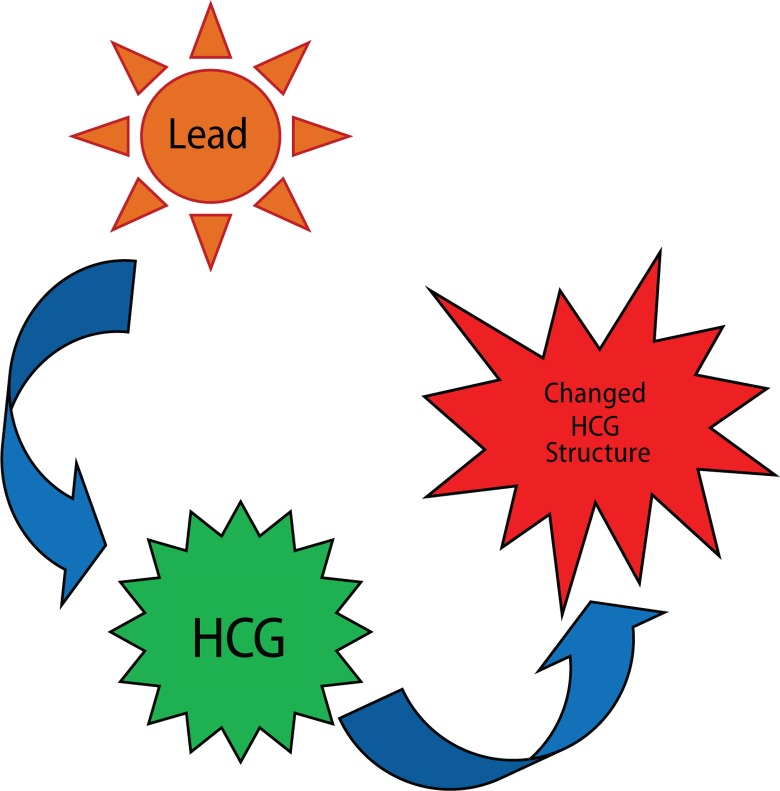
“In a recent study by Zhang et al. (2014), the authors investigated lead interactions with human chorionic gonadotropin (HCG).”
BackgroundEnvironmental and Nutritional Pathology
Prabhu, S. R. (2023) · Springer eBooks · doi:10.1007/978-3-031-31244-1_12 · Cited by 33
Body lead stores and urate excretion in men with chronic renal disease.
Lin, J., & Huang, P. T. (1994) · PubMed · Cited by 32
Investigation of lead and cadmium in counterfeit cigarettes seized in the United States
He, Y., von Lampe, K., Wood, L. J., & Kurti, M. K. (2015) · Food and Chemical Toxicology · doi:10.1016/j.fct.2015.04.006 · Cited by 32
Jurdziak, M., Gać, P., Martynowicz, H., & Poręba, R. (2015) · Environmental Toxicology and Pharmacology · doi:10.1016/j.etap.2015.03.009 · Cited by 26
Reversibility of the toxic effect of lead on the male reproductive axis
Sokol, R. Z. (1989) · Reproductive Toxicology · doi:10.1016/0890-6238(89)90004-x · Cited by 26 · cited 2×
“In lead treated groups suppressed rates of serum testosterone, intratesticular sperm counts, and sperm production rates were reported (Apostoli et al., 1998; Sokol, 1989).”
BackgroundBeethoven’s terminal illness and death
Mai, F. M. (2006) · The Journal of the Royal College of Physicians of Edinburgh · doi:10.1177/1478271520063603021 · Cited by 22 · cited 1×
“Henretig FM. (2006).”
Chronic lead poisoning: a "forgotten" cause of renal disease.
Benjelloun, M. C., Tarrass, F., Hachim, K., Medkouri, G., Benghanem, M., & Ramdani, B. (2007) · PubMed · Cited by 16
Fang, J., Wang, P., Huang, C., Hung, Y.-Y., & Pan, T. (2014) · PROTEOMICS · doi:10.1002/pmic.201400068 · Cited by 16
Occult lead intoxication in patients with gout and kidney disease.
Lf, W., Saylor, R. P., & Fa, C. (1984) · PubMed · Cited by 16
THE INFLUENCE OF β-CAROTENE ON HOMOCYSTEINE LEVEL AND OXIDATIVE STRESS IN LEAD-EXPOSED WORKERS
Kasperczyk, S., Dobrakowski, M., Kasperczyk, J., Romuk, E. B., Prokopowicz, A., & Birkner, E. (2014) · Medycyna Pracy · doi:10.13075/mp.5893.2014.015 · Cited by 14
Biochemical Mechanisms of Toxicity: Specific Examples
Timbrell, J. A. (2008) · CRC Press eBooks · doi:10.3109/9781420007084-10 · Cited by 14 · cited 1×
“…manifestations in the body by chronic lead exposure; however acute symptoms and signs also occur from short time intense exposures (Dart et al., 2004) Organic lead is perhaps more toxic than inorganic lead because of its lipid soluble nature, which results in rapid consequences (Timbrell, 2008).”
BackgroundMale reproductive toxicity of lead in animals and humans
Apostoli, P., Kiss, P., Porru, S., Bonde, J. P., Vanhoorne, M., Asclepios group, W. O., Roeleveld, N., Thuis, H. J. T. M., & Zielhuis, G. A. (1998) · Radboud Repository (Radboud University) · Cited by 9
Lv, C., Xu, Y., Wang, J., Shao, X., Ouyang, J., & Li, J. (2015) · Europe PMC (PubMed Central) · Cited by 8
(1975) · The American Journal of Medicine · doi:10.1016/0002-9343(75)90239-9 · Cited by 3
Research works printed but not linked: 5
- Henretig FM Golgfrank LR Lead Goldfrank’s Toxicoliogic Emergencies 2006 8th ed. McGraw Hill Professional
- Kosnett MJ Olson K.R Lead Poisoning and Drug Overdose 2006 5th ed. McGraw Hill Professional
- Kosnett MJ Heavy metal Intoxication and chelators In Katzung BG 2007 Basic and clinical Pharmocology. McGraw Hill Professional
- Merill JC Morton JJP Soileau SD Hayes A.W Metals Principles and Methods of Toxicology 2007 5th ed. CRC Press
- Pearson HA Schonfeld DJ Rudolph CD Lead Rudolph’s Pediatrics 2003 21st ed. McGraw Hill professional
Cited by
Alengebawy, A., Abdelkhalek, S. T., Qureshi, S. R., & Wang, M.-Q. (2021) · Toxics · doi:10.3390/toxics9030042 · Cited by 2,339
Lead Toxicity: Health Hazards, Influence on Food Chain, and Sustainable Remediation Approaches
Kumar, A., Kumar, A., M.M.S., C.-P., Chaturvedi, A. K., Shabnam, A. A., Subrahmanyam, G., Mondal, R., Gupta, D. K., Malyan, S. K., Kumar, S. S., et al. (2020) · International Journal of Environmental Research and Public Health · doi:10.3390/ijerph17072179 · Cited by 1,018
“However, no such guideline is given for infants and children, who are relatively more sensitive to low Pb levels [156].”
BackgroundHeavy metals: toxicity and human health effects
Jomova, K., Alomar, S. Y., Nepovimova, E., Kuca, K., & Valko, M. (2025) · Archives of Toxicology · doi:10.1007/s00204-024-03903-2 · Cited by 983
Study of energy storage systems and environmental challenges of batteries
Dehghani-Sanij, A. R., Tharumalingam, E., Dusseault, M. B., & Fraser, R. (2019) · Renewable and Sustainable Energy Reviews · doi:10.1016/j.rser.2019.01.023 · Cited by 872
Bioaccumulation of lead (Pb) and its effects on human: A review
Collin, M. S., Venkatraman, S. K., Vijayakumar, N., Kanimozhi, V, Arbaaz, S. M., Stacey, R. G. S., Anusha, J., Choudhary, R., Lvov, V., Tovar, G. I., et al. (2022) · Journal of Hazardous Materials Advances · doi:10.1016/j.hazadv.2022.100094 · Cited by 799
Metadata
- Authors
- Wani, A. L., Ara, A., & Usmani, J. A.
- Affiliations
- Aligarh Muslim University (IN)
- Jawaharlal Nehru Medical College Hospital (IN)
- Corresponding author
- Wani, Ab Latif
- Venue
- Interdisciplinary Toxicology
- Publisher
- Walter de Gruyter GmbH
- Published
- 2015-06-01
- Volume
- 8
- Issue
- 2
- Pages
- 55-64
- ISSN
- 1337-6853 (ISSN-L)
- 1337-9569
- PMC
- PMC4961898
- OpenAlex
- W2522138202
- Cited by
- 1,964
- References
- 90
- Citations by year
- 2026: 208 · 2025: 273 · 2024: 282 · 2023: 308 · 2022: 271 · 2021: 264 · 2020: 207 · 2019: 96 · 2018: 42 · 2017: 10 · 2016: 1
- FWCI
- 1.68
- Type
- journal article
- Language
- en
- Open access
- diamond
- doi.org
- Licence
- Locations
- Interdisciplinary Toxicology (publishedVersion, cc-by-nc-nd)
- PubMed Central (publishedVersion, cc-by)
- PubMed (publishedVersion)
- DOAJ (DOAJ: Directory of Open Access Journals) (submittedVersion, cc-by-sa)
- Funders
- U.S. Department of Health and Human Services
- University Grants Commission
- Aligarh Muslim University
- Centers for Disease Control and Prevention
- Topics
- Physical Sciences › Environmental Science › Health, Toxicology and Mutagenesis › Heavy Metal Exposure and Toxicity
- Physical Sciences › Environmental Science › Pollution › Heavy metals in environment
- Physical Sciences › Environmental Science › Health, Toxicology and Mutagenesis › Environmental Toxicology and Ecotoxicology
- Keywords
- lead toxicity, lead exposure, environmental pollution, nephrotoxicity, reproductive toxicity, neurotoxicity, lead poisoning treatment, developing countries
About these checks
Registry, retraction, Cites and statistics results are computed, not judged, with one exception: a printed reference that no index lists is read once by a model before it counts as a citation error. Claims are extracted by a model and kept only when their quote appears verbatim in the text; each cited source is then checked, with a model’s help, for whether it says what the claim relies on. Those verdicts can be wrong — read the claim’s quote and the cited source before relying on one.
Statistics and arithmetic are recomputed, not judged.
Confidence bands are shown only for fields calibrated on our annotated test set. None is calibrated yet, so no band is shown.
What counts as a claim ›How we measure confidence ›How we check this ›
Are you an author, or do you see a problem with this page? Request a review
Data sources
Bibliographic data: Semantic Scholar, OpenAlex, Crossref.
Contains information from the Semantic Scholar Academic Graph Datasets, made available under the ODC Attribution License (ODC-BY 1.0).
Semantic Scholar’s data is described in: Kinney, R., et al. (2023). The Semantic Scholar Open Data Platform. arXiv:2301.10140.
