

Vital Signs: Epidemiology and Recent Trends in Methicillin-Resistant and in Methicillin-Susceptible Staphylococcus aureus Bloodstream Infections — United States
Open accessThe DOI matches its Crossref record; 26 of the 27 references it cites were found in a registry or an index.
Abstract
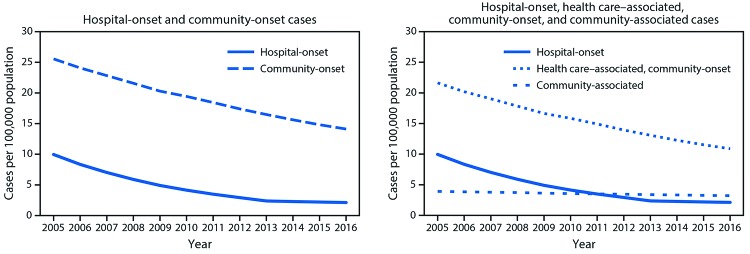
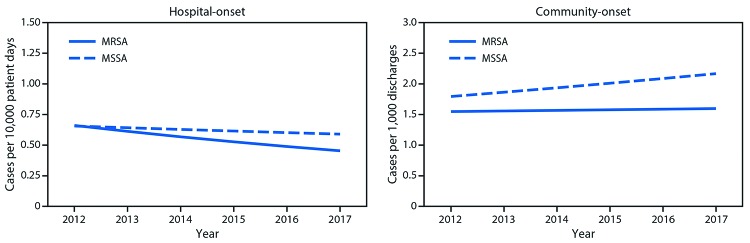
INTRODUCTION: Staphylococcus aureus is one of the most common pathogens in health care facilities and in the community, and can cause invasive infections, sepsis, and death. Despite progress in preventing methicillin-resistant S. aureus (MRSA) infections in health care settings, assessment of the problem in both health care and community settings is needed. Further, the epidemiology of methicillin-susceptible S. aureus (MSSA) infections is not well described at the national level. METHODS: Data from the Emerging Infections Program (EIP) MRSA population surveillance (2005-2016) and from the Premier and Cerner Electronic Health Record databases (2012-2017) were analyzed to describe trends in incidence of hospital-onset and community-onset MRSA and MSSA bloodstream infections and to estimate the overall incidence of S. aureus bloodstream infections in the United States and associated in-hospital mortality. RESULTS: In 2017, an estimated 119,247 S. aureus bloodstream infections with 19,832 associated deaths occurred. During 2005-2012 rates of hospital-onset MRSA bloodstream infection decreased by 17.1% annually, but the decline slowed during 2013-2016. Community-onset MRSA declined less markedly (6.9% annually during 2005-2016), mostly related to declines in health care-associated infections. Hospital-onset MSSA has not significantly changed (p = 0.11), and community-onset MSSA infections have slightly increased (3.9% per year, p<0.0001) from 2012 to 2017. CONCLUSIONS AND IMPLICATIONS FOR PUBLIC HEALTH PRACTICE: Despite reductions in incidence of MRSA bloodstream infections since 2005, S. aureus infections account for significant morbidity and mortality in the United States. To reduce the incidence of these infections further, health care facilities should take steps to fully implement CDC recommendations for prevention of device- and procedure-associated infections and for interruption of transmission. New and novel prevention strategies are also needed.
Overview
The claims and statistics of this paper haven’t been checked yet.
Free: it reads the open-access text and checks the first 5 claims that cite a source we can check. Create a free account to check every claim.
Integrity signals
Registry
Cites
Statistics
Figures
Verification
Claims the paper makes
The claims and statistics of this paper haven’t been checked yet.
Free: it reads the open-access text and checks the first 5 claims that cite a source we can check. Create a free account to check every claim.
Claims other papers make about this one
Each is checked against this paper’s own text: does it say what the citing paper says it does?
The source backs part of the claim, not all of it — or backs it for a different population, condition or comparison.
In the citing paper
“other studies have reported recent declines in community-onset MRSA, Pseudomonas, and Acinetobacter infections.”
From Trends in empiric broad-Spectrum antibiotic use for suspected community-onset Sepsis in US hospitals (2024) · cites this paper as [35]
Experimental — accuracy not yet measured
Self-check
Percentages, sums and reported differences re-computed from the paper’s own numbers.
The self-check needs the paper’s full text.
Citations
Cites
An Intervention to Decrease Catheter-Related Bloodstream Infections in the ICU
Pronovost, P., Needham, D., Berenholtz, S., Sinopoli, D., Chu, H., Cosgrove, S., Sexton, B., Hyzy, R., Welsh, R., Roth, G., et al. (2006) · New England Journal of Medicine · doi:10.1056/nejmoa061115 · Cited by 4,387
Klevens, R. M. (2007) · JAMA · doi:10.1001/jama.298.15.1763 · Cited by 3,726
Waves of resistance: Staphylococcus aureus in the antibiotic era
Chambers, H. F., & DeLeo, F. R. (2009) · Nature Reviews Microbiology · doi:10.1038/nrmicro2200 · Cited by 2,718 · cited 1×
“aureus strain epidemiology have occurred (22).”
Incidence and trends of sepsis in US hospitals using clinical vs claims data, 2009-2014.
Rhee, C., Dantes, R., Epstein, L., Murphy, D. J., Seymour, C. W., Iwashyna, T. J., Kadri, S. S., Angus, D. C., Danner, R. L., Fiore, A. E., et al. (2017) · JAMA · doi:10.1001/jama.2017.13836 · Cited by 1,884 · cited 1×
“As has been previously shown with another infection-related condition (sepsis), clinical criteria using EHR data are immune to temporal variations in coding practices that can be significant (30), whereas death-certificate data are an insensitive measure of sepsis-related mortality (31).”
BackgroundSelf-citationChanges in prevalence of health care-associated infections in U.S. hospitals
Magill, S. S., O’Leary, E., Janelle, S. J., Thompson, D. L., Dumyati, G., Nadle, J., Wilson, L. E., Kainer, M. A., Lynfield, R., Greissman, S., et al. (2018) · New England Journal of Medicine · doi:10.1056/nejmoa1801550 · Cited by 1,249
Self-citationMedication-Assisted Therapies — Tackling the Opioid-Overdose Epidemic
Volkow, N. D., Frieden, T. R., Hyde, P. S., & Cha, S. S. (2014) · New England Journal of Medicine · doi:10.1056/nejmp1402780 · Cited by 1,015 · cited 1×
“Prevention of opioid misuse, increasing access and linkage to medicationassisted treatment for persons with opioid use disorder (27), ensuring access to sterile injecting equipment, improving education about safer injection practices and how to recognize early signs of infection, and linking those with an infection to…”
BackgroundEpidemiology of Methicillin‐Resistant Staphylococcus aureus
Boucher, H. W., & Corey, G. R. (2008) · Clinical Infectious Diseases · doi:10.1086/533590 · Cited by 805 · cited 10×
“Methicillin-resistant S. aureus (MRSA) has long been recognized as a pathogen associated with health care settings; however, in the 1990s, community-associated MRSA infections, causing mostly SSTI, emerged in the United States (2).”
BackgroundInfluentialVeterans Affairs Initiative to Prevent Methicillin-Resistant Staphylococcus aureus Infections
Jain, R., Kralovic, S. M., Evans, M. E., Ambrose, M., Simbartl, L. A., Obrosky, D. S., Render, M. L., Freyberg, R. W., Jernigan, J. A., Muder, R. R., et al. (2011) · New England Journal of Medicine · doi:10.1056/nejmoa1007474 · Cited by 496 · cited 1×
“The reasons for the declines in hospital-onset MRSA bloodstream infections might be attributable to a variety of infection control efforts, including improvements in preventing device- and procedure-associated infections (15–17), as well as efforts to interrupt MRSA transmission in the hospital setting (5,18).”
BackgroundSelf-citationVital Signs: Central Line–Associated Blood Stream Infections—United States, 2001, 2008, and 2009
(2011) · Annals of Emergency Medicine · doi:10.1016/j.annemergmed.2011.07.035 · Cited by 473
Dantes, R. (2013) · JAMA Internal Medicine · doi:10.1001/jamainternmed.2013.10423 · Cited by 452
Cited by
Items 101–200 of 702
Staphylococcus aureus infections in children
Cassat, J. E., & Thomsen, I. (2021) · Current Opinion in Infectious Diseases · doi:10.1097/qco.0000000000000752 · Cited by 47
Microbes and the fate of neutrophils
Kobayashi, S. D., DeLeo, F. R., & Quinn, M. T. (2022) · Immunological Reviews · doi:10.1111/imr.13163 · Cited by 51
Durham, P. G., Sidders, A. E., Beam, J. E., Kedziora, K. M., Dayton, P. A., Conlon, B. P., Papadopoulou, V., & Rowe, S. E. (2021) · Biofilm · doi:10.1016/j.bioflm.2021.100049 · Cited by 41
Carvalhaes, C. G., Sader, H. S., Streit, J. M., Castanheira, M., & Mendes, R. E. (2021) · Antimicrobial Agents and Chemotherapy · doi:10.1128/aac.01667-21 · Cited by 39
Guo, Y. B., Ding, L., Han, R., Yin, D., Wu, S., Yang, Y., Wang, F., Zhu, D., Hu, F., & the China Antimicrobial Surveillance Network (CHINET) Study Group (2025) · One Health Advances · doi:10.1186/s44280-025-00092-0 · Cited by 52
Raghuram, V., Alexander, A. M., Loo, H. Q., Petit, R. A., Goldberg, J. B., & Read, T. D. (2022) · Microbiology Spectrum · doi:10.1128/spectrum.01334-21 · Cited by 47
Electronic Health Record Use in Public Health Infectious Disease Surveillance, USA, 2018–2019
Willis, S. J., Cocoros, N. M., Randall, L. M., Ochoa, A., Haney, G. A., Hsu, K., DeMaria, A., & Klompas, M. (2019) · Current Infectious Disease Reports · doi:10.1007/s11908-019-0694-5 · Cited by 46
Majeed, A., Javed, F., Akhtar, S., Saleem, U., Anwar, F., Ahmad, B., Nadhman, A., Shahnaz, G., Hussaın, I., Hussain, S. Z., et al. (2020) · Journal of Materials Chemistry B · doi:10.1039/d0tb01553a · Cited by 41
Punjabi, C. D., Madaline, T. F., Gendlina, I., Chen, V., Nori, P., & Pirofski, L. (2020) · Infection Control and Hospital Epidemiology · doi:10.1017/ice.2020.440 · Cited by 37
Novel Pt-Ag3PO4/CdS/Chitosan Nanocomposite with Enhanced Photocatalytic and Biological Activities
Kiani, M., Bagherzadeh, M., Kaveh, R., Rabiee, N., Fatahi, Y., Dinarvand, R., Jang, H. W., Shokouhimehr, M., & Varma, R. S. (2020) · Nanomaterials · doi:10.3390/nano10112320 · Cited by 40
Patel, D. J., & Bhatia, N. D. (2020) · American Journal of Clinical Dermatology · doi:10.1007/s40257-020-00560-w · Cited by 43
Yeager, S. D., Oliver, J. E., Shorman, M. A., Wright, L. R., & Veve, M. P. (2021) · International Journal of Antimicrobial Agents · doi:10.1016/j.ijantimicag.2021.106329 · Cited by 36
Recovering the susceptibility of antibiotic-resistant bacteria using photooxidative damage
Soares, J. M., Yakovlev, V. V., Blanco, K. C., & Bagnato, V. S. (2023) · Proceedings of the National Academy of Sciences · doi:10.1073/pnas.2311667120 · Cited by 49
Management and Prevention of Staphylococcus aureus Infections in Children
Kalu, I. C., Kao, C. M., & Fritz, S. A. (2022) · Infectious Disease Clinics of North America · doi:10.1016/j.idc.2021.11.006 · Cited by 41
Nguyen, H. Q., Nguyen, N. T. Q., Hughes, C. M., & O’Neill, C. (2019) · PLoS ONE · doi:10.1371/journal.pone.0223409 · Cited by 41
Fursova, K. K., Sorokin, A., Соколов, С. Л., Dzhelyadin, T., Shulcheva, I., Shchannikova, M., Nikanova, D. A., Артемьева, О. А., Zinovieva, N. A., & Brovko, F. A. (2020) · Frontiers in Veterinary Science · doi:10.3389/fvets.2020.00135 · Cited by 44
Galletta, M., Reekie, T. A., Nagalingam, G., Bottomley, A. L., Harry, E. J., Kassiou, M., & Triccas, J. A. (2020) · Antibiotics · doi:10.3390/antibiotics9080523 · Cited by 39
Antimicrobial photodynamic activity of gallium-substituted haemoglobin on silver nanoparticles
Morales-de-Echegaray, A. V., Lin, L., Sivasubramaniam, B. P., Yermembetova, A., Wang, Q., Abutaleb, N. S., Seleem, M. N., & Wei, A. (2020) · Nanoscale · doi:10.1039/c9nr09064a · Cited by 35
Salimi, S., Kashani, H. R. K., Azhari, S., Sadeghi, S., Sheikhghomy, S., paryan, P., & Khayatkashani, M. (2021) · European Spine Journal · doi:10.1007/s00586-021-07050-5 · Cited by 35
“Cephalosporin-resistant microbes are common due to the widespread use of antibiotics, and methicillinresistant bacteria are also seen in SSI [15, 16].”
BackgroundElucidating the antibiofilm activity of Frangula emodin against Staphylococcus aureus biofilms
Đukanović, S., Ganić, T., Lončarević, B., Cvetković, S., Nikolić, B., Tenji, D., Randjelovic, D. V., & Mitić-Ćulafić, D. (2022) · Journal of Applied Microbiology · doi:10.1111/jam.15360 · Cited by 36
“Furthermore, sepsis and nosocomial infections are considered common consequences of staphylococcal infections (Kourtis et al., 2019).”
BackgroundPersistent Methicillin-Resistant Staphylococcus aureus Bacteremia: Host, Pathogen, and Treatment
Parsons, J. B., Westgeest, A. C., Conlon, B. P., & Fowler, V. G. (2023) · Antibiotics · doi:10.3390/antibiotics12030455 · Cited by 47
“aureus bacteremia (SAB) is one of the most frequent and severe bacterial infections [1].”
BackgroundMechanical, elution, and antibacterial properties of simplex bone cement loaded with vancomycin
Kim, S., Bishop, A. R., Squire, M. W., Rose, W. E., & Ploeg, H. (2019) · Journal of the mechanical behavior of biomedical materials/Journal of mechanical behavior of biomedical materials · doi:10.1016/j.jmbbm.2019.103588 · Cited by 34
Determinants of Staphylococcus aureus carriage in the developing infant nasal microbiome
Accorsi, E. K., Franzosa, E. A., Hsu, T. Y., Cordy, R. J., Maayan‐Metzger, A., Jaber, H., Reiss-Mandel, A., Kline, M. C., DuLong, C. R., Lipsitch, M., et al. (2020) · Genome biology · doi:10.1186/s13059-020-02209-7 · Cited by 34
“aureus infection reduction in hospitals and communities [5], understanding such dynamics of S.”
BackgroundESKAPE: Navigating the Global Battlefield for Antimicrobial Resistance and Defense in Hospitals
Ravi, K., & Singh, B. (2024) · Bacteria · doi:10.3390/bacteria3020006 · Cited by 38
“S. aureus , including methicillin-resistant strains (MRSA), poses a persistent challenge in healthcare settings [14].”
BackgroundThe Role of Staphylococcus aureus YycFG in Gene Regulation, Biofilm Organization and Drug Resistance
Wu, S., Zhang, J., Qi, P., Liu, Y., Lei, L., & Zhang, H. (2021) · Antibiotics · doi:10.3390/antibiotics10121555 · Cited by 40
Oves, M., Rauf, M. A., & Qari, H. A. (2023) · Nanomaterials · doi:10.3390/nano13030615 · Cited by 33
“aureus (MRSA) pathogen spreading in clinical surroundings, a critical evaluation of the difficulty in healthcare and social sites is required [18].”
BackgroundA protein A based Staphylococcus aureus vaccine with improved safety
Shi, M., Chen, X., Sun, Y., Kim, H. K., Schneewind, O., & Missiakas, D. M. (2021) · Vaccine · doi:10.1016/j.vaccine.2021.05.072 · Cited by 36
Vadakkan, K., Sathishkumar, K., Urumbil, S. K., Ponnenkunnathu, S. G., Ngangbam, A. K., & Nongmaithem, B. D. (2024) · Bioorganic Chemistry · doi:10.1016/j.bioorg.2024.107465 · Cited by 35
Grayczyk, J. P., & Alonzo, F. (2019) · Infection and Immunity · doi:10.1128/iai.00344-19 · Cited by 35
“aureus (MSSA) infections have not decreased, and CA-MSSA infections are steadily rising (5).”
BackgroundAptamer-immobilized Gold Nanoparticles Enable Facile and On-site Detection of Staphylococcus aureus
Lim, S. H., Ryu, Y. C., & Hwang, B. H. (2021) · Biotechnology and Bioprocess Engineering · doi:10.1007/s12257-020-0161-z · Cited by 32
“2 SA61-T20 TCCCTACGGCGCTAACCTCCCAACCGCTCCACCCTGCCTCCGCC TCGCCACCGTGCTACAACTTTTTTTTTTTTTTTTTTTT 82 [4]”
BackgroundHigh Frequency of the EMRSA-15 Clone (ST22-MRSA-IV) in Hospital Wastewater
SILVA, V. Y. N. E. D., Ribeiro, J., da Rocha, J. A., Manaia, C. M., Silva, A. A. D. O., Pereira, J. E., Maltez, L., Capelo, J. L., Igrejas, G., & Poeta, P. A. C. Q. D. (2022) · Microorganisms · doi:10.3390/microorganisms10010147 · Cited by 38
“However, lately, it has also been recognized as a major cause of community-associated infections [14].”
BackgroundDingle, T. C., Gamage, D., Gomez-Villegas, S. I., Hanson, B., Reyes, J., Abbott, A., Burnham, C. D., Bard, J. D., Fritz, S. A., Miller, W. R., et al. (2022) · Journal of Clinical Microbiology · doi:10.1128/jcm.02495-21 · Cited by 32
Boutahiri, S., Eto, B., Bouhrim, M., Mechchate, H., Saleh, A., Kamaly, O. M. A., Drioiche, A., Remok, F., Samaillie, J., Neut, C., et al. (2022) · Life · doi:10.3390/life12030328 · Cited by 31
Novel Cecropin-4 Derived Peptides against Methicillin-Resistant Staphylococcus aureus
Peng, J., Mishra, B., Khader, R., LewisOscar, F., & Mylonakis, E. E. (2021) · Antibiotics · doi:10.3390/antibiotics10010036 · Cited by 32
“According to the antibiotic resistance threats report of Centers for Disease Control and Prevention (CDC), in 2017, there were nearly 120,000 Staphylococcus aureus bloodstream infections and 20,000 deaths in the United States [4].”
Diekema, D. J., Nori, P., Stevens, M. P., Smith, M. W., Coffey, K., & Morgan, D. J. (2023) · Clinical Infectious Diseases · doi:10.1093/cid/ciad571 · Cited by 32
“Notably, in their discussion of observational data, the compendium authors suggest that the decline in hospital-onset bloodstream infections from MRSA between 2006 and 2016 may be related to the use of CP [1, 5].”
Direct Measurement of Performance: A New Era in Antimicrobial Stewardship
Al‐Hasan, M. N., Winders, H. R., Bookstaver, P. B., & Justo, J. A. (2019) · Antibiotics · doi:10.3390/antibiotics8030127 · Cited by 32
Cryopreservation and IVF in the time of Covid-19: what is the best good tissue practice (GTP)?
Pomeroy, K. O., & Schiewe, M. C. (2020) · Journal of Assisted Reproduction and Genetics · doi:10.1007/s10815-020-01904-5 · Cited by 29
“Take for exampleMRSA, which caused 120,000 infections in 2017 and resulted in 20,000 deaths [8].”
BackgroundGiri, S., Ghimire, A., Mishra, A., Acharya, K., Kuikel, S., Tiwari, A., & Mishra, S. K. (2022) · American Journal of Infection Control · doi:10.1016/j.ajic.2022.06.001 · Cited by 38
Murugan, R., Subramaniyan, S., Priya, S., Ragavendran, C., Arasu, M. V., Al-Dhabi, N. A., Choi, K. C., Guru, A., & Arockiaraj, J. (2023) · Aquatic Toxicology · doi:10.1016/j.aquatox.2023.106578 · Cited by 34
Inflammasome-mediated glucose limitation induces antibiotic tolerance in Staphylococcus aureus
Beam, J. E., Wagner, N. J., Lu, K., Parsons, J. B., Fowler, V. G., Rowe, S. E., & Conlon, B. P. (2023) · iScience · doi:10.1016/j.isci.2023.107942 · Cited by 36
“aureus sepsis contributed to over 20,000 patient deaths in the US alone.(2) Despite antibiotic therapy availability, treatment failure is common and often attributed to the formation of antibiotic tolerant cells.”
BackgroundLi, H., Jia, M., Qi, Q., & Wang, Q. (2023) · Microbiology Spectrum · doi:10.1128/spectrum.01829-23 · Cited by 34
Haessler, S., Martin, E. M., Scales, M. E., Kang, L., Doll, M. E., Stevens, M., Uslan, D. Z., Pryor, R. J., Edmond, M. B., Godbout, E. J., et al. (2020) · American Journal of Infection Control · doi:10.1016/j.ajic.2020.06.219 · Cited by 29
Moussally, M., Zahreddine, N. K., Kazma, J. M., Ahmadieh, R., Kan, S. S., & Kanafani, Z. A. (2020) · Journal of Infection and Public Health · doi:10.1016/j.jiph.2020.11.006 · Cited by 28
Rivera, E. S., Weiss, A., Migas, L. G., Freiberg, J. A., Djambazova, K. V., Neumann, E. K., de Plas, R. V., Spraggins, J. M., Skaar, E. P., & Caprioli, R. M. (2022) · Journal of Mass Spectrometry and Advances in the Clinical Lab · doi:10.1016/j.jmsacl.2022.09.003 · Cited by 38
“infections, such as endocarditis and bacteremia [1,2].”
Foodborne pathogen detection using surface acoustic wave biosensors: a review
Zeng, Y., Yuan, R., Fu, H., Xu, Z., & Wei, S. (2024) · RSC Advances · doi:10.1039/d4ra06697a · Cited by 27
“9,11,23,24 Additionally, the utilization of shared facilities facilitates E. coli transmission, thereby increasing the likelihood of an outbreak.”
Knobloch, M. J., McKinley, L. L., Keating, J. A., & Safdar, N. (2021) · American Journal of Infection Control · doi:10.1016/j.ajic.2021.01.020 · Cited by 33
Soe, P. E., Han, W. W., Sagili, K. D., Satyanarayana, S., Shrestha, P., Htoon, T. T., & Tin, H. H. (2021) · Tropical Medicine and Infectious Disease · doi:10.3390/tropicalmed6020070 · Cited by 34
“Despite this decline, it is estimated that nearly 120,000 SA bloodstream infections and 20,000 SA-associated deaths occurred in 2017 [3].”
BackgroundNocera, F. P., Pizzano, F., Masullo, A., Cortese, L., & Martino, L. D. (2023) · Pathogens · doi:10.3390/pathogens12081016 · Cited by 30
“Although nosocomial MRSA infections are declining in the United States, Europe, China, and many other countries, possibly due to increased surveillance and hygiene measures, they are still increasing in less-developed countries [11].”
BackgroundWearable and Flexible Ozone Generating System for Treatment of Infected Dermal Wounds
Roth, A., Elkashif, A., Selvamani, V., Stucky, R. A., Seleem, M. N., Ziaie, B., & Rahimi, R. (2020) · Frontiers in Bioengineering and Biotechnology · doi:10.3389/fbioe.2020.00458 · Cited by 28
“…aurous Frontiers in Bioengineering and Biotechnology | www.frontiersin.org 1 May 2020 | Volume 8 | Article 458 (MRSA), has been noted to kill more Americans every year than HIV/AIDS, emphysema, or homicide (Federal Bureau of Investigation, 2017; CDC, 2018; Kourtis et al., 2019; Lei et al., 2019).”
BackgroundHook, J. S., Patel, P. A., O’Malley, A., Xie, L., Kavanaugh, J. S., Horswill, A. R., & Moreland, J. G. (2021) · The Journal of Immunology · doi:10.4049/jimmunol.2100283 · Cited by 29
Free radical-releasing systems for targeting biofilms
Fasiku, V. O., Omolo, C. A., & Govender, T. (2020) · Journal of Controlled Release · doi:10.1016/j.jconrel.2020.03.031 · Cited by 30
Samuel, P., Kumar, Y. S., Suthakar, B. J., Karawita, J. A., Kumar, D. S., Vedha, V., Shah, H., & Thakkar, K. (2023) · PubMed Central · doi:10.7759/cureus.47139 · Cited by 43
“…antibiotics; the increasing number of people with chronic health conditions such as diabetes and human immunodeficiency virus (HIV) that lead them susceptible to MRSA; the globalization of travel that causes people to be more likely exposed to MRSA and to bring it back to their home countries [18].”
Múnera-Jaramillo, J., López, G.-D., Suesca, E., Carazzone, C., Leidy, C., & Manrique-Moreno, M. (2024) · Biochimica et Biophysica Acta (BBA) - Biomembranes · doi:10.1016/j.bbamem.2024.184288 · Cited by 31
Phan, A., Mijar, S., Harvey, C. M., & Biswas, D. (2025) · Microorganisms · doi:10.3390/microorganisms13081732 · Cited by 35
“Community acquired-MRSA (CA-MRSA) is a strain of MRSA that can spread readily outside of healthcare settings in people with no history of MRSA infection, hospital admission, or indwelling devices [30].”
InfluentialCombination of Vancomycin or Daptomycin and Beta‐lactam Antibiotics: A Meta‐analysis
Kale-Pradhan, P. B., Giuliano, C. A., Jongekrijg, A., & Rybak, M. J. (2020) · Pharmacotherapy The Journal of Human Pharmacology and Drug Therapy · doi:10.1002/phar.2437 · Cited by 27
Zasowski, E. J., Trinh, T. D., Claeys, K. C., Lagnf, A. M., Bhatia, S., Klinker, K. P., Veve, M. P., Estrada, S., Johns, S. T., Sawyer, A., et al. (2021) · Open Forum Infectious Diseases · doi:10.1093/ofid/ofab606 · Cited by 32
“A major contributor to the associated morbidity and mortality is MRSA bloodstream infection (BSI) [2, 3].”
Zilberberg, M. D., Nathanson, B. H., Puzniak, L., & Shorr, A. F. (2022) · Infection Control and Hospital Epidemiology · doi:10.1017/ice.2021.464 · Cited by 28
Circadian protection against bacterial skin infection by epidermal CXCL14-mediated innate immunity
Tsujihana, K., Tanegashima, K., Santo, Y., Yamada, H., Akazawa, S., Nakao, R., Tominaga, K., Saito, R., Nishito, Y., Hata, R., et al. (2022) · Proceedings of the National Academy of Sciences · doi:10.1073/pnas.2116027119 · Cited by 27
Structure and host specificity of Staphylococcus epidermidis bacteriophage Andhra
Hawkins, N. C., Kizziah, J. L., Hatoum-Aslan, A., & Dokland, T. (2022) · Science Advances · doi:10.1126/sciadv.ade0459 · Cited by 25
Escalation of antimicrobial resistance among MRSA part 1: focus on global spread
Lynch, J. P., & Zhanel, G. G. (2022) · Expert Review of Anti-infective Therapy · doi:10.1080/14787210.2023.2154653 · Cited by 29
Rahman, M. U., Wang, P., Wang, N., & Chen, Y. (2020) · Biomolecules and Biomedicine · doi:10.17305/bjbms.2020.4597 · Cited by 43
Rezić, I., Majdak, M., Bilić, V. L., Pokrovac, I., Martinaga, L., Škoc, M. S., & Kosalec, I. (2021) · Polymers · doi:10.3390/polym13040659 · Cited by 25
Hisatsune, J., Kutsuno, S., Iwao, Y., Ishida‐Kuroki, K., Yahara, K., Kitamura, N., Kajihara, T., Kayama, S., Sugawara, Y., Kitagawa, H., et al. (2025) · Nature Communications · doi:10.1038/s41467-025-57575-2 · Cited by 27
Pistiki, A. C., Monecke, S., Shen, H., Ryabchykov, O., Bocklitz, T. W., Rösch, P., Ehricht, R., & Popp, J. (2022) · Microbiology Spectrum · doi:10.1128/spectrum.00763-22 · Cited by 29
Gregorio, S. D., Vielma, J., Haim, M. S., Rago, L., Campos, J., Kekre, M., Abrudan, M. I., Famiglietti, A. M. R., Canigia, L. F., Rubinstein, G., et al. (2023) · Microbial Genomics · doi:10.1099/mgen.0.001020 · Cited by 52
“Traditionally, surveillance programmes focus on MRSA, but efforts are needed to understand the epidemiology of MSSA infections, which are also of high burden, are increasing in prevalence [11–13] and can give rise to MRSA.”
Bispo, P. J. M., Ung, L., Chodosh, J., & Gilmore, M. S. (2020) · Frontiers in Public Health · doi:10.3389/fpubh.2020.00204 · Cited by 24
Zhang, G., Zhang, N., Xu, J., Yang, T., Yin, H., & Cai, Y. (2023) · International Journal of Antimicrobial Agents · doi:10.1016/j.ijantimicag.2023.106946 · Cited by 28
Xing, L., Cheng, M., Wang, S., Jiang, J., Li, T., Zhang, X., Yang, J., Tian, Y., & Liu, W. (2025) · Frontiers in Microbiology · doi:10.3389/fmicb.2025.1636622 · Cited by 31
A Small Membrane Stabilizing Protein Critical to the Pathogenicity of Staphylococcus aureus
Duggan, S., Laabei, M., Alnahari, A. A., O’Brien, E. C., Lacey, K. A., Bacon, L., Heesom, K., Fu, C.-L., Otto, M., Skaar, E., et al. (2020) · Infection and Immunity · doi:10.1128/iai.00162-20 · Cited by 23
Rose, W. E., Volk, C. F., Dilworth, T. J., & Sakoulas, G. (2022) · Open Forum Infectious Diseases · doi:10.1093/ofid/ofac137 · Cited by 29
Amyloidogenic Peptides: New Class of Antimicrobial Peptides with the Novel Mechanism of Activity
Galzitskaya, O. V., Kurpe, S., Panfilov, A. V., Glyakina, A. V., Grishin, S. Y., Kochetov, A. P., Deryusheva, E. I., Валериевич, М. А., Kravchenko, S. V., Domnin, P. A., et al. (2022) · International Journal of Molecular Sciences · doi:10.3390/ijms23105463 · Cited by 23
“Methicillinresistant S. aureus (MRSA) strains are the most common cause of nosocomial infections (HA-MRSA) [79].”
BackgroundNovel strategies for rapid identification and susceptibility testing of MRSA
Mizusawa, M., & Carroll, K. C. (2020) · Expert Review of Anti-infective Therapy · doi:10.1080/14787210.2020.1760842 · Cited by 26
Facile Synthesis of Antimicrobial Aloe Vera-“Smart” Triiodide-PVP Biomaterials
Edis, Z., & Bloukh, S. H. (2020) · Biomimetics · doi:10.3390/biomimetics5030045 · Cited by 26
Zeden, M. S., Burke, Ó., Vallely, M., Fingleton, C., & O’Gara, J. P. (2021) · PLoS Pathogens · doi:10.1371/journal.ppat.1009093 · Cited by 26
“Staphylococcus aureus continues to pose a major threat to public health and is responsible for 20,000 deaths each year in the US [1].”
BackgroundMa, S., Niu, M., Hao, Z., Liu, M., Tong, C., & Zhao, X. (2020) · RNA Biology · doi:10.1080/15476286.2020.1853975 · Cited by 23
“aureus bloodstream infections occurred in 2017 with 19,832 associated deaths [3].”
BackgroundDong, Q., Liu, Y., Li, W., Chen, M., Li, W., Wang, X., Fu, J., & Ye, X. (2020) · Infection and Drug Resistance · doi:10.2147/idr.s284781 · Cited by 24
Ferrer-González, E., Huh, H. S., Al‐Tameemi, H., Boyd, J. M., Lee, S.-H., & Pilch, D. S. (2021) · Journal of Bacteriology · doi:10.1128/jb.00204-21 · Cited by 30
Amoah, J., Klein, E. Y., Chiotos, K., Cosgrove, S. E., & Tamma, P. D. (2021) · Clinical Infectious Diseases · doi:10.1093/cid/ciab865 · Cited by 25
Functionalization of Polymer Surface with Antimicrobial Microcapsules
Rezić, I., Škoc, M. S., Majdak, M., Jurić, S., Stracenski, K. S., & Vinceković, M. (2022) · Polymers · doi:10.3390/polym14101961 · Cited by 22
Healthcare associated infections (HAI): Insights into epidemiology, microbiology, and diagnostics
Asokan, S., Banerjee, N., Saleem, M., Atiyah, H. M., Pandey, R. K., Abbas, R. K., Yousif, S. I. A., Radhamanalan, G., Parashar, A., Gowtham, B., et al. (2026) · Diagnostic Microbiology and Infectious Disease · doi:10.1016/j.diagmicrobio.2026.117376 · Cited by 34
Etter, D., Corti, S., Spirig, S., Cernela, N., Stephan, R., & Johler, S. (2020) · Frontiers in Microbiology · doi:10.3389/fmicb.2020.01289 · Cited by 27
“It caused over 100,000 cases of bacteremia in the United States in 2017 and 434 food-borne outbreaks in the European Union in 2015 (Tong et al., 2015; EFSA, 2016; Kourtis et al., 2019).”
BackgroundAbscess Management: An Evidence-Based Review for Emergency Medicine Clinicians
Menegas, S., Moayedi, S., & Torres, M. (2020) · Journal of Emergency Medicine · doi:10.1016/j.jemermed.2020.10.043 · Cited by 23
Lee, A. S., Huttner, B. D., Catho, G., & Harbarth, S. (2021) · Infectious Disease Clinics of North America · doi:10.1016/j.idc.2021.07.001 · Cited by 26
Sawhney, S. S., Ransom, E. M., Wallace, M. A., Reich, P. J., Dantas, G. A., & Burnham, C. D. (2022) · mBio · doi:10.1128/mbio.03196-21 · Cited by 28
Mechanistic Studies and In Vivo Efficacy of an Oxadiazole-Containing Antibiotic
Naclerio, G. A., Abutaleb, N. S., Onyedibe, K. I., Karanja, C. W., Eldesouky, H. E., Liang, H.-W., Dieterly, A. M., Aryal, U. K., Lyle, L. T., Seleem, M. N., et al. (2022) · Journal of Medicinal Chemistry · doi:10.1021/acs.jmedchem.1c02034 · Cited by 21
Genome Evolution of Invasive Methicillin-Resistant Staphylococcus aureus in the Americas
Smith, J. T., Eckhardt, E. M., Hansel, N. B., Eliato, T. R., Martin, I. W., & Andam, C. P. (2022) · Microbiology Spectrum · doi:10.1128/spectrum.00201-22 · Cited by 25
Augusto, M. F., Fernandes, D. S., de Oliveira, T. L. R., Cavalcante, F. S., Chamon, R. C., Ferreira, A. L. P., Nouér, S. A., Infection Control Group HUCFF/UFRJ, Rangel, A. P., Castiñeiras, A. C., et al. (2022) · Antimicrobial Resistance and Infection Control · doi:10.1186/s13756-022-01154-3 · Cited by 26
“[32] CA-MRSA infections provide a reservoir that contributes to the incidence of healthcare-associated diseases and fuels transmission both within and outside healthcare settings.”
BackgroundAdamu, Y., Puig‐Asensio, M., Dabo, B., & Schweizer, M. L. (2024) · PLoS ONE · doi:10.1371/journal.pone.0293423 · Cited by 28
Influence of media on the differentiation of Staphylococcus spp. by volatile compounds
Jenkins, C. L., & Bean, H. D. (2019) · Journal of Breath Research · doi:10.1088/1752-7163/ab3e9d · Cited by 22
Curating and comparing 114 strain-specific genome-scale metabolic models of Staphylococcus aureus
Renz, A., & Dräger, A. (2021) · npj Systems Biology and Applications · doi:10.1038/s41540-021-00188-4 · Cited by 24
“The incidence rate ranges from approximately 20 cases per 100,000 persons per year in Canada 6 to approximately 50 cases per 100,000 persons, inferred from the United States surveillance data 7 .”
BackgroundResultInfluentialRaghuram, V., Petit, R. A., Karol, Z., Mehta, R. S., Weissman, D. B., & Read, T. D. (2024) · mSystems · doi:10.1128/msystems.00143-24 · Cited by 30
Mantovam, V. B., Santos, D., Junior, L. C. G., Landgraf, M., Pinto, U. M., & Todorov, S. D. (2025) · Foodborne Pathogens and Disease · doi:10.1089/fpd.2024.0124 · Cited by 25
Biggs, H. M., Li, R., Jackson, K. A., Nadle, J., Petit, S., Ray, S. M., Lynfield, R., Como-Sabetti, K. J., Dumyati, G. K., Gellert, A., et al. (2025) · Open Forum Infectious Diseases · doi:10.1093/ofid/ofaf282 · Cited by 26
Self-citationA long history of β-lactams for MRSA
Hamilton, F., & MacGowan, A. P. (2019) · Nature Microbiology · doi:10.1038/s41564-019-0561-z · Cited by 20
Lemon, K. P. (2020) · Current Biology · doi:10.1016/j.cub.2020.08.010 · Cited by 20
Talbot, B. M., Jacko, N. F., Petit, R. A., Pegues, D. A., Shumaker, M. J., Read, T. D., & David, M. Z. (2022) · Clinical Infectious Diseases · doi:10.1093/cid/ciac339 · Cited by 20
Program, C. N. I. S. (2023) · Canada Communicable Disease Report · doi:10.14745/ccdr.v49i05a09 · Cited by 28
Huang, H., Wang, P., Deng, W., Dou, L.-X., Liao, X., Wang, J., Duan, X., Yu, R.-J., & Xiong, Y. (2023) · Dalton Transactions · doi:10.1039/d3dt01287e · Cited by 19
Ridder, M. J., Daly, S. M., Triplett, K. D., Seawell, N. A., Hall, P. R., & Bose, J. L. (2020) · Infection and Immunity · doi:10.1128/iai.00163-20 · Cited by 23
Secondary Bacterial Pneumonias and Bloodstream Infections in Patients Hospitalized with COVID-19
Adelman, M. W., Bhamidipati, D. R., Hernandez‐Romieu, A. C., Babiker, A., Woodworth, M. H., Robichaux, C. J., Murphy, D. J., Auld, S. C., Kraft, C. S., & Jacob, J. T. (2021) · Annals of the American Thoracic Society · doi:10.1513/annalsats.202009-1093rl · Cited by 20
Metadata
- Authors
- Kourtis, A. P., Hatfield, K., Baggs, J., Mu, Y., See, I., Epson, E., Nadle, J., Kainer, M. A., Dumyati, G., Petit, S., Ray, S. M., Emerging Infections Program MRSA author group, Ham, D., Capers, C., Ewing, H., Coffin, N., McDonald, L. C., Jernigan, J., & Cardo, D.
- Affiliations
- University of Rochester Medicine (US)
- Corresponding author
- Kourtis, Athena P.
- ORCID
- Venue
- MMWR. Morbidity and Mortality Weekly Report
- Published
- 2019-03-08
- Volume
- 68
- Issue
- 9
- Pages
- 214-219
- ISSN
- 0149-2195 (ISSN-L)
- 1545-861X
- PMC
- PMC6421967
- OpenAlex
- W2919520691
- Cited by
- 701
- References
- 27
- Citations by year
- 2026: 50 · 2025: 96 · 2024: 98 · 2023: 103 · 2022: 127 · 2021: 100 · 2020: 90 · 2019: 36
- FWCI
- 67.67
- Type
- journal article
- Language
- en
- Open access
- diamond
- doi.org
- Locations
- MMWR Morbidity and Mortality Weekly Report (publishedVersion)
- Europe PMC (PubMed Central) (publishedVersion, cc-by)
- PubMed Central (publishedVersion, cc-by)
- PubMed (publishedVersion)
- Topics
- Health Sciences › Medicine › Infectious Diseases › Antimicrobial Resistance in Staphylococcus
- Health Sciences › Medicine › Infectious Diseases › Antibiotic Use and Resistance
- Health Sciences › Medicine › Infectious Diseases › Infection Control in Healthcare
- Keywords
- methicillin-resistant Staphylococcus aureus, methicillin-susceptible Staphylococcus aureus, bloodstream infection, community-onset infection, hospital-onset infection, incidence trends, in-hospital mortality, nosocomial infections, infection control, antimicrobial resistance, United States
- MeSH terms
- Cross Infection, Female, Humans, Male, Methicillin, Population Surveillance, Staphylococcal Infections, Staphylococcus aureus, United States, Incidence, Databases, Factual, Bacteremia, Hospital Mortality, Methicillin-Resistant Staphylococcus aureus, Electronic Health Records
About these checks
Registry, retraction, Cites and statistics results are computed, not judged, with one exception: a printed reference that no index lists is read once by a model before it counts as a citation error. Claims are extracted by a model and kept only when their quote appears verbatim in the text; each cited source is then checked, with a model’s help, for whether it says what the claim relies on. Those verdicts can be wrong — read the claim’s quote and the cited source before relying on one.
Statistics and arithmetic are recomputed, not judged.
Confidence bands are shown only for fields calibrated on our annotated test set. None is calibrated yet, so no band is shown.
What counts as a claim ›How we measure confidence ›How we check this ›
Are you an author, or do you see a problem with this page? Request a review
Data sources
Bibliographic data: Semantic Scholar, OpenAlex, Crossref.
Contains information from the Semantic Scholar Academic Graph Datasets, made available under the ODC Attribution License (ODC-BY 1.0).
Semantic Scholar’s data is described in: Kinney, R., et al. (2023). The Semantic Scholar Open Data Platform. arXiv:2301.10140.
