

Vital Signs: Epidemiology and Recent Trends in Methicillin-Resistant and in Methicillin-Susceptible Staphylococcus aureus Bloodstream Infections — United States
Open accessThe DOI matches its Crossref record; 26 of the 27 references it cites were found in a registry or an index.
Abstract
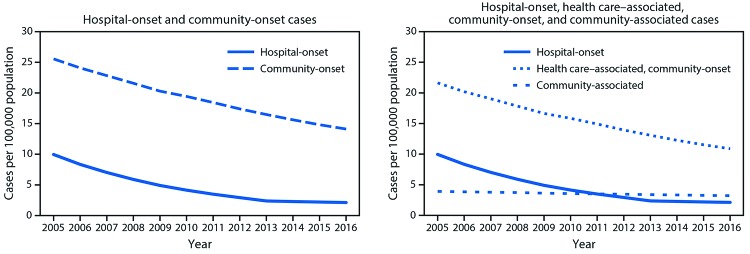
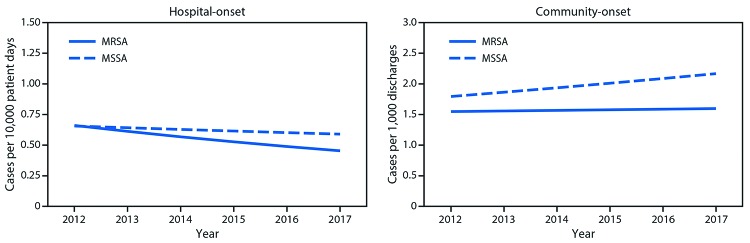
INTRODUCTION: Staphylococcus aureus is one of the most common pathogens in health care facilities and in the community, and can cause invasive infections, sepsis, and death. Despite progress in preventing methicillin-resistant S. aureus (MRSA) infections in health care settings, assessment of the problem in both health care and community settings is needed. Further, the epidemiology of methicillin-susceptible S. aureus (MSSA) infections is not well described at the national level. METHODS: Data from the Emerging Infections Program (EIP) MRSA population surveillance (2005-2016) and from the Premier and Cerner Electronic Health Record databases (2012-2017) were analyzed to describe trends in incidence of hospital-onset and community-onset MRSA and MSSA bloodstream infections and to estimate the overall incidence of S. aureus bloodstream infections in the United States and associated in-hospital mortality. RESULTS: In 2017, an estimated 119,247 S. aureus bloodstream infections with 19,832 associated deaths occurred. During 2005-2012 rates of hospital-onset MRSA bloodstream infection decreased by 17.1% annually, but the decline slowed during 2013-2016. Community-onset MRSA declined less markedly (6.9% annually during 2005-2016), mostly related to declines in health care-associated infections. Hospital-onset MSSA has not significantly changed (p = 0.11), and community-onset MSSA infections have slightly increased (3.9% per year, p<0.0001) from 2012 to 2017. CONCLUSIONS AND IMPLICATIONS FOR PUBLIC HEALTH PRACTICE: Despite reductions in incidence of MRSA bloodstream infections since 2005, S. aureus infections account for significant morbidity and mortality in the United States. To reduce the incidence of these infections further, health care facilities should take steps to fully implement CDC recommendations for prevention of device- and procedure-associated infections and for interruption of transmission. New and novel prevention strategies are also needed.
Overview
The claims and statistics of this paper haven’t been checked yet.
Free: it reads the open-access text and checks the first 5 claims that cite a source we can check. Create a free account to check every claim.
Integrity signals
Registry
Cites
Statistics
Figures
Verification
Claims the paper makes
The claims and statistics of this paper haven’t been checked yet.
Free: it reads the open-access text and checks the first 5 claims that cite a source we can check. Create a free account to check every claim.
Claims other papers make about this one
Each is checked against this paper’s own text: does it say what the citing paper says it does?
The source backs part of the claim, not all of it — or backs it for a different population, condition or comparison.
In the citing paper
“other studies have reported recent declines in community-onset MRSA, Pseudomonas, and Acinetobacter infections.”
From Trends in empiric broad-Spectrum antibiotic use for suspected community-onset Sepsis in US hospitals (2024) · cites this paper as [35]
Experimental — accuracy not yet measured
Self-check
Percentages, sums and reported differences re-computed from the paper’s own numbers.
The self-check needs the paper’s full text.
Citations
Cites
An Intervention to Decrease Catheter-Related Bloodstream Infections in the ICU
Pronovost, P., Needham, D., Berenholtz, S., Sinopoli, D., Chu, H., Cosgrove, S., Sexton, B., Hyzy, R., Welsh, R., Roth, G., et al. (2006) · New England Journal of Medicine · doi:10.1056/nejmoa061115 · Cited by 4,387
Klevens, R. M. (2007) · JAMA · doi:10.1001/jama.298.15.1763 · Cited by 3,726
Waves of resistance: Staphylococcus aureus in the antibiotic era
Chambers, H. F., & DeLeo, F. R. (2009) · Nature Reviews Microbiology · doi:10.1038/nrmicro2200 · Cited by 2,718 · cited 1×
“aureus strain epidemiology have occurred (22).”
Incidence and trends of sepsis in US hospitals using clinical vs claims data, 2009-2014.
Rhee, C., Dantes, R., Epstein, L., Murphy, D. J., Seymour, C. W., Iwashyna, T. J., Kadri, S. S., Angus, D. C., Danner, R. L., Fiore, A. E., et al. (2017) · JAMA · doi:10.1001/jama.2017.13836 · Cited by 1,884 · cited 1×
“As has been previously shown with another infection-related condition (sepsis), clinical criteria using EHR data are immune to temporal variations in coding practices that can be significant (30), whereas death-certificate data are an insensitive measure of sepsis-related mortality (31).”
BackgroundSelf-citationChanges in prevalence of health care-associated infections in U.S. hospitals
Magill, S. S., O’Leary, E., Janelle, S. J., Thompson, D. L., Dumyati, G., Nadle, J., Wilson, L. E., Kainer, M. A., Lynfield, R., Greissman, S., et al. (2018) · New England Journal of Medicine · doi:10.1056/nejmoa1801550 · Cited by 1,249
Self-citationMedication-Assisted Therapies — Tackling the Opioid-Overdose Epidemic
Volkow, N. D., Frieden, T. R., Hyde, P. S., & Cha, S. S. (2014) · New England Journal of Medicine · doi:10.1056/nejmp1402780 · Cited by 1,015 · cited 1×
“Prevention of opioid misuse, increasing access and linkage to medicationassisted treatment for persons with opioid use disorder (27), ensuring access to sterile injecting equipment, improving education about safer injection practices and how to recognize early signs of infection, and linking those with an infection to…”
BackgroundEpidemiology of Methicillin‐Resistant Staphylococcus aureus
Boucher, H. W., & Corey, G. R. (2008) · Clinical Infectious Diseases · doi:10.1086/533590 · Cited by 805 · cited 10×
“Methicillin-resistant S. aureus (MRSA) has long been recognized as a pathogen associated with health care settings; however, in the 1990s, community-associated MRSA infections, causing mostly SSTI, emerged in the United States (2).”
BackgroundInfluentialVeterans Affairs Initiative to Prevent Methicillin-Resistant Staphylococcus aureus Infections
Jain, R., Kralovic, S. M., Evans, M. E., Ambrose, M., Simbartl, L. A., Obrosky, D. S., Render, M. L., Freyberg, R. W., Jernigan, J. A., Muder, R. R., et al. (2011) · New England Journal of Medicine · doi:10.1056/nejmoa1007474 · Cited by 496 · cited 1×
“The reasons for the declines in hospital-onset MRSA bloodstream infections might be attributable to a variety of infection control efforts, including improvements in preventing device- and procedure-associated infections (15–17), as well as efforts to interrupt MRSA transmission in the hospital setting (5,18).”
BackgroundSelf-citationVital Signs: Central Line–Associated Blood Stream Infections—United States, 2001, 2008, and 2009
(2011) · Annals of Emergency Medicine · doi:10.1016/j.annemergmed.2011.07.035 · Cited by 473
Dantes, R. (2013) · JAMA Internal Medicine · doi:10.1001/jamainternmed.2013.10423 · Cited by 452
Cited by
Items 501–600 of 702
Host and antibiotic jointly select for greater virulence in Staphylococcus aureus
Su, M., Hoang, K. L., Penley, M. J., Davis, M. H., Gresham, J. D., Morran, L. T., & Read, T. D. (2026) · eLife · doi:10.7554/elife.107936.3 · Cited by 2
Demirhan, S., Burgos, K., Lee, K. E., Lee, P., Sy, S., Herold, B. C., & Anosike, B. I. (2024) · The Pediatric Infectious Disease Journal · doi:10.1097/inf.0000000000004533 · Cited by 3
“2,3 While MRSA was initially thought to be primarily a hospital-acquired infection, community-associated MRSA, which was first recognized in the early 1990s, has emerged as a major cause of pediatric infections.”
Huang, Q., Zhu, L., Huang, F., Zhao, Y., Wang, H., Luan, S., & Xiao, C. (2024) · International Journal of Biological Macromolecules · doi:10.1016/j.ijbiomac.2024.135650 · Cited by 3
Wassanarungroj, P., Nobthai, P., Ruekit, S., Srijan, A., Pimsawat, T., Kormanee, R., Nakornchai, S., Sakdinava, C., Sukhchat, P., Serichantalergs, O., et al. (2025) · Pathogens · doi:10.3390/pathogens14050406 · Cited by 4
“The Centers for Disease Control and Prevention (CDC) reported that MRSA infections led to an estimated 20,000 deaths in the US in 2017 [3].”
Devkar, H. U., Juyal, K., Thakur, N. L., Kaur, P., Parmar, K., Radhakrishnanand, P., & Narayanan, S. (2025) · Current Microbiology · doi:10.1007/s00284-025-04262-6 · Cited by 3
“Staphylococcus aureus has emerged as a frequent co-infection in COVID-19 patients, further exacerbating the impact of MRSA [5, 6].”
Prascius, S., Wells, A., Collier, A. M., Renard, A., Hooper, D., & Stein, T. (2025) · American Journal of Infection Control · doi:10.1016/j.ajic.2025.08.006 · Cited by 2
Wei, K., Chen, W., Li, Y., Xie, G., Li, F., Zhou, J., Pei, L., & Liu, Q. (2025) · Infection and Drug Resistance · doi:10.2147/idr.s546699 · Cited by 2
Characterizing Staphylococcus aureus genomic epidemiology with multilevel genome typing
Cheney, L., Payne, M., Kaur, S., McKew, G. L., & Lan, R. (2025) · mSystems · doi:10.1128/msystems.00935-25 · Cited by 2
Lathem, A., Medvedeva, A., Santos, A. L., Li, B., Si, T., Kolomeisky, A. B., & Tour, J. M. (2025) · Journal of Chemical Information and Modeling · doi:10.1021/acs.jcim.5c01321 · Cited by 2
Haindongo, E., Hakanen, A., Vainio, O., Vuopio, J., & Hedimbi, M. (2025) · BMC Infectious Diseases · doi:10.1186/s12879-025-12186-6 · Cited by 2
Popescu, R.-I., Petca, R., Mareș, C., Petca, A. T., Bassil, M., & Jinga, V. (2026) · Medicina · doi:10.3390/medicina62050889 · Cited by 4
“The increase in resistance to ampicillin identified across multiple specialized studies may indicate widespread production of β -lactamases among these bacteria [40,41].”
Bavaro, D. F., Belati, A., Sacchet, D., Cilli, A., Diella, L., Pocaterra, D., Casana, M., Barbanotti, D., Morelli, P., Frallonardo, L., et al. (2026) · Clinical Infectious Diseases · doi:10.1093/cid/ciag228 · Cited by 2
Andrade-Villanueva, J. F., Martínez-Ayala, P., Gómez-Quiroz, A., Vera-Cuevas, V. C., Arcos-Jiménez, J. C. D., & Briseño-Ramírez, J. (2026) · Microbiology Spectrum · doi:10.1128/spectrum.00948-26 · Cited by 2
“Epidemiological surveillance at this institution has documented a 9.5-year reduction from 28.1% to 14.0% (22), against a broader background of changing MRSA epidemiology in hospital and surveillance settings (1, 16).”
InfluentialThe global epidemiology of MRSA
Tiseo, G., Galfo, V., & Falcone, M. (2026) · JAC-Antimicrobial Resistance · doi:10.1093/jacamr/dlag152 · Cited by 3
“15 16–18 This epidemiological shift has drawn substantial attention from the scientific community, public health authorities and antimicrobial stewardship programmes, with efforts increasingly focused on development of novel anti-Gram-negative antibiotics and implementation of control measures for…”
INTRANASAL DELIVERY IN MANAGING ANTIBIOTIC RESISTANCE IN ‘BRAIN INFECTIONS’
Shehu, I. A., SHEHU, U. M., & DATTA, A. (2022) · International Journal of Current Pharmaceutical Research · doi:10.22159/ijcpr.2022v14i2.1559 · Cited by 2
Yang, J., Brown, C., Noland, W. E., Johnson, T. J., & Ji, Y. (2022) · Antibiotics · doi:10.3390/antibiotics11111550 · Cited by 3
“aureus (MRSA), is a serious public health concern [5,6]; in 2017, MRSA caused nearly 20,000 deaths in the US (CDC, 2019).”
BackgroundImmergluck, L. C., Geng, R., Li, C., Edelson, M., Lin, X., Waller, L. A., Rust, G. S., Xu, J., Leong, T. L., & Baltrus, P. (2023) · Annals of Epidemiology · doi:10.1016/j.annepidem.2023.03.001 · Cited by 3
Wang, J., Hu, Y., Zhou, K., Wang, W., Li, F., Li, K., Zhang, G., & Tang, Y. (2023) · Molecules · doi:10.3390/molecules28093975 · Cited by 2
“There were about 120,000 bloodstream infections caused by MRSA in the USA in 2017, and nearly 20,000 of those affected lost their lives [5].”
BackgroundProgramme canadien de surveillance des infections nosocomiales (2023) · Relevé des maladies transmissibles au Canada · doi:10.14745/ccdr.v49i05a09f · Cited by 2
Utilization of Mining Rock Wastes as Antibacterial Agents Against Gram Positive Bacteria
Al-Bedak, O. A. M., El-Helaly, S., Saleh, A. A., Ahmed, E. A., Moneim, M. A., & Abukhadra, M. R. (2023) · Geomicrobiology Journal · doi:10.1080/01490451.2023.2229835 · Cited by 2
Phillip, K. I., Webster, A. S., Ray, S. M., Britton, A. N., Swerdlow, D. L., & Fridkin, S. K. (2023) · Open Forum Infectious Diseases · doi:10.1093/ofid/ofad601 · Cited by 3
“%) than 2008 estimates derived from the Veterans Administration database in Baltimore, Maryland, perhaps reflecting an older population in that report and national trends at reductions in incidence of S aureus infections since then [2, 9].”
MethodResultSelf-citationPetersiel, N., Giulieri, S. G., Daniel, D. S., Fan, S., Ersoy, S. C., Davis, J. S., Bayer, A. S., Howden, B. P., Tong, S. Y. C., on behalf of the CAMERA2 study group, et al. (2024) · Antimicrobial Agents and Chemotherapy · doi:10.1128/aac.00218-24 · Cited by 4
Tunçer, G., Geyiktepe-Güçlü, C., Sürme, S., Bayramlar, O. F., Çopur, B., Özdemir, Y. E., Güçlü, K. G., Pehlıvanoglu, F., Şengöz, G., & Yıldırım, M. (2023) · Revista médica de Chile · doi:10.4067/s0034-98872023001001319 · Cited by 3
Hauserman, M. R., Sullivan, L. E., James, K. L., Ferraro, M. J., & Rice, K. C. (2024) · Journal of Bacteriology · doi:10.1128/jb.00272-24 · Cited by 4
Jiao, F., Wang, P., Zeng, D., Bao, Y., Zhang, Y., Tao, J., & Guo, J. (2025) · Chemical Biology & Drug Design · doi:10.1111/cbdd.70088 · Cited by 2
Gamblin, A. J., Peterson, M., Simon, S. J., Orekov, T., Penn, E. C., Shumyatsky, G., Patel, G., Womer, A., Kabir, H., Bushby, D., et al. (2025) · Frontiers in Microbiology · doi:10.3389/fmicb.2025.1601381 · Cited by 2
Nagendran, S., Balasubramaniyan, S., & Navabshan, I. (2022) · Journal of Biomolecular Structure and Dynamics · doi:10.1080/07391102.2022.2079002 · Cited by 2
“…Control and Prevention (CDC), S. aureus caused almost 120,000 bloodstream infections in the United States in 2017, resulting in nearly 20,000 fatalities (Khan et al., 2018; Patel et al., 2009; Hiramatsu, 2001; Elsebaei et al., 2018; Locke et al., 2010; Wilson et al., 2003; Kourtis et al., 2019).”
BackgroundKhan, S. A., Gudeta, D. D., Chon, J., Vagnone, P. S., Nawaz, M. S., Foley, S. L., & Sung, K. (2022) · Microbiology Resource Announcements · doi:10.1128/mra.01185-21 · Cited by 2
Setiawan, F., Baba, T., Morimoto, Y., NAKAGAWA, Y., SHIMOGAMI, R., Kirikae, T., & Hiramatsu, K. (2022) · Juntendō Igaku/Juntendo igaku · doi:10.14789/jmj.jmj21-0040-oa · Cited by 2
“The emergence of drug-resistance strains of S. aureus, including multidrug-resistant S. aureus ( MRSA ) has become a worldwide concern, with MRSA infections causing approximately 20,000 deaths per year in the United States 1 ) , and about 4,000 in Japan 2 ) .”
BackgroundMRSA and Virulent MSSA Infections
Moore‐Lotridge, S. N., Bennett, M. R., Moran, C. P., Schoenecker, J. G., & Thomsen, I. P. (2022) · Springer eBooks · doi:10.1007/978-3-030-95794-0_6 · Cited by 2
Curr, S., & Baker, E. J. (2023) · Emergency Nurse · doi:10.7748/en.2023.e2157 · Cited by 4
Society for Healthcare Epidemiology of America Compendium updates 2022
Septimus, E. J. (2023) · Current Opinion in Infectious Diseases · doi:10.1097/qco.0000000000000926 · Cited by 3
Karamollahi, S., Kaviar, V. H., Haddadi, M. H., Hashemian, M., Feizi, J., Sadeghifard, N., & Khoshnood, S. (2024) · Molecular Biology Reports · doi:10.1007/s11033-024-09580-9 · Cited by 4
“As initiating empirical therapy with therapies outside hospital settings [ 47 , 48 ].”
Suarez, J. F., Onguti, S. K., & Holubar, M. K. (2021) · Faculty Reviews · doi:10.12703/r/10-66 · Cited by 2
Radlinski, L. C., Rowe, S. E., Brzozowski, R., Wilkinson, A. D., Huang, R., Eswara, P. J., & Conlon, B. P. (2019) · SSRN Electronic Journal · doi:10.2139/ssrn.3389379 · Cited by 2
Fermentation Process Versus Nanotechnology
Nehal, N., Mathur, A., Ganguli, M., & Singh, P. P. (2022) · Wiley eBooks · doi:10.1002/9781119857747.ch4 · Cited by 2
Raghuram, V., Gunoskey, J. J., Hofstetter, K. S., Jacko, N. F., Shumaker, M. J., Hu, Y., Read, T. D., & David, M. Z. (2023) · bioRxiv (Cold Spring Harbor Laboratory) · doi:10.1101/2023.06.14.544959 · Cited by 2
“aureus is a ubiquitous nosocomial 94 pathogen prevalent worldwide, causing invasive disease syndromes such as bacteremia, 95 endocarditis, and osteomyelitis (22,23).”
BackgroundEum, L. Y., Materniak, S., Duffley, P., Bailey, S. E., Golding, G. R., & Webster, D. (2021) · Journal of the Association of Medical Microbiology and Infectious Disease Canada · doi:10.3138/jammi-2020-0049 · Cited by 1
Gussin, G., Heim, L. T., Tjoa, T. T., McKinnell, J. A., Miller, L. G., Gillen, D. L., Sater, M., Grad, Y. H., Singh, R. D., & Huang, S. S. (2021) · Infection Control and Hospital Epidemiology · doi:10.1017/ice.2021.482 · Cited by 1
Recent Progress in the Diagnosis of Staphylococcus in Clinical Settings
Zhang, X.-D., Gu, B., Usman, M., Tang, J., Li, Z., Zhang, X., Yan, J., & Wang, L. (2023) · Infectious diseases · doi:10.5772/intechopen.108524 · Cited by 4
Wierzchowska, K. (2023) · Postępy Mikrobiologii - Advancements of Microbiology · doi:10.2478/am-2023-0010 · Cited by 1
Jia, X., Su, R., Zhi, J., Jiang, F., Jiang, H., & Pan, B. (2025) · Journal of Craniofacial Surgery · doi:10.1097/scs.0000000000011055 · Cited by 1
Infectious Complications in a Patient Receiving Immunomodulatory Therapy for Gout
Giddings, S., Bethea, M., Hirani, C. N., & Hussain, S. A. (2025) · Cureus · doi:10.7759/cureus.86555 · Cited by 1
“MRSA remains a formidable cause of bacteremia, particularly in hospitalized or immunocompromised individuals, and has a well-documented capacity to spread to distant sites, such as bones, joints, and soft tissue [1,2].”
Poniatovskyi, V., & Volodymyr, S. (2025) · BMC Microbiology · doi:10.1186/s12866-025-04219-6 · Cited by 1
Bacterial infections and pathogenic situations: The case of Staphylococcus lugdunensis
Binney, N. (2025) · Virulence · doi:10.1080/21505594.2025.2543538 · Cited by 1
“There were 120,000 cases of S. aureus bacteraemia in the US in 2017, and 20,000 deaths [108].”
Sproch, J., Prescott, R. A., Kim, H. J., Chaguza, C., González, S. M., Ilmain, J. K., Shopsin, B., Ratner, A. J., & Torres, V. J. (2025) · Journal of Biological Chemistry · doi:10.1016/j.jbc.2025.110592 · Cited by 2
“Loops 1, 3, and 4, however, conferred intermediate erythrocyte binding and lysis to LukF-PV, further demonstrating the role of the HlgB rim domain in this process.”
Assessment of Plant-Mediated Copper and Zinc Nanoparticles Against Selected Microorganisms
Igiebor, F. A., & Omoregie, W. A. (2025) · BioNanoScience · doi:10.1007/s12668-025-02096-x · Cited by 1
Shalaby, M.-A. W., Abutaleb, N. S., Dokla, E. M. E., Elgammal, Y., Liang, H.-W., Serya, R. A. T., Abdallah, I. A., Fishovitz, J., Seleem, M. N., & Abouzid, K. A. M. (2025) · Bioorganic & Medicinal Chemistry · doi:10.1016/j.bmc.2025.118376 · Cited by 1
Goswami, S., & Sharma, S. (2025) · Advances in computational intelligence and robotics book series · doi:10.4018/979-8-3373-1479-2.ch011 · Cited by 1
Hand Crush Injuries: Comprehensive Review and Case Reports
Gonzales-Portillo, D., Reyes, M., Smith, R., Maselli, J., & Schwartz, G. (2025) · SN Comprehensive Clinical Medicine · doi:10.1007/s42399-025-02127-4 · Cited by 1
“The main culprit of infection is Staphylococcus aureus , which has become increasingly more problematic due to the prevalence of Methicillin-resistant S. aureus (MRSA) [16, 17].”
Podkowik, M. M., Tillman, A. M., Takats, C., Carion, H., Putzel, G., McWilliams, J., See, B., Wang, G., Muñoz-Gómez, S., Otto, C. C., et al. (2025) · The Journal of Infectious Diseases · doi:10.1093/infdis/jiaf575 · Cited by 2
Song, L., Li, W., Hu, Z., Lv, Y., Liu, J., Cheng, F., & Xu, C. (2025) · Scientific Reports · doi:10.1038/s41598-025-29481-6 · Cited by 1
Kim, G., Jhang, W. K., Park, S. J., Kim, Y., & Lee, J. (2025) · American Journal of Infection Control · doi:10.1016/j.ajic.2025.11.020 · Cited by 1
Barajas, B., Chiang, M.-C., Lechner, D., Uwazuruonye-Anyanwu, U., & Schiffman, J. D. (2026) · RSC Applied Polymers · doi:10.1039/d5lp00227c · Cited by 1
Infection Prevention and Control in the Intensive Care Unit
Decker, B. K., & O’Donnell, M. (2026) · Critical Care Clinics · doi:10.1016/j.ccc.2025.12.010 · Cited by 1
Chan, L. C., Lee, H. K., Wang, L., Wang, H., Filler, S. G., Ciranna, A., Abdelhady, W., Xiong, Y. Q., Li, L., Gonzales, R., et al. (2026) · Antibiotics · doi:10.3390/antibiotics15040332 · Cited by 1
“In methicillin-resistant SA (MRSA) bacteremia, up to 35% of patients succumb even on gold-standard antibiotic therapy, equating to 20,000 deaths/year in the U.S. alone [4,5].”
Silvola, J., Harju, I., Kallonen, T., Gröndahl‐Yli‐Hannuksela, K., Kanerva, M. J., Vuopio, J., & Rantakokko‐Jalava, K. (2026) · Microbiology Spectrum · doi:10.1128/spectrum.03245-25 · Cited by 1
Mustafa, K. M., Oriquat, G. A., Nsairat, H., Ibrahim, H. A. H., Emara, M. M., Ibrahim, A. A., & Khalil, R. K. S. (2026) · Microbial Pathogenesis · doi:10.1016/j.micpath.2026.108514 · Cited by 1
Wen, X., Tian, F., Guan, J., Ren, J., Thandar, M., Jin, G., Wang, M., Gan, N., Ma, F., & Raz, A. (2026) · Antimicrobial Agents and Chemotherapy · doi:10.1128/aac.01730-25 · Cited by 2
Kaushik, A., Fomicheva, J., Zellmer, K. A., Thieman, C., & Gupta, S. (2026) · Medicines · doi:10.3390/medicines13020018 · Cited by 2
“It is estimated that over 120,000 of these infections occur every year in the United States, leading to 20,000 deaths annually [5].”
Childhood sepsis burden: pathogens/antimicrobial-resistant bacteria, 1990–2021 and 2050 forecasts
Zhu, W., Jiang, P., Yu, J., Shen, T., Yang, X. L., Xu, Y., 金胜威, & Jiang, Y. (2026) · Frontiers in Cellular and Infection Microbiology · doi:10.3389/fcimb.2026.1855912 · Cited by 2
“…administration guidelines issued in the WHO Model List of Essential Medicines, the fi ndings strongly advocate for age-and region-speci fi c clinical protocols to curb irrational antibiotic use and restrict the spread of resistant bacteria in low-and middle-income countries (Kourtis et al., 2019).”
Wang, Y., Fu, X., He, Y., Ma, Y., Meng, X., Yang, Y., Kong, L., & Guo, H. (2026) · Microbiology Spectrum · doi:10.1128/spectrum.04198-25 · Cited by 1
Methicillin-resistant Staphylococcus aureus
Parsons, J. B., Westgeest, A. C., Conlon, B. P., Harbarth, S., Howden, B. P., Kim, Y. S., King, H. A., Lambregts, M. M. C., Miller, L. G., Patel, R., et al. (2026) · Nature Reviews Disease Primers · doi:10.1038/s41572-026-00729-3 · Cited by 3
Methicillin-Resistant Staphylococcus aureus Transmission in the Home
McGoldrick, M. (2020) · Home Healthcare Now · doi:10.1097/nhh.0000000000000863 · Cited by 1
“S taphylococcus aureus (S. aureus) is one of the most common pathogens in healthcare facilities and in the community (Kourtis et al., 2019), and is a major cause of community- and healthcare-associated infections (Magill et al., 2018).”
BackgroundReeves, A. B. G., Trogdon, J. G., Stearns, S. C., Lewis, J. W., Weber, D. J., & Weinberger, M. (2020) · American Journal of Medical Quality · doi:10.1177/1062860620942310 · Cited by 2
Said, K. B., Alsolami, A. A., Khalifa, A. M., Khalil, N. A., Moursi, S. A., Rakha, E., Osman, A. A., Rashidi, M., Taha, T. E., Bashir, A. I., et al. (2022) · Microbiology Research · doi:10.3390/microbiolres13010004 · Cited by 1
West, K. H. J., Gahan, C. G., Kierski, P. R., Calderon, D. F., Zhao, K., Czuprynski, C. J., McAnulty, J. F., Lynn, D. M., & Blackwell, H. E. (2022) · Angewandte Chemie · doi:10.1002/ange.202201798 · Cited by 1
Antiplatelet Therapy in Staphylococcus aureus Bacteremia: No Time Like the Past?
Mourad, A., Holland, T. L., & Turner, N. (2022) · Antimicrobial Agents and Chemotherapy · doi:10.1128/aac.00365-22 · Cited by 1
Nosocomial antibiotic strain resistance
Cirkovic, I. B., & Švabic-Vlahović, M. (2022) · Galenika Medical Journal · doi:10.5937/galmed2203060c · Cited by 1
Badawi, H., Reda, A., Said, M. E., El-Far, A., Magdy, R., El-Shenawy, A., & Yousry, N. (2022) · Journal of Pure and Applied Microbiology · doi:10.22207/jpam.16.4.29 · Cited by 1
Langroodi, S. K., Sales, C. M., Jinadatha, C., & Fridman, G. (2023) · Journal of Environmental Engineering · doi:10.1061/joeedu.eeeng-7182 · Cited by 1
Zoonotic Diseases of Swine: Food-borne and Occupational Aspects of Infection
Thapaliya, D., Hanson, B., Kates, A., Klostermann, C. A., Nair, R., Wardyn, S. E., & Smith, T. C. (2023) · Springer eBooks · doi:10.1007/978-3-030-85877-3_2-1 · Cited by 1
Adamu, M. T., Waziri, J. S., Tawfiq, U. A., Garba, L., Isa, S., & Yarma, A. A. (2023) · Jewel Journal of Medical Sciences · doi:10.56167/jjms.2023.0401.04 · Cited by 1
Staphylococcus aureus Vaccines
Thomsen, I. P., & Proctor, R. A. (2023) · Elsevier eBooks · doi:10.1016/b978-0-323-79058-1.00056-6 · Cited by 2
Do We Need Routine Postoperative Prophylactic Oral Antibiotics in Elective Foot and Ankle Surgery?
Lachance, A. D., Giro, M. E., Edelstein, A., Klos, E., & Lee, W. (2024) · Foot & Ankle Orthopaedics · doi:10.1177/24730114231224796 · Cited by 1
Kushwaha, S. P., Sharma, P., & Kumar, S. (2024) · Advances in medical diagnosis, treatment, and care (AMDTC) book series · doi:10.4018/979-8-3693-4139-1.ch011 · Cited by 1
Hayashi, T., & Yoshida, M. (2024) · Microbiology Spectrum · doi:10.1128/spectrum.01223-24 · Cited by 1
Exploration of Novel Antimicrobial Agents against Foodborne Pathogens via a Deep Learning Approach
Zhang, H., Jiang, S., Sun, H., Li, Y., & Yao, Z. (2025) · Journal of Agricultural and Food Chemistry · doi:10.1021/acs.jafc.5c00267 · Cited by 6
Common Infections in the Intensive Care Unit
Mahmoud, A. A., Halawi, H., Sabawi, M. M., & Adelman, M. W. (2025) · Springer eBooks · doi:10.1007/978-3-031-77335-8_29 · Cited by 2
6-gingerol enhances ciprofloxacin efficacy by inhibiting NorA efflux pump in Staphylococcus aureus
Sau, S., Shahnawaz, S., Sharma, S., Khatik, G. L., Sharma, S., & Kalia, N. P. (2025) · The Microbe · doi:10.1016/j.microb.2025.100362 · Cited by 4
Lwin, H. W., & Dattelbaum, J. D. (2025) · Journal of Genomics · doi:10.7150/jgen.115133 · Cited by 1
“International Publisher aureus infections and 20,000 associated deaths occurred in 2017 (4).”
Zhao, C., Mao, W., Lu, D., Cai, K., Chen, C., Hu, W., Lv, S., & Yang, Q. (2025) · Canadian Journal of Infectious Diseases and Medical Microbiology · doi:10.1155/cjid/3972494 · Cited by 1
Targeted Moments of Environmental Disinfection
Gauthier, J., Calabrese, C., & Teska, P. J. (2019) · The Joint Commission Journal on Quality and Patient Safety · doi:10.1016/j.jcjq.2019.11.009 · Cited by 1
Short, C. T., Mietchen, M. S., & Lofgren, E. (2020) · International Journal of Environmental Research and Public Health · doi:10.3390/ijerph17051500 · Cited by 1
Palliative care consultation in patients with Staphylococcus aureus bacteremia
Kobayashi, T., Salinas, J. L., Eyck, P. T., Chen, B. C., Ando, T., Inagaki, K., Alsuhaibani, M., Auwaerter, P. G., Molano, I., & Diekema, D. J. (2021) · Palliative Medicine · doi:10.1177/0269216321999574 · Cited by 1
A Bottomless Well and Other Solutions
van den Brink, R. (2021) · Springer eBooks · doi:10.1007/978-3-030-70723-1_11 · Cited by 1
Choubdar, M., Mousavi, S., Pakbin, B., Naghdali, Z., Rahmani, B., & Nikpey, A. (2021) · Electronic physician · doi:10.19082/7803 · Cited by 1
Amirsoleimani, A., Brion, G. M., & François, P. (2022) · Environmental Engineering Science · doi:10.1089/ees.2021.0358 · Cited by 1
“A) sepsis infections (with majority of CA-MRSA) resulted in death in the United States (Kourtis et al. , 2019).”
Sukri, K. M., Mohamed, N. A., Isahak, I., & Marwan, A. A. (2023) · Malaysian Journal of Medicine and Health Sciences · doi:10.47836/mjmhs.19.1.25 · Cited by 3
Dupper, A. C., Sullivan, M. J., Chacko, K. I., Mishkin, A., Ciferri, B., Kumaresh, A., Caban, A. B., Oussenko, I., Beckford, C., Zeitouni, N. E., et al. (2018) · bioRxiv (Cold Spring Harbor Laboratory) · doi:10.1101/501833 · Cited by 1
Said, K. B., ALGhasab, N. S., & Saleem, M. (2022) · Preprints.org · doi:10.20944/preprints202207.0149.v1
Questioning Old Staphylococcus aureus Beliefs With New Technology
Popovich, K. J., & Weinstein, R. A. (2022) · The Journal of Infectious Diseases · doi:10.1093/infdis/jiac439 · Cited by 1
The Systemic Inflammatory Response Syndrome, Sepsis, and Septic Shock
Vaz, L. E., & Williams, C. N. (2022) · Elsevier eBooks · doi:10.1016/b978-0-323-75608-2.00011-2 · Cited by 1
Bellinzona, G., Biffignandi, G. B., Baldanti, F., Brilli, M., Sassera, D., & Gaiarsa, S. (2024) · bioRxiv (Cold Spring Harbor Laboratory) · doi:10.1101/2024.01.22.576626 · Cited by 1
“Among resistant strains, methicillin-resistant Staphylococcus aureus (MRSA) is particularly challenging due to the limited availability of alternative treatment options (Kourtis et al. 2019) .”
BackgroundHost and antibiotic jointly select for greater virulence in Staphylococcus aureusPreprint
Su, M., Hoang, K. L., Penley, M. J., Davis, M. H., Gresham, J. D., Morran, L. T., & Read, T. D. (2025) · eLife · doi:10.7554/elife.107936.1 · Cited by 1
Host and antibiotic jointly select for greater virulence in Staphylococcus aureusPreprint
Su, M., Hoang, K. L., Penley, M. J., Davis, M. H., Gresham, J. D., Morran, L. T., & Read, T. D. (2026) · eLife · doi:10.7554/elife.107936 · Cited by 4
“In 2017, more than 119,000 bacteremia infections caused by S. aureus occurred in the United States, with a mortality rate of 18% ( Kourtis et al., 2019 ).”
Klein, E. Y., Tseng, K. K., Gatalo, O., & Cosgrove, S. E. (2019) · Clinical Infectious Diseases · doi:10.1093/cid/ciz348
National Initiatives for the Prevention of Health Care– associated Infections: What Next?
Rosenberg, J. B., & Epson, E. E. (2019) · Clinical Infectious Diseases · doi:10.1093/cid/ciz721
Self-citationIntersection of Hiv and community-associated methicillin-resistant Staphylococcus aureus
Popovich, K. J. (2020) · Future Virology · doi:10.2217/fvl-2019-0093 · Cited by 1
Hebden, J. N., & Pogorzelska‐Maziarz, M. (2020) · American Journal of Infection Control · doi:10.1016/j.ajic.2020.09.004
Metadata
- Authors
- Kourtis, A. P., Hatfield, K., Baggs, J., Mu, Y., See, I., Epson, E., Nadle, J., Kainer, M. A., Dumyati, G., Petit, S., Ray, S. M., Emerging Infections Program MRSA author group, Ham, D., Capers, C., Ewing, H., Coffin, N., McDonald, L. C., Jernigan, J., & Cardo, D.
- Affiliations
- University of Rochester Medicine (US)
- Corresponding author
- Kourtis, Athena P.
- ORCID
- Venue
- MMWR. Morbidity and Mortality Weekly Report
- Published
- 2019-03-08
- Volume
- 68
- Issue
- 9
- Pages
- 214-219
- ISSN
- 0149-2195 (ISSN-L)
- 1545-861X
- PMC
- PMC6421967
- OpenAlex
- W2919520691
- Cited by
- 701
- References
- 27
- Citations by year
- 2026: 50 · 2025: 96 · 2024: 98 · 2023: 103 · 2022: 127 · 2021: 100 · 2020: 90 · 2019: 36
- FWCI
- 67.67
- Type
- journal article
- Language
- en
- Open access
- diamond
- doi.org
- Locations
- MMWR Morbidity and Mortality Weekly Report (publishedVersion)
- Europe PMC (PubMed Central) (publishedVersion, cc-by)
- PubMed Central (publishedVersion, cc-by)
- PubMed (publishedVersion)
- Topics
- Health Sciences › Medicine › Infectious Diseases › Antimicrobial Resistance in Staphylococcus
- Health Sciences › Medicine › Infectious Diseases › Antibiotic Use and Resistance
- Health Sciences › Medicine › Infectious Diseases › Infection Control in Healthcare
- Keywords
- methicillin-resistant Staphylococcus aureus, methicillin-susceptible Staphylococcus aureus, bloodstream infection, community-onset infection, hospital-onset infection, incidence trends, in-hospital mortality, nosocomial infections, infection control, antimicrobial resistance, United States
- MeSH terms
- Cross Infection, Female, Humans, Male, Methicillin, Population Surveillance, Staphylococcal Infections, Staphylococcus aureus, United States, Incidence, Databases, Factual, Bacteremia, Hospital Mortality, Methicillin-Resistant Staphylococcus aureus, Electronic Health Records
About these checks
Registry, retraction, Cites and statistics results are computed, not judged, with one exception: a printed reference that no index lists is read once by a model before it counts as a citation error. Claims are extracted by a model and kept only when their quote appears verbatim in the text; each cited source is then checked, with a model’s help, for whether it says what the claim relies on. Those verdicts can be wrong — read the claim’s quote and the cited source before relying on one.
Statistics and arithmetic are recomputed, not judged.
Confidence bands are shown only for fields calibrated on our annotated test set. None is calibrated yet, so no band is shown.
What counts as a claim ›How we measure confidence ›How we check this ›
Are you an author, or do you see a problem with this page? Request a review
Data sources
Bibliographic data: Semantic Scholar, OpenAlex, Crossref.
Contains information from the Semantic Scholar Academic Graph Datasets, made available under the ODC Attribution License (ODC-BY 1.0).
Semantic Scholar’s data is described in: Kinney, R., et al. (2023). The Semantic Scholar Open Data Platform. arXiv:2301.10140.
