

Vital Signs: Epidemiology and Recent Trends in Methicillin-Resistant and in Methicillin-Susceptible Staphylococcus aureus Bloodstream Infections — United States
Open accessThe DOI matches its Crossref record; 26 of the 27 references it cites were found in a registry or an index.
Abstract
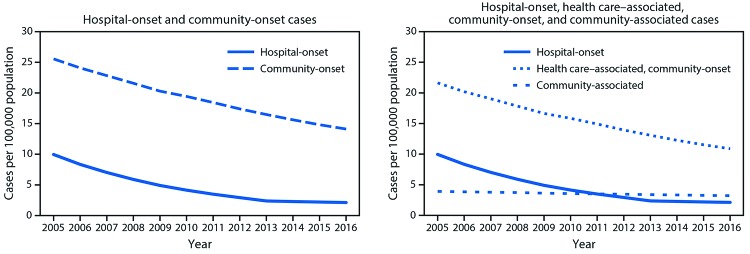
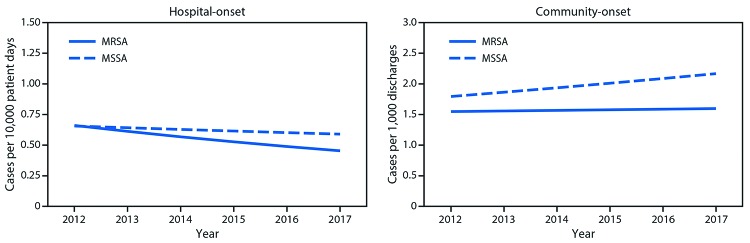
INTRODUCTION: Staphylococcus aureus is one of the most common pathogens in health care facilities and in the community, and can cause invasive infections, sepsis, and death. Despite progress in preventing methicillin-resistant S. aureus (MRSA) infections in health care settings, assessment of the problem in both health care and community settings is needed. Further, the epidemiology of methicillin-susceptible S. aureus (MSSA) infections is not well described at the national level. METHODS: Data from the Emerging Infections Program (EIP) MRSA population surveillance (2005-2016) and from the Premier and Cerner Electronic Health Record databases (2012-2017) were analyzed to describe trends in incidence of hospital-onset and community-onset MRSA and MSSA bloodstream infections and to estimate the overall incidence of S. aureus bloodstream infections in the United States and associated in-hospital mortality. RESULTS: In 2017, an estimated 119,247 S. aureus bloodstream infections with 19,832 associated deaths occurred. During 2005-2012 rates of hospital-onset MRSA bloodstream infection decreased by 17.1% annually, but the decline slowed during 2013-2016. Community-onset MRSA declined less markedly (6.9% annually during 2005-2016), mostly related to declines in health care-associated infections. Hospital-onset MSSA has not significantly changed (p = 0.11), and community-onset MSSA infections have slightly increased (3.9% per year, p<0.0001) from 2012 to 2017. CONCLUSIONS AND IMPLICATIONS FOR PUBLIC HEALTH PRACTICE: Despite reductions in incidence of MRSA bloodstream infections since 2005, S. aureus infections account for significant morbidity and mortality in the United States. To reduce the incidence of these infections further, health care facilities should take steps to fully implement CDC recommendations for prevention of device- and procedure-associated infections and for interruption of transmission. New and novel prevention strategies are also needed.
Overview
The claims and statistics of this paper haven’t been checked yet.
Free: it reads the open-access text and checks the first 5 claims that cite a source we can check. Create a free account to check every claim.
Integrity signals
Registry
Cites
Statistics
Figures
Verification
Claims the paper makes
The claims and statistics of this paper haven’t been checked yet.
Free: it reads the open-access text and checks the first 5 claims that cite a source we can check. Create a free account to check every claim.
Claims other papers make about this one
Each is checked against this paper’s own text: does it say what the citing paper says it does?
The source backs part of the claim, not all of it — or backs it for a different population, condition or comparison.
In the citing paper
“other studies have reported recent declines in community-onset MRSA, Pseudomonas, and Acinetobacter infections.”
From Trends in empiric broad-Spectrum antibiotic use for suspected community-onset Sepsis in US hospitals (2024) · cites this paper as [35]
Experimental — accuracy not yet measured
Self-check
Percentages, sums and reported differences re-computed from the paper’s own numbers.
The self-check needs the paper’s full text.
Citations
Cites
An Intervention to Decrease Catheter-Related Bloodstream Infections in the ICU
Pronovost, P., Needham, D., Berenholtz, S., Sinopoli, D., Chu, H., Cosgrove, S., Sexton, B., Hyzy, R., Welsh, R., Roth, G., et al. (2006) · New England Journal of Medicine · doi:10.1056/nejmoa061115 · Cited by 4,387
Klevens, R. M. (2007) · JAMA · doi:10.1001/jama.298.15.1763 · Cited by 3,726
Waves of resistance: Staphylococcus aureus in the antibiotic era
Chambers, H. F., & DeLeo, F. R. (2009) · Nature Reviews Microbiology · doi:10.1038/nrmicro2200 · Cited by 2,718 · cited 1×
“aureus strain epidemiology have occurred (22).”
Incidence and trends of sepsis in US hospitals using clinical vs claims data, 2009-2014.
Rhee, C., Dantes, R., Epstein, L., Murphy, D. J., Seymour, C. W., Iwashyna, T. J., Kadri, S. S., Angus, D. C., Danner, R. L., Fiore, A. E., et al. (2017) · JAMA · doi:10.1001/jama.2017.13836 · Cited by 1,884 · cited 1×
“As has been previously shown with another infection-related condition (sepsis), clinical criteria using EHR data are immune to temporal variations in coding practices that can be significant (30), whereas death-certificate data are an insensitive measure of sepsis-related mortality (31).”
BackgroundSelf-citationChanges in prevalence of health care-associated infections in U.S. hospitals
Magill, S. S., O’Leary, E., Janelle, S. J., Thompson, D. L., Dumyati, G., Nadle, J., Wilson, L. E., Kainer, M. A., Lynfield, R., Greissman, S., et al. (2018) · New England Journal of Medicine · doi:10.1056/nejmoa1801550 · Cited by 1,249
Self-citationMedication-Assisted Therapies — Tackling the Opioid-Overdose Epidemic
Volkow, N. D., Frieden, T. R., Hyde, P. S., & Cha, S. S. (2014) · New England Journal of Medicine · doi:10.1056/nejmp1402780 · Cited by 1,015 · cited 1×
“Prevention of opioid misuse, increasing access and linkage to medicationassisted treatment for persons with opioid use disorder (27), ensuring access to sterile injecting equipment, improving education about safer injection practices and how to recognize early signs of infection, and linking those with an infection to…”
BackgroundEpidemiology of Methicillin‐Resistant Staphylococcus aureus
Boucher, H. W., & Corey, G. R. (2008) · Clinical Infectious Diseases · doi:10.1086/533590 · Cited by 805 · cited 10×
“Methicillin-resistant S. aureus (MRSA) has long been recognized as a pathogen associated with health care settings; however, in the 1990s, community-associated MRSA infections, causing mostly SSTI, emerged in the United States (2).”
BackgroundInfluentialVeterans Affairs Initiative to Prevent Methicillin-Resistant Staphylococcus aureus Infections
Jain, R., Kralovic, S. M., Evans, M. E., Ambrose, M., Simbartl, L. A., Obrosky, D. S., Render, M. L., Freyberg, R. W., Jernigan, J. A., Muder, R. R., et al. (2011) · New England Journal of Medicine · doi:10.1056/nejmoa1007474 · Cited by 496 · cited 1×
“The reasons for the declines in hospital-onset MRSA bloodstream infections might be attributable to a variety of infection control efforts, including improvements in preventing device- and procedure-associated infections (15–17), as well as efforts to interrupt MRSA transmission in the hospital setting (5,18).”
BackgroundSelf-citationVital Signs: Central Line–Associated Blood Stream Infections—United States, 2001, 2008, and 2009
(2011) · Annals of Emergency Medicine · doi:10.1016/j.annemergmed.2011.07.035 · Cited by 473
Dantes, R. (2013) · JAMA Internal Medicine · doi:10.1001/jamainternmed.2013.10423 · Cited by 452
Cited by
Items 201–300 of 702
Linking S. aureus Immune Evasion Mechanisms to Staphylococcal Vaccine Failures
Hajam, I. A., & Liu, G. Y. (2024) · Antibiotics · doi:10.3390/antibiotics13050410 · Cited by 20
“SA is a leading cause of infections within healthcare facilities in the United States, with approximately 20,000 individuals succumbing to invasive diseases in 2017 [3].”
BackgroundBanar, M., Kamyab, H., Torkashvand, N., Salehı, T. Z., Sepehrizadeh, Z., Shahverdi, A. R., Pourmand, M. R., & Yazdi, M. H. (2025) · PLoS ONE · doi:10.1371/journal.pone.0316157 · Cited by 23
Staphylococcus aureus Bacteremia: Contemporary Management.
Abraham, L., & Bamberger, D. M. (2020) · Missouri medicine · Cited by 44
Bis-Indole Alkaloids Isolated from the Sponge Spongosorites calcicola Disrupt Cell Membranes of MRSA
Khan, N. A., Kaur, N., Owens, P., Thomas, O., & Boyd, A. (2022) · International Journal of Molecular Sciences · doi:10.3390/ijms23041991 · Cited by 22
West, K. H. J., Gahan, C. G., Kierski, P. R., Calderon, D. F., Zhao, K., Czuprynski, C. J., McAnulty, J. F., Lynn, D. M., & Blackwell, H. E. (2022) · Angewandte Chemie International Edition · doi:10.1002/anie.202201798 · Cited by 19
Darwish, R. M., & Salama, A. H. (2022) · Antibiotics · doi:10.3390/antibiotics11081024 · Cited by 19
Chang, J. H. T., Tasellari, A., Wagner, J. L., & Scheetz, M. H. (2023) · Expert Review of Anti-infective Therapy · doi:10.1080/14787210.2023.2275663 · Cited by 22
Ceftobiprole for Treatment of MRSA Blood Stream Infection: A Case Series
Mahmoud, E., Mansour, S. A., Bosaeed, M., Alharbi, A., Alsaedy, A., Johani, S. A., Alalwan, B., & Othman, A. (2020) · Infection and Drug Resistance · doi:10.2147/idr.s254395 · Cited by 21
Buonomini, A. R., Riva, E., Bonaventura, G. D., & Gherardi, G. (2020) · Diagnostics · doi:10.3390/diagnostics10100830 · Cited by 23
“Indeed, S. aureus continue to be leading cause of bloodstream infections (BSI) [5].”
BackgroundInfluentialSynthetic Biology‐Based Engineering Living Therapeutics for Antimicrobial Application
Huang, S., Zhao, S., Zhao, H., Wen, M., & Guo, Z. (2025) · Exploration · doi:10.1002/exp.20240045 · Cited by 26
Staphylococcus aureus Putative Vaccines Based on the Virulence Factors: A Mini-Review
Mirzaei, B., Babaei, R., Zeighami, H., Dadar, M., & Soltani, A. (2021) · Frontiers in Microbiology · doi:10.3389/fmicb.2021.704247 · Cited by 19
Ye, C., Wang, C., Li, Z., Li, X., Pan, J., Liu, L., & Wang, Z. (2021) · Infectious Diseases and Therapy · doi:10.1007/s40121-021-00539-y · Cited by 21
Thiede, S. N., Snitkin, E. S., Trick, W. E., Payne, D., Aroutcheva, A. A., Weinstein, R. A., & Popovich, K. J. (2022) · The Journal of Infectious Diseases · doi:10.1093/infdis/jiac056 · Cited by 30
A review on circular RNAs and bacterial infections
Yuan, H., Liu, F., Long, J., Duan, G., & Yang, H. (2023) · International Journal of Biological Macromolecules · doi:10.1016/j.ijbiomac.2023.125391 · Cited by 18
Phage activity against Staphylococcus aureus is impaired in plasma and synovial fluid
Mutti, M., Moreno, D. S., Restrepo-Córdoba, M., Visram, Z., Resch, G., & Corsini, L. (2023) · Scientific Reports · doi:10.1038/s41598-023-45405-8 · Cited by 18
Raghuram, V., Gunoskey, J. J., Hofstetter, K. S., Jacko, N. F., Shumaker, M. J., Hu, Y., Read, T. D., & David, M. Z. (2023) · Microbial Genomics · doi:10.1099/mgen.0.001111 · Cited by 23
Program, C. N. I. S. (2024) · Canada Communicable Disease Report · doi:10.14745/ccdr.v50i06a02 · Cited by 26
Surveillance of antimicrobial resistant bacteria in flies (Diptera) in Rio de Janeiro city
Carramaschi, I. N., Lopes, J. C. O., Leite, J. A., Carneiro, M. T., Barbosa, R. R., Boas, M. H. V., Rangel, K., Chagas, T. P. G., Queiroz, M. M. D. C., & Zahner, V. (2021) · Acta Tropica · doi:10.1016/j.actatropica.2021.105962 · Cited by 21
Structure-guided microbial targeting of antistaphylococcal prodrugs
Miller, J. J., Shah, I. T., Hatten, J., Barekatain, Y., Mueller, E. A., Moustafa, A. M., Edwards, R. L., Dowd, C. S., Hoops, G. C., Johnson, R. J., et al. (2021) · eLife · doi:10.7554/elife.66657 · Cited by 19
“Methicillin-resistant S. aureus (MRSA) has been labeled a “serious threat” by the Centers for Disease Control and Prevention3,5,6.”
BackgroundLong, N., Qiu, M., Zuo, Y., & Deng, H. (2025) · Infection and Drug Resistance · doi:10.2147/idr.s491358 · Cited by 21
Woźniak, A., & Grinholc, M. (2022) · Antioxidants · doi:10.3390/antiox11091660 · Cited by 20
Antimicrobial Resistance in Libya: A Systematic Literature Review of Two Decades
Atia, A., Hosien, B., & Belhaj, H. (2022) · Biomedical and Biotechnology Research Journal (BBRJ) · doi:10.4103/bbrj.bbrj_191_22 · Cited by 26
“[58] In the current study, among 3458 tested S. aureus against methicillin, 916 (26.5”
InfluentialZore, M., San-Martin-Galindo, P., Reigada, I., Hanski, L. L., Fallarero, A., Yli‐Kauhaluoma, J. T., & Patel, J. Z. (2023) · European Journal of Medicinal Chemistry · doi:10.1016/j.ejmech.2023.115921 · Cited by 17
Trained immunity in recurrent Staphylococcus aureus infection promotes bacterial persistence
Lin, X., Liu, Z., Zhou, C., Zhang, L., Yu, G., Luo, X.-Y., Zhang, J.-G., Chen, W., & Yang, Y. (2024) · PLoS Pathogens · doi:10.1371/journal.ppat.1011918 · Cited by 19
Slizen, M. V., & Galzitskaya, O. V. (2020) · International Journal of Molecular Sciences · doi:10.3390/ijms21217839 · Cited by 17
Yetmar, Z. A., Razi, S., Nayfeh, T., Gerberi, D., Mahmood, M., & Saleh, O. A. (2021) · International Journal of Antimicrobial Agents · doi:10.1016/j.ijantimicag.2021.106486 · Cited by 18
Opdensteinen, P., Meyer, S., & Buyel, J. F. (2021) · Frontiers in Chemical Engineering · doi:10.3389/fceng.2021.737010 · Cited by 19
The Global Antimicrobial Resistance Trends of Staphylococcus aureus and Influencing Factors
Yuan, H., Xu, J., Wang, Y., Li, Y., Hao, Y., Long, J., Liu, F., Zhu, J., & Yang, H. (2025) · Microbiology Research · doi:10.3390/microbiolres16060118 · Cited by 27
Host-Targeted Therapeutics against Multidrug Resistant Intracellular Staphylococcus aureus
Bravo-Santano, N., Behrends, V., & Letek, M. (2019) · Antibiotics · doi:10.3390/antibiotics8040241 · Cited by 18
“In fact, antibiotic treatment failure occurs in 20% of patients, leading to an estimated 20,000 deaths per year in the United States alone [19], despite the fact that the clinical isolates often show sensitivity to the administered antibiotics [20].”
BackgroundThottacherry, E. D., & Cortes-Penfield, N. W. (2022) · Clinical Infectious Diseases · doi:10.1093/cid/ciac363 · Cited by 16
Tang, Y., Zou, F., Chen, C., Zhang, Y., Shen, Z., Liu, Y., Deng, Q., Yu, Z., & Wen, Z. (2023) · ACS Omega · doi:10.1021/acsomega.2c06569 · Cited by 18
Seo, S. B., Lee, J., Kim, E., Lim, J., Jang, S., Son, S. U., Jeong, Y., Kang, T., Jung, J., Lee, K. G., et al. (2024) · Talanta · doi:10.1016/j.talanta.2024.126073 · Cited by 16
Survival of Staphylococcus aureus on sampling swabs stored at different temperatures
Yagüe, D. P., Mihaljevic, J. R., Mbegbu, M., Wood, C., Hepp, C. M., Kyman, S., Hornstra, H., Trotter, R. T., Cope, E. K., & Pearson, T. (2021) · Journal of Applied Microbiology · doi:10.1111/jam.15023 · Cited by 20
Yi, Y.-H., Wang, J., Yin, W., & Xu, W. (2021) · Microbial Drug Resistance · doi:10.1089/mdr.2020.0350 · Cited by 19
“3,6 Vancomycin (VAN) or daptomycin (DAP) monotherapy has been recommended as the standard therapy for MRSA bacteremia by Infectious Disease Society of America guidelines.”
Ridder, M. J., McReynolds, A. K. G., Dai, H., Pritchard, M. T., Markiewicz, M. A., & Bose, J. L. (2022) · Infection and Immunity · doi:10.1128/iai.00065-22 · Cited by 19
Group 1 CD1-restricted T cells contribute to control of systemic Staphylococcus aureus infection
Visvabharathy, L., Genardi, S., Cao, L., He, Y. Z., Alonzo, F., Berdyshev, E. V., & Wang, C.-R. (2020) · PLoS Pathogens · doi:10.1371/journal.ppat.1008443 · Cited by 19
Legg, A., Meagher, N., Johnson, S. A. S., Roberts, M. A., Cass, A., Scheetz, M. H., Davies, J., Roberts, J. A., Davis, J. S., & Tong, S. Y. C. (2022) · Clinical Drug Investigation · doi:10.1007/s40261-022-01204-z · Cited by 20
Bavaro, D. F., Belati, A., Bussini, L., Cento, V., Diella, L., Gatti, M., Saracino, A., Pea, F., Viale, P., & Bartoletti, M. (2023) · Expert Opinion on Drug Safety · doi:10.1080/14740338.2023.2299377 · Cited by 19
“…after widespread introduction of enhanced infection control efforts, including generalization of hand-washing (using hydro-alcoholic solution), mirrored by a generalized decrease in the incidence of MRSA BSIs in US and Europe, as well as in other countries with systematic surveillance [29,36,37].”
BackgroundWisal, A., Ullah, A., Anwar, W., Khan, Y., Basharat, Z., Irfan, M., Karim, A., Irfan, M., Imran, M., Morel, C. M., et al. (2024) · Molecular Genetics and Genomics · doi:10.1007/s00438-024-02115-8 · Cited by 15
“In 2017, an estimated 119,247 S. aureus blood-stream infections with 19,832 associated deaths has occurred (Kourtis et al. 2019).”
MRSA transmission in the community: emerging from under the radar
Kluytmans, J. A. J. W., & Harbarth, S. (2019) · The Lancet Infectious Diseases · doi:10.1016/s1473-3099(19)30539-0 · Cited by 15
Shooting yourself in the foot: How immune cells induce antibiotic tolerance in microbial pathogens
Beam, J. E., Rowe, S. E., & Conlon, B. P. (2021) · PLoS Pathogens · doi:10.1371/journal.ppat.1009660 · Cited by 15
“However, high rates of treatment failure are often attributed to antibiotic-tolerant cells, rather than resistance [2,3].”
BackgroundShohayeb, M. M., El-Banna, T., Elsawy, L. E., & El-Bouseary, M. M. (2023) · BMC Microbiology · doi:10.1186/s12866-023-03065-8 · Cited by 17
“However, a decrease in the rates of MRSA infections has been reported in the UK and several developed countries [16].”
BackgroundBurgin, D. J., Liu, R., Hsieh, R. C., Heinzinger, L. R., & Otto, M. J. (2022) · Expert Opinion on Investigational Drugs · doi:10.1080/13543784.2022.2040015 · Cited by 21
Vancomycin plus ceftaroline for persistent methicillin‐resistant Staphylococcus aureus bacteremia
Kufel, W. D., Parsels, K. A., Blaine, B. E., Steele, J. M., Mahapatra, R., Paolino, K. M., & Thomas, S. J. (2022) · Pharmacotherapy The Journal of Human Pharmacology and Drug Therapy · doi:10.1002/phar.2741 · Cited by 16
Chromophore-Targeting Precision Antimicrobial Phototherapy
Jusuf, S., & Dong, P. (2023) · Cells · doi:10.3390/cells12222664 · Cited by 14
Crawford, L. M., Pertsovskaya, V., Shanklin, A., Zhang, A., & Hamdy, R. F. (2023) · Journal of the Pediatric Infectious Diseases Society · doi:10.1093/jpids/piad111 · Cited by 15
Zhang, J., Liu, Q., Zhao, H., Li, G., Yi, Y., & Shang, R. (2024) · International Journal of Molecular Sciences · doi:10.3390/ijms25042256 · Cited by 15
“It is estimated that each year, approximately 72,000 cases of serious invasive disease and 10,000 deaths are caused by MRSA in the US [4,5].”
BackgroundEpidemiology and Mortality of Invasive Staphylococcus aureus Infections in Hospitalized Infants
Jennings, M. R., Elhaissouni, N., Colantuoni, E., Prochaska, E. C., Johnson, J., Xiao, S., Clark, R. H., Greenberg, R. G., Benjamin, D. K., & Milstone, A. M. (2025) · Archives of Pediatrics and Adolescent Medicine · doi:10.1001/jamapediatrics.2025.0429 · Cited by 18
Spa typing of Staphylococcus aureus Isolated from Clinical Specimens from Outpatients in Iraq
Mohammed, K. A., ABDULKAREEM, Z. H., Al-Zaalan, A. R., & YAQOOB, A. K. (2021) · Polish Journal of Microbiology · doi:10.33073/pjm-2021-007 · Cited by 20
Prognostic significance of early platelet dynamics in Staphylococcus aureus bacteremia
Douglas-Louis, R., Lou, M., Lee, B., Minejima, E., Bubeck-Wardenburg, J., & Wong‐Beringer, A. (2023) · BMC Infectious Diseases · doi:10.1186/s12879-023-08046-w · Cited by 14
“Introduction Staphylococcus aureus is a leading cause of sepsis and mortality in the United States [1].”
BackgroundInfluentialSchlattmann, A., von Lützau, K., Kaspar, U., & Becker, K. (2020) · Microorganisms · doi:10.3390/microorganisms8040514 · Cited by 16
“An important pathogen in this context is methicillin-resistant Staphylococcus aureus (MRSA): Almost 20,000 deaths were associated with 120,000 bloodstream infections in the USA alone in 2017 [2].”
BackgroundGandhi, T. N., & Malani, P. N. (2020) · JAMA · doi:10.1001/jama.2019.21472 · Cited by 14
A Quantitative Assessment of Staphylococcus aureus Community Carriage in Yuma, Arizona
Russakoff, B., Wood, C., Lininger, M. R., Barger, S. D., Trotter, R. T., Maltinsky, S., Mbegbu, M., Coyne, B., Yagüe, D. P., Kyman, S., et al. (2022) · The Journal of Infectious Diseases · doi:10.1093/infdis/jiac438 · Cited by 15
“However, progress in the healthcare setting has slowed and is out of step with the rise in cases of community-onset bacteremia [3, 4].”
BackgroundIm, J., Lee, D.-W., Park, O.-J., Natarajan, S., Park, J., Yun, C., & Han, S. H. (2022) · Frontiers in Microbiology · doi:10.3389/fmicb.2022.1063650 · Cited by 13
The impact of COVID on bacterial sepsis
Dar, S. H., Erickson, D. L., Manca, C., Lozy, T., Shashkina, E., Kordalewska, M., Mediavilla, J. R., Chen, L., Rojtman, A. D., & Kreiswirth, B. N. (2023) · European Journal of Clinical Microbiology & Infectious Diseases · doi:10.1007/s10096-023-04655-0 · Cited by 13
Isolation and characterization of persisters of the pathogenic microorganism Staphylococcus aureus
Liu, S., Laman, P., Jensen, S., van der Wel, N. N., Kramer, G., Zaat, S. A. J., & Brul, S. (2024) · iScience · doi:10.1016/j.isci.2024.110002 · Cited by 17
“2 Unfortunately, S.aureus isalsooneofthe leadingpathogenscausingchronicinfections,primarilydue tothepresence of persisters.”
Dupper, A. C., Sullivan, M. J., Chacko, K., Mishkin, A. D., Ciferri, B., Kumaresh, A., Caban, A. B., Oussenko, I. A., Beckford, C., Zeitouni, N. E., et al. (2019) · Open Forum Infectious Diseases · doi:10.1093/ofid/ofz302 · Cited by 12
SaQuant: a real-time PCR assay for quantitative assessment of Staphylococcus aureus
Wood, C., Sahl, J. W., Maltinsky, S., Coyne, B., Russakoff, B., Yagüe, D. P., Bowers, J. R., & Pearson, T. (2021) · BMC Microbiology · doi:10.1186/s12866-021-02247-6 · Cited by 15
“In contrast, community acquired (CA) MRSA infections increased and have remained steady since 2008 [2].”
BackgroundChen, Z., Gou, Q., Xiong, Q., Duan, L., Yuan, Y., Zhu, J., Zou, J., Chen, L., Jing, H., Zhang, X., et al. (2021) · Frontiers in Immunology · doi:10.3389/fimmu.2021.684823 · Cited by 15
Campbell, M., Mott, M., Owen, J. R., Reznicek, J. E., Beck, C. A., Muthukrishnan, G., Golladay, G. J., & Kates, S. L. (2022) · Journal of Orthopaedic Research® · doi:10.1002/jor.25282 · Cited by 14
Protein-conjugated microbubbles for the selective targeting of S. aureus biofilms
Caudwell, J. A., Tinkler, J. M., Johnson, B. R. G., McDowall, K. J., Alsulaimani, F., Tiede, C., Tomlinson, D. C., Freear, S., Turnbull, W. B., Evans, S. D., et al. (2022) · Biofilm · doi:10.1016/j.bioflm.2022.100074 · Cited by 15
Integrating complex host-pathogen immune environments into S. aureus vaccine studies
Tsai, C., Hajam, I. A., Caldera, J. R., & Liu, G. Y. (2022) · Cell chemical biology · doi:10.1016/j.chembiol.2022.04.003 · Cited by 15
Kostić, M., Ivanov, M., Stojković, D. S., Ćirić, A., & Sokóvić, M. (2020) · Lekovite sirovine · doi:10.5937/leksir2040057k · Cited by 16
“In the case of bloodstream infection caused by this bacterium there is a serious concern due to high mortality rates: in the United States among 120000 S. aureus bloodstream infections recorded in 2017, 20000 were with death outcome (Kourtis et al., 2019).”
Backgroundde Carvalho, C. C. C. R., Taglialegna, A., & Rosato, A. E. (2021) · Journal of Antimicrobial Chemotherapy · doi:10.1093/jac/dkab356 · Cited by 13
Neto, N. A. S., Oliveira, J. T. A., Aguiar, T. K. B., Bezerra, L. P., Branco, L. A. C., Mesquita, F. P., Freitas, C. D. T., & Souza, P. F. N. (2022) · Pathogens · doi:10.3390/pathogens11090995 · Cited by 16
“aureus can also form biofilms, which could increase resistance by 1000 times [2,4,5].”
BackgroundNguyen, N. T. Q., Doan, T. N. M., Sato, K., Tkaczyk, C., Sellman, B. R., & Diep, B. A. (2023) · Frontiers in Immunology · doi:10.3389/fimmu.2023.1260627 · Cited by 13
From Host Defense to Metabolic Signatures: Unveiling the Role of γδ T Cells in Bacterial Infections
Nanda, N., & Alphonse, M. P. (2024) · Biomolecules · doi:10.3390/biom14020225 · Cited by 18
“Mainly, community-associated methicillin-resistant S. aureus (CA-MRSA) infection is a looming threat, claiming over 20,000 lives in the US annually [40].”
BackgroundModerate Proficiency in Suture Techniques Among Nurses: A Cross-Sectional Study
Abdul-Ra’aoof, H. H., Dawood, S. B., Jassim, F. A., Jassim, S. K., Issa, S. S., Tiryag, A. M., Akber, M. A., & Atiyah, M. A. (2023) · Academia Open · doi:10.21070/acopen.9.2024.8380 · Cited by 12
Outcomes of a pharmacist‐driven vancomycin monitoring initiative in a community hospital
Joseph, K., Ramireddy, K., Madison, G., Turco, T. F., & Lui, M. (2021) · Journal of Clinical Pharmacy and Therapeutics · doi:10.1111/jcpt.13409 · Cited by 12
Hindy, J.-R., Quintero-Martinez, J. A., Lahr, B. D., Palraj, R., Go, J. R., Fida, M., Saleh, O. A., Arshad, V., Talha, K. M., DeSimone, D. C., et al. (2022) · Open Forum Infectious Diseases · doi:10.1093/ofid/ofac190 · Cited by 15
“First, although 4 contemporary studies conducted in Denmark, Finland, Australia, and Spain reported an increase in national SAB rates, our IRs of SAB, especially when stratified by sex, were above their highest levels [32–35].”
BackgroundResultInfluentialPidwill, G. R., Pyrah, J. F., Sutton, J. A. F., Best, A., Renshaw, S. A., & Foster, S. J. (2023) · Scientific Reports · doi:10.1038/s41598-023-27928-2 · Cited by 14
Nguena-Dongue, B.-N., Tchamgoue, J., Ngandjui, Y. A. T., Lunga, P. K., Toghueo, R. M. K., Menkem, E. Z., Melogmo, Y. K. D., Tchouankeu, J. C., Kouam, S. F., & Boyom, F. F. (2023) · PLoS ONE · doi:10.1371/journal.pone.0282008 · Cited by 12
“It was responsible for more than 19 thousand and 157 thousand deaths in the USA and Europe respectively [3].”
BackgroundRomero-González, L. E., Rojas-Vargas, J., Muriel‐Millán, L. F., Bustos‐Martínez, J., Bustamante, V. H., & Pardo‐López, L. (2023) · PLoS ONE · doi:10.1371/journal.pone.0288504 · Cited by 12
Anti-MRSA agent discovery using Caenorhabditis elegans-based high-throughput screening
Kim, S. M., Escorbar, I., Lee, K., Fuchs, B. B., Mylonakis, E. E., & Kim, W. (2020) · The Journal of Microbiology · doi:10.1007/s12275-020-0163-8 · Cited by 14
Tang, K., Tang, D., Wang, Q., & Li, C. (2020) · Journal of Microbiological Methods · doi:10.1016/j.mimet.2020.106109 · Cited by 11
Sidairi, H. A., Reid, E. K., LeBlanc, J. J., Sandila, N., Head, J., Davis, I. R., & Bonnar, P. (2023) · Microbiology Spectrum · doi:10.1128/spectrum.01648-22 · Cited by 12
Souza, S. S. R., Smith, J. T., Bruce, S. A., Gibson, R. J., Martin, I. W., & Andam, C. P. (2023) · BMC Microbiology · doi:10.1186/s12866-023-02985-9 · Cited by 12
Pruitt, E. L., Zhang, R., Ross, D. H., Ashford, N. K., Chen, X., Alonzo, F., Bush, M. F., Werth, B. J., & Xu, L. (2023) · mSphere · doi:10.1128/msphere.00368-23 · Cited by 19
Singh, C. S., Mehata, A. K., Viswanadh, M. K., Tiwari, P., Saini, R., Singh, S. K., Tilak, R., Tiwari, K. N., & Muthu, M. S. (2024) · Colloids and Surfaces A Physicochemical and Engineering Aspects · doi:10.1016/j.colsurfa.2024.133287 · Cited by 11
Li, J., Xie, S., Gao, Q., & Deng, Z. (2024) · Brazilian Journal of Microbiology · doi:10.1007/s42770-024-01250-z · Cited by 11
“The data show that bloodstream infections caused by MRSA are increasing by 3.9% annually in the community in the USA [6].”
InfluentialGlobal insights into MRSA bacteremia: a bibliometric analysis and future outlook
Lin, J., Lai, J.-K., Chen, J., Cai, J.-Y., Yang, Z., Li, Y., Zheng, Z.-T., & Guo, X. (2025) · Frontiers in Microbiology · doi:10.3389/fmicb.2024.1516584 · Cited by 18
Rallis, D., Atzemoglou, N., Kapetaniou, K., Giaprou, L.-E., Baltogianni, M. S., & Giapros, V. I. (2025) · Pathogens · doi:10.3390/pathogens14020155 · Cited by 15
“Despite the abundance of data reported from NICUs worldwide, multicenter or population-based studies to elucidate the epidemiology and clinical features of neonatal MRSA colonization and infections are lacking.”
Kizziah, J. L., Mukherjee, A., Parker, L. K., & Dokland, T. (2025) · Structure · doi:10.1016/j.str.2025.03.007 · Cited by 11
Sutcliffe, C. G., Grant, L. R., Reid, A., Douglass, G., Brown, L. B., Kellywood, K., Weatherholtz, R., Hubler, R., Quintana, A., Close, R. M., et al. (2020) · Open Forum Infectious Diseases · doi:10.1093/ofid/ofaa061 · Cited by 12
Lincy, S. A., Richard, Y. A., Vinitha, T., Balamurugan, K., & Dharuman, V. (2022) · Biosensors and Bioelectronics · doi:10.1016/j.bios.2022.114849 · Cited by 12
Hassan, R. M., ElAnany, M. G., Mostafa, M., Yousef, R., & Salem, S. T. (2023) · Journal of Microbiology Immunology and Infection · doi:10.1016/j.jmii.2023.04.005 · Cited by 12
Wei, M. H., Flowers, L. J., Knight, S. A. B., Zheng, Q., Murga-Garrido, S. M., Uberoi, A., Pan, J. T.-C., Walsh, J., Schroeder, E. A., Chu, E. W., et al. (2023) · mSphere · doi:10.1128/msphere.00177-23 · Cited by 12
Shalaby, M.-A. W., Dokla, E. M. E., Serya, R. A. T., & Abouzid, K. A. M. (2019) · Archives of Pharmaceutical Sciences Ain Shams University · doi:10.21608/aps.2019.16625.1010 · Cited by 11
Taha, A. E., Badr, M. F.-ِ., El-Morsy, F. E., & Hammad, E. M. (2019) · Journal of Pure and Applied Microbiology · doi:10.22207/jpam.13.4.23 · Cited by 10
Ngoi, S. T., Niek, W. K., Lee, Y. W., AbuBakar, S., & Teh, C. S. J. (2021) · Scientific Reports · doi:10.1038/s41598-021-83661-8 · Cited by 11
Mechanics of Lymphatic Pumping and Lymphatic Function
Razavi, M. S., Munn, L. L., & Padera, T. P. (2024) · Cold Spring Harbor Perspectives in Medicine · doi:10.1101/cshperspect.a041171 · Cited by 13
(2024) · doi:10.1101/2024.12.10.627806 · Cited by 11
Therapeutic potential of spiro compounds against Staphylococcus aureus : a comprehensive review
Kumar, P., Singampalli, A., Bandela, R., Bellapukonda, S. M., Nanduri, S., & Yaddanapudi, V. M. (2025) · RSC Medicinal Chemistry · doi:10.1039/d5md00497g · Cited by 12
Samy, R. P., Mackessy, S. P., Jeyasankar, A., Ponraj, M. R., Franco, O. L., Cooper, M. A., Kandasamy, M., Mohanta, T. K., Bhagavathsingh, J., & Vaiyapuri, S. (2023) · International Journal of Molecular Sciences · doi:10.3390/ijms24054359 · Cited by 11
“aureus causes approximately 120,000 bloodstream infections globally in each year [2], and more than 90% of S.”
BackgroundPerini, H. F., Pereira, B. D. B., Sousa, E. G., Matos, B. S., Prado, L. C. D. S., Azevedo, V., Soares, S. D. C., & da Silva, M. V. (2024) · Microbial Pathogenesis · doi:10.1016/j.micpath.2024.107065 · Cited by 13
Treatment of Complicated Gram-Positive Bacteremia and Infective Endocarditis
Schellong, P., Joean, O., Pletz, M. W., Hagel, S., & Weis, S. (2024) · Drugs · doi:10.1007/s40265-024-02135-z · Cited by 13
Dey, S., Gudipati, S., Giuliano, C. A., Zervos, M., Monk, J. M., Szubin, R., Jorgensen, S. C. J., Sakoulas, G., & Berti, A. D. (2019) · Antibiotics · doi:10.3390/antibiotics9010002 · Cited by 10
Vlachaki, I., Vacchelli, M., Zinzi, D., Falla, E., Jiang, Y., Mantopoulos, T., & Nathwani, D. (2021) · BMC Infectious Diseases · doi:10.1186/s12879-021-06736-x · Cited by 10
“Despite a decline in MRSA- related hospitalisations since 2005, MRSA accounts for significant morbidity and mortality in the US [11, 12].”
BackgroundJauro, S., Hamman, M. M., Malgwi, K. D., Musa, J. A., Ngoshe, Y. B., Gulani, I. A., Kwoji, I. D., Iliya, I., Abubakar, M. B., & Fasina, F. O. (2022) · Veterinary World · doi:10.14202/vetworld.2022.1141-1148 · Cited by 11
Gupta, S. K., Pfeltz, R. F., Wilkinson, B. J., & Gustafson, J. E. (2022) · Antibiotics · doi:10.3390/antibiotics11081051 · Cited by 9
“FA is approved for use in Europe, the United Kingdom, Australia, New Zealand, Canada, and a number of Asian countries, but not in the United States.”
BackgroundInfluential
Metadata
- Authors
- Kourtis, A. P., Hatfield, K., Baggs, J., Mu, Y., See, I., Epson, E., Nadle, J., Kainer, M. A., Dumyati, G., Petit, S., Ray, S. M., Emerging Infections Program MRSA author group, Ham, D., Capers, C., Ewing, H., Coffin, N., McDonald, L. C., Jernigan, J., & Cardo, D.
- Affiliations
- University of Rochester Medicine (US)
- Corresponding author
- Kourtis, Athena P.
- ORCID
- Venue
- MMWR. Morbidity and Mortality Weekly Report
- Published
- 2019-03-08
- Volume
- 68
- Issue
- 9
- Pages
- 214-219
- ISSN
- 0149-2195 (ISSN-L)
- 1545-861X
- PMC
- PMC6421967
- OpenAlex
- W2919520691
- Cited by
- 701
- References
- 27
- Citations by year
- 2026: 50 · 2025: 96 · 2024: 98 · 2023: 103 · 2022: 127 · 2021: 100 · 2020: 90 · 2019: 36
- FWCI
- 67.67
- Type
- journal article
- Language
- en
- Open access
- diamond
- doi.org
- Locations
- MMWR Morbidity and Mortality Weekly Report (publishedVersion)
- Europe PMC (PubMed Central) (publishedVersion, cc-by)
- PubMed Central (publishedVersion, cc-by)
- PubMed (publishedVersion)
- Topics
- Health Sciences › Medicine › Infectious Diseases › Antimicrobial Resistance in Staphylococcus
- Health Sciences › Medicine › Infectious Diseases › Antibiotic Use and Resistance
- Health Sciences › Medicine › Infectious Diseases › Infection Control in Healthcare
- Keywords
- methicillin-resistant Staphylococcus aureus, methicillin-susceptible Staphylococcus aureus, bloodstream infection, community-onset infection, hospital-onset infection, incidence trends, in-hospital mortality, nosocomial infections, infection control, antimicrobial resistance, United States
- MeSH terms
- Cross Infection, Female, Humans, Male, Methicillin, Population Surveillance, Staphylococcal Infections, Staphylococcus aureus, United States, Incidence, Databases, Factual, Bacteremia, Hospital Mortality, Methicillin-Resistant Staphylococcus aureus, Electronic Health Records
About these checks
Registry, retraction, Cites and statistics results are computed, not judged, with one exception: a printed reference that no index lists is read once by a model before it counts as a citation error. Claims are extracted by a model and kept only when their quote appears verbatim in the text; each cited source is then checked, with a model’s help, for whether it says what the claim relies on. Those verdicts can be wrong — read the claim’s quote and the cited source before relying on one.
Statistics and arithmetic are recomputed, not judged.
Confidence bands are shown only for fields calibrated on our annotated test set. None is calibrated yet, so no band is shown.
What counts as a claim ›How we measure confidence ›How we check this ›
Are you an author, or do you see a problem with this page? Request a review
Data sources
Bibliographic data: Semantic Scholar, OpenAlex, Crossref.
Contains information from the Semantic Scholar Academic Graph Datasets, made available under the ODC Attribution License (ODC-BY 1.0).
Semantic Scholar’s data is described in: Kinney, R., et al. (2023). The Semantic Scholar Open Data Platform. arXiv:2301.10140.
