

Vital Signs: Epidemiology and Recent Trends in Methicillin-Resistant and in Methicillin-Susceptible Staphylococcus aureus Bloodstream Infections — United States
Open accessThe DOI matches its Crossref record; 26 of the 27 references it cites were found in a registry or an index.
Abstract
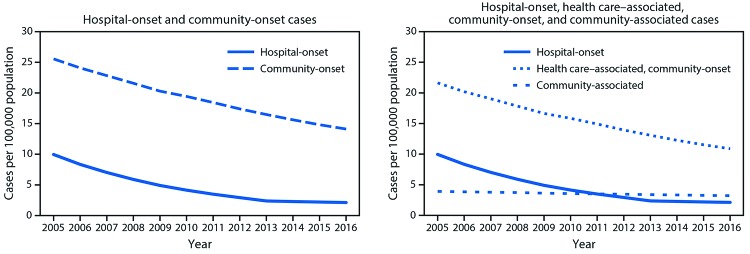
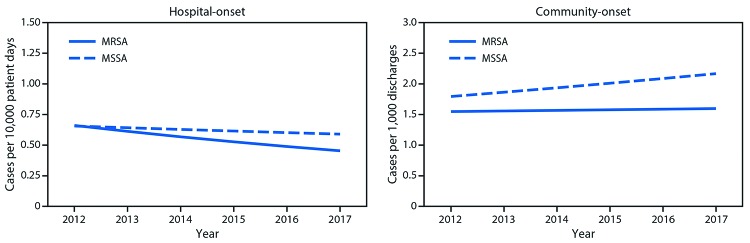
INTRODUCTION: Staphylococcus aureus is one of the most common pathogens in health care facilities and in the community, and can cause invasive infections, sepsis, and death. Despite progress in preventing methicillin-resistant S. aureus (MRSA) infections in health care settings, assessment of the problem in both health care and community settings is needed. Further, the epidemiology of methicillin-susceptible S. aureus (MSSA) infections is not well described at the national level. METHODS: Data from the Emerging Infections Program (EIP) MRSA population surveillance (2005-2016) and from the Premier and Cerner Electronic Health Record databases (2012-2017) were analyzed to describe trends in incidence of hospital-onset and community-onset MRSA and MSSA bloodstream infections and to estimate the overall incidence of S. aureus bloodstream infections in the United States and associated in-hospital mortality. RESULTS: In 2017, an estimated 119,247 S. aureus bloodstream infections with 19,832 associated deaths occurred. During 2005-2012 rates of hospital-onset MRSA bloodstream infection decreased by 17.1% annually, but the decline slowed during 2013-2016. Community-onset MRSA declined less markedly (6.9% annually during 2005-2016), mostly related to declines in health care-associated infections. Hospital-onset MSSA has not significantly changed (p = 0.11), and community-onset MSSA infections have slightly increased (3.9% per year, p<0.0001) from 2012 to 2017. CONCLUSIONS AND IMPLICATIONS FOR PUBLIC HEALTH PRACTICE: Despite reductions in incidence of MRSA bloodstream infections since 2005, S. aureus infections account for significant morbidity and mortality in the United States. To reduce the incidence of these infections further, health care facilities should take steps to fully implement CDC recommendations for prevention of device- and procedure-associated infections and for interruption of transmission. New and novel prevention strategies are also needed.
Overview
The claims and statistics of this paper haven’t been checked yet.
Free: it reads the open-access text and checks the first 5 claims that cite a source we can check. Create a free account to check every claim.
Integrity signals
Registry
Cites
Statistics
Figures
Verification
Claims the paper makes
The claims and statistics of this paper haven’t been checked yet.
Free: it reads the open-access text and checks the first 5 claims that cite a source we can check. Create a free account to check every claim.
Claims other papers make about this one
Each is checked against this paper’s own text: does it say what the citing paper says it does?
The source backs part of the claim, not all of it — or backs it for a different population, condition or comparison.
In the citing paper
“other studies have reported recent declines in community-onset MRSA, Pseudomonas, and Acinetobacter infections.”
From Trends in empiric broad-Spectrum antibiotic use for suspected community-onset Sepsis in US hospitals (2024) · cites this paper as [35]
Experimental — accuracy not yet measured
Self-check
Percentages, sums and reported differences re-computed from the paper’s own numbers.
The self-check needs the paper’s full text.
Citations
Cites
An Intervention to Decrease Catheter-Related Bloodstream Infections in the ICU
Pronovost, P., Needham, D., Berenholtz, S., Sinopoli, D., Chu, H., Cosgrove, S., Sexton, B., Hyzy, R., Welsh, R., Roth, G., et al. (2006) · New England Journal of Medicine · doi:10.1056/nejmoa061115 · Cited by 4,387
Klevens, R. M. (2007) · JAMA · doi:10.1001/jama.298.15.1763 · Cited by 3,726
Waves of resistance: Staphylococcus aureus in the antibiotic era
Chambers, H. F., & DeLeo, F. R. (2009) · Nature Reviews Microbiology · doi:10.1038/nrmicro2200 · Cited by 2,718 · cited 1×
“aureus strain epidemiology have occurred (22).”
Incidence and trends of sepsis in US hospitals using clinical vs claims data, 2009-2014.
Rhee, C., Dantes, R., Epstein, L., Murphy, D. J., Seymour, C. W., Iwashyna, T. J., Kadri, S. S., Angus, D. C., Danner, R. L., Fiore, A. E., et al. (2017) · JAMA · doi:10.1001/jama.2017.13836 · Cited by 1,884 · cited 1×
“As has been previously shown with another infection-related condition (sepsis), clinical criteria using EHR data are immune to temporal variations in coding practices that can be significant (30), whereas death-certificate data are an insensitive measure of sepsis-related mortality (31).”
BackgroundSelf-citationChanges in prevalence of health care-associated infections in U.S. hospitals
Magill, S. S., O’Leary, E., Janelle, S. J., Thompson, D. L., Dumyati, G., Nadle, J., Wilson, L. E., Kainer, M. A., Lynfield, R., Greissman, S., et al. (2018) · New England Journal of Medicine · doi:10.1056/nejmoa1801550 · Cited by 1,249
Self-citationMedication-Assisted Therapies — Tackling the Opioid-Overdose Epidemic
Volkow, N. D., Frieden, T. R., Hyde, P. S., & Cha, S. S. (2014) · New England Journal of Medicine · doi:10.1056/nejmp1402780 · Cited by 1,015 · cited 1×
“Prevention of opioid misuse, increasing access and linkage to medicationassisted treatment for persons with opioid use disorder (27), ensuring access to sterile injecting equipment, improving education about safer injection practices and how to recognize early signs of infection, and linking those with an infection to…”
BackgroundEpidemiology of Methicillin‐Resistant Staphylococcus aureus
Boucher, H. W., & Corey, G. R. (2008) · Clinical Infectious Diseases · doi:10.1086/533590 · Cited by 805 · cited 10×
“Methicillin-resistant S. aureus (MRSA) has long been recognized as a pathogen associated with health care settings; however, in the 1990s, community-associated MRSA infections, causing mostly SSTI, emerged in the United States (2).”
BackgroundInfluentialVeterans Affairs Initiative to Prevent Methicillin-Resistant Staphylococcus aureus Infections
Jain, R., Kralovic, S. M., Evans, M. E., Ambrose, M., Simbartl, L. A., Obrosky, D. S., Render, M. L., Freyberg, R. W., Jernigan, J. A., Muder, R. R., et al. (2011) · New England Journal of Medicine · doi:10.1056/nejmoa1007474 · Cited by 496 · cited 1×
“The reasons for the declines in hospital-onset MRSA bloodstream infections might be attributable to a variety of infection control efforts, including improvements in preventing device- and procedure-associated infections (15–17), as well as efforts to interrupt MRSA transmission in the hospital setting (5,18).”
BackgroundSelf-citationVital Signs: Central Line–Associated Blood Stream Infections—United States, 2001, 2008, and 2009
(2011) · Annals of Emergency Medicine · doi:10.1016/j.annemergmed.2011.07.035 · Cited by 473
Dantes, R. (2013) · JAMA Internal Medicine · doi:10.1001/jamainternmed.2013.10423 · Cited by 452
Cited by
Antibiotic resistance threats in the United States, 2019
(U.S.), C. F. D. C. A. P. (2019) · doi:10.15620/cdc:82532 · Cited by 5,782
Antimicrobial Resistance in ESKAPE Pathogens
De Oliveira, D. M. P., Forde, B. M., Kidd, T. J., Harris, P. N. A., Schembri, M. A., Beatson, S. A., Paterson, D. L., & Walker, M. J. (2020) · Clinical Microbiology Reviews · doi:10.1128/cmr.00181-19 · Cited by 2,078
Pathogenicity and virulence of Staphylococcus aureus
Cheung, G. Y. C., Bae, J. S., & Otto, M. (2021) · Virulence · doi:10.1080/21505594.2021.1878688 · Cited by 1,380
Antibiotic resistance in microbes: History, mechanisms, therapeutic strategies and future prospects
Uddin, T. M., Chakraborty, A. J., Khusro, A., Zidan, B. R. M., Mitra, S., Emran, T. B., Dhama, K., Ripon, M. K. H., Gajdács, M., Sahibzada, M. U. K., et al. (2021) · Journal of Infection and Public Health · doi:10.1016/j.jiph.2021.10.020 · Cited by 1,311
Multidrug-resistant bacterial infections in U.S. hospitalized patients, 2012-2017.
Jernigan, J. A., Hatfield, K. M., Wolford, H., Nelson, R. E., Olubajo, B., Reddy, S. C., McCarthy, N., Paul, P., McDonald, L. C., Kallen, A., et al. (2020) · New England Journal of Medicine · doi:10.1056/nejmoa1914433 · Cited by 577
Self-citationThe role of vaccines in combatting antimicrobial resistance
Micoli, F., Bagnoli, F., Rappuoli, R., & Serruto, D. (2021) · Nature Reviews Microbiology · doi:10.1038/s41579-020-00506-3 · Cited by 500
Kern, W. V., & Rieg, S. (2020) · Clinical Microbiology and Infection · doi:10.1016/j.cmi.2019.10.031 · Cited by 355
Human Skin Microbiome: Impact of Intrinsic and Extrinsic Factors on Skin Microbiota
Skowron, K., Bauza-Kaszewska, J., Kraszewska, Z., Wiktorczyk-Kapischke, N., Grudlewska-Buda, K., Kwiecińska-Piróg, J., Wałecka-Zacharska, E., Radtke, L., & Gospodarek-Komkowska, E. (2021) · Microorganisms · doi:10.3390/microorganisms9030543 · Cited by 345
“Too frequent use of soap or other antiseptics in hand disinfection can disrupt the microbiome and reduce its diversity due to damage to the skin surface and impairment of its protective function [14,22,86,108].”
BackgroundThe Role of Macrophages in Staphylococcus aureus Infection
Pidwill, G. R., Gibson, J. F., Cole, J., Renshaw, S. A., & Foster, S. J. (2021) · Frontiers in Immunology · doi:10.3389/fimmu.2020.620339 · Cited by 341
Eleraky, N. E., Allam, A., Hassan, S. B., & Omar, M. M. (2020) · Pharmaceutics · doi:10.3390/pharmaceutics12020142 · Cited by 342
“For instance, Staphylococcus aureus (MRSA) that resist methicillin was reported to cause almost 120,000 blood-borne infections and 20,000 related deaths in the United States in 2017 [2].”
BackgroundKey takeaways from the U.S. CDC’s 2019 antibiotic resistance threats report for frontline providers
Kadri, S. S. (2020) · Critical Care Medicine · doi:10.1097/ccm.0000000000004371 · Cited by 292
Tong, S. Y. C., Lye, D. C., Yahav, D., Sud, A., Robinson, J. O., Nelson, J., Archuleta, S., Roberts, M. A., Cass, A., Paterson, D. L., et al. (2020) · JAMA · doi:10.1001/jama.2020.0103 · Cited by 279
Miller, L. S., Fowler, V. G., Shukla, S. K., Rose, W. E., & Proctor, R. A. (2020) · FEMS Microbiology Reviews · doi:10.1093/femsre/fuz030 · Cited by 240
“The mortality of Staphylococcus aureus invasive infections has fallen from ∼80% in the pre-antibiotic era (Smith and Vickers 1960) to 16%–30% over the past two decades (van Hal et al. 2012; Nambiar et al. 2018; Kourtis et al. 2019).”
BackgroundAntibiotic resistance in Pakistan: a systematic review of past decade
Bilal, H., Khan, M. N., Rehman, T., Hameed, M. F., & Yang, X. (2021) · BMC Infectious Diseases · doi:10.1186/s12879-021-05906-1 · Cited by 176
Clegg, J., Soldaini, E., McLoughlin, R. M., Rittenhouse, S., Bagnoli, F., & Phogat, S. (2021) · Frontiers in Immunology · doi:10.3389/fimmu.2021.705360 · Cited by 177
Popovich, K. J., Aureden, K., Ham, D. C., Harris, A. D., Hessels, A., Huang, S. S., Maragakis, L. L., Milstone, A. M., Moody, J. A., Yokoe, D. S., et al. (2023) · Infection Control and Hospital Epidemiology · doi:10.1017/ice.2023.102 · Cited by 175
Self-citationVancomycin Resistance in Enterococcus and Staphylococcus aureus
Li, G., Walker, M. J., & Oliveira, D. M. P. D. (2022) · Microorganisms · doi:10.3390/microorganisms11010024 · Cited by 184
Yang, R., Hou, E., Cheng, W., Yan, X., Zhang, T., Li, S., Yao, H., Liu, J., & Guo, Y. (2022) · Journal of Medicinal Chemistry · doi:10.1021/acs.jmedchem.2c01674 · Cited by 150
Bacterial Targets of Antibiotics in Methicillin-Resistant Staphylococcus aureus
Lade, H., & Kim, J.-S. (2021) · Antibiotics · doi:10.3390/antibiotics10040398 · Cited by 134
“In 2017, an estimated 119,247 S. aureus bloodstream infection with 19,832 associated deaths occurred in the United States [20].”
BackgroundInfluentialMcCarthy, N. L., Baggs, J., See, I., Reddy, S. C., Jernigan, J. A., Gokhale, R. H., & Fiore, A. E. (2020) · Clinical Infectious Diseases · doi:10.1093/cid/ciaa008 · Cited by 131
Self-citationCrespo‐Piazuelo, D., & Lawlor, P. G. (2021) · Irish Veterinary Journal · doi:10.1186/s13620-021-00200-7 · Cited by 162
Exebacase for patients with Staphylococcus aureus bloodstream infection and endocarditis
Fowler, V. G., Das, A., Lipka, J., Schuch, R., Pomerantz, R. J., Jáuregui-Peredo, L., Bressler, A. M., Evans, D. C., Moran, G. J., Rupp, M. E., et al. (2020) · Journal of Clinical Investigation · doi:10.1172/jci136577 · Cited by 136
“aureus BSIs are serious, common, and potentially lethal infections (15), and MRSA has been identified as a serious threat by both the Centers for Disease Control and the World Health Organization (16, 17).”
BackgroundAbubakar, U., Al‐Anazi, M., alanazi, Z., & Rodríguez‐Baño, J. (2022) · Journal of Infection and Public Health · doi:10.1016/j.jiph.2022.12.022 · Cited by 152
“The prevalence of MRSA infections was declining before the COVID-19 pandemic began [66,67].”
Piewngam, P., Khongthong, S., Roekngam, N., Theapparat, Y., Sunpaweravong, S., Faroongsarng, D., & Otto, M. J. (2023) · The Lancet Microbe · doi:10.1016/s2666-5247(22)00322-6 · Cited by 130
Radlinski, L. C., Rowe, S. E., Brzozowski, R., Wilkinson, A. D., Huang, R., Eswara, P. J., & Conlon, B. P. (2019) · Cell chemical biology · doi:10.1016/j.chembiol.2019.07.009 · Cited by 123
“For the facultative anaerobe, Staphylococcus aureus, antibiotic treatment failure occurs in approximately 1 in 5 patients, leading to an estimated 20,000 deaths annually in the United States alone (Kourtis et al., 2019).”
BackgroundLai, C. K. C., Ng, R. W. Y., Leung, S. S. Y., Hui, M., & Ip, M. (2022) · Advanced Drug Delivery Reviews · doi:10.1016/j.addr.2021.114078 · Cited by 106
TheStaphylococcus aureusNetwork Adaptive Platform Trial Protocol: New Tools for an Old Foe
Tong, S. Y. C., Mora, J. M., Bowen, A. C., Cheng, M. P., Daneman, N., Goodman, A. L., Heriot, G., Lee, T. C., Lewis, R. J., Lye, D. C., et al. (2022) · Clinical Infectious Diseases · doi:10.1093/cid/ciac476 · Cited by 112
“More than 120 000 episodes occur per year in the United States [1], with a 30-day mortality per episode of 20%–30% in high-income countries [2].”
BackgroundKizziah, J. L., Manning, K. A., Dearborn, A. D., & Dokland, T. (2020) · PLOS Pathogens · doi:10.1371/journal.ppat.1008314 · Cited by 107
“aureus blood stream infections occurred in the United States in 2017, with 20,000 associated deaths (2).”
BackgroundElectrospun Medical Sutures for Wound Healing: A Review
Xu, L., Liu, Y., Zhou, W., & Yu, D. (2022) · Polymers · doi:10.3390/polym14091637 · Cited by 119
“Staphylococcus aureus (MRSA) has been reported to have caused 20,000 related deaths in the United States in 2017 alone and remains one of the important causes of infection-related deaths [11].”
BackgroundClinical outcomes in patients co-infected with COVID-19 and Staphylococcus aureus: a scoping review
Adalbert, J. R., Varshney, K., Tobin, R., & Pajaro, R. E. (2021) · BMC Infectious Diseases · doi:10.1186/s12879-021-06616-4 · Cited by 114
Choopara, I., Suea‐Ngam, A., Teethaisong, Y., Howes, P. D., Schmelcher, M., Leelahavanichkul, A., Thunyaharn, S., Wongsawaeng, D., deMello, A. J., Dean, D., et al. (2021) · ACS Sensors · doi:10.1021/acssensors.0c01405 · Cited by 103
Pandey, R., Shrestha, A., & Mishra, S. K. (2021) · Infection and Drug Resistance · doi:10.2147/idr.s306688 · Cited by 122
Impact of novel microbial secondary metabolites on the pharma industry
Ramírez-Rendón, D., Passari, A. K., Ruiz‐Villafán, B., Rodríguez-Sanoja, R., Sánchez, S., & Demain, A. L. (2022) · Applied Microbiology and Biotechnology · doi:10.1007/s00253-022-11821-5 · Cited by 108
Host stress drives tolerance and persistence: The bane of anti-microbial therapeutics
Helaine, S., Conlon, B. P., Davis, K. M., & Russell, D. G. (2024) · Cell Host & Microbe · doi:10.1016/j.chom.2024.04.019 · Cited by 87
Hwang, G. B., Huang, H., Wu, G., Shin, J., Kafizas, A., Karu, K., du Toit, H., Alotaibi, A. M., Mohammad-Hadi, L., Allan, E., et al. (2020) · Nature Communications · doi:10.1038/s41467-020-15004-6 · Cited by 86
Methicillin Resistant Staphylococcus aureus and public fomites: a review
Jaradat, Z. W., Ababneh, Q. O., Shaaban, S. T., Alkofahi, A., Assaleh, D., & Shara, A. A. (2020) · Pathogens and Global Health · doi:10.1080/20477724.2020.1824112 · Cited by 107
“1% annually, but the decline slowed during 2013–2016 [247].”
BackgroundSovari, S. N., Vojnović, S., Bogojević, S. Š., Crochet, A., Pavić, A., Nikodinović‐Runić, J., & Zobi, F. (2020) · European Journal of Medicinal Chemistry · doi:10.1016/j.ejmech.2020.112533 · Cited by 83
Hommes, J. W., & Surewaard, B. G. J. (2022) · Biomedicines · doi:10.3390/biomedicines10081804 · Cited by 98
Jiang, Y., Han, M., Yang, B., Yujun, F., Li, W., Wu, J. R., Song, Z., Zhao, Z., Tan, Z., Chen, Y., et al. (2020) · ACS Central Science · doi:10.1021/acscentsci.0c00893 · Cited by 76
Li, Z., Zhuang, H., Wang, G., Wang, H., & Dong, Y. (2021) · BMC Infectious Diseases · doi:10.1186/s12879-021-05763-y · Cited by 83
Dey, J., Mahapatra, S. R., Singh, P. K., Patro, S., Kushwaha, G. S., Misra, N., & Suar, M. (2021) · Microbial Pathogenesis · doi:10.1016/j.micpath.2021.105171 · Cited by 78
Contemporary Management of Staphylococcus aureus Bacteremia—Controversies in Clinical Practice
Minter, D. J., Appa, A. A., Chambers, H. F. “., & Doernberg, S. B. (2023) · Clinical Infectious Diseases · doi:10.1093/cid/ciad500 · Cited by 87
“Staphylococcus aureus bacteremia (SAB) is one of the most morbid infectious syndromes and is a leading bacterial cause of death worldwide [1–3].”
BackgroundControl of MSSA and MRSA in the United States: protocols, policies, risk adjustment and excuses
Kavanagh, K. T. (2019) · Antimicrobial Resistance and Infection Control · doi:10.1186/s13756-019-0550-2 · Cited by 96
Ambade, S. S., Gupta, V., Bhole, R. P., Khedekar, P. B., & Chikhale, R. V. (2023) · Molecules · doi:10.3390/molecules28207008 · Cited by 84
Deng, R., Wu, H., Yan, W., & Mengdie, W. (2021) · Journal of Ethnopharmacology · doi:10.1016/j.jep.2021.113958 · Cited by 80
Mitochondria in human neutrophils mediate killing of Staphylococcus aureus
Dunham‐Snary, K. J., Surewaard, B. G. J., Mewburn, J. D., Bentley, R. E. T., Martin, A. Y., Jones, O., Al‐Qazazi, R., Lima, P., Kubes, P., & Archer, S. L. (2021) · Redox Biology · doi:10.1016/j.redox.2021.102225 · Cited by 75
Novel antimicrobial strategies to treat multi‐drug resistant Staphylococcus aureus infections
Douglas, E. J. A., Wulandari, S. W., Lovell, S. D., & Laabei, M. (2023) · Microbial Biotechnology · doi:10.1111/1751-7915.14268 · Cited by 67
“Edward J. A. Douglas https://orcid. org/0000-0001-5892-8539 Maisem Laabei https://orcid. org/0000-0002-8425-3704 R E FE R E N C E S (CDC), C.f.D.C.a.P. (2019) Antibiotic resistance threats in the United States, 2019.”
BackgroundImproving the Use of Personal Protective Equipment: Applying Lessons Learned
Reddy, S. C., Valderrama, A. L., & Kuhar, D. T. (2019) · Clinical Infectious Diseases · doi:10.1093/cid/ciz619 · Cited by 95
Sovari, S. N., Radaković, N., Roch, P., Crochet, A., Pavić, A., & Zobi, F. (2021) · European Journal of Medicinal Chemistry · doi:10.1016/j.ejmech.2021.113858 · Cited by 66
Application of Nanomaterial in Hydrogels Related to Wound Healing
Liu, Y., Song, S., Liu, S., Zhu, X., & Wang, P. (2022) · Journal of Nanomaterials · doi:10.1155/2022/4656037 · Cited by 73
Environmental factors modulate biofilm formation by Staphylococcus aureus
Liu, Y., Zhang, J., & Ji, Y. (2020) · Science Progress · doi:10.1177/0036850419898659 · Cited by 83
“S. aureus is one of the most frequent agents causing hospital-acquired catheter-related bloodstream infections (CRBSI) associated with biofilm formation.1 In 2017, approximately 120,000 cases of S. aureus bloodstream infections occurred and led to approximately 20,000-associated deaths in the United States.2 Correspon…”
BackgroundGagliotti, C., Högberg, L. D., Billström, H., Eckmanns, T., Giske, C. G., Heuer, O. E., Jarlier, V., Kahlmeter, G., Wong, D. M. A. L. F., Monen, J., et al. (2021) · Eurosurveillance · doi:10.2807/1560-7917.es.2021.26.46.2002094 · Cited by 61
“aureus (MSSA) [5-7], and that MRSA and MSSA trends can differ depending on the site of infection and population characteristics [8-11].”
The Golden Grapes of Wrath – Staphylococcus aureus Bacteremia: A Clinical Review
Lam, J. C., & Stokes, W. (2022) · The American Journal of Medicine · doi:10.1016/j.amjmed.2022.09.017 · Cited by 77
Fowler, V. G., Das, A., Lipka, J., Ambler, J. E., Schuch, R., Pomerantz, R. J., Cassino, C., Jáuregui-Peredo, L., Moran, G. J., Rupp, M. E., et al. (2024) · Clinical Infectious Diseases · doi:10.1093/cid/ciae043 · Cited by 71
Gu, F.-F., He, W., Xiao, S., Wang, S., Li, X., Zeng, Q., Ni, Y., & Han, L. (2020) · Scientific Reports · doi:10.1038/s41598-020-63248-5 · Cited by 64
Cheng, M. P., Lawandi, A., Butler‐Laporte, G., l’Étoile-Morel, S. D., Paquette, K., & Lee, T. C. (2020) · Clinical Infectious Diseases · doi:10.1093/cid/ciaa1000 · Cited by 61
Olaru, I. D., Tacconelli, E., Yeung, S., Ferrand, R. A., Stabler, R. A., Hopkins, H., Aiken, A. M., & Kranzer, K. (2021) · Clinical Microbiology and Infection · doi:10.1016/j.cmi.2021.03.026 · Cited by 76
Wang, Y., Shi, H., Zhang, H., Chen, Y. Y., Ren, B., Tang, Q., Sun, Q., Zhang, Q., & Liu, J. (2023) · Advanced Healthcare Materials · doi:10.1002/adhm.202300568 · Cited by 58
Trends in empiric broad-Spectrum antibiotic use for suspected community-onset Sepsis in US hospitals
Rhee, C., Chen, T., Kadri, S. S., Lawandi, A., Yek, C., Walker, M., Warner, S., Fram, D., Chen, H.-C., Shappell, C. N., et al. (2024) · JAMA Network Open · doi:10.1001/jamanetworkopen.2024.18923 · Cited by 58
Lee, C., Kim, J., Son, B., & Ryu, S. (2021) · ACS Infectious Diseases · doi:10.1021/acsinfecdis.0c00812 · Cited by 58
Milstone, A. M., Voskertchian, A., Koontz, D. W., Khamash, D. F., Ross, T. L., Aucott, S. W., Gilmore, M. M., Cosgrove, S. E., Carroll, K. C., & Colantuoni, E. (2019) · JAMA · doi:10.1001/jama.2019.20785 · Cited by 65
A pursuit of Staphylococcus aureus continues: a role of persister cells
Chang, J., Lee, R.-E., & Lee, W. (2020) · Archives of Pharmacal Research · doi:10.1007/s12272-020-01246-x · Cited by 62
Ramadon, D., Permana, A. D., Courtenay, A. J., McCrudden, M., Tekko, I. A., McAlister, E., Anjani, Q. K., Utomo, E., McCarthy, H. O., & Donnelly, R. F. (2020) · Molecular Pharmaceutics · doi:10.1021/acs.molpharmaceut.0c00431 · Cited by 58
Panorama of Bacterial Infections Caused by Epidemic Resistant Strains
Santos, J. V. D. O., Júnior, S. D. D. C., Medeiros, S. M. D. F. R. D. S., Cavalcanti, I. D. L., de Souza, J. B., Coriolano, D. D. L., da Silva, W. R. C., Alves, M. H. M. E., & Cavalcanti, I. M. F. (2022) · Current Microbiology · doi:10.1007/s00284-022-02875-9 · Cited by 80
Recommendations for change in infection prevention programs and practice
Garcia, R. A., Barnes, S., Boukidjian, R., Goss, L. K., Spencer, M., Septimus, E. J., Wright, M., Munro, S., Reese, S. M., Fakih, M. G., et al. (2022) · American Journal of Infection Control · doi:10.1016/j.ajic.2022.04.007 · Cited by 86
“In 2019 the CDC recommended CHG plus an intranasal antibiotic/antiseptic product in patients with a central line or midline as a supplemental strategy in noncritical care.(75)”
Natural products acting against S. aureus through membrane and cell wall disruption
Kumar, G., & Engle, K. (2023) · Natural Product Reports · doi:10.1039/d2np00084a · Cited by 66
Kannan, S., Solomon, A., Krishnamoorthy, G., & Murugan, M. (2021) · Scientific Reports · doi:10.1038/s41598-020-79976-7 · Cited by 64
Methicillin-Resistant Staphylococcus aureus (MRSA): Resistance, Prevalence, and Coping Strategies
Li, J., Cheng, F., Wei, X., Bai, Y., Wang, Q., Li, B., Zhou, Y., Zhai, B., Zhou, X., Wang, W., et al. (2025) · Antibiotics · doi:10.3390/antibiotics14080771 · Cited by 86
“The pathogen poses a great hazard to public health and livestock production [5–7].”
Jiménez, F., Palma, J. T., Sánchez, G., Marín-García, D., Palacios, M. D. F., & López, M. D. L. (2020) · Artificial Intelligence in Medicine · doi:10.1016/j.artmed.2020.101818 · Cited by 59
Nanotheranostics: A Possible Solution for Drug-Resistant Staphylococcus aureus and their Biofilms?
Mosselhy, D. A., Assad, M. A., Sironen, T. A., & Elbahri, M. (2021) · Nanomaterials · doi:10.3390/nano11010082 · Cited by 61
“Staphylococcus aureus is a substantial etiological agent of implant-associated infections [1–5], skin or wound infections [6–10], nosocomial infections [11], sepsis, and death [12].”
BackgroundMlynek, K. D., Bulock, L. L., Stone, C. J., Curran, L. J., Sadykov, M. R., Bayles, K. W., & Brinsmade, S. R. (2020) · Journal of Bacteriology · doi:10.1128/jb.00593-19 · Cited by 50
Manoharan, A., Das, T., Whiteley, G. S., Glasbey, T. O., Kriel, F. H., & Manos, J. (2020) · Journal of Antimicrobial Chemotherapy · doi:10.1093/jac/dkaa093 · Cited by 62
Gopikrishnan, M., Haryini, S., & Doss, C. G. P. (2024) · Journal of Basic Microbiology · doi:10.1002/jobm.202300579 · Cited by 72
“In the United States alone, nearly 20,000 deaths have been attributed to bloodstream infections caused by S. aureus [187].”
BackgroundKearney, A., Kinnevey, P. M., Shore, A. C., Earls, M. R., Poovelikunnel, T. T., Brennan, G. I., Humphreys, H., & Coleman, D. C. (2020) · Journal of Hospital Infection · doi:10.1016/j.jhin.2020.03.004 · Cited by 51
Jones, M., Jernigan, J. A., Evans, M. E., Roselle, G. A., Hatfield, K. M., & Samore, M. H. (2019) · MMWR. Morbidity and Mortality Weekly Report · doi:10.15585/mmwr.mm6809e2 · Cited by 50
Self-citationStaphylococcus aureus , Antibiotic Resistance, and the Interaction with Human Neutrophils
Rungelrath, V., & DeLeo, F. R. (2020) · Antioxidants and Redox Signaling · doi:10.1089/ars.2020.8127 · Cited by 68
“used data that were collected from 400 acute care hospitals participating in the CDCs Emerging Infections Program population surveillance study to estimate MRSA BSI rates in the United States over an 11-year period (88).”
BackgroundMethodInfluentialOrozco, M. F. S., Lorenzo‐Leal, A. C., DeAlba-Montero, I., Marín, N. P., Santana, M. Á. C., & Bach, H. (2023) · Nanomedicine Nanotechnology Biology and Medicine · doi:10.1016/j.nano.2023.102715 · Cited by 54
Kaku, N., Sasaki, D., Ota, K., Miyazaki, T., & Yanagihara, K. (2022) · Journal of Antimicrobial Chemotherapy · doi:10.1093/jac/dkac154 · Cited by 52
Kumar, G., & Tudu, A. K. (2023) · Bioorganic & Medicinal Chemistry · doi:10.1016/j.bmc.2023.117187 · Cited by 55
“Smart” Antimicrobial Nanocomplexes with Potential to Decrease Surgical Site Infections (SSI)
Edis, Z., Bloukh, S. H., Reda, M., & Sara, H. A. (2020) · Pharmaceutics · doi:10.3390/pharmaceutics12040361 · Cited by 50
O’Hara, L. M., Calfee, D. P., Miller, L. G., Pineles, L., Magder, L. S., Johnson, J. K., Morgan, D. J., & Harris, A. D. (2019) · Clinical Infectious Diseases · doi:10.1093/cid/ciz621 · Cited by 45
Bondurant, S. W., McKinney, T. K., Bondurant, L., & Fitzpatrick, L. K. (2019) · American Journal of Infection Control · doi:10.1016/j.ajic.2019.08.030 · Cited by 48
Hines, K. M., Shen, T., Ashford, N. K., Waalkes, A., Penewit, K. M., Holmes, E. A., McLean, K., Salipante, S. J., Werth, B. J., & Xu, L. (2020) · Journal of Antimicrobial Chemotherapy · doi:10.1093/jac/dkz562 · Cited by 44
Schweizer, M. L., Richardson, K. K., Vaughan‐Sarrazin, M., Goto, M., Livorsi, D. J., Nair, R., ALEXANDER, B. K., Beck, B. F., Jones, M. P., Puig‐Asensio, M., et al. (2021) · Clinical Infectious Diseases · doi:10.1093/cid/ciaa1572 · Cited by 54
Boron doped silver-copper alloy nanoparticle targeting intracellular S. aureus in bone cells
Abdulrehman, T., Qadri, S. M., Skariah, S., Sultan, A. A., Mansour, S. A., Azzi, J., & Haik, Y. (2020) · PLoS ONE · doi:10.1371/journal.pone.0231276 · Cited by 50
Critical Assessment of the Prospects of Quorum-Quenching Therapy for Staphylococcus aureus Infection
Otto, M. (2023) · International Journal of Molecular Sciences · doi:10.3390/ijms24044025 · Cited by 47
“aureus sepsis alone has been at ~20,000 deaths annually in recent years [2].”
Huang, S. S., Septimus, E. J., Kleinman, K., Heim, L. T., Moody, J. A., Avery, T. R., McLean, L. E., Rashid, S., Haffenreffer, K., Shimelman, L., et al. (2023) · JAMA · doi:10.1001/jama.2023.17219 · Cited by 47
Self-citationMiller, R. J., Crosby, H. A., Schilcher, K., Wang, Y., Ortines, R. V., Mazhar, M., Dikeman, D. A., Pinsker, B. L., Brown, I. D., Joyce, D. P., et al. (2019) · Scientific Reports · doi:10.1038/s41598-019-52982-0 · Cited by 48
Tenover, F. C., Tickler, I. A., Le, V. M., Dewell, S. B., Mendes, R. E., & Goering, R. V. (2019) · Journal of Clinical Microbiology · doi:10.1128/jcm.01195-19 · Cited by 44
Ureadepsipeptides as ClpP Activators
Griffith, E. C., Zhao, Y., Singh, A. P., Conlon, B. P., Tangallapally, R. P., Shadrick, W. R., Liu, J., Wallace, M. J., Yang, L., Elmore, J. M., et al. (2019) · ACS Infectious Diseases · doi:10.1021/acsinfecdis.9b00245 · Cited by 44
LaBreck, P. T., Bochi-Layec, A. C., Stanbro, J., Dabbah‐Krancher, G., Simons, M. P., & Merrell, D. S. (2020) · mSphere · doi:10.1128/msphere.00959-19 · Cited by 48
Beam, J. E., Wagner, N. J., Shook, J. C., Bahnson, E. M., Fowler, V. G., Rowe, S. E., & Conlon, B. P. (2021) · Infection and Immunity · doi:10.1128/iai.00286-21 · Cited by 48
Singh, A., Tanwar, M., Singh, T. P., Sharma, S., & Sharma, P. K. (2024) · International Journal of Biological Macromolecules · doi:10.1016/j.ijbiomac.2024.135253 · Cited by 53
Wójcik-Bojek, U., Różalska, B., & Sadowska, B. (2022) · International Journal of Molecular Sciences · doi:10.3390/ijms23020948 · Cited by 42
“aureus bacteremia leads to approximately 20,000 deaths a year in the USA, which accounts for more deaths than those from AIDS, tuberculosis and viral hepatitis combined together [17,18].”
BackgroundLiu, X., Huang, C., Qiu, C., Wang, Z., Cheng, M., Zhang, Y., Qiao, Y., Guan, Y., Feng, X., Sun, C., et al. (2021) · Biosensors and Bioelectronics · doi:10.1016/j.bios.2021.113799 · Cited by 43
Thymol Disrupts Cell Homeostasis and Inhibits the Growth of Staphylococcus aureus
Li, Q., Huang, K. X., Pan, S., Su, C., Bi, J., & Lu, X. (2022) · Contrast Media & Molecular Imaging · doi:10.1155/2022/8743096 · Cited by 43
Antimicrobial-Resistant Infections in Hospitalized Patients
Wolford, H. M., McCarthy, N. L., Baggs, J. M., Hatfield, K. M., Maillis, A. N., Olubajo, B., Bishop, J., Ferretti, M., Craig, M. R., Magill, S. S., et al. (2025) · JAMA Network Open · doi:10.1001/jamanetworkopen.2024.62059 · Cited by 60
Self-citationA Neoteric Antibacterial Ceria-Silver Nanozyme for Abiotic Surfaces
Pugazhendhi, A. S., Neal, C. J., Ta, K. M., Molinari, M., Kumar, U., Wei, F., Kolanthai, E., Ady, A., Drake, C., Hughes, M., et al. (2024) · Biomaterials · doi:10.1016/j.biomaterials.2024.122527 · Cited by 45
Parikh, M. P., Octaria, R., & Kainer, M. A. (2020) · Emerging infectious diseases · doi:10.3201/eid2603.191408 · Cited by 51
Self-citationMoreno, D. S., Visram, Z., Mutti, M., Restrepo-Córdoba, M., Gardete, S., Kremers, A. I., Tisakova, L. P., Schertler, S., Wittmann, J., Kalali, B., et al. (2021) · Pharmaceuticals · doi:10.3390/ph14040325 · Cited by 43
Metadata
- Authors
- Kourtis, A. P., Hatfield, K., Baggs, J., Mu, Y., See, I., Epson, E., Nadle, J., Kainer, M. A., Dumyati, G., Petit, S., Ray, S. M., Emerging Infections Program MRSA author group, Ham, D., Capers, C., Ewing, H., Coffin, N., McDonald, L. C., Jernigan, J., & Cardo, D.
- Affiliations
- University of Rochester Medicine (US)
- Corresponding author
- Kourtis, Athena P.
- ORCID
- Venue
- MMWR. Morbidity and Mortality Weekly Report
- Published
- 2019-03-08
- Volume
- 68
- Issue
- 9
- Pages
- 214-219
- ISSN
- 0149-2195 (ISSN-L)
- 1545-861X
- PMC
- PMC6421967
- OpenAlex
- W2919520691
- Cited by
- 701
- References
- 27
- Citations by year
- 2026: 50 · 2025: 96 · 2024: 98 · 2023: 103 · 2022: 127 · 2021: 100 · 2020: 90 · 2019: 36
- FWCI
- 67.67
- Type
- journal article
- Language
- en
- Open access
- diamond
- doi.org
- Locations
- MMWR Morbidity and Mortality Weekly Report (publishedVersion)
- Europe PMC (PubMed Central) (publishedVersion, cc-by)
- PubMed Central (publishedVersion, cc-by)
- PubMed (publishedVersion)
- Topics
- Health Sciences › Medicine › Infectious Diseases › Antimicrobial Resistance in Staphylococcus
- Health Sciences › Medicine › Infectious Diseases › Antibiotic Use and Resistance
- Health Sciences › Medicine › Infectious Diseases › Infection Control in Healthcare
- Keywords
- methicillin-resistant Staphylococcus aureus, methicillin-susceptible Staphylococcus aureus, bloodstream infection, community-onset infection, hospital-onset infection, incidence trends, in-hospital mortality, nosocomial infections, infection control, antimicrobial resistance, United States
- MeSH terms
- Cross Infection, Female, Humans, Male, Methicillin, Population Surveillance, Staphylococcal Infections, Staphylococcus aureus, United States, Incidence, Databases, Factual, Bacteremia, Hospital Mortality, Methicillin-Resistant Staphylococcus aureus, Electronic Health Records
About these checks
Registry, retraction, Cites and statistics results are computed, not judged, with one exception: a printed reference that no index lists is read once by a model before it counts as a citation error. Claims are extracted by a model and kept only when their quote appears verbatim in the text; each cited source is then checked, with a model’s help, for whether it says what the claim relies on. Those verdicts can be wrong — read the claim’s quote and the cited source before relying on one.
Statistics and arithmetic are recomputed, not judged.
Confidence bands are shown only for fields calibrated on our annotated test set. None is calibrated yet, so no band is shown.
What counts as a claim ›How we measure confidence ›How we check this ›
Are you an author, or do you see a problem with this page? Request a review
Data sources
Bibliographic data: Semantic Scholar, OpenAlex, Crossref.
Contains information from the Semantic Scholar Academic Graph Datasets, made available under the ODC Attribution License (ODC-BY 1.0).
Semantic Scholar’s data is described in: Kinney, R., et al. (2023). The Semantic Scholar Open Data Platform. arXiv:2301.10140.
