

Vital Signs: Epidemiology and Recent Trends in Methicillin-Resistant and in Methicillin-Susceptible Staphylococcus aureus Bloodstream Infections — United States
Open accessThe DOI matches its Crossref record; 26 of the 27 references it cites were found in a registry or an index.
Abstract
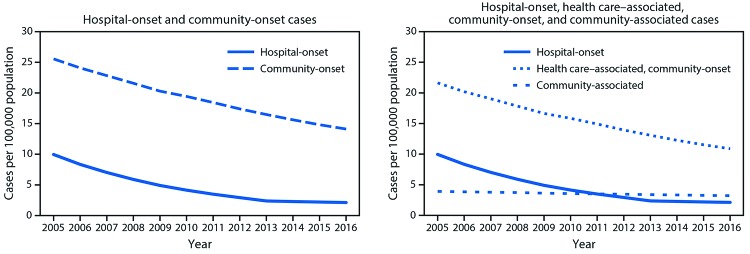
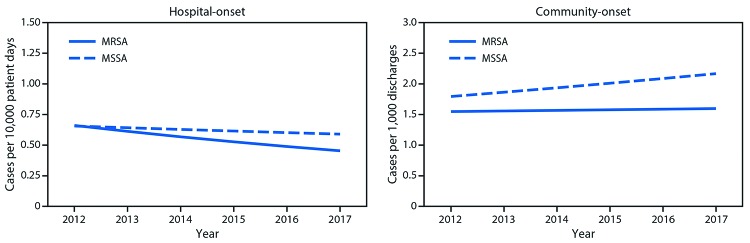
INTRODUCTION: Staphylococcus aureus is one of the most common pathogens in health care facilities and in the community, and can cause invasive infections, sepsis, and death. Despite progress in preventing methicillin-resistant S. aureus (MRSA) infections in health care settings, assessment of the problem in both health care and community settings is needed. Further, the epidemiology of methicillin-susceptible S. aureus (MSSA) infections is not well described at the national level. METHODS: Data from the Emerging Infections Program (EIP) MRSA population surveillance (2005-2016) and from the Premier and Cerner Electronic Health Record databases (2012-2017) were analyzed to describe trends in incidence of hospital-onset and community-onset MRSA and MSSA bloodstream infections and to estimate the overall incidence of S. aureus bloodstream infections in the United States and associated in-hospital mortality. RESULTS: In 2017, an estimated 119,247 S. aureus bloodstream infections with 19,832 associated deaths occurred. During 2005-2012 rates of hospital-onset MRSA bloodstream infection decreased by 17.1% annually, but the decline slowed during 2013-2016. Community-onset MRSA declined less markedly (6.9% annually during 2005-2016), mostly related to declines in health care-associated infections. Hospital-onset MSSA has not significantly changed (p = 0.11), and community-onset MSSA infections have slightly increased (3.9% per year, p<0.0001) from 2012 to 2017. CONCLUSIONS AND IMPLICATIONS FOR PUBLIC HEALTH PRACTICE: Despite reductions in incidence of MRSA bloodstream infections since 2005, S. aureus infections account for significant morbidity and mortality in the United States. To reduce the incidence of these infections further, health care facilities should take steps to fully implement CDC recommendations for prevention of device- and procedure-associated infections and for interruption of transmission. New and novel prevention strategies are also needed.
Overview
The claims and statistics of this paper haven’t been checked yet.
Free: it reads the open-access text and checks the first 5 claims that cite a source we can check. Create a free account to check every claim.
Integrity signals
Registry
Cites
Statistics
Figures
Verification
Claims the paper makes
The claims and statistics of this paper haven’t been checked yet.
Free: it reads the open-access text and checks the first 5 claims that cite a source we can check. Create a free account to check every claim.
Claims other papers make about this one
Each is checked against this paper’s own text: does it say what the citing paper says it does?
The source backs part of the claim, not all of it — or backs it for a different population, condition or comparison.
In the citing paper
“other studies have reported recent declines in community-onset MRSA, Pseudomonas, and Acinetobacter infections.”
From Trends in empiric broad-Spectrum antibiotic use for suspected community-onset Sepsis in US hospitals (2024) · cites this paper as [35]
Experimental — accuracy not yet measured
Self-check
Percentages, sums and reported differences re-computed from the paper’s own numbers.
The self-check needs the paper’s full text.
Citations
Cites
An Intervention to Decrease Catheter-Related Bloodstream Infections in the ICU
Pronovost, P., Needham, D., Berenholtz, S., Sinopoli, D., Chu, H., Cosgrove, S., Sexton, B., Hyzy, R., Welsh, R., Roth, G., et al. (2006) · New England Journal of Medicine · doi:10.1056/nejmoa061115 · Cited by 4,387
Klevens, R. M. (2007) · JAMA · doi:10.1001/jama.298.15.1763 · Cited by 3,726
Waves of resistance: Staphylococcus aureus in the antibiotic era
Chambers, H. F., & DeLeo, F. R. (2009) · Nature Reviews Microbiology · doi:10.1038/nrmicro2200 · Cited by 2,718 · cited 1×
“aureus strain epidemiology have occurred (22).”
Incidence and trends of sepsis in US hospitals using clinical vs claims data, 2009-2014.
Rhee, C., Dantes, R., Epstein, L., Murphy, D. J., Seymour, C. W., Iwashyna, T. J., Kadri, S. S., Angus, D. C., Danner, R. L., Fiore, A. E., et al. (2017) · JAMA · doi:10.1001/jama.2017.13836 · Cited by 1,884 · cited 1×
“As has been previously shown with another infection-related condition (sepsis), clinical criteria using EHR data are immune to temporal variations in coding practices that can be significant (30), whereas death-certificate data are an insensitive measure of sepsis-related mortality (31).”
BackgroundSelf-citationChanges in prevalence of health care-associated infections in U.S. hospitals
Magill, S. S., O’Leary, E., Janelle, S. J., Thompson, D. L., Dumyati, G., Nadle, J., Wilson, L. E., Kainer, M. A., Lynfield, R., Greissman, S., et al. (2018) · New England Journal of Medicine · doi:10.1056/nejmoa1801550 · Cited by 1,249
Self-citationMedication-Assisted Therapies — Tackling the Opioid-Overdose Epidemic
Volkow, N. D., Frieden, T. R., Hyde, P. S., & Cha, S. S. (2014) · New England Journal of Medicine · doi:10.1056/nejmp1402780 · Cited by 1,015 · cited 1×
“Prevention of opioid misuse, increasing access and linkage to medicationassisted treatment for persons with opioid use disorder (27), ensuring access to sterile injecting equipment, improving education about safer injection practices and how to recognize early signs of infection, and linking those with an infection to…”
BackgroundEpidemiology of Methicillin‐Resistant Staphylococcus aureus
Boucher, H. W., & Corey, G. R. (2008) · Clinical Infectious Diseases · doi:10.1086/533590 · Cited by 805 · cited 10×
“Methicillin-resistant S. aureus (MRSA) has long been recognized as a pathogen associated with health care settings; however, in the 1990s, community-associated MRSA infections, causing mostly SSTI, emerged in the United States (2).”
BackgroundInfluentialVeterans Affairs Initiative to Prevent Methicillin-Resistant Staphylococcus aureus Infections
Jain, R., Kralovic, S. M., Evans, M. E., Ambrose, M., Simbartl, L. A., Obrosky, D. S., Render, M. L., Freyberg, R. W., Jernigan, J. A., Muder, R. R., et al. (2011) · New England Journal of Medicine · doi:10.1056/nejmoa1007474 · Cited by 496 · cited 1×
“The reasons for the declines in hospital-onset MRSA bloodstream infections might be attributable to a variety of infection control efforts, including improvements in preventing device- and procedure-associated infections (15–17), as well as efforts to interrupt MRSA transmission in the hospital setting (5,18).”
BackgroundSelf-citationVital Signs: Central Line–Associated Blood Stream Infections—United States, 2001, 2008, and 2009
(2011) · Annals of Emergency Medicine · doi:10.1016/j.annemergmed.2011.07.035 · Cited by 473
Dantes, R. (2013) · JAMA Internal Medicine · doi:10.1001/jamainternmed.2013.10423 · Cited by 452
Cited by
Items 401–500 of 702
Wang, G., Wen, J., Tian, Z., Zhou, H., Peng, X., Zhang, P., & Li, Z. (2025) · Scientific Reports · doi:10.1038/s41598-025-89654-1 · Cited by 7
Gomez-Villegas, S. I., Rincón, S., Carvajal, L. P., Matiz-González, J. M., Panesso, D., Tran, T. T., Flores, E. M., Dziadula, J., Baptista, R. P., Dingle, T. C., et al. (2025) · Journal of Antimicrobial Chemotherapy · doi:10.1093/jac/dkaf093 · Cited by 7
Said, K. B., ALGhasab, N. S., Alharbi, M. S., Alsolami, A. A., Bashir, A. I., Saleem, M., Khaja, A. S. S., Aldakheel, D. F., Rakha, E., Alshamri, J. A., et al. (2023) · Diagnostics · doi:10.3390/diagnostics13050819 · Cited by 7
“At present, the evolution and emergence of invasive lineages of CA-MRSA, HA-MRSA, as well as MSSA causing bloodstream infections are being increasingly reported, leading to changes in global clonal profiles [7,37] with complete replacement of HA-MRSA by CA-MRSA occasionally in some cases.”
BackgroundSulaiman, I. M., Miranda, N., Hook, W., Mendoza, J., Kumfert, Q., Barnes, T., Sung, K., Khan, S. A., Nawaz, M. S., Banerjee, P., et al. (2023) · Journal of AOAC International · doi:10.1093/jaoacint/qsad109 · Cited by 7
Zarfel, G., Schmidt, J., Luxner, J., & Grisold, A. J. (2023) · Pathogens · doi:10.3390/pathogens12111308 · Cited by 5
Mohsin, M. S., Avdic, M., Fitzpatrick, K., & Lanzarini-Lopes, M. (2024) · Microbiology Spectrum · doi:10.1128/spectrum.00040-24 · Cited by 6
Soft Tissue Coverage for Severe Infections
Prokuski, V., & Strohl, A. B. (2020) · Hand Clinics · doi:10.1016/j.hcl.2020.03.011 · Cited by 6
Ziółkowski, G., Pawłowska, I., Jachowicz-Matczak, E., & Stasiowski, M. J. (2020) · Antibiotics · doi:10.3390/antibiotics9060338 · Cited by 6
Barrier Precautions in the Era of Multidrug Pathogens
Pryor, R. J., Viola-Luqa, C., Hess, O., & Bearman, G. M. (2020) · Current treatment options in infectious diseases/Current treatment options in infectious disease · doi:10.1007/s40506-020-00230-9 · Cited by 8
Zhao, H., Eszterhas, S. K., Furlon, J. M., Cheng, H., & Griswold, K. E. (2021) · Antimicrobial Agents and Chemotherapy · doi:10.1128/aac.02199-20 · Cited by 7
Chen, Y.-L., Kang, E. Y., Yeh, L., Ma, D. H. K., Tan, H., Chen, H., Hung, K.-H., Huang, Y., & Hsiao, C. (2021) · Antibiotics · doi:10.3390/antibiotics10121445 · Cited by 6
“9% annually from 2012 to 2017 in the community in the US [6].”
BackgroundMohamed, M. B. E. D., El‐Ela, F. I. A., Mahmoud, R., Farghali, A. A., Gamil, S., & Aziz, S. A. A. A. (2022) · Scientific Reports · doi:10.1038/s41598-021-04160-4 · Cited by 7
Han, X., Ortines, R. V., Mukherjee, I., Kanipakala, T., Kort, T., Sherchand, S. P., Liao, G. C., Mednikov, M., Chénine, A. L., Aman, M. J., et al. (2022) · Frontiers in Immunology · doi:10.3389/fimmu.2022.893921 · Cited by 8
Seetswane, E., Loeto, D., Muzila, M., Tshekiso, K., Gomba, A., Baruti, K., & Jongman, M. (2022) · Microbiology · doi:10.1099/mic.0.001213 · Cited by 7
Skinner, A. M., Petrella, L. A., Cheknis, A. K., & Johnson, S. (2023) · Journal of Antimicrobial Chemotherapy · doi:10.1093/jac/dkad170 · Cited by 6
Al-Said, H. M., Alghamdi, A., Ashgar, S. S., Jalal, N. A., Faidah, H. S., Johargy, A. K., Momenah, A. M., Barhameen, A. A. A., Hariri, S. H., Bantun, F., et al. (2023) · Saudi Journal of Medicine and Medical Sciences · doi:10.4103/sjmms.sjmms_405_22 · Cited by 9
Sreepian, A., & Sreepian, P. M. (2025) · Journal of King Saud University - Science · doi:10.25259/jksus_158_2025 · Cited by 5
Charirak, P., & Ratananikom, K. (2022) · The Scientific World JOURNAL · doi:10.1155/2022/1839356 · Cited by 8
Ghoneim, M. M., Al‐Serwi, R. H., El‐Sherbiny, M., El‐Ghaly, E. M., Hamad, A. E., Abdelgawad, M. A., Ragab, E. A., Bukhari, S. I., Bukhari, K., Elokely, K. M., et al. (2022) · Current Issues in Molecular Biology · doi:10.3390/cimb44100307 · Cited by 5
“Moreover, community-based infections, which constitute a reservoir, are not decreasing, and many developing countries still have a stubbornly high prevalence [5].”
BackgroundBraga, S., Rajapakse, N., Heyliger, J., Dierkhising, R., & Dinnes, L. (2023) · The Pediatric Infectious Disease Journal · doi:10.1097/inf.0000000000004129 · Cited by 5
Xia, Z., Liao, Y., Gao, G., & Zhang, S. (2024) · ACS Applied Bio Materials · doi:10.1021/acsabm.4c00143 · Cited by 6
Tătaru, A.-M., Canciu, A., Chiorean, A.-D., Runcan, I., Radu, A., Bordea, M. A., Suciu, M., Tertiş, M., Cernat, A., & Cristea, C. (2024) · Biosensors · doi:10.3390/bios14120636 · Cited by 5
“[8].”
Aborah, E., Ayitah, M., Boafo, K. F., Ortiz-Alegria, A., Lekshmi, M., Dhanush, C. K., Kumar, S. H., & Varela, M. F. (2025) · Exploration of Drug Science · doi:10.37349/eds.2025.100897 · Cited by 7
White, B. P., Barber, K. E., & Chastain, D. B. (2021) · Journal of Pharmacy Practice · doi:10.1177/08971900211038864 · Cited by 5
“Staphylococcus aureus bacteremia (SAB) is associated with a high rate of morbidity and mortality.(1) Treatment of SAB requires a detailed history, thorough physical examination, echocardiogram, repeat blood cultures, source control, and intravenous antibiotic therapy, most often, for at least 2– 6 weeks depending on c…”
BackgroundDysregulation of Cell Envelope Homeostasis in Staphylococcus aureus Exposed to Solvated Lignin
Grossman, A. B., Vermerris, W., & Rice, K. C. (2022) · Applied and Environmental Microbiology · doi:10.1128/aem.00548-22 · Cited by 7
Significant Publications on Infectious Diseases Pharmacotherapy in 2021
Nguyen, N. T. H., Chua, H. C., Drake, T. C., Jo, J., Stramel, S., Vuong, N. N., Gonzales-Luna, A. J., Olson, K., & on behalf of the Houston Infectious Diseases Network (2022) · Journal of Pharmacy Practice · doi:10.1177/08971900221128334 · Cited by 5
Low-THz Vibrations of Biological Membranes
Luyet, C., Elvati, P., Vinh, J., & Violi, A. (2023) · Membranes · doi:10.3390/membranes13020139 · Cited by 5
Farmand, S., Sender, V., Karlsson, J., Merkl, P., Normark, S. J., & Henriques‐Normark, B. (2023) · The Journal of Immunology · doi:10.4049/jimmunol.2300151 · Cited by 7
“taphylococcus aureus is a major pathogen associated with both healthy colonization and life-threatening invasive diseases such as pneumonia and septicemia (1).”
BackgroundCarmona-Orozco, M. L., & Echeverri, F. (2024) · Microbial Pathogenesis · doi:10.1016/j.micpath.2024.106863 · Cited by 5
Antibacterial Activity of Glycosylated Flavonoids Isolated from Ocotea notata Leaves
Costa, I. F. D. J. B., Reis, J. V. R., Konno, T. U. P., Tinoco, L. W., Pinto, S. C., Leal, I. C. R., & Muzitano, M. F. (2024) · Chemistry & Biodiversity · doi:10.1002/cbdv.202400677 · Cited by 5
Leszczyński, P., Olędzka, A., Wierzchowska, K., Frankowska, A., Mitura, K. M., & Celiński, D. (2024) · Journal of Clinical Medicine · doi:10.3390/jcm13237160 · Cited by 5
“Developing new effective medications and therapies and educating people about safe behaviours and precautions are also essential [10].”
Silvola, J., Gröndahl‐Yli‐Hannuksela, K., Hirvioja, T., Rantakokko‐Jalava, K., Kanerva, M. J., Auranen, K. J., Marttila, H., Junnila, J., & Vuopio, J. (2024) · Journal of Global Antimicrobial Resistance · doi:10.1016/j.jgar.2024.11.015 · Cited by 5
Synergy among humimycins against methicillin‐resistant Staphylococcus aureus
Tancer, R. J., Baynes, K., & Wiedman, G. R. (2020) · Peptide Science · doi:10.1002/pep2.24197 · Cited by 5
Potindji, T. M. F., Momani, O. A. A., Omowumi, B. B., & Baddal, B. (2022) · Polish Journal of Microbiology · doi:10.33073/pjm-2022-042 · Cited by 6
“Introduction Methicillin-resistant Staphylococcus aureus (MRSA) represents one of the most concerning pathogens worldwide, responsible for community-acquired and hospital-acquired infections (Kourtis et al. 2019; Turner et al. 2019).”
BackgroundGrossman, A. B., Rice, K. C., & Vermerris, W. (2020) · Journal of Applied Polymer Science · doi:10.1002/app.49107 · Cited by 6
Postdischarge Infection Risk among MRSA Carriers
Huang, S. S., McKinnell, J. A., & Miller, L. G. (2019) · New England Journal of Medicine · doi:10.1056/nejmc1903763 · Cited by 5
Holland, T. L. (2020) · Antimicrobial Agents and Chemotherapy · doi:10.1128/aac.00317-20 · Cited by 5
Combination Therapy for Staphylococcus aureus Bacteremia: Hopes Dashed Again
Tong, S. Y. C., & Davis, J. S. (2020) · Clinical Infectious Diseases · doi:10.1093/cid/ciaa994 · Cited by 5
Macias, A. E., Stimes, G. T., Kaplan, S. L., Vallejo, J. G., Hultén, K. G., & McNeil, J. C. (2025) · Antibiotics · doi:10.3390/antibiotics14010107 · Cited by 5
The Cefazolin Inoculum Effect: An Underappreciated Factor in MSSA Treatment Strategies
Srivastava, P., Singleton, E., Morrisette, T., Berti, A. D., Ventresca, R. L., Brassell, E., Benin, L., & Kebriaei, R. (2025) · Infectious Diseases and Therapy · doi:10.1007/s40121-025-01283-3 · Cited by 5
“While MRSA incidence has been declining—likely owing to improved infection control measures and antimicrobial stewardship [7], MSSA infections are on the rise [8, 9].”
InfluentialChopjitt, P., Kanha, W., Sachit, A., Thongkam, J., Kanthain, P., Pradabsri, P., Paiboon, S., Thananchai, S., Khankhum, S., Kerdsin, A., et al. (2026) · Antibiotics · doi:10.3390/antibiotics15020155 · Cited by 4
“Methicillin-resistant Staphylococcus aureus (MRSA) remains a leading cause of healthcare-associated infections and continues to challenge infection prevention and control (IPC) programs worldwide [1,2].”
Gregorio, S. D., Weltman, G., Fabbri, C., Fernández, S., Zárate, M. S., Smayevsky, J., Power, P. P., Campos, J., Llarrull, L. I., & Mollerach, M. E. (2024) · Antibiotics · doi:10.3390/antibiotics13060554 · Cited by 5
“…that the antibiotic treatment and/or sub-inhibitory concentrations of antibiotics reached during infection may promote the emergence of mutations/chromosomal rearrangements [17] throughout the genome of MSSA strains, which are increasing in prevalence and burden [18–20] and may give rise to MIONSA.”
BackgroundRisk Factors Associated with Pyogenic Spinal Infections among Intravenous Drug Users and Nonusers
Bilolikar, V. K., Gleason, B., Kripke, L. A., Merrill, R., Whitaker, C. M., & Handal, J. (2024) · Advances in Orthopedics · doi:10.1155/2024/9938159 · Cited by 4
“%) remain high in urban and crowded counties including Philadelphia [14, 15], with the rate of community-acquired MRSA increasing annually since 2009 [16].”
BackgroundKondo, Y., Klompas, M., McKenna, C. S., Pak, T. R., Shappell, C. N., DelloStritto, L. K., & Rhee, C. (2024) · Clinical Infectious Diseases · doi:10.1093/cid/ciae599 · Cited by 7
See, I., Jackson, K. A., Hatfield, K. M., Paul, P., Li, R., Nadle, J., Petit, S., Ray, S. M., Harrison, L. H., Jeffrey, L., et al. (2025) · Journal of the American Geriatrics Society · doi:10.1111/jgs.19189 · Cited by 5
Self-citationBurden of Multidrug-Resistant Organisms in Oman: A Six-Year Single-Study Calling for Urgent Actions
Shuhoumi, M. A. A., Ghafri, S. A., Hameed, F. A., Hinai, A. A., Ghafri, A. A., Mony, S. R., Sawafi, B. A., Govindaraj, G., Yaqoobi, A. A., Alawi, B. A., et al. (2025) · Microbiology Research · doi:10.3390/microbiolres16020045 · Cited by 4
Zilberberg, M. D., Nathanson, B. H., Wagenaar, R., Posthumus, J., & Shorr, A. F. (2025) · Antibiotics · doi:10.3390/antibiotics14030326 · Cited by 4
Adjunctive β-lactams for Staphylococcus aureus bacteremia: a narrative review
Chastain, D. B., White, B. P., Henao‐Martínez, A. F., Tu, P. J., Bland, C. M., Foster, R. A., & Cluck, D. B. (2025) · Therapeutic Advances in Infectious Disease · doi:10.1177/20499361251343969 · Cited by 6
“8,9 Rates of MRSA in the United States remain higher compared to Canada and Europe.”
El‐Khawaga, A. M., Elmaghraby, K., & Orlandini, M. (2025) · Scientific Reports · doi:10.1038/s41598-025-08782-w · Cited by 4
Jiang, W., & You, C. (2026) · Microbial Pathogenesis · doi:10.1016/j.micpath.2026.108467 · Cited by 4
Staphylococcus aureus Infections in the Paediatric Intensive Care Unit: Illustrated Cases
Hon, K. E., Fung, R. C. M., Leung, K. K. Y., Leung, A. K. C., Hui, W. F., & Cheung, W. L. (2021) · Case Reports in Pediatrics · doi:10.1155/2021/6661932 · Cited by 4
“Staphylococcus aureus is the leading cause of infection in critical-care settings accounting for significant morbidity and mortality [3].”
Caires, C. S. A., Lima, A. R., Lima, T. H. N., Silva, C. M., Araujo, L. O., Aguilera, L., do Nascimento, V. A., Caires, A. R. L., & Oliveira, S. L. (2023) · Photodiagnosis and Photodynamic Therapy · doi:10.1016/j.pdpdt.2023.103952 · Cited by 5
Parmar, R., Pickering, H. C., Ahn, R. S., Rossetti, M. M., Gjertson, D. W., Ruffin, F., Chan, L. C., Fowler, V. G., Yeaman, M. R., Reed, E. F., et al. (2024) · Frontiers in Immunology · doi:10.3389/fimmu.2024.1373553 · Cited by 5
Synthesis and antibacterial activities of heterocyclic ring-fused 20(S)-protopanaxadiol derivatives
Zhang, D.-J., Yuan, Z., Yue, Y.-X., Zhang, M., Wu, W., Yang, C., & Qiu, W. (2024) · Bioorganic & Medicinal Chemistry · doi:10.1016/j.bmc.2024.117901 · Cited by 4
Kiborus, L. J., Altheide, S. T., & Marion, J. W. (2025) · Hygiene · doi:10.3390/hygiene5010002 · Cited by 4
“In 2017, there were an estimated 119,247 S. aureus bloodstream infections and 19,832 related deaths in the U.S. alone [1].”
InfluentialLipidated SNAPP-Stars Target and Kill Multidrug-Resistant Bacteria within Minutes
Hadjigol, S., Shabani, S., Jafari, V. F., Barlow, A. J., Qiao, G. G., & O’brien-simpson, N. M. (2025) · ACS Applied Materials & Interfaces · doi:10.1021/acsami.5c03839 · Cited by 4
Sirdeshmukh, V. V., Joglekar, S. S., Joshi, P. N., & Kale, A. A. (2025) · AIP Advances · doi:10.1063/5.0243093 · Cited by 4
Distinct Effectiveness of Oritavancin against Tolerance-Induced Staphylococcus aureus
Berti, A. D., Harven, L. T., & Bingley, V. (2020) · Antibiotics · doi:10.3390/antibiotics9110789 · Cited by 4
Tun, Z. M., Fisher, D. A., Salmon, S., & Tam, C. C. (2021) · PLoS ONE · doi:10.1371/journal.pone.0254852 · Cited by 4
Jun, I., Rich, S. N., Chen, Z., Bian, J., & Prosperi, M. (2021) · International Journal of Medical Informatics · doi:10.1016/j.ijmedinf.2021.104531 · Cited by 5
Nizer, W. S. D. C., Ferraz, A. C., Moraes, T. D. F. S., Lima, W. G., dos Santos, J. P., Duarte, L. P., Magalhães, C. L. D. B., Filho, S. A. V., & de Magalhães, J. C. (2022) · Natural Product Research · doi:10.1080/14786419.2021.2023865 · Cited by 4
“Only in the USA, more than 100,000 cases of invasive MRSA infections were reported in 2017, and, of these, 19,832 progressed to death, which is similar to the number of deaths caused by HIV/AIDS, tuberculosis, and homicides combined (Boucher and Corey 2008; Kourtis et al. 2019).”
BackgroundDollery, S. J., Harro, J. M., Wiggins, T. J., Wille, B. P., Kim, P. C., Tobin, J. K., Bushnell, R. V., Tasker, N. J. P. E. R., MacLeod, D. A., & Tobin, G. J. (2022) · Vaccines · doi:10.3390/vaccines10060833 · Cited by 4
Novel Requirement for Staphylococcal Cell Wall-Anchored Protein SasD in Pulmonary Infection
Grousd, J. A., Dresden, B. P., Riesmeyer, A. M., Cooper, V. S., Bomberger, J. M., Richardson, A. R., & Alcorn, J. F. (2022) · Microbiology Spectrum · doi:10.1128/spectrum.01645-22 · Cited by 4
Chen, A., Dellos-Nolan, S., Lu, Y., West, J. S., Wozniak, D. J., & Mitton‐Fry, M. J. (2022) · Microbiology Spectrum · doi:10.1128/spectrum.02056-22 · Cited by 4
Atypical Staphylococcal Septic Arthritis in a Native Hip: A Case Report and Review
Glassman, I., Nguyen, K., Booth, M., Minasyan, M., Cappadona, A., & Venketaraman, V. (2023) · Pathogens · doi:10.3390/pathogens12030408 · Cited by 4
“9% per year) from 2012 to 2017 in the United States [2].”
BackgroundInfluentialBarger, S. D., Lininger, M. R., Trotter, R. T., Mbegbu, M., Kyman, S., Tucker-Morgan, K., Wood, C., Coyne, B., Russakoff, B., Ceniceros, K., et al. (2023) · PLoS ONE · doi:10.1371/journal.pone.0284400 · Cited by 3
Daptomycin Plus Oxacillin for Persistent Methicillin-Susceptible Staphylococcus aureus Bacteremia
Kufel, W. D., Zagoria, Z. J., Blaine, B. E., Steele, J. M., Mahapatra, R., Paolino, K. M., & Thomas, S. J. (2023) · Annals of Pharmacotherapy · doi:10.1177/10600280231189888 · Cited by 4
Stimulating Aminoglycoside Uptake to Kill Staphylococcus aureus Persisters
Sidders, A. E., Radlinski, L. C., Rowe, S. E., & Conlon, B. P. (2021) · Methods in molecular biology · doi:10.1007/978-1-0716-1621-5_15 · Cited by 6
Obeng, J. A., AKANWARIWIAK, W. G., Adade, E., & Sylverken, A. A. (2025) · Microbiology Spectrum · doi:10.1128/spectrum.01749-24 · Cited by 7
Yang, Y., Zhou, Z., Huang, G., Yang, S., Mao, R., Ding, L., & Wang, X. (2025) · Marine Drugs · doi:10.3390/md23080298 · Cited by 3
“The Antibiotic Resistance Threats Report released by the US Centers for Disease Control and Prevention (CDC) shows that the number of cases of serious invasive diseases and deaths caused by MRSA is estimated to reach 72,000 and 10,000, respectively, in the US each year [3,4].”
Staphylococcus aureus transcriptomics and single-cell sequencing approaches
Małachowa, N., & DeLeo, F. R. (2025) · Infection and Immunity · doi:10.1128/iai.00411-25 · Cited by 3
“Although MRSA remains a common cause of HAI globally, recent reports indicate that methicillin-susceptible S. aureus (MSSA) causes more hospital and community blood stream infections in many geographic regions (22, 25–30).”
Xu, Q., Yan, Q., Guan, M., Liu, M., Wei, S., Cao, Y., Jiang, X., Lu, W., & Zha, L. (2025) · International Journal of Surgery · doi:10.1097/js9.0000000000004587 · Cited by 4
“This trend is consistent with reports showing that concerted infection control efforts, such as bundled interventions and mandatory screening in the US and Europe, successfully reduced MRSA incidence from peaks in the early 2000s [ 76–78 , 80 ] .”
Global emergence and evolution of Staphylococcus aureus clonal complex 59
Jiang, S., Gao, P., Shen, P., Hou, S., Xiao, C., Kao, R. Y. T., Ho, P., xiao, Y., & Cao, H. (2025) · mSystems · doi:10.1128/msystems.01492-25 · Cited by 3
Fukushima, S., Tsuji, S., Gotoh, K., Iio, K., Ogawa, S., Koyanagi, N., Ito, Y., Koganemaru, H., Yoshida, A., & Hagiya, H. (2026) · Diagnostic Microbiology and Infectious Disease · doi:10.1016/j.diagmicrobio.2026.117345 · Cited by 3
Amick, M., O’Marr, J., & Schuster, K. M. (2021) · Journal of Surgical Research · doi:10.1016/j.jss.2021.07.040 · Cited by 2
Gulone, L., Gregorio, S. D., Morales, M. M., Haim, M. S., García, S. D., Perazzi, B. E., Famiglietti, A. M. R., & Mollerach, M. E. (2024) · Microbial Drug Resistance · doi:10.1089/mdr.2023.0219 · Cited by 3
Scattolini, A., Grammatoglou, K., Ņikitjuka, A., Jirgensons, A., Mansilla, M. C., & Windshügel, B. (2024) · ACS Infectious Diseases · doi:10.1021/acsinfecdis.4c00148 · Cited by 3
Dou, L.-X., Xue, R.-Y., Deng, W., Wang, J., Liao, X., Yu, R.-J., Duan, X. M., & Xiong, Y. (2024) · Journal of Molecular Structure · doi:10.1016/j.molstruc.2024.139591 · Cited by 4
Morrisette, T., Alghamdi, S., Maree, M. B., Dixon, T. C., & Thacker, S. A. (2024) · Journal of Pharmacy Practice · doi:10.1177/08971900241285521 · Cited by 3
Chitosan-based nanoparticles to treat highly resistant microorganisms and pathogenic parasites
Alkhalil, S. S. (2024) · Elsevier eBooks · doi:10.1016/b978-0-443-13997-0.00010-2 · Cited by 6
Pratama, P. R., Fitriya, S. A., Fadlan, A., Ardyananta, H., Prasetyo, E. N., & Pramata, A. D. (2025) · Journal of Food Science and Technology · doi:10.1007/s13197-025-06231-0 · Cited by 3
“Moreover, SA can become resistant to antibiotics, which can lead to the emergence of a subclass that is more difficult to control; this subclass is known as methicillin-resistant Staphylococcus aureus (MRSA), whose prevalence has been increasing annually (Kourtis et al. 2019).”
Program, C. N. I. S. (2025) · Canada Communicable Disease Report · doi:10.14745/ccdr.v51i67a04 · Cited by 6
Significant Publications on Infectious Diseases Pharmacotherapy in 2020
Eubank, T. A., Zaidan, N., Alnezary, F. S., Moc, C., Olson, K., Zaki, A. F., McDaneld, P. M., Gonzales-Luna, A. J., & on behalf of the Houston Infectious Diseases Network (2021) · Journal of Pharmacy Practice · doi:10.1177/08971900211040438 · Cited by 4
Mapping of the fibrinogen-binding site on the staphylocoagulase C-terminal repeat region
Maddur, A. A., Voehler, M., Panizzi, P. R., Meiler, J., BOCK, P. E., & Verhamme, I. M. (2021) · Journal of Biological Chemistry · doi:10.1016/j.jbc.2021.101493 · Cited by 3
La, Y., Kim, H. R., Oh, D. H., Ahn, J. Y., & Kim, Y. C. (2022) · Yonsei Medical Journal · doi:10.3349/ymj.2022.63.7.611 · Cited by 6
“In fact, the incidence of MRSA BSI decreased since 2005, which was observed in both hospital and community settings.(26) In South Korea, the incidence of MRSA BSI also decreased, but the proportion of MRSA among hospital-acquired S.”
BackgroundSaid, K. B., ALGhasab, N. S., Alharbi, M. S., Alsolami, A. A., Saleem, M., Alhallabi, S. A., Alafnan, S. F., Khaja, A. S. S., Taha, T. E., & On Behalf Of The Ha'il Com Research Unit Group (2023) · Microorganisms · doi:10.3390/microorganisms11010149 · Cited by 6
“Particularly, the evolution of invasive MSSA strains causing bloodstream infections is being increasingly reported [34].”
BackgroundAlsallameh, S. M. S., Alhameedawi, A. K., Abbas, H. M., Khalid, D., & Kadhim, S. A. (2023) · Egyptian Pharmaceutical Journal · doi:10.4103/epj.epj_179_22 · Cited by 4
Romero-García, D. M., Silva-Galindo, J. G., Carriles, C. A. V., Castorena-Sánchez, A. M., García-Vera, I., Hinojosa-Ventura, G., & Jara, J. M. S. (2024) · IntechOpen eBooks · doi:10.5772/intechopen.112266 · Cited by 4
Jover-Sáenz, A., Ramírez-Hidalgo, M. F., Bellés, A. B., Murillo, E. R., Bosch, M. B., Miró, A. R., López, A. M., Cabanillas, J. C., Palacín, N. P., Garrido-Calvo, S., et al. (2024) · Antibiotics · doi:10.3390/antibiotics13010092 · Cited by 5
“In the United States, the estimated annual cost of these infections is around USD 2.7 million, with a significant loss of lives that amounts to 20,000 deaths per year [4,5].”
BackgroundInfluentialHerren, S. C., Karau, M. J., Koscianski, C. A., Christensen, T. A., Granger, D., Bergan, N., Mandrekar, J. N., Holmes, D. R., & Patel, R. (2024) · Antimicrobial Agents and Chemotherapy · doi:10.1128/aac.00052-24 · Cited by 3
Risk Factors for Persistent Staphylococcus aureus Bacteremia in Children
Thornley, E. M., Alexander, R., Popelka, J., & Montgomery, C. P. (2024) · The Pediatric Infectious Disease Journal · doi:10.1097/inf.0000000000004439 · Cited by 3
Chan, Y. L., Tang, S. N., Osman, C. P., Chee, C. F., & Tay, S. T. (2024) · Microbial Pathogenesis · doi:10.1016/j.micpath.2024.106886 · Cited by 3
Kobayashi, T., Ai, C., Jung, M., Salinas, J. L., & Yu, K. C. (2024) · Antimicrobial Stewardship & Healthcare Epidemiology · doi:10.1017/ash.2024.402 · Cited by 4
Zafar, N., Aslam, M. A., Rahman, S. U., & Saqib, M. (2024) · International Microbiology · doi:10.1007/s10123-024-00618-3 · Cited by 5
Rose, A. N., Clogher, P., Hatfield, K. M., Gokhale, R. H., See, I., & Petit, S. (2020) · Infection Control and Hospital Epidemiology · doi:10.1017/ice.2020.72 · Cited by 3
Self-citationZoonotic Diseases of Swine: Food-Borne and Occupational Aspects of Infection
Thapaliya, D., Hanson, B., Kates, A., Klostermann, C. A., Nair, R., Wardyn, S. E., & Smith, T. C. (2023) · Springer eBooks · doi:10.1007/978-3-031-27164-9_2 · Cited by 4
Is Early Clearance of Blood Cultures the Be-All and End-All Outcome?
Zacharioudakis, I. M., & Zervou, F. N. (2020) · Clinical Infectious Diseases · doi:10.1093/cid/ciaa439 · Cited by 4
Decolonization Strategies to Prevent Staphylococcal Infections: Mupirocin by a Nose
Talbot, T. R. (2023) · JAMA · doi:10.1001/jama.2023.4852 · Cited by 3
Zhu, R., Guo, R., Yu, C., Tan, X., Wei, S., Song, Y., Wang, R., Li, L., Xie, X. S., Jiang, W., et al. (2022) · Bioscience Biotechnology and Biochemistry · doi:10.1093/bbb/zbac168 · Cited by 2
Programme canadien de surveillance des infections nosocomiales (2024) · Relevé des maladies transmissibles au Canada · doi:10.14745/ccdr.v50i06a02f · Cited by 4
Metadata
- Authors
- Kourtis, A. P., Hatfield, K., Baggs, J., Mu, Y., See, I., Epson, E., Nadle, J., Kainer, M. A., Dumyati, G., Petit, S., Ray, S. M., Emerging Infections Program MRSA author group, Ham, D., Capers, C., Ewing, H., Coffin, N., McDonald, L. C., Jernigan, J., & Cardo, D.
- Affiliations
- University of Rochester Medicine (US)
- Corresponding author
- Kourtis, Athena P.
- ORCID
- Venue
- MMWR. Morbidity and Mortality Weekly Report
- Published
- 2019-03-08
- Volume
- 68
- Issue
- 9
- Pages
- 214-219
- ISSN
- 0149-2195 (ISSN-L)
- 1545-861X
- PMC
- PMC6421967
- OpenAlex
- W2919520691
- Cited by
- 701
- References
- 27
- Citations by year
- 2026: 50 · 2025: 96 · 2024: 98 · 2023: 103 · 2022: 127 · 2021: 100 · 2020: 90 · 2019: 36
- FWCI
- 67.67
- Type
- journal article
- Language
- en
- Open access
- diamond
- doi.org
- Locations
- MMWR Morbidity and Mortality Weekly Report (publishedVersion)
- Europe PMC (PubMed Central) (publishedVersion, cc-by)
- PubMed Central (publishedVersion, cc-by)
- PubMed (publishedVersion)
- Topics
- Health Sciences › Medicine › Infectious Diseases › Antimicrobial Resistance in Staphylococcus
- Health Sciences › Medicine › Infectious Diseases › Antibiotic Use and Resistance
- Health Sciences › Medicine › Infectious Diseases › Infection Control in Healthcare
- Keywords
- methicillin-resistant Staphylococcus aureus, methicillin-susceptible Staphylococcus aureus, bloodstream infection, community-onset infection, hospital-onset infection, incidence trends, in-hospital mortality, nosocomial infections, infection control, antimicrobial resistance, United States
- MeSH terms
- Cross Infection, Female, Humans, Male, Methicillin, Population Surveillance, Staphylococcal Infections, Staphylococcus aureus, United States, Incidence, Databases, Factual, Bacteremia, Hospital Mortality, Methicillin-Resistant Staphylococcus aureus, Electronic Health Records
About these checks
Registry, retraction, Cites and statistics results are computed, not judged, with one exception: a printed reference that no index lists is read once by a model before it counts as a citation error. Claims are extracted by a model and kept only when their quote appears verbatim in the text; each cited source is then checked, with a model’s help, for whether it says what the claim relies on. Those verdicts can be wrong — read the claim’s quote and the cited source before relying on one.
Statistics and arithmetic are recomputed, not judged.
Confidence bands are shown only for fields calibrated on our annotated test set. None is calibrated yet, so no band is shown.
What counts as a claim ›How we measure confidence ›How we check this ›
Are you an author, or do you see a problem with this page? Request a review
Data sources
Bibliographic data: Semantic Scholar, OpenAlex, Crossref.
Contains information from the Semantic Scholar Academic Graph Datasets, made available under the ODC Attribution License (ODC-BY 1.0).
Semantic Scholar’s data is described in: Kinney, R., et al. (2023). The Semantic Scholar Open Data Platform. arXiv:2301.10140.
