

Vital Signs: Epidemiology and Recent Trends in Methicillin-Resistant and in Methicillin-Susceptible Staphylococcus aureus Bloodstream Infections — United States
Open accessThe DOI matches its Crossref record; 26 of the 27 references it cites were found in a registry or an index.
Abstract
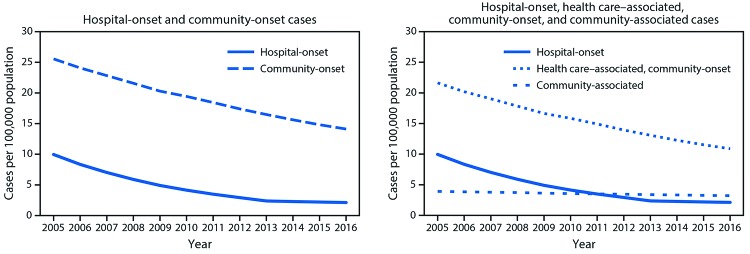
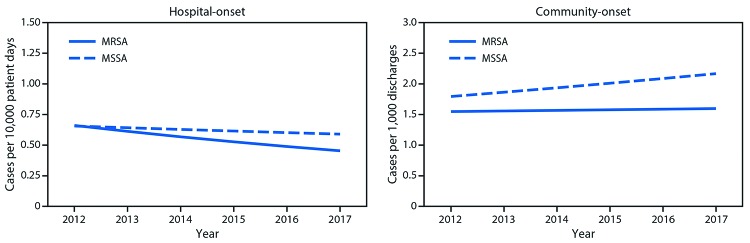
INTRODUCTION: Staphylococcus aureus is one of the most common pathogens in health care facilities and in the community, and can cause invasive infections, sepsis, and death. Despite progress in preventing methicillin-resistant S. aureus (MRSA) infections in health care settings, assessment of the problem in both health care and community settings is needed. Further, the epidemiology of methicillin-susceptible S. aureus (MSSA) infections is not well described at the national level. METHODS: Data from the Emerging Infections Program (EIP) MRSA population surveillance (2005-2016) and from the Premier and Cerner Electronic Health Record databases (2012-2017) were analyzed to describe trends in incidence of hospital-onset and community-onset MRSA and MSSA bloodstream infections and to estimate the overall incidence of S. aureus bloodstream infections in the United States and associated in-hospital mortality. RESULTS: In 2017, an estimated 119,247 S. aureus bloodstream infections with 19,832 associated deaths occurred. During 2005-2012 rates of hospital-onset MRSA bloodstream infection decreased by 17.1% annually, but the decline slowed during 2013-2016. Community-onset MRSA declined less markedly (6.9% annually during 2005-2016), mostly related to declines in health care-associated infections. Hospital-onset MSSA has not significantly changed (p = 0.11), and community-onset MSSA infections have slightly increased (3.9% per year, p<0.0001) from 2012 to 2017. CONCLUSIONS AND IMPLICATIONS FOR PUBLIC HEALTH PRACTICE: Despite reductions in incidence of MRSA bloodstream infections since 2005, S. aureus infections account for significant morbidity and mortality in the United States. To reduce the incidence of these infections further, health care facilities should take steps to fully implement CDC recommendations for prevention of device- and procedure-associated infections and for interruption of transmission. New and novel prevention strategies are also needed.
Overview
The claims and statistics of this paper haven’t been checked yet.
Free: it reads the open-access text and checks the first 5 claims that cite a source we can check. Create a free account to check every claim.
Integrity signals
Registry
Cites
Statistics
Figures
Verification
Claims the paper makes
The claims and statistics of this paper haven’t been checked yet.
Free: it reads the open-access text and checks the first 5 claims that cite a source we can check. Create a free account to check every claim.
Claims other papers make about this one
Each is checked against this paper’s own text: does it say what the citing paper says it does?
The source backs part of the claim, not all of it — or backs it for a different population, condition or comparison.
In the citing paper
“other studies have reported recent declines in community-onset MRSA, Pseudomonas, and Acinetobacter infections.”
From Trends in empiric broad-Spectrum antibiotic use for suspected community-onset Sepsis in US hospitals (2024) · cites this paper as [35]
Experimental — accuracy not yet measured
Self-check
Percentages, sums and reported differences re-computed from the paper’s own numbers.
The self-check needs the paper’s full text.
Citations
Cites
An Intervention to Decrease Catheter-Related Bloodstream Infections in the ICU
Pronovost, P., Needham, D., Berenholtz, S., Sinopoli, D., Chu, H., Cosgrove, S., Sexton, B., Hyzy, R., Welsh, R., Roth, G., et al. (2006) · New England Journal of Medicine · doi:10.1056/nejmoa061115 · Cited by 4,387
Klevens, R. M. (2007) · JAMA · doi:10.1001/jama.298.15.1763 · Cited by 3,726
Waves of resistance: Staphylococcus aureus in the antibiotic era
Chambers, H. F., & DeLeo, F. R. (2009) · Nature Reviews Microbiology · doi:10.1038/nrmicro2200 · Cited by 2,718 · cited 1×
“aureus strain epidemiology have occurred (22).”
Incidence and trends of sepsis in US hospitals using clinical vs claims data, 2009-2014.
Rhee, C., Dantes, R., Epstein, L., Murphy, D. J., Seymour, C. W., Iwashyna, T. J., Kadri, S. S., Angus, D. C., Danner, R. L., Fiore, A. E., et al. (2017) · JAMA · doi:10.1001/jama.2017.13836 · Cited by 1,884 · cited 1×
“As has been previously shown with another infection-related condition (sepsis), clinical criteria using EHR data are immune to temporal variations in coding practices that can be significant (30), whereas death-certificate data are an insensitive measure of sepsis-related mortality (31).”
BackgroundSelf-citationChanges in prevalence of health care-associated infections in U.S. hospitals
Magill, S. S., O’Leary, E., Janelle, S. J., Thompson, D. L., Dumyati, G., Nadle, J., Wilson, L. E., Kainer, M. A., Lynfield, R., Greissman, S., et al. (2018) · New England Journal of Medicine · doi:10.1056/nejmoa1801550 · Cited by 1,249
Self-citationMedication-Assisted Therapies — Tackling the Opioid-Overdose Epidemic
Volkow, N. D., Frieden, T. R., Hyde, P. S., & Cha, S. S. (2014) · New England Journal of Medicine · doi:10.1056/nejmp1402780 · Cited by 1,015 · cited 1×
“Prevention of opioid misuse, increasing access and linkage to medicationassisted treatment for persons with opioid use disorder (27), ensuring access to sterile injecting equipment, improving education about safer injection practices and how to recognize early signs of infection, and linking those with an infection to…”
BackgroundEpidemiology of Methicillin‐Resistant Staphylococcus aureus
Boucher, H. W., & Corey, G. R. (2008) · Clinical Infectious Diseases · doi:10.1086/533590 · Cited by 805 · cited 10×
“Methicillin-resistant S. aureus (MRSA) has long been recognized as a pathogen associated with health care settings; however, in the 1990s, community-associated MRSA infections, causing mostly SSTI, emerged in the United States (2).”
BackgroundInfluentialVeterans Affairs Initiative to Prevent Methicillin-Resistant Staphylococcus aureus Infections
Jain, R., Kralovic, S. M., Evans, M. E., Ambrose, M., Simbartl, L. A., Obrosky, D. S., Render, M. L., Freyberg, R. W., Jernigan, J. A., Muder, R. R., et al. (2011) · New England Journal of Medicine · doi:10.1056/nejmoa1007474 · Cited by 496 · cited 1×
“The reasons for the declines in hospital-onset MRSA bloodstream infections might be attributable to a variety of infection control efforts, including improvements in preventing device- and procedure-associated infections (15–17), as well as efforts to interrupt MRSA transmission in the hospital setting (5,18).”
BackgroundSelf-citationVital Signs: Central Line–Associated Blood Stream Infections—United States, 2001, 2008, and 2009
(2011) · Annals of Emergency Medicine · doi:10.1016/j.annemergmed.2011.07.035 · Cited by 473
Dantes, R. (2013) · JAMA Internal Medicine · doi:10.1001/jamainternmed.2013.10423 · Cited by 452
Cited by
Items 601–700 of 702
Twenty-Year Trends in Upper-Extremity Infections at a Single Urban Institution
Merimee, S., Horton, S. B., Downes, K. L., Sephien, A., Hossain, N., & Nydick, J. A. (2021) · Journal of Hand Surgery Global Online · doi:10.1016/j.jhsg.2021.03.002
Motter, K. (2021) · Aquila Digital Community (University of Southern Mississippi)
On the Treatment of MRSA Skin and Soft Tissue Infection with Ceftaroline and Linezolid
Chen, K. (2021) · International Symposium on Artificial Intelligence for Medicine Sciences (ISAIMS) · doi:10.1145/3500931.3500988
“MRSA infection control measures has indeed led to a reduction in MRSA infection rate from 2005 to 2017 [9], MRSA remains a”
BackgroundEdmondson, M. G., Heaney, C. D., Davis, M. F., & Ramachandran, G. (2022) · Journal of Occupational and Environmental Hygiene · doi:10.1080/15459624.2022.2025998
“S. aureus infection remains a significant cause of morbidity and mortality in the United States, causing nearly 120,000 bloodstream infections and 20,000 deaths in the United States in 2017 (Kourtis et al. 2019).”
BackgroundTaming Staphylococcus aureus in the eczema skin microbiome
(2022) · Research outreach · doi:10.32907/ro-129-2419626386
Singh, A. K., Singh, N. C., Kumar, S., & Kumar, A. (2022) · ACTA SCIENTIFIC MICROBIOLOGY · doi:10.31080/asmi.2022.05.1064
Meade, M. A., Reed, K. S., Jarnecke, M., Manley, K., & Krause, J. S. (2022) · Disabilities · doi:10.3390/disabilities2020020
Hartman, L., Tiller, R., Wohl, D. A., & van Duin, D. (2022) · Cambridge University Press eBooks · doi:10.1017/9781108942751.024 · Cited by 1
MCCANN, T., Fatuyi, M. A., Patel, N., Sharath, D. B., & Patel, A. (2022) · Interdisciplinary Perspectives on Infectious Diseases · doi:10.1155/2022/8965888
“Analysis of the Emerging Infections Program (EIP) MRSA population surveillance (2005–2016) and the Premier and Cerner Electronic Health Records (2012–2017) databases found that an estimated 119,247 cases of SAB infections and 19,832 associated deaths occurred nationwide in 2017 [6].”
BackgroundFlowers, L. J., Wei, M. H., Knight, S. A. B., Zheng, Q., Uberoi, A., Campbell, A. E., Pan, J. T.-C., Walsh, J., Schroeder, E. A., Chu, E. W., et al. (2022) · bioRxiv (Cold Spring Harbor Laboratory) · doi:10.1101/2022.08.05.502505
BARLOW’S DISEASE IN NATIVE VALVE ENDOCARDITIS WITH STAPHYLOCOCCUS EPIDERMIDIS - A CASE REPORT
Grigore, I., Popa‐Fotea, N., & Micheu, M. M. (2021) · Romanian Archives of Microbiology and Immunology · doi:10.54044/rami.2021.03.07
Behandlung von Staphylococcus-aureus-Blutstrominfektionen: Etabliertes und neue Entwicklungen
Schellong, P., Hagel, S., Pletz, M. W., & Weis, S. (2022) · Zeitschrift für Pneumologie · doi:10.1007/s10405-022-00473-x
Galzitskaya, O. V., Валериевич, М. А., Deryusheva, E. I., Glyakina, A. V., Grishin, S. Y., Kurpe, S., Panfilov, A. V., Domnin, P. A., Kravchenko, S. V., & Ermolaeva, S. A. (2022) · Journal Biomed · doi:10.33647/2074-5982-18-3-84-89
Ali, A. A., Alsulami, J., Aubee, J. I., Idowu, A., Tomlinson, B. R., Felton, E. A., Jackson, J. K., Shaw, L. N., & Thompson, K. M. (2022) · bioRxiv (Cold Spring Harbor Laboratory) · doi:10.1101/2022.10.19.512975
“aureus bloodstream infections nationwide, 68 resulting in 20,000 fatalities (1).”
BackgroundSiegel, J. D., & Cantey, J. B. (2022) · Elsevier eBooks · doi:10.1016/b978-0-323-75608-2.00002-1
Patients with SAB Need an ID Consult
Segreti, J. (2022) · Private Practice Infectious Disease · doi:10.55636/ppid2010006
“Overall, an estimated 119,247 cases of SAB and 19,832 associated deaths occurred nationwide in 2017 [1].”
BackgroundLim, L., Worth, L. J., & Bull, A. L. (2023) · Clinical Infectious Diseases · doi:10.1093/cid/ciad172
Elvati, P., Luyet, C., Wang, Y., Liu, C., VanEpps, J. S., Kotov, N. A., & Violi, A. (2023) · ACS Applied Nano Materials · doi:10.1021/acsanm.3c00174 · Cited by 3
Torres, R. A. J., & Guillen, O. Y. W. L. (2023) · Universidad Científica del Sur · doi:10.21142/tl.2023.2797
Nanotherapeutic Drug Synthesized by Way of a Microbial Pathway Targeting Staphylococcus aureus
Sain, Z. M. (2022) · Journal of Pharmaceutical Research International · doi:10.9734/jpri/2022/v34i27b36008
Mukherjee, A., Kizziah, J. L., Hawkins, N. C., Nasef, M., Parker, L. K., & Dokland, T. (2023) · bioRxiv (Cold Spring Harbor Laboratory) · doi:10.1101/2023.09.18.557803
“Staphylococcus aureus is an opportunistic human pathogen and one of the leading causes of deaths associated with antibiotic resistance [1].”
BackgroundMolecular methods for healthcare-acquired infections
Yetmar, Z. A., & Beam, E. N. (2023) · Elsevier eBooks · doi:10.1016/b978-0-12-822824-1.00032-8
Exploring photodynamic inactivation to combat antimicrobial resistance
Soares, J. M., Bagnato, V. S., & Blanco, K. C. (2024) · Photonic Diagnosis, Monitoring, Prevention, and Treatment of Infections and Inflammatory Diseases · doi:10.1117/12.3001705
“[2,3] As an aggravating factor, there are few new classes of antimicrobials or improvement of existing molecules in progress.”
BackgroundKomalasari, R. (2024) · Advances in medical diagnosis, treatment, and care (AMDTC) book series · doi:10.4018/979-8-3693-4139-1.ch008
Characterising Staphylococcus aureus genomic epidemiology with Multilevel Genome TypingPreprint
Cheney, L., Payne, M., Kaur, S., McKew, G. L., & Lan, R. (2024) · bioRxiv (Cold Spring Harbor Laboratory) · doi:10.1101/2024.05.09.593273
Ashawesh, M., Alashhab, S., & Kori, S. (2024) · Khalij-Libya Journal of Dental and Medical Research · doi:10.47705/kjdmr.2481017
Staphylococcus aureus Bakteremili Hastaların Retrospektif İrdelenmes
Yılmaz, L. Z. B., Duman, Y., Toplu, S. A., Memişoğlu, F., Köse, A., Özden, M., Bayındır, Y., & Ersoy, Y. (2024) · Flora the Journal of Infectious Diseases and Clinical Microbiology · doi:10.5578/flora.202402961
Zafar, N., Aslam, A., Rahman, S. U., & Saqib, M. (2024) · Research Square · doi:10.21203/rs.3.rs-4554648/v1
Ryder, J. H., & Minter, D. J. (2024) · Open Forum Infectious Diseases · doi:10.1093/ofid/ofae432
“Staphylococcus aureus bacteremia (SAB) is one of the most common and morbid conditions faced by infectious diseases clinicians worldwide, with an in-hospital mortality rate of 18% [1, 2].”
BackgroundLuangrath, M. A., Chegondi, M., & Badheka, A. V. (2024) · Perfusion · doi:10.1177/02676591241268706
Febrianti, T., & Tjampakasari, C. R. (2024) · Journal Of Vocational Health Studies · doi:10.20473/jvhs.v8.i1.2024.68-77 · Cited by 1
Liu, Y., Lu, Y., Zhu, H., Yuan, G., Guo, L.-F., Li, X., Bao, W., Li, H., Li, J., Wu, T., et al. (2024) · SSRN Electronic Journal · doi:10.2139/ssrn.4985171
Design and Synthesis of Six‐Armed Antimicrobial Polymer to Battle Against Nosocomial Pathogens
Nagaraja, A., Kanth, S. M., & Jalageri, M. D. (2024) · Polymers for Advanced Technologies · doi:10.1002/pat.6606 · Cited by 1
Galzitskaya, O. V., Валериевич, М. А., & Deryusheva, E. I. (2024) · Journal Biomed · doi:10.33647/2074-5982-20-3-32-36
Youssef, D. A., Lal, S., Baljepally, V., & Elah, M. A. (2024) · Journal of Bacteriology & Mycology Open Access · doi:10.15406/jbmoa.2024.12.00382
Spottiswoode, N., Minter, D. J., & Friedman‐Moraco, R. (2024) · Clinical Infectious Diseases · doi:10.1093/cid/ciae589
The MRSA prevalence & battle with managing MRSA: A review
Shete, V., Telrandhe, U. B., & Pethe, A. M. (2024) · AIP conference proceedings · doi:10.1063/5.0240331 · Cited by 1
Recreational Facilities as Reservoirs for Multidrug‐Resistant Staphylococcus aureus
Weikel, C. A., & Pisciotta, J. M. (2024) · Microbiology and Immunology · doi:10.1111/1348-0421.13197
Chen, W., Wang, J., Chang, C.-C., & Lin, Y. E. (2025) · Microorganisms · doi:10.3390/microorganisms13010101
Abdulkadir, A., Kabir, J., Bellò, M., & Olayinka, B. O. (2025) · One Health Bulletin · doi:10.4103/ohbl.ohbl_55_24 · Cited by 1
A silent opponent: Staphylococcus aureus and its impact on wrestlers
Thomas, T., Moore, A. Y., Nath, S. K., & Kearns, G. L. (2025) · International Journal of Sports Medicine · doi:10.1055/a-2517-9103 · Cited by 1
Tantoush, F., Allsup, D. J., Naylor‐Adamson, L., Voncken, F. G. J., & Caserta, S. (2025) · Frontiers in Immunology · doi:10.3389/fimmu.2025.1531059 · Cited by 1
“Frequently, SA triggers sepsis (13, 72, 73) characterised by pro-in fl ammatory dysfunction, organ damage and high mortality (74).”
Abdullah, A. N., Geeran, A. M., & Saleh, M. M. (2024) · Epitheorese Klinikes Farmakologias kai Farmakokinetikes – Greek Edition · doi:10.61873/cvnm4794
You, L., Liu, S., Lin, Z., Feng, D., Xu, O., Chen, F., Wang, R., Jiang, Y., & Sun, B. (2025) · Research Square · doi:10.21203/rs.3.rs-6320844/v1
Chen, K., Feng, X., Liu, F., Fan, Y., Zhang, T., Wang, H., & Feng, S. (2025) · Frontiers in Immunology · doi:10.3389/fimmu.2025.1585718 · Cited by 1
Cimiotti, J. P., Yin, L., Kang, Y. J., Becker, E. R., Joski, P., Landerfelt, P. E., Razmpour, O. R., & Fridkin, S. K. (2025) · American Journal of Infection Control · doi:10.1016/j.ajic.2025.06.008
Delk, V., Pasham, V., McKinnon, K. M., & Shah, P. (2025) · Cureus · doi:10.7759/cureus.86409
“Although hospital-and community-acquired methicillin-resistant Staphylococcus aureus (MRSA) infections have decreased, methicillin-sensitive S. aureus (MSSA) infections remain a significant burden both in community and inpatient settings [1].”
How to measure bacterial genome plasticity? A novel index helps gather insights on pathogens
Bellinzona, G., Biffignandi, G. B., Brilli, M., Baldanti, F., Sassera, D., & Gaiarsa, S. (2025) · Microbial Genomics · doi:10.1099/mgen.0.001459 · Cited by 2
“Amongst resistant strains, methicillin-resistant S. aureus is particularly challenging due to the limited availability of alternative treatment options [36].”
Martínez-Ayala, P., Arcos-Jiménez, J. C. D., Gómez-Quiroz, A., Avila-Cardenas, B. B., Damian-Negrete, R., Yáñez, A. M. L., García-Miranda, L., Álvarez-Alba, C. R., & Briseño-Ramírez, J. (2025) · Research Square · doi:10.21203/rs.3.rs-7228547/v1
Human Pathogenic Bacteria Within the Nasal and Rectal Microbiome of Macropus giganteus
Arroyo, D., Peart, A., Vesely, B. A., Trudgian, A., & Chellappah, J. (2025) · Tropical Medicine and Infectious Disease · doi:10.3390/tropicalmed10110322
Clinical Epidemiology and Microbiology of Orbital Cellulitis in Children
Sharma, M., Taylor, M. R., Salehian, S., Espinel, A. G., Lloyd, K. M., Ansusinha, E., & Hamdy, R. F. (2025) · Journal of the Pediatric Infectious Diseases Society · doi:10.1093/jpids/piaf113 · Cited by 2
Vlachaki, I., Vacchelli, M., Zinzi, D., Falla, E., Jiang, Y., Mantopoulos, T., & Nathwani, D. (2021) · Figshare · doi:10.6084/m9.figshare.16746806
Li, Z., Zhuang, H., Wang, G., Wang, H., & Dong, Y. (2021) · Figshare · doi:10.6084/m9.figshare.13579200
Adalbert, J. R., Varshney, K., Tobin, R., & Pajaro, R. E. (2021) · Figshare · doi:10.6084/m9.figshare.16655492
Schwarz, E. R., van de Guchte, A., Dupper, A. C., Caban, A. B., Nadkarni, D., Fox, L., Mills, A., Obla, A., Chacko, K. I., Oussenko, I. A., et al. (2022) · Figshare · doi:10.6084/m9.figshare.19646292
Li, Z., Zhuang, H., Wang, G., Wang, H., & Dong, Y. (2021) · Figshare · doi:10.6084/m9.figshare.13579203
Accorsi, E. K., Franzosa, E. A., Hsu, T. Y., Joice Cordy, R., Maayan‐Metzger, A., Jaber, H., Reiss-Mandel, A., Kline, M., DuLong, C. R., Lipsitch, M., et al. (2020) · Figshare · doi:10.6084/m9.figshare.13467281
Accorsi, E. K., Franzosa, E. A., Hsu, T. Y., Joice Cordy, R., Maayan‐Metzger, A., Jaber, H., Reiss-Mandel, A., Kline, M., DuLong, C. R., Lipsitch, M., et al. (2020) · Figshare · doi:10.6084/m9.figshare.13467285
Schwarz, E. R., van de Guchte, A., Dupper, A. C., Caban, A. B., Nadkarni, D., Fox, L., Mills, A., Obla, A., Chacko, K. I., Oussenko, I. A., et al. (2022) · Figshare · doi:10.6084/m9.figshare.19646289
Yi, X.-Y., Hou, X., Huang, Z.-X., Zhu, P., & Liu, B.-Y. (2024) · Figshare · doi:10.6084/m9.figshare.25530202
Yi, X.-Y., Hou, X., Huang, Z.-X., Zhu, P., & Liu, B.-Y. (2024) · Figshare · doi:10.6084/m9.figshare.25530429
Li, Z., Zhuang, H., Wang, G., Wang, H., & Dong, Y. (2021) · Figshare · doi:10.6084/m9.figshare.13579206
Nano-based intervention against methicillin-resistant Staphylococcus aureus
Singh, A. K., Kumar, A., Singh, I., Keshri, A., Verma, I. K., Ratn, A., Dhakad, M. S., & Sharma, D. (2026) · Elsevier eBooks · doi:10.1016/b978-0-443-33070-4.00003-4
Liu, Y., Lu, Y., Bao, W., Zhu, H., Yuan, G., Guo, L., Li, H., Li, J., Wu, T., Shi, X., et al. (2026) · Phytotherapy Research · doi:10.1002/ptr.70190
Doll, M. E., Martin, E. A., Rittmann, B., & Ching, P. R. (2025) · Antimicrobial Stewardship & Healthcare Epidemiology · doi:10.1017/ash.2025.10217 · Cited by 1
Taylor, C. C., Aviles-Gonzalez, A., Marchesani, A., Kiessling, C. M., Patrick, T., Chen, L., Yao, H., Li, Z., Seward, A., Chin, K., et al. (2026) · Frontiers in Microbiology · doi:10.3389/fmicb.2025.1704290 · Cited by 1
“Staphylococcus aureus exists as both a commensal bacterium and a human pathogen and is a leading cause of hospital-and community-acquired pneumonia, skin and soft-tissue infections, and biofilm-associated endocarditis (Tong et al., 2015; Kourtis et al., 2019).”
Tesfaye, S., Barsenga, S., Mekuria, S., Tesfaye, A., Tahir, B., & Fikadu, G. (2026) · International Microbiology · doi:10.1007/s10123-026-00785-5
“These drug resistant bacteria are associated with increased morbidity, mortality, and healthcare costs, as they require alternative, often more toxic and expensive treatment (Kourtis 2019; Tesfaye et al. 2024).”
Yong-un, P., Chukamnerd, A., Surachat, K., & Sukhumungoon, P. (2026) · Microbial Pathogenesis · doi:10.1016/j.micpath.2026.108429
Cella, E., Sutcliffe, C. G., Yazzie, D., Anderson, A. S., Andrew, L., Becenti, L., Brasinikas, G., Christensen, L., Cowboy, W., Dixon, S. L., et al. (2026) · Microbial Genomics · doi:10.1099/mgen.0.001666
“In 2017, an estimated 119,247 cases of S. aureus bloodstream infections and 19,832 associated deaths occurred in the USA, the most recent year with available data [5].”
Research Progress on Pathogen Characteristics of Respiratory Tract Infections in Children
李, 源. (2026) · Advances in Clinical Medicine · doi:10.12677/acm.2026.1641289
Structural and functional studies of S.aureus translation machinery
Golubev, A. (2021) · theses.fr (ABES) · doi:10.70675/f46f5ce6z99d0z48d9z83d7zd267ddd6149b
Dong, Z., Mu, X., Du, W., An, Z., Xiang, J., Yang, A., Li, Q., & Chen, Z. (2026) · PLoS ONE · doi:10.1371/journal.pone.0346023
“A meta-analysis identified a positive correlation between the incidence of Clostridium difficile infection and drug resistance rates, whereas other reports showed that community-acquired Staphylococcus aureus infection was not significantly associated with drug resistance [7–9].”
Insights into the structural organization of the avian 80S ribosome from Gallus gallus
Nurullina, L. (2023) · theses.fr (ABES) · doi:10.70675/2f747b0eza725z4eabz9c30zbd5b440af83c
Control of the iron-sparing response in Staphylococcus aureus by a regulatory RNA
Barrault, M. (2023) · theses.fr (ABES) · doi:10.70675/6d13b6e4zd6f9z42bdz8c5bz5262c5da4c10
Ilges, D., Dickinson, D. T., Bosquez, J. M., & Graf, E. H. (2026) · Journal of Clinical Microbiology · doi:10.1128/jcm.01309-25
du Québec, C. S. L. I. N., Boulais, A., Bolduc, M., & Moisan, D. (2026) · doi:10.64490/uedc2332
Al-Groom, R. M., Al-Sanabreh, H., Al-Saraireh, G., Almanaseer, A. M., Alswalha, L., Alraei, W., Al-Haijaa, D. M. A., Hdaib, M. T., Da'meh, A., Burjaq, S. Z., et al. (2026) · Studies in systems, decision and control · doi:10.1007/978-3-032-15739-3_23
Photoinactivation of Endogenous Chromophores in Wide-Ranging Pathogenic Microbes
Jusuf, S., Hui, J., & Dong, P. (2026) · Springer eBooks · doi:10.1007/978-3-031-55858-0_115-1
Ohemu, G. P., Rahman, K., Tasnim, Y., Ajulo, S. O., & Awosile, B. B. (2026) · European Journal of Clinical Microbiology & Infectious Diseases · doi:10.1007/s10096-026-05544-y
“…Staphylococcus aureus from five U.S. states found that invasive MSSA infections were not only more common than MRSA across most demographic groups, but were also associated with comparable morbidity and mortality [11], highlighting the need to understand both pathogens comprehensively.”
Alharbi, N. K., Alshafie, H., Haddad, M. A., Muhajir, A., Alqahtani, A. J., Shabi, Y., Altalhi, M., Bahkali, M., Alsaeed, T. S., Alshehri, A., et al. (2026) · Infection and Drug Resistance · doi:10.2147/idr.s590059
Jyoti, Singh, K., Gulati, H. K., Garima, Kumar, N., Megha, Meher, R. K., Khanna, A., Rana, R., Kaur, I., et al. (2026) · Journal of Molecular Structure · doi:10.1016/j.molstruc.2026.146690
Olivet, J., Brown, M. L., Amerson-Brown, M. H., Edwards, S., Oster, R. A., & Stripling, J. T. (2026) · Antimicrobial Stewardship & Healthcare Epidemiology · doi:10.1017/ash.2026.10749
“1,2 Anti-staphylococcal β -lactam antibiotics, such as cefazolin or nafcillin, are preferred for definitive MSSA bacteremia therapy due to superior efficacy compared to vancomycin.”
Mbombo, E., Ayamie, M., Makina, J., Phiri, D., Banda, N., Maluk, Z., Mahala, M., Chisambiro, H., Nyamulani, N., Phoya, F., et al. (2026) · Case Reports in Infectious Diseases · doi:10.1155/crdi/8839477 · Cited by 1
Beekun, S., Pilewskie, M., Sutcliffe, C. G., Larzelere, F., Littlepage, S., Richards, J. R., Jones, N. H., & Hammitt, L. L. (2026) · International Journal of Environmental Research and Public Health · doi:10.3390/ijerph23070845
“Of particular concern is methicillin-resistant S. aureus (MRSA), which is resistant to standard antibiotic treatments and associated with substantial morbidity and mortality [2–4].”
Liu, L., Yan, Z., Chen, J., Fu, Y., Zhou, W., Liu, X., Li, Y., Ling, J., Cui, Y., Kuang, L., et al. (2026) · Frontiers in Public Health · doi:10.3389/fpubh.2026.1882026
“In the United States, from 2012 to 2017, the unadjusted mortality rates of MRSA were estimated to be 29% for patients with hospital-onset bloodstream infections and 18% for patients with commu-nity-onset bloodstream infections (7).”
Total Synthesis and Antibacterial Evaluation of (−)- and (+)- epi -Perrottetinene
Kumar, V., Gangwar, A., Khajuria, S., Saini, S., Samad, M., Singh, V. P., Sharma, R., & Singh, P. P. (2026) · ACS Infectious Diseases · doi:10.1021/acsinfecdis.6c00166
Formation and Role of the Portal of Staphylococcus aureus Bacteriophage 80α
Mukherjee, A., Kizziah, J. L., Parker, L. K., Lindstrom, P., Akavaram, N., & Dokland, T. (2026) · Journal of Molecular Biology · doi:10.1016/j.jmb.2026.169964
Yin, H., Deng, J., Li, W., Li, Z., Yang, Y., & Li, J. (2026) · Probiotics and Antimicrobial Proteins · doi:10.1007/s12602-026-11145-0 · Cited by 1
Perera, R., Santamaria, J. M., Beck, C. N., Erf, G. F., Alrubaye, A. A. K., & Jesudhasan, P. R. R. (2026) · Vaccines · doi:10.3390/vaccines14080716
“Within the United States, S. aureus has been shown to cause over 100,000 bloodstream infections per year, leading to virtually 20,000 deaths, while persisting as a major cause of hospital-acquired infections, with roughly 500,000 cases reported annually in the US [3].”
Daboos, F. M., Omar, E. S., & Ahmed, O. M. (2025) · Derna Academy Journal for Applied Sciences · doi:10.71147/6wtg2x06
Beiranvand, M., Afshar, S., Abdolrazagh, H. S., Yaghoubi, S., & Samadiyan, H. (2026) · Jundishapur Journal of Microbiology · doi:10.5812/jjm-172325
Sutarlie, L., Ow, S. Y., Ko, K. K. K., Suphavilai, C., Lim, K. M., Boonsimma, P., Tan, D. W., Nagarajan, N., & Su, X. D. (2026) · Microorganisms · doi:10.3390/microorganisms14091940
“Upon breaching human skin or mucosal barriers, it produces a variety of virulence factors capable of causing severe deep-tissue and bloodstream infections [1,2].”
Ogawa, S., Fukushima, S., Tsuji, S., Gotoh, K., Iio, K., Yamasaki, K., Manabe, Y., & Hagiya, H. (2026) · European Journal of Clinical Microbiology & Infectious Diseases · doi:10.1007/s10096-026-05672-5
Finetuning antibiograms: a 25-year experience
Benenson, S., Ayalon, O., Assous, M. V., Lujan, R., Yinnon, A. M., & Weil‐Weiner, Y. (2026) · International Journal of Infectious Diseases · doi:10.1016/j.ijid.2026.109146
Nakaminami, H. (2026) · Antibiotics · doi:10.3390/antibiotics15100971
“Notably, the implementation of a nationwide MRSA prevention initiative in the U.S. Department of Veterans Affairs healthcare system was associated with significant reductions in hospital-onset MRSA infections and MRSA acquisition [47,48].”
Natural Product-Based Strategies for Combating Antimicrobial Resistance in ESKAPE Pathogens
Lal, P., Rana, A., Dey, A., Goyal, A., & Jachak, S. M. (2026) · Current Microbiology · doi:10.1007/s00284-026-05166-9
Payne, M., Nguyen, M. T., Daniels, S.-A., Sharma, A., Shakeraneh, S., Al-Awfi, S., Tabesh, S., Chan, J., Huang, J., Martin, E., et al. (2026) · Infection Control and Hospital Epidemiology · doi:10.1017/ice.2026.10566
Adekola, H. A., Salako, A. O., Luka, S. A., Adewunmi, S. O., Adagbada, A. O., Yisau, J. I., Awoderu, O., Gyang, V. P., Ajibaye, O., Raheem, T. Y., et al. (2026) · The Microbe · doi:10.1016/j.microb.2026.100818
Metadata
- Authors
- Kourtis, A. P., Hatfield, K., Baggs, J., Mu, Y., See, I., Epson, E., Nadle, J., Kainer, M. A., Dumyati, G., Petit, S., Ray, S. M., Emerging Infections Program MRSA author group, Ham, D., Capers, C., Ewing, H., Coffin, N., McDonald, L. C., Jernigan, J., & Cardo, D.
- Affiliations
- University of Rochester Medicine (US)
- Corresponding author
- Kourtis, Athena P.
- ORCID
- Venue
- MMWR. Morbidity and Mortality Weekly Report
- Published
- 2019-03-08
- Volume
- 68
- Issue
- 9
- Pages
- 214-219
- ISSN
- 0149-2195 (ISSN-L)
- 1545-861X
- PMC
- PMC6421967
- OpenAlex
- W2919520691
- Cited by
- 701
- References
- 27
- Citations by year
- 2026: 50 · 2025: 96 · 2024: 98 · 2023: 103 · 2022: 127 · 2021: 100 · 2020: 90 · 2019: 36
- FWCI
- 67.67
- Type
- journal article
- Language
- en
- Open access
- diamond
- doi.org
- Locations
- MMWR Morbidity and Mortality Weekly Report (publishedVersion)
- Europe PMC (PubMed Central) (publishedVersion, cc-by)
- PubMed Central (publishedVersion, cc-by)
- PubMed (publishedVersion)
- Topics
- Health Sciences › Medicine › Infectious Diseases › Antimicrobial Resistance in Staphylococcus
- Health Sciences › Medicine › Infectious Diseases › Antibiotic Use and Resistance
- Health Sciences › Medicine › Infectious Diseases › Infection Control in Healthcare
- Keywords
- methicillin-resistant Staphylococcus aureus, methicillin-susceptible Staphylococcus aureus, bloodstream infection, community-onset infection, hospital-onset infection, incidence trends, in-hospital mortality, nosocomial infections, infection control, antimicrobial resistance, United States
- MeSH terms
- Cross Infection, Female, Humans, Male, Methicillin, Population Surveillance, Staphylococcal Infections, Staphylococcus aureus, United States, Incidence, Databases, Factual, Bacteremia, Hospital Mortality, Methicillin-Resistant Staphylococcus aureus, Electronic Health Records
About these checks
Registry, retraction, Cites and statistics results are computed, not judged, with one exception: a printed reference that no index lists is read once by a model before it counts as a citation error. Claims are extracted by a model and kept only when their quote appears verbatim in the text; each cited source is then checked, with a model’s help, for whether it says what the claim relies on. Those verdicts can be wrong — read the claim’s quote and the cited source before relying on one.
Statistics and arithmetic are recomputed, not judged.
Confidence bands are shown only for fields calibrated on our annotated test set. None is calibrated yet, so no band is shown.
What counts as a claim ›How we measure confidence ›How we check this ›
Are you an author, or do you see a problem with this page? Request a review
Data sources
Bibliographic data: Semantic Scholar, OpenAlex, Crossref.
Contains information from the Semantic Scholar Academic Graph Datasets, made available under the ODC Attribution License (ODC-BY 1.0).
Semantic Scholar’s data is described in: Kinney, R., et al. (2023). The Semantic Scholar Open Data Platform. arXiv:2301.10140.
