

Is Attention Interpretable?
Open accessThe DOI matches its Crossref record; 43 of the 43 references it cites were found in a registry or an index.
Abstract
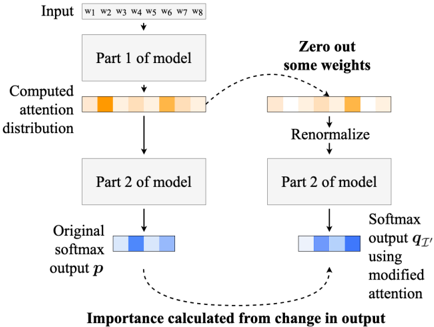
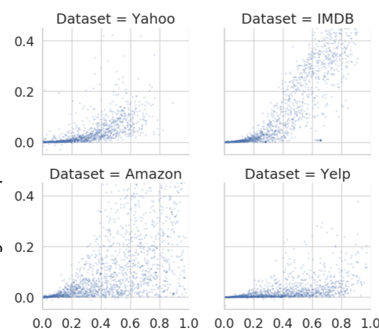
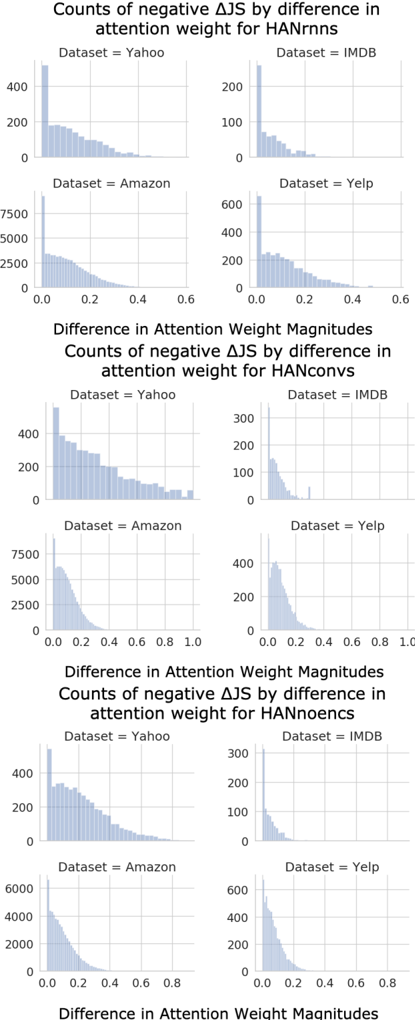
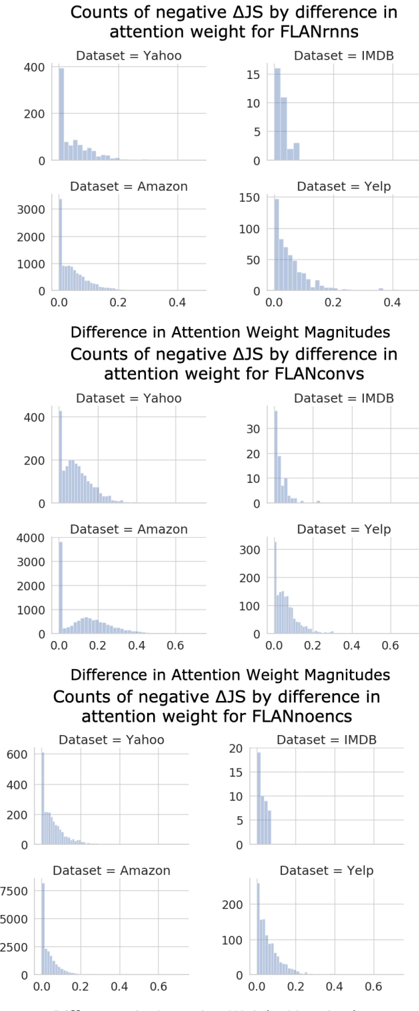
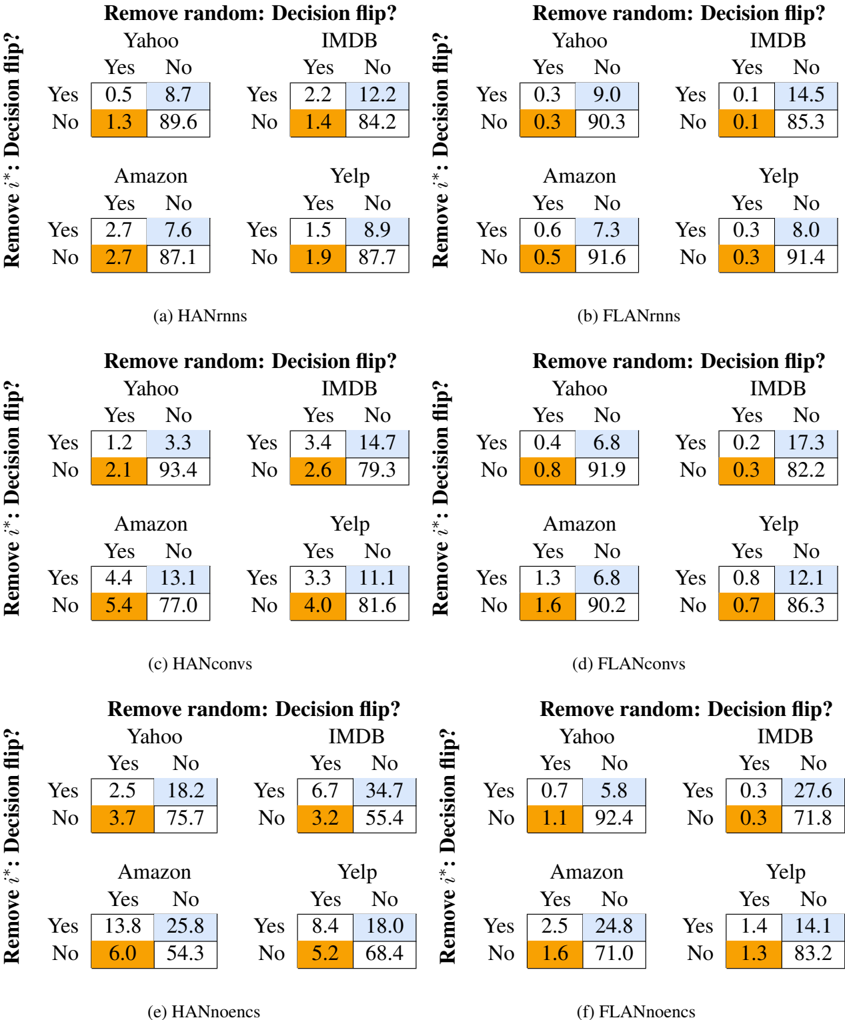
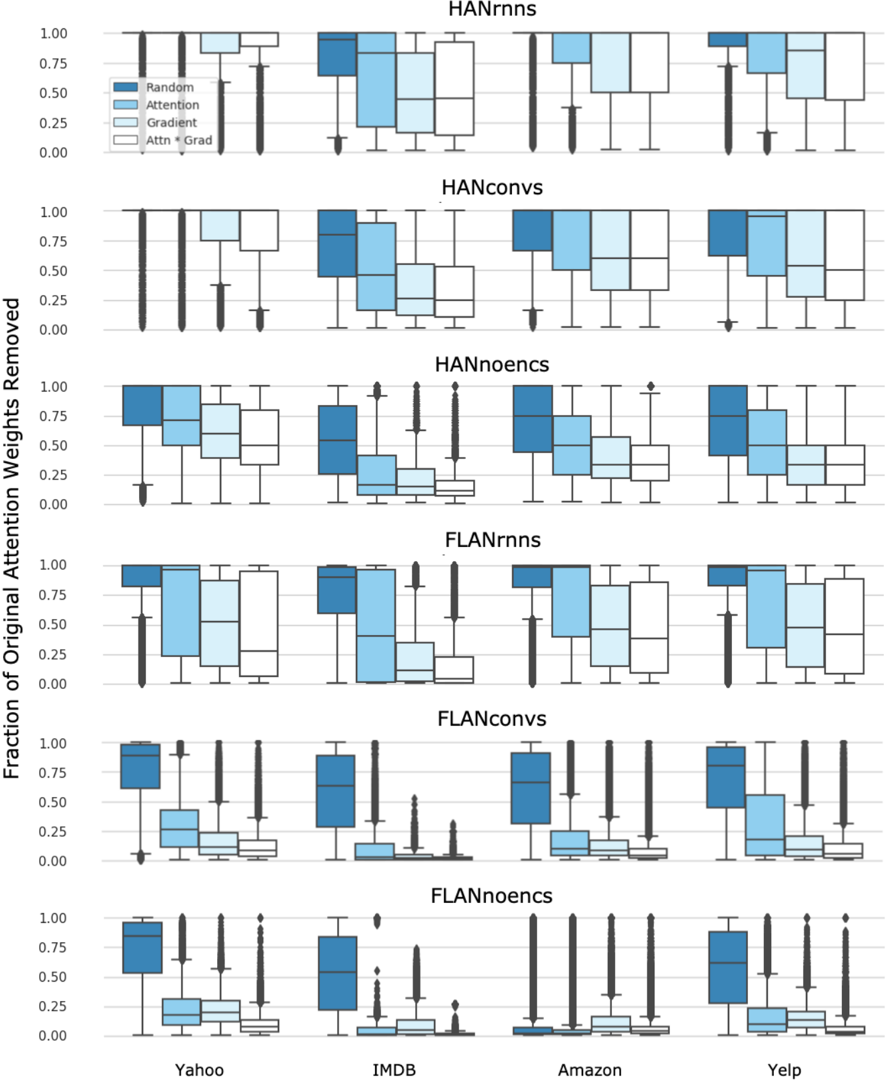
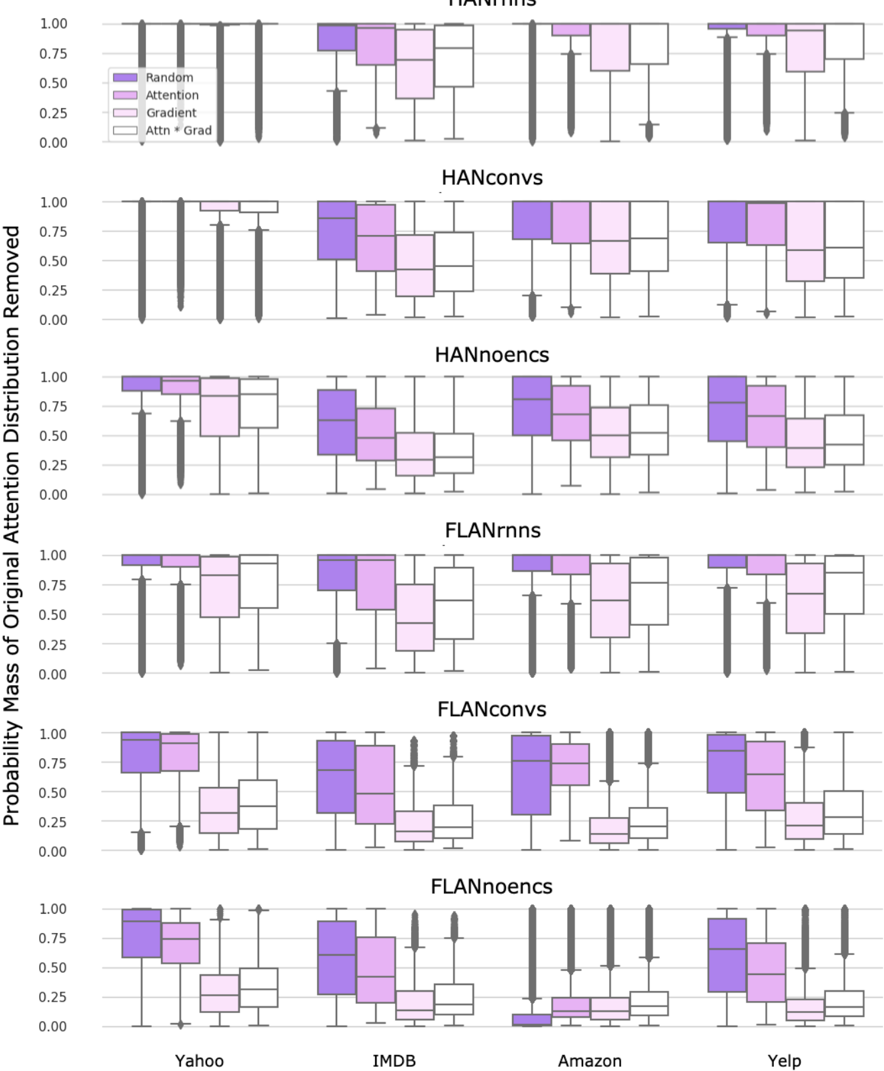
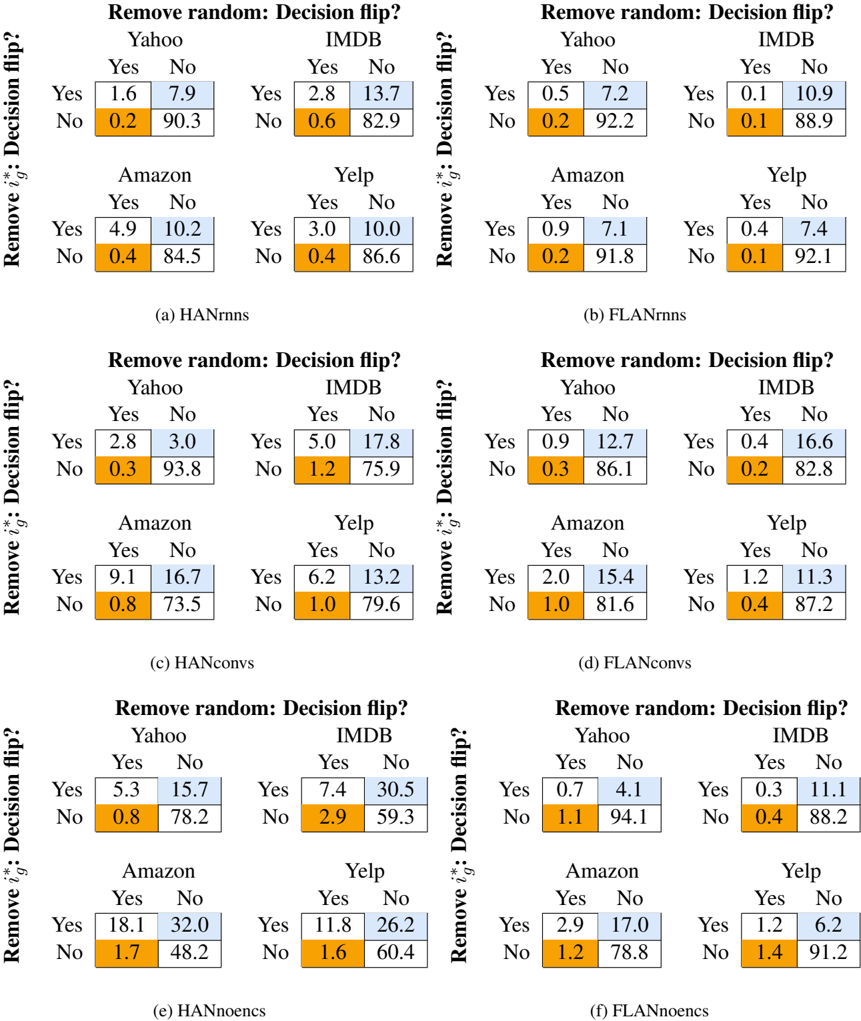
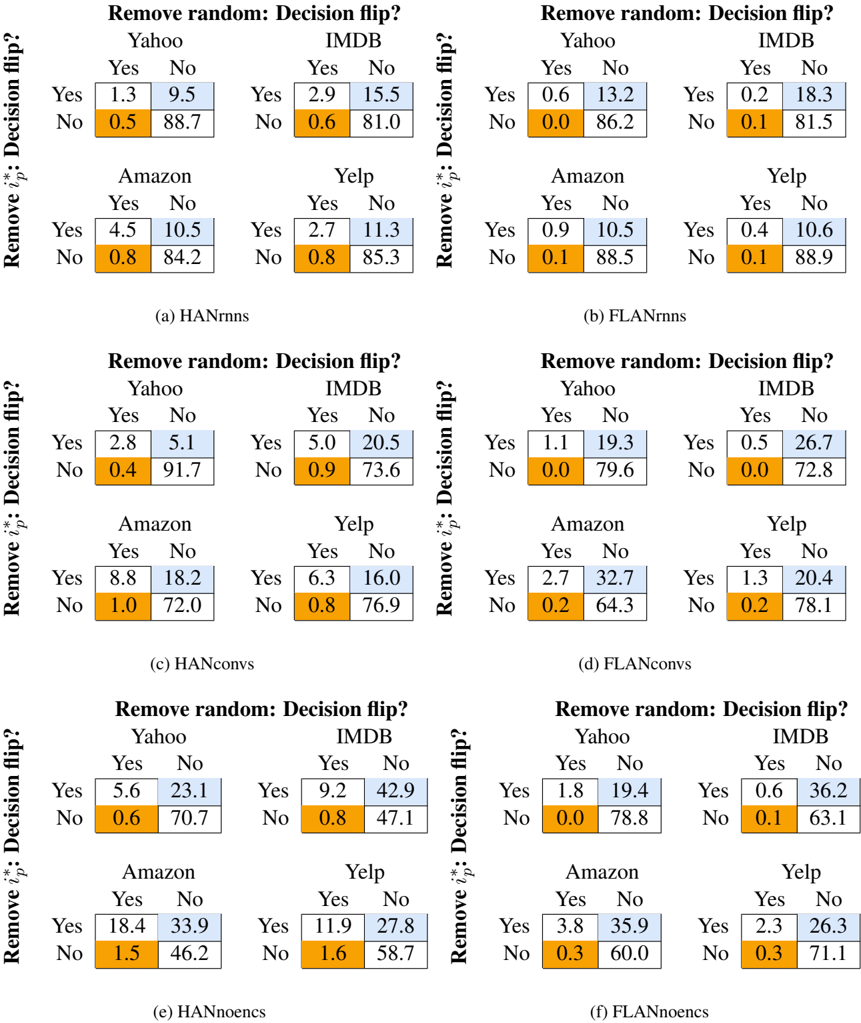
Attention mechanisms have recently boosted performance on a range of NLP tasks.Because attention layers explicitly weight input components' representations, it is also often assumed that attention can be used to identify information that models found important (e.g., specific contextualized word tokens).We test whether that assumption holds by manipulating attention weights in already-trained text classification models and analyzing the resulting differences in their predictions.While we observe some ways in which higher attention weights correlate with greater impact on model predictions, we also find many ways in which this does not hold, i.e., where gradient-based rankings of attention weights better predict their effects than their magnitudes.We conclude that while attention noisily predicts input components' overall importance to a model, it is by no means a fail-safe indicator.1
Overview
The claims and statistics of this paper haven’t been checked yet.
Free: it reads the open-access text and checks the first 5 claims that cite a source we can check. Create a free account to check every claim.
Integrity signals
Registry
Cites
Statistics
Figures
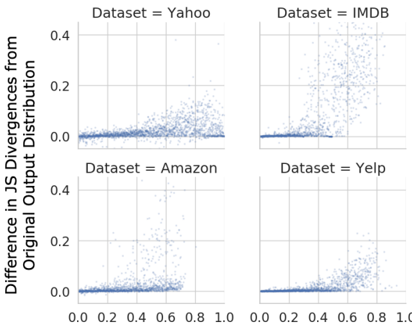
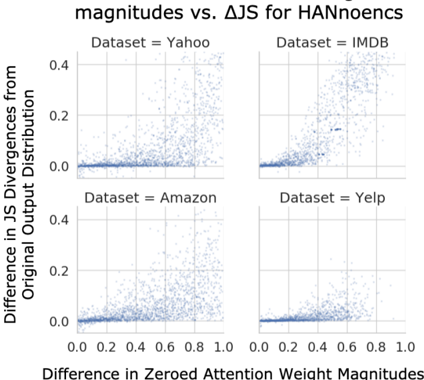
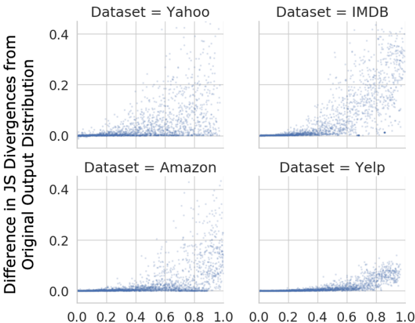
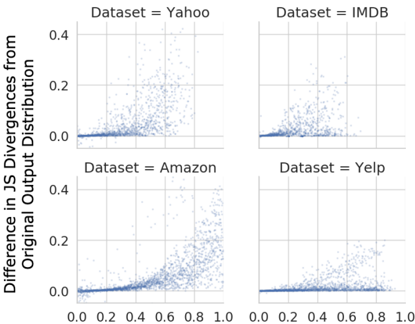
Verification
Claims the paper makes
The claims and statistics of this paper haven’t been checked yet.
Free: it reads the open-access text and checks the first 5 claims that cite a source we can check. Create a free account to check every claim.
Claims other papers make about this one
Each is checked against this paper’s own text: does it say what the citing paper says it does?
The source backs part of the claim, not all of it — or backs it for a different population, condition or comparison.
In the citing paper
“Besides using Incremental Deletion/Addition to evaluate correctness and output-completeness, compactness can be evaluated by counting how many features of the explanation need to be removed, perturbed or added to change the decision of the predictive model [7,34,70,123,165,221].”
From From Anecdotal Evidence to Quantitative Evaluation Methods: A Systematic Review on Evaluating Explainable AI (2023) · cites this paper as [221]
Experimental — accuracy not yet measuredIn the citing paper
“In [85], the attention mechanism weights were seen as at best noisy predictors of the relative importance of specific regions of the input sequence, and they should not be treated as justifications for the model’s decisions.”
From Survey of Explainable AI Techniques in Healthcare (2023) · cites this paper as [85]
In the citing paper
“Although this is typically the case for softmax scores [221], there might be cases where this assumption is invalid.”
From From Anecdotal Evidence to Quantitative Evaluation Methods: A Systematic Review on Evaluating Explainable AI (2023) · cites this paper as [221]
Self-check
Percentages, sums and reported differences re-computed from the paper’s own numbers.
The self-check needs the paper’s full text.
Citations
Cites
Vaswani, A., Shazeer, N., Parmar, N., Uszkoreit, J., Jones, L., Gomez, A. N., Kaiser, L., & Polosukhin, I. (2017) · arXiv · doi:10.48550/arxiv.1706.03762 · Cited by 120,404
Adam: A Method for Stochastic Optimization
Kingma, D. P., & Ba, J. (2014) · arXiv · doi:10.48550/arxiv.1412.6980 · Cited by 98,946 · cited 1×
“Unless otherwise noted, to train each model, we used Adam (Kingma and Ba, 2014) with gradient clipping of 10.0 and a patience value of 5, so we would stop training a model if five epochs elapsed without any improvement in validation set accuracy.”
MethodInfluential"Why Should I Trust You?": Explaining the Predictions of Any Classifier
Ribeiro, M. T., Singh, S., & Guestrin, C. (2016) · Proceedings of the 22nd ACM SIGKDD International Conference on Knowledge Discovery and Data Mining · doi:10.1145/2939672.2939778 · Cited by 17,555 · cited 4×
“Note, however, that we still do not take either as a gold-standard indicator of importance to the model, as with the gradient in Ross et al. (2017) and Melis and Jaakkola (2018), but merely as an alternative ordering method.”
BackgroundMethodInfluentialNeural Machine Translation by Jointly Learning to Align and Translate
Bahdanau, D., Cho, K., & Bengio, Y. (2014) · arXiv · doi:10.48550/arxiv.1409.0473 · Cited by 16,213 · cited 2×
“Specifically, we use the additive formulation originally defined in Bahdanau et al. (2015).”
BackgroundMethodConvolutional Neural Networks for Sentence Classification
Kim, Y. (2014) · Proceedings of the 2014 Conference on Empirical Methods in Natural Language Processing (EMNLP) · doi:10.3115/v1/d14-1181 · Cited by 14,831 · cited 2×
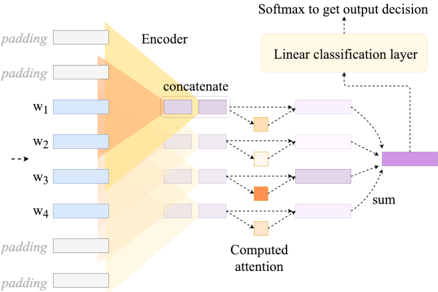
“Aside from biRNNs, we also experiment with models that instead contextualize word vectors by convolutions on only a token’s close neighbors, inspired by Kim (2014). See Figure 2 for a diagram of the FLAN architecture using a convolutional encoder.”
MethodEffective Approaches to Attention-based Neural Machine Translation
Luong, T., Pham, H., & Manning, C. D. (2015) · Proceedings of the 2015 Conference on Empirical Methods in Natural Language Processing · doi:10.18653/v1/d15-1166 · Cited by 8,382 · cited 1×
“For many different problems — to name a few, machine translation (Luong et al., 2015), syntactic parsing (Vinyals et al., 2015), reading comprehension (Hermann et al., 2015), and language modeling (Liu and Lapata, 2018) — incorporating attention mechanisms into models has proven beneficial for…”
BackgroundLipton, Z. C. (2018) · Queue · doi:10.1145/3236386.3241340 · Cited by 5,427 · cited 1×
“Lipton (2016) describes a model as “transparent” if “a person can contemplate the entire model at once.””
BackgroundHierarchical Attention Networks for Document Classification
Yang, Z., Yang, D., Dyer, C., He, X., Smola, A., & Hovy, E. (2016) · Proceedings of the 2016 Conference of the North American Chapter of the Association for Computational Linguistics: Human Language Technologies · doi:10.18653/v1/n16-1174 · Cited by 4,712 · cited 6×
“Our model architectures are inspired by the hierarchical attention network (HAN; Yang et al., 2016), a text classification model with two layers of attention, first to the word tokens in each sentence and then to the resulting sentence representations.”
BackgroundMethodResultInfluentialCharacter-level Convolutional Networks for Text Classification
Zhang, X., Zhao, J., & LeCun, Y. (2015) · arXiv (Cornell University) · doi:10.48550/arxiv.1509.01626 · Cited by 3,205 · cited 3×
“We investigate four model architectures on a topic classification dataset (Yahoo Answers; Zhang et al., 2015) and on three review ratings datasets: IMDB (Diao et al.”
MethodTeaching Machines to Read and Comprehend
Hermann, K. M., Kočiský, T., Grefenstette, E., Espeholt, L., Kay, W., Suleyman, M., & Blunsom, P. (2015) · arXiv (Cornell University) · doi:10.48550/arxiv.1506.03340 · Cited by 2,521 · cited 1×
“For many different problems—to name a few, machine translation (Luong et al., 2015), syntactic parsing (Vinyals et al., 2015), reading comprehension (Hermann et al., 2015), and language modeling (Liu and Lapata, 2018)—incorporating attention mechanisms into models has proven benefi-cial for…”
Background
Research works printed but not linked: 4
- Philipp Koehn and Rebecca Knowles. 2017. Six chal- lenges for neural machine translation. In Pro- ceedings of the First Workshop on Neural Machine Translation.
- Zachary C Lipton. 2016. The mythos of model inter- pretability. arXiv preprint arXiv:1606.03490. · arXiv
- Yang Liu and Mirella Lapata. 2018. Learning struc- tured text representations. Transactions of the Asso- ciation of Computational Linguistics, 6:63-75.
- Oriol Vinyals, Łukasz Kaiser, Terry Koo, Slav Petrov, Ilya Sutskever, and Geoffrey Hinton. 2015. Gram- mar as a foreign language. In Advances in Neural Information Processing Systems.
Cited by
Items 101–200 of 699
Wickramanayake, B., He, Z., Ouyang, C., Moreira, C., Xu, Y., & Sindhgatta, R. (2022) · Knowledge-Based Systems · doi:10.1016/j.knosys.2022.108773 · Cited by 59
“…weights over inputs, the attention weights can provide some insights to a decision-maker of what features influenced the prediction by manipulating the distribu-2 tion of weights associated to the input [8], and consequently these can help with understanding of why a certain prediction was computed.”
BackgroundArtificial Intelligence for Colonoscopy: Past, Present, and Future
Tavanapong, W., Oh, J., Riegler, M. A., Khaleel, M., Mittal, B., & de Groen, P. C. (2022) · IEEE Journal of Biomedical and Health Informatics · doi:10.1109/jbhi.2022.3160098 · Cited by 54
“However, the effectiveness of the attention-based interpretation has not yet been proven [182], [183].”
BackgroundWhich *BERT? A Survey Organizing Contextualized Encoders
Xia, P., Wu, S., & Durme, B. V. (2020) · Conference on Empirical Methods in Natural Language Processing (EMNLP) · doi:10.18653/v1/2020.emnlp-main.608 · Cited by 78
AIST: An Interpretable Attention-Based Deep Learning Model for Crime Prediction
Rayhan, Y., & Hashem, T. (2023) · ACM Transactions on Spatial Algorithms and Systems · doi:10.1145/3582274 · Cited by 64
“A recent study [52] shows the conditions under which attentions can be regarded as faithful explanations, and nullifies the claim [25, 42] that criticizes attention as a form of faithful explanation due to its weak correlation with other feature importance metrics and the existence of alternate adversarial attention w…”
BackgroundExplainable depression symptom detection in social media
Bao, E., Pérez, A., & Parapar, J. (2024) · Health Information Science and Systems · doi:10.1007/s13755-024-00303-9 · Cited by 46
“More recently, an alternative strategy for building interpretable models has emerged: the use of generative natural language explanations.”
BackgroundSingle-cell foundation models: bringing artificial intelligence into cell biology
Baek, S., Song, K., & Lee, I. (2025) · Experimental & Molecular Medicine · doi:10.1038/s12276-025-01547-5 · Cited by 46
A Comprehensive Explanation Framework for Biomedical Time Series Classification
Ivaturi, P., Gadaleta, M., Pandey, A. C., Pazzani, M., Steinhubl, S. R., & Quer, G. (2021) · IEEE Journal of Biomedical and Health Informatics · doi:10.1109/jbhi.2021.3060997 · Cited by 46
Explaining Question Answering Models through Text GenerationPreprint
Latcinnik, V., & Berant, J. (2020) · arXiv (Cornell University) · doi:10.48550/arxiv.2004.05569 · Cited by 69
“Thus, it is more similar to attention as an explanation (Serrano and Smith, 2019; Jain and Wallace, 2019; Pruthi et al., 2019), where the attention structure does not necessarily reveal what tokens are used for prediction.”
BackgroundTopic classification of electric vehicle consumer experiences with transformer-based deep learning
Ha, S., Marchetto, D. J., Dharur, S., & Asensio, O. I. (2021) · Patterns · doi:10.1016/j.patter.2020.100195 · Cited by 54
“…for their black-box nature, we suggest technical enhancements that focus on model interpretability as future work, such as through the use of rationales, 45 influence functions, 46 or sequence tagging approaches 47 that can offer deeper insights on the models and the reasons for their predictions.”
BackgroundA Comparative Study of Faithfulness Metrics for Model Interpretability Methods
Chan, C. S., Kong, H., & Guanqing, L. (2022) · Proceedings of the 60th Annual Meeting of the Association for Computational Linguistics (Volume 1: Long Papers) · doi:10.18653/v1/2022.acl-long.345 · Cited by 38
Explainability in process outcome prediction: Guidelines to obtain interpretable and faithful models
Stevens, A., & Smedt, J. D. (2023) · European Journal of Operational Research · doi:10.1016/j.ejor.2023.09.010 · Cited by 60
“These attention layers calculate non-negative weights (multiplied by their corresponding representations) for each input that together sums to one, and finally sums the resulting vectors into a single fixed-length representation [32].”
BackgroundExploring Interpretable Predictive Models for Business Processes
Sindhgatta, R., Moreira, C., Ouyang, C., & Barros, A. (2020) · Lecture notes in computer science · doi:10.1007/978-3-030-58666-9_15 · Cited by 55
“For a model to be interpretable, it must not only suggest explanations that make sense to the user, but also ensure that those explanations accurately represent the true reasons for the model’s decision [14].”
BackgroundSELFEXPLAIN: A Self-Explaining Architecture for Neural Text Classifiers
Rajagopal, D., Balachandran, V., Hovy, E. H., & Tsvetkov, Y. (2021) · Proceedings of the 2021 Conference on Empirical Methods in Natural Language Processing · doi:10.18653/v1/2021.emnlp-main.64 · Cited by 40
Evaluating and Characterizing Human Rationales
Carton, S., Rathore, A., & Tan, C. (2020) · Conference on Empirical Methods in Natural Language Processing (EMNLP) · doi:10.18653/v1/2020.emnlp-main.747 · Cited by 70
GDPR and Large Language Models: Technical and Legal Obstacles
Feretzakis, G., Vagena, E., Kalodanis, K., Peristera, P., Kalles, D., & Anastasiou, A. (2025) · Future Internet · doi:10.3390/fi17040151 · Cited by 38
ViT-CX: Causal Explanation of Vision Transformers
Xie, W., Li, X., Cao, C. C., & Zhang, N. L. (2023) · International Joint Conference on Artificial Intelligence · doi:10.24963/ijcai.2023/174 · Cited by 72
Explain and improve: LRP-inference fine-tuning for image captioning models
Sun, J., Lapuschkin, S., Samek, W., & Binder, A. (2021) · Information Fusion · doi:10.1016/j.inffus.2021.07.008 · Cited by 57
“The question to what extent attention is suitable as an explanation has been raised in the natural language processing context [79], [80], [81].”
BackgroundAttention-Aligned Transformer for Image Captioning
Fei, Z. (2022) · Proceedings of the AAAI Conference on Artificial Intelligence · doi:10.1609/aaai.v36i1.19940 · Cited by 53
Explainability and Evaluation of Vision Transformers: An In-Depth Experimental Study
Stassin, S., Corduant, V., Mahmoudi, S. A., & Siebert, X. (2023) · Electronics · doi:10.3390/electronics13010175 · Cited by 46
ABNIRML: Analyzing the Behavior of Neural IR Models
MacAvaney, S., Feldman, S., Goharian, N., Downey, D., & Cohan, A. (2022) · Transactions of the Association for Computational Linguistics · doi:10.1162/tacl_a_00457 · Cited by 78
“Although probing techniques (Tenney et al., 2019) and attention analysis (Serrano and Smith, 2019) can be beneficial for understanding model capabilities, these techniques cannot help us characterize and quantify the behaviors of neural ranking models.”
BackgroundReinforcement Learning Based Path Exploration for Sequential Explainable Recommendation
Li, Y., Chen, H., Li, Y., Li, L., Yu, P. S., & Xu, G. (2023) · IEEE Transactions on Knowledge and Data Engineering · doi:10.1109/tkde.2023.3237741 · Cited by 49
“[33], [34], [35], [36] However, there are different opinions on whether the attention mechanism could be used as a way to explain data [37], [38], [39].”
Background: Hybrid Associations Models for Sequential Recommendation
Peng, B., Ren, Z., Parthasarathy, S., & Ning, X. (2021) · IEEE Transactions on Knowledge and Data Engineering · doi:10.1109/tkde.2021.3049692 · Cited by 52
Chrysostomou, G., & Αλέτρας, Ν. (2021) · doi:10.18653/v1/2021.acl-long.40 · Cited by 69
“A series of recent studies illustrate that explanations obtained by attention weights do not always provide faithful explanations (Serrano and Smith, 2019) while different text encoders can affect attention inter-pretability, e.g. results can differ when using a recurrent or non-recurrent encoder…”
BackgroundMethodResultInfluentialZhao, Y., & Bethard, S. J. (2020) · Proceedings of the conference - Association for Computational Linguistics. Meeting · doi:10.18653/v1/2020.acl-main.429 · Cited by 47
“Serrano and Smith (2019), Jain and Wallace (2019) and Wiegreffe and Pinter (2019) found many redundancies in the attention of sequence-to-sequence models, suggesting that attention may encode knowledge in many ways.”
BackgroundInterpretable Clustering on Dynamic Graphs with Recurrent Graph Neural Networks
Yao, Y., & Joe‐Wong, C. (2021) · Proceedings of the AAAI Conference on Artificial Intelligence · doi:10.1609/aaai.v35i5.16590 · Cited by 42
Bayesian feature interaction selection for factorization machines
Chen, Y., Wang, Y., Ren, P., Wang, M., & de Rijke, M. (2021) · Artificial Intelligence · doi:10.1016/j.artint.2021.103589 · Cited by 35
“Although attention modules are now being employed [59,62,72], a recent study has shown that attention weights may be inconsistent with the importance of features [21,57].”
BackgroundNews-based business sentiment and its properties as an economic index
Seki, K., Ikuta, Y., & Matsubayashi, Y. (2021) · Information Processing & Management · doi:10.1016/j.ipm.2021.102795 · Cited by 35
Interpretable Ranking with Generalized Additive Models
Zhuang, H., Wang, X., Bendersky, M., Grushetsky, A., Wu, Y., Mitrichev, P., Sterling, E., Bell, N., Ravina, W., & Qian, H. (2021) · ACM International Conference on Web Search and Data Mining (WSDM) · doi:10.1145/3437963.3441796 · Cited by 59
“In addition, there are some studies which use attention layers as model interpretation in related fields like CTR prediction [27], but the accuracy of attention-based interpretation has been questioned in recent work [53].”
BackgroundDeep Learning Sequence Models for Transcriptional Regulation
Sokolova, K., Chen, K., Hao, Y., Zhou, J., & Troyanskaya, O. G. (2024) · Annual Review of Genomics and Human Genetics · doi:10.1146/annurev-genom-021623-024727 · Cited by 42
Wu, X., Li, L., Tao, X., Yuan, J., & Xie, H. (2025) · IEEE Transactions on Emerging Topics in Computational Intelligence · doi:10.1109/tetci.2025.3537918 · Cited by 39
“The attention mechanism supervises any models to focus on specific parts of the input when making predictions or generating outputs and has boosted performance on factor explanation in various tasks [34], [35].”
Bridging Information-Seeking Human Gaze and Machine Reading Comprehension
Malmaud, J., Lévy, R., & Berzak, Y. (2020) · Conference on Computational Natural Language Learning · doi:10.18653/v1/2020.conll-1.11 · Cited by 49
Can Rationalization Improve Robustness?
Chen, H., He, J., Narasimhan, K., & Chen, D. (2022) · Proceedings of the 2022 Conference of the North American Chapter of the Association for Computational Linguistics: Human Language Technologies · doi:10.18653/v1/2022.naacl-main.278 · Cited by 31
Explaining a Deep Reinforcement Learning (DRL)-Based Automated Driving Agent in Highway Simulations
Bellotti, F., Lazzaroni, L., Capello, A., Cossu, M., Gloria, A. D., & Berta, R. (2023) · IEEE Access · doi:10.1109/access.2023.3259544 · Cited by 35
“It has been argued that the attention layer(s) in a NN provides a way to reason about the model behind its predictions, thus naturally lending itself to interpretability (e.g., [20], [21]), but some research works have also highlighted its opacity (e.g., [22], [23]).”
BackgroundTopics to Avoid: Demoting Latent Confounds in Text Classification
Kumar, S., Wintner, S., Smith, N. A., & Tsvetkov, Y. (2019) · Conference on Empirical Methods in Natural Language Processing (EMNLP) · doi:10.18653/v1/d19-1425 · Cited by 35
“Recently, there has been a debate on whether attention can be used to explain model decisions (Serrano and Smith, 2019; Jain and Wallace, 2019; Wiegreffe and Pinter, 2019), we thus present additional analysis of our proposed method based on saliency maps (Ding et al., 2019).”
MethodSelf-citationWhy Attention is Not Explanation: Surgical Intervention and Causal Reasoning about Neural Models.
Grimsley, C., Mayfield, E., & Bursten, J. R. S. (2020) · PhilPapers (PhilPapers Foundation) · Cited by 63
Optimizing Attention for Sequence Modeling via Reinforcement Learning
Fei, H., Zhang, Y., Ren, Y., & Ji, D. (2021) · IEEE Transactions on Neural Networks and Learning Systems · doi:10.1109/tnnls.2021.3053633 · Cited by 33
“Under such assumption, following Serrano and Smith [36], we explore the relative importance when the attention distribution has been changed.”
BackgroundRobust Interpretable Text Classification against Spurious Correlations Using AND-rules with Negation
Yadav, R. K., Jiao, L., Granmo, O., & Goodwin, M. (2022) · International Joint Conference on Artificial Intelligence · doi:10.24963/ijcai.2022/616 · Cited by 42
Li, J., Liu, Y., Wang, Q., & Hu, Q. (2023) · IEEE Transactions on Circuits and Systems for Video Technology · doi:10.1109/tcsvt.2023.3249200 · Cited by 35
“importance of input tokens, especially for higher layers [57], we selected the most attended patches as the input of the last layer.”
BackgroundToward Practical Usage of the Attention Mechanism as a Tool for Interpretability
Tutek, M., & Šnajder, J. (2022) · IEEE Access · doi:10.1109/access.2022.3169772 · Cited by 46
Ante-Hoc Methods for Interpretable Deep Models: A Survey
Marino, A. D., Bevilacqua, V., Ciaramella, A., Falco, I. D., & Sannino, G. (2025) · ACM Computing Surveys · doi:10.1145/3728637 · Cited by 56
Mayya, V., Kamath, S. S., Krishnan, G. S., & Gangavarapu, T. (2021) · Future Generation Computer Systems · doi:10.1016/j.future.2021.01.013 · Cited by 32
On Exploring Attention-based Explanation for Transformer Models in Text Classification
Liu, S., Le, F., Chakraborty, S., & Abdelzaher, T. (2021) · IEEE International Conference on Big Data (BigData) · doi:10.1109/bigdata52589.2021.9671639 · Cited by 44
“Also, recent studies have looked at directly utilizing attention weights as explanation methods [6]– [8], but with mixed results.”
BackgroundMethodResultB-Cos Alignment for Inherently Interpretable CNNs and Vision Transformers
Böhle, M., Singh, N., Fritz, M., & Schiele, B. (2024) · IEEE Transactions on Pattern Analysis and Machine Intelligence · doi:10.1109/tpami.2024.3355155 · Cited by 59
“However, especially in deep layers the information can be highly distributed and it is unclear whether a given token still represents its original position in the input [45], [46], which complicates the interpretation of high attention scores deep in the neural network [45], [47].”
BackgroundHappiness Prediction With Domain Knowledge Integration and Explanation Consistency
Wu, X., Li, L., Tao, X., Xing, F., & Yuan, J. (2025) · IEEE Transactions on Computational Social Systems · doi:10.1109/tcss.2025.3529946 · Cited by 40
“Moreover, these explanations are based on Attention or model weight, which is less theoretically supported [40], [41].”
Attention Meets Perturbations: Robust and Interpretable Attention With Adversarial Training
Kitada, S., & Iyatomi, H. (2021) · IEEE Access · doi:10.1109/access.2021.3093456 · Cited by 36
“Additionally, for the same reason in as [48], we did not consider the variants of attention mechanisms, such as bi-attentive architecture [5], multi-headed architecture [8], because they could have different interpretability properties.”
BackgroundApplications of interpretable deep learning in neuroimaging: A comprehensive review
Munroe, L., da Silva, M., Heidari, F., Grigorescu, I., Dahan, S., Robinson, E. C., Deprez, M., & So, P. (2024) · Imaging Neuroscience · doi:10.1162/imag_a_00214 · Cited by 42
“However, whether attention can be regarded as feature importance is an ongoing debate ( Jain & Wallace, 2019; Serrano & Smith, 2019; Wiegreffe & Pinter, 2019).”
BackgroundFaithfully Explainable Recommendation via Neural Logic Reasoning
Zhu, Y., Xian, Y., Fu, Z., de Melo, G., & Zhang, Y. (2021) · Conference of the North American Chapter of the Association for Computational Linguistics: Human Language Technologies (NAACL-HLT) · doi:10.18653/v1/2021.naacl-main.245 · Cited by 45
Ikhwantri, F., Putra, J. W. G., Yamada, H., & Tokunaga, T. (2022) · Information Processing & Management · doi:10.1016/j.ipm.2022.103195 · Cited by 34
Explaining Black-Box Models for Biomedical Text Classification
Moradi, M., & Samwald, M. (2021) · IEEE Journal of Biomedical and Health Informatics · doi:10.1109/jbhi.2021.3056748 · Cited by 34
Pan, Q., Hu, W., & Chen, N. (2021) · International Joint Conference on Artificial Intelligence · doi:10.24963/ijcai.2021/397 · Cited by 36
“However, the attention values for explaining RNNs or CNNs are calculated via the relative importance of the different time steps and there are concerns that they are based on the intermediate feature importance instead of model interpretations [Serrano and Smith, 2019].”
BackgroundDiCE4EL: Interpreting Process Predictions using a Milestone-Aware Counterfactual Approach
Hsieh, C., Moreira, C., & Ouyang, C. (2021) · International Conference on Process Mining (ICPM) · doi:10.1109/icpm53251.2021.9576881 · Cited by 32
A Survey on Explainable Fake News Detection
MISHIMA, K., & Yamana, H. (2022) · IEICE Transactions on Information and Systems · doi:10.1587/transinf.2021edr0003 · Cited by 37
Interpreting Deep Learning Models in Natural Language Processing: A ReviewPreprint
Sun, X., Yang, D., Li, X., Zhang, T., Meng, Y., Qiu, H., Wang, G., Hovy, E. H., & Li, J. (2021) · arXiv (Cornell University) · doi:10.48550/arxiv.2110.10470 · Cited by 82
“There has been a growing debate on the question of whether attention is interpretable [164, 143, 86, 203, 193, 30].”
BackgroundResultAbstract, Rationale, Stance: A Joint Model for Scientific Claim Verification
Zhang, Z., Li, J., Fukumoto, F., & Ye, Y. (2021) · Conference on Empirical Methods in Natural Language Processing (EMNLP) · doi:10.18653/v1/2021.emnlp-main.290 · Cited by 46
“Rationale Regularization (RR): The attention scores have been used for interpretability in NLP tasks (Serrano and Smith, 2019; Wiegreffe and Pinter, 2019; Sun and Lu, 2020).”
MethodIntelligent Video Analytics for Human Action Recognition: The State of Knowledge
Kulbacki, M., Segen, J., Chaczko, Z., Rozenblit, J. W., Kulbacki, M., Klempous, R., & Wojciechowski, K. W. (2023) · Sensors · doi:10.3390/s23094258 · Cited by 35
“> 6,000,000 400 Kinetics 700 [256] 650,000 700”
Explaining and Improving Model Behavior with k Nearest Neighbor RepresentationsPreprint
Rajani, N. F., Krause, B., Yin, W., Niu, T., Socher, R., & Xiong, C. (2020) · arXiv (Cornell University) · doi:10.48550/arxiv.2010.09030 · Cited by 54
“Interpreting attention as a form of explanation for neural NLP models has been a topic of debate (Jain and Wal-lace 2019; Serrano and Smith 2019; Wiegreffe and Pinter 2019).”
BackgroundSelf-Explaining Structures Improve NLP ModelsPreprint
Sun, Z., Fan, C. C., Han, Q., Sun, X., Meng, Y., Wu, F. Q., & Li, J. (2020) · arXiv (Cornell University) · doi:10.48550/arxiv.2012.01786 · Cited by 62
“…al., 2015; Shi et al., 2016; Greff et al., 2016; Strobelt et al., 2016), and applying variants of the attention mechanism (Bahdanau et al., 2014) to interpret model behaviors (Jain and Wallace, 2019; Serrano and Smith, 2019; Wiegreffe and Pinter, 2019; Vashishth et al., 2019; Rogers et al., 2020).”
BackgroundMethodTowards an Interpretable Approach to Classify and Summarize Crisis Events from Microblogs
Nguyen, T. H., & Rudra, K. (2022) · International World Wide Web Conference (WWW) · doi:10.1145/3485447.3512259 · Cited by 37
A Causality Inspired Framework for Model Interpretation
Wu, C., Wang, X., Lian, D., Xie, X., & Chen, E. (2023) · ACM SIGKDD Conference on Knowledge Discovery and Data Mining (KDD) · doi:10.1145/3580305.3599240 · Cited by 39
“For example, the improvement over the best baselines reaches 119% on IMDB w.r.t. DFFOT metric.”
BackgroundInfluentialInterpreting Predictions of NLP Models
Wallace, E., Gardner, M., & Singh, S. (2020) · Conference on Empirical Methods in Natural Language Processing · doi:10.18653/v1/2020.emnlp-tutorials.3 · Cited by 44
“We will also cover the critiques and shortcomings of using attention as explanations (Jain and Wallace, 2019; Serrano and Smith, 2019).”
MethodHarnessing the linguistic signal to predict scalar inferences
Schuster, S., Chen, Y., & Degen, J. (2020) · Proceedings of the conference - Association for Computational Linguistics. Meeting · doi:10.18653/v1/2020.acl-main.479 · Cited by 38
“Attention weight analyses have been successfully used for inspecting and debugging model decisions (e.g., Lee et al., 2017; Ding et al., 2017; Wiegreffe and Pinter, 2019; Vashishth et al., 2019; but see Serrano and Smith, 2019, and Jain and Wallace, 2019, for critical discussions of this approach).”
MethodAttention Can Reflect Syntactic Structure (If You Let It)
Ravishankar, V., Kulmizev, A., Abdou, M., Søgaard, A., & Nivre, J. (2021) · Conference of the European Chapter of the Association for Computational Linguistics · doi:10.18653/v1/2021.eacl-main.264 · Cited by 43
Multi-view informed attention-based model for Irony and Satire detection in Spanish variants
Bueno, R. O., Rosso, P., & Pagóla, J. E. M. (2021) · Knowledge-Based Systems · doi:10.1016/j.knosys.2021.107597 · Cited by 31
Prenkaj, B., d’Aragona, D. A., Flaborea, A., Galasso, F., Gravina, S., Podo, L., Reda, E., & Velardi, P. (2022) · Artificial Intelligence in Medicine · doi:10.1016/j.artmed.2022.102454 · Cited by 28
Zuheros, C., Martínez‐Cámara, E., Herrera‐Viedma, E., Katib, I. A., & Herrera, F. (2023) · Information Fusion · doi:10.1016/j.inffus.2023.101821 · Cited by 28
The Role of Generative Artificial Intelligence in Internet of Electric Vehicles
Zhang, H., Niyato, D. T., Zhang, W., Zhao, C., Du, H., Jamalipour, A., Sun, S., & Pei, Y. (2024) · IEEE Internet of Things Journal · doi:10.1109/jiot.2024.3511961 · Cited by 50
“An important future research is to enhance model interpretability through methods, such as the use of rationales [160], influence functions [161], and sequence tagging approaches [162], to well understand consumers.”
A Theoretical Framework for AI Models Explainability with Application in Biomedicine
Rizzo, M., Veneri, A., Albarelli, A., Lucchese, C., Nobile, M. S., & Conati, C. (2023) · IEEE Conference on Computational Intelligence in Bioinformatics and Computational Biology (CIBCB) · doi:10.1109/cibcb56990.2023.10264877 · Cited by 30
Encoder–Decoder Calibration for Multimodal Machine Translation
Tayir, T., Li, L., Li, B., Liu, J., & Lee, K. A. (2024) · IEEE Transactions on Artificial Intelligence · doi:10.1109/tai.2024.3354668 · Cited by 23
“Recently, however, in text-only translation, some studies have explored whether the inputs that are highly focused by the attention mechanism really always determines the model outputs [16], [17], [18].”
BackgroundInsGNN: Interpretable spatio-temporal graph neural networks via information bottleneck
Fang, H., Wang, H., Gao, Y., Zhang, Y., Bu, J., Han, B., & Lin, H. (2025) · Information Fusion · doi:10.1016/j.inffus.2025.102997 · Cited by 30
Towards Explainability in Using Deep Learning for the Detection of Anorexia in Social Media
Amini, H., & Kosseim, L. (2020) · Lecture notes in computer science · doi:10.1007/978-3-030-51310-8_21 · Cited by 33
“5, the first direction is to complement the current experiments with the ones proposed by Jain and Wallace [9] and Serrano and Smith [24], in order to see if the findings from the current experiments are in line with theirs.”
BackgroundMethodResultInfluentialWord-level human interpretable scoring mechanism for novel text detection using Tsetlin Machines
Bhattarai, B., Granmo, O., & Jiao, L. (2022) · Applied Intelligence · doi:10.1007/s10489-022-03281-1 · Cited by 29
“Further, [51] checks whether the attention weights provide any interpretability by manipulating the weights in pretrained text classification models.”
BackgroundLearning to Explain: Generating Stable Explanations Fast
Situ, X., Zukerman, I., Paris, C. L., Maruf, S., & Haffari, G. (2021) · Annual Meeting of the Association for Computational Linguistics · doi:10.18653/v1/2021.acl-long.415 · Cited by 48
Do Transformer Models Show Similar Attention Patterns to Task-Specific Human Gaze?
Eberle, O., Brandl, S., Pilot, J., & Søgaard, A. (2022) · Proceedings of the conference - Association for Computational Linguistics. Meeting · doi:10.18653/v1/2022.acl-long.296 · Cited by 57
Measuring the Mixing of Contextual Information in the Transformer
Ferrando, J., Gállego, G. I., & Costa‐jussà, M. R. (2022) · Conference on Empirical Methods in Natural Language Processing (EMNLP) · doi:10.18653/v1/2022.emnlp-main.595 · Cited by 108
Zheng, W., Fong, J. H. C., Wan, Y. K., Chu, A. H. Y., Huang, Y., Wong, A. S. L., & Ho, J. W. K. (2023) · Cell Systems · doi:10.1016/j.cels.2023.10.011 · Cited by 26
Saranti, A., Pfeifer, B., Gollob, C., Stampfer, K., & Holzinger, A. (2024) · Wiley Interdisciplinary Reviews Data Mining and Knowledge Discovery · doi:10.1002/widm.1554 · Cited by 30
“…models (like PointTransformer Zhao et al., 2021) that go beyond the well-known differences between explanation and attention (Jain & Wallace, 2019; Serrano & Smith, 2019; Wiegreffe & Pinter, 2019) that showed the necessity for more sophisticated explanation methodologies like the LRP (Ali et al.,…”
Explainable Clinical Decision Support from Text
Feng, J., Shaib, C., & Rudzicz, F. (2020) · Conference on Empirical Methods in Natural Language Processing (EMNLP) · doi:10.18653/v1/2020.emnlp-main.115 · Cited by 37
“The wide application of attention mechanisms has led to an ongoing debate over whether attention can be used as explanation (Serrano and Smith, 2019; Jain and Wallace, 2019; Wiegreffe and Pinter, 2019).”
BackgroundMethodAttention Calibration for Transformer in Neural Machine Translation
Lu, Y., Zeng, J., Zhang, J., Wu, S., & Li, M. (2021) · doi:10.18653/v1/2021.acl-long.103 · Cited by 37
Interpretability Needs a New Paradigm
Madsen, A., Lakkaraju, H., Reddy, S., & Chandar, S. (2024) · arXiv · doi:10.48550/arxiv.2405.05386 · Cited by 22
A Graph Convolutional Network With Multiple Dependency Representations for Relation Extraction
Hu, Y., Shen, H., Liu, W., Min, F., Qiao, X., & Jin, K. (2021) · IEEE Access · doi:10.1109/access.2021.3086480 · Cited by 23
“However, the interpretability of attention-based methods is sometimes questioned by researchers (see [17], [18]), and thus can not necessarily emphasize key words in the SDP.”
BackgroundSquare One Bias in NLP: Towards a Multi-Dimensional Exploration of the Research Manifold
Ruder, S., Vulić, I., & Søgaard, A. (2022) · Findings of the Association for Computational Linguistics: ACL (Findings of ACL) · doi:10.18653/v1/2022.findings-acl.184 · Cited by 62
“, 2018) and much work focuses on leveraging components such as attention for interpretability, which have not been designed with that goal in mind (Serrano and Smith, 2019; Wiegreffe and Pinter, 2019).”
Benchmarking Post-Hoc Interpretability Approaches for Transformer-based Misogyny Detection
Attanasio, G., Nozza, D., Pastor, E., & Hovy, D. (2022) · doi:10.18653/v1/2022.nlppower-1.11 · Cited by 36
Understanding How Encoder-Decoder Architectures AttendPreprint
Aitken, K., Ramasesh, V., Cao, Y., & Maheswaranathan, N. (2021) · arXiv (Cornell University) · doi:10.48550/arxiv.2110.15253 · Cited by 57
“Related Work As mentioned in the introduction, a common technique to gain some understanding is to visualize learned attention matrices, though the degree to which such visualization can explain model predictions is disputed Wiegreffe & Pinter (2019); Jain & Wallace (2019); Serrano & Smith (2019).”
Learning Molecular Mixture Property Using Chemistry-Aware Graph Neural Network
Zhang, H., Lai, T., Chen, J., Manthiram, A., Rondinelli, J. M., & Chen, W. (2024) · PRX Energy · doi:10.1103/prxenergy.3.023006 · Cited by 36
Detecting mental disorder on social media: A ChatGPT-augmented explainable approach
Belcastro, L., Cantini, R., Marozzo, F., Talia, D., & Trunfio, P. (2025) · Online Social Networks and Media · doi:10.1016/j.osnem.2025.100321 · Cited by 32
Li, C., Knopman, D. S., Xu, W., Cohen, T., & Pakhomov, S. (2022) · Proceedings of the conference - Association for Computational Linguistics. Meeting · doi:10.18653/v1/2022.acl-long.131 · Cited by 43
GCN-SE: Attention as Explainability for Node Classification in Dynamic Graphs
Fan, Y., Yao, Y., & Joe‐Wong, C. (2021) · Proceedings · doi:10.1109/icdm51629.2021.00123 · Cited by 37
Boosting single-cell gene regulatory network reconstruction via bulk-cell transcriptomic data
Shu, H., Ding, F., Zhou, J., Xue, Y., Zhao, D. Y., Zeng, J., & Ma, J. (2022) · Briefings in Bioinformatics · doi:10.1093/bib/bbac389 · Cited by 24
Semo, G., Bernsohn, D., Hagag, B., Hayat, G., & Niklaus, J. (2022) · Natural Legal Language Processing Workshop (NLLP) · doi:10.18653/v1/2022.nllp-1.3 · Cited by 50
CAUSE: Learning Granger Causality from Event Sequences using Attribution Methods
Zhang, W., Panum, T. K., Jha, S., Chalasani, P., & Page, D. (2020) · VBN Forskningsportal (Aalborg Universitet) · doi:10.48550/arxiv.2002.07906 · Cited by 67
“Second, attention mechanism may not correctly attribute the model’s prediction to its inputs, as shown in several recent studies (Jain & Wallace, 2019; Serrano & Smith, 2019).”
BackgroundResultSparse and Continuous Attention Mechanisms
Martins, A. F. T., Farinhas, A., Treviso, M. V., Niculae, V., Aguiar, P. M. Q., & Figueiredo, M. A. T. (2020) · UvA-DARE (University of Amsterdam) · doi:10.48550/arxiv.2006.07214 · Cited by 60
“For many of these applications, current state-of-the-art models use discrete softmax attention, whose interpretation capabilities have been questioned in prior work [43–45].”
BackgroundUnderstanding Patterns of Anorexia Manifestations in Social Media Data with Deep Learning
Uban, A. S., Chulvi, B., & Rosso, P. (2021) · Workshop on Computational Linguistics and Clinical Psychology (CLPsych) · doi:10.18653/v1/2021.clpsych-1.24 · Cited by 22
“Recent studies (Jain and Wallace, 2019; Serrano and Smith, 2019; Wiegreffe and Pinter, 2019) have questioned whether attention mechanisms necessarily help with the interpretability of neural network predictions.”
BackgroundOn the Sensitivity and Stability of Model Interpretations in NLP
Yin, F., Shi, Z., Hsieh, C., & Chang, K.-W. (2022) · Proceedings of the conference - Association for Computational Linguistics. Meeting · doi:10.18653/v1/2022.acl-long.188 · Cited by 61
“A large proportion of them occlude tokens identified as important by interpretations and measure the confidence change of models (DeYoung et al., 2020; Jain and Wallace, 2019; Zaidan and Eisner, 2008; Serrano and Smith, 2019).”
BackgroundA disentangled linguistic graph model for explainable aspect-based sentiment analysis
Mei, X., Zhou, Y., Zhu, C., Wu, M., Li, M., & Pan, S. (2022) · Knowledge-Based Systems · doi:10.1016/j.knosys.2022.110150 · Cited by 25
Evaluating Visual Explanations of Attention Maps for Transformer-Based Medical Imaging
Chung, M., Won, J. B., Kim, G., Kim, Y., & Özbulak, U. (2025) · Lecture notes in computer science · doi:10.1007/978-3-031-77610-6_11 · Cited by 33
Does BERT Pay Attention to Cyberbullying?
Elsafoury, F., Katsigiannis, S., Wilson, S. R., & Ramzan, N. (2021) · International ACM SIGIR Conference on Research and Development in Information Retrieval (SIGIR) · doi:10.1145/3404835.3463029 · Cited by 26
“These results suggest that attention weights don’t play a direct role in explaining BERT’s performance, which is in line with previous studies [29, 32, 35].”
MethodResultZhu, H., Yi, C., Rho, S., Liu, S., & Jiang, F. (2023) · IEEE Internet of Things Journal · doi:10.1109/jiot.2023.3293860 · Cited by 23
“However, it has been shown that they are based on the importance of intermediate features rather than on the interpretation of the model [20].”
BackgroundTowards Interpreting BERT for Reading Comprehension Based QA
Ramnath, S., Nema, P., Sahni, D., & Khapra, M. M. (2020) · Conference on Empirical Methods in Natural Language Processing (EMNLP) · doi:10.18653/v1/2020.emnlp-main.261 · Cited by 40
Metadata
- Authors
- Serrano, S., & Smith, N. A.
- Affiliations
- University of Washington (US)
- Venue
- Proceedings of the 57th Annual Meeting of the Association for Computational Linguistics
- Published
- 2019
- Pages
- 2931-2951
- ISSN
- 0736-587X (ISSN-L)
- OpenAlex
- W2948140294
- Cited by
- 690
- References
- 39
- Citations by year
- 2026: 63 · 2025: 85 · 2024: 82 · 2023: 102 · 2022: 119 · 2021: 143 · 2020: 80 · 2019: 15
- FWCI
- 34.15
- Type
- conference paper
- Language
- en
- Open access
- hybrid
- doi.org
- Licence
- cc-by
- Locations
- Proceedings of the conference - Association for Computational Linguistics. Meeting (publishedVersion, cc-by)
- arXiv (Cornell University) (submittedVersion)
- arXiv (Cornell University)
- Topics
- Physical Sciences › Computer Science › Artificial Intelligence › Explainable Artificial Intelligence (XAI)
- Physical Sciences › Computer Science › Artificial Intelligence › Topic Modeling
- Physical Sciences › Computer Science › Artificial Intelligence › Natural Language Processing Techniques
- Keywords
- attention mechanism, interpretability, text classification, model interpretability, feature importance, explainable AI
About these checks
Registry, retraction, Cites and statistics results are computed, not judged, with one exception: a printed reference that no index lists is read once by a model before it counts as a citation error. Claims are extracted by a model and kept only when their quote appears verbatim in the text; each cited source is then checked, with a model’s help, for whether it says what the claim relies on. Those verdicts can be wrong — read the claim’s quote and the cited source before relying on one.
Statistics and arithmetic are recomputed, not judged.
Confidence bands are shown only for fields calibrated on our annotated test set. None is calibrated yet, so no band is shown.
What counts as a claim ›How we measure confidence ›How we check this ›
Are you an author, or do you see a problem with this page? Request a review
Data sources
Bibliographic data: Semantic Scholar, OpenAlex, Crossref.
Contains information from the Semantic Scholar Academic Graph Datasets, made available under the ODC Attribution License (ODC-BY 1.0).
Semantic Scholar’s data is described in: Kinney, R., et al. (2023). The Semantic Scholar Open Data Platform. arXiv:2301.10140.
